Tag Archives: Jesus

Mishpatim: Law and Spirit

tzitzit1There was once a Jewish girl who stopped in Israel on her way to India to seek spirituality. Friends suggested that she go to Neve Yerushalayim to take a class and give Judaism one last shot before seeking other pathways to spirituality. The one class happened to be studying the laws regarding returning a lost item — when is an item considered lost, what if the person gave up hope of its return, what constitutes a legitimate identifying mark to claim the item, to what extent and cost of time and money are you obligated for returning the item… The girl was furious! This is NOT spirituality. She left in a huff and headed off to India.

Six months later she and her guru were discussing a philosophical matter while walking through the village. They came upon a wallet filled with rupees. The guru picked it up, put it in his pocket and continued with his point. The girl interrupted him and asked, “Aren’t you going to see if there is identification in the wallet to return it?” The guru replied, “No. It was his karma that he lost it; it’s my karma that I found it. It’s mine.” The girl implored, “But, he might have a large family and that might be his monthly earnings … they could starve if you don’t return it!” The guru responded, “That is their karma.”

-Rabbi Kalman Packouz
“Shabbat Shalom Weekly”
Commentary on Torah Portion Mishpatim
Aish.com

You may be wondering what all this has to do with this week’s Torah study. Consider that, according to Rabbi Packouz, Mishpatim is one of “the most mitzvah-filled Torah portions, containing 23 positive commandments and 30 negative commandments. Included are laws regarding: the Hebrew manservant and maidservant, manslaughter, murder, injuring a parent, kidnapping, cursing a parent, personal injury, penalty for killing a slave, personal damages, injury to slaves, categories of damages and compensatory restitution, culpability for personal property damage, seduction, occult practices, idolatry, oppression of widows, children and orphans.”

For most Christians and probably many Jewish people, reading Mishpatim can seem like not only an incredible bore, but completely irrelevant to leading a life of spirituality and holiness…

…until you read the commentary about the Jewish girl seeking spirituality, which I quoted above. Let’s “cut to the chase” and see what the Jewish student in India concluded about her experiences.

The young lady then remembered the class she took in Jerusalem — and realized that spirituality without justice, kindness and concern for others is just a false spiritual high, corrupt emotion. She returned to Jerusalem and ultimately returned to her Torah heritage.

I imagine there are a lot of people who believe spirituality is a rather “warm and fuzzy” and “feel good” state of being where one contemplates self, God, and the nature of the universe, and through this, the wear and tear of daily living can be put to the side as if it were a cast off garment. And yet, as the Jewish student learned, it is nothing of the sort. Spirituality is a “lived” experience that permeates our day-to-day lives. There is not one aspect of what we do, from the moment we wake up until the instant our heads hit our pillows at night where God is not present (and He’s present when we sleep as well) and we are not acting either within his will our outside of it.

This past week, I’ve been commenting extensively on Acts 15 and the implications of admitting non-Jewish disciples of the Messiah into a wholly Jewish religious sect. There is a single sentence within that chapter which has caused much confusion among Christian and Jewish commentators and scholars.

For from ancient generations Moses has had in every city those who proclaim him, for he is read every Sabbath in the synagogues.”

Acts 15:21 (ESV)

I’ll give that statement more treatment in my Return to Jerusalem series in the next few days, but we can take a look at it now from the perspective of this Torah Portion commentary. What did James and the rest of the Apostles expect the Gentile God-fearing disciples to learn by going to the synagogue each Shabbat and hearing the Torah read, especially if, as I’ve said previously, the Apostles never desired that the Gentiles convert to Judaism and thus be obligated to the full yoke of Torah?

karmaWhat was the Jewish student supposed to learn by “studying the laws regarding returning a lost item?” When she was in India following the path she thought she really wanted, she discovered the answer.

While there is much in the Torah that has to do with the specifics of living a Jewish life, there is also much more that teaches us, all of us, how to live an ethical and moral life within a spiritual and material world context. The student in India didn’t have to be Jewish to learn that lesson, it could have been learned by anyone. Hopefully, it is being learned by everyone who reads the Bible and studies the mitzvot delivered by God to humanity through Moses and the Prophets.

The “Law” isn’t boring (unless you let it be). It’s all “God-breathed and is useful for teaching, rebuking, correcting and training in righteousness, so that the servant of God may be thoroughly equipped for every good work.” (2 Timothy 3:16-17)

Studying scripture is like spending time with God in prayer. It is an act of intimacy. It is like this:

On the seventh day He called to Moses from the midst of the cloud. Now the Presence of the Lord appeared in the sight of the Israelites as a consuming fire on the top of the mountain. Moses went inside the cloud and ascended the mountain; and Moses remained on the mountain forty days and forty nights.

Exodus 24:16-18 (JPS Tanakh)

Good Shabbos.

Return to Jerusalem, Part 2

Torah at SinaiFor this commandment that I command you today is not too hard for you, neither is it far off. It is not in heaven, that you should say, ‘Who will ascend to heaven for us and bring it to us, that we may hear it and do it?’ Neither is it beyond the sea, that you should say, ‘Who will go over the sea for us and bring it to us, that we may hear it and do it?’ But the word is very near you. It is in your mouth and in your heart, so that you can do it.

Deuteronomy 30:11-14 (ESV)

Now, therefore, why are you putting God to the test by placing a yoke on the neck of the disciples that neither our fathers nor we have been able to bear?

Acts 15:10 (ESV)

Peter’s statement, which seems to disparage the Torah, presents no difficulty for traditional Christian interpretation. Gentile Christianity has always taken a dim view of Torah and is glad to dismiss “Old Testament law” as an unbearable yoke. Disdain for the Torah is not a Jewish perspective. Instead, the apostles teach that “the Torah is spiritual,” “the Torah is holy, and the commandment is holy and righteous and good,” and most pertinent to Peter’s so-called deprecation, God’s commandments are not unbearable: “His commandments are not burdensome.”

Given this positive view of the Torah and the fact that 1 John 5:3 explicitly says that God’s commandments are not burdensome, could Simon Peter have referred to the Torah as a yoke “that neither our fathers nor we have been able to bear?”

-D. Thomas Lancaster
Torah Club, Volume 6: Chronicles of the Apostles
from First Fruits of Zion (FFOZ)
Torah Portion Yitro (“Jethro”) (pg 437)
Commentary on Acts 15:1-20

This is Part 2 of this multi-part series on Acts 15 and its implications for Christians and Jews today. If you haven’t done so already, please read Part 1 before continuing here.

So how could Peter believe that the Torah was too difficult for his Jewish fathers (ancestors) and his Jewish people to bear and still presumably believe that the Torah was good, spiritual, holy, and righteous?

In some of my previous talks with my Pastor about Jewish obligation to Torah, one of the areas we discussed was whether or not it was possible to obey the Law perfectly. Pastor Randy says “no” and I tend to agree with him because as Paul has said, ” for all have sinned and fall short of the glory of God.” (Romans 3:23) I may upset some of my Jewish readers, but personally, I don’t think that any Jewish person (let alone any non-Jew who has ever tried) has ever perfectly performed all of the mitzvot, from the day it was given by God to the Children of Israel through Moses, forward to the present.

For whoever keeps the whole law but fails in one point has become accountable for all of it.

James 2:10 (ESV)

Funny that James should write such a thing, when he was also present with the council of Apostles listening to Peter speak about how much of a burden Torah is. James seems to be saying that it is impossible to keep the Torah because there are so many difficult commandments, and this verse, along with Peter’s statement, are part of the scriptures many Christians use to justify how the Law is now dead (and sometimes Judaism along with it) and has been replaced by grace (and sometimes replaced by Christians).

Is there an alternate way of understanding all of this and also preserving Jewish devotion to Torah for the Messianic Apostles and disciples? Lancaster in his commentary on Acts 15 seemed to think so.

To insist that Simon Peter could not have referred to the Torah’s obligations as a difficult burden simply because other texts contradict that sentiment denies a literal reading of Scripture. Peter was able to articulate the idea that, though the Torah is a source of blessing and holiness, it is also difficult. A naive, rigid, theological reading, which cannot tolerate tension between one passage and another, will find this difficult, but the Jewish voice, following the contour of Hebraic thought, would find no difficulty in admitting it.

-ibid, pp 437-8

Talmud Study by LamplightNevertheless, some commentators have attempted to reduce the “tension” Lancaster mentions by insisting that the “Torah” Peter was speaking of was the “Oral Law of the Pharisees,” even though Acts 15:5 specifically references the “law of Moses.”

But Peter, as a Jew who had lived in the Jewish homeland all his life, and had observed the mitzvot and halachah all of his life, knew what he was talking about, and so did his Jewish audience. If Peter had required that the Gentile disciples all convert to Judaism, he would be requiring them to be obligated to the full weight of the Torah. While it is an honor to serve God and to walk in His ways as a Jew, it is not easy.

A yoke which neither our fathers nor we have been able to bear…

Acts 15:10

For freedom Christ has set us free; stand firm therefore, and do not submit again to a yoke of slavery. Look: I, Paul, say to you that if you accept circumcision, Christ will be of no advantage to you.

Galatians 5:1-2

Paul echos Peter’s statement and describes a state in which, should a Gentile disciple convert and be bound to Torah, he or she will be obligated unrelentingly to the full weight of the yoke of the Law. According to Lancaster this includes the following:

Previous generations of Jewish history had already proven the Torah to be an unbearable duty for sinful human beings. The Torah is a source of blessing, but outside the Messiah’s righteousness, it is also a source of curse. All men sin and fall short of the glory of God and incur his wrath. “The law brings wrath.” (Romans 4:15). Peter only means to point out that obligation to the Torah (Jewish status) is not an avenue to salvation.

In addition to the theological ramifications of forcing Gentile believers to become Jewish and keep the whole yoke of Torah, the apostles also had in mind the very practical implications of such a decision. If the Gentile believers took on halalaic Jewish status, they placed themselves under the authority of the Torah courts (including the Sanhedrin, which was at the time, hostile to believers)…

-ibid, pg 438

Lancaster may be reading between the lines about what the Apostles were and weren’t thinking about, but it’s a reasonable assumption. If the Gentiles could only be saved by converting to Judaism and converting to Judaism meant full halalaic obligation to Torah and the traditions, then any theological and legal consequences for failure to perform the mitzvot correctly landed right on their shoulders. This also means that any particular blessings Gentiles are intended to receive because they are Gentiles attaching themselves to God, would be lost when they converted.

Before we continue, I want to point out something special Lancaster said:

The Torah is a source of blessing, but outside the Messiah’s righteousness, it is also a source of curse.

If the Torah has always been too difficult to obey, and outside of Messiah, it is a source of both blessings and curses, why did God give the Torah at one point in history and bring the Messiah much later?

What then shall we say was gained by Abraham, our forefather according to the flesh? For if Abraham was justified by works, he has something to boast about, but not before God. For what does the Scripture say? “Abraham believed God, and it was counted to him as righteousness.”

Romans 4:1-3

Faith in God and God’s graciousness to humanity was always the foundation. Paul made a point to tell that to the Jewish and Gentile believers in Rome. The Torah does not justify you. It never did. Torah was never the mechanism by which an individual or the nation of Israel was justified before God. It was by faith. The mitzvot were, in many ways, given originally to be sort of the “national constitution” of ancient Israel, and a description of the way of life the Israelites were to live because they were God’s chosen ones. Yes, part of the Torah was to enable Israel to be a light to the nations and to attract them (us) to God, but Torah didn’t exist for its own sake, at least not according to Paul.

What did Peter have to say about this?

But we believe that we will be saved through the grace of the Lord Jesus, just as they will.”

Acts 15:11

key-of-kingdomHis response to those Jews who believed the Gentiles must convert to Judaism to be saved was to say that by placing the Torah upon the Gentiles, it would be an unbearable yoke for them…and for the Gentiles, who after all were not standing there with the Israelites at Sinai, conversion and full Torah obligation wasn’t necessary. Like the Jews, they were also saved through the grace of Christ. Both Jewish and Gentile believers were and are saved only through the grace of Messiah, but the Jews retain additional obligations under the yoke of Torah, which they can bear because of Moshiach’s righteousness.

But where does Peter get off making such a decision (or at least arguing for making such a decision) for the Gentiles?

And I tell you, you are Peter, and on this rock I will build my church, and the gates of hell shall not prevail against it. I will give you the keys of the kingdom of heaven, and whatever you bind on earth shall be bound in heaven, and whatever you loose on earth shall be loosed in heaven.”

Matthew 16:18-19

You may have your own opinion on what you think Christ giving Peter the “keys to the kingdom” means. Here’s Lancaster’s interpretation:

“Since the elders agreed with what had been said by Peter, the whole assembly kept quiet.” (see Acts 15:12) The Master had given Simon Peter the “keys to the kingdom of heaven,” the halachic authority to bind and to loose in matters concerning His assembly. Simon’s testimony made it clear that he loosed the Gentiles from the obligation of circumcision and coming under the yoke of Torah as Jews.

-ibid, pg 439

In other words, Jesus personally gave Peter halalaic authority to make binding decisions for the disciples, Jews and Gentiles, who were members of the sect “the Way.”

I’ll stop here and pick up with James and his summation of the arguments that had been presented in the next part of this series, but I do want to make clear what’s been said so far. Although many Jews did not comprehend how the Gentile disciples could become disciples without conversion to Judaism, Peter (see Part 1) reminded the assembly that Cornelius and his household received the Holy Spirit and were baptized but were not circumcised, thus illustrating that salvation was also available to the Gentiles without converting to Judaism.

We have to go to Galatians to support Peter’s argument that only being born Jewish or converting to Judaism required a person to be obligated to perform the full body of Torah mitzvot. This was apparently a common understanding among all of the Jews present and no one disputed it.

Peter had the halalaic authority to make such decisions or at least to seriously suggest them before the council (and James was the head of the council, so his response is still required before any conclusions can be made), so that, plus his experience with Cornelius, made him more than qualified to say that the Gentile disciples should not be made to convert to Judaism and it would be “testing God” (see Luke 4:12) to do otherwise.

But the final decision hasn’t been made. We still need to review James’s response to all of the testimony presented and then his (and the Holy Spirit’s) final decision on the matter. We’ll begin with the response of James in Part 3.

A Transformational Life

collapsingSo anyone who hears these words of mine and does them, I will compare to a wise man who built his house on a rock. The rain fell, the streams flooded, the winds blew, and they touched that house, but it did not fall, because it was founded upon the rock. But whoever hears these words of mine but does not do them, I will compare to a foolish man who built his house upon sand. The rain fell, the streams flooded, the winds blew, and they encountered that house. It fell, and its collapse was great.

Matthew 7:24-27 (DHE Gospels)

I was reading the various portions of the Bible related to Torah Portion Yitro on Shabbos and the recommended reading (from First Fruits of Zion/FFOZ) for the Gospels was Matthew 7:1 – 8:1. I’m not going to copy and paste or manually type the text for such a large portion of scripture into this “meditation” (you can click the link I provided and read it yourself), but I must say that as I finished reading it, I realized that this section of Matthew could actually be expressing a single thought. If you haven’t done so already, please read that particular part of scripture now and then continue reading here. It’s OK. I’ll wait.

Finished? Good.

Do you see what I mean? Look at what the Master is teaching.

Jesus starts off by telling his disciples and anyone else who was listening how to do tzedakah or charity, mainly in secret rather than making a big show of it for others to see. He delivers the same message about praying and gives us a simple model of a prayer. Again, he says the same thing about how to fast and reminds us of where our true wealth lies. Speaking of treasure, he defines the relationship between a believer and money and also how we need to trust God for our needs. Interestingly enough, in the DHE translation, Matthew 6:33 goes like this:

But seek first the kingdom of God and his tzedakah, and all these things will be added to you.

Tzedakah isn’t just giving to charity. The underlying sense of this Hebrew word communicates performing acts of justice and righteousness…in other words, doing good for other, which is much more than just donating money or goods.

He instructs his audience not to judge and connects how we judge others with how we’ll be judged by God (and that should be a frightening thought to many of you…it is to me). He talks about answers to prayer and trusting God. He gives us a basic rule about how to treat others using how we treat ourselves as a guide. He warns us about false prophets, and I’m sure you realize there are plenty of those in the Christian world today. Then he says something amazing and more than a little terrifying:

Not everyone who says to me, “My master! My master!” will enter the kingdom of Heaven, but rather, the one who does the will of my Father who is in heaven. It will be that on that day many will say to me, “My master, my master, did we not prophesy in your name and in your name drive out demons and in your name do many wonders?” Then I will answer them, saying, “I have never known you. Depart from me, workers of evil!”

Matthew 7:21-23 (DHE Gospels)

Recently, someone commented on one of my blog posts that, “Christianity is not about right belief or right thinking or even right behavior; Christianity is about right relationship…” I’m sure the people who the Master says he will send away will also think they had a “right relationship” with Jesus and will be absolutely shocked to find that they were wrong. But what happened? I mean, these people, according to what Jesus says, were prophesying in Christ’s name, driving out demon’s in his name, and performing many wonders in his name. How could they do all that and still have the Master say to them, “I have never known you. Depart from me, workers of evil?”

I’ve had several conversations with my Pastor and one of the things we’ve discussed is salvation, which shouldn’t be much of a surprise. What may surprise you is that he believes that not everybody in the church should be considered a Christian or “saved.” It makes more than simply raising your hand when asked if you will allow Jesus to enter your life or answering an altar call to really make you a disciple of the Master. If your life isn’t transformed as a result, then nothing has changed and you are still in exactly the same state you were in before you “accepted Christ” as your Lord.

So if just saying “yes” and just “believing” doesn’t do it, what does transform you? Actually, the better question is, how do you know you’re transformed?

fruit-treeGo and read Matthew 7:1 – 8:1 again. Jesus is describing a transformed life or maybe it’s more accurate to say, a “transformational life.” We don’t just change once and then get stuck, like flipping a light switch from off to on. We are, or should be, constantly changing and growing in wisdom and in the Spirit.

In Matthew 7:15-20, the Master teaches on how to spot a false prophet by the fruits he produces, but I think his advice works in spotting a false believer too, even if we happen to be one of them. Remember, some believers are going to be surprised and dismayed that the Master sends them away and even calls them (us?) “workers of evil.” I think that even though some people will be capable of performing wonderful acts of goodness, kindness, generosity, and even some miracles, that they won’t really have a living, growing, connected relationship with God. Maybe they think that “doing” is all that’s required or more than likely, maybe they’ll believe that believing is enough.

But someone will say, “You have faith and I have works.” Show me your faith apart from your works, and I will show you my faith by my works. You believe that God is one; you do well. Even the demons believe—and shudder! Do you want to be shown, you foolish person, that faith apart from works is useless?

James 2:18-20 (ESV)

It looks like a transformational life requires both faith and “walking the walk.”

A number of changes have been going on with me lately and I can only conclude that God is trying to get my attention. He’s got it. I realize that my own life hasn’t really been very “transformational.” Like I said, I don’t think such a life is either there or not all the time like an on/off switch, but I do think, to extend the metaphor, that my light has been pretty dim, or at least not as bright as God intends it to be. I’m not going to outline some multi-step plan of mine for letting my light shine brighter, but within my thoughts and feelings and actions, I am starting some changes.

I haven’t set much time aside for prayer, which I think makes a difference. Also, I haven’t been as dedicated to acts of tzedakah as I know I should be. If there is something transformational going on with me, it needs to be more visible, especially to me.

Rabbi Abraham Twerski has this to say on such a life.

“Master of the world, Who reigned before anything was created.”

-Siddur

The prayer Adon Olam is the opening prayer of the morning service; some congregations also recite it at the close of the evening service. It is also included in the extended version of the prayer upon retiring.

Adon Olam’s being both the opening and closing prayer is similar to the practice of beginning the reading of Genesis on Simchas Torah immediately after concluding the last chapter of Deuteronomy. There, we indicate that Torah is infinite; like a circle, it has no beginning or end. So it is with prayer, which represents our relationship with God. Since God is infinite, we never reach a finite goal in relating to Him.

Indeed, the cyclical natures of prayer and Torah not only indicate that there is no end, but also that there is no beginning. Secular studies have levels of graduation which indicate that one has completed a certain level. In Torah studies, we do not complete anything. Indeed, each volume of the Talmud begins with page two rather than page one, to teach us that we have not even begun, let alone ever finish.

Growth in spirituality has no limits. The symbolism in the cyclical format of Torah and prayer is that we cannot say that we have even reached the halfway mark in spiritual growth, much less the end. This realization should excite us, not depress us, because our potential is infinite.

Today I shall…

try to understand that regardless of how much I think I may have advanced in spirituality, I have hardly even made a beginning.

lightThere may be a very fine line between being a sheep or a goat and I don’t want to find myself on the wrong side of the line. It’s not that I’m just being selfish (but yes, I am thinking about myself), but that I really do what to serve God and live out my high-sounding ideals. I’ve said that a life of faith isn’t like a light switch but there definitely is an “on” and an “off” involved. Ultimately, like sheep and goats, you are either one or the other, you are either a disciple of the Master in a lived, experiential way, or you are a poser.

To borrow a line from Rabbi Twerski, today I shall…

…start to live a more transformational life and bear the type of fruit that gives evidence to me and to the world that I am following in the footsteps of my Master.

Shepherd, Pens, and Flock, Part 2

rabbis-talmud-debateThe reason for any lack of “overarching standards” for halakhah is that the rabbinical system was designed to be more flexible than that, and dependent on each generation of rabbis to apply a set of common standards from common principles. That having been said, the standards are a bit less ambiguous in the orthodox realm, which is still the standard by which other modern streams of Judaism must measure themselves even insofar as they wish to diverge from them to accommodate some perceived modern situation. I will refrain from offering any comment about how well or poorly they may achieve their goals, and I will offer the observation that Judaism has preserved in its literature numerous behaviors that may be deemed more or less applicable or enforceable in any given generation but that may be revived when appropriate. I have the greatest sympathy for the Jewish Christians in your church, though I would try to persuade them that the Hebrew-Christian model developed a century ago was a temporary accommodation whose purpose has passed, and that their well-being as Jews and contributors to the Jewish enterprise would be better served otherwise. History has shown that they will not survive as Jews in a Christian environment, certainly their children or grandchildren will not, and that they are contributing to the alienation of their Jewish families from the Messiah. If they have been mis-taught that these considerations are unimportant, I can only lament their loss.

The modern Reform and Conservative streams (not to neglect Reconstructionism and others) were formulated in response to historical circumstances, and modern MJ is still grappling with a selection of halakhot that meets its needs. One of these needs or desires is to somehow reclaim a first- or second-century CE outlook, while recognizing all the subsequent influences that have affected halakhic development so as to integrate as much of Jewish tradition as may be possible and applicable into our current circumstances. I suppose that characterizes them somewhere within the Conservative spectrum. At issue is not a “doing of religion” so much as the development of a lifestyle that incorporates and illustrates millennia of Jewish civilization. It is a practical corporate educational exercise that promotes the preservation of the Jewish people and our characteristic knowledge base that is still indispensible to understanding Rav Yeshua’s and Rav Shaul’s teachings. It remains to be seen whether the modern streams of Judaism will also become increasingly anachronistic, or if some of their insights may continue to be preserved. What is currently called Reform Judaism has become quite different from its origins, especially since the Holocaust and the resurgence of Israel, though it has not yet embraced halakhah. Conservative Judaism has always applied halakhah, though it tries to adjust it to modern circumstances. On the other hand, so does modern Orthodoxy, though with a stronger emphasis on maintaining historical connectivity.

Acts 15 is quite clear that the full body of Torah mitzvot is not incumbent upon non-Jews, though it was still recommended that they learn Torah in synagogues each Shabbat. This does carry some implications about what may be permitted for the more mature non-Jew to do voluntarily and without obligation, for all the extra merit that the rabbis assigned to non-Jews who pursue Torah even though it is not their obligation (based on Is.56, among other passages). Of course, Rav Shaul re-inforced en-passant in Gal.5:3 his view that Torah is fully binding upon Jews and circumcised proselytes (i.e., converts). In his time it was also especially important to emphasize to non-Jews not to allow coercive social forces to deprive them of that potential for extra merit by becoming circumcised, which is how the Acts 15 halakhah came to be formulated.

-ProclaimLiberty, 1/27/2013
as quoted from a comment in Love and Commentary

I know it’s a long quote but I just loved the “in-a-nutshell” summation ProclaimLiberty (PL) offered in reply to my blog post and my subsequent comments on the topic (and as a counterpoint to the topics I discuss in Part 1 of this article). Not only does PL succinctly describe the history and development of Jewish halachah over the centuries, but also brings in the issue of Gentile disciples as they entered “the Way” in the late Second Temple era and the Apostolic response to their presence. In reading the original comment, I felt as if a clear vision of a valid Jewish viewpoint in relation to how tradition and Torah obedience interrelate were presented to me. It’s difficult to work through a large set of tomes addressing my questions,  and a few paragraphs that can reduce the arguments down to their basic essence is incredibly welcome.

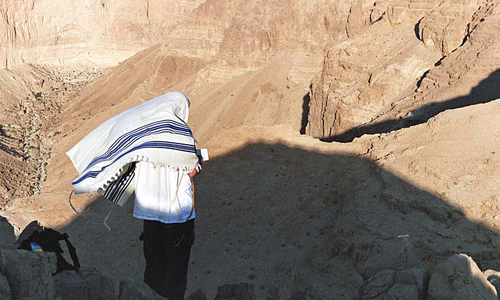
praying_at_masadaI’m not saying there isn’t any possible rebuttal from Christianity or the other “Judaisms,” but at least we have a firm starting point as to how (and why) Messianic Jews must continue to live as observant Jews, and how halachah can be appropriately part of the modern expression of “the Way” within Jewish communities. It seems like there’s a certain amount of latitude regarding how each Jewish tradition (including the modern Messianic tradition) may select halakhot (although as PL says below, a great deal of selection may not be required) that meets its needs without running roughshod over the authority of the written Bible.

But PL has more to say:

Halakhah is the human response in the conversation with HaShem that begins with His Torah instructions. It is a re-iterated conversation that continues throughout our generations, so of course it is varied and flexible. Judaism is not constrained by a concept of “the Bible as the final sovereign word of G-d”. We view a hierarchy that begins with the Torah above all, followed by the authoritative interpretations of Torah from Israel’s appointed leaders and teachers, in the Torah-defined role of the “shoftim v’shotrim” (judges and magistrates). The Prophets decry failures to live up to the standards of Torah, but they do not contribute to any new interpretation of it. The Writings provide additional illustrations of how this plays out in history or even in hypothetical scenarios (as some might view some of the literature). The inter-testamental apocryphal writings take that farther, including some material that could be viewed virtually as “fantasy” (since it was a bit too early in history to consider science fiction), though even that period included historical records such as the Maccabbean revolt and the miracle of Hanukah. Subsequent to that we have a variety of Rabbinic literature and Responsa, of which the Rav Yeshua messianic writings are a fitting example, though a bit earlier than other Rabbinic codifications. So MJ is not required to choose a particular stream of tradition, though most of its current contributors to halakhic formulation have been influenced by the Conservative movement and its particular flexibility. The only “complication” for messianists is the desire to integrate the views of Rav Yeshua and Rav Shaul into their compilation of halakhah for a Jewish community that honors them at least as well as other rabbinic views are honored. Since there is not really any incompatibility here for the discerning halakhist, that need not present difficulty or disconnection from other halakhic compilations in other Jewish streams.

As to the difficulty of recapturing the 1rst-2nd-century worldview, more data seems to become available continually, but it is fair to say that MJ has devoted more attention to this than any other form of Judaism has done, because of its need to understand the teaching context of its primary rabbis. But from a modern halakhic standpoint, the issue is somewhat moot because of all that has happened in the past two millennia. So “… when [he] comes, will he find faith in the earth? (Luke 18:8). The linguistics of this also allow a more narrow colloquial reading asking whether he will find those who trust him in the land of Israel. Will he have any difficulty recognizing his sheep, either because of their halakhah or in spite of it? As long as MJ halakhists keep this question in mind, I’m reasonably confident of a positive response.

There is a midrash that depicts Moshe Rabbeinu as being carried by an angel across time and space to visit the Jewish Talmudic Academy of Babylon. He is terribly perplexed by the argumentation, of which he cannot make any sense. He is then consoled by its reference to the Mishnah and its quotation of the words of Torah from the mouth of Moshe. Now, while we know nothing of the conversation that occurred on the “Mount of Transfiguration” between Rav Yeshua, Moshe, and Eliahu, in some future midrashic conversation Moshe might council Rav Yeshua to be patient with his modern disciples for exactly similar reasons. And we would be similarly well advised.

-PL, 1/28/2013

jewish-handsI apologize for inserting large blocks of copied and pasted text, but the alternative would be for me to rework what PL has written and present those ideas in my words, and really, what’s the point? Better that you read what was presented in the original comments rather than risk my messing up the meaning or intent. All I really want to present are these ideas and my impressions of them.

Part 1 of this article was my continued understanding of how Torah does and doesn’t apply to Gentile Christians, including Jewish halachah. In this second part of my missive, I’m trying to show the opposite side of the coin, not so much about why Torah applies to Jews, because by definition, the entire body of Torah must apply, but how we can see the rulings and traditions of the sages as a natural extension of Torah, which includes the authority of the accepted teachers in Judaism to make such rulings.

I view Judaism as we know it today as valid and authoritative for the Jewish people. I also agree with Yeshua own words (in Matthew 23:3) that whatever (“everything”) those sitting in the seat of Moses (Jewish leaders) bid Jews to observe is bound on all Jews. He didn’t make an exception for Jewish disciples of Yeshua, but in fact was speaking to them when he said those words. He believed in the leadership of Israel, even if he condemned those who were hypocrites.

-Gene Shlomovich, 1/28/2013
as quoted from his comment in The Jewish Girl Who Saved Her Children

I’ve spent a great deal of time attempting to establish and confirm the validity and the authority of the ancient and more modern Jewish sages to establish halachah in Judaism including Messianic Judaism, such as in my recent blog post The Moshiach and the Rabbis, so I won’t go into a long tirade and repeat myself again at length, but I do want to try and tie together as many loose threads as possible.

If God is God over all and Jesus is the Jewish Messiah King and the Divine in the flesh who dwelt among us and who will do so again, then what are we to do with the post-Second Temple sages and the ancient and modern Jewish traditions and interpretations? Apparently, if you’re a Gentile Christian, you don’t have to do anything with them. As I have said on numerous occasions over the past few years, a Christian, in my opinion, is free to observe a wide variety of the mitzvot on a voluntary basis as a personal conviction and in solidarity with his or her Jewish fellows, as long as issues of Jewish identity don’t get stepped on, let alone walked all over. Saying all that, we don’t have to perform those mitzvot in obligatory obedience.

Since it’s impossible to observe the kosher laws, wear tzitzit, lay tefillin, or even daven from a siddur without encountering the sages and their judgments, any Gentile Christian who chooses to go down that path will have to make decisions about tradition as well (should I bind my tefillin by the Ashkenazi or Sefard tradition, or use the Chabad or another method?) Halachah, in this case, is unavoidable, even for the Gentile.

But for the observant Jew, it’s not a matter of whether or not to walk the steps of halachah, but to “grapple with a selection of halakhot that meets his or her needs.” God’s Word, in the final analysis, is absolute, but not necessarily halachah (of course, if you ask an Orthodox Jew about it, you might get a different answer).

Pastor Randy asked me recently if I thought it was possible for anyone to observe Torah perfectly? No, I sincerely doubt it, only because we human beings are bound to make mistakes sooner or later. So if Jews can’t keep the Torah perfectly, what’s the point of keeping it at all (James 2:10)? That’s like asking a Christian if he were to find himself looking at a woman in lust even on a single occasion, should he give up on remaining faithful to his wife, throw the Bible to the winds, and let himself be consumed by his desires for other women. It’s not about having perfect behavior, since no person is perfect, it’s about “perfecting” ourselves, continually turning away from sin, and turning more completely to God.

white-pigeon-kotelFor a Jew, that includes striving to become more spiritually elevated by correcting transgressions and continuing to master the mitzvot one at a time in order to honor God as a Jew and to sustain a Jewish presence and identity today and for future generations.

I hope this makes some sort of sense to both my Jewish and my Christian readers. I don’t have a Jewish lived experience, so I suppose I’ve made a thousand mistakes and if so, I trust I’ll be gently corrected. As far as my Christian readers go, I don’t doubt you will have many points of disagreement, if only because especially in Protestantism, tradition and Bible generally don’t mix. But we aren’t looking at how Christians walk as disciples of the Jewish Messiah, we’re looking at how Jews walk as disciples, and if we are to honor the uniqueness of their relationship with HaShem, then we must also honor how Jews are to be Jews, both in their communities, and in the presence of God.

The Lord is my shepherd; I shall not want.
He makes me lie down in green pastures.
He leads me beside waters of rest.
He restores my soul.
He leads me in right paths for his name’s sake.
Even though I walk through the valley of deep darkness,
I will fear no evil, for you are with me;
your rod and your staff, they comfort me.
You prepare a table before me in the presence of my enemies;
you anoint my head with oil; my cup overflows.
Only goodness and steadfast love shall follow me all the days of my life,
and I return to dwell in the house of the Lord for length of days.

Psalm 23 (ESV)

This conversation will continue in an “extra mediation” later today, based on some correspondence with PL whose insights I’m learning to appreciate. I hope I’ve laid a sufficient foundation upon which to base a dialog on these matters. The sheep are out of the pens and gathering together as a flock in the green meadow with our Good Shepherd. It is his voice we must listen to, and if we are his, we will follow where he leads.

One last thing I’d like to add is a short video made of Boaz Michael presenting the Gospels as the oldest written record of some of the Jewish oral traditions. I hope you’ll find this information as compelling as I do.

Shepherd, Pens, and Flock, Part 1

ancient_beit_dinThe apostles, after some deliberation, dispensed four rulings. Their letter to these Gentiles who are coming to faith indicated that they must abstain:

  • from what has been sacrificed to idols
  • from blood
  • from what has been strangled
  • from sexual immorality

The text of the letter is found in Acts 15:23-29. (Re-statements of these rulings appear in Acts 15:20, 21:25. Also note that manuscript variants exist with different versions of this list.)

Numerous and varied interpretations exist as to the exact intent and purpose of these rulings. Regardless, it is unreasonable to think that these four laws constitute the complete list of obligations of a Gentile before God. They say nothing about stealing, oppression, justice, or honor for parents, for example. Furthermore, the laws are not specific enough to be practical. What, for example, constitutes “sexual immorality”? Where does one go to find that definition, if not the Torah?

Regardless of their exact meaning and purpose, we can see from these rulings that they are not an end, but a beginning of a Gentile’s journey into a life conformed to God’s will. Consider the rationale for these four prohibitions:

Therefore my judgment is that we should not trouble those of the Gentiles who turn to God, but should write to them to abstain from the things polluted by idols, and from sexual immorality, and from what has been strangled, and from blood. For from ancient generations Moses has had in every city those who proclaim him, for he is read every Sabbath in the synagogues. (Acts 15:19-21)

What purpose does it serve to mention the fact that [the Torah of] Moses is read every Sabbath in the synagogues in conjunction with the list of obligations for Gentiles?

-Aaron Eby
“Divine Invitation”
Adapted from Messiah Journal #100
First Fruits of Zion (FFOZ)

As my regular readers must realize by now, I’ve been writing “fast and furious” about the topics of halachah in the Messianic Jewish world and the application of the Torah commandments to Christianity. I feel as if I’m trying to think in two opposite directions simultaneously, and it’s giving me a headache. But it’s also fascinating me and as you can tell, I can’t put these topics down. It is or should be part of the continual dialog between the believing Jewish and Gentile communities, and provide a point where we can meet to compare our similarities and our differences; a place in the meadow where the sheep from the two sheep pens participate in the flock of the Good Shepherd (see John 10:1-18).

I’m not a real fan of the term “divine invitation,” mainly because I don’t think it can be derived from the Bible or even necessarily implied. I’d rather have the Christian’s role in relation to Judaism defined by a more substantial mission.

That doesn’t mean to say that I disagree with Aaron, but his article poses more questions than answers. He suggests that more of the Torah and the Prophets apply to the Gentile church than what is intimated in the “Jerusalem letter,” but he doesn’t define just how far we are to take it. I suppose the answers are contained elsewhere, but I’m not going to wait until I can discover their location in order to comment.

Aaron says correctly that Israel has always been intended to be a light to the nations (Deuteronomy 4:5-8, Isaiah 49:1-6). This “light” is to extend well beyond the first coming of the Messiah and project itself far into the Messianic Age (Micah 4:1-2, Isaiah 42:1-4). He even goes so far as to suggest that Messiah always meant the Torah to be the light for the Gentiles:

You are the light of the world. A city set on a hill cannot be hidden. Nor do people light a lamp and put it under a basket, but on a stand, and it gives light to all in the house. In the same way, let your light shine before others [anthropon, literally “men, humans, mankind”], so that they may see your good works and give glory to your Father who is in heaven.

Matthew 5:14-16

praying-jewish-womanBut as I’ve previously said, just how was and is the Torah meant to be applied to the Jewish and Gentile populations of believers? As I’ve met Aaron and I know Boaz Michael as well as the philosophy of FFOZ. I know they don’t believe in a theology that does away with Jewish identity and fuses Jew and Gentile believers into a homogeneous mass of generic humanity, but how we Gentiles are to “do” Torah has never been clear, except as an effect of love of God and of humanity, which I have commented on and related to the new commandment of Messiah.

I did suggest to my Pastor not too long ago that if a Christian wanted to voluntarily choose to take on additional mitzvot as a personal conviction, it would not be such a bad thing. The fact that he lived in Israel for fifteen years meant, in his case, that he did observe such things as Shabbat and a form of kosher, because his environment supported it. Granted, the environment outside of Israel is less friendly to Jewish observance, particularly among Christians, but that doesn’t mean a Christian who is so led can’t perform some of the same “Torah” out of love and solidarity, especially in interfaith families such as mine.

But why can’t Gentile Christians simply mimic Jewish religious behavior down to the last detail? I mean, what’s the problem if, as Aaron says, the Torah is for the Gentiles, too?

Each human being possesses a unique combination of personality, talents, timing and circumstances – a specific role to play in this world. Our role is dependent on many factors – not only our innate talents, but also on the needs of the times.

The important thing is to discover your unique contribution – and fulfill it.

The Torah tells us that one day Moses saw an Egyptian taskmaster killing a Jew.

“And Moses looked all around, and when he saw that there was no man, he took action.” (Exodus 2:11-12)

Why does the Torah tell us “there was no man”? Because Moses was checking to see if someone else was available, someone better qualified to do the job. Because if you reach for leadership when it’s not necessary, then you’re doing it more out of your own desire than for the needs of the people. Only when Moses saw there was nobody else qualified, did he take action.

-Rabbi Noah Weinberg
“Way #26: Know Your Place”
from 48 Ways to Wisdom
Aish.com

If Gentile Christians were to observe the mitzvot in a manner completely like the Jewish people, then the most straightforward way to accomplish this would be for Jews to convert Gentiles to Judaism. While such a process didn’t exist in the days of Moses because Israel was organized around tribal identity, and after the Babylonian exile, around clan identity (see Cohen, From the Maccabees to the Mishnah, Westminster John Knox Press; 2006) it was completely available in the days of Jesus. But that didn’t happen in the New Testament as the application of Christ’s Matthew 28:19-20 command. We see this acted out by Peter in response to Cornelius and his household:

While Peter was still saying these things, the Holy Spirit fell on all who heard the word. And the believers from among the circumcised who had come with Peter were amazed, because the gift of the Holy Spirit was poured out even on the Gentiles. For they were hearing them speaking in tongues and extolling God. Then Peter declared, “Can anyone withhold water for baptizing these people, who have received the Holy Spirit just as we have?” And he commanded them to be baptized in the name of Jesus Christ.

Acts 10:44-48 (ESV)

Notice what didn’t happen here. If it had been Peter’s intention to convert the Gentiles to Judaism, between Cornelius and his household receiving the Holy Spirit and being baptized in water, Peter should have arranged for Cornelius and the other men to be circumcised. He didn’t and in fact, we don’t see any of the new disciples of Christ from among the nations ever converting to Judaism (I believe Timothy was considered Jewish because of his Jewish mother and that’s why Paul circumcised him). Paul spent a great deal of effort in his letter to the Galatians specifically discouraging them from converting, and as I’ve said before, also citing Paul from Galatians, if you’re not a Jew or a righteous convert, you are not obligated to the full “yoke of Torah,” both as defined by the actual Books of Moses and the Prophets, and by accepted halachah.

the_shepherd1Rabbi Weinberg suggests that we are each created for a purpose as individuals and should pursue that purpose in order to fulfill God’s design for our lives. What if it’s true that God’s intent was and is to have a specific purpose for the Jews and another (and perhaps overlapping) specific purpose for the Gentile Christians?

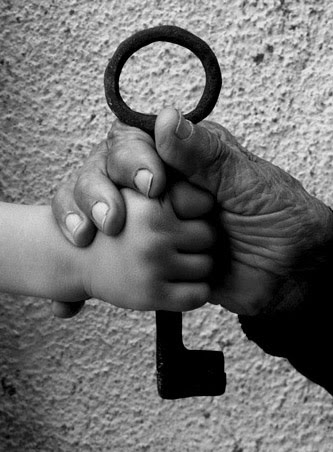
Jesus opens all the doors and holds all the keys. He is the portal by which we Gentiles enter into any sort of covenant relationship with God at all, and he also fully reconciles and restores the Jewish nation to the Father as the fulfillment of all His covenants with and His promises to the Jewish people. Make no mistake, the Sinai covenant made between God and Israel didn’t vanish simply because Messiah came. It would be insane to suggest otherwise. Not only did Jesus live a lifestyle in obedience to Torah and not only did his teachings support Torah and the Temple, but his Jewish disciples were never seen to do otherwise, either. The history of the Messianic movement forward isn’t abundantly clear, but I don’t believe that next generation of Jews after Paul and Peter were any less Jewish even as they continued to worship Jesus as Messiah (we never see Paul, for example, telling Timothy that he doesn’t have to observe the mitzvot as a Jew).

But that’s a direction I’m saving for part 2 of this article. For now, although we don’t have an image we could define as crystal clear regarding just how far to apply Torah to Christians, we do know that it is well-applied in the weighty matters of the Law: doing justice, loving kindness, and walking humbly with our God.

Whatever Happened to the Mixed Multitude?

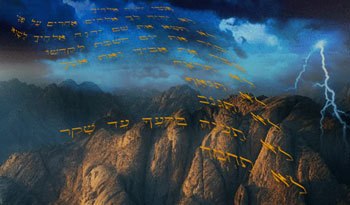
Mount SinaiThe first prerequisite for receiving Torah is unity of the Jewish people. On the first day of Sivan, the Jews arrived at the mountain. The verse (Exodus 19:2) uses an unusual conjugation to describe their encampment. Rather than the plural form, here the entire camp is described in the singular. This emphasizes the need for unity at the giving of the Torah. (Rashi, Exodus 19:2)

-Rabbi Zave Rudman
“Chumash Themes #12: The Ten Commandments”
Aish.com

(Ex. 12:38), a class who accompanied the Israelites as they journeyed from Rameses to Succoth, the first stage of the Exodus. These were probably miscellaneous hangers-on to the Hebrews, whether Egyptians of the lower orders, or the remains of the Hyksos (see EGYPT ØT0001137; MOSES ØT0002602), as some think. The same thing happened on the return of the Jews from Babylon (Neh. 13:3), a “mixed multitude” accompanied them so far.

“Mixed multitude” definition
dictionary.reference.com

I don’t know what brought this to mind today, but the “mixed multitude” popped into my head. Probably because comments on several of my blog posts recently have mentioned conversion to Judaism, and that is the commonly held fate in religious Jewish opinion of this group of non-Jews who left Egypt with the Children of Israel (and possibly a similar group returned to Israel with the Hebrews at the end of the Babylonian exile).

But what happened to them? Where did they go?

I’ve been lamenting with Derek Leman lately over the loss of my “innocence” about the Bible. If scholars like Friedman are right, then the entire question may be moot because the Israelites and a group of Gentile “hangers on” may or may not have accompanied them on an exodus that may or may not be partly or completely fiction.

But setting that aside for the moment and assuming the events and people groups being described have some sort of basis in reality, I’ll go ahead and ask the question: what the heck happened to the “mixed multitude?”

The answer depends on your theology. I say that because how we interpret what the Bible is telling us is firmly rooted in what we believe about our religion.

Let’s look at Rabbi Rudman’s statement above. According to Jewish tradition, the group who accepted the Torah at Sinai were basically considered a single person; totally unified. But if that includes Hebrews and Gentiles, then their identities became fused into a single entity with no ability to differentiate. That can’t be literally true, because post-Sinai, individuals were identified as non-Jews.

Now an Israelite woman’s son, whose father was an Egyptian, went out among the people of Israel. And the Israelite woman’s son and a man of Israel fought in the camp, and the Israelite woman’s son blasphemed the Name, and cursed.

Leviticus 24:10-11 (ESV)

So national identity wasn’t obliterated after Sinai and it was recognized that the individual involved had an Israelite mother and an Egyptian father.

So were Hebrews and Gentiles fused in some other way? Midrash aside, is this even remotely likely?

Let’s take a look at some opinions:

In Exod 12:38, we read that when the Israelites left Egypt, a mixed multitude (עֵרֶב רַב) went up with them. Therefore, the question arises: Who were the mixed multitude? Interestingly, the word עֵרֶב is also attested to at the time of Nehemiah. In Neh 13:3 the term עֵרֶב is linked to Nehemiah’s reforms against intermarriages. In other texts, such as Jer 25:20; 50:37 and Ezek 30:5, the term עֵרֶב has the meaning “to take on a pledge” or “to give in pledge exchange.” In those instances, the term עֵרֶב appears in the context of war and those slain by the sword; thus, the term refers to mercenaries. A clue to the identity of the mixed multitude can also be found in Exod 13:18, where the text describes the Israelites at the time of the Exodus as חֲמֻשִׁים, a term which can have military implications. The existence of mercenaries in the ancient world is well known. They were part of David’s army and accepted as part of the Israelite nation. In this paper, we will show that the term עֵרֶב רַב in Exod 12:38 refers to mercenaries who intermarried with the Israelites and left armed with them at the time of the Exodus from Egypt.

-Shaul Bar
“Who Were The ‘Mixed Multitude’?”
Hebrew Studies (taken from the Abstract)
Vol. 49, (2008), pp. 27-39
Published by National Association of Professors in Hebrew (NAPH)
Article Stable URL: http://www.jstor.org/stable/27913875

many peopleThat defines the “mixed multitude” as an extremely specific group of people, in this case, mercenaries. But that might not be to everyone’s taste.

In typical fulfilment of the promise in Genesis 12:3, and no doubt induced by the signs and wonders of the Lord in Egypt to seek their good among the Israelites, a great crowd of mixed people (רב ערב) attached themselves to them, whom Israel could not shake off, although they afterwards became a snare to them (Numbers 11:4). ערב: lit., a mixture, ἐπίμικτος sc., λαός (lxx), a swarm of foreigners; called אספסף in Numbers 11:4, a medley, or crowd of people of different nations. According to Deuteronomy 29:10, they seem to have occupied a very low position among the Israelites, and to have furnished the nation of God with hewers of wood and drawers of water. – On Exodus 12:29, see Exodus 12:34.

Keil and Delitzsch Bible Commentary
referencing Exodus 12:38

That expands the identity of the “mixed multitude” from a single profession but still leaves us with a low view of this group of Gentiles who, according to this interpretation, would be nothing but trouble for the Israelites and ultimately provide the tribes with a “worker class” to perform menial labor.

Barnes’ Notes for the same verse say that they were “Probably remains of the old Semitic population, whether first brought into the district by the Hyksos or not is uncertain. As natural objects of suspicion and dislike to the Egyptians who had lately become masters of the country, they would be anxious to escape, the more especially after the calamities which preceded the Exodus.” Gill’s Exposition of the Entire Bible tells us “Some of these were Egyptians, and some of other nations that had resided in Egypt, and who, on various accounts, might choose to go along with the children of Israel; some through intermarriages with them, being loath to part with their relations, see Leviticus 20:10, others on account of religion, being proselytes of righteousness, and others through worldly interest, the land of Egypt being by the plagues a most desolate place; and such wonders being wrought for the children of Israel, they saw they were a people that were the favourites of heaven, and judged it safest and best and most for their interest to keep with them…”

We can’t be sure who this group of people were, but most (but not all) opinions I’ve found seem to believe they were the dregs of society, refugees who had no better place to go and nothing better to do. An uncertain future with the fleeing Israelites was better than remaining in slavery and suffering in Egypt.

Was this “rabble” raised up spiritually with the Hebrews at Sinai and became one with the covenant people of God?

We read famously in Exodus 12:38 about a mixed multitude which left Egypt with Israel. This probably reflects the idea that non-Israelite peoples left Egypt with Israel (other ideas have been suggested, but I am reading it this way). Many in the Gentile Back-to-Torah movements today (Hebrew Roots, One Law, Two House) refer often to this passage as a paradigm for their own relationship to the Jewish people. The assumption is: when Torah was given there were Gentiles present, they were included within the Torah commandments as non-Israelites, and this is a parallel to Gentile in our time who are in Messiah and who thus feel they too have been commanded to keep Torah. I wish to show in this article, referring to another aspect of the Jewish halakhah (rules of practice) for conversion, that the mixed multitude cannot be used in this manner. This mixed multitude should be regarded as joining Israel (going through conversion).

-Derek Leman
“Conversion 2: The Mixed Multitude”
Messianic Jewish Musings

mountain-morningThis is really the crux of my curiosity about this group, since they are often used, in certain minority Christian circles, as the justification for “Gentile/Christian obligation to Torah.” Leman’s opinion should be obvious to those who know his work or the general opinion of Messianic Judaism (as opposed to the various Hebrew Roots groups), so I don’t think you’ll have to guess about his conclusions.

I don’t believe the mixed multitude converted as such during the days of Moses, since the Children of Israel were tribal-based and one doesn’t convert to a tribe. Even after the Babylonian exile (see Cohen), the Israelites returned to their land as clan-based groups and as yet did not have a well-defined (or defined at all) concept of conversion (Conversion is a recognized process by the time we reach the Second Temple period). The closest I think we can come is that anyone who wanted to stay with the Israelites had to live like the Israelites, but they were still not members of a tribe or later, a clan. They were a group of “gerim” who lived alongside the Israelites but who didn’t become Israelites.

Leman continues:

So, let’s consider the mixed multitude which left Egypt with Israel. What happened to them? We do not hear about their continuing existence as a group of people. They did not remain Gentiles within Israel. They became Israelites (like Caleb did). They were absorbed into the people of Israel (exactly like modern converts are absorbed into the people of Israel). And they submitted to the same covenant ceremony as the Israelites (and as converts do today).

I suppose to a degree it seems as if I’m disagreeing with Leman, since he says the “mixed multitude” did, in a sense, convert and disappear into the tribes. Yes, they disappeared, but having no tribal identity, how did they manage it? Assuming the Gentiles living among Israel intermarried with various members of the tribes, their children, and grandchildren, and later descendants would have taken on tribal identity and then the Gentiles would have vanished. Presumably if a later group of Gentiles left Babylon with the Jewish clans, they too would have intermarried (or been subsequently evicted, see Ezra 10) and then their descendants would have adopted clan identification and their history as Gentiles would have been lost to history and time.

Can we use their example, Gentiles living alongside Jews and performing the same mitzvot, as a model for Christianity and Christian obligation to Torah today? I seriously doubt it. The social and organizational conditions that required the mixed multitude to take on a status very similar to widows and orphans who had to tribal inheritance to lands in Israel no longer exists. Jews have long since ceased to be a tribal people and Judaism no longer recognizes that process as a valid method of accepting non-Jews within their community. Instead, a formal conversion process is now in place.

Also, what about Jesus?

Oh yeah, remember him?

Yes, that was a tad snarky, but to deny that Jesus gives all people among the nations a covenant relationship with God (the process is complicated and frankly, not well-defined theologically), is to deny Jesus entirely.

The story of the mixed multitude, in any meaningful theological sense, is no longer relevant. This process is one that passed away because it is no longer necessary. That’s not the same as saying that Jewish obligation to the mitzvot has passed away, nor is it a supersessionistic pronouncement. The Messianic reality of Jesus just makes the status of the ancient gerim completely anachronistic for the modern Christian, and it has been so for at least 2,000 years, and probably for a good deal longer.
moshiach-ben-yosefI know I’ve been writing a lot about all this lately, and I will continue to do so (at least for tomorrow and the next day), but in elevating the status of the ancient ger as a role model and template for the modern Christian is to say we must strip ourselves of the blood of Jesus, so to speak, and undo everything that he has done for us. In his letter to the Galatians, Paul strongly discouraged the Gentile believers from converting formally to Judaism as a means of attaining righteousness before God. It was completely unnecessary for that purpose.

Look: I, Paul, say to you that if you accept circumcision, Christ will be of no advantage to you. I testify again to every man who accepts circumcision that he is obligated to keep the whole law. You are severed from Christ, you who would be justified by the law; you have fallen away from grace. For through the Spirit, by faith, we ourselves eagerly wait for the hope of righteousness. For in Christ Jesus neither circumcision nor uncircumcision counts for anything, but only faith working through love.

Galatians 5:2-6 (ESV)

This is not to say that conversion to Judaism was forbidden in Paul’s eyes and it’s likely that some believers did convert. But in those days, there was no dissonance between being Jewish (born or converted) and discipleship under Yeshua (Jesus) as Messiah. Today, it’s problematic, since virtually any legitimate conversion process to Judaism requires the individual involved to renounce all other religious allegiances (specifically Christianity).

In many of my other blog posts, I say that remaining Gentile Christians and being drawn to the Torah is not a problem. We can indeed go beyond our obligations and voluntarily take on many of the mitzvot. It doesn’t make us Jews. It doesn’t make us Israelites. It makes us Christians who have solidarity with the Jewish people and who, alongside them, strive to encourage and support the return of the Jews to the Torah, to the Land, and to summon the Moshiach, may he come soon and in our days.

As for the mixed multitude…I hate to say it, but they’re old news. That dinosaurs once existed and were a necessary presence in their time and place doesn’t mean that they have relevancy in our modern world. A lot has changed since then.

Final note: This is my 700th blog post for Morning Meditations. If God is willing, they will continue for another 700 and beyond.