Tag Archives: Jesus

Spirit of Knowledge and the Fear of the Lord

In the previous chapter the Alter Rebbe explained that fear of G-d is a prerequisite to divine service. Every Jew is capable of attaining this level, by contemplating how “G-d stands over him” and “searches his reins and heart [to see] if he is serving Him as is fitting.” This thought will lead him to bring forth at least some measure of fear in his mind. This in turn will enable him to study Torah properly, as well as to perform both the positive and negative commandments.

The Alter Rebbe also noted that this level of fear is known as yirah tata‘ah, “lower-level fear,” which is a preparatory step to the proper performance of Torah and mitzvot. This degree of fear must be manifest, if one’s Torah study and performance of the mitzvot are to be deemed avodah, divine service.

Likutei Amarim, beginning of Chapter 42 (Listen online)
By Rabbi Schneur Zalman of Liadi (1745-1812), founder of Chabad Chassidism
Elucidated by Rabbi Yosef Wineberg
Translated from Yiddish by Rabbi Levy Wineberg and Rabbi Sholom B. Wineberg
Edited by Uri Kaploun

In relation to God, there are many levels of yirah: yirat haromemut (awe in the presence of infinite Divine exaltedness), yirat hamalchut (awe in the presence of Divine kingship), and yirat haonesh (fear of punishment). This last level of yirah is not exclusively “pure” in its motivation (for it does not picture God directly as the object of one’s yirah), but rather derives from the kelipat nogah (translucent shell) of one’s soul experience, involving a mixture of good (for it precludes sinning) and evil (for it shadows one’s consciousness with thoughts of bad consequences).

Yirah – “Fear”
Basics in Kabbalah
inner.org

I suppose “yirat haonesh” is where we all begin when we first become “aware” that God is real and God is God. In our awareness of God, we also become aware of ourselves and the obvious limitations of humanity compared to an infinite, all-powerful Divinity. Even David asked:

…what is man that you are mindful of him,
and the son of man that you care for him? –Psalm 8:4 (ESV)

Before we can understand how it is to be humble, we often feel humiliated.

While the Alter Rebbe states that “fear of G-d is a prerequisite to divine service” for every Jew, I tend to believe (with apologies to the Alter Rebbe) that fear of God is a prerequisite for everyone as we approach our service to God. This was famously said as:

The fear of the Lord is the beginning of wisdom,
and the knowledge of the Holy One is insight. –Proverbs 9:10 (ESV)

Christians reading this may think it’s strange to emphasize learning, knowledge, and wisdom, motivated by fear, as the means to divine service, but it is an exceptionally common viewpoint for a Jew. But the mistake here is to think of Yirah…fear, as an emotion. From a mystical point of view, it is so much more.

Yirah is the spiritual state associated with the sefirah of gevurah. In contrast to the heart’s initial, innate desire to give, deriving from ahavah, yirah expresses one’s deeply felt concern and fear lest one’s gift fall into the hands of an unworthy recipient who may actually misuse it destructively.

Yirah evokes gevurah, the might necessary to reject and even fight against negative and destructive forces.

The two powers of ahavah and yirah are intended to complement one another and act as a pair, as the two hands of the body in their common effort to construct or as the two wings of a bird in their flight upward. In a more general sense, yirah is understood to represent one’s sensitivity to the presence of another. Sensitivity gives rise to consideration of the other’s feelings and respect for him (as in the idiom yirat hakavod). While ahavah motivates attraction and union, yirah stands in awe from afar.

inner.org

Jewish mysticism may not be your “cup of tea” but it has the benefit of explaining certain concepts we find in the Bible that we otherwise wouldn’t be able to adequately understand, let alone integrate into our lives. There is also a progression being described whereby we start at a very basic and frightening place, but then move on, step by step, into something wonderful.

The Higher Consciousness brings all things into being. Every blade of grass, every person, every event.

Therefore, he who experiences the higher consciousness does not fear any thing, nor person, nor event. In all of these he is aware only of the One who is conscious of him. And of all things.

-Rabbi Tzvi Freeman
“One Consciousness”
Based on letters and talks of the Rebbe
Rabbi M. M. Schneerson
Chabad.org
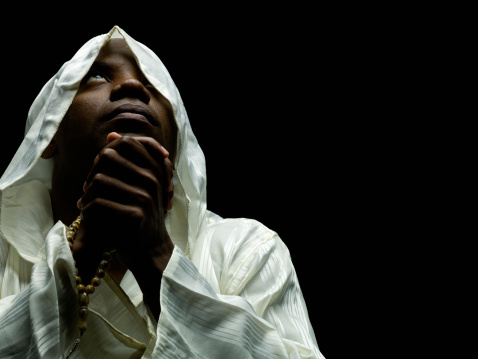
While a person who has just accepted the Lord Jesus Christ as Savior and Master may feel both elated and terrified at the experience (if he or she has any sense at all), that’s only the starting point. Ultimately, if we truly are perfected in our faith and spiritual relationship with God, we learn to fear absolutely nothing.

And do not fear those who kill the body but cannot kill the soul. Rather fear him who can destroy both soul and body in hell. Are not two sparrows sold for a penny? And not one of them will fall to the ground apart from your Father. But even the hairs of your head are all numbered. Fear not, therefore; you are of more value than many sparrows. –Matthew 10:28-31 (ESV)

That’s easier said than done.

I’m not talking about who you are right now or who I am right now, but who we can be. This is all tied up with the process of development and growth of our spirits. This is why continual study, meditation, and prayer are not just things we add on to our lives, but experiences that become fully integrated into our beings. In our own humble and limited way, this is how we learn to Know God!

From a state of abject fearfulness, we can become ultimately courageous.

To achieve wonders takes a fearless heart and an open mind.

True, courage and openness are two opposite directions for the soul to travel at once. But they take place in two distinct chambers: The mind awakens to its nothingness, and the heart G-d gave you is bared in all its brazen power.

Rabbi Tzvi Freeman
“Fierce and Humble”
Based on letters and talks of the Rebbe
Rabbi M. M. Schneerson
Chabad.org

Admittedly, I often feel more like a sheep than a lion, but even the sheep can face danger if the Shepherd is nearby. David, as a boy, protected his flock using rocks and defended his sheep against lions. Jesus, our Good Shepherd, gave everything so that we, his flock, would be protected from all dangers. Once we surrender to Him from Whom comes all glory, and honor, and power, even the sheep will lie down with the lion and be perfectly at peace (Isaiah 11:6).

They shall not hurt or destroy
in all my holy mountain;
for the earth shall be full of the knowledge of the Lord
as the waters cover the sea. –Isaiah 11:9 (ESV)


Rediscovering Awe

WonderThe presence of Mashiach is revealed on Acharon Shel Pesach, and this revelation has relevance to all Israel: Pesach is medaleg, “skipping over” (rather than orderly progress), and leil shimurim, the “protected night.” In general the mood of Pesach is one of liberty. Then Pesach ends, and we find ourselves tumbling headlong into the outside world. This is where Mashiach’s revealed presence comes into play – imbuing us with a powerful resoluteness that enables us to maintain ourselves in the world.

-from Torah lesson: Chumash: Acharei Mot, Revi’i with Rashi
Compiled and arranged by the Lubavitcher Rebbe
Rabbi Menachem Mendel Schneerson, of righteous memory, in 5703 (1943)
from the talks and letters of the sixth Chabad Rebbe
Rabbi Yosef Yitzchak Schneersohn, of righteous memory
Translated by Yitschak Meir Kagan

This is very much what I said in yesterday’s morning meditation, so why am I repeating myself? I don’t feel like it’s time to let go of this theme and move on. I am still passing from one state to another, like the season passing from winter to spring.

I mowed and edged my lawn for the first time this year just the other day. Thanks to my previous application of fertilizer, the lawn, especially in some areas, had grown quite tall and green. Things were a little “out of control,” but nothing my trusty lawn mower and I couldn’t handle.

But I find that I’m not ready for spring yet. I still want to dress in warm sweaters and heavy coats against the winter’s chill. I’d just as soon Persephone stay with her husband Pluto in the underworld for a month or two longer, rather than rejoin her mother Demeter in the world above (if you’ll pardon my momentary lapse into Greek mythology). I suppose having “failed” Passover this year, I’d just as soon not have to surrender the commemoration of redemption and hope, for leaving it behind is like leaving my sense of renewal undone and incomplete.

But time and the will of God does not bend to the desires and laments of man, and so spring has come, Passover has ended, and it’s time to mow the lawn, again. As I “tumble headlong” into the world after Pesach, I can only hope and pray that the “revealed presence” of the Messiah will indeed imbue me with “a powerful resoluteness that” enables me to “maintain myself in the world” beyond.

In my elementary attempts at learning acceptance and reaching for the “peace of God, which surpasses all comprehension” (Philippians 4:7 ESV), I find that I have no choice but to surrender myself to not only the Almighty, but to whatever circumstances He allows in my life. But in the end, surrender is part of what He wants from me…and perhaps from all of us.

With this preparedness to surrender his soul to G-d, one should begin to recite the morning benedictions: “Blessed are You…,”

Now, all one’s intent in the surrender of his soul to G-d through Torah and prayer, to elevate the spark of G-dliness therein — in the soul — back to its source, should be solely for the purpose of causing Him gratification, like the joy of a king when his only son returns to him, after having been released from captivity or imprisonment…

-Likutei Amarim, end of Chapter 41

It seems that being released from captivity does not necessarily require a “feeling” but only the act and the will to surrender to God…to study…to pray…and to move on beyond failures, real or perceived. It requires that I find the ability to reach inside and to discover a new or renewed service to God apart from how I may feel about anything else.

If you are serving the same G-d today as you served yesterday, who are you serving but yourself?

Can G-d be frozen and defined? Does He get older with each day? Does He eventually, then, become of a relic of the past?

Where there is love and where there is awe, each day brings a discovery of endless wonder.

-Rabbi Tzvi Freeman
“No Repeats”
Based on letters and talks of the Rebbe
Rabbi M. M. Schneerson
Chabad.org

With each dawn, God is new, and so is my potential for the discovery of awe and an endless wonder in Him.

The Radiance of the Light of Messiah

By day we take care to follow this order: Make Kiddush, then daven Mincha, and after that eat the festive yom tov meal.

The Baal Shem Tov used to eat three festival meals on Acharon Shel Pesach.

The Baal Shem Tov called the (third) meal of this day Mashiach’s s’uda (the “festival meal of Mashiach”). Acharon Shel Pesach is the day for Mashiach’s s’uda because on this day the radiance of the light of Mashiach shines openly.

In 5666 (1906) a new procedure was adopted for Pesach in the Yeshiva Tomchei  T’mimim in Lubavitch: The students ate the Pesach meals all together, in the study hall. There were 310 students present seated at eighteen tables. My father the Rebbe ate the festive meal of Acharon Shel Pesach with the yeshiva students. He ordered that four cups of wine be given each student, and then declared, “this is Mashiach’s s’uda.”

-Compiled and arranged by the Lubavitcher Rebbe
Rabbi Menachem Mendel Schneerson, of righteous memory, in 5703 (1943)
from the talks and letters of the sixth Chabad Rebbe
Rabbi Yosef Yitzchak Schneersohn, of righteous memory.
Translated by Yitschak Meir Kagan

In the seventeenth century the founder of the Chassidic movement, Rabbi Israel ben Eliezer (the Baal Shem Tov) instituted a new custom for the last day of Passover. He called it the Meal of Messiah (Seudat Mashiach). It consisted of a special, additional meal on the afternoon of the last day of Passover, paralleling the traditional third meal of Shabbat. The Baal Shem Tov emphasized that the main component of the meal was matzah. After all, it was the last meal on the last day of Chag HaMatzot, the feast of Unleavened Bread. A few generations later, the Rebbe Rashab (1860-1920) added the custom of four cups of wine, mirroring the seder of the first night. Some Chassidic Jews still celebrate this special Messiah seder on the last day of the festival. They gather together to end the festival with matzah, four cups of wine, and a special focus on the Messiah.

The entire theme of the meal focuses on the coming of Messiah and the final redemption. The meal is festive in spirit. Everyone wishes one another “L’chayim! (to life!)” while discussing their insights into Messiah and their dreams and hopes for the Messianic Era. The meal concludes with fervent singing and dancing in joyous elation over the promise of the Messianic redemption.

-Boaz Michael
“What is the Meal of Messiah? Part 2 of 3”
First Fruits of Zion

I’m sure that especially at this time of year with the Passover having just ended, we are all familiar with the redemption of Israel from their slavery in Egypt by the God of their fathers. Yet, redemption doesn’t always occur at a single point in history or in a single moment in time. Though the bodies of the Israelites were free, the minds and spirits of that first generation remained enslaved. In fact, almost none of that first generation, ironically including Miriam, Aaron, and Moses, would live to see the crossing of the Jordan and the fulfillment of the promise by inhabiting the land of Canaan.

One way we can look at the Meal of the Messiah, as instituted by the Baal Shem Tov and further described by Boaz Michael, is the further redemption of Israel and the celebration of that generation who would truly inhabit the land promised to Abraham, Isaac, and Jacob; the Land of Israel.

Walking TogetherBut what about those of us who are not their descendants? What of we, among the nations, who through our discipleship to the Master, we have become attached to the God is the Israelites? Does the Meal of the Messiah mean anything to us?

When they ate, Yeshua took the bread, made a brachah, broke it, and gave it to his disciples saying, “Take and eat it; this is my body.” He took the cup, made a brachah, and gave it to them saying, “Drink from this, all of you, for this is my blood, the blood of the new covenant, which is poured out on behalf of many for the forgiveness of sin.” –Matthew 26:26-28 (DHE Gospels)

Chassidim who keep the custom of celebrating the Meal of Messiah on the last day believe that by eating the matzah and drinking the wine, they are connecting with Messiah in both a tangible and spiritual way. God created us with our five senses, and he desires to bind us to him through our senses. To me, the parallels between this concept and the Master’s words at his last seder are astounding. It brings to my mind the Master’s words of “Take, eat; this is my body” and “Drink of it, all of you, for this is my blood.” Chassidim actually believe that when matzah is eaten at Passover that “we are eating G-dliness.” In fact:

Through eating at the time of … Moshiach’s Seudah we connect them with the physical world. In this manner, we create “a dwelling place” for G-d on the material plane. (Schneerson, Sichos in English, 3:20, 22-23)

-Boaz Michael, What is the Meal of Messiah? Part 2

Through the witness of the Master’s own words in Matthew’s Gospel, we can make a link between the imagery of the Chassidim and the Messiah’s final meal among his closest disciples. Through the words of the Master, we can also make a connection to us. Although we Gentile disciples cannot consider ourselves as having stood at the foot of Sinai or having crossed the Jordan into Canaan, on the final day of the Feast of Unleavened bread, we can partake of the bread of Jesus Christ, the bread of life.

Jesus said to them, “I am the bread of life; whoever comes to me shall not hunger, and whoever believes in me shall never thirst. –John 6:35 (ESV)

In fact, from ancient Jewish sources, “Bread” is one of the names of the Messiah:

Concerning the meaning of “in the sweat of your face you shall eat bread” (Genesis 3:19), the following explanation is given: “This hints about the Torah which is called bread, as it says, ‘Come, eat of my bread’ (Proverbs 9:5). Because of Adam’s sin, the Torah could not be fully explained until the days of Messiah” (Panim Yafot, Breshit 3). Accordingly, it is only Messiah who is able to reveal the full and complete meaning of the Torah, which gives life. In other words, inability to understand the Law brings about spiritual starvation. The perfect food, the “bread” of Messiah, therefore, is that which is able to ensure life.

-Tsvi Sadan
Lechem (Bread) pg 136
The Concealed Light: Names of Messiah in Jewish Sources

And yet, if the full yoke of the Law is not meant for the nations, but only the offspring of Jacob, what can this mean to us? Sadan continues (pp 136-7):

The “sign” performed inside the bodies of the people of Israel, according to Rabbi Shimon bar Yochai, was the nourishment of the manna. “How do we know that [this bread] did not come out of them [as excrement]? Because instead of reading ‘man ate of the bread of the angels [abbirim]’ (Psalm 78:24 ESV), you should read ‘man ate of the bread of the limbs [evarim]’ – bread that completely melts in the limbs” (Numbers Rabbah 7:4).

With this explanation, it is easy to see why the people of Israel were encouraged to eat from this Bread, as it says, “Oh, taste and see that the LORD is good” (Psalm 34:8). Wondering what the people should taste, Rashi concluded that Israel should taste the “Word” (Rashi to Psalm 34:9). For Rashi “Word” meant Law, but according to another explanation, “Word” is also the Messiah…

And we Christians also know this as it says:

And the Word became flesh and dwelt among us, and we have seen his glory, glory as of the only Son from the Father, full of grace and truth. –John 1:14 (ESV)

As you may know, my family’s Passover seder last week was something less than inspired. Also, it has never been our tradition to have a second meal at the end of the week of unleavened bread, so we have good reasons to not “tempt God” by trying to fulfill this custom.

But as we exit the week of matzah, we re-enter a life filled with the world in all it’s glories and disappointments. May God grant that we retain something of the radiance of the light of Mashiach, as we continue to progress in a world of darkness, with our path illuminated only by His Lamp.

Your word is a lamp for my feet and a light for my path. -Psalm 119:105 (Stone Edition Tanakh)

Find out more about the Meal of the Messiah at FFOZ.org.

God’s Name is One and So Are We

Standing before GodThe Piaczezner Rebbe, zt”l, learns an important lesson about chassidus from a statement on today’s daf. “Why should we have to discuss this at length when the Mishnah in Kareisos 25 states explicitly that—according to Rabbi Eliezer—one can bring an asham any day, at any time that he desires. This was called an ‘asham chassidim.’ This teaches us the mainstay of being a genuine chassid. Not only must one never believe that he only does good; he must also believe—in keeping with how his avodah should be due to the holiness of his soul—that his avodah is not so pure. He should feel at all times that he may well have transgressed a serious Torah prohibition which requires a sacrifice, chas v’shalom…”

But Rav Moshe, the son of Rav Nachman of Kossov, zt”l, taught a very different message from the next statement in the Mishnah: “The day after Yom Kippur is known as ‘God’s Name’—‘Gott’s Nomen’ in Yiddish. We can explain this in light of a statement in the Mishnah in Kareisos 25. There we find that Bava ben Buta would bring a voluntary korban asham every day except for the day after Yom Kippur. This teaches that on the day after Yom Kippur every Jew is an aspect of a tzaddik. In Bava Basra 75 we find that, in the ultimate future, the tzaddikim will be called by God’s Name, since they will be completely subsumed in Him. It follows that the day after Yom Kippur, when we should all be absolutely connected to God, is known as God’s Name.

Daf Yomi Digest
Stories Off the Daf
“God’s Name”
Kereisos 25

Christianity has no event or commemoration that mirrors Yom Kippur. We justify this by saying that our sins (past, present, and future) have been forgiven once and for all by the sacrifice of Jesus Christ on the cross. We don’t have to go before God’s altar once per year and “sacrifice Jesus” all over again. The idea of an annual confession of sins, repentance, and heart-felt dedication to do better in the coming year can be seen by some Christians as even insulting, and denying the grace of Christ.

I think this is a mistake.

I think Christians, as least some of us, can get kind of lazy about our sins. We can get this whole, “I’m forgiven by the blood of Jesus” attitude and eventually, it doesn’t matter what we say and do in our day to day lives. We’re “covered by the blood” so we’ll be OK in the end.

Won’t we?

I recall a similar attitude encountered by John the Baptist and his immediate response:

And do not presume to say to yourselves, ‘We have Abraham as our father,’ for I tell you, God is able from these stones to raise up children for Abraham. –Matthew 3:9 (ESV)

Christians tend to disdain the Pharisees and Sadducees who came to be baptized by John (see verse 7) but are probably shocked to read that I am making an unfavorable comparison between us and them.

Maybe we need to be reminded that we’re not such “hot stuff” just because we’re “saved.” I keep saying this, but I think it needs to be repeated constantly for the sake of the brethren…that salvation is just the barest beginning of the journey, not its conclusion.

At the risk of making another inaccurate or erroneous connection between classic Jewish teachings and the Christian scriptures, when I read the “story off the daf” today, and particularly it’s conclusion, in addition to Yom Kippur, it reminded me of this:

Then the angel showed me the river of the water of life, bright as crystal, flowing from the throne of God and of the Lamb through the middle of the street of the city; also, on either side of the river, the tree of life with its twelve kinds of fruit, yielding its fruit each month. The leaves of the tree were for the healing of the nations. No longer will there be anything accursed, but the throne of God and of the Lamb will be in it, and his servants will worship him. They will see his face, and his name will be on their foreheads. –Revelation 22:1-4 (ESV)

Let me make a couple more connections.

…bring my sons from afar and my daughters from the end of the earth, everyone who is called by my name… –Isaiah 43:6-7 (ESV)

…if my people who are called by my name humble themselves, and pray and seek my face and turn from their wicked ways, then I will hear from heaven and will forgive their sin and heal their land. –2 Chronicles 7:14 (ESV)

And Rav Moshe, the son of Rav Nachman of Kossov, zt”l, taught:

It follows that the day after Yom Kippur, when we should all be absolutely connected to God, is known as God’s Name.

Admittedly, except for the passage from John’s Revelation, the people being described as “called by God’s Name” are Jewish. However, I wonder if, by the grace and benefit of the Messianic covenant Jesus established with his own life, death, and life, that we who are the disciples among the nations may also “be called by His Name” though we are not part of the covenant of Sinai which is only reserved for the Hebrews? I believe we can.

Then while we in the church don’t have a “Yom Kippur” event (sadly), if we did, it might represent the day to come when we would be past sin and tears and death and the day when “His Name will be on our foreheads.”

Then the following might also apply:

It has been previously noted that it is not enough to intend to unify one’s own soul with G-d through the performance of Torah and mitzvot; one must also seek to unite the source of all the souls of Israel with the infinite Ein Sof-light.

Often, loving another is ultimately a result of self-love: a person loves that which is good for him. The same is true with regard to loving G-d and desiring to cleave to Him through the study of Torah and the performance of mitzvot: the individual desires his own welfare, and that which will benefit his own soul — and there can be no better way of achieving this than by cleaving to G-d.

Likutei Amarim, middle of Chapter 41
from Today’s Tanya Lesson
By Rabbi Schneur Zalman of Liadi (1745-1812), founder of Chabad Chassidism
Elucidated by Rabbi Yosef Wineberg. Translated from Yiddish by Rabbi Levy Wineberg and Rabbi Sholom B. Wineberg. Edited by Uri Kaploun.
Listen online at Chabad.org

Remember what I said in my previous morning meditation about how this compares to the two greatest commandments taught by the Master himself? We cannot love our neighbors as ourselves unless we love God, but in seeking to unify our souls with His Spirit, we must also seek to unify the souls of everyone created in His Image.

You might say that this is the heart of Christian evangelism, but it’s not that simple. I get a little nervous when I hear believers talk about “winning souls for Jesus” as if they were talking about buying a winning lottery ticket or adding to a “collectables” hobby. It’s like Evangelists only “win” when they add another body to a church pew, and then they drop the person like a hot rock and move on to the “next soul to save.”

I’m talking about how we behave, whether or not we have anything to gain or lose. God “saves souls.” We merely live lives that (ideally) are the reflection and the container for a Light far brighter than our own.

Loving God and being called by His Name is about recognizing that loving God is what’s best for us as individuals. In that sense, it’s purely selfish, which in and of itself isn’t a bad thing. However, if we think it’s only about “You and me, Jesus,” then our vision of faith becomes extremely near-sighted. Once we realize that loving God is good for us, then we realize it’s good for others, and our goal becomes not just to establish and grow our relationship with Him, but to share that relationship with the world around us.

This is not done by passing out religious tracts or beating everyone over the head with Bible verses. This is much better done by really loving your neighbor as yourself. What do you do to love yourself? Probably, you take care of yourself (see Ephesians 5:25-33 ESV). You make sure you have adequate (or excessive) food, shelter, clothing, and companionship. If you love others as you love yourself as the means by which you love and cleave to God, then what should you actually do to be called by His Name?

It may seem odd for me to try and associate classic Jewish and Kabbalistic teachings with the lessons of Jesus and Paul, but I’ve recently compared a Trappist Monk and the Rebbe, so stranger things have happened.

In the end, God is One and His Word is One…and His Name is One. If we cleave to God, so are we, all of us, no matter how different we are from each other.

“Infinite diversity in infinite combination.” -Spock

Love is a Commandment

Today’s daf discusses the halachos of one who gives a gift. The great importance of gratitude cannot be overemphasized. Rabbeinu Bachaya famously writes that one who fails to appreciate what others have done for him—using some trite excuse to explain away this lapse—will also lose appreciation for all the gifts that God bestows on us at all times. In Kelm people knew how to show their gratitude. It was normal to show one’s appreciation to the children of one who had been of assistance. Some had developed their hakaras hatov to such an extent that they even expressed their gratitude to the grandchildren of the one who had helped them.

An interesting question arose regarding such demonstrations. A certain Jew was in a far-flung town during the terrible years of the Holocaust. He knew that he had no chance alone, so he begged a non- Jewish friend to hide him. His friend did not let him down despite the danger of hiding a Jew, and that could lead to an immediate death sentence for interfering with the Nazi war effort.

After the war, this Jew went to Israel and was very successful in business. He always sent a large amount of money back to Europe to help his non-Jewish friend, who was not very well off. After some time, this man passed away, and the Jew wondered whether he was permitted to continue sending money to the non-Jew’s children. After all, although they hadn’t really helped him they were the progeny of the man who had saved his life. Don’t we find in the Torah that the descendants of Amon and Moav should have given Yisrael bread and water as an expression of kindness to Avraham through whose merits Lot’s life was sav? Yet, in general, it is forbidden to give a non-Jew a gift due to the prohibition…It was not as though the children would have a claim against him, since he had always helped their father. Yet he wished to continue giving to them if he could.

When this question reached Rav Nissin Karelitz, shlit”a, he ruled decisively.
“When a person feels gratitude to someone—or his descendants—there is no problem…it is only if he wished to give a gift not due to hakaras hatov that this prohibition applies.”

Daf Yomi Digest
Stories Off the Daf
“The Gift of Gratitude”
Kereisos 24

This is a strange story from a Christian (or a secular Gentile) point of view. Of course, we can understand that the Jewish person whose life had been saved by the non-Jew, should want to show gratitude toward the person who helped him at the risk of his own life. We can see that it was incredibly generous of the Jewish person to continue to provide financial gifts to his benefactor years and even decades after the end of the Holocaust. We might even be able to understand the desire to do something good for the children of the Gentile benefactor as a further act of gratitude and compassion for what their father did.

But is it an obligation?

Most Christians are well versed in the concept that the Law of the Jews was replaced by the Grace of Christ, to the degree that Christians have virtually none of the obligations that God assigned the Children of Israel at Mt. Sinai. However, a careful study of the teachings of Jesus will reveal that every lesson he taught to his disciples and the multitudes that followed him was based in the Torah and the Prophets.

As Christians, we understand that we should show our gratitude to others, sometimes in a tangible way, but for us, it’s a “nice thing to do” rather than a commandment or an obligation. But given everything I’ve just said, are we seeing this picture correctly?

And one of the scribes came up and heard them disputing with one another, and seeing that he answered them well, asked him, “Which commandment is the most important of all?” Jesus answered, “The most important is, ‘Hear, O Israel: The Lord our God, the Lord is one. And you shall love the Lord your God with all your heart and with all your soul and with all your mind and with all your strength.’ The second is this: ‘You shall love your neighbor as yourself.’ There is no other commandment greater than these.” And the scribe said to him, “You are right, Teacher. You have truly said that he is one, and there is no other besides him. And to love him with all the heart and with all the understanding and with all the strength, and to love one’s neighbor as oneself, is much more than all whole burnt offerings and sacrifices.” And when Jesus saw that he answered wisely, he said to him, “You are not far from the kingdom of God.” And after that no one dared to ask him any more questions. –Mark 12:28-34 (ESV)

In the two greatest commandments, we see a couple of things and they may not be apparent to you. The first, which I hope is obvious, is that we are indeed commanded to “love our neighbor as ourselves.” Jesus is directly quoting from Leviticus 19:18 in this part of his teaching:

You shall not take vengeance or bear a grudge against the sons of your own people, but you shall love your neighbor as yourself: I am the Lord.

So we understand in this instance that because the Master included this portion of Torah in what he taught and because he gave a mandate that all of the Gentile disciples should be taught to obey his teachings (Matthew 28:18-20), that this is a part of Torah (the Law) that translates into a commandment for Christians.

When you love your neighbor, you express it. When your neighbor (Jew or Gentile) does something outstandingly good to you, you return that goodness in kind, not just because it’s polite, or nice, or the right thing to do, but because God expects it of us.

The other thing we see in Christ’s teaching is that he directly links loving your neighbor as yourself with “And you shall love the Lord your God with all your heart and with all your soul and with all your mind and with all your strength,” which is we also find in the Torah. (Deuteronomy 6:5 – ESV)

We Christians aren’t just supposed to love God, we are commanded to do so. Not only that, but we are commanded to love our neighbor. It’s an obligation. And on top of all of that, the two commandments are so linked that if you don’t love your neighbor as yourself, then you cannot possibly love God.

Did everyone get that?

I’m not dumping the entire body of the 613 commandments onto the Christian church and the body of non-Jewish believers in Jesus, but I am saying what seems to be self evident. Once you accept the Lord Jesus Christ as your Savior and Master, what happens next isn’t optional. Once you get your train ticket to Heaven punched by the conductor, your journey isn’t over. Being “saved” isn’t the end, it’s barely the beginning.

I know that living a moral and ethical Christian life, especially in terms of actual behavior (as opposed to an abstract and completely internal “belief” in Christ) doesn’t sound like the “grace” we’re taught in Sunday school or from the pulpit, but I can’t read the Bible any other way.

Once you realize that God expects that you love your neighbor, you’re supposed to do something about it. Otherwise, it isn’t love. Otherwise it isn’t love that you “feel” for God. If you have gratitude to God for saving your life and sparing you the consequences of your sins, show that gratitude to others and even to their children and grandchildren.

Love is an obligation. The struggle, not to feel love but to do love, is a battle. And you dare not fail to win the battle. If you do, how can you say that you love God? How can you win the war, not only for all those souls created in God’s image, but for your very own? How can you say you contain the light of God and that your soul cleaves to Him?

The Alter Rebbe had stated earlier that a person’s intention while performing Torah and mitzvot should be that his soul cleave to G-d.

He now goes on to say that a Jew’s spiritual service also includes the goal of becoming one with all the Jewish people. For this reason his intentions should not be limited to having his own soul cleave to G-d, but also that the source of his soul and the source of all the souls of Israel cleave to Him.

By doing so the individual brings about the union (yichud) of the higher and lower levels of G-dliness known respectively as Kudsha Brich Hu (“the Holy One, blessed be He”) and His Shechinah (“the Divine Presence”), for the former is the source of Torah and mitzvot and the latter is the source of all Jewish souls.

This explains the concluding phrase of the formula recited before the performance of certain mitzvot: “For the sake of the union of Kudsha Brich Hu with His Shechinah…in the name of all Israel.” As the Rebbe notes: “In the name of all Israel” implies that the union achieved through the performance of the mitzvah is for the sake of, and in the name of, all of Israel. For it is with the Shechinah that Kudsha Brich Hu is united and the Shechinah is the source of all Jewish souls.

Likutei Amarim, middle of Chapter 41
from Today’s Tanya Lesson
By Rabbi Schneur Zalman of Liadi (1745-1812), founder of Chabad Chassidism
Elucidated by Rabbi Yosef Wineberg. Translated from Yiddish by Rabbi Levy Wineberg and Rabbi Sholom B. Wineberg. Edited by Uri Kaploun.
Listen online at Chabad.org

To extend this particular lesson somewhat, in performing the mitzvot or the commandments of God as Christians, our souls are also cleaving to God and to all of His other creations.

Burning Alive

“…till you return to the ground, for out of it you were taken; for you are dust, and to dust you shall return.”

Genesis 3:19 (ESV)

As a father shows compassion to his children, so the Lord shows compassion to those who fear him. For he knows our frame; he remembers that we are dust. As for man, his days are like grass; he flourishes like a flower of the field; for the wind passes over it, and it is gone, and its place knows it no more.

Psalm 103:13-16 (ESV)

The Apostle Peter had a slightly different spin to Psalm 103:

Having purified your souls by your obedience to the truth for a sincere brotherly love, love one another earnestly from a pure heart, since you have been born again, not of perishable seed but of imperishable, through the living and abiding word of God; for:

“All flesh is like grass
and all its glory like the flower of grass.
The grass withers,
and the flower falls,
but the word of the Lord remains forever.”

And this word is the good news that was preached to you. –1 Peter 1:22-25 (ESV)

I write these “meditations” a day ahead, so who knows how I’ll be doing by the time you actually read this, but as I’m keyboarding this message, I am very much aware that “all flesh is grass,” (Isaiah 40:6) here one day and gone the next. I’m not feeling very “imperishable.” It’s not a perfect world. Today, it doesn’t even seem to be a particularly good one.

Prime Minister Binyamin Netanyahu issued another call Sunday to free Jonathan Pollard. His appeal came shortly after Pollard was rushed to a hospital.

“The time has come to free Jonathan Pollard. The Jewish people’s holiday of freedom should become his personal holiday of freedom,” the Prime Minister declared.

-by Maayana Miskin
“Esther Pollard: Don’t Make Me a Widow”
First Publish: 4/8/2012, 3:25 PM
Arutz Sheva News Agency

This is only one example of an injustice occurring during one of the most holy times on the Jewish calendar (and I suppose on the Christian calendar too, though Easter has just ended). My “calendar” isn’t exactly filled with joyous rapture these days either. Lots of reasons, though none that I’m prepared to disclose. I wonder if that’s the point, though. Is faith and trust in God, let alone in ourselves, supposed to be dictated in terms of circumstances? Not according to Rabbi Tzvi Freeman (appropriate last name for this Passover, don’t you think?):

Why do we kick ourselves so hard when we make a mess? Because we pat ourselves so nicely on the head when we succeed. As though success and failure is all in our hands.

Yes, we believe. We believe that it is not our talents, our brains, our good looks and hard work that brings success, that everything is in the hands of heaven.

But when we walk out the door into the cold, real world, we leave our faith behind in a world of fantasy.

If we would chew on it a little and allow it to digest before we went through that door, if we would let it sink into our minds and our hearts, then it would be more than faith — it would be a vision, an attitude.

It would be more real than even a dollar bill.

Although Freeman’s message is more oriented toward comparing the spiritual to the commercial (hence the “dollar bill”), the fact that we kick ourselves when we’re down and pat ourselves on the back when we’re up seems to show how the center of our reality is us rather than God. If, when life deals us harsh blows or when life grants us lush blessings, we were to consistently turn to God in praise, the condition of our lives wouldn’t really matter, would it?

Then why do we still feel pain and sorrow? Shouldn’t true people of faith be immune to “situationalism” by now? Is that why all the “real” religious bloggers only talk about their lives in upbeat, positive terms, because either nothing bad ever happens to them or bad things never affect them?

It’s often why I take inspirational blogs, religious or not, with a grain of salt.

But speaking of which, another of Rabbi Freeman’s messages states that, “In the heavens is G-d’s light. In the work of our hands dwells G-d Himself, the source of all light.” God is not (supposedly) hiding from us up in Heaven, but He’s right here with us, occupying everything we’re doing, every experience we are having, and perhaps even everything that we’re feeling.

But instead of listening to me kvetch, God has something to say, and He wants me to shut up long enough to hear Him.

There are questions to which G-d says to be quiet, to be still, to cease to ask. The quietness, the stillness, the abandonment of being, that itself is an answer.

-Rabbi Freeman
Be Quiet

It’s tough to abandon my being when the pain from the splinters in my soul and psyche keep bringing me back to myself.

All flesh is grass, especially mine.

Peter failed the Master by denying him three times publicly right before the crucifixion. The disciple upon whom the “church” would be built came to his lowest ebb at that time and in the days that followed. The resurrection of Christ still didn’t heal his wound, and Jesus himself added to Peter’s pain:

When they had finished breakfast, Jesus said to Simon Peter, “Simon, son of John, do you love me more than these?” He said to him, “Yes, Lord; you know that I love you.” He said to him, “Feed my lambs.” He said to him a second time, “Simon, son of John, do you love me?” He said to him, “Yes, Lord; you know that I love you.” He said to him, “Tend my sheep.” He said to him the third time, “Simon, son of John, do you love me?” Peter was grieved because he said to him the third time, “Do you love me?” and he said to him, “Lord, you know everything; you know that I love you.” Jesus said to him, “Feed my sheep. –John 21:15-17 (ESV)

Maybe you don’t see this transaction the same way as I do, but try to picture the scene. Peter is humbled and humiliated at having denied that he had anything to do with Jesus as the Master was undergoing his false trial. His betrayal and shame could only have gotten worse in the hours and days that followed, as Christ was tortured and then slowly murdered upon the cross. No wonder he and the others among the core disciples went into hiding.

Of course Peter ran to the tomb on even the slim hope that Jesus had been resurrected three days later, but that wasn’t going to fix the problem. Yes, the return of the Master from death was a joy beyond measure, but then, as we see recorded in John’s Gospel, Peter had to face his “accuser” again, the man he had horribly abandoned.

The Master asked, “Do you love me?” I wonder if Peter asked this question about his love of the Master. I wonder if he said, “How can I say I love him when I am so guilty?” How could Peter say, “Lord, you know that I love you” in response? How could he love even God when he must have so loathed himself?

Unlike Peter, in my current circumstance, I can’t say that I really failed. I only feel responsible because I’m involved. No one has failed, but when someone you love is hurt and in need, and you struggle to find a way to help and can’t, it still feels like failure. It also creates unbidden tension in other relationships, which serve as a reminder that after all, you’re only human.

I’m only human, and I am grass, cut and thrown into the fire, withering and turning to ash, even as I write.

I am on fire and soon the fire will be gone, and there will be only hot ash and smoke. And then that will cool, and the cold, dry ash that used to be me will be caught up in the breeze, become airborne, and scatter, carried by the four winds.

Even that would be a comfort, but I can’t let that happen because I’ve still got so much to do and have too many people who depend on me.

Though he slay me, I will hope in him… –Job 13:15 (ESV)

But God is gracious. As miserable as things can seem sometimes, He can also lighten the load. A little while ago, God relaxed the pressure He was putting on my skull with His thumb and I’m really grateful that He did. The fire is beginning to die down and I’m still here and in one piece. We may be living sacrifices (Romans 12:1), but there’s only so much we can take before we break, or God, in His mercy, takes us off the altar.

Like Icarus, my wings have melted and I’ve fallen to the ground, but my ashes are cooling and pretty soon, I feel like I might be able to rise up from them again.

Maybe this time I’ll get a new set of wings, or maybe God will just heal the old ones.