Tag Archives: Jewish

Ki Tavo: Chosen

jewish-davening-by-waterAnd the Lord has affirmed this day that you are, as He promised you, His treasured people who shall observe all His commandments, and that He will set you, in fame and renown and glory, high above all the nations that He has made; and that you shall be, as He promised, a holy people to the Lord your God.

Deuteronomy 26:18-19 (JPS Tanakh)

What does it mean to be the Chosen People? To many Jews it is a source of embarrassment and consternation. To many Christians it is a source of awe and admiration — and to some Christians, jealousy. And to our Muslim cousins — hatred?

Why is the concept of Chosen People an embarrassment and consternation to some Jews? The great concepts of equality and liberty flow from our Torah. That we should think of ourselves as “chosen” rubs against the grain that all people are created in the image of God. Also, if our Chosen-ness makes others jealous, who needs to give more justifications for crusades, pogroms and holocausts? Some Jews think that we have suffered because the Almighty calls us His Chosen People. And even if our suffering is not because of the appellation, then what good does it do for us to be called the Chosen People?

-Rabbi Kalman Packouz
“Shabbat Shalom Weekly”
Commentary for Torah Portion Ki Tavo
Aish.com

That’s a good question. Especially in America where we have the principles of equality and fair play, and especially in the modern, progressive age where it seems almost offensive to many if one group is given a special status, having a “chosen people” seems anachronistic, elitist, and even racist. How dare the Jewish people be chosen? What could God have been thinking? Who are the rest of us, chopped liver?

An additional wrinkle is that many Christians believe that they have taken over that “chosen” position and replaced the Jews and Israel in the covenant promises of God. Thomas Schreiner’s book 40 Questions About Christians and Biblical Law is a perfect example of this kind of thinking in the church. Fortunately, this perspective is slowly evolving beyond such a state, but we have a long way to go.

Rabbi Packouz cites the above quoted portion of Deuteronomy, from this week’s Torah reading, along with Exodus 19:5-6, Deuteronomy 7:6, and Deuteronomy 14:1-3 to illustrate Israel’s chosen status and specialness in the eyes of God.

The Rabbi further states:

While the concept of Chosen People does not mean a superior people, it does imply a special closeness of the Jewish people to the Almighty. Why is there that special closeness, that special relationship?

The concept of Chosen People means both chosen and choosing. Chosen for the responsibility to be a light unto the nations, to be a moral signpost for the nations of the world. Choosing means that the Jewish people accepted on Mt. Sinai to fulfill this mandate and to do the will of God. We are not chosen for special benefits; we are chosen for extra responsibility.

In my recent review of the FFOZ TV episode Ingathering of Israel, I mentioned that in the Biblical prophecies describing the ingathering of the elect at the second coming of Christ, the elect are clearly Israel, the Jewish people:

“Ho there! Flee from the land of the north,” declares the Lord, “for I have dispersed you as the four winds of the heavens,” declares the Lord. “Ho, Zion! Escape, you who are living with the daughter of Babylon.” For thus says the Lord of hosts, “After glory He has sent me against the nations which plunder you, for he who touches you, touches the apple of His eye. For behold, I will wave My hand over them so that they will be plunder for their slaves. Then you will know that the Lord of hosts has sent Me. Sing for joy and be glad, O daughter of Zion; for behold I am coming and I will dwell in your midst,” declares the Lord.

Zechariah 2:6-10 (NASB)

jewish-christianIt is true that the non-Jewish disciples of the Jewish Messiah also have a role to play, a very important role, but we must never lose sight of what the Bible says about the Jewish people, especially not in order to elevate ourselves as Gentile Christians above the status God gave to us as “people of the nations who are called by His Name.”

In considering the phrase “one new man” from Ephesians 2:15 (and it’s not like I haven’t written about Ephesians a time or two), Christianity has spun a web that captures all people in Christ as being the same and eliminating the “chosenness” from the Jewish people, replacing it with the “chosenness” of Christianity. If Jews wish to have a “chosen” status, they must now convert to (Gentile) Christianity, abandoning Jewishness, Judaism, and especially Torah observance.

The flip side, and this is a minority view among Gentile believers, is that the almost the opposite happens. “One new man” describes all believers, Jewish and Gentile, adopting and embracing Jewish identity, Judaism, and especially Torah observance, but without Gentile conversion to Judaism.

No matter which way you slice it though, Jewish people and Israel lose being chosen the minute they enter any sort of Gentile Christian religious space, Hebrew Roots included.

Elhanan Ben-Avraham, in his article “Replacing Replacement”, written for the Summer 2013 issue of Messiah Magazine, defends the Jewish people against the traditional Christian theology of supersessionism.

Adherents of replacement theology claim that God has rejected his rebellious firstborn son and adopted a new son in his place. Part of their perspective includes the viewpoint that Jews must now become part of that church in order to be saved. Throughout the ages this has forced Jewish people to reject living as Jews and to accept Christianity instead with all its forms, rituals, symbols, practices and theologies.

It’s like a loving father choosing to kick out his first-born son and adopt a different son to replace him. I know a few adoptive families and I also know it’s quite possible to adopt a child without first removing the other children in the home. And yet, this traditional doctrine of the church seems to deny that fact and also, to deny that God’s first-born son, the Jewish people, could possibly retain any specialness in God’s view after the coming of Jesus, who after all, is God’s first-born son as an individual, and the living embodiment of everything it is to be Jewish and to embrace a life of Torah observance.

In his Torah commentary, Rabbi Packouz concludes:

Because of our voluntary acceptance, the Almighty made an eternal covenant with us that we will be His people and He will be our God. Any individual can come close to the Almighty, but the ultimate relationship comes through entering the covenant of Abraham and fulfilling the Torah. This special relationship is open to any member of humanity who wishes to enter the covenant irrespective of race, religion or ethnic origin.

Every nation, every people, every religion thinks that it is better than any other nation, people or religion. The Jewish people know that the issue is not whether we are better than anyone else, but whether we fulfill our part of the covenant with the Almighty to hold high the values of the Torah and to do the Almighty’s will.

abraham-covenant-starsThat Messiah came and opened the door, though one of the conditions of the Abrahamic covenant for the people of the nations to also enter into a relationship with God, does not delete any other covenants God made with the nation of Israel and the Jewish people. They remain chosen. We Gentiles who voluntarily accepted Yeshua as Lord, also are considered chosen or elect, but not with an identical set of responsibilities as the Jewish people. This is the confusing part.

This is why most Christians believe that the Torah was done away with, so that Jews and Gentiles can be identical. This is why some folks in the Hebrew Roots movement believe that Jesus applied the Torah to all people equally upon coming to faith in Messiah. The splitting of status and responsibility and the Jewish people retaining “chosenness” unique to themselves, even among Gentiles who follow the God of Israel, is an extraordinarily difficult thing to grasp, let alone to embrace, for everyone (or almost everyone) who isn’t Jewish.

And yet to deny this is to deny all of the promises of God to Israel and indeed, to deny God’s authority to choose Israel and have them remain chosen.

Thus says the Lord, Who gives the sun for light by day And the fixed order of the moon and the stars for light by night, Who stirs up the sea so that its waves roar; The Lord of hosts is His name: “If this fixed order departs From before Me,” declares the Lord, “Then the offspring of Israel also will cease From being a nation before Me forever.”

Jeremiah 31:35-36 (NASB)

How can any non-Jewish religious movement or group demand that Jews cease to be unique, chosen, and set apart from the people of the nations, even the believing people of the nations, unless they set God’s Word aside in order to gratify the Gentile need to be “equal?”

As Rabbi Packouz said, being chosen isn’t easy. Being God’s elect has many difficult responsibilities attached. Pogroms, inquisitions, torture, maiming, blood libel, and murder have always followed the Jewish people because of their status. When the nations could not destroy them using those methods, they switched to assimilation, conversion, identity theft, and inclusion, and they are also very effective weapons.

And yet after thousands upon thousands of years, the Jewish people have not disappeared. God’s promises of return and restoration of the people to their Land, to Israel, remain intact. Only a fool would oppose God.

Good Shabbos.

33 days.

A Few Notes on Inner-Biblical Exegesis and Jewish Hermeneutics

Jewish_men_praying2In this almost painfully beautiful book…Fishbane…explores the question of the kind of canon, privileged status, or Logos, the Torah actually has for the post-modern Western Jew. It…is a moving, personal apologia…

-James A. Sanders,
“Theology Today”

Pastor Randy recommended Michael Fishbane’s book The Garments of Torah to me more than once and I finally decided to buy it. He said he hasn’t read it in many years but recalls Fishbane’s book having a profound effect on him. I’m going to try to give you a taste of the effect it’s having on me.

This isn’t a full book report. I’ve only read one chapter so far. Fishbane’s book is only 168 pages long but it’s hardly what you’d call “light reading.” The first chapter, Inner-Biblical Exegesis: Types and Strategies of Interpretation in Ancient Israel is dense with information and erudite in its writing, so I find I need to read slowly and carefully in order to grasp what is being said by the author.

Hence my writing this blog post as a series of “notes” just to offer some of my impressions. It’s interesting though that I find a sort of association between what Fishbane is presenting so far and what I wrote about in The Jewish Gospel, Part 1 and Part 2.

I want to say before proceeding that there is a likelihood that I’ll misinterpret some of what I’m trying to explain about what Fishbane’s is saying. In that case, I don’t doubt some of my more scholarly readers will step in and point out where and how I could do better. Thank you in advance for your efforts.

One of the great and most characteristic features of the history of religions is the ongoing reinterpretation of sacred utterances which are believed to be foundational for each culture. So deeply has this phenomenon become part of our modern literary inheritance that we may overlook the peculiar type of imagination which it has sponsored and continues to nurture: an imagination which responds to and is deeply dependent upon received traditions: an imagination whose creativity is never entirely a new creation, but one founded upon older and authoritative words and images.

-Fishbane, Chapter 1, pg 3

It’s interesting that Fishbane uses this block of text to begin a chapter on inner biblical exegesis, since it summons images of learned Rabbis crafting new Talmudic interpretations of the Torah in response to the demands of a changing world. But Fishbane is discussing how later portions of the Bible were crafted based on traditional understandings of earlier portions, at least as I read this chapter. The rationale for doing so is also very “Jewish” (I say this last part for the sake of my Christian readers).

…if not tradition’s realization that there is no authoritative teaching which is not also a source of its own renewal, that revealed teachings are a dead letter unless revitalized in the mouth of those who study them.

-ibid

If we don’t reinterpret (some might say “reinvent”) the Bible through the study and perceptions of the scholars and students of the present age, does it become a “dead letter?” Many people, both Christians and Jews, believe so, but clergy and scholars who are literalists tend to believe that reinterpretation throws out the baby with the bath water, and that making scripture more “relevant,” also robs the Bible of its power and holiness.

But even this mythification of a chain of legitimate interpreters did not so much obscure the distinction between Revelation and Interpretation as underscore it. From this perspective, the interpretative traditions of ancient Judaism constitute a separate, non-biblical genre: a post-biblical corpus of texts which stand alongside the Sinaitic revelation as revelation of new meanings through exegesis.

-ibid, pg 4

I know that’s going to disturb and even scare some folks. Fishbane is describing his views on how Pharisaic Judaism (which doesn’t have many fans in the church) attempted to minimize the gap between divine Torah and human interpretation by performing what I have called the rabbinization of Abraham. From an outsider’s point of view, it seems this must require more than a little sleight of hand and violates any sort of sola scriptura approach.

ancient_rabbisFrom this perspective though, the early Rabbis could be considered the “guardians of Torah” and according to Fishbane, the discovery of the Qumran documents may lend credence to the idea that the foundation texts upon which the later portions of the Tanakh (Old Testament) were written have already been interpreted and such “scribal intrusions” actually open a window and allow us to look into both the world of the early Torah authors as well as those who came after them. Examination of newly recovered ancient texts and how they comment on even older texts illustrates a process where the scribes, interpreters, and traditions became integrated components of Divine revelation.

The process of the intercultural transmission of traditions may be considered one of the primary areas in which authoritative teachings or memories were received and revalued for new generations.

-ibid, pg 5

Recall in my commentary on Boaz Michael’s presentation Moses in Matthew how this process was illustrated by the apostle Matthew. Knowledge of traditions about the Creation and Moses being drawn from the water and parting the Reed Sea were a necessary component of correctly interpreting the deeper meaning of Jesus walking on water (see The Jewish Gospel, Part 1). Earlier Biblical text and the traditions surrounding how those scriptures are interpreted seems to be woven into the fabric of the apostle’s Matthew 14:22-33 account.

For if scribalism points to the fact that ordinary textual ambiguity or openness may serve to catalyze commentary and that these supplements, when incorporated into the received text, reflect the cultural dynamics of transmission, then law and theology, where the frequent incomprehensibility or non-comprehensiveness of divinely authorized rules requires human exegesis and expansion, offer an even richer sphere of study.

-ibid, pg 7

I can see two ideas coming from that one sentence. The first is that the uncertainty about particular laws in Torah and how to actualize them may have actually enhanced discussion among sages and scholars resulting in developing a tradition on how to perform the mitzvot based on those commentaries. Tradition first becomes the lens by which Torah ambiguities are examined and finally becomes an element of the revelation itself (though a separate “genre” existing alongside scripture, according to Fishbane). But Fishbane can also be saying that one older section of the Bible such as a prophesy can be refactored and applied anew to a later occurrence, such as Matthew referencing Hosea 11:1 and applying it to Jesus in Matthew 2:15 as possibly based on the ambiguous interpretation of the older scripture.

Not only does tradition resolve Biblical ambiguities but it allows for older prophesies to be reinterpreted in such a way that later portions of the text can connect back to entire ideas and images associated with earlier writings.

The terse formulation prohibiting Sabbath labor found in the Decalogue, Exod. 20:18-21, is taken over virtually verbatim in the Mosaic citation of it in Deut. 5:12-14…But even Moses’ recitation of the ancient rule…does little to explicate the details of prohibited work.

-ibid, pg 10

(I should mention as an aside, that D. Thomas Lancaster’s book The Sabbath Breaker: Jesus of Nazareth and The Gospels’ Sabbath Conflicts which I previously reviewed, also addresses the struggle in comprehending that is considered “forbidden work” within the context of the acts of Jesus in the gospels.)

Fishbane suggests that the ambiguity regarding forbidden work on the Sabbath was later addressed in passages of Jeremiah in an attempt to achieve a resolution (see Jeremiah 17:19-27). Attempting to go into more detail would just result in me either including longer quotes from Fishbane’s chapter or essentially rewriting Fishbane in this blog post. The point is to get you to turn your attention to his book so you can see what you think of his viewpoint for yourself (Well, that’s not the whole point of me writing this. I’m also just trying to get my brain around this topic).

However, among his many examples of Inner-Biblical exegesis is this:

As an example, we may consider 2 Chron. 15:2-7, a speech which one Azzariah ben Oded delivers an oracle to King Asa of Judah.

This prophetic discourse (as also the prophet in whose name it is spoken) is unknown to earlier biblical sources, and appears to reflect the pseudepigraphic handiwork of the Chronicler who has woven together several strands of tradition in order to confront his contemporary readership (in the Persian period) with a matter of “prophetic” concern to him.

-ibid, pp 14-15

studying-talmudThis seems to harken back to books such as Who Wrote the Bible by Richard Elliott Friedman which considerably blur the lines between God-inspired text and the human, social, and political requirements of the authors involved. The tradition for interpretation of the text ultimately becomes part of the revelation itself and we can’t always see where the inspiration of God leaves off and the authorship of the actual human writers (and their various priorities) begins. We only know that how the Jewish people came to understand their Bible scriptures (which is certainly true by the time of Jesus) was inseparable with the interpretative traditions of the text itself.

In fact, those traditions were well used by later Jewish Bible writers such as Matthew (and I mentioned this earlier) in order to communicate important ideas to the audience. To do away with those traditions involving inner-biblical exegesis and return to a strictly literal reading of the text in isolation both from tradition and other sections of the Bible, strips away the vast majority of the meaning from what the Bible is communicating. It becomes virtually impossible to understand what Matthew is really writing about Jesus unless we A) refer to previous sections of the Bible, and B) engage the interpretative traditions associated with those older portions of scripture as applied to the later texts.

Seemingly agreeing with the Moses in Matthew presentation and Boaz Michael’s viewpoint, Fishbane tells us that referencing these older sections of the Bible in later writings re-contextualizes them to apply to (apparently) people and events to which these older scriptures didn’t originally reference (the aforementioned Hosea 11:1 and Matthew 2:15).

And those are my notes on only one chapter made up of fifteen pages in Fishbane’s book. Not the most amazingly cohesive blog post I’ve ever written, but then there’s quite a lot to digest. However, when compared to other opinions and ideas about the Jewish view of the Bible, and particularly the Jewish view of the midrashic linkage between the Tanakh and the apostolic scriptures, we should experience several “Ah-ha” moments in our understanding as the ideas from The Garments of Torah begin to sink in.

I’m looking forward to the rest of Fishbane’s book.

Addendum: I know I’m probably playing fast and loose with Fishbane’s chapter, but these are more my impressions about what I’m reading and the associations sparked by his writing, than a detailed, “nuts and bolts” analysis.


Finding My Exit

no-exitWhen you and the path you have chosen get along just great, it’s hard to know whether your motives are sincere.

But when you come across a path to do good, and this path goes against every sinew of your flesh and every cell in your brain, when you want only to flee and hide from it —do this.

Then you shall know your motives are sincere.

-Rabbi Tzvi Freeman
“Sincerity”
Based on letters and talks of the Rebbe, Rabbi M. M. Schneerson
Chabad.org

I hit what seemed to be a pretty significant wall this past weekend. Hopefully not too many people noticed, but I was turning myself into knots inside and very seriously doubting my current path for a day or two.

The first event that contributed to this mess was from divisiveness in the blogosphere. I should have known better, but a miscommunication between a friend and I and then another in a long series of online “nastygrams” caused me to question whether or not my friend was pulling away from me and pulling much of my current world view along with him (long story).

As personal as the first event was, the second event was far more intimate. On Sunday morning, my wife and I were having a small chat before I left for church. I happened to mention that Pastor Randy gave me a paper on the different arguments between Arminianism and Calvinism and my difficulties in they way the author of the article was expressing his viewpoint.

I didn’t think much of it, but my wife, who is Jewish, started touting how Judaism has received the Torah in an unbroken line between Sinai and the present and that in any response to changes of circumstances across time, the Rabbis always consult the core text and all applications are based on strict adherence to the Torah, thus avoiding the problems I was having with a Christian commentary.

I think it was her attempt to show me that Judaism has a better handle on the Bible and thus on God than Christianity, which I don’t mind, but in our conversation, she brought up how, if the Christian view of the Bible were true, then it totally invalidates Jews and Judaism.

If you’ve been reading my blog for any length of time, you know that her perception of Christianity is not what I believe at all. And yet I was confronted with a dilemma. I could explain, thanks to all of the information I’ve captured within this blog, why I believe she’s wrong and why a Messianic interpretation of “Christianity” is wholly Jewish, but my being a “prophet without honor in my own land” (and needless to say, in my own family), how would she take it?

The worst that would happen if I were talking to any other Jewish person was that they’d tell me I was “full of it” and walk away (not that I desire to insult anyone). But what would be the worst that would happen if that transaction were to occur between me and my wife?

I didn’t want to find out so I let the conversation die.

But as I went to church, I was confronted with two highly significant relationships in my life being (apparently) damaged, all because of who I am and my faith in Christ.

I remembered part of a conversation I had with my Pastor. I told him I left the Hebrew Roots movement in part because I knew my participation was very embarrassing to my wife. He asked me, somewhat incredulously, if my being a Christian and going to church were any less embarrassing to a Jewish wife. I absolutely didn’t consider that before, but at that moment and again last Sunday morning, it hit me like a punch in the teeth from Mike Tyson.

I also couldn’t help but consider a few verses.

Then Ezra the priest stood up and said to them, “You have trespassed and married foreign women, and so increased the guilt of Israel. Now make confession to the Lord the God of your ancestors, and do his will; separate yourselves from the peoples of the land and from the foreign wives.”

Ezra 10:10-11 (NRSV)

“Do not think that I have come to bring peace to the earth; I have not come to bring peace, but a sword.

For I have come to set a man against his father,
and a daughter against her mother,
and a daughter-in-law against her mother-in-law;
and one’s foes will be members of one’s own household.
Whoever loves father or mother more than me is not worthy of me; and whoever loves son or daughter more than me is not worthy of me; and whoever does not take up the cross and follow me is not worthy of me.”

Matthew 10:34-38 (NRSV)

leavingThe Master doesn’t address husband and wife specifically, but it wasn’t hard for me to read between the lines. And in relation to Ezra, I guess I would be the “foreign wife.”

I wasn’t afraid this would dissolve my marriage, but I could see my friendship receding into the distance and, as damage control, what would be my only option to contain this conflict? If my wife was saying that my being a Christian made me “anti-Semitic” by definition, then how could I prove otherwise except to stop going to church? But how could I stop going to church and maintain my faith in Christ?

The conflict between my faith and my marriage came abruptly into sharp focus.

So last Sunday at church was miserable, not because of church, but because of me.

It’s actually pretty painful to see all of the other couples at church because they’re couples. There’s no conflict that I can see between husband and wife because of their faith. They sit together at church, they bring their children, they go to Sunday school together, they support each other’s views.

That’s also true of most people (but not all) I know in the Messianic movement. I sometimes feel like the only oddball.

So with a nudnik (and I know something about nudniks) trying to drive a wedge between my friend and me on the one side, and my most recent “religious conversation” with my wife on the other, who I am supposed to be at Christ was stuck soundly in the middle. All I could see were “no option options.” I was in a box with no way out, a room with no exit.

So what happened?

I did what I always try to do under similar circumstances…I didn’t do anything about it. The temptation was to act impulsively to reduce the discomfort, but that’s usually the wrong thing to do.

After church, there was plenty of gardening to do and that’s relatively mindless work, so I had a lot of time to think. After that, I was given the annual task of cleaning out my book closet (if left to my own devices, I’d keep everything I’ve ever owned). My wife and daughter tackled the equally daunting job of cleaning out and arranging the food pantry.

My son Michael came over by the by and cooked dinner for us while we were working. By the by, my wife and I interacted and I noticed that she was behaving, not as if I were an anti-Semite in the camp, but like I’m her husband and we’re doing typical Sunday evening family stuff together in our home.

The bubbling pot began to cool.

I got an email later that night allaying my other concern and reminding me that just because “bad attitude” people try to interfere with friendships doesn’t mean those friendships are any less established. The message couldn’t have come at a better time.

when-the-forest-beckonsThis whole episode reminded me that I have a duty to my wife to share the Good News of Messiah with her. The problem is, she’s already heard it, accepted it within the church, re-accepted it within a Hebrew Roots context, and, when transitioning first to the Reform-Conservative synagogue in town and then the Chabad, chosen to reject the Gospel of Jesus “because that’s not what Jews believe.”

I wish I could convince her otherwise, but that “Good News” might not be easy for her to hear coming from me, especially when I’m competing with the Chabad Rabbi, a lot of anti-missionary rhetoric, and two-thousand years of post-Jesus Jewish history.

That particular “adventure” is to be continued, but I do have a message for blogging nudniks who deliberately try to mess up friendships in order to further their own agendas:

There are people who believe they are doing good by swallowing others’ egos alive. The egos of those they cannot help, and of those who cannot help them, are inedible to them—and therefore intolerable. They cannot work with others—because their egos leave no space for “others”—only for those extensions of their own inflated selves that show they need them, or for those whom they need.

You don’t love your neighbor to glorify your own ego. When you come to your sister’s or brother’s aid, leave your own self behind. Love with self-sacrifice.

-Rabbi Tzvi Freeman
“Free Love”
Based on letters and talks of the Rebbe, Rabbi M. M. Schneerson
Chabad.org

If you come to realize that what you do is not for the sake of Heaven but for the requirements of your own ego or emotions, then the need for you to attend to your own affairs is far, far greater than whatever temporary issues I may be experiencing.

I found the exit from my no-exit room and am continuing down the path that God has set before me.

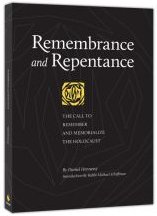
Remembrance and Repentance: A Book Review

shoahBone wet
I watch
as Council members
under rifle
dig obediently
and the earth opens up
to swallow my rabbi
and his sons.

Mach schnell! I hear in my nightmare…

and as I turn to leave,
I notice that the earth still moves
where they buried my heart.

-Lois E. Olena from her poem “Behind the Monastery”
quoted from The New Anti-Semitism

Daniel Hennessy’s new book Remembrance and Repentance: The Call to Remember and Memorialize the Holocaust is generously sprinkled with such “Holocaust poetry.” This one particularly spoke to me as I imagined the love of the Rabbi and his sons buried and still moving within Olena’s heart as their dead bodies were roughly interned in a shallow grave.

Hennessy’s book is written to speak to all of our hearts, especially the Christian heart. His book begins by juxtaposing the betrayal and murder of Jesus with Christian indifference to and even tacit approval of the death of millions of Jews at Nazi hands.

In the Gospel account, we hear the good news of redemption that Jesus rose according to the Scriptures. In the book of Acts, we see Peter — who at the moment of his betrayal was no doubt one of the most miserable human beings on earth — eventually lifted up out of the grip of despair, rising to become an apostle and dynamic leader, a fisher of men used powerfully by God at the very onset of the Messianic movement.

As for the indifferent Christian European world that stood outside the circle of doom, eyes to the ground, during the Holocaust era, it is as if Jesus alive and seated at the right hand of the Father, is looking straight into our eyes today, grieved by the ongoing Silence and indifference associated with the twentieth-century betrayal of his people. Unlike Peter, we as Christians have not yet been restored to fullest spiritual character.

-Hennessy, pp 16-17

That’s a most scathing indictment of today’s Christian church and Hennessy doesn’t let up on the comparison between the ancient betrayal of Jesus and the modern betrayal of his people Israel by Gentile Christianity. According to Hennessy, Peter stood outside the “circle of light” (pg 17) of the fire he warmed himself by as he wept bitterly, and so do we in the church who are beginning to forget the Holocaust and our part in it. As the last aging Jewish victims of the Nazi Holocaust fade and die, so does our own remembrance and even our own conscience.

Perhaps the circle is light, the light in our hearts, is what is diminishing in our world and when it finally grows dark and cold, what horrors will spring forth from the blackest night?

There’s hope, but only if we choose to remember and act righteously in the cause of justice.

This year, Yom HaShoah or Holocaust Memorial Day was on Sunday, April 7th, so you may be wondering why I’m reviewing this book now. On a practical level, it was because I didn’t receive this book until last week. On a more important level, perhaps the most important level, it is because we do not dare to reserve our remembrance to a single day. When we limit our memory and our caring to just one twenty-four hour period, once it’s over, we can safely tuck away our guilt and our desire to see justice done back in its dusty, cardboard box, and shove it back on the top shelf of some forgotten closet or on a rack in our garage until next year, just like our Christmas ornaments.

But if we choose to read, to experience, to remember Shoah each and every day, then each and every day, we can allow the fire of righteous indignation to burn within us, we can ignite the flames of justice, and burn on the pyre of our own responsibility, lest we ever let ourselves and especially our children, forget.

R-and-RDan does an excellent job in this short book (less than 100 pages) of reminding Christianity that it was not just the Nazis who were guilty of atrocities. They were only the outgrowth of anti-Jewish history. It was our own nearly two-thousand years of church supersessionism that formed the massive foundation upon which rested Hitler, his camps, his ovens, and his bloody legacy.

And if there are Christians who do not feel responsible for the past and perhaps the future persecution, torture, and execution of Jewish people and of Israel, lest we forget, we have a High Priest in the Heavenly Court, a King sitting at the right hand of the Father, who watches and waits and who will judge and the Earth. He will also judge us for what have done and what we failed to do.

And the Lord turned and looked at Peter. And Peter remembered the saying of the Lord, how he had said to him, “Before the rooster crows today, you will deny me three times.” And he went out and wept bitterly.

Luke 22:61-62

Jesus watches still. He looks into our eyes. And at his gaze, we also should remember the Lord, and remember his people, and remember Israel, and we should weep for the dead and their children and grandchildren. We in the church can either say “Never again” and cradle the children, the descendents of those who were once herded into cattle cars and driven into ovens, or we can use our own hands to do the herding and the pushing of these Jewish children into some future Shoah.

That is, until Messiah returns to judge us for who we are and what good or horrible things we have done.

I believe with complete faith in the coming of the Messiah, and even though he may delay, every day I eagerly anticipate that he will come.

-The twelfth of Rambam’s Thirteen Principles of Faith

Moshiach is coming. Let him move in your heart.

148 days.

Lancaster’s Galatians: Sermon Two, Influencers, Circumcision, and What is Torah?

circumcision-mohelNo word in the Jewish religion is so indefinable and yet so indispensable as the word Torah. Torah is the most comprehensive term for the substance of Judaism. Torah is Teaching. Torah is Law. No one can hope to achieve even a minimal appreciation of the Jewish religion without learning, and then reflecting on, the idea of Torah and its place in the life of the Jew. Torah has been for ages the sum and substance of Jewish scholarship. But it would be utterly wrong to conclude from this emphasis on study that Jewish spirituality runs dry in the sands of intellectualism.

-Rabbi Maurice Lamm
“What is Torah”
Aish.com

After greeting them, he related one by one the things that God had done among the Gentiles through his ministry. And when they heard it, they glorified God. And they said to him, “You see, brother, how many thousands there are among the Jews of those who have believed. They are all zealous for the law, and they have been told about you that you teach all the Jews who are among the Gentiles to forsake Moses, telling them not to circumcise their children or walk according to our customs.

Acts 21:19-21 (ESV)

Last night’s conversation with Pastor Randy about the second chapter (sermon) in D. Thomas Lancaster’s book The Holy Epistle to the Galatians wasn’t quite as intense as the previous week’s talk (though it had its moments early on). A lot of the focus was on who Paul’s intended audience was supposed to be, what Paul was trying to say, and why he was saying it.

I think Pastor Randy wanted to pull in all of the material from the letter whilst I wanted to try to contain our investigation to the current chapter of Lancaster’s book, which only covers Galatians 1:6-10. Yes, that’s pretty hard to do, but as I’ve mentioned before, I wasn’t satisfied with my original reading of Lancaster’s book, and I wanted to take this opportunity to go through it again with the proverbial fine-toothed comb, sifting its pages, and uncovering its message, along with Paul’s message to the Galatian churches.

Pastor Randy remains convinced that Paul was writing to the Gentile and Jewish populations in the churches in Galatia, and it’s hard to refute that. Pastor did back away from his comments of the previous week regarding Paul’s addressing of “Brothers” as being only to Jews, but he maintains the term can be applied to both Jews and Gentiles in the community of believers.

And then I brought up how silly it would be for Paul to tell Jews not to become circumcised and convert to Judaism.

And then he brought up how some/many of the Jews in the diaspora may not have been circumcised and may not have been all that Torah observant.

What?

It would seem, summoning Occam’s razor to my rescue, that the most reasonable understanding of the Jewish population of the diaspora was that they were observant to Torah relative to the normative halachah of their day, and that the Jewish males would routinely have been circumcised on the eighth day, even as Jesus was circumcised on the eighth day.

I’ll get back to that in a moment, but before I forget, we also discussed the identity of the influencers:

I am astonished that you are so quickly deserting him who called you in the grace of Christ and are turning to a different gospel—not that there is another one, but there are some who trouble you and want to distort the gospel of Christ. But even if we or an angel from heaven should preach to you a gospel contrary to the one we preached to you, let him be accursed.

Galatians 1:6-8 (ESV)

Who were these “troublers and distorters?” Christian expository preaching for centuries has referred to them as “Judaizers.” We will take a look at that terminology as we wrestle with this question in the ensuing material, but for now, we will adopt a term currently popular in Pauline studies and simply refer to them as the “influencers.” They are within the Galatian communities who are influencing the God-fearing Gentiles to undergo conversion.

One quick observation about the “influencers:” They are most likely believers in Yeshua of Nazareth. This possibility is lost on many interpreters. They might be Jewish believers or believing proselytes to Judaism, but they are almost certainly believers.

How do we know? We will consider the evidence as we work through the epistle, but from the outset, Paul says that they “want to distort the gospel of Messiah.” A non-believer does not want to distort the gospel; he wants to refute it and repudiate it. Only believers distort the gospel. Paul says that they preach “a gospel contrary to the one we preached to you,” but they [are] preaching a gospel, they [are] teachers of good news. For that reason we may deduce that they are believers in Yeshua of Nazareth.

-Lancaster, “Galatians” Sermon Two

When I arrived for my appointment with Pastor Randy, he was working on his computer with translations of Galatians 1:6-8 from the ESV, the KJV, and the Greek text in preparation for our meeting. Here’s the relevant portions of vv. 6-7 from the King James Version with emphasis added:

I marvel that ye are so soon removed from him that called you into the grace of Christ unto another gospel: Which is not another; but there be some that trouble you, and would pervert the gospel of Christ.

paul-editedI can’t reproduce the Greek but the question Pastor was asking is if the “gospel” being preached by the Influencers was indeed the gospel of Christ, or another preaching altogether. While we can agree that there is no other “gospel” of Christ, there can be other types or fashions of “good news,” and Pastor’s opinion is that the Influencers didn’t have to be believing Jews based on the text or context, and indeed, they might not be believers at all.

There’s a certain merit in this, since during Paul’s time with the Jewish communities in the area of Galatia, he encountered many Jewish people and God-fearing Gentiles who listened to the message of the Gospel, but not all of them came to faith.

One of the big, big problems that all Jewish people had with “the Way,” including many of the Jews within the Way, was how to admit Gentiles as equal covenant members without requiring that they become circumcised and convert to Judaism. Acts 15 answers that question, but Galatians was almost certainly written before the Acts 15 event. The decision that Gentiles were not required to convert seems to have been clear to Paul as he was writing the letter to Galatia, but James and the Council had not yet rendered a halakhic ruling based on legal proof-texts. The “Jerusalem Letter” made the decision official, but at this point, Paul is going by his understanding of the Messiah’s plan for the Gentiles through the guidance of the Holy Spirit.

Getting back to circumcision, Pastor maintains that Paul very well could have been telling both Gentiles and Jews that they did not have to become circumcised and observe the Law in order to be disciples of Jesus Christ, the Messiah.

OK, I accept that was Paul’s message to the Gentiles, but to the Jews? Would Paul ever say such a thing?

…and they have been told about you that you teach all the Jews who are among the Gentiles to forsake Moses, telling them not to circumcise their children or walk according to our customs.

Acts 21:21 (ESV)

That’s what finally got back to the Jews in Jerusalem about Paul, and they were taking it very seriously. What was Paul going to do to quell these rumors?

What then is to be done? They will certainly hear that you have come. Do therefore what we tell you. We have four men who are under a vow; take these men and purify yourself along with them and pay their expenses, so that they may shave their heads. Thus all will know that there is nothing in what they have been told about you, but that you yourself also live in observance of the law.

Acts 21:22-24 (ESV)

That’s the solution, but was Paul being disingenuous? That is, was he just going through the motions to mollify the Jerusalem Jews by undergoing a Jewish vow ritual, something he no longer saw as relevant in his life because of his faith in Messiah?

In other words, was he lying to the Jerusalem Jews (and was James and the Elders supporting his lies) about whether or not he was telling the diaspora Jews not to circumcise their sons and to forsake Moses? Did he really tell all those things to the Jewish populations in Galatia?

“I am a Jew, born in Tarsus in Cilicia, but brought up in this city, educated at the feet of Gamaliel according to the strict manner of the law of our fathers, being zealous for God as all of you are this day.

Acts 22:3 (ESV)

Now when Paul perceived that one part were Sadducees and the other Pharisees, he cried out in the council, “Brothers, I am a Pharisee, a son of Pharisees.

Acts 23:6 (ESV)

If anyone else thinks he has reason for confidence in the flesh, I have more: circumcised on the eighth day, of the people of Israel, of the tribe of Benjamin, a Hebrew of Hebrews; as to the law, a Pharisee; as to zeal, a persecutor of the church; as to righteousness under the law, blameless.

Philippians 3:4-6 (ESV)

arrestedPaul was certainly working to establish his “Jewish credentials” in these circumstances. I know that a lot of people, when in fear of their lives, would lie to save themselves, but if Paul were telling diaspora Jews to not circumcise their sons and to go against the Torah, would he have lied about it, even to save his own life?

That hardly seems likely. We know from the New Testament record that Paul endured enormous hardships for the sake of the Gospel of Christ, and that his own life was worth less to him than preaching the good news of Moshiach to the Jews and the Gentiles. If he was trying to save his own life, he wouldn’t have done what we know he did on numerous occasions, which resulted in him being beaten, left for dead, shipwrecked, arrested, put in prison, and ultimately executed by the Romans.

We also know this about some of the Jews in Jerusalem.

And they said to him, “You see, brother, how many thousands there are among the Jews of those who have believed. They are all zealous for the law…

Acts 21:20 (ESV)

Jewswho have believed and all zealous for the law. Believing Jews zealous for the law. Jewish disciples of Jesus as the Messiah who were also zealous for the Torah.

Of course they were upset at the thought that Paul was rumored to be teaching against the law to the diaspora Jews. Of course they were upset when they thought he had taken Trophimus the Ephesian into the Temple (Acts 21:29).

When the seven days were almost completed, the Jews from Asia, seeing him in the temple, stirred up the whole crowd and laid hands on him, crying out, “Men of Israel, help! This is the man who is teaching everyone everywhere against the people and the law and this place. Moreover, he even brought Greeks into the temple and has defiled this holy place.”

Acts 21:27-28 (ESV)

Paul was believed by the Jews from Asia to have taken a Greek into the Temple, defiling it (think “Maccabees” and Chanukah), and speaking against the people (Jews) and the Torah, and they called to the crowds of Jerusalem Jews to help capture this “traitor.” Either that was true and Paul lied about it to save himself, or it was untrue and Paul was defending himself from these vicious rumors. As I mentioned, Paul lying about this seems completely inconsistent with what we know about his history. If he’s telling the truth and the rumors are false, then Paul never told the diaspora Jews to not circumcise their sons, to not observe Torah, and he never took a Gentile into the Temple or spoke against Jewish people or Israel.

But if Paul supported Jewish observance of Torah and circumcision and if there were Jerusalem Jews who were both believers and zealous for the Torah, then they obviously didn’t see any sort of inconsistency between faith in Messiah Jesus and a traditional Jewish life of Torah observance.

I think I gave Pastor something to think about but he is going to test my beliefs very stringently, as well he should.

What is Torah?

Silly question, right? Not according to the quote from Rabbi Maurice Lamm I put at the top of this blog post. And yet, Pastor Randy said that he and I need to have a working definition of “Torah” so that we can know what we’re supposed to be talking about in these conversations. When I say, Paul was a “Torah observant Jew,” what do I mean? I think I know what I mean, but the answer is far more complex than we might imagine.

simhat-torahIt’s also important to understand what “Torah” was in the days of Paul and the Apostles so that we can establish how that relates to what Torah is today. What “Torah” observance is appropriate for a modern “Messianic Jew” to follow? Are those practices identical to say, an Orthodox Jew? How does that observance relate to modern Jewish halachah, let alone the future of the Torah and the rebuilding of the Temple?

Rabbi Yanki Tauber calls the Torah a guidebook, a contract, an identity, a vision, and a daughter and wife. Rabbi Tzvi Freeman calls Torah “oneness.”

The writers at First Fruits of Zion (FFOZ) say this about Torah:

The Torah is the foundation of faith in Yeshua. All of the concepts associated with the Gospel—such as God, holiness, righteousness, sin, sacrifice, repentance, faith, forgiveness, covenant, grace and the kingdom of heaven on earth—are introduced in the Torah. Basic sacraments and rituals like baptism, communion, prayer and blessing all come from the Torah. Faith in Jesus is meaningful because of the Torah. Without the Torah, the Gospel has no foundation on which to stand.

The Hebrew word torah is translated “law” in most of our English Bibles. The Torah is called the Law of Moses because Moses wrote it, but the Torah is more than just a legal code. The word “Torah” (תורה) is from the Hebrew root, yara (ירה) which means “to instruct,” or “to teach.” Although it does contain laws, Torah itself is not only a “law,” but it is God’s “teaching” and “instruction.” That explains why the word Torah is often used to refer to the whole Bible. From our perspective, even the Gospels, Acts, Epistles, and Revelation fall under the broad definition of Torah. It’s all God’s instruction, and it’s all rooted in the Torah of Moses.

The Torah is the story of God’s people and how they came to be the people of God in the first place. The Torah is something all believers have in common. We all have this common ground. The Torah is our shared origin. It is God’s book.

And that hardly scratches the surface.

What is “Torah” relative to my conversations with Pastor Randy when trying to comprehend Paul, his letter to the Galatian churches, and the wider scope of how to understand Jews in Messiah today?

I am entertaining suggestions and comments. Please let me…let us know what you think and let’s see if we can be pointed in the right direction.

Beckoning the God of Peace

in-the-face-of-the-stormPrepare yourself with this meditation, and when you feel anger overcoming you, run through it in your mind:

Know that all that befalls you comes from a single Source, that there is nothing outside of that Oneness to be blamed for any event in the universe.

And although this person who insulted you, or hurt you, or damaged your property, is granted free choice and is held culpable for his decision to do wrong — that is his problem. That it had to happen to you — that is between you and the One Above.

-Rabbi Tzvi Freeman
“Advice on Anger”
Based on letters and talks of the Rebbe
Rabbi M. M. Schneerson
Chabad.org

I’ve spent the past several days monitoring some disturbing and less than “Godly” attitudes on the Internet (No Judah, your not one of them). I suppose it’s obvious that hostile and critical people and organizations should express themselves in an environment as open as the World Wide Web, but it’s always disappointing when the sources of such poor behavior are those who claim the cause of Christ (though they may not call him by that title). I won’t give honor to either of the two specific sites/blogs to which I’m referring by linking to them on my blog, but suffice it to say that they both (apparently) desire to denigrate Jews and Judaism in general, and specific individuals in the Messianic Jewish movement in particular.

There’s more than a little irony happening here. First off, both of the sources I am speaking of advertise themselves as being educated and scholarly, in addition to being holy and honorable. And yet, how can what they say about themselves be true when the results of their “scholarship” and “reviews” are a widespread (relative to the scope of the Internet but perhaps not their readership) reiteration of classic hatred of Jews, a further expression Christian supersessionism, and a great outpouring of comments about individuals bordering on character assassination?

After Shabbat had ended on Saturday night, in a fit of pique, I wrote this on Facebook:

There’s so much injustice masquerading as scholarship and that reduces the history of Jewish people to a subject that’s examined under a microscope. How far do I go to challenge people who think they are defending the cause of Christ but who actually are walking in the footsteps of everyone who has authored a pogrom and constructed a holocaust?

I found myself sorely tempted to respond to the sources of my frustration via email, blog comments, and twitter, basically to (proverbially) give them a piece of my mind. Fortunately, I stopped myself. It’s hardly taking the moral high road when another can provoke you to descend to their level. On the other hand, is this blog post any better?

In all my days I have never had to look behind me before saying anything.

-Shabbos 118b

Lashon hara (gossip or slander) is not necessarily untruthful. The Torah forbids saying something derogatory about a person even if it is completely true.

One of the best guidelines to decide what you should or should not say is to ask: “Does it make a difference who might overhear it?” If it is something that you would rather someone not overhear, it is best left unsaid.

Sometimes the information need not be derogatory. A secret may not be saying anything bad about anyone, but if someone has entrusted you with confidential information, and you have this tremendous urge to share the privileged communication with someone else, you should ask yourself: “Would I reveal this if the person who trusted me with this information were present?”

Sometimes people want to boast. They may even fabricate their story to those who have no way of knowing that it may not be true. Still, they would be ashamed to boast in the presence of someone who knew that their statement was false.

Volumes have been written about what is proper speech and about what constitutes an abuse of this unique capacity to verbalize with which man was endowed. But even if one does not have time to master all of the scholarly works on the subject, a reliable rule of thumb is to ask, “Do I need to look behind me before I say it?” If the answer is yes, do not say it.

Today I shall…

…monitor my speech carefully, and not say anything that I would not wish someone to overhear.

-Rabbi Abraham J. Twerski
“Growing Each Day, Shevat 30”
Aish.com

Let’s look at the first two sentences of Rabbi Twerski’s commentary on “lashon hara” again:

Lashon hara (gossip or slander) is not necessarily untruthful. The Torah forbids saying something derogatory about a person even if it is completely true.

That’s very difficult for most of us to do, especially when we have free access to the Internet and the ability to create and edit websites and blogs we have created or to make comments on the blogs and discussion boards of others. The web is full of harsh criticisms aimed at others and yes, some of those criticisms are true. And yet, and this is especially focused at those folks who claim to observe the Torah of Moses whoever they may be…to publish comments regarding specific individuals for the express purpose of destroying their reputation or causing them personal and emotional harm, cannot be construed in any manner as actually serving God.

peace-of-mind1I’m not unmindful that such individuals are responding in anger, and that they even feel justified due to the belief that they are fighting against what they see as some sort of “injustice” they think was perpetrated against them or their own cause or tradition, but is such a response really the right thing to do? I know that I’m struggling with my own anger at such behavior, but in doing so and in writing this blog post, I’m walking the edge of the very abyss I believe they have already fallen into.

But what is Rabbi Freeman’s advice on anger? If anyone has insulted you or done you wrong, it is a problem that they possess. It’s only the problem of the person insulted (in this case, me) if they (I) allow the insult to affect them (me). Thus, the individuals who are behaving rather poorly on the web are only a problem to me if I let them affect me. That I’m even writing this “meditation” means I must confess that I have allowed this to happen. In that case, my conversation must not engage those who have behaved in an insulting matter, but to the degree that they have entered my life with their discordant behavior, I must take the matter to God. How I feel and how I must respond is between Him and me alone.

To apply Rabbi Twerski’s commentary on what I’ve been saying, in addition, I must monitor my own “speech,” which includes anything I post online. I’m glad I didn’t give in to temptation last Saturday, otherwise I would have failed in that area as well.

(Unfortunately, I did give in to temptation on Google+ Monday morning and I am now living with that regret. The resulting comments on my recent Return to Jerusalem blog post were actually stimulating, but the “comments storm” that occurred on my Why I Go to Church missive were troubling and disappointing for the most part..though thankfully only from a single individual.)

Where do I go from here?

We cannot think two thoughts at the same time. Consequently, when negative thoughts arise, you do not need to fight them. Make an effort to think positive thoughts, and the negative thoughts will disappear.

(see Rabbi Nachman of Breslov; Likutai Aitzos: machshovos, no.11)

-Rabbi Zelig Pliskin
Daily Lift #727
“Fill Your Mind with Positive Thoughts”
Aish.com

There is a much older “midrash” on this topic in which I can also take comfort.

Finally, brothers, whatever is true, whatever is honorable, whatever is just, whatever is pure, whatever is lovely, whatever is commendable, if there is any excellence, if there is anything worthy of praise, think about these things. What you have learned and received and heard and seen in me — practice these things, and the God of peace will be with you.

Philippians 4:8-9 (ESV)

Not only think of what is honorable, just, pure, lovely, and commendable, but practice these things, and the God of peace will be with you.

candleIt is not unexpected that we in the body of faith at one time or another, will turn to God in our anguish and ask Him to quiet our minds and our lives, to shield us from the turmoil that comes from the world and from inside of ourselves. And yet, if we want the “God of peace” to reside with us, Paul says that we must choose to focus our thoughts on peace and then to practice peace.

As Rabbi Twerski might say:

Today I shall…

…strive to practice peace by embracing peace within my thoughts, so that the God of peace will be with me and guide me in His ways, and so that no other person may suffer for anything I say or do.

“The only man I know who behaves sensibly is my tailor; he takes my measurements anew each time he sees me. … The rest go on with their old measurements and expect me to fit them.”

-George Bernard Shaw, Irish playwright