Tag Archives: Judaism

A Christian Seeking Messiah ben David

Everyone agrees with all the wonderful advice and ethics written in the books of the sages. Everyone agrees that this is the way to run your life. The only issue each one of us has is whether those words are truly meant for me, or for someone else in some other time and place.

-Rabbi Tzvi Freeman
“For You”
Based on letters and talks of the Rebbe
Rabbi M. M. Schneerson
Chabad.org

In some strange way, these few sentences capture the struggle we encounter at the intersection of Christianity and Judaism. I know that many Christians and Jews don’t believe their two worlds intersect at all, but in spite of 2,000 years of “discomfort” between us, we just can’t seem to get away from each other.

The other day, on my commute home from work, I saw a car with a bumper sticker that said, “Judeo-Christian.” I wish I could have talked to the driver to find out what they were thinking when they put that on their car.

Let me explain.

Judeo-Christian is a term traditionally used to describe a specific set of ethical or moral values often associated with American historical and cultural beliefs. It artificially forces a connection between Christianity and Judaism that most Jews don’t appreciate. Christianity doesn’t mind so much because of the knowledge that we wouldn’t exist as a faith without Judaism, at least the ancient Judaism that ended (from the church’s point of view) with the destruction of the Second Temple.

When pushed, Jews and Christians will admit to sharing some common values and goals, such as feeding the hungry and and visiting the sick, but the foundations of how Judaism and Christianity view God, the world, and just about everything else are fundamentally and radically different from each other. In some sense, it’s amazing that Christians and Jews can have a meaningful conversation at all, at least on the topic of God (I’m sure there’d be no problem discussing the World Series or something like that).

As many of you know, I’ve recently been trying to describe the linked relationship between Christianity and Judaism as part of Israel’s national redemption. It’s slow going because the idea that God would actually intertwine the destinies of the Gentile church and the inheritors of Sinai is foreign to the two groups. Even within the realm of Messianic Judaism, which should be a friendly environment for both, the idea that Christ can only come back if Christians support and embrace Jewish return to Torah has met with significant resistence (Read Redeeming the Heart of Israel, Part 1 and Part 2, as well as Disconnect Reconnect Disconnect if you don’t believe me).

Paul in Romans 11 explains that it was necessary for there to be a separation between the Gentile believers and the Jews for the sake of the nations. But after so very long existing apart from each other, overcoming the walls we’ve built between us is no easy task.

So how do we live together while maintaining our separate identities? How do two people who are married maintain their own lives and wills and uniqueness?

I don’t know, except to say that who we are is built into us. No matter how much you may love your spouse, that love doesn’t erode your personality so you stop being you and start being them.

Something does happen, though. You learn to set aside some of your personal desires and preferences and to act for the benefit of your beloved husband or wife because you want to do good for them.

Our Master did no less for us.

I am the good shepherd. The good shepherd lays down his life for the sheep. He who is a hired hand and not a shepherd, who does not own the sheep, sees the wolf coming and leaves the sheep and flees, and the wolf snatches them and scatters them. He flees because he is a hired hand and cares nothing for the sheep. I am the good shepherd. I know my own and my own know me, just as the Father knows me and I know the Father; and I lay down my life for the sheep. And I have other sheep that are not of this fold. I must bring them also, and they will listen to my voice. So there will be one flock, one shepherd. For this reason the Father loves me, because I lay down my life that I may take it up again. No one takes it from me, but I lay it down of my own accord. I have authority to lay it down, and I have authority to take it up again. This charge I have received from my Father.” –John 10:11-18 (ESV)

The difference between him and us is that Jesus is our Master and we are his disciples and servants. We are not greater than the one who sent us. But with our spouse, neither husband nor wife is elevated over the other.

For as many of you as were baptized into Christ have put on Christ. There is neither Jew nor Greek, there is neither slave nor free, there is no male and female, for you are all one in Christ Jesus. And if you are Christ’s, then you are Abraham’s offspring, heirs according to promise. –Galatians 3:27-29 (ESV)

But I’ve been wrong before.

It shall come to pass in the latter days
that the mountain of the house of the Lord
shall be established as the highest of the mountains,
and it shall be lifted up above the hills;
and peoples shall flow to it,
and many nations shall come, and say:
“Come, let us go up to the mountain of the Lord,
to the house of the God of Jacob,
that he may teach us his ways
and that we may walk in his paths.”
For out of Zion shall go forth the law,
and the word of the Lord from Jerusalem. –Micah 4:1-2 (ESV)

I was having coffee after work the other day with a friend and we were discussing this whole matter. We realized as we were talking that, after 2,000 years of ascendency; after 2,000 years of being the sole owners and arbiters of salvation through Jesus Christ, the Christian church might not want to acknowledge that “the mountain of the house of the Lord shall be established as the highest of the mountains.” They might not want to repeat the words of the Master when he said (John 4:22) “salvation is from the Jews.”

In other words, we Christians might not want to face the fact that when the Jewish King returns, he will restore Israel to its rightful place at the head of the nations, he will establish forever the full redemption of his Jewish people, and it is we from among the nations who will “flow” up to Jerusalem and the Temple Mount to honor the King of the Jews and to worship the God of Abraham, Isaac, and Jacob.

Rather than the church expecting it to be the other way around. Rather than the Jews “flowing up” to Christianity and abandoning Judaism, the Torah, and ultimately, the Jewish Messiah King.

Kind of humbling for we Christians, isn’t it?

I cheated a bit when I quoted Rabbi Freeman earlier. Here’s the full text of what he said:

Everyone agrees with all the wonderful advice and ethics written in the books of the sages. Everyone agrees that this is the way to run your life. The only issue each one of us has is whether those words are truly meant for me, or for someone else in some other time and place.

If it is truth, it is meant for you, now, here.

There is a truth about our existence in this world that we aren’t always aware of. Maybe we’ve never been aware of it, but it rests inside of us, like a cocoon which appears dormant or even lifeless, and yet contains the beginnings of what will become a spectacular butterfly.

Like a new life being nurtured in a mother’s womb, the will of God for each of us is embedded within our souls, waiting for the right moment to begin to stir. I believe that’s what is happening now in Christianity and Judaism. I believe this is part of what the Master called in Matthew 24:8 “the birth pangs” (please don’t overanalyze that metaphor and say he was really talking about wars and earthquakes…I think he was also talking about what I’m talking about).

Any woman who has ever given birth can tell you that it is a wonderful, and terrifying, and ecstatic, and agonizing experience. So too are the birth pangs we are approaching as Christianity and Judaism, divided for so many centuries, approaches an intersection that God saw and destined before He built the foundations of the Universe.

Our Lord, our Master, our Messiah is coming, but we all play a vital part in summoning his presence. We in the church must encourage the Jewish return to Torah and national redemption of Israel. Israel must be that light to the nations, drawing us all to God. Then the Moshiach will come, the Jewish King will ascend his throne, and the Temple of God will be called a house of prayer for all the nations.

For the children of Israel shall dwell many days without king or prince, without sacrifice or pillar, without ephod or household gods. Afterward the children of Israel shall return and seek the Lord their God, and David their king, and they shall come in fear to the Lord and to his goodness in the latter days. –Hosea 3:4-5 (ESV)

Blessed be the nation of Israel and may she return her heart to God and the Torah, that she may be redeemed and restored. And may the Messiah come soon and in our day.

Gift of the Firstborn of Israel

Firstborn (bechor) as one of the names of the Messiah is seen in the heavenly conversation found in Psalm 89:27. There God himself says of the Messiah, “I will make him My firstborn. The highest of the kings of the earth.” The Bible gives to the firstborn a significance that goes far beyond the laws regarding earthly inheritance. Commenting on the verse, “Consecrate to me all the firstborn” (Exodus 13:2), the midrash says, “God said to Moses, ‘Just as I have appointed Jacob firstborn – as it says, “Israel is my firstborn son” (Exodus 4:22), so will I appoint King Messiah firstborn,’ as it is said, ‘I will appoint him firstborn'” (Exodus Rabbah 19:7).

-Tsvi Sadan from his book
The Concealed Light, pg 16
Firstborn (bechor)

A few days ago, on one of my meditations, I said:

The Master said that Salvation is from the Jews,” (John 4:22) but then, so is peace. This is another reason why we Christians, and indeed, the entire world, owes the Jews a debt that can never be repaid. It is their King who will finally come and bring peace for everyone, not just the nation of Israel, but the nations of the earth.

However, I had neglected to anticipate that this might be seen as offensive or at least inaccurate from a traditional Christian point of view. By way of explanation, I offered an additional comment:

Israel was always meant to the the beacon that would lead the rest of the world to God. Consider Isaiah 49:6 and Isaiah 51:4. By extension, Jesus said of himself that he was (and is) the light to the world (John 8:12) and he passed that torch (if you’ll pardon the obvious pun) to his disciples, including us, when we said that we are a light to the world (Matthew 5:14).

There’s an unbroken chain in the transmission of God’s Word from God Himself, to His people Israel, and to Israel’s firstborn son of Creation and the firstborn of the dead Jesus Christ. Jesus is called the King of the Jews, which hardly divorces his work of salvation from the Jewish people. We thank, praise, and honor God for our salvation and redemption from sin, however He chose to provide those gifts through the birth of Jesus and the light of His nation Israel, which was always to be our guiding light, since the very beginning.

God is God alone, but Jesus doesn’t exist in isolation. He was born, lived, died, and was resurrected within a specific context so that “The law will go out from Zion, the word of the LORD from Jerusalem.” (Micah 4:2)

(To be fair, I must say that the conversation that was started on my own blog post was continued at Steven’s blogspot, http://washedfeet.wordpress.com/)

To me, the connection between God, Israel as firstborn, and Jesus as firstborn is pretty self-evident, but apparently not everyone shares this view. In an attempt to be fair and check my thinking and perceptions, I decided to explore the names of the Messiah and how they reveal his character and relationship to God and Israel. Part of the result is that I found the above-quoted passage from Sadan’s book. It seems that not only does midrash confirm the near interchangeability between the Messiah and Israel but the Torah does too. If we feel we owe a debt of gratitude to Jesus Christ for being saved by the grace of God through the blood of the Messiah, then by inference, we are offering that gratitude to Israel as well; which is also God’s firstborn.

I know this will probably not sit well with some and it’s not like I’m going out of my way just to be a pest, but I do feel honor-bound to point out the truth of the Bible as best as I can understand it in defense of not only Israel but of God’s intent in choosing Jacob’s children as his own treasured, splendorous people. I do not believe the nature, character, and purpose of Messiah can be separated from Israel as a people or a nation, either in function or in prophesy.

The one who has “borne our griefs” and who has “carried our sorrows” that we Christians see in Isaiah 53:4 is viewed as the “Suffering Messiah,” Jesus Christ. The church can scarcely begin reading this passage before envisioning Jesus on the cross. However, from a Jewish point of view, it is Israel who is suffering, as a people, rather than Messiah:

“If the Holy One, blessed be He, is pleased with a man, He crushes him with painful sufferings. For it is said: And the Lord was pleased with [him, hence] He crushed him by disease (Isa. 53:10). Now, you might think that this is so even if he did not accept them with love. Therefore it is said: “To see if his soul would offer itself in restitution”. Even as the trespass-offering must be brought by consent, so also the sufferings must be endured with consent. And if he did accept them, what is his reward? “He will see his seed, prolong his days”. And more than that, his knowledge [of the Torah] will endure with him. For it is said: “The purpose of the Lord will prosper in his hand”. It has been taught: R. Simeon b. Yohai says: The Holy One, blessed be He, gave Israel three precious gifts, and all of them were given only through sufferings.. These are: The Torah, the Land of Israel and the World To Come.”

sourced from Talmud – Brachot page 5a

I’m hardly an expert, but is it so hard to imagine that Isaiah may have been referring to both Israel and Messiah? I’ve never been a big fan of always applying a prophesy to a single event or person. I believe it’s possible for Isaiah to have been giving a “multi-layered” message that to his immediate audience may have meant one thing, and to an “extended audience” may mean something else.

Admittedly, this is a dangerous thing to do and I’m stretching the limits of Bible interpretation quite a bit here, but for a good purpose. I’m trying to illustrate that Jesus is not only (in some mystical fashion) the personification of the Divine, but the living personification of Israel as a people. To say that we are “saved by Jesus” in some way is to say that “salvation is from the Jews.” (John 4:22 ESV)

The link between Jesus and the well-being of Israel wasn’t lost on Paul either, and he went out of his way to communicate that message to the non-Jewish disciples in Rome. Apparently the non-Jewish disciples didn’t have a problem with this understanding:

For they (the Gentile believers) were pleased to do it, and indeed they owe it to them. For if the Gentiles have come to share in their spiritual blessings, they ought also to be of service to them in material blessings. –Romans 15:27 (ESV)

More than a few non-Jews in the Messianic movement have been accused of worshiping Judaism rather than God and sad to say, that’s true in many cases. I suppose in my comments, I could be accused of “the glorification of the flesh of Israel,” (though I’ve never been comfortable with some of the stereotypical Christian phraseology) but that is not my intent. What I am trying to communicate is not the exalting of Israel as a people above God or above the Messiah. The Master himself said that no servant is greater than his master (John 13:16) and certainly Israel serves God and not the other way around. On the other hand, Israel serves God and the living, breathing, walking, talking, expression of the ideal Israel is the Messiah, the Savior, Jesus Christ, King of the Jews.

The rest of Sadan’s commentary on “firstborn” (bechor) as a name for the Messiah links these ideas together with how we disciples of the Master tend to see his most outstanding act on behalf of the world:

Reference to Messiah in connection with the command to consecrate all the firstborn is highly significant. Moses gives two reasons for the injunction: remembrance of the Exodus by celebrating Passover and remembrance of the death of the Egyptian firstborn. Exodus 13 appears to suggest that Israel’s freedom is achieved through the Passover lamb and the Egyptian firstborn. In addition to the classic clash over the rights of the firstborn, here the decisive divine act reveals that the right of the firstborn belongs not to Pharaoh but to Jacob. In a manner of speech, this massive human death is responsible for Israel’s redemption; in a sense, the death of the Egyptian firstborn was a sacrificial death.

The rather shocking idea that the death of the firstborn brings about redemption is found in the very command to consecrate all of Israel’s firstborn. The translation, “You shall set apart to the LORD all that open the womb, that is every firstborn” (Exodus 13:12), fails to reveal the true meaning. The Hebrew for “set apart” here actually signifies “sacrifice.” Israel, accordingly, was to sacrifice their firstborn. It is only in verse 15 that we learn that the death of the firstborn is replaced by the process of ransoming. Further still, it is the tribe of Levi that becomes the substitute for the firstborn (Numbers 8:18), since the Levites have no inheritance in Israel…

By appointing Messiah as the Firstborn, God thus sets him up to be the preeminent Firstborn, the ultimate Lamb. As such, he has no substitute; no one can pay the ransom for him. Rather, he is bound to pay the ultimate price to redeem Israel by sacrificing his own self.

Sadan, pp 16-17

There doesn’t appear to be a reasonable and legitimate way to separate Messiah as the firstborn, from Israel as the firstborn. Further, the ultimate and “preeminent Firstborn” must sacrifice himself as the “price to redeem Israel.” That was and is the great purpose of the Messiah as the sacrifice of the firstborn, to act as the substitute for firstborn Israel, much in the matter that the Levites were “sacrificed” for the sake of each firstborn child of the other tribes. It was Messiah’s purpose to die for the redemption of all Israel.

Most Christians are probably asking right about now, “but what about us?” That’s where God’s grace comes into play and where our gratitude should be expressed. Up until this point, everything is happening within the context of Israel’s relationship with God. Up until this point, the Gentiles; the rest of the world, haven’t been involved except in the role of conquerors and persecutors of the Jews. Except for Israel, up to this point, all of the other people groups on earth have been pagan, polytheistic, idol worshipers.

Period.

But the endlessly bountiful graciousness of God (and this was always part of His plan) opened the doors of salvation for the rest of us, too. Though from a Jewish perspective, this was completely “out of scope” for the plan, God allowed the sacrifice of the ultimate Firstborn to redeem not only Israel, God’s firstborn, but the entire human population of the earth.

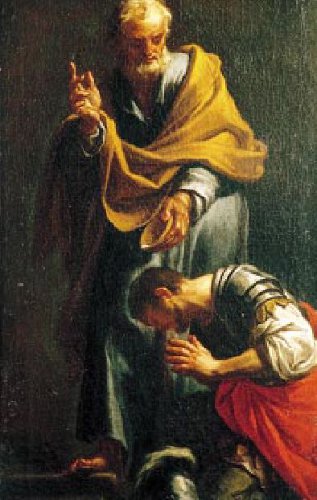
I can’t even begin to express how amazingly HUGE this is. The Jewish disciples couldn’t have possibly understood the fantastic impact of the Master’s words in Matthew 28:18-20 when he commanded them to “make disciples of all nations.” I’m not even sure that they “got it” until nearly two decades later when Peter, seeing the Roman Centurion Cornelius and his household receiving the Holy Spirit, exclaimed:

While Peter was still saying these things, the Holy Spirit fell on all who heard the word. And the believers from among the circumcised who had come with Peter were amazed, because the gift of the Holy Spirit was poured out even on the Gentiles. For they were hearing them speaking in tongues and extolling God. Then Peter declared, “Can anyone withhold water for baptizing these people, who have received the Holy Spirit just as we have?” And he commanded them to be baptized in the name of Jesus Christ. –Acts 10:44-48 (ESV)

I think this must have been the moment when it truly dawned upon Peter what God had in mind and the staggering and mind-blowing impact the Messiah’s sacrificial and redemptive death and resurrection would have in the world. Not only would all Israel be saved (Romans 11:26) but “that the world might be saved through him.” (John 3:17 ESV)

The Jewish Pharisee Paul (also known as Saul among the Jews) was specifically commissioned by the Master (Acts 9) to be the emissary to the Gentiles and to carry the Good News of salvation offered by God through the Jewish Messiah to the nations. I promise you, the Gentiles had no idea what was about to happen to them, how their lives would be changed, and how the entire fabric of the next two-thousand years of human history would be inexorably altered by the will of God, all thanks to the grace of the Creator of the Universe and His choice of the Israelites as His “light to the nations” (Isaiah 49:6).

This entire debate started when I tried to describe Jesus as the Minister of Peace to the entire world. This point was entirely lost on my audience (apparently) and so, employing Sadan’s book once again, I’ll conclude with part of his commentary on another name for the Messiah: “Prince of Peace” (sar shalom):

Rambam very likely based his interpretation on the opinion of Rabbi Yose Haglili, who lived shortly after the destruction of the Temple and who is recorded as saying, “The name of Messiah is Shalom, as it is said, ‘Everlasting Father, Prince of Peace'” (Masechtot Ketanot, Derech Eretz II).

…The Prince of Peace therefore, is greater than Moses, Isaiah, Ezra, and the rest of Israel’s prophets, for none of them were able to establish lasting peace.

Sadan, pg 239

Pray for the peace of Jerusalem (Psalm 122:6) and the security of Israel, for in praying for Israel’s peace, you are praying for your own, thanks to Jesus Christ, our Lord, King, Master, and Savior.

Amen.

Behar-Behukotai: Seeking Crowns

The majority of this Torah reading focuses on the rewards granted for observance of the Torah, and the punishments ordained for failure to observe. One might ask: When a person has internalized the self-transcendence of Bechukosai, of what interest is reward? As the Alter Rebbe would say: “I don’t want Your World to Come. I don’t want Your Gan Eden. All I want is You alone.” (As quoted in Derech Mitzvosecho, Shoresh Mitzvos HaTefillah, ch. 40. See also Rambam, Hilchos Teshuvah, ch. 10.)

In truth, however, only a person who genuinely “wants You alone” can appreciate the full measure of reward G-d has associated with the Torah and its mitzvos. As long as a person is concerned with his individual wants and desires, he will interpret the reward received for observance in that light. When, by contrast, a person has transcended his individual will, instead of these petty material concerns, he will appreciate the essential good and kindness which G-d conveys. (See Likkutei Sichos, Vol. XV, p. 312)

This will create a self-reinforcing pattern, for the purpose of the rewards granted by the Torah is to enable an individual to further his study and observance. (Rambam, Mishneh Torah, Hilchos Teshuvah 9:1.)

As this pattern spreads among mankind, we will merit the full measure of blessings mentioned in the Torah reading, with the return of our people to our land, led by Mashiach. Then “Your threshing season will last until your grape harvest…. You shall eat your bread with satisfaction…. I will grant peace in the land, and none shall make you afraid.” (Leviticus 26:5-6.)

-Rabbi Eli Touger
In the Garden of the Torah
“Real Growth”
Commentary on Torah Portion Behukotai
Leviticus 26:3-27:34
Chabad.org

“Blessed are you when others revile you and persecute you and utter all kinds of evil against you falsely on my account. Rejoice and be glad, for your reward is great in heaven, for so they persecuted the prophets who were before you.Matthew 5:11-12 (ESV)

What we get out of our relationship with God is a matter of perspective. As Rabbi Touger illustrates, how we perceive our “reward” depends on how we perceive ourselves. I’ve written a number of commentaries on Rabbi Joseph Soloveitchik’s book The Lonely Man of Faith including my most recent missive, Burning the Plow. Soloveitchik presents “two Adams” using the two depictions of the creation of the first man in Genesis to show us two sides of the person of faith, the material and the spiritual. How we function in relation to God is how we see what God can do for us.

That probably sounds selfish, and it’s meant to be, at least in part.

The material man sees his relationship with God in terms of the world of here and now. He prays for success in business, good weather for planting crops, health for his family, and so on. There’s nothing wrong with this of course, but it is the general limit of the material man’s vision of his relationship with God. Man is the majestic steward of the world God created, and in return, he desires that God reward him with the benefits related to that creation.

It is written in Pirkei Avot Chapter 4, Mishna 2, that “the reward of a mitzvah is a mitzvah” (quoting Rabbi Dovid Rosenfeld). Thus the continued cycle I have described in the previous paragraph is self-perpetuating as long as the perspective of the material man does not change.

And for many people of faith, it never does.

However, Rabbi Touger’s commentary, quoting the Alter Rebbe, shows us a different path:

“I don’t want Your World to Come. I don’t want Your Gan Eden. All I want is You alone.”

On an emotional level, most of us can more or less understand this desire. We want to “feel” closer to God, to love Him with great zeal and to pour our heart and our life into pools of mystic wonder where only God exists. However, such a desire is difficult to grasp for very long for most of us, and we tend to believe that only saints or holy men or mystics who live in caves or monasteries can truly exist in a sustained state of “All I want is You alone.”

It’s hard for most Christians to imagine that Jews might express such a desire to want to walk with God alone, since Judaism is seen as a largely “behavioral” religion. An observant Jew tends to be defined by the mitzvot, by Torah study and obedience to the commandments. By contrast, Christians see their faith as more metaphysical, residing in the realm of belief and pure faith and grace, than in the raw mechanics of feeding a hungry person or donning tallit and tefillin before prayer.

But what about the Jews who first came to the realization that Jesus was and is the Messiah? Where is the meeting point between classic Judaism and traditional Christianity? Where did it all begin before man artificially split the two faiths (or was that split all part of God’s plan as Paul describes in Romans 11:25)?

For I am already being poured out as a drink offering, and the time of my departure has come. I have fought the good fight, I have finished the race, I have kept the faith. Henceforth there is laid up for me the crown of righteousness, which the Lord, the righteous judge, will award to me on that Day, and not only to me but also to all who have loved his appearing. –2 Timothy 4:6-8 (ESV)

What is this “crown of righteousness” of which Paul speaks? Is it a literal crown he wears in the Heavenly court? Is it the sheer experience of bliss and wonder in God’s “Gan Eden” (Garden of Eden or Paradise)? Or could it be “God and God alone?”

Around the throne were twenty-four thrones, and seated on the thrones were twenty-four elders, clothed in white garments, with golden crowns on their heads. –Revelation 4:4 (ESV)

And whenever the living creatures give glory and honor and thanks to him who is seated on the throne, who lives forever and ever, the twenty-four elders fall down before him who is seated on the throne and worship him who lives forever and ever. They cast their crowns before the throne… –Revelation 4:9-10 (ESV)

The passages from Revelation 4 certainly seem to indicate real, physical crowns as the rewards, but this could be deceptive, since John’s vision of the Heavenly court and the events he witnessed is highly mystical and may not represent actual, literal actions. But look at what the twenty-four elders do with their crowns when they “give glory and honor and thanks to him who is seated on the throne.” They “cast their crowns before the throne” and say:

“Worthy are you, our Lord and God,
to receive glory and honor and power,
for you created all things,
and by your will they existed and were created.”

In addressing “the Lord God Almighty” (v 8), what does it mean to cast your crowns before His throne?

I’m no theologian so it’s impossible for me to say with any authority what John was really witnessing in this act of supreme worship of the Ein Sof God Almighty, “who was and is and is to come.” But let’s pretend what they were/are all doing was/is fulfilling this desire:

“I don’t want Your World to Come. I don’t want Your Gan Eden. All I want is You alone.”

When I was a child and I tried to imagine Heaven, I thought it sounded pretty boring. There was nothing to do there except constantly worship God. I thought it sounded like one, infinitely long church service where you had to sit in a hot sanctuary in sticky, itchy clothes, and be quiet, and listen to organ music, and pray and recite stuff, and endlessly say:

“Holy, holy, holy, is the Lord God Almighty,
who was and is and is to come!”

Didn’t anybody ever have fun in Heaven? What kind of reward was all this “holy, holy, holy” stuff anyway?

Most children tend to be “material man,” lacking the ability to see beyond their immediate, temporal needs and desires. Many adults, even in the community of faith are like this, too.

Beyond majestic, material man is the person seeking to simply walk with God; who perceives his path as illuminated by an ineffable light. When we desire “God alone” there is no way we can truly understand what we are asking for. Who could possibly imagine what the crowns of Paul or the elders in John’s vision actually were, and if they existed materially or not? I choose to believe that there is so much more to the rewards awaiting covenantal, spiritual man and that, attempting to imagine them from the viewpoint of the material human being, we miss the point completely.

Pray not for Heaven or for Paradise or for crowns of gold. Let your only desire for reward be God Himself.

Then let awe and wonder in every corner of your existence take hold and realize that He is already here. Life is a miracle and your soul is the soul of your Creator. Once you know this, the mitzvot will take care of themselves for they will be inseparable from the ineffable light of God.

He could have made a world where the nature of each thing may be deduced from its parts. A predictable, orderly world. A world devoid of wonder. And then we would say, “Things are this way because they must be this way.” G-d would be a stranger in His own world.

Instead, at each step a whole new world emerges, one we could never have predicted from anything we knew before. Until we must conclude that our finite world somehow contains infinite possibilities, that both nothing and everything is possible, that things are the way they are only because He desires they be that way.

He has made our world wondrous, so that it has room for Him.

-Rabbi Tzvi Freeman
“The Unnatural Nature of Things”
Based on letters and talks of the Rebbe
Rabbi M. M. Schneerson
Chabad.org

Good Shabbos.

The Blood of the Prince

tallit-prayerThis is one of those “hot” topics. A Messianic Jewish rabbi friend of mine recently got an email from a distraught woman urgently asking him to intervene on behalf of her husband. I would like some opinions on the matter from my readers. I will paraphrase that email below to protect all parties:

Please pray for us and help us. You see, my Jewish husband (who is from Israel) believes that Jesus is the Messiah of Israel through whom God redeems and saves, but he refuses to believe that Jesus is God too. My husband is adamant that he will not accept this belief. I don’t know what to do – I don’t want him to be lost. I need urgent help and I think my husband will benefit from your counseling. I am really hoping that you would be able to convince him of his error before it’s too late.

Question for my readers: should this woman be concerned about the spiritual fate of her husband? If this Jewish man never changes his mind on the nature of the Messiah, should he be concerned about his final destiny and should we?

-Gene Shlomovich
Crisis? A Jewish husband believes that Jesus is the Messiah but not G-d
Wednesday, May 9, 2012
Daily Minyan blogspot

I’m not in the habit of quoting one person’s full blog post to begin one of my own, but this question, which I thought was unanswerable, may just have been answered (though judging by the subsequent comments that have been accumulating as I’ve been writing this missive, maybe not). There was a lively debate by various folks commenting on this blog but it degenerated (and is still degenerating) into a “Jesus is God” vs “Jesus is Messiah but not God” vs “I don’t know what Jesus is” kind of debate. A few people took a stab at actually trying to answer Gene’s question, but no one really knew or could support their opinions from scripture…that is until now:

I am convinced that Peter’s first introduction to Messiah (John 1:41), and his own confirmation of that introduction (John 6:69, 11:27) brought him into sonship, and is all that is expected of any Jew to be saved and secured for Kingdom status (Romans 10:13, 11:26).

-Brad

Then Gene replied:

@Brad…

Thank you for providing an answer to my exact question directly from scripture.

Traditional religious Judaism doesn’t spend a great deal of time worrying about whether or not Jews are saved. In the merit of Abraham, Issac, and Jacob, Jews are all considered to have a place in the world to come. However, in Christianity and the various corners of the Hebrew Roots and Messianic Jewish movements (which all overlap but are not really the same), there are a couple of important questions that have remained unanswered:

If Jews are “saved” through the merit of the patriarchs, what significance does Jesus have as the Messiah to them?

On a more fundamental level, the question is:

Are Jews saved?

I’ve struggled with these questions as well. To say that the process of salvation for a Jew is identical to a Gentile means that prior to the coming of the Messiah, no Jews could be saved. I also means that the millions of Jews who refused to convert to Christianity because they believed we Christians practiced paganism and polytheism, have been consigned to hell, often having suffered torture and murder at the hands of the church who was attempting to force their conversion, first.

I’m not sure I have the answer regarding “salvation” relative to all Jews everywhere, but it appears that Brad, armed with “only” a Bible, has answered the first question. Let’s take a look at his material in a more detail. His statement can be broken up into two main sections:

I am convinced that Peter’s first introduction to Messiah (John 1:41), and his own confirmation of that introduction (John 6:69, 11:27) brought him into sonship…

PrayingSo what do we see when we are introduced to the Messiah and that introduction is confirmed? What brought Peter into “sonship?”

The next day again John was standing with two of his disciples, and he looked at Jesus as he walked by and said, “Behold, the Lamb of God!” The two disciples heard him say this, and they followed Jesus. Jesus turned and saw them following and said to them, “What are you seeking?” And they said to him, “Rabbi”, “where are you staying?” He said to them, “Come and you will see.” So they came and saw where he was staying, and they stayed with him that day, for it was about the tenth hour. One of the two who heard John speak and followed Jesus was Andrew, Simon Peter’s brother. He first found his own brother Simon and said to him, “We have found the Messiah”. He brought him to Jesus. Jesus looked at him and said, “You are Simon the son of John. You shall be called Cephas”. –John 1:35-42 (ESV)

After this many of his disciples turned back and no longer walked with him. So Jesus said to the Twelve, “Do you want to go away as well?” Simon Peter answered him, “Lord, to whom shall we go? You have the words of eternal life, and we have believed, and have come to know, that you are the Holy One of God.” –John 6:66-69 (ESV)

Mary, the sister of Martha, also faced the same question and arrived at the same conclusion.

Jesus said to her, “I am the resurrection and the life. Whoever believes in me, though he die, yet shall he live, and everyone who lives and believes in me shall never die. Do you believe this?” She said to him, “Yes, Lord; I believe that you are the Christ, the Son of God, who is coming into the world.” –John 11:25-27 (ESV)

Now here’s section two:

and is all that is expected of any Jew to be saved and secured for Kingdom status (Romans 10:13, 11:26).

So what is actually expected of a Jew for salvation through the Messiah?

For with the heart one believes and is justified, and with the mouth one confesses and is saved. For the Scripture says, “Everyone who believes in him will not be put to shame.” For there is no distinction between Jew and Greek; for the same Lord is Lord of all, bestowing his riches on all who call on him. For “everyone who calls on the name of the Lord will be saved.” –Romans 10:10-13 (ESV)

Lest you be wise in your own sight, I do not want you to be unaware of this mystery, brothers: a partial hardening has come upon Israel, until the fullness of the Gentiles has come in. And in this way all Israel will be saved, as it is written,

“The Deliverer will come from Zion, he will banish ungodliness from Jacob and this will be my covenant with them when I take away their sins.” –Romans 11:25-27 (ESV)

“No distinction between Jew or Greek” seems to be relative to the issue of salvation, so the Messiah has always been a vital element, but as Paul also said, “a partial hardening has come upon Israel, until the fullness of the Gentiles has come in. And in this way all Israel will be saved,” so this two is part of God’s plan for Israel.

Putting it all together, nothing else but what has been presented above is required to answer Gene’s question (and I’m paraphrasing): “Is a Jewish man ‘saved’ if he comes to faith in Jesus as the Messiah but not as God clothed in flesh and blood?”

Peter believed that Jesus was the Messiah, the holy one of God and that he had words of eternal life. Mary, sister of Martha also believed that Jesus was the Messiah and Son of God that that “everyone who lives and believes in him shall never die.” Everyone, Jew or Gentile, who calls on the Lord’s name shall be saved, and Gentiles, in God’s mercy, are brought into the Kingdom through the temporary hardening of the Jews. In the end, as Paul continues, “all Israel will be saved.”

God will not abandon the life of his heritage Israel nor let the blood of the Messiah go to waste:

The poor man stood in the doorway, smelling the sweet, freshly baked bread, and held out his hand for something to eat. Hunger gnawed at his stomach, for he had not eaten in days. He had tried to find work, but no one wanted to hire him. At last, hearing that Rabbi Yitzchak of Kalush had an open heart and an open door, he came to his house late one Friday afternoon.

Even before they opened the door, he could smell the fresh baked bread . . .

The cook looked at her challahs, golden baked and twisted, and sprinkled with poppy seeds. The cook did not want to give him a slice from the challahs. They were for Shabbat. She looked in the kitchen cabinets and drawers for an old, stale piece of bread, the kind that is usually given to beggars, but she found none.

“Slice up a loaf,” a man’s voice said, “no blood will be lost because of it.”

And so she cut into the loaf, soft and white, and gave the poor man a thick slice to eat. Unless a person has truly been hungry, he cannot know the meaning of bread. The poor man ate greedily. As he left, a man with kind eyes nodded. He was the one who had told her to cut the bread. The poor man knew that this man had saved his life.

-from a commentary on
Ethics of Our Fathers (4:3)
“The Blood Not Lost”

The Son of God is the bread of life to all mankind but particularly to His people the Jews. The blood of the Prince was not spilled in vain on Jewish soil and was not wasted for the sake of Israel. We in the church should not consider the Jew with contempt:

Ben Azzai used to say: “Do not regard anyone with contempt, and do not reject anything; for there is no man who does not have his hour, and nothing which does not have its place.” -Avot 4:3

Emor: Favorable Light

The Rambam writes: (Mishneh Torah, Hilchos De’os 5:1.) “Just as a wise man can be recognized through his wisdom and his character traits, for in these he stands apart from the rest of the people, so too, he should be recognized in his conduct.”

The Rambam’s intent is that the Jewish approach to knowledge must be more than theoretical. Instead, a person’s knowledge must shape his character, and more importantly, influence his behavior. This is what distinguishes him as wise.

Among the types of conduct mentioned by the Rambam as appropriate for a wise man is refined speech, as he continues: (Ibid.: 7) “A Torah scholar should not shout or shriek while speaking…. Instead, he should speak gently to all people…. He should judge all men in a favorable light, speaking his colleague’s praise, and never mentioning anything that is shameful to him.”

The wording employed by the Rambam “judging… in a favorable light” and “never mentioning anything that is shameful” imply that a Torah scholar may recognize faults within a colleague’s character. Even so, he will “speak his colleague’s praise.” When speaking to his colleague privately, he may patiently and gently rebuke him for his conduct. (See ibid., 6:7.) But when speaking to others and when viewing his colleague in his own mind he will think and speak favorably of him.

-Rabbi Eli Touger
“Inspiring Light”
from In the Garden of Torah
Commentary on Emor
Chabad.org

I doubt I could be classified as a “wise man” and certainly not a “Torah scholar,” but it seems as if the Rambam (Rabbi Mosheh Ben Maimon) is offering advice that should be attended to by any reasonable and prudent person. Unfortunately, the Rambam didn’t anticipate the Internet and blogging and I’m sure if he could have access to the web today and review some of the religious commentaries present (including mine), he’d be appalled.

Recently, my friend Gene Shlomovich posted a blog article called Crisis? A Jewish husband believes that Jesus is the Messiah but not G-d (oh, and if you decide to visit his blog and join the debate, please be polite and considerate). The basic issue is that a woman sent an email (I’m not sure if it was originally to Gene or not) saying that her Jewish husband has come to faith in Jesus as the Jewish Messiah, but he does not accept the traditional Christian teaching that Jesus is one part of the Godhead and is God himself in living flesh.

Naturally for a Christian woman, this is of some concern (and probably most Christians reading this will be equally upset). Here;s the question: is the Jewish man who believes Jesus is Messiah but not God “saved?”

Gene asks this question (which is by definition, emotionally charged within the community of believers) as dispassionately as possible, and his interactions with people responding to his question have been measured, calm, and thoughtful. Most people responding have been pretty reasonable too, given the nature of the conversation. It hasn’t been absolutely smooth sailing, though:

Commentor 1: Did you know that the ancient Jewish followers of Yeshua Did not believe that Yeshua was G-d in the flesh?

Commentor 2 in response to 1: The original followers of Yeshua, his disciples, bowed down and worshiped him. Matthew 14. Either that’s idolatry, or Yeshua is God.

There were later groups like the Ebionites who rejected Messiah’s divinity. They also rejected Paul’s writings, and some of the gospels. Your case is weak, and not a few who have taken that path have ended up as apostates.

Gene in response to Commentor 2: You don’t have to constantly, over and over, threaten people with a boogie man of apostasy just to make your point. Over its history, Christendom has excommunicated (or worse) countless followers of Yeshua and branded them as apostates over slightest doctrinal differences. That’s why we have over 43K Christian denominations today, many condemning each other to hell. Some, perhaps many of them, would no doubt consider your Gentiles-must-observe-Mosaic-Torah beliefs as some sort of neo-Galatian heresy and would consider you as a hell-bound grace-forfeited apostate.

OK, no one is being terribly rude, but as I was reading the above-quoted commentary on this week’s Torah portion, I was wondering what Rambam would think of the transaction (the tone, not necessarily the content). Can we judge each other in “a favorable light” and still disagree, particularly on important points of theology and doctrine? Gene says the failure to treat each other favorably within the body of the Messiah has resulted in that body being fractured into over 43,000 different denominations. That’s a lot of different pieces. Imagine taking a rock and throwing it as hard as you can at a large, beautiful, pristine pane of glass. Imagine what will be left over after the rock has done its job and you’ve gone scurrying off to elude the police.

Christianity is fractured and I stand with the myriad pieces scattered around my feet declaring a “Humpty Dumpty-esque” message about the impossibility of the church’s reconstruction.

Humpty Dumpty sat on a wall;
Humpty Dumpty had a great fall.
All the King’s horses
And all the King’s men
Couldn’t put Humpty together again!

And speaking of Kings:

I tell you, he will give justice to them speedily. Nevertheless, when the Son of Man comes, will he find faith on earth?” –Luke 18:8 (ESV)

Will the King be able to put our “humpty dumpty” church back together again? It’s assumed that he can and he will and after all, that’s his main job: to perform tikkun olam in a broken world and for a broken church.

To continue Rabbi Touger’s commentary:

The above concepts relate to our Torah reading, which is called Emor. Emor is a command, telling one to speak. In the context of the Torah reading, this command has an immediate application: to communicate laws pertaining to the priesthood. Nevertheless, the fact that this term is used as the name of the reading indicates a wider significance: A person must speak.

And yet, we find our Sages counseling: “Say little,” (Pirkei Avos 1:16.) and “I… did not find anything better for one’s person than silence,” (Ibid.: 17.) implying that excessive speech is not desirable. Nor can we say that the charge emor refers to the commandment to speak words of Torah, for there is an explicit command, (Deuteronomy 6:7.) “And you shall speak of them,” encouraging us to proliferate the Torah’s words. Instead, emor refers to speaking about a colleague’s virtues, as explained above.

If speaking little is the mark of a wise man and scholar, then the blogosphere is contains an immense lack of wisdom and knowledge. Yet, in the view of Rambam, when we speak, we are to speak words of Torah (Christians can mentally translate that into “the Bible”) and to illuminate the Word of God by telling it. We have two ways to use our tongues:

And the tongue is a fire, a world of unrighteousness. The tongue is set among our members, staining the whole body, setting on fire the entire course of life, and set on fire by hell. For every kind of beast and bird, of reptile and sea creature, can be tamed and has been tamed by mankind, but no human being can tame the tongue. It is a restless evil, full of deadly poison. With it we bless our Lord and Father, and with it we curse people who are made in the likeness of God. –James 3:6-9 (ESV)

Therefore encourage one another and build one another up, just as you are doing. We ask you, brothers, to respect those who labor among you and are over you in the Lord and admonish you, and to esteem them very highly in love because of their work. Be at peace among yourselves. And we urge you, brothers, admonish the idle, encourage the fainthearted, help the weak, be patient with them all. See that no one repays anyone evil for evil, but always seek to do good to one another and to everyone. –1 Thessalonians 5:11-15 (ESV)

The latter sounds a lot like the advice of Rambam for wise men and Torah scholars. It also sounds a lot like good advice for us. Yet we tend toward the former, more’s the pity.

Woman in fireI’m not saying we shouldn’t speak out when we disagree on important matters, but that when doing so, we should also “judge all men in a favorable light, speaking his colleague’s praise, and never mentioning anything that is shameful to him.” That’s a tall order for many religious people who feel they have a right to be confrontational, harsh, rude, and even condemning based on the outspokenness of Jesus and Paul in the Bible, as if any of us can approach the merit of Paul, let alone that of Jesus (perhaps another example of paying attention to one small piece of scripture to the exclusion of the rest of the Bible).

The tongue is fire and it is poison. We use it to bless God and to curse our neighbor and fellow believers. We are called to truth and to shun lies, but can we do so without “personalizing conflict?” I believe it’s possible, though not particularly common. But if we intend to obey the new commandment of the Master to love one another (John 13:34), then we have to start somewhere. This is particularly difficult for anyone who blogs because of the temptation to respond when someone is wrong on the Internet. Nevertheless, the purpose of studying the Word of God is not to “lord it over” those who we disagree with, but to encourage others and to share the blessings of God.

In the holy Zohar it is written that through the study of the secret wisdom, the final liberation will come with compassion. Not with judgment alone.

Now the wisdom is no longer secret. Sages and masters have found ways to make it accessible to all. Those who learn it and spread it, they are bringing divine compassion and redemption to the world.

-Rabbi Tzvi Freeman
“Unsecret Wisdom”
Based on letters and talks of the Rebbe
Rabbi M. M. Schneerson
Chabad.org

Good Shabbos.

Immersion

A chassid once approached his rebbe, Rav Yizchak of Vorke, in a very broken-hearted manner. He had a physical ailment that contact with water severely exacerbated. When he had been ill the doctor had declared with certainty that his illness was the result of contact with water. Not surprisingly, they absolutely forbade him from going to the mikveh even after he recovered. Chassidim are generally very careful to go the mikveh every day. Interestingly, many pre-chassidic sources mention that observing this takanah is essential for true spiritual development. Rav Chaim Kanievsky, shlit”a, brings a list of some of these luminaries, including the Arizal, the Beis Yosef’s Maggid, and the Reishis Chochmah.

With all these sources it is no wonder that the young man felt frustrated by his inability to maintain this practice. The Vorkever Rebbe turned to his young follower and said, “In Bava Kama 28 we find: ‘—The Merciful One absolves those constrained by mitigating circumstances.’ This seems superfluous. Why not just say that one who is constrained by mitigating circumstances is absolved? In addition, who cares if he is since he didn’t fulfill the mitzvah? The Rebbe answered his own question: “Hashem sees into a man’s heart. If a person yearns to do a mitzvah but truly cannot, it is as though the Torah itself fulfills the mitzvah for him!”

The chassid lingered in his rebbe’s presence, obviously unsatisfied with this response. He clearly was hoping to receive a blessing that he would, in fact, be able to immerse in the mikveh. The rebbe admonished him, “Why are you still standing here? Who will do the mitzvah better—you, or the Torah?”

Mishna Berura Yomi Digest
Stories to Share
“The Merciful One Absolves Him”
Shulchan Aruch Siman 161 Seif 1

All of this is probably hard for most Christians to understand. About the closest we might get to the idea of a mikvah is the concept of baptism, but that happens only once in a lifetime. We also might have a tough time with understanding how someone could suffer because they can’t perform a specific action that they believe God requires of them (namely, a daily immersion in a mikvah). For many Christians, the one time event of “being saved” pretty much sums up all of our requirements. If, for some reason, we were unable to physically perform some act of righteousness because of a medical condition, we would more or less assume God would be understanding.

However, observant Jews conceptualize their relationship with God in a fundamentally different way than Christians (and I’ve said this before). For a Christian, it’s all about what you believe. For a Jew, it’s all about what you do. And yet, whether or not the poor fellow in our “story to share” is able to enter a mikveh, does not particularly determine if he will merit a place in the world to come. Also, and this is important, the chassid’s merit in the world to come may not be the primary focus of his life.

Shocking, I know. For a Christian, “getting into Heaven” is pretty much what it’s all about. We are a very future-minded group of religious people. For a Jew, the main focus of a relationship with God isn’t what he’s going to do for us in the future, but what Jews can do for God right now through performing the mitzvot. The inability to obey God and to perform deeds of righteous and charity for the sake of Heaven is very painful for religious Jews. I don’t think we have this concept in the church, but maybe it wouldn’t be such a bad idea to cultivate it a little bit.

No, I’m not talking about turning Christians into Jews, having us wear tzitzit, immersing ourselves daily in a mikvah, and kashering our kitchens, but imagine what life as a Christian would be like if our overarching purpose in serving God were to actually serve God right here and right now.

I’m being unfair of course, because many Christians are extremely mindful of their duties to God and to human beings, and Christianity throughout the ages has carried the Torah out of Zion and the Word of God from Jerusalem (Micah 4:2):

Christianity has brought billions of people to Jesus, the Jewish Messiah and King of the Jews. This is a non-trivial accomplishment. Even some Jewish scholars have recognized the significance of this fact. In Hilkhot Melakhim 11:10-12, Maimonides credits Christianity with preparing the Gentile world for the arrival of King Messiah by spreading knowledge of the Bible far and wide. If even those who do not claim Jesus as Messiah can affirm the good that has come from Christianity, certainly believers should be able to as well.

-from an unpublished manuscript of a super-secret book I can’t talk about right now

But as James, the brother of the Messiah noted, “faith without works is dead” (James 2:17).

Christianity has helped uncountable numbers of poor, hungry, destitute, abandoned people. Myriads of counselees—drug abusers and alcoholics, victims of abuse, troubled spouses—have benefited from a pastor’s Biblical advice. From Carey and Wilberforce’s campaigns against satī in India to the modern phenomenon of “adopting” starving African children, Christians everywhere have expended their resources to help those less fortunate. Today, Christian orphanages in India take in abandoned children with nowhere else to turn, just as devout Christian George Müller did over a century ago in England.

-from the same super-secret book I still can’t talk about

As difficult as it may be to actually experience the concept, Christianity is an offshoot of ancient Judaism. We share the same foundation. We share the same God. The writers of the New Testament were almost assuredly all devout Jewish men and as such, they would have understood God, the Prophets, the Messiah, and the entire tapestry of the Creator’s continual interaction with humanity from a uniquely Jewish framework.

The Holy Scriptures the church has today were inspired by God and written by Jews. We Christians have done a good bit of “sanitizing” of these works over the past couple of thousand years, but if we choose to, we can try to recapture the good of both Christianity and Judaism as authored and willed by God.

Maybe someday, we in the church will understand why a young chassid would be so anguished to be forbidden to enter a mikvah. Maybe we’ll understand also how the unfulfilled desire to do so can be counted as if completed by the Torah. And maybe, just maybe, we’ll reclaim the ancient tradition and commandment to obey God in this world as our real reason for being here. The world to come will take care if itself.

Jesus fed the hungry, healed the sick, and comforted the mourning the very day all these events were happening. He didn’t wait for his death or resurrection and he didn’t wait for his second coming to start performing tikkun olam (though that won’t be completed until a future time). We don’t have to wait either.

It’s time to immerse ourselves not only in the Word and the Spirit, but into the action of obeying God and living like our Master.