Tag Archives: Judaism

Lessons in Christian Repentance on Yom Kippur

Adam trudged past the gates of Eden, his head low, his feet heavy with remorse and pain.

Then he stopped, spun around and exclaimed, “Wait a minute! You had this all planned! You put that fruit there knowing I would eat from it! This is all a plot!”

There was no reply.

Without failure, we can never truly reach into the depths of our souls. Only once we have failed can we return and reach higher and higher without end.

Beyond Eden.

“Failure”
-Rabbi Tzvi Freeman
Based on letters and talks of the Rebbe, Rabbi M. M. Schneerson
Chabad.org

I previously said that in examining what the Bible says about how we non-Jews are to relate to God, I’d be staying mainly in the Apostolic Scriptures, since righteous Gentiles in the Tanakh (Old Testament) aren’t specifically oriented to Yeshua (Jesus).

However, since I’m writing this just before the start of Yom Kippur, and given that Adam, the first man, could not be considered Jewish but had a direct relationship with Hashem, I thought I’d write a little about how we Gentiles can fail and then return to God.

According to the above-quoted statement from Rabbi Freeman, God planned for Adam and Havah (Eve) to fail. Well, maybe He did and maybe He didn’t. However, if we believe God knows everything and is not bound by time or causality, then certainly before He “laid the foundations of the Earth,” He knew Adam and Havah would partake of the one thing in Eden that was forbidden to them.

So from Adam’s point of view, maybe it’s true that God “planned” for them to fail.

exileI can only imagine that, since they had nothing else to compare it to, Adam and Havah rather took their relationship and intimacy with God for granted…that is until it was severely damaged by their fall.

Is God as concerned about the sins of the Gentiles and their potential for repentance as He is for the Jews? A traditional Christian would automatically answer “yes,” but what would a Jew think? My opinion, based on a lot of years of study, tells me that most observant Jews would believe that God is more concerned about the spiritual state of the Jewish people than of Gentiles (and particularly Christians).

But is this true?

In an absolute sense, unless we can read God’s mind, so to speak, we can’t know.

However, we can take an educated guess and Yom Kippur sets the stage for this.

A day or so ago, I read an article called Jonah and the Whale: Why the Book of Jonah is Read on Yom Kippur. The question is why is this particular book read on Yom Kippur, the most Holy Day of the Jewish year?

The Book of Jonah is read in the synagogue on the afternoon of Yom Kippur, the holiest day in the Jewish calendar, the sacred Day of Atonement. Why, of all books in the Bible, this book this most holy day?

The answer is clear. The major themes of the book are singularly appropriate to the occasion—sin and divine judgment, repentance and divine forgiveness.

What is remarkable is that the work is not at all about Israel. The sinners and penitents and the sympathetic characters are all pagans, while the anti-hero, the one who misunderstands the true nature of the one God, is none other than the Hebrew prophet. He is the one whom God must teach a lesson in compassion.
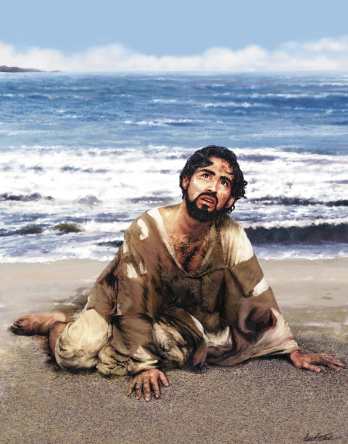
JonahIt’s actually an astonishing revelation when you think about it. Almost without exception, only Jews observe Yom Kippur in any fashion at all, and yet, we see in the reading of the Book of Jonah, that the main objects of God’s concern for repentance, redemption, and reconciliation are a large group of pagan Gentiles. Further, the only Jew involved is reluctant to be an agent of redemption for these Gentiles, so much so that he literally “jumps ship” in attempting to get away from his responsibilities.

The brief article goes on to say:

It is precisely these aspects of this sublime prophetic allegory, and in particular the subthemes of the book, that inform Yom Kippur. These motifs attracted the ancient Jewish sages and led them to select Jonah as one of the day’s two prophetic lectionaries (The other is Isaiah 57:14–58:4). Its universalistic outlook; its definition of sin as predominantly moral sin (The “evil” of Jonah 1:2 is defined as injustice in Jonah 3:8); its teaching of human responsibility and accountability; its apprehension that true repentance is determined by deeds and established by transformation of character (Jonah 3:10), not by the recitation of formulas, however fervent; its emphasis on the infinite preciousness of all living things in the sight of God (Jonah 4:10–11); and, finally, its understanding of God as “compassionate and gracious, slow to anger, abounding in loving-kindness” (Jonah 4:2)—all these noble ideas of the Book of Jonah constitute the fundamentals of Judaism and the quintessence of Yom Kippur.

The “universalistic outlook” to how sin is defined as primarily moral, human responsibility and accountability to God, and how repentance is accessible to everyone through deeds and established by transformation of character.

So for the Gentile as well as the Jew, God is “compassionate and gracious, slow to anger, abounding in loving-kindness.”

While the essay’s author Nahum Sarna states that “these noble ideas of the Book of Jonah constitute the fundamentals of Judaism and the quintessence of Yom Kippur,” we also see (apparently) that these “noble ideas” are equally applied to Gentile repentance and reconciliation to God.

As I said some months ago, we aren’t so much chopped liver after all. Although God sent a Jewish prophet (yes, in the Bible, we do find a few non-Jewish prophets) to redeem Gentile Nineveh, God’s primary purpose was to redeem Gentile Nineveh.

And guess what? Everyone, from the King down to the lowliest commoner, mourned, fasted, and repented and were subsequently forgiven by God.

I was explaining to someone at work, a Christian (we were discussing Yom Kippur), how the process of repentance and forgiveness of willful sin was the same in the Tanakh (Old Testament) and in the days of the Temple as it is today. There was no sacrifice for willful sin. Psalm 51 teaches us that how we are to repent hasn’t changed over time.

praying aloneThe Book of Jonah teaches us that a Gentile is of just as much concern to God as a Jew and that He seeks repentance from all.

For God so loved the world, that He gave His only begotten Son, that whoever believes in Him shall not perish, but have eternal life.

John 3:16 (NASB)

The Lord is not slow about His promise, as some count slowness, but is patient toward you, not wishing for any to perish but for all to come to repentance.

2 Peter 3:9 (NASB)

So non-Jewish disciples of the Jewish Messiah can take heart and realize we too have our hope in the God of Israel, because, no matter how special Israel is to God, all people, even the lowliest from the nations, are special to Him (though probably not in the same way as Israel) as well.

One of the unintentional messages I think some non-Jews think they hear from Messianic Judaism is that in Israel’s specialness to God, we non-Jews who are “Judaically aware” are pretty non-special as well. I think that’s why some Gentiles have chosen to leave Messianic Judaism and either transition to Hebrew Roots, which they may see as more egalitarian, or return to Church, which is very much a “pro-Gentile” environment.

It’s also probably one of the reasons some Gentiles who have been involved in Messianic Judaism, have rejected Messiah and converted to (usually) Orthodox Judaism.

Jonah's KikayonHowever, the non-Jewish believer, whether they are Judaically aware or not (although such awareness gives we Gentiles, in my opinion, a better and more accurate understanding of the Bible), even isolated from community on some metaphorical deserted island, can be comforted by the fact that God wants us to return to Him, too.

In creating the whole of existence, G‑d made forces that reveal Him and forces that oppose Him—He made light and He made darkness.

One who does good brings in more light. One who fails, feeds the darkness.

But the one who fails and then returns transcends that entire scheme. He reaches out directly to the Essential Creator. Beyond darkness and light.

And so, his darkness becomes light.

“Returning Light”
-Rabbi Tzvi Freeman
Based on letters and talks of the Rebbe, Rabbi M. M. Schneerson
Chabad.org

The Unexpected Appearance of Rosh Hashanah

I never know from day to day if I’ll ever write here again, but something just happened that caught me completely by surprise and I think it’s relevant.

My wife said she’d be going to shul tonight. I knew the High Holidays were coming up, but for the first time in a long time, I haven’t been keeping tabs on the exact dates. I don’t regularly read my email updates from Aish or Chabad anymore. And (gasp) I’ve stopped regularly reading the Torah portion.

That last part was initially because between the gym, yard work, and my “honey do” list, I didn’t have a lot of free time on Saturday, and by the time I did, my brain was too fried to really get much out of study. Also, I’ve been doing a free-lance project that I try to cram into my weekends.

Anyway, for a variety of reasons I’ve stated in previous blogs, I’ve become increasingly disconnected from the world of Messianic Judaism or any Judaism for that matter.

I wish I could say I’ve become increasingly connected with God through some other avenue, but this is not the case. My vague plans for forging a more one-on-one relationship with God haven’t come to fruition, primarily because I find other things to do with my time.

But I have, to a large degree, ceased to employ Judaism in any form to be the interface or conduit between me and God. The Church convinced me that I don’t belong within traditional Christianity and I’ve gotten a creeping suspicion over the last months or maybe even years, that I’ve been fighting a losing battle in believing that, even as a “Noahide-style” Gentile, I had a place within Messianic Jewish (online or otherwise) community.

And so I now have the proof that it is possible for me to pull away. Actually, I have two proofs. The first is the increasingly long gaps between making one blog post to another here. The second, and this is very dramatic to me, is forgetting all about Rosh Hashanah.

I wouldn’t have noticed at all if my wife hadn’t mentioned it. In fact, she just walked out the door to leave for synagogue.

So what is my morning meditation if it isn’t found in this place anymore? The very last vestige of what I’m beginning to think of as my former life is that I still mentally recite the Modeh Ani blessing when I first wake up, thanking God for returning my life to me each morning.

Interestingly enough, it was this blessing that I based my very first blog post here upon.

Gratitude to God for waking up alive each morning. A basic awareness that my life and everything in it is dependant on God’s grace and mercy.

Tonight, my Jewish wife is going to synagogue. It’s Rosh Hashanah. That’s where a Jew belongs on the Jewish New Year. May God grant her a sweet and good life in the coming year. But that doesn’t mean it signifies any sort of new beginning for me…at least not anymore.

I have to admit that it probably was arrogant presumption on my part to believe it ever did.

Tomorrow is Monday. Time to hit the gym and then go to work. The reinvention of whatever I am is going slowly.

The Humble Desert

This is the second of two blog posts I wrote several weeks ago. I don’t know when or if I’ll write anymore.

Ohr HaChaim explains the first verse in Sefer Devarim in a novel way: He says that Moshe was alluding to nine attributes that are necessary for those who go in the path of the Torah.

-from “A Mussar Thought for the Day,” p.132
Sunday’s commentary for Parashas Devarim
A Daily Dose of Torah

Although this commentary was written for a Jewish audience, we non-Jews in Messiah who seek his Kingdom may glean some insights into the necessary attributes for us to turn to Hashem, God of Israel, in repentance and humility.

The following is a truncated version of this list of nine attributes. For the full text, go to pp. 132-133 of the aforementioned portion of A Daily Dose of Torah

  1. The word “on the other side,” is an allusion that one should acquire the trait of Avraham, as it says (Bereshis 14:13) “and told Abram, the Ivri…” [The Midrash (Bereishis Rabbah 42:13) says that our forefather Avraham was called the “Ivri” because he was on one side…of the world, and the rest of humanity was on the other. The Eitz Yosef (ad loc.) explains that this refers to Avraham’s recognition of his Creator, challenging the status quo of his time, when idolatry was the norm.]
  2. A person should constantly have self-reproof in mind, as the Gemara says (Berachos 7a): “One self-reproof in a person’s own heart is better (for his self-improvement) than 100 lashes.”
  3. One should be humble, as the Gemara says (Eruvin 54a): A person should conduct himself as if he were but a humble desert…
  4. One’s humility should follow the proper course as delineated in Rambam (Hilchos Dei’vos Ch. 5). [Rambam writes at length there about the proper conduct one should display, both in public and private.]
  5. The Mishnah (Avos 3:1) says that two of the things one should remember so as not to come to sin are that a person ends up buried in the ground, and that he will have to stand in judgment before Hashem for all his deeds. In Avos 2:10, the Mishnah tells us to repent every day, lest one die without repentance.
  6. The virtuous say (Chovos HaLevavo, Shaar HaPerishus 4) that one should be outwardly cheerful and inwardly mournful.
  7. One should have a pure and clean heart, as Dovid HaMelech prays in Tehillim (51:12), “A pure heart create for me, O God.” One should distance himself from hatred, jealousy, strife and bearing grudges.
  8. One should regularly learn Torah, as it is stated about our forefather Yaakov (Bereshis 25:27): “Yaakov was a wholesome man, dwelling in tents,” which refers to the study tents of Shem and Eiver (Rashi ad loc.).
  9. One should not passionately pursue things that seem valuable, meaning, the wealth of the physical world, because one who is following his heart’s desires is not doing God’s work.

How can this be applied to the non-Jew in Messiah? We can only look to those texts in our Bible, enshrined in the Apostolic Scriptures, that describe what is required of us through Messiah as a result of his humble birth, his life among Israel, his death at the hands of the goyim, his miraculous resurrection, and triumphant ascension.

MessiahThere are two general models by which we non-Jews may learn our proper behavior as disciples and perhaps look to the above-listed nine attributes: The behaviors of our Master, Rav Yeshua, that we find recorded in the Gospels, and what the Apostle Paul taught, as well as mitzvot we see the righteous Gentiles of that time performing, also chronicles in the Apostolic Scriptures.

Let’s take another list of those nine attributes and see if they make any sense when applied to a Gentile disciple of the Master.

  1. To be separate from the rest of mankind. Are we Christians “called out” from the mass of general humanity to be something special to God?
  2. To constantly reproof ourselves. Reproof is just a fancy word meaning rebuke, reprimand, reproach, or admonition. Applied to a believer who sins (and who doesn’t sin, even among the redeemed Gentiles?), we should be our own worst critics, for self-reproof is better than being “called out” because of our sins by others.
  3. To be humble. Looking at Eruvin 54, the relevant portion states: “If a person makes himself [humble] like a wilderness on which everyone tramples, [Torah is given to him like a Matanah (gift),] and his learning will endure. If not, it will not.”
  4. I don’t have access to Rambam’s lengthy discourse on humility, so no illumination will come from his insights, at least not in this small write-up.
  5. Avos 3:1 seems pretty self-explanatory. Once you fully realize that you are mortal, an end will come, and you will stand in judgment before a righteous and just God, should you continue to sin? And yet we do all the time. How wretched we are.
  6. Outwardly cheerful and inwardly mournful. Sounds like Matthew 6:16.
  7. In order to have a pure and clean heart, we would have to be in a constant state of repentance, which seems pretty consistent with what we’ve read so far.
  8. Regularly learn Torah. That fits in with what we generally assume about Acts 15:21 but, if we expand that idea to regularly studying the Bible, and all Bible learning could be considered “Torah” or “teaching” in a way, then why couldn’t we benefit from this?
  9. What is most important to us? A nice house? An expensive car? Watching the most recent superhero movies in the theaters? What did the Master teach in Matthew 22:36-40? What did he teach in Matthew 6:19-21?

The Jewish PaulAlthough the Master appointed the Pharisee Paul to be the emissary to the Gentiles, and tasked him to bring the Good News of Messiah to the people of the nations of the world, Paul was not commanded to convert those Gentiles into Jews. Although Paul brought many non-Jews into Jewish social and worship contexts to teach them to understand such foreign (to them in those days) concepts as a monotheistic view of One God, who and what “Messiah” is and what he means, and what the “good news” is to Israel and how it can be applied to the rest of the world, at some point, he had to realize based on the sheer number of Gentiles in the world in relation to the tiny number of Jews, that the Gentiles would quickly develop their own communities, congregations, and perhaps their own customs, halachah, and praxis, independent of direct (or even indirect) Jewish influence. The tiny Apostolic Council of Jerusalem couldn’t hope to administer a world wide population of Gentiles.

Two-thousand or so years later, Christianity and Judaism, having traveled along widely divergent paths, seem like an apple and an orange trying to find common ground and not doing a very good job of it. Judaism isn’t what links Jews and Gentiles in Messiah. Judaism is what links Jews to other Jews. It’s what links Jews to Torah. It’s what links Jews to Israel.

Judaism isn’t what teaches the apple and the orange that they are both fruit (assuming you’ve seen the film My Big Fat Greek Wedding). The promise of living in the Kingdom of Heaven, otherwise known as the Kingdom of God, or even the Messianic Era…this is what we have in common, all of us, all of humanity…all people everywhere, or at least those who make teshuvah, turn to God, and who answer the call to be redeemed.

But Jews are part of the Kingdom by covenant. The path for the rest of us is more complicated, at least once you set aside the notion we’ve been taught out of a truncated Gospel, the notion commonly taught in most Christian churches.

Although Messianic Judaism in its various modern incarnations is a very good place to learn about how God’s redemptive plan for Israel, and through Israel, the rest of the world, is really supposed to work, it can also (and certainly has in many cases) lead a lot, or many, or most non-Jews associated with Messianic Judaism to some very confusing conclusions.

Learning from within a Jewish context of one sort or another is valuable, but none of that means we non-Jews are supposed to consider Judaism a permanent destination. Our destination lies elsewhere.

Yeshua’s (Jesus’) central message was Repent, for the Kingdom of Heaven is near, not “Believe in me and you’ll go to Heaven when you die.”

Sadly enough, Christianity widely teaches that Paul’s central message was “humans are saved from sin by believing in Jesus.” So either Paul completely turned the good news of Messiah on its head, so to speak, or Christianity totally misunderstands Paul.

For people like me, that is, non-Jewish disciples of the Jewish Messiah, it is vital to comprehend what the Master taught about the Kingdom and then see how Paul interpreted those teachings as applying to the people of the nations. Only understanding that gives me a clear picture of the actual context in which God expects people like me to operate and what I’m supposed to do with all this information.

Apostle Paul preachingI shouldn’t have to look far. Paul’s discourse to the synagogue in Pisidian Antioch where he addressed Jews, proselytes, and non-Jewish God-fearers should tell the tale and show us what he taught that so excited the Gentiles.

As Paul and Barnabas were going out, the people kept begging that these things might be spoken to them the next Sabbath. Now when the meeting of the synagogue had broken up, many of the Jews and of the God-fearing proselytes followed Paul and Barnabas, who, speaking to them, were urging them to continue in the grace of God.

The next Sabbath nearly the whole city assembled to hear the word of the Lord. But when the Jews saw the crowds, they were filled with jealousy and began contradicting the things spoken by Paul, and were blaspheming. Paul and Barnabas spoke out boldly and said, “It was necessary that the word of God be spoken to you first; since you repudiate it and judge yourselves unworthy of eternal life, behold, we are turning to the Gentiles. For so the Lord has commanded us,

‘I have placed You as a light for the Gentiles,
That You may bring salvation to the end of the earth (Isaiah 49:6).’”

When the Gentiles heard this, they began rejoicing and glorifying the word of the Lord; and as many as had been appointed to eternal life believed. And the word of the Lord was being spread through the whole region.

Acts 13:42-49 (NASB)

You should read all of Acts 13 for the full context, keeping in mind that Luke probably wrote down only a short summary of Paul’s complete address to the synagogue.

We do know that Paul advocated for redemption of the Gentiles through Israel’s redemption, and that the news among the Gentile God-fearers was so well received during Paul’s first Shabbat visit, that multitudes of non-Jews, most of whom were probably not God-fearers and in fact, most of whom were likely straight-up pagans, enthusiastically showed up on the next Shabbat, dismaying the synagogue leaders to the extreme, but attracting a lot of excited Gentiles to the “good news.”

That good news wasn’t Judaism. The local Gentiles always knew that they could undergo the proselyte rite to convert to Judaism (and some few of them actually did). Paul wasn’t preaching for all Gentiles to convert, he was preaching the good news of the Kingdom of Heaven, where all people could receive the Spirit of God, could be reconciled to the Creator of the Universe, and receive the promise of the resurrection and a place in the World to Come.

This was as open to the Gentiles as it was to any Jew.

Verse 38 of the same chapter says that Messiah proclaimed forgiveness of sins (through teshuvah or repentance) to even the Gentiles, something most of the Goyim (and probably most Jews) hadn’t even considered possible before, especially within their polytheistic family and social framework.

The synagogue was where Gentiles had to go, at least initially, because that was the only place in town where anyone taught anything about the God of Israel and the meaning of Messiah’s message. Like I said, Judaism isn’t the final destination for the Gentile. It was and perhaps sometimes still is the place we need to go in order to learn that our final destination is the Kingdom of Heaven. That’s where we need to focus our attention.

alone-desertIf we get too caught up in trying to “belong” to Judaism, we are either going to become frustrated when it doesn’t work out that way, or offended and angry when Jews in Messiah see we Gentiles as interlopers and poachers of their territory.

In some ways, that’s probably what caused a lot of the problems in Gentile integration into Jewish social and community circles that we find in Luke’s “Acts” and Paul’s epistles.

Rather than trying to bulldoze my way into Messianic Judaism, I’m determined to become a humble desert, to be the dust under everyone’s feet. In the siddur, it says “To those who curse me let my soul be silent, and let my soul be like dust to everyone.”

All I can do is to continually repent before the Throne of God, try to live my life in humility, and seek to behave in a manner pleasing to my Master so that one day I may enter the Kingdom…

…even if it is like dust seeping in through the doorway.

The Torah states, “You shall trust wholeheartedly in the Lord, Your God” (Deuteronomy 18:13).

Rabbi Yisroel Meir Kagan, known as the Chofetz Chaim, used to say, “The Torah obliges us to trust wholeheartedly in God … but not in man. A person must always be on the alert not to be cheated.”

The Chofetz Chaim devoted his life to spreading the principle of brotherly love, the prohibition against speaking against others, and the commandment to judge people favorably. Though he was not the least bit cynical, he was also not naive. He understood the world and human weaknesses.

In Mesichta Derech Eretz Rabba (chapter 5) it states that we should honor every person we meet as we would (the great sage) Rabbi Gamliel, but we should nevertheless be suspicious that he might be dishonest.

-Rabbi Zelig Pliskin
as quoted at Aish.com

If I Can’t Talk About God…

How can I talk with anyone else about God when I can’t even talk about Him with my wife?

We were discussing this news story about how when Iran says “Death to America” it doesn’t really mean “Death to America”.

We were both equally outraged at such a sentiment, and I tried to express support for Israel and how when God came back…

Oops.

“Came back?” my wife queried.

I realized what I said and how she took it (and rightfully so) and tried to reorient the statement as best I could but the damage was done.

There are lots of reasons I don’t feel fit to occupy a space in the religious blogosphere, most of them having to do with my personal shortcomings, but some of them have to do with my apparent inability to talk with or about Messianic Jews and Messianic Judaism without stepping on some significant toes.

If I can’t talk about God and Israel in a positive, pro-Bible, pro-Israel, and pro-Judaism way with my wife without saying something stupid, how can I hope to talk with other Jews in Messianic Judaism without causing strife and offense?

I don’t enjoy getting emails saying that I said something wrong, objectionable, or whatever. I can’t live in the same home with a Jewish person without messing things up. How can I communicate with other Jewish people who don’t have that sort of emotional connection with me and get my point across without causing a mess?

This is my personal problem with being involved with Messianic Judaism. If I actually say what’s on my mind, even with the best intentions, it goes wrong. Some people might not care and just bulldoze their way through, but I don’t have that luxury, certainly not as a blogger, and definitely not as a husband and father.

I went out for coffee with my Christian friend last Sunday. He again strenuously encouraged me to join religious fellowship. I felt myself once again backed into a corner with no way out. If I go back to a church, I’ll be “sleeping with the enemy” as far as my wife is concerned. If I, even over the web, attempt to associate with some sort of Messianic community, sooner or later, I’m going to step all over someone’s priorities because either I have a mind of my own or because I make mistakes.

The problem is, just like in marriage, when you step on someone’s “sacred cow,” they take it personally.

That’s why I like writing about senior fitness. It may not have eternal consequences, but then again, no one gets bent all out of shape about my personal expressions on the topic either.

Yes, this is a rant.

This is why I believe my only option is to rely on Hashem alone. He’s got thousands of years of experience dealing with human stupidity. Fortunately, he doesn’t offended easily. If he did, I’d have been ashes ages ago.

If Hashem wants to take exception with me, He knows where to find me and if He choses to “consequence” me, it’s His privilege to do so, and I can’t say “boo” about it.

I realize now why so many people I know in the “Messianic” and “Hebrew Roots” space choose to be isolated in small family groups or home fellowships. A Messianic “luminary” once referred to these groups in an unflattering manner, but I think that at least some of them just don’t know who to trust, including whether or not to trust themselves.

We are supposed to trust in Hashem alone. That’s an answer that is not only appealing on a lot of levels, but one that may be the only remaining path for many of us. If we can’t trust God, we are undone anyway. If God is like people, then we have no hope.

The Torah states, “You shall trust wholeheartedly in the Lord, Your God” (Deuteronomy 18:13).

Rabbi Yisroel Meir Kagan, known as the Chofetz Chaim, used to say, “The Torah obliges us to trust wholeheartedly in God … but not in man. A person must always be on the alert not to be cheated.”

The Chofetz Chaim devoted his life to spreading the principle of brotherly love, the prohibition against speaking against others, and the commandment to judge people favorably. Though he was not the least bit cynical, he was also not naive. He understood the world and human weaknesses.

In Mesichta Derech Eretz Rabba (chapter 5) it states that we should honor every person we meet as we would (the great sage) Rabbi Gamliel, but we should nevertheless be suspicious that he might be dishonest.

-Rabbi Zelig Pliskin
as quoted at Aish.com

What’s Yours is Yours

While every Jew is commanded to place a mezuzah on his doorway, the commentaries raise the question of whether a building that is owned in partnership by a Jew and a non-Jew also requires a mezuzah. [Of course, the Jewish partner would have to be the one who fulfills this obligation. Since non-Jews are in no way bound to follow the dictates of the overwhelming majority of the mitzvos of the Torah, no-obligation — financial or otherwise — can be placed on the non-Jewish partner to fulfill this mitzvah.]

Rashba (to Chullin 136a) observes that the answer to this question may be understood from a Gemara in Chullin (135b). The Gemara lists several mitzvos that, when the Torah commands them, it specifies that they must be done with an object that is “yours.” Some of the examples mentioned in the Gemara are obligations of giving terumah (the first portion of the crop) and reishis hageiz (the first shearing) to the Kohen [where the Torah tell us (Devarim 18:4): “The first of your grain, wine, and oil, and the first of the shearing of your flock shall you give to him”]…

…that these mitzvos are commanded only when dealing with an item that is totally yours…A field or animal that is partially owned by someone not obligated in these areas — a non-Jew — is not included in these directives.

-from A Taste of Lomdus
The Shabbos Commentary on Parashas Eikev, p. 60
A Daily Dose of Torah

I’ve had little motivation to write any of these “mediations” lately, but then someone contacted me via email and asked if I knew anything about this person.

If you click the link and read the article “My Long Road Home” authored by Yehudah Ilan (probably not his original name), you’ll discover the story of a person who grew up in a Christian home and after much Bible study, transitioned first into Messianic Judaism, and then shot completely out the other side, finally converting to Orthodox Judaism.

Over the years, I’ve appreciated the educational context Messianic Judaism and various ministries have provided for my elucidation into a better understanding of the Bible than the one I previously possessed. Of late though, many changes have been taking place in my life, and they’ve cast my role within any form of Judaism (and particularly Messianic) into question.

brain hack
Image credit: bebrainfit.com

First and foremost, I have a lot of personal “reinventing” to do, although I’ve come to think of my near-future tasks and goals as “rebooting and hacking”. But a singularly important aspect of how I plan to “hack” my life to make necessary changes and (hopefully) improvements, is what to do about my relationship with God.

While Messianic Judaism as a Judaism has afforded me certain intellectual and spiritual advantages over what I’ve experienced within the Church, I’ve come to realize there’s a difference between learning from within a Jewish perspective (as much as I can apprehend such a perspective, my not being Jewish) and actually having any real involvement “within” Judaism.

As I’ve been told time and again, Messianic Judaism is a movement by and for Jewish people who wish to experience and explore their discipleship under Messiah Yeshua as Jews.

I agree with that statement and support it.

But, and I’ve written about this many times, where does that leave Gentiles?

I’ve written about the answer many times, too. There are any number of Messianic congregations that welcome non-Jews as members, either primary or ancillary, and those non-Jews can have fulfilling roles within such a community.

If you, as a non-Jew, are interested or even fascinated with the benefits offered by a Messianic Jewish worship and learning experience, then I encourage you to seek such communities out, either in the physical sense or online. Just be careful about the doctrine and theology, and what sort of practices some of these groups are calling “Jewish”.

But even becoming involved in an authentic Messianic Jewish community, there’s a catch and a danger. There’s the risk of becoming confused and losing your way.

Since Jesus put on tefillin every day, I started putting on tefillin. Jesus did not eat shellfish, so I stopped eating shellfish. Jesus knew Hebrew and Aramaic, so I learned Hebrew and Aramaic. The more that I studied the New Testament from a historical perspective, especially the elements of the life of Jesus, the more Judaism I began to practice and the more Christianity I began to doubt or reject.

We were living in mid-central Minnesota in the boondocks, with no Jews for miles, and I would walk around town wearing a kippah and tzitzit. We built a kosher sukkah in our back lot and lit a Chanukah menorah in the front window.

coffee and studyLearning from Judaism isn’t the same as being required to practice Judaism.

Being devoted to Yeshua as the first fruits of the resurrection and the arbiter of the New Covenant and coming Messianic Kingdom is not the same as being devoted to the practice of Judaism for the sake of the Messiah being Jewish.

Yes, if you’re Jewish, then your devotion to God is expressed through the practice of Judaism.

But if you’re not Jewish, your devotion to God is to be focused on the coming Kingdom of God and whatever place the nations will have in such a Kingdom.

The recent Republican Presidential candidate debates, the various news stories (scandals) about Hillary Clinton, and many other political and social events are rapidly convincing me that this nation and our planet are not doing well, and they’re not going to get better any time soon.

Politics and political correctness are doing nothing to unite American citizens. In fact, they’re doing the opposite. People in this country are becoming more divided and more polarized every day. Whoever is elected the next President in our nation isn’t going to save us. He or she, in all likelihood, will just continue to travel on a path that will further divide us and result in an increase in hostility of American against American. There’s also our recent participation in events that have increased tension and threats of nuclear war in the Middle East.

There is only one Savior, one Messiah, one King. Our hope is in him, not just the hope for the Jewish people, although that’s his primary mission, but also for the world. Through saving Israel, Messiah will save the whole planet. He will rescue the devoted remnant of Jews and Gentiles, returning the Jews to their land, to Israel, and establishing peace and security for the rest of us as well, and for our nations.

But for that to happen, we, the devoted disciples among the nations, must not confuse Judaism with the worship of God. Judaism belongs to the Jewish people, not to the rest of us.

Some few Gentiles are called, for whatever reasons, to convert to Judaism (and who knows, maybe Yehudah Ilan was one of them), but that is not the path the rest of us are supposed to take.

I said there was a danger in a Gentile operating within Messianic Judaism, the danger of losing your balance. It exists, but I don’t want to overstate my point.

synagogueMany non-Jews have found a safe and secure place within Messianic Judaism and are firm in their identity as a “Messianic Gentile” (for lack of a better term).

But it’s not for everyone. I’ve determined it’s not for me for a few simple reasons. If my wife were Jewish and Messianic, there would be no dissonance in my particular “orientation” and my family would be united with me in how I understand God, Messiah, the Bible, and everything.

But they’re not. My wife is absolutely not Messianic, and she is definitely Jewish. She sees me as a Christian and, for the most part, we don’t speak of religion. When she talks about Judaism and what Jews believe, I don’t comment for the sake of peace in the family.

I’ve learned from difficult experience that for me to actively practice any form of Christianity or Messianic Judaism publicly and in community is not sustainable in my marriage. That’s not my wife’s fault…it’s the result of nearly twenty centuries of Christian-Jewish enmity, with the Jewish people usually getting the short end of the stick.

From her point of view, me going to Church or any sort of “Messianic” group is “sleeping with the enemy” (so to speak). No, she’s never said that, but we’ve been married for over thirty years. I think I know a few things about her by now.

But the other reason I’m pulling back from Messianic Judaism is that it’s just another system. Christianity is a system containing a lot of little subsystems…denominations and such. Judaism is system also containing subsystems, ways of orienting individual members toward God and community. The former system welcomes everyone as long as you comply with the requirements of the system. The latter system welcomes Jews and occasionally non-Jews (depending on which subsystems are involved), but it’s more closed because it’s serving a people and a nation, not just “believers”.

Messianic Judaism requires the non-Jew, at least at the level of the local community, to comply with the requirements of the system, but by definition, the requirements are heavily biased toward who really belongs in that system: Jews.

In quoting from A Taste of Lomdus above, I was hoping to illustrate the sense of belonging that Jews have within Judaism and relative to the Torah, even if Gentiles are somehow involved. In a joint Jewish-Gentile venture, only the Jews are obligated to what belongs to them: the Torah and the mitzvot.

I didn’t quote the part that said if a Jew and non-Jew lived in the same home, the Jew would still be obligated to put up mezuzah, even when a Jew would not be obligated to put up mezuzah if he/she owned an office building or other business with a non-Jew. I guess that means it is appropriate for my wife and I to have mezuzah on the doorposts of our home, not for my sake certainly, but for hers because she’s Jewish and the mitzvah belongs to her.

Becoming confused about what belongs to Jewish people exclusively and what belongs to the rest of us at least occasionally results in non-Jewish people making mistakes such as this one or even this one. You either decide the only solution to understanding the Bible and responding to God is to convert to Judaism or you can choose to deliberately seize Judaism and apply it to a non-Jewish life.

skyI can do neither. However,  there are still parts of the Bible that show God also accepting people of the nations into the coming Kingdom of Heaven (which isn’t Heaven in the sky but the Messianic Kingdom on Earth). We have a place, not as Jews nor as Gentiles practicing Judaism, but as people of the nations, just the way we are.

That’s all I can look forward to as a flawed and erroneous disciple of the Master, but I have a lot of work to do before I can even claim a toehold in that territory.

I don’t know if I’ll ever get there.

There are some people who sometimes read my blog and who only choose to contact me if I have offended them or, more to the point, if I’ve written something wrong, or something they object to, about their group or organization. I don’t want to harm anyone, but only “pinging” me to object to something isn’t a very good way to maintain a relationship.

Then there are some of you who have been very supportive of me, in spite of my obvious failings as a writer, a disciple, and a human being. Thank you.

There’s a quote attributed to multiple sources including Plato, Philo of Alexandria, Ian MacLaren, and John Watson:

Be Kind. Everyone you meet is fighting a hard battle.

I’d like to think that the appeal of this blog wasn’t that I was perfect (and I know I’m far, far from perfect) or some sort of “Mr Know-It-All.” I think the appeal was because I was and am fighting a hard battle, a battle that others could (and can) relate to, because all of you are fighting a hard battle, too.

In some ways, my task is both amazingly simple and incredibly difficult. The simple part is that all I really need to pay attention to is my relationship with God. That’s as easy as praying. That’s also as easy as reading the Bible and maybe paying a little extra attention to those passages of the Apostolic Scriptures regarding what the Master and Paul (and any others who may have written about it) that discussed what was expected of the non-Jew, both before the return of Messiah and following.

Granted, there’s not a lot of material to work from, but where else do I have to turn?

The hard part is changing on a fundamental level, rebooting the system and hacking my life to become different and more than what it’s been up until now.

meI’ve got a couple of “mediations” that are “in the can,” so to speak. I don’t know if I’ll publish them. I don’t want my writing to distract me from what I need to do, but on the other hand, I wrote them weeks ago.

I’ll think about it. There are just two of them, so they may show up by the by.

I may return here someday and resume or maybe even improve upon what I’ve been trying to do in the past…chronicle one life on a path of faith and trust.

I just need to have a better “me” with which to do that.

Christians and Tisha B’Av

I originally posted this last year, and while I’m not actively writing new material for the time being, I thought it important that we Christians consider why it is appropriate to mourn, alongside the Jewish people, the loss of the Holy Temple in Jerusalem. This year. Tisha b’Av begins on Saturday at sunset and ends at sunset on Sunday.

James Pyles's avatarMorning Meditations

…Should I weep in the fifth month [Av], separating myself, as I have done these so many years?

Zechariah 7:3

In the fifth month, on the seventh day of the month …came Nebuzaradan … and he burnt the house of the L-RD…

II Kings 25:8-9

In the fifth month, on the tenth day of the month… came Nebuzaradan … and he burnt the house of the L-RD…

Jeremiah 52:12-13

Tisha B’Av, the Fast of the Ninth of Av, is a day of mourning to commemorate the many tragedies that have befallen the Jewish people, many of which have occurred on the ninth of Av. Tisha B’Av means “the ninth (day) of Av.” It occurs in July or August.

Tisha B’Av primarily commemorates the destruction of the first and second Temples, both of which were destroyed on the ninth of Av (the first by the Babylonians in 586…

View original post 2,111 more words