Tag Archives: Judaism

How Forgiving is Our Teacher?

teaching-childrenMy late teacher Rabbi Louis Finklestein used to say, “When I pray, I speak to God; when I study, God speaks to me.” In the words of our liturgy:

Blessed are You, Lord our God, Sovereign of the universe…who commanded us to study the words of Torah. May the words of Torah…be sweet in our mouths and in the mouths of all Your people so that we, our children, and all the children of the House of Israel may come to love You and to study Your Torah…Blessed are You, Lord, who teaches Torah to the House of Israel.

Note the tense of the verb: God “teaches,” not “has taught,” Torah to Israel. God, then, is a teacher not only at Sinai, in antiquity, but today as well, and not only today but also in the world to come. The souls of the righteous who have perished are described as having gone to “the yeshiva on high,” where God will be their teacher and will elucidate all the puzzles of the Torah that were never clarified while they lived on earth.

-Rabbi Neil Gilman
“Chapter 4: God is Nice (Sometimes),” pp 62-3
The Jewish Approach to God: A Brief Introduction for Christians

I’ve mentioned before that I think of God as a teacher, at least sometimes, a bringer of enlightenment and truth. There are also some in religious Judaism who believe that when Messiah comes (or comes back), he will teach Torah perfectly. I suppose this means he’ll teach the Gentiles as well as the Jews how Torah is to be correctly applied to our lives and all of the messy confusion we experience now will finally go away…as long as we choose to accept his teaching and incorporate them into our daily practice.

It seems amazing that we might not, but as I read the Bible, even after the second advent, there will be plenty of people who won’t recognize him as King, even as he sits on the Throne of David in Holy Jerusalem.

But then again, even when we acknowledge God, sometimes we can still be opposed to Him; we can still be angry with Him. But that may not be as strange as it seems:

Yet even then, their anger at God’s behavior was always expressed from within their long-standing relationship with God. They never allowed their sense of being mistreated by God to drive them out of the religious community and its belief structure.

-Rabbi Neil Gillman
“Chapter 5: God is Not Nice (Sometimes),” pg 65

I know the idea of being angry at God usually elicits a certain amount of “pushback” from some readers, but I maintain that it’s a common human response to God…we just don’t talk about it. But what is God’s response to us when we are angry at Him?

Job’s “comforters” arrive and evoke the classical Torah interpretation of suffering: Job must have sinned. But Job retorts that he has not sinned, or that he has not sinned nearly enough to justify this punishment. At the end of the book, God addresses Job in the speeches “out of the whirlwind.” These are a paean to God’s power and to the complexity of God’s creation. Their message is “Job, don’t try to understand Me. Don’t try to fit Me into your neat moral categories. I am God; you are a human being.” Surprisingly, Job acknowledges the difference:

I know You can do everything,
That nothing You propose is impossible for You…
I had heard You with my ears,
But now I see You with my eyes;
Therefore, I recant and relent,
Being but dust and ashes.

-Job 42:2, 5-6

This implies that Job has now achieved a clearer understanding of God’s ways and a measure of closure.

-Gillman, pg 69
forgiveness_jayThis seems not unlike the article Jay Litvin wrote about his own need to attain closure or at least regain closeness with God, in Mr. Litvin’s case, by “forgiving” God for Litvin’s terminal illness. But Job’s and Litvin’s approaches are quite different. Whereas Job acknowledges God’s statement that he cannot understand the ways of God and thus should abandon any attempt to put God in a theological or doctrinal box, Litvin sets all this aside and treats God, not as understandable, but nevertheless, forgivable.

I suppose you could argue that having the temerity to “forgive” God might require that we would then need to be forgiven by God, that too is the act of a loving Father rather than a harsh and punitive Judge:

He will not always strive with us,
Nor will He keep His anger forever.
He has not dealt with us according to our sins,
Nor rewarded us according to our iniquities.
For as high as the heavens are above the earth,
So great is His lovingkindness toward those who fear Him.
As far as the east is from the west,
So far has He removed our transgressions from us.
Just as a father has compassion on his children,
So the Lord has compassion on those who fear Him.
For He Himself knows our frame;
He is mindful that we are but dust.

Psalm 103:9-14 (NASB)

Then comes the theological underpinnings for the power of repentance: “For He knows how we are formed; He is mindful that we are dust” (Psalm 103:14). God grants us the power of repentance because God knows how we were created: from the dust (Genesis 2:7).

-Gillman, “Chapter 6: God Can Change,” pg 91

In Rabbi Gilman describing the Jewish relationship to God for Christians, he says that God gives human beings the ability to repent because God knows how weak and frail we are (dust and ashes). Out of that knowledge, God desires to forgive us, which, of course, requires that we first repent.

Jonah chapter 3 tells the simple but powerful tale of Jonah prophesying to the great city of Nineveh that unless they repent of their sins, they will be destroyed by God. Amazingly, this Gentile and corrupt city, from the King to the lowest commoner, repent, and because of this, God relents and forgives.

There’s a certain irony, at least to me, in Rabbi Gillman final commentary in this chapter:

The poem then concluded with a theological justification for God’s compassion:

You are slow to anger and ready to forgive. You do not desire the death of the wicked but that we return from our evil ways and live. Even until our dying day, You wait for us, perhaps we will repent, and You will immediately receive us. Our origin is dust and we return to the dust. We earn our bread at the peril of our life. We are like a fragile potsherd, as the grass that withers, as the flower that fades, as a fleeting shadow, as a passing cloud, as the wind that blows, as the fleeting dust, and as a dream that vanishes. But You are ever our living God and sovereign.

The echo of Psalm 103:14…is unmistakable here. God must forgive because God above all knows what it means to be a human being and to live a human life (not because of Jesus, according to Jewish thought, but because God is the creator of all).

-ibid, pg 96

Jonah's KikayonAs a Reform Jewish Rabbi, Rabbi Gillman isn’t about to acknowledge the Christian view of Jesus, but comparisons between his closure to Chapter 6 and the following are unavoidable:

The Lord is not slow about His promise, as some count slowness, but is patient toward you, not wishing for any to perish but for all to come to repentance.

2 Peter 3:9 (NASB)

Therefore, since we have a great high priest who has ascended into heaven, Jesus the Son of God, let us hold firmly to the faith we profess. For we do not have a high priest who is unable to empathize with our weaknesses, but we have one who has been tempted in every way, just as we are—yet he did not sin. Let us then approach God’s throne of grace with confidence, so that we may receive mercy and find grace to help us in our time of need.

Hebrews 4:14-16 (NASB)

It’s not that God couldn’t feel compassion and empathy for human beings without experiencing a human life. What creator is unable to understand his creation? And yet, Jesus as both divine and human is uniquely positioned to understand human frailty and to act as intercessor between a fallen mankind and an ultimately Holy, Ein Sof God. Peter also echos Psalm 103 and “foreshadows” the Yom Kippur service in his words.

I sometimes wonder why we have a Christianity that is completely separate from Judaism. If modern religious Judaism is correct and the Gentiles are to come to God through Israel but without the Jesus of the Bible, then why isn’t modern Israel, the Jewish people, a light to the world, opening that door for the rest of humanity? I know the only “Jewish” requirement for Gentiles is our obedience to the Seven Noahide Laws, but without Jewish mentors and a Jewish understanding of this framework, non-Jewish humanity is without comprehension, let alone community (as far as I know, there are no exclusively Gentile Noahide “synagogues” or “churches”). Does modern Judaism truly believe that God left each generation of Gentiles without a means of redemption? It would seem so, since Judaism, for the most part, does not encourage “Noahidism” among the Gentiles.

Christianity was born of Judaism but we have been separated. Jewish people say the separation occurred when Paul developed an anti-Law religion for the Gentiles, effectively making Paul a Jewish traitor and perverter of Jewish teachings into a new Gentile religion. Christians say that Paul understood that the Law had been replaced by the grace of Christ and Torah entered into a period of obsolescence, making Paul the Jewish vanguard out of Judaism and into Christianity. Even my Pastor, who believes there will be a Third Temple and that there will be sacrifices again, tells me that the Torah was always intended to be temporary, and Paul was the instrument of closure for that part of Jewish existence.

I don’t accept either viewpoint. I can’t. One of the comments made on a recent blog post said in part:

In the case of the biblical literature, re-interpretation is a necessary part of such developments because many adherents to a given system are not native to the languages of the source literatures.

It may have become necessary for the form and structure of religious thought and practice to also have been reinterpreted because of the innate differences between Jewish and Gentile disciples of Messiah. Not only are the covenant structures different (or at least overlapping), but based on the much longer and unique Jewish history with God at the point of the apostolic period, how discipleship was transmitted by the Jewish apostles and received by the various Gentile populations in the then-civilized world, may have well required a sort of cultural “morphing,” even when Gentile Christianity and Jewish “Messianism” were still on speaking terms in the late Second Temple and early post-Temple time frame.

infinite_pathsGod is God of all and God desires to forgive all so that none should perish, but it seems apparent, given the wide variety of Jewish and Gentile approaches to God we’ve seen over the past two-thousand years, that God’s people have yet to come to any sort of consensus as to how that approach should look. Maybe this too is part of God’s gracious forgiveness, not locking human beings into a too tightly structured “approach pattern.”

I know that Jesus said that we only enter through the narrow gate (Matthew 7:13-14), but some Christians believe that gate is as narrow as a single denomination. Some Christians believe you are only “saved” is you are baptized in running water vs. a wading pool. As for observant Jews, how many believe other Jews who do not observe Shabbos will not merit a place in the world to come? How many Jews believe that only their branch of Judaism or only their Rebbe has the true teachings of Torah?

But if God is our teacher and perhaps ultimately, our only teacher, where can we go to learn from Him without having to endure endless layers of human filters? Ourselves and delving into the Bible by the power of the Holy Spirit you say? Many claim to possess the true Spirit and thus out of that (or their own imagination), possess the true teachings of Christ, but I still maintain that there is a lot more chaff than wheat in human understanding of God. I can only hope and pray that God is a lot more merciful and forgiving than some people of faith say He is, so that our honest but fumbling attempts to know Him aren’t in vain.

Yom Kippur: The Brokenhearted Offering

broken-heartedI hated Yom Kippur because it made me feel like a fraud. I would bang away at my chest all day, enumerating all my sins, promising I was repentant. But in my heart I knew that I would return to my mean self the moment the fast was over. I didn’t believe I could ever change, that I was really worthy of life and that I would ever be able to redeem myself. So I would go through the day anxious for it to be over, hating myself for being such a big, fat fraud.

-Eliana Cline
“Why I Hated Yom Kippur”
Aish.com

I’m writing this on Sunday, almost a full week before you’ll read it. Today, my Pastor’s sermon in church was on Yom Kippur. The timing was deliberate. Last week’s sermon, which I missed because I decided to skip church for the holiday weekend, was on Rosh Hashanah. It’s always interesting to hear a sermon in a Christian church about something that is so profoundly Jewish.

Aaron shall place lots upon the two he-goats: one lot “for Hashem” and one lot “for Azazel.” Aaron shall bring near the he-goat designated by lot for Hashem, and make it a sin offering. And the he-goat designated by lot for Azazel shall be stood alive before Hashem, to provide atonement through it, to send it to Azazel to the Wilderness.

Leviticus 16:8-10 (Stone Edition Chumash)

One of the things I’ve come to learn about Jewish holidays and festivals being preached in the church is that these Jewish events can never be allowed to just stand on their own. They always have to “point to Christ.” Otherwise, I guess, they just aren’t really worthy, God-given events all by themselves (that was a little sarcasm).

Anyway, it is Pastor’s opinion that each of these two goats represent the first and second coming of Christ. I have no idea where this idea comes from, but knowing Pastor, it comes from some Christian source or authority. Although I sometimes disagree with him, Pastor does his research and he hardly ever “shoots from the hip” in a sermon.

The analogy, which is how I think of it, falls apart when you realize the Azazel goat (Pastor called it by the more common name “scapegoat”) must bear the sins of Israel and be sent out into the Wilderness, presumably to die. One commentary in my Chumash on verse ten says:

Or HaChaim notes that the goat is referred to here and in verse 21, before the confession, as alive. After Aaron pronounces confession upon it, however, it is no longer called alive, even though it would be some time before it would go to its death. The confession had the effect of placing all of the people’s sins on the goat, which would then carry them off to the desolate Azazel. The presence of such contamination on the goat rendered it spiritually “dead;” thus it was called alive only before Aaron’s confession.

Even if you don’t quite buy what Or HaChaim says, the Azazel goat seems a poor symbol for the King of the Jews returning to redeem Israel in glory and power, leading an army of angelic beings.

But Pastor said a lot of really good things about Yom Kippur and how we Christians can learn from the Day of Atonement. Yes, he said our final atonement is Jesus Christ, who died on the cross for our sins and who was resurrected to give us the promise of eternal life through faith in him.

struggling_prayBut he also deconstructed the mechanism of teshuvah (though he didn’t call it that) as the observant Jewish world sees it, and said point-blank that simply answering an altar call or raising your hand at Christian camp professing belief in Jesus doesn’t automatically grant you the aforementioned eternal life. Seeking atonement of your sins requires much, much more, and we aren’t fully disciples of the Master and Children of God until we do. After that, we still need to have a life of continual repentance, since we sin every day.

Rabbi J. Immanuel Schochet wrote a rather lengthy article called The Dynamics of Teshuvah, which I won’t quote from here. I think it could be called “Everything You Always Wanted To Know About Teshuvah But Were Afraid To Ask.” If you want to know more, Rabbi Schochet’s article is a good source.

But the heart of teshuvah and atonement is contained in the more modest missive written by Rabbi Shlomo Yosef Zelvin called The Master Key:

One year, Rabbi Israel Baal Shem Tov said to Rabbi Ze’ev Kitzes, one of his senior disciples: “You will blow the shofar for us this Rosh Hashanah. I want you to study all the kavanot (Kabbalistic meditations) that pertain to the shofar, so that you should meditate upon them when you do the blowing.”

Rabbi Ze’ev applied himself to the task with joy and trepidation: joy over the great privilege that had been accorded him, and trepidation over the immensity of the responsibility. He studied the Kabbalistic writings that discuss the multifaceted significance of the shofar and what its sounds achieve on the various levels of reality and in the various chambers of the soul. He also prepared a sheet of paper on which he noted the main points of each kavanah, so that he could refer to them when he blew the shofar.

Finally, the great moment arrived. It was the morning of Rosh Hashanah, and Rabbi Ze’ev stood on the reading platform in the center of the Baal Shem Tov’s synagogue amidst the Torah scrolls, surrounded by a sea of tallit-draped bodies. At his table in the southeast corner of the room stood his master, the Baal Shem Tov, his face aflame. An awed silence filled the room in anticipation of the climax of the day—the piercing blasts and sobs of the shofar.

Rabbi Ze’ev reached into his pocket, and his heart froze: the paper had disappeared! He distinctly remembered placing it there that morning, but now it was gone. Furiously, he searched his memory for what he had learned, but his distress over the lost notes seemed to have incapacitated his brain: his mind was a total blank. Tears of frustration filled his eyes. He had disappointed his master, who had entrusted him with this most sacred task. Now he must blow the shofar like a simple horn, without any kavanot. With a despairing heart, Rabbi Ze’ev blew the litany of sounds required by law and, avoiding his master’s eye, resumed his place.

At the conclusion of the day’s prayers, the Baal Shem Tov made his way to the corner where Rabbi Ze’ev sat sobbing under his tallit. “Gut Yom Tov, Reb Ze’ev!” he called. “That was a most extraordinary shofar-blowing we heard today!”

“But Rebbe . . . I . . .”

“In the king’s palace,” said the Baal Shem Tov, “there are many gates and doors, leading to many halls and chambers. The palace-keepers have great rings holding many keys, each of which opens a different door. But there is one key that fits all the locks, a master key that opens all the doors.

“The kavanot are keys, each unlocking another door in our souls, each accessing another chamber in the supernal worlds. But there is one key that unlocks all doors, that opens up for us the innermost chambers of the divine palace. That master key is a broken heart.”

Eliana Cline’s article captured what it is for a Jewish person on Yom Kippur in a more modern setting:

This Yom Kippur, I can feel the pain of not being in a state of connection and own the consequences of my choices. I can say to God, “This is not me,” and mean it. I feel repentant, not from fear – but from a genuine desire for connection, love and transcendence. Getting in touch with my higher self that yearns to be good has enabled me to sense the sadness of my past choices.

The Talmud teaches that on Yom Kippur we are compared to angels. I never really got the comparison. Until now. On Yom Kippur all the daily responsibilities and tasks are removed; it’s a day we transcend the physical and live with total purpose. It’s a day with one sole mission, like an angel, to pray, to think and to connect – to God and to our inner soul.

PrayingWe can choose whether or not to truly repent of our sins and approach God. Most of us most of the time (am I being too cynical?) repent by saying “Sorry” to God, knowing full well, or at least suspecting it in the back of our minds, that we will be revisiting our same old sins again by the by. Repentance for the moment, sin for a lifetime. No wonder Cline felt like a fraud. Most of us should feel the same way.

But Christianity doesn’t have an event on its religious calendar that’s anything like Yom Kippur. Easter probably comes the closest, but that’s a holiday of victory over sin and death, not taking responsibility for sin and repairing relationships with people and with God.

Yom Kippur can seem incredibly depressing if you don’t come at it from the right direction. If you see it as having to wallow in your sins, feeling like a fraud, feeling like an abject failure, then yes, it’s really depressing. You afflict yourself, usually by a complete food and liquid fast for twenty-four hours and a bit more, and hope that’s enough to appease an angry God. But only pagan gods need to be appeased. You can’t “buy off” the One Living God with a sacrifice unless that sacrifice is you!

For You do not desire a sacrifice, else I would give it; a burnt-offering You do not want. The sacrifices God desires are a broken spirit; a heart broken and humbled, O God, You will not despise.

Psalm 51:18-19 (Stone Edition Tanakh)

And by “you,” I mean your broken, humble, and contrite heart.

Take words with you and return to Hashem; say to Him, ‘May you forgive all iniquity and accept good, and let our lips substitute for bulls.’

Hosea 14:3 (Stone Edition Tanakh, verse 2 in Christian Bibles)

Through Him then, let us continually offer up a sacrifice of praise to God, that is, the fruit of lips that give thanks to His name.

Hebrews 13:15 (NASB)

Whether you’re a Christian or a Jew, we all turn to the One God when we repent and ask for forgiveness, though we are unworthy. As Christians, we turn to God through our great intercessor Christ, and we pray that God reveals Himself and his compassion to us through him. I once heard a Jewish person tell me that no man stands between a Jew and his God. I can only ask, especially now, since as you read this, Yom Kippur is just a few hours away, that God reveals all truth, first to the Jews and then to the Gentiles.

Yom Kippur is a gift. It allows us to remove the barriers that separate us from a Holy God and to once again draw near to our Father in Heaven. The gift is offered by grace. All we have to do is accept it. The only cost to us, is to be sincerely brokenhearted.

Have an easy fast and may you be inscribed in the book of life.

12 days.


Make Teshuvah Now

TeshuvahWe have now gone well beyond Moses’ arguments with God. God’s power is not automatic or unbridled; it is, rather, an expression of God’s will. God can choose how and when to use that power. Teshuvah is God’s gift to us, a singular opportunity to sway God from anger to compassion. This distinctively Jewish idea also teaches that, ultimately, it is human beings who have the power to determine how God will use that divine power. We invoke this theme throughout the liturgy of the High Holidays.

-Rabbi Neil Gillman
“Chapter 2: God is Power,” pg 25
The Jewish Approach to God: A Brief Introduction for Christians

I often write about what Messianic Jews have to say to Christians, hopefully in a very positive light, but Rabbi Gillman’s book is what other Jews, those who don’t believe Jesus is the Messiah, have to say to Christians. By providing the Jewish viewpoint on God, Rabbi Gillman is attempting to be a “light to the nations,” showing us who he believes God actually is (as opposed to who Christians think God is).

We don’t often think we can change God’s mind but I think Rabbi Gillman may have a point.

Then Jonah began to go through the city one day’s walk; and he cried out and said, “Yet forty days and Nineveh will be overthrown.”

Then the people of Nineveh believed in God; and they called a fast and put on sackcloth from the greatest to the least of them. When the word reached the king of Nineveh, he arose from his throne, laid aside his robe from him, covered himself with sackcloth and sat on the ashes. He issued a proclamation and it said, “In Nineveh by the decree of the king and his nobles: Do not let man, beast, herd, or flock taste a thing. Do not let them eat or drink water. But both man and beast must be covered with sackcloth; and let men call on God earnestly that each may turn from his wicked way and from the violence which is in his hands. Who knows, God may turn and relent and withdraw His burning anger so that we will not perish.”

When God saw their deeds, that they turned from their wicked way, then God relented concerning the calamity which He had declared He would bring upon them. And He did not do it.

Jonah 3:4-10 (NASB)

Gillman calls Jonah the only successful prophet in the Bible. Typically, all other prophets call for repentance (usually of Israel) and they only receive a deaf ear in return. Often these prophets are killed by the very people they’re trying to save. The prophet warns Israel. Israel ignores the prophet and does not repent. God fulfills the prophesy by doing terrible things to Israel, which usually include war, exile, and death.

…and My people who are called by My name humble themselves and pray and seek My face and turn from their wicked ways, then I will hear from heaven, will forgive their sin and will heal their land.

2 Chronicles 7:14 (NASB)

jewish-repentanceIf the people who are called by God’s Name would humble themselves and pray and seek God’s face and turn from their wickedness, then He would hear from Heaven and forgive their sin and heal their Land. Seems pretty straightforward to me. But then, God set up the conditions. If you do this, then I will do that. If you do not do this, then I will do something else. God is prepared to respond to Israel depending on what choice Israel makes. It’s not as if God changes His mind as such.

But what about this?

The Lord said to Moses, “How long will this people spurn Me? And how long will they not believe in Me, despite all the signs which I have performed in their midst? I will smite them with pestilence and dispossess them, and I will make you into a nation greater and mightier than they.”

But Moses said to the Lord, “Then the Egyptians will hear of it, for by Your strength You brought up this people from their midst, and they will tell it to the inhabitants of this land. They have heard that You, O Lord, are in the midst of this people, for You, O Lord, are seen eye to eye, while Your cloud stands over them; and You go before them in a pillar of cloud by day and in a pillar of fire by night. Now if You slay this people as one man, then the nations who have heard of Your fame will say, ‘Because the Lord could not bring this people into the land which He promised them by oath, therefore He slaughtered them in the wilderness.’ But now, I pray, let the power of the Lord be great, just as You have declared, ‘The Lord is slow to anger and abundant in lovingkindness, forgiving iniquity and transgression; but He will by no means clear the guilty, visiting the iniquity of the fathers on the children to the third and the fourth generations.’ Pardon, I pray, the iniquity of this people according to the greatness of Your lovingkindness, just as You also have forgiven this people, from Egypt even until now.”

So the Lord said, “I have pardoned them according to your word; but indeed, as I live, all the earth will be filled with the glory of the Lord.

Numbers 14:11-21 (NASB)

On the surface, it certainly seems as if God was ready to wipe out the Children of Israel, but Moses, appealing to God’s reputation, gets Him to change His mind. Or was God setting up the situation so that Moses would change his mind? Remember, it’s far easier for a human being to lose his cool than for God to do so. By deliberately putting Moses in between the Children of Israel and God’s wrath, God is forcing Moses to make a choice. Either Moses can side with God and advocate for the destruction of his people, or he can confront God as Israel’s protector…the very role for which God chose Moses.

Ultimately, if God is Sovereign and if His will and His decisions are always perfect, then He really has no need to change His mind. We, on the other hand, have to change our minds all the time, and I think God is at work trying to get us to do this. We are flawed, sinful, imperfect, self-centered creatures and God loves us anyway. It’s like being the Father to billions and billions of two-year olds. We’re all screaming “mine,” all fighting each other over our toys, all hording the goodies for ourselves, and we all don’t want to listen to God telling us to be good and to share.

Yom-Kippur-ShofarYom Kippur starts at sundown on this coming Friday and ends at sundown on Saturday. Although the Day of Atonement has very little meaning to most Christians, we can still allow it to remind us that there may be some people we have hurt and we have neglected to repent of that. We may have sinned against God and have neglected to repent of that. As long as we are alive, we have the opportunity to repent, to turn back to the ways of God, and to make amends with anyone we have injured.

But who knows when one will die?

Rabbi Eliezer said: “Repent one day before your death.” His disciples asked him, “Does, then, one know on what day he will die?” “All the more reason he should repent today, lest he die tomorrow.”

Babylonian Talmud, Shabbat 53a

From that time Jesus began to preach and say, “Repent, for the kingdom of heaven is at hand.”

Matthew 4:17 (NASB)

Even during the days of Mashiach, it will still be permissible for people to repent…but why wait? God is reminding us to make teshuvah now.

FFOZ TV Review: The Kingdom is Now

tv_ffoz10_1Episode 10: The gospel message says “Repent, the kingdom of heaven is at hand,” but after two thousand years, where is the kingdom? Episode ten will examine this conundrum by looking at these words of Jesus from a Jewish perspective. Viewers will learn that the kingdom did not arrive in Jesus’ day because Israel did not repent. However, all followers of Messiah can receive a foretaste of the kingdom now by repenting and attaching to the king now as they eagerly await his second coming.

-from the Introduction to FFOZ TV: The Promise of What is to Come
Episode 10: The Kingdom is Now

The Lesson: The Mystery of the Kingdom at Hand

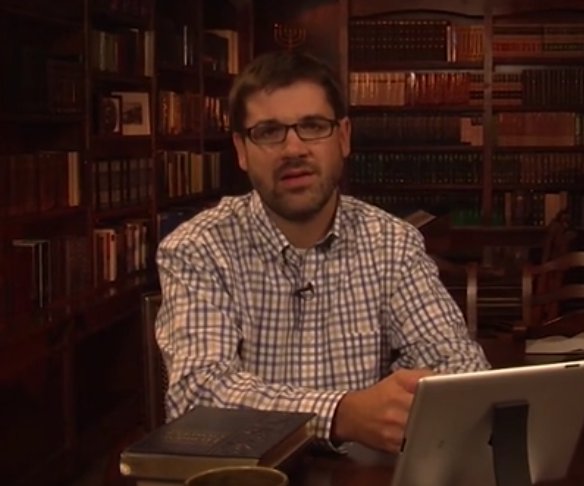
This episode continues to build on the previous ones having to do with exile and redemption, the ingathering of Israel, the Gospel message, and Jewish repentance. First Fruits of Zion (FFOZ) teachers Toby Janicki and Aaron Eby answer a question that has been of special importance to me. How can the Kingdom of Heaven, that is, the Messianic Era, be on the brink of arrival or at hand, and yet not have arrived in the past 2,000 years?

This is the “mystery” that Toby presents to his audience and solving the mystery hinges on understanding the meaning of the phrase often translated in our Bibles as “at hand.”

These twelve Jesus sent out after instructing them: “Do not go in the way of the Gentiles, and do not enter any city of the Samaritans; but rather go to the lost sheep of the house of Israel. And as you go, preach, saying, ‘The kingdom of heaven is at hand.’”

Matthew 10:5-7 (NASB)

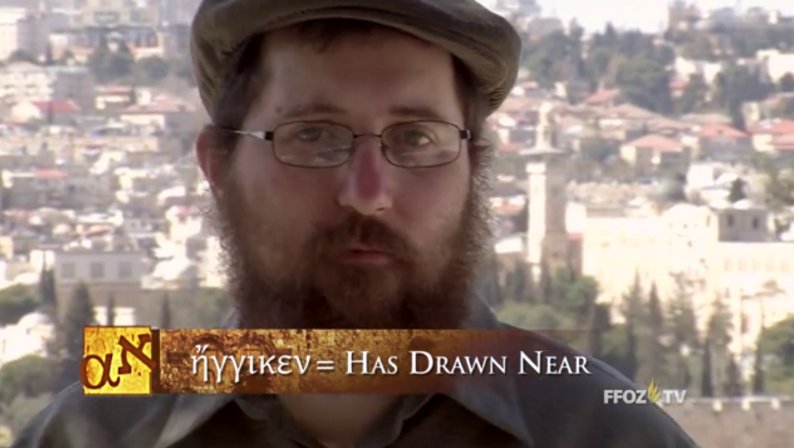
The pacing of this episode runs a bit differently than previous ones. Even before Toby introduces his first clue in solving the mystery, the scene shifts to Aaron Eby in Israel and the Greek word used to impart the meaning that the Kingdom of Heaven is “at hand.” This word, Aaron tells us, more literally says “it has drawn near” or “it has drawn close,” which seems to indicate something came and has already passed by.

19th century translator Franz Delitzsch “retro-translated” the Greek back into the most likely form in Hebrew, which would be the idiom we would understand in English as “drawn near to come.” It gives the sense of something that is poised to enter, like a man standing outside your front door, close enough to ring the doorbell. However, that man hasn’t yet arrived until he is invited inside and goes through the doorway. If he hadn’t yet rung the doorbell or knocked on the door, even though he is literally close enough to touch, you wouldn’t even know he was there at all.

Aaron says something important. The Kingdom of Heaven being “near” isn’t about time or proximity, but rather, accessibility and potential. The Kingdom wasn’t only sort of near 2,000 years ago and slowly coming closer with the passage of time. In a very real way, it’s always like the man standing just on the other side of your front door. He could knock at any second. But what’s stopping him?

One of the scribes came and heard them arguing, and recognizing that He had answered them well, asked Him, “What commandment is the foremost of all?” Jesus answered, “The foremost is, ‘Hear, O Israel! The Lord our God is one Lord; and you shall love the Lord your God with all your heart, and with all your soul, and with all your mind, and with all your strength.’ The second is this, ‘You shall love your neighbor as yourself.’ There is no other commandment greater than these.” The scribe said to Him, “Right, Teacher; You have truly stated that He is One, and there is no one else besides Him; and to love Him with all the heart and with all the understanding and with all the strength, and to love one’s neighbor as himself, is much more than all burnt offerings and sacrifices.” When Jesus saw that he had answered intelligently, He said to him, “You are not far from the kingdom of God.” (emph. mine)

Mark 12:28-34 (NASB)

ffoz_tv10_aaronWait a minute. How can Jesus say that the scribe wasn’t far from the Kingdom of God if “far” and “near” are a matter of the timing of Christ’s return in glory and power? It has to do with the heart of the scribe and his true understanding of the Torah. That, in and of itself, should be a bit startling to a Christian audience, since being close to the Kingdom is linked to both a repentant heart and correct understanding of the Torah of Moses.

Aaron also refers to several different parts of Isaiah to re-enforce his interpretation including Isaiah 56:1:

Thus says the Lord, “Preserve justice and do righteousness, for My salvation is about to come.”

According to Aaron, deliverance is on the threshold of being revealed. It is here and accessible at any moment. The person or people involved just have to become aware of it and then touch it.

Back in the studio, Toby compares this to what we read in Revelation 3:20

Behold, I stand at the door and knock; if anyone hears My voice and opens the door, I will come in to him and will dine with him, and he with Me.

As I said above, the Kingdom is at the door poised to knock and is already knocking. All we have to do is open the door and it will arrive. All we need is to have the right heart and the right understanding of what God is telling us in the Bible. And here’s our first clue.

Clue 1: “At hand” means God’s Kingdom, the Messianic Era, was on the brink of being revealed.

I’m trying not to give too much away in advance of the other two clues, but the revelation of the Kingdom is something that Jewish people have been waiting for longer than there has been anything called “Christianity.” Even in Jesus’s day, once he was resurrected, his disciples expected the Kingdom to arrive immediately. They even asked him about it.

So when they had come together, they were asking Him, saying, “Lord, is it at this time You are restoring the kingdom to Israel?”

Acts 1:6 (NASB)

up_to_jerusalemIt was puzzling when Jesus didn’t summon the Kingdom right away. Yet not only did Messiah’s disciples expect the Kingdom to arrive right then, so did Jesus. Toby says that it was Messiah’s intent to bring the Kingdom to the generation in which he lived. What stopped the Kingdom’s arrival?

Truly I say to you, all these things will come upon this generation. “Jerusalem, Jerusalem, who kills the prophets and stones those who are sent to her! How often I wanted to gather your children together, the way a hen gathers her chicks under her wings, and you were unwilling. Behold, your house is being left to you desolate! For I say to you, from now on you will not see Me until you say, ‘Blessed is He who comes in the name of the Lord!’”

Matthew 23:36-39 (NASB)

It is said in some branches of Judaism that if all of Israel were to repent at a single moment, it would summon the arrival of Messiah. Toby says something very similar. He teaches that the arrival of the Kingdom of Heaven is contingent upon the repentance of the generation, and although he didn’t make this explicit, the generation of Jewish people. In other words, if all of Israel, the Jewish people, were to repent as a single body, the Messiah would come.

But remember, as we saw in last week’s episode, Jewish repentance does not mean simply coming to faith in Jesus Christ, and it definitely doesn’t mean forsaking the Torah of Moses and becoming goyishe Christians. It means repenting of sins, returning to the Torah, and having a profound faith in God. With Yom Kippur just days away, this message is extremely well timed. Perhaps Messiah will come one year during the Days of Awe, when all of Israel makes teshuvah and returns to God.

Why didn’t the Messianic Age arrive with the first coming of Messiah? Some Jewish people repented, but Toby says most didn’t. They weren’t ready. As Toby was talking, I started to think of that first generation of Israelites Moses liberated from Egypt. They had been redeemed but they too were not ready to enter into the Land. Only the generation after them was ready, and they were the ones who received the promises.

Which generation of Jews will be the ones to usher in the Kingdom of God and Messiah’s reign?

Thus we have arrived at the second clue:

Clue 2: The Messianic Era requires repentance.

tv_ffoz12_tobyAgain, I believe this is specifically Jewish repentance, and I believe the unique role of the Gentile Christians, the people of the nations who are called by God’s Name, is to encourage and support Jewish return to God and the Torah within a Messianic framework. Only then will the Messianic Era arrive.

But will that ever happen? The necessary repentance hasn’t occurred in the last twenty centuries. Can the Kingdom of God be near to people now as it was to the scribe to correctly interpreted Torah with Jesus?

Now having been questioned by the Pharisees as to when the kingdom of God was coming, He answered them and said, “The kingdom of God is not coming with signs to be observed; nor will they say, ‘Look, here it is!’ or, ‘There it is!’ For behold, the kingdom of God is in your midst.”

Luke 17:20-21 (NASB)

Christians are used to “beating up” the Pharisees, and believe they are nothing but hypocrites and liars, but here, Toby tells us they were asking a sincere question about the coming Messianic Age. Jesus gave them a sincere answer. Like the scribe, if they turned to God and Torah with a repentant heart, they would benefit from the blessings of the Messianic Era right now. They, and all believers, become a foretaste of the Kingdom in the present age. In that sense, anytime that believers in Jesus exist, some part of the Messianic Age of Jesus is always present.

Here’s the final clue:

Clue 3: Followers of Jesus who heed the message of the good news and repent are the Kingdom in the current age.

Toby describes the Kingdom as the Land and the People under the rule of the King. While we have a foretaste of the Kingdom in our lives as believers and we thus can share the Kingdom with others, it won’t arrive as a physical reality until Messiah arrives and rules as King in our world.

Think of the first coming of Jesus as his planting a seed. The seed is underground. It’s present. It’s real. It’s close enough to touch, but it’s still out of sight. If you didn’t know it had been planted, you wouldn’t know it existed at all. We believers are here as gardeners to nurture the seed and to help it grow.

But like a tiny mustard seed becomes a great tree, the reality of the Kingdom won’t burst forth from the seed, escape the bonds of the earth, and reach for the sky in magnificence until the Messiah’s second coming.

What Did I Learn?

Yom Kippur prayersI believe I’ve written about this before, but what Toby and Aaron taught confirmed something that never occurs to most Christians. The arrival of the physical Kingdom of God, the Messianic Age, is contingent upon human beings, and specifically the Jewish people. It matters not at all if or how well Gentile Christians, including devotees in the Hebrew Roots movement, observe and perform the Torah mitzvot, even with great and utter faith in Messiah. It matters absolutely if Jewish people return to God and Torah and practice a life of faith and obedience. Only when corporate repentance occurs in Israel will Messiah return, and then ” they will look on him whom they have pierced, they shall mourn for him, as one mourns for an only child, and weep bitterly over him, as one weeps over a firstborn.” (Zechariah 12:10 ESV)

As I’ve said previously, this is a little hard to take, because if the timing of the arrival of the physical Messianic Kingdom is totally in the control of the Jewish people and their repentance, then, depending on when they repent (or repented if it happened in the past), the understanding of these realities may or may not have been or be available to the people of the world’s nations.

But of that day and hour no one knows, not even the angels of heaven, nor the Son, but the Father alone.

Matthew 24:36 (NASB)

Jesus could be saying that the Father knows the exact time of the return, even though it is in the hands of the free will of the Jewish people.

Certainly, if I accept the FFOZ understanding of the coming of the Kingdom, then it sets a specific course for we who are believers in Jesus now. We can wait and wait and wait for Jesus to return and experience the foretaste of the Kingdom in our present lives, but Jesus will never return in the sky in power and glory until Israel repents. All this means that we Christians have a duty to support and nurture the Jewish people in their faith in God and in the study and performance of Torah so that they can arrive at repentance.

But as my Pastor often asks me, what exactly is the Torah, relative to the many traditions and customs of the different streams of Judaism in our day? What exactly must we do to encourage Jewish repentance so that the King will return and take up his throne?

Did Canon Close for Christians and Jews?

Talmud Study by LamplightWhen we asked Major General Farkash why Israel’s military is so antihierarchical and open to questioning, he told us it was not just the military but Israel’s entire society and history. “Our religion is an open book,” he said, in a subtle European accent that traces back to his early years in Transylvania. The “open book” he was referring to was the Talmud — a dense recording of centuries of rabbinic debates over how to interpret the Bible and obey its laws — and the corresponding attitude of questioning is built into Jewish religion, as well as into the national ethos of Israel

As Israeli author Amos Oz has said, Judaism and Israel have always cultivated “a culture of doubt and argument, an open-ended game of interpretations, counter-interpretations, reinterpretations, opposing interpretations. From the very beginning of the existence of the Jewish civilization, it was recognized by its argumentativeness.

-Dan Senor and Saul Singer
“Chapter 2: Battlefield Entrepreneurs,” pg 51
Start-up Nation: The Story of Israel’s Economic Miracle

Less widely appreciated, though, is the paradox that in Judaism the canon remained fluid even as it became fixed. The word of God, unlike the language of humans, was deemed to bear an infinity of meanings with the result that canon spawned commentary. Of all literary genres, commentary is the least appealing to the modern temperament with its penchant for speed, novelty, and self-expression. Yet it is the key to Judaism’s singular achievement: a canon without closure. Revelation proved to be expansive rather than restrictive. The right, indeed the obligation, of every Jew is to plumb the Bible for meaning kept the text open, pliant, and relevant in a conversation that spanned the ages.

-Ismar Schorsch
“Introduction,” pp xv-xvi
Canon Without Closure: Torah Commentaries

This is probably one of the fundamental differences between Christianity and Judaism: the belief that it is “normal” to not agree about religion and what the Bible says. Add to this, the belief that Biblical canon is not immutably fixed across time and in fact, that interpretations of the Bible must change across time in order to remain relevant, and you have a tremendous barrier between Christianity and Judaism as religious entities.

Well, sort of.

I’m talking about the various branches of Judaism vs. fundamentalism in Christianity. If you shift to the other end of the spectrum, the view becomes different.

Simply put, the desire for an original source document is one that we’ll likely never overcome because we’ve been taught that a “source” must always exist. We assume that in order for the written word to be valid, it must be verifiable, because we were raised in the era of book reports and footnotes. The Bible, however, is a not a term paper written to appease a persnickety professor. Rather, the Bible is a written collection of generations-old, evolving oral stories as they existed at the time they were written down. Someone chose to record a tiny piece of the evolving oral tales in writing, capturing one solitary moment in the life of the story. Even in cases where the works were copied from other documents, it is probably not proper to wonder where the “source” document is, because the source was the spoken word.

From what I’ve gleaned in the essay written by Fowler and other writers, we erroneously believe that the preservation of God’s Word is the same as preserving each string of words. We also erroneously equate preserving God’s Word with preserving an interpretation of the Word. We spend a lot of time chopping scripture into sound bytes and mining tiny details of our stories, but this is not how ancient storytellers and hearers engaged these stories… We differ in approach because our high level of literacy has made us letter-focused, rather than spirit-focused, when a more faithful use of the text would be to focus on the power of story to bring people together.

-Crystal St. Marie Lewis
“Our Literary Bias: What it is and How it Affects our Perception of Scripture”
CrystalStMarieLewis.com

BibleStorytellingThe blog author is commenting on an essay written by Robert M. Fowler called “Why Everything We Know About the Bible is Wrong.” I’d love to be able to read this essay myself. I commented on Ms. St. Marie Lewis’s blog asking for the source and she was gracious enough to supply the relevant link.

According to her brief bio, Ms. St. Marie Lewis says that she “writes from the perspective of a progressive Christian about religion and how it relates to the world around us,” which should tell you that she’s unlikely to reflect a fundamentalist Christian viewpoint. However, it’s her progressive perspective that is more likely to fold into, at least to some degree, the Jewish idea that canon is not rigidly fixed.

The church I attend is Baptist and generally supports a dispensationalist point of view:

Dispensationalism is an evangelical, futurist, Biblical interpretation that understands God to have related to human beings in different ways under different Biblical covenants in a series of “dispensations,” or periods in history.

One of the most important underlying theological concepts for dispensationalism is progressive revelation. While some non-dispensationalists start with progressive revelation in the New Testament and refer this revelation back into the Old Testament, dispensationalists begin with progressive revelation in the Old Testament and read forward in a historical sense. Therefore there is an emphasis on a gradually developed unity as seen in the entirety of Scripture. Biblical covenants are intricately tied to the dispensations. When these Biblical covenants are compared and contrasted, the result is a historical ordering of different dispensations. Also with regard to the different Biblical covenant promises, dispensationalism emphasises to whom these promises were written, the original recipients. This has led to certain fundamental dispensational beliefs, such as a distinction between Israel and the Church.

History_of_Dispensationalism_Darby_IIIDispensationalist don’t see themselves as reinterpreting the Bible from a human standpoint to adjust to the requirements of different generations, but nevertheless, they do take the text and view it as becoming more densely packed with information as it progresses from past to future, making “the Church” the ultimate receiver of the highest and most “evolved” revelations of God, somewhat in contradiction to the level of intimacy that someone like Moses would have experienced at having spoken with God “face to face” (the level of intimacy implied here is that of a husband and wife) as it were.

If dispensationalists believe that God progressively revealed Himself up to the end of the Biblical period and then stopped, that’s one thing, but what if they believe that God’s progressive revelation progressed after the end of the Biblical canon and for many centuries to follow?

John Nelson Darby is recognized as the father of dispensationalism,[1]:10, 293 later made popular in the United States by Cyrus Scofield’s Scofield Reference Bible. Charles Henry Mackintosh, 1820–96, with his popular style spread Darby’s teachings to humbler elements in society and may be regarded as the journalist of the Brethren Movement. Mackintosh popularized Darby more than any other Brethren author.

As there was no Christian teaching of a “rapture” before Darby began preaching about it in the 1830s, he is sometimes credited with originating the “secret rapture” theory wherein Christ will suddenly remove his bride, the Church, from this world before the judgments of the tribulation. Dispensationalist beliefs about the fate of the Jews and the re-establishment of the Kingdom of Israel put dispensationalists at the forefront of Christian Zionism, because “God is able to graft them in again”, and they believe that in his grace he will do so according to their understanding of Old Testament prophecy. They believe that, while the methodologies of God may change, his purposes to bless Israel will never be forgotten, just as he has shown unmerited favour to the Church, he will do so to a remnant of Israel to fulfill all the promises made to the genetic seed of Abraham.

Um…whoa! As it says at Wikipedia, it seems as if progressive revelation continued to progress well past the Biblical period and into modern times. How else do you get doctrines such as progressive revelation, the rapture, and Calvinism that didn’t exist in Biblical times and were created closer to the 21st century than to the 1st century? Why did God “reveal” these concepts to Christians so much later in history (and after the Christian Biblical canon was theoretically closed) and how does all this compare to the basic viewpoint of Rabbinic Judaism?

The feature that distinguishes Rabbinic Judaism is the belief in the Oral Law or Oral Torah. The authority for that position has been the tradition taught by the Rabbis that the oral law was transmitted to Moses at Mount Sinai at the same time as the Written Law and that the Oral Law has been transmitted from generation to generation since. The Talmud is said to be a codification of the Oral Law, and is thereby just as binding as the Torah itself. To demonstrate this position some point to the Exodus 18 and Numbers 11 of the Bible are cited to show that Moses appointed elders to govern with him and to judge disputes, imparting to them details and guidance of how to interpret the revelations from God while carrying out their duties. Additionally, all the laws in the Written Torah are recorded only as part of a narrative describing God telling these law to Moses and commanding him to transmit them orally to the Jewish nation. None of the laws in the Written Law are presented as instructions to the reader.

The oral law was subsequently codified in the Mishnah and Gemara, and is interpreted in Rabbinic literature detailing subsequent rabbinic decisions and writings. Rabbinic Jewish literature is predicated on the belief that the Torah cannot be properly understood without recourse to the Oral Law. Indeed, it states that many commandments and stipulations contained in the Torah would be difficult, if not impossible, to keep without the Oral Law to define them — for example, the prohibition to do any “creative work” (“melakha”) on the Sabbath, which is given no definition in the Torah, and only given practical meaning by the definition of what constitutes ‘Melacha’ provided by the Oral Law and passed down orally through the ages. Numerous examples exist of this general prohibitive language in the Torah (such as, “don’t steal”, without defining what is considered theft, or ownership and property laws), requiring — according to Rabbinic thought — a subsequent crystallization and definition through the Oral Law. Thus Rabbinic Judaism claims that almost all directives, both positive and negative, in the Torah are non-specific in nature and would therefore require the existence of either an Oral Law tradition to explain them, or some other method of defining their detail.

bible_read_meI know that Christian progressive revelation in the post-Biblical period and the development of Rabbinic Judaism in the post-Second Temple period don’t seem particularly related, but look at the core of what they both accomplish. They both state that the various authorities in each of these religions take the Bible as the base source material and interpret it (either via the Holy Spirit in Christian understanding or under the authority God gave the Rabbinic sages) across time in order to meet the requirements of each generation. Although Christianity likes to believe it has closed the canon at the end of the book of Revelation, the fact that many doctrines have been created in post-Biblical times that would have been alien to Jesus, Peter, and Paul attest to the opposite.

Judaism, if anything, is more upfront with what it has been doing. The Bible may be a fixed document, but it’s how we interpret it at any given point in history that gives it a lived meaning in the Christian and Jewish worlds. Are any of us truly living “Biblical lives” or are we actually living “Doctrinal lives” as interpreted by our different denominations, sects, and movements?

A Plea Against the Custom of Kapparot

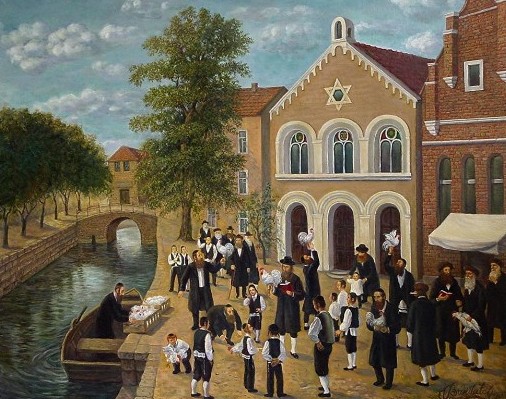
kapparotRabbi Yonah Bookstein, an Orthodox Rabbi in Los Angeles, pleads with the Jewish community to stop using chickens for the kapparot ritual. He says using chickens for kapparot violates four different Torah laws: tzaar ba’alei hayyim, creating nevailah, ba’al tashchit, and dina d’malchuta dina.

I know I’m probably going to offend some people, probably Jewish people, but when I saw this, I felt it necessary to make the information public on my blog. I generally support the right of the Jewish community to define and practice their own traditions, but as Rabbi Bookstein points out, not only does this practice directly contradict the Torah, but it is obviously cruel to the animals and has no hope of atoning for sins or benefiting the community in any way.

I had this conversation with my Pastor last week. He lived in Israel for fifteen years, so he’s witnessed this practice many times.

But if you are a Christian or are otherwise not familiar with this practice, you may be asking what Kapparot is and what’s the big deal. Jewish Virtual Library is just one place that provides the answer:

Kapparot is a custom in which the sins of a person are symbolically transferred to a fowl. It is practiced by some Jews shortly before Yom Kippur. First, selections from Isaiah 11:9, Psalms 107:10, 14, and 17-21, and Job 33:23-24 are recited; then a rooster (for a male) or a hen (for a female) is held above the person’s head and swung in a circle three times, while the following is spoken: “This is my exchange, my substitute, my atonement; this rooster (or hen) shall go to its death, but I shall go to a good, long life, and to peace.” The hope is that the fowl, which is then donated to the poor for food, will take on any misfortune that might otherwise occur to the one who has taken part in the ritual, in punishment for his or her sins.

You can click on the link and read more of the details, and it’s to the credit of the creators of this content on Jewish Virtual Library that they list the significant objections to this Yom Kippur tradition, which does not appear in either the Torah or the Talmud.

The following video is about four minutes long and I think Rabbi Yonah Bookstein makes his case well. Be warned that some of the images in the video are graphic.

Addendum: September 11, 2013: According to VirtualJerusalem.com, there is a small but growing movement among Orthodox Rabbis and others in the Jewish community protesting this practice:

Last week, the recently elected Ashkenazi chief rabbi of Israel, David Lau, warned kapparot organizers that the failure to treat animals decently is a violation of religious law.

And a number of other prominent rabbis have expressed concern that the ritual, in which chickens are hauled into dense urban centers by the truckload, makes it virtually impossible to adhere to the principle of “tzaar baalei chayim,” which prohibits inflicting suffering on animals.

Given that there are other appropriate methods of satisfying the kapparot requirement, such as waving money instead of chickens, it seems more reasonable and more in keeping with Jewish tradition to finally set aside the practice of using poultry.