Tag Archives: love

How to Love Your Neighbor as Yourself

love-your-neighborWhy an “extra meditation” so late in the day? Why so close to Shabbos, when many of my readers east of me have already gone offline or are preparing to do so? Because I can, I suppose. More accurately, because I read something that touched me and I want it to touch you as well.

Many of us could write up a list of rules for how we’d like to be treated by our friends. Most don’t have a physical list to hand out to people (although it might reduce some painful guesswork if we did), but this is how the list might look:

  1. Be sincere — no acting.
  2. Respect me, always.
  3. Check up on me to see how I’m doing.
  4. Be supportive when I’m in pain.
  5. Greet me warmly when I visit.
  6. Give me the benefit of the doubt.
  7. If I need some help, be ready to lend a hand.
  8. Don’t act overbearing or disdainful towards me.

In our eyes these expectations are within reason. We don’t delude ourselves to think our friends would give us full access to their bank accounts, or sign their house or car over to us, nor do we want them to.

We’re obliged to “Love your friend like yourself” (Lev. 19:18). The obvious question is: how can we be obligated to love others as we love ourselves? Even for someone who naturally loves people, there’s no way such love could equal the devotion they have to themselves!

We come back to our list of expectations. That’s all we really want from others, and it’s really all they want from us. Just treat others as you expect them to treat you — that’s the obligation. Are we able to demonstrate that level of love? We must be, for we couldn’t reasonably expect of others more than we’re capable of doing ourselves! (HaKsav VeHaKabalah, R’ Yaakov Tzvi Mecklenburg, 1785–1865)

Good Shabbos!
Rabbi Mordechai Dixler
Program Director, Project Genesis – Torah.org

I love that list but am also accused by it. I know I don’t always treat my family and friends in the way the list suggests (do I ever?). My heart also pines because I’d love to be treated that way by my family and friends as well. I am not assigning blame. If I don’t treat others this way, how can I expect the treatment to be returned?

And yet, it’s not just our friends and family who are involved.

“You have heard that it was said, ‘You shall love your neighbor and hate your enemy.’ But I say to you, Love your enemies and pray for those who persecute you, so that you may be sons of your Father who is in heaven. For he makes his sun rise on the evil and on the good, and sends rain on the just and on the unjust. For if you love those who love you, what reward do you have? Do not even the tax collectors do the same? And if you greet only your brothers, what more are you doing than others? Do not even the Gentiles do the same? You therefore must be perfect, as your heavenly Father is perfect.”

Matthew 5:43-48

I’m sure you saw that one coming from a mile away.

Hillel the Elder once said, “That which you hate, do not do to your friend [the negative picture of “love your fellow as yourself”]―that is all the Torah and all the rest is commentary. Go and study it.” Our Master Jesus said the same thing expressed positively, linking love of God and love of neighbor:

And he said to him, “You shall love the Lord your God with all your heart and with all your soul and with all your mind. This is the great and first commandment. And a second is like it: You shall love your neighbor as yourself. On these two commandments depend all the Law and the Prophets.”

Matthew 22:37-40

I’ve already written on the Torah’s greatest principle but I find that I need to repeat myself, not just for your sake, but for my own.

We can’t stop everything that’s wrong in the world. As I’m writing this, a terrorist has all but shut down the city of Boston and the surrounding area. An uncounted number of people are huddling in their homes in fear for their lives. Where will “the suspect” be found? Will he be found? Will he kill again? Who will be his next victim? Will it be me?

Hardly the sort of thoughts and feelings that usher in a peaceful Shabbos.

And we can’t do anything about it. But we can do something else. We can be sincere with our family, friends, and others we come in contact with. We can always treat them with respect. When we haven’t seen a friend for a while, we can call and see how they’re doing. We can be supportive when they’re sick or in pain. When they come to visit, we can greet them warmly and act sincerely glad to see them. When there’s a disagreement, we can strive to give them the benefit of the doubt. If they need help, we can offer them assistance. And even when we’re tempted to or we feel that we are in the right, we can deliberately avoid behaving overbearing or disdainful toward them.

And if we did all that, and if we did all that to everyone we encounter, and if we did that all of the time, we probably wouldn’t stop even a single act of terrorism, stop even one bomb from exploding, prevent even one gun from being fired at another human being, or inhibit the next natural disaster from devastating another city somewhere in the world.

But we would still make the world a better place and we would make ourselves better people.

159 days.

The Torah’s Great Principle

love-one-anotherRabbi Akiva said, “Love your fellow as yourself” is a great principle of the Torah. A similar principle is gleaned from the famous story of a proselyte who wished to convert to Judaism on condition that someone would teach him the entire Torah while standing on one foot. Hillel the Elder accepted his conversion and told him, “That which you hate, do not do to your friend [the negative picture of “love your fellow as yourself”]―that is all the Torah and all the rest is commentary. Go and study it.”

Obviously, the entire Torah is a true, God-given Torah, but Hillel the Elder and Rabbi Akiva teach us that there is room to meditate on the principle that is the Torah’s “great principle”; the signpost that puts us on the right track.

The need for such guiding lights is most necessary when an outsider wishes to approach the infinite sea of Torah and needs an anchor to show him where to begin.

-Rabbi Yitzchak Ginsburgh
“The Torah’s greatest principle”
Wonders From Your Torah

Our Master Yeshua (Jesus) taught something similar.

And he said to him, “You shall love the Lord your God with all your heart and with all your soul and with all your mind. This is the great and first commandment. And a second is like it: You shall love your neighbor as yourself. On these two commandments depend all the Law and the Prophets.”

Matthew 22:37-40

Referencing Rabbi Ginsburgh, I periodically write about non-Jewish people (including me) who are drawn to the larger body of Torah mitzvot and who find they have a desire to live a more “Jewish” lifestyle as a means of holiness. Essentially, there’s nothing wrong with this and indeed, the Torah was created not just for the Jewish people, but for humanity, as it is said:

For out of Zion shall go forth the Torah, and the word of the LORD from Jerusalem.

Micah 4:2

I substituted the word “Torah” for “Law” in the ESV translation for effect, but both terms are correct (although I’d argue that “Torah” is the more correct word to use here).

Again, as we see from Rabbi Ginsburgh’s commentary, the “outsider” (non-Jew or secular Jew) who desires to learn Torah has to start somewhere. Although as Rabbi Ginsburgh states, the entire Torah is true, it’s easy for a beginner (Rabbi Ginsburgh is talking about potential converts to Judaism but I’m applying his statements to the rest of us) to become lost, confused, discouraged or even “seduced” by the complexities of Torah and the vast span of mitzvot. I’ve seen non-Jewish people introduced to the concept of “complete Torah observance” or “obligation” who throw themselves headlong into what they imagine it is to lead a “Torah-submissive life” only to become enamored by “the stuff.”

tzitzit1I call “stuff” all the outward devices, objects, or activities that are typically associated with observant Judaism, such as donning a tallit gadol and tefillin when davening, wearing a tallit katan under one’s shirt daily, wearing a kippah in public daily, lacing their sentences with Hebrew or even Yiddish words, growing a long, furry beard (because they believe God wants this), and so on.

But what does Rabbi Ginsburgh, citing both Hillel the Elder and Rabbi Akiva suggest is the Torah’s “great principle?” What does the Master say is the greatest commandment?

None of those things I just mentioned. What is the anchor for “beginners” in the Torah? “You shall love your neighbor as yourself.”

This concept sheds light on the Jewish conception of holiness. The Hebrew word kedosh , meaning “holy,” implies separation; (See Tanya, ch. 46.) a distinction must be made between the Jewish approach and a secular approach to any particular matter, as is stated at the conclusion of our Torah reading: (Levitcus 20:26.) “You shall be holy unto Me, for I, G-d, am holy, and I have separated you from the nations to be Mine.”

Such a distinction is unnecessary with regard to the ritual dimensions of the Torah and its mitzvos. These are clearly distinct; there is no need for man to do anything further. Instead, the focus of our Torah reading is on concerns shared by all mortals. Thus the reading relates laws involving agriculture, human relations, business, and sexual morality. For it is in these “mundane” areas that the holiness of the Jewish people is expressed.

Judaism does not understand holiness to be synonymous with ascetic abstention. Instead, it demands that a person interact with his environment, and permeate it with holiness. (See Rambam, Mishneh Torah, Hilchos De’os 3:1.)

-Rabbi Eli Touger
“What Does Being Holy Mean?”
Adapted from
Likkutei Sichos, Vol. I, p. 254ff; Vol. XII, p. 91ff;
Sichos Shabbos Parshas Acharei-Kedoshim, 5745
Chabad.org

That might be a little “intense” or at least unfamiliar to most Christians. Here’s another way of saying it.

What good is it, my brothers, if someone says he has faith but does not have works? Can that faith save him? If a brother or sister is poorly clothed and lacking in daily food, and one of you says to them, “Go in peace, be warmed and filled,” without giving them the things needed for the body, what good is that? So also faith by itself, if it does not have works, is dead.

James 2:14-17

A life of faith and holiness cannot be lived apart from actually living life. Holiness is doing not just praying, meditating, studying, and contemplating. Holiness is an action. Go and do.

An emissary is one with his sender. This concept is similar to that of an angel acting as a Divine emissary, when he is actually called by G-d’s name. If this is so with an angel it is certainly true (See Iyar 6.) of the soul; in fact with the soul the quality of this oneness is of a higher order, as explained elsewhere. (See Tamuz 10.)

“Today’s Day”
Thursday, Iyar 8, 23rd day of the omer, 5703
Compiled by the Lubavitcher Rebbe;
Translated by Yitschak Meir Kagan
Chabad.org

Again, the Master taught something similar.

For I have given you an example, that you also should do just as I have done to you. Truly, truly, I say to you, a servant is not greater than his master, nor is a messenger greater than the one who sent him. If you know these things, blessed are you if you do them.

John 13:15-17

boston_marathon_terror_explosionWe are his servants and we are not greater than he is. He gave us an example of what to do by the living of his life and his teachings. He gave us an “anchor” in the Torah as to where we should begin and where we should stay centered: to love God with all of our being, and to love our neighbor (who is really everyone) as ourselves. And just recently, we’ve been reminded that there are opportunities to fulfill the Master’s mitzvot all around us.

The Mighty Rock, Whose deeds are perfect, because all His ways are good. He is a faithful God in Whom there is no iniquity.

Deuteronomy 32:4-5

These very sobering words are often invoked at moments of great personal distress to express our faith and trust in the Divine wisdom and justice.

People who have suffered deep personal losses, such as destruction of their home by fire or the premature death of a loved one, or who have observed the widespread suffering caused by a typhoon or an earthquake, may be shaken in their relationship with God. How could a loving, caring God mete out such enormous suffering?

It is futile to search for logical explanations, and even if there were any, they would accomplish little in relieving the suffering of the victims. This is the time when the true nature of faith emerges, a faith that is beyond logic, that is not subject to understanding.

The kaddish recited by mourners makes no reference to any memorial concept or prayer for the departed. The words of kaddish, “May the name of the Almighty be exalted and sanctified,” are simply a statement of reaffirmation, that in spite of the severe distress one has experienced, one does not deny the sovereignty and absolute justice of God.

Our language may be too poor in words and our thoughts lacking in concepts that can provide comfort when severe distress occurs, but the Jew accepts Divine justice even in the face of enormous pain.

Today I shall…

…reaffirm my trust and faith in the sovereignty and justice of God, even when I see inexplicable suffering.

-Rabbi Abraham J. Twerski
“Growing Each Day, Iyar 8”
Aish.com

Without trust and faith in God, it’s easy to lose faith in humanity and we are unable (or unwilling) to be the Master’s servant in this world and to do his will by loving and helping others in need.

In a commentary on this week’s Torah portion, we learn from the midrash that one of the reasons for the death of Aaron’s sons Nadab and Abihu was that they loved God “too much.” They came too near the Holy One and were consumed. This was a warning to Aaron that no matter how great his love for God was and the desire to draw near the Divine Presence in the Holy of Holies, he must restrain himself.

G-d knew that Aharon’s love for Him was so great that he would always desire to enter the Holy of Holies. However, by doing so, it could cause his soul to leave his body, as happened with his sons. G-d therefore informed told him of the need to keep his soul within his body so that he could fulfill his mission in this world — transforming it into a dwelling place for G-d.

The lesson we can learn from the command to Aharon is that every Jew has the capacity to love G-d, and indeed is commanded to do so, as the verse states: “You shall love your G-d with all your heart, soul and might.” (Devarim 6:5)

peace-of-mind1While midrash may not appeal to you in a literal sense, when viewed metaphorically or as a moral lesson, it teaches that human beings, out of our love for God, can achieve greater heights of holiness, drawing nearer to God, though we can never be “greater than our Master.” Yet as servants, we must always strive to become better than we are.

It’s not easy. God never gets tired, He never gets scared, He never gets discouraged, He never wants to “throw in the towel,” but we poor, pathetic human beings experience all those things.

People think that if they are not well, they must sacrifice all meaning in their life in order to take care of their physical situation.

In fact, the opposite is true: You cannot separate the healing of the body from the healing of the soul. As you treat the body, you must also increase in nourishing the soul.

-Rabbi Tzvi Freeman
“Soul Healing”
Based on letters and talks of the Rebbe, Rabbi M. M. Schneerson
Chabad.org

Just as we cannot separate healing of the body from healing of the soul, we cannot separate our personal need for healing from the needs of those around us. In fact, by acting for the benefit of others and serving their needs, we may discover that our own wounds are also being healed.

I have been guilty on many occasions of wanting to withdraw from humanity and particularly from the community of faith when it has hurt too much. God has shown me (again and again and again) that I’ve been going in the wrong direction.

When in doubt, I must return to the portion of Torah that is for all of us, Jew and Gentile alike, the anchor, the center, the love of God and humanity. Without that, nothing else we do means anything.

160 days.

The Transcendent Path

Tree of LifeIf you find yourself affixed to a single path to truth—the path of prayer and praise, or the path of kindness and love,or the path of wisdom and meditation,or any other path of a singular mode—you are on the wrong path. Truth is not at the end of a path. Truth transcends all paths. Choose a path. But when you must, take the opposite path as well.

-Rabbi Tzvi Freeman
“Two at Once”
Based on letters and talks of the Rebbe, Rabbi M. M. Schneerson
Chabad.org

As human beings, we have a tendency to compartmentalize and specialize our lives. This comes as no surprise to me, since organization of the different elements of life into “categories” is how we understand ourselves. We have an order and a set of habits to what we do. We also have an awareness of what we’re good at and what we aren’t; a set of “gifts” to which we lean upon and if we are kind, offer to others. Organizing our lives by categorization is necessary so we can conceptualize events, circumstances, and objects and make sense of the world around us.

But it can also be a limitation if we believe we are only defined be these categories. Saying, “I’m only good at this, so I won’t try that,” may rob someone who needs you to do “that” for them rather than “this.”

I’m as guilty of this sort of thinking and behaving as anyone. I’m a writer, both professionally and “for fun.” I find that I can clarify my own thinking and understand better what some people are saying to me if I write about those experiences. My Wednesday night meetings with Pastor Randy are a perfect example. He might say a few sentences to me on Wednesday that will fuel my blog posts for an entire week, because I use writing to continually process what he has been teaching.

But I cannot allow writing to be the totality of my identity and my activity. Someone who needs me to give them a lift to a doctor’s appointment because their car broke down won’t be helped if I only write about their need. I should offer them a ride to and from the appointment in my car. I should do something that I’m not accustomed to considering as an “expertise” of mine in order to meet another human being’s need.

Earlier today, I was writing about giving chesed to the stranger, showing someone who needs you a kindness, not because they are your friend or neighbor, but just because they need you.

In the world of “religious blogging,” most of us have a tendency to write about what we’re interested in, and again, I’m no exception. We often write about the theological or doctrinal specifics with which we identify. Jews write about Judaism and Christians write about Christianity. Nothing strange about that. Even within a particular religious structure, we tend to write about those areas of which we are particularly fond or in which we are interested.

I’ve written lately on Divine Election because I was processing that information. For another person, that might be a rather meaningless topic. I’ve read blogs recently about the Leviticus 11 kosher laws, Bibles limited to the New Testament and the Psalms, Shomer Negiah, Good Friday, and other religious subjects. Nothing wrong with writing about any of those religious topics…

…unless they limit what else we should be doing.

We tend to choose a path and then walk it, but then we only walk that path and no other. According to what Rabbi Freeman said above, that’s not the right path. If we are on the path of prayer and praising God but a homeless person on the street needs us to give them something to eat, then we are on the wrong path, at least for that moment. If we are busy donating our time at a shelter or food kitchen, but God needs us to read and meditate upon His Word, then we are on the wrong path, at least for that moment.

The individual’s avoda must be commensurate with his character and innate qualities. There may be one who can drill pearls or polish gems but works at baking bread (the analogy in the realm of avoda may be easily understood). Though baking bread is a most necessary craft and occupation, this person is considered to have committed a “sin.”

“Today’s Day”
Friday, Nissan 25, 10t day of the omer, 5703
Compiled by the Lubavitcher Rebbe
Translated by Yitschak Meir Kagan
Chabad.org

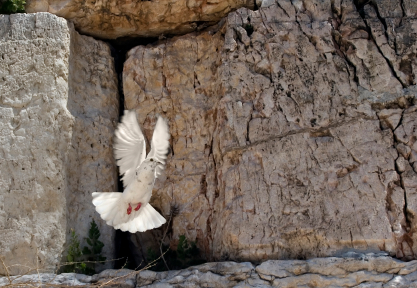
white-pigeon-kotelAvoda is a Hebrew word that is commonly translated as “work,” but among the Chassidim, it “generally refers to Divine service (or worship). For example, it’s part of the Divine service to serve God with joy.” Is who we are as servants of God limited to our theology or our religious identity, or is there something that transcends all that information, and unites us as living, human creations of the Most High God?

We often drone on and on and on about our insights into the Bible, our own theological pet peeves, or about how people with different theological pet peeves annoy us and are guilty of “false teaching,” but do we take the time to transcend our categories, our pigeon-holed lives, and realize that truth is much, much larger than the box we’ve put ourselves in?

And if your brother is not close to you and you do not know him.

Deuteronomy 22:2

Perhaps the reason that other people are not close to you is because you do not know them.

The Chassidic master of Apt said: “As a young man, I was determined to change the world. As I matured, I narrowed my goals to changing my community. Still later, I decided to change only my family. Now I realize that it is all I can do to change myself.”

Some things in the world are givens, and others are modifiable. The only thing we can really modify is ourselves. All other people are givens. Unfortunately, many people assume the reverse to be true. They accept themselves as givens and expect everyone else to change to accommodate them.

(There is one limited exception. When our children are small, we can teach and guide them. When they mature, however, we can no longer mold them.)

Trying to change others is both futile and frustrating. Furthermore, we cannot see other people the way they truly are, as long as we are preoccupied with trying to change them to the way we would like them to be.

The people we should know the most intimately are those who are closest to us. Yet it is precisely these people whom we wish to mold into the image we have developed for them. As long as this attitude prevails, we cannot see them for what they are. How ironic and tragic that those we care for the most may be those we know the least!

Today I shall…

…try to focus any desires to change on myself and let other people determine for themselves who and what they wish to be.

-Rabbi Abraham J. Twerski
“Growing Each Day, Nissan 20”
Aish.com

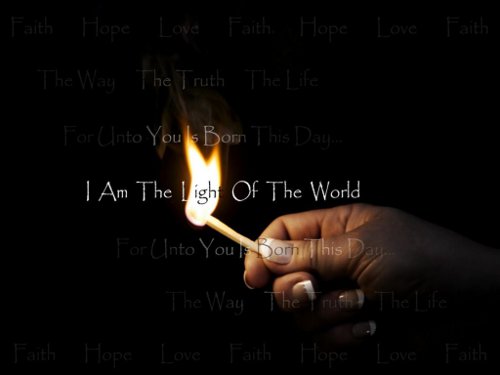
light-of-the-worldTo extend Rabbi Twerski’s metaphor, we can only change the world by changing ourselves. We can only serve God and change the world, by accepting that others will always be different from us and then realize that’s not always a bad thing. We, in the end, are only responsible for who we are. God will not judge us on what other people have done but only on what we have done with our lives. If we have treated others kindly, our theology, doctrine, dogma, or any of the other boxes and pigeon holes we’ve used to categorize and identify ourselves in this world will be worth less than who we are in Christ.

If anyone else thinks he has reason for confidence in the flesh, I have more: circumcised on the eighth day, of the people of Israel, of the tribe of Benjamin, a Hebrew of Hebrews; as to the law, a Pharisee; as to zeal, a persecutor of the church; as to righteousness under the law, blameless. But whatever gain I had, I counted as loss for the sake of Christ. Indeed, I count everything as loss because of the surpassing worth of knowing Christ Jesus my Lord. For his sake I have suffered the loss of all things and count them as rubbish, in order that I may gain Christ.

Philippians 3:4-8

Paul isn’t saying that his being Jewish is literally worthless, and I’m not suggesting that how we study and understand the Word of God is meaningless, either. What I am saying is that, like Paul, there is something much, much greater. The Master taught us that loving God to our fullest extent and loving other human beings as ourselves are the essence of everything in the Bible. He also taught that we would be known as his disciples specifically by our love of one another, a love that goes so far that we would be willing to give up our lives for another if required.

If anything can be said to transcend all of our paths, our categories, our religious posturing, it is love…even love for the unlovable and the unlikable ..especially love for those who otherwise make us feel hurt and angry and aggravated. If we can authentically show them love, then we are better than all of the sermons and blog posts about theology that we could ever produce. Then, we are written in His Book of Life because we have loved.

“When I was young, I admired clever people. Now that I am old, I admire kind people.”

-Abraham Joshua Heschel

We must be more.

On Choosing God

TrustNegate your own will in favor of God’s will.

-Ethics of the Fathers 2:4

If I surrender my will and turn my life over completely to the will of God, do I not thereby abrogate my power of free choice?

Certainly not. Take the example of a child who receives money for his birthday. An immature child may run off to the toy store or candy store and spend the money on everything his heart desires. He may indeed have several moments of merriment (although a stomach ache from indulging too heavily in confections is a possibility). Without doubt, however, after a short period of time those moments of enjoyment will be nothing but a memory, with the candy long since consumed and the broken toys lying on the junk heap.

A wiser child would give the money to a parent and ask that it be put into some type of savings account where it can increase in value and be available in the future for things of real importance.

Did the second child abrogate his prerogative of free choice by allowing the parent to decide how to invest the money? Of course not. In fact, this was a choice, and a wise choice as well as a free choice.

We can choose to follow our own whims or we can choose to adopt the will of an omniscient Father. We are wise when we make the second choice.

Today I shall…

…turn my will over to God, and seek to do only that which is His will for me.

-Rabbi Abraham J. Twerski
“Growing Each Day, Nisan 23”
Aish.com

How much is this like the choice Jesus made on that last night?

saying, “Father, if you are willing, remove this cup from me. Nevertheless, not my will, but yours, be done.”

Luke 22:42

Last week, I started talking about free will and Divine Election and how that describes the nature of man and our relationship with God. I still don’t think that we are wind up toy soldiers, pre-programmed by God in all our responses, including the most important response, accepting or rejecting the Almighty.

I don’t think this issue comes up for Jewish people, but then, all Jews are born into a covenant relationship with God just by virtue of being Jewish. Still, the recognition and acceptance of Messiah is a vital task that remains hidden from most Jews, largely due to how Gentile Christianity has “morphed” the Jewish Messiah into a Goyishe King. Still, many Jews see God, not as a harsh overseer with a whip controlling the gates of life and death, but as a teacher, gently but firmly guiding us in the lessons of life as we walk the path with our companion.

That very day two of them were going to a village named Emmaus, about seven miles from Jerusalem, and they were talking with each other about all these things that had happened. While they were talking and discussing together, Jesus himself drew near and went with them. But their eyes were kept from recognizing him. And he said to them, “What is this conversation that you are holding with each other as you walk?” And they stood still, looking sad. Then one of them, named Cleopas, answered him, “Are you the only visitor to Jerusalem who does not know the things that have happened there in these days?” And he said to them, “What things?” And they said to him, “Concerning Jesus of Nazareth, a man who was a prophet mighty in deed and word before God and all the people, and how our chief priests and rulers delivered him up to be condemned to death, and crucified him. But we had hoped that he was the one to redeem Israel. Yes, and besides all this, it is now the third day since these things happened. Moreover, some women of our company amazed us. They were at the tomb early in the morning, and when they did not find his body, they came back saying that they had even seen a vision of angels, who said that he was alive. Some of those who were with us went to the tomb and found it just as the women had said, but him they did not see.” And he said to them, “O foolish ones, and slow of heart to believe all that the prophets have spoken! Was it not necessary that the Christ should suffer these things and enter into his glory?” And beginning with Moses and all the Prophets, he interpreted to them in all the Scriptures the things concerning himself.

Luke 23:13-27

Imagine having this conversation with the Master along the road, but imagine it being a picture of your entire life.

Jewish in JerusalemRabbi Twerski paints for us an image of giving our lives over to God by conscious choice. Even if a Jew is born into covenant, he or she can still completely reject God, and many Jews have done so. The majority of the Jewish population of Israel is secular, so even in the Holy Land, which contains Jerusalem and the Holy Temple Mount, most of the Jewish inhabitants choose not to connect to God.

Both Easter and the Week of Unleavened Bread are now done. Religious Jews continue to Count the Omer, but Christians just “coast” into April and for most of the church, Pentecost (Shavuot) is hardly a little blip on our radar. This is why it is so important for those few of us who are conscious of the season to remind everyone else.

The presence of Mashiach is revealed on Acharon Shel Pesach, and this revelation has relevance to all Israel: Pesach is medaleg, “skipping over” (rather than orderly progress), and leil shimurim, the “protected night.” In general the mood of Pesach is one of liberty. Then Pesach ends, and we find ourselves tumbling headlong into the outside world. This is where Mashiach’s revealed presence comes into play – imbuing us with a powerful resoluteness that enables us to maintain ourselves in the world.

“Today’s Day”
Wednesday, Nissan 23, Issru chag, 8th day of the omer, 5703
Compiled by the Lubavitcher Rebbe
Translated by Yitschak Meir Kagan
Chabad.org

After the week of Matzot, we see that beyond the Omer count, some Chassidic Jews carry forward the revealed presence of the Mashiach into the outside world with them. How much more should we, who know for certain that Messiah is revealed in Jesus Christ, should carry him forward into the world with us?

Any Jew alive on the face of this planet today is a walking miracle. Our mere existence today is wondrous, plucked from the fire at the last moment again and again, with no natural explanation that will suffice.

Each of us alive today is a child of martyrs and miracles.

-Rabbi Tzvi Freeman
“Walking Miracle”
Based on letters and talks of the Rebbe
Rabbi M. M. Schneerson
Chabad.org

I can only imagine that just seeing a Jew walking the streets of the old city in Jerusalem, buying falafel for lunch, davening at the Kotel, must all be miraculous. Who would have thought such a thing possible a scant six decades before? Yes, of course it is a miracle of God that there are any Jewish people left alive today in our world and that they live in a Jewish nation.

But it is also a miracle that there are any Christians, for who of his own free will and in his nature of sin, would choose the Almighty, to come to Him through His Son, unless the Spirit of God were not whispering in our ear, urging us, pleading with us, exploring our heart?

And once Moshiach Rabbeinu has opened our eyes to God, and our minds and hearts to the scriptures, and we choose Him, and we learn of Him and who we are as His sons and servants, what would we not do, from the wisest among us to the most simple, to serve Him who is the author of our story and the lover of our soul?

Choose Love. Choose God. Choose Life.

Weight

weightBehold, to the Lord your God belong heaven and the heaven of heavens, the earth with all that is in it. Yet the Lord set his heart in love on your fathers and chose their offspring after them, you above all peoples, as you are this day. Circumcise therefore the foreskin of your heart, and be no longer stubborn.

Deuteronomy 10:14-16 (ESV)

“Woe to you, scribes and Pharisees, hypocrites! For you tithe mint and dill and cumin, and have neglected the weightier matters of the law: justice and mercy and faithfulness.”

Matthew 23:23 (ESV)

I’ve been reminded lately that blogging isn’t all that it’s cracked up to be. No, don’t worry. I’m not going anywhere (I hear a few disappointed sighs in the background). But I agree with one of my recent critics that we need to focus on more than just words and in particular, more than just certain, oft-repeated conversations.

Usually we think of negativity – the tendency to criticize, blame, hate, fear, or be depressed – as a psychological disposition. “Some people are just upbeat; I’m not.”

It sounds as neutral as saying, “Some people are blonde; some are brunette.”

But what if you viewed negativity as a spiritual disease?

-Sara Yoheved Rigler
“The Danger in Your Head”
Aish.com

This isn’t the only message I’ve received on this theme lately.

We live in an age of addictions. I grew up hearing about drug addicts, and had a brother-in-law who died from an overdose. Other people are addicted to food, and others to alcohol. The reason for some addictions is physical, as in the case of drugs or cigarettes. Other addictions are psychological, as people seek to escape the more painful aspects of their lives. I have noticed over many years, that some people are addicted to negativity.

Like most addictions, people who are addicted to negativity mask it with the notion that they are doing something noble, or filled with righteous indignation. Indeed, there are people who are noble, and are filled with righteous indignation who seek to challenge the status quo and change society for good, like the people who fought for civil rights for various groups.

-Rabbi Dr. Michael Schiffman
“Addiction to Negativity”
Drschiffman’s Blog

Yeah, that describes me. It also describes some of the people who criticize me. To be fair, once we get on our white chargers and lift up our lances, we start tilting at windmills with a ferocity and obsessive determination that would make Don Quixote look like a paragon of calm and reason.

Dr. Schiffman ends his blog post by saying, “In the end, if you let them drag you down, you can’t be of help to anyone else.” When he says “them,” he means addictions, but he could just as well mean “negative conversations” or “negative people.” What he really could have said is “when you let yourself drag you down…”

Sometimes negative people come unbidden to my blog but often I really am asking for it. I’ve seen a nice, juicy windmill in the distance and it seems to just call to me, like a pint of Guinness calls to an alcoholic. So I slap on my armor, hoist myself up on my big, noble steed (no doubt with the help of an imaginary Pancho Sanza), grab my weapons, and it’s off I go to joust with ethereal foes on the fields of honor. Then I tick someone off and they come to my blog and complain at me.

So what have I accomplished?

Or more to the point, Oh duh!

Judaism always strives to make the mundane sacred. If we elevate physical acts like eating by making a blessing, then why not cleaning?

When we do ‘bedikat chametz,’ the traditional search for bread that is performed with a candle and feather, we are searching our inner selves. The wick of the candle represents our body, while the flame that always strives to aim upward is our soul. The bread (the chametz) is our own puffed up ego. It is our sense of self-importance that often blocks the soul.

So when we look in those deep, dark places for bread, we are searching our inner selves for our ego. When we find the chametz, we then burn it with the flame, symbolically purging ourselves of our ego and liberating our soul.

-Nicole Bem
“Spiritual Scrubbing”
Aish.com

cleaning-for-passoverJudaism schedules numerous events on the calendar for “spiritual scrubbing” but that schedule isn’t written very well on the Christian soul. More’s the pity.

Even having participated in Judaism and “psuedo-Judaism” over the years, I haven’t really gotten used to it. It is said that we should repent one day before we die, but since we never know when we’ll die, we should repent constantly. Christians know this but it is part of human nature to put off what we need to do until the last second. Problem is, as I’ve already said, we never know when the last second is going to tick away and expire.

What were those “weightier matters of the Law?”

  • Justice
  • Mercy
  • Faithfulness

I recently complained that bloggers representing a certain minority variant of Christianity fail to actually talk about these “weightier matters.” I’ve been told that the “ideals, theologies, and doctrines of an infant and growing movement” are more important or at least more interesting to the audience on the web than the aforementioned justice, mercy, and faithfulness. I hope that’s not true because if it is, then it’s a sad and pathetic commentary on that movement, and people consuming such material have lost their focus far more than I ever could.

It’s been so long since I’ve blogged about losing my focus that I can’t even find my previous write-up in a search. I guess that means it’s long overdue.

What are the weightier matters of Torah? Justice, mercy, and faithfulness. Many of the final exhortations of Paul’s letters also focus on these matters.

Finally, brothers, whatever is true, whatever is honorable, whatever is just, whatever is pure, whatever is lovely, whatever is commendable, if there is any excellence, if there is anything worthy of praise, think about these things. What you have learned and received and heard and seen in me—practice these things, and the God of peace will be with you.

Philippians 4:8-9 (ESV)

As both Passover and Easter approach, I think it’s a good time to clean out my head, my heart, and my spirit. It’s a good time to rejuvenate myself and to focus my attention on what really matters. I can give out all the advice in the world about what I think others in the religious blogosphere should do, but that’s really meaningless. If they don’t know what God wants of them by now, nothing I can say will make any difference. However, I can make a lot of difference in what I say and do.

But avoid foolish controversies, genealogies, dissensions, and quarrels about the law, for they are unprofitable and worthless.

Titus 3:9 (ESV)

I really need to take this piece of advice on board, because the adherence to these “foolish controversies” just consumes the web. I think there’s a better note to write for my virtual “message in a bottle.”

In his article Love Humanity, Rabbi Noah Weinberg provides a list as a way to answer the question, Why is “Loving Humanity” a Way to Wisdom?

  • In order to realize your own potential, you have to love humanity. Their success is your success, too.
  • The more you have love in your life, the more happy and efficient you’ll be.
  • If you don’t appreciate the phenomenon of human beings, you’re missing out on one of life’s greatest pleasures.
  • Loving others connects you to the world, to all facets of creation.
  • Love helps you get out of the confines of “me” and into the expansive “we.”
  • Prioritize your love. Appreciate the relative value of each virtue.
  • Realize that all human beings are God’s children.

looking-upIf I write more like this in my “morning meditations,” I probably won’t attract very many readers and probably most people won’t comment or reply (although you are certainly encouraged to…hint, hint). People usually respond when they’re upset, not when they’re encouraged (though I’m trying to change that in myself for the better). I understand the need to write blogs and papers on theology, doctrine, and dogma. I know we need to provide clarification and solid Biblical research and teaching on what we understand the Bible to be saying to us.

But beyond that, what we really need is a guide to the simple way of living and doing the Word and Will of God. Dismissing people in favor of “things” and “mechanics” isn’t doing that. After all, how much theology do you really need to understand to volunteer to play with the little ones in the church’s nursery on Sunday morning, or to visit one of the older church members who is sick and in the hospital?

Some laws are heavier than others. They require more “strength” to lift. But the reward is that when you perform the “weightier matters of Torah” on a regular basis, they become very light…and this also lightens the heaviness of your soul…and of my soul.

The New Mitzvah of Christ, part 1

lovingkindness“What you dislike, do not do to your friend. That is the basis of the Torah. The rest is commentary; go and learn!”

-Shabbos 31a

“Love HaShem your God with all of your heart, with all of your soul, and with all your knowledge.” This is the greatest and first mitzvah. But the second is similar to it: “Love your fellow as yourself.” The entire Torah and the Prophets hang on these two mitzvot.

Matthew 22:37-40 (DHE Gospels)

The Shema (Deuteronomy 6:4-9) is above all else a commandment, a mitzvah that we are to obey. When Messiah Yeshua comments on the Shema, he joins it with another commandment to reveal deeper implications hidden within both…

As the greatest of the commandments, the Shema is tied to this second commandment, which “is similar to it: ‘Love your fellow as yourself'” (Leviticus 19:18). This linkage is integral to the Shema, because one cannot love God in the way that the Shema defines love without loving one’s neighbor.

As we have seen, we cannot reduce the love of God to a mystical or pietistic encounter; it must be acted out in a walk of obedience.

Rabbi Russ Resnik
“‘Shema:’ Living the Great Commandment,” pg 71
Messiah Journal, Issue 112
Published by First Fruits of Zion (FFOZ)

Yesterday (and actually before that in a more general sense), I was talking about love within the context of both the very famous words of the ancient sage Hillel and Yeshua’s (Jesus’) two greatest commandments. Of course, the Master was referencing the Shema, which every Jewish person will immediately recognize (I don’t know if the Shema was formalized in the late second Temple period, but certainly, the Messiah’s Jewish audience would have immediately recognized the source of his lesson). Rabbi Resnik is also addressing primarily a Jewish audience and more specifically Jews who are Messianic, but his article in Messiah Journal brings up questions involving Gentile Christians and the application of Torah. After all, we are disciples of Christ as well, and thus under his authority and teaching. But how far do the Master’s lessons to his Jewish followers extend to the disciples of the nations?

Yeshua’s second point is, “On these two commandments hang all the Torah and the Prophets.” This doesn’t mean that they render the rest of the Torah and the Prophets irrelevant, God forbid, but that they provide the framework for understanding, interpreting, and applying all of Torah and the words of the prophets. As Hillel says, “All the rest [of Torah] is commentary: now go learn it.” (b.Shabbat 31a). The two-fold commandment doesn’t supersede Torah. Rather, it provides the framework for the proper interpretation of the whole.

-Resnik, pg 73

Thus Rabbi Resnik dispenses with supersessionism, but he made me think of something else.

Therefore my judgment is that we should not trouble those of the Gentiles who turn to God, but should write to them to abstain from the things polluted by idols, and from sexual immorality, and from what has been strangled, and from blood. For from ancient generations Moses has had in every city those who proclaim him, for he is read every Sabbath in the synagogues.”

Acts 15:19-21 (ESV)

These are some of the most misunderstood words we find in the New Testament, at least by some variant Christian faith groups. The majority of Christian churches believe that the “Jerusalem letter” was a ruling of James and the Council of Apostles stating that the practice of the Torah mitzvot as applied to the Jewish people, should not also be imposed on the body of Gentile disciples, but rather only certain specific standards. However, verse 21 seems to indicate some sort of connection between the Council’s pronouncement to the Gentiles and Moses being proclaimed and the Torah being read every Sabbath in the synagogues.

Some suggest that James’ intent was that the Gentiles should learn Torah and learn to obey it in the identical manner of the Jews as an obligation. If we marry this idea back to Rabbi Resnik’s commentary on Christ’s two greatest commandments, it seems to fit, but then, I can hardly believe that the esteemed Rabbi meant to communicate that idea. But if he didn’t, what are he, and Jesus and James, saying?

One of the topics I’ve been discussing with Pastor Randy at my church is what “Torah” means within a Messianic context, and how (or if) Torah is applied to the non-Jewish disciples of the Master (i.e. Christians). It’s a difficult question to answer, especially if part of what you mean by “Torah” involves Talmud and how the rulings and opinions of the ancient Jewish sages are applied to the various normative Judaisms in our day.

Frankly, I believe that Christians should learn Torah. In fact, I believe that Christians do learn Torah. We just don’t call it that. We call it “Bible Study” or “Sunday School.”

What would the early Gentile Christians have learned by going to the synagogues and listening to the Torah portions being read every Shabbat?

They would have learned Torah.

Why?

And you, go to all the nations. Make disciples; immerse them for the name of the Father, and the Son, and the Holy Spirit, and teach them to keep all that I have commanded you.

Matthew 28:19-20 (DHE Gospels)

Again, especially using the Delitzsch translation, it certainly seems as if Jesus meant for the disciples of the nations to “keep” what he taught, if we can assume what he taught was “Torah,” and given his two greatest commandments, that is indeed what he was teaching.

Jewish_men_praying2But he wasn’t teaching his Jewish disciples to be Jews; they already knew about that…being Jewish as a lifestyle, was fully integrated into the Israeli Jewish existence. Religion in ancient times wasn’t separated from any other part of life, so to observe the mitzvot for a Jew was just part of normal living.

But then, what was Jesus teaching them that he also wanted to be taught to we Christians if not how to live as a Jew? What was being read in the synagogues every Shabbat that James wanted the Gentile disciples to hear? The Torah and the Prophets.

But if all Christians are supposed to learn and obey the Torah in the manner of the Jews, why did Paul say this?

Look: I, Paul, say to you that if you accept circumcision, Christ will be of no advantage to you. I testify again to every man who accepts circumcision that he is obligated to keep the whole law. You are severed from Christ, you who would be justified by the law; you have fallen away from grace.

Galatians 5:2-4 (ESV)

Paul is communicating to his Gentile Christian audience with a very simple “if/then” statement: If you accept circumcision (convert to Judaism), then you are obligated to keep the whole law (Torah). The implication is made obvious by turning the positive statement into a negative. If you do not convert to Judaism (remain a Gentile Christian), then you are not obligated to keep the whole law (Torah).

So far, as nearly as I can tell, Jesus and James wanted the Gentile disciples to learn the Torah but not be obligated to it in the manner of the Jewish people. But then why does Jesus in stating “the great commission” tell the Jewish disciples to “keep all that I have commanded you?” Something is missing. What were the Gentiles supposed to learn from the Torah by hearing it (and no doubt observing their Jewish mentors performing the mitzvot), and then what were they supposed to keep that Jesus taught?

I first want to mention that in Galatians, Paul is indeed saying that keeping the Law does not justify anyone before God, neither Jew nor Gentile. It is Christ who is our sole justification before the Father. A Jew observing the mitzvot isn’t justified simply by observing the mitzvot, and I’ve never heard a Messianic Jew say anything different. Nevertheless, Paul certainly expected Jews to be obligated to the Law, otherwise, he wouldn’t have said that righteous Gentile converts were also obligated. No, the application of the Sinai covenant was not done away with by Jesus or by Paul. However, we see that it wasn’t applied to the Gentiles, at least not in the way we see it applied to the Jews.

So how is there a difference between Torah being applied to Jewish and Gentile disciples of Jesus Christ? That’s where we’ll begin in part 2 of this two-part article.

Peace.