Tag Archives: Messiah

Gifts of the Spirit: Building God’s Dwelling Place, Part 2

tabernacle-sea-caveAnd Moses finished setting up the Tent of Meeting.

Exodus 40:33

…no place on earth is devoid of the Shechinah. Rabbi Joshua of Sikhnin said in the name of Rabbi Levi, What is the Tabernacle compared with? With a cave situated on the edge of the sea. When the sea rises and floods it, the cave is filled by the sea, yet the sea is not diminished. Likewise, the Tabernacle was filled with the radiance of the Shechinah.

-Pesikta Derab Kahana 1.3

If you haven’t done so already, please read Part 1 of this “meditation” before continuing here. This is a continuation of my commentary on the teaching “For God’s Dwelling Place” presented at the First Fruits of Zion Shavuot conference at Beth Immanuel Sabbath Fellowship by Rabbi Carl Kinbar.

Yesterday, I suggested that there is no inconsistency between the Spirit of God dwelling within each of us as disciples of the Jewish Messiah and God dwelling among His people Israel in the Tabernacle and later the Temple in Holy Jerusalem. That’s not exactly traditional thinking for most Christians, and at least in the western world, we tend to think in terms of “either/or” rather than “why not both.”

But to borrow a little “rabbinic language,” to what can the dwelling place of God be compared?

Now Moses was faithful in all God’s house as a servant, to testify to the things that would be spoken later. Christ, however, was faithful over God’s house as a son, and we are his house if we hold firm the confidence and the pride that belong to hope.

Hebrews 3:5-6 (NRSV)

The end of the Book of Exodus records Moses finishing the work of setting up the Tabernacle and then the Divine Presence covering and filling the Mishkan. Moses was faithful in the construction of a dwelling place for God among His people Israel as God’s servant. But there is one who is more than a servant. He is a son. How much more faithful is the son over the house of the father than the servant?

Come to him, a living stone, though rejected by mortals yet chosen and precious in God’s sight, and like living stones, let yourselves be built into a spiritual house, to be a holy priesthood, to offer spiritual sacrifices acceptable to God through Jesus Christ.

1 Peter 2:4-5

Reading Hebrews and Peter’s first letter gives the impression of an “either-or” situation. Either God dwells in a Temple of stone or He dwells in a Temple of flesh and blood, with a flesh and blood Son being the cornerstone of the “structure.” But is this necessarily true in a permanent sense? It is true that there is no Temple in Jerusalem today, and it is true that the Spirit dwells within each of God’s people, that we come together as “living stones” and united, we form a “Temple” of God, the body of Messiah.

And it is true that today we offer spiritual sacrifices to God through Messiah.

The sacrifices God desires are a broken spirit; a heart broken and humbled, O God, You will not despise.

Psalm 51:19 (Stone Edition Tanakh)

Not too long ago, I wrote about what it is to be broken in heart and in spirit before God and among other heartbroken people. These were the sacrifices we offered to God at Shavuot and His Spirit filled the synagogue in Hudson, Wisconsin during the days of the festival.

There is no Temple sacrifice that atones for murder and adultery, both of which David was guilty of, except on Yom Kippur. He must have known this when he wrote his famous Psalm. But what is the state of the heart of one who approaches God in abject humility on Yom Kippur? Is not every Jew heartbroken, contrite, and humbled? Are these not the sacrifices we make to God with our lives as we turn away from our sins and turn to Him begging for forgiveness?

Rescue me from blood-guilt, O God, God of my salvation, let my tongue sing joyously of Your righteousness. O Lord, open my lips that my mouth may declare Your praise.

Psalm 51:16-17 (Stone Edition Tanakh)

David seems to paint a portrait that is completely appropriate for the disciple of Jesus in the world today. No stone Temple is required when we turn to God and offer spiritual sacrifices of the heart. But then, David says something that doesn’t fit into the Christian template.

Then You will desire the offerings of righteousness, burnt-offering, and whole offering; then will bulls go up upon Your altar.

Psalm 51:21 (Stone Edition Tanakh)

The Jewish disciples of Messiah in the days of the apostles would have had no problem with Temple sacrifices, and it is said that under certain conditions, even the God-fearing Gentiles could offer sacrifices at the Temple through the Priests. It is only today, and especially with no House of God standing on the Temple Mount that Gentile Christians balk at the thought of “bulls going up upon God’s altar.”

jerusalem_templeAnd yet we know that there will be a physical Temple in Jerusalem again, and we know that each of the nations who went up against (who will go up against) Jerusalem in the final days, will be commanded to send representatives to Jerusalem for Sukkot each year (Zechariah 14:16). True celebration of Sukkot in the days when there is a Temple in Jerusalem require that sacrifices be made in the Temple (Leviticus 23:33-43).

In the days of the Temple, will the sacrifices of the heart no longer be required? Hardly. Read Psalm 51 again. Once our hearts and spirits are broken before God as spiritual sacrifices, then will the offerings of bulls be accepted upon the Temple altar.

And God will once again dwell among His nation Israel and in the hearts of His devout ones, first the Jew and also the Gentile who is called by His Name.

But let’s take a closer look at what’s happening now.

So he came and proclaimed peace to you who were far off and peace to those who were near; for through him both of us have access in one Spirit to the Father. So then you are no longer strangers and aliens, but you are citizens with the saints and also members of the household of God, built upon the foundation of the apostles and prophets, with Christ Jesus himself as the cornerstone. In him the whole structure is joined together and grows into a holy temple in the Lord; in whom you also are built together spiritually into a dwelling place for God.

Ephesians 2:17-22 (NRSV)

Notice that we Gentiles who were far off were brought near and united as members of God’s household through the Spirit and not by the Torah mitzvot in the manner of the Jews. Rabbi Kinbar says that the phrase referring to Gentiles “who were far off” literally describes being “outside the house” in Greek. He also said, according to my notes, that the reference to “house” both means “house” as a structure and also the process of “building the house.”

Gentiles are brought near to Israel, bringing us inside the house, but we also join Israel in the process of building the house of God with Messiah as the cornerstone. Jewish and Gentile disciples of the Master are all part of a single household; a holy Temple of God. Jesus is the house and the house is also in him. Jesus is pre-eminent and pre-dominant in the house.

For we are God’s servants, working together; you are God’s field, God’s building. According to the grace of God given to me, like a skilled master builder I laid a foundation, and someone else is building on it. Each builder must choose with care how to build on it.

1 Corinthians 3:9-10 (NRSV)

However, Rabbi Kinbar suggests that we should be careful what materials we use to lay upon the foundation stones of the house. A quick look at the condition of “the church” today, at least in the United States, suggests that many Christians aren’t using the finest materials for the construction job. In fact, sad to say, many churches are using sub-standard materials, flimsy and faulty wood, stone, and tools. Precious stones were used in the construction of the Jerusalem Temple. Should we use anything less in the Temple where we are the stones?

Those who speak in a tongue build up themselves, but those who prophesy build up the church…So with yourselves; since you are eager for spiritual gifts, strive to excel in them for building up the church…What should be done then, my friends? When you come together, each one has a hymn, a lesson, a revelation, a tongue, or an interpretation. Let all things be done for building up.

1 Corinthians 14:4, 12, 26 (NRSV)

These are all images of building up the house of God as members of the house, the body, the community of faith. We build with our spiritual gifts, we build with prayer, with hope, with love, with faith. 1 Corinthians 12:11 says that we are all one by the same Spirit but each one of us individually has specific gifts. We’re not all alike. We each have something unique to contribute, just as Bezalel and Oholiab and “every skillful one to whom the Lord had given skill” had unique talents they used in making the elements of the Tabernacle (Exodus 36:1-3).

I’ve said previously that we are a work in progress as a body of faith. God has not yet written his Torah on our hearts, nor have our hearts been fully transformed from stone to blood-pumping hot flesh. We still cry out to one another, “Know God!” (see Jeremiah 31; Hebrews 8; 10).

Receiving the SpiritRabbi Kinbar finished his presentation by stating something I consider remarkable about our “living house.” God is actually living in the dwelling place we are constructing while it is still in the process of being built. This is completely unlike His dwelling in the Tabernacle and later, the Temple, because those projects had to be fully completed before the Divine Presence filled them. For He lives within us as we are still measuring and hammering and raising wooden beams and laying precious foundation stones.

The plans for the Tabernacle and the Temple were exquisitely precise and each and every piece of stone and wood was of the finest quality, constructed by exceptionally skilled craftsmen. Not so God’s living house today. We stumble half blind to draw and redraw the blueprints, reach for any tool handy, and much of the time, employ shoddy workmanship and poor materials in our efforts. And yet God is tolerant of us and what we’re doing. He continues to live among us and to live in us as we build and rebuild ourselves as believers, striving forward, falling back, but never taking our gaze from the soul of our Master.

The dwelling place of God is past, present and future all at once. Just imagine when the house if finally complete, when the imperfections have been burned away like dross, leaving only a precious and perfect product. When that day comes, then our King will be evident in the house, and he will be one and His Name one. And God will dwell within us as the Presence dwells in the Jerusalem Temple. And Messiah will walk among His people again.

But He’s also in His house now, and we are here too, united in His Spirit as His Spirit unites us.

“One who romanticizes over Judaism and loses focus of the kingdom of Heaven can be compared to a carpenter who is infatuated with the hammer, rather than the house it was meant to build.”

Troy Mitchell

119 days.

Gifts of the Spirit: Building God’s Dwelling Place, Part 1

creation2And there was evening and morning: one day.

Genesis 1;5

R. Samuel b. Ammi said: From the beginning of the world’s creation the Holy One, blessed be He, longed to enter into partnership with human beings… When did the Holy One, blessed be He, compensate them [those below for not partnering with them at that time] there? At the erection of the Tabernacle, as it says, “And he that presented his offering the first day” (Num. 7:12), meaning, the first of the world’s creation, for God said, “It is as though on that day I created My world.”

-Genesis Rabbah 3.9

Rabbi Carl Kinbar’s notes for his teaching “For God’s Dwelling Place” presented at the First Fruits of Zion Shavuot conference at Beth Immanuel Sabbath Fellowship in Hudson, Wisconsin begin this way. It’s really a two-part lesson that Rabbi Kinbar managed to offer to us in a single session on Shabbat (I’ll write it as a “two-parter” presenting the second part tomorrow).

You may be put off by the Talmudic references and I’ve been avoiding them until now, knowing how Christian audiences sometimes react to the teachings of the Rabbinic sages. On the other hand, it is sometimes helpful to access Jewish commentary on the Word of God and the Spirit of God in order to re-insert what we are learning back into it’s “natural Jewish habitat” (as D.T. Lancaster puts it).

But what does the act of creating the world and building the Mishkan (Tabernacle) in the desert have to do with “gifts of the spirit?”

Then Moses went up on the mountain, and the cloud covered the mountain. The glory of the Lord settled on Mount Sinai, and the cloud covered it for six days; on the seventh day he called to Moses out of the cloud. Now the appearance of the glory of the Lord was like a devouring fire on the top of the mountain in the sight of the people of Israel. Moses entered the cloud, and went up on the mountain. Moses was on the mountain for forty days and forty nights.

Exodus 24:15-18 (NRSV)

Rabbi Kinbar told a story about how this verse was once taught in a class. One woman in the class responded that it must have been incredibly boring for Moses to sit up on that mountain for forty days and forty nights with nothing to do.

When I heard him describe this woman’s comment I immediately thought, “Sure, if he were alone!” Rabbi Kinbar kindly suggested to his class, “Let’s assume that God is exactly as the Bible describes Him.” Apparently, it doesn’t occur to some folks to take the Bible at face value and to believe God is as He is described in the pages of His own Word.

But let’s “assume” that He is and that at Eden, He desired to dwell among people. In Exodus, He desires to dwell among His people.

I will meet with the Israelites there, and it shall be sanctified by my glory; I will consecrate the tent of meeting and the altar; Aaron also and his sons I will consecrate, to serve me as priests. I will dwell among the Israelites, and I will be their God. And they shall know that I am the Lord their God, who brought them out of the land of Egypt that I might dwell among them; I am the Lord their God.

Exodus 29:43-46

But it’s more than just God living in the human world. God wants something special from people, something that He doesn’t want from any other portion of creation. He wants to be partners with us. He want us to work with Him, not just for Him. He wants more than servants, He wants sons and daughters to help in building His dwelling place; building the Kingdom of God.

Once Jesus was asked by the Pharisees when the kingdom of God was coming, and he answered, “The kingdom of God is not coming with things that can be observed; nor will they say, ‘Look, here it is!’ or ‘There it is!’ For, in fact, the kingdom of God is among you.”

Luke 17:20-21

looking-at-heavenWe tend to think of the “Kingdom” as either Heaven or the future Messianic era, but Jesus is talking about it in the present tense: “…the kingdom of God is among you.” When he says it’s near, he doesn’t necessarily mean it’s right around the corner or that it’s coming soon, he means that as we pursue our partnership with God and perform the mitzvot necessary to help repair our broken world, we are drawing nearer to the Kingdom, we are building little bits and pieces of the Kingdom every time we perform an act of kindness, charity, or justice.

I don’t mean that God just wants to “dwell” with us in some abstract or metaphoric sense.

Moses did everything just as the Lord had commanded him. In the first month in the second year, on the first day of the month, the tabernacle was set up. Moses set up the tabernacle; he laid its bases, and set up its frames, and put in its poles, and raised up its pillars; and he spread the tent over the tabernacle, and put the covering of the tent over it; as the Lord had commanded Moses.

Exodus 40:16-19

As far as I know, there’s nothing in the Hebrew text that suggests Moses had help when he built the Mishkan for the first time and Midrash states that Moses built the entire structure single-handedly. Moses “partnered” with God in constructing God’s dwelling place. All of the Children of Israel who either directly participated in making the elements of the Mishkan or who donated funds and materials for the work “partnered” with God in constructing God’s dwelling place among them.

And when the Divine Presence descended upon the Mishkan so that even Moses was unable to enter the tent of meeting (Exodus 40:34-38), it was possible for the first time to make offerings to God directly in His presence and God dwelt among His people Israel. In fact, it was not possible to make sacrifices to God unless the Divine Presence was in the Mishkan. And this, according to the Sages, was God’s compensation for the lack of human participation in the creation of the world; allowing human participation in the construction of God’s Mishkan and God dwelling directly within Israel and her legions.

In the Garden, God comes down to human beings. At Sinai, when God gives the Torah, God comes down to human beings. And when the last element of the Tabernacle was constructed, God comes down to human beings.

And God came down to human beings in the form of a human being, not in the totality of all that God is (for the Divine Presence is not the totality of all that God is, for even the earth is His footstool, see Isaiah 66:1, Acts 7:49) but God came down to us and dwelt among us as living, breathing flesh.

No one has ascended into heaven except the one who descended from heaven, the Son of Man.

John 3:13

Most Christians have a difficult time understanding what the Temple means to the Jewish people. Most Christians don’t understand what the big deal is about Jews praying at the Kotel (Western Wall, Wailing Wall). Most Christians don’t get the importance of Exodus 40 because they (we) believe that now that we have the indwelling of the Holy Spirit, God lives in us more than ever, and who needs the Temple anyway?

We do.

The two aren’t mutually exclusive. I mentioned in a previous blog post about the conference, that the Holy Spirit has always been moving among humanity and particularly among Israel. The Spirit didn’t show up for the first time in Acts 2. If we can say there’s any sort of difference between the time of the Tanakh (Old Testament) and the Apostolic Era, it was that the Spirit did not previously dwell upon literally every man and woman in Israel, but after the first Shavuot post-ascension, the Spirit does dwell upon each person who has come to faith in God.

Two men, one named Eldad and the other Medad, had remained in camp; yet the spirit rested upon them — they were among those recorded, but they had not gone out to the Tent — and they spoke in ecstasy in the camp. A youth ran out and told Moses, saying, “Eldad and Medad are acting the prophet in the camp!” And Joshua son of Nun, Moses’ attendant from his youth, spoke up and said, “My lord Moses, restrain them!” But Moses said to him, “Are you wrought up on my account? Would that all the Lord’s people were prophets, that the Lord put His spirit upon them!” Moses then reentered the camp together with the elders of Israel.

Numbers 11:26-30 (JPS Tanakh)

“Would that all the Lord’s people were prophets, that the Lord put His spirit upon them!” Wow.

When the day of Pentecost had come, they were all together in one place. And suddenly from heaven there came a sound like the rush of a violent wind, and it filled the entire house where they were sitting. Divided tongues, as of fire, appeared among them, and a tongue rested on each of them. All of them were filled with the Holy Spirit and began to speak in other languages, as the Spirit gave them ability.

Acts 2:1-4

While Peter was still speaking, the Holy Spirit fell upon all who heard the word. The circumcised believers who had come with Peter were astounded that the gift of the Holy Spirit had been poured out even on the Gentiles, for they heard them speaking in tongues and extolling God.

Acts 10:44-46

Wish granted, Moses.

jewish-temple-messiahAnd even beyond that, there will still be a Third Temple in the Messianic Age, and it is in the Temple that Messiah will be enthroned as King over all.

And it will be God’s House and He will dwell among humanity again.

It’s not an either-or proposition. We can have both. We can build both in partnership with God. But we in the church must never forget that our “connectedness” to God is wholly dependent on Israel’s “connectedness” to God. We are made partners through Israel’s partnership with God.

Thus says the Lord of hosts, the God of Israel: Once more they shall use these words in the land of Judah and in its towns when I restore their fortunes:

“The Lord bless you, O abode of righteousness, O holy hill!”

No longer shall they teach one another, or say to each other, “Know the Lord,” for they shall all know me, from the least of them to the greatest, says the Lord; for I will forgive their iniquity, and remember their sin no more.

Thus says the Lord,
who gives the sun for light by day
and the fixed order of the moon and the stars for light by night,
who stirs up the sea so that its waves roar—
the Lord of hosts is his name:
If this fixed order were ever to cease
from my presence, says the Lord,
then also the offspring of Israel would cease
to be a nation before me forever.

Jeremiah 31:23, 34-36

This set of verses is meaningful in at least two ways. It teaches us that we are not “there” yet. It was quite obvious to me as I was sitting in a conference listening to a Rabbi teach me about God’s partnership with humanity that I still needed to be taught about God. Teachers were still saying “Know the Lord.” We are still in the process of building. God’s finger is still in the process of writing His Word on our hearts, of turning our hearts from stone to warm and beating flesh.

The other thing it teaches is that Israel will not cease to be a nation before God as long as there is a Sun by day and a Moon by night, as long as the waves of the sea continue to come to the shore. Only when this “fixed order” stops will the offspring of Israel stop being a nation before God.

Israel by design and the people of the nations who are called by the Lord’s Name by being grafted in have a job to do. We must continue to build God’s dwelling place among us. How do we do that? By obeying the will of God for our lives, by loving God with all of our being and loving our neighbor as ourselves. By feeding the hungry, visiting the sick, comforting the grieving. By studying His Word, by living the life that God has provided for us in accordance with His wishes. By loving and by humility.

praying-at-the-kotelThe generation of Israelites in the desert weren’t circumcised. The consequence of not obeying the commandment of the brit milah is to be cut off from among the people. This is a serious consequence. Why didn’t God cut off that entire generation that came out of Egypt?

According to Rabbi Kinbar, it was because of God’s love and humility. We don’t often think of God as being humble, but we do know that even Moses was considered the most humble of all men (Numbers 12:3). Maybe Moses, as a “disciple” of God, was imitating his Master.

I want to mention two more items before I end my “meditation” for this morning. Remember the woman Rabbi Kinbar told us about, the one who thought spending forty days and forty nights on the mountain with God would be boring? Another woman responded to her after Rabbi Kinbar suggested we could accept what the Bible tells us about God at face value. The second woman said she heard from God. It was just after her husband died and she was feeling intensely grief-stricken. The woman didn’t say what God told her, but the implication was that His presence was very comforting and very real…and not boring at all.

The last thing I want to say is that Rabbi Kinbar suggested something I hadn’t considered before. Is the Birkat Kohenim (the Priestly Blessing) a blessing for the Messianic Era?

May the LORD bless you and guard you – יְבָרֶכְךָ יהוה, וְיִשְׁמְרֶךָ
May the LORD make His face shed light upon you and be gracious unto you – יָאֵר יהוה פָּנָיו אֵלֶיךָ, וִיחֻנֶּךָּ
May the LORD lift up His face unto you and give you peace – יִשָּׂא יהוה פָּנָיו אֵלֶיךָ, וְיָשֵׂם לְךָ שָׁלוֹם

I’ll pick up Rabbi Kinbar’s lesson in Part 2 tomorrow.

120 days.

Gifts of the Spirit: Let Us Be Healed by God

new-heartThen he returned to the man of God, he and all his company, and he came and stood before him. And he said, “Behold, I know that there is no God in all the earth but in Israel.”

2 Kings 5:15

And he said to them, “Go into all the world and proclaim the gospel to the whole creation. Whoever believes and is baptized will be saved, but whoever does not believe will be condemned. And these signs will accompany those who believe: in my name they will cast out demons; they will speak in new tongues; they will pick up serpents with their hands; and if they drink any deadly poison, it will not hurt them; they will lay their hands on the sick, and they will recover.”

Mark 16:15-18

Eight days later, his disciples were inside again, and Thomas was with them. Although the doors were locked, Jesus came and stood among them and said, “Peace be with you.” Then he said to Thomas, “Put your finger here, and see my hands; and put out your hand, and place it in my side. Do not disbelieve, but believe.” Thomas answered him, “My Lord and my God!” Jesus said to him, “Have you believed because you have seen me? Blessed are those who have not seen and yet have believed.”

John 20:26-29

In yesterday’s morning meditation I asked, “Why was Jesus resurrected from the dead but his wounds were not healed?” This question was part of Aaron Eby’s presentation Turn of the Age at the First Fruits of Zion (FFOZ) annual Shavuot conference. This year’s theme, as I’ve previously mentioned, was Gifts of the Spirit and addresses something that Messianic Judaism hasn’t given a lot of attention to historically: the understanding and movement of the Holy Spirit of God in Jewish thought.

As far as the purpose of the miracles of Jesus goes, you’ve probably already guessed, since I provided ample hints. According to Eby, “the reason for Yeshua’s miracles was so that people would know God.”

Think about it. It’s not as if only prophets of God or the Messiah could perform supernatural miracles.

So Moses and Aaron went to Pharaoh and did just as the Lord commanded. Aaron cast down his staff before Pharaoh and his servants, and it became a serpent. Then Pharaoh summoned the wise men and the sorcerers, and they, the magicians of Egypt, also did the same by their secret arts. For each man cast down his staff, and they became serpents.

Exodus 7:10-12

So the elders of Moab and the elders of Midian departed with the fees for divination in their hand. And they came to Balaam and gave him Balak’s message. And he said to them, “Lodge here tonight, and I will bring back word to you, as the Lord speaks to me.” So the princes of Moab stayed with Balaam. And God came to Balaam and said, “Who are these men with you?” And Balaam said to God, “Balak the son of Zippor, king of Moab, has sent to me, saying, ‘Behold, a people has come out of Egypt, and it covers the face of the earth. Now come, curse them for me. Perhaps I shall be able to fight against them and drive them out.’” God said to Balaam, “You shall not go with them. You shall not curse the people, for they are blessed.”

Numbers 22:7-12

But there was a man named Simon, who had previously practiced magic in the city and amazed the people of Samaria, saying that he himself was somebody great. They all paid attention to him, from the least to the greatest, saying, “This man is the power of God that is called Great.” And they paid attention to him because for a long time he had amazed them with his magic.

Acts 8:9-11

As we see from the above-examples, miracles all by themselves don’t prove you’re a messenger from God. Plenty of evil men could do magic and Balaam was not only a great magician, but he even spoke with God!

But it wasn’t just that Jesus did miracles. Many (but not all) of the miracles of Messiah were signs, not only to fulfill what the Prophets had said about him, but to show the people that God cared about human beings.

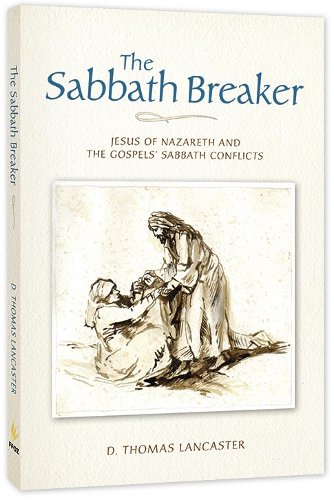
sabbath-breaker-lancasterSeveral weeks ago, I reviewed D. Thomas Lancaster’s book The Sabbath Breaker: Jesus of Nazareth and The Gospels’ Sabbath Conflicts. Lancaster illustrates in his writing how Jesus did indeed perform miracles of healing on the Shabbat which did not involve life threatening injuries or illness. While this is a violation of Shabbat on one level, the higher principle of compassion and caring for human beings made this permissible. After all, “the Shabbat was made for man, not man for the Shabbat.”

So the specifics of Yeshua’s miracles were to fulfill the prophesies said about Messiah and to show that God does love His people Israel and seeks to draw them closer to knowledge of Him and the Kingdom of Heaven.

Now when John heard in prison about the deeds of the Christ, he sent word by his disciples and said to him, “Are you the one who is to come, or shall we look for another?” And Jesus answered them, “Go and tell John what you hear and see: the blind receive their sight and the lame walk, lepers are cleansed and the deaf hear, and the dead are raised up, and the poor have good news preached to them. And blessed is the one who is not offended by me.”

Matthew 11:2-6

Again he entered the synagogue, and a man was there with a withered hand. And they watched Jesus, to see whether he would heal him on the Sabbath, so that they might accuse him. And he said to the man with the withered hand, “Come here.” And he said to them, “Is it lawful on the Sabbath to do good or to do harm, to save life or to kill?” But they were silent. And he looked around at them with anger, grieved at their hardness of heart, and said to the man, “Stretch out your hand.” He stretched it out, and his hand was restored.

Mark 3:1-5

According to Eby, “healing corresponds to God’s self-disclosure.” But how?

May the One who was a source of blessing for our ancestors, bring blessings of healing upon (insert names here), a healing of body and a healing of spirit. May those in whose care they are entrusted be gifted with wisdom and skill, and those who surround them be gifted with love and trust, openness and support in their care. And may they be healed along with all those who are in need. Blessed are You, Source of healing.

-Mi sheberakh
quoted from Jewishealing.com

It’s probably anachronistic to insert this modern Jewish blessing for “a complete healing from Heaven” into a discussion of the healing miracles of Jesus, but the principle most likely predated the written blessing by centuries or even millennia. If you’ll forgive my assumption here, we can then consider healing as both physical and spiritual and indeed, when someone is healed in one aspect, the healing can be for the “whole” person.

On one of those days, as he was teaching, Pharisees and teachers of the law were sitting there, who had come from every village of Galilee and Judea and from Jerusalem. And the power of the Lord was with him to heal. And behold, some men were bringing on a bed a man who was paralyzed, and they were seeking to bring him in and lay him before Jesus, but finding no way to bring him in, because of the crowd, they went up on the roof and let him down with his bed through the tiles into the midst before Jesus. And when he saw their faith, he said, “Man, your sins are forgiven you.” And the scribes and the Pharisees began to question, saying, “Who is this who speaks blasphemies? Who can forgive sins but God alone?” When Jesus perceived their thoughts, he answered them, “Why do you question in your hearts? Which is easier, to say, ‘Your sins are forgiven you,’ or to say, ‘Rise and walk’? But that you may know that the Son of Man has authority on earth to forgive sins”—he said to the man who was paralyzed—“I say to you, rise, pick up your bed and go home.” And immediately he rose up before them and picked up what he had been lying on and went home, glorifying God. And amazement seized them all, and they glorified God and were filled with awe, saying, “We have seen extraordinary things today.”

Luke 5:17-26

healingToday, it’s not uncommon in some Charismatic churches to lay hands on a person who is ill, to pour oil on them, and to pray for healing, but as far as I can tell, this is rather incomplete if all of the prayers are devoted to the person’s physical healing. When Jesus healed the invalid at the Bethesda pool at the Sheep Gate (John 5:2-9), he later, at the Temple, said to the healed man, “See, you have been made well! Do not sin any more, so that nothing worse happens to you.” (John 5:14 NRSV)

I don’t think we can escape how healing is directly connected to restoring a person to both physical and spiritual health.

This is certainly God’s desire for all of humanity and what we see Jesus doing to heal people in the Gospels is only a taste of what we will see and experience in the Messianic Age. It’s as if with each healing and every other miracle Messiah performed, he was lifting back the edge of the covers, so to speak, and showing us just a hint of how the world will be when he returns in glory and power.

But what about the healing of Jesus himself? Why when he was resurrected in his “glorified body” was that body still full of holes?

When it was evening on that day, the first day of the week, and the doors of the house where the disciples had met were locked for fear of the Jews, Jesus came and stood among them and said, “Peace be with you.” After he said this, he showed them his hands and his side. Then the disciples rejoiced when they saw the Lord.

John 20-19-20 (NRSV)

If Jesus had appeared without his wounds, it could have been said that the one who was resurrected was not the same person as the one who had died. By appearing alive to the disciples and to many other people with his wounds present and visible, it was established that the Jesus who had died was brought back to life, lived and walked among his people Israel, and was the same Jesus who ascended into Heaven to sit at the right hand of the Father.

Thus we have the confidence to know that we have a High Priest in the Heavenly Court who has also walked among men and who has lived a fully human life.

For we do not have a high priest who is unable to sympathize with our weaknesses, but one who in every respect has been tempted as we are, yet without sin. Let us then with confidence draw near to the throne of grace, that we may receive mercy and find grace to help in time of need.

Hebrews 4:15-16

I’m extending Eby’s teaching beyond what he actually said, but I do this to share with you what his words meant to me and how they impacted my thoughts and spirit rather than to just transcribe his presentation. For everything he and all of the other teachers said, you will be able to order an audio CD from First Fruits of Zion (FFOZ) when it becomes available.

But Aaron said something that ties into his message as I recorded it in yesterday’s morning meditation.

As we read of the miracles of Jesus and indeed, the many other miracles that are from God, we can come to know God as Naaman the Syrian did, that there is no other God but the God of Israel. We can then seek first the Kingdom of Heaven as an act of obedience to our King and to summon his return to us and the age of the healing of the world.

How?

world-in-his-handsFirst, by having faith and trust in the God of the Bible and the Good News of the Messiah for all of Israel and the world. Then we must also be loyal to the King by adhering to his teachings and living an unswerving life of devotion and holiness. This life is lived by performing the mitzvot, each of us as we are called, the Jew and also the Gentile, repairing the damage done by the sins that caused the exile, first of all humanity from Gan Eden (the Garden of Eden), and also of the Jews from the Holy Land of Israel. And what mitzvot are we to perform?

One of the scribes came near and heard them disputing with one another, and seeing that he answered them well, he asked him, “Which commandment is the first of all?” Jesus answered, “The first is, ‘Hear, O Israel: the Lord our God, the Lord is one; you shall love the Lord your God with all your heart, and with all your soul, and with all your mind, and with all your strength.’ The second is this, ‘You shall love your neighbor as yourself.’ There is no other commandment greater than these.” Then the scribe said to him, “You are right, Teacher; you have truly said that ‘he is one, and besides him there is no other’; and ‘to love him with all the heart, and with all the understanding, and with all the strength,’ and ‘to love one’s neighbor as oneself,’—this is much more important than all whole burnt offerings and sacrifices.” When Jesus saw that he answered wisely, he said to him, “You are not far from the kingdom of God.” After that no one dared to ask him any question.

Mark 12:28-34 (NRSV)

Love God. Love your neighbor. Heal the world physically and spiritually. Pray for the healing of Israel. Pray for the healing between Christian and Jewish people.

May the Messiah come soon and in our day.

126 days.


The Evidence of Luke

Apostle-Paul-PreachesIn writing about Jesus, the early church, and the travels of Paul, Luke weaves his defense against the many charges made against Paul and the followers of Jesus. The accompanying chart shows the defenses put forth to Theophilus just in Acts (most of the defenses raised in Luke are discussed in the chapter on Luke). Some defenses are subtle: assertions of verifiable facts which belie the accusations. Others are explicit: citation of legal precedent directly contrary to the arguments of Paul’s opponents. In light of the number and breadth of charges, I have placed them in to two general categories for ease in analysis…

-John W. Mauck
“Chapter 4: For the Defense”
Paul On Trial: The Book Of Acts As A Defense Of Christianity (Kindle Edition)

This book was authored by an experienced attorney who believes that Luke and Acts were written as a formal legal argument for the defense of Paul as he awaited a hearing before Nero in Rome. Mauck’s analysis encompasses not just the immediate charges that were brought against Paul in Jerusalem (Acts 21-22), but any other charges that Paul may have faced or potentially could have faced as a result of his evangelical activities anywhere in the Roman empire. Maulk isn’t the only one to believe this is how Luke/Acts functions, and if he’s correct, then the points Luke makes in his writings are not only of critical interest as theological information to religious scholars and lay readers, but as actual legal evidence to the validity of the Jewish sect known as “the Way” as a legitimate Jewish religious stream (important in Paul’s case since Roman law only recognized Judaism as a legal religious movement outside the Roman/Greek pantheon of “gods”).

I was reading Chapter 4 last week and the chart provided by Maulk details the fifty-nine arguments in defense of Paul. I realized that the chart as a whole was a very nice compression of the entire Book of Acts and that many of the items supported a number of my positions on Acts as legal evidence. I won’t present all fifty-nine items in the following chart, only those that speak to specific points.

The original chart has four columns. The first cites the specific item being defended, the second and third columns indicate which charge or charges it involves. The fourth column gives an example or cites scripture illustrating the defense of the charge. For the sake of space and how WordPress blogs are laid out, I’ve eliminated the two middle columns.

Defense Passage Illustrative of Defense
1. Our faith is based on the Tanakh
Acts 26:22b-23 “[I am] saying no other things than those which the prophets and Moses said would come – “that the Christ [Messiah] would suffer, that He would be the first to rise from the dead, and would proclaim light to the Jewish people and to the Gentiles.”
2. The Inclusion of Gentiles was always God’s plan for the Jewish faith.
Acts 15:16-17 quoting Amos 9:12 So that the rest of mankind may seek the Lord
3. We are a self-governing sect within Judaism
Acts 1:15-26; Acts 3:42-47; Acts 4:32-35; Acts 6:1-7
4. Rejection of Jesus by Jewish leadership can be explained.
Acts 3:17 (ignorance); Acts 5:17 (jealousy); Acts 13:45 (jealousy); Acts 5:28 (fear)
6. The apostles and Paul are subject to duly constituted authority.
Acts 13:1-3; Acts 15:23 The apostles and the elders, and the brethren. To the brethren who are of the Gentiles…
7. The followers of Jesus are faithful Jews.
Acts 2:41; Then those who gladly received his word were baptized…about three thousand…
11. The presence of female prophets and evangelists is foretold in Torah.
Acts 2:17-18; quoting Joel 2:28-29 (Joel 3:1 in Heb).
25. Paul did not initiate inclusion of Gentiles, other Jewish leaders did so.
Acts 10 (conversion of Cornelius); Acts 15 (Jerusalem council)
28. The Gentile church and the Jewish church did not disconnect
Acts 11:19-29 (many Greeks in Antioch believed and joined the Jewish congregation)
38. Paul’s message was accepted by many Jews who checked the scriptures
Acts 17:10-15 they searched the Scriptures daily…
40. Our assemblies are not illegal collegia, but Jewish worship.
Acts 18:7-8 Paul moves preaching from synagogue to next-door home of synagogue leader.
43. The teachings of the Jewish prophet John confirm the Jewishness of faith in Jesus.
Acts 19:1-7 (encounter with disciples of John in Ephesus)
47. Paul was not teaching the Jews of the Diaspora to stop following Torah.
Acts 21:21-24 (meeting between Paul and James the leader of the Jerusalem congregation)
48. Paul’s opponents are anti-Gentile
Acts 22:21-22 (riot when Paul uses the word “Gentile” in his speech)
49. The Sanhedrin itself has sharply differing views on Jewish theology
Acts 23:9-10 (internal dispute over resurrection of the dead)
52. Even those accusing Paul of leaving Judaism admit the Way is a sect of Judaism
Acts 24:5 …a ringleader of the sect of the Nazarenes.

Point one is really both for Jewish and Christian readers, emphasizing that the “Christian” faith is based on documented scriptural evidence from the Tanakh or Old Testament. That states faith in Jesus is Jewish to both target audiences.

judaismPoint two is primarily for Christian readers illustrating that God didn’t bring us in after the Jews “failed” to accept Jesus as Messiah. We were supposed to be part of the “plan” all along with no Jewish “failure” implied.

Point three emphasizes to both audiences that “the Way” is Jewish.

Point four explains that having the Jewish leadership of the day reject Jesus as Messiah is not proof of the invalidity of Jesus as Messiah.

Point six shows that the authority of the early Jewish movement of Messiah is a Jewish movement under Jewish authority and that authority extended to both Jewish and Gentile members.

Point seven supports Jewish members remaining faithful (Torah observant) Jews after coming to faith in Jesus.

Point eleven I include since some people (OK, just one guy) in the blogosphere has “issues” with women in certain leadership roles, so I thought I’d offer evidence that women were intended all along to assume the roles of prophets and evangelists within “the Way.”

Point twenty-five is more for Jewish audiences who believe that Paul “invented” a new religion that included Gentiles at the expense of Jews and Judaism. In fact, Gentile inclusion not only involved Peter (Acts 10) and James and the Council (Acts 15) but a number of other Jewish believers who participated in preaching the Good News to the Gentiles in Syrian Antioch prior to the involvement of Barnabas and Paul (Acts 11).

Point twenty-eight is interesting since it can be interpreted a couple of ways. For some portions of the Hebrew Roots movement who are part of what could be called “the inclusionist group,” it could mean that Jewish and Gentile believers were identical units in every respect. For the Messianic Jewish movement and those within it who adhere to a “bilateral ecclesiology” viewpoint, it could mean that the early groups of believing Jews and Gentiles worshiped together in the synagogue (Acts 15:21) as part of the teaching/training of Gentiles in “the Way” of Messiah as differentiated from full conversion to Judaism and Torah observance.

Point thirty-eight says both that normative Jewish people accepted Jesus as the Messiah and that evidence in scripture supported the Messianic claim.

Point forty again verifies that “the Way” was not some newly invented religion but a functioning Judaism.

Point forty-three again verifies the “Jewishness” of the teachings of and Jewish faith in Jesus.

Point forty-seven supports that Paul was not teaching against Torah to the Jews.

Point forty-eight explains that Jewish hostility against “the Way” did not involve objections to believing in Jesus as Messiah but was specifically directed against Gentile involvement in the movement.

Point forty-nine illustrates that there was no one overarching “Judaism” or Jewish belief system in that day, and shows that even though there was some Jewish opposition to faith in Jesus, it did not mean such faith was not a legitimate Judaism.

Point fifty-two again confirms that even Paul’s Jewish opponents believed “the Way” was Jewish.

While Luke had one specific agenda for his writings, I have a different (though related) one for the use of the above-cited information. I want to “prove” the validity of “the Way” as Jewish to modern Jewish and Christian audiences. I’m hardly saying that I believe Gentile Christians are “Jewish” or should take on obvious Jewish identity markers or practices, but I do want to communicate that supersessionist and anti-semitic thoughts and practices in the church are not sustainable when examined against the Biblical record.

I want to illustrate also that since the faith of ancient Jews in Jesus as the Messiah was considered as an acceptable and valid form of Jewish worship, the same is true today, particularly within valid Messianic Jewish worship communities. I’m not trying to chase Jews into the church since, despite Maulk’s use of language, Peter, Paul, James, and the rest of the Jewish apostles and disciples didn’t worship and congregate in “church,” they did so at the Temple in Jerusalem and in synagogues in Israel and the diaspora. There is nothing about the Jewish worship of the Jewish Messiah that goes against Jewish Torah observance, Jewish lifestyle, and Jewish devotion to Hashem within a specifically Jewish community.

synagogueFinally, I want to demonstrate that while Jewish and Gentile believers worshiped closely together in community at the beginning of the movement of the Way, they were not necessarily identical units, with Gentiles observing the full yoke of Torah in the manner of Jews but without becoming proselytes. That’s the weakest of my arguments, since the chart information doesn’t address it specifically, but then, Maulk probably never considered that Gentiles could or would be required to take on the full Torah as normative Gentile behavior within the Way. Nothing in Luke or Acts even brings up the issue of full Gentile Torah observance as an expectation of Paul’s and in fact, the opposite is true.

The chart does say four things. That Gentile inclusion into the Kingdom was always part of the plan (Acts 15), that James and the Council made a ruling that was specifically tailored for Gentile inclusion and it applied to no other population, specifically Jewish believers (again Acts 15), that such a decision didn’t violate “the Way” as a Jewish sect (see points 3, 7, 25, 28, and 47), and that there was mutual community participation between Jews and Gentiles, at least in the early days of the movement (Acts 11).

It’s not incredibly overwhelming evidence and I don’t doubt that the various reader populations I’ve been addressing will continue to object, but hopefully I’ve given everyone something to think about. I’ve probably even raised objections among some Messianic Jews relative to the “closeness” between believing Jews and Gentiles I see demonstrated in Acts 11. At that point in history the only place where they could learn anything about Jewish religious practices and theology as related to Jesus was the synagogue. Paul and Barnabas spent an entire year educating the believing Gentiles in Antioch. I think it’s valid to say that they had close relationships which included table fellowship (although Galatians 2 seems to show that nothing is perfect).

I know I’m stirring the pot again and no doubt emotions are also being stirred among some folks reading this. But like I said, I hope a few new ideas and possibilities are also moving around. I hope and pray they produce healthy dialogue.

Peace.

135 days.

Gathering Jerusalem

paul-in-romeHe lived there two whole years at his own expense, and welcomed all who came to him, proclaiming the kingdom of God and teaching about the Lord Jesus Christ with all boldness and without hindrance.

Acts 28:30-31

So ends Luke’s chronicle on the acts of the apostles in what we know today as the Book of Acts. Paul is left in Rome as a prisoner of Caesar in a rented abode, still in chains and guarded by a member of the Praetorian guard. We have only bits and pieces from Paul’s letters and other documents to help us understand what happened to him afterward and the fate to which he finally arrived.

The abrupt end of the book leaves the reader wondering why Luke closed the narrative at that point. He does not grant any specific stories about Paul’s activities in those two years, and he does not mention the outcome of his appeal before the emperor. It seems like a strange and unsatisfying place to conclude the story.

-D Thomas Lancaster
Study for “Behar (On the Mountain)”
Commentary on Acts 28:16-31
Chronicles of the Apostles, Volume 6,  pg 837
First Fruits of Zion (FFOZ) Torah Club

This is the conclusion, as far as Luke’s narrative is concerned, of Paul’s long, dangerous, and confusing journey from Jerusalem to Rome, a journey which began under the shadow of grim prophesy.

While we were staying for many days, a prophet named Agabus came down from Judea. And coming to us, he took Paul’s belt and bound his own feet and hands and said, “Thus says the Holy Spirit, ‘This is how the Jews at Jerusalem will bind the man who owns this belt and deliver him into the hands of the Gentiles.’” When we heard this, we and the people there urged him not to go up to Jerusalem. Then Paul answered, “What are you doing, weeping and breaking my heart? For I am ready not only to be imprisoned but even to die in Jerusalem for the name of the Lord Jesus.” And since he would not be persuaded, we ceased and said, “Let the will of the Lord be done.”

After these days we got ready and went up to Jerusalem. And some of the disciples from Caesarea went with us, bringing us to the house of Mnason of Cyprus, an early disciple, with whom we should lodge.

When we had come to Jerusalem, the brothers received us gladly. On the following day Paul went in with us to James, and all the elders were present. After greeting them, he related one by one the things that God had done among the Gentiles through his ministry.

Acts 21:10-19

Even before Paul entered Jerusalem, he knew he might not be leaving the Holy City again, at least not in this life. Yet he did as a result of false accusations against him, having been accused by Jews from Asia of teaching against the Temple, against Jews keeping Torah, and even bringing a Gentile into the Temple past the court of the Gentiles.

As I said, none of it was true, but Paul defended himself as he was taken from one city to the next, from one court venue to the next. And even though he had done no wrong, because of the accusations against him and the threats against his life, Paul finally appealed to Caesar to hear his case, and his assurance of a one-way journey to Rome and the emperor was complete.

But he never saw Jerusalem again. Never saw Peter or James or the elders and apostles again. Never offered sacrifices in the Holy Temple again.

While Paul’s ultimate fate remains a mystery, what about the Council of Apostles in Jerusalem?

Last Sunday, Pastor Randy said a funny thing from the pulpit and he repeated it during last Wednesday night’s conversation with me.

Now those who were scattered because of the persecution that arose over Stephen traveled as far as Phoenicia and Cyprus and Antioch, speaking the word to no one except Jews. But there were some of them, men of Cyprus and Cyrene, who on coming to Antioch spoke to the Hellenists also, preaching the Lord Jesus. And the hand of the Lord was with them, and a great number who believed turned to the Lord.

Acts 11:19-21

Apostle-Paul-PreachesPastor said this was the beginning of the process of transferring authority from Jerusalem to Syrian Antioch. What? Transferring authority? I’d never heard of such a thing. How could any city but Jerusalem be the geographic and spiritual center of our faith? I had always believed that the ultimate authority over the “church” was always wielded from Jerusalem, that is until 70 CE when the Romans leveled the Temple, razed Jerusalem, and sent the vast majority of the Jewish population into the diaspora. Only then was authority transferred from the Jewish apostolic council to the Gentiles, and this by force.

But according to Pastor Randy, once the original apostles, those who walked with Jesus and who witnessed the resurrection, died…their authority was not automatically passed down to others, either their heirs or any other appointed elders. There is only one record of an apostle being replaced and that was long before the trials of Paul.

So one of the men who have accompanied us during all the time that the Lord Jesus went in and out among us, beginning from the baptism of John until the day when he was taken up from us—one of these men must become with us a witness to his resurrection.” And they put forward two, Joseph called Barsabbas, who was also called Justus, and Matthias. And they prayed and said, “You, Lord, who know the hearts of all, show which one of these two you have chosen to take the place in this ministry and apostleship from which Judas turned aside to go to his own place.” And they cast lots for them, and the lot fell on Matthias, and he was numbered with the eleven apostles.

Acts 1:21-26

Protestantism tends to discourage the idea of a more permanent intent for the Council of Apostles because it smacks of the authority of Rome in Catholicism and other Ecumenical Councils who exercise authority over the faithful, many times to the detriment of the faithful. So Pastor’s thoughts could be a reflection of his perspective and education.

Be that as it may, the Council of Apostles disappears from Jerusalem and from history, certainly by 70 CE if not before.

But what about the centrality of Jerusalem? If you believe there will be a Third Temple (as I do) from where Messiah will reign in Jerusalem, then you cannot dispense with Jerusalem. If you believe that each year the Gentile nations must send representatives to Jerusalem to celebrate Sukkot (Zechariah 14:16-19), then you cannot dispense with Jerusalem. Jerusalem is the focus, the nexus for all of our prophetic hopes in the return of the Messiah. If the apostles and the council vanished from Jerusalem with no successors, did “authority” shift to Antioch?

Now there were in the church at Antioch prophets and teachers, Barnabas, Simeon who was called Niger, Lucius of Cyrene, Manaen a lifelong friend of Herod the tetrarch, and Saul. While they were worshiping the Lord and fasting, the Holy Spirit said, “Set apart for me Barnabas and Saul for the work to which I have called them.” Then after fasting and praying they laid their hands on them and sent them off.

Acts 13:1-3

It certainly seems so, but let’s think about this. The first large group of Gentiles to become disciples of the Master and to receive and extensive education in his teachings and (very likely) in the Torah were the Antioch Gentile God-fearing believers. Antioch also became a good “jumping off place” for Paul and his fellow apostles to go to the Gentiles in the diaspora with the good news of the Messiah (but going to the Jews first, of course). And while Antioch seems to have been a major center of Jewish/Gentile Messianic worship and evangelism, Paul continued to return to Jerusalem (Acts 15 and 21) to receive authoritative rulings on difficult matters and to bring donations for support of the Jewish “saints” in Israel.

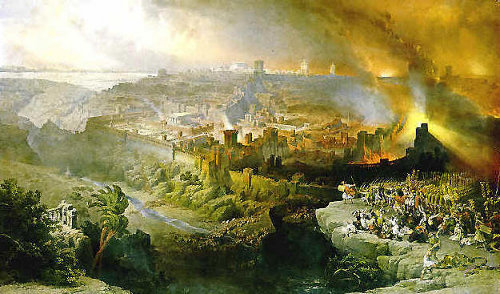
fall-of-jerusalemAntioch may have been the center of the Jewish/Gentile interface of the Way, but Jerusalem was the heart, soul, and final authority over the movement.

But when there were no more living apostles in Jerusalem, did God close the door on Jewish authority over the Way, even over the Jewish members?

Lest you be wise in your own sight, I do not want you to be unaware of this mystery, brothers: a partial hardening has come upon Israel, until the fullness of the Gentiles has come in. And in this way all Israel will be saved…

Romans 11:25-26

This and other references of Paul’s, indicate that whatever separation there may be between the Jewish people and King Messiah is only temporary, which includes the separation between the King and Jerusalem. The “authority” left Jerusalem temporarily, but the Throne of the King has always been in the City of David.

The Lord swore to David a sure oath from which he will not turn back: “One of the sons of your body I will set on your throne.

Psalm 132:11

When Jesus returns as Lord of Israel and Lord of all, the authority will return to Jerusalem again. I don’t think even Protestant resistance to “apostolic authority” can deny that we all have one King and he is the authority and author of our lives.

“Jerusalem, Jerusalem, who kills the prophets and stones those who are sent to her! How often I wanted to gather your children together, the way a hen gathers her chicks under her wings, and you were unwilling. Behold, your house is being left to you desolate! For I say to you, from now on you will not see Me until you say, ‘Blessed is He who comes in the name of the Lord!’”

Matthew 23:37-39 (NASB)

Good Shabbos.

145 days.

In the Midst of the Flaming God

in-the-midst-of-fireQuestion: The writings of Kabbalah and Chassidism speak of four worlds—Atzilut, Beriah, Yetzirah and Asiyah. Where are these “worlds”? Why haven’t any of them been discovered yet?

Response: When I try to relate to these worlds, I picture each of them as another lens through which we can view reality. The higher the world, the sharper and clearer the lens—so that everything in that world is a harmonious expression of G‑d’s simple oneness. The lower the world, the more it feels otherness—as though it never had a creator to begin with. Things become fragmented, discordant, even downright ugly, as that sublime oneness is lost.

We live in the bottom-level, physical world of Asiyah—meaning “actuality”—a reality in which G‑dliness is completely hidden. Our lenses allow us to see nothing more than the end-product of all the processes that came before it. We see a table—not the divine energy that keeps it in existence. We marvel over a sunset—as though it were just another natural phenomenon, rather than a masterpiece of a Master Artist. We attribute financial success to smart business tactics—not to the blessings of G‑d. It’s no coincidence that the word for “world” in Hebrew, olam, shares the same root as he’elem, meaning “hidden.” Everything but the most outer façade is hidden from our view.

What keeps our prescription so low?

-Rabbi Yisroel Cotlar
“Where Are All the ‘Worlds’?”
Chabad.org

I know Kabbalah isn’t for everyone and mysticism gives most Christians the nervous “shakes,” but for me, it explores the answers to certain questions that we otherwise must avoid completely. It also allows me to put into perspective the things in this world (and the next) that drive me crazy.

We live in the bottom-level, physical world…in which G‑dliness is completely hidden.

Exactly. And yet often we behave as if our “bargain basement world” has all the answers we’ll ever need to understand God and who we are in Him. I’m not suggesting that we all start taking “mystic trips” into the upper regions of reality and attempt to experience God in His own realm, but we should consider that we don’t know as much as we think we know.

I don’t think that the Bible has all the answers, either. I do think, however, that it has sufficient answers for us. If it had all the answers, humanity (or at least Christianity and Judaism) wouldn’t have such a thing as a mystic tradition.

Some would say that the “worlds” Rabbi Cotlar is discussing have an objective reality on other planes of existence, and others, most others probably, believe that these “worlds” are just mental abstractions we use to discuss what otherwise couldn’t be discussed because we have no language and no conceptualization of what it is to exist beyond what our five senses can detect.

I know I’ll be criticized for even mentioning the “K” (Kabbalah) word, but think about it. If you are a religious Jew or Christian, by definition, you’ve taken on board certain beliefs about the spiritual and supernatural worlds. You believe in angels, and archangels, and (if you’re Christian) God being able to manifest Himself in human form (though that is not His totality according to Derek Leman).

We attribute financial success to smart business tactics—not to the blessings of G‑d.

I bet you never thought that was a “mystic” statement, did you? Most of us, even those of us who are “religious,” tend to pat ourselves on the back when we do well in business, get a raise, start and run a successful business, or pump up the number of “zeros” in our annual income. And yet, every morsel of food we consume, every breath we take, every beat of our heart, every day that dawns, would never occur apart from the will of our Father.

How can we not believe in other realms beyond our own?

But then again, it isn’t the belief in other mystic realms that’s the problem, but the thought that any human being should know anything about them, aside from what we read in the Bible. That’s typically what hangs most people up.

The basics of the teachings of the kabbalah – upon which all these texts expound and elaborate – were not invented by the human mind. They are teachings that were orally passed down through the generations, from teacher to disciple, dating back to Moses himself.

And Moses did go there and back. He spent months on Mount Sinai wandering through the various spiritual worlds and then communicated his findings back to us. That which he didn’t personally experience was revealed to him by the Creator of all these spiritual worlds—together with the rest of the Written and Oral Torah. Even after he descended the mountain, he continued to learn directly from G‑d for the next forty years.

-Rabbi Menachem Posner
“How can any human claim to know of ‘other worlds’?”
Chabad.org

That won’t be very convincing to most Christians not to mention a lot of Jews. But how about this?

Moses entered the cloud and went up on the mountain. And Moses was on the mountain forty days and forty nights.

Exodus 24:18

So he was there with the Lord forty days and forty nights. He neither ate bread nor drank water. And he wrote on the tablets the words of the covenant, the Ten Commandments.

Exodus 34:28

lost-in-the-fogThat might not be convincing either if you just think Moses and God sat together for forty days and forty nights around a really big campfire on the top of a mountain. But did God come down or Moses go up…or something in between? Whatever it was, Moses entered into the presence of the living God, His Divine Presence, and was not consumed by fire and could live in God’s presence and not die, and could do without either food or water for well over a month.

If you believe that actually happened and isn’t just some metaphor or fable, then you believe in the spiritual, the supernatural, the mystic encounter of man with God.

In the thirtieth year, in the fourth month, on the fifth day of the month, as I was among the exiles by the Chebar canal, the heavens were opened, and I saw visions of God.

Ezekiel 1:1

Daniel declared, “I saw in my vision by night, and behold, the four winds of heaven were stirring up the great sea. And four great beasts came up out of the sea, different from one another.

Daniel 7:2-3

I know a man in Christ who fourteen years ago was caught up to the third heaven—whether in the body or out of the body I do not know, God knows. And I know that this man was caught up into paradise—whether in the body or out of the body I do not know, God knows—and he heard things that cannot be told, which man may not utter.

2 Corinthians 12:2-4

I, John, your brother and partner in the tribulation and the kingdom and the patient endurance that are in Jesus, was on the island called Patmos on account of the word of God and the testimony of Jesus. I was in the Spirit on the Lord’s day, and I heard behind me a loud voice like a trumpet…Then I turned to see the voice that was speaking to me…and in the midst of the lampstands one like a son of man, clothed with a long robe and with a golden sash around his chest. The hairs of his head were white, like white wool, like snow. His eyes were like a flame of fire, his feet were like burnished bronze, refined in a furnace, and his voice was like the roar of many waters. In his right hand he held seven stars, from his mouth came a sharp two-edged sword, and his face was like the sun shining in full strength.

When I saw him, I fell at his feet as though dead.

Revelation 1:9-10, 12, 13-17

Each of these experiences stretches, pushes, pulls, and distorts the experience of “reality” of each of the human beings involved beyond what we would consider “normal.” Moses, Ezekiel, Paul, and John each had their own mystic encounters with the realm of Heaven in ways that could not be fully explained to the rest of us who have (presumably) not shared such experiences.

If such is recorded in the Bible we know (as well as we can know the Bible, that is), what mystic experiences have human beings encountered that have not been recorded or that have been recorded in what we consider less than reliable texts?

Who knows?

My point is not to sell you on mysticism. I’m hardly a mystic. I make no claim to otherworldly journeys. I’m only suggesting that no matter what you have learned, no matter how well you are educated, no matter how much you pat yourself on the back for your erudite understanding of the Scriptures, and no matter what sort of “Holy Spirit high” you believe you are on, you really don’t know as much as you think you do. I know I don’t.

sky-above-you-god1To reduce God down to what we can read in the Bible, even if we believe that the Holy Spirit is giving us personal instruction and whispering little “secrets” of interpretation in our ears, is arrogant in the extreme.

It’s understandable that in feeling small before God and probably in the midst of other people, we should want to exalt ourselves. But this reductionist thinking also makes God small, like we are, and all but eliminates any sense of awe, wonder, and majesty at even the contemplation of the awesome, wonderful, infinite, exalted, measureless, Ein Sof, Radically One, creative God.

The Ancient of Days is above all things and beyond human sight and comprehension. But the One like a Son of Man shares his nature fully, being One with him. The Ancient of Days sends the Son of Man into created things to rule from within. The Ancient of Days is transcendent completely but the Son of Man is immanent and is with us. The unity of the Father and Son is absolute, so we cannot say the Son is “part of God,” for God has no parts.

-Derek Leman

Trying to discuss the Divinity of Jesus “is like trying to hit a bullet with a smaller bullet whilst wearing a blindfold, riding a horse,” to quote a certain Scottish engineer from the twenty-third century. In other words, it’s at least extremely difficult if not darn near impossible.

And yet, how can we not try to talk about and even to comprehend that which surrounds us, penetrates us, and binds us together with Him?

Now about eight days after these sayings he took with him Peter and John and James and went up on the mountain to pray. And as he was praying, the appearance of his face was altered, and his clothing became dazzling white. And behold, two men were talking with him, Moses and Elijah, who appeared in glory and spoke of his departure, which he was about to accomplish at Jerusalem. Now Peter and those who were with him were heavy with sleep, but when they became fully awake they saw his glory and the two men who stood with him. And as the men were parting from him, Peter said to Jesus, “Master, it is good that we are here. Let us make three tents, one for you and one for Moses and one for Elijah”—not knowing what he said. As he was saying these things, a cloud came and overshadowed them, and they were afraid as they entered the cloud. And a voice came out of the cloud, saying, “This is my Son, my Chosen One; listen to him!” And when the voice had spoken, Jesus was found alone. And they kept silent and told no one in those days anything of what they had seen.

Luke 9:28-36

What do you do, as a simple fisherman who is learning from a rural, itinerant teacher, when your teacher suddenly starts glowing bright white and mysteriously is joined by the two greatest Prophets in the history of your people (and you have no idea how you recognize these two men who lived many centuries before you were born…and there are no photos or paintings of them anywhere), and these two great men start speaking to your teacher in a close and intimate manner….and then a voice from Heaven tells you that your teacher is the Son of God and commands you to listen to him?

What do you do when your reality experiences a direct intersection with the mystic realm of God?

I don’t know. But one thing I do know. If you have any sort of sense at all, you realize just how small you are and that, in fact, you don’t know anything close to what you thought you did.

I don’t either.

When’s the last time you were sitting in the midst of the flaming God on a mountain?

147 days.