Tag Archives: Messiah

Making Sense of the Messiah as the Keystone of Creation

Therefore do not be ashamed of the testimony of our Lord or of me His prisoner, but join with me in suffering for the gospel according to the power of God, who has saved us and called us with a holy calling, not according to our works, but according to His own purpose and grace which was granted us in Christ Jesus from all eternity, but now has been revealed by the appearing of our Savior Christ Jesus, who abolished death and brought life and immortality to light through the gospel, for which I was appointed a preacher and an apostle and a teacher.

2 Timothy 1:8-11 (NASB)

Whoever confesses that Jesus is the Son of God, God abides in him, and he in God. We have come to know and have believed the love which God has for us. God is love, and the one who abides in love abides in God, and God abides in him. By this, love is perfected with us, so that we may have confidence in the day of judgment; because as He is, so also are we in this world. There is no fear in love; but perfect love casts out fear, because fear involves punishment, and the one who fears is not perfected in love.

1 John 4:15-18

I had an interesting conversation with a friend of mine last Sunday afternoon. Toward the end of our time together, he haltingly asked me something he obviously thought would offend me. I can’t recall his exact words, but he was wondering if I realized the centrality of Jesus as the Lord and Savior of my life. I guess he thought I was getting a little too lost in Judaism or in attempting to engage my faith through a sort of “Jewish lens”.

This lead to a rather lengthy and repetitive monologue on my part and I hope I made some sort of sense. In order to organize my thoughts better, I decided to write them out and share them in a more public venue.

One of the Jewish arguments against Jesus being the Messiah, especially as conceptualized by organized Christianity and as recorded (apparently) in the New Testament, is that Jesus appears to be a tremendous departure from anything that God had done before. I don’t mean that God did something new, but that He did something incredibly different, as if he switched from “plan A” to “plan B”.

There’s no real mention of a Messiah in the Tanakh (Old Testament) particularly as Christianity understands the role, and let’s face it: Jesus doesn’t even make an appearance until the last third of the Biblical narrative. If he’s so important, why didn’t he show up sooner?

Actually, some people think he did:

And Melchizedek king of Salem brought out bread and wine; now he was a priest of God Most High. He blessed him and said,

“Blessed be Abram of God Most High,
Possessor of heaven and earth;
And blessed be God Most High,
Who has delivered your enemies into your hand.”

He gave him a tenth of all.

Genesis 14:18-20

Given the mention of Melchizedek in Hebrews 7, most Christians and many in Hebrew Roots and Messianic Judaism think that Melchizedek is the “pre-incarnate Jesus”. There are a number of other places where Christians exchange their “exegesis” of the Old Testament to “I see Jesus” in the Tanakh, in part to solve the “problem” of why Jesus didn’t put in an appearance before the end of Matthew 1.

D. Thomas Lancaster in his sermon on Melchizedek for the Holy Epistle to the Hebrews sermon series which I reviewed, does a good job at refuting the idea that Melchizedek was literally Yeshua (Jesus), but there are plenty of other occasions where some people believe Jesus “beamed” into early Biblical history like some sort of “Star Trek” character.

Gateway to EdenAfter all, who walked in the garden with Adam (Genesis 3:8), wrestled with Jacob (Genesis 32:22-31, and who was the angel God sent ahead of the Children of Israel (Exodus 23:20)?

Frankly, I think attempting to force scripture to have Jesus show up bodily before he’s actually born actually cheapens the miracle and significance of Messiah’s birth by woman and all that he accomplished in his physical, human experience.

But we have this problem of when Jesus appears. If he’s the cornerstone, how can you build the first two-thirds of the Bible without him? Or are we missing the point?

One of our biggest problems with understanding the Bible and the centrality of the Messiah is time. By definition, we are beings who live in linear time. We are born, we live, we die. We have yesterday, today, and tomorrow. That’s how we think. It’s difficult to imagine a universe without time, and we forget that when God created everything, He created time, too.

When I was a little kid, I tried to imagine what God’s “environment” must have been like before He created everything. I pictured an old man with a big white beard and long, shaggy white hair, dressed in a robe and sitting on a golden throne floating in infinite blackness. I thought of the universe as just stars and galaxies not imagining that it’s also space and time.

It’s difficult if not impossible for a human being to even perceive a sliver of God’s point of view. What does God see when He looks at the universe? Who knows? How can God exist outside of time? If time doesn’t pass for God at all, what is that like?

In my conversation on Sunday, I used a metaphor. I said that from God’s viewpoint, all of creation must be like a painting hung on a wall. In the painting is every event that has ever occurred and will ever would occur in our universe from start to finish. It’s like everything that has happened, is happening, and will happen across the entire line of history is all occurring inside that painting simultaneously. God can take in time, the universe, and everything at a glance.

Now imagine that in the very center of the painting is a stone archway. Now imagine that all of the other stones in the stone archway are balanced against a single, critical keystone. If this keystone were removed, the entire arch would collapse into rubble. When the keystone is in place, the other stones and the archway itself are completely immovable.

Guess who the keystone is?

So then you are no longer strangers and aliens, but you are fellow citizens with the saints, and are of God’s household, having been built on the foundation of the apostles and prophets, Christ Jesus Himself being the corner stone, in whom the whole building, being fitted together, is growing into a holy temple in the Lord, in whom you also are being built together into a dwelling of God in the Spirit.

Ephesians 2:19-22 (emph. mine)

Granted, Paul is using the cornerstone metaphor in terms of the structure of the ekklesia or assembly of Messiah, but I think it still works (see also Psalm 118:22, Matthew 21:42, and Acts 4:11). I always wondered how you could build anything else in the redemptive plan of God across human history without first laying the cornerstone, or in the case of the previous metaphor I used, the keystone. Now I think I know, but the explanation is a little metaphysical.

Messiah is central to the plan of God because he’s always been central. He’s just not apparently central when we consider the appearance and work of Yeshua in linear time. This is also why Jewish objections to a first and second coming of Messiah and why Yeshua didn’t finish the work he started in the first advent don’t really matter. It’s because linear time doesn’t determine how and why Messiah is the lynchpin of God’s redemptive plan for humanity.

If it’s possible to use the word “before” in terms of a timeless God, then even before God created the universe, He knew the consequences of creating human beings with free will would result in the universe turning out the way it did. That is, God knew that giving human beings free will would lead to our disobeying Him with the result of changing the very nature of the universe from perfect to damaged.

CreationSo when God created the universe, He also created a plan for restoring it which means the very nature and character of the Messiah is built into creation, that everything rests on Messiah’s shoulders, so to speak, and that without the Messiah (for whatever reason) the universe can never be redeemed.

I know that’s dicey language to use in relation to God since nothing is impossible for Him, but God’s “solution” to the problem of human free will and its consequences is Messiah. It’s as if God created not just all of the universe all at once (well, in six “days”), but all of human history from beginning to end, and then placed that history upon the cornerstone, which is Messiah.

No, I can’t prove any of this from scripture beyond what I’ve already quoted, but it’s the only way I can make sense of God, the role of Messiah, and the narrative of the Bible including God’s plan for redeeming His creation.

Let me know if this makes sense to you.
Sermon Review of the Holy Epistle to the Hebrews: Ani Ma’amin (I believe)

What do Maimonides and the book of Hebrews have in common? Find out how the Talmud and the book of Hebrews intersect when it comes to the question of faith in Messiah. The book of Hebrews continues with a call to hold fast to faith in the coming of the Messiah.

References Hebrews 10:32-39; Isaiah 30:18; Habakkuk 2:3-4.

-D. Thomas Lancaster
Sermon Forty: Ani Ma’amin (I believe)
Originally presented on January 25, 2014
from the Holy Epistle to the Hebrews sermon series

Therefore the Lord longs to be gracious to you,
And therefore He waits on high to have compassion on you.
For the Lord is a God of justice;
How blessed are all those who long for Him.

Isaiah 30:18 (NASB)

Lancaster’s sermon took a different route this week, the long way around to Hebrews 10:32-39 through the above-referenced prophets, the Talmudic writings, and Mosheh ben Maimon otherwise known as Moses Maimonides or the Rambam.

Lancaster states that the above verse from the prophet Isaiah is very important as a Messianic prophesy. The Talmud interprets “How blessed are all those who long for Him” or “wait for Him” as those among the righteous waiting for the redemption of the Messiah.

Verse 20 says “your Teacher will no longer hide Himself, but your eyes will behold your Teacher,” indicating that our Teacher, that is, Messiah, is currently hidden from us (or from Isaiah’s audience, the Jewish people) but that in the coming age, he will be revealed. Verse 21 continues “Your ears will hear a word behind you, ‘This is the way, walk in it,’ whenever you turn to the right or to the left,” speaking of walking in the Holy Spirit (the “word behind you”).

But when it says “therefore He waits on high to have compassion on you,” this isn’t speaking of Messiah, but of Hashem, of the God of Israel, for He waits for the Messiah, too…at least according to the Talmud.

Why would God have to wait? You’ll see in a bit.

Lancaster then shifted gears and started quoting from Tractate Sanhedrin about a 3rd century CE Rabbi who came across a Gentile who had discovered a scroll in the Roman treasury. Without going into all the details, the scroll seemed to likely have been looted from Jerusalem by the Romans, perhaps from the Temple itself.

The Rabbi, who believed the scroll to be an authentic Jewish Holy writing, purchased the scroll and discovered it predicted the end of the world and the coming of the Messiah in the year 4291 from Creation, with the final renewal of the world being accomplished in the year 7000.

ancient scrollsProblem is, the Jewish year 4291 corresponds to 531 C.E. which has long since come and gone.

The Talmud uses this story to issue a stern warning against attempting to calculate the dates related to Messiah coming and an admonition against those who insist on calculating such dates. Thus far, everyone who has attempted to predict the return (or coming) of Messiah has been wrong.

This is where Habakkuk comes in:

I will stand on my guard post
And station myself on the rampart;
And I will keep watch to see what He will speak to me,
And how I may reply when I am reproved.
Then the Lord answered me and said,
“Record the vision
And inscribe it on tablets,
That the one who reads it may run.
“For the vision is yet for the appointed time;
It hastens toward the goal and it will not fail.
Though it tarries, wait for it;
For it will certainly come, it will not delay.
“Behold, as for the proud one,
His soul is not right within him;
But the righteous will live by his faith.”

Habakkuk 2:1-4

Within the context of Habakkuk, this does not seem to have anything to do with Messiah. Habakkuk had just heard from God that the destruction of Judah and Jerusalem was at hand because of their many sins. Habakkuk was upset, not that God had ordered the destruction, but that He had chosen an instrument for that destruction much more evil than Judah and Jerusalem. So he sat in a guard post and waited (probably for a long time) for God to answer his objection.

That said, the Talmudic sages interpret, especially verses 3 and 4, as very much having a Messianic application, and Lancaster agrees, specifically since the Talmud interprets this portion of scripture as stating the date of Messiah’s coming is hidden. I won’t go into the nuts and bolts of Lancaster’s explanation. The link to the recording is at the top of this missive so you can listen to the forty minute sermon for yourself.

But then we get back to why is even God waiting for Messiah? Why should God wait? Why not send Messiah now?

The Lord is not slow about His promise, as some count slowness, but is patient toward you, not wishing for any to perish but for all to come to repentance.

2 Peter 3:9

God’s justice (and I believe mercy as well) demands that He wait because those of us who also wait receive a blessing by the merit of the act of waiting, for as it says “Though he tarries, wait for it” (the Hebrew pronoun can also be “him”), and again, “the righteous will live by faith”, and as it says in Isaiah, “Blessed are all those who wait for Him” (Isaiah 30:18 NKJV).

Rambam
Mosheh ben Maimon, the Rambam

Many have been born, lived, and died waiting for Messiah and he didn’t come, yet their waiting wasn’t in vain, for by the merit of their faith, they gained eternal life in the resurrection.

I mentioned the Rambam above. He codified what is known as The Thirteen Principles of Faith, the twelfth of which states:

I believe with a complete faith in the coming of Messiah, and even though he may delay, nevertheless every day I believe that he will come.

This is also known as Ani Ma’amin (I believe) and is traditionally sung at the conclusion of the Shacharit or Morning prayers. The Talmud states that such a lived faith in the coming of the Messiah equals performing all of the 613 commandments (and the version we have today was also organized by Rambam). Yes, it’s that important.

However, when Habakkuk says that “the righteous will live by faith,” he doesn’t just mean that they live a life of faith, but that they will merit life, eternal life in the resurrection, by clinging to their faith in the coming redemption of Messiah. This is an essential principle in Judaism, according to Lancaster, and not only do we see it in the prophets and the Talmud (and Hebrews), but the Apostle Paul referenced it in Romans 1 and Galatians 3. Instead of trying to figure out when Messiah will come (return) and only expecting him then, always expect him today and every day; always live a life of daily expectancy.

Then Lancaster (apparently) switches tracks and talks about how the passage from Habakkuk is very different in the Greek. Why is that important? Because Jewish teachers used the Greek translation of the Tanakh (Old Testament) or Septuagint, when teaching Greek-speaking Jews and Gentiles. The writer of Hebrews was addressing Greek-speaking Jews living in or near Jerusalem.

For yet in a very little while,
He who is coming will come, and will not delay.
But My righteous one shall live by faith;
And if he shrinks back, My soul has no pleasure in him.

Hebrews 10:37-38 quoting Habakkuk 2:3-4

Especially the last line seems quite odd: And if he shrinks back, My soul has no pleasure in him.” Lancaster says this speaks of one who shrinks back or loses his faith, specifically in the coming of Messiah, for if one loses his faith in Messiah, he loses God’s favor.

But “My righteous one shall live by faith” in that even if Messiah does not come when expected or even in your lifetime or mine, we must live by faith so that we will live in the resurrection and not lose our place in the world to come. We must seek first the Kingdom as our focus.

Now (finally) Lancaster turns to Hebrews 10:32-39.

He gives a very brief summary of the Hebrews epistle, an exhortation to Jewish believers who because of their faith in Messiah, have been denied access to the Temple and the Priesthood, and who, for that reason, are strongly tempted to renounce their Messianic faith. The Hebrews writer is encouraging them to remain faithful because they always have access to the Heavenly Temple and Priesthood through Messiah as High Priest, and warning them of the consequences of losing faith.

“But remember in former days” is a reference to the early persecutions (read the beginning chapters of Luke’s Book of Acts including the stoning of Stephen (Acts 8) and the “murderous threats” of Saul (the beginning of Acts 9). They were persecuted in many ways and yet “accepted joyfully” those hardships, enduring in the faith. “Therefore, do not throw away your confidence” for in doing so, they would also throw away their reward. They needed to endure as they did before.

Hebrews then quotes the Greek version of Habakkuk, and you should see at this point how well it fits the flow of this part of the letter, and concludes (well, not really…it just concludes the artificial division of chapters):

But we are not of those who shrink back to destruction, but of those who have faith to the preserving of the soul.

Hebrews 10:39

But there’s more. I didn’t expect Lancaster to cover Chapter 11 as well, but when he did, it clicked right into place:

Now faith is the assurance of things hoped for, the conviction of things not seen. For by it the men of old gained approval.

Hebrews 11:1-2

faithThis is the so-called “faith chapter” of the Apostolic Scriptures and Christians often cite it as a “stand alone” definition of what “faith” is, without considering how it fits into the overall message of the epistle.

The writer of the epistle has been encouraging his readers to maintain their faith in the Messiah’s coming, to not abandon that faith, even under the tremendous pressure of not being able to offer korban in obedience to the commandments, for in renouncing Messiah, they would also be renouncing their reward in the Kingdom.

The rest of chapter 11 is a list of examples of people of faith who maintained that faith even though they never saw the promised rewards in their lifetimes. Abraham was promised the Land but died never receiving the promise. So too did Isaac and Jacob. Read the chapter for yourself and see what it looks like now that you have the context Lancaster constructed around it.

Lancaster concludes his sermon by reading verses 32 through 40, but I’ll just quote a portion:

And what more shall I say? For time will fail me if I tell of Gideon, Barak, Samson, Jephthah, of David and Samuel and the prophets, who by faith conquered kingdoms, performed acts of righteousness, obtained promises, shut the mouths of lions, quenched the power of fire, escaped the edge of the sword, from weakness were made strong, became mighty in war, put foreign armies to flight.

Hebrews 11:32-34

“And what more shall I say? For time will fail me…” The list of the faithful is endless, or seemingly so. It’s not like the writer of Hebrews is asking for the impossible, as if no one who came before ever exhibited such a faith, maintaining it even to the death. While modern religious Judaism doesn’t emphasize the Messiah’s coming all that much, in ancient days, the days of the prophets, the days of the apostles, and the days of the writers of the Talmud, it was much clearer that faith in the coming (return) of Messiah was the lynchpin of Jewish faith in God and the coming New Covenant times.

What Did I Learn?

I’ll never be a Talmud scholar, so all of the tie-ins from Talmud back into scripture are a revelation to me. Lancaster said that the writer of Hebrews and the other apostles read Habakkuk exactly the same way as the sages of the Talmud. This is a very important point because it re-enforces my emphasis that you cannot know or understand having faith in the Messiah unless you study Judaism! This is why I study from within a Messianic Jewish framework.

I hate to slam Christian studies and teachings because I have high regard for those people I know in the Church, but traditional Christian doctrine compared to Messianic Jewish (and other Jewish) studies is like the difference between an eighty-year old frayed black and white still photo and the latest vibrantly colored 3D motion picture in surround sound.

I hope I’m not overstating the metaphor, but a lot of these teachings in Messianic Judaism hit me like someone opened up my skull and poured in a couple of quarts of “Ah Ha! That’s what that means!”

I was also pleasantly surprised when Lancaster mentioned having read the biography of Brother Yun, an evangelist in Communist China who suffered terribly for his faith. I also read the book at the urging of a friend, and as a reminder that I can get tremendously caught up in the “head knowledge” of the Bible at the expense of a living faith in Messiah.

The message of the epistle to the Hebrews is also a message to us nearly two-thousand years later. The Jewish believers reading this letter had a faith in the return of the Messiah who had died, was resurrected, and ascended to Heaven about thirty years prior, within the living memory of a generation, and yet they were tempted to abandon that faith. We have possession of the same faith almost twenty-centuries after the event, and no one alive on earth is a direct witness today. If they were tempted living so close in time to the flesh and blood Jesus, how much more so will we be tempted, especially in a culture of atheism, humanism, and progressiveness, to be lured into abandoning our faith in the return of Messiah?

Which is why we can’t. Which is why Hebrews 11 is so important to us as an example of living and dying and yet not receiving the promise of his return.

For if their being cast away is the reconciling of the world, what will their acceptance be but life from the dead?

Romans 11:15

lightIf some of the Jews in Paul’s generation not coming to faith in Messiah is compared to death, but their coming to faith is compared to the resurrection. So it is with us. For those who have never come to faith and possibly never will, we can have pity, but we must mourn tragically for those who once had faith and deliberately set it aside for whatever they thought was better, perhaps under some form of social pressure to do so.

I mourn for those every day and I know more than one. Pray that they haven’t shut up their ears permanently, and that they will go from being “cast away” by their own decision, to “acceptance” once again and “life from the dead.”

Who is Honored on Sukkot?

Epicurus used to say, “Were the gods to answer the people’s prayers, people would deteriorate and die, for so multitudinous are the tribulations which each one wishes upon his fellow.”

Epicurus may be right as regards the prayers of the nations, but not as regards our prayers. We well know “This is the book of the generations of man,” and every year we begin our supplications with “And now, Lord our God, place Your awe upon all whom You have made, Your dread upon all whom You have created…”

-Rabbi Moshe Avigdor Amiel
Chapter 13: The First Man and the Jewish Nation, p.75
Translated by Kadish Goldberg
Jews, Judaism, & Genesis: Living in His Image According to the Torah

Last week, I spent some time writing about those things that make Jewish people unique and distinct from the people of all the other nations, including Gentile Christians, in three blog posts: Upon Reading a Rant About “Messianic Jewishism”, Diminishing the Moon and Israel, and Are Messianic Jews Not Expected to Practice Judaism?. I suppose I could be accused of fomenting discord between Jewish and Gentile members of the ekklesia of Messiah, or to put it in more Christian-friendly terms, the members of the “body of Christ”.

In the spirit of unity which is aptly expressed during this time of Sukkot, I thought I’d take a different tack.

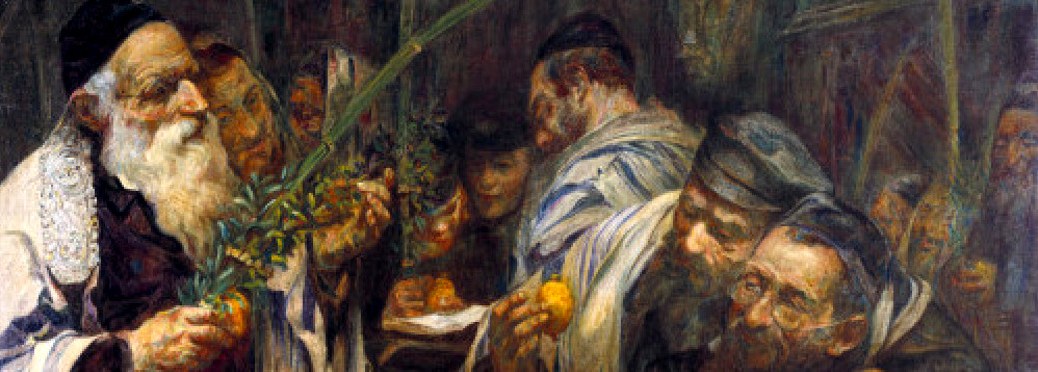
As we discussed last year, the fruit symbolizes the Torah inside a person, while the fragrance represents the Mitzvos, the deeds a person does which affect those around him or her. The four species represent those who have both Torah and good deeds, those who have one but not the other, and even those who have neither.

And what are we told to do? We bind them together! Every Jew is a unique and essential part of our nation.

from “Note from the Director”
News from Project Genesis and Torah.org for Sukkot
Torah.org

Unfortunately, I can’t find this note from Rabbi Yaakov Menken on the Project Genesis website which would allow you to read all of the Rabbi’s comment, but as you might imagine, he is specifically addressing unity among Jewish people and not including non-Jewish believers in Jesus (Yeshua). However, giving Rabbi Menken’s words a “Messianic spin,” I think we can include the entire population within the ekklesia of Messiah, the Jews and the Gentiles, at least for the sake of my example. While unity doesn’t require uniformity, we still are united with each other by love of the Moshiach, may he come swiftly and in our day.

Earlier in his email newsletter, the Rabbi wrote:

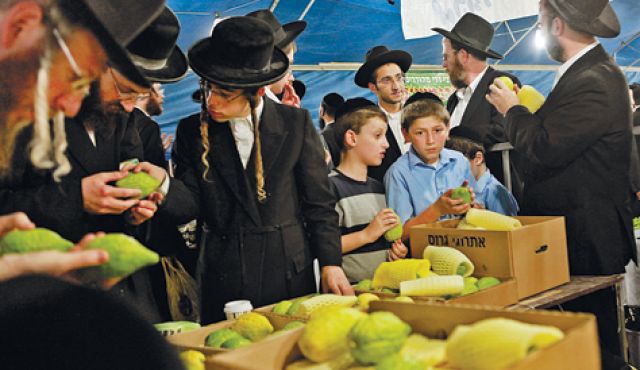
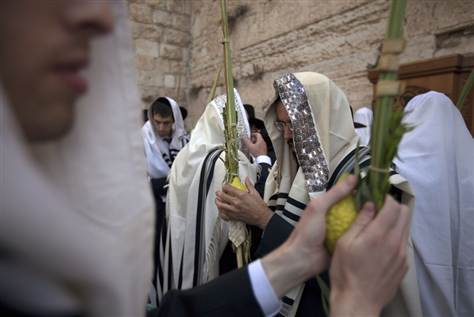
The Torah tells us to take four species: the Esrog, a citrus fruit with a pleasant taste and smell; the Lulav from a Date Palm which produces fruit but is not fragrant; Hadasim, myrtle branches which are aromatic but does not provide edible fruit; and aravos, from the willow, which has neither taste nor smell.

Consider the differences and the distinctions involved in each of the four species. What does a citrus fruit, a lulav, myrtle branches, and aravos from a willow have in common?

Not much apparently.

And yet all four of these highly different items are absolutely required for the observance of Sukkot as it is written:

Now on the first day you shall take for yourselves the foliage of beautiful trees, palm branches and boughs of leafy trees and willows of the brook, and you shall rejoice before the Lord your God for seven days.

Leviticus 23:40 (NASB)

four species
Photo by Gili Cohen Magen

Those distinctively different objects are required to be bound together and, in essence, to “work together,” in order for Sukkot to be observed properly. While it’s impossible to offer the appropriate sacrifices related to Sukkot today due to a lack of the Temple and the Priesthood, the celebration is nevertheless observed by religious Jews and not a few believing Gentiles as well.

In a recent comment on one of my blog posts and then again in commenting on a different blog post, I said:

According to Jewish tradition, on the first seven of the eight days of the festival, we are to extend a special invitation to a specific guest in this order:

  1. Abraham, who represents love and kindness
  2. Isaac, who represents restraint and personal strength
  3. Jacob, who represents beauty and truth
  4. Moses, who represents eternality and dominance through Torah
  5. Aaron, who represents empathy and receptivity to divine splendor
  6. Joseph, who represents holiness and the spiritual foundation
  7. David, who represents the establishment of the kingdom of Heaven on Earth

Now before you think I’ve flipped for considering something so far-fetched, look at this:

“I say to you that many (Gentiles) will come from east and west, and recline at the table with Abraham, Isaac and Jacob in the kingdom of heaven (meaning the Messianic Kingdom here on Earth established by Jesus upon his return)…”

Matthew 8:11

This at least suggests a sort of feast occurring during Sukkot in which we non-Jewish disciples of Christ will join the Jewish disciples in participating in the Sukkot festival with the greatest prophets, priests, and kings in the Bible, all in honor of King Messiah.

While I crafted the above quoted-statement to be easier for a traditional Christian to comprehend, I want all of us to understand that Jews and Gentiles will be together at the feast with Abraham, Isaac, and Jacob (and perhaps Moses, Aaron, Joseph, and David) to give glory and honor to King Messiah upon the establishment of his Kingdom. Maybe this will even happen on Sukkot, although of course, I can say that for sure.

Certainly the Prophets, Priests, and Kings represented by the Seven Ushpizin guests are not exactly alike, and although they exist within the unity of the Jewish people, they are not identical in type or function. So too it can be said that even though Jew and Gentile in the ekklesia of Messiah and as citizens in the Kingdom of Heaven have unity within that assembly, they also are not identical in type and function.

sukkotBut you won’t see Abraham, Moses, and David arguing about it, so why should we?

About twelve years ago, Rabbi Eliyahu Hoffman wrote a Sukkot commentary called “Shaking Up Our Priorities” which you can find at Torah.org. It’s worth the read and won’t take much of your time, but I’d like to quote just a part of it here:

One year, as he always did before Sukkos, R’ Yitzchak gathered his belongings, including all the rubles that he had put aside, and left home to travel to a nearby town where the Four Species could be bought. Travelling along the roadside, he stopped suddenly when he heard the sound of someone crying. Indeed, a Jewish man sat in a nearby field, head in his knees, crying and moaning bitterly. R’ Yitzchak approached him. “Reb Yid, what’s the matter?”

“Don’t even ask,” the Jew said, “a bittere pekel tzures – what a bitter portion the Almighty has dealt me! Woe is to me. I had one horse. That might not seem like much, but it was enough to support my family. It was a good horse. I rode it from town to town, delivering people’s mail, parcels – whatever they needed. I didn’t make a fortune, but we had what to eat, and we were happy. But today I awoke, and – woe is me – I found her dead. She must have passed away overnight. As it is, we live from hand to mouth. If I have to deliver by foot, I don’t stand a chance of making a living. Woe is me!”

“Tell me,” asked R’ Yitzchak, “what would a new horse cost you. I’m sure she was a good horse, but there are other horses out there.”

“Of course there are other horses, for someone who has 300 rubles to spend! It would take me almost a year to earn that kind of money! So you see, all is lost!”

Without further ado, R’ Yitzchak took out his wallet and counted out 300 rubles, leaving for himself only the smallest sum from all the money he had so carefully put aside. He placed it in the pocket of the forlorn Jew, who had all the while never taken his head out from between his knees. Sticking his hand into his pocket, he was flabbergasted to find the entire sum he needed to buy himself a new horse. “What… What have you done. I… I never expected.” Completely choked up with emotion, he barely managed to thank R’ Yitzchak for his magnanimity. Little did he know, R’ Yitzchak himself was not a rich man, and that he had just parted with the lion’s share of his own savings.

That year R’ Yitzchak had to settle for the plainest of Esrogim, much to the surprise and wonder of his friends and family. Despite their best attempts to find out, he told no one of what had come of his plans to purchase the most beautiful Esrog, nor of his savings, except to say, cryptically, that “the money was not lost – in fact it had just galloped off and was being put to very good use.”

If you are a (non-Jewish) Christian or otherwise are a person who does not observe Sukkot (or who does so in a rather casual manner), you won’t understand the tremendous significance involved in R’ Yitzchak’s generosity. In a sense, he had before him two apparently conflicting mitzvot. He could do as he had done every year and dedicate the more than 300 rubles it had taken him all year to save for the purchase of the most beautiful Esrog he could find in honor of the festival and God, or he could alleviate the sorrow of a Jew even poorer than he was by freely handing over his money for the purchase of a horse, and settle for the plainest Esrog he could still afford.

Again, from a Christian point of view (and probably the viewpoint of most people), the decision to help his fellow Jew seems clear, but remember, what is at stake is the honor of both God and of human beings at this Holy time of year.

Perhaps, even after performing tzedakah (charity) by giving up his Esrog money, R’ Yitzchak was still unsure that he did the right thing, for we find:

During Chol Ha-Moed (the Intermediate Days of Sukkos), R’ Yitzchak travelled to Lublin to visit his Rebbe, the famed Choize (Seer) of Lublin. At the festive Yom Tov meal, the Choize remarked to his disciples, “The mitzvah of Arba Minim must be performed with great joy. We must thank Hashem that we all managed to perform the mitzvah of waving the Lulav and Esrog. When we wave the mitzvos, all the Heavenly spheres and realms are awakened, and much joy and goodness permeate the upper realms, ultimately reflecting that joy and goodness back down to this world where we can reap its benefits. We all shook the Lulav and Esrog, but, R’ Yitzchak,” he said, turing as he did so to face him, “to wave a horse – now that is a truly original and exceptional way to perform a mitzvah!”

davening_morningChristians, most other non-Jews, and even some Jewish people often think of the Rabbinic Sages as inflexible, rule-bound, and even “anti-Bible” in considering halachah and Talmud as having any sort of authority when compared to the commandments clearly written in the Bible, but here we see that kindness, mercy, and “waving a horse” for Sukkot are not only original and exceptional ways to perform a mitzvah,” but deserving of special honor as expressing the heart of God.

In one of the commentaries for Tractate Yevamos 5 as collected and distributed in the Daf Yomi Digest by the Chicago Center for Torah & Chesed, we find the following based on “Each person shall fear his mother and father, and guard my Shabboses…”:

On today’s daf, we find that the Beraisa proposes that were it not for the verse, one might think that honoring parents overrides the Shabbos!

The famous Yehudi HaKadosh, zt”l, would deliver a regular Gemara shiur to his students that explored the commentary of Tosfos. One of his students was an extremely talented local boy who was unfortunately orphaned of his father. Once, the Rebbe interrupted their learning so that he could concentrate deeply on a certain subject. His young student knew well that such a break could last an hour or more, so he took advantage of the pause to go home and eat.

The boy ate a quick meal and hurried out back to his Rebbe’s home, but his mother called out after him that she wanted him to go up to the attic and bring something down for her. In his rush to return to study, he ignored her call, but half-way back the boy had second thoughts. “Isn’t the whole purpose of study to fulfill the mitzvos? Shouldn’t I honor my mother instead?” he asked himself. So he ran home and did as he was bid.

Afterward he returned to his studies, and as he opened the door to the Rebbe’s house, the Yehudi HaKadosh snapped out of his reverie and rose to his full height as a sign of respect. Beaming, the Yehudi HaKadosh asked, “What mitzvah have you just performed, because it has brought the spirit of the great Amorah Abaye with you into my house.”

The student told his story, and the Rebbe explained to the rest of the students: “It is well known that Abaye was an orphan—his name is an acronym of the verse, ‘For in You does the orphan find mercy.’ This is why his spirit accompanies a person who fulfills the mitzvah of honoring his parents—so that he should have a part in a mitzvah that was denied to him. You want to know why am I smiling? Because Abaye came and answered my question on the Tosafos!”

Again, this may not resonate with most people, including many Jews, but we see a comparison between the authority of a Rebbe over his young students and the mitzvah of honoring parents. It is said that a Rebbe is to be considered greater than one’s own father, so you can see that the young student put himself in a bind by going home to eat and then having to decide between his mother’s request and his obligation to promptly return to the Rebbe’s home.

MidrashIn choosing to honor his mother, he not only did the right thing from a human point of view, but he achieved a certain amount of respect from his Rebbe. Did “the spirit of the great Amorah Abaye” really accompany the boy to the Rebbe’s house and answer the Rebbe’s question on the Tosafos he had been pondering?

There’s no way to know for sure and probably no way to know if any of these events ever actually occurred. But whether or not they did, there’s a principle being taught here, the same principle as was taught in the previous Rabbinic story.

Even if we know nothing of the Torah, the mitzvot, or anything else, we know, or we should know as disciples of Rav Yeshua, our Rebbe, that extending mercy, kindness, compassion, and respect are the greater and loftier mitzvot, the acts of obedience and response to God that, even in moments of doubt, cannot fail.

I said in a comment last week that “if I’m going to err, I’d rather err on the side of humility”. I also quoted one of the Master’s parables:

And He began speaking a parable to the invited guests when He noticed how they had been picking out the places of honor at the table, saying to them, “When you are invited by someone to a wedding feast, do not take the place of honor, for someone more distinguished than you may have been invited by him, and he who invited you both will come and say to you, ‘Give your place to this man,’ and then in disgrace you proceed to occupy the last place. But when you are invited, go and recline at the last place, so that when the one who has invited you comes, he may say to you, ‘Friend, move up higher’; then you will have honor in the sight of all who are at the table with you. For everyone who exalts himself will be humbled, and he who humbles himself will be exalted.”

Luke 14:7-11

When we finally attend the “feast of Abraham, Isaac, and Jacob,” and it will be a massive affair no doubt, I suppose seating arrangements will be a big problem. What are you going to do with all of the people who show up from all over the world to honor King Messiah and to actually recline at the table with men like Jacob and Joseph? Where should we sit?

In retrospect, and considering the example the Master laid out for us, the answer should be obvious. We should consider ourselves as having no honor of our own, but only seek to honor the King and those Seven Ushpizin guests who represent the Prophets, Priests, and Kings of Israel, and indeed, all the Jewish people. If we mistakenly think we are greater than they, won’t our host, Yeshua, be forced to embarrass us by asking us to take the last place at the table?

Ben Zoma says: Who is honored? The one who gives honor to others…

(Talmud – Avot 4:1)

As non-Jewish disciples of the Jewish Messiah King, if we seek to honor him and believe we are worthy of honor, respect, equality, and inclusion within the ekklesia, then both the teachings of the Master and of the great Sages are clear that to be honored, we must honor others, and not deliberately strive to honor ourselves.

UnityThe Master also teaches:

Jesus answered, “If I glorify Myself, My glory is nothing; it is My Father who glorifies Me, of whom you say, ‘He is our God'”

John 8:54

If our Rebbe and Master did not glorify himself, should we not follow his example? Will he not take the different “species” within the body and unite us, regardless of our extreme differences…or perhaps because of them, and in our honoring him, won’t he honor us?

Chag Sameach Sukkot.

Are Messianic Jews Not Expected to Practice Judaism?

Question: Is formal conversion really necessary to be considered part of the Jewish people? After all, so many synagogues welcome non-Jewish members and so many rabbis sanction interfaith weddings.

Answer: It’s true that Jewish communities have become more inclusive of non-Jews, particularly non-Orthodox synagogues. Many Reform and some Conservative synagogues grant membership to non-Jews, Reform and Reconstructionist rabbis will officiate at interfaith weddings, and some Jewish cemeteries will grant burial rights to non-Jewish spouses.

“There are plenty of people who want to sojourn in the synagogue and not convert and still know they’re part of the Jewish family,” said the president of the Union for Reform Judaism, Rabbi Rick Jacobs. They’re “living in the Jewish community.”

-from “10 Questions About Jewish Conversion You Want to Know but are Afraid to Ask”
VirtualJerusalem.com

No, I’m not considering converting, but this particular question and answer has bearing on a theme I’ve been addressing this week. You could consider today’s “meditation” to be a “Part 3” to my Upon Reading a Rant and Diminishing blog posts.

The theme I’ve been discussing has to do with the relative roles of Jews and non-Jews within the modern Messianic Jewish (or just “Messianic”) community. As the comments section of my blog posts indicate, opinions vary widely. However, in the above-quoted question and answer, I see a sort of “marriage” between the two major viewpoints, an illustration of how a non-Jew can be part of the Jewish “family” as such.

We have to remember that this discussion or something like it, was taking place nearly two-thousand years ago. It was occurring in the synagogues and other communities established by the Apostle Paul as he endeavored to find a way for the Jewish and non-Jewish disciples of Messiah Yeshua (Christ Jesus) to co-exist in a mutually shared Jewish environment as co-equals (and please recall what I’ve said before about equality not requiring uniformity).

Jewish prayerBut there’s a distinction between the Jewish communities mentioned in the article I cited above and Messianic Judaism today. In all of the other Judaisms, it is well-known that they are first and foremost, Jewish communities, and that being a Gentile who is a participant in those communities does not automatically make the Gentile identical in form and function to the Jewish people in membership.

I only quoted part of the answer to the question above. Here’s the rest:

Indeed, surveys show that actual converts to Judaism are far outnumbered by Americans born outside the faith who consider themselves Jewish despite having never formally converted to Judaism. However, even in the most liberal Jewish communities, there is a dividing line that excludes non-Jews. Practically no synagogues allow non-Jews to be called to the Torah (unless they are accompanying a Jewish spouse at their kid’s bar mitzvah). Jews married to non-Jews are barred from admission to rabbinical school. And, of course, non-Jews can’t marry Jews under Conservative or Orthodox auspices.

Most importantly, you can call yourself whatever you want – friend of, member of, parent of. But unless you formally join, you’re no Jew.

The big issue that seemingly separates the Judaisms described above from Messianic Judaism, is the assumption by Gentile believers who are among Jews who have sworn fealty to the Moshiach, that by virtue of such a faith, all differences and distinctions between Jewish and Gentile disciples are rendered moot, and the ekklesia ceases to be a Jewish community in favor of a Messianic community, as if the two concepts are mutually exclusive.

And yet, we forget that the ekklesia of Messiah began most forcefully as a Jewish community, one in which few if any Gentiles were to be found.

So then, those [Jews] who had received his word were baptized; and that day there were added about three thousand [Jewish] souls. They were continually devoting themselves to the apostles’ teaching and to fellowship, to the breaking of bread and to the prayers.

And the Lord was adding to their number day by day those [Jews] who were being saved.

Acts 2:41-42, 47 (NASB)

“You see, brother, how many (tens of) thousands there are among the Jews of those who have believed, and they are all zealous for the Law…

Acts 21:20

All Jews, all living, working, and glorifying God together in Jewish community. No one batted an eye and in fact, the only upset occurred when Gentiles started to enter the mix in great numbers.

As Paul and Barnabas were going out, the people kept begging that these things might be spoken to them the next Sabbath. Now when the meeting of the synagogue had broken up, many of the Jews and of the God-fearing proselytes followed Paul and Barnabas, who, speaking to them, were urging them to continue in the grace of God.

The next Sabbath nearly the whole city assembled to hear the word of the Lord. But when the Jews saw the crowds, they were filled with jealousy and began contradicting the things spoken by Paul, and were slandering him. Paul and Barnabas spoke out boldly and said, “It was necessary that the word of God be spoken to you first; since you repudiate it and judge yourselves unworthy of eternal life, behold, we are turning to the Gentiles.

Acts 13:44-46

Apostle Paul preachingThe tale of Paul’s encounter at the synagogue in Pisidian Antioch is well-known, although most Christians are taught that these verses indicate Paul’s permanently turning away from the Jews to the Gentiles, which is patently untrue. Nevertheless, this is a portrait of the extreme difficulty that many Jewish communities had in understanding the New Covenant imperative of including the Gentiles in the community of Messiah without having them undergo the proselyte rite as formal initiates into Judaism.

Paul attempted to communicate that imperative to his Jewish listeners (see verse 48) by quoting Isaiah 49:6:

‘I have placed You as a light for the Gentiles,
That You may bring salvation to the end of the earth.’

(As a side note, when Paul says “I have placed You and “That You may…”, the “You” in both cases is singular in the Greek.)

In all this, I am not saying that Gentiles and Jews in Messiah cannot co-mingle and cannot share community. I am saying that it is not strange, bizarre, or even unBiblical to understand that community, the Messianic community, as distinctly Jewish.

On a previous and related blog post, Pete Rambo said:

The question Messianic Judaism has to answer is, ‘Who are they desiring to please? Abba, or Judaism?’

To quote Tony Stark by way of an answer, my response is, “Is it too much to ask for both?”

To find out more about how Jews and Gentiles in Jewish community finally didn’t work out in the late First Century CE, please read Zetterholm, Ancient Antioch, and “Honey, I Want a Divorce”.

It’s fairly easy to understand why “Messianic Gentiles” of one sort or another might object to the idea that Messianic Jews have a right to Jewish community and even a right to Jewish rituals, practices, and religious objects based on the long history between Christians and Jews, but what about Messianic Jews who object to this way of thinking?

No, I’m not talking about Messianic Jews who are willing to share their communal space with Gentiles with the understanding that Jewish and non-Jewish roles within the ekklesia are, by definition, differentiated. I’m talking about those few Jewish individuals who truly believe there is one and only one single application of the mitzvot for all populations everywhere and that Jews are not distinct in any behavioral or covenantal sense.

Question: I recently saw a “Jewish” professor speaking at an anti-Israel rally. When I voiced my disgust to a friend who knew him as a child, I learned that his parents converted to Catholicism back in Europe, he never had a circumcision or a bar mitzvah, and he is married to a non-Jewish woman. He claims in his speeches that he is a Jewish son of a Holocaust survivor. He may be the son of a survivor, but can we say once and for all that he is not Jewish?

-from “Is a Self-Hating Jew Still a Jew”
Chabad.org

self hatingThis may not seem applicable but hear me out. There are Jewish people who have come to faith in Messiah (or in Christ, as it were) who truly struggle with the apparent dissonance that results from being Jewish and being a Christian. After all, the Church generally teaches that you can’t practice Judaism and Christianity simultaneously. Actually, that part is probably true, but the underlying message is that you can’t be Jewish and be a Christian. You have to choose one. Messianic Judaism, to many Christians, seems like a messy “mash-up” of the two faiths (many Jews see it that way, too), a way to “pretend” to be one while actually being the other. But interestingly enough, Christianity was “invented” by Gentiles starting in the Second Century CE and beyond (see my aforementioned review of Zetterholm) and the original faith in Messiah has always been Jewish.

Hebrew Christians and Hebrew Roots Jewish people have the same struggle from two different directions. They both do not believe that “Judaism” has much if anything at all to do with faith in the Jewish Messiah. While they can acknowledge (and I could be stepping into deep doo doo expressing this opinion since I’m not Jewish) their Jewish ancestral and “DNA” heritage, there’s a difference (for them) between being Jewish and practicing Judaism. For them, faith in Messiah transcends Judaism and becomes something else entirely. So in this, Hebrew Roots is in agreement with traditional Christianity, though their expressions are quite different.

Chabad Rabbi Aron Moss answers the above-quoted question in part by saying:

And so, in a twisted way, he expresses his Jewishness by being the anti-Jewish Jew.

Yes, he is using his Jewishness as a weapon against Jews.

No, he should not be invited to speak at any Jewish event.

But yes, he is a Jew.

People like that can do a huge amount of damage. But the biggest damage is to themselves. Here is a Jewish soul yearning to connect to Jewishness, who has blocked his own path. Here is someone whose primary preoccupation, whose main claim to fame, is his Jewishness, but a tormented Jewishness. Rather than embrace it, he fights it. He is an accomplice in his own persecution.

While the “anti-Jewish Jew” in question doesn’t exactly fit the circumstance to which I am writing, there is an approximate match. I do not believe that you can separate being Jewish from practicing Judaism if you are at all a religious Jew in Messiah. Yeshua observed the mitzvot faithfully. So did his brother Jacob (James). So did Peter and the other apostles who walked with Yeshua. So did the later apostle Paul, emissary to the Gentiles. So did tens of thousands of other Jews in Messiah who were all zealous for the Torah of Moses (see the previously quoted Acts 21:20).

JudaismPracticing Judaism today is not like practicing Judaism in the days of the apostles. Practicing Judaism in the days of the apostles was not like how it was with the Prophet Daniel in the Babylonian exile. Practicing Judaism was also different in the days of Solomon, in the days of David, and it was different in the days of Moses.

Torah is Torah and the Word of God is permanent and inviolate, but how it is interpreted and applied across the wide tapestry of Jewish history is changeable and adaptable. The method of allowing non-Jews to join the assembly of Israel for example, has undergone much change since the days of Moses and Aaron, and it has changed again since the days of Paul, Peter, and James.

Of course, accepting the idea of the modification of the application of Torah is contingent upon the belief that God authorized or at least permitted the Jewish people to make such adaptations due to changes in circumstance and environment, particularly as related to the passage of time. Assuming this is true, then the current varieties of practicing Judaism are no less valid than they were Apostolic times. Are they all “right”? Probably, at least in the same sense that different Christian denominations are also all “right” (though it might be more accurate to say that none of them are completely right or completely wrong relative to their interpretation and application of the Bible).

I can’t throw out the baby with the bath water, though, whether it be in the case of Christianity or Judaism. Jesus taught and worked within the Judaism that existed in his day. He may have criticized specific teachings and practices, but he didn’t dismiss those Judaisms as entire ways of life with a wave of his hand. He accepted that these people were Jews and that by and large, especially when it came to the Pharisees, their overall teachings and halachah were acceptable and authoritative.

Jesus didn’t preach the destruction of Judaism with the idea of replacing it with “the Church” as Christianity teaches, nor did he believe Judaism (for Jews) should be replaced with anything else, as far as I can tell. Otherwise, he wouldn’t have operated within the normative Judaisms of the late Second Temple period nor would he have permitted the Jewish apostles to do so after his ascension to the right hand of the Father.

With all that in mind, why do both Jews and Gentiles in the Hebrew Roots system of belief insist that Jesus wants the destruction of the practice of observant Judaism among Messianic (or any other kind of) Jews now?

Between Christian and Jewish Eschatology

Keith: Also, in my previous statement, I meant to say Bilateral Ecclesiology and NOT Bilateral Eschatology.

ProclaimLiberty: But I think that, philosophically, we could really have some fun with a notion like: “Bilateral Eschatology”! As Linus once exclaimed in Charles Shultz’s cartoon opus “Peanuts”: “Why, the theological implications alone are staggering!” [:)]

James: Interesting when you consider the differences between Christian and Jewish Eschatology.

ProclaimLiberty: Hmmm…. Your Wikipedia reference under the “Christian” link seems to open the notion up to “Multilateral Eschatology”; which really drives the theological impact up a notch or two (or seven). I do think I prefer the Jewish link.

James: Actually PL, so do I.

-from the comments on The Duty of Messianic Gentiles and Christians to the Jews.

And the inspiration for another blog post was born.

I never really fully realized that one of the major differences between traditional Christian thought and Messianic Judaism is how they consider eschatology or that branch of theology that addresses what we call “the end times” or the final events in human history.

Since Messianic Judaism is a Judaism that accepts the revelation of Yeshua (Jesus) as the Messiah, it makes a sort of sense to assume that much of Christian theology would be absorbed by that Judaism including the eschatological presuppositions involved, but what if that’s not true?

I’m going to use Wikipedia for my main sources which isn’t the best, but it has the advantage of not having to wade through someone’s religious bias.

Christian Eschatology and Jewish Eschatology seem light years apart, and the Christian version, at least as Wikipedia presents it, seems hopelessly confusing with far too many variations to be easily understood.

I decided to address three specific themes:

Resurrection

Christianity acknowledges that the doctrine of the resurrection predates the Church:

The word resurrection comes from the Latin “resurrectus”, which is the past participle of “resurgere”, meaning to rise again. Although the doctrine of the resurrection comes to the forefront in the New Testament, it predates the Christian era. There is an apparent reference to the resurrection in the book of Job, where Job says, “I know that my redeemer lives, and that he will stand at the latter day upon the earth. And though… worms destroy this body, yet in my flesh I will see God.” [Job 19:25-27] Again, the prophet Daniel writes, “Many of those who sleep in the dust of the earth will awake, some to everlasting life, some to shame and everlasting contempt.” [Dan 12:2] Isaiah says: “Your dead will live. Together with my dead body, they will arise. Awake and sing, you who dwell in dust, for your dew is like the dew of herbs, and the earth will cast out the dead”. [Isa. 26:19]

This belief was still common among the Jews in New Testament times, as exemplified by the passage which relates the raising of Lazarus from the dead. When Jesus told Lazarus’ sister, Martha, that Lazarus would rise again, she replied, “I know that he will rise again in the resurrection at the last day.” [Jn 11:24] Also, one of the two main branches of the Jewish religious establishment, the Pharisees, believed in and taught the future resurrection of the body. [cf Acts 23:1-8]

In Judaism, although there is extensive information about the resurrection in eschatological thought, it doesn’t seem to be a major theme and references to the resurrection are less centralized. While some authorities in Orthodox Judaism believe that the resurrection will accompany the Messianic Age, Rabbi Mosheh ben Maimon, also known as Maimonides or the Rambam, didn’t directly associate the Messiah’s coming with the resurrection.

The Hebrew Bible, at least as seen through interpretation such as Bavli Sanhedrin, contains frequent reference to resurrection of the dead (Jacob Neusner The Documentary History of Judaism and Its Recent Interpreters 2012 – Page 138, also see Exodus 15.1; Joshua 8.30; 1 Kings 11.7; Psalm 84.5; Isaiah 52.8; Deuteronomy 33.6; Daniel 12.2; 12.13 and Proverbs 30.16). The phrase ‘olam ha-ba, (עולם הבא) “world to come”, does not occur in the Hebrew Bible.

PhariseesOf course, during the late Second Temple period, the Pharisees believed in the resurrection, the Essenes believed in the immortality of the soul, but the Sadducees believed in neither.

Later, the Mishnah (c. 200) lists the belief in the resurrection as one of the three necessary beliefs for a Jew.

Christianity has developed are far more involved doctrine around the resurrection than apparently Judaism has, based on the Apostolic scriptures, including two resurrections, the resurrection of the saints and the general resurrection, specifics about the nature of the resurrection body, and specifics associating the resurrection with the second coming of Christ.

See The Resurrection of the Ekklesia for more on this topic.

Christ/Messiah

Now when He had spoken these things, while they watched, He was taken up, and a cloud received Him out of their sight. And while they looked steadfastly toward heaven as He went up, behold, two men stood by them in white apparel, who also said, “Men of Galilee, why do you stand gazing up into heaven? This same Jesus, who was taken up from you into heaven, will so come in like manner as you saw Him go into heaven.”

Acts 1:9-11

According to the Wikipedia article, many but not all Christians believe:

  • The coming of Christ will be instantaneous and worldwide. “For as the lightning comes from the east and flashes to the west, so also will the coming of the Son of Man be.” ~ Matthew 24:27
  • The coming of Christ will be visible to all. “Then the sign of the Son of Man will appear in heaven, and then all the tribes of the earth will mourn, and they will see the Son of Man coming on the clouds of heaven with power and great glory.” ~ Matthew 24:30
  • The coming of Christ will be audible. “And He will send His angels with a great sound of a trumpet, and they will gather together His elect from the four winds, from one end of heaven to the other.”  ~ Matthew 24:31
  • The resurrection of the righteous will occur. “For the Lord Himself will descend from heaven with a shout, with the voice of an archangel, and with the trumpet of God. And the dead in Christ will rise first.” ~ 1 Thessalonians 4:16
  • In one single event, the saved who are alive at Christ’s coming will be caught up together with the resurrected to meet the Lord in the air. “Then we who are alive and remain shall be caught up together with them in the clouds to meet the Lord in the air. And thus we shall always be with the Lord.” ~ 1 Thessalonians 4:17

Notice that none of the prophesies about the coming of Messiah from the Tanakh (Old Testament) are listed here.

Judaism does have a rather extensive list of requirements for the Messiah’s coming, based on the Tanakh, that Christianity largely ignores:

  • The Sanhedrin will be re-established (Isaiah 1:26)
  • Once he is King, leaders of other nations will look to him for guidance (Isaiah 2:4)
  • The whole world will worship the One God of Israel (Isaiah 2:17)
  • He will be descended from King David (Isaiah 11:1) via King Solomon (1 Chron. 22:8–10)
  • The messiah will be a man of this world, an observant Jew with “fear of God” (Isaiah 11:2)
  • Evil and tyranny will not be able to stand before his leadership (Isaiah 11:4)
  • Knowledge of God will fill the world (Isaiah 11:9)
  • He will include and attract people from all cultures and nations (Isaiah 11:10)
  • All Israelites will be returned to their homeland (Isaiah 11:12, Zechariah 10:6)
  • Death will be swallowed up forever (Isaiah 25:8)
  • There will be no more hunger or illness, and death will cease (Isaiah 25:8)
  • The dead will rise again (Isaiah 26:19)
  • The house of David shall be as God (Zechariah 12:8)
  • God will seek to destroy all the nations that go against Jerusalem (Zechariah 12:9, Isaiah 60:12)
  • Israel and Judah will be made into one nation again (Zechariah 11:12-14, Ezekiel 37:16-22)
  • The Jewish people will experience eternal joy and gladness (Isaiah 51:11)
  • He will be a messenger of peace (Isaiah 53:7)
  • Nations will recognize the wrongs they did Israel (Isaiah 52:13–53:5)
  • The peoples of the world will turn to the Jews for spiritual guidance (Zechariah 8:23)
  • The ruined cities of Israel will be restored (Ezekiel 16:55)
  • Weapons of war will be destroyed (Ezekiel 39:9)
  • The Temple will be rebuilt (Ezekiel 40) resuming many of the suspended mitzvot
  • He will then perfect the entire world to serve God together (Zephaniah 3:9)
  • He will take the barren land and make it abundant and fruitful (Isaiah 51:3, Amos 9:13–15, Ezekiel 36:29–30, Isaiah 11:6–9)

war and peaceI think Christianity acknowledges some of this such as the resurrection, the end of war, and that the whole world will worship God, but where many Christians get hung up is that they (we) expect to be raptured up to Heaven with Jesus and stay there forever. Others expect to be raptured for a certain period of time until the tribulation ends, and then to accompany Jesus back to Earth so the Church can rule and reign with him.

Jewish eschatology doesn’t talk about Heaven at all and expects a very human Messiah to be King and to rule over Israel and the rest of the world. By comparison, Christian eschatology is more focused on Heaven, and Earth seems to be reserved for those unbelievers who will suffer through the tribulation and later be judged and sent to hell.

While Judaism in general addresses the war of God and Magog, at the end of it all, when Israel’s enemies are all defeated, the final victory is here, not in Heaven:

Although Judaism concentrates on the importance of the Earthly world (Olam Ha’zeh — “this world”), all of classical Judaism posits an afterlife. The hereafter is known as ‘olam ha-ba (the “world to come”, עולם הבא in Hebrew), and related to concepts of Gan Eden (the Heavenly “Garden of Eden”, or paradise) and Gehinom. According to religious Judaism, any non-Jew who lives according to the Seven Laws of Noah is regarded as a righteous gentile, and is assured of a place in the world to come, the final reward of the righteous.

If you are at all familiar with how Messianic Judaism in general presents its eschatology, although it has elements of the Christian viewpoint, it primarily resembles a more Jewish perspective.

Jewish People in Eschatology

Christian views of the future of the Jewish people can be quite different depending on which eschatological model you are using. As far the 144,000 (Revelation 7:1-8) are concerned, there are three major perspectives:

  1. Futurist belief: Various interpretations of a literal number of 144,000, including: 144,000 Evangelical Jews at the end of the world, or 144,000 Christians at the end of the world.
  2. Preterist belief: A symbolic number signifying the saved, representing completeness, perfection (The number of Israel; 12, squared, and multiplied by 1000 = 144,000). This symbolises God’s Holy Army, redeemed, purified and complete.
  3. Historicist belief: A symbolic number representing the saved who are able to stand through the events of 6:17.

Now lets look at the actual scripture:

And I heard the number of those who were sealed, one hundred and forty-four thousand sealed from every tribe of the sons of Israel: from the tribe of Judah, twelve thousand were sealed, from the tribe of Reuben twelve thousand, from the tribe of Gad twelve thousand, from the tribe of Asher twelve thousand, from the tribe of Naphtali twelve thousand, from the tribe of Manasseh twelve thousand, from the tribe of Simeon twelve thousand, from the tribe of Levi twelve thousand, from the tribe of Issachar twelve thousand, from the tribe of Zebulun twelve thousand, from the tribe of Joseph twelve thousand, from the tribe of Benjamin, twelve thousand were sealed.

Revelation 7:4-8 (NASB)

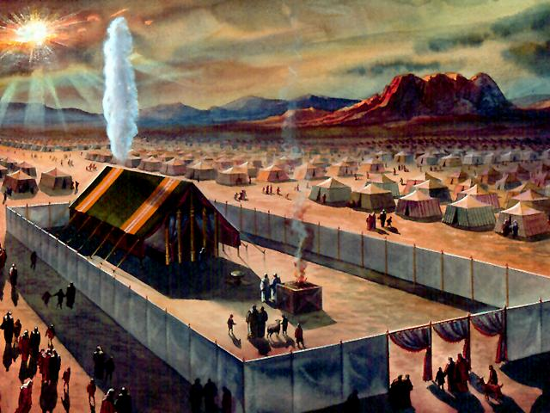
tabernacleAlthough the literal text speaks of the “sons of Israel” and specifically names each of the twelve tribes, most of the prevailing Christian interpretations see this as symbolic and not literal and the one belief that takes the number literally, describes them as either “Evangelical Jews” (which probably means people who are Jewish by heritage and who converted to Christianity) or “Christians” (which most likely means Gentile Christians). In all cases, the Jewishness of these “tribes” is either minimized or eliminated altogether.

Christian hermeneutics regarding the ultimate future of the Jews vary depending on the specific emphasis:

Supersessionist: Under the Covenant of Works mankind, represented ultimately in a covenantal sense under Adam beginning from the Garden of Eden, failed to live as God intended and stood condemned. But beyond time the Covenant of Redemption was made between the Father and Son, to agree that Christ would live an acceptable substitutionary life on behalf of, and as a covenantal representative for, those who would sin but would trust in Christ as their substitutionary atonement, which bought them into the Covenant of Grace. The Covenant of Grace applies to all who trust Christ for their salvation, regardless of ethnicity, and thus the Covenant covers Jews and Gentiles alike with regard to salvation, sanctification, and resurrection. The Covenant of Grace forms the basis of the later covenants with Noah, Abraham, Moses, David and the New Covenant in Christ.

Kingdom-Dominion: In the New Testament, God’s rule is exercised through Jesus Christ the King, who is also the temple of God (John 2:19-21), over his people the Church (of which Israel was a type). Salvation for all people in all times is found by trusting (explicitly or implicitly) in Jesus. Thus, Abraham, Moses, David, and all Christians today are saved by the same faith. The Jews are regarded as special in God’s plan (as in Romans and Ephesians) and yet the Old Testament prophecies regarding Israel find their fulfillment in Jesus and the Church rather than in a literal restoration of Israel.

Dispensational: History is divided into (typically seven) “dispensations” where God tests man’s obedience differently. The present Church dispensation concerns Christians (mainly Gentiles) and is a parenthesis to God’s main plan of dealing with and blessing his chosen people the Jews. Because of the Jews’ rejection of Jesus, Jewish sovereignty over the promised earthly kingdom of Jerusalem and Palestine was postponed from the time of Christ’s first coming until prior to or just after his Second Coming when most or all Jews will embrace him.

There will be a rapture of the Gentile church followed by a great tribulation of seven (or three-and-a-half) years’ duration during which Antichrist will arise and Armageddon will occur. Then Jesus will return visibly to earth and re-establish the nation of Israel; the Jewish temple will be rebuilt at Jerusalem and the Temple mount, possibly in place of the Muslim Dome of the Rock (see Christian Zionism). Christ and the people of Israel will reign in Jerusalem for a thousand years, followed by last judgment and a new heavens and new earth.

One last note from the Christian point of view relative to the future of the Jewish people:

Historicism v. Futurism: The division between these interpretations can be somewhat blurred. Most futurists are expecting a Rapture of the Church, an Antichrist, a Great Tribulation and a Second coming of Christ in the near future. But they also accept certain past events, such as the rebirth of the State of Israel and the reunification of Jerusalem as prerequisites to them, in a manner which the earlier historicists have done with other dates. Futurists, who do not normally use the day-year principle, interpret the Prophecy of Seventy Weeks in Daniel 9:24 as years, just as historicists do. Most historicists have chosen time lines, from beginning to end, entirely in the past. But some, such as Adam Clarke have time lines which also commenced with specific past events, but require a future fulfillment. In his commentary on Daniel 8:14 published in 1831, he stated that the 2,300-year period should be calculated from 334 BC, the year Alexander the Great began his conquest of the Persian Empire. His calculation resulted in the year 1966. He seems to have overlooked the fact that there is no “year zero” between BC and AD dates. For example, the year following 1 BC is 1 AD. Thus his calculations should have required an additional year, ending in 1967. He was not anticipating a literal regathering of the Jewish people prior to the Second coming of Christ. But the date is of special significance to futurists since it is the year of Jerusalem’s capture by Israeli forces during the Six-Day War. His commentary on Daniel 7:25 contains a 1260-year period commencing in 755 AD and ending in 2015.

tzitzitEven under the best of circumstances, the Jews are considered “special” in the end of days, but always taking a back seat to the (Gentile) Church. The worst case scenario from a Jewish point of view is that they cease to exist, either because they have totally been assimilated into the Church or because they have all been killed.

Not a very rosy picture.

By contrast, Jewish Eschatology is all about Israel and the Jewish people (see the list above of all the things Messiah is supposed to do). Rather than the Jews going to the Church and converting to Christianity to be able to enjoy the New Covenant promises of God (which were made specifically with the House of Judah and the House of Israel – see Jeremiah 31:31), the Gentiles must attach themselves to the Jewish people:

Thus says the Lord of hosts, ‘In those days ten men from all the nations will grasp the garment of a Jew, saying, “Let us go with you, for we have heard that God is with you.”‘

Zechariah 8:23

“Also the foreigners who join themselves to the Lord,
To minister to Him, and to love the name of the Lord,
To be His servants, every one who keeps from profaning the sabbath
And holds fast My covenant;
Even those I will bring to My holy mountain
And make them joyful in My house of prayer.
Their burnt offerings and their sacrifices will be acceptable on My altar;
For My house will be called a house of prayer for all the peoples.”

Isaiah 56:6-7

As far as the quote from Zechariah is concerned, although Judaism probably believes that any group of people from the nations (the number “ten” is considered symbolic rather than literal) will approach any Jew with this request, I’ve heard one interpretation that says the Jew in question specifically is Messiah. This folds into a Messianic Jewish viewpoint rather well placing Israel at the center of Gentile redemption rather than reverse-engineering the Bible and making the Jews come to the Gentiles to be redeemed by the God of Israel.

Conclusion

I don’t know that there’s a single Messianic Jewish eschatology. Certainly there are variations both in Christianity and the other Judaisms, so there’s no reason to believe that Messianic Judaism should have a single, overarching eschatology that is taught and believed.

I’m not writing this to tell you all the answers but perhaps to give you a starting place to begin re-conceptualizing what the future might look like when it’s not dominated by traditional Christian doctrine. It will also look different than the traditional Jewish points of view, since all other Judaisms do not anticipate a Divine Messiah who supernaturally comes (returns) to Earth having already been resurrected as the “first fruits of the dead” (1 Corinthians 15:20) some two-thousand years ago.

I’ve said in the past that I don’t think anyone has a terrifically clear picture of what’s actually going to happen. Whatever we have recorded in the Bible has been interpreted in many different ways over the centuries and no doubt we’ve distorted what was previously understood by original audiences. These days, it is common to take our theology and read it back into the Bible rather than the other way around, for to take a fresh look at the Bible and use some honest exegesis might result if turning our beliefs on their collective head and forcing us to revise if not totally rewrite what the future is going to bring.

Up to JerusalemAnd if that future sees Israel and the Jewish people ascending to the heights as the head of all nations, and the Gentiles must go to them to be close to God, then the Church might not be in such a hurry to face that reality. Of course, should the King of Israel, that head of the nations, turn out to be Divine and resurrected rather than someone who will be born in the generation of the final war and the final victory, then that would give most Jews a rather poignant pause.

I will pour out on the house of David and on the inhabitants of Jerusalem, the Spirit of grace and of supplication, so that they will look on Me whom they have pierced; and they will mourn for Him, as one mourns for an only son, and they will weep bitterly over Him like the bitter weeping over a firstborn.

Zechariah 12:10

Oh, just one more thing:

In that day the Lord will defend the inhabitants of Jerusalem, and the one who is feeble among them in that day will be like David, and the house of David will be like God, like the angel of the Lord before them. (emph. mine)

Zechariah 12:8

The “house of David will be like God, like the angel of the Lord before them.” Really? I know I’m going to be accused by some of misinterpreting or misusing the text, but it certainly seems like a Divine Messiah from the house of David isn’t entirely out of the question.

The Resurrection of the Ekklesia

Now, brothers and sisters, I want to remind you of the gospel I preached to you, which you received and on which you have taken your stand. By this gospel you are saved, if you hold firmly to the word I preached to you. Otherwise, you have believed in vain.

For what I received I passed on to you as of first importance: that Christ died for our sins according to the Scriptures, that he was buried, that he was raised on the third day according to the Scriptures, and that he appeared to Cephas, and then to the Twelve. After that, he appeared to more than five hundred of the brothers and sisters at the same time, most of whom are still living, though some have fallen asleep. Then he appeared to James, then to all the apostles

1 Corinthians 15:1-7 (NASB)

Scholars commonly see in 1 Corinthians 15:1-7 material of an early “pre-Pauline” confession that focuses on Jesus’ death, burial, resurrection and appearances to select witnesses. But there are continuing disagreements over what kind of event is referred to in vv. 3-5 where Jesus is described as “raised on the third day,” specifically whether this refers to a resurrection/transformation of Jesus’ mortal body or some other kind of event, e.g., a “spiritual” one that left his mortal body in the grave. I’ve just read a new study of the matter that seems to me pretty effective in guiding exegetes to the correct answer: James Ware, “The Resurrection of Jesus in the Pre-Pauline Formula of 1 Cor 15.3-5.” New Testament Studies 60 (2014): 475-98.

Larry Hurtado
“Paul on Jesus’ Resurrection: A New Study”
Larry Hurtado’s Blog

Being just a regular guy and not a Bible scholar or academician, it never really occurs to me that people drill down into such a level of detail regarding certain Biblical events such as the resurrection. I’ve always been taught that Jesus was physically resurrected on the third day and that for the next forty days, he was seen and touched by many, many people, the witnesses of his resurrection, which serves as evidence of the promise of the resurrection of the “saints” in the Messianic Age.

But here we see Dr. Hurtado explaining how James Ware (probably this author) has investigated the various scholarly positions on what “raised on the third day” actually means. Incredibly (from my point of view), there are those who must not believe in a literal resurrection but somehow imagine that Jesus left his body behind and spiritually rose and ascended, something like “Caspar the Friendly Ghost”.

But why is a bodily resurrection important?

He will swallow up death for all time,
And the Lord God will wipe tears away from all faces…

Isaiah 25:8

Shall I ransom them from the power of Sheol?
Shall I redeem them from death?
O Death, where are your thorns?
O Sheol, where is your sting?

Hosea 13:14

But perceiving that one group were Sadducees and the other Pharisees, Paul began crying out in the Council, “Brethren, I am a Pharisee, a son of Pharisees; I am on trial for the hope and resurrection of the dead!” As he said this, there occurred a dissension between the Pharisees and Sadducees, and the assembly was divided. For the Sadducees say that there is no resurrection, nor an angel, nor a spirit, but the Pharisees acknowledge them all.

Acts 23:6-8

There are any number of prophesies that speak of a general resurrection from the dead at the end of days and it was upon those prophesies that the Pharisees based their faith. This was the same faith that the disciples of Yeshua (Jesus) had since their Messianic beliefs were largely Pharisaic with only a few minor differences that had to do with Gentile admission and status.

new heartIf there was no physical, bodily resurrection for Jesus, then what hope do we have in a resurrection for us?

While I’m stunned that there are still those who, like the Sadducees of old, deny the resurrection today, fortunately…

Ware reviews a wide range of previous scholarly views, carefully assessing their merits, noting the limited force of some and the dubious force of others. His own particular contribution is a more in-depth analysis of the use of the Greek verb translated here “raised”: εγειρω. Essentially, Ware contends that all other uses of the verb describe one or another kind of action involving the raising up, rising up, or setting up of something or someone from a prone or seated position to an upright, standing position.

This, he argues, means that proposals that the verb here refers to an ascension of Jesus, a transportation of him in some “spiritual” mode to heavenly glory, is ruled out. Instead, Paul refers to a raising up or restoration to life of the executed body of Jesus.

To be sure, as Ware notes, later in 1 Cor 15, Paul engages the question of “in what kind of body” are the dead to be raised (vv. 35-49), and Paul here posits a dramatic and profound transformation, those raised being “changed” powerfully. In vv. 42-44, in particular, Paul makes a series of contrasts between the mortal body and the resurrection body: corruption/incorruption, dishonour/glory, weakness/power, “soulish”/spiritual. And Paul also makes the claim that the resurrection of believers will be modelled on Jesus’ resurrection.

-Hurtado, ibid

But Christ has indeed been raised from the dead, the firstfruits of those who have fallen asleep.

1 Corinthians 15:20

Messiah is the “first fruits” of the dead, the first to rise, the first to experience the bodily resurrection from death through “a dramatic and profound transformation” unlike anything that had ever occurred before. As “first fruits,” he illustrates that the promises of God about a general resurrection are true, for the Master powerfully demonstrated the reality of the resurrection with his own body.

The first account I composed, Theophilus, about all that Jesus began to do and teach, until the day when He was taken up to heaven, after He had by the Holy Spirit given orders to the apostles whom He had chosen. To these He also presented Himself alive after His suffering, by many convincing proofs, appearing to them over a period of forty days and speaking of the things concerning the kingdom of God.

Acts 1:1-3

MessiahI won’t go into an inventory of all the different witnesses of Jesus’ resurrection that are recorded in the Gospels, but we have every indication that perhaps five-hundred people or more were witnesses that he physically came alive from the dead, that his wounds were still present, that he ate and drank, and that he wasn’t just some sort of vision or “floaty ghost,” but was a real, live human being who once had been dead. He appeared to witnesses so we would have living accounts of the resurrection, so that we could believe, not mindlessly or blindly, but based on what actual human beings saw and experienced in his presence.

Of course, we have to believe that the Biblical record is accurate regarding these witnesses, and some two-thousand years later, it’s possible to introduce some doubt, but these things can only be discerned through the Spirit:

For to us God revealed them through the Spirit; for the Spirit searches all things, even the depths of God. For who among men knows the thoughts of a man except the spirit of the man which is in him? Even so the thoughts of God no one knows except the Spirit of God. Now we have received, not the spirit of the world, but the Spirit who is from God, so that we may know the things freely given to us by God, which things we also speak, not in words taught by human wisdom, but in those taught by the Spirit, combining spiritual thoughts with spiritual words.

But a natural man does not accept the things of the Spirit of God, for they are foolishness to him; and he cannot understand them, because they are spiritually appraised. But he who is spiritual appraises all things, yet he himself is appraised by no one. For who has known the mind of the Lord, that he will instruct Him? But we have the mind of Christ.

1 Corinthians 2:10-16

What people saw with their eyes and heard with their ears, we must accept as true by faith and through the Spirit. Without the Spirit, they sound like ridiculous nonsense.

When the accusers stood up, they began bringing charges against him not of such crimes as I was expecting, but they simply had some points of disagreement with him about their own religion and about a dead man, Jesus, whom Paul asserted to be alive.

Acts 25:18-19

And now I am standing trial for the hope of the promise made by God to our fathers; the promise to which our twelve tribes hope to attain, as they earnestly serve God night and day. And for this hope, O King, I am being accused by Jews. Why is it considered incredible among you people if God does raise the dead?

Acts 26:6-8

During the various legal hearings to which Paul was subjected after his arrest in Jerusalem, one of the things the Romans could not comprehend was the matter of a “dead man” coming back to life and the fact that different groups of Jews would argue violently over such a thing. To the pagan Romans, it seems like incomprehensible nonsense.

That’s what it seems like to much of the world today without the ability to read the Bible through “spiritual” eyes, so to speak. But once we have our eyes opened and we can see, then we can believe by faith that not only was the bodily resurrection of Jesus real, but that it is evidence for the faithful that we too will be resurrected when the Master returns for us.

However, there’s one last paragraph from Dr. Hurtado’s blog I want to toss into the mix for your consideration:

So, Paul posits a profound change involved in the resurrection. But, as Ware so deftly points out, all through the passage Paul refers to the body of believers as changed. That is, Paul insists that the resurrection is an event that changes the nature of the embodied existence of those raised. The “spiritual” body, Ware persuasively argues, has to be in context a description of the animating force of the resurrection body, for the contrast is not with a “fleshly” body but with a “soulish” (ψυχικος) one, i.e., the mortal body animated by “soul” (ψυχη), which here appears to be Paul’s reference to what we might call mortal, “biological” life.

The Jewish PaulWhen I first read the phrase “Paul refers to the body of believers as changed,” I thought he was referring to the “ekklesia of believers,” the “body” as the corporate entity of Jesus’ disciples. Re-reading that part of the blog, I know now he was talking about the biological, physical bodies of the believers, but consider something for a second. It’s not just that we will be resurrected and redeemed as individuals, but the collective “personality” of the ekklesia or the assembly of Messiah will also be changed, that is, the nature of the body of Christ won’t be as it is today.

Today, we have many arguments and disputes between different churches or different theologies that all acknowledge Christ as Lord and King, but who otherwise have widely (and sometimes wildly) different perspectives on many matters of the faith. I previously mentioned those Christians today who seemingly don’t believe in a bodily resurrection but rather believe that only our souls or spirits will ascend and live with Jesus in Heaven while our dead bodies remain in the grave forever.

But with the bodily resurrection I believe will also come a resurrection of the combined ekklesia such that the “body of Christ,” the unified humanity of disciples will also be transformed radically and demonstratively into something new, alive, and spiritually perfected:

“I will put My law within them and on their heart I will write it; and I will be their God, and they shall be My people. They will not teach again, each man his neighbor and each man his brother, saying, ‘Know the Lord,’ for they will all know Me, from the least of them to the greatest of them,” declares the Lord, “for I will forgive their iniquity, and their sin I will remember no more.”

Jeremiah 31:33-34

Then I will sprinkle clean water on you, and you will be clean; I will cleanse you from all your filthiness and from all your idols. Moreover, I will give you a new heart and put a new spirit within you; and I will remove the heart of stone from your flesh and give you a heart of flesh. I will put My Spirit within you and cause you to walk in My statutes, and you will be careful to observe My ordinances. You will live in the land that I gave to your forefathers; so you will be My people, and I will be your God.

Ezekiel 36:25-28

Yes, I know the New Covenant was made exclusively with the House of Judah and the House of Israel, and yet I’m liberally sprinkling this covenant language also upon the Gentiles. Many times before, I’ve written about the New Covenant and how I believe it can and must be applied to anyone who comes to faith in the righteous promises of God enacted through the Messiah, including the Gentiles:

Jewish teachers believed that God’s righteousness (his promise-keeping by which he would include the Gentiles) would come through education and conversion. But Paul says “now the righteousness of God has been manifested apart from the law” and he calls it “the righteousness of God through the faithfulness of Messiah for all who believe” (Romans 3:21-22). What Paul means by “the law” here is not a person striving to impress God by their morality, but rather the idea that education in the law and keeping it will make a Gentile acceptable to God in spite of the fact that they were not born into the chosen people. God’s promise-keeping is not dependent on Jewish teachers or Gentile students. It is not by education in or adhering to aspects of the law. God is including Gentiles through his own initiative, through the faithfulness of Messiah who lived (was resurrected) as a result of faithfulness. Messiah lived the commandments and returned to life by his worthiness. Through his merit, Jews and Gentiles are accepted by God.

-Derek Leman
“What’s Wrong with the Jews (in Romans 9-10)? Part 2”
Messianic Jewish Musings

spiritWe know from Joel 2:28-29, 32 that the Spirit will be poured out fully on all flesh, all human beings will benefit and be redeemed and reconciled to God through faith, not just the Children of Israel, but all Children of God among the nations, as long as we endure and run the race faithfully.

Someday each of us will be resurrected, renewed, and perfected, but more than that, as a body of believers, and assembly of disciples, we will collectively be perfected. We will think with one mind and love with one heart, and we will all know God.

The Alter Rebbe interpreted the statement, “Whoever saves a single person of (the people) Israel is as though he saved an entire world” (Sanhedrin 37a): One must perceive a Jew as he stands in the primordial thought of Adam Kadmon. There, each soul stands with all the generations destined to descend from it until the coming of Mashiach, the righteous Redeemer. When one does a favor to an individual, it is a favor to all those souls until the end of all generations.

-Compiled and arranged by the Lubavitcher Rebbe, Rabbi Menachem Mendel Schneerson, of righteous memory, in 5703 (1943) from the talks and letters of the sixth Chabad Rebbe, Rabbi Yosef Yitzchak Schneersohn, of righteous memory.

May you be inscribed and sealed for a good year.

Shabbat Shalom.