Tag Archives: messianic judaism

If Israel is the Light of the World, What Happens to the Church, Part One?

After the exiles are gathered and Israel’s enemies destroyed, those who are left from the nations will not only dwell peacefully with the nation of Israel, but all peoples will come to recognize the one God of Israel and will serve him. It will be a worldwide revival such as we have never seen before. While it is Messiah’s job to bring this global repentance about, it will be accomplished through the agency of the Jewish people and will come about when they dwell securely within the land. Indeed, this awakening can only happen when the children of Israel are connected with the land of Israel.

-Toby Janicki
“Light to the Nations,” p.43
Messiah Journal issue 118/Winter 2014

I think most Christians would agree that Messiah (Christ) will inaugurate an era of worldwide peace and tranquility upon his return, but they might be puzzled as to what the Jewish people and the land of Israel have to do with it. Isn’t the Church supposed to rule and reign with Jesus? Aren’t the Jews supposed to convert to Christians and effectively eliminate any and all Jewish presence on Earth for the first time since Abraham?

One of the reasons I don’t share a theological perspective with most of my Christian brothers and sisters is because, even though there may be those who recognize that the Jews have “some part” in God’s future plans to redeem the Earth, couldn’t possibly imagine that it is national Israel and the Jewish people, not “the Church,” which is the principal mechanism by which we will all be saved, even as the Master said, “salvation comes from the Jews” (John 4:22).

However, Toby Janicki in his article makes the argument that the children of Israel was and is God’s chosen people and nation for a very good reason, and that reason stretches all the way back to Sinai.

To fully understand how the Jewish people will bring the nations to the knowledge of HaShem, we need to understand why God singled out and chose Israel in the first place. We need to examine the Jewish people’s role as a light to the nations. This begins with HaShem designating Israel as his chosen people.

-ibid

Toby cites Exodus 19:5-6, Deuteronomy 14:2, Deuteronomy 32:9-10, and Romans 3:1-2 to define and support Israel’s continued election from among the nations. But the “choseness” of Israel has always been a bit of a problem to the rest of us.

In today’s modern society the idea of this kind of election can be troubling. The premonition of God choosing one nation out of all the others does not sit well with our Western sense of egalitarianism. But before jumping to conclusions, we must ask the question, what does it mean that Israel is chosen?

-ibid, p.44

Christianity has attempted to respond to Israel’s chosen status in a couple of ways. The traditional response of the Church was to establish a binding tradition declaring the Christianity and the community of (Gentile) saints as having replaced Israel’s special status with God as an act of Jesus Christ and his death on the cross.

Of course this makes Messiah a traitor to his own people and the nation he loves. Can Yeshua turn away from God’s treasured, splendorous people, HaShem’s Am Segulah (Deuteronomy 14:2), wholly decoupling himself from the Jews, the Jewish land, and his very identity as a Jew, and cleave only to a foreign people, making himself, in essence, a foreign god?

In my opinion, the answer is a resounding “no”.

There is another competing opinion that sadly treats the Jewish people no better. What if Jewish election is meaningless? What if the work of Messiah was simply to take all the Gentiles who become his disciples and make them “Israel” too? That would mean in the Messianic Kingdom, there would only be two people groups, Jewish and non-Jewish Israel, and the unbelieving Gentile nations. Since the former group, by definition, are resurrected and immortal, and the latter group is not, after the latter group dies, only “Israel” made up of Jews and non-Jews remains and there are no nations of the earth. Being Jewish would mean nothing since the Gentiles in “Israel” would be every bit as “chosen” (although much later in the game) as the Jews.

This violates more prophesies than I have room to cite and both of these misguided theories eliminate God’s original choosing of the children of Israel as His chosen people and nation, either by removing that status from the Jews or making to totally meaningless.

It seems people have to rewrite God’s original work to fit their own needs and requirements, more’s the pity.

But if Yeshua is the light of the world (John 8:12), why does he need Israel and the Jewish people to fulfill his mission to be a light to the world? Why does he need anyone at all?

But what if he and Israel are inseparable components within that light?

Toby quotes Rabbi Levi Welton to answer the question he asked above.

In other words, one separates something to do something, not just to be something. So the Jewish people were separated for a purpose, not to carry a higher rank or be a “favorite.” This purpose is to tell the world that they are also “chosen to do good,” as Isaiah says it, “to be a light unto the nations” (Isaiah 49:6).

-ibid

This suggests that the Jewish people had and still has a special mission to bring knowledge of monotheism and the One true God of Creation to the rest of the nations. But how were they supposed to do that, especially since post-Biblical times, most Jews do not acknowledge Yeshua as the Messiah?Up to Jerusalem

According to Toby:

In the minds of the sages the Jewish people’s exile (galut) from the land of Israel was not only punishment for Israel’s sin but also served a redemptive purpose for all mankind?

-ibid, p.46

That’s bound to bend the minds of some Christians since it means that the Jewish people as a whole were still being used by God in post-Biblical times as exiles among the nations, and that non-Jesus believing Jews are fulfilling God’s purposes to this very day.

According to one source:

Eleazar also said: “The Holy One, blessed be He, did not exile Israel among the nations save in order that proselytes might join them, for it is said: ‘And I will sow her unto Me in the land’ (Hosea 2:23); surely a man sows a se’eh in order to harvest many kor!” (b.Pesachim 87b)

-ibid

Toby continues:

…and therefore this saying is a metaphor for the knowledge of HaShem being spread among the nations of the world through the exile of Israel.

-ibid

This would seem to create some problems. First, it puts Judaism and Christianity in direct competition to make proselytes (converts) as part of spreading the knowledge of HaShem in the former case, and the Gospel Message of Jesus Christ in the latter case.

It also means that, from a Jewish perspective, if spreading the knowledge of HaShem requires making proselytes, then no Gentile person could benefit unless they converted to Judaism, which is also against many of the prophesies in the Tanakh (Old Testament).

But there’s a catch:

Although we have seen some fulfillment of Israel enlightening mankind throughout history, and although the nation’s exile has served a redemptive purpose, Israel’s call to be a light to the nations can be fully fulfilled only when they dwell securely within their land with their own sovereign monarchy.

-ibid

So here we have a connection between Israel as a light to the nations and Messiah, since one of Messiah’s critical tasks is to re-establish the sovereignty of Israel and to return all of the Jewish exiles to their Land. If Israel can’t be a light to the nations until those events have occurred, then Messiah is absolutely required in order to allow Israel to complete her mission.

This brings up a question about the role and function of Gentile Christianity. If everything hinges upon Israel having complete rule over her nation, all the Jews returning to Israel, and King Messiah being established on his throne, what happens to us? Toby writes all this as future events, but we are here now, aren’t we? What are we, chopped liver?

Toby doesn’t address this question and he seems to indicate that only Israel will participate in the worldwide revival and return to the God of Abraham, Isaac, and Jacob. I can see those non-Jews who identify as “Messianic Gentiles” within some recognized form of Messianic Judaism participating in a supporting role, but with no mention of the Church in this scenario, I can imagine many Christians feeling left out in the cold.

lightAnd yet, I know of many Christians who live holy lives, who do good, and who are devoted to God, and yet they do not have a “Messianic Jewish” perspective on the scriptures, nor do they anticipate Israel having such a “stellar” role in God’s redemptive plan. They fully expect that it will be the Christian Church who will step in and be “the light of the world” alongside Jesus Christ.

I wonder what happens to them?

Since Toby’s article is rather packed with information and meaning, and since I want to cite another author in the current issue of Messiah Journal, I’m going to stop here. See you in Part 2 of this article.

Why Do the Jews Hate Jesus?

I know this is a rather controversial title for today’s “morning meditation,” but it came to me as I was reading through the Gospel of John and I thought I’d share what I’ve been pondering.

And He said to them, “What man is there among you who has a sheep, and if it falls into a pit on the Sabbath, will he not take hold of it and lift it out? How much more valuable then is a man than a sheep! So then, it is lawful to do good on the Sabbath.” Then He said to the man, “Stretch out your hand!” He stretched it out, and it was restored to normal, like the other. But the Pharisees went out and conspired against Him, as to how they might destroy Him.

Matthew 12:11-14 (NASB)

“If the world hates you, you know that it has hated Me before it hated you. If you were of the world, the world would love its own; but because you are not of the world, but I chose you out of the world, because of this the world hates you.”

John 15:18-19

So why did the Jews hate Jesus (Yeshua)? Actually, that’s a misleading question since not all Jewish people hated Jesus. In fact, a lot of Jewish people during the “earthly ministry” of Jesus really liked him and thought he was a prophet and some even believed he was the Messiah.

When He had entered Jerusalem, all the city was stirred, saying, “Who is this?” And the crowds were saying, “This is the prophet Jesus, from Nazareth in Galilee.”

Matthew 21:10-11

When the chief priests and the Pharisees heard His parables, they understood that He was speaking about them. When they sought to seize Him, they feared the people, because they considered Him to be a prophet.

Matthew 21:45-46

Some of the people therefore, when they heard these words, were saying, “This certainly is the Prophet.” Others were saying, “This is the Christ [Messiah].” Still others were saying, “Surely the Christ [Messiah] is not going to come from Galilee, is He? Has not the Scripture said that the Christ [Messiah] comes from the descendants of David, and from Bethlehem, the village where David was?” So a division occurred in the crowd because of Him. Some of them wanted to seize Him, but no one laid hands on Him.

John 7:40-44

As you can see, particularly from the last quote, opinions about who Jesus was were mixed, but clearly a lot of Jewish people thought well of Jesus and thought he was a prophet, a Holy Man from God. So not all the Jews hated Jesus. In fact, probably relatively few Jewish people actually hated Jesus, and most of those were invalid priests and corrupt Pharisees and scribes (though not all Pharisees and scribes were corrupt) who experienced the Master’s teachings as upsetting their own apple cart, so to speak.

ancient-rabbi-teachingThere were also probably a number of well-meaning Pharisees who opposed Jesus because they authentically disagreed with how Jesus interpreted the mitzvot, particularly the laws about Shabbat (see Matthew 12:1-7 for example). On the other hand, there were also Pharisees who were at least intrigued by if not devoted to Jesus (John 3:1-21, John 19:38-42).

But if this was true during the first earthly ministry of Jesus, what about after his death, resurrection, and ascension?

When the Gentiles heard this, they began rejoicing and glorifying the word of the Lord; and as many as had been appointed to eternal life believed. And the word of the Lord was being spread through the whole region. But the Jews incited the devout women of prominence and the leading men of the city, and instigated a persecution against Paul and Barnabas, and drove them out of their district. But they shook off the dust of their feet in protest against them and went to Iconium.

Acts 13:48-51

This is only one small example of how some Jewish populations, particularly synagogue leaders, opposed Paul’s teachings of Jesus being the Messiah. But remember earlier in this scenario, the born Jews and righteous converts couldn’t get enough of Paul’s teaching:

As Paul and Barnabas were going out, the people kept begging that these things might be spoken to them the next Sabbath. Now when the meeting of the synagogue had broken up, many of the Jews and of the God-fearing proselytes followed Paul and Barnabas, who, speaking to them, were urging them to continue in the grace of God.

Acts 13:42-43

However…

The next Sabbath nearly the whole city assembled to hear the word of the Lord. But when the Jews saw the crowds, they were filled with jealousy and began contradicting the things spoken by Paul, and were blaspheming.

Acts 13:44-45

What happened? Well, crowds and crowds of Gentiles were consuming space within Jewish community, and unlike the Gentile God-fearers and converts, these Gentiles were straight up pagans who might well walk all over Jewish customs relative to kosher and ritual purity…and this guy Paul was the cause of it all.

So, get rid of Paul, get rid of the Gentiles, and the Jewish leadership once again retains control over their communal space. Of course eventually the teachings of Jesus as Messiah and the influx of Gentiles into Jewish community became so linked that many Jewish communities in the diaspora learned to reject both Jesus and the Gentiles out of hand.

Magnus Zetterholm
Magnus Zetterholm

In fact, according to my review of the works of Mark Nanos and Magnus Zetterholm, even within the early Messianic movement, there was quite a bit of confusion and disagreement about how or even if the Gentiles should be integrated into Jewish communal and social life. This ultimately led to a rather messy divorce between Jesus-believing Jews and Gentiles, and for a time, there were two parallel religions: Pharisaic Messianic Judaism and Gentile Christianity. Eventually the former dissolved and the latter attained prominence, first in the Roman Empire and then eventually throughout the world.

And the Church, for most of its history, never learned to “share and play nice” with the Jewish people and religious Judaism:

I had made up my mind to write no more either about the Jews or against them. But since I learned that these miserable and accursed people do not cease to lure to themselves even us, that is, the Christians, I have published this little book, so that I might be found among those who opposed such poisonous activities of the Jews who warned the Christians to be on their guard against them. I would not have believed that a Christian could be duped by the Jews into taking their exile and wretchedness upon himself. However, the devil is the god of the world, and wherever God’s word is absent he has an easy task, not only with the weak but also with the strong. May God help us. Amen.

-Martin Luther
Excerpt from Luther’s work entitled “The Jews & their Lies”
quoted at Jewish Virtual Library

Even mentioning a partial inventory of the history of enmity between Christianity and Judaism far exceeds the scope of this one, small article. To get the full flavor of how at least one Jewish source sees this history, visit the page on “Christianity” at Jewish Virtual Library. Also see the website for the “anti-missionary” group Jews for Judaism.

So do Jews hate Jesus? It might be more accurate to say that Jews resent the long history of abuse they’ve historically had to suffer at the hands of the Christian Church and various Christian nations. They also resent any attempt to convert Jews to Christianity because of the threat of the destruction of the Jewish people, not by violence in the modern era so much as by assimilation.

It’s never been as simple as “the Jews hate Jesus” or “the Jews killed Jesus”. The Bible tells a story of how certain groups within Judaism, corrupt groups or corrupt individuals, opposed Jesus either on religious, political, or financial grounds. On the other hand, much of the common populace in ancient Israel and not a few religious leaders supported him and believed him to be a prophet, with some few recognizing him as Messiah.

After the ascension and into Paul’s mission, the reasons for opposing Jesus changed and were largely based on the liberal inclusion of unconverted Gentiles into Jewish space as equal co-participants of religious and social community. This was something not easily accepted because of a misunderstanding as to just how a Gentile could participate in the New Covenant blessings as well as the general feeling that close association with Gentiles might render a Jew “unclean” in some sense (although there was little actually basis for this in Torah).

Unfortunately, this spilled back onto anything Paul had to say and teach about Jesus, so it took some dedication for Jewish audiences to overcome their concerns and accept what Paul taught, then accept discipleship under Jesus as Messiah.

The Gentiles, for their part, ate it up with a spoon, so to speak, at least at first, but as I mentioned above, eventually the attempt to meld the two communities became unsustainable and the “experiment” flew apart like autumn leaves in a strong wind.

Rabbi Isaac Lichtenstein

But it’s not all bad. The 19th century saw many Jewish luminaries who discovered the identity of the Messiah in Jesus, and more recently in history, the modern Messianic Jewish movement, represented by groups such as the Messianic Jewish Alliance of America (MJAA) and the Union of Messianic Jewish Congregations (UMJC) have become increasingly active, attracting Jewish people to the Messiah within a wholly Jewish ethnic and religious context.

So it’s pretty unfair to say that “the Jews hate Jesus” when after all, Jesus loved and loves his people, the sheep of his pasture.

“I am the good shepherd; the good shepherd lays down His life for the sheep. He who is a hired hand, and not a shepherd, who is not the owner of the sheep, sees the wolf coming, and leaves the sheep and flees, and the wolf snatches them and scatters them. He flees because he is a hired hand and is not concerned about the sheep. I am the good shepherd, and I know My own and My own know Me, even as the Father knows Me and I know the Father; and I lay down My life for the sheep. I have other sheep, which are not of this fold; I must bring them also, and they will hear My voice; and they will become one flock with one shepherd.”

John 10:11-16

As you can see, in addition to his Jewish “sheep,” the Master has “other sheep” in another fold that he intends to bring to himself.

The situation appears to have been reversed, at least temporarily, since the shepherd’s flock seems to have a whole lot more Gentile sheep than Jewish at the moment. But that will change:

He will also restore the royal dynasty to the descendants of David. He will oversee the rebuilding of Jerusalem, including the Third Temple. He will gather the Jewish people to the Land of Israel.

-Rabbi Aryeh Kaplan
“All About the Messiah”
Aish.com

I don’t doubt there will be skeptics among both Jews and Christians as to the authenticity of Jesus as Messiah upon his return, but at least for the Jews, as they see him fulfilling prophesies such as the ones listed above, they will believe.

“I will pour out on the house of David and on the inhabitants of Jerusalem, the Spirit of grace and of supplication, so that they will look on Me whom they have pierced; and they will mourn for Him, as one mourns for an only son, and they will weep bitterly over Him like the bitter weeping over a firstborn.”

Zechariah 12:10

Ultimately, as the Jewish exiles are all returned to their land and as their hearts are turned in teshuvah, the sins of the entire nation of Israel will be forgiven, and through their forgiveness, so too the rest of the people of the nations who have believed and remained faithful:

They will not teach again, each man his neighbor and each man his brother, saying, ‘Know the Lord,’ for they will all know Me, from the least of them to the greatest of them,” declares the Lord, “for I will forgive their iniquity, and their sin I will remember no more.”

Jeremiah 31:34

That last part I wrote about the Gentiles is a bit of a stretch, since the text regarding the New Covenant only mentioned the House of Judah and the House of Israel, but my rather exhaustive research into this covenant assures me that we sheep from another fold will also benefit from the blessings of redemption and the resurrection to come.

tallit-prayerSo the Jews don’t “hate” Jesus. They may be hesitant or even fear some of his disciples based on the history between Judaism and the Church, and they may mistakenly blame Jesus as well as Paul for that history, but Christians have taught Jews to read the Apostolic Scriptures in the same distorted and flawed manner for centuries, an interpretation so anti-semitic and so supersessionistic that it can no longer be separated from the real meaning of the text in most Christian minds.

If we want the Jews to stop “hating Jesus,” then we have to live lives that say we do truly love the people and nation that Jesus loves. That’s one of the roles of the Messianic Gentile, and I hope it will be a mission that the mainstream Church one day adopts.

Gentiles Studying Torah for the Sake of Doing

Although the word “chassid” is generally translated to mean exceedingly pious or devout, conjuring up visions of fasting, prayer, and religious zeal, its origin is in the concept of “chesed,” giving freely of oneself for the benefit of others. It is a quality practiced by Hashem, as described in many verses, and which we are encouraged to emulate as part of the obligation to follow in Hashem’s ways.

-from “A Closer Look at the Siddur,” p.158
Friday’s commentary on Parashas Vayigash
A Daily Dose of Torah

“Serve the Almighty with joy, come before Him with singing” (Psalms 100:2).

The verse is recited daily in the morning prayers. But we have to internalize its message. Repeat this verse as often as possible, while thinking about what it means and how you can apply it.

This is especially important for a person with a tendency towards sadness. A sad person mentally repeats hundreds of sad messages a day. Repeating a verse with a positive, joyous message will serve as a good counter-balance.

(see Rabbi Pliskin’s “Gateway to Happiness,” p.110)

-Rabbi Zelig Pliskin
from Daily Lift #207 “Worth Repeating”
Aish.com

I sometimes envy devout Jewish people. At least in my studying Torah and the Jewish writings, their lives of devotion to God through the prayers and the mitzvot seem so ordered and unambiguous. Although living according to the requirements of Orthodox or Conservative Judaism has great complexity, it seems as if a Jewish person’s path is predictable and comprehensible with no gray areas within which they struggle.

Of course, that’s an illusion and I have no doubt that observant Jews struggle with their faith as much as anyone, even me. Still, there is such purpose in studying Torah, not for the sake of studying or acquiring knowledge, but to learn what God expects of us and then to do it.

However, that understanding isn’t limited to the Jewish people. All of us who are considered disciples of the Master, whether we’re called “Christians” or “Messianic Gentiles” have a duty to God and arguably to the Jewish people. We study the Bible, not just to learn the Word of God, but to put that Word into action in the world around us and in our everyday lives.

This point can be lost for many who are associated with Messianic Judaism or Hebrew Roots. For decades, the emphasis for Gentiles exiting “the Church” and entering Messianic synagogues or Hebrew Roots congregations has been Torah, Torah, Torah. We have gotten into the bad habit of getting hung up on how to properly tie tzitzit, lay tefillin, and styles of kippot to place on our heads that we’ve forgotten about the weightier matters of Torah:

“Woe to you, scribes and Pharisees, hypocrites! For you tithe mint and dill and cummin, and have neglected the weightier provisions of the law: justice and mercy and faithfulness…”

Matthew 23:23 (NASB)

PhariseesThe verse goes on with the Master instructing his Pharisaic audience to perform the weightier matters without neglecting the others (tithing mint, dill, and cumin), but then, he was speaking to Jewish Pharisees, not Gentile disciples.

Still, it’s a lesson that applies to us. Messianic Gentiles and Hebrew Roots Christians revel in their/our Torah knowledge but what do we do with it? If “knowing” is the full extent of our studies, then we know nothing. Only in doing, and I don’t mean tying tzitzit, are we fulfilling the mission to which God has assigned us.

But what is that mission?

He has told you, O man, what is good;
And what does the Lord require of you
But to do justice, to love kindness,
And to walk humbly with your God?

Micah 6:8

I sometimes say there’s more than a bit of overlap in the mitzvot that apply to both Jewish and Gentile disciples of the Master and I would say that doing justice, loving kindness, and walking humbly before God definitely qualifies as part of that overlap.

I was reminded of this during my visit with my parents this week. My Dad had cancer treatments (thanks, he’s doing much better) in Salt Lake City just before Christmas (it’s not a dirty word) but because his vision was compromised by the treatments and my Mom’s vision is not so good, my folks asked me to fly down to SLC and drive them back home to their place about five or six hours away.

Of course I did and I’m staying with them for a week to make sure they’re doing OK.

So I’m away from home and my regular routine and doing what I can to be of service to my parents, both of whom are still quite independent minded though in their early eighties.

Putting the needs and desires of others ahead of our own is what God wants above all else. Though my “observance” is rather minimal these days, I still maintain a particular level of dietary and other practices that aren’t exactly compatible with how my parents live. But whose needs am I here to meet though, mine or theirs?

I know some people will pop off and respond that the requirements of God (Shabbat observance, dietary laws) trump even the needs of one’s parents, but I respectfully disagree:

“Honor your father and your mother, that your days may be prolonged in the land which the LORD your God gives you.”

Exodus 20:12

Children, obey your parents in the Lord, for this is right. Honor your father and mother (which is the first commandment with a promise), so that it may be well with you, and that you may live long on the earth.

Ephesians 6:1-3

ShabbatThe commandment in Torah directed toward the Israelites and coupled with their living long in the Land of Promise is interpreted by Paul to be applied to the Gentiles as a condition of having long lives, or so it seems from the dual quotes above.

If given a choice between honoring my parents and the rote lighting of candles or what “work” one does on Shabbos, I’ll accept doing love and kindness to my folks as the higher commandment; the weightier matter of the Law. I don’t believe God will condemn me for honoring them.

But that leads to the larger mission for Messianic Gentiles which has a very particular focus. Although I can’t find the exact quote, a Messianic Jew mentioned in a Facebook discussion (in a closed group, so I can’t pass on the link) that one of the roles of the Messianic Gentile is to serve in supporting Messianic Jews in greater observance of Torah.

Actually, I’ve written before on the duty of Messianic Gentiles to the Jewish people, as well as why I’m a Messianic Gentile (Part One and Part Two). I believe we have a duty to preserve the Jewish people as Jewish and to assist in any way to support their covenant fidelity to God. This is a duty routinely abandoned by the Church and we Messianic Gentiles must take it back and uphold it:

The problem of Jews assimilating with the nations while in exile is an existential danger that is discussed by many commentators throughout Tanach. Meshech Chochmah, commenting on the verse: “God spoke to Yisrael in night visions…and said…have no fear of descending to Egypt, for I shall establish you as a great nation there (Bereishis 46:2,3), notes that only with respect to Yaakov do we find the description of a prophecy as “night vision.”

-from “Mussar Thought for the Day,” p.165
Commentary on Shabbos for Parashas Vayigash
A Daily Dose of Torah

The Christian Church in well-meaning but mistaken efforts, has believed that the only way to “save the Jews” was to have them convert to (Goyishe) Christianity, effectively destroying the Jewish people as Jews, decoupling them from the covenants, and assimilating them into the Gentile world as “Hebrew Christians”.

Messianic Gentiles, in my opinion, are specifically assigned by God with the duty to serve the Jewish people in maintaining and increasing their level of observance to the mitzvot. Gentiles acting like Jews does nothing. Gentiles encouraging and supporting Jews in greater covenant fidelity does much and may even hasten the return of Moshiach.

The Church, in attempting to separate Jews from the covenants, has been destroying Christian salvation, because only through the promises God made to Israel can God’s redemptive plan for Israel, as mediated by Messiah, be extended to the nations of the Earth.

Also, those who assume that there is “One Law for the Jew and the Gentile” inhibit or even fail the Gentile mission to the Jews by usurping Jewish covenant uniqueness (I’ve said this many times before in numerous ways, so I’m sure this message is familiar to my regular readers). If I, as a Gentile, were to don a tallit gadol and lay tefillin, it might make me feel good but it accomplishes nothing. If I encourage a “Hebrew Christian” to return to the mitzvot (or take them up for the first time) and thus don a tallit and lay tefillin, I have done much:

He said, “I have come to realize that as a Jew, I am called to live out the Torah.” Goldberg explained that the prophetic-kingdom promise of the new covenant in Jeremiah 31 had revealed to him that the Torah is part of the new covenant: “I will put my law within them, and I will write it on their hearts” (Jeremiah 31:33). Moreover, he had come to realize that the Jerusalem Council of Acts 15 which exempted Gentiles from circumcision and obligation to the Torah’s Jewish identity markers said nothing at all about exempting Jews from any aspect of the Torah. Since the Jerusalem Council did not address Jews in their ruling, he deduced that they intended Jewish believers to remain faithful to Torah.

-Boaz Michael
from The Director’s Letter: “Four Different Views on Messianic Judaism,” p.10
Messiah Journal, issue 118/Winter 2014/5775

prayer-hitbodedutI’ve quoted the words of Alec Goldberg before and I guess you can say this current “meditation” is an extension of the previous one, because it addresses somewhat the definition of Messianic Judaism and particularly the role of the Gentile within such a Jewish framework.

I quoted the “Daily Lift” above because it speaks of internalizing what we study and the message of the morning prayers. So too must we internalize what the Bible teaches us about a Gentile’s duty to Jewish Israel and the needs of individual Jewish people:

“Then the King will say to those on His right, ‘Come, you who are blessed of My Father, inherit the kingdom prepared for you from the foundation of the world. For I was hungry, and you gave Me something to eat; I was thirsty, and you gave Me something to drink; I was a stranger, and you invited Me in; naked, and you clothed Me; I was sick, and you visited Me; I was in prison, and you came to Me.’ Then the righteous will answer Him, ‘Lord, when did we see You hungry, and feed You, or thirsty, and give You something to drink? And when did we see You a stranger, and invite You in, or naked, and clothe You? When did we see You sick, or in prison, and come to You?’ The King will answer and say to them, ‘Truly I say to you, to the extent that you did it to one of these brothers of Mine, even the least of them, you did it to Me.’”

Matthew 25:34-40

I learned a new interpretation of these verses from a wise Sunday School teacher in church about two years ago. I used to think this was a description of our general duty as believers to attend to the needy in general, but he pointed out that he understands this scripture to describe the duty of Christians to the needy among Israel.

Do you see how all this is playing out? Our duty speaks of subduing our personal needs for the greater good of, in this case, Jewish Israel and specifically Messianic Jews. If Messianic Gentiles have any role in the Messianic Jewish synagogue, it is to facilitate and encourage Torah observance of the Jewish disciples of the Master. This means setting our own wants, needs, and desires to one side and doing the “Torah” that is applied to we non-Jewish disciples.

I’ve known this for some time, but was reminded of it again in my visit with my aging parents. We do kindness out of love and we learn love from Torah (Bible) study. The Torah teaches us to honor our fathers and mothers, but I also believe Messiah teaches we Gentiles to honor Israel for only through her comes salvation for the world (John 4:22).

MessiahNo one comes to the Father except through the Son and only Messiah Yeshua is the keystone of our faith. If we wish to serve our Master, we must continually set aside ourselves and serve the least of his brothers, the Jewish people.

This is who we are as Gentile disciples and this is why we study Torah. So we can do.

For more on the duty of Gentiles to the Jewish people and the relationship this is supposed to forge, please read Rabbi Dr. Stuart Dauermann’s article Everlasting Love: The Continuing Election of The Jewish People.

Messianic Judaism for the Rest of Us

In November of 2014, the Caspari Center in Jerusalem invited me to participate in a panel discussion titled “Four Different Views on Messianic Judaism.” It wasn’t a debate, but rather just an opportunity for the panel members to express their own thoughts on the subject.

-Boaz Michael
from The Director’s Letter: “Four Different Views on Messianic Judaism,” p.8
Messiah Journal, issue 118/Winter 2014/5775

I’ve been having an interesting discussion in a closed Facebook group dedicated to Messianic Judaism in relation to my blog post Will Our Children Have Faith. Some of the dialogue addressed issues of Jewish and non-Jewish roles and responsibilities within the Messianic community and whether or not there should be any significant presence of Gentiles in Messianic Jewish synagogues.

Then the current issue of Messiah Journal arrived in my mailbox and I start reading Boaz’s latest “Director’s Letter.”

In an earlier letter presented in issue 117, Boaz said:

When I say that “Messianic Judaism is the practice of Judaism,” I mean to imply that we should regard ourselves more of a functional sect of Judaism rather than another Protestant Christian denomination.

In the current letter (pp.7-8), Boaz acknowledges:

I realize that this definition of the Messianic movement is not to everyone’s taste, and that many Messianic Jewish leaders would phrase it differently, but I believe that Messianic Judaism should be a real Judaism — not a Jewish flavored sect of Protestant Christianity.

I agree that statement would not work very well for many, most, or all Protestants, and probably not for many, most, or all Hebrew Roots Gentiles either. But here’s where I think Boaz is coming from. Remember that Boaz and his family made Aliyah and moved to Israel, specifically Jerusalem, some months ago. He stated earlier in his letter:

Messianic Judaism in Israel is faltering and fragile, and Messianic Jews here face enormous pressures. For the most part, Messianic Judaism in Israel has been raised up under the heavy influence of Missionary Messianic Jewish theology, and the Messianic congregations in Israel are sometimes more like Pentecostal churches than Messianic synagogues.

-Michael, p.7

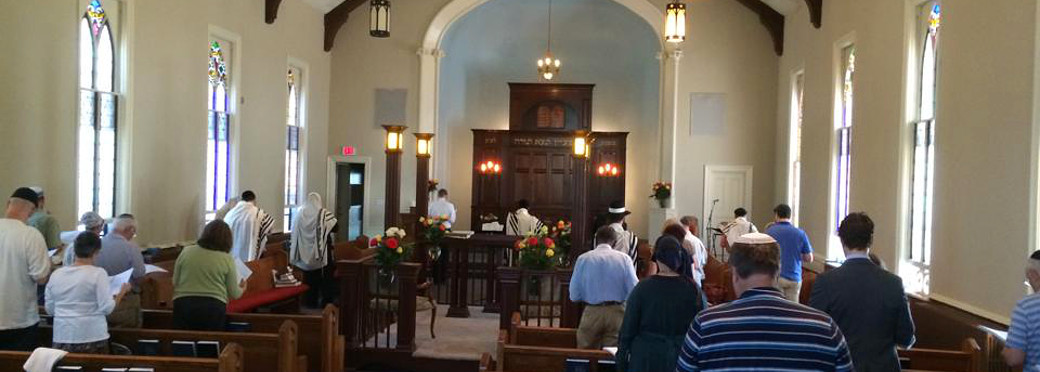
I know nothing of Messianic groups in Israel, but I’ve attended plenty of Gentile-driven Hebrew Roots groups over the years here in the U.S., and their services are often some form of “Jewish-lite,” with a few really seeming like typical Evangelical or Pentecostal churches with a little Hebrew thrown in for seasoning (and to be fair, a few of them strongly attempt to map to a more authentic synagogue service).

But Evangelical and Pentecostal Christianity is where the movement came from decades ago and the influence of the Church on the Messianic movement can still be keenly felt, particularly, as Boaz points out, in Israel.

However, I’m building to a point which is to call out a few details about the four perspectives Boaz presents in his letter. The presenters, other than Boaz, at the Caspari Center for Biblical and Jewish Studies were Seth Ben-Haim (UMJC; MJTI), Baruch Maoz (Soli Deo Gloria), and Alec Goldberg (Caspari Center).

Mr. Maoz’s perspective on Messianic Judaism matches how Evangelical Christianity sees the role of believing Jews; that Jesus replaced the Law and that a Jewish Christian is no longer obligated to observe the mitzvot. Mr. Ben-Haim’s view is the polar opposite and coincides with Rabbi Mark Kinzer’s conception of Bilateral Ecclesiology as presented in his book Post-Missionary Messianic Judaism: Redefining Christian Engagement with the Jewish People.

Boaz’s definition of Messianic Judaism is represented by four points, which I’ll present in summary here except for point four which I’ll quote in its entirety:

  1. Peace, particularly between believing brothers and sisters and between Jews and Gentiles.
  2. Torah observance for the Jew in Messiah.
  3. Observance of the traditions in Messianic Judaism.
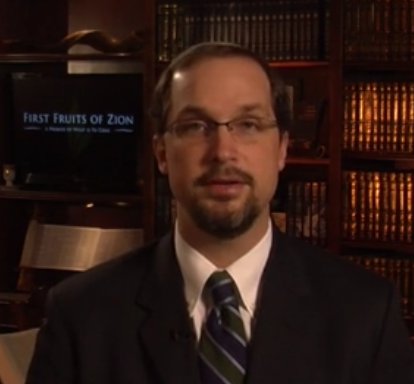
  4. Gentiles: I stated that, since the kingdom is represented by both Jews and Gentiles worshiping together, Messianic Judaism today should have a mechanism and broad enough self-definition to include Gentile disciples in positive and affirming ways. This is the message of Messianic Judaism for the nations.
Boaz Michael
Boaz Michael

As you can see, Boaz’s definition of Messianic Judaism is very inclusive of non-Jewish disciples, although it’s true that he didn’t specify what sort of mechanism should be used to “include Gentile disciples in positive and affirming ways.” He did mention the phrase “Messianic Judaism for the nations” which also appears on the website of Beth Immanuel Sabbath Fellowship located in Hudson, Wisconsin. Beth Immanuel is led by one of First Fruits of Zion’s (FFOZ) head teachers D. Thomas Lancaster who has also been a good friend of Boaz’s for many years. The fact that Beth Immanuel seems to have a leadership that is mostly Gentiles and presents itself as “Messianic Judaism for the Nations” may be the mechanism Boaz had in mind.

But this doesn’t change the need of Jews in Messianic Judaism to belong to wholly Jewish community and to live completely Jewish lives of performing the mitzvot and observing the traditions, just like their other Jewish brothers and sisters in other branches of Judaism.

Going back to the panel discussion, the wild card in the deck seemed to be Alec Goldberg. Boaz expected Mr. Goldberg to agree with Mr. Maoz’s understanding that Jesus replaced the Law, but he was in for a surprise:

He said, “I have come to realize that as a Jew, I am called to live out the Torah.” Goldberg explained that the prophetic-kingdom promise of the new covenant in Jeremiah 31 had revealed to him that the Torah is part of the new covenant: “I will put my law within them, and I will write it on their hearts” (Jeremiah 31:33). Moreover, he had come to realize that the Jerusalem Council of Acts 15 which exempted Gentiles from circumcision and obligation to the Torah’s Jewish identity markers said nothing at all about exempting Jews from any aspect of the Torah. Since the Jerusalem Council did not address Jews in their ruling, he deduced that they intended Jewish believers to remain faithful to Torah.

-ibid, p.10

Actually, from my perspective now, Mr. Goldberg’s conclusions seem fairly obvious, since the problem the Jerusalem Council was trying to solve was what to do with all the Gentiles, not how has devotion to Messiah changed Jewish obligation to Torah. Jews and the Torah weren’t on the table, so to speak. Only trying to figure out how Gentiles were receiving the Holy Spirit without first converting to Judaism. The answer was that conversion was not necessary and thus Gentile Torah observance was not incumbant upon them, only an Abraham-like faith in God through Messiah. But like I said, Jews and Jewish Torah observance weren’t even on the radar screen.

At one point in his letter, Boaz wrote, “I could hardly contain my enthusiasm over Mr. Goldberg’s remarks.”

It seems that on occasion, a person’s long-held and firm beliefs can be changed thanks to regular and diligent Bible study and the influence of the Holy Spirit upon a human life.

I’m writing this “meditation” for a few reasons. I wanted to present the fact that there’s no one, overarching definition of Messianic Judaism. I wanted to show that there are Jews who (sadly, in my opinion) view Messianic Judaism in the same way as Evangelical Christianity, taking a low view of Torah, of religious Judaism, and of the traditions. I wanted to show that, at least in this one limited context, the majority of Jews present supported Messianic Jewish Torah observance as well as adhering to the traditional lifestyle of religious, ethnic, and cultural Judaism. And I wanted to show that at least one of those definitions was accepting of a Gentile presence as “Messianic Judaism for the Nations.”

I do want to make sure to add one thing:

While I truly do respect Baruch Maoz for his tireless years of service to Messiah, I cannot find much common ground with his theological perspectives. His view that the Torah is canceled and Jewish believers in Yeshua have no obligation to it has been the prevailing view among Jewish believers here in Israel. Mr. Goldberg’s words offered me hope that things are changing.

-ibid

The very first point in Boaz’s definition of Messianic Judaism is peace. While he and Mr. Maoz may disagree, there is no animosity between them and Boaz acknowledges Mr. Maoz’s years of tireless and dedicated service to the cause of Messiah among the Jewish people.

When Boaz mentioned having little common ground theologically between him and Mr. Maoz, I couldn’t help but think of my many conversations with the Pastor of the church I used to attend, and how that lack of common ground finally resulted in me leaving the Church again. The Pastor is an intelligent, well-read, and well-educated man who is faithful to God and a dedicated shepherd to his congregation. He’s a good person in the faith, but alas, we have greatly divergent perspectives, just as do Mr. Maoz and Boaz Michael.

There are some churches and some Pastors who will benefit from the inclusion of a “Messianic” within their midst but I found that my church environment was not one of them. Ultimately, we all have to be the people God made us to be and follow the path He has put before us.

But there’s hope. As Boaz said, people are changing. Jews are recognizing Messiah without the Goyishe mask the Church placed on his face nearly twenty centuries ago, and they’re recognizing that there is no inconsistency between living a Jewish life and being a Jewish disciple of the Master. Gentiles, for our part, are also meeting the “Jewish Jesus” for the first time, and once we get over the shock, are learning to accept him as who he is and accept ourselves as who we are in him.

Messianic WorshipWho we are as Messianic Gentiles isn’t exactly how the Church defines a Christian, but it’s an exciting role which leads in new and unexpected directions. The Bible, studied from within a Messianic perspective, tells a radically different story about God’s redemptive plan for Israel and through Israel, God’s redemptive plan for the world.

I don’t know how it’s all going to work out yet. There are a lot of roadblocks in the way. We must not discount the power of God to make happen what He promised He would do, even if we haven’t a clue about what comes next.

Boaz finished up his letter by saying:

Things are indeed changing, and HaShem is at work restoring his people and preparing us for the kingdom. We are part of something much larger than ourselves; we are part of what God is doing today. I went home rejoicing over the opportunity to participate in the conversation at the Caspari Center, and I thanked God for opening the door.

If God can open the door that Boaz walked through, He can open doors for the rest of us. We must be patient. We must be ready.

As you read this, I am traveling. I won’t be near a computer to approve any comments until this evening at the soonest. I’ll return when I can. Thank you.

Will Our Children Have Faith?

It may seem strange to consider Judaism a missionary religion. Yet the Pharisees are described as “compass[ing] sea and land to make one proselyte.” (Matthew 23:15) Rabbinic Judaism, the product of these Pharisees, saw in Abraham and Sarah the models for those who converted non-Jews to Judaism, speaking of them as “making souls.” (Cf. Gen. 12:5)

The proselyte was viewed with special favor. Unlike the Israelites at Sinai the proselyte had come under the wings of the Divine Presence without the impetus of thunder and lightning. Conversionary activity, however, diminished as Christianity gained power and proscribed conversion to Judaism. Even so, there were notable conversions to Judaism in the medieval period.

In the modern period with the advent of “Outreach” in the Reform Jewish community, there is renewed interest in presenting Judaism as an attractive option to those outside of Judaism who might be interested.

-Leonard Kravitz and Kerry M. Olitzky
“Judaism as a Missionary Religion,” p.14
Chapter One: At Sinai Moses Received the Torah
Pirke Avot: A Modern Commentary on Jewish Ethics

This isn’t the only time in the first fourteen pages of this book that the authors quoted from the Apostolic Scriptures (favorably), which is something of a surprise in a (non-Messianic) Jewish publication. I’ve also read similar commentaries in the past on the historic and arguably modern interpretation of Judaism as “missionary.”

Of course, it’s well-known that the Chabad have a very active and even aggressive outreach process, but this is usually directed at non-observant or minimally observant Jews. They aren’t actively trying to convert Gentiles to Judaism although, on occasion, they will encourage non-Jews to observe the seven Noahide Laws.

I’ve been thinking about Messianic Judaism across multiple generations, especially as applied to non-Jewish members or adherents otherwise known as “Messianic Gentiles.” I’ve read a couple of blog posts over the past few days, both written by “Hebrew Roots Gentiles,” discussing the desire to pass their beliefs on to the next generation.

This is really difficult to do.

Even in modern Judaism and Christianity, there is no guarantee that your children will follow in your footsteps. Sure, it’s more likely in Orthodox Judaism for your children to continue in an Orthodox lifestyle, but in Reform Judaism, it’s not such a big step from there to becoming completely secular and even assimilated. There are also plenty of Christians whose children leave the faith. It can be truly said that God has no grandchildren. We each negotiate our own relationship with our Creator, regardless of who our parents are or what they believe and practice.

OK, that’s not exactly true for Jewish people. Even a secular and assimilated Jew is still a Jew. Jewish people are the only population to ever exist who are born into a covenant relationship with God, whether they want to be or not. I believe at the end of the age, each Jew who chose not to respond to the covenants will have to give an accounting to God.

Yes, the rest of us will too will have to give an account, but it won’t be the same since no non-Jew is born automatically having a specific set of obligations to God based on a set of covenants made thousands of years ago.

And in Messianic and Hebrew Roots communities, the problem is compounded.

A few years back I attended the First Fruits of Zion Shavuot Conference at Beth Immanuel in Hudson, Wisconsin. There were a number of families there, both Jewish and Gentile, who were discussing matchmaking. That is, they were concerned about who their children were going to marry.

This wasn’t idle chatter. Some of the younger generation present at the event were approaching or already at marriageable age. There were even suggestions being made as to which two young people to match up (much to the discomfort of the young people present who were being discussed).

There are just tons and tons of Christian churches and Jewish synagogues of various denominations and branches available almost everywhere on Earth. A Christian desiring to marry a Christian companion might not have any more difficult a time at finding an appropriate mate than any given atheist. For Jews it is probably the same, given access to a sufficiently large Jewish population (here in Idaho, it would definitely be more of a chore).

learning hebrewBut what about Messianic Jews and Gentiles? At least in the U.S. and Canada, there aren’t that many communities to choose a proper companion from. Do you marry a Christian and call it good? Do you marry a (non-Messianic) Jew and give up your faith in Yeshua (Jesus)?

I’ve known more than a few young adults, Jewish and Gentile, who are Messianic and who either took many years to finally find a good match or who are still waiting for him or her to come along.

Messianic Judaism is a missionary religion but with a twist. It’s main focus is or should be to spread the good news of Messiah to other Jews.

For instance, on the main page of the Tikvat Israel website, it states:

Where Jewish people and their families & friends can experience a Jewish service & community while believing Yeshua (Jesus) is Messiah.

Gentiles are hardly excluded but the outreach and call to faith is definitely directed “to the Jew first,” so to speak.

I think many “Messianic Gentiles” self-select our way of life. I’ve heard endless stories from people who used to go to church saying that what they were being taught from the pulpit just wasn’t satisfying and didn’t seem to match up with what the Bible actually says. I think we’re all attracted to a more Jewish interpretation of the scriptures for a variety of reasons. Many of us are intermarried with Jewish spouses and so are exposed to religious and cultural Judaism as a matter of course. And many “Hebrew Christians” have returned to the Torah by way of Messianic Judaism and brought their non-Jewish family members with them into the movement.

But while children don’t have much say about which church or synagogue their parents take them to, as these young people grow into adulthood, they have plenty of say over their lives.

I know in my own experience, as soon as I was old enough to tell my parents I wasn’t going to church anymore, I did, and I didn’t see the inside of a church as a worshiper for decades.

My own children went through a series of religious “encounters” starting with church, then a Hebrew Roots group, and then the local Reform/Conservative shul. They all eventually exited out of Yeshua-belief and then just about anything that resembles Jewish observance. Except for some approach to keeping Biblically (but not halachically) kosher and ethnically identifying as Jewish, they have no relationship with God as Jews.

I don’t doubt that Gentile and Jewish believers will continue to be drawn from their churches to Messianic Judaism and/or Hebrew Roots. Thus generation after generation of adults will enter these movements and learn something about some “Hebraic” method of interpreting scripture, gaining a more Jewish apprehension of the Messiah, the Gospel message, and the function of the New Covenant. But what about our children?

I don’t have a solution, but I do have a joke:

Three rabbis were talking over regular Sunday morning breakfast get-together.

Rabbi Ginsberg says, “Oy! We have such a problem with mice at our schul. The shammos set out all kinds of baited traps but them keep coming back. Do either of you learned men know how I can get rid of these vermin?”.

The second rabbi, Rabbi Cohen replied, “We have the same problem at our synagogue, we’ve spent all kinds of gelt on exterminators but the problem still persists. Any suggestions?”.

The third rabbi, Rabbi Slosberg looked at Rabbi Ginsberg and Rabbi Cohen and told the following story. “Rabbis’, we had the same problem with mice at our synagogue, we tried traps, exterminators, even prayers; nothing worked.”

three rabbis“Then one Shabbos after services were over a brilliant idea came into my mind. The next shabbos I went to the synagogue about and hour before services started. I brought big wheel of yellow cheese and placed in the center of the bima. Well, soon tens of mice appeared on the bima and headed for the cheese. While they were feasting on the cheese I Bar-mitzvahed all of them.

I never saw them in Schul again!

The reason that’s funny is because it’s tragically true. As much as you as parents try to teach your values to your children, someday, they have to make a decision as adults whether to make your values their values. Sometimes they decide “yes,” but they can also say “no” and choose their own path. The only way a person is truly drawn to God is by God.

Chanukah and the Light of Love

“Rav Avraham Pam (former Rosh Yeshiva of Yeshiva Torah Vodaas) teaches us that we see this special love of God for the whole Jewish people even though many had defected to Hellenism and then returned to Torah observance with the triumph of the Macabees. When a couple reconciles after a separation, the relationship often becomes one of peaceful coexistence, but the quality of love that they initially had for each other is rarely restored.

“Not so when Jews do teshuvah (repentance — returning to the Almighty and to ways of the Torah). Rambam says that although a sinful person distances himself from God, once he does teshuvah he is near, beloved and dear to God. It is not that God “tolerates” the baal teshuvah (returnee), but rather that He loves him as He would the greatest tzaddik (righteous person). As the prophet says, “I will remember for you the loving-kindness of your youth, when you followed Me into the desert, into a barren land” (Jeremiah 2:2). The love of yore is fully restored.

“This is the significance of the miracle of the oil. It teaches us that with proper teshuvah our relationship with God is restored, as if we had never sinned.

“This is also the message of Joseph and his brothers. Joseph did not simply forgive them and suppress his resentment for their abuse of him. Rather, he loved them and cared for them as if nothing had happened, telling them that he feels toward them as he does to Benjamin, who was not involved in his kidnapping (Rashi, Genesis 45:12).

“The celebration of Chanukah is, therefore, more than the commemoration of a miracle. We are to emulate the Divine attributes (Talmud, Shabbos 133b). Just as when God forgives, His love for us is completely restored — so must we be able to restore the love for one another when we mend our differences.

“As we watch the Chanukah candles, let us think about the light they represent: the bright light of a love that is completely restored!”

-Rabbi Kalman Packouz
from Shabbat Shalom Weekly for
Torah Portion Mikeitz
Aish.com

I apologize for the rather lengthy quote from Rabbi Packouz’s article, but it very much speaks to my continuing theme of sin, repentance, and return and also happens to be appropriate as a missive for this third day of Chanukah (as you read this).

One of the great difficulties in making lasting teshuvah (repentance or return to God) is the feeling of being “damaged goods”. Assuming everything R. Packouz wrote in the above-quoted passage is true about God, we still have to face, on a human level, how other people often find it difficult to receive the repentant sinner as if he or she had never sinned. Also, you or I can still feel “dirty” in our sins as we sincerely strive to repent, even though, according to the prophet, our “…sins are as scarlet, They will be as white as snow; Though they are red like crimson, They will be like wool” (Isaiah 1:18 NASB).

Yes, the good Rabbi is talking about Jewish repentance in his write-up, but by the merit of our Rav, Messiah Yeshua, we also are allowed to repent, turn away from our sins, and return to our God. In this I believe we too will be treated as if we had never sinned. Otherwise, we have no hope.

love-in-lightsAlthough Chanukah commemorates a specific event and miracle exclusive to the Jewish people, it has applications for the rest of us. If the lights of the Chanukah candles can represent “the bright light of a love that is completely restored” between a Jew and his God, it can have the same meaning for all of the non-Jewish disciples of the Master.

The Apostle Paul was quite clear that repentance, atonement, and forgiveness were accessible to Jew and Gentile alike through trust in the accomplished works of Messiah.

Concerning Paul’s declaration of the blessings of Messiah at the synagogue in Pisidian Antioch:

When the Gentiles heard this, they began rejoicing and glorifying the word of the Lord; and as many as had been appointed to eternal life believed. And the word of the Lord was being spread through the whole region.

Acts 13:48-49

And our Master himself said:

“I say to you that many will come from east and west, and recline at the table with Abraham, Isaac and Jacob in the kingdom of heaven.”

Matthew 8:11

My family lights the Chanukah menorah for eight nights in our home because my wife and children are Jewish. But if, Heaven forbid, something should happen and I found myself living alone, I could certainly see a continued application in my kindling the Chanukah lights for the sake of the Light of the World (John 8:12).

Chag Sameach Chanukah.