Tag Archives: messianic judaism

The Mystery of Romans: Who are the “Weak” and the “Strong”?

Apostle-Paul-PreachesWelcome those who are weak in faith, but not for the purpose of quarreling over opinions. Some believe in eating anything, while the weak eat only vegetables. Those who eat must not despise those who abstain, and those who abstain must not pass judgment on those who eat; for God has welcomed them. Who are you to pass judgment on servants of another? It is before their own lord that they stand or fall. And they will be upheld, for the Lord is able to make them stand.

Some judge one day to be better than another, while others judge all days to be alike. Let all be fully convinced in their own minds. Those who observe the day, observe it in honor of the Lord. Also those who eat, eat in honor of the Lord, since they give thanks to God; while those who abstain, abstain in honor of the Lord and give thanks to God.

We do not live to ourselves, and we do not die to ourselves. If we live, we live to the Lord, and if we die, we die to the Lord; so then, whether we live or whether we die, we are the Lord’s. For to this end Christ died and lived again, so that he might be Lord of both the dead and the living.

Why do you pass judgment on your brother or sister? Or you, why do you despise your brother or sister? For we will all stand before the judgment seat of God. For it is written,

“As I live, says the Lord, every knee shall bow to me,
and every tongue shall give praise to God.”

So then, each of us will be accountable to God.

Romans 14:1-12 (NASB)

I’ve just finished reading the third chapter in the Mark D. Nanos book The Mystery of Romans: The Jewish Context of Paul’s Letters. Yes, it did take me a long time and for two reasons. Nanos is quite erudite in his writing, packing each page densely with information. I have to take copious notes on all points of interest while I’m reading. Thus reading and writing while I’m reading makes for slow going.

But I’ve gotten through the eighty pages of “Chapter 3: Who Were the ‘Weak’ and the ‘Strong’ in Rome?” Hint: they aren’t who you think they are, at least according to Nanos.

But first things first.

There is almost universal agreement (it appears to be an almost unquestioned fact) that the “weak” were Christian Jews who still practiced the Law and Jewish customs (with most maintaining that this group would have included “God-fearing” gentiles as well), and that the “strong” were Christian gentiles (as well as Christian Jews like Paul who have supposedly abandoned Jewish practices).

-Nanos, Chapter 3, pg 87

Mark NanosIn my previous review of Chapter 1 of this book, I noted that Nanos takes a high view of Jewish Torah observance and a Gentile “Torah-respecting” lifestyle, meaning that, from a Pauline perspective (according to Nanos), Gentiles in the ancient Messianic Jewish communities were expected to support and uphold Jewish Torah observance while at the same time, conforming to the application of Torah to the Gentile believers as defined by the halakhic decision made by James and the Elders and Apostles in Acts 15 (which was probably supported and expanded by an oral teaching that accompanied the “Jerusalem letter,” the Didache being one possibility).

I mention this, because it must be taken into account in the current conversation, for this position is the template for everything that follows in Nanos’ analysis of Paul’s famous letter to the Romans.

Let’s cut to the chase:

Paul was not concerned with distinguishing between Christian Jews/gentiles who practiced (“weak”) or did not practice (“strong”) the Law and customs, with the hope that all would eventually abandon the Law and customers as they grew stronger in their faith in Christ. His concern was rather that all the non-Christian Jews (“stumbling” in faith toward Christ) in Rome would recognize that Jesus was the Christ of Israel, their Savior, and that they would thus believe in Christ and become Christians (“able” to have faith toward Christ) — Christian Jews. As Christian Jews they would indeed continue to be Jews in that they continue to practice the Law and Jewish customs in faith, not in order to justify themselves, but because they are Jews justified by the Jewish Savior/Messiah/Christ, thus joining with gentiles who are Christians in giving glory with “one accord” and thus “one voice” to the One Lord: “the God and Father of our Lord Jesus Christ” (15:6).

-Nanos, pp 154-5

In order to make that explanation work, the believing Gentiles and believing Jews must share a common synagogue or synagogues in Rome with the non-believing Jews. This isn’t as incredible as you might think. Most people assume that whenever Jews and Gentile God-fearers came to faith in Messiah, they left the synagogue and formed their own house churches. Sometimes that was true, but not always. Nanos and the resources he cites (you’ll have to see the book for the entire bibliography) support the idea that the believing body of Jews and Gentiles in Rome remained in their synagogue communities once they came to faith.
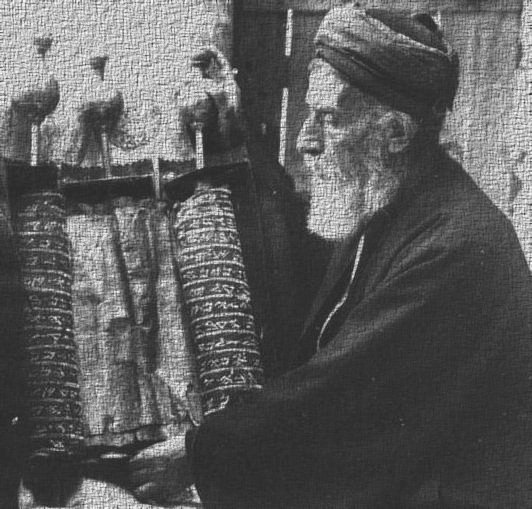
ancient-torahFor the Jewish believers, this probably seemed like a no-brainer at the time, since coming to faith in Yeshua as Messiah in the mid-first century was not particularly strange, and it certainly didn’t mean that the believing Jew was converting to a different religion as it would mean today if a Jew came to faith in Jesus and started going to Church (and for Messianic Jews today, they remain within Judaism as did Paul and the other Jewish believers in the apostolic era).

Also, Gentile God-fearers were commonly found in diaspora synagogues and although they had no covenant status reconciling them with God (unless some pre-Rabbinic status of “Noahide” were conferred upon them), nevertheless, they had come to believe that the God of Israel was the God over all. Once these Gentiles came to faith in Messiah, their was no requirement that their worship practices should change for after all, they were disciples of the Jewish Messiah King. Where else should they be but among Messiah’s people Israel? In fact, James and the Apostles in Jerusalem made this very point:

Therefore I have reached the decision that we should not trouble those Gentiles who are turning to God, but we should write to them to abstain only from things polluted by idols and from fornication and from whatever has been strangled and from blood. For in every city, for generations past, Moses has had those who proclaim him, for he has been read aloud every sabbath in the synagogues.”

Acts 15:19-21 (NASB)

Once coming to faith in Messiah, in order to fully comprehend and practice his teachings, it was necessary to continue accessing his “source material,” which, according to the ruling of the Council, were to be found in the Torah and the Prophets.

Those Jews and Gentiles in the local Roman synagogues who came to faith while davening and worshiping within those communities would still be attached to those communities, to their friends, to the Rabbis. And since Yeshua-worship wasn’t inherently “non-Jewish,” Nanos suggests the believing Gentiles and Jews would have remained in their original synagogues.

Why should we care about this?

Because we have several populations co-mingling within a single religious and community setting: non-believing Jews, believing Jews, and believing Gentiles.

Now this next point is important. As Gentile God-fearers, the non-Jews who regularly attended synagogue would have been observing a set of behaviors that would allow them to co-participate in the community without violating the requirements of Torah observant Jews. They would eat the same foods, probably pray the same prayers or prayers modified for non-Jewish people, and otherwise not interfere with the Jewish “ascendency” in their own synagogue.

In other words, they wouldn’t make waves.

But once the God-fearers became believers and realized, through Paul as well as through the halakhic ruling of the Apostles, that they were not obligated to convert to Judaism and take on the full yoke of Torah but they were still fully equal co-participants in salvation and justification before God, they got a little cocky.
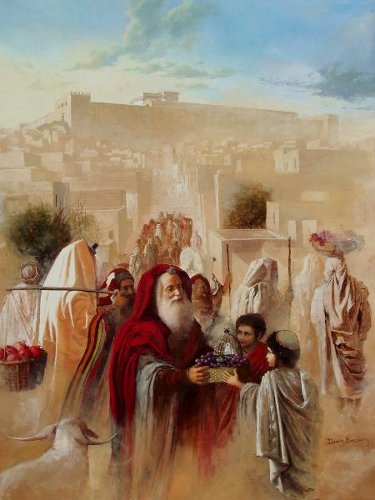
ancient_jerusalemIn Paul’s letter to the Galatians, the primary problem population (say that three times real fast) were “judaizers,” Jews or Jewish converts who were attempting to convince the Gentile population in the Galatian faith-communities that they had to convert to Judaism to be saved (and probably to re-enforce the idea among the Jewish population that being ethnically Jewish and Torah observant was what justified them before God, not faith in Messiah). The target population of Paul’s letter to Rome had the opposite problem: “gentilizers.”

The believing Jews wouldn’t bat an eye about continued Torah observance. For them, it would be a given, and of course, for the non-believing Jews in the synagogue, why should they change the observance given to them by their forefathers? But for the believing Gentiles, who didn’t have the same set of standards (although they definitely had standard of obedience as disciples), they started to “bug” the non-believing Jews about how now the believing Gentiles were “equal” without having to conform to the full body of Torah mitzvot.

And Paul was taking these Gentiles, the so-called “strong,” to task for disrespecting the “weak” who he felt in time, would also come to faith in Messiah. By their behavior, the Gentile believers were actually in danger of inhibiting Jews from coming to faith in their own Messiah (the parallels between this situation and the modern Christian Church are undeniable).

Let us therefore no longer pass judgment on one another, but resolve instead never to put a stumbling block or hindrance in the way of another. I know and am persuaded in the Lord Jesus that nothing is unclean in itself; but it is unclean for anyone who thinks it unclean. If your brother or sister is being injured by what you eat, you are no longer walking in love. Do not let what you eat cause the ruin of one for whom Christ died. So do not let your good be spoken of as evil. For the kingdom of God is not food and drink but righteousness and peace and joy in the Holy Spirit. The one who thus serves Christ is acceptable to God and has human approval. Let us then pursue what makes for peace and for mutual upbuilding. Do not, for the sake of food, destroy the work of God. Everything is indeed clean, but it is wrong for you to make others fall by what you eat; it is good not to eat meat or drink wine or do anything that makes your brother or sister stumble. The faith that you have, have as your own conviction before God. Blessed are those who have no reason to condemn themselves because of what they approve. But those who have doubts are condemned if they eat, because they do not act from faith; for whatever does not proceed from faith is sin.

Romans 14:13-23 (NASB)

Nanos asks his readers to look at this passage in sort of the opposite direction than the way we’ve been taught. Also keep in mind that, just like the situation we see in Galatians 2, the issue is table fellowship and offensive treatment, not food. If your brother or sister (here, Paul has to be relating believing Gentiles to non-believing Jews as “brothers and sisters,” perhaps because they attend the same synagogue community) stumbles (in their faith) because you, as a Gentile, are not obligated to keep the kosher laws, you are no longer walking in love.

While the Gentiles were “mere” God-fearers, they were in a “one-down” position in the synagogue because of legal status and let’s face it, it is a Jewish synagogue. Once they became co-participants in salvation because of Abrahamic faith, the Gentile believers became a tad bit obnoxious to the non-believing Jews and stopped “walking in love.”

There’s a lot Nanos says about the halachah of “walking in love” and the two greatest commandments of Jesus (Matthew 22:36-40) that applies here. You can’t really love God if you are taunting your neighbor who is “weak” in faith and has not yet become reconciled to Messiah.

I have great sorrow and unceasing anguish in my heart. For I could wish that I myself were accursed and cut off from Christ for the sake of my own people, my kindred according to the flesh.

Romans 9:2-3 (NASB)

stuart_dauermannPaul was desperate to share the “good news” to every Jew and he desired, above all else, that his own people should come to faith and redemption. So much so, that he was willing to surrender his own salvation if it would save some of his non-believing Jewish brothers and sisters. Clearly, Paul didn’t see himself, as a believing Jew, in any way disconnected from the larger community of non-believing Jews in Israel or the diaspora or national Israel as a whole. In other words, to reference Rabbi Dr. Stuart Dauermann, all Jewish people for Paul were Us, not Them.

I had a tough time with this chapter. I knew that Nanos was going to reframe the “weak vs. strong” argument in Romans 14, 15, but his build up to even stating his point took a long time. I finally had to jump back to the last pages of the chapter so I’d have some idea of what Nanos was getting at. Once I did, I found it easier to make it through the intervening pages.

According to Nanos, the “strong,” the believing Gentiles in the synagogue, should have known better than to try to “gentilize” the non-believing Jews and thus damaging relationships not only with them, but with the believing Jews who were also continuing to observe Torah and the Jewish customs. The Gentiles were cheapening their own “freedom” in Yeshua-faith by suggesting that the Torah devotion of non-believing Jews was a “weakness” on their part. However, Paul was actually saying that where they were weak was not in their faith in God and observance of the mitzvot, but their faith in Yeshua as Messiah. The Gentile “strong” were greater in that faith but ironically, they weren’t that strong either, for they became arrogant in their new status and in lacking love, I suspect they were also “weak” themselves.

Nanos makes such a complex argument, I don’t know that I can completely apprehend all of the nuances in just one reading, but I don’t really have the time to pour weeks more of study into a single chapter. The Mystery of Romans is such a compact container for such a large amount of data that I have no doubt I’ll have to read it a second time (or more) to tease out additional understanding and meaning. For now, I’m willing to entertain the idea that the “weak” and the “strong” can conform to an alternate meaning and in fact, they must if Paul is to remain consistent as a personality and in his theology throughout his letters and as depicted by Luke in Acts.

Addendum: Having just finished Chapter 4, a number of the points Nanos made about “weak” and “strong” are clearer, especially in relation to Gentile behavioral responsibilities toward Jewish people in general (both believing and non-believing). My next “meditation” on the Nanos book should be a great deal more coherent.

FFOZ TV Review: Fringes of the Garment

FFOZ TV Episode 22Episode 22: In the gospel story of the woman with the hemorrhage of blood, she is healed by touching the fringe of Jesus’ cloak. By touching Jesus’ fringe, the woman was acting upon the prophetic nature of an important biblical commandment. Episode twenty-two will introduce the commandment in Numbers for Jewish men to put fringes on the corners of their garments to remind them of God’s instructions. Viewers will then see how this all ties into the prophetic words of Zechariah about ten men from the nations grabbing a hold of the fringe of a Jew.

-from the Introduction to FFOZ TV: The Promise of What is to Come
Episode 22: Fringes of the Garment (click this link to watch video, not the image above)

The Lesson: The Mystery of Fringes of the Garment

This is a particular mystery I originally thought I had a pretty good handle on and one that traditional Christians would generally find missing in their educational database. What First Fruits of Zion teachers Toby Janicki and Aaron Eby presented was at least a little different from I expected. Parts of the lesson were considerably different.

But first things first.

Today’s “Biblical mystery” originates in the following text:

And behold, a woman who had suffered from a discharge of blood for twelve years came up behind him and touched the fringe of his garment, for she said to herself, “If I only touch his garment, I will be made well.” Jesus turned, and seeing her he said, “Take heart, daughter; your faith has made you well.” And instantly the woman was made well.

Matthew 9:20-22 (ESV)

Toby used the English Standard Version of the Bible for his reading. While I tend to prefer the New American Standard Version, after comparing the two translations of this scripture side-by-side, I understood why he made the selection he did (besides the fact that FFOZ defaults to the ESV translation as a matter of course). I also realized why Toby didn’t use the Delitzsch Hebrew Gospels for the reading, since it would have given away too much too fast.

Why did the woman with the “discharge of blood” seek healing specifically by touching “the fringe of his (Jesus’) garment?” What made her think that would stop years of bleeding? Was it just some sort of anomalous or random choice on her part? As it turns out, she wasn’t the only one to believe that touching “fringes” would produce a healing result:

And wherever he came, in villages, cities, or countryside, they laid the sick in the marketplaces and implored him that they might touch even the fringe of his garment. And as many as touched it were made well.

Mark 6:56 (ESV)

As it turns out, a lot of Jewish people believed that touching the fringe of Jesus’ garment would heal them. I’d completely missed this on my numerous read-throughs of the Bible and am grateful to Toby for pointing this out.

But most Christians wouldn’t understand the significance of the “fringes” of the clothing of a Jewish man in the late Second Temple era (or today, for that matter). “Fringes” makes it sound like people were touching a hem or edge of whatever Jesus was wearing. Why would that heal?

This is where even a little understanding of the Law of Moses comes in handy.

Speak to the Children of Israel and say to them that they shall make themselves tzitzis on the corners of their garments, throughout their generations. And they shall place upon the tzitzis of each corner a threat of turquoise wool. It shall constitute tzitzis for you, that you may see it and remember all the commandments of Hashem and perform them; and not explore after your heart and after your eyes after which you stray. So that you may remember and perform all My commandments and be holy to your God.

Numbers 15:38-40 (Stone Edition Tanakh)

Toby JanickiWhile Toby continued to use the ESV translation, I’m using a much more Jewish source for this scripture. The original Hebrew word for what we read translated in the New Testament as “fringes” is “tzitzit” (“tzitzis” in the Ashkenazi pronunciation). When we get to Aaron Eby’s portion of the program, we’ll learn what tzitzit are, but at this point in the show, Toby tells us that these “fringes” were a response to the commandment in Numbers 15 and that being on a Jewish man’s garment did two things:

  1. The fringes served as a reminder to the Jewish wearer of all of the commandments of God.
  2. The fringes served as a reminder to anyone seeing the wearer that this person was a Jew who was obedience to the God of Israel, since no other people were given the commandment of tzitzit or the Torah of Moses.

And lest you think that the fringes on Jesus’ garments weren’t really tzitzit because that commandment wasn’t being observed by Jewish men in that age, consider this:

For they widen their tefillin and lengthen their tzitziyot.

Matthew 23:5 (DHE Gospels)

“Tzitziyot” is the plural of “tzitzit” in Hebrew, and here we see Jesus criticizing some of the Pharisees for dramatically displaying the length of their fringes as well as the straps of their tefillin or phylacteries (the wearing of tzitzit and tefillin is still practiced by observant Jewish men today).

This brings us to our first clue in solving today’s Biblical mystery:

Clue 1: Jesus had fringes on the corners of his garment in obedience to the Numbers 15 commandment.

Now the scene shifts to Aaron Eby in Israel for a brief Hebrew language lesson on the Hebrew words for “fringe” and “corner.”

Aaron EbyAs I mentioned above, the word translated as “fringe” or “tassel” in some English Bibles is actually the Hebrew word “tzitzit” (plural: “tzitziyot”, although as Aaron says, English speakers use “tzitzit” often for both singular and plural).

The Hebrew word for “corner” in the context of a garment, is “kanaf.” Tzitzit are cords of wool (usually). The string of blue colored thread (sometimes translated as “turquoise”) was made from a very specific process that is thought by most observant Jews to be lost (which is why most tzitzit today are completely white), although some Jewish people think it has recently been rediscovered.

In ancient times, a man’s garment would be like a sort of “poncho” and had four actual corners on the bottom. On each corner, tzitzit would be tied. Today, men’s garments lack this structure, so most Jewish men wear what Christians call a “prayer shawl” and what Jews call a Tallit Gadol (large tallit). Most, if not all, observant Orthodox Jews will wear an undergarment throughout the day called a Tallit Katan (small tallit) in addition to donning a Tallit Gadol during worship and prayer in order to be obedient to the Numbers 15 commandment and for the same reasons I listed above.

Aaron said that according to Deuteronomy 22:12, the tzitzit must be on the corners of the garment. No other location on a Jewish man’s clothing is in obedience to the commandment of God. Thus, some non-Jewish men in certain areas of the Hebrew or Jewish Roots movement who choose to tie tzitzit on their belt loops are actually in scriptural error (not to mention that the commandment was specifically given to the Israelites and their modern-day descendants, the Jewish people).

What was more interesting to me was Aaron’s explanation of the word “Kanaf.” It can mean both “corner” as in the corner of a man’s garment, or “wings”.

He said, “Who are you?” And she answered, “I am Ruth, your servant. Spread your wings over your servant, for you are a redeemer.”

Ruth 3:9 (ESV)

Since Boaz didn’t likely have actual bird’s wings, Ruth was more likely asking (assuming she was being literal) that Boaz spread some portion of his cloak over her, protecting her from sight (though it could also be understood in a more general sense as a request for protection since she referred to him as “redeemer”).

Aaron said that Kanaf could be understood not only as the corner of a cloak or other garment, but specifically the attachment point of the tzitzit and the garment’s corner. This leads to the idiomatic meaning of “touching the corner” (kanaf) as “touching the tzitzit,” which is probably what the woman in Matthew 9:20-22 was actually doing.

Back in the studio, Toby provides the next clue:

Clue 2: Fringes are called tzitzit and the Hebrew word for corner is kanaf.

But we still have our mystery. Why would anyone believe that touching the tzitzit on Jesus’ garment would cause healing to occur?

But for you who fear my name, the sun of righteousness shall rise with healing in its wings.

Malachi 4:2 (ESV)

MessiahThat’s “sun” s-u-n, not “son” s-o-n, and yet this prophesy about the coming Messianic age is really discussing the Messiah. There are other portions of scripture that refer to the Messiah with the term “Sun” including Revelation 1:16, and Malachi specifically states that Messiah shall rise with healing in its (his) wings.”

Toby concludes that when the woman with the issue of blood and all the others touched the Master’s tzitzit and expected to be healed, they were considering the prophesy of Malachi 4:2 and displaying their faith in Jesus as Messiah. When Jesus told the woman who had moments before stopped bleeding, that her faith had healed her, in this interpretation, he wasn’t referring to her faith in God as such, but her specific faith in him, in Jesus as the Messiah.

Toby went on to reference another important Messianic scripture:

Many peoples and strong nations shall come to seek the Lord of hosts in Jerusalem and to entreat the favor of the Lord. Thus says the Lord of hosts: In those days ten men from the nations of every tongue shall take hold of the robe of a Jew, saying, ‘Let us go with you, for we have heard that God is with you.’”

Zechariah 8:22-23 (ESV)

Toby should have made this part of a fourth clue, since it doesn’t directly reference the theme of the other three (and I don’t mind departing from the format of three clues per mystery from time to time), and it says something very important. In fact, in order to teach this part of the lesson, Toby twice had to say that it was a specific belief and teaching of the First Fruits of Zion ministry, so a viewpoint that might not be found in general Christian doctrine or even in other expressions of Messianic Judaism.

Toby said that the ten men of the nations specifically represented believers from all the (non-Jewish) nations of the earth, “the Church,” (this point is important and I’ll explain it further in a minute), grasping (metaphorically) the tzitzit, not just of any Jewish man, but of one specific Jewish man, Messiah. The number of men is also significant since, in Judaism, ten men (almost always ten Jewish men) form a minyan or a quorum. A minyan must be present for any group to engage in davening during the set times of prayer or for the ark to be opened and the Torah to be carried out for reading during a Shabbat service.

Here, Toby tells us that this is a prophesy and a sign of Christian belief and faith in the God of Israel and a desire to become a part of the Messianic Kingdom.

What Did I Learn?

Actually, I learned the most from Toby’s “fourth clue.” I had always understood the passage from Zechariah as a prophesy that the people of the nations (not necessarily Christians, but unbelievers who were coming to faith) would turn to Jewish people for an understanding of God and to come to faith in the Messianic Age, going up to Jerusalem to pay homage to King Messiah, to Jesus. The scripture specifically mentions “ten men from the nations,” which indicates only Gentiles and no Jews, but Toby said that the prophesy references “the Church” turning to the Jewish Messiah.

moshe_tzitzitMy Pastor defines “the Church” as the Gentile and Jewish people who have come to faith in Jesus, so logically, Toby can’t be correct in equating “the Church” with only Gentile Christians, that is, unless he is saying that he (and First Fruits of Zion) defines the Church as only Gentile Christians, and Jews in Messiah, Messianic Jews, as another entity, more a Judaism than a Christianity.

I know that Messianic Judaism does typically support distinctions between Jews and Gentiles in the Body of Messiah, but the Body must still be unified in Messiah. Toby’s brief statement is pregnant with implications, and some of them rather daunting, that FFOZ may consider Messianic Judaism as completely detached from Gentile Christianity.

I find this difficult to believe, since I’ve heard FFOZ President and Founder Boaz Michael speak at length about the Jewish and Gentile unity in the Body of Messiah, and maybe I’m reading far more into Toby’s statement than I should. Maybe he misspoke himself when he said “the Church” and he meant “Gentile Christians.” I don’t know. I know that whenever I post a link to one of my FFOZ TV reviews on Facebook, Toby “likes” it, but I don’t know if he ever reads my reviews. If he does, I would hope he’d chime in on some social networking venue and correct any misunderstanding I may have about what he was teaching.

One way I could interpret this part of his teaching is that Toby was trying to say that by having ten men from the nations (Gentile Christians) grasping the tzitzit of Messiah, we Christians would be making a fundamental paradigm shift from traditional Church theology and doctrine, to one more in line with a Messianic Jewish perspective, looking through a Jewish lens in order to read the Bible and to see Messiah for who he really is: the Jewish Messiah King.

Although I rarely mention it in my reviews, during each episode of this series, there is a segment promoting First Fruits of Zion’s FFOZ Friends program, a series of support channels anyone can sign up for to provide a specific level of contribution to the ministry in exchange for access to hardcopy and online learning resources.

This time, I listened to this part of the program with rapt attention, especially the words (I’m paraphrasing):

Teachings that have been lost since the time of the apostles.

That’s part of how FFOZ promotes its educational materials and its general understanding and perspective on the Bible. That connects back to what I said above about Zechariah 8 and the sign that in the Messianic Era, Christianity would experience a significant shift in perspective from its current theological and doctrinal positions to one more aligned with Messianic Judaism.

If all this is true, then FFOZ is gently trying to promote the beginnings of such a shift in the Church now through its FFOZ TV: The Promise of What is to Come television program. I know from my own experiences in my local church, that such an effort is easier said than done and truly may require the Messiah’s second coming to accomplish.

prophetic_return1One thing Toby might have missed in his Malachi reference is that the “healing” we’ll experience as “the Church” in the Messianic Age may be the nearly two-thousand years of enmity and schism between Christianity and Judaism. I think Toby was a little quick to jump from the single verse in Malachi 4:2 and assign it a specific meaning in the late Second Temple period, since it seems to mean so much more. I know that prophesy can be applied to more than one event, but the link from Malachi to Matthew and Mark was pretty abrupt and I would have preferred a longer trail and more explanation supporting that link.

I take more from Toby’s “fourth clue” that someday, “the Church,” or rather, the Gentiles therein (and the “gentilized” Hebrew Christians who are missing out on the blessings of Torah observance), will have their eyes opened and realize that their faith in Jesus is actually the devotion of the people of the nations to the God of Israel and the Jewish King who will one day rule forever in Jerusalem. We will gather on that day, we, the people of the nations who are called by His Name, alongside God’s treasured and splendorous people, the Jewish people, bend our knee to the King, and worship Israel’s God in spirit and in truth.

Book Review: The Four Responsibilities of a Disciple

The Four ResponsibilitiesThis book addresses the question, “What will it take to change the world for our Master?” After many years of searching, my answer is that it has to start with a Personal Revelation. Here’s what I mean…

There’s a story told of a rabbi from the late nineteenth century who set out to change the world, but very soon realized that he could not. So, he decided to focus on changing the Jewish community of his country but he failed there as well. He then decided to focus on changing the people of his hometown but didn’t get any further. Finally, in a last effort, he believed he could change his family and sought to do so. Failure was the result there as well. In the end, he realized that the only person he could really change was himself. Therefore, he began to do so. And today, long after his death, his teachings are the cornerstone of Jewish life, particularly in proper speech and ethical conduct.

This is our path.

-Darren Huckey
“Introduction: Why Discipleship,” pg 5
The Four Responsibilities of a Disciple

This is how Darren begins his small (85 pages) booklet and primer on promoting authentic discipleship under our Master, Jesus.

When Darren contacted me and asked me to review this book, I wasn’t sure what to think. I am aware of Darren in various social media venues but can’t say I actually “know” him as well as I know other people I regularly communicate with over the web but have never met. But I was curious and agreed to do the review and subsequently, Darren’s book arrived in the mail.

I must say that I’m impressed. I was barely aware of Emet HaTorah so I wasn’t sure of the quality of the materials they (he?) produce. Both the “look and feel” and quality of content are high and represent a professional job of writing and publishing. I’ll cut to the chase and say right now that I’d recommend this book for anyone who is really interested in what being a disciple of the Jewish Messiah is like as a lived experience.

The booklet is laid out along the pattern of steps Darren establishes for discipleship:

  • Devotion
  • Memorization
  • Imitation
  • Replication

Except for the Introduction, each chapter has a series of study questions at the end as well as the endnotes for references used in the chapter. The book then is suitable for either group study or for the individual reader/student.

Actually, Chapter One is “What is a Disciple?”, which is a critical question to answer. If you don’t know the answer, you certainly can’t make a disciple or even be one.

The Master of whom Darren refers and who leads us in discipleship is Jesus, and the pattern of how to make/be a disciple comes from very Jewish sources. In terms of “the Church,” Darren called discipleship a “lost art.” If a church has any sort of “discipleship program” at all, it’s based on “intangibles” such as defining the disciple as one who “will love Jesus more than anything,” “will carry his cross,” “will count the cost,” and “will surrender everything to Christ.”

The ancient and modern Jewish discipleship is based on “doing” or direct imitation of the Rabbi or teacher, not just being devoted to an abstract set of principles. If you had to live your life based on the “intangibles” I listed above, what exactly would that look like? What would you do? How would someone who knows next to nothing about a “Christian lifestyle” of holiness implement those principles in day-to-day living? Would you recommend that he or she fashion a large, wooden cross and then shlep it on their backs from morning to evening to “carry his cross?”

Darren makes a good point when he calls a disciple a “lifestudent,” but that only helps the reader realize how challenging being a true disciple of Christ is. Discipleship isn’t a six, twelve, or eighteen-week program you run a new member of your church through and at the end, they are a “full-fledged Christian.” Discipleship takes a lifetime of continual studying and mentoring.

Devotion

In one sense, how the church defines a disciple, “love Jesus more than anything,” is the center of devotion to one’s “Rebbe.” But the concept of devotion has to be actualized. That is, you have to understand how devotion is acted out and then do it.

jewish-czech-boys-studying-talmudIn Chapter Two, devotion is a matter of commitment. Think of it like a marriage. Being married is more than just a ceremony and signing a license, it’s a life-long (ideally) commitment of two people to each other to meet not only a set of wants and needs recognized at the beginning of the relationship, but to adapt over time and meet commitments that were never even imagined at the beginning. If you can grasp that concept and better yet, if you’ve actually done it (been married for years or decades), you have a pretty good idea of what living a life of discipleship is all about.

The analogy falls apart when you realize that a marriage is a commitment between two equals and discipleship is being devoted to someone who will always be greater than you.

“Truly, truly, I say to you, a slave is not greater than his master, nor is one who is sent greater than the one who sent him.”

John 13:16 (NASB)

Memorization

This is actually something some Christians do pretty well. A lot of churches encourage their members to judiciously read the Bible and to memorize verses, but in the Jewish model of discipleship, students memorize all of the teachings of their Master. That’s a tall order, even if you just interpret this as memorizing everything Jesus said in the Gospels. However, since our Master’s “source material” was the Torah and the Prophets, we’re talking about a much larger body of text being involved.

But Peter told Jesus that Messiah had “words of eternal life” (John 6:68). Writing those words on our minds and hearts leads to such a life, both in the now and in the World to Come.

However, rote memorization isn’t all there is to it. Correct interpretation and then living out these teachings is part and parcel of the task. If we don’t understand the original meaning of the Master’s teachings, they will either seem like nonsense, or we’ll end up completely missing the mark of what he was trying to say. Darren references First Fruits of Zion (FFOZ) author and teacher D. Thomas Lancaster and his “Macaroni Principle.” As children, we all probably heard and sung this little tune once or twice:

Yankee Doodle went to town,
riding on a pony;
He stuck a feather in his hat,
and called it macaroni

I won’t reveal the definitions here, but if you don’t know the meaning of “yankee,” “doodle,” “macaroni,” and why someone would put a feather in their hat, you won’t have the faintest idea what this really means (and it really means something quite specific).

Our Rebbe Yeshua may be the wisest and greatest prophet and teacher who ever lived, but if we don’t understand what his original students would have understood when they listened to him, we will proceed to understand, teach, and live lives of folly and error. One of the reasons I have written about the Didache is to illuminate some of the probable details of a life of discipleship and training of the very early Gentile believers. The Didache gets disciples out of their heads and actually “doing” Christianity. That’s what Darren is trying to do with his book, too.

Imitation

I know some people reading this will take the suggestion quite literally and say this is proof that Gentile Christians are commanded to wear tzitzit, lay tefillin, eat Biblically (as opposed to Rabbinically, for some reason) kosher, pray in Hebrew, and try to live as how they imagine observant Jews live without actually converting.

studying_tanakh_messiahThat’s not how I see imitation and such superficial behavior misses the point of this principle. What do we do to imitate our Master, which is the application of his teachings in our lives?

Darren produced a short bullet list (I won’t replicate the whole thing here) that includes showing compassion to others, leading through serving, loving children, having a passion for justice, and loving the Torah and the Temple. I note that I can love the Torah without believing I am commanded to live as a Jewish person. I can believe that the Torah applies to me differently than to the descendants of the ancient Israelites and, as the Didache states:

6:2 For, on the one hand, if you are able to bear
the whole yoke of the Lord, you will be perfect;
but if, on the other hand, you are not able,
that which you are able, do this.

I can take my observance of the Torah of Moses to the extent I am able, as I understand this, but my imitation of the Master does not include a commandment to act as “Jewish” as the Master.

Actually, at the end of Chapter Four, Darren uses “praying like Jesus” as an excellent example of how we can imitate our Master. I think it would be a good place for anyone to start on the path of being a disciple in imitation of his Rebbe.

Replication

Implementing Chapter Five is a bit tricky, because we don’t really have a system in the Church that functions like the Jewish model of multi-generational discipleship. The idea is that a group of disciples study under a Master Teacher for many years, holding him as more dear than even their own parents, being totally devoted to him, spending long hours and days literally following him wherever he went, listening to him, imitating his dress, his patterns of speech, memorizing his every word and deed.

Eventually, one by one, each disciple would be elevated to the point to where he could begin to take on his own disciples and to be a Master to them. He would then pass on everything he learned from his Master (which would include the teachings of his Master’s Master, and so on, preserving all of those teachings in the next generation).

And so it would go, at least ideally, generation after generation.

In Christianity, the original apostles are long dead and the discipleship model died with them. What we have to learn from are the written teachings of the Master and the first apostles and disciples. Only the Bible is our guide to becoming disciples of Jesus and somehow replicating what we learn to a next generation.

The Church doesn’t even come close to doing this in terms of discipleship, although to their credit, they have preserved (though in many cases, the interpretations have been skewed) the teachings of Jesus for nearly two-thousand years.

As I was reading this chapter, I thought about my every other week Sunday afternoon coffee conversations with a good friend of mine. Although we don’t exactly have a mentor/student relationship, he has been a Christian for forty years and I learn a great deal from him, including how to clarify my confusion on a good many things. I suppose you could also include my weekly conversations with my Pastor in this category, since I do have a one on one relationship with someone who is far better educated in the teachings of our Master than I am.

But both of those situations fall short of actual discipleship. A true disciple will study under his Master for years or decades. How can the church even begin to do this, especially in a highly mobile western society where people move from city to city and state to state every few years?

Remember, in order to engage in this process of Replication, we first have to be in the process of becoming a disciple ourselves. Brad Young tells us, “For disciples to be made, there is first a need for master teachers.”

-Huckey, pg 74

Where do we start? Who are the Master Teachers in the Church who will commit to a multi-year, multi-decade process of raising up disciples in our Master Yeshua and then in turn, having those disciples raise up their own disciples? How can this even be possible in our modern Christian culture?

What I Learned

Jesus followed the traditional pattern of the Jewish discipleship model of his day. He raised hundreds to thousands of disciples, including a core group of apostles who would go on to become Master Teachers in their own right. His disciples followed Jesus around everywhere he went, listened to his teachings, memorized his words, conformed every action of their lives to his example, and later, they recorded his teachings from memory and raise up disciples in his sacred name.

walking_discipleThe process fell apart pretty quickly, especially once Paul started taking the teachings of the Master to the Jewish and Gentile disciples of the Master in the Diaspora. You see, in most cases, Paul couldn’t stay in one place for the years or decades it would take to follow the discipleship model that would allow the new believers to assimilate the teachings of Jesus into their lives. In many cases, Paul would have to leave a Gentile leader in charge of a “church” who barely grasped the basics of “Judaism 101,” and didn’t even come close to being a competent disciple, let alone a “Master Teacher” for his local group.

I wonder if that’s why most of Paul’s letters take the tone of “course corrections,” defining where the various churches have gone wrong and, at a distance, trying to provide the teachings necessary to get them back on track.

All of the other “Judaisms” going forward in history (actually, only the stream of the Pharisees survived beyond the destruction of the Temple) managed to preserve the discipleship model much better. In our modern era, this only exists in certain segments of religious Judaism, but the model still exists. In the Church, it disintegrated early on and except in fairly rare cases, was never resurrected.

Conclusion

Darren Huckey’s book will give you a starting point. It’s well written and well researched, and I think it’s a valuable resource for people who want to become and/or to raise up serious and correctly oriented disciples of our Master, but there’s a limit to what you can do with such a small booklet. This work won’t turn you into a disciple. Actually, no book, including the Bible, will change anything there is about you unless you dedicate your life to the teachings therein and walk the walk from the moment you wake up until you drift to sleep at night, day after day after day…for all of your life.

Huckey’s book is best done by doing or rather, using it as a template to discover how to “do” discipleship under Jesus. You’ll need more resources to fully explore a life of discipleship, which is what I suspect Darren plans to do with his ministry. It’s what First Fruits of Zion has been doing with their ministry for over twenty years (and especially after experiencing significant “course corrections” of their own).

The Four Responsibilities of a Disciple is a tool in your collection of resources that will guide you to a life of Jesus discipleship, but it’s only one tool. I must emphasize that this one book will not be sufficient to make you into a disciple. It will however, point you in the right direction.

Pray, love, serve, and study, but most of all, do discipleship, and you will not be far from the Kingdom of Heaven.

The Candles in My Heart

Chanukah MenorayThat the spark of G-d within us will ponder G-d, what is the surprise?

But when the animal within us lifts its eyes to the heavens, when the dark side of a human creature lets in a little light, that is truly wondrous. How can darkness know light? How can earth know heaven?

Only with the power of He who is beyond heaven and earth, and so too is neither darkness nor light.

-Rabbi Tzvi Freeman
“Dark Knowing Light”
Based on letters and talks of the Rebbe,
Rabbi M.M. Schneerson
Chabad.org

The Candles in My Heart: An Unusual Chanukah Story

I think there must be something wrong with me. I don’t know what it is exactly, except I keep getting that square peg in round hole feeling. It happened last night, the first night of Chanukah (it’s early on Thanksgiving morning as I’m writing this), when I realized that my wife had lit the first candle in the menorah and hadn’t called me in to watch. Actually, I was a little surprised.

She was supposed to be back from work by mid-afternoon Wednesday night, but didn’t make it home until nearly sunset. I thought about getting out the menorah and setting everything up, but lately, she’s gotten a tad annoyed when I’ve intervened in “Jewish” matters around the house. So I let it be. I saw that she had bought candles but wasn’t sure if she’d light the menorah on the first night since she was late.

But she did and I missed it…

…and I miss it.

That’s what I mean about being strange or out-of-place. I, a Christian, going to a Baptist church, meeting with my Pastor for private talks every week about Christianity, and I still miss seeing the menorah being lit on the first night of Chanukah.

It’s almost like I’m this person (although, of course, I’m not Jewish).

Two years ago I was in Baltimore on business, and happened to pass by the public menorah in front of Johns Hopkins University just as the first light was being lit. My eyes welled with tears. Although I was raised a secular Jew, my family has always celebrated Chanukah. To be away from my family that first night of the holiday felt cold and lonely. Now, seeing the lights of the first night’s flames of that big menorah, my heart lit up also, and I felt the warmth of my people all around me.

-Laura P. Schulman
“The Menorah That Lit Up My Life”
Chabad.org

The story goes on about how the next day, Ms. Schulman was approached by a Jewish “young man in a black hat” and asked, “Excuse me, are you Jewish?” The transaction between them, as well as the gift of a “Chanukah kit,” complete with menorah, candles, and instructions, sent Schulman on a journey to rekindle the Jewishness of her soul and the unique covenant connection she has with God.

And she’s not the only one:

We talked about friends we had or hadn’t kept in touch with from high school. “You know, I talked to Artie right before my trip,” I told him. “He says he went to Hebrew school, already knows all about Judaism, thinks you’re flipping out, thinks I’m wasting my time. But you can’t believe how much I’ve learned in the last couple of months that he has no clue about – about Jewish law, and philosophy, and the meaning of historical events, and the return to the Land, and all that. He thinks because he knows something, he knows everything – and he knows practically nothing!”

Then Jake said, “That’s what I think about you!”

-Eric Brand
“When God Sends You a Message…”
Aish.com

jewish-handsIn this article, Brand talks of reuniting with an old friend after a lengthy separation, and discovering his friend had moved to Israel and “become religious”. His friend Jake, or rather Yerachmiel now, was thought to be crazy, even by his own mother. Brand thought so too for a while, only to realize that at a critical moment in the conversation over pizza, Yerachmiel was just a messenger. God was talking and calling Eric back to Him.

I think God calls to all of us, Jewish or not, to come to Him, but for Jewish people, it’s especially unique because Israel was called out of the nations to be a treasured people to Him first. I can see it in my wife. It’s like God flipped a switch and sent a signal to a homing beacon in her soul and she had to return to Him.

Granted, it comes in stages, as it does with the rest of us, so I can only hope and pray that as time goes on, she’ll move more in the direction God wants her to go.

Sometimes, because I’m not Jewish and particularly because I am a Christian, I think I get in the way of how far she could go, the distance that people like Laura Schulman and Eric Brand have traveled.

But then, if Jesus is indeed the Jewish Messiah, then ultimately, he’s the King to both of us, as he is to everyone. Ultimately, there will be no dissonance, even though, in the present age, the disconnect is huge.

An Israeli immigration judge has ordered the deportation of a Messianic Jewish man from England who was arrested last week for taking part in an evangelistic event in southern Israel.

Barry Barnett, 50, a worker with Jews for Jesus UK, was ordered on Sunday (Nov. 24) to leave the country by Dec. 3. Barnett, who is based in England, was volunteering at the Jews for Jesus “Behold your God Israel” campaign around the city of Be’er Shiva when he was arrested Wednesday (Nov. 20) at about 4 p.m.

According to his wife, Alison Barnett, six immigration control officers took him from Be’er Shiva, 125 kilometers (78 miles) south of Jerusalem, to an immigration office in Omer, just outside of the city. He was held there for several hours without charge, then transferred to an immigration-holding unit of a prison in Ramle, near Tel Aviv. He spent four days in jail before his court hearing.

-from “Israel Orders Deportation of Jews for Jesus Missionary”
Christianity Today

The thing is, Barnett hadn’t done anything illegal. According to the article:

…the ultra-Orthodox, anti-Christian group Yad L’Achim had followed the Jews for Jesus teams to their campaign sites in Israel since the event started. Yad L’Achim has a long-standing history of links with sympathetic government officials who issue legal actions on their behalf.

In the past, I’ve written quite a lot about Christian supersessionism or the theology that “the Church” has replaced Israel in all of God’s covenant promises. This is a reprehensible artifact of Church history and I deplore its continued expression in any sense in the community of Jesus.

But there’s a flip side to all of this. It’s an understandable flip side given the history of enmity between Christianity and Judaism, but it results in such actions as Barry Barnett’s illegal arrest and detainment without charges in Israel because he represents Jews for Jesus.

I even read a comment on the blog commentary for this story published at rosh pina project where a Jewish gentleman called Barnett a “murderer.”

So I suppose, putting things into context, me being not invited to the lighting of the menorah on the first night of Chanukah in my own home isn’t so bad.

candleBut I still miss it.

I find reading “testimonials” like those written by Ms. Schulman and Mr. Brand heartwarming; Jews being called back to Judaism and to God. Why don’t I have the same sort of feelings about people being called into the Church and to Christ?

It’s not as if I’m opposed to my own faith, but the cultural context gets in the way. No, it’s not like I’m in any way “culturally Jewish.” I’m about as white-bread American non-ethnic anything as it gets.

But I’d rather spend the festival of Sukkot once a year in a place like Beth Immanuel Sabbath Fellowship than all the Sundays there are in a traditional church setting. No, I don’t disdain worshiping with other Christians in the body of believers, but the music, the patterns of worship, the traditions, the prayers, the Torah readings, all call to me in a way that Christian hymns seem to lack.

I know I sound ungrateful. I’m not, really. I appreciate the opportunity God has afforded me to be with my fellow believers, to hear my Pastor preach each Sunday morning, to participate in Bible study after services in Sunday school, to meet and speak with people far closer to God than I.

But I’ve called myself a Gentile who studies Messianic Judaism for a reason.

I don’t know why, but when God set off my own “homing signal,” it called me in an unanticipated direction and that direction continues to pull at me. No matter where I am or whoever I’m with, I cannot be diverted from that path. Even if I never see another Shabbat candle lit, never hear another Hillel in Hebrew, never am present when a Torah scroll being removed from the arc, I cannot become that which I am not.

I’m not Jewish. I’m not Israel. I completely understand that. My wife once called me a “Jewish wannabe” and although that still stings a little, I can’t completely deny the validity of that statement. I just don’t know why it’s true of me.

I also can’t be a “traditional Christian,” although I think it would make my Pastor’s life a little easier if I’d just give in and assimilate theologically and culturally into the church environment as it exists in our little corner of Southwest Idaho.

I may never be invited to see the Chanukah menorah lit in my home or even the Shabbos candles, but I am not in darkness. God lights them in my heart and it’s by their illumination that I am guided to Messiah, particularly during this season.

For how do you know, O wife, whether you will save your husband? Or how do you know, O husband, whether you will save your wife?

1 Corinthians 7:16 (NASB)

And then, last Thursday evening, amid the frenzied activity of getting Thanksgiving dinner ready (and it was a wonderful repast), everything stopped as we all gathered around the menorah and my daughter said the blessings and lit the second light of Chanukah. And we, as a family, were blessed. May the lights of Chanukah and the light of God illuminate you.

Lancaster’s “Galatians” Book Revisited and Reviewed

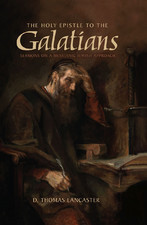
galatians-book-lancasterChristians often wonder if the Old Testament saints are “saved.” Have you ever heard that question? It’s problematic. Like most of these questions, the person asking it usually does not know what he means by it. What the person probably thinks he means is this: “Did Noah, Abraham, Isaac, Jacob, David, and Isaiah, and others go to heaven when they died?” What they are trying to ask is this: “Did the divine souls of the men of faith who lived prior to the atoning death of the Messiah find repose in paradise while they await resurrection? Will those men and women who did not confess the name of Yeshua attain the resurrection?”

-D. Thomas Lancaster
“Sermon Thirteen: Abraham’s Gospel (Galatians 3:8-9),” pg 131
The Holy Epistle to the Galatians

As many of you know, I previously started going through this book with My Pastor on Wednesday nights starting many months ago, debating our different viewpoints on Lancaster’s take on one of Paul’s most well-known epistles. This is the letter that Christianity most often uses to prove that Paul preached against the Law of Moses for both Jews and Gentiles. Unfortunately, that take on Paul, especially relative to his behavior in the latter chapters of Acts, makes him seem like a liar and a hypocrite. Interestingly enough, most Christians and most Jews believe that Paul really was a traitor to Judaism, the Temple, and the Torah, and that he took the teachings of Jesus and morphed them into a brand-new religion: Christianity.

If he had done that, then how can we possibly trust the teachings of such a disreputable fellow? Most of our New Testament would be a fabric of lies and half-truths, not the inspired Word of God. Christianity would be a farce. But nearly twenty centuries of post Biblical Christian doctrine have spun this interpretation so that Paul comes out smelling like a rose. Not so the Jewish people and Judaism, however, who for that same amount of time, have played the villain in the tale of the rise of the Gentile Church.

What Lancaster is attempting to do with this landmark book from First Fruits of Zion (FFOZ), based on his original sermon series, is to recast Paul in the role of the apostle to the Gentiles who remained zealous for the Torah, zealous for the Temple, even as he was zealous for the Messiah. Paul is not the liar and hypocrite but the misunderstood hero of the early Messianic movement, trying by long distance correspondence, to hold together a fragile string of communities of Messiah-faith scattered across the diaspora.

I wrote my original review of Lancaster’s book back in 2011 when the book was published, and since then, I wrote a short series of commentaries based on my conversations on Lancaster with my Pastor, but I haven’t completely read through the book again before now.

A number of weeks ago, my Pastor and I agreed to pursue other topics in our discussions, having hit a rather firm impasse on whether or not Jewish Torah observance was intended to continue on this side of the cross (you can surely guess my position in this matter). He subsequently said he’d be willing to continue our discussions on Lancaster, but I’m convinced at this point that each of us are well entrenched in our perspectives to the point where the conversation would only serve to frustrate both of us. I want my time with my Pastor to be productive, illuminating, and in service to God, not a once-a-week head-banging-against-brick-wall session.

Having made that decision, I decided to pick up in the book where Pastor and I had left off and go through it again. I’m not going to rehash all of the content but I want to post a few highlights that probably didn’t occur to me before.

Actually, a few months back, after reading A Torah-Positive Summary of Sha’ul’s Letter to the Galatians written by Ariel Berkowitz and published at MessianicPublications.com (I don’t agree with their general premise on Gentiles and the Torah, but I found the Berkowitz paper worthwhile), I revisited relevant sections of Lancaster’s book and “re-reviewed” them in comparison to Berkowitz.

BerkowitzMy comparison of Berkowitz and Lancaster on the “Torah-Positive Paul” is chronicled in Nitzvaim-Vayelech: The Torah of Paul. Commentary on Paul’s Hagar and Sarah midrash (Galatians 4:21-31) can be found in Paul’s Hagar and Sarah Midrash. My last contrasting of Berkowitz and Lancaster on the matter of circumcision and uncircumcision (Galatians 5:1-6) can be read in Abraham, Paul, Circumcision, and Galatians. I also wrote a separate commentary on the same subject in If Paul Had Circumcised Gentiles.

Now that I’ve covered all that territory, what is there left to talk about?

But that theory does not seem credible. To be fair, God must have done so for all his people for all of the years up until the death and resurrection of Yeshua. And if that is the case, why did he stop doing so in the generation of Messiah? When did he stop doing so? Another way of putting this: “In the Old Testament times, God had some different means of bringing people to salvation, and it worked up until the death of Messiah, at which point people now need to believe in Yeshua. If so, that makes the “good news” actually “bad news” because, prior to the coming of Messiah, Jews received a special revelation from God, but now God has cancelled that program and that is why Jewish people are not believers in Yeshua. That’s a bad deal for Jews.

-Lancaster, pg 132

In order for the traditional Christian view of salvation to be correct, God had to change the rules, rather dramatically too, and cause the course of Biblical history and His own plan to “jump the tracks,” so to speak, and take an entirely different direction. For thousands of years, Jewish faith and devotion to Hashem, God of Heaven, Savior of Israel, and walking in obedience to His statues, was sufficient to ensure God’s continued love and a place in the World to Come for all faithful Jews. Now, something has changed and the focus of faith has shifted from God (the Father) to Jesus (the Son).

And the Scripture, foreseeing that God would justify the Gentiles by faith, preached the gospel beforehand to Abraham, saying, “In you shall all nations be blessed.”

Galatians 3:8

Lancaster supports the idea of progressive revelation, the idea that more and more information is revealed to humanity by God as time goes on. Abraham didn’t know as much as Jacob, Jacob didn’t know as much as Joseph, Joseph didn’t know as much as Moses, and so on. Put that way, I can see the point, but that continual process of God’s revelation to people can’t result in God saying something later that directly (or even indirectly) contradicts what He said earlier. If God said that the Sabbath is an eternal covenant between God and the Children of Israel, and a sign forever, then no later revelation can turn what God said was “eternal” and “forever” into “temporary” with an expiration date stamped on it in invisible ink.

hagar_and_sarahI think we can find the clue to answering the dilemma of whether or not ancient Israel was “saved” in Paul’s Hagar and Sarah midrash. The later covenant cannot take the place of the earlier covenant, and so it is between the Abrahamic promise and Sinai. Faith was always the “mechanism” by which Israel, and later the rest of us, was saved, not obedience to the Torah mitzvot.

But why the shift from God (the Father) to Jesus (the Son)? Jesus only said “No one comes to the Father except through me,” (John 14:6) not “You must come to me and not the Father.” Galatians 3:8 is the link between faith and Messiah, the blessing to the nations, and ultimately, the fulfillment of Israel’s national as well as personal redemption. Devotion to Messiah King is the “doorway” by which we are all ushered into the presence of God, always by faith, not who we are or what we do.

This is actually the whole point of Paul’s letter to the Galatians. No one is justified by their ethnicity or their behavior, but by faith in God by the “merit” of Messiah Yeshua. Faith is the ultimate common denominator between all human beings, Jews and Gentiles alike.

So if the Jewish people were always saved by a faith like Abraham’s, then so too are the Gentiles by being grafted into the Abrahamic (but not Mosaic) blessings of the “good news” as we see in the aforementioned Galatians 3:8. Everything else promised to Abraham by God flows through the descendents of Abraham through Isaac and Jacob, and ultimately Israel’s children, the twelve tribes, on down through the Jewish people, but faith is the one promise we can all apprehend. Lancaster calls it “Abraham’s Gospel” since after all “gospel” just means “good news” and is an Old Testament concept, not a New Testament invention.

Abraham may not have fully understood all of the implications of his seed being a blessing to all nations, but nothing God promised Abraham had to be contradicted or nullified by later revelations. This is why, if Paul and Galatians seem to contradict earlier promises and prophecies of God, then the fault can’t be Paul or the Bible or God, but our incorrect interpretations, which have historically been driven by anti-Semitic and supersessionistic teachings of the Church designed to separate Christianity and Judaism since the earliest days of the Gentile Church. Even when many Christians are no longer seeing themselves as replacements of the Jewish people in God’s covenant promises, the foundation of those ancient anti-Jewish doctrines still color our perceptions.

That’s why it’s important for us to read men like Lancaster and to take the “risk” of adjusting or even changing the lens by which we view the apostle Paul.

Paul knew that the ignorant and unstable would twist his words to their own destruction. He knew that some would take his declarations about Gentiles “not under the law” as a license for sin. Therefore, he warned his readers, “Do not be deceived: God is not mocked, for whatever one sows, that will he also reap” (Galatians 6:7).

-Lancaster
“Sermon Twenty-Five: Torah of Messiah,” pg 266

I chose to read that statement differently than Lancaster (and Paul) intended. I don’t think you have to be ignorant and unstable to misunderstand Paul. I think you can even be intelligent, well-educated, and well-meaning, and still let historically established religious tradition color Paul’s writing. It’s probably impossible to read the Bible without having some sort of interpretive filter between you and the text. That’s just as true with the perspectives of the various “flavors” of Messianic Judaism as it is for the different branches of Hebrew Roots and all the different denominations of the Christian Church. The trick is to find a perspective that brings you the closest to the original intent of the writer and how the intended audience would have heard those words. That’s why I think a Jewish or Hebraic perspective is necessary for us to understand Jewish and Hebraic writers, writings, and audiences.

I know my opinion on Galatians is in the minority, but I think Christianity and Judaism have both gotten Paul all wrong for nearly two-thousand years. I think Lancaster and this book is one effort to try to correct centuries of error.

D. Thomas LancasterIn re-reading D. Thomas Lancaster’s The Holy Epistle to the Galatians, I find it more illuminating than my first pass-through, probably because I’ve continued to study and learn over the past two years, and my discussions with my Pastor have forced me to hone my interpretive skills. I don’t think the book is perfect and in fact, there are a number of points Lancaster makes I don’t agree with (cheeky of me, I know). I think the letter still works if it is addressed to both Jews and Gentiles in the faith communities in Galatia. I think his explanation, as you can read elsewhere, on the Hagar and Sarah metaphor was overly complicated and addressed a different audience than Lancaster surmises.

But, in the majority of his general perspective, I agree with Lancaster. Paul was not nullifying the Torah of Moses. He was explaining to the Gentile believers that conversion to Judaism and full Torah obedience was not a requirement for salvation. He was also explaining to people born Jewish and to righteous converts that neither being ethnically Jewish or being a convert conveyed salvation. Taking on the full yoke of Torah as a Jew does not justify anyone before God. You can’t do enough for God to buy your way into reconciliation. Only faith like Abraham’s does that.

Jews should remain Jews and observe the Torah, for no later covenant, as Paul stated, invalidates the earlier ones. Sinai did not undo Abraham, and the New Covenant, for a Jew, does not undo Sinai. Jewish observance of Sinai is in effect because a Newer Covenant cannot take the place of an older one, it can only ratify it. That’s why we Gentiles don’t have to convert to Judaism and observe the Torah: because Sinai’s Torah did not undo Abraham’s faith. And the New Covenant, in spite of how it is seen in the Church, is generally a repetition of all the previous covenants with some portions being amplified.

After two years, I continue to recommend Lancaster’s Galatians book which is available in hardcopy from First Fruits of Zion and in hardcopy or kindle versions from Amazon (and by the way, the reviews for this book at Amazon are excellent).

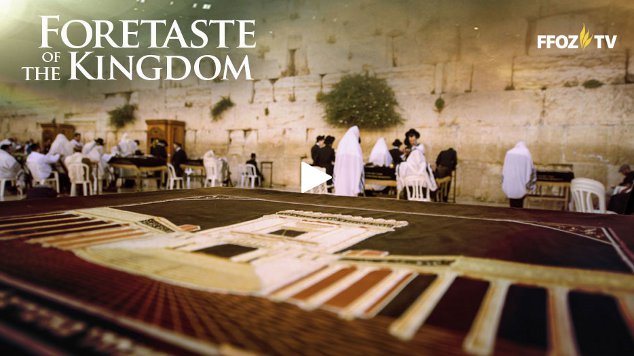
FFOZ TV Review: Foretaste of the Kingdom

FFOZ TV episode 21Episode 21: The Apostle Paul calls the Sabbath a “shadow of things to come.” Most people usually think of it as a shadow of things from the past. However, viewers will learn in episode twenty-one that the Sabbath is a foreshadow of things still yet to come. Jesus and the Sabbath both provide rest and the Sabbath rest is a taste of the final rest we will have in the Messianic Era when Messiah returns to set up his kingdom. Thus for those who still observe the Sabbath today, it is a promise of what is to come, the Messianic Age.

-from the Introduction to FFOZ TV: The Promise of What is to Come
Episode 21: Foretaste of the Kingdom (click this link to watch video, not the image above)

The Lesson: The Mystery of the Sabbath Rest

First Fruits of Zion (FFOZ) teacher and author Toby Janicki starts out the exploration of this mystery with what most of us consider to be a familiar lesson from Jesus:

Turn to me, all who labor and are burdened, and I will cause you to rest. Accept upon yourself my yoke and learn from me, for I am humble and lowly in spirit, and you will find a resting place for your souls. For my yoke is pleasant and my burden light.

Matthew 11:28-29 (DHE Gospels)

There’s a lot we think we know about this teaching. We think we know that Jesus wants us to believe in him so that becoming a Christian will provide our souls rest. We think he means that his yoke, his grace, is a pleasant and light “burden” when compared to the Law of Moses. We think that Jesus is always humble and lowly rather than being like the vengeful God of the Old Testament.

But we’re probably not correct, at least not entirely. One of the points Toby made (and he’s made it before, is that when we use improper Biblical exegesis, we often come up with incorrect theology. That statement most likely won’t make some Christian readers happy since once taught, the traditional theology is the Church is set in stone. But sometimes examining a familiar view from an unfamiliar perspective yields new insights.

So too with this continuation of the investigation of the Sabbath, which was begun in the previous episode which I reviewed last week.

So if what we typically understand about the “rest” being described by Jesus isn’t correct, then, from a Messianic Jewish perspective, what is it?

So there remains a Sabbath rest for the people of God. For the one who has entered His rest has himself also rested from his works, as God did from His. Therefore let us be diligent to enter that rest, so that no one will fall, through following the same example of disobedience.

Hebrews 4:9-11 (NASB)

Toby says that there’s a link between Matthew 11:28-29 and Hebrews 4:9-11. They both talk about a “rest,” though in the case of the writer of Hebrews, it’s specifically a Shabbat rest. Toby leads his audience through a small Bible study on Hebrews 4:

Therefore, let us fear if, while a promise remains of entering His rest, any one of you may seem to have come short of it. For indeed we have had good news preached to us, just as they also; but the word they heard did not profit them, because it was not united by faith in those who heard.

Hebrews 4:1-2 (NASB)

Toby JanickiAccording to Toby, the writer of the book of Hebrews is referring to that first generation of Israelites who left Egypt and died in the wilderness.

They too had a rest they could have entered, the rest of the Promised Land, Israel. But they did not due to lack of faith. Toby next presents verses 3 and 4 as connecting this rest to the Sabbath:

For we who have believed enter that rest, just as He has said,

“As I swore in My wrath,
They shall not enter My rest,”

although His works were finished from the foundation of the world. For He has said somewhere concerning the seventh day: “And God rested on the seventh day from all His works”

The writer of Hebrews is actually quoting Exodus 20:11 which is the commandment of observing the Sabbath. But verses 9 through 11 are not specifically referring to the seventh day Sabbath or the rest represented by entering the Land of Israel. Verse 9 says “there remains a Sabbath rest for the people of God.” What rest is that?

According to Toby, these passages are sometimes used by Christians to “prove” that Jesus is our spiritual rest so we don’t need to observe an actual, physical day of rest, neither Gentile Christians nor any Jewish person. But the writer of Hebrews is clearly referring to something in the future, not something that’s already happened. If Hebrews 4 links back to the “rest” which Jesus was teaching about in Matthew 11, then we have reached our first clue.

Clue 1: The rest that Jesus offers us is something that is in the future.

Verses 10 and 11 in Hebrews 4 is a warning not to be disobedient to God as were the first generation of Israelites who disobeyed by refusing to enter the Land of Promise. Obedience of the people of God is required for them…for us to be able to enter into that future rest of Jesus. But again, what rest is that? To us, this represents a Biblical mystery, but to the original audience listening to Jesus or the original Jewish readers of Matthew’s gospel, it was probably self-evident. How would they have understood the word “rest,” which in Hebrew is “Menuchah?”

To answer that question, the scene shifts to FFOZ teacher and translator Aaron Eby in Israel. Aaron first reads from a portion of the Siddur (Jewish prayer-book) which describes the Shabbat as a rest of “love, willingness, truth, faith, peace, tranquility, stillness, trust,” and “a complete rest in which you find favor.”

Clearly, the concept of Shabbat is more than just relaxing in front of the tube or playing a few rounds of golf.

ffoz_tv21_aaronRest is used in a somewhat different context in the Bible. Aaron quoted from Deuteronomy 12:19 referring to Israel, 1 Chronicles 22:9 which refers to Solomon as “a man of rest” and a King who will reign over a nation experiencing rest, peace, and quiet, and 1 Kings 8:56 which is part of Solomon’s dedication of the Temple. These images represent the age of Messianic redemption and the Temple is a portrait of the fulfillment of all the Messianic promises. Aaron also links this to the poetic language of the Rabbis who consider the weekly Shabbat to be a tiny fraction of what will be experienced in the age to come…a forestate of the Kingdom of God.

Back in the studio with Toby, we receive the next clue:

Clue 2: The Sabbath rest is a foretaste of the rest in the Messianic Era.

I can certainly see why the seventh-day Sabbath rest is considered a blessing of both physical and spiritual rest for observant Jews. Not only is it a day to rest in the holiness and peace of God in our age, but it is a miniature representation of the full and complete rest that will be experienced when Messiah reigns in Jerusalem and over all the world, an age of total, worldwide peace.

But in traditional Christian interpretation, we encounter a problem:

Therefore no one is to act as your judge in regard to food or drink or in respect to a festival or a new moon or a Sabbath day—things which are a mere shadow of what is to come; but the substance belongs to Christ.

Colossians 2:16-17 (NASB)

I mentioned these verses among others in my review last week as the “Christian defense” against acknowledging an ongoing Shabbat observance or any such keeping of a Sabbath in the future. When I typically hear language like “type and shadow” in a Christian context, it usually means that such “shadows” came to point us to Jesus, but now that he’s come, the shadows are no longer necessary. However, that interpretation is filtered through a great deal of Protestant tradition and ignores what Paul is actually saying.

Paul said that the Sabbath is a “mere shadow of what is to come,” not what has already come. If, at his first coming, Jesus “fulfilled” the requirement of the Shabbat, then why does Paul refer to the future?

Also, and I’d like to thank Toby for bringing this up, let’s talk about this “shadow” thing. Again, the typical Church teaching on a “shadow” is that it’s basically something of limited usefulness and utility, and was only a poor imitation of something that the Jewish people had to make do with until Christ. Once Christ came, the shadows were eliminated by the “light of the world” and what was temporary then passed away.

Shabbat candlesWhat is a shadow? In a common context, it’s just an area where light is being blocked by an object in between a light source and whatever the light happens to be shining at. A shadow generally renders the shape of the object blocking the light. If Jesus is the “substance” or body of the shadow, then, to extend the metaphor, the Sabbath is “Jesus-shaped.”

If we put all this together, then the Sabbath day is a “shape” or “outline” of something with more substance that will occur in the future and has something to do with the “body” of Messiah. Since that future event has yet to occur, we still exist in the shadow or rather, the seventh-day Shabbat still has purpose and meaning as an image of something even greater and more peaceful to come. Jesus has not replaced the Sabbath and perhaps he never will. In the future, he will fill to complete fullness what we only have a taste of in the current age.

Toby related a number of Talmudic references I’ll pass over (please view the actual episode to get those details) but concludes, using Rabbinic and poetic language, that such concepts link both to 2 Peter 3:8 and Revelation 20:1-6 in describing the thousand-year Messianic reign of Jesus. This is the third and final clue:

Clue 3: The Sabbath foreshadows the coming thousand-year reign of the Kingdom of Heaven.

The rest Jesus was talking about is the Messianic Era, and all who are devoted disciples of Messiah and worshipers of the God of Israel will enter that promised rest when Messiah returns to take up his throne. But we must remain faithful to the end in order to enter that rest.

What Did I Learn?

Something rather poignant. There are a couple of sequences in every episode of the FFOZ TV show that describe the learning materials and other products available through First Fruits of Zion. One of the things this show is supposed to inspire is a desire in the viewers to want to learn more, which can be accomplished through the many fine resources provided by FFOZ.

But in one of these sequences, the voice over said that a “prophetic restoration is sweeping through the Christian world.” I don’t see anything like that “sweeping” through my little corner of the Christian world. I’m glad it’s happening to someone somewhere.

I was also reminded of last Erev Shabbat. My wife made several loaves of Challah and she once again brought out the Shabbos candles…but she was late. My little reminder in Google calendar said that candle lighting began at 4:56 p.m. and at that time, the candles still hadn’t been ignited. I casually mentioned this to her and received a surprisingly sharp rebuke in return. Why should I, a Gentile Christian (she didn’t actually call me that), be keeping track of when Shabbat candle lighting is? She had abruptly (and not for the first time) put up a “Keep Out” sign over the entryway to Shabbat in our home.

She subsequently lit the candles but did not invite me to be present.

“Do not think that I came to bring peace on the earth; I did not come to bring peace, but a sword. For I came to set a man against his father, and a daughter against her mother, and a daughter-in-law against her mother-in-law; and a man’s enemies will be the members of his household.”

Matthew 10:34-36 (NASB)

But a husband against a wife, Master?

“So they are no longer two, but one flesh. What therefore God has joined together, let no man separate.”

Matthew 19:6 (NASB)

I should say that in every other area, the missus and I get along and address a wide range of concerns and shared experiences. It’s just this one place, this religious place, where we are segregated and our worlds keep us apart. I know that, for a variety of reasons, she has good cause to be defensive, but I can’t say that it doesn’t still sting a bit for me to be relegated to one world where our faith is concerned, while my wife inhabits another.

Boaz in ChinaSo it is for many other Christians and Jews in the present age, when many Jewish people see Shabbat as a blessing exclusively for the Jews and to be jealously guarded against outsiders (even if they’re in the same home), and most Christians have no desire to participate in a “shadow” that has long since been replaced by Jesus on the cross.

An “exploration of the Christian faith from a Jewish perspective,” Boaz Michael said at the end of the episode. It’s what I’ve recently dedicated myself to, but it seems a journey I am destined to take alone, and a territory I’m trespassing in as an uninvited foreigner.

If I am to believe prophesy, then I am assured that one day, I will become a welcome stranger in that strange land, but in the current age, the citizens of that country, at least the “citizen” I am closest to, does not permit my entry, nor do my own “countrymen,” the people of the Church, believe my travel plans are valid. I can only trust that one day my determination will be justified. Otherwise, I must accept that my role is to escort the Jewish exiles back to their Land and their heritage, to the foot of the Throne of Messiah, and then I must turn around as the celebration begins, and retreat to where my Master would have me go.