Tag Archives: messianic judaism

Jewish Identity in the Way

paul_trebilcoIn recent years a lot of scholarly effort has been given to questions about early Christian “identity,” how early and in what ways early believers in Jesus saw themselves and acted as distinct groups with their own identity. Major research projects continue to be devoted to this sort of question (e.g., the project on Prayer and Early Christian Identity, based in Oslo, with which I’m connected currently).

Paul Trebilco has now published an important study relevant to these questions: Self-designations and Group Identity in the New Testament (Cambridge: Cambridge University Press, 2012). His new book comprises a further significant contribution to the study of earliest Christianity. Drawing on observations about how groups develop their own “social dialects” (“in-group” terms and expressions), he focuses on the key terms evidenced in NT writings that appear to have been used to refer to early Jesus-believers, each term given a chapter-length analysis.

-Larry Hurtado
“Trebilco on Early Christian Self-designations”
Larry Hurtado’s Blog

This sounds like a fabulous book but even the Kindle version costs over $63.00, so it’s deffo out of my price range. Hurtado is of the belief that Jesus was worshipped as God very early historically so he’s going to likely come down on the side of an early distinctiveness of identity of Christians as apart from Judaism, probably very soon after the ascension of Christ.

This is an important topic for me since in my readings, I regularly find that the early “Jewish Christians” continued to self-identify as Jews and understood “the Way” as a Jewish branch among the other “Judaisms” of their day.

When they heard it, they praised God. Then they said to him, “You see, brother, how many thousands of believers there are among the Jews, and they are all zealous for the Torah (emph. mine).

Acts 21:20 (NRSV)

I deliberately rendered the world “law” as it appears in the NRSV as “Torah” to communicate more how James and the elders in the apostolic council in Jerusalem would have understood the vital concept. There were thousands of Jewish believers in Moshiach who were all zealous for the Torah.

Sounds pretty Jewish to me.

Going back to Hurtado’s blog post, he praises Trebilco, referring to him as “a proven scholar in the field” and citing his earlier, important works.

Hurtado continues:

These terms = “the brothers” (αδελφοι), “the believers”, “the saints” (οι αγιοι), ”the church” (η εκκλησια), “disciples” (μαθηται), “the way” (η οδος), and “Christian” (Χριστιανος). Among his conclusions, he contends that “εκκλησια” originated among “Jewish Christian Hellenists” (“most likely in Jerusalem,” p. 301), but he further argues that this does not mean that they no longer considered themselves also part of the larger Jewish community. He judges the term “Christian” to have originated among outsiders/observers of early Jesus-believers, thereafter appropriated by believers, especially in the later period of persecutions.

As to the larger question about when and how believers saw themselves as a distinct group, Trebilco contends (rightly in my view) that the use of these terms indicates that “they were creating and shaping their identity” already before the time of our earliest texts. This means easily within the first couple of decades after Jesus’ execution. (I’d say likely within the first few months.) Trebilco again: “…these designations also involve the claim of a distinctive identity . . .” (p. 308), “have clear boundary-marking roles,” and “distinguish this new group from other Jews and from Gentiles” (309).

ancient_beit_dinWhat can we make of this? First, that the Jewish disciples of the Jewish Messiah continued to consider themselves Jews participating in a normative Judaism in their day. However, as “Messianics,” they also understood that their identity was unique and that they were, in some sense, distinct from their Jewish brothers who adhered to other streams of Judaism, because ultimately salvation and the realization of Israel’s redemption and restoration only comes through Messiah.

I have great sorrow and unceasing anguish in my heart. For I could wish that I myself were accursed and cut off from Christ for the sake of my own people, my kindred according to the flesh.

Romans 9:2-3 (NRSV)

In stating this, Paul is saying that Jews outside the framework of “the Way” are also outside of salvation, and the anguish at this thought drives Paul to declare he would be willing to be accursed by God and cut off from Messiah if only it would save the Jewish people who do not know Messiah.

But it also continues to establish that the identity of a first century Jewish disciple of Messiah is as a Jew operating within a Jewish religious framework. This is opposed to Paul assuming a non-Jewish identity in a non-Jewish religious movement as many modern Christians currently believe. Being a “Messianic” (Christian) for a Jew was then both an exercise in normative Jewish religious worship and a unique Jewish identity because of adherence to Messiah, the living embodiment of Torah, Israel, and God’s gracious redemption.

The limits of Hurtado’s blog post allows for a minimal exploration of Gentile identity but that’s not my main point at the moment (though I do touch in it below). My primary point is to affirm for my Gentile Christian brothers and sisters, as well as any Jewish readers, that the historic worship of Jesus by Jews is not an aberration within Judaism or an abandonment of Judaism and the Torah. It was and is the highest expression of devotion to God both within the first century context and within what some have called modern “Bilateral Ecclesiology” Messianic Judaism.

It’s important to note though, that at least one Jewish scholar has a different idea as Hurtado points out:

I mean no criticism in saying that this all seems rather obvious to me, but in view of the nature of recent scholarly discussion (e.g., Boyarin’s claim that we don’t have “Christianity” as such before the fourth century CE), I’m very grateful to Trebilco for this fine evidence-based study, which will further confirm his status as a noteworthy figure in NT/Christian Origins.

Without reading “Boyarin’s claim” in full, I have no context upon which to comment, but I would have to guess that Boyarin may be stating that the “Jewishness” of Christianity extended much further forward into history than Hurtado or Trebilco believe. If, based on Trebilco’s book, Hurtado believes that the Christian identity replaced the Jewish identity of Jews in “the Way” in the first century forward, then I’m going to have to strenuously disagree. As long as Jews participated in the worship of Yeshua as Messiah, I can’t see them self-identifying as anything other than Jewish, and certainly I don’t believe they would ever abandon the Torah and a Jewish identity for the sake of Messiah. I say this because it is totally contrary to the Jewish Messiah himself to request that devotion to him should require abandoning the Torah and Israel.

I will split a hair and say that Jewish identity was not imposed on the Gentiles being admitted into the Jewish “Way” (see Acts 15:22-35, Acts 21:25), thus the Gentile “Christians” would have established an identity that, while initially contained within a Jewish religious framework, made them distinct not only from their Jewish mentors relative to Torah-observance, but also distinct from the pagan people and religions in their world.

In addition, we’ve already seen Hurtado quote Trebilco as saying:

“distinguish this new group from other Jews and from Gentiles” (emph. mine)

jewish-davening-by-waterI’m going to argue, based on the above-statement, that the distinctiveness of first century “Messianic Jews” was in relation to the Gentiles in “the Way.” By definition, all Jews were distinct from all Gentiles, so it would be redundant of Trebilco to say that it was “Christian Jewish” identity that distinguished them from pagan Gentiles. It makes more sense for him to make this statement if he is defining a distinctiveness of Jewish identity within “the Way” that identified the Jewish disciples uniquely both within the context of larger Judaism and as compared to believing Gentiles.

Of course, I’d have to read Trebilco’s book to actually confirm this, but what I can gather from Hurtado’s blog post certainly suggests it.

In summary, Gentile Christian identity distinctiveness as a religious stream wholly separate from paganism would have occurred very early, probably within Paul’s lifetime. Jewish discipleship in Messiah would have continued to be Jewish in every sense and yet, would still have distinguished Jewish members of “the Way” from other Jewish streams by virtue of Messianic redemption and the promise of national restoration upon Messiah’s return.

Here then, we see a template for the modern Messianic Jewish movement, a model for how Jews today can view adherence to Yeshua (Jesus) the Messiah as truly and completely Jewish, and unlike the vast majority of Christian history otherwise indicates, as a movement which does not require a Jew to abandon Jewish identity or the Torah in order to be a disciple of the Master.

112 days.

Gifts of the Spirit Poured Out On All Flesh

Pouring waterAnd it shall come to pass afterward, that I will pour out my Spirit on all flesh; your sons and your daughters shall prophesy, your old men shall dream dreams, and your young men shall see visions. Even on the male and female servants in those days I will pour out my Spirit.

And it shall come to pass that everyone who calls on the name of the Lord shall be saved.

Joel 2:28-29, 32

“I will pour out my spirit on all flesh.”

That’s a pretty exciting statement when taken at face value, and it filled in a gap in my understanding of how non-Jews are supposed to fit into the New Covenant God made (is making, will make) with Israel.

I’ve spent a great deal of time trying to follow the threads from the covenant God made with Noah, to the one He made with Abraham, to the one He made with Isaac, to the one He made with Jacob, to the one He made with Moses and the Children of Israel, to the New Covenant language recorded in Jeremiah 31 and Ezekiel 36, to the language of Messiah in Luke 22:14-23, and so on.

Classic replacement theology in Christianity has historically made the New Covenant fit but it must grossly misread the text in order to accomplish its goal. Instead of replacing Israel with “the church,” God has renewed and amplified His covenants with Israel in the New Covenant language and is in the process of or is yet to actually write the Torah upon the heart of Israel and to redeem her to Himself.

Only Messiah’s declaration faintly hints that somehow the Gentiles might be involved as well, and I’ve had to satisfy myself with that “slender thread” using more than a little faith and hope, because it’s not all that clear in the Bible just how Gentiles are attached to God through Israel. Oh, we have plenty of evidence that we are. Paul made considerable effort to engage Gentiles and to bring them into the faith after his encounter with Messiah in Acts 9. Then there’s Peter’s encounter with Cornelius and his entire Gentile household and the astonishing event of all those non-Jews actually receiving the Holy Spirit, just as the Jews had in Acts 2, which completely blew the socks off Peter and his Jewish companions (no, they didn’t really wear socks).

But let’s back up a step.

I’m referencing a presentation given by Toby Janicki at the First Fruits of Zion (FFOZ) Shavuot conference at Beth Immanuel Sabbath Fellowship in Hudson, Wisconsin. The name of his teaching was Spirit on all Flesh, and it was one of the few presentations when I addressed the speaker (Toby) afterward with both a question and a thank you.

One of the things Toby established was that there was a movement of the Spirit prior to Acts 2. It’s hard to believe anyone could not know that since the Spirit is all over the Tanakh (Old Testament), but I guess some Christians have a rather myopic view of the Bible. After all, whose Spirit was it that was hovering over the waters? (Genesis 1:2) In Acts 2:2-3, a sound like a mighty rushing wind filled the entire house where they were sitting. And divided tongues as of fire appeared to them and rested on each one of them.

tape-over-mouthIt is further said that after the Spirit rested on them, each of the apostles could speak foreign languages that they did not know. This ability allowed them to be united with many other Jews from the various nations in the diaspora. But if language can unite, where do we see it breaking unity?

Come, let us go down and there confuse their language, so that they may not understand one another’s speech.” So the Lord dispersed them from there over the face of all the earth, and they left off building the city. Therefore its name was called Babel, because there the Lord confused the language of all the earth. And from there the Lord dispersed them over the face of all the earth.

Genesis 11:7-9

According to the beginning of this chapter, the “whole earth had one language,” and they used this ability to unite in arrogance against God. God confused their languages into, according to midrash, the seventy languages among the nations, and thus was scattered mankind.

Now when all the people saw the thunder and the flashes of lightning and the sound of the trumpet and the mountain smoking, the people were afraid and trembled, and they stood far off and said to Moses, “You speak to us, and we will listen; but do not let God speak to us, lest we die.” Moses said to the people, “Do not fear, for God has come to test you, that the fear of him may be before you, that you may not sin.” The people stood far off, while Moses drew near to the thick darkness where God was.

Exodus 20:18-21

The word of God was pronounced on Mount Sinai in seventy languages (Shab. 88a; Ex. R. v.; comp. Acts ii. 5). The Torah was written in seventy languages in order that the nations should not be able to plead ignorance as their excuse for rejecting it (Tosef., Soṭah, viii.). Among the seventy languages the most noble is Hebrew, for in it was pronounced the creative word of God (Gen. R. xviii., xxxi.; Yalḳ., Gen. 52). The Jewish law required that every member of the Sanhedrin should have sufficient knowledge of the seventy languages to be able to do without an interpreter (Sanh. 17a; comp. Meg. 73b; Men. 65a).

“The Seventy Nations and Languages”
JewishEncyclopedia.com

It is said in midrash that seventy tongues of fire issued forth from the mountain and that the people could actually see the sound of God’s voice, and it was as if God had spoken the Torah in all seventy languages in a single utterance. And that God had spoken in the languages of all the nations of the earth because the Torah was given to all mankind.

Hebrew FireIf you couple this imagery with Acts 2 and then with Acts 10, you can see God reversing what he did in Genesis 11 providing a source of unity rather than division.

But it’s not as if the Spirit never encountered non-Israelites prior to Acts 10. In Toby’s presentation, he asked how Rahab (Joshua 2:16) knew that the Jewish spies could hide in the mountains and that their pursuers would stop looking for them after three days? Why not two, or four, or six? Midrash suggests that the Spirit rested upon Rahab and she prophesied. Certainly, the Gentile magician Baalam also had access to the Spirit, for he could even speak to God. In fact, Judaism considers that there were seven prophets among the Gentiles, although they were not as elevated as the prophets of Israel.

But when Peter and his companions saw the Spirit descending upon Cornelius and the Gentiles, they must have thought that the Messianic Age prophesied by Joel had come and indeed, that the Spirit had been poured out on “all flesh.” I don’t doubt that prior to that event, few if any Jews believed that a Gentile could receive the Spirit and thus forgiveness of sins.

For the Gentiles, who were once far off from Israel and the promises, had been brought near (Ephesians 2:13) by the blood of Christ and their faith in the Messiah, and the Gentiles too received the Spirit and forgiveness. Thus Jew and Gentile became one in Messiah (Galatians 3:28) upon receiving the Spirit, with both being included in the body of Jesus and both having a place in the life of the world to come by the Master’s merit.

Receiving the Spirit is a sign of repentance. Although Luke doesn’t record Cornelius making teshuvah, he must have in order for Peter to witness the Spirit resting upon the Gentiles in the Roman’s home. Once Peter related what he and the other Jewish witnesses saw, the Council of Apostles and the elders praised God (Acts 11:18) that He showed no distinction and gave the Spirit and forgiveness of sins to all who repented, both the Jews and the people of the nations. What a wonderful gift.

For me, Joel 2:28-32 is the necessary linkage between Jeremiah 31 and Ezekiel 36 and binding the New Covenant prophesies to Luke 22:14-23, Acts 2, Acts 10, and finally Acts 15. I know from various sources, including John W. Mauck’s book Paul On Trial: The Book Of Acts As A Defense Of Christianity, that it was always God’s plan to include the Gentiles in a relationship with Him through Messiah.

…that the church’s disruption of the social/religious status quo (allowing Gentiles to become full members of the faith without circumcision and observance of the Torah)…

When I put all this together with everything I’ve learned so far about the connection between the covenants and all the material I’ve gathered about the meaning of the Acts 15 declaration, the relevance of Gentiles as members of the Kingdom becomes increasingly clear.

creative-torahThe Jewish people have been the keepers of the Torah, the Shabbat, and the knowledge of One God for thousands of years, while the people of the nations were worshiping figures made of stone and wood. But it was always God’s plan to include us as equal members in the Kingdom of Heaven, and the unique purpose of the Messiah was to allow us to come along side the Jewish people as equal sharers of the Spirit of God and of salvation, in order to give glory and honor to the King of Israel, the Holy One of Heaven.

God indeed has united all of His people among Israel and the people of the nations who are called by His Name. Just as God is One, we are One in Spirit and in the Kingdom, the Jew first and then also the Gentile. The Kingdom isn’t here yet because the Torah has yet to be written on our hearts. Peace has not arrived. We continue to struggle. But now there is hope. Now there is a path for the rest of us to follow. May the Lord of Heaven grant us wisdom and grace so that we can help in repairing our broken world and straightening the now crooked road upon which the King will walk when he returns to Israel and his throne in Holy Jerusalem.

Thanks for the good news, Toby.

Addendum: This ties up the end of my “Jesus Covenant” series called Building My Model and the other parts that came before it.

121 days.

The Evidence of Acts 15

Apostle-Paul-PreachesWhen they arrived, they called the church together and related all that God had done with them, and how he had opened a door of faith for the Gentiles. And they stayed there with the disciples for some time.

Then certain individuals came down from Judea and were teaching the brothers, “Unless you are circumcised according to the custom of Moses, you cannot be saved.” And after Paul and Barnabas had no small dissension and debate with them, Paul and Barnabas and some of the others were appointed to go up to Jerusalem to discuss this question with the apostles and the elders.

Acts 14:27-15:2 (NRSV)

Luke notes a sharp disagreement existed (verse 2), his otherwise respectful reference to the circumcision groups contrasts markedly with Paul’s trenchant comment about the Jewish Christians who were advocating the requirement of Gentile circumcision in Galatians 5:12: “I could wish that those who trouble you would even cut themselves off!” This treatment is consistent with the desire by Luke not to hang the church’s “dirty laundry” before Roman officials.

-John W. Mauck
“Chapter 17, Acts 15:1-35: Circumcised Hearts”
Paul On Trial: The Book Of Acts As A Defense Of Christianity (Kindle Edition)

I previously mentioned Mauck’s book on my blog and I am continuing to read and enjoy his insights on Luke/Acts as a reflection of his belief that these books were written as a legal brief pursuant to Paul’s trial in Rome before the emperor (Acts 28). Mauck, an attorney and Bible scholar, suggests that Luke did not write his gospel or the book of Acts as theological instruction for the Jewish and Gentile disciple of Christ, but as a legal document for the secular Roman court. His book acts as “evidence” of his assertion to his readership and I must say, as a lay person, I’m certainly seeing how he arrives at his position.

Acts 15 is of special interest to me, since it is the pivotal chapter in Luke’s book regarding how Gentiles were to be formally entered into the Jewish religious movement of “the Way.” I previously spent a good deal of time writing on Acts 15, primarily from D. Thomas Lancaster’s viewpoint as expressed in Torah Club, Volume 6: Chronicles of the Apostles published by First Fruits of Zion (FFOZ). While Lancaster’s treatment of Acts 15 was dense with information and insight, I always welcome different viewpoints on this material, since I consider it so vital in understanding the purpose and drive of the Gentile Christian life today.

What follows is a summary of Mauck’s chapter on Acts 15 and what I can glean that is of relevance to both Jewish and Gentile disciples of the Messiah today.

(I haven’t abandoned my series on the First Fruits of Zion Shavuot Conference, but wanted to change my focus for a moment to keep my thoughts fresh and to continue to provide new and enlightening material to anyone who is reading my blog. I’ll continue my commentaries on the conference and its presenters tomorrow).

Scripture informs the argument and decision. Acts 15:17, a part of Jacob’s interpretation of the prophet Amos, is particularly important: “that the rest of mankind may seek the Lord. Even all the Gentiles who are called by My name.” It tells the Roman reader that the Hebrew prophets had foreseen that not all Jews would remain faithful to God, while Gentiles would become followers of Israel’s God without becoming Jews. The Messianics were not inventing a new faith, but following a plan of God unfolding from ancient times.

-Mauck, Chap. 17

As a legal brief written by Luke, Mauck believes that the intended audience of Acts is not only Gentile but non-believing. One of the most serious charges leveled against Paul was that he was promoting a new religion among Jews and Gentiles in the Roman Empire. Only Judaism was considered a legal religion outside of the Greek/Roman pantheon of “gods”. The creation and promotion of any other religious form would be considered “atheism” in the Roman courts. Luke then, must convince the court in Rome that Paul’s evangelism to Jews and Gentiles was the promotion of a pre-existing religion: Judaism, and that the Jewish expression of “the Way” was wholly consistent with the other normative Judaisms of the first century CE as evidenced, in part, by the Tanakh (Old Testament).

The-LetterBut as we’ve seen so far, while the plan to include Gentiles in the Jewish movement has been established from ancient times, it isn’t clear just how they (we) were to be involved. At the beginning of Acts 15, Jewish believers from the “circumcision party” assert that the only way for Gentiles to gain entry into any form of Judaism was to be circumcised (convert) and to follow the Torah as proselytes. Paul disagreed with this position and it became such a controversy that the matter was referred to James (Jacob) and the Council of Apostles in Jerusalem for a legal decree.

I’ll leave it to the reader to acquire Mauck’s book and review Chapter 17 in its entirety, but in addressing the “Jerusalem Letter,” which contains a summary of the Council’s final decision about the Gentiles, Mauck says this:

By carefully setting forth the controversy, summarizing the arguments of the disputants, recounting the decision-making procedure, and memorializing the decision and reasons for it, Acts 15:1-35 exemplifies how a legal brief addressing a theological subject should be written to a secular reader.

Instead of the far more extensive law of Moses which the Jewish Christians were following, the Gentiles who are now going to be included in the people of God have been given four laws to obey…

Dan Gruber 1. has shown how the Jerusalem Council never changed the requirements of Torah but rather took portions of Torah which applied to Gentiles living among the Jews and informed the Gentiles of those requirements.

It’s been rather frustrating for both ancient and modern Bible scholars that Luke didn’t record more of the “mechanics” of exactly how the “Apostolic Decree” was supposed to impart a life of holiness and inclusion upon the Gentile believers. On the surface, the four decrees seem especially anemic in addressing Gentile worship and devotion to God within a Jewish framework. However as Mauck points out:

The theological basis for this decision would be lost on a Roman official reading Luke’s brief except that Luke records Jacob’s pronouncement that his decision is based upon the teaching of Moses…if Luke were writing to Gentile or Jewish Messianics, it seems to me that a more comprehensive or edifying explanation for these rules would be forthcoming…

What has been lost to history and thus to us, are the instructions that were orally provided to the letter’s Gentile recipients by Barnabas, Paul, Judas, and Silas (Acts 15:22) which no doubt gave dimension and deeper meaning to the pen and paper content of the Council’s letter to the Gentiles in the diaspora.

However, Mauck appears convinced of an important point: that the Gentile believers were never intended to live a Jewish lifestyle and take on board the full “yoke of Torah” as were the Jews.

I know I’ve said that before in a number of different ways and I’m sure certain members of my audience are getting tired of hearing it, but when presented by an attorney as not theology but legal evidence to be submitted to a pagan court system, the nature and weight of the information changes. The differences in application of Torah to Jewish and Gentile participants in the Nazarene movement cease to be an argument of opposing theological opinions and become a series of established facts set before the Roman court, complete with documentation (assuming any copies of the letter could be acquired) and witnesses (Paul could testify on the events he witnessed as could other apostles and disciples if they could appear before the court).

In the next Chapter, Mauck nails home the point of differing Torah application to Jewish and Gentile disciples:

…that the church’s disruption of the social/religious status quo (allowing Gentiles to become full members of the faith without circumcision and observance of the Torah)…

He further states:

Gentiles could be included into the people of God by faith in him rather than by circumcision and observance of extensive ritual…

A fruit tree budding detailOf course, it is faith that attaches both Jew and Gentile to God through Messiah by the Spirit, not observance of Torah, but Mauck does repeatedly assert that upon turning to God through faith in Messiah, the Gentile was not required to become circumcised or to observe Torah in the manner of the Jews.

While I believe it’s important to continue to establish that it was never the intent of the Council of Apostles (nor of the Holy Spirit) that Gentile disciples were to have Torah applied to their lives in the same manner as the Jewish disciples of Jesus, it is equally important to drive home the point that, according to the evidence, God never intended for Jewish believers to ever cease observance of the Torah of Moses:

Also, the inclusion of Paul’s circumcision of Timothy…refutes charges that Paul and the Messianics were changing “customs handed down from Moses.” (Acts 21:21, see Acts 6:14)

In further support of this point (Mauck’s references to Jews turning to Jesus as Messiah while remaining Jewish and remaining “zealous for the Torah” are replete in this book and I won’t attempt to create a comprehensive list), Mauck notes in Chapter 21:

The meeting with Jacob and the elders (Acts 21:15-26) has essential forensic applications. First, the elders declare how thousands of “zealous for the law” Jews have believed. Luke wants Theophilus to know that the faith in Jesus remains Jewish completely.

I’ll stop here since I only intended to present the content of primarily a single chapter of this book rather than write a complete review. Nevertheless, I believe I have found another stone to support the structure that Gentile entry into the first century Jewish Messianic movement did not require that the Gentiles undergo circumcision and adhere to Torah observance in the manner of the Jews, nor did Jewish entry into “the Way” convert Jewish believers to “Christianity” as we understand it in the modern era, and force them to surrender their Jewish identities and Jewish Torah observance.

The modern Messianic Jewish movement is on a quest of discovery, re-establishing these facts, re-asserting the right of Jews to live as Jews, to observe the Torah of Moses, and to be devoted disciples of the Messiah, as concepts and behaviors that are completely acceptable and integrated within a Jewish lifestyle and worldview.

In doing so, Messianic Judaism, like the Apostolic Council in ancient days, does not require Gentile believers in Jesus to become circumcised and to observe the Torah in a manner identical to their Jewish counterparts. This is established by the Bible and specifically Acts 15 and related scriptures as both theology and legal evidence along with the support of the Holy Spirit of God.

The mystery isn’t in how Jewish believers are to live as disciples of the Messiah, but how we Christians are to understand the application of the Torah upon us, since the oral instructions accompanying the Council’s letter did not survive. However, if we are to believe that the Bible is sufficient for our needs (though not containing all of the information that exists and with the understanding that extra-Biblical data, such as history and archeology, can enhance Biblical understanding), then we must agree that what we have in our hands when we hold the Bible, is enough to tell us who we are and how we are to proceed forward, as Jews and Gentiles, in a life of discipleship as followers of our Master.

1. Dan Gruber, “Torah and the New Covenant” (Hanover, N.H.: Elijah Publishers, 1998), 26-7 and other references; see Bauckham, “James and the Church,” 459-62.

122 days.

Gifts of the Spirit: For the Common Good

kinbar“Everyone knew I was Jewish. It just didn’t mean anything.”

-Rabbi Carl Kinbar

I will feed you with the heritage of Jacob your father, for the mouth of the Lord has spoken.

Isaiah 58:14

Rabbi Kinbar gave his first presentation called For the Common Good last week on Wednesday morning during the First Fruits of Zion Shavuot conference at Beth Immanuel Sabbath Fellowship in Hudson, Wisconsin. He told a story about himself that most of the audience, including me, probably didn’t know. Rabbi Kinbar was a Pastor for many years before he entered into Messianic Judaism and eventually became a Rabbi.

I won’t go into all of the details (I didn’t chronicle all of them in my notes of his presentation) but I wanted you to get that the vast, vast majority of Jewish people I know who are active and teaching in Messianic Judaism came to the movement by way of the church. Many of them were Pastors and teachers. But something called to them.

In Rabbi Kinbar’s case, Isaiah 58:14 called to him…literally.

He recalls a time (again, no specific details) when his eyes were closed and he was enjoying the presence of God in his life. At that moment, he felt a hand touch his shoulder and someone said, “I will feed you with the heritage of Jacob your father.”

Rabbi Kinbar didn’t know what it meant at the time, although he wondered if it was about his father since he actually is named Jacob. As it turns out, this experience (Rabbi Kinbar never saw the person who touched him) spoke both about his father and about the patriarch, his father Jacob.

The general theme of the conference was the gifts of the spirit and you may be wondering what the above story has to do with the Holy Spirit of God. For me, it seems clear, since by God’s Spirit, Rabbi Kinbar was drawn toward a different path than the one he was traveling and by the Spirit, we are each drawn to the path that God would have us walk.

Why?

On an individual level, the answer is so we can be who God designed us to be. It would be tragic if God designed you to write grand symphonies but you were stuck putting together widgets on an assembly line. It would be equally tragic if you were trying to learn medicine, but God designed you to be a Forest Ranger.

But that’s not the kind of design I’m talking about.

I’m talking about how we know and serve God and how we know and serve each other, and that is a large part of the point Rabbi Kinbar was making and the point of the conference as well.

When we think of spirituality or the gifts of the spirit, most Christians think of the Pentecostals and Charismatics, but what about Judaism and particularly Messianic Judaism and its traditions? Spirituality in modern Judaism, Messianic or otherwise, may seem absent or at best disguised, but it’s quite clear in ancient Messianic Judaism as illustrated in the letters of Paul.

In many ways, we mirror the problems Paul was attempting to deal with in his day.

I give thanks to my God always for you because of the grace of God that was given you in Christ Jesus, that in every way you were enriched in him in all speech and all knowledge—even as the testimony about Christ was confirmed among you—so that you are not lacking in any gift, as you wait for the revealing of our Lord Jesus Christ, who will sustain you to the end, guiltless in the day of our Lord Jesus Christ. God is faithful, by whom you were called into the fellowship of his Son, Jesus Christ our Lord.

I appeal to you, brothers, by the name of our Lord Jesus Christ, that all of you agree, and that there be no divisions among you, but that you be united in the same mind and the same judgment. For it has been reported to me by Chloe’s people that there is quarreling among you, my brothers.

1 Corinthians 1:4-11

Rabbi Kinbar states that they really did lack nothing in terms of the gifts of the Spirit, but they did lack unity. Although all of the teachers and participants at the conference were well unified, though from widely different backgrounds, the larger Messianic Jewish and Hebrew Roots movements do suffer from lack of unity in many things, as does larger, mainstream Christianity.

But what does this have to do with the “path” and “identity” issues I mentioned at the beginning of this article?

For though I am free from all, I have made myself a servant to all, that I might win more of them. To the Jews I became as a Jew, in order to win Jews. To those under the law I became as one under the law (though not being myself under the law) that I might win those under the law. To those outside the law I became as one outside the law (not being outside the law of God but under the law of Christ) that I might win those outside the law. To the weak I became weak, that I might win the weak. I have become all things to all people, that by all means I might save some. I do it all for the sake of the gospel, that I may share with them in its blessings.

1 Corinthians 9:19-23

pathPaul isn’t saying that he was some sort of chameleon, shifting practices from Jewish to Gentile, from weak to strong, and that his own Jewishness had no meaning to him. He was dealing (as we saw above) with a fractured population or at least a diverse one. He became a Jew to the Jew and not a Jew to the Gentile because he didn’t teach Torah to the Gentile. The one under the law is probably a Gentile convert to Judaism, and Paul learned to speak to these proselytes from the same position and set of concerns they were experiencing. It’s interesting to speak of a fractured population because Rabbi Kinbar said that if Paul had chosen to introduce the Jewish observance of Torah to all populations uniformly, he would have actually fractured them further rather than setting each group on their correct and individual paths, Jew, convert, and Gentile alike.

But Paul had to speak to each of these populations within the context of who they were in order to win more of them to the Gospel message of Messiah; so they could repent, for the Kingdom of Heaven is near.

In listening to Rabbi Kinbar’s message, I thought of the different populations I encounter. I thought of how I could present something like this to Pastor Randy, who doesn’t believe the Jewish disciples of Messiah were to continue to observe the Torah mitzvot, and to the Hebrew Roots people who occasionally read my blog, who believe that everyone is meant to observe the Torah mitzvot identically.

Rabbi Kinbar’s own encounter with the Spirit set him on a particular path because he is Jewish. He was and is supposed to be fed with the heritage of his father Jacob, the Jewish patriarch. But this isn’t just a message of distinctions but of distinctions drawn into unity.

Let’s see if you can spot what’s missing in the following passage:

For just as the body is one and has many members, and all the members of the body, though many, are one body, so it is with Christ. For in one Spirit we were all baptized into one body—Jews or Greeks, slaves or free—and all were made to drink of one Spirit.

For the body does not consist of one member but of many. If the foot should say, “Because I am not a hand, I do not belong to the body,” that would not make it any less a part of the body.

1 Corinthians 12:12-15

I didn’t see it either, but in fact, there is no mention of Torah in this portion of Paul’s letter. For we were all baptized into one body—Jews or Greeks. Does that mean we are all supposed to obey the Torah in an identical fashion, Jews and Greeks, or all of us are supposed to discard the Torah?

Not at all, because we are united in the Spirit, not in the Torah. Many good things are said of the Torah, but it is applied differently to different populations within the unity of the Spirit, hence Paul’s statement in 1 Corinthians 9:19-23.

Two paths, two peoples, one body, one Spirit, one Messiah.

There shall come forth a shoot from the stump of Jesse, and a branch from his roots shall bear fruit. And the Spirit of the Lord shall rest upon him, the Spirit of wisdom and understanding, the Spirit of counsel and might, the Spirit of knowledge and the fear of the Lord.

Isaiah 11:1-2

Now when all the people were baptized, and when Jesus also had been baptized and was praying, the heavens were opened, and the Holy Spirit descended on him in bodily form, like a dove; and a voice came from heaven, “You are my beloved Son; with you I am well pleased.”

Luke 3:21-22

For Jews demand signs and Greeks seek wisdom, but we preach Christ crucified, a stumbling block to Jews and folly to Gentiles, but to those who are called, both Jews and Greeks, Christ the power of God and the wisdom of God. For the foolishness of God is wiser than men, and the weakness of God is stronger than men.

1 Corinthians 1:22-24

And I, when I came to you, brothers, did not come proclaiming to you the testimony of God with lofty speech or wisdom. For I decided to know nothing among you except Jesus Christ and him crucified.

1 Corinthians 2:1-2

dove-peaceThe wisdom of God rests upon the Messiah in the full measure of the Spirit and in him, we are united if we accept this or torn apart if we do not. The Messiah crucified is the wisdom of God.

That last part is important, because Rabbi Kinbar isn’t talking about Jesus as he was before the crucifixion, for his death was necessary so we could all be reborn in him and indeed, so we could all be in him. For in him, both Jew and Gentile are one, not meaning identical behavior or identity, but one in purpose and in spirit.

I mentioned in a previous blog post that the Gospel message isn’t simply the individual accepting Jesus Christ as Lord and being saved. The Gospel message for Jews and Gentiles is “Repent for the Kingdom of Heaven is at hand.” It’s a message of unity in the Kingdom. Our salvation, our purpose, our unity in the Spirit is to be for the common good of all, not just the personal benefit you and I might derive from being a disciple of the Master.

But to be of any use to the common good, we must consider other people first rather than ourselves. Especially in America, we tend to be individualists, and in the worst possible expression, we tend to pursue “me first, because it’s a dog eat dog world.” But that’s not Messiah’s message and it’s not Paul’s message. You aren’t unified with the body through the Spirit and you aren’t serving your neighbor as yourself if all you think about is yourself and your so-called “rights.”

I was talking to a gentleman named Kevin while we were waiting in line for one of the meals at the conference. He regularly attends Beth Immanuel and he mentioned a certain event that occurred some years ago. When First Fruits of Zion moved away from a “One Law” position to one that reflected the reality of Jews and Gentiles as differing populations within a single Messianic body, a lot of people became upset. This was also reflected in the membership at Beth Immanuel and Kevin pointed out something I hadn’t really noticed.

Except for two or three non-Jews, the only people wearing tallitot during the prayer and Torah services were Jewish men. If any non-Jewish men were wearing a tallit katan, the tzitzit were tucked into their trousers so as not to be visible.

Apparently the shift in perspective at Beth Immanuel had two general reactions among the non-Jewish membership. One was what I just described, Gentiles who adjusted their outward appearance so that they could not be mistaken for Jews (although I must say that during the Torah services at Beth Immanuel, many non-Jews were called up for an aliyah). The other was a group of non-Jews who sought formal conversion to Judaism, usually within an Orthodox synagogue. They could not give up “Judaism,” so they surrendered the Messiah instead.

Rabbi Kinbar heard a voice telling him to feed from the inheritance of his father Jacob and he began a long journey in order to fulfill that mission for his life, and ultimately for the common good within Messianic Judaism. His being Jewish used to not mean anything when he was in a group where everyone was supposed to be inclusive, uniform, and the same, but God was not going to allow that. God wanted Rabbi Kinbar to not only be Jewish as a string of DNA or a piece of intellectual information, but to be Jewish and to live a fully realized Jewish life as a disciple of the Messiah.

Others among the Gentiles received a similar message and were obedient to the Spirit of God. Some Gentiles, however, could not operate for the common good and sought their own path instead, setting the Master and the will of God aside.

One who focuses on and romanticizes Judaism is focusing on the hammer and not the house it is intended to build.

-Troy Mitchell as related by Boaz Michael

Don’t seek Christianity and don’t seek Judaism, but seek an encounter with God.

-Tom

I mentioned previously that Troy’s “midrash” (Boaz didn’t get the quote quite right, but Troy sent me the correction which I’ll publish in tomorrow’s “meditation”) could be adjusted in a number of useful ways. Here’s one of them: One who focuses on and romanticizes the Torah is focusing on the hammer and not the house it is intended to build.

Boaz, Troy, Rabbi Kinbar, and my friend Tom are all delivering the same message from differing viewpoints. Seek first the Kingdom of God and not the various tools and materials we are trying to use to build the kingdom.

As with my previous blog posts about lessons I heard at the conference, I’ve departed from a simple chronicle of the message and allowed this teaching to take me down personal roads that have meaning to me. I realize that after I absorb and process everything I learned, my next task is much more difficult.

Everything I saw and heard was shown to me from a different perspective and can only be understood from that perspective. If I’m supposed to pass this along to others, including my Pastor, I must find a way to help him…to help anyone who is interested, to see the same information, the same Bible, the same God, the same Messiah, from a different point of view. I’m not changing anything about what the Bible says or what the Spirit says. I’m only trying to change the person receiving those statements by changing their perspective.

grand-canyonThe Grand Canyon can be seen from a number of perspectives…from the north rim, the south rim, riding a donkey down narrow trails to the bottom, riding a raft on the Colorado river inside the canyon, flying over the canyon in a helicopter, and probably in other ways as well.

Depending on which perspective you choose, you will be looking at a different landscape, as if it were a different canyon. But the Grand Canyon isn’t changing (well, yes it is, albeit very, very slowly). What is changing is how you look at it.

The same God, the same Messiah, the same Bible, but different perspectives. But there is one overriding message to get from all this. I want you to at least try to temporarily change your perspective (yes, I know it’s difficult and can even feel threatening) to get the message I believe God is trying to tell each and every one of us. The Gospel message is for us to repent and seek first the common good of the Kingdom of God. In the Messianic Era, we will be united in Messiah and every knee will bow to the King.

In the present age, it is not so, but we can strive toward that goal. To do that, we must love God with all of our being and we must love our neighbors…all of them…as ourselves. The common good. The unity of the Messiah. Being connected through the Spirit that dwells within each of us.

Let us consume and be consumed by the Spirit of God for in doing so, while remaining man and woman, slave and free, Jew and Greek, we are all one in the Messiah and we are all servants to the King and to each other. The greatest will become the least and the least will become the greatest. Seek to be a servant and seek the path God has drawn you to and you will be among those who are called His sons and daughters.

I want to apologize for all of the errors that probably crept in as I was writing this “meditation.” My notes are pretty messy as I was working with a lot of loose pieces of paper. I neglected to pack a notebook for the trip. I especially apologize to Rabbi Carl Kinbar for any portion of his presentation I messed up. I do hope that my rather large missive really does serve the common good for all who read it.

Blessings.

125 days.


Pilgrimage to Wisconsin

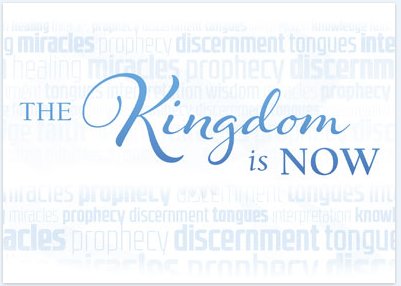
thekingdomisnowThis Shavu’ot, in honor of the anniversary of the giving of the Torah and the gift of the Holy Spirit, the teachers from First Fruits of Zion are gathering to provide historical answers about the “Gifts of the Holy Spirit” from a Messianic Jewish perspective. We’ll be taking a serious look at the role of the Holy Spirit and supernatural gifts. What does Judaism say about prophets and prophecy? What did the gift of tongues mean to the early believers? What is a Spirit-filled life, and what are the gifts of the Spirit from an apostolic-Jewish perspective? How did they function? Is the Holy Spirit active today? How so? This is prophetic teaching about the power of the Messianic Era (the Kingdom) bursting into this current age in the form of supernatural manifestations.

The Gifts of the Spirit are tokens of the Messianic Era—a down payment on the promises of the Kingdom of Heaven, bringing the power of the Messianic Age into our world today.

-from the Shavuot Conference 2013 webpage
First Fruits of Zion (FFOZ)

I went to last year’s conference and had a blast, but just like last year right before I left home, I am experiencing a little trepidation. Things have changed in the last year. I’ve returned to a Sunday church setting for regular worship and have been exploring areas, concepts, and ideas that I have never touched on before.

Last year, I expected to be completely anonymous and was astonished when so many people recognized me. This year, I’m afraid I’ll expect people to recognize me (and I hope I’m not such an egomaniac) and instead I’ll be completely anonymous, even to the people I know well.

Truth be told, I don’t travel as well as I used to. I like going to new places once I arrive and I discover I really do have confirmed room reservations, transportation, and meals, but there’s always a concern that I’ll get on the wrong plane and end up in a different city, arrive at the correct destination but have no luggage (I actually dreamed about that recently), or arrive at the correct destination and no one will have heard of me. I have no desire to sleep in the airport.

I know this is the wrong attitude to approach this year’s Shavuot conference. The theme of the conference is Gifts of the Holy Spirit which presupposes faith and an expectation of gifts that are beyond human creation and experience. If God wants me to go to this conference, He’ll make it possible. If he wants me to participate in a meaningful way, He’ll make that happen too, somehow.

As you read this, it’s Tuesday morning (or later) and I’m on a plane between Boise and Salt Lake or between Salt Lake and Minneapolis–Saint Paul. I suppose if I traveled more, this wouldn’t seem so daunting, but I haven’t been on a plane since last year at this time, so it’s hardly a common occurence in my life.

OK, stop. There I go again. Trust. Faith. I’ve got to remember that.

Last year, I was just beginning to explore this whole Christian vs. Messianic thing. This year I’m deeply involved.

There’s another issue here though. This whole classification of Christian vs. Messianic among non-Jews is just a little crazy. I know that it’s meant to differentiate between traditional Sunday Christians and those who have become more aware of the Hebraic origins of our faith, but it’s gotten to the point where we’re almost acting like we have two different religions.

I know a number of non-Jews who self-identify as “Messianic” visit and read my blog posts. If that’s you, I want you to practice something in the privacy of your own homes when you’re all alone. I want you to say out loud, “I’m a Christian.” Repeat it a few times. C’mon, don’t whisper. Really belt it out. “I’m a Christian.”

“I’m a Christian.”

-Me from last year

conference2I’m a Christian. In many ways, I’m more of a Christian now than when I took this journey last year. Am I too much of a Christian?

Life is exploration. Life is change. Life is a journey and as I write this (last Wednesday morning from your point of view), I’m anticipating a big one (for me, anyway). I find that I’m suddenly scrambling in my brain and in my schedule to put last-minute touches on projects, make sure all my arrangements are arranged, and I’m still trying to frantically put all my ducks in a row (the darn things have a tendency to wander).

Last year I said, ” In some ways, I’ll be just as nervous attending the conference as I would be if I decided to visit a church next Sunday morning.” Right now, I’m more used to going to church on Sunday than I am attending a Messianic conference. I’m sure once I get there, everything will be fine, but there’s this nagging suspicion that I’ve mutated into a lifeform that will look, act, and sound alien to the people in that environment (kind of like a duck in a pond full of swans).

As you might expect, I’ll have little or no time to actually compose new “meditations” when I’m at the conference, so I won’t be posting “morning meditations” every day while away from home (I’ve composed a couple previously that will be automatically published tomorrow and the next day thanks to the WordPress scheduling feature). I may or may not get access to a computer, so I might not even be responding to comments (or clearing comments held for moderation) until the following Sunday, but we’ll see about that.

I’m hoping this will be a time of renewal and rejuvenation (an odd thought for someone approaching his sixth decade on earth) as well as a revived illumination. While I am a creature of habit and I take great comfort in a regular routine, the law of diminishing returns has kicked in and the more I walk my yearly circle in the same way and on the same path, the less I learn and thus, the less I can return to others.

I suppose I should consider Toby Janicki’s point of view on attending the conference:

Today, many Gentile believers are returning once again to the celebration of Shavuot under the auspices of Messianic Judaism. While Christian tradition focuses primarily on the Acts 2 outpouring of the spirit in its celebration of Pentecost, a Messianic Jewish celebration of Shavuot focuses on both this outpouring and the giving of the Torah to the Jewish people. In some ways Shavuot represents the totality of the believers walk, spirit and truth. God not only gave Israel his precious instruction and desired they share it with the nations, but he also gave his people the Holy Spirit which enables us to walk out those instructions and spread the kingdom of heaven. Chag Sameach!

One day, God be willing, I’ll see Jerusalem and the Kotel with my own eyes within this lifetime. But if a trip to another part of my own country to see people who are relatively the same as me causes such concern, how will I face traveling to another country where the people don’t even speak my language and they conceptualize the world in fundamentally different ways?

May God travel with me on my journey (and journeys) and grant me companionship wherever I may find myself. May I also find Him there as well.

…when you were young, you used to dress yourself and walk wherever you wanted, but when you are old, you will stretch out your hands, and another will dress you and carry you where you do not want to go.” – And after saying this he said to him, “Follow me.”

John 21:18-19 (ESV)

Blessings.

134 days.

The road

Do Messianic Jews Hate Christians?

fire-breathingThat’s a rather inflammatory title and it doesn’t really communicate everything I’m about to say, but I had to start somewhere.

Please, brothers and sisters, do not listen to the false teachings of “First Fruit of Zion” and Boaz Michael or anyone from the Union of Messianic Jewish Congregations. You are NOT meant to stay in church on a permanent basis. You know this: doesn’t your spirit grieve there? I know that it does! Because my spirit grieves there too!

The Prophetic Expectation is that Non-Jews will grab hold of a Jew (in a nice way of course) and start down a path to learning the Torah of Moses (Acts 15:21).

I want to help the Christians in churches but my spirit cannot take it there much longer. And I’ll not have my daughter identifying with those who hate our Judaic heritage. May Heaven protect her from the spirit of lawlessness! And may G-d protect her bashert!

-Peter
“The Prophets vs. Boaz Michael: A Brief Look at the Prophetic Expectation for Non-Jews in the “Day” of the New Covenant Age”
orthodoxmessianic.blogspot.com/

I’m doing this against my better judgment. I know I could be letting myself be baited by someone you could think of as a troll. On the other hand, it disturbs me that so much disinformation is being spread, not only regarding the Messianic Jewish movement, Jewish people, and Judaism, but about a specific individual, namely Boaz Michael, and the organization which he founded and leads, First Fruits of Zion (FFOZ).

I know, this is a heck of a thing for me to post right before Shabbos and just days before I travel to Hudson, WI to attend the FFOZ Shavuot conference. The thing is though, I have a problem when I encounter what I believe to be injustice. I really don’t like bullies (though on occasion I feel sorry for some of them). But they need to be confronted. This has to stop.

What’s interesting about the blog owner I quote above and a number of the people who support his ideas, is that they not only appear to oppose the Messianic Jewish movement but the Christian church as well. That doesn’t leave many places left to look for believers.

As you can see from Peter’s words above, it’s as if Christians and the Protestant church are at least inferior to him/them if not down right opposed to the Word and will of God. On top of that, the very idea that the Jewish people within the Messianic Jewish movement might want to actually retain their own Jewish identity and uniqueness seems an undesirable outcome to them.

Do Messianic Jews Reject Christians?

There is a concern that, in order to be viewed as a legitimate branch of modern Judaism within the larger normative Jewish community, Messianic Jewish synagogues must expel all non-Jewish members and attendees. That seems odd, since most of the authentic Messianic groups of which I’m aware have a majority membership of non-Jewish worshipers. Furthermore if David Rudolph’s and Joel Willitts’ landmark book Introduction to Messianic Judaism (IMJ) can be taken at face value, then not only are Christians welcome within the ranks of Messianic Judaism, Christians and non-Jewish members of Messianic synagogues are absolutely required for the health of the body of Messiah!

Don’t believe me? I wrote eleven extensive reviews of different articles (the book has twenty-six different Jewish and Christian contributors) presented in the book which are collected on my blogspot. That single link leads to a page where you can review any or all of them.

On top of that, Pastor Jacob Fronczak, who periodically blogs for FFOZ, wrote an excellent review of the book, which takes much less time to read than my eleven missives. The upshot of all of those reviews and my experience in reading the book, not to mention my experience interacting with Messianic Jews, is that I am, as a church going Christian, not being set to one side as if I’m the left-handed, red-headed, foster child in the family. The fact that I’ve been invited for a second time to FFOZ’s Shavuot conference seems to indicate that I am welcome within their ranks.

If Messianic Jews were uncomfortable about the message having Christians attending their services and conferences is going to send to the other Judaisms in the world, you’d never know it by how many Christians actually attend their services and conferences.

No, I don’t feel rejected by Messianic Judaism, nor do I feel like a second-class citizen in Messianic Jewish groups or when I attend my local church. I don’t feel like Boaz Michael is treating me poorly by suggesting, both in his book Tent of David and personally as my friend, that I explore a church worship experience. After all, he and his wife Amber regularly attend a Baptist church in their own community when Boaz isn’t traveling. IMJ author and editor Joel Willitts regularly attends a Christian church in Chicago. And yet he is also close friends with IMJ co-editor David Rudolph and if they experience any dissonance in their personal and professional relationship, I couldn’t tell by reading their book.

churchesI doubt Messianic Judaism as an overarching concept and organization is perfect. I doubt each individual synagogue or all of the individual people who attend said-synagogues are perfect.

There probably are some Messianic Jews who have “issues” with large numbers of Gentile attendees in their synagogues. There are probably some who prefer a largely Jewish community rather than a largely Gentile community. I don’t blame them. Traditionally, any Jew who has publicly professed Jesus as Savior, Lord, and Messiah has been labeled a “Christian” by Jewish community and family and typically ostracized.

Also historically, the Christian church has typically required any Jew who “professes Christ” to surrender all Jewish worship and lifestyle practices and essentially to become a “goy.” If I were Jewish, I wouldn’t like that either (and having been married to a Jewish wife for 31 years, I have a little insight into that world).

So I, a Christian who goes to a small Baptist church in a suburban community in Southwestern Idaho, don’t feel rejected or pushed away by Messianic Judaism, nor have I ever gotten the impression that Messianic Judaism disdains the other Judaisms or Christianity.

Do Hebrew Roots Groups Hate Messianic Jews and Christians?

But what about Hebrew Roots or the subgroup in which Peter (and I really dislike calling out individuals for a “spitting contest” but sometimes enough is enough) purports to represent? How do they feel about Jews and how do they feel about “Christians?”

To be fair, every Hebrew Roots person I’ve ever met says they love Jews and they love Israel. I don’t doubt it. However, whenever Jews in the Messianic movement register distress at Hebrew Roots Christians mimicking Jewish religious and identity behaviors, typically Hebrew Roots people accuse the Jewish people of racism and exclusionism and other unpleasant things, seizing the “right,” based on various scriptures, to move into the Jewish space and claim everything in that space for Gentile use as “sharers” of all the “stuff.” It’s kind of like having your neighbors burst through your front door, raid your fridge for a beer, say that they’re moving in, and you have to “share” your stuff (food, bed, clothes, toothbrush) with them forever…and you don’t have a say in the matter.

Doesn’t sound very loving.

Actually, I’m more concerned about Hebrew Roots attitudes towards Christians and Christian churches. Granted, “the church” in all its iterations across history, has a rather poor track record in terms of supersessionism, pogroms, inquisitions and the like relative to the Jewish people, but that is slowly changing. However, regardless of how you feel about Christianity, no other group has kept the teachings of Jesus and his apostles and disciples intact for the past twenty centuries, just as the Jews have kept the Shabbat, the Torah, the Prophets, and the teachings of the sages for the sake of Israel and Hashem for as long and longer (much longer).

Most “Messianic Gentiles” I know in the Hebrew Roots movement go to church, at least occasionally. Most Hebrew Roots people who are Jewish (with either a Jewish mother, Jewish father, or both), are intermarried and some of their spouses self-identify as Christian and at least occasionally go to church. Many of the Hebrew Roots Jews and Gentiles have Christian family members and Christian in-laws, so it’s not like they are isolated entirely from Christian influences.

But when Hebrew Roots people characterize the Church as “Babylon” (which I’ve personally heard some of them say) or claim Christians are “lawless” or say they hate the “Judaic heritage” of Christianity, I take offense. Of all the non-Jews who claim to “keep the Torah,” the fact remains that probably over ninety percent of Gentiles who keep the weightier matters of the Law are church going Christians. Church going Christians donate food to the hungry, donate time in homeless shelters, donate time in food banks, visit the sick in hospitals, participate in prison ministries, mow the lawns of disabled people, shovel snow off the drives and sidewalks of the infirm and elderly in the winter, comfort the grief-stricken person whose spouse has just died of cancer.

I know Christian people who perform each of the mitzvot I’ve just listed and I’ve performed at least some myself as a “church going Christian.” If that’s not Torah, what is?

I have complained about my church experience in the past and I probably will in the future. It’s tough to get used to a new “culture” and the different ways people think about and do things within that culture. I also have been significantly challenged as far as my beliefs and my knowledge, particularly by the head Pastor of my church, who is highly intelligent, extremely well-read, who is fluent in Biblical Greek and Biblical and modern Hebrew (and other languages), who has lived in Israel for fifteen years, who maintains close friendships with Israeli Jews (believers and non-believers), and who vehemently opposes supersessionism and anti-Semitism in all their forms.

No, we don’t agree on everything, but I have to say that even when going “toe-to-toe” on some issue, I always encounter great integrity and respect in our transactions and never, ever have I been insulted, slighted, or treated poorly even to the smallest degree.

I can’t always say the same for many of my internet dialogues with “fellow brothers in Messiah.”

changing-courseI’m not writing this to change anyone’s mind. I know that’s probably useless. I’m saying this to show those people who think like me that you’re not alone. I’m saying that it’s possible to be a Christian, go to church, and still have close associations and friendships with Jews, both those who are Messianic and those who aren’t. I’m trying to see the best in people. That’s a Jewish and a Christian value. If that’s not your value, then maybe you need to re-evaluate what you believe and why? If you don’t love someone because they belong to a particular religious group, then maybe you need to reconsider whose teachings you’re actually following.

Dear Peter

You won’t like this, but I feel deeply sorry for you, Peter. I think sometimes you see yourself as the victim of both Messianic Jewish people and Christian people. I know you want to be accepted for the person you are and you really need to be right and to have others agree that you’re right.

You were right about one thing. You challenged me (on Gene’s blog I think) to get off the fence and go back to church. After all, you were attending a church and it was (I guess it’s not anymore) working for you and your family. You were right. I went back to church and it was the right thing to do. After a number of “settling in” struggles, I’m beginning to find my legs, so to speak. The transition period isn’t over yet, but I feel myself integrating into the community somewhat. I’m learning a lot of new things. My Pastor, as I said above, is a great person to talk to and he asks questions that aren’t always easy to answer. Those are really great questions.

And he’s willing listen and consider my point of view about the Messianic Jewish movement and how the modern movement connects back to the New Testament Jewish believers. If I had stayed in Hebrew Roots, as comfortable as it was and as much as I still love the people I fellowshiped with, I wouldn’t have learned any more than what I knew back then. Change is growth and I’ve changed and grown a lot. I’m not done yet.

So thank you for that.

One thing that is absolutely required in order to understand someone, in order to talk with someone, in order to learn from every person you meet, no matter who they are, is that you can’t continually feel like you are someone’s victim. When you always expect to be victimized, whether by Jewish people who are Messianics or non-Jewish people who go to church, the only response you can have is to become defensive and then to attack in order to protect yourself. No one learns a thing from someone if they are afraid of being attacked and are responding in kind.

The only reason I’m engaging you is that I see potential in you. I know, based on what you’ve blogged, that you have had some rough experiences in your life and you feel as if you’ve been treated unfairly. Most of what you blog about is a response from that position. If I thought you were just a jerk, you’d never hear from me again. I don’t think you’re a jerk but most of the time, it’s hard to tell the difference between a hurt and angry person and a bully. Because of that, I urge you to reconsider what you’re doing. It can’t turn out well. It never turns out well. It doesn’t communicate love for Jewish people and for Israel. It doesn’t communicate love for your brothers and sisters in the church, particularly those who are in the church you currently attend.

I don’t know what else to say to you, Peter. I don’t know what else to say to the thousands upon thousands of people out there like you who feel like you do…who feel like the church is their enemy…who feel like the church lied to them…betrayed them…kept the truth from them…people who feel like their Pastor or their friends in the church hurt them.

held-in-gods-handsMisunderstandings are only corrected through relationship and dialogue, but those conversations absolutely cannot be based on hostility, competition, or the desire to defeat or destroy the person you are speaking with. Until you reach the point where you can talk to people who you disagree with and not see it as a battle, you will never go any further in your path of faith or your walk with Messiah than the spot where you’re standing right now.

I know this won’t change you. As I write it, I hope it changes me so that I can be as compassionate as I want to be toward you and toward those who criticize me and disagree with me. I know God doesn’t love one of us and hate the other. Otherwise, why send Messiah to die for the whole world?

I don’t hate Jews. I don’t hate Christians. I don’t hate Hebrew Roots people (One Law, Two House, or anyone else). How could I when I know that even when I was Messiah’s enemy, he died for me? He displayed a love for an unbelieving and hostile humanity that he was willing to die for. Shouldn’t we try to live up to that, at least a little bit? We don’t have to die for each other (although we may be called to one day), but we can try to put down the boxing gloves, knives, and machine guns (all metaphors for our online arguments) and just talk.

Tuesday afternoon, I’m going to be showing up at Beth Immanuel Sabbath Fellowship in Hudson. There’s going to be a lot of people there. Some will be Christians. Some will be Jews. A lot will call themselves by different labels and titles. We probably won’t agree about everything we talk about. But we all have Messiah in common. That’s a start.

“Optimism is essential to achievement and it is also the foundation of courage and true progress.”

-Nicholas Murray Butler, American diplomat and educator

138 days.