Tag Archives: messianic judaism

Behar-Bechukotai: Christians by Choice

panicBut if you will not listen to me and will not do all these commandments, if you spurn my statutes, and if your soul abhors my rules, so that you will not do all my commandments, but break my covenant, then I will do this to you: I will visit you with panic, with wasting disease and fever that consume the eyes and make the heart ache. And you shall sow your seed in vain, for your enemies shall eat it. I will set my face against you, and you shall be struck down before your enemies. Those who hate you shall rule over you, and you shall flee when none pursues you. And if in spite of this you will not listen to me, then I will discipline you again sevenfold for your sins, and I will break the pride of your power, and I will make your heavens like iron and your earth like bronze. And your strength shall be spent in vain, for your land shall not yield its increase, and the trees of the land shall not yield their fruit.

Leviticus 26:14-20

But a convert did not have to become Jewish. No one forced him or her into it. If anything, those electing to join the Jewish faith are aware of something called Antisemitism. Do they need it in their lives? Are they suicidal, or just plain stupid? Why would anyone in their right mind go looking for tzorris?! Says the Midrash, one who does make that conscious, deliberate choice to embrace the G-d of Abraham despite the unique unpopularity of the Children of Abraham, is someone worthy of G-d’s special love. A Jew by choice is a Jew indeed.

-Rabbi Yossy Goldman
“Jews By Choice”
Commentary on Torah Portion Behar-Bechukotai
Chabad.org

I haven’t considered converting to Judaism for a long time and this isn’t me revisiting those thoughts at all. But Rabbi Goldman’s Torah commentary made me wonder about the pluses and minuses of being Jewish and converting to Judaism, and particularly about all those non-Jews who, while they didn’t convert to Judaism, did enter into a Jewish religious space as disciples of the Jewish Messiah way back in the days of James, Peter, and Paul.

Were they crazy? Hasn’t they heard that hanging out with Jews wasn’t exactly popular? “Why would anyone in their right mind go looking for tzorris?!”

OK, they weren’t actually converting to Judaism and wouldn’t be identified as Jews. They wouldn’t (and I know this opinion is controversial in certain circles) have to take on board a Jewish Torah observant lifestyle, and they could continue to be seen as Gentiles and not Jews.

“The brothers, both the apostles and the elders, to the brothers who are of the Gentiles in Antioch and Syria and Cilicia, greetings. Since we have heard that some persons have gone out from us and troubled you with words, unsettling your minds, although we gave them no instructions, it has seemed good to us, having come to one accord, to choose men and send them to you with our beloved Barnabas and Paul, men who have risked their lives for the name of our Lord Jesus Christ. We have therefore sent Judas and Silas, who themselves will tell you the same things by word of mouth. For it has seemed good to the Holy Spirit and to us to lay on you no greater burden than these requirements: that you abstain from what has been sacrificed to idols, and from blood, and from what has been strangled, and from sexual immorality. If you keep yourselves from these, you will do well. Farewell.”

So when they were sent off, they went down to Antioch, and having gathered the congregation together, they delivered the letter. And when they had read it, they rejoiced because of its encouragement.

Acts 15:23-31

The-LetterThis is the content of the letter sent out by James and the Council of Apostles in Jerusalem to the Gentile believers in the diaspora along with the response of those Gentiles to that letter. As you can see, it was good to the Jewish believers, good to the Gentile believers, and good to the Holy Spirit, for the Gentiles to not convert to Judaism, but instead to accept a modified set of “burdens” that was much less than the full yoke of the Torah commandments. Neither was circumcision required of the men among the Gentile believers.

Of course, this didn’t mean that the Gentile believers avoided all of the conflicts that confronted the Jews and eventually, they would be persecuted in their own right, but eventually, they would also overwhelm the Jewish Messianic movement, consume, and finally evict the Jewish believers.

But let’s not go there right now.

Now those who were scattered because of the persecution that arose over Stephen traveled as far as Phoenicia and Cyprus and Antioch, speaking the word to no one except Jews. But there were some of them, men of Cyprus and Cyrene, who on coming to Antioch spoke to the Hellenists also, preaching the Lord Jesus. And the hand of the Lord was with them, and a great number who believed turned to the Lord.

So Barnabas went to Tarsus to look for Saul, and when he had found him, he brought him to Antioch. For a whole year they met with the church and taught a great many people. And in Antioch the disciples were first called Christians.

Acts 11:19-21, 25-26

After Cornelius and his household (see Acts 10), these were the first Gentiles to come to faith in Jesus, probably Gentile God-fearers attending one or more of the synagogues in Syrian Antioch. Verse 21 says “a great number” came to believe, while verse 24 says “a great many people were added to the Lord.” But who were these “great number” of Gentiles who were “added to the Lord?”

As it is said, “And in Antioch the disciples were first called Christians.”

You may consider applying the term “Christians” to the ancient congregation in Antioch rather anachronistic and not connected to the people we call “Christians” today. In church last Sunday, Pastor preached on Acts 11 and he said that the Greek word translated as “Christians” can be rendered “little Christs.” This gives the sense of followers of Christ or more appropriately, Messiah, so the Gentile believers were followers or disciples of the Jewish Messiah in the sense of being more or less little “copies” of their teacher. This doesn’t mean they became Jewish or took on a Jewish identity, but it does mean they exhibited a sense of extreme devotion to their Master, forsaking all other “gods” and religious practices for the sake of their new faith.

According to Clarke’s Commentary on the Bible for Acts 11:26:

The word χρηματισαι in our common text, which we translate were called, signifies in the New Testament, to appoint, warn, or nominate, by Divine direction. In this sense, the word is used, Matthew 2:12; Luke 2:26; and in the preceding chapter of this book, Acts 10:22. If, therefore, the name was given by Divine appointment, it as most likely that Saul and Barnabas were directed to give it; and that, therefore, the name Christian is from God…

Vincent’s Word Studies for the same text gives an even more pointed definition:

The disciples were called. They did not assume the name themselves. It occurs in only three passages in the New Testament: here; Acts 26:28; and 1 Peter 4:16; and only in the last-named passage is used by a Christian of a Christian. The name was evidently not given by the Jews of Antioch, to whom Christ was the interpretation of Messiah, and who wouldn’t have bestowed that name on those whom they despised as apostates. The Jews designated the Christians as Nazarenes (Acts 24:5), a term of contempt, because it was a proverb that nothing good could come out of Nazareth (John 1:47), The name was probably not assumed by the disciples themselves; for they were in the habit of styling each other believers, disciples, saints, brethren, those of the way. It, doubtless, was bestowed by the Gentiles. Some suppose that it was applied as a term of ridicule, and cite the witty and sarcastic character of the people of Antioch, and their notoriety for inventing names of derision; but this is doubtful. The name may have been given simply as a distinctive title, naturally chosen from the recognized and avowed devotion of the disciples to Christ as their leader.

world-in-his-handsI’m going to assume (yeah, I’m going out on a limb here) the object of the “title” was the body of new Gentile believers and thus does not render the Jewish and Gentile believers as a single, homogeneous unit or identity. It doesn’t look like all of the believers, Jewish and Gentile, were called “Christian,” since the title seems tied to the context of large numbers of Gentiles coming to the faith. I get the picture that, just as James and the Council would subsequently issue halachah that was specifically unique to the Gentile disciples, the Gentiles were also called by a specific identifier that differentiated them from the Jewish “Nazarenes.” Admittedly, I’m “stretching” the text out of shape, but the word “Christians” seems directly aimed at the Gentiles of Antioch.

The Way, as I see it, was the entire unit, the container, the Ekklesia for the Jewish and Gentile believers, but within that container, the “body of Messiah,” were two basic populations of human beings. I’ve talked about this a lot lately, so I probably don’t have to repeat myself at this point.

While Rabbi Goldman has a great deal of praise for the Gentile who chooses to become a Jew, we might also want to praise the Gentile who becomes a Christian. To become a Christian is to leave a life of self-indulgence and to turn toward a greater purpose, a purpose of serving God and other human beings. It is also accepting a special and even vital role that was assigned to us by God, a “Divine appointment,” as stated in Clarke’s Commentary on the Bible. However, that commentary probably doesn’t describe the “Divine appointment” I have in mind.

In Romans 11, however, we learn another divine strategy in Paul’s mission to the Gentiles. Gentiles received mercy through Israel’s failure to embrace the gospel; now Gentiles would become a divine vehicle of bringing Jewish people to Christ. What did this reversal involve? Scripture promised that God would restore and exalt his people in the time of their ultimate repentance (e.g., Amos 9:7-15; Hosea 14:4-7).

They (Gentiles) would in turn help the Jewish people by provoking repentance.

-Craig Keener
“Chapter 17: Interdependence and Mutual Blessing in the Church” (pp 190-1)
Introduction to Messianic Judaism: Its Ecclesial Context and Biblical Foundations
ed. David Rudolph and Joel Willitts

Christianity and Judaism in their mainstream expressions today, do not anticipate this sort of interdependence and mutual blessing between Jewish and Gentile believers, especially after Gentile Christianity and Judaism have described divergent courses across the last nearly 2,000 years of human history. But accepting Keener’s understanding of our relationship for a moment, being a “Christian” is not only a great joy but a great responsibility, not for just each other and not just for the unsaved, but especially for the Jewish people and for Israel.

Rabbi Kalman Packouz at Aish.com says that “The second portion for this week, Bechukosai, begins with the multitude of blessings you will receive for keeping the commandments of the Torah. (Truly worth reading!)” It’s easy for many Gentile believers who have a special attraction to Judaism to see the blessings for the Jewish people and the beauty of the mitzvot, and feel somehow “dissatisfied” with being only a Christian.

Rabbi Packouz also says:

Also included in this portion: redeeming land which was sold, to strengthen your fellow Jew when his economic means are faltering, not to lend to your fellow Jew with interest, the laws of indentured servants. (emph. mine)

jews_praying_togetherIt seems your fellow Jew is really special, and when some of we Gentile Christians read those portions of the Bible, we can feel left out or believe we are somehow “second-hand citizens” in the Kingdom of God. It seems like the Jews get to play with all the “cool toys.”

So when Gentiles take on some of the more obvious mitzvot that typically, visibly, and behaviorally identify a person as Jewish, it can raise a few concerns among Jewish people, similar to how Rabbi Goldman describes why some people who are born Jewish are suspicious of Gentiles who convert to Judaism:

There remains a difficult passage in the Talmud (Yevamot 47b) that begs some elucidation. “Converts are as difficult for Israel as a blight!” Not a very flattering depiction. A simple explanation might be that when converts are insincere and they are not really committed to living a full Jewish life–perhaps they converted for ulterior motives, like to marry a Jew–then their failure to observe the commandments brings disrepute to Judaism and may have a negative ripple effect on other Jews.

Even if a Gentile does not convert to Judaism by going through a recognized Rabbinic authority, does a Gentile wearing a tallit gadol and laying tefillin during prayer indicate an “ulterior motive?” What about a Gentile Christian who prominently wears a kippah and lets his tzitzit from a tallit katan dangle visibly from under his shirt while he is out in public?

Rabbi Goldman says an alternative explanation for a convert being considered a “blight” is because…

Some understand the suggestion that converts are a blight upon Israel to mean that they give born Jews a bad name. Why? Because all too often converts are more zealous than any other Jews in their commitment to the faith. Have we not seen converts who are more observant and more passionate about Judaism than most born Jews? “A blight upon Israel” would then mean that their deeper commitment and zealousness puts us to shame.

This brings us back to Romans 11:11.

So I ask, did they stumble in order that they might fall? By no means! Rather through their trespass salvation has come to the Gentiles, so as to make Israel jealous.

I know some Gentile believers who have adopted Jewish practices and even mannerisms believe they are “provoking the Jews to jealousy.” But it’s one thing to be converted to Judaism and thus have voluntarily adopted all of the obligations to the mitzvot and then being considered a “blight” by born Jews because of “deeper commitment and zealousness,” and another thing entirely to take on practices that obviously identify a person as a Jew and Shomer Shabbos without having made the complete commitment to Judaism via conversion.

In old-fashioned terms, it’s the difference between a man and woman co-habitating vs. actually making a life long marital commitment. Worse, in the co-habitating scenario, it could be seen as a man moving into a woman’s place and using her stuff, saying that they’re “sharing”  and being “inclusive,” all against the woman’s will.

lifting-torahBut converting to Judaism for a Gentile Christian is fraught with difficulties, not the least of which is that traditional Rabbinic authorities who oversee such conversions usually require the convert to surrender all other religious commitments (which typically means “Christianity” or any belief the Jesus is the Messiah). It’s like that part of old-fashioned wedding ceremonies that said, “…and forsaking all others…”

But we don’t have to do all that. God doesn’t require it. In fact, we have been “Divinely appointed” to a very special role of our own as Christians. Most Christians don’t realize this, but we are responsible for uplifting, supporting, and encouraging Jews to return to Torah, return to God, and to cherish King Messiah, longing for his return.

Ben Zoma would say: Who is rich? One who is satisfied with his lot. Who is honorable, one who honors his fellows.

-Pirkei Avot 4:1

We, who were first called Christians at Antioch, are rich when we realize the “lot” that God has given us and accept that it is more than abundant for our needs and desires. We are also honorable when we learn to honor our Jewish brothers and sisters, from whom we receive the rich blessings of salvation and relationship with the God of Israel.

Ben Zoma also said that a wise man is one who learns from every man, and we must sometimes learn what we don’t want to hear. And he also said that one is strong who overpowers his inclinations, and so we too much differentiate between the will of God and the desires of our heart, and when our desires conflict with God, we must “overpower” our contrary “inclinations.”

Rabbi Eleazar further stated: “What is meant by the text: ‘And in thee shall the families of the earth be blessed [Genesis 12:1]?’ The Holy One, blessed be He, said to Abraham, ‘I have two goodly shoots to engraft on you: Ruth the Moabitess and Naamah the Ammonitess.’ All the families of the earth, even the other families who live on the earth are blessed only for Israel’s sake. All the nations of the earth, even the ships that go from Gaul to Spain are blessed only for Israel’s sake.”

-b.Yevamot 63a

Good Shabbos.

145 days.

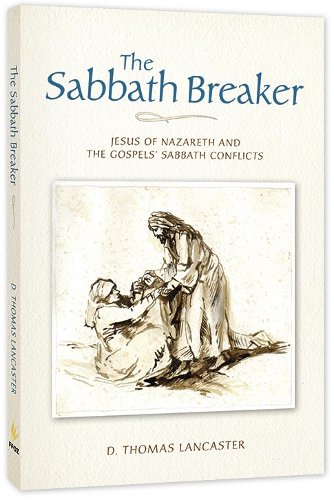
The Sabbath Breaker: A Book Review

Teaching of the TzadikimOnce it happened that the Master and his disciples walked in the holy city of Jerusalem on the Sabbath day when they encountered a man blind from birth. Our Master spat on the ground, made clay of the spittle, and applied the clay to the man’s eyes. Then he told the man, “Go, wash in the pool of Siloam.” The man went and immersed, and miraculously, he could see.

To heal the man, Jesus spat on the ground and made clay of the spittle. Mixing two substances to form a third is a form of work that Jewish law prohibits on the Sabbath day. Jesus smeared the mud on the man’s eyes. Applying a salve or medicine by means of smearing is also considered a form of work prohibited on the Sabbath day. It is a violation of the Sabbath. He sent the man to immerse himself. At least by conventional definition in traditional, Jewish interpretation, immersions are not done on the Sabbath. This single healing incident from the Gospels potentially involves three Sabbath violations.

The Pharisees claimed, “This man is not from God, for he does not keep the Sabbath” (John 9:16). Vocal critics of the Master insisted, “He is a Sabbath breaker.”

Do we appreciate the gravity of this allegation?

-D. Thomas Lancaster
from “Introduction: This Man Breaks the Sabbath” (pg 7)
The Sabbath Breaker: Jesus of Nazareth and The Gospels’ Sabbath Conflicts

This is Lancaster’s latest book published by First Fruits of Zion (FFOZ) and, like a number of Lancaster’s books, leverages material previously published in volumes of the Torah Club and issues of Messiah Journal. A great deal of valuable information on topics of intense interest to Christians both in the church and within the Messianic community, is “buried” within much larger documents. In order to make this information more readily accessible, FFOZ is taking material on specific subjects from these “tomes” and refactoring it into several smaller, self-contained books. Lancaster’s The Sabbath Breaker is one such book.

The focus of Lancaster’s book is rather narrow, so don’t imagine it will answer questions such as “Was Sabbath changed from Saturday to Sunday,” “Should Gentile Christians keep the ‘Jewish’ Sabbath and if so, how,” or “Should Messianic Jews keep the Sabbath in the same way as non-Messianic Jews.” The book’s entire focus is to address whether or not Jesus broke the Sabbath and if he didn’t, then how can we explain why he was criticized by the Jewish religious authorities for healing on Shabbat, gleaning with his disciples on Shabbat, and telling other people who were not his disciples to carry and to immerse on Shabbat?

Christianity tends to believe that Jesus did break the Shabbat in order to show us that he had cancelled all of the Shabbat restrictions and Shabbat itself, as part of his “nailing the Law to the cross,” setting us free from the Law and putting us under the Law of Grace.

As you might imagine, Lancaster dismisses the traditional Christian interpretation out of hand and frankly, so do I. But then how can this be explained? Was Jesus “cancelling” the halachah of the Pharisees? Was it indeed permissible Biblically to glean on Shabbat, to heal on Shabbat, to carry on Shabbat, and to immerse on Shabbat? Were the Pharisees adding unreasonable man-made burdens and was Jesus correcting them and rebuking the Pharisees? Or was it more a matter that the Pharisees thought they were upholding the Biblical way to keep Shabbat (and after all, they wanted to kill Jesus for healing on Shabbat, so they were obviously sincere), and Jesus was just interpreting the Bible better?

How about none of the above:

For many Bible readers, this distinction may be too obscure, but if missed, the reader also misses the message of all the Sabbath stories in the Gospels. The essential message is not that Jesus has cancelled the Sabbath or that the rabbinic interpretation of Sabbath is illegitimate. The Sabbath-conflict stories instead communicate that acts of compassion and mercy performed to alleviate human suffering take precedence over the ritual taboo. The miraculous power by which Jesus performs the healings only serves to add God’s endorsement to Jesus’ halachic, legal rationale.

Did Jesus’ disciples break the Sabbath in the grain fields? Yes. But they were justified in doing so because their need took precedence over the Temple service, and the Temple service took precedence over the Sabbath. Therefore Jesus declared them guiltless and told the Pharisees, “If you had known what this means, ‘I desire mercy, and not sacrifice,’ you would not have condemned the guiltless” (Matthew 12:7).

Did the Master break the Sabbath when he healed on the Sabbath day? Yes. Would fixing a car break the Sabbath? Of course it would, and by the same standard so does fixing a human body. Nevertheless, the Master justified doing so because compassion for his fellow man took precedence over the Sabbath.

-Lancaster, pg 61
“Chapter Seven: At Dinner with the Sages”

blind2That’s a more or less “in a nutshell” explanation of how Jesus did break the Sabbath, but at the same time, each event of Sabbath breaking was justified because of a higher halachic standard.

That’s not the full description of course, and you’ll have to read Lancaster’s book to get all the answers. Not including the footnotes, the book is about 135 pages long, so you should be able to get through it pretty quickly.

The book is divided into three sections:

  1. Sabbath Conflicts in the Synoptic Gospels
  2. Sabbath Conflicts in the Gospel of John
  3. The Thirty-Nine Prohibited Forms of Work

The first two sections focus on different explanations (or the lack thereof in the case of John’s Gospel) for Jesus’s apparent “Sabbath breaking” activities. The quote from Lancaster above is a nice summary of the first section. The second one presents some problems, which Lancaster readily admits, such as Jesus telling the man he healed in John 5 to “take up your bed and walk.” (John 5:8). While the content of the book up to this point (pg 65) confirms that Jesus did break the Sabbath by healing but that chesed (lovingkindness or compassion) takes precedence over Shabbat (it’s more involved than that, but you’ll have to read the book to get all the details), carrying is considered a form of Melachah, or a type of work that involves creation and mastery over our environment (a concept that has to be understood to grasp Lancaster’s major points in his book), and this is forbidden on Shabbat, at least in modern times in Orthodox Judaism.

That brings up the issue of whether or not the Thirty-Nine Prohibited Forms of Work can reasonably be applied to First-Century normative forms of Judaism, and that’s a big if. Lancaster addresses this question in his book and seems convinced that an earlier, less formalized version of this halachah was in existence in the day of Jesus’s ministry on earth. The reader will have to decide if this is credible from their own understanding, but capable arguments can be made either way.

Part two which reviews the healings of Jesus in the Gospel of John departs from the legal and even mechanical explanation of his Sabbath breaking activities and the fact that he told a man to do something that also breaks the Sabbath remains a mystery. It is interesting though that after initially criticizing the man for carrying on Shabbat, once they find out that a healing was done on Shabbat also, the Pharisees lose all interest in the man carrying and seek out the healer instead.

Part three is Lancaster’s description, in some detail, of the thirty-nine melachot or types of work that are forbidden on Shabbat. This may be the part of the book most readers will blow past as irrelevant, even if they are Messianic Jews or non-Jews who observe some form of Shabbat, but I think that would be a mistake.

Protestant Christianity does not consider Sabbath a concept worth consideration or if they do, they simply believe that going to church on Sunday fulfills the fourth commandment out of the ten. Grace makes all things permitted on the “Sabbath” so no one has to struggle to confine their behavior, separating the mundane from the sacred on one day of the week.

Christians who are Sabbatarians including those who are involved in the Hebrew Roots or Messianic Jewish movements, for the most part, tend to create their own “halachah” or methods of Shabbat observance, either as individuals or as individual congregations. I would be willing to wager that there are few if any standards for Sabbath observance that encompass large collections of congregations, unless those groups adhere to a set of halachot established by an umbrella group that has adopted Shabbat observance behaviors from another, normative form of Judaism.

sabbath-breaker-lancasterWe all want to believe that Jesus can be our guide to correct Shabbat observance (assuming we value Shabbat observance) and that God has an objective set of standards for how Shabbat is to be kept (and like Lancaster, I’m not going to get into who should keep Shabbat). However the Melachot were derived from Torah (Lancaster’s book provides those specifics as well) so they weren’t just dreamed up out of someone’s imagination. If you believe in an objectively established Sabbath and (again, assuming you believe you are either required to keep the Sabbath or voluntarily choose to do so out of personal conviction or for other reasons) that there are objective standards for keeping Sabbath, then the third part of Lancaster’s book, if you can believe it is reasonably connected back to the first two parts, may actually be your roadmap for how a Jesus-following Sabbath keeper should keep Sabbath.

In The Sabbath Breaker, Lancaster takes a decidedly different approach to looking at Jesus and his “sabbath breaking” behaviors, acknowledging that he did break the Sabbath, not to cancel it, but to uphold it and to illustrate that there are circumstances wherein it is permissible to break the Sabbath for a higher purpose. Jesus himself, according to Lancaster, is not the higher purpose: human beings are. After all, “Sabbath was made for man, not man for the Sabbath” (Mark 2:27).

146 days.

Zondervan Academic Update: My “Introduction to Messianic Judaism” Reviews

Greetings from Zondervan Academic! This month, we’re also posting a roundup of reviews and book mentions around the Internet. Enjoy!

Introduction to Messianic Judaism, edited by David Rudolph and Joel Willitts. This new post series explores several of the book’s chapters. View the posts.

zondervan_update

I know this probably comes under the heading of “shameless self promotion,” but someone sent me an email showing that my collection of reviews on the different chapters in Rudolph’s and Willitts’ book Introduction to Messianic Judaism: Its Ecclesial Context and Biblical Foundations is being promoted in the Zondervan Academic Update email for April (click the link I provided above the image to see summaries and links to all eleven reviews in one place).

I have to say that I’m absolutely thrilled that my little missives have received this bit of attention and I’d like to thank Zondervan Academic (should they happen to read this blog post) and the person who let me know about it (who I agreed shall remain nameless) for this sort of promotion of my weblog.

But what I think is actually important is that the message of Messianic Judaism and what it means is being noticed outside our own little corner of the world. I’m creating this “extra meditation” to communicate just how important this message is and to show who else is paying attention. I have a rather diverse audience (my awareness of who reads my blog is based on not only the comments people make publicly, but on the emails I receive that are not viewable to anyone else besides me), and I’d like all of my readers to know that what I’ve been writing about (and what Rudolph, Willitts, and the other contributors to their book have written about) isn’t just some “niche doctrine,” but rather, a topic of wide interest in scholarly and popular interest realms.

The relationship between Jewish and Gentile believers in Messiah and at the intersection of the two worlds to which we belong, is not only important but is vital, and will become critical as we progress forward seeking an encounter with God and anticipating the arrival of Messiah.

“We’re here to bring Mashiach, we will settle for nothing less.”

Rabbi Yitzchak Ginsburgh

Blessings and thank you.

148 days.

Addendum: May 9, 2013: Jacob Fronczak just wrote a very good review for the First Fruits of Zion (FFOZ) blog. I highly recommend reading it to get further insight into the book with an “in-a-nutshell” presentation.

Introduction to Messianic Judaism: The Last and Greatest King

messiah-prayerThe Messiah precedes creation, precedes the nations, precedes the election of Israel, precedes the historical reality of the Jewish people. Apart from the Messiah these other realities would not be. They are because the Messiah first is, and because the Father wills them to be through the Messiah. The Messiah who is himself the gospel is before all. When he is born in the flesh as Jesus of Nazareth, and is “apocalypsed” in Israel, he comes to “his own” people (John 1:11). Before he belongs to this people, they belong to him. Because the messianic gospel is prior to all, the apostle Paul can declare that this gospel was announced beforehand (proeuengelisato) to Abraham (Gal 3:8) and that its content — blessing to the nations and resurrection from the dead (Rom 4) — was the same in the time of Abraham as it is in the time after the Messiah’s historical arrival, for the Messiah himself is that content.

-Douglas Harink
“Chapter 26: Jewish Priority, Election, and the Gospel” (pp 273-4)
Introduction to Messianic Judaism: Its Ecclesial Context and Biblical Foundations

Like yesterday’s morning meditation, I’m not sure I’m receiving this essay in the way the author intended. For much of the past week in the comments section of my blog posts, I’ve been trying to defend the primacy of the Messiah, of Jesus, above all things. If not for the coming of Jesus and his presence both in our world and in the Court of Heaven at the Father’s right hand, we non-Jewish believers would have no relationship with God at all, and certainly no avenue to salvation and the life of the world to come. We would still be “alienated from the commonwealth of Israel and strangers to the covenants of promise, having no hope and without God in the world. But now in Christ Jesus you who once were far off have been brought near by the blood of Christ. For he himself is our peace… (Ephesians 2:12-13)

In debating Messiah with my friends and associates in the Hebrew Roots movement, we have been debating the avenues by which Gentiles are brought near to God. In the ancient days of Moses, a Gentile could become a resident alien among Israel but not a tribal member. They were aliens and foreigners, with no more rights than the widow or orphan. Only by intermarrying with a tribal member and having offspring would the third generation of their union be considered “Israel.”

But then, the Gentile distinctiveness of their line would vanish, fully assimilated and absorbed into Israel.

If that was the fullness of God’s plan, then all Gentiles who desired to join in the blessings of the covenants God made with Israel would have to join with Israel in the way of the Ger and their family line as people from the nations would cease to exist. There would be no way for the people of the nations to come and worship God and remain as people from among the nations. Only Israel would have the privilege. The rest of the world would be shut out.

But that was not God’s plan.

…hear in heaven your dwelling place and do according to all for which the foreigner calls to you, in order that all the peoples of the earth may know your name and fear you, as do your people Israel, and that they may know that this house that I have built is called by your name.

1 Kings 8:43

…and many nations shall come, and say: “Come, let us go up to the mountain of the LORD, to the house of the God of Jacob, that he may teach us his ways and that we may walk in his paths.” For out of Zion shall go forth the law, and the word of the LORD from Jerusalem.

Micah 4:2

“Thus says the Lord of hosts: Peoples shall yet come, even the inhabitants of many cities. The inhabitants of one city shall go to another, saying, ‘Let us go at once to entreat the favor of the Lord and to seek the Lord of hosts; I myself am going.’ Many peoples and strong nations shall come to seek the Lord of hosts in Jerusalem and to entreat the favor of the Lord. Thus says the Lord of hosts: In those days ten men from the nations of every tongue shall take hold of the robe of a Jew, saying, ‘Let us go with you, for we have heard that God is with you.’”

Zechariah 8:20-23

I know you’ve read all that before and quite recently, but it bears repeating, if only to drive the point home that God has always had a plan for the Gentile to bow to Him and worship Him without becoming a citizen of national Israel.

The problem is, in Hebrew Roots, the Torah tends to precede the dominance and Kingship of Messiah. For many in Hebrew Roots, the Torah has become so central, so important, so vital in their practice, particularly the ceremonial portions of Torah, (wearing tzitzit, laying tefillin, keeping kosher, observing Shabbos), that Messiah has become eclipsed and overshadowed.
Simchat TorahTorah is the foundation of scripture to be sure, but is it greater than the living Word? In Jewish mysticism, the Torah was at creation and was required for creation, but we know, as Dr. Harink wrote, that Messiah preceded everything and is over everything including the Torah.

The priority of the gospel — that is, the priority of the Messiah — is also declared in the New Testament in respect to Israel’s Torah. In the Gospels Jesus displays an authority over the Torah that is noticed by all those who see his deeds and hear his words. That authority is nowhere more evident than in the familiar section of the Sermon on the Mount (Matt 5:21-48) where Jesus says, “You have heard that it was said…but I tell you…” The point here, as Jesus himself makes crystal clear, is not that his authority cancels (katalusai) the Torah and the Prophets; rather, Jesus by his own authority fulfills (plerosai) the Torah and Prophets (Matt 5:17). By his authority he authorizes their ongoing authority in Israel until “all is accomplished” (Matt 5:18), that is, until the messianic age arrives in fullness. But it is just as clear in the Gospels that the authority of the torah and the Prophets is subordinate to and dependent upon the authority of the Messiah as the Lord, and that their authority consists in their being read in the light of, and as witness to, the singular, normative messianity that is enacted by Jesus of Nazareth in his life, death, and resurrection.

-Harick, pg 274

When I was in the Hebrew Roots movement, I was taught that the Torah was the written Word while the Messiah was the living Word. They were interchangeable and basically equal to one another. The human life of Messiah was the personification of Torah in the flesh.

However, as we see from Harick, the Messiah must be in harmony with the Torah but ultimately, the Messiah must be King over all, including the Torah. We must worship Messiah, not Torah. We must bow to the King, not his scrolls.

This is not to say that the Torah becomes meaningless for Israel. Quite the contrary.

To observe Torah, then, is not primarily or essentially to “obey the rules”; it is, rather, to participate through concrete bodily practices in the very goodness and order and beauty of creation brought about by God through preexistent Wisdom and revealed to Israel in Torah.

-ibid, pg 275

We all observe Torah and participate in goodness, order, and beauty, Jew and Gentile believers alike, however, we do so in ways that illuminate and distinguish the Israel of God and the people of the nations who are called by God’s Name. Really, only a tiny fraction of the mitzvot are reserved to Israel alone. In most circumstances, Jewish and Gentile believers share equal responsibilities to feed the hungry, clothe the naked, comfort the widow, and to honor God in worship and prayer.

Woman in the darkBut above all the mitzvot is the one who is greater than the mitzvot, that is, King Messiah, Son of David. If he had not come and done a new thing in the world, we among the nations would be left out in the dark, locked out of the Kingdom, gnashing our teeth, shivering in the cold, and awaiting certain destruction.

We elevate Torah over the King at our own peril and we all should know that the Torah has never been greater than Messiah, for only faith in Messiah can save. Only the Messiah can reunify what has been separated, and only he can bring final peace in the world.

His messianic mission to the nations is for the sake of Israel; his solidarity with Israel is for the sake of the nations (Rom 11:11-12). The mystery of the gospel is messianic peace between Israel and the nations, a peace that is even now, in the single messianic “day” that reaches from the Messiah’s arrival in suffering to his arrival in glory…

…Jews and Gentiles together in the messianic theopolitical reality called the ekkesia — where Jews as Jews practice Torah, the telos of which is given in the Messiah, and Gentiles as Gentiles work out their own salvation in fear and trembling in the Messiah…

-ibid, pg 279

I suppose it’s only fitting that I end the last review at the end of the David Rudolph and Joel Willitts book with the conclusion written by Joel Willitts. We saw how David Rudolph began the book with is personal story and an exercise in wholeness, as I called it.

Willitts describes himself as an “outsider” to the Messianic Jewish movement while also maintaining close ties to this community, especially through his close friendship with David Rudolph, forged in their days as doctorate students at Cambridge.

It is because of our friendship and my continued interest in the Jewish context of the New Testament that the present book has emerged. It’s two parts neatly paralleled my relationship with David and his community on the one hand, and my passion for reading the New Testament and its message in more thoroughly Jewish ways on the other.

-Joel Willitts
“Conclusion” (pg 316)

Christians typically have no problem keeping Christ as the head of everything, the King above all Kings, and conversely subordinating the Torah way too far below where it needs to be and Israel along with it. In some ways, it’s Gentile Christians like Dr. Willitts who are the bridge between two worlds. As Messianic Judaism is the linkage between Messiah and the larger Jewish community, Gentile Christians with a passion for the “Jewish New Testament” connect that passion back into the church.

Mark is an intelligent guy without formal theological training. He is a mature Christian and intellectually curious. Mark asked me what I was writing and I mentioned this book. He had heard of Messianic Judaism before, but like most Gentile Christians he knew nothing about it. So I began to describe what the book was about. After giving Mark the big picture, he asked the million-dollar question, “So what is its significance to our church?” Mark’s “our church” is my church; it is a larger seeker-sensitive suburban Chicago upper-middle-class church full of Gentile Christians…What a great question.

-ibid, pg 317

It is a great question. It’s a terrific question.

unityAs I imagined Willitts and his friend Mark talking about “Introduction to Messianic Judaism” at their church and discussing what it all means to their church, I thought back to my weekly conversations with Pastor Randy in his office and the significance of those talks to our church. I also thought back to Boaz Michael’s book Tent of David, and I saw that the latter part of the Rudolph/Willitts book (part 1, Chapters 1-12, was written largely by Jewish authors and Part 2, chapters 13 through the end, was written by mostly Christian scholars) and the focus of Michael’s TOD book were virtually the same.

“So what is its significance to our church?”

I don’t want to simply replicate all of the answers Willitts provides, but as you might imagine, the purpose of Introduction for Christians is to do what it has done for me. It informs its Christian audience of what Messianic Judaism looks like on the inside, letting us hear the voices of Messianic Jews tell their story and how they understand the Bible.

It also opens the doorway to a post-supersessionist church, a topic near and dear to my heart, whereby Christians can see and enter into a world of believing Jews and Gentiles who work together, worship together, and love God together, without either side having to surrender the specialness and unique calling God has provided for each branch within the ekklesia of Messiah.

Willitts also discusses the reimaging of church planting and missions using an Israel-centered interpretation of the New Testament, reminds Gentile Christians that we are the branch, not the root, and makes us aware of our responsibilities to the individual and communal requirements of the needy, the poor, the sick and injured among Messiah’s people Israel, and particularly among those who are disciples of Christ.

Willitts ends the book with his personal translation of Galatians 6:16:

Peace on them, and mercy also on the Israel of God.

I hope this series of reviews of David Rudolph’s and Joel Willitts’ book “Introduction to Messianic Judaism” has spoken to you on some level, whether you are Jewish or Gentile. I hope that you can see their intent was to build a bridge between our different worlds. For nearly two thousand years, the Jewish people and Gentile Christianity have traced divergent trajectories across the plane of human history, but God has always planned to bring all people to Him through Messiah Yeshua, Christ Jesus.

This can and will be done without requiring the Jewish people to surrender their Torah, their Talmud, their lifestyles and their shalom as Jews. This can and will be done without requiring all of the people from all of the other nations of the earth to acquire a lifestyle, a culture, a language that is Jewish, without converting to Judaism, and without being told that not being Jewish and not living the lifestyle and observing the mitzvot of the Jewish people somehow makes them…makes us second-class citizens in the Kingdom of God and in the world to come.

We can all be exactly who God created us to be and we can all be delighted that God made us the way He did. The Jewish person is no more loved by God than the Gentile Christian and the Gentile Christian is no more loved by God than the Jewish person. We are all one in Messiah, two unique streams of people within a single Messianic body, bringing infinite diversity in infinite combinations to the “feast with Abraham, Isaac and Jacob in the kingdom of heaven” (Matt 8:11) with the King of Israel as the King over all.

Deeper than the wisdom to create is the wisdom to repair. And so, G‑d built failure into His world, so that He could give Man His deepest wisdom: The wisdom to repair.

-Rabbi Tzvi Freeman
“Repair”
Based on letters and talks of the Rebbe, Rabbi M. M. Schneerson
Chabad.org

Blessings.

149 days.

Introduction to Messianic Judaism: Waiting for Salvation

phariseesMartin Goodman, professor of Jewish Studies at Oxford University, has argued that the proselytizing mission we observe in early Christianity, and in Paul in particular, was “a shocking novelty in the ancient world.” In his important book Mission and Conversion he strongly denied that Jews before AD 100 had any interest in seeking converts. A similar conclusion has been reached by Christian scholars Scot McKnight and Eckhard Schnabel; Schnabel concludes, “There was no missionary activity by Jews in the centuries before and in the first centuries after Jesus’ and his followers ministry.”

-John Dickson
“Chapter 24: Mission-Commitment in Second Temple Judaism and the New Testament” (pg 255)
Introduction to Messianic Judaism: Its Ecclesial Context and Biblical Foundations

Dickson’s chapter is meant to redefine our understanding of Jewish efforts to convert Gentiles to Judaism during and prior to Jesus, and citing author and researcher Michael L. Bird, Dickson states that some Jews did engage in some proselytizing of non-Jews,” but that’s not what captured me about the chapter. I found myself reading Dickson’s points for Jewish efforts to convert Gentiles to Judaism as something else.

It is also found in numerous postbiblical Jewish texts, including the pre-Maccabean Tobit, in which we read, “A bright light will shine to all the ends of the earth; many nations will come to you from far away, the inhabitants of the remotest parts of the earth to your holy name, bearing gifts in their hands for the King of heaven” (Tob 13:11).

-Dickson, pp 256-7

Of course, we don’t have to stray outside the pages of the Bible to find a similar portrait of the Messianic future.

…and many nations shall come, and say: “Come, let us go up to the mountain of the LORD, to the house of the God of Jacob, that he may teach us his ways and that we may walk in his paths.” For out of Zion shall go forth the law, and the word of the LORD from Jerusalem.

Micah 4:2

There are numerous other prophesies that echo such a sentiment, but relative to Dickson’s chapter, do they presuppose Gentile conversion to Judaism? That is likely how some ancient (or even some modern) Jews read these texts, although in much of today’s Jewish world, the role of the Noahide would fulfill these words of scripture.

According to the unknown author of this text (T. Levi 14:1-4), Jewish disobedience threatens one of other purposes of the Law: to bring light to “every man,” which in context must include Gentiles.

-ibid pg 257

It has long been known that the Gentile nations would come to God through Israel and the Jewish people, even in the days of Solomon if not before.

…hear in heaven your dwelling place and do according to all for which the foreigner calls to you, in order that all the peoples of the earth may know your name and fear you, as do your people Israel, and that they may know that this house that I have built is called by your name.

1 Kings 8:43

Declare his glory among the nations, his marvelous works among all the peoples!
For great is the Lord, and greatly to be praised; he is to be feared above all gods.
For all the gods of the peoples are worthless idols, but the Lord made the heavens.
Splendor and majesty are before him; strength and beauty are in his sanctuary.
Ascribe to the Lord, O families of the peoples, ascribe to the Lord glory and strength!
Ascribe to the Lord the glory due his name; bring an offering, and come into his courts!

Psalm 96:3-8

But something was missing that would make all the difference in the world…some light.

Again Jesus spoke to them, saying, “I am the light of the world. Whoever follows me will not walk in darkness, but will have the light of life.”

John 8:12

“You are the light of the world. A city set on a hill cannot be hidden. Nor do people light a lamp and put it under a basket, but on a stand, and it gives light to all in the house. In the same way, let your light shine before others, so that they may see your good works and give glory to your Father who is in heaven.

Matthew 5:14-16

up_to_jerusalemIt’s easy to imagine that Israel, as the light to the nations, traditionally saw Gentile conversion to Judaism as the way to bring Gentiles to knowledge of the God of the Jews, and the influx of Gentile God-fearers during and after the time of Jesus on earth, to some degree, must have seemed to confirm this. How else could such a thing be accomplished? But as I said, something was missing. The light of the world had not yet arrived. As the “first son of Israel,” Jesus was uniquely the embodiment of the nation and the people and his purpose was not only to save the lost sheep of Israel, but to pass on his light to his Jewish disciples so that they could “Let their light shine upon others,” the Gentiles, bringing them to God through Messiah.

In reading Dickson, I quite forgot about the matter of conversion of Gentiles to Judaism and was caught up in the vision of streams and streams of Gentiles flowing to Israel, seeking out the Jewish people and their King, seeking Messiah, seeking God. No one was worried about converting to Judaism and perhaps the Torah never even occurred to them as a formal set of mitzvot, since for most Gentiles, it would be a barrier standing between them and worshiping at the House of God.

As a good friend of mine has wisely taught me, “do not seek Christianity and do not seek Judaism, seek an encounter with God.”

At the founding of the temple King Solomon beseeches the Lord: “that all peoples of the earth may know your name and fear you, as do your own people Israel (1 Kgs 8:43). The words “as do your own people Israel” suggest that the “knowing” and “fearing” of these foreigners refers not to enforced submission but to covenant relationship.

-ibid, pp 258-9

I have to disagree with Dickson on one point. Without faith in Jesus, we Gentiles could not be saved and come close to Israel and be grafted in to the Kingdom of Heaven. We could not be considered the (adopted) sons and daughters of the Most High God. Everything hinges on an active, caring, faithful, obedient Messiah. Converting to Judaism in order to become Israel and be justified as members of the covenants God made with Israel undoes the faith of Abraham and our faith in his seed (singular) Messiah. The words of Solomon for me summon the vision of the people from the nations to come to know and fear God “as do your own people Israel.” We do not have to convert and in order to be blessed by Messiah and Israel as people from the nations called by God’s Name.

This is who we are. Not Israel, but knowing and fearing God as does Israel, coming to them, being blessed by them, taking the fringes of their garments (Zechariah 8:23), seeking God and His ways, and desiring to follow Messiah in his paths.

light_from_withinThis isn’t a picture of mass conversions of Gentiles to Judaism or some form of “Jewish-like” life that closely mirrors Israel as if conversion happened in all but name (and a snip of flesh). As the people of the nations we aren’t waiting to be converted to Judaism, we’re waiting for the light of the world, Messiah, so that we can bow our knees to him, so we can acknowledge the King of Israel also as the King of the nations.

“Before God we are all equally wise and equally foolish.”

-Albert Einstein

Israel waits for her Messiah and we among the nations who are called by God’s Holy Name await the lamp of His Salvation.

For the conductor with the neginos, a psalm, a song. May God favor us and bless us, may He illuminate His countenance with us, Selah. To make known Your way on earth, among all the nations Your Salvation. The peoples will acknowledge You, O God; the peoples will acknowledge You — all of them. Regimes will be glad and sing for joy, because You will judge the peoples fairly and guide with fairness the regimes on earth, Selah. The peoples will acknowledge You, O God; the peoples will acknowledge You — all of them. The earth will then have yielded its produce; may God, our God bless us. May God bless us, and may all the ends of the earth fear Him.

Psalm 67 (Stone Edition Tanakh)

To get along with other people, it is essential to be able to see things from their point of view — even if you disagree with them.

Realize that no two people view things exactly the same way. For example, Rabbi Yisrael Salanter said that taking away a broken box from a child is equivalent to sinking the boat of an adult.

Being aware of how someone else perceives a matter will decrease the chances of a quarrel — even though you might disagree.

Rabbi Zelig Pliskin

150 days.

Introduction to Messianic Judaism: Struggling with the Nemesis

Traffic ConesThe fact that experienced readers of the New Testament come away with diametrically opposed interpretations of the same text is today perhaps one of the few universally recognized results of modern historical critical scholarship.

-Joel Willitts
“Chapter 23: The Bride of Messiah and the Israel-ness of the New Heavens and New Earth” (pg 245)
Introduction to Messianic Judaism: Its Ecclesial Context and Biblical Foundations

Brother, you said a mouthful.

I was pretty frustrated when I went to bed last night (as I write this on Tuesday morning). I had a rather busy day on several of my blog posts with various comments, usually related to something I said about the Rudolph/Willitts book. But as I was reading the above referenced chapter in bed, a number of thoughts came to me that weren’t particularly connected to the material I was perusing. I kept going back to what I said a month ago about the problem with religious people. They always think they’re right, they always think their interpretation of the Bible is the only interpretation of the Bible, and they always think that everyone they talk to and disagree with should immediately see the devastating logic of their arguments and then completely roll over to their point of view.

And when you don’t, they get a little cranky.

So when I read the opening sentence in Willitts’ chapter, it was wonderfully confirming.

But there’s still a problem.

Furthermore, softening the logical link between 5:18a and 5:18b lessens the rhetorical force of the statement. What was likely intended to be a ringing affirmation of the Spirit’s ability to release one from being under law (cf. 5:16) comes out sounding, at least practically speaking, more like a piece of encouraging advice to dispense with the need for law observance. Yet this construal is necessary for the viability of the reading proposed by the majority of Galatians commentators, who must assume the mutual compatibility of the leading of the Spirit and existence “under law”; otherwise the point of Paul’s statement would be altogether lost. For this reading to succeed, then, one must downplay both the implicit logic and the rhetorical force of 5:18.

-Todd A. Wilson
“Chapter 22: The Supersession and Superfluity of the Law? Another Look at Galatians” (pg 239)
Introduction to Messianic Judaism

Ah Galatians, my old nemesis. How I have missed thee…not.

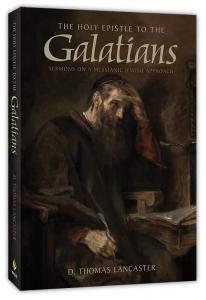
Pastor Randy has been away in Brazil for most of the month of April so naturally, we’ve had to suspend our Wednesday evening meetings until his return. He returned on Tuesday (today, as I write this) but didn’t want to “push it” by trying to return to our regular meetings the day after he got back. He’s got a lot of catch up work to do, so I’ll see him next week, and we’ll pick up where we left off with our discussions on D. Thomas Lancaster’s Galatians book.

I enjoy my conversations with Pastor Randy, but I sometimes anticipate them with some degree of “dread.” As I was trying to puzzle my way through Wilson’s brief analysis of that same epistle with an eye on the Messianic Jewish perspective, I became totally lost. I also became kind of skeptical as a result of being lost. If I can’t understand this and it doesn’t make sense to me, does it make sense at all? Is Wilson trying to push the text too far into a particular viewpoint or interpretive model? Is he pushing Paul into an area where Paul never intended to go? And how can I tell?

One thing Pastor Randy has said to me on numerous occasions is that when studying the Bible, the best place to start is with the literal meaning of the text in its original language and context. In reading Wilson and phrases such as “softening the logical link between 5:18a and 5:18b,” I started wondering what Paul would make of all this and how he would see Wilson’s treatment of his letter.

Galatians by D.T. LancasterOf course, you can’t take Galatians in isolation. You have to look at it within the larger context of Paul’s other writings and the events of the New Testament times in general (not to mention the rest of the Bible). You also have to look at the chronology of these writings, with Galatians being one of Paul’s earlier letters, written even before the events we’ve read in Acts 15.

Justin Hardin’s Chapter 21: Equality in the Church,” was easier to digest, but he took a much smaller portion of Galatians to examine (specifically Galatians 3:28) and was more successful at relating how Paul was not attempting to “support a collapse of ethnicity any more than [he] supports the collapse of the male and female genders.” (pp 224-5). On page 226, Hardin tries to explain that the tutor (pedagogue) function of the Law we find in Galatians 3:23-24 is indeed only one of a number of functions of the Torah for the Jewish people. Only that function went away when Messiah came to show us the perfect model of “Torah living,” but that didn’t eliminate the Jewish requirement to observe Torah for other reasons (national identity, covenant obedience, eschatological linkage to the Messianic age, and so forth).

But how am I supposed to gain an understanding of Galatians that comes anywhere near to Hardin’s or Wilson’s, or even Lancaster’s when I meet Pastor Randy again? I can’t keep these fellows in my pocket and bring them out to present their wares at a critical moment in our dialog, but since Galatians is obviously far more complex than meets the eye, how can I defend a position on this puzzling epistle that I don’t fully understand? (And by the way, like Lancaster, Hardin believes Paul wrote the Galatians letter only to the Gentile population of the churches in that region, not to their Jewish counterparts.)

Like most of the chapters in this book, Willitts’ essay and analysis of “the Bride” imagery (in the aforementioned Chapter 23) in Revelation 19 and 21 is dense with footnotes and scholarly references. In order to present a respectable argument regarding Galatians (or anything else from the Bible), I’d have to be far better read than I am and then somehow have the ability to recall all of that information at a moment’s notice at it is required for a certain topic brought up in my Pastor Randy Galatians discussions.

I need a bigger brain.

With the Scripture as a background, we can now clarify John’s use of the bride imagery in Revelation 19-22. First, since for John the Lamb is divine, it presents little problem for him to correlate Israel’s God with the Lamb — what was attributed to the God of Israel in Isaiah is now associated with the Lamb. Thus, what was once God’s bride is now the bride of Messiah.

The Lamb’s bride is the New Jerusalem, both the people of Israel and the place where God will dwell. Israel, who was unfaithful, now is not. At the end of the age, the Lamb will remarry his bride; he will fulfill his promise. The divine Messiah will redeem his people from captivity and clothe them with righteous deeds because they will be “taught by the Lord” (Isa. 54:13).

-Willitts, pp 252-3

That quote will no doubt shock most Christians and probably more than a few Jewish believers. In the church, I was always taught that “the church” was the bride of Christ, which usually means Gentile Christians. Here, Willitts completely reverses identities, saying that both Israel as a place and as a people/nation are the Divine Messiah’s bride. What I didn’t quote was how Willitts states that the nations (believing Gentile Christians) are the wedding guests! We’re not the bride at all but we are on hand to celebrate at the “wedding reception,” so to speak.

That’s going to ruffle a few feathers.

But…

filtered…but Willitts isn’t presenting the conclusions in his brief article as if they were absolute fact or as if they were the only possible interpretation of the text. He deliberately is framing his interpretation within a Messianic Jewish context in order to show an alternate point of view, a different perspective for his readers, probably to make us think and to help us question our assumptions. I can relate to that, since I often write from that perspective myself.

Now look at this comment made on one of my blog posts in response to my question about whether the commentor thinks Christians sin by not observing the Torah in the same manner as the Jews:

Some Jews may be accepting of Christian Torah observances that make them look Jewish, but in my experience, it can’t be that many. And have you told other Christians you associate with about them being obligated (rather than them having a choice) to Torah observance to a level that will make them look Jewish too?

Yes, I have, I argue for covenant obligation, are you in covenant with God, then you have an obligation

“Zion” is well-meaning and a decent human being, but we often come to loggerheads because he believes that Gentiles in Messiah are directly linked into the covenants rather than receiving them through Israel, and as such, we covenant members are “grafted in” to the full 613 Torah mitzvot and are required to observe them, not in the manner of modern “Rabbinic Jews,” but from a Biblical model (nevermind that we have no idea how to observe the Torah without Rabbinic interpretation).

I disagree and believe we Gentile disciples of the Messiah receive certain blessings from the covenants God made with Israel thanks to the linkage between Abraham’s faith and our faith in Messiah, but that doesn’t include turning us into “Israelites,” nor does it mean we have an identical Torah obligation with the Jewish people.

So we have a difference of opinion. That brings us back to the Willitts quote I inserted at the top of this blog post.

I don’t mind disagreements. I really don’t. I do mind being backed into a corner by folks who believe that it’s their way or the highway. My point of view is one point of view. There are aspects of the Bible I don’t understand. Galatians is a frustrating mystery to me. Even when someone tries to explain it, such as Wilson, the explanation is a frustrating mystery to me. There are days when I want to pack it in and give up on religion. I don’t fit. I don’t understand. I am really annoyed with the dissonance between different Bible interpretations, and I am really, really annoyed with people who think that they and only they (or their group) are the sole possessors of God’s truth about the Bible.

To me, being a believer and studying the Bible is like being an explorer. As a person of faith, I’m on a journey of discovery. Such journeys are rarely straightforward and often involve going in the wrong direction, backtracking, retracing steps, and sometimes using a machete to hack through thick underbrush, like an adventurer-archaeologist on his way to the next big find. But as Dr. Henry Jones Jr. once said, “seventy percent of all archaeology is done in the library.” It requires painstaking, laborious study, not dramatic arguments by people who are all too sure of themselves. Archaeology is also a science of patience. At a dig, you must be slow and deliberate in attempting anything. It might be today, tomorrow, ten years from now, or never, before you uncover anything of even the remotest significance at all.

walking-side-by-sideJesus is like a companion on a long journey who helps to guide us but who will not override our decisions, even if we should take the wrong path. He’ll advise us, prod us, give us hints, and occasionally berate us as we find we’ve stepped into a pool of quicksand, but he won’t just lead us by the hand so we can passively follow where he has gone before us.

I’m nearly done reading the articles in Rudolph’s and Willitts’ book. I’m hoping to get through all of them and finish taking my notes before I have to return the book to the library. But once I have, I’ll move on to another book. While I’ve found Introduction to Messianic Judaism to be an excellent survey of the perspectives on different aspects of theology and doctrine from a Messianic Jewish perspective, it’s still only one book. To the degree that the twenty-six contributors reference countless other sources, then countless other sources are required to help understand the Bible and thus a life of faith.

I can’t stop now, though one day, I may completely withdraw from the public realm and conduct my search privately, but a life of encountering God requires a lifetime. I can’t simply accept one religious person’s statement that they’re “right” and blindly consume their declarations.

I’ve got to keep going. Will I ever arrive at a destination? Probably not this side of paradise.

153 days.