Tag Archives: messianic judaism

Easterphobia or Why Do You Have to Throw Christians Under a Bus?

i-hate-easterYour newfoumd (sic) respect for a holiday named after a goddess is coupled with a newfound (sic) contempt for Hebrew Roots.

While you say your new book is about respecting others, I notice in your blog posts, comments, and writings, the Hebrew Roots whom your organization once seved (sic) is referred to almost exclusively in the negative light. Your above comment is no exception.

Judah Gabriel Himango
from a comment on the blog post
God Fearers: Easter Ham or Passover Lamb?

If you’ve been reading my blog over the past few days, you’ve seen how my own recent Easter experience went as well as my own inability to make a connection to the observance. Nevertheless, I don’t think Easter is evil, wrong, bad, or pagan, whatever the origin of the name of the observance. I suppose my Pastor used terms such as “Resurrection Day” and “The Lord’s Day” last Sunday to get around that little problem, but since there were absolutely no bunnies or eggs present (well, eggs were probably served for brunch, but most likely they were scrambled), I didn’t see any obvious idolatry involved.

I didn’t want to write on the conflicts between some minority expressions of Hebrew Roots Christianity and the more traditional Christian churches, but when I read some of the comments on Toby’s blog post, including the one I quoted above, I couldn’t let it lie (and I didn’t want to start something again with Judah because I actually like the guy). My personal struggles are what they are, but I get a little tired of Hebrew Roots people playing the “superiority” card and saying that Christians in churches are terrible people because they won’t embrace some of the Hebrew Roots priorities. Frankly, such bigotry against Christians by these groups is ill-befitting of anyone who claims to be a disciple of Christ (or Messiah if that’s your preference).

I was just talking about this issue a couple of weeks ago when discussing the problem with religious people. If a religious person, particularly in a minority variant of Christianity which sees itself as above or superior to the majority of Christians, encounters other believers who hold different views, sooner or later, there’s going to be a “spitting match” in the blogosphere. I have tried avoiding blog posts such as this one because I didn’t want to participate in such a match, but where do I draw the line when I see unjust comments being made against believers by other believers?

I suppose I could have ignored this poorly considered jab against Christians who celebrate Easter and that would have ended it, at least from my point of view, but it was included in a collection of remarks that were direct responses to something I’d said on Toby’s blog. Yes, I still should have ignored it.

But I chose not to.

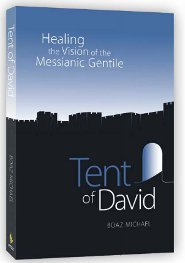
Boaz Michael, author of the book Tent of David, which I mentioned on Toby’s blog, corrected something I said:

TOD addresses Easter, “Another area of difficulty involves the observance of Christian holidays. Some churches heartily embrace some of the pagan-derived aspects of Easter and Christmas. Understandably, this makes many Messianic Gentiles uncomfortable. The simple solution is not to go during that time of year. It should not have too significant an impact on your relationships there to miss church for one or two weeks; in fact, it’s quite common for people to be out of town during holidays.”

tent-of-davidLate last year, I deliberately didn’t go to church for Christmas services for more or less the reasons Boaz stated, but to my way of thinking, Easter is the “higher” tradition as far as the church is concerned. The crucifixion and resurrection of the Master is at the center of all things and without these events, there would be no salvation for all of mankind. That the church should ignore something so vitally important seems ridiculous and while I believe the Passover Seder could have much meaning for Christians, it doesn’t always cover the full, expansive intent and glory of the risen King.

So I chose to attend Easter Sunday services at my church and did not consider such services optional. As I mentioned above, it wasn’t a spiritual “power surge” and I ended up feeling more disconnected from the community because of my lack of emotional attachment, but that has more to do with me than the importance of fellowship and the beauty of watching a new day dawning and knowing that the tomb is empty.

One of the other comments Boaz made addresses this point very well:

Actually, the consequence of Tent of David is not necessarily the celebration of Easter but rather a respect for those that do honor the resurrection of the Messiah. It is about learning to see the good in others, appreciating and valuing people’s attempts to connect with God. It is about learning to manage things Easter with love and care of the individual that is sincere in their intentions and efforts. It is about building relationships that will create bridges of dialog.

At the end of the day TOD is about respecting others, not assuming evil intentions, and a mission of transformation.

He said, It is about learning to see the good in others.” Isn’t that what we’re supposed to be doing?

Nevertheless, I’ll probably get “slam dunked” by my critics and my friends alike for how I’m wording all this, but what I’m writing at least has the benefit of sincerity and transparency. If you disagree with how different churches do things, then don’t go to those churches. If you have a problem with church in general, you don’t have to go to church. I don’t complain about where you go to worship. Why do you (whoever you are, since I’m addressing more than one disgruntled person at this point) have to complain about where I choose to worship?

I know Judah was complaining more to Boaz about TOD than he was to me, and I don’t think Judah intentionally disdains all people who go to church and call themselves “Christian” instead of “Messianic,” but the Boaz has a point. Even if we struggle with some of the practices in the church, we cannot dismiss her or her service to Christ. We must, since we also call ourselves disciples of Messiah, learn to see the best in others. After all, Christ died, even for those believers we may not like or don’t agree with. If Jesus thought his sacrifice, even for “those people,” was worth it, who are we to say he was wrong?

Moshiach Rabbeinu

rabbeinu1Believe it or not, this week’s message was not inspired by the fact that the Catholic Church has chosen a new Pope; it just offers a convenient contrast. As you probably know, there is, in their beliefs, a doctrine of papal infallibility. When the Pope teaches the rules, he is always right.

It is natural to assume that Judaism has something similar. This is especially true, given the Torah’s demand that we listen to the Rabbis and Judges, and not deviate “right or left” [Deut. 17:11] from what they say.

-Rabbi Yaakov Menken
“Everyone Makes Mistakes”
Commentary on Torah Portion Vayikra
Project Genesis

I’ve been hesitating about writing this particular “meditation” because it has the potential to be rather controversial. As part of my conversations with Pastor Randy, we’ve been discussing what is Torah? That’s an amazingly difficult question to answer. It’s not just the Five Books of Moses, and I believe that it should be at least the entire Tanakh (Old Testament). I believe a great deal of the New Testament and certainly the epistles of Paul should be considered midrash on Torah, specifically in relation to the teachings of Messiah.

As I’ve said before (and will say again when I publish “Four Questions, Part 4” tomorrow), Pastor Randy believes that the Torah is too difficult to observe perfectly and in fact, has always been too difficult to observe. This is pretty much what most of Christianity believes, and along with that, the church sees the primary purpose of Torah as always pointing to Jesus. Once Jesus came, the purpose of Torah expired and grace was substituted.

I don’t happen to believe this, and my understanding is that Jewish people, including those who are disciples of the Master, remain obligated to the Torah of Moses.

But I’m not here to talk about the Torah as such (I’ll do that tomorrow), but rather how it is applied through Rabbinic interpretation and authority. This is the really touchy part. As Rabbi Menken writes, there’s a tendency to view the sages in a manner similar to how Catholics view the Pope, as infallible and that all Rabbinic rulings are automatically correct. But is that really true? Rabbi Menken continues.

We see from this week’s reading, though, that this is definitely not the case. The Torah prescribes special atonement for when the High Priest, the King, or the Sanhedrin [Lev. 4: 13-21], the High Rabbinical Court, makes a mistake. In other words, the Torah highlights for us that it is possible for the Sanhedrin to be mistaken.

This is not about a small matter, either. The commentaries say that the mistake described here is one in which the Sanhedrin teaches that it is permitted to do something, and the Sanhedrin later realizes that the behavior is prohibited — so much so that a person committing the act deliberately would suffer the punishment of Kares, spiritual excision [the exact definition of this is disputed, but severe]. Even in matters of religious law, where the Sanhedrin’s supreme authority is undisputed — even there, they could make a mistake.

So why, then, does the Torah tell us to listen to them? They could, after all, be leading us in the wrong direction!

That is an extraordinarily good question. It’s also the question that comes to the minds of just about all Christians, including many people in the Hebrew Roots movement who believe that the Bible contains everything necessary for a Jew to observe Torah without relying on external interpretation or additional instructions.

Based upon a proof from a Baraisa, the Gemara had concluded that a lechi post is not valid if it is not recognizable from the inside, although it is visible from the outside. Yet, the Gemara proceeds to inform us that the halachah is that such a lechi is valid. Immediately, the Gemara asks, “We have disproven the validity of such a lechi, and yet the halachah rules that it is valid?!”

The Gemara continues to resolve this halachic conclusion, based upon yet another Baraisa which validates such a lechi.

This give and take, where the Gemara proves one point of view, and then immediately concludes the halachah according to the opposite opinion is relatively uncommon. A computer check reveals that it appears only five times in Shas (here, Kesuvos 41b-twice, Bava Kamma 15b-twice, Bava Metzia 22b).

Daf Yomi Digest
Distinctive Insight
“It is disproved – but yet it is the Halachah!”
Eruvin 10

That didn’t help. I admit, the complexities of Talmud escape me most of the time and yet religious Judaism in all of its variants, depends on these rulings, laws, and judgments for so very much.

My question is basic. Is literally every single ruling, judgment, halachah, and word of every sage everywhere across time valid and binding in religious Judiasm, or is it possible that at some point, the sages have gone too far?

Kapparot is a custom in which the sins of a person are symbolically transferred to a fowl. It is practiced by some Jews shortly before Yom Kippur. First, selections from Isaiah 11:9, Psalms 107:10, 14, and 17-21, and Job 33:23-24 are recited; then a rooster (for a male) or a hen (for a female) is held above the person’s head and swung in a circle three times, while the following is spoken: “This is my exchange, my substitute, my atonement; this rooster (or hen) shall go to its death, but I shall go to a good, long life, and to peace.” The hope is that the fowl, which is then donated to the poor for food, will take on any misfortune that might otherwise occur to the one who has taken part in the ritual, in punishment for his or her sins.

-Richard Schwartz, Ph.D.
“The Custom of Kapparot in the Jewish Tradition”
JewishVirtualLibrary.org
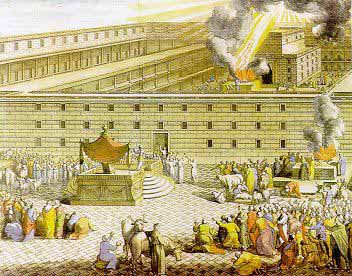
Solomons-TempleThe Torah, particularly the book of Leviticus, provides an extremely detailed description of the various sacrifices to be given at the Temple in Holy Jerusalem, and under what circumstances a Jew must present said-sacrifices. To the best of my knowledge, none of them involve the use of a chicken as described by the modern rite of kapparot. Dr. Schwartz details some of the Jewish objections to this practice.

Some Jewish leaders felt that people would misunderstand the significance of the ritual. The belief that the ceremony of kapparot can transfer a person’s sins to a bird, and that his or her sins would then be completely eradicated, is contrary to Jewish teachings. For, if the ritual could remove a person’s sins, what would be the need for Yom Kippur, the Day of Atonement?

The Mishneh Brurah, an eminent contemporary commentary on Rabbi Joseph Caro’s classical codification of Jewish law, explains the significance of the ritual. Judaism stresses that a person can’t obtain purity from sin, and thus obtain higher levels of perfection, without repenting. Through God’s mercy, we are given the Divine gift of repentance, so that we might abandon our corrupt ways, thereby being spared from the death that we deserve for our violation of the Divine law. By substituting the death of a fowl, one will (hopefully) appreciate G-d’s mercy and be stirred to repentance. By no means, however, does the ritual and the slaughter of the bird eradicate one’s misdeeds, even though the bird is donated to the poor.

If a Jewish person is a disciple of the Master and has studied and accepted the teachings in the Apostolic Scriptures, he or she understands that this particular ritual is not meaningful or necessary. The sins of anyone, Jew or Gentile, who has accepted Jesus (Hebrew: Yeshua) as Savior, Lord, and Messiah, have been forgiven. He died, paying the price for our sin as the ultimate atonement, and when we repent (and we must repent) of our own sins, turning away from them, and turning to God, we are forgiven once and for all without the need for further sacrifices.

So how are we to reconcile the rulings of the sages in relation to the kapparot involving chickens during Yom Kippur and the reality of the Messiah? The better question is, how are Messianic Jews to reconcile this along with any other Jewish practices that seem to contradict the teachings and life of the Master?

The Messianic Jewish Rabbinical Council has established official halachah for its member synagogues and individual members, but that’s hardly a universal standard. On the other hand, how halachah is applied across the rest of the religious Jewish landscape is not entirely consistent either. For example, we can point to the radically extreme differences between how the Haridim vs. Reform Judaism live out Jewish lives they believe are consistent with observing Torah.

It’s obvious that Messianic Judaism has to make a few “adjustments” to how some of the Rabbinic rulings are applied, but even given that, are we to understand that all of the remaining body of Mishnah is fully correct and fully valid? If we accept that the Torah doesn’t change (and there are those who debate even that), can we accept that Jewish interpretation is adaptive and evolutionary across time and culture? I had a recent Facebook conversation that included the following:

There are enduring realities in the Torah…the Shema is one…The pursuit of Justice is another…however there are changes in the way Torah is embraced…David recognizes that G-d wants a contrite and broken heart, not burnt offerings (Psalm 51) Micah gives the same notion (Micah 6)…so there is an evolutionary understanding of the nature and character of G-d that takes place…

David is specific…”burnt offerings you do not desire”…but a contrite broken heart….quite removed from the harsh Levitical code of bloody sacrifices…and those scriptures reflect evolving understanding of the nature and character of G-d…Jesus in the John 8 narrative lays aside the penalty that the Torah prescribes and challenges the lack of personal holiness/integrity of the woman’s accusers…

Part of the problem is that we can “interpret” the Bible to mean just about anything. If we give the Rabbinic sages (or anyone) carte blanche to establish binding interpretations and halachah for their specific streams of Judaism, are they always consistent with God’s intent for the Jewish observance of Torah?

There’s no way to know for sure. Well, there’s one.

Then Jesus said to the crowds and to his disciples, “The scribes and the Pharisees sit on Moses’ seat, so do and observe whatever they tell you, but not the works they do. For they preach, but do not practice. They tie up heavy burdens, hard to bear, and lay them on people’s shoulders, but they themselves are not willing to move them with their finger.

Matthew 23:1-4 (ESV)

phariseesEven as Jesus confirmed that the scribes and Pharisees did indeed have the authority to create binding halachah upon the Jewish people of his day (see the paper Matthew 23:2–4: Does Jesus Recognize the Authority of the Pharisses and Does He Endorse their Halakhah? (PDF) by Noel S. Rabbinowitz, JETS 46/3 (September 2003) 423-47 for details), he also criticized them for failing to follow their own rules. However, he didn’t agree with each and every one of their rulings.

Again he entered the synagogue, and a man was there with a withered hand. And they watched Jesus, to see whether he would heal him on the Sabbath, so that they might accuse him. And he said to the man with the withered hand, “Come here.” And he said to them, “Is it lawful on the Sabbath to do good or to do harm, to save life or to kill?” But they were silent. And he looked around at them with anger, grieved at their hardness of heart, and said to the man, “Stretch out your hand.” He stretched it out, and his hand was restored.

Mark 3:1-5 (ESV)

Now when the Pharisees gathered to him, with some of the scribes who had come from Jerusalem, they saw that some of his disciples ate with hands that were defiled, that is, unwashed. (For the Pharisees and all the Jews do not eat unless they wash their hands properly, holding to the tradition of the elders, and when they come from the marketplace, they do not eat unless they wash. And there are many other traditions that they observe, such as the washing of cups and pots and copper vessels and dining couches.) And the Pharisees and the scribes asked him, “Why do your disciples not walk according to the tradition of the elders, but eat with defiled hands?” And he said to them, “Well did Isaiah prophesy of you hypocrites, as it is written,

“‘This people honors me with their lips,
but their heart is far from me;
in vain do they worship me,
teaching as doctrines the commandments of men.’

You leave the commandment of God and hold to the tradition of men.”

Mark 7:1-8 (ESV)

So what does all this mean?

  • There are some modern Jewish rituals and customs that contradict the reality of the risen Messiah.
  • Jewish ritual and tradition is not applied with universal consistency across all religious Jewish communities and across time.
  • Historically, Jesus affirmed the right of the ancient Pharisees and scribes to establish binding halachah for Jews.
  • Historically, Jesus refuted some of the halakhic rulings by the Pharisees and scribes and offered correction and criticism when necessary.
  • At least one modern Messianic Jewish body has offered an adaptation to Jewish halachah that is more consistent with the reality of the risen Messiah.

Oh. We know one more thing:

The nations will send their emissaries to the King Messiah, and the King Messiah will teach the world how to live in peace, and how to want to live in peace. Then, everyone in the world will enjoy eternal peace, for as long as this world will last. The great Rabbi, Rav Shlomoh Freifeld, of blessed memory, said in a talk he once gave that I attended that the Messiah will be a great teacher.

-from “What is the Messiah Supposed to Do”
BeingJewish.com

He will restore the religious court system of Israel and establish Jewish law as the law of the land (Jeremiah 33:15).

-from “Mashiach: The Messiah”
Judaism 101

It is my understanding that one of the things many Jewish people believe the Messiah will do is to teach Torah, to teach the correct interpretation of Torah and how it is to be lived out. According to BeingJewish.com, as we saw above, he will even teach the Gentiles peace.

So what am I getting at?

This is Rabbi Menken’s solution to understanding the puzzle.

One answer has to do with the power of unity. Different customs and practices are wonderful, but there has to be underlying agreement on “the basics.” One of the problems with calling different Chassidic groups “sects” is that a sect is “a dissenting or schismatic religious body.” Chassidic groups may be led by different Rebbes, but they don’t rewrite the rules. The disagreements of today are disagreements about shapes of branches on individual trees within a massive, unified forest.

And there is another answer, which requires still more humility. It is all well and good to say that everyone is fallible — but who is more likely to be making a mistake? The Torah gives leadership to people who dedicate themselves completely to Torah study, to learning the Torah’s “way of thinking.” Such people are inherently less biased by the latest news reports and the wise opinions of the chattering class, as we are. We recognize that it is much less likely that they will make a mistake, and that is why we trust their guidance.

torah-tree-of-lifeIs there a “unified forest” of Torah? I think there must be, otherwise there is nothing for Jews to observe except traditions (the shapes of branches on the individual trees); there is no root, no foundation, no sense of an absolute God who has core standards that are as unchanging as He is. Beyond a certain point, we can’t simply re-invent the Bible to fit our modern sensibilities so that they agree with whatever “politically correct” causes that may be popular this week, this month, or this year. If we did, our faith (and our God) would be no more consistent or eternal than the shifting viewpoints of a political party or social agenda.

Rabbi Maurice Lamm says in “What is Torah” published at Aish.com:

In fact, far from being enslaved by the law, Jews were enamored of it. We cannot take our leave of the subject of Torah without expressing this most characteristic sentiment of Jewish literature – the love of Torah.

You may ask: can a people “love” a law? Yet, that is the exquisite paradox inherent in the concept of Torah – it is respected and studied and feared, while it is loved and embraced and kissed. All at once. There is no good in this world – no ideal, no blessing, no perfection, no glory – unless it is associated with the law.

To Jews, the Torah is “light”; it is the “glory of the sons of man”; it is the energizing sap of life for “the dry bones” (Ezekiel 37:4) which symbolize the “people in whom there is not the sap of the commandment.”

To Jews, the law is mayim chayim, refreshing, life-restoring, living waters to Jews; the sweetness of honey and milk, the joy and strength of wine, and the healing power of oil. It is an “elixir of life” that brings healing to all.

In Acts 15, Peter called the Law a burden but in Acts 21, Paul defended his observance of the Law. We also see in that same chapter that many of the Jews in Messiah were zealous for the Law.

And God, through Moses, said this about the Torah.

“For this commandment that I command you today is not too hard for you, neither is it far off. It is not in heaven, that you should say, ‘Who will ascend to heaven for us and bring it to us, that we may hear it and do it?’ Neither is it beyond the sea, that you should say, ‘Who will go over the sea for us and bring it to us, that we may hear it and do it?’ But the word is very near you. It is in your mouth and in your heart, so that you can do it.”

Deuteronomy 30:11-14

I think that for the Jewish people, there is an “ideal” Torah, a Torah that God intends for His people Israel. As we’ve seen in the record of the Bible, all things being equal, human beings will mess up a free lunch. We take everything God gives us and turn it on its side, we fold, spindle, or mutilate it, drag it through the mud, drag it through our biases, prejudices, and personalities, drag it through our theologies, our doctrines, our translations, and eventually on the other side, we come out with some approximation of what God wants us to say, do, and be.

How close are all of our approximations to the desires of God, how near is our fidelity to the original? Opinions vary widely. It’s not that we are dishonest and it’s not that we don’t want to do His will as opposed to our will (most of the time, anyway), but we are human beings. Everything we are as flawed, mortal beings gets in the way of everything He is as a perfect, immortal God.

That’s where Messiah comes in. Being human and divine, he can provide (and has provided) the correct “interface” for us. He is a teacher. When he comes, whatever we’ve gotten wrong, he’ll help us understand correctly.

If there’s an answer to how the Law is infinitely accessible, and a delight, and a light, and to be loved by those who have received it from Him, that answer comes on the clouds with Messiah. God is a teacher.

Sharing the Birthday Boy’s Chair

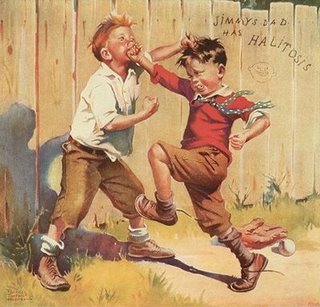
boys-fightingSupersessionism is when a Theology attempts to push Jews out of their seat. Inclusionist Messianic Judaism (i.e. One Law) says that Jews remain Jews and remain obligated to the Sinaitic Covenant. Thus, it can’t be considered supersessionist–because Jews keep their seat. They remain the older brother–and that means being a role model and also teaching the younger, adopted brother (Gentiles) how to understand and practice Torah.

-Commentary from a Hebrew Roots blog post

OK, I’ll bite. I know I shouldn’t, but I will. Like the politically correct pundits and visionaries popular in the mainstream media, the term “inclusionist” seems all nice and cozy, but it doesn’t always fit well when translated into other venues.

Do I believe in “inclusionism?” First, we need a definition of “inclusion.”

  1. The act of including or the state of being included.
  2. Something included.

There were also entries for how inclusion is used in Geology, Biology, Computer Science, and Mathematics, but they didn’t seem particularly relevant to the conversation.

Of course, I support inclusion as applied to equal access to resources in society such as education, jobs, housing, and the “pursuit of happiness,” but that has to be filtered through a few things such as “citizenship.” If you’re a citizen in this country, you have rights, such as the right to vote, for example. If you aren’t a citizen, your rights aren’t the same and sometimes you don’t have access to the identical resources in society as do citizens.

With that in mind, let’s return to the specifics of the subject at hand.

Bob (Craig T. Nelson): You need an invitation?
Lucius (Samuel L. Jackson): I’d like one, yes.

-from the film The Incredibles (2004)

I’ve written about supersessionism or replacement theology many, many times before, including in a four-part series in Messiah Journal last year. As a Christian husband married to a Jewish wife, I am very sensitive (some might say, “overly sensitive”) to the basic tenet that has been supported in the majority of the history of the church that Christianity has replaced Judaism in all of the covenant promises God made to Israel. In essence, the church is supposed to be the “New Israel” and Judaism and the Jewish people are now “has beens” relegated by God to the backwaters of eternity.

However, according to the person I quoted above, supersessionism is “solved” when Christians don’t try to push Jews “out of their seat” but rather, try to crowd into the same seat with them. Does that work? I don’t think so.

I’ve blogged and blogged about how this doesn’t work in so many different ways that you’d think one of them would “stick” by now, but as Rabbi Dr. Michael Schiffman recently said, maybe the person commenting or I or both of us are “addicted to negativity.” I hope not, but there’s something about misinformation and disinformation that gets under my skin.

Let’s accept the existing metaphor used by my source, that supersessionism is the pushing of Jews (presumably by Christians) out of their seat, or their accepted identity and role as defined by the Bible and God. What does it do to push the Jews out of their seat and to sit in it instead as usurpers?

Usurp, as a transitive verb is:

    1. to seize and hold (as office, place, or powers) in possession by force or without right (usurp a throne)
    2. to take or make use of without right (usurped the rights to her life story)
  1. to take the place of by or as if by force : supplant (must not let stock responses based on inherited prejudice usurp careful judgment)

Used as an intransitive verb:

  1. to seize or exercise authority or possession wrongfully

Boiling it all down, it would be as if I lead a political coup in a nation, kicked the King off the throne and replaced the King as ruler of the nation.

OK, I get that and I agree. I have no right to replace the King. The metaphor seems to hold up pretty well when compared to what we understand about supersessionism.

But what about sharing the throne? What if I lead a political coup and demand that the King share the throne with me? I’m not kicking him out of his chair, so to speak, but I’m demanding that he share the throne with me, insisting that I have rights to sit in his chair, too. Do I really have a right to do that? Not if I don’t have legitimate claim to royal authority. If I do, then either I’m the rightful King and the person now on the throne is a pretender, or I am in line for the throne once it becomes available.

boys-birthday-partyNeither of those metaphors works very well when we apply them to the covenant relationship Judaism enjoys relative to God. In fact, as Gentiles “grafted in” to the Jewish olive tree, we don’t suddenly become Jewish and thus have rights to “share the throne” in the manner of those who were born as “Princes.” If Christians aren’t Jews, then no matter how much we share access to God and to salvation and a place in the world to come, we don’t actually become Jewish and thus, hold an identity and responsibilities exactly equal to those who originally came to be a light to the world.

Let’s change the picture a little bit. There’s a children’s birthday party. Naturally the “birthday boy” gets the seat at the head of the table and is served a double portion of ice cream and cake because, after all, he’s the birthday boy, this is his home, and it’s his special time.

Now let’s say that one of the other kids gets jealous. Maybe his birthday has come and gone and he didn’t get such a nice party or maybe he just sees all the attention the birthday boy is getting and he wants it, too. He can push the birthday boy out of his chair and try to take the double portion of ice cream and cake, but as we see from our above metaphors, we know it’s wrong to do so. Let’s say the jealous birthday boy knows it’s wrong, too.

But, hey! What if we “share?”

So the jealous boy goes to sit in the same chair as the birthday boy, “shoehorning” himself into a very limited space meant to be occupied only by one person. He brings his own spoon and insists that the birthday boy share his seat, his cake, his ice cream, and his presents.

Does that seem right to you?

No, of course not. Only the birthday boy is the birthday boy. Even if the jealous boy was born on the same day (and he probably wasn’t), it’s still not his party, his cake, his ice cream, or his presents. He gets his own seat, his own cake, and his own ice cream because he’s an invited guest. Maybe he’s even a special guest because he’s the birthday boy’s best friend (think David and Jonathan). Maybe after the party is over, the birthday boy will share all his gifts and play with him. All the jealous boy has to do is accept who he is, where he’s seated, and be kind and patient. All the jealous boy has to do is realize that it’s the birthday boy’s day, not his own.

That’s what happens at most birthday parties for children. We teach children who is the special person who is having the birthday and who are the guests. We teach them that only special friends and relatives are invited to be guests at the banquet. There are other kids who don’t know the birthday boy who don’t get invited and don’t get ice cream, cake, and a door prize.

If the jealous boy realizes all that, then he realizes that even though he’s not the birthday boy, he’s special too, and he has no reason at all to be jealous. By being rude and trying to “share” something that clearly doesn’t belong to him, he risks losing everything. By understanding that he is special and a friend and a guest, he will someday gain everything.

Now he told a parable to those who were invited, when he noticed how they chose the places of honor, saying to them, “When you are invited by someone to a wedding feast, do not sit down in a place of honor, lest someone more distinguished than you be invited by him, and he who invited you both will come and say to you, ‘Give your place to this person,’ and then you will begin with shame to take the lowest place. But when you are invited, go and sit in the lowest place, so that when your host comes he may say to you, ‘Friend, move up higher.’ Then you will be honored in the presence of all who sit at table with you. For everyone who exalts himself will be humbled, and he who humbles himself will be exalted.”

Luke 14:7-11 (ESV)

Now, was that so hard to understand? Even a little child can get it.

Separate Paths

SeparatedHowever, after a few years these same mission organizations started putting other books at the top of the bags of Bibles. These were books about one particular denomination’s theology, or teaching that focused on certain aspects of God’s Word.

This, I believe, was the start of disunity among many of China’s house churches.

These booklets told us we must worship in a certain way, or that we must speak in tongues to be a true believer, or that only if we were baptized in Jesus’ name (instead of in the name of the Father, Son, and Holy Spirit) could we be saved. Other teachings focused on extreme faith, still others argued for or against the role of women in the church.

We read all these booklets and soon we were confused! The churches started to split into groups that believed one thing against groups that believed another. Instead of only speaking for Jesus, we also started speaking against other believers who didn’t conform to our views.

-Brother Yun (with Paul Hattaway)
Chapter 20: “The Road to Unity” pg 233
The Heavenly Man: The Remarkable True Story of Chinese Christian Brother Yun

“Where ignorance is bliss, ’tis folly to be wise.”

-Thomas Gray
“Ode on a Distant Prospect of Eton College” (1742)

Any of this sound familiar?

Brother Yun (Liu Zhenying) is describing a situation that occurred with the Christian communities of China in 1994. Various Christian missionary organizations from other nations wanted to help the isolated and often persecuted church in China. When China’s borders started to open up in the 1980s, these missionaries took the opportunity to engage representatives of the church in China, which was broken up in to thousands of house churches for the purposes of security and anonymity in relation to a hostile government, and try to provide for the Chinese Christians’ needs. They needed Bibles…lots and lots of Bibles.

After foreign Christian missionaries were expelled from China after the advent of the communist revolution in 1948-1950, the body of Chinese believers were pretty much on their own. Only a handful of Christians possessed Bibles, including Brother Yun, and almost nothing was known about “Christian theology” except what was revealed by the Bible itself and the Holy Spirit as it was manifested in the lives of the faithful, particularly Pastors and teachers like Brother Yun. Although there were very rare encounters with a few Chinese people who self-identified as Catholic, Christianity in China had no denominational identity of any sort. The focus of Christians in China was to covertly study the Bible, covertly meet in small house churches, covertly travel to preach the Gospel where it was unknown in China, and if captured, imprisoned, and tortured, covertly teach the Gospel to other prisoners and on occasion, even to sympathetic prison guards.

No one was thinking about denominationalism and anyone who was a Christian was a brother and sister to everyone else who was a Christian. They shared the same passion for Christ, the same fear of the government, the same pattern of concealing themselves to avoid detection and arrest, and the same risk of being tried, jailed, tortured, and executed by the anti-church state.

That changed in the early 1990s, and with the knowledge that there were different theologies, different doctrines, different denominations, and different identities, all calling themselves “Christian” but sometimes differing radically from one another, the once unified church of China became fragmented and fractured, just like Christianity in the rest of the world.

We arranged for Zhang Rongliang and the leaders of this Fangcheng Church to meet with us. This was a big step because of the tension that had existed between his group and Brother Xu’s group for many years. The day before Zhang arrived we had a time for prayer. Brother Fan said, “Brother Xu, I believe the Lord has given me a word for you, but I’m not sure you can accept it.”

He continued, “I feel that when Zhang Rongliang and his leaders arrive you shouldn’t sit down with them and talk straight away. You shouldn’t even pray with them at first. When they arrive you should immediately get on your knees and wash their feet one by one.”

Brother Xu, who leads millions of believers across China, immediately responded, “I accept this as a word from the Lord. I’ll certainly wash their feet.”

Yun/Hattaway, pp 236-7

I’ve spent this past week addressing the struggle between Messianic Judaism and Hebrew Roots Christianity in terms of community identity and whether or not we can consider our two groups (and the multiple sub-groups contained within) at all part of the same “body of Christ.”

There are days when I have my doubts.

This isn’t quite what Brother Yun is describing, but it is related. At one point, the Chinese Christians conceptualized their identities as Christians in fundamentally the same way. They just didn’t know any better. Then, with the awareness of denominationalism, split after split occurred, and the only way to even begin the healing was through an act of humility, much as what the Master performed upon his own disciples shortly before his crucifixion and death.

washing-feetIn the case of Brother Xu and Zhang Rongliang, it almost didn’t work. When the different groups of Chinese Christian leaders got together in the same room, discussions degraded and old arguments resurfaced. Zhang flew into a rage and almost stormed out before Brother Fan pushed Brother Xu into hurriedly getting some water and kneeling in front of Zhang to wash his feet. It took years to unify most of China’s churches again but the effort wasn’t totally successful, at least in the short run. However, by the beginning of the 21st century, most of China’s estimated 58 million Christians were unified as brothers and sisters, averting the disaster that came about with the knowledge of “differences.”

But the problem isn’t the same in the Messianic Jewish/Hebrew Roots Christianity space. Jews are different by design…God’s design. Finding a way to integrate Gentiles into a Jewish religious movement and yet have the Gentiles retain their identity, not requiring that they convert to Judaism, was and is something of a chore. I personally don’t believe it was ever completely accomplished in Paul’s lifetime, and not that soon afterward, the whole thing disintegrated (though it took a few centuries to finish it off) into a Jewish religion that did not believe the Messiah had yet come, and a Christian religion that believed the Jewish Messiah came, rejected the Jews for rejecting him, and took upon himself the Gentiles instead. When the Christ returns, it is generally believed he will reward his faithful Gentile Christians and judge the unbelieving Jews.

What a mess.

I still don’t have an answer but I have a vague sense of an ideal. The ideal is that somehow, in some way, the Jewish sheep and the Gentile sheep will be able to enter the same room and without too much discord, be able to have a conversation. In some way, we’ll be able to discuss what we have in common and not just what makes us different (and was drives us apart). In some way, we will all seek to encounter God and we will all seek joy in Him in a way that is universal.

Imagine what it would be like to speak to the wisest, most powerful being in the universe.

Realize that when you pray, you are doing just that. As you talk in prayer, nothing else in the world exists for you but Him and you. Talk to Him with the ease you talk with your father. At the same time, maintain complete awe and respect.

-Rabbi Zelig Pliskin
Proper Prayer

When you personally are happy, it doesn’t make any difference what others have. So the way to counteract envy is to increase your own level of joy.

By mastering joy, you will become free from envy.

-Rabbi Zelig Pliskin
Joy Removes Envy Of Others

I believe fear of assimilation and marginalization within the Messianic movement drives Messianic Judaism to strive with great effort to preserve their Jewish identity. The history of the church has certainly shown us that such Jewish fear is well founded and that supersessionism, otherwise known as replacement theology or completion theology, is something, in all its forms, to be resisted, battled, and defeated.

I believe that a lack of recognition of the Jewish source of Christian faith, and frankly, envy of Jewish “chosenness” has led some factions within Hebrew Roots to claim the full Torah mitzvot for themselves. Even if these factions deny attempting to usurp an actual Jewish identity, modeling your life on modern Jewish synagogue worship practices and recognizing zero differentiation between Gentile and Jewish believers within the body of Messiah amounts to taking away another kid’s toys just because that kid has them and you want them.

OK, both of those examples were of extremist positions but things can be pretty “extreme” in the world of religion. The Chinese Christians had nothing to fight about until the very concept of differences and distinctions within Christianity was introduced from outside of China. You might think that Hebrew Roots has the right idea from that example and say that the “cure” for the Messianic Judaism/Hebrew Roots conflict is also to eliminate distinctions, form a unity movement, and to start washing each other’s feet (washing away uniqueness and identity along with the dust of the road).

But as far as I can tell, there were no Jewish believers in China. Brother Yun’s book doesn’t address the issue. The problems and the practice of Christianity in China over the forty or so years his book covers had wholly different priorities.

But it also presents a kernel of truth. Distinctions being what they are, we all either need to find some common ground upon which to walk and talk with each other, or we might as well accept the denomination solution that has been alive and well within both Christianity and Judaism for many centuries and agree to disagree, form our own groups, and be happy inside of them.

Do Orthodox Jews complain about Reform Jews? Do Protestants complain about Catholics?

separation-east-and-westProbably.

Even if I went around washing everyone’s feet in the blogosphere, I doubt that it would result in the sort of healing that Brother Yun describes in his book. The only healing I know how to accomplish is my own, and even that is a monumental task. Rabbi Pliskin describes how prayer can connect each of us to God and dispel petty bickering, envy, and unhappiness, replacing them with awe, respect, and joy.

I can’t control anyone reading this blog. I can’t stop caring about you and what happens to you, but I can’t affect your lives in any way, shape, or form unless you allow it on some level. I probably shouldn’t even try because trying only contributes to my own lack of peace, blunting my joy in the realization of God.

Rejoice in the Lord always; again I will say, rejoice. Let your reasonableness be known to everyone. The Lord is at hand; do not be anxious about anything, but in everything by prayer and supplication with thanksgiving let your requests be made known to God. And the peace of God, which surpasses all understanding, will guard your hearts and your minds in Christ Jesus.

Finally, brothers, whatever is true, whatever is honorable, whatever is just, whatever is pure, whatever is lovely, whatever is commendable, if there is any excellence, if there is anything worthy of praise, think about these things. What you have learned and received and heard and seen in me—practice these things, and the God of peace will be with you.

Philippians 4:4-9 (ESV)

“Hope never abandons you, you abandon it.”

-George Weinberg

Walk whichever path that you will. Peace.

Debate or Beer?

beerOne of the glories of life in the Messianic Jewish community is the unity of worship and service between its Jewish and Gentile members within a specifically Jewish context. In recent years, however, a trend has developed that challenges the Messianic Jewish community on this very issue. This trend involves various groups and movements that teach that all Jews and Gentiles under the new covenant are called to keep the same Torah in all regards.

In so doing, these One Law movements not only misinterpret a great body of Scripture, but they also miss the unique calling of Jews and Gentiles within the Body of Messiah, robbing both groups of the biblical richness of their identity. They lose the new covenant vision of unity in Messiah between Jews and Gentiles and replace it with a man-made rallying cry, which One Law advocate Tim Hegg has expressed as “One people, One Messiah, One Torah.”

-Daniel Juster and Russ Resnik
“One Law Movements: A Challenge to the Messianic Jewish Community” (January 2005)
As downloaded from Messianic Jewish Musings
Original Source: MJ Studies

This has already started something of a minor “buzz” in the Messianic Jewish and Hebrew Roots blogospheres. I wasn’t going to write about it, but since a certain amount if misinformation (or disinformation) is already becoming promoted (no, not at Derek’s blog) on the web, I felt it necessary to present a more balanced perspective. Also, since the Juster and Resnik paper significantly mentions Acts 15 and since I’ve already spent a lot of time and effort addressing Acts 15 from the current perspective of First Fruits of Zion (FFOZ) as published in D. Thomas Lancaster’s commentary in Torah Club Volume 6, I thought my perspective might provide just a little illumination.

I also want to say that FFOZ is mentioned in the Juster and Resnik paper and not in a complementary fashion. The paper was published in 2005 and references material produced by FFOZ from 2003 which was written by then-contributor Tim Hegg, a well-known Hebrew Roots scholar and proponent of “One Torah.” Since that time, FFOZ has shifted its theological and doctrinal perspective to be quite a bit more like that of Juster and Resnik as documented in their paper. It’s not identical but it’s pretty close. Unfortunately, this dates the Juster/Resnik paper somewhat, but the other content they present is fairly well “spot on.”

A few things.

By the time of Yeshua, an interpretative tradition was developing concerning the requirements for Gentiles. These later became formulated as the Noahide laws, binding on all people and rooted in the covenant with Noah. Already in the first century, Judaism made a distinction between universal requirements and requirements that were the particular responsibility of Jews.

Juster/Resnik, pg 4

This statement could be misconstrued to suggest that Juster and Resnik believe the Acts 15 letter is a reworking of the Noahide Laws and that such laws were the only restrictions incumbent upon the Gentile believers in Christ from the perspective of James and the Jerusalem Council. However, a further reading of the paper reveals this is not entirely true.

As has been noted, these are very similar to the Noahide laws. This does not mean that Gentiles are free to murder, steal, and dishonor their parents. The passage assumes a universal morality, as do Paul, Peter, and James (who were present that day), and John in their writings. As Romans 2 notes, Gentiles can perceive the law of God, even without the revelation of Moses, and are responsible for many standards that are also expressed in the Bible. For example, classic Roman moral law taught the ideals of monogamous marriage, honoring parents, honesty and much more. The essential and unique addition of New Covenant ethics is the sacrificial example of Yeshua.

-ibid

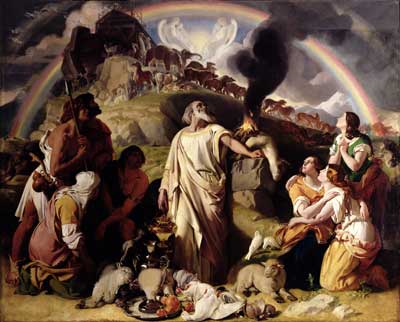
noah-rainbowI disagree that the halachah developed by James for the Gentile believers was a reworking of the Noahide Laws although this is a commonly held belief by many scholars and laypeople. But according to Lancaster, it would make little sense to require the Gentile believers to comply only to the Noahide Laws when in fact all of humanity is accountable to God by those standards. In fact, as I’ve mentioned on one of my blog posts, Lancaster states that James only uses the Noahide Laws as a starter and seems to leverage Leviticus 17 and 18 to forge a distinct Gentile identity in Messiah based, to some degree, on the stranger or “ger” in Israel.

In those chapters, the Torah describes the sins of the Canaanites, warns the people of Israel against imitating their ways, and prescribes four prohibitions which both the Israelite and the stranger who dwells among the nation much keep. “These correspond to the four prohibitions of the apostolic decree, in the order in which they occur in the apostolic letter.” [Richard Bauckham, “James and the Jerusalem Church,” in “The Book of Acts In Its Palestinian Setting, (Grand Rapids, MI: Wm. Eerdmans Publishing Co., 1995), 459]

-D. Thomas Lancaster
Torah Club, Volume 6: Chronicles of the Apostles
from First Fruits of Zion (FFOZ)
Torah Portion Mishpatim (“Judgments”) (pg 461)
Commentary on Acts 15:20-31

I would also direct the reader to Toby Janicki’s article The Gentile Believer’s Obligation to the Torah of Moses, found in issue 109 of Messiah Journal (Winter 2012), pp 45-62 to understand how the deceptively brief “four prohibitions” are extended to provide a rich and robust Torah observance for the non-Jewish believers that does not intrude on Jewish identity or unique covenant obligation to God.

Having read one staunch critic of the paper as well as Leman this morning, I agree that the Noahide Laws cannot be applied to the “fourfold decree” of the apostles, but that doesn’t shoot down the foundation of Juster’s and Resnik’s argument opposing the position of “grafted in” Gentile believers and Jewish believers forming a fused and completely uniform corporate identity. The so-called “One Law/One Torah” position by necessity, essentially eliminates the Jewish people in Messiah and replaces them with “One Torah” cookie cutter produced humanity. This may be inadvertent replacement theology on the part of One Law/One Torah advocates, but it is replacement theology nonetheless.

As far as I can tell, the criticism of the Juster/Resnik paper I read this morning is based on only a single element and since the Juster/Resnik position, as we see in Lancaster, is otherwise well supported, then the basic assumption of the paper remains valid.

Acts 15 specifically declares that nothing should be required of the Gentiles but four laws, three of them related to blood. Galatians 5 warns Gentiles not to receive circumcision or they will be required to keep the whole Torah. The clear implication here is that without circumcision, Gentiles are not required to keep the whole Torah. Colossians 2 warns that no one is to judge the Colossians with regard to Sabbath, New Moons or festivals. These are a shadow; the substance is Messiah. In Galatians 4:10 Paul writes that he fears that he labored over the Galatian Gentile congregations in vain because they were now observing “special days, months, seasons and years.”

Juster/Resnik, pg 2

This is probably one of the more devastating portions of their argument since the statement emphasized in the quote above plainly illustrates that the non-Jewish believers could not be obligated to keep the Torah mitzvot in the manner of the Jews unless they were circumcised (i.e. converted to Judaism).

line-in-the-sandOne of the comments I made on Leman’s blog was that Juster and Resnik seem to draw a hard and clear line in the sand between Jewish and Gentile Torah observance, especially in their belief of how Paul saw the matter, while the Lancaster commentary appears to allow for more leeway, providing a sort of “permission” for Gentiles to extend themselves into more of the mitzvot without an implicit or explicit command to be obligated to full Torah observance over some undefined period of time.

One of the things I liked about the Juster/Resnik paper is that it was very clear in showing what Paul, or James for that matter, didn’t say (I apologize in advance for the length of this quote):

One Law teachers make a big point of James’s statement that “Moses has been read every week in the Synagogue” (Acts 15:21). This is taken to imply that Gentile believers will, in the normal course of their new life, attend synagogue and adopt more and more of the whole Torah. Since Torah life is good and beautiful, why wouldn’t he? On this basis, the verse is taken as an exhortation to further learning and the adoption of the whole Torah. Thus, One Law teachers transform an ambiguous statement into a strong and unambiguous exhortation.

They apparently overlook, however, the fact that these words spoken in the council were not included in the apostolic letter that was circulated among the congregations. If this were such a crucial exhortation to Gentiles, it is amazing indeed that the apostles, under the guidance of the Holy Spirit, did not think it important enough to put in their letter!

It is most telling that in all the epistles to congregations there is not a single word commanding Gentiles to adopt the whole Torah, and no direct statement of hope that they will eventually adopt a fully Torah- keeping life in the same way as the Jews. There is no word of such an exhortation or even mild encouragement throughout the whole book of Acts, which is written in part to show the relationship of Jewish-Gentile fellowship!

Even were we to say that Gentiles are free to embrace Torah, the calendar of Israel, and more, there is no word that there is any covenant responsibility for Gentiles to do so. Acts 21 reinforces this impression. Here James tells Paul of the rumor that he teaches Jews who embrace Yeshua to forsake Torah. This of course is not true. So, Paul demonstrates this to be a false rumor by his Temple involvement. James reminds Paul that Gentiles were freed from responsibility for the full weight of Torah. Neither Paul nor James gives the slightest hint that they were encouraging full Torah observance among Gentiles. Paul could have said, “Not only do I not teach Jews to forsake Moses, but I even encourage Gentiles to embrace more and more of the Torah as they come to understand and appreciate it.” This is the emphasis of the One Law teachers, but there is not one word in the New Testament that explicitly encourages Gentiles to grow in keeping the whole Torah.

Galatians 5 is a watershed passage. Here Paul in the strongest terms exhorts Gentiles not to receive circumcision. Some One Law teachers want to allow a legitimate option of circumcision, so they add the proviso that it should not be done for the wrong reasons. Yet, this is not in the text. The New Covenant offers the fullness of God’s blessing upon Gentiles without the necessity of circumcision. This was not the case in the Mosaic order.

ibid, pg 5

white-pigeon-kotelI think when added to the body of work produced by Lancaster, we find ample support for the Juster/Resnik position. I mentioned on Leman’s blog that I hope, given the age of the paper, the authors would be willing at some point to update and expand the document to reflect changes that have occurred in the movement and in research over the past eight years.

But given my numerous blog posts of this week, lest you think I’m talking out of both sides of my mouth, I also said this on Leman’s blog:

My blog post tomorrow is my tying up all the loose ends of my “rant” for this week regarding these sorts of debates. One of the problems I have with some of our discussions is they tend to overlook the fact that, even though we disagree, we *all* still are part of the body of Messiah. I believe it is important to point out error and to support a more correct interpretation of the Bible, but how do we balance that against the need to bring organization and some manner of unity to *all* of the members of the body of Yeshua, Jewish and Gentile alike?

Rob Roy, a One Law supporter, said on the same blog post:

Probably a sign that folks are growing tired of this debate.

I’m getting tired of it, too. But my question to Derek stands. In spite of the radical differences in perspective, theology, and theory between Messianic Judaism and certain expressions of Hebrew Roots, we are all disciples of the same Master and members of the body of Messiah. If the internal organs of a person’s body fought each other as much as we do, the person would die. What’s going to happen to the body of Messiah because of us and because of the much wider “battle” of body parts we find in the various Christianites of the modern era?

My appeal to “come together” will be published in tomorrow’s morning meditation. In the meantime, we still have to talk and we’ll still disagree. May God have mercy on our limitations and particularly on our foolishness in presuming we know more than our Master.

Now can we all go out for a beer or two and loosen up or are we going to just fragment the body some more?

Sharing God

awesome_desert_landscapeWe all have moments of being struck by the awesomeness of life – whether the birth of a baby, a canopy of stars above, a piece of majestic music, or a breathtaking sunset.

These experiences are both energizing and calming at the same time. They enable us to break beyond our own limitations and to merge our (relatively) tiny, insignificant selves with the greater infinite unity. If God’s creation can have such an impact on us, how much more would an experience with the Creator Himself.

Consider someone travelling the world seeking exciting experiences. Now tell him: “In the next room, you can sit down and speak to God Almighty Himself for an entire hour.”

Wouldn’t that be the ultimate experience?

-Rabbi Noah Weinberg
“Way #31: Seek The Ultimate Pleasure”
Aish.com

I’m continuing to read comments on Derek Leman’s blog post The Sabbath is Between God and the Jewish People. Frankly, I’m beginning to see why the Gentile Christians and Jewish disciples started going their separate ways early on, that is, if they faced the same situations that are evident in the accumulating comments on Derek’s blog. I mentioned in my previous meditation (and in an extra meditation) that I’m getting a little frustrated with the whole “jockeying for position” activity going on between what we refer to as Messianic Judaism and the Christians in various expressions of the Hebrew Roots movement. Rabbi Weinberg talks about the ultimate pleasure of encountering God. Do we ever encounter God in these blog discussions?

Next to love of God, all other pleasures are insignificant. We can have delicious pizza, lots of money, love and power. But humans yearn to transcend the mundane side of daily life. That’s why mystery, magic and miracles capture our imaginations.

When all is said and done, no human being can be truly satisfied unless he reaches out and connects with the infinite transcendent dimension. We all seek to connect with that which encompasses all pleasures. Because nothing finite, nothing bound up in this world, can compare to the infinite.

Um…hello, religious blogosphere? Do you think you might be missing something?

I’ve mentioned this before, but one of the best pieces of advice I have received recently comes from a friend of mine. Seeing past all of the “stuff” we tend to argue about, he told me to not seek “Christianity” and to not seek “Judaism” but to seek an encounter with God.

In his article, Rabbi Weinberg describes ways that people can develop a love for God. You can click the link I provided above and read this entire write-up, but in general, he suggests learning to love God through nature, through history, and through Torah.

Oops! Well, as Meat Loaf has famously sung, two out of three ain’t bad. Well, maybe I’m exaggerating. As I’ve also said before, a significantly large portion of the Torah is immediately available to any Christian, whether we choose to call it “Torah” or not. In fact, one of the people commenting on Derek’s blog unexpectedly said this:

Besides, the fact that Christianity doesn’t keep the external commandments of the Torah, doesn’t mean that Christians don’t keep a *lot* of the Torah’s commands. In fact, many Christian groups keep a lot more of the Torah’s commands than a lot of the more liberal Jewish groups. So I don’t put too much stock in what these other groups do or don’t look like.

i-choose-loveSo even Christians can love God in the manner that Rabbi Weinberg suggests with only a few small adjustments (it’s unlikely that most Christians will choose to express love for God by laying tefillin or fasting on Yom Kippur nor, as we see in Acts 15, is it required) but those adjustments are probably less significant than you might imagine. But what Rabbi Weinberg says next is very illuminating.

One important manifestation of loving God is the desire to share it.

When you love God and you see other people getting caught up in all sorts of trivialities, it hurts. Why? Because it pains you to see a fellow human being missing out on such an awesome pleasure. So when you’re filled with enthusiasm about being close to God, you want all of humanity to have that relationship, too.

This is not like human beings who become jealous when the attention of their beloved is directed elsewhere. When it comes to God, there’s no jealousy when other people have a relationship with Him. Because God is infinite.

Wow! Let’s go over that again and apply it to the theme of today’s missive:

When you love God and you see other people getting caught up in all sorts of trivialities, it hurts. Why? Because it pains you to see a fellow human being missing out on such an awesome pleasure.

My point exactly!

The rest of what he says sounds almost “Christian.” I mean after all, what are we urged to do as part of our Christian faith but to share the Gospel with everyone we meet. The church I attend has a strong missionary component. The head Pastor was a missionary and is the son of missionaries. The church supports numerous missionaries all over the world. Pastor Randy encourages us often from the pulpit to share our faith, to be active, to be vocal, to live holy lives.

When it comes to God, there’s no jealousy when other people have a relationship with Him. Because God is infinite.

God is infinite. His love, mercy, grace, compassion, and kindness are infinite. He provides for us in unlimited amounts. We cannot exhaust His supply of His gifts for humanity by sharing them with too many people. We are commanded to share. We are commanded to love.

But when the Pharisees heard that he had silenced the Sadducees, they gathered together. And one of them, a lawyer, asked him a question to test him. “Teacher, which is the great commandment in the Law?” And he said to him, “You shall love the Lord your God with all your heart and with all your soul and with all your mind. This is the great and first commandment. And a second is like it: You shall love your neighbor as yourself. On these two commandments depend all the Law and the Prophets.”

Matthew 22:34-40 (ESV)

sharing-christIn my previous meditations, I compared some of the mitzvot to “toys” and painted a picture of how children are usually taught to share what they have. It doesn’t mean they’re surrendering a thing, it just means they’re sharing something pleasurable with a friend or even with a stranger. Children will start playing with a kid they don’t know faster than any adult will begin a conversation with a lonely stranger.

Again, I’m not trying to convince Jewish people to violate their sense of covenant identity by agreeing to a “one size fits all” philosophy regarding Torah, but I am saying that Paul didn’t seem to have a problem with the Gentiles meeting in a synagogue with Jews on Shabbat. Peter ate with Gentiles. It’s likely Cornelius davened at the set times for the prayers. This didn’t make Gentiles “Jewish” or “Israel,” but it did allow them to worship God using the only model they had available.

And style and lifestyle aside, isn’t experiencing God the whole point?

We are called “strangers” before we are reconciled to God, but God doesn’t let that stand in His way. He is completely and totally accessible to anyone who wants Him at any time and from any place.

So for those of us who (in theory) are reconciled with God, who know Him, who walk in the footsteps of our Master, why should we be afraid to share our pleasure in Him rather than continually drawing lines in the sand and saying which toys are “obligated” to the grafted in branches vs. which toys only belong to the natural branches? If someone who is unfamiliar with these sorts of debates is trying to make up his or her mind about whether or not to devote themselves to God, what are they going to learn when they visit your blog or mine? Are we sanctifying His Name or desecrating it, even inadvertently?

God is infinite beauty, grace, power, wisdom and meaning. What have you done to share that with someone today? What have I done?

Tomorrow, a more optimistic view.