Tag Archives: messianic judaism

Shepherd, Pens, and Flock, Part 1

ancient_beit_dinThe apostles, after some deliberation, dispensed four rulings. Their letter to these Gentiles who are coming to faith indicated that they must abstain:

  • from what has been sacrificed to idols
  • from blood
  • from what has been strangled
  • from sexual immorality

The text of the letter is found in Acts 15:23-29. (Re-statements of these rulings appear in Acts 15:20, 21:25. Also note that manuscript variants exist with different versions of this list.)

Numerous and varied interpretations exist as to the exact intent and purpose of these rulings. Regardless, it is unreasonable to think that these four laws constitute the complete list of obligations of a Gentile before God. They say nothing about stealing, oppression, justice, or honor for parents, for example. Furthermore, the laws are not specific enough to be practical. What, for example, constitutes “sexual immorality”? Where does one go to find that definition, if not the Torah?

Regardless of their exact meaning and purpose, we can see from these rulings that they are not an end, but a beginning of a Gentile’s journey into a life conformed to God’s will. Consider the rationale for these four prohibitions:

Therefore my judgment is that we should not trouble those of the Gentiles who turn to God, but should write to them to abstain from the things polluted by idols, and from sexual immorality, and from what has been strangled, and from blood. For from ancient generations Moses has had in every city those who proclaim him, for he is read every Sabbath in the synagogues. (Acts 15:19-21)

What purpose does it serve to mention the fact that [the Torah of] Moses is read every Sabbath in the synagogues in conjunction with the list of obligations for Gentiles?

-Aaron Eby
“Divine Invitation”
Adapted from Messiah Journal #100
First Fruits of Zion (FFOZ)

As my regular readers must realize by now, I’ve been writing “fast and furious” about the topics of halachah in the Messianic Jewish world and the application of the Torah commandments to Christianity. I feel as if I’m trying to think in two opposite directions simultaneously, and it’s giving me a headache. But it’s also fascinating me and as you can tell, I can’t put these topics down. It is or should be part of the continual dialog between the believing Jewish and Gentile communities, and provide a point where we can meet to compare our similarities and our differences; a place in the meadow where the sheep from the two sheep pens participate in the flock of the Good Shepherd (see John 10:1-18).

I’m not a real fan of the term “divine invitation,” mainly because I don’t think it can be derived from the Bible or even necessarily implied. I’d rather have the Christian’s role in relation to Judaism defined by a more substantial mission.

That doesn’t mean to say that I disagree with Aaron, but his article poses more questions than answers. He suggests that more of the Torah and the Prophets apply to the Gentile church than what is intimated in the “Jerusalem letter,” but he doesn’t define just how far we are to take it. I suppose the answers are contained elsewhere, but I’m not going to wait until I can discover their location in order to comment.

Aaron says correctly that Israel has always been intended to be a light to the nations (Deuteronomy 4:5-8, Isaiah 49:1-6). This “light” is to extend well beyond the first coming of the Messiah and project itself far into the Messianic Age (Micah 4:1-2, Isaiah 42:1-4). He even goes so far as to suggest that Messiah always meant the Torah to be the light for the Gentiles:

You are the light of the world. A city set on a hill cannot be hidden. Nor do people light a lamp and put it under a basket, but on a stand, and it gives light to all in the house. In the same way, let your light shine before others [anthropon, literally “men, humans, mankind”], so that they may see your good works and give glory to your Father who is in heaven.

Matthew 5:14-16

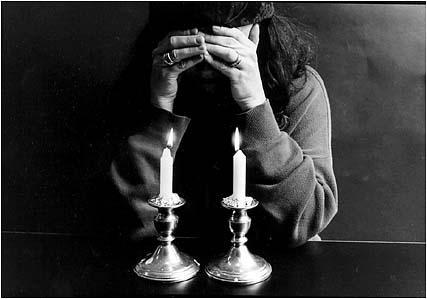
praying-jewish-womanBut as I’ve previously said, just how was and is the Torah meant to be applied to the Jewish and Gentile populations of believers? As I’ve met Aaron and I know Boaz Michael as well as the philosophy of FFOZ. I know they don’t believe in a theology that does away with Jewish identity and fuses Jew and Gentile believers into a homogeneous mass of generic humanity, but how we Gentiles are to “do” Torah has never been clear, except as an effect of love of God and of humanity, which I have commented on and related to the new commandment of Messiah.

I did suggest to my Pastor not too long ago that if a Christian wanted to voluntarily choose to take on additional mitzvot as a personal conviction, it would not be such a bad thing. The fact that he lived in Israel for fifteen years meant, in his case, that he did observe such things as Shabbat and a form of kosher, because his environment supported it. Granted, the environment outside of Israel is less friendly to Jewish observance, particularly among Christians, but that doesn’t mean a Christian who is so led can’t perform some of the same “Torah” out of love and solidarity, especially in interfaith families such as mine.

But why can’t Gentile Christians simply mimic Jewish religious behavior down to the last detail? I mean, what’s the problem if, as Aaron says, the Torah is for the Gentiles, too?

Each human being possesses a unique combination of personality, talents, timing and circumstances – a specific role to play in this world. Our role is dependent on many factors – not only our innate talents, but also on the needs of the times.

The important thing is to discover your unique contribution – and fulfill it.

The Torah tells us that one day Moses saw an Egyptian taskmaster killing a Jew.

“And Moses looked all around, and when he saw that there was no man, he took action.” (Exodus 2:11-12)

Why does the Torah tell us “there was no man”? Because Moses was checking to see if someone else was available, someone better qualified to do the job. Because if you reach for leadership when it’s not necessary, then you’re doing it more out of your own desire than for the needs of the people. Only when Moses saw there was nobody else qualified, did he take action.

-Rabbi Noah Weinberg
“Way #26: Know Your Place”
from 48 Ways to Wisdom
Aish.com

If Gentile Christians were to observe the mitzvot in a manner completely like the Jewish people, then the most straightforward way to accomplish this would be for Jews to convert Gentiles to Judaism. While such a process didn’t exist in the days of Moses because Israel was organized around tribal identity, and after the Babylonian exile, around clan identity (see Cohen, From the Maccabees to the Mishnah, Westminster John Knox Press; 2006) it was completely available in the days of Jesus. But that didn’t happen in the New Testament as the application of Christ’s Matthew 28:19-20 command. We see this acted out by Peter in response to Cornelius and his household:

While Peter was still saying these things, the Holy Spirit fell on all who heard the word. And the believers from among the circumcised who had come with Peter were amazed, because the gift of the Holy Spirit was poured out even on the Gentiles. For they were hearing them speaking in tongues and extolling God. Then Peter declared, “Can anyone withhold water for baptizing these people, who have received the Holy Spirit just as we have?” And he commanded them to be baptized in the name of Jesus Christ.

Acts 10:44-48 (ESV)

Notice what didn’t happen here. If it had been Peter’s intention to convert the Gentiles to Judaism, between Cornelius and his household receiving the Holy Spirit and being baptized in water, Peter should have arranged for Cornelius and the other men to be circumcised. He didn’t and in fact, we don’t see any of the new disciples of Christ from among the nations ever converting to Judaism (I believe Timothy was considered Jewish because of his Jewish mother and that’s why Paul circumcised him). Paul spent a great deal of effort in his letter to the Galatians specifically discouraging them from converting, and as I’ve said before, also citing Paul from Galatians, if you’re not a Jew or a righteous convert, you are not obligated to the full “yoke of Torah,” both as defined by the actual Books of Moses and the Prophets, and by accepted halachah.
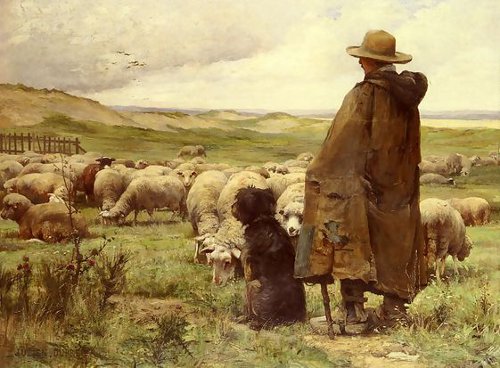
the_shepherd1Rabbi Weinberg suggests that we are each created for a purpose as individuals and should pursue that purpose in order to fulfill God’s design for our lives. What if it’s true that God’s intent was and is to have a specific purpose for the Jews and another (and perhaps overlapping) specific purpose for the Gentile Christians?

Jesus opens all the doors and holds all the keys. He is the portal by which we Gentiles enter into any sort of covenant relationship with God at all, and he also fully reconciles and restores the Jewish nation to the Father as the fulfillment of all His covenants with and His promises to the Jewish people. Make no mistake, the Sinai covenant made between God and Israel didn’t vanish simply because Messiah came. It would be insane to suggest otherwise. Not only did Jesus live a lifestyle in obedience to Torah and not only did his teachings support Torah and the Temple, but his Jewish disciples were never seen to do otherwise, either. The history of the Messianic movement forward isn’t abundantly clear, but I don’t believe that next generation of Jews after Paul and Peter were any less Jewish even as they continued to worship Jesus as Messiah (we never see Paul, for example, telling Timothy that he doesn’t have to observe the mitzvot as a Jew).

But that’s a direction I’m saving for part 2 of this article. For now, although we don’t have an image we could define as crystal clear regarding just how far to apply Torah to Christians, we do know that it is well-applied in the weighty matters of the Law: doing justice, loving kindness, and walking humbly with our God.

The New Mitzvah of Christ, part 1

lovingkindness“What you dislike, do not do to your friend. That is the basis of the Torah. The rest is commentary; go and learn!”

-Shabbos 31a

“Love HaShem your God with all of your heart, with all of your soul, and with all your knowledge.” This is the greatest and first mitzvah. But the second is similar to it: “Love your fellow as yourself.” The entire Torah and the Prophets hang on these two mitzvot.

Matthew 22:37-40 (DHE Gospels)

The Shema (Deuteronomy 6:4-9) is above all else a commandment, a mitzvah that we are to obey. When Messiah Yeshua comments on the Shema, he joins it with another commandment to reveal deeper implications hidden within both…

As the greatest of the commandments, the Shema is tied to this second commandment, which “is similar to it: ‘Love your fellow as yourself'” (Leviticus 19:18). This linkage is integral to the Shema, because one cannot love God in the way that the Shema defines love without loving one’s neighbor.

As we have seen, we cannot reduce the love of God to a mystical or pietistic encounter; it must be acted out in a walk of obedience.

Rabbi Russ Resnik
“‘Shema:’ Living the Great Commandment,” pg 71
Messiah Journal, Issue 112
Published by First Fruits of Zion (FFOZ)

Yesterday (and actually before that in a more general sense), I was talking about love within the context of both the very famous words of the ancient sage Hillel and Yeshua’s (Jesus’) two greatest commandments. Of course, the Master was referencing the Shema, which every Jewish person will immediately recognize (I don’t know if the Shema was formalized in the late second Temple period, but certainly, the Messiah’s Jewish audience would have immediately recognized the source of his lesson). Rabbi Resnik is also addressing primarily a Jewish audience and more specifically Jews who are Messianic, but his article in Messiah Journal brings up questions involving Gentile Christians and the application of Torah. After all, we are disciples of Christ as well, and thus under his authority and teaching. But how far do the Master’s lessons to his Jewish followers extend to the disciples of the nations?

Yeshua’s second point is, “On these two commandments hang all the Torah and the Prophets.” This doesn’t mean that they render the rest of the Torah and the Prophets irrelevant, God forbid, but that they provide the framework for understanding, interpreting, and applying all of Torah and the words of the prophets. As Hillel says, “All the rest [of Torah] is commentary: now go learn it.” (b.Shabbat 31a). The two-fold commandment doesn’t supersede Torah. Rather, it provides the framework for the proper interpretation of the whole.

-Resnik, pg 73

Thus Rabbi Resnik dispenses with supersessionism, but he made me think of something else.

Therefore my judgment is that we should not trouble those of the Gentiles who turn to God, but should write to them to abstain from the things polluted by idols, and from sexual immorality, and from what has been strangled, and from blood. For from ancient generations Moses has had in every city those who proclaim him, for he is read every Sabbath in the synagogues.”

Acts 15:19-21 (ESV)

These are some of the most misunderstood words we find in the New Testament, at least by some variant Christian faith groups. The majority of Christian churches believe that the “Jerusalem letter” was a ruling of James and the Council of Apostles stating that the practice of the Torah mitzvot as applied to the Jewish people, should not also be imposed on the body of Gentile disciples, but rather only certain specific standards. However, verse 21 seems to indicate some sort of connection between the Council’s pronouncement to the Gentiles and Moses being proclaimed and the Torah being read every Sabbath in the synagogues.

Some suggest that James’ intent was that the Gentiles should learn Torah and learn to obey it in the identical manner of the Jews as an obligation. If we marry this idea back to Rabbi Resnik’s commentary on Christ’s two greatest commandments, it seems to fit, but then, I can hardly believe that the esteemed Rabbi meant to communicate that idea. But if he didn’t, what are he, and Jesus and James, saying?

One of the topics I’ve been discussing with Pastor Randy at my church is what “Torah” means within a Messianic context, and how (or if) Torah is applied to the non-Jewish disciples of the Master (i.e. Christians). It’s a difficult question to answer, especially if part of what you mean by “Torah” involves Talmud and how the rulings and opinions of the ancient Jewish sages are applied to the various normative Judaisms in our day.

Frankly, I believe that Christians should learn Torah. In fact, I believe that Christians do learn Torah. We just don’t call it that. We call it “Bible Study” or “Sunday School.”

What would the early Gentile Christians have learned by going to the synagogues and listening to the Torah portions being read every Shabbat?

They would have learned Torah.

Why?

And you, go to all the nations. Make disciples; immerse them for the name of the Father, and the Son, and the Holy Spirit, and teach them to keep all that I have commanded you.

Matthew 28:19-20 (DHE Gospels)

Again, especially using the Delitzsch translation, it certainly seems as if Jesus meant for the disciples of the nations to “keep” what he taught, if we can assume what he taught was “Torah,” and given his two greatest commandments, that is indeed what he was teaching.

Jewish_men_praying2But he wasn’t teaching his Jewish disciples to be Jews; they already knew about that…being Jewish as a lifestyle, was fully integrated into the Israeli Jewish existence. Religion in ancient times wasn’t separated from any other part of life, so to observe the mitzvot for a Jew was just part of normal living.

But then, what was Jesus teaching them that he also wanted to be taught to we Christians if not how to live as a Jew? What was being read in the synagogues every Shabbat that James wanted the Gentile disciples to hear? The Torah and the Prophets.

But if all Christians are supposed to learn and obey the Torah in the manner of the Jews, why did Paul say this?

Look: I, Paul, say to you that if you accept circumcision, Christ will be of no advantage to you. I testify again to every man who accepts circumcision that he is obligated to keep the whole law. You are severed from Christ, you who would be justified by the law; you have fallen away from grace.

Galatians 5:2-4 (ESV)

Paul is communicating to his Gentile Christian audience with a very simple “if/then” statement: If you accept circumcision (convert to Judaism), then you are obligated to keep the whole law (Torah). The implication is made obvious by turning the positive statement into a negative. If you do not convert to Judaism (remain a Gentile Christian), then you are not obligated to keep the whole law (Torah).

So far, as nearly as I can tell, Jesus and James wanted the Gentile disciples to learn the Torah but not be obligated to it in the manner of the Jewish people. But then why does Jesus in stating “the great commission” tell the Jewish disciples to “keep all that I have commanded you?” Something is missing. What were the Gentiles supposed to learn from the Torah by hearing it (and no doubt observing their Jewish mentors performing the mitzvot), and then what were they supposed to keep that Jesus taught?

I first want to mention that in Galatians, Paul is indeed saying that keeping the Law does not justify anyone before God, neither Jew nor Gentile. It is Christ who is our sole justification before the Father. A Jew observing the mitzvot isn’t justified simply by observing the mitzvot, and I’ve never heard a Messianic Jew say anything different. Nevertheless, Paul certainly expected Jews to be obligated to the Law, otherwise, he wouldn’t have said that righteous Gentile converts were also obligated. No, the application of the Sinai covenant was not done away with by Jesus or by Paul. However, we see that it wasn’t applied to the Gentiles, at least not in the way we see it applied to the Jews.

So how is there a difference between Torah being applied to Jewish and Gentile disciples of Jesus Christ? That’s where we’ll begin in part 2 of this two-part article.

Peace.

The Jewish Girl Who Saved Her Children

intermarriageSome of my friends began dating non-Jews. I stopped socializing with them in silent protest, after a more outspoken effort had failed. I self-righteously concluded that we had nothing in common, since they were prepared to give their Jewish identity the backseat. I was sitting firmly in the driver’s seat with mine, so much so that I became the leader of a Zionist youth movement, and started to mix with an idealistic new crowd.

In Ethics of Our Fathers, Rabbi Hillel warns us that we should be careful not to judge another person until we have stood in their place. And I was going places…

I don’t remember making conversation, but apparently I must have mumbled something, since the next morning the host of the party told me that Mr. Attractive had inquired after me. As I was catching my breath, she casually mentioned, “Oh, I told him you don’t date non-Jews, and he’s fine with that. He just wants to meet you. He really liked you.”

This was a delicate situation, to say the least. Here I was, being pursued by a bona fide heartthrob with absolutely no strings attached. He was an advertising executive. Flutter. He had a motorbike. Swoon. And, if that wasn’t enough for my ego, he was a commercial pilot.

Help!

-Jennifer Cooper
“My Non-Jewish Boyfriend”
Aish.com

You’ll never realize how many blog posts I don’t write just because I don’t have time. I’ll read something or hear a snippet of conversation, and my mind pursues it and I begin to internally construct a short essay on the topic between 1500 and 3000 words. I never mean to write as much as I do, which includes this story about the girl who would never intermarry. It just happens.

In Christianity, this is yet another thing about Judaism that simply doesn’t register with us. What’s the big deal exactly? OK, among many Christians, there’s the idea that it’s not a good thing to be “unequally yoked” and I suppose the equivalent quandary would involve a young Christian woman dating a handsome, talented, and very romantic atheist guy. Look out. Danger up ahead.

But there’s something more operating here. There’s a lot more operating here.

I’ve written many times before about intermarriage and part of this blog’s mission is to address the challenges and dynamics of Christians and Jews being married. You can see the angst and the ecstasy expressed in missives such as Opting Out of Yiddishkeit and Cherishing Her Yiddisher Neshamah. If my wife had been observant when we met or even if she had been raised in a secular Jewish home, we might never have gotten married since I am a goy (we were both atheists when we met and her parents were also intermarried).

I’ve been spending some blog time lately struggling to define why it’s important for believing Jews to continue to live as halalaic Jews. If Jesus saves, what difference does it make if a Jewish person lives a Jewish life or not?

Plenty, as Cooper’s story reminds me.

The next day I found myself in the car with my father. We parked in the driveway. There we sat for a good few minutes, lost in our separate worlds. I, in my bubble of optimistic self-gratification, and my father – mourning the potential loss of future generations. Finally, I broke the heavy silence.

“Dad, why is it so important that Jews marry Jews?”

“Because it’s important that we preserve our unique heritage.” he replied, surprised by this basic question coming from me.

I wasn’t buying it.

“Yes, but what’s so special about our heritage, I mean, why is it SO important that there be Jews in the world?” I challenged.

“Because we are supposed to be a light among the nations,” he stressed, wondering where this was going. I pressed on, going for the jugular.

“So, Dad, if our heritage is so special, and we have to be a light among the nations, and my entire future depends on it, why do I eat McDonalds, and why on earth don’t we keep Shabbat?!”

More silence. This time, it was my father that spoke. “I don’t know. I guess I never thought that far,” he admitted, somewhat ashamed.

For the first time ever, I had stumped my brilliant lawyer father. But he still had one last trick up his sleeve.

broken-marriageI’ve heard it said you can’t choose who you fall in love with, but Jennifer had a problem. Without intending to, she had fallen in love with a non-Jew and all of her determination to never “marry out” was fast evaporating. Her parents were culturally but not religiously Jewish, but you can’t dismiss the importance of Jewish identity based on lack of religious observance. Something deeper was in operation here and it was enough to turn Jennifer and her father into emotional pretzels, turned and twisted and trying to straighten out again.

My heart was heavy with respect for my parents and the desire to please them. I felt the weight of my Jewish identity on my fragile shoulders. What exactly was I trying to preserve and protect? After all, I was not religious. Why had it been so fundamentally clear to me that I would marry a Jew? And what had happened to that clarity?

I had been taking my Jewishness for granted. Jewish day school, Jewish friends, a traditional Jewish home. There had been no challenge, no threat, no temptation. No chance to think or look outside the box. But now my exclusive Jewish education and traditional upbringing was on trial. Was it enough to save me?

I took the witness stand. For the first time in my life, I consciously thought about, and decided, who I was, what I wanted to be, and what was truly important. I was first and foremost a Jew. My heritage mattered. I wanted it to continue to be a part of my life. And it was vitally important that my future husband feel the same.

The Verdict: A strong Jewish identity saves Jews.

It wasn’t so difficult after that. A short, tense phone call ended what would have been the mistake of a lifetime. I never saw or spoke to him again, although I cried for days. I don’t really know why, but I think it had something to do with my soul.

There’s something more to being Jewish than just a string of DNA or whether or not you eat McRibs at McDonalds. It’s not just the cultural aspects of Judaism because films like My Big Fat Greek Wedding (2002) have shown us that cultural differences can be bridged (Nia Vardalos wrote and starred in the film and in real life, she is a Greek woman married to a non-Greek man…Ian Gomez, who plays “Mike” in the film).

No, there’s more than just genetics, religion, and culture going on with Jennifer and with Jewish people in general, but you have to go back to Abraham, Issac, and Jacob to find it. You have to go back to Moses and Sinai to find it. You have to look into a pillar of cloud by day and a column of flame by night and deep inside you’ll see the God who molded, formed, fashioned, and defined the Jewish people to be a unique and special people before Him for all time.

And every intermarriage, particularly where the intermarried Jew does not maintain their identity and pass that identity along to the next generation removes not just one more Jew from eternity, but that Jew and all of his or her descendents. Yes, if Jennifer had married her handsome, charming goyishe suitor, her children would have been halachically Jewish, but how would they have been raised and how strongly would they cherish their own Jewish identity?

Memories and regrets are part of what it is to being human, and if I had it all to do over again, I would still have married my wife and had our children, but I would have fought tooth and nail to instill a strong Jewish identity in all of them.

But that ship has sailed and here I am standing at the dock watching it slip over the horizon and into the distance and darkness beyond.

We want our children to care about the meaning of being Jewish. We need to nurture their Jewish identity to the point that it becomes innate. Our homes are where we nurture, and where our children learn to care. Our homes are where we show our children what it is important to care about.

A lot of people feel that they need to make a great sacrifice to live out their Jewishness. It is an even greater sacrifice not to. We can’t be complacent for lack of funding, knowledge, the right address or social circle. The good news is, caring is not a sacrifice. It’s fun, and it’s far-reaching.

How do we put a little Yiddishkeit into our homes? If you ask anyone that grew up with it, they will tell you the same thing: it’s the simple rituals that have the greatest impact. Lighting Shabbat candles, decorating a sukkah or eating matzah on Passover, putting up mezuzahs on every doorway, laying some Jewish books proudly out on the coffee table, saying Shema Yisrael with our children, hanging out an Israeli flag on Israel’s Independence Day. These are the definitive moments that can carve a caring Jew out of the stoniest backdrop of threatened assimilation.

Our Torah and Jewish calendar are filled with a veritable treasure trove of tradition and meaningful ritual, enabling us to live uniquely enhanced lives filled with memorable moments of celebration and wisdom, all with that inimitable Jewish flavor.

These are the moments that kept me in the fold. They can impact you and your children, too.

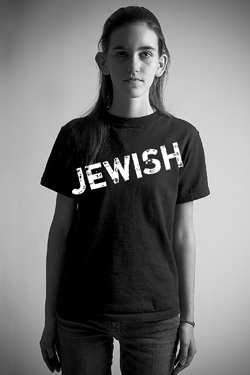
jewish-t-shirtI can’t change the past, but I can tell you that I will not be responsible for separating even one more Jewish person from his or her God-given identity. I can’t change the past but I can learn from it, and more than that, I can teach from it. I can pass my knowledge on to whoever cares to read these words and explain that this is why it is not only important but absolutely vital that Jews who are Messianic must establish and maintain a strong Jewish identity, must observe the mitzvot, must walk in the footsteps of their Fathers and actively live out the wisdom of their sages.

I can’t tell you the right and wrong of every single mitzvot and the amazingly intricate details of each little item of halachah within each of the Judaisms in our world today, but I can tell you that without them, without all of the behaviors and the activities that define a person as a Jew, not only are the Jewish people in danger of disappearing from the face of the earth (although I believe God would never allow this), but that Jews who come to Jesus will vanish into the mass of Gentile Christians in the church, never to be seen or heard from again. Only God will know that Jews ever stood among the disciples of the Jewish Messiah in these latter days of history.

But it all starts with one Jewish person who realizes that his or her identity as a Jew is more important than almost anything because that identity comes directly from God. And we in the church must also learn to cherish Jewish uniqueness, to support it, to uphold it, to esteem it, for our Master said that “salvation comes from the Jews.” (John 4:22)

The story Jennifer Cooper relates occurred almost twenty years ago, but the heartbreaking actions of one young Jewish girl saved not only her, but her children, and future generations of children who would not otherwise be Jewish or value who God made them all to be. The Good Shepherd will come and seek out all of his sheep…those of the Gentile pen, but also those who know his voice from the sheep of Israel. God forbid that when he returns, he discovers that none of them survived.

Struggling to Touch the Essence

Talmud StudyDuring the centuries following the completion of the Mishnah, the chain of transmission of the Oral law was further weakened by a number of factors: Economic hardship and increased persecution of the Jewish community in Israel caused many Jews, including many rabbis, to flee the country. Many of these rabbis emigrated to Babylon in the Persian Empire. The role of the rabbis of Israel as the sole central authority of the Jewish people was coming to an end.

This decentralization of Torah authority and lack of consensus among the rabbis led to further weakening of the transmission process. It became clear to the sages of this period that the Mishnah alone was no longer clear enough to fully explain the Oral Law. It was written in shorthand fashion and in places was cryptic. This is because it was very concise, written on the assumption that the person reading it was already well-acquainted with the subject matter.

So they began to have discussions about it and to write down the substance of these discussions…

…When you look at the page of the Babylonian Talmud today, you will find the Hebrew text of the Mishnah is featured in the middle of the page. Interspersed between the Hebrew of the Mishnah are explanations in both Hebrew and Aramaic which are called the Gemara.

The Aramaic word Gemara means “tradition.” In Hebrew, the word Gemara means “completion.” Indeed, the Gemara is a compilation of the various rabbinic discussions on the Mishnah, and as such completes the understanding of the Mishnah.

The texts of the Mishnah and Gemara are then surrounded by other layers of text and commentaries from a later period.

-Rabbi Ken Spiro
“History Crash Course #39: The Talmud”
Aish.com

My conversations with Pastor Randy are always very rewarding. We’ve taken to meeting somewhat regularly to discuss matters of mutual interest and specifically the world of believing Jews called “Messianic Judaism.” He lived in Israel for fifteen years and has many Israeli Jewish friends. He is well-versed in Biblical Hebrew and Greek, and his mind and heart are very open to Israel and the Jewish people.

But in our talks, it’s difficult to address how or if modern Messianic Jews are obligated to Torah, what exactly is meant by “Torah,” and the role of Talmud (Mishnah and Gemara) in the life of an observant Messianic Jew. For a Jew, including one in Messiah, is it even possible to comprehend a passage in Torah without Talmud?

I admit, I have few answers.

But since we both have questions, I thought this was the perfect topic to expose to the blogosphere and to present to my readership (and anyone else my readership wants to share a link to this blog post with minus a few “nudniks”). If the bottom line is the Word of God and the revealed Messiah, how can we say that the word of the Sages go beyond them? I disagree that history was frozen after the destruction of Herod’s Temple and I know that Judaism and Christianity continued to move forward and develop. If I may be allowed a conceit, I believe errors entered both Judaism and Christianity in the past 2,000 years that caused both (although Christianity began as a wholly Jewish sect known as “the Way”) religious traditions to “stray” from the intent of God and the footsteps of the Messiah to some degree (probably a really large degree).

And yet, we cannot recapture first century Christianity as Paul understood it and how it was expressed and lived within both Jewish and Gentile cultural contexts. We can only look at where we’re at now and attempt to return to the scriptures to “observe, interpret, and then apply” what we discover there (to quote Pastor Randy).

ruins
But if the Bible is the final word, what do we do with 2,000 years of Jewish history, law, discussion, and interpretation…just wad it up and toss it in the nearest (very large) trash can?  Do we have a right to take everything that it means to be a Jew and to lay it to waste, leaving behind only ruins?

Absolutely not! I don’t believe Messiah will do this upon his return (although, of course, this is just my opinion). Do we say that Jesus will wholeheartedly accept each and every judgement and ruling made by the sages without question? I don’t know if that’s true either, if for no other reason than because the discussion between the ancient sages that spans the centuries, does not come to a final agreement on many practical and legal matters.

And not all Jews and not all Jewish traditions follow the same interpretations. Which one do you choose, and having made a choice, do you realize that it is a human decision and not God’s decision? How can we reconcile this?

My wife told me something interesting just the other day. She told me that the local Chabad Rabbi and the local Reform Rabbi study Talmud together. That’s kind of surprising, and in a community with a large Jewish population, that wouldn’t happen. Chabad (Orthodox) and Reform Rabbis view the traditions and Talmud from very different perspectives. But in this little corner of Idaho, there just aren’t that many Jews and there are even fewer Jewish Rabbis. That fact acts as a bridge for these two gentlemen to meet and share what they have in common as well as their differences.

However, a much greater bridge is required to link a Messianic Jew to any other observant Jew, particularly an Orthodox scholar, although this too has recently occurred. But what is the relationship between a Messianic Jew “keeping Torah,” a state of righteousness before God, and faith in Yeshua (Jesus) as the Jewish Messiah King? Can a Messianic Jew choose how to keep Torah within a particular traditional framework of halachah? Upon making such a choice, whose choice is it, the person’s or God’s?

Torah is not to be regarded, however, as an academic field of study. It is meant to be applied to all aspects of our everyday life – speech, food, prayer, etc. Over the centuries great rabbis have compiled summaries of practical law from the Talmud. Landmark works include: “Mishneh Torah” by Maimonides (12th century Egypt); “Shulchan Aruch” by Rabbi Yosef Karo (16th century Israel); “Mishnah Berurah” by the Chafetz Chaim (20th century Poland).

“Torah versus Talmud?”
-from “Ask the Rabbi”
Aish.com

Torah is meant to be applied, but how it is applied in the life of an observant Jew is very much dependent on that person’s tradition and the branch of Judaism to which they are attached. I heard a story of a Reform Rabbi who made aliyah. According to the storyteller, when a religious Jew makes aliyah and enters the Land, they either become more religious or become secular. In this case, the Rabbi began studying to become an Orthodox Rabbi.

The differences in halachah between a Reform and Orthodox lifestyle must be enormous. I say this because the Rabbi once had a conversation with the storyteller expressing his frustration at attempting to live out the Torah according to Orthodox halachah. He cried out that he sometimes gets so confused that he doesn’t know which foot to step out of bed with in the morning as a proper way of getting up.

I don’t have a lived Jewish experience to which to compare that statement, especially within the Orthodox, so I don’t know how to respond. I don’t know how to respond when applying all that to the words of James, the brother of the Master:

For whoever keeps the whole law but fails in one point has become accountable for all of it.

James 2:10 (ESV)

Granted, breaking one of the mitzvot does not invalidate the entire Torah nor does it make a Torah lifestyle futile and meaningless, but then what does it mean? A traditional Christian interpretation won’t be revealing here. Is the Jewish person guilty? If he or she is Messianic, what is the role of grace? For that matter, if he or she isn’t Messianic, what is the role of grace?

I know of no Messianic Jew who believes they are made righteous and “saved by the Law.” Messiah is the “way, the truth, and the life” (John 14:6). It isn’t enough for Messianic Jews to say “we have the Torah and the Gentile believers don’t” (and that is a gross oversimplification to be sure). Messiah is the bridge that not only links the Messianic Jew to his Jewish brothers and sisters but to the Gentile believers as well. As Boaz Michael once said, “Yeshua is the boss.” If Messiah isn’t the center of all things, the focal point, the goal of Torah and of the will of God for the redemption of the world, then what do we have?

These are the questions that my conversation with my Pastor brought into view last night. We spoke until there was no one left in the church but us. All the lights were out except for those in the Pastor’s office. All the doors were locked. If we had allowed it, our talk could easily have taken us into the middle of the night as we explored not only these questions, but everything else.

touch-the-essenceI don’t know what the answers are. I don’t know that there is any one answer. There really isn’t any one “Messianic Judaism” even as there isn’t any one “Christianity,” where a single set of interpretations and applications defines the entire group. But I believe the questions are important. I believe that discussion between all of the relevant parties is important, not because Christian Gentiles should have anything to do with defining Judaism, but for the sake of our mutual faith in Messiah.

Who is the Christian and the Messianic Jew when they each stand apart and who are we when we stand side-by-side? How are we to understand one another and in the light of scripture, how are we to understand ourselves?

The Master once said, “for where two or three are gathered in my name, there am I among them.” (Matthew 18:20) Granted, his audience at that moment was a Jewish audience, but I don’t discount the possibility that he will also be among two or three Gentile Christians when we gather in our Bible studies and in prayer. I long for the day when two or three (or more…many more) Jewish and Gentile believers in Messiah gather together (Matthew 8:11) and we can talk about all these things. I long for the presence of Messiah among us, that he may teach wisdom and reveal understanding.

The angels are jealous of the one who struggles in darkness. They have light, but we touch the Essence.

-Rabbi Tzvi Freeman
“Jealous Angels”
Based on letters and talks of the Rebbe
Rabbi M. M. Schneerson
Chabad.org

I struggle in darkness to touch the Essence of Light.

Collision and Recoil, Part 1

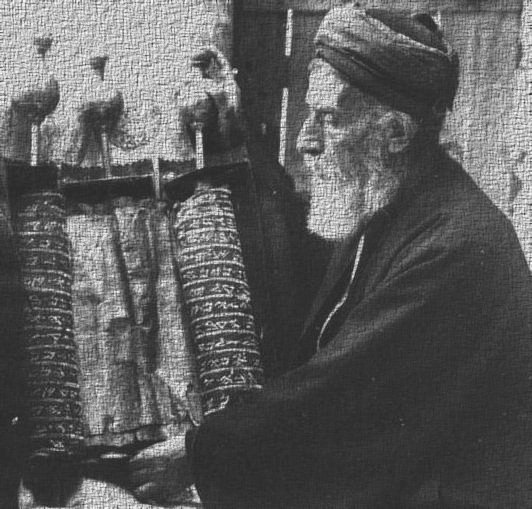
ancient-torahFor some days he was with the disciples at Damascus. And immediately he proclaimed Jesus in the synagogues, saying, “He is the Son of God.” And all who heard him were amazed and said, “Is not this the man who made havoc in Jerusalem of those who called upon this name? And has he not come here for this purpose, to bring them bound before the chief priests?” But Saul increased all the more in strength, and confounded the Jews who lived in Damascus by proving that Jesus was the Christ.

When many days had passed, the Jews plotted to kill him, but their plot became known to Saul. They were watching the gates day and night in order to kill him, but his disciples took him by night and let him down through an opening in the wall, lowering him in a basket.

Acts 9:19-25 (ESV)

And when the Gentiles heard this, they began rejoicing and glorifying the word of the Lord, and as many as were appointed to eternal life believed. And the word of the Lord was spreading throughout the whole region. But the Jews incited the devout women of high standing and the leading men of the city, stirred up persecution against Paul and Barnabas, and drove them out of their district.

Acts 13:48-50 (ESV)

This becomes a familiar refrain in Paul’s life. Always someone is condemning him for his message or what it implies in their lives. As you may recall from yesterday’s “morning meditation,” when, in Acts 9:23, it says that “the Jews plotted to kill him,” the word we read in English as “Jews” in Greek is “Ioudaioi,” which specifically refers to the Jewish religious leaders and those who support them, not the Jewish people in general (according to the commentary in my ESV Bible, anyway). We see the same word used in Acts 13:50 when it also says, “But the Jews incited the devout women of high standing and the leading men of the city, stirred up persecution against Paul and Barnabas…”

I’ve been reading D. Thomas Lancaster’s Torah Club 6: Chronicles of the Apostles, specifically his commentary on Acts 13 (pp 379-405) which is intended to be read during the week that Torah Portion Bo (“Come”) is studied. I really wish that all of you reading this blog (and everyone else) could read this particular lesson on chapter 13 of Acts, because it is illuminating in many ways, presenting the message of salvation to Jews, Jewish converts, and everyone else in such a clear manner. Space on this blog prevents me from replicating Lancaster’s arguments in full and besides, if I simply “copied and pasted” the lesson here, I would be depriving you of the pleasure of studying from the Torah Club.

Nevertheless, there is some important territory to cover. For instance, why does Chapter 13 end with the Jewish religious leaders of Antioch (and according to Lancaster,“thanks to the Seleucid dynasty, more than fifteen cities in the Roman world bore the name Antioch”), conspiring with “a few prominent, God-fearing, Gentile women who were friendly with the Jewish community” to drive Paul and Barnabas out of their area? I mean, the whole thing started out so well. After Paul’s brilliant teaching as we read in Acts 13:16-41.

When they went out [from the synagogue] they requested of them to speak these things to them the following Shabbat. When the assembly was dismissed, many individuals from the Yehudim and righteous converts followed Polos and Bar Nabba, who spoke to their heartfelt need and warned them to stand in the kindness of God

Ma’asei HaShlichim 13:42-43 (As quoted from Torah Club, vol 6, pg 393)

The above version of Acts 13:42-43 is taken from an unpublished translation based upon the work of the nineteenth-century Christian scholar Franz Delitzsch (a translation of the Gospels based on Delitzsch’s work is currently available). Let me present the same verses in a form that might be more familiar to you.

As they went out, the people begged that these things might be told them the next Sabbath. And after the meeting of the synagogue broke up, many Jews and devout converts to Judaism followed Paul and Barnabas, who, as they spoke with them, urged them to continue in the grace of God.

Acts 13:42-43 (ESV)

Now, according to Lancaster, here’s the Jewish reaction to what Paul had taught the Jews, converts, and Gentile God-fearers about the risen Messiah:

The synagogue of Pisidian Antioch received Paul’s message enthusiastically. The synagogue heads asked Paul and Barnabas to return the following Sabbath and present more teaching about the man from Nazareth, His messianic claims, His resurrection from the dead, and the evidence from the prophets. After the Sabbath services concluded, an excited group of Jewish people (both Jews and proselytes) gathered around Paul and Barnabas. They followed them back to where they were staying and asked for more teaching and stories about the Master. The apostles spent the remainder of the Sabbath instructing them further in the message of the gospel and the teaching of Yeshua. They “were urging them to continue the grace of God.”

-Lancaster, pp 393-4

I’m not sure where Lancaster found that level of detail about what happened between the Jewish and proselytes from the synagogue and Paul for the rest of the Shabbat, but I can see how it could be true. Certainly it is evident that Paul’s message sparked a tremendous amount of excitement from his audience, it was received enthusiastically, and they couldn’t wait to hear more. This hardly seems like the sort of atmosphere that would abruptly turn to the local Jews experiencing “the offense of the cross” as some modern Christians might put it.

What happened?

Well, let’s back up a little bit.

Brothers, sons of the family of Abraham, and those among you who fear God, to us has been sent the message of this salvation.

Acts 13:26 (ESV)

Before proceeding, let me present the same verse from the Delitzsch translation to give it a more Judaic context:

Men, brothers, sons of Avraham’s family and God-fearers who are among you: to [us] this word of salvation was sent.

Ma’asei HaShlichim 13:26

synagogueAnd now Lancaster’s explanation:

Paul finished his historical review with the prophecies of John the Immerser. Before going on to present the story of Yeshua, his suffering, and resurrection, he stopped to appeal directly to the people present in the synagogue. He declared, “To us the message of this salvation has been sent.”

Paul’s first person, plural pronoun “us” included all three types of people he addressed that day in the synagogue: “Brethren, sons of Abraham’s family, and those among you who fear God” (Acts 13:26). “Brethren” referred to his fellow Jews. “Sons of Abraham” referred to proselytes. (Proselytes take the patronymic “son of Abraham” at the time of their conversion.) “You who fear God” referred to the God-fearing Gentiles present that day in the synagogue. The God-fearing Gentiles were not accustomed to being acknowledged in such addresses, and they had never been included in the promises of Messianic redemption or covenant privilege.

-Lancaster, pg 390

That’s absolutely true. God-fearers, such as the Roman Centurion Cornelius and his household who we met in Acts 10, acknowledged the sole sovereignty of the God of Israel and denied all other Gods, but they had no covenant status to connect them to God as did the Jews. There was only the covenant God made with Abraham, but it was unrealized as far as the Jews and God-fearers who were listening to Paul knew.

I will bless those who bless you, and him who dishonors you I will curse, and in you all the families of the earth shall be blessed.” So Abram went, as the Lord had told him, and Lot went with him. Abram was seventy-five years old when he departed from Haran. And Abram took Sarai his wife, and Lot his brother’s son, and all their possessions that they had gathered, and the people that they had acquired in Haran, and they set out to go to the land of Canaan. When they came to the land of Canaan, Abram passed through the land to the place at Shechem, to the oak of Moreh. At that time the Canaanites were in the land. Then the Lord appeared to Abram and said, “To your offspring I will give this land.” So he built there an altar to the Lord, who had appeared to him.

Genesis 12:3-7 (ESV)

Now the promises were made to Abraham and to his offspring. It does not say, “And to offsprings,” referring to many, but referring to one, “And to your offspring,” who is Christ.

Galatians 3:16 (ESV)

For the first time, as Paul addressed all those present at that synagogue in Antioch, he “hot wired” the connection between the Abrahamic covenant and the Jewish Messiah who he revealed was Yeshua of Nazareth, Son of David, who was born, died, and resurrected, and who carried the promise of salvation to the Jew, the Jewish convert, and yes, even to the Gentiles of the nations who feared God.

We’ve already seen how the Jews and proselytes reacted with great joy, but what was the response of the Gentiles who heard this message?

We’ll pick up with the answer to that question and more in Part 2 presented in tomorrow’s “morning meditation.”

Messiah and the Temple of God

tallit_templeThe re-building will begin when the Messiah comes. This Third Temple will be on the Temple Mount, exactly where it previously stood. In fact, Maimonides writes that one sign that the Messiah is the real Messiah (and not an imposter) will be when he re-builds the Temple on the Temple Mount.

“Rebuilding the Temple”
Commentary on Tisha B’ Av
Aish.com

Belief in the coming of the Messiah has always been a fundamental part of both Judaism and Christianity. The Hebrew word for Messiah, Mashiach or Moshiach, means anointed, as does the Greek word, christos. Thus in Christianity, Christ is just another word for the Messiah. Much has been written about Jesus as the Messiah within the Christian realm, but little information has been publicized to the uninformed Jewish community concerning the coming of a Messiah, whom all we know about is that he will be a direct descendant of king David. Although Jesus has been proposed by Christianity to be such a descendant, Judaism does not accept Christ as their savior or king. Because the Messiah cannot be separated from God’s Third Temple and because God’s Third Temple is destined for all people…

“Coming of the Messiah”
ThirdTempleInfo.org

“For thus says the Lord: David shall never lack a man to sit on the throne of the house of Israel, and the Levitical priests shall never lack a man in my presence to offer burnt offerings, to burn grain offerings, and to make sacrifices forever.”

Jeremiah 33:17-18 (ESV)

In some parts of religious Judaism, one of the very strongly held beliefs is that when the Messiah comes, he will rebuild the Temple on its original site in Jerusalem. In fact, Jewish “anti-missionaries” use the current lack of the Jerusalem Temple as “proof” that Jesus couldn’t have been the Messiah (since if he was, he would have rebuilt it 2,000 years ago).

More than that, according to the Judaism 101 website, the Messiah will do many important things.

The mashiach will bring about the political and spiritual redemption of the Jewish people by bringing us back to Israel and restoring Jerusalem (Isaiah 11:11-12; Jeremiah 23:8; 30:3; Hosea 3:4-5). He will establish a government in Israel that will be the center of all world government, both for Jews and gentiles (Isaiah 2:2-4; 11:10; 42:1). He will rebuild the Temple and re-establish its worship (Jeremiah 33:18). He will restore the religious court system of Israel and establish Jewish law as the law of the land (Jeremiah 33:15).

Also, according to AskNoah.org, Gentiles will be able to worship in the rebuilt Temple.

Torah Law holds that Gentiles are allowed to bring burnt offerings to G-d in the Temple when it is standing in Jerusalem. There is a specific commandment to let us know that an animal (sheep, goat or bullock) offered in the Temple by a Gentile must be unblemished, to the same degree as the offering of a Jew. (Leviticus 22:25)

The same website citing the prophet Isaiah, declares that in the days of the Third Temple, Gentiles will be able to take on a greater role than in previous eras.

“And it will come to pass at the end of days that the mountain of G-d’s House will be firmly established, even higher than the peaks, and all the peoples will flow toward it as a river. And many nations will go and will cry, ‘Let us go up toward the mountain of G-d’s House, to the House of the L-rd of Jacob, and we will learn from His ways and walk in His paths, for out of Zion goes forth Torah and the word of G-d from Jerusalem.’ ”

Isaiah 2:2-3

But why am I writing about this?

It’s come up on more than one occasion at the church I attend, that certain things have changed because of Jesus. Since I’m kind of sensitive to the spectre of supersessionism (also called “replacement theology” or “fulfillment theology”), what has and hasn’t changed always gets my attention. Both in the Pastor’s message and in Sunday school, one piece of information I’ve heard is that before Jesus came, worship of God was confined to the Holy Temple in Jerusalem, and after the resurrection and ascension of Jesus, worship of God was no longer confined to a specific, geographic location.

You can see that this might present a problem if you also believed the Messiah was supposed to rebuild the Temple upon his return. Would that mean a step backward? Would our “freedom” to worship anywhere be revoked and Jerusalem once again become the locus for religious control and sacrifice to God?

old-city-jerusalemWell, yes and no. Frankly, it’s not that clear cut. We know that even during the Second Temple era, synagogues and centers for prayer (not always the same things) were available for Jews. After all, Jewish people were scattered not only all over Israel in those days, but across the civilized portions of the Earth. Recall the Ethiopian eunuch (Acts 8:26-40) who likely was a Jew on a pilgrimage to Jerusalem. It would have been difficult for most of world’s Jewish population to travel to the Jerusalem Temple every time they wanted an encounter with God. It was very likely that there was provision for both individual and communal prayer for Jews, so the Temple wasn’t literally the only place of worship.

Of course to obey the mitzvot, Jews were obligated to travel to Jerusalem on certain occasions including the moadim and particularly for Rosh Hashanah and Yom Kippur, but while extremely important, it wouldn’t have been possible for all Jews because it would require leaving home and undertaking lengthy journeys several times a year. While we don’t have much information on him, it’s likely that the Jewish Ethiopian had made only one 1,200 mile long trip between his country to Jerusalem when Philip encountered him. In those days, a trip of such length over land could have taken up to two months, so it wasn’t the “quick dash” it would be by car or plane in our day and age.

Also, looking forward, we have this.

Then everyone who survives of all the nations that have come against Jerusalem shall go up year after year to worship the King, the Lord of hosts, and to keep the Feast of Booths. And if any of the families of the earth do not go up to Jerusalem to worship the King, the Lord of hosts, there will be no rain on them. And if the family of Egypt does not go up and present themselves, then on them there shall be no rain; there shall be the plague with which the Lord afflicts the nations that do not go up to keep the Feast of Booths. This shall be the punishment to Egypt and the punishment to all the nations that do not go up to keep the Feast of Booths.

Zechariah 14:16-19 (ESV)

It would be very difficult for the representatives of all of the nations of the world to observe Shavuot (Feast of Booths) in Jerusalem if there were no existing Temple.

It is true that John writes in Revelation 21:22 that he saw no Temple in the city, presumably New Jerusalem, but there are vast periods of time being described in his recording of his vision, so we can’t use that one verse as evidence that the Third Temple will never be built by Messiah after his coming (return).

So what’s the big deal?

Only that the birth, life, death, resurrection, and ascension of Jesus the Messiah may not have (permanently) changed as much as we might think it did. The church may ultimately have to integrate a more Jewish perspective of Messiah than we previously have. Yes, many of us think we’ve done a pretty good job at “rediscovering the Jewish Jesus,” but I don’t think the majority of us have truly engaged the reality of what that actually means.

I’m not criticizing Pastor Randy or anyone at the church I attend (and I know Pastor Randy sometimes reads my blog), but I am suggesting that at least in this one area, Christ may not have changed what we think he changed. Unfortunately, many Christians take the idea of what Jesus did to Judaism a little too dogmatically and treat Jews, Judaism, and Jewish Holy sites quite poorly, as this commentary I received on Facebook attests.

I have been at the Wall, Jews Holiest Place, and seen bus loads of tourist arrive. Even I cringed at the sight of shorts, halter tops, men with out shirts, cameras and water bottles in tow. I have seen the garbage left behind. I have heard the ‘chatter’ at the Face of the Wall and observed the frivolity of trying to place a paper prayer ‘for a friend’ in the highest unreachable crack. (a paradise for rock climbers). I have heard prayers for ‘the Jews to be saved”….I have stood by women ‘claiming the place in the name of Jesus”.

Jerusalem, to include the Wall, is not an International place of holiness. Once the sacredness of the place is removed it becomes one more place to be trashed. The fact that the Reform movement, Women at the Wall and other such groups are irritated that ‘they’ can not make the rules and regulations simply indicates their dislike for the Ultra-Orthodox. One side may be Extreme but the otherside opens the door to Liberal attitudes and the slippery slope to “so what, this is just another wall!”

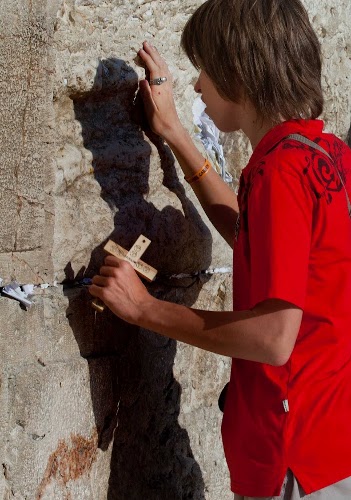
christian-at-the-kotelThe analysis seems kind of harsh but then again, it’s probably justified given how casually and callously some people treat this Jewish Holy place.

To you and me, the Kotel may not have the same meaning, but for most religious Jews (and Jesus and all his apostles were and are religious Jews), it is all that’s left of where once the Divine Presence of God dwelt among His people Israel. It is also a symbol of hope in the coming of Messiah, the redemption of Israel (which doesn’t mean quite the same thing in Judaism as it does in Christianity), and the return of hope, life, and peace for the Jewish people and in fact, for all the nations of the Earth.

If it also happens to be the site of where the Christ will rebuild the Temple and establish his reign as our King, shouldn’t we at least try to respect it’s holiness? I know that in Christianity, we consider each believer to be a “Temple” containing the Holy Spirit, and we tend to look at ourselves as replacements for the physical Temple, but this “human Temple” imagery doesn’t preclude the future existence of a Third Temple. We tend to think that something is either this or that, left or right, one or the other, as if we are computers communicating in binary language, but since we’re dealing with God here, is it too difficult to believe we can be (metaphorically) a “Temple” and the physical Temple will one day be rebuilt by Messiah? Is it too much to ask for both?