
 According to Torah sources, Moshiach undertakes the most intense suffering in the world on the condition that every Jew that has ever lived should have a portion in the ultimate redemption, including even aborted fetuses, the stillborn, and those souls that only arose in G-d’s thought, (Sicha of Chayei Sarah 5752-1991, Ch.1) The Sages state, (Ya/kut Shimoni, Psalms 2) “G-d divided the world’s suffering into three portions. One of those portions is the lot of King Moshiach. ‘He is wounded because of our sins… He suffers that we should merit peace.’ (Isaiah 53:5) When his time will come, G-d says, (Psalms 2:7) ‘Today I have given birth to him … It is his time and he will be healed.”’
from “Moshiach: The Greatest Challenge”
ChabadWorld.net
The prophet Zechariah describes Moshiach as “a pauper, riding on a donkey.” The simple meaning of the verse is that Moshiach — whom the Midrash describes as “greater than Abraham, higher than Moses, and loftier than the supernal angels” (Yalkut Shimoni after Isaiah 52:13) — is the epitome of self-effacement. Indeed, humility is the hallmark of the righteous: they recognize that their tremendous talents and achievements, and the power vested in them as leaders, are not theirs but their Creator’s. They live not to realize and fulfill themselves, but to serve the divine purpose of creation.
-Rabbi Yanki Tauber
“Moshiach’s Donkey”
Based on the teachings of the Lubavitcher Rebbe
Rabbi Menachem Mendel Schneerson
Chabad.org
This is the fourth (and probably final) article in my “Messianic Divinity series. To read this series from the beginning, go to part 1 Exploring Messianic Divinity, continue to part 2 The Living Word of God, and then part 3 The Mystic Mirror Darkly.
If you’re a Christian, the quotes I placed at the top of this blogpost probably sound a little familiar. You’ll probably have to “filter out” the parts that sound “too Jewish” for the Christian consciousness and theological palate, but I’m sure you’ll get the references most believers would associate with Jesus. I chose these sources because of how they seem to parallel what we believe in Christianity. Of course, this isn’t the intent of the writers, particularly the quote from ChabadWorld.net, which is specifically speaking of the Lubavitcher Rebbe as the Moshiach, who had to suffer and die only to be resurrected and live again. This is a point that hasn’t escaped the author of that article:
One thing is demonstrable; the Rebbe has not left us. He still guides us, obtains G-d’s favor and campaigns on our behalf. He’s still here, still alive, somehow. He is still the generational leader and he’s still Moshiach. The redemption is still on, and the world is still moving towards its ultimate fulfillment. The miracles haven’t slackened one bit. In fact there are more miracles now. You can access the Rebbe, too. The main point is that we will soon see him again, here, soul in a body, and he will be recognized by all to be Moshiach and he will finish the job he started leading mankind into the true and complete redemption.
One may ask, “But how can this all be true? It sounds too fantastic. And besides, now this really sounds like another religion.”
That other religion being mentioned is unquestionably Christianity and the writer is correct. This all really does remind me of Jesus. I’m sorry if that offends anyone, but the parallels, though not intentional (by human beings, anyway), are just too close to ignore.
Rabbi Tauber writes something in his Moshiach’s Donkey story that also connects to how we think of Christ.
On a deeper level, Moshiach’s donkey represents the essence of the messianic process: a process that began with the beginning of time and which constitutes the very soul of history. In the beginning, the Torah tells us, when G-d created the heavens and the earth, when the universe was still empty, unformed, and shrouded in darkness, the spirit of G-d hovered above the emerging existence. Says the Midrash: “‘The spirit of G-d hovered’ — this is the spirit of Moshiach.” For Moshiach represents the divine spirit of creation — the vision of the perfected world that is G-d’s purpose in creating it and populating it with willful, thinking and achieving beings.
Let’s take a closer look at this reference, first from the Torah and then from a slightly more recent source.
When God began to create heaven and earth — the earth being unformed and void, with darkness over the surface of the deep and a wind from God sweeping over the water. –Genesis 1:1-2 (JPS Tanakh)
In the beginning was the Word, and the Word was with God, and the Word was God. He was in the beginning with God. All things were made through him, and without him was not any thing made that was made. –John 1:1-3
 I should point out that the word translated as “wind” in Genesis 1:2 is the Hebrew word “ruach” which can be properly translated as either “wind” or “spirit”.
Why am I writing all this and why should you care? What does this have to do with the issue of the Messiah’s deity or lack thereof? To answer the second question first, not much. To answer the first question, because you want to know just as much as I do, who the Messiah really is (as much as we can understand, at least) so you can draw closer to God through him (John 14:6).
I’ve been bothered by the obvious disconnect between the Christian and Jewish views of the Messiah. Of course, it’s understandable why modern Judaism would want to create that disconnect, based on the rather bloody history of how Christians have harassed, tortured, and murdered Jews. It’s understandable why Christianity would also want to make that disconnect if you factor in the long history of supersessionism in the church (a theme of which I have a special interest). All of the Old Testament prophesies Christians say point to Jesus as the Messiah are interpreted to have other, non-Christian meanings by Judaism. Few Jews would want to even breathe a hint that their expectations of the Moshiach could have anything to do with oto ha’ish.
And yet there is a beauty and spiritual elegance in how Judaism renders the resurrection and the Moshiach that for me cannot fail to conjure up the perfect picture of Jesus Christ and his promises to a humanity desperately longing for hope and peace.
Resurrection involves both perfection in the state of man and a revelation of the Essence of G-d, an essence that transcends both the spiritual and the physical. In resurrection, there is a fusion of the Divine with the human through which is fulfilled the purpose of creation – to provide G-d with a dwelling in this lowly world.
How interesting. “…to provide G-d with a dwelling in this lowly world.” Isn’t that what we’ve been talking about for four blog articles now?
Rabbi Tauber uses the image of the Moshiach riding the donkey as a picture of how heaven and earth are joined together in the Messianic hope.
Conventional wisdom has it that the spiritual is greater than the physical, the ethereal more lofty than the material. Nevertheless, our sages have taught that G-d created the entirety of existence, including the most lofty spiritual worlds, because “He desired a dwelling in the lower world.” Our physical existence is the objective of everything He created, the environment within which His purpose in creation is to be realized.
So Moshiach, who represents the ultimate fulfillment of Torah, himself rides the donkey of the material. For he heralds a world in which the material is no longer the lower or secondary element, but an utterly refined resource, no less central and significant a force for good than the most spiritual creation.
Is the Messiah God? I can come to no absolute conclusions, especially since my “evidence” is based largely on mystical and metaphorical perceptions and interpretations. Any support for or against Jesus as God rests on foundations that are equally slippery to grasp and that transcend the logical, the rational, and the “real”, whatever “real” means. Whoever or whatever the Messiah is, he is no ordinary man. If man he is, then he has one foot on earth and another foot at the Heavenly Throne of God. He is the bridge between mankind and the Divine. Something of Him must have a Divine nature if he was the Word God used to speak the universe into being, if his spirit hovered over the antediluvian waters, and if the will and wisdom of God was “clothed” in flesh and “dwelt among us” in the person of Jesus.
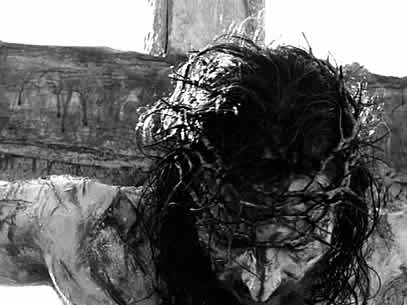 Did the early Apostles worship Jesus as God or bow down to him as a serf bows to a (non-Deity) King? The Greek is not conclusive in my opinion but I’m hardly a linguistic expert. Judaism says that the Moshiach is a unique human being who will be raised very high and given great and extraordinary honor; that he is an elevated tzaddik whose death will atone for a nation and perhaps a world.
Whether we say “the Christ” or “Moshiach”, we’re all waiting for him. Some of us consider that he has been here once before (including the Lubavitchers who await the return of the Rebbe) while many others believe he has not yet come. Whoever he is, whatever he is, he is the promise and hope of Israel and the salvation and restoration of the earth.
Like a watchman on the walls of a besieged Jerusalem, we await the dawn. Like a frozen world isolated from life and light by the dark and endless winter, we long for spring.
All of us.
Cultivate the soul with hope; teach it to await the break of dawn with longing eyes.
Through its ordeals, the soul is softened to absorb the rains. Yet, nevertheless, Spring comes for those that long for it.
And so the sages say, “In the merit of hope, our parents were redeemed from Egypt.”
-Rabbi Tzvi Freeman’
“Longing for Spring”
Based on letters and talks of the Rebbe
Rabbi M. M. Schneerson
Chabad.org


 Morning Meditations