Tag Archives: New Covenant

Messianic Jews and the Torah

I know I’m probably opening up a big can of worms here, but I’ve read a couple of things online today (yesterday as you read this) that really have me scratching my head (in puzzlement, not because I have an itch).

The first was from the “Ask the Rabbi” column at Aish.com. Someone asked:

I get upset when I see different Jewish denominations at odds with each other. Why doesn’t everyone just accept everyone else? Or perhaps is there a way to know which of the denominations is the most correct?

I’ll only quote part of the Rabbi’s answer:

Historically, any Jewish group which denied the basic principles of Jewish tradition – Torah and mitzvah-observance – ultimately ceased to be part of the Jewish people. The Sadducees and the Karites, for instance, refused to accept certain parts of the Oral Law, and soon after broke away completely as part of the Jewish People. The Hellenists, secularists during the Second Temple period, also soon became regarded as no longer “Jewish.” Eventually, these groups vanished completely.

Early Christians were the original “Jews for Jesus.” They accepted the Divine revelation of the Torah, but not the eternal, binding nature of the commandments. Initially, these Jews were reliable in their kashrut, and counted in a minyan. But the turning point came when Paul, realizing that Jews wouldn’t accept the concept of a dead Messiah, opened up membership to non-Jews. At that point, these “Jews” experienced a total severing of Jewish identity.

My understanding of the early Jewish disciples of Yeshua (Jesus) puts me at odds with this Rabbi. The Rabbi pre-supposes that Paul “opened up” membership into the First Century CE Jewish religious stream once called “the Way” to the Gentiles because “Jews wouldn’t accept the concept of a dead Messiah.” Except the record in the Apostolic Scriptures shows that Yeshua (Jesus) commanded his apostles to make disciples of the Gentiles (Matthew 28:19-20), and that he later commanded Paul to be an emissary to the Gentiles (Acts 9). The Biblical record also doesn’t present the issue of a “dead” (resurrected) Messiah as one of the objections some synagogues had to Paul’s message.

In fact, based on the following, a great many Jews initially accepted devotion to Messiah:

Now when they heard this, they were pierced to the heart, and said to Peter and the rest of the apostles, “Brethren, what shall we do?” Peter said to them, “Repent, and each of you be baptized in the name of Jesus Christ for the forgiveness of your sins; and you will receive the gift of the Holy Spirit. For the promise is for you and your children and for all who are far off, as many as the Lord our God will call to Himself.” And with many other words he solemnly testified and kept on exhorting them, saying, “Be saved from this perverse generation!” So then, those who had received his word were baptized; and that day there were added about three thousand souls.

Acts 2:37-41

As Paul and Barnabas were going out, the people kept begging that these things might be spoken to them the next Sabbath. Now when the meeting of the synagogue had broken up, many of the Jews and of the God-fearing proselytes followed Paul and Barnabas, who, speaking to them, were urging them to continue in the grace of God.

Acts 13:42-43

You see, brother, how many thousands there are among the Jews of those who have believed, and they are all zealous for the Law…

Acts 21:20

The Jewish PaulI don’t perceive that Paul switched his emphasis of going first to the Jews with the good news of Messiah and then only to the Gentiles (Romans 1:16), nor that he was encouraging Jews to abandon the Torah (as he was falsely accused of). And yet these seem to be common themes that run through most Jewish objections to Yeshua and particularly to Paul.

I do think the Rabbi is somewhat correct in saying that the large influx of Gentiles into the ancient Messianic movement ultimately resulted in a messy Jewish/Gentile schism that did not remove Jewish identity from Jewish Yeshua believers, but did transform the movement into the new Gentile religion of Christianity (which was done by the early Gentile “church fathers,” not by Paul). Jewish participation in Yeshua-devotion as a Judaism subsequently dwindled and finally was extinguished for many centuries.

But the Aish Rabbi said something else that is interesting if not entirely accurate:

Early Christians were the original “Jews for Jesus.” They accepted the Divine revelation of the Torah, but not the eternal, binding nature of the commandments. Initially, these Jews were reliable in their kashrut, and counted in a minyan.

My opinion based on scripture is that the early Yeshua-believing Jews very much did accept the Divine revelation of the Torah and the eternal and binding nature of the commandments.

There was no dissonance between Jewish identity and performance of the mitzvot and the revelation of the resurrected Messiah.

(I suppose I should say that yet another typical misconception many Jewish people make is equating the specific organization Jews for Jesus with both the ancient and modern Messianic Jewish communities.)

That was pretty much going to be my point for today’s missive, but then I read an article on the Rosh Pina Project’s blog called Rabbi Telushkin: If Jews believed Messiah has come, they wouldn’t keep Torah. The title alone is baffling and I hope I’m reading this wrong, but I truly don’t understand what’s being said here:

Here at RPP, we very much believe that Messianic Jews are free to observe the Torah, or not to, according to their consciences. There is certainly no obligation to keep Torah.

Some Messianic Jews still keep Torah as a “witness” to other Jews. If we keep Torah, the logic goes, Orthodox Jews will realise that it’s okay to be Jewish and believe in Jesus. When it comes to “witness”, however, we think that continued Messianic Jewish Torah observance has the opposite effect.

It sends a mixed message to the Jewish community. According to Judaism, when Messiah comes the Torah is abolished. Messiah’s followers now keep to a new law, not Torah.

So when Jews see us claiming the Messiah has come, but we should still keep the Torah, we are sending a mixed message. We are saying Messiah has come already, but we’ll act as if nothing has changed by continuing to keep Torah.

According to Judaism, when Messiah comes, there is no more Torah.

In order for Messianic Judaism to act consistently with the values of Judaism, Messianic Jews would have to abandon Torah.
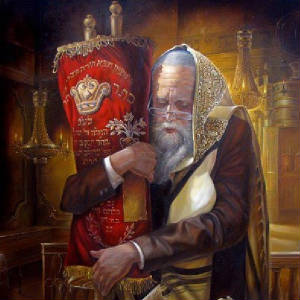
TorahUm…since when have Jews believed that when Messiah comes they will stop observing the mitzvot? I’ve never heard of such a thing before. In fact, according to this Jewish source…

The King Messiah and the Sanhedrin will restore the Sabbatical system and the Jubilee (which involve seven-year counts and a fifty-year count), as well as all other Commandments that we are unable to fulfill today. He will uphold and restore complete performance of the commandments and complete obedience to Hashem and His Torah. He will cause all Jews in the entire world to fulfill the Commandments of the Torah, and to uphold and strengthen the one and only true Judaism. Likewise, he will succeed in getting all the nations of the world, everyone alive, to acknowledge and serve the One True G-d, Hashem. This does not mean that they will convert and become Jews. It means that they will keep the Seven Laws that Hashem commanded the children of Noah.

The King Messiah will be extremely learned in Torah and absolutely observant of all the Commandments as taught and explained in the Oral and Written Torah.

The Messiah will not need to perform any miracles to prove who he is. Nor would the miracles be very significant. The Messiah’s purpose is to bring about the return of the Jews from exile, to restore our united practice of the Commandments of the Torah, to raise our conciousness to a high level of fear and love of Hashem, and to reinstate the Jewish kingdom in the Holy Land of Israel as Hashem originally established it under King David. Those are the Messiah’s essential purposes. Even bringing peace and affluence to the world will be only so that the world will be able to peacefully pursue our purpose of serving Hashem through Torah study and prayer — Jews as Jews, and Gentiles as Gentiles. Performing miracles is not particularly meaningful, since the Messiah will be an obviously righteous man, and the Torah commands us to obey the righteous.

What I’m driving at here is that all the miracles in the universe do not make someone Messiah, if he is not righteous. jesus, who contradicted the Torah, could not have been the Messiah, no matter how many miracles they claim he performed. The real Messiah, when he comes, may or may not perform miracles, but he will certainly not contradict the Torah in any way, shape or form.

-from the article “What the Messiah is Supposed to Do”
BeingJewish.com

Sorry about the really long quote, but I wanted to make sure that I got the point across (and to that end, I bolded the word “Torah” above) that the Jewish understanding of Messiah does not require the removal of Torah observance and in fact, Messiah and Torah are inexorably intertwined. The RPP writer is entitled to their opinion, but I really don’t see that such a viewpoint is sustainable based on the Tanakh, Apostolic Scriptures, or Jewish traditions.

Jews, Messianic or otherwise, are required to observe the mitzvot because the mitzvot are eternal. Even the Master is famously quoted as saying so:

“Do not think that I came to abolish the Law or the Prophets; I did not come to abolish but to fulfill. For truly I say to you, until heaven and earth pass away, not the smallest letter or stroke shall pass from the Law until all is accomplished. Whoever then annuls one of the least of these commandments, and teaches others to do the same, shall be called least in the kingdom of heaven; but whoever keeps and teaches them, he shall be called great in the kingdom of heaven.”

Matthew 5:17-19

Restoration
Photo: First Fruits of Zion

You should also watch this thirty-minute episode of First Fruits of Zion‘s television program The Torah is not Canceled (free to be viewed online).

I say all this in support of Jewish Torah observance, whether Messianic, Orthodox, or otherwise. Messianic Jewish observance of the mitzvot isn’t a “witness,” it is obedience based on covenant obligation. The Jewish view of the New Covenant makes this plain.

I’m forced to disagree with both the Aish Rabbi and the RPP author that Jewish devotion to Yeshua results in loss of Jewish identity and abandoning Jewish covenant responsibilities to Hashem (or making Torah observance optional for Jews). Granted, in the long history of Christianity, the Church has required that Jews surrender their identity when coming to faith in Messiah, but all that has changed. Gentile Christianity no longer is the sole keeper of the Keys to the Kingdom, and Jews now have an avenue by which they can reclaim their own King and their own Kingdom and remain Torah observant Jews.

I realize that I’ve most likely really offended a bunch of people by writing and publishing this and certainly that’s not my intention. I am quite aware that opinions differ widely within Messianic Judaism as to just how “Jewish” Jews in Messiah should be. I suppose some would see me as a radical for my belief that Messianic Jews should remain firmly rooted in Jewish identity, Jewish community, and Jewish devotion to Torah and to keeping and guarding the commandments. Yes, I’m speaking of an ideal state of the movement rather than the fractured reality of today’s Messianic Judaism, but I believe there will come a time when all Jews will be drawn back to the Torah by Messiah.

If anything, and I’ve said this just recently, the job of Gentiles in Messiah is to help facilitate Jewish observance of the mitzvot. A Christianity (or Messianic Judaism) that preaches otherwise denies the New Covenant promises God made to Israel.


Pondering the Birth Pangs of Mashiach

Update: I was going to publish this last Friday morning but as you all know by now, certain events have resulted in me making a rather drastic change in my comments policy as well as my writing schedule. I decided to go ahead and let this blog post publish since I already had it ready to go. What happens after this, I really don’t know.

I’ve received a lot of emails that were very encouraging and I want to thank everyone who took the time to reach out to me with such kind remarks. I have other projects that I can pursue and who knows what the future may bring. Blessings.

In these days especially, when by G-d’s kindness we stand at the threshold of redemption, we must make every conceivable effort to strengthen every facet of our religion. Mitzvot must be observed b’hidur, with “beauty,” beyond minimal requirements. Customs must be kept scrupulously, nothing compromised. It is a Mitzva and duty of every Rabbi in Israel to inform his congregation that the current tribulations and agonies are the “birth-pangs of Mashiach.” G-d is demanding that we return to Torah and mitzvot, that we not hinder the imminent coming of our righteous Mashiach.

“Today’s Day”
for Tuesday, Sh’vat 8, 5703
Compiled by the Lubavitcher Rebbe; Translated by Yitschak Meir Kagan
Chabad.org

This is exactly what I was trying to say yesterday. This is the idea communicated in Ezekiel 36:27:

I will put My Spirit within you and cause you to walk in My statutes, and you will be careful to observe My ordinances.

This is a direct link between the New Covenant promises God made “to the house of Judah and the House of Israel” (Jeremiah 31:31), Israel’s observance of Torah, and Israel’s apprehension of the Divine Spirit.

And as we see, this also illustrates a link to the “current tribulations and agonies” of our times, which are defined as the “birth-pangs of Mashiach.”

But those words should also be familiar to most Christians:

And Yeshua (Jesus) answered and said to them, “See to it that no one misleads you. For many will come in My name, saying, ‘I am the Mashiach,’ and will mislead many. You will be hearing of wars and rumors of wars. See that you are not frightened, for those things must take place, but that is not yet the end. For nation will rise against nation, and kingdom against kingdom, and in various places there will be famines and earthquakes. But all these things are merely the beginning of birth pangs.”

Matthew 24:4-8 (NASB -adapted)

Seems to be a close parallel to what you read in the quote at the top of this blog post. Here’s something more:

Rab said: The son of David will not come until the [Roman] power enfolds Israel [2] for nine months, as it is written, Therefore will he give them up, until the time that she which travaileth hath brought forth: then the remnant of his brethren shall return unto the children of Israel. [3]

‘Ulla said; Let him [The Messiah] come, but let me not see him. [4]

Rabbah said likewise: Let him come, but let me not see him. R. Joseph said: Let him come, and may I be worthy of sitting in the shadow of his ass’s saddle. [5] Abaye enquired of Rabbah: ‘What is your reason [for not wishing to see him]? Shall we say, because of the birth pangs [preceding the advent] of the Messiah? [6] But it has been taught, R. Eleazar’s disciples asked him: ‘What must a man do to be spared the pangs of the Messiah?’ [He answered,] ‘Let him engage in study and benevolence; and you Master do both.’

Sanhedrin 98b (emph. mine)

Talmud Study by LamplightI’m periodically accused of misusing Jewish writings and I can see how some folks may see me playing fast and loose with ancient and modern Rabbinic commentary. On the other hand, I don’t see any other valid lens by which to view and comprehend my faith. Chances are I’m getting at least something wrong, and perhaps a good many things in the details. But it’s the only way for me to read the Bible and understand the plan of God as a single unit rather than a “Plan A” shifting to “Plan B” some time around Acts 2, or worse, as the Almighty pulling the world’s biggest “bait and switch” with His people Israel.

The New Covenant promises and prophesies (Jeremiah 31, Ezekiel 36) God made with Israel must come true, otherwise, not only does Israel have no hope but the rest of the nations of the world (i.e, Gentiles and particularly Christians) are hopeless as well.

You worship what you do not know; we worship what we know, for salvation is from the Jews.

John 4:22 (NASB)

That’s the Master speaking to a Samaritan woman and he might as well have been speaking to all the Gentile nations, that is, to us.

For nearly two-thousand years, Gentile Christianity and devout Judaism have charted divergent paths through history, pulling apart starting in the late first century and extending into the second, and traveling many light years away from each other ever since.

But I think that’s changing, at least a little. One of the “birth pangs” I see happening (and this is just my personal opinion), is the dialog and debate occurring between Judaism and Christianity or more specifically between mainstream/normative Judaism and Messianic Judaism, including with those of us who identify as “Messianic Gentiles.”

It almost seems like a (well-mannered) battle at times.

But at least we’re talking.

I mentioned before that Jewish Torah observance is a requirement for the return of the Messiah and particularly for Jewish disciples of Yeshua. We have historical records of individuals and small communities of Jews who were Yeshua disciples and who lived wholly religious and observant Jewish lives. This is also beginning to happen today, although such communities are small and far apart.

There are accusations that the number of Jews in the Messianic movement is actually decreasing. I can’t speak to that except to say if true, this is also part of the birth pangs as I understand them. It’s supposed to get darker, more bleak, and look more hopeless as the “birth pangs” continue. The gate is supposed to be narrow.

“Enter through the narrow gate; for the gate is wide and the way is broad that leads to destruction, and there are many who enter through it. For the gate is small and the way is narrow that leads to life, and there are few who find it.

Matthew 7:13-14

Of course that’s less than an opinion. It’s just a belief that God will call as many as who will listen to Him. I’ve been reminded recently that how God calls people, particularly Jewish people to Him, can be seen in at least a couple of different ways. I think I know just a tiny bit how a Jew might feel being proselytized by a Christian when just about everything I write is challenged from an Orthodox Jewish point of view (Hi, Gene).

pregnantBut I truly believe what I’ve written. I believe that supporting Jewish Torah observance is part of the requirement for the return of Messiah and the establishment of the Messianic age. I just don’t know how to get that point across without both Christians and Jews more or less quarreling with me, forging an unwilling partnership for the sake of my personal growth (as Rabbi Zelig Pliskin would put it).

I guess you could say this is part of the personal “birth pangs” we go through when different individuals and factions are involved and presenting their particular theologies and doctrines. Somehow, I think it’s important to survive with my relationship with God intact, for in the end, I won’t be judged in the religious blogosphere, but in the court of the God of Heaven, in spite of (or maybe because of) the “current tribulations and agonies.” So will we all.

There are questions to which G-d says to be quiet, to be still, to cease to ask.

-Rabbi Tzvi Freeman
“Be Quiet”
Based on letters and talks of the Rebbe, Rabbi M. M. Schneerson
Chabad.org

Sounds like good advice and maybe I’ll take it for awhile. We’ll see.

Oh, if you are looking for me, I’ll be over here. No “religious” comments allowed.

Footnotes

2. I.e., the whole world in which Israel is scattered.
3. Micah V, 2: ‘therefore will he give them up’ is interpreted as meaning to a foreign — viz., the Roman — power, and the duration of their servitude is fixed by ‘until the time etc.’ i.e., nine months, the period of pregnancy.
4. V. n. 7.
5. [Following the reading in Yalkut (v. Levy,) [H]. Our texts read: [H], ‘dung’.]
6. These troubles are generally referred to as birth pangs, being the travail which precedes the birth of a new era.

Render to Israel

The Joseph story is several things at once — things in addition to being an account of something that happened way back in the days of the patriarchs. It is probably a story comforting to Israelites during or after the exile in Babylon. It is a story with foreshadowings of Israel’s later tribal relationships. But the thing that interests me the most is how the Joseph story is an example of God’s covenant blessing through Israel to the nations, who in turn bless Israel, and how this blessing becomes a mutual thing. Soulen called it “mutual blessing.” It is a pattern not only for Israel and the nations, but is a way of life that repairs the world. “Bless and curse not . . . do not return evil for evil.”

-Derek Leman
“The Meaning of the Joseph Story”
Messianic Jewish Musings

When I read the above-quoted paragraph, it struck me as an excellent summary of the relationship between Israel and the nations of the world, particularly the people of the nations who are called by His Name (Amos 9:12). It’s the relationship between Israel and the people of the nations who have come to faith in God through the merit of trusting in the accomplished works of Moshiach ben David, Yeshua (Jesus).

Last Spring, I wrote a multi-part review of D. Thomas Lancaster’s sermon series What About the New Covenant beginning with Part One here. Starting over two years ago, I initiated my own personal investigation into the New Covenant which extended into the following Spring. The upshot of all this was the discovery that only Jewish Israel is the object of the New Covenant and that it takes some work to figure out how anyone who isn’t Jewish can be blessed.

I’ve already posted enough links for the interested reader to follow my investigation and my reviews of this material, so I won’t repeat myself here. Suffice it to say that it’s not easy to find the linkage between the New Covenant and the people of the nations. It’s there, but it’s elusive.

But Derek’s wee article about the story of Joseph captured a key part of understanding how the nations benefit from Israel and conversely, how Israel benefits (or should benefit) from us.

In one of my numerous reviews of the Rudolph and Willits book Introduction to Messianic Judaism, it was also well documented by more than one contributor that Jews and Gentiles in Messianic Judaism are mutually dependent. In spite of my stated support for exclusive Messianic Jewish communities, it becomes impossible to fully isolate all Messianic Jews from all Messianic Gentiles or the non-Jewish believers in Jesus. While the covenant and community distinctions remain, we are two populations united within one body or ekklesia through Messiah. After all, God’s Temple is to be a house of prayer for all people (Isaiah 56:7) and not the Jewish people only.

But look at how the blessings flow as described in Derek’s paragraph. The blessings from Israel to the nations come first and only afterward do we bless Israel. Israel was always meant to be a light to the nations, to attract the nations to the God of Israel by being a special, set apart people.

So keep and do them, for that is your wisdom and your understanding in the sight of the peoples who will hear all these statutes and say, ‘Surely this great nation is a wise and understanding people.’ For what great nation is there that has a god so near to it as is the Lord our God whenever we call on Him? Or what great nation is there that has statutes and judgments as righteous as this whole law which I am setting before you today?

Deuteronomy 4:6-8 (NASB)

He says, “It is too small a thing that You should be My Servant
To raise up the tribes of Jacob and to restore the preserved ones of Israel; I will also make You a light of the nations
So that My salvation may reach to the end of the earth.”

Isaiah 49:6

lightThis isn’t to say that the nations in coming to God would co-opt Israel and her unique relationship with God through the covenants and the mitzvot, but it is not a mistake to believe that God has always intended to bring all the nations to Him, as it is written, “every knee will bow” (Isaiah 45:23, Romans 14:11, Philippians 2:10).

But the relationship is complementary. Consider marriage as we understand it from the Bible. While a man and a woman become “one flesh” (Genesis 2:24, Mark 10:8, Ephesians 5:31), it obviously doesn’t mean that all physical and behavioral distinctions between a man and a woman vanish on their wedding day. The man remains male and the woman remains female. They enter into a single “body” or “assembly” if you will, by accepting upon themselves a mutually beneficial and complementary set of roles in relation to one another. So too it is with Jews and Gentiles in the ekklesia of Messiah.

There is neither Jew nor Greek, there is neither slave nor free man, there is neither male nor female; for you are all one in Christ Jesus.

Galatians 3:28

Such an understanding makes the above-quoted verse from Paul’s letter to the Galatians a bit more comprehensible. Being “one in Christ Jesus” is like being “one flesh” within the context of marriage. It doesn’t mean a total fusing of identity and physical characteristics. It means that even though we have different and distinct roles and identities, we all receive the blessings and benefits of abiding within the Messiah’s assembly.

In the story of Joseph, Joseph, representing Israel (and literally Israel’s son), blesses the nations of the world by saving the world, starting with Egypt, from starvation during a terrible seven-year famine. The ultimate consequence of Israel blessing the nations is that Egypt returns the favor by taking in Jacob and his entire family (representing national Israel), and giving them Goshen, the choicest portion of Egypt, as their own.

Of course, this foreshadows more sinister events, but if we stop the story right here, we have a good example of how Messianic Jews and Gentiles should relate to one another. It is through Israel that we Gentiles even have an awareness of the true nature of the Messiah and how our faith in him attaches us to God and allows us to benefit from many blessings of the New Covenant without actually being named as covenant members. We become equal co-participants in the ekklesia of Messiah, breaking bread, so to speak, alongside our Jewish brothers and sisters at the same table.

There are many Gentiles (such as me) who do not have local access to a Messianic community of Jews or even Messianic Gentiles, and yet, we are a part of a larger assembly, standing alongside each other in our mutual faith and trust in Hashem through devotion to Messiah. In that sense, we are never alone, though we may not, for months or even years, meet with another person who shares our conceptualization of the workings of the New Covenant and the continued validity of the mitzvot for the Jewish people as their obedience to covenant and King.

I recently read a blog post asking “How do you KNOW the will of God” for your life? In Judaism, one studies Torah not for the sake of knowledge, but in order to do Torah, that is, to perform and fulfill the mitzvot. This is somewhat different if you’re not Jewish and, for example, the wearing of tzitzit and laying of tefillin are not practical indicators of a Gentile’s righteousness.

ForgivenessI’ve written quite a lot lately on the topics of repentance, atonement, and forgiveness, and from my point of view, this is a full-time obligation to God for all of us. Beyond that, obedience to God is not a matter of selling your house and moving to some far away land to become a missionary to an isolated people, at least not for most of us. Obedience to God permeates every aspect of our lives and is involved in each decision and act we take in our every waking moment, regardless of who we are and what sort of work we do. Do we treat others with respect and fairness? Do we talk about people behind their backs? Do we take every opportunity to act with kindness, showing compassion, offering friendship?

It’s the answers to these questions that tell us if we are obeying God, not whether or not we put on particular “religious” clothing.

One should study Torah and do mitzvos even if not for their own sake, for doing so will eventually result in study and performance for their own sake.

-Pesachim 50b

This Talmudic statement has given rise to questions by the commentaries. Why is the Talmud condoning study of Torah for ulterior motives? What happens to the emphasis on sincerity in observance of Torah and mitzvos?

Acting “as if” can be constructive. If a person who suffers from a headache goes on with his or her activities “as if” the headache did not exist, that headache is more likely to disappear than if he or she interrupts activities to nurse the headache. “Rewarding” the headache by taking a break only prolongs it.

Study of Torah and performance of mitzvos require effort, may be restrictive, and may interfere with other things one would rather do. Under such circumstances, there may not be great enthusiasm for Torah and mitzvos. However, if one nevertheless engages in Torah and mitzvos “as if” one really wanted to, the resistance is likely to dissipate. The reasoning is that since one is determined to do so anyway, there is no gain in being reluctant, and true enthusiasm may then develop. On other hand, if one were to delay engaging in Torah and mitzvos until one had the “true spirit,” that spirit might never appear.

It is not only permissible but also desirable to develop constructive habits by doing things “as if” one really wanted to.

Today I shall…

…try to practice good habits, and do those things that I know to be right even though I may not like doing them.

-Rabbi Abraham J. Twerski
Growing Each Day for Kislev 23
Aish.com

While Rabbi Twerski is writing for a Jewish audience, I think the rest of us can take something away from his message as well. It’s not like the majority of the mitzvot don’t affect us in some way. Feeding the hungry is the same for a Gentile as a Jew. So is visiting a sick friend in the hospital, respecting your parents, honoring your spouse, teaching your children about God.

These are the blessings we receive from Israel, the knowledge that there is the One, Unique God of Heaven who made us all, and that He is personally involved in the lives of each and every one of His human creations.

JerusalemOur response needs to be both to God and to Israel, offering devotion to the Almighty and honoring Israel in her special and unique relationship with God. Paul asked his Gentile disciples to take up a collection for the poor of Jerusalem and that’s one way we can pay back Israel for her blessings to us. Another particularly important way we can bless Israel is to recognize her covenant relationship with God as belonging exclusively to the Jewish people and as established at Sinai. We need to realize and acknowledge that all of the covenants we read about in the Bible are between Israel and God including the New Covenant. It is only through Israel and the grace of God that we are saved and redeemed (John 4:22).

Jesus said “Render unto Caesar what is Caesar’s and to God what is God’s” (Mark 12:17), but I say, render unto Israel what is Israel’s and thereby bless those who have blessed us.

Israel and the Nations in the House of God

True, that particular parcel of land was later named Eretz Yisrael, but even then we saw not a small piece of land, but a polished mirror, reflecting the entire world. In this land will rise up the mount of the Lord “and to it shall flow all to the nations.” On this mount will stand the House of the Lord, “it shall be called a house of prayer for all the nations.”

-Rabbi Moshe Avigdor Amiel
Commentary on Lekh Lekha
Chapter 1: Abraham Recognized His Creator, p.135
Translated by Kadish Goldberg
Jews, Judaism, & Genesis: Living in His Image According to the Torah

As Christians (or “Messianic Gentiles” if you prefer), we have our own ideas of how God’s covenant promises to Abraham, Isaac, and Jacob somehow play in to attaching the non-Jewish people groups of the world to the God of Israel. It’s true that we disagree on many of the specifics of the New Covenant and how faith in the accomplished work of Messiah grafts us into the root, and we argue about those opinions day and night, typically by blogging.

Every so often, we employ the classic Jewish writings, not those found in the Bible, but those written afterward, sometimes many centuries afterward, to somehow prove our point. We conveniently forget that these Jewish sages and teachers would not have said or done anything they thought might give credence to the idea that the “founder of the Christian religion,” that is to say “Jesus” (Yeshua) could possibly be the Messiah, let alone of a Divine nature.

However, I believe that only by viewing the Bible through a “Jewish lens” and reading the sacred writings in as close an approximation as possible to how the original audience would have understood them, will we ever come close to capturing the true intent of not only the human writers, but of the Holy Spirit that inspired them. Thus, when I read Rabbi Amiel’s commentaries, which include his insights as to just how the rest of the world was supposed to be attracted to the God of Israel, I become interested.

amiel
Rabbi Moshe Avigdor Amiel

One caveat, though. We can’t read too much into these commentaries for, as I said above, R. Amiel and the sources he quotes would not be considering Jesus in any favorable light, given the long history of enmity that existed between our two faith groups. Nevertheless,I think by examining the Jewish perception of drawing the Gentiles near, we might gain some insights into how we Gentiles might better approach Hashem, God of the Hebrews.

“The Holy One, blessed be He, exiled Israel among the nations so that they would attract converts, as it is said, ‘and I shall plant her in the land’ — does one sow a se’ah unless he expects to reap several koor?” (Tractate Pesachim 87b.)

So it was with the first Jew, our father Abraham. His history, as described in the portion of Lekh Lekha, began in Galut, outside the Land of Israel. He, too, was exiled from his land and birthplace only in order to increase proselytes, as is written ‘and all the families on earth will be blessed through you.’

-Amiel
Chapter 2: Our Father Abraham’s Mission, p.141

Of course in Abraham’s day, Judaism, as such, did not exist. Abraham is noteworthy for coming to faith in the One God of all and acknowledging Him as his personal God. We do know from the Bible and midrash, that Abraham did “make souls” or taught his servants and others the ways of God, but would these people have “converted” to anything and if so, what?

His “converts” were not formally converted. Among the seventy souls who went down to Egypt, no mention is made of any converts. They were converted ideologically. They were influenced by Abraham’s noble spirit…

…Thus, the converts whom we are to attract through our exile among the nations are not formal converts — for “converts are as troublesome for Israel as is a skin affliction.” The converts referred to by the Rabbis are persons who are influenced in varying degrees by our sublime fragrance.

-ibid, pp.141-2

With the caveat I mentioned above in mind, how can we compare this to the actual result of the people of the nations being drawn to the God of Israel in the days of Messiah and afterward?

Go therefore and make disciples of all the nations, baptizing them in the name of the Father and the Son and the Holy Spirit, teaching them to observe all that I commanded you; and lo, I am with you always, even to the end of the age.”

Matthew 28:19-20 (NASB)

“You see, brother, how many thousands there are among the Jews of those who have believed, and they are all zealous for the Law…

…But concerning the Gentiles who have believed, we wrote, having decided that they should abstain from meat sacrificed to idols and from blood and from what is strangled and from fornication.”

Acts 21:20, 25

AbrahamSeemingly, there is a parallel between R. Amiel’s interpretation of the “mission of Abraham” to the nations and the mission to the Gentiles initiated by Yeshua and acted upon by Paul, James, and the Apostles. There’s a conversion without a conversion happening. Gentiles are added to the ranks of the ekklesia of Messiah without any formal conversion such as was typical of the proselyte rite in the late Second Temple period.

But how does R. Amiel and the Judaism he represents imagine this was to be done? Certainly not in the matter that the Christian believes.

“‘And I will make you into a great nation’ — therefore we say ‘God of Abraham.’ ‘And I will bless you’ — therefore we say ‘God of Isaac.’ ‘And I will make your name famous’ — therefore we say ‘God of Jacob.’ Are we then to conclude [the first blessing of the Amidah prayer] with all three? The verse specifies, ‘And you will be a blessing’ — we conclude with ‘you’ (singular), not with all three.

-Tractate Pesachim

Not only do the world’s three major faiths, our holy faith and those of the Christians and the Moslems, base themselves theologically upon our Holy Torah. Not only do they draw life-giving waters from our fountainhead, they also relate to us genealogically.

-Amiel
Chapter 3: God of Abraham, Isaac and Jacob, p.145

You may be aware that Abraham fathered both Ishmael, who became the father of the Arabs and is claimed by Islam, and Isaac, who, through his son Jacob, became the scion of the twelve tribes and finally the Jewish people. But how do Christians derive a genealogical connection to Abraham?

Esau, as you may have read, is Edom, a people who are thought to be the distant ancestors of the Romans, these are the Gentile nations from R. Amiel’s point of view, and thus the Christians, since Christians, by definition, are not Jewish (if that statement makes you uncomfortable when you think of “Hebrew Christians,” remember the Rav’s perspective on the matter is thoroughly Jewish and not easily adapted to Christianity’s framework of conceptualization).

But wait a minute. If both Islam and Christianity can be considered in some manner as physical descendants of Abraham, do we Christians then inherit all of the promises God made to Abraham including possession of the Land of Israel?

Hold your horses and remember your Bible. Even if the Gentile Christians are both “spiritual” and physical descendants of Abraham, there is this:

But God said to Abraham, “Do not be distressed because of the lad and your maid; whatever Sarah tells you, listen to her, for through Isaac your descendants shall be named.”

Genesis 21:12

Now Abraham gave all that he had to Isaac; but to the sons of his concubines, Abraham gave gifts while he was still living, and sent them away from his son Isaac eastward, to the land of the east.

Genesis 25:5-6

interfaithIt is only through Isaac that the promises of God are carried on to the next generation and beyond, not through Ishmael or any of Abraham’s other children. Furthermore, of Isaac’s sons, only Jacob inherits both the birthright and the blessing of the first-born.

As it is written, God spoke to Jacob:

And behold, the Lord stood above it and said, “I am the Lord, the God of your father Abraham and the God of Isaac; the land on which you lie, I will give it to you and to your descendants. Your descendants will also be like the dust of the earth, and you will spread out to the west and to the east and to the north and to the south; and in you and in your descendants shall all the families of the earth be blessed. Behold, I am with you and will keep you wherever you go, and will bring you back to this land; for I will not leave you until I have done what I have promised you.”

Genesis 28:13-15

Thus as we see in Tractate Pesachim, it is only through Abraham and through Isaac, and through Jacob that all of God’s promises are carried out. It is true that based on the commentary, we can consider Abraham the father to other nations, physically the Arab people, and midrashically the Christians, but that makes neither people or religion Jewish.

Expanding on his point, R. Amiel writes:

‘And all the families of the earth will be blessed through you.’ Of the End of Days, when ‘the Temple Mount shall be the highest of all, towering above the hills,’ it is written that ‘many nations will come streaming to it.’ This is to say that even though ‘the Lord shall be one and His name shall be One,’ all the nations of the world will not fuse into one nation. There will remain diverse peoples. National differentiation actually contributes significantly to human development, bringing not curses but blessings. But ‘many nations will come streaming to it,’ — all will flow to one central point, to the Mountain of the Lord which ‘shall be the highest of all, towering above the hills.’ Or, as the Torah says, ‘through you will be blessed all the families [plural!] of the earth.’ (emph. mine)

-Amiel, p.147

Up to JerusalemAs I said, the Rav isn’t going to take any Christian innovations regarding Biblical interpretation into account, so it would be easy to discount his comment above based on that. On the other hand, I think there’s some merit to the idea that, by viewing the Bible a bit more “Judaically,” we can get a more accurate picture not only of how Judaism sees the final resolution of the Gentiles to God, but perhaps how the original Jewish writers of the Bible saw this conclusion of human history.

For me, this does re-enforce my currently held belief that the peoples of all the nations remain distinct national groups differentiated from Israel and from each other, and yet all drawn to One God and One place, the Temple, to worship Him in the “House of Prayer for all peoples”.

I’ve said before that it is at least plausible to consider that when the Master issued his Matthew 28:19-20 directive, the Apostles likely believed they would comply by employing the traditional proselyte rite, bringing the Gentiles into discipleship by converting them to Judaism. This, though, violates prophesy as R. Amiel has pointed out. It is clear that the Gentiles were to be drawn near to God as Gentiles.

The Apostle Paul was the one to see this most clearly, but how does Judaism see it standing on the outside of the Apostolic Scriptures and looking in, so to speak?

What prevented their mass conversion was the law of brit milah, ritual circumcision, for they found that particular commandment to be the most difficult of all. The founder of the faith of the “New Testament” exploited this fear of circumcision and prevented the fulfillment of the promise ‘and I will make you a great nation.” Thus Israel is ‘the smallest of nations.”

-ibid, p.148

This is the Rav’s explanation for how Christianity “morphed” into its own, separate religious expression. Like the ancient Apostles, he believes the proper way to fulfill the prophesies is to convert Gentiles into Judaism, making Abraham’s descendants as numerous than the stars (Genesis 15:5). But this contradicts his view that the people of the nations will draw near to God as people of the nations and not as proselytes. R. Amiel’s only apparent option within his contextual framework, is to have the Gentiles “convert” in the sense of becoming Noahides, righteous Gentiles, which would satisfy the requirement of them retaining their national identity while still honoring the One God of Israel.

R. Amiel acknowledges that Abraham is the father of many nations and that the people of the nations are blessed through him, but the “nations inherited the legacy only partially; we (Jews) inherited it in its entirety.” (p.149)

My respectful response to the esteemed Rav is “yes and no.” I agree that we Gentile believers are not Israel and yet, we are not to be compared to the generic nations of the earth. Even if those nations comply with the Noahide Laws, that doesn’t provide those of us who are grafted in to the root through our faith in Messiah access to the New Covenant blessings. This is something that Rabbi Amiel could not anticipate, but we can. We can take what is valuable from the esteemed and honored sages, and in this case, look at it through a New Covenant lens in order to glean what is of value there.

Restoration
Photo: First Fruits of Zion

I mean no disrespect to Rabbi Amiel, those other Rabbis who contributed to the publication of his book, or the long history of the Sages in Judaism, but even as they were inspired and even as they possess authority from God to make halachah for their generations, they were also men, and as men, given the struggles of the last twenty centuries, there were places they just could not see and knowledge they couldn’t assimilate. No one comes to God without the involvement of the Holy Spirit. To everyone else, the good news of the Messiah doesn’t make a lot of sense:

For indeed Jews ask for signs and Greeks search for wisdom; but we preach Christ crucified, to Jews a stumbling block and to Gentiles foolishness, but to those who are the called, both Jews and Greeks, Christ the power of God and the wisdom of God. Because the foolishness of God is wiser than men, and the weakness of God is stronger than men.

1 Corinthians 1:22-25

All people, Jewish and non-Jewish, come with blind spots that can only be clarified through the Spirit of God. I suppose God could just re-write our programming and the entire world could wake up one morning all declaring faith in Christ and him crucified, but that’s not God’s plan. It would be easier if it were, but God left human free will intact. We have to be willing to hear the messages of the Gospel, and having heard them, we have to be willing to believe and then act on that belief.

The call of the Master is like hearing a knock on your front door. Is it a thief or a benefactor? We won’t know until we open the door, but if we’re wrong, then it’s too late to save ourselves of any threat that might enter. But if we take the risk and open the door, he will come in and with him…freedom.

May we all meet together one day on the Mountain of God, and may we join in prayer in His House.

‘And the souls which they had made in Charan.’

Reish Lakish said, “Whoever teaches his friend’s son Torah is considered by Scripture as though he himself had made [created] him, for it is said, ‘And the souls which they had made…'”

-Amiel
Chapter 4: Flesh and Soul, p.151

Sermon Review of the Holy Epistle to the Hebrews: Mediator of the New Covenant

In the New Covenant, Yeshua acts as priest, sacrifice, and mediator. Installment 36 in the Beth Immanuel Hebrews series finishes Hebrews 9 with a discussion on Hebrews 9:15-28 and the Messiah’s role as a mediator between Israel and God.

-D. Thomas Lancaster
Sermon Thirty-Six: Mediator of the New Covenant
Originally presented on December 28, 2013
from the Holy Epistle to the Hebrews sermon series

“Matchmaker, Matchmaker,
Make me a match,
Find me a find,
catch me a catch”

-from “Matchmaker” by Jerry Bock
from the play and film “Fiddler on the Roof”

Lancaster started off his sermon on a different note than usual this week, stating that he’d been reading a book called A Jewish Response to Missionaries produced by Jews for Judaism, which is an “anti-missionary” organization. According to something in the book, Lancaster said that Judaism has a prohibition against mediators since a mediator between a person and God violates the second commandment not to have any god before Hashem.

Except that’s not true.

Sure, we can pray as individuals, and in any event, God knows our every thought, so it’s not like we need someone to help us communicate to God what we’re thinking and feeling. On the other hand, if the Jewish people didn’t need a mediator, why was there a priesthood? Why were there sacrifices? Why was there a Holy of Holies in the Tabernacle? And why was there Moses?

Actually, Chasidic Judaism very much believes in mediators and relies on a tzaddik, their Rebbe, to act as mediator.

So the Jewish prohibition against mediators seems to only apply when combating Christianity, as Lancaster says.

Why the Law then? It was added because of transgressions, having been ordained through angels by the agency of a mediator, until the seed would come to whom the promise had been made. Now a mediator is not for one party only; whereas God is only one.

Galatians 3:19-20 (NASB)

The Jewish PaulPaul himself said that the Torah was delivered to the Israelites through a mediator and would remain in effect until such time as “the seed” would come, meaning Messiah. This isn’t to say that the Old Covenant and the Torah are not in effect today. They still are. But we are still living in Old (Sinai) Covenant times. The New Covenant won’t fully arrive until the resurrection and return of Messiah (but I’m getting ahead of myself), but even then, the Torah remains as the conditions of the New Covenant, too.

What is a mediator? Someone who negotiates an arrangement between two parties. Paul said “God is only one,” so the other party to the Sinai Covenant must be Israel. Lancaster says that the midrash likens Moses to the friend of the bridegroom (God) so to speak, like a matchmaker arranging a “match” between a man and woman for marriage (think Fiddler on the Roof, which is what the image at the very top of the blog post references).

Picture Moses going up and down the mountain carrying messages between Israel and God and between God and Israel, like a friend carrying love notes between a man and a woman who are courting. And in Exodus 24 Moses even performs the ceremony as such. Oaths are exchanged, blood is splashed, and afterward, everybody gets together in the presence of the bride and groom for a covenant meal, like a wedding reception.

While they were eating, Jesus took some bread, and after a blessing, He broke it and gave it to the disciples, and said, “Take, eat; this is My body.” And when He had taken a cup and given thanks, He gave it to them, saying, “Drink from it, all of you; for this is My blood of the covenant, which is poured out for many for forgiveness of sins. But I say to you, I will not drink of this fruit of the vine from now on until that day when I drink it new with you in My Father’s kingdom.”

Matthew 26:26-29

Lancaster says that the Last Supper, or Last Seder if you will, also functions like a covenant meal in the presence of both parties, with the Master in the role of the mediator, representing the groom (God the Father), and the Apostles representing Israel, just as the elders of the tribes at the first covenant meal represented Israel.

For there is one God, and one mediator also between God and men, the man Christ Jesus, who gave Himself as a ransom for all, the testimony given at the proper time.

1 Timothy 2:5-6

Seems like a pretty pointblank statement to me. Jesus is the mediator of the New Covenant between man and God.

However, there’s a part of these verses that has always hung me up and I think Lancaster solves my problem.

For this reason He is the mediator of a new covenant, so that, since a death has taken place for the redemption of the transgressions that were committed under the first covenant, those who have been called may receive the promise of the eternal inheritance. For where a covenant is, there must of necessity be the death of the one who made it. For a covenant is valid only when men are dead, for it is never in force while the one who made it lives. Therefore even the first covenant was not inaugurated without blood.

Hebrews 9:15-18

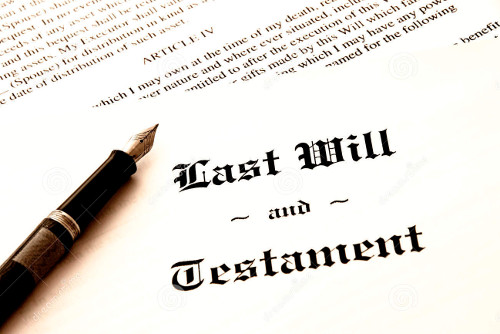
testamentDepending on the translation you have, you either see the word “covenant” being used or “testament” as in “last will and testament.” Except a covenant and a testament are not the same thing at all. It’s pretty confusing in English. But apparently, “covenant” and “testament” are the same word in Biblical Greek and Paul was using a bit of word play. It makes sense in Greek but is useless in English.

However, it’s really just a simple point as Lancaster says.

Just as a last will and testament doesn’t come into effect until a person dies, a covenant doesn’t come into effect until there’s been a sacrifice and shedding of blood.

That’s all the writer of the Book of Hebrews is saying here. Don’t get hung up on any deeper symbolism or meaning. It doesn’t exist except in the thoughts of theologians, scholars, or sometimes people who like to find what isn’t there.

Verses 19-22 describe the events of Exodus 24 with some minor variations, and then Lancaster goes on to compare Moses and Jesus, whereby Moses made the Sinai Covenant come into effect by splashing the blood of the sacrifice, Jesus inaugurated the New Covenant with his blood.

Lancaster was very careful to say that Jesus didn’t literally enter the Heavenly Holy of Holies carrying a bowl of his own blood, this is symbolic language and imagery. He entered the Most Holy Place in Heaven on the merit of his righteousness and sacrifice as the greatest tzaddik of his or any other generation, not because he was a literal human sacrifice.

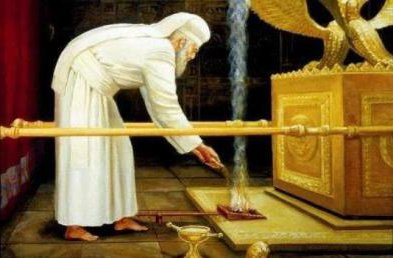
Verses 24 and 25 use the illustration of the Aaronic High Priest who every Yom Kippur, enters the Holy of Holies with blood to offer atonement for the people of Israel. He offers the blood of the sacrifice and he prays for the people. According to midrash, he was told not to pray too long because while the High Priest may be basking in the Holiness of God, the people outside, since no one can go in with the High Priest, are “freaking out” wondering what happened to him and if the act and prayers of atonement were successful.

So too are we waiting for our High Priest to return so that we know, so to speak, that his atonement for us was also successful (though we know it was and is). Yeshua, our High Priest, is tarrying in his prayers of atonement on our behalf. This is still a “virtual” Yom Kippur. He will emerge from the Heavenly Holy of Holies upon his return to us and then we will know.

Otherwise, He would have needed to suffer often since the foundation of the world; but now once at the consummation of the ages He has been manifested to put away sin by the sacrifice of Himself.

Hebrews 9:26

Jesus said to him, “I am the way, and the truth, and the life; no one comes to the Father but through Me.

John 14:6

Jesus as our High Priest, our sacrifice, and our mediator, is the way into the New Covenant through our faith in what his work accomplished, and that faith and acknowledgement of him as mediator is required for us to participate in the blessings of the New Covenant.

Verse 28 speaks of those who eagerly await Messiah’s return. That applies to us as we eagerly await him, await the resurrection, await the terrible and awesome days of the Lord, and await the establishment of his Kingdom and the life of the world to come.

What Did I Learn?

Just about all of this was an eye opener. I had some vague notion of Jesus being the New Covenant mediator as Moses mediated the Sinai Covenant, but Lancaster added a great deal of detail, putting flesh on the mere skeleton of information I possessed as far as Hebrews 9 is concerned.

high_priestI especially appreciated the comparison between the Aaronic High Priest in the Holy of Holies on Yom Kippur and Yeshua as the High Priest in the Heavenly Holy of Holies, which represents the Messianic Age to come, a place, like the earthly High Priest, where only he can go, and we can only anxiously wait for him on the outside, wondering what’s happening in there and how long it is going to be before he comes back for us. How long, Moshiach? How long?

Lancaster has a talent for taking what seems to be very mysterious portions of scripture and removing the disguise, so to speak, to give the words and passages a plain and understandable meaning. Reading all this before, I don’t know what I thought about it, but now it makes a lot more sense.

Only four more chapters to go in Hebrews, which will take nine more sermons, nine more weeks for me to review. I didn’t cover everything Lancaster taught in today’s sermon, so you might want to listen to it yourself. This one is fairly brief at just barely 29 minutes. You can find the link above.

The Resurrection of the Ekklesia

Now, brothers and sisters, I want to remind you of the gospel I preached to you, which you received and on which you have taken your stand. By this gospel you are saved, if you hold firmly to the word I preached to you. Otherwise, you have believed in vain.

For what I received I passed on to you as of first importance: that Christ died for our sins according to the Scriptures, that he was buried, that he was raised on the third day according to the Scriptures, and that he appeared to Cephas, and then to the Twelve. After that, he appeared to more than five hundred of the brothers and sisters at the same time, most of whom are still living, though some have fallen asleep. Then he appeared to James, then to all the apostles

1 Corinthians 15:1-7 (NASB)

Scholars commonly see in 1 Corinthians 15:1-7 material of an early “pre-Pauline” confession that focuses on Jesus’ death, burial, resurrection and appearances to select witnesses. But there are continuing disagreements over what kind of event is referred to in vv. 3-5 where Jesus is described as “raised on the third day,” specifically whether this refers to a resurrection/transformation of Jesus’ mortal body or some other kind of event, e.g., a “spiritual” one that left his mortal body in the grave. I’ve just read a new study of the matter that seems to me pretty effective in guiding exegetes to the correct answer: James Ware, “The Resurrection of Jesus in the Pre-Pauline Formula of 1 Cor 15.3-5.” New Testament Studies 60 (2014): 475-98.

Larry Hurtado
“Paul on Jesus’ Resurrection: A New Study”
Larry Hurtado’s Blog

Being just a regular guy and not a Bible scholar or academician, it never really occurs to me that people drill down into such a level of detail regarding certain Biblical events such as the resurrection. I’ve always been taught that Jesus was physically resurrected on the third day and that for the next forty days, he was seen and touched by many, many people, the witnesses of his resurrection, which serves as evidence of the promise of the resurrection of the “saints” in the Messianic Age.

But here we see Dr. Hurtado explaining how James Ware (probably this author) has investigated the various scholarly positions on what “raised on the third day” actually means. Incredibly (from my point of view), there are those who must not believe in a literal resurrection but somehow imagine that Jesus left his body behind and spiritually rose and ascended, something like “Caspar the Friendly Ghost”.

But why is a bodily resurrection important?

He will swallow up death for all time,
And the Lord God will wipe tears away from all faces…

Isaiah 25:8

Shall I ransom them from the power of Sheol?
Shall I redeem them from death?
O Death, where are your thorns?
O Sheol, where is your sting?

Hosea 13:14

But perceiving that one group were Sadducees and the other Pharisees, Paul began crying out in the Council, “Brethren, I am a Pharisee, a son of Pharisees; I am on trial for the hope and resurrection of the dead!” As he said this, there occurred a dissension between the Pharisees and Sadducees, and the assembly was divided. For the Sadducees say that there is no resurrection, nor an angel, nor a spirit, but the Pharisees acknowledge them all.

Acts 23:6-8

There are any number of prophesies that speak of a general resurrection from the dead at the end of days and it was upon those prophesies that the Pharisees based their faith. This was the same faith that the disciples of Yeshua (Jesus) had since their Messianic beliefs were largely Pharisaic with only a few minor differences that had to do with Gentile admission and status.

new heartIf there was no physical, bodily resurrection for Jesus, then what hope do we have in a resurrection for us?

While I’m stunned that there are still those who, like the Sadducees of old, deny the resurrection today, fortunately…

Ware reviews a wide range of previous scholarly views, carefully assessing their merits, noting the limited force of some and the dubious force of others. His own particular contribution is a more in-depth analysis of the use of the Greek verb translated here “raised”: εγειρω. Essentially, Ware contends that all other uses of the verb describe one or another kind of action involving the raising up, rising up, or setting up of something or someone from a prone or seated position to an upright, standing position.

This, he argues, means that proposals that the verb here refers to an ascension of Jesus, a transportation of him in some “spiritual” mode to heavenly glory, is ruled out. Instead, Paul refers to a raising up or restoration to life of the executed body of Jesus.

To be sure, as Ware notes, later in 1 Cor 15, Paul engages the question of “in what kind of body” are the dead to be raised (vv. 35-49), and Paul here posits a dramatic and profound transformation, those raised being “changed” powerfully. In vv. 42-44, in particular, Paul makes a series of contrasts between the mortal body and the resurrection body: corruption/incorruption, dishonour/glory, weakness/power, “soulish”/spiritual. And Paul also makes the claim that the resurrection of believers will be modelled on Jesus’ resurrection.

-Hurtado, ibid

But Christ has indeed been raised from the dead, the firstfruits of those who have fallen asleep.

1 Corinthians 15:20

Messiah is the “first fruits” of the dead, the first to rise, the first to experience the bodily resurrection from death through “a dramatic and profound transformation” unlike anything that had ever occurred before. As “first fruits,” he illustrates that the promises of God about a general resurrection are true, for the Master powerfully demonstrated the reality of the resurrection with his own body.

The first account I composed, Theophilus, about all that Jesus began to do and teach, until the day when He was taken up to heaven, after He had by the Holy Spirit given orders to the apostles whom He had chosen. To these He also presented Himself alive after His suffering, by many convincing proofs, appearing to them over a period of forty days and speaking of the things concerning the kingdom of God.

Acts 1:1-3

MessiahI won’t go into an inventory of all the different witnesses of Jesus’ resurrection that are recorded in the Gospels, but we have every indication that perhaps five-hundred people or more were witnesses that he physically came alive from the dead, that his wounds were still present, that he ate and drank, and that he wasn’t just some sort of vision or “floaty ghost,” but was a real, live human being who once had been dead. He appeared to witnesses so we would have living accounts of the resurrection, so that we could believe, not mindlessly or blindly, but based on what actual human beings saw and experienced in his presence.

Of course, we have to believe that the Biblical record is accurate regarding these witnesses, and some two-thousand years later, it’s possible to introduce some doubt, but these things can only be discerned through the Spirit:

For to us God revealed them through the Spirit; for the Spirit searches all things, even the depths of God. For who among men knows the thoughts of a man except the spirit of the man which is in him? Even so the thoughts of God no one knows except the Spirit of God. Now we have received, not the spirit of the world, but the Spirit who is from God, so that we may know the things freely given to us by God, which things we also speak, not in words taught by human wisdom, but in those taught by the Spirit, combining spiritual thoughts with spiritual words.

But a natural man does not accept the things of the Spirit of God, for they are foolishness to him; and he cannot understand them, because they are spiritually appraised. But he who is spiritual appraises all things, yet he himself is appraised by no one. For who has known the mind of the Lord, that he will instruct Him? But we have the mind of Christ.

1 Corinthians 2:10-16

What people saw with their eyes and heard with their ears, we must accept as true by faith and through the Spirit. Without the Spirit, they sound like ridiculous nonsense.

When the accusers stood up, they began bringing charges against him not of such crimes as I was expecting, but they simply had some points of disagreement with him about their own religion and about a dead man, Jesus, whom Paul asserted to be alive.

Acts 25:18-19

And now I am standing trial for the hope of the promise made by God to our fathers; the promise to which our twelve tribes hope to attain, as they earnestly serve God night and day. And for this hope, O King, I am being accused by Jews. Why is it considered incredible among you people if God does raise the dead?

Acts 26:6-8

During the various legal hearings to which Paul was subjected after his arrest in Jerusalem, one of the things the Romans could not comprehend was the matter of a “dead man” coming back to life and the fact that different groups of Jews would argue violently over such a thing. To the pagan Romans, it seems like incomprehensible nonsense.

That’s what it seems like to much of the world today without the ability to read the Bible through “spiritual” eyes, so to speak. But once we have our eyes opened and we can see, then we can believe by faith that not only was the bodily resurrection of Jesus real, but that it is evidence for the faithful that we too will be resurrected when the Master returns for us.

However, there’s one last paragraph from Dr. Hurtado’s blog I want to toss into the mix for your consideration:

So, Paul posits a profound change involved in the resurrection. But, as Ware so deftly points out, all through the passage Paul refers to the body of believers as changed. That is, Paul insists that the resurrection is an event that changes the nature of the embodied existence of those raised. The “spiritual” body, Ware persuasively argues, has to be in context a description of the animating force of the resurrection body, for the contrast is not with a “fleshly” body but with a “soulish” (ψυχικος) one, i.e., the mortal body animated by “soul” (ψυχη), which here appears to be Paul’s reference to what we might call mortal, “biological” life.

The Jewish PaulWhen I first read the phrase “Paul refers to the body of believers as changed,” I thought he was referring to the “ekklesia of believers,” the “body” as the corporate entity of Jesus’ disciples. Re-reading that part of the blog, I know now he was talking about the biological, physical bodies of the believers, but consider something for a second. It’s not just that we will be resurrected and redeemed as individuals, but the collective “personality” of the ekklesia or the assembly of Messiah will also be changed, that is, the nature of the body of Christ won’t be as it is today.

Today, we have many arguments and disputes between different churches or different theologies that all acknowledge Christ as Lord and King, but who otherwise have widely (and sometimes wildly) different perspectives on many matters of the faith. I previously mentioned those Christians today who seemingly don’t believe in a bodily resurrection but rather believe that only our souls or spirits will ascend and live with Jesus in Heaven while our dead bodies remain in the grave forever.

But with the bodily resurrection I believe will also come a resurrection of the combined ekklesia such that the “body of Christ,” the unified humanity of disciples will also be transformed radically and demonstratively into something new, alive, and spiritually perfected:

“I will put My law within them and on their heart I will write it; and I will be their God, and they shall be My people. They will not teach again, each man his neighbor and each man his brother, saying, ‘Know the Lord,’ for they will all know Me, from the least of them to the greatest of them,” declares the Lord, “for I will forgive their iniquity, and their sin I will remember no more.”

Jeremiah 31:33-34

Then I will sprinkle clean water on you, and you will be clean; I will cleanse you from all your filthiness and from all your idols. Moreover, I will give you a new heart and put a new spirit within you; and I will remove the heart of stone from your flesh and give you a heart of flesh. I will put My Spirit within you and cause you to walk in My statutes, and you will be careful to observe My ordinances. You will live in the land that I gave to your forefathers; so you will be My people, and I will be your God.

Ezekiel 36:25-28

Yes, I know the New Covenant was made exclusively with the House of Judah and the House of Israel, and yet I’m liberally sprinkling this covenant language also upon the Gentiles. Many times before, I’ve written about the New Covenant and how I believe it can and must be applied to anyone who comes to faith in the righteous promises of God enacted through the Messiah, including the Gentiles:

Jewish teachers believed that God’s righteousness (his promise-keeping by which he would include the Gentiles) would come through education and conversion. But Paul says “now the righteousness of God has been manifested apart from the law” and he calls it “the righteousness of God through the faithfulness of Messiah for all who believe” (Romans 3:21-22). What Paul means by “the law” here is not a person striving to impress God by their morality, but rather the idea that education in the law and keeping it will make a Gentile acceptable to God in spite of the fact that they were not born into the chosen people. God’s promise-keeping is not dependent on Jewish teachers or Gentile students. It is not by education in or adhering to aspects of the law. God is including Gentiles through his own initiative, through the faithfulness of Messiah who lived (was resurrected) as a result of faithfulness. Messiah lived the commandments and returned to life by his worthiness. Through his merit, Jews and Gentiles are accepted by God.

-Derek Leman
“What’s Wrong with the Jews (in Romans 9-10)? Part 2”
Messianic Jewish Musings

spiritWe know from Joel 2:28-29, 32 that the Spirit will be poured out fully on all flesh, all human beings will benefit and be redeemed and reconciled to God through faith, not just the Children of Israel, but all Children of God among the nations, as long as we endure and run the race faithfully.

Someday each of us will be resurrected, renewed, and perfected, but more than that, as a body of believers, and assembly of disciples, we will collectively be perfected. We will think with one mind and love with one heart, and we will all know God.

The Alter Rebbe interpreted the statement, “Whoever saves a single person of (the people) Israel is as though he saved an entire world” (Sanhedrin 37a): One must perceive a Jew as he stands in the primordial thought of Adam Kadmon. There, each soul stands with all the generations destined to descend from it until the coming of Mashiach, the righteous Redeemer. When one does a favor to an individual, it is a favor to all those souls until the end of all generations.

-Compiled and arranged by the Lubavitcher Rebbe, Rabbi Menachem Mendel Schneerson, of righteous memory, in 5703 (1943) from the talks and letters of the sixth Chabad Rebbe, Rabbi Yosef Yitzchak Schneersohn, of righteous memory.

May you be inscribed and sealed for a good year.

Shabbat Shalom.