Tag Archives: New Testament

Larry Hurtado on “A Muslim Reads Galatians”

paul-editedIn the course of the presentation, he drew contrasts between the more negative and even caustic references to “the circumcision party”, “Judaizers” and the Torah in Galatians (and also Philippians), and the more positive references to “Israel” and the Jewish people in Romans (esp. chaps. 9-11). But, of course, as I pointed out in the ensuing discussion, in Galatians (and Philippians too) Paul seems to be critical of fellow Jewish Christians, not because they were Jews, but because they were apparently seeking to impose Torah-observance (including male-circumcision) on Paul’s (former pagan) converts as an additional requirement for full recognition as co-religionists with them. It was this “Judaizing” stance, i.e., the view that baptized pagans had to become Jewish, that Paul opposed, and his opponents (I repeat) were Jewish believers in Jesus. So, because their stance seemed to Paul to call into question the sufficiency of Jesus, and because it also represented to him an interference in his gentile-mission (the terms of which he believed he had received directly from God), he went at the matter with full force (and in places some serious vituperation).

But in Romans (esp. 9-11), his subject is the Jewish people and their future in God’s redemptive plan, an altogether different subject.

-Larry Hurtado
Scholar of the New Testament and Christian Origins
“Paul, ‘Judaizers’ and Jews” (February 13, 2013)
from Larry Hurtado’s Blog

I don’t know what I can add to what Dr. Hurtado wrote on his blog yesterday (today, as I write this). I wanted to share it because it confirms everything I believe about what Paul was trying to say to us, especially in Romans and Galatians. Long time readers of my blog know that I am a staunch critic of traditional supersessionism in the church (also called “replacement theology,” “completion theology,” and “covenant theology”), and believe that the church did not replace Israel in God’s covenant promises, but rather that Israel and the Jewish people continue to have a vital role in God’s plan for humanity, both in this world and the world to come.

I also believe that God never intended the “grafted in” Gentile Christians to ever take on a Jewish identity by converting to Judaism (or to “Israel” if you prefer) en masse, and thus being compelled to perform the full list of Torah mitzvot in a Jewish manner as God requires of His people Israel.

PrayingDr. Hurtado, in the above-mentioned blog post, was describing a presentation he attended recently entitled, “A Muslim Reads Galatians,” given by Dr. Shabbir Akhtar (read Dr. Hurtado’s blog for the details). I suppose I should thank Dr. Akhtar in addition to Dr. Hurtado for providing a short and concise description of Paul’s views on the distinctions between Jewish and Gentile believers relative to conversion, Judaism as a religious practice, and Torah observance. Traditionally, Christians have believed that Paul abandoned Torah observance and encouraged both Jews and believing Gentiles (not that believing Gentiles had a history of Torah observance prior to coming to faith in Jesus) to abandon Torah as well. Hebrew Roots Christians (at least in some variants of the tradition) believe the opposite, that Paul continued to observe Torah, and encouraged both Jews and Gentile believers to observe the full yoke of Torah, and that all Christians today are obligated to Torah observance.

Dr. Hurtado ends his brief blog post with this statement:

Paul’s only critique of the Torah (Jewish Law) was when some fellow Jewish believers tried to impose it as an additional requirment (sic) for salvation upon his pagan converts. He had no problem with fellow Jews observing Torah, Jewish Christians included, so long as they didn’t try to impose full Torah-observance upon baptized pagans. He certainly seems to have insisted that Jews as well as pagans must recognize Jesus as God’s Son/Messiah, and held that Jewish failure to do so was a kind of unbelief and “hardening”. But he also believed that God would ultimately deliver fellow Jews from this stance (Romans 11:25-32), showing “mercy” to all, both pagans and Jews.

Wow! Hurtado, commenting on Akhtar, states that “he (Paul) had no problem with fellow Jews observing Torah, Jewish Christians included, so long as they didn’t try to impose full Torah-observance upon baptized pagans.” That’s exactly what I’ve been saying for a while now. That’s what much of Messianic Judaism (especially the articles and books published by First Fruits of Zion [FFOZ]) have been saying for years.

HeavenBoth Hurtado and Akhtar agree that Paul’s letter to the Romans (esp. Chapters 9-11) addresses God’s redemptive plan and the future of the Jewish people, which is not the same subject as Paul’s objections to “Judaizers” attempting to induce formerly pagan Gentiles to convert to Judaism and be bound to the full yoke of Torah as a condition of salvation. Paul held out a bright hope for Israel’s future redemption for the “fullness” of “all Israel.” We should grasp onto that hope as well.

I can’t think of a better way to start my day, especially after the last few days on the blogosphere, than to read this message of hope and encouragement for both Jewish and Gentile believers, including our roles and identities in God’s plan for the present and future, written in a blog post by this eminent New Testament scholar.

Kudos Dr. Hurtado and thank you.

“Try not to become a man of success but rather to become a man of value.”

-Albert Einstein
Jesus, Halakhah, and the Evolution of Judaism, Part 5

The RabbiIn addition to Tanakh, we as Messianic Jews have another authoritative source for the making of halakhic decisions: the Apostolic Writings. Yeshua himself did not act primarily as a Posek (Jewish legal authority) issuing halakhic rulings, but rather as a prophetic teacher who illumined the purpose of the Torah and the inner orientation we should have in fulfilling it. Nevertheless, his teaching about the Torah has a direct bearing on how we address particular halakhic questions. As followers of Messiah Yeshua, we look to him as the greatest Rabbi of all, and his example and his instruction are definitive for us in matters of Halakhah as in every other sphere.

In addition, the Book of Acts and the Apostolic Letters provide crucial halakhic
guidance for us in our lives as Messianic Jews. They are especially important in
showing us how the early Jewish believers in Yeshua combined a concern for
Israel’s distinctive calling according to the Torah with a recognition of the new
relationship with God and Israel available to Gentiles in the Messiah. They also
provide guidelines relevant to other areas of Messianic Jewish Halakhah, including
(but not restricted to) areas such as distinctive Messianic rites, household relationships,
and dealing with secular authorities.

-from “Standards of Observance”
Messianic Jewish Rabbinical Council (MJRC)
Section One: Halakhah and Messianic Judaism
1.1 Halakhah: Our Approach (pg. 2)
OurRabbis.org (PDF)

This series isn’t taking the direction that I thought it would. At the end of Part 4, I really thought I’d return to a high-level view of the evolution of Judaism, perhaps lightly going over the development of the Talmud. This would mean doing a bit of reading and probably delaying Part 5 (this part) of the series for a while.

Then, on a whim, I decided to read “Standards of Observance,” which is the MJRC’s treatment of “Messianic Jewish halakhah;” certainly a controversial subject given the responses I’ve been fielding in Part 3 and Part 4. Thus, another “meditation” was born.

As I’m writing this, I haven’t gotten past page 2 of the 39 page MJRC document, but when I read the portion that I quoted above, I got to thinking. I generally consider halakhah to be a matter of how Jewish people operationalize their observance of the 613 mitzvot, which is how contemporary Judaism codifies the commandments to Israel in the Torah. But if “the Book of Acts and the Apostolic Letters provide crucial halakhic guidance for…Messianic Jews,” by definition, it must also provide relevant halakhah for the non-Jewish believing community as well.

This is complicated by two potentially competing positions: the halakhah as it is presented in the New Testament (NT) Gospels, book of Acts, and Epistles, and how the MJRC chooses to conceptualize, organize, and apply that halakhah. Actually, even within the context of the New Testament, how we view the relative authority of this halakhah upon the daily lives of non-Jewish Christians depends on whether or not we see this NT halakhah as fixed, static, pronouncements that were intended to be inflexibly binding on all Christians everywhere across time, or whether at least some of this halakhah was specific to individual congregations, situations, and other contextual factors, and was meant to be adaptive across time, to the point in some cases, of not applying significantly or at all to Christianity in the 21st Century.

I’ll give you an example.

Every man who prays or prophesies with his head covered dishonors his head, but every wife who prays or prophesies with her head uncovered dishonors her head, since it is the same as if her head were shaven. For if a wife will not cover her head, then she should cut her hair short. But since it is disgraceful for a wife to cut off her hair or shave her head, let her cover her head. For a man ought not to cover his head, since he is the image and glory of God, but woman is the glory of man. –1 Corinthians 11:4-7 (ESV)

Taken literally and in its simplest form, Paul would seem to be saying that when men pray, our heads should not be covered, but when a woman prays, her head must be covered (presumably in a public setting such as communal worship). According to the notes for vv 5-13 at BibleGateway.com, “the Greek word gunē is translated wife in verses that deal with wearing a veil, a sign of being married in first-century culture.” This adds some context to what Paul is saying that we would miss by reading it in English. The head covering that is to be applied to women is specific to their marital status in specific cultures as they existed nearly 2,000  years ago. There are no immediately available notes for why a man’s head must be uncovered, but this would seem to go against the later tradition that men wear kippot when in the synagogue, although, of course, Paul is addressing non-Jewish believers in this case (keep in mind that any blanket declaration of halakhah forbidding men to cover their heads in prayer directly contradicts the modern practice of Gentile men in Messianic, One Law, and Two-House congregations to wear kippot).

My example seems to show us that it is certainly possible and likely that not every single pronouncement of halakhah that flowed from Paul’s pen was supposed to apply generally across all churches everywhere and “everywhen.” That is, we can believe that some “Messianic halakhah” as it applies to non-Jewish believers was never originally intended to be permanent, fixed, static standards of practice religious practice.

Which means we’re going to have an interesting time trying to figure out which portions of the halakhah in the NT continues to have force today and how we are to observe said-halakhah in our local communities in the present age.

I want to make certain that I communicate the following clearly. Whatever definitions that the MJRC has produced relative to “Messianic halakhah” can only apply to Messianic Jews who are members of congregations affiliated with the MJRC. This is certainly in keeping with halakhah in any other Jewish community, regardless of scope, since, for example, how halakhah is applied within the context of Chabad is most likely different from its application within Conservative or Reform Judaism. For all I know, there may be variations within specific local synagogues that are “contained” within the same sect of Judaism.

That means that not only does the MJRC understanding of halakhah not apply to wider Christianity (and you wouldn’t expect it to, since it seems to be written specifically for its Jewish members), but it doesn’t apply to any other organizations of Messianic Judaism and clearly not to any of the groups contained within “Hebrew Roots.”

(Arguably, and I haven’t read the entire MJRC document yet, any halakhah developed by the MJRC would have some sort of impact on the non-Jewish membership of each affiliated congregation, but I don’t know yet what the scope of that impact might be. However, if you are a non-Jewish believer and you choose to attend an MJRC affiliated congregation, you agree to become subject to their authority. Keep in mind that even in the most “Jewish” of Messianic Jewish congregations, the majority of members and perhaps a few folks in leadership, are non-Jews).

The next question is whether or not it is appropriate and desirable for groups of non-Jewish believers to also attempt to organize a sort of “Christian halakhah” from the NT that would apply to churches and Hebrew Roots groups.

I suppose Christians have been doing that ever since the invention of movable type and the first mass printing of the King James Version of the Bible (probably well before, but availability of the Bible prior to that time was severely limited, and the common man had no ready access to the written Word). In other words, developing “Christian halakhah” is an old story for Christianity, they (we) just don’t call it “halakhah.”

Of course, the result is what we see before us…about a billion (I’m grossly exaggerating) different Christian denominations covering the face of the earth, each with their own special take on what the Bible is trying to tell us, at least at the level of fine details of practice. Hebrew Roots organizations are no different, they just re-introduce the word “halakhah” into the mix. Viewed at in this light, it is understandable that the various Gentile expressions of Hebrew Roots including One Law/One Torah and Two-House, either formally or informally establish a set of accepted religious and lifestyle practices based on various parts of the Bible including the New Testament “halakhah.”

However, where it might get a little strange is when/if such Gentile organizations access the larger body of Jewish halakhah that extends well beyond the pages of the NT and into the writings of the Mishnaic Rabbis. While I can understand why organizations that are formed by Messianic Jews as a resource for Messianic Jews and Messianic Jewish congregations would want to delve into the accepted body of Talmudic thought, it’s puzzling why a Gentile would choose to do so. And yet, we see Gentile groups forming “Beit Dins,” wearing tzitzit and laying tefillin in accordance with traditionally accepted Jewish halakhah, and performing other Jewish religious practices that cannot be found in the NT and indeed, practices that weren’t codified (such as wearing kippot) until many centuries after the writers of the NT books and letters had died and their bones had turned to dust.

I made an observation in the previous part of this series that was never answered by any of the relevant parties:

My final note for this missive is one of irony. If written Torah, the Christian Bible, and Jesus are the only valid authorities for religious practice and lifestyle in the Hebrew Roots movement (including One Law/One Torah, and so on), then why do all of their groups and congregations follow a modern Jewish synagogue model when they worship? Why do all the men where kippot? Why do all the men wear tallit gadolim with tzitzit that are halalically correct? Why do they daven with modern Jewish siddurim? Why, in less than a week, will they construct their sukkot according to Rabbinically prescribed specifications?

It is completely understandable why any Christian church or congregation of Gentile believers in Jesus, regardless of their emphasis, should want to carefully study the NT documents and to derive whatever practical knowledge it contains for Christian religious practice in the modern era. On the other hand, it’s rather mysterious what some Hebrew Roots groups believe they will get out of studying the extra-Biblical Rabbinic texts and applying practices and concepts related to a Beit Din, Farbrengen, Ritual purity, Shmita, and so on.

If halakhah has the ability to evolve over time within the Jewish context, we can expect Jewish communities to practice one of the current forms within their local boundaries. The same can be said for Christian religious and lifestyle practice relative to the various Christian churches and denominations. I would never expect a Christian church to borrow significantly or at all from any Jewish halachic source in establishing accepted Christian religious behaviors. Why then, as I’ve asked before, should Gentile Hebrew Roots organizations desire to borrow heavily or almost exclusively from post-Biblical Jewish halachic practices, especially if said-groups only recognize the “written Torah” and New Testament as their only legitimate authoritative documents?

I know all this sounds like I’m trying to pick a fight, but given all of the “resistence” to the Talmud registered by Hebrew Roots people and how they say they don’t consider Talmud as an authoritative guide, the fact that virtually all such groups model their worship practices on modern Jewish synagogue services is truly baffling.

This series continues in the blog post: Messiah in the Jewish Writings, Part 1

Randomly Covering Territory

Do you only believe when you can see with your eyes? When your prayers are answered and miracles carry you on their wings? Or do you also believe when circumstances fly in your face?

If it touches you to the core, if it is a belief you truly own, if it is as real to you as life itself, then it does not change.

And if it does not change, then you are bound up with the true essence of the One who does not change.

-Rabbi Tzvi Freeman
“Faith in the Dark”
Based on letters and talks of the Rebbe
Rabbi M. M. Schneerson
Chabad.org

I’ve said before that I don’t consider myself the “sharpest knife in the drawer.” In the world of faith, I think I have plenty of company, though. For instance, I don’t think most Christians consider the idea that there are two basic levels of knowledge in our religion (or probably most religions): the common worshiper’s view and the scholar’s view. For instance, New Testament scholar Larry Hurtado recently posted on his blog an article called An “Early High Christology”. I mean really. What in the world is high Christology and what’s the difference between high vs. low Christology?

I’ll let you click the links I provided since my discussion today isn’t focused on those topics. I’m just including them to illustrate that most people in the church don’t have the same view of God, Jesus, and the Bible as do theologians and Bible scholars. These people talk a different language than we do and conceptualize the Word of God in ways most of us can’t even imagine. I’m not even sure most of them could communicate their ideas and perspectives to a crowd of “regular Christians” at their local neighborhood church in any successful way.

Which is kind of a shame, because the information these people work with would almost assuredly challenge and perhaps even change the viewpoint and direction of most believers in most churches if we had access to it in a comprehensible way.

Well, they do publish popular books, some of them anyway, but most Christians don’t take advantage of that material (let alone anything more scholarly, such as a Ph.D Thesis). Most people who sit in the pew on Sunday are content to believe that they are being adequately “fed” by their local Pastor, who no doubt is doing a good job, but may feel constrained to offer only the “food” he or she believes the audience will comfortably tolerate.

I occasionally get “dinged” for including non-Biblical sources in my writings since they are, after all, non-Biblical and thus cannot carry the same weight of authority as the scriptures in the Bible. But I’m no Bible scholar and I do love a good metaphor, so I include things like Rabbinic midrash, Chassidic tales, and commentary about Kabbalah, largely for their cultural, metaphorical and symbolic meaning. I certainly can’t discuss them from the perspective of a Pastor, Rabbi, or someone else with an advanced education in Theology or Divinity.

That doesn’t keep me from being curious though, and curiosity often leads me down interesting if troublesome paths.

Here’s one such path:

Numbers 22-24: While the Numbers text itself is inconclusive, both rabbinic legend and the Apostolic Scriptures clearly paint Balaam as wicked through and through.

“The Error of Balaam”
Commentary on Torah Portion Balak
First Fruits of Zion

Um, what was that? The Torah was inconclusive about the nature and character of the “wizard” Balaam, but both the New Testament and midrashim agreed that he was evil? That seems like an odd combination. Of course, it’s not that the New Testament writers and the authors of midrash expected to agree with each other, but in this case, strangely enough, they did. Here’s the New Testament commentary on Balaam.

Forsaking the right way, they have gone astray. They have followed the way of Balaam, the son of Beor, who loved gain from wrongdoing, but was rebuked for his own transgression; a speechless donkey spoke with human voice and restrained the prophet’s madness. –2 Peter 2:15-16 (ESV)

But these people blaspheme all that they do not understand, and they are destroyed by all that they, like unreasoning animals, understand instinctively. Woe to them! For they walked in the way of Cain and abandoned themselves for the sake of gain to Balaam’s error and perished in Korah’s rebellion. –Jude 1:10-11 (ESV)

Admittedly, the opinions being rendered about Balaam in the New Testament text are rather brief. But what about the midrash?

Some say Balaam of Pethor (פתור) was called a money-changer (petor, פתור) because the kings of the nations rushed to him for counsel in the same way that people rush to a money-changer to change their currency. –Numbers Rabbah 20:7

This may not be the only Rabbinic commentary on Balaam, but it’s the only one I have access to due to my limited knowledge in this area.

Am I saying that we can compare the New Testament and Talmud, for example? Probably not, or at least, only very, very carefully, with lots of caveats attached (as a side note, can the New Testament and the later Rabbinic commentaries both be considered midrash?). On the other hand, there is just so much we don’t truly understand about the Bible, and there are so many other sources of information that we have access to that may provide additional perspective. We just need to be able to clearly delineate between the Bible and other information sources. We also need to remember that we don’t have to be so binary in our thinking that we always have to say, “Bible good! Everything else, bad!”

After pursuing my personal faith issues for the past few years, I’m slowly coming to the conclusion that the Bible doesn’t always tell us the “whole story.” Both Christian and Jewish scholars and sages have spent the past several thousand years trying to understand the mind of God by delving into the Word of God. They’ve produced an untold amount of commentary that their audiences judge to be of greater or lesser value in defining the faith. The fact that gentlemen like Larry Hurtado even exist as New Testament scholars tells us there is more to be learned about the New Testament than we already know or think we know. I’m sure the same is true for the rest of the Bible.

I’ve previously mentioned last Thursday’s conversation between me, my son, and two other believers that lead to quite an interesting theological discussion. One of the things I didn’t mention was that David asked me what the minimum amount of knowledge was that would still qualify a person as a believer in God and a disciple of the Master. I don’t recall the details of my answer, but I don’t doubt it’s a good deal less than what the scholars, sages, and experts possess.

I suppose we could limit ourselves to knowing just the basics.

And one of the scribes came up and heard them disputing with one another, and seeing that he answered them well, asked him, “Which commandment is the most important of all?” Jesus answered, “The most important is, ‘Hear, O Israel: The Lord our God, the Lord is one. And you shall love the Lord your God with all your heart and with all your soul and with all your mind and with all your strength.’ The second is this: ‘You shall love your neighbor as yourself.’ There is no other commandment greater than these.” –Mark 12:28-31 (ESV)

But people are curious creatures. We very rarely hold ourselves back to the basics, well, some of us, anyway. We want to know more and we push our limits. We push the limits of religious propriety, asking questions the church doesn’t want to answer. We push our intellectual limits, asking questions that have answers we may not have the ability to understand. We push the limits of what are considered viable information sources and methods of study and what are not, at least by those folks who are “in the know,” such as Hurtado or Timothy George.

But the alternative is to shut up, don’t ask questions, and do as we’re told. For some people, that’s the entire scope of their faith. For others, for people like me, that would be the end of my faith. It would die for lack of nourishment.

So I’ll probably keep asking questions, being rebuffed, offending people, entering areas that are “off limits” to mere mortals and those of us with a limited religious education (and IQ), and generally stubbing my toe every other step.

I feel like a person who is trapped in an endless, man-sized maze looking for the cheese. Problem is, the maze is completely blacked out. I can’t see a thing. So the only way to discover my path is to bump into a lot of walls as if I were a human Roomba. My path seems completely random. Hopefully, I’ll cover the necessary territory.

What else can I do?

You don’t need to move mountains.
You just need to know where to aim.
You can transform an entire family forever with one flickering Shabbat candle of one little girl.

-Rabbi Tzvi Freeman
“A Small Candle”
Based on letters and talks of the Rebbe
Rabbi M. M. Schneerson
Chabad.org

I recently read a very interesting blog post written by Jacob Fronczak called Every man is not a theologian which seems to give me a sort of “permission” not to pretend I know what a theologian knows. You might want to have a look and see what you think.

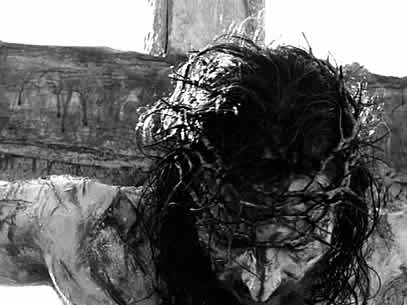
The Sacrifice at Golgotha

The Death of the MasterI am hoping you will be able to resolve a very important issue confronting the very foundation of Christianity.

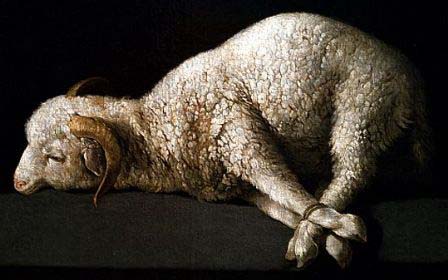
God’s way of testing Abraham by calling for the sacrifice of Isaac…and then the abrupt staying of the knife…was intended to demonstrate that God abhorred human sacrifice and would not accept it (Gen 22.12). When the great central Law of Judaism (the TORAH) was revealed at Sinai, it called for animal sacrifices. The slaying of an animal and the offering of its blood according to certain prescribed rites, symbolized God’s mercy to the sinner, for this would have been his fate. Later in the Law, Moses gives warning to Israel not to worship God in the manner of the pagans (through human sacrifice) for it is an abomination unto the LORD in any way or form it is practiced (Deut 12.30-32).

Turning to the New Testament, Jesus states that he completely upholds the precepts of the Judaic Law until its complete spiritual enactment through-out the world. This great authorization of the central Law of Judaism renders it supreme (Matt 5.18). Nevertheless, here is where a trouble-some contradiction arises. According to Romans 5.6-11, Jesus’ death was a vicarious atonement. But this is a human sacrifice which is expressly forbidden by the very same Law sanctioned by Jesus.

True, Jesus is unique in being both human and Divine. But by sanctioning the Law He did not allow His uniqueness to detract from His subjection to the Law which is understandable since the Law is the perfect Word of God.

In sum, if Jesus was upholding the Law then His death cannot be sacrificial. Or, if His death is sacrificial, He has rejected the Law which He claimed to uphold. In either case, Christianity’s central doctrine of the sacrificial death of Jesus is proven to be scripturally untenable. Christianity is therefore in peril of crumbling away. The stakes are very high. If Christianity succumbs to an inner breakdown, the moral order in the world will soon follow….

This contradiction can only be satisfactorily resolved by reference to Scripture. Scripture is a single, self-consistent truth, but beginning to end. Each verse urges its own truth. When two verses appear to exhibit incompatible claims, a contradiction develops. We must then attempt to resolve this contradiction by reference to another verse(s) which will reconcile the two opposing viewpoints…

When reconciliation is not forthcoming, the contradiction remains and the verse(s) in question are not Divinely revealed facts, but have been spoken by the prophet out of his own authority…

The defensibility of Jesus’ sacrificial death has been troubling me for a long while. I am unable to resolve it according to Scripture. I would be very grateful to you if you could clear it up for me…

Quoted from christianthinktank.com

Have you ever been asked a question you were so sure you knew the answer to that you never even worried about it, and then, when you tried to answer the question, realized you didn’t really know how to respond?

That happened to me yesterday afternoon. Let me explain.

On most Thursdays after work, I meet with a couple of other guys for coffee and discussion. There’s no set agenda, but we usually talk about matters of faith and questions that come up in the Bible that sometimes drive us crazy. We are all reasonably comfortable questioning the traditional Christian assumptions and our coffee meetings give us an opportunity to ask questions we could never ask in church.

I commute to and from work with my son David. On Thursdays I usually drop him off at his place, then go to the coffee shop for my meeting. Yesterday, my daughter-in-law had an activity planned with some female friends at their place and asked if David and I could hang out together. I asked him if he wanted to join my meeting and he said, “OK.”

David was the first of my children to develop a sense of spirituality. When he was little, he went to church with my wife’s brother Steve whenever Steve was visiting from the Bay Area. After David went to church with Steve, he’d ask my wife and me why the rest of us didn’t go to church and believe in Jesus (this was years before my wife and I became religious). That was kind of awkward.

Somewhere between childhood and adulthood, David set his faith aside but it’s always been on the back burner, so to speak. Thursday allowed him to revisit old territory and to ask some of those questions that would drive most Christians nuts.

The four of us were having a fairly stimulating conversation when the question of human sacrifice came up. David sees the death of Jesus on the cross to atone for the sins of the world as a direct violation of the commandment not to sacrifice a human being.

So here we are, three guys from different backgrounds but who all have the same fundamental belief in Christ as Messiah and Savior trying to address this question.

I shot off my big mouth first.

Understand, that this is a very troubling question with no simple answer. Also understand that one of the reasons that I am attracted to Jewish mysticism and particularly the Chassidim, is because I don’t think that there is any other way to explain certain things about the Messiah, including his bloody, sacrificial death, outside of a deeply mystic framework.

Just how can a human sacrifice, even that of the Messiah, atone for the sins of the world? What’s the mechanism that makes it possible and that doesn’t violate God’s prohibition against human sacrifice?

My answer was based on the understanding of the death of a tzaddik being able to atone for the sins of a community or even of an entire generation. Of course, my answer was founded entirely on the Chassidic mystic understanding of this process; something which most Jews, particularly in modern times, do not agree with.

So where is this explained in the Bible?

My friend Russ offered David what I would consider the traditional Christian explanation for the sacrifice of Jesus Christ on the cross. As I listened to him answering David, I realized that I didn’t find the Christian viewpoint particularly satisfying. I know that I’ve had this explained to me before at some point, but my memory is a leaky container and a lot of stuff has dribbled away over time, so I don’t remember exactly what was said or when that conversation occurred.

This really bothered me.

The conversation ended with more questions than answers, which is fairly typical for our little group, but where was David now? He continues to focus on the Torah and the Prophets as the foundation of his understanding about God and the Jewish people, though I’m sure he would benefit from a review of his knowledge base, but the New Testament seems to him like so many exceptions and contradictions to his understanding of Torah. On the drive back to my place, David and I continued our conversation, and I decided to encourage David to start where he is. If the Torah and Judaism are the rock on which he now stands, then I will support him returning to and exploring the cornerstone of his faith.

But it still bothered me that not only could I not give a satisfactory answer to his questions about Jesus, but I couldn’t really answer my own questions. I can’t solely rely on the “mystic” explanation for how a tzaddik’s death provides atonement, and assuming the traditional Christian response to this query is also lacking, then what is the answer?

I don’t know.

I know that faith is sometimes the mortar that fills in the spaces in religious understanding, but I’m uncomfortable with it being the putty that replaces solid Biblical knowledge let alone logic.

OK, I know that logic is the beginning of wisdom and not its conclusion and that once we accept the existence of God, we also must accept the supernatural, but David did bring up what seems to be a huge disconnect between the Tanakh (Old Testament) and the New Testament in terms of death, atonement, and sacrifice. You’ve probably already clicked the link I provided above and read the christianthinktank.com reply to this question. I did too, but I’m not sure I’m buying it.

Do we see any example of the death of a righteous man providing atonement for the sins of other people in the Tanakh? Was any man in the Old Testament deliberately killed in order to turn away God’s wrath toward other human beings? We talk about men like Joseph, Moses, and David being “types and shadows” of the Messiah. But we don’t see that their deaths really did anything to illuminate the problem of Jesus being a human sacrifice to turn away God’s fatal judgment from all people everywhere across time who accept Christ as Lord and Savior.

I’m not that smart. Some people think I’m smart. My wife thinks I’m smart (except when she disagrees with me, then I’m not too bright at all *wink*). But it’s not really true. I suppose it’s more accurate to say that in this particular area, I’m not very well-educated. I feel ill-equipped to manage these sorts of questions. On some level, I think that it’s not very easy or maybe even not very possible to use human language and human logic to explain the mysterious, mystical way the death of the Messiah somehow atones for the sins of people.

And yet, that’s all we have to work with. Assuming extra-Biblical and particularly mystical (when my wife learned about this conversation, her response to me was to ask in an incredulous tone, “You talked to him about mysticism?”) sources are not considered valid in this discussion, then we must rely on scripture. But if the Old Testament and New Testament don’t agree that the Messiah must die to atone for sins, then what do we have?

A big, fat, furry mess, that’s what.

So I’m opening up yet another can of worms and throwing this topic out to the public via the Internet. I’m seeking out a greater imagination or at least a more scholarly believer. What’s the answer to how the death of Jesus isn’t human sacrifice? Is there an answer that doesn’t contradict the commandment to not sacrifice people?

The comments section is now open. What do you think?

The Return of the Jewish King

PrayingAside from the vast numbers of Jews murdered during the Holocaust, the scars that the experience left on survivors was unimaginable. One of the champions of the survivors was the Beis Yisrael of Gur, zt”l. He himself had plenty to cry about—he could remember his one hundred thousand chassidim in Europe before the war, virtually all of them murdered, including many of his close relatives—yet he was a beacon of hope to survivors. He always found exactly the right approach to pull downtrodden survivors out of their despair and give them new hope.

“In Arachin 29 we find that a Jew may not be sold as a slave during times when there is no Yovel. This teaches a powerful concept. An eved ivri cannot be sold into slavery unless there is a clearly defined end to his indenture. We see that a Jew is not forced to endure a load of tests that are harder than he can bear. Even when his hardships are decreed, they must have a set end, a clear-cut time when he will be delivered from the adversity. This is the meaning of the principle that God creates the medicine before allowing the blow to fall. There is always a way for every Jew to emerge from despair and begin again, to learn how to live a positive life despite the horrors and trauma he may have experienced. Every exile must have an end!”

Daf Yomi Digest
Stories Off the Daf
“Every Exile Must Have an End”
Arachin 29

The hardships and loss suffered by the Jewish people across the long span of history is just appalling. One can hardly think of this topic and not immediately have images of the horrors of the Holocaust spring forth in our memories. The past 2,000 years of the chronicles of Judaism particularly read like a tragedy worthy of the greatest classical poets and playwrights. And yet that suffering is real. The loss of life, property, and dignity are terribly real. But because of God’s promises to the Jewish people and His graciousness and mercy, the Jews yet survive, against all odds, as a people and a faith, and continue to honor the God who created both the tormented and the tormentors.

Christianity has been hard at work taking from the Jews what does not belong to us.

To be perfectly blunt, I must say the Christians have robbed the Jews! And perhaps what is worse is that this thievery has been encouraged by theologians, pastors, and even Sunday School teachers, where small children are taught to sing the song, “Every promise in the book is mine, every chapter, every verse, every line.”

Every promise in Scripture in some way benefits Christians, but it is not all promised to Christians. Sometimes the thievery has been inadvertent and unintentional. It’s like thinking that the raincoat hanging in the office closet is yours for wearing home because of unexpected showers. Hopefully, you will discover the raincoat belongs to a fellow worker and you will restore it. It is not as if Christians do not have the greatest promise of God, which is I John 2:25: “And this is the promise that He hath promised us, even eternal life.”

-Moishe Rosen
from the Foreward to Pastor Barry Horner’s book
Future Israel: Why Christian Anti-Judaism Must Be Challenged

The irony is that we Christians have not only robbed the Jews, we have robbed ourselves. What was the Christianity taught by Paul, Peter, and the rest of the Jewish Apostles to the non-Jewish disciples of the Jewish Jesus? We don’t really know. We don’t have access to the unedited and unfiltered teachings that underlie the New Testament text we read in our Bibles today. It’s not just the words in the Bible, but what almost 2,000 years of Christian theology and doctrine has taught us what that text is supposed to mean. We take it as a foregone conclusion that “every promise in the book is mine” but we don’t really know. We are taught to believe, so that whenever our assumptions and our standard Christian traditions are challenged, we really think that what we believe is actually fact instead of interpretation.

If circumstances had been different and there hadn’t been a savage separation between Jewish Messianism and Gentile Christianity in the early, formative centuries of the church, what would things be like today? Would there be a thriving Messianic Judaism that stands alongside Reform, Conservative, and Orthodox Judaism? Would Gentile Christianity still seek to find its truth from within a Jewish interpretive context? Would we all still cease our toil on Shabbat, and would Christians along with religious Jews, pray at set times to the Maker of Heaven and Earth?

There’s no way to know, of course, and I’m forced to believe that the Christian/Jewish schism is all part of God’s plan and that the “time of the Gentiles” has to become “full” before the Jews are able to recognize the face and identity of the Moshiach. Paul lamented the suffering of his own people in Romans 11 and registered deep regret that some Jews would be temporarily separated from the Messiah for the sake of we Gentiles. I have to believe this “disconnect” was somehow necessary, and yet like so many other parts of God’s plan for humanity, I must confess a gross lack of understanding for almost everything that is going on around me in my world of faith.

And yet faith and trust are the only tools I have to sustain me and without them, I am lost, along with a disbelieving world. Where is God? Why is there such suffering? Why hasn’t Jesus returned yet? Where is the Moshiach? What is he waiting for? If not now, when?

Today is Sunday as I write these words and Christians in churches all over the world smile and sing and pat themselves on the back that they are saved by Grace and not from works. They congratulate each other over being inheritors of all of the promises in the Bible and it never occurs to them that they have missed so much.

At this point, I must stop in my “rant” and recognize the enormous good that has been done in the name of Christ throughout the world and across church history. Many have been fed and clothed. Many have heard the “good news” of salvation for the sake of Christ and the unsaved. Many churches have been built, many homes have been built, many children have received medical care, many grieving hearts have been comforted. There have always been those in the church who have learned the core lessons of the Master and performed them with unswerving love and devotion. There have always been those who have labored and suffered in anonymity, without titles, recognition, or receiving any honors, who give glory to God and not to themselves. For all of the faults in the church, there are many who, though they do not recognize the “Jewishness” of Jesus, carry on the mitzvot he commanded to always do good to others, to pick up their burdens, and to follow Christ where ever he leads them. Praise be to God for their faithfulness and trust.

And yet, the early “church fathers” took it upon themselves to reinvent history and the Bible in the image of the nations, removing any and every trace of Judaism. In spite of their efforts, the faithful in Christ have continued to work as the Master taught in the Gospels. But sadly, we have toiled under many a false teaching as we struggle to live a life, not by man’s doctrine, but in obedience to Jesus. By God’s miracles, many Christians were not blinded by the man-made theology of supersessionism. But we still see the Bible through “Christian-tinted glasses” and absolutely don’t realize that we’re wearing them, imagining instead that our vision is crystal clear and not “through a glass darkly.” (1 Corinthians 13:12) And yet, as long as a single Christian feeds even one hungry mother and heals the wounds of one injured child, there is hope.

The irony for many, is that when Jesus returns, he will not be here to inaugurate an age of Christian domination over the earth, but to restore Israel to her rightful place before the nations and before God. Only then will we all, Israel and the disciples of the nations alike, be able to have the peace that has been prophesied.

…but they shall sit every man under his vine and under his fig tree, and no one shall make them afraid, for the mouth of the LORD of hosts has spoken. –Micah 4:4

Only then will we all, Jew and Gentile alike, sit with each other in peace at the table of the patriarchs.

I tell you, many will come from east and west and recline at table with Abraham, Isaac, and Jacob in the kingdom of heaven… –Matthew 8:11

May Jesus the Messiah come soon and in our day, and may we truly be prepared to welcome him, not as we imagine him to be, but as he truly is: Yeshua HaMoshiach, the King of the Jews. Then the “exile” of both the Jew and the Gentile from the presence of our Master will come to an end.