Tag Archives: religion

DOMA, Prop 8, and a Guy Named Moshe

gay_marriage_scotusGrowing up in an ultra-Orthodox family in Brooklyn in the 1970s, Moshe struggled with his homosexuality. “I went to yeshiva and there were no gay characters on television,” said Moshe, who asked that we not use his real name. There was no discussion of gay issues at the yeshiva, either, he remembers: Everyone was implicitly taught that the only way to channel their sexuality was to get married—to women, of course. At 22, Moshe did just that, hoping he could “marry the gay away.” “We dated for 12 days,” he recalled. That was in 1994, before the popular advent of the Internet. At the time, Moshe didn’t realize there were other Orthodox men grappling with their sexuality, too.

-Michael Orbach
“For LGBT Orthodox Jews, Growth of Social Media Creates a Safe Space Online”
Tablet Magazine

I would be remiss if I ignored the historic happenings of today. That is, that the Supreme Court of the United States (SCOTUS) struck down both Prop 8 and a portion of the Defense of Marriage Act (DOMA). This is huge. Finally, the “land of the free” is beginning to honestly recognize a neglected portion of its population. We are at a time when 12 states within the nation allow for same sex marriage and more are following suit. (Except for my state, Indiana, with its regressive HJR-6.) The ruling that section 3 of DOMA is unconstitutional is a step in the right direction for everyone. Hello, 21st century! While the whole thing needs to be scrapped, at least it allows all citizens who are legally married to be recognized at the federal level.

One big reason I left Christianity was its position on LGBT rights. I plan to write more about this in my post about my spiritual journey to Judaism, however I am going to bring it up here because, well, it is a big deal for me.

-Lynn
“Historic Day for America”
FollowingRuth.com

I’ve been debating on whether or not to even speak to the recent U.S. Supreme Court decisions that relate to the LGBT community and what has been called “marriage equality.” This isn’t the first time I’ve blogged on the intersection (or collision) between faith and homosexuality but I seem to do so sparingly (which I’m sure is a good thing).

I actually started to blog on the Supreme Court’s decision and it’s impact last week, but finally decided against publishing my comments and, uncharacteristically for me, deleted the entire blog post. However, I subsequently read Michael Orbach’s missive at Tablet and it took the hoopla, liberal marketing spin, and mainstream news media hype out of the equation and presented instead a human face full of human pain.

At least as far as the Torah goes, homosexual acts between two men in the covenant are prohibited (the section I emphasized is important) while Torah seems to be silent on sexual acts between two women (Torah has more to say about prohibiting sex between a man and an animal or between various relatives).

The New Testament relates prohibitions against sexual immorality, but some say it’s up to interpretation to determine if this includes sexual acts between two men or not (but they may not have read 1 Corinthians 6:9 along with other such verses). Given that what we call “morality” in the Bible tends to survive intact between the testaments, I’m willing to accept that if the prohibition of sexual contact between two men under covenant is valid in the Old Testament, it’s valid in the New.

I know what you’re going to say. Eating pork and shellfish is prohibited in the Old Testament of the Children of Israel, but it presents no problem at all for Christians. In addition, more liberal elements of both Christianity and Judaism have chosen to reinterpret and reapply older sections of the Bible to mean now what they didn’t seem to mean previously.

But I always get a creepy feeling when churches and synagogues do this, as if those communities are made up of people who don’t really want to give up “religion” but don’t want to appear contrary to the social imperatives of the 21st century either. The “safe” bet is to turn down the Biblical rhetoric and to rev up political correctness. Then everybody’s happy, right?

I’ve spoken before on the question of just how far we can stretch hermeneutics to accommodate human needs and frankly, human wants and emotions. Any Biblical purest would rein in such hermeneutics considerably, but while I’m conservative, I’m not entirely rigid.

lgbt-safe-zone-jewishIf we must maintain a prohibition against same-sex sex within Christianity and Judaism, let us admit that it is within Christianity and Judaism. We can’t hang our morals around the necks of those people who choose not to join those religious traditions, and having said that, we don’t generally complain about men and women living together and having children without the parents being married, Christians don’t complain about unbelievers who choose to mow their lawns and go shopping on Sunday (although many Christians choose to mow their lawns and go shopping on Sunday as well), and observant Jews don’t complain if the goyim choose to enjoy a big, hot, steaming plate of scrimp scampi or devour a (pork) pepperoni, (pork) sausage, and cheese pizza (mixing meat and dairy along the way).

But Christianity and Judaism tend to go out of their way to hold homosexual acts as a special sin that somehow is more “icky” than opposite sex unmarried sex or just about any other sin we can think of.

But what about “Moshe” (not his real name) who is an Orthodox Jew and who has struggled with his homosexuality most of his life?

The Episcopalian church and the Reform synagogue would have no problem with a gay person being in their midst, being openly gay, being in a relationship with another gay person, and worshiping within their communities. Moshe would find a home within Reform Judaism, but Moshe is Orthodox. His life would be a lot easier if he chose a different religious path (or no religious path at all), but as far as I can tell from the article, that is not who he is.

Gays may be celebrating in San Francisco and in Hollywood, but not in Crown Heights (Brooklyn). The Tablet article states that the Internet has provided a semi-safe haven for Orthodox Jews to discuss their homosexuality, but for Moshe, that wasn’t enough.

Surprisingly, the outing wasn’t as bad as Moshe feared. While there was a backlash, it was nowhere near what he had expected. He doesn’t physically live in that community anymore, but he still considers himself Orthodox. When he returns to visit, Moshe said, he’s greeted with kindness and respect. “What ended up happening is I broke the stereotype,” he said. “People started seeing me as Moshe who happens to be gay, not as the homosexuality defining me. … I feel honest. I feel whole. I feel like I’m done hiding who I am.”

I suppose that’s why I’m writing this now. Moshe (who happens to be gay) has a human face. He’s not a monster. He’s not evil (depending on your point of view, I suppose). He’s a person, just like you and I are people.

And Moshe isn’t an anomaly in his environment.

At last count, there are several Orthodox LGBT support groups with an online presence, in addition to Keshet, including Eshel, which was started by a collaborative effort that included Rabbi Steve Greenberg, the first openly gay Orthodox rabbi; the Dina Listserv for Orthodox and formerly Orthodox transsexuals; Tirzah: a community of Frum Queer Women; and Temicha, an online support group for Orthodox Jewish parents of gay children. There are countless blogs, from teens writing about their experiences being openly gay inside a Modern Orthodox environment, and a blog from an openly gay Orthodox man living in the Syrian Jewish community, the melancholy It’s Like Disapproving of Rain blog, to an Orthodox teenager writing about her life with gay parents. A quick search on Facebook with the words “Jewish” and “gay” will lead to several pages, from a gay pride minyan on the Upper West Side to small group called Orthodox Jews Against Homophobia.

frum_lgbt_internetUm…wow.

One of my sons has two close friends who he’s known from childhood who are gay. I’ve had next door neighbors in my suburban community in southwestern Idaho who are gay. People of faith, like it or not, encounter gay men and women, perhaps every day. We can’t keep treating them as if they are walking, talking sin. We can’t keep treating them as if they are not human beings. We can’t keep treating them as if they weren’t created in the image of God.

We live in a nation of laws. Last week, the U.S. Supreme Court interpreted a portion of the constitution to mean that within particular contexts, men married to men and women married to women have certain rights. The State of California is very likely to join twelve other states in our union in offering same-sex couples the opportunity to marry under state law. But while gay couples in California start making wedding plans and while the married spouse of a same-sex partner who works for the Federal government is arranging to be put on his or her spouse’s medical insurance plan, what are we planning to do in the church…if anything?

Or should we be planning to do anything at all?

The apostle Paul spent a great deal of his time crisscrossing various portions of the Roman empire, which was a legal structure that permitted or commanded a wide variety of activities that violated his personal and corporate ethical and moral code. Did Paul arrange protests in Rome to demand that the empire change their laws? Did he make homosexual activities between non-believing Romans and Greeks the main focus of his letters or his preaching?

We don’t see any of this. It is true that he focused much of his time on what he saw as immoral actions within the community of faith. I think that’s as far as we get to go as religious people, but having said that, it would mean the Orthodox Jewish community does have rights to hold members of that community to certain behavioral standards, just the same as the church, and just the same a Paul held his churches to the standards he considered right and proper as a disciple of Jesus.

But to the degree that Paul didn’t try to lead a revolution to change the laws of Rome relative to homosexual behavior or anything else, what should we religious people do once the Supreme Court interprets the Constitution to say that the laws of our nation cannot interfere with what are considered rights between two same-sex individuals who want to be legally married?
jewish-traditionMoshe seems to have found a space that he can live inside of and still be an Orthodox Jew. Whether you or I agree with that doesn’t really matter because we aren’t Orthodox Jews (well, I’m not, anyway) and we aren’t in charge of Moshe’s life. If he’s accountable to God, then it is God who will judge, just as God will judge you and me. If being gay is a sin, then God will judge that sin just like the sins of sex between opposite sex couples outside of marriage, theft, murder, tax evasion (another form of theft), cursing at the person who cut us off in traffic last week, and all of the other sinful things that religious and non-religious people do on a more or less daily basis.

I’m not willing to get all worked up because something happened in the U.S. government that I may not personally agree with. If I did, I’d constantly be upset about something (and I know people who are constantly upset and just for that reason). As my wife recently reminded me, I’m pretty good are reading about religion and writing about religion, but truth be told, I could be better at doing religion.

Blogging is like complaining about gay people: it’s easier and safer to do than to actually live a life that is consistent with our high-flying morals. I…all of us, can either curse sinners or live righteously. Which one do you think will matter more to the people around you and to God?

However, I have a few parting thoughts. Although you may think what I am about to say is not specifically related to the Supreme Court’s recent decisions, the shifting of laws and perceptions as related to the LGBT community in our nation and around the world are sending now and in the future, wide reaching ripples that we should not ignore

I am deeply concerned (if it is true) about the relationship between adult clergy at the Vatican and underage boys. This is an unsubstantiated allegation, but regardless of what the LGBT community may perceive as its “rights,” one of those rights is not to impose its political, social, or sexual imperatives on children. One of its rights is not to compel underage children to have sexual contact with adults, regardless of “orientation.”

coy-mathis-story-transsexualSpeaking of children, while the LGBT community may be celebrating a victory in terms of six-year old Coy Mathis, a child born as a boy but who now lives as a girl (Coy’s parents sued their school district and Coy is now allowed to use the girls restroom at school), I can’t imagine how any sane and responsible licensed clinical psychologist can determine that a child, at age four years (which is when Coy’s parents took Coy to the psychologist), is “transsexual.” I would definitely like to see the clinical research studies and the battery of testing involved that even makes this diagnosis possible.

I am deeply concerned that the adults involved in Coy’s life, that is Coy’s parents and the aforementioned psychologist, are imposing their own personal, social, and political agendas on a child who can not possibly understand the implications of such a decision. I know that adults impose decisions on children all the time “for their own good,” and most of the time, those decisions are necessary for the child’s well-being, but I do not understand how supporting this sort of identity shift on one so young is at all reasonable, responsible, and healthy.

I’m willing to exceed my own stated limits and the limits of the Bible in defense of children. The rights of adults relative to sexuality, lifestyle, and the legal and social bonds of marriage are one thing, but projecting such profound needs, wants, and desires on vulnerable and easily influenced children is quite another story.

And I wish they’d just leave Bert and Ernie out of it.

The Purpose of Torah in New Testament Judaism, Part 2

mentorAnd whoever occupies (“osek”) himself with the study of Torah is elevated, as is stated (Number 21:19), “And from the gift to Nahaliel, and from Nahaliel to The Heights.”

-Pirkei Avot (Ethics of Our Fathers) 6:2

What is Torah?

I hear people speak about “Torah study” and “the power of Torah,” etc. But I’m not clear what exactly they are referring to with the term “Torah.” Is that more than the Five Books of Moses?

The Aish Rabbi Replies:

The word “Torah” literally translates as law or teaching.

Torah is the Five Books of Moses: Genesis, Exodus, Leviticus, Numbers and Deuteronomy. Each book is one-fifth of the Torah. In Hebrew, this is collectively called the Chumash (literally: fifth).

It is called the Five Books of Moses because G-d dictated the text to Moses, who then wrote it down. Moses also plays a central role in the Torah.

Sometimes you will see the Five Books referred to by the Greek word, Pentateuch, which means “Five Books.” (“Pent” means five, and “teuch” means book.)

The second, more colloquial use of the term “Torah” includes the entire body of rabbinic literature – the Five Books of Moses, the Prophets and Writings, the Midrash, the Talmud (the compilation of rabbinic teachings explaining the biblical commandments), and even any teaching today based on these sources.

In this regard, Torah is the “constitution” of the Jewish people, covering the totality of law and lore, including lifecycle, business and medical ethics, holidays, family life, etc.

So when someone says, “I’m going to a Torah class,” or shares a “Devar Torah” (word of Torah), it is usually meant in the broader sense, not the Five Books in particular.

“What is Torah?”
-from the “Ask the Rabbi” column at Aish.com

Since I’m in pursuit of the answer to the question What is the purpose of Torah in New Testament Judaism,” which I first asked in Part 1 of this series, the question asked of the Aish Rabbi couldn’t have come at a better time. It’s the question behind the question, the very center of my ongoing discussions with my Pastor about why I believe that Jews who have come to know Jesus as the Messiah are still obligated to the Torah mitzvot.

To say one is obligated to Torah begs the question, “What is Torah?”

But that’s not an easy question to answer, though the Aish Rabbi did a pretty good job. However, that one answer isn’t the only answer. I know my Pastor wouldn’t consider any extra-Biblical sources as “Torah” because he considers only the Bible as containing the inspired Word of God. Midrash and Talmud, not so much.

But if we must necessarily turn to Judaism to answer the question, the answer won’t be palatable to most Christians, especially Biblical literalists.

Another Aish Rabbi answers the same question differently:

The accurate meaning of “Torah” is twofold. Firstly it comes from the word “hora’ah,” which means teaching. More precisely it means “teaching with direction,” i.e. the type of teaching which enables and empowers one with a direction to proceed. The same word could be used in Hebrew with such teachings both in spiritual and secular realms.

The second meaning is from the word “orah,” which means light. One example of this reflected in the verse which states, “A mitzvah is a candle, and Torah is the light” (Proverbs 6:23). This can be understood on multiple levels:

One thought is that the Torah is the source of spiritual illumination in the world. Besides it being the source of Judaism, through it and its teachings we serve as a light unto the nations. As such the Torah serves as the foundation of much of Christianity and Islam.

The Torah also, more importantly, serves as the source of illumination for our own lives. Like the Clouds of Glory which guided the Jews for 40 years in the Desert, providing illumination and direction at night, the Torah lights our paths and provides the Jewish people with direction throughout our long period of exile, even through the darkest of times.

The Torah also provides direction in each Jew’s personal life. In business, family life or interaction with others, the Torah offers the ethical and moral compass by which to navigate the most complicated and tempestuous, thorny issues.

tallit_templeThis takes a giant step back from the document of the Torah and presents it as a two-fold principle or a “service” that is offered. Torah provides education and Torah provides spiritual illumination.

But then what do you do with commandments like this?

You shall not wear a material mixed of wool and linen together.

Deuteronomy 22:11

Is that Torah? It’s certainly located within the Five Books of Moses. Do observant Jews perform that mitzvah today? Some do. Why don’t all Jews observe it, even those who may observe other mitzvot, such as wearing tzitzit or keeping some form of kosher? Is there more than one way to “do” Torah?

The answer to a simple question such as “What is Torah” seems multi-leveled and elusive. It’s further complicated by the fact that different streams of religious Judaism observe the mitzvot in different ways or observe some but not all of the codified mitzvot. I know Reform Jews who will go out to lunch at a restaurant on Shabbos but who maintain a tab so they can pay their bill (handle money) on a different day. Orthodox Jews couldn’t imagine themselves doing such a thing, even in their worst nightmares.

Another example: as far as I can tell, there are multiple forms of kosher, one being glatt kosher. If kosher is kosher, why different or varying standards?

This all goes back to my statement to my Pastor asserting the believing Jews are obligated, for instance, to “keep Kosher.” Yes, but “What is kosher?”

I mentioned in another blog post that my concern with looking to Christian sources for the answer to these questions is that the response will be biased by the assumption that Jesus “fulfilled” the Law so that all or much of it is no longer required for the believing Jews. However, looking to Judaism for the answer introduces a bias in the opposite direction, especially if part of that answer states that all of the midrashim and Talmud must be considered as Torah and thus infallibly inspired (or at least authorized) by God.

I also mentioned in my previous blog post that my Pastor believes there is a perfect and permanent Torah in Heaven that is never-changing, but that idea takes us immediately into mystic realms best left for another time (the upcoming Part 3 of this series). However, my Pastor also said that he would never tell a Jewish person who came to faith in Messiah that they had to give up their Torah observance because that’s who they are in terms of covenant, ethnicity, culture, and as a lived-Jewish experience. Part of being a Jew is Torah, even for Jews who have never studied Torah.

For instance, another Aish Rabbi answered the question of a sixty-six year old Jewish man who had never studied Torah before and was feeling as if he had “come to the party too late,” so to speak; that he was too old to begin to learn Torah.

When it comes to Torah study, there is no time like the present.

Maimonides writes (Laws of Torah Study 3:7):

“Perhaps one will say: ‘[I will interrupt my studies] until after I make money, and then I will return and study; [I will interrupt my studies] until after I buy what I need and can focus less on my business, then I will return and study.’

“If you think like this, you will never merit the Crown of Torah. Rather, make your work provisional and your Torah study permanent. Do not say: ‘When I have free time, I will study,’ for perhaps you will never have free time.”

Some people use the excuse, “I’m too old to begin learning.” But we know that Rebbe Akiva didn’t even learn the Aleph-Bet until he was 40 years old. This is the same Rebbe Akiva who became the greatest sage of his generation with 24,000 students!

Some people are hesitant to learn Torah because they can’t imagine ever becoming a scholar – so therefore why even get started? But that is faulty thinking. Every drop of Torah study is precious and eternal.

The story is told of Rabbi Yosef Kahaneman, who lived in the Lithuanian town of Ponevich. In the 1930s, when the Nazi threat grew grim, he escaped and made his way to Palestine. Arriving on the shores of Tel Aviv, he proudly proclaimed: “I have come here to establish a Yeshiva.”

Those who had come to greet the rabbi were perplexed: “Apparently you are not aware,” they told him, “that Rommel’s troops are now stationed in Egypt, and planning a total invasion of Israel. The Jewish Agency is destroying its records; the rabbis are distributing thousands of burial shrouds throughout the country. Our annihilation is imminent!”

“That will not deter me,” replied Rabbi Kahaneman. “Even if I am able to spread Torah learning for only a few days, that in itself would be of eternal significance.”

Rabbi Kahaneman built the Yeshiva in Bnei Brak, and named it after his Lithuanian town of “Ponevich.” Today it is the largest Yeshiva in Israel with thousands of students.

the-divine-torahI don’t know if you consider this “Biblical,” but for me, this is one of the most powerful arguments as to why all Jews, believing and otherwise, should zealously pursue studying and observing the mitzvot. Because Torah (however you define it) is at the heart of what it is to be a Jew. Not that secular, non-observant Jews aren’t Jewish…they certainly are, but something incredibly wonderful happened at Sinai when Hashem gave the Torah through Moshe. A people were brought together and united “as one man” before God in a way that had never happened previously in human history. It’s arguable that such a thing has ever happened since.

Although Christians have blessings without end through Israel and through Messiah, we never stood at the foot of Mount Hor and watched it burn in Divine fire and smoke. According to midrash, God spoke all the words of Torah simultaneously, in all of the seventy languages of the nations. It was truly wondrous and terrifying. Whether that happened literally or not, the point is that an event occurred at Sinai that forged and fused the Jewish people into a nation in a way that has never happened before or since.

I believe that Jesus is the prophet greater than Moses but salvation comes from the Jews, as the Master said himself (John 4:22). If we say that all or at least a whole lot of Torah (whatever that is) has gone the way of the Dodo bird, then all or at least a whole lot of what happened to the Children of Israel at Sinai went with it.

What is Torah? If Pastor is right and Torah, the whole Word of God, actually, exists in a perfect and immutable form in the Heavenly court, then it cannot be annulled, deleted, edited, altered, folded, spindled, or mutilated in any way. If that is true and if the “earthly” Torah was given as a sort of copy or model, just as the Mishkan (Tabernacle) in the desert was a “scale model” of the Heavenly Court of Hashem, then both the original and the model are Holy.

One does not desecrate the altar of the Tabernacle (and later, the Temple) without desecrating God. If we say that parts of the Torah can be removed, minimized, and deleted for the inheritors of the Torah at Sinai, the Jewish people, what are we saying about the Holy original? What are we doing to God?

What is Torah and what are the Jewish disciples of the Jewish Messiah supposed to do about it?

This is an exploratory series, so I’m not going to try to answer all of the above right now. I’m just setting the scene and inviting the players to take up their roles. Answer for me, if you will, the questions about Torah in a way that our brothers and sisters in the Christian church can comprehend and see how Torah is an ideal and a goal for the Jewish people, even as is the Messiah who is in Heaven and who will return.

The world is a place of constant change and unrest. Each point in time is distinct from the point before and the point after. Every point in space is its own world, with its own conditions and state of being. It is a world of fragments constantly rushing like traffic in anarchy.

Look at your own life: You do so many different things, one after the other without any apparent connection between them.

Inner peace is when every part of you and every facet of your day is moving in the same direction.

When you have purpose, you have peace.

-Rabbi Tzvi Freeman
“Inner Peace”
Based on letters and talks of the Rebbe, Rabbi M. M. Schneerson
Chabad.org

More questions and another perspective on the purpose of Torah coming up in Part 3 of this series on Monday.

Taking the Fork in the Road: Discussing Arminianism and Calvinism, Part 1

arminianism-calvinism-debateThe following paper is based on a faculty workshop given by the writer on October 25, 1971, in a faculty meeting at Faith Baptist Bible College. Frequent questions by students in the area of the sovereignty of God have prompted the writer to put his notes into a more permanent form. Although recognizing the differences that exist among evangelicals, the author believes that the position stated herein approximates most closely the Biblical and historical Baptistic view. This paper must not be construed a the official position of the school. However, it is sent forth with the prayer that it might generate more light than heat and be found profitable by the ever inquiring students…

-Manfred E. Kober, Th.D.
“Divine Election or Human Effort?”

Pastor Randy gave me a copy of this paper during our Wednesday night talk last week and I’m just now getting into it. I’ve read the first two chapters (17 pages) and can’t restrain my response any longer. I’ll write more as I progress through the 50+ pages of Dr. Kober’s paper and hopefully I too will generate “more light than heat.”

Before proceeding, a few things. First of all, I told Pastor Randy that I tend to think of myself as a “generic Christian with a Jewish twist” rather than align with a particular denomination, Baptist or otherwise. I also believe it’s quite possible to be a perfectly well-functioning Christian without declaring to be an Arminianist or a Calvinist. After all, these are systems constructed by theologians and honed by other theologians over the course of many centuries. Sure, they’re both based on scripture, but they are derived from scripture; interpreted from scripture. That doesn’t mean that either system is presupposed by scripture, let alone God. I could wad up both Arminianism and Calvinism in all their variations like so much waste paper and toss them into the trash can, then move on to other matters. My existence as a disciple of the Jewish Messiah does not hinge on making such a decision. Theologians, teachers, and preachers in a formal Christian sense must come up on one side or another but as a plain old “vanilla” Christian, I don’t.

Now on with the show.

The primary task for a theologian is to interpret God’s Word for man. But interpretation is both an art and a science. This means that any exposition of the Bible is guided by specific rules and checks which guard against personal whims and prejudices of the interpreter. The application of these rules demands the greatest care in judgment that the godly and dedicated interpreter can bring to bear upon the text. In that sense interpretation is an art.

-Kober
“Chapter 1: The Duty of the Theologian,” pg 1

I can grasp the science of Biblical translation and interpretation but we must admit that it is the “art” that makes things elusive and ambiguous on occasion. If theology was an “exact science,” we wouldn’t have so many different ideas about what the Bible means. Or would we? After all, even a hard science such as astronomy contains many varying points of view on phenomena we can observe through the electromagnetic spectrum, and sometimes what we see can surprise us and challenge our long-held positions.

Kober has already somewhat contradicted himself (I’m sure he doesn’t see it quite that way and I am stretching my interpretation of “contradicted” a bit) by saying in the introduction that he’s presenting his material from the “historical Baptistic view” and in Chapter 1, he says that the science of Biblical interpretation follows rules and checks “which guard against personal whims and prejudices.” Maybe those rules and checks guard against the interpreter’s personal bias, but what about the bias built into the “historical Baptist view?”

Which aspect of salvation does God the Holy Spirit accent? Is it God’s sovereignty in salvation or the effort of man?

-Kober, pg 2

I’m crying “foul” here. Kober makes it sound like the question at hand is “Does God save or do people save themselves?” Not being a Calvinist, I can still agree that God and only God saves, but the question is, do human beings have any ownership of the process at all. It is God’s “effort” that saves, all a human being has to do is to effectively surrender to God. Is surrender an “effort?” Why do we have to be so “either-or?”

This is something of a side note, but I couldn’t resist finding the following statement somewhat ironic.

Frequently, one encounters a strangely resigned attitude on the part of believers toward certain areas of God’s truth, especially that of election, such as “Oh, well, we will know it all by and by!” This is true of course. But the point is that God has revealed more about His majestic plan of redemption than Christians sometimes realize.

-Kober, pp 2-3

beth-immanuelGiven the multitude of blog posts I’ve just written giving my own interpretation of how Messianic Judaism understands God’s revelation of His “majestic plan of redemption,” I wonder what Dr. Kober would say to the suggestion that he, like the Christians he references, may be unconscious of certain viewpoints on the redemption and salvation of Israel as well as the people of the nations called by God’s Name as presented from outside his own framework?

But back to the main focus on this “meditation.”

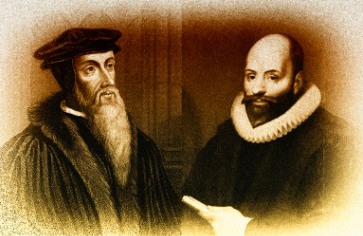
There are two basic ways of approaching the doctrine of salvation. One way is to stress the importance of man and his free will to choose for or against christ; this school of interpretation is called Arminianism, named after James Arminus. The other way of approaching salvation is to stress the importance of God and His sovereign will in bringing men to Himself through Christ; this school of Interpretation is called Calvinism, named for John Calvin. It is unfortunate that one must call himself an Arminian or Calvinist but for theological purposes every Christian is either one or the other.

-Kober
“Chapter 2: The Decrees of God,” pg 4

Is it better to be feared or respected? — I say, is it too much to ask for both?

-Tony Stark (Robert Downey Jr)
Iron Man (2008)

When you come to a fork in the road, take it.

Yogi Berra

That’s kind of my resolution to the problem in a nutshell, and it’s way too early to tip my hand, but I’m doing it anyway. I know people reading this blog post will probably classify me as an Arminian because I’m not a huge fan of God running roughshod over humanity, approving this one for salvation and tossing that one into the fires of the damned for all eternity without so much as a by your leave.

On page 4 of the paper, Kober quotes J.I. Packer saying:

The difference between them is not primarily one of emphasis but one of content. Once proclaims a God who saves; the other speaks of a God who enables man to save himself.

Again, I cry foul because Packer, like Kober, is looking at the picture as an “either-or” equation. Either God is supremely sovereign and saves who He wills and condemns who He wills, all outside the awareness let alone the consent of the people involved (you are saved or “unsaved” before you are ever conceived and born and draw your first breath of life according to a Calvinist) or God has handed some sort of authority over to the human who then does the job of saving himself. It’s not that concrete a choice.

I suppose I’ll be busted because I can’t point to a part of the Bible that says “it can be both” but is that entirely true? I’m going to try to find out and then show you some examples but let me introduce something first.

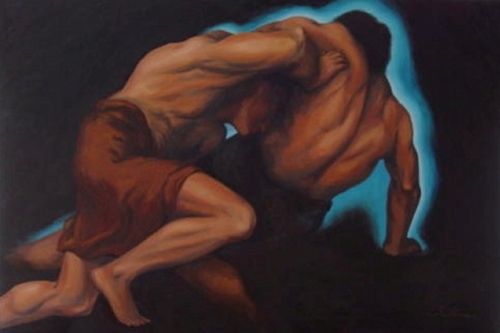
Jacob was left alone; and a man wrestled with him until daybreak. When the man saw that he did not prevail against Jacob, he struck him on the hip socket; and Jacob’s hip was put out of joint as he wrestled with him. Then he said, “Let me go, for the day is breaking.” But Jacob said, “I will not let you go, unless you bless me.” So he said to him, “What is your name?” And he said, “Jacob.” Then the man said, “You shall no longer be called Jacob, but Israel, for you have striven with God and with humans, and have prevailed.” Then Jacob asked him, “Please tell me your name.” But he said, “Why is it that you ask my name?” And there he blessed him. So Jacob called the place Peniel, saying, “For I have seen God face to face, and yet my life is preserved.”

Genesis 32:24-30 (NRSV)

The name “Israel” can be interpreted a number of ways, but one common meaning is one who struggles with God and prevails (wins). If Jacob struggled with a personified God or an angel of God, logic tells us that a flesh and blood mortal cannot hold his own let alone defeat a supernatural being, particularly if that being is literally the Creator of the Universe or some incarnation of Him.

In some areas of Judaism, it is thought that Jacob’s struggle with God is a picture of how the Jewish people struggle with the difficulties of understanding God’s perfection in an imperfect world. I’ve sat in a local synagogue and listened to the Rabbi disagree with another person’s understanding of God’s sovereignty and say something like “I’m willing to struggle with God on this one.” (not an exact quote)

What if the difficulties we have with the doctrine of salvation are built into the text of the Bible and built into our lives as believers so we can “struggle with God” over them and our relationship with Him? I’m not saying it has to be that way, but it seems like Christians always want definite “either-or” answers to all of the difficult sayings in the Bible, while many religious Jews are willing to live in a state of uncertainty on certain matters, “wrestling with God” over them.

Six million Jews were slaughtered in Hitler’s Holocaust. Many of the Jewish survivors lost their faith and turned their backs on God, and from a human point of view, this is understandable. But many other Jewish survivors found a stronger faith in God as they moved forward with their lives, ultimately raising children and grandchildren with that same abiding faith. How were they able to “wrestle with God” over a seemingly enormous injustice committed or at least allowed by God against His treasured, splendorous people?

Because Arminius was not the systematic theologian that John Calvin was, he did not clearly define his thinking on salvation. As a result, the followers of Arminius distorted his system with views Arminius simply did not hold.

-Kober, pg 5

While this can be taken as a statement of fact regarding the relative backgrounds of Arminius and Calvin, it also reveals (again) the writer’s bias. He is predisposed to select Calvinism over Arminianism, so you could say the paper I’m reading is hardly a balanced and objective examination of the two viewpoints. Nevertheless, I choose to believe that Kober is an honest person who is just trying to “clear the air” about this debate. It doesn’t mean I have to accept the either-or premise of his argument, though.

As I’ve already mentioned, I have a problem with “either-or” and believe that, on some level, the answer can be “both.” While most people may not think of it this way, by “forcing” a decision about God’s thoughts and actions, even based on scripture, we assume that we can know God’s process and intentions to an absolute or at least reasonably knowable and concrete degree, then drag it down from Heaven, so to speak, and into the realm of human understanding at ground level.

It’s almost arrogant to say that the “mechanism” of salvation cannot be mysterious on any level and that we can wholly know all of the little nuts and bolts about how God “does it.” Actually, even the author must admit that we are rather “slippery” on just how many screws God used to put salvation together, and what type of battery he powers the thing with (I’m speaking metaphorically, of course). I’ll get to that tomorrow.

On page six, in describing the “five points of Arminianism,” Kober says, “The faith which God foresaw and…” This wouldn’t be the last time Kober would say or intimate that from the point of creation or before (if “before,” “during,” and “after” have any meaning to God), God looked into the future and saw what was going to happen, like some cheap fortune-teller wielding a crystal ball and some Tarot cards.

New WorldI wrote a response to this idea in relation to Calvinism about a month ago and suggested that God exists outside of time and thus is not subject to its passing as we are. Unlike human beings, God isn’t “trapped” in a little pocket of linear time being carried forward one day at a time whether He wants to be or not. I can’t prove this, but it makes sense (to me anyway) for God to “experience” all of “timespace” as a single instantaneous event, as if everything from the creation of the earth, to Moses parting the Reed sea, to the giving of the Torah at Sinai, to David seeing Bathsheba bathing on a rooftop, to the first birth cries of Mary (Miriam) as Jesus is about to leave her womb, to Jesus breathing his last on the cross, to the first crusade, to the first inquisition, to the first ship to sail to the new world, to the first footstep of man on the moon, as if all those events, and everything else, were happening simultaneously.

God doesn’t “foresee” anything. He just knows because all of Creation from alpha to omega is before Him always. It’s only from our point of view that, when God chooses to touch a specific moment within Creation, we human beings experience God within the context of linear timespace.

Which may be part of the “solution” to the “either-or” problem of God’s Sovereignty vs. Man’s free will. Remember, as Kober writes his paper, he’s the observer. His readers are the observers. We are all the observers of God and it’s our point of view we depend upon. We experience choice and free will because that’s what it looks like from down here. We’re powerless to glean even a hint of God’s perspective and who knows what all this looks like as He sits enthroned in the Heavenly Court?

I have no problem with God being ultimately sovereign and at the same time with humanity experiencing a sense of “partnership” with God in the affairs of the world and in the workings of our lives.

This blog post took on a life of its own and I had to split it into two parts. I continue my discussion of Chapter 2 of Dr. Kober’s article in tomorrow’s morning meditation.

114 days.

Conquering Wrong with Right

broken-crossSo Christians, tell me. What is the church really like?

Because I go to a church event for the first time in weeks and within twenty minutes, I hear people make off-the-cuff racist, sexist and homophobic comments and nobody bats an eye.

I lay on the couch, curled up in a ball with the phone to my ear and listen to a dear friend tell me how he feels like an outsider to the people he’s attended church with for years because he has chosen to plant his flag with the disenfranchised and the vulnerable in his community, as messy as that gets. And it got messy.

Another friend I grew up with sends me a middle of the night link to an article about the guy in Arizona who stood on his college campus holding a sign reading “You Deserve Rape.” We’ve been having conversations lately about some of his qualms with Christianity, and he sums it nicely by saying, “I don’t want to have to spend the rest of my life explaining this to people. I have better things to do.” And I sympathize. Because I don’t want to have to spend the rest of my life explaining that to people, either.

And that’s just in the last couple of weeks.

-Emily Joy Allison
“Church Prove Me Wrong”
emilyjoyallison.com

The church is its own worse enemy.

I came across Ms. Allison’s blog (I get the impression she wouldn’t consider us on a first name basis so I’ll maintain some formality) as a link someone put on Facebook. That was well over a week ago, but this was the first chance I had to write about it. She says a lot of good things and a few things I disagree with, but she presents me with a struggle. Actually, she presents me with my own struggle, though I don’t conceptualize it in the same manner that Ms. Allison does. The struggle is with being a Christian and going to church vs. some of the really dippy and even hurtful things some Christians and some Christian churches do in the world.

For instance, she posted a screen capture of John Piper tweeting a message on twitter quoting Job 1:19 “in the wake of the terrible tragedies in Oklahoma,”

“Your sons and daughters were eating and a great wind struck the house, and it fell upon them, and they are dead.”

Even if Piper hadn’t intended this message to be taken the way it sounds, his timing (and probably his tastefulness) was ghastly. The tweet was subsequently deleted, but it’s another example of Christians (and people I refer to as “famous Christians” … more on that in a minute) standing on the platform of faith in Jesus Christ and throwing rocks at the injured and dying people of the world.

I sometimes have a problem with some “famous Christians.” These are usually televangelists or other Pastors or leaders who are in the public eye, people whose names are familiar even with atheists. Christians who typically are the worst examples of Christianity and who give the rest of the world the impression that we’re all like they are.

I recently heard an unsubstantiated story (that is, I can’t find it by Googling it) of scandal-plagued Jimmy Swaggart actually selling individual pages from his family Bible while leading a tour group in Israel. This would have been fairly recently, but I can’t find an online reference to the event. We’ve also heard names such as Benny Hinn and Joel Osteen, and I cringe to think that this is what the world sees when they think they’re looking at men who are disciples of and witnesses for Christ.

praying-aloneMany years ago, I knew some Americans who, when they toured Europe, would tell people they were from Canada (this obviously didn’t work at airports when they had to present their passports) because they were too embarrassed by America’s reputation overseas. There are days when I feel that way about being a Christian. I believe as a Christian, that I should be held accountable for my own behavior, my flaws, my mistakes, my errors, but it’s adding insult to injury if I have to be ashamed for every lousy thing someone else does in the name of Christ.

In terms of social consciousness and popular causes, it looks like Ms. Allison and I are different enough to where she would probably be embarrassed to be counted a Christian along with me, so from her perspective, I’m likely one of those folks she’s appealing to when she says:

YOU are supposed to be the living, breathing, embodiment of the gospel, and sometimes I can’t see anything good about it.

Church, prove me wrong. I’m begging you.

Church, prove me wrong. I’ve tried to be patient—and I will continue to try. I will be eating with you, talking with you, praying with you; from time to time I’ll probably be sitting in a church service with you. I will not abandon you, as long as Jesus has anything to do with it. But I need you to show me that he still does.

I recently read a blog post that quoted Jones, E. Stanley, (1925). The Christ of the Indian Road. Abingdon Press, 72-73. You’ve probably read this before:

“Mr. Gandhi, though you quote the words of Christ often, why is that you appear to so adamantly reject becoming his follower?”

Gandhi replied, “Oh, I don’t reject your Christ. I love your Christ. It’s just that so many of you Christians are so unlike your Christ.”

Ghandi’s rejection of Christianity grew out of an incident that happened when he was a young man. During his years studying law in Britain, he had become attracted to the Christian faith, had studied the Bible and the teachings of Jesus, and was seriously exploring becoming a Christian. One Sunday, in South Africa where he had gone to practice law after getting his degree, he decided to attend a church service.

As he came up the steps of the large church where he intended to go, a white South African elder of the church barred his way at the door. “Where do you think you’re going, kaffir?” the man asked Gandhi in a belligerent tone of voice.

Gandhi replied, “I’d like to attend worship here.”

The church elder snarled at Him, “There’s no room for Kaffirs in this church. Get out of here or I’ll have my assistants throw you down the steps.”

Gandhi is certainly an outstanding example, but how many Christians have thrown people out of the church or driven folks away who otherwise are men and women who act and think and breathe with the heart of Christ?

On the other hand, and there’s always an other hand, I can’t use all of this as an excuse to go “church bashing” or “Christian bashing.” From her writing, I get the impression that Ms. Allison is representative of a specifically narrow corridor of the believing world that exists in fusion with many of the popular values western society espouses today.

If the problem Ms. Allison or anyone else has with “the church” is that “the church” has a specific values system that conflicts with the non-religious social priorities we see continually in the popular news media, then maybe it’s a case of the church following its own priorities rather than believing it must “go along to get along” in American culture.

broken_godAlso, if your issue is that your particular religious group or you, as an individual, have difference of opinion with how other religious people or other religious groups conceptualize and operationalize a life of faith, that may not be a matter of the church needing to prove anything to you. That might just be a difference in how you see a life of faith vs. their perspective.

Some churches aren’t going to support what has come to be known as “marriage equality,” not as a matter of bigotry (note, I think the Westboro Baptist Church is reprehensible and does not represent Christ on any level), but a matter of conscience.

If your problem with “church” is that “church” doesn’t mesh with the values we see paraded in public by CNN, MSNBC, the New York Times, and such so that “church” refuses to blend in like a chameleon into the progressive social background, then that’s not the church failing to follow Christ, it’s the church failing to worship society and culture.

I can’t prove to Ms. Allison that she’s wrong. If the church has failed to live up to her expectations, then I’m sorry. The church isn’t perfect because it’s full of imperfect human beings. Sometimes we do stupid things. Sometimes we do mean things. Sometimes some people in the church need to be told that Jesus would never act the way they’re acting.

Ms. Allison will never find a church that is perfect. No matter where she goes to worship and fellowship, she’ll always find “bad apples.” There are whole churches that are “bad apples.”  I don’t doubt though that there are a number of Christian churches that demonstrate values sufficiently similar to her’s that she’d be comfortable worshiping within their walls. I’m not sure what to make of such churches, but if Ms. Allison wants a place to belong, I’m sure it’s out there.

But we’ll never be perfect. Frankly, if a church is following in the footsteps of the Messiah, they probably shouldn’t look and act exactly like the world around us. Jesus said that we are in the world but not of the world.

I’ve been afraid of church for my own personal reasons, but they’re my personal reasons. My problems with going to church belong to me, not church. And yet, I came to a point in my life where I felt I had no other option but to go to church. If you call yourself a believer and a disciple, you can’t go off half-cocked following your own priorities when you know you need to be in fellowship with other believers and you need to follow the Master.

If you want to think that “the church” is irredeemably bad, you’ll find plenty examples of bad churches and bad Christians. If you don’t want to accept church-bashing lying down, and you believe that Christ still exists within the body of believers, you can do something about it. Instead of pointing a finger at what’s wrong, you can be what’s right in the church.

Gandhi is famous for saying, Be the change you wish to see in the world. If you don’t like what you see happening in the church, then be the sort of Christian you believe Jesus wants to see in the church. Walking away doesn’t make you more noble, it just makes you alone. Jesus didn’t walk away from an imperfect world. He died for it.

Mahatma-GandhiAnd then he lived. Someday he’ll come back to redeem our imperfect world. In the meantime, if we call ourselves disciples, if we call ourselves Christians, then we have a responsibility to do here and now what he is going to do when he comes back. We need to introduce a little kindness, compassion, and self-sacrifice into an otherwise broken and bleeding world. Jesus didn’t complain about what was wrong. He was moved by compassion. He caused the blind to see, caused the deaf to hear, caused the lame to walk. Like Christ, don’t complain about what’s wrong. Just do what’s right.

To the contrary, “if your enemy is hungry, feed him; if he is thirsty, give him something to drink; for by so doing you will heap burning coals on his head.” Do not be overcome by evil, but overcome evil with good.

Romans 12:20-21

If I should ever leave the community of faith, it won’t be because church is broken. It will be because I am.

118 days.

Save Me!

falling-save-meA guy is riding his motorcycle down a mountain road when suddenly he loses control and goes hurtling off the cliff. As he’s sailing through the air, he shouts out: “God! Please make a miracle! Save me!”

Within moments his shirt gets caught on a protruding branch – and he is left dangling thousands of feet above the ground.

There’s no way out, so he looks heavenward and shouts: “God! Please save me!”

“Do you trust Me, my beloved son?” calls the voice from heaven.

“Yes, God, I trust you. Just please save me!”

“Okay then,” says God. “Let go of the branch and I’ll catch you.”

The man thinks for a moment, looks around, and calls out: “Is anyone else out there?!”

“Recognizing God”
-from “Ask the Rabbi”
Aish.com

I’ve been writing a lot lately on topics that seem to inspire not only conversation (which is good) but emotional disagreement (which isn’t always good). I thought I’d back off a bit and discuss something that we all have in common: trusting God. I say we all have it in common (assuming you have faith in the living God of Israel), because trusting God isn’t always easy. The little story I quoted above is a joke but jokes are funny because they contain a truth we all understand.

Not only is trusting God difficult but the worse the situation is we find ourselves in, the more difficult of a time we have in trusting. Hence the punchline, “Is anyone else out there?”

Trusting God isn’t a matter of how well our lives are going. If we trust God only when things are doing well with us, it’s not trust. Trusting God is about the relationship we have with Him and to some degree, who we are as an individual personality.

The Aish Rabbi continues:

The key to forging a relationship with God is to trust Him. God is not some vindictive, punishing old man in the sky. God is our loving Creator, who wants only our best. Sometimes that calls for Him to “test” us with difficulties; but the intention is only to bring out our very best.

When we are children, we think we are the center of the universe. Then, through experience and trials, we become increasingly aware of the fact that there are things in life beyond our control. Whether it’s earthquakes, cancer, the rise and fall of fortunes, circumstances of our birth – and even birth itself… this can only be ascribed to a Higher Power.

Maimonides writes that there are two primary ways to attain recognition of God: by observing the wonders of Creation, and by performing mitzvot. Through nature, we see the beauty, splendor, and perfect unity of the world. Through mitzvot, we see how humanity can likewise attain unity and perfection.

trustingIn a way, we learn to trust God by acting the way we want Him to act (speaking of mitzvot). If we live a life that is upright, generous, charitable, merciful, compassionate, and wholesome, we will tend to think of God in that way. If our natures (which are sinful and thus very bad) are stingy, mean-spirited, cruel, hard-hearted, base, and immoral, we tend not to think of God that way, but we think we are going to be struck down any second by God. We expect, when hard times come, that we deserve it and we can’t trust God to help us out.

Trusting God depends on how well we can trust ourselves and how well others trust us.

Rabbi Mordechai Kamenetzky at Torah.org has a commentary based on last week’s Torah reading that also illustrates this point.

My dear friend Rabbi Benyamin Brenig of Golders Green, London recently related this wonderful story to me: Reuvain and Shimon were two men, who lived on opposite ends of town. They each inherited a fortune of gold. Each of them decided to bury their fortunes in their backyards. They wanted to make sure that they would have something to sustain them in their old age. On their respective properties, they each picked a landmark, paced twenty steps due north and dug a large hole.

Reuvain, the more nervous of the two, was careful to make sure that no one was watching. Every other second he glanced furtively over his shoulder to make sure that no one saw him bury the treasure. No one did.

Shimon, by nature, was trusting and carefree and he was not so careful. He was not worried that anyone would steal his fortune. But he was wrong. He was spotted by a nosy neighbor, who was also a thief.

In the middle of the night, the thief dug up the fortune. Out of mercy, he left few coins at the bottom of the pit, and removed the coins. He refilled the hole and packed the ground perfectly as if nothing was disturbed. Then he took off with the fortune.

Reuvain’s fortune, however, remained intact. But he was, by nature, a worrier. And so, the next day he decided to dig up the hole to make sure that the gold was still there. Accidentally, he counted only fifteen paces from his landmark and dug. There was nothing there. Reuvain was frantic. Someone must have seen him dig the pit, he figured. For the rest of his life, he worried. On his property, he had a pit filled with gold coins, but all Reuvain did was worry!

Shimon on the other hand had nothing but the remnants of a few coins. Everything else was stolen. But he never checked the fortune, and was merrily content, assured that when the time would come he could dig up the pit and retrieve his fortune. Reuvain, the millionaire, died heartbroken and frantic. Shimon, the man with but a few coins left for his old-age lived his life content as if he was the wealthiest man in the world.

The Torah tells us about the different types of blessings. For the faithful, Hashem says, “I will command my blessing in the sixth year,” in which Rashi assures us that even a bit will feel like a bounty. But we must acknowledge that despite Heavenly assurances, there are those who always worry. They need to see the money! They ask, “What will we eat in the seventh year? Behold! We will not sow and not gather in our crops!” Hashem must assure them that he will increase their bounty in a way that is visible to them.

Some of us can believe without seeing immediate results. We can sleep well, with full satisfaction on empty stomachs. The greatest expression of faith is when we do not see the blessing, but we feel it in our hearts and even in our stomachs. That blessing transcends tangibility, and the fear of deficiency. I think that is a noble goal.

For the rest of us, those who keep looking over their shoulder and check their fortunes every day, they need a different type of blessing. Sometimes we dig for tangible salvation, even though the treasure is sitting undisturbed in our own backyard.

waiting-for-mannaI know that was a long quote, but I think it’s a good story and it tells us something about God and who we choose to be in God. Once you bury gold in the backyard, you can no longer see if it is there or not unless you dig it up. You can be like Shimon who lost most of his gold but because he trusted in something more precious than gold, lived his life in security and happiness as if he were a wealthy man. Reuvain, by contrast, didn’t lose a dime, but because he thought he had lost everything due to his untrusting nature, he could not trust the One who is worth far more than gold coins, and thus he lived out his life, though wealthy, as if he were a pauper dressed in rags.

We can’t control the circumstances of our lives with any certainty. Yes, we can invest in IRAs, spend cautiously on personal comforts, give generously to the poor, treat the lonely and grieving with kindness and compassion, but like the residents of New York and New Jersey, we cannot anticipate when the next superstorm Sandy will come and wipe all of our material possessions away like a sandcastle on a beach.

Like Job, we can learn to trust in God whether he grants us much or little. And we can strive to learn to trust God as did Paul.

Not that I am speaking of being in need, for I have learned in whatever situation I am to be content. I know how to be brought low, and I know how to abound. In any and every circumstance, I have learned the secret of facing plenty and hunger, abundance and need. I can do all things through him who strengthens me.

Philippians 4:11-13

I’ll freely admit that I sometimes have trouble with matters of trust, but that’s my problem, not God’s. God is not only immensely trustworthy but infinitely so. And even if I were to lose everything, I could only try to aspire to be like Job when he said, “Though he slay me, I will hope in him; yet I will argue my ways to his face” (Job 13:15). The part about “argue my ways” may seem a little off base, but if I trust God, then I can trust Him with my heart, which includes all of my emotions, my disappointments, and my anguish, even my problems of trust in Him.

But in the end, we all will arrive at the same destination. In the end, we must all trust God and cry out to Him, “Save me!” Will we “let go” and let Him catch us?

141 days.

Shoshie’s Rules

im-aliveIn Parashat Emor we are commanded, “Do not desecrate My Holy Name, and I shall be sanctified within the Children of Israel.” These two mitzvot (commandments), desecrating God’s Name and sanctifying it, can be interpreted as very general principles that guide us to sanctify God’s Name in every action that we do and not to desecrate it. Nonetheless, the particular mitzvah of sanctifying God’s Name is specified regarding situations in which we are required to give up our lives in total self-sacrifice.

Jewish law holds that human life has supreme and fundamental value and the Almighty wants us to live in this world and not to die. This is why any life-threatening situation usually overrides all other mitzvot, as the verse states, “Observe My statutes and My laws that an individual does and he shall live by them” on which the sages expound, “but he should not die by them.” Yet, under certain circumstances we reveal that there is something beyond even the fundamental essence of life, as Rashi comments on the verse in Parashat Emor, “‘I shall be sanctified’―sacrifice yourself and sanctify My Name.”

-Rabbi Yitzchak Ginsburgh
“Sanctifying God’s Name”
Commentary on Torah Portion Emor
Wonders From Your Torah

Embracing the simple concept of sanctifying God’s Name as opposed to desecrating it seems comfortable and almost joyful. To say, “I bless Your Holy Name” in prayer to the Almighty strips away all of the conundrums, mysteries, puzzles, and blind arguments in which we engage every day when facing the enigma of the Bible and the infinitely greater enigma of the infinite, eternal, omnipresent, radically One, Ein Sof, God.

It’s also comforting to know that, regardless of how we perceive our responsibilities to God, that He considers (at least in Judaism) our lives so important, that in the vast majority of situations, we are free to take whatever extraordinary measures are required to preserve our lives and the lives of others. You don’t have to fret that the ambulance won’t come to take you to the hospital and that instead you’ll die of a heart attack just because it’s Shabbat. If you have had an accident and are bleeding profusely, you don’t have to be concerned that the paramedic won’t provide emergency treatment because coming in contact with your body fluids might make him ritualistically impure. And if you’re starving to death and the only food available is a slice of pork, God won’t send you to hell without an electric fan if you need to eat the pork to survive.

God says your life and mine are more important than “the rules…”

…in most cases, but then again, that’s Judaism, and how much of that applies to me anyway? All I’m trying to hang on to is the belief that God thinks my life is more important than someone else’s theology or doctrine or how they “obey the rules.”

Is just being alive sanctifying God’s Name? I don’t know. Probably not. Lots and lots of people are alive and they don’t give God a second thought, or if they do, they curse His Name, or laugh at Him, or certainly laugh at those who love Him, deeming them ignorant, superstitious, bigots, anti-progressive, or all of the above.

groucho-marxFor the past couple of weeks, I’ve posted a series of reviews on most of the essays that were published in David Rudolph’s and Joel Willitts’ book Introduction to Messianic Judaism: Its Ecclesial Context and Biblical Foundations. A number of people registered their displeasure at my opinions, and the endless back-and-forth wrangling about religious concepts in the blogosphere and in other realms makes me despair for religion as an institution. Or as Groucho Marx famously said, “I don’t want to belong to any club that would have me as a member.”

I find great comfort, wisdom, and illumination in God, I’m just not always sure about those who say they follow Him (including me). Actually, that reminds me of another famous quote.

“I like your Christ. I do not like your Christians. They are so unlike your Christ.”

-Gandhi

The irony is that we have all of these Internet arguments because we say we’re trying to be more like Christ. Go figure.

Our teacher the Baal Shem Tov said: Every single thing one sees or hears is an instruction for his conduct in the service of G-d. This is the idea of avoda, service, to comprehend and discern in all things a way in which to serve G-d.

“Today’s Day”
Hayom Yom: Iyar 9, 24th day of the omer
Compiled by the Lubavitcher Rebbe; Translated by Yitschak Meir Kagan
Chabad.org

So every single thing I see or hear, including in these blog conversations, is an instruction for how to serve God. It is also said:

The theme of Pesach Sheini is that it is never too late. It is always possible to put things right. Even if one was tamei (ritually impure), or one was far away, and even in a case of lachem, when this (impurity etc.) was deliberate – nonetheless he can correct it.

I suppose it’s unreasonable to expect that I can avoid hurting someone’s feelings by expressing my personal opinions, especially religious opinions. How do I simply sanctify God’s Name and experience the peace and joy at knowing, at least from God’s perspective, each and every one of our individual lives is exceptionally important to Him? The minute I stray away from “meditations” that are more suited to a greeting card and that involve looking at different perspectives on the Bible, life doesn’t seem so special anymore, and the sanctity of God’s Name comes into question, at least if that sanctity depends on the behavior of God’s followers (including me).

But what choice do I have?

“Against your will you live; against your will you die”

– Ethics of the Fathers 4:22

Woman in fireI have no control. Nadav and Avihu brought “strange fire” before God and were incinerated for their efforts, and theologians, saints and rabbis have been trying to figure out for centuries what that meant. What if Nadav and Avihu were the strange fire themselves? There’s a commentary on Pirkei Avot 4:22:

“The soul of man is a lamp of G-d.”

The flame knows no rest, for it lives in perpetual conflict between two opposite tendencies. On the one hand, it cleaves to its wick, drinking thirstily of the oil that fuels its existence. At the same time, it surges upward, seeking to tear free of its material tether. It knows that such disengagement would spell the end of its existence as a manifest, illuminating flame; nevertheless, such is its nature.

This is the paradox of the flame’s life: its attachment to wick and fuel sustains both its continued existence and its incessant striving for oblivion.

Man, too, is torn between these two contrasting drives. On the one hand, he tends towards self, towards life and existence. At the same time, he yearns for transcendence, to tear free from the confining involvements of physical life, to reach beyond his material self.

“Against your will you live; against your will you die” – the tension created by these conflicting drives is the essence of the human experience. The desire to escape the trappings of physical life is what separates the human from the merely animal; but the escapist nature of man is counterbalanced by the compulsion to be, a compulsion that binds him to the material reality. Back and forth, back and forth runs the cycle of life, from being to transcendence and back again.

God drives me crazy sometimes, but He doesn’t drive me as crazy as the people who follow Him (including me).

Rabbi Ginsburgh said:

True, sometimes for various reasons we are unable to observe the entire Torah; we cannot always reach out to every Jew; and there have been long periods in history when we have been unable to occupy the whole of the land. But we must realize that in essence, the Torah is complete, the Jewish people is complete, and the land of Israel is a complete entity.

While the esteemed Rabbi’s thoughts go in directions my brain cannot follow, he touches upon the difference between the doing and the being. Sometimes we can’t do everything God wants us to do and be everything God wants us to be. Heck, most of the time we can’t come anywhere close to the expectations of God, especially when we’re in contact with other people of faith. There are days…most days, when I imagine myself sitting at the bottom of the abyss. Light filters down so I can see. It’s dry and warm and really not so uncomfortable. Most of all, it’s quiet. There’s plenty of peace and plenty of time just to contemplate God. I talk to God and He listens. There are no other voices. Only the silence of God speaks to me.

i_give_upI know I’m not supposed to give up on people because God never gave up on people. I know, I know. There are those out there who say my life only matters if I consider myself “Israel,” otherwise I’m a “non-event.” But I can’t help but believe that God cares not only about His people Israel, but the rest of the world as well. Is God only the God of Israel? Didn’t He create the Gentile as well as the Jew? Does He not cause the rain to fall on the fields of the Gentile as well as the fields of the Jew, making the crops of each grow and flourish. Does He not put food on my table as well as on the table of the Jew?

Or am I just making all this up?

Rabbi Simcha Barnett wrote a tender and heartbreaking story about a 12-year-old girl named Shoshie Stern, who lost her life recently in a tragic accident.

Mike and I are best friends, and over the years I spent a lot of time at his Shabbat table, where he and his wife Denise took tremendously good care of their guests, making everyone feel extremely comfortable and well-fed. Denise would prepare a first course of incredible bounty and variety, and Mike would jokingly refer to the rules cited above to break the ice, making a connection with the many disparate people at the table (and also to get the food circulating). Mike and Denise are my chesed (kindness) mentors, and I keep them with me always at my Shabbat table through the Rules.

Tragically, Mike and Denise lost their 12-year-old daughter Shoshie a”h last week in a tragic accident, and though I didn’t really know Shoshie well, I feel that through the experience of the funeral and Shiva, I got a glimpse into the soul of a rare human being, one created in the Stern image, yet with her own unique spin. Through this experience I discovered a whole new set of rules – the Shoshie Stern Rules:

Give up your seat, make peace, and see the good in everyone.

A 12-year-old girl had the remarkable ability to teach a Rabbi something new, but she had to die to bring “Shoshie’s Rules” to the world. Of course, the rules are not unique and I’m sure you can find their origins in the Bible with little effort. However, in the midst of struggling over who has the “right” to wear tzitzit and whether or not Christians are equally “Israel” along with the Jewish people, these are the very rules we all forget.

As I write this, it’s Thursday morning and I know I have enough commentary on Rudolph’s and Willitts’ book in my “queue” to last through Monday. That means from today through Monday, I’ll have well-meaning and intelligent people telling me I don’t know which end is up and that my blogged opinions and commentaries aren’t worth the electrons they’re printed on. Like I’ve said in the past, I don’t mind being disagreed with, I just mind being told I have to do the moral equivalent of a home invasion on Israel and the Jewish people for the sake of someone else’s theology and doctrine.

ShoshieSternRulesIt’s less important to me to wear a kippah, don a tallit gadol, and lay tefillin before prayer than it is to just pray. It’s less important to me to take the seat at the head of the banquet table than to give up my seat for the sake of the ways of peace.

And I would really, really love to have the ability to see the good in everyone.

But even Jesus said, only God is good. I guess that’s why I’d like to just bury myself somewhere alone with Him.

He won’t let me, but it’s still fantastically appealing. But it’s also incredibly selfish. Rabbi Barnett finishes his tribute to Shoshie this way:

This past Shabbat, my thoughts turned to my dear friends the Sterns, who were amidst a heart-wrenching mourning period. But instead of the familiar Mike Stern Rules, I invoked a new set of rules at the Shabbat table: the Shoshie Stern Rules:

Give up your seat, make peace, and see the good in everyone.

I’m hoping to apply the Shoshie Stern Rules to my life. May it add merit to her soul for eternity.

I don’t think you can learn any of these lessons let alone live them out unless your heart is perpetually breaking.

“Life isn’t about finding yourself. Life is about creating yourself.”

-George Bernard Shaw, Irish playwright

153 days.