Tag Archives: repentance

The Heavenly Man: A Book Review

heavenly-manOne day we will all stand before the judgment seat of Christ and be required to account for our lives. Now is the time to repent, before it is too late! “In the past, God overlooked such ignorance, but now he commands all people everywhere to repent. For he has set a day when he will judge the world with justice by the man he appointed. He has given proof of this to all men by raising him from the dead” (Acts 17:30-31). Dear friend, if you sense the conviction of the Holy Spirit tugging at your conscience, then fall on your knees and cry out to God from a repentant heart. Ask the Holy Spirit to take full control of your life and to help you daily walk in humility and dependence on Him.

-Brother Yun (with Paul Hattaway) from “Repentance,” pg 21
The Heavenly Man: The Remarkable True Story of Chinese Christian Brother Yun

Those are the final words that appear in Brother Yun’s book, which are actually from another book by Brother Yun and placed after the index to provoke interest in Brother Yun’s teachings. In reading them, I couldn’t help but be reminded of this:

Then a certain sage arose to test him and said, “Teacher, what should I do to take possession of eternal life?” He said to him, ‘What is written in the Torah? How do you read it? He answered and said, “Love HaShem your God with all your heart, with all of your soul, and with all of your strength, and with all of your knowledge – and your fellow as yourself.” He said to him, “You have answered well. Do this and live.”

Luke 10:25-28 (DHE Gospels)

The words of the Master sum up Brother Yun’s life well (not that Brother Yun isn’t still with us). In reading his book we see the story of a young and powerful disciple of the Master, a boy in China, just barely 16 when he first encounters Christ, and the amazing tale of his progression as a teacher, a Pastor, and an emissary for the Lord throughout the hazardous expanse of Communist China from the mid-1970s to the early 2000s. How many times was Yun (actual name Liu Zhenying) sought after by the authorities as a fugitive from the law for the “crime” of preaching the Gospel? How many times was he arrested, tortured, beaten, starved, ridiculed, tried, imprisoned, and left to rot in some filthy cage? How many times did he cry out to Jesus, not for his own sake, but for the sake of his family, his fellow prisoners, even for those guards and officers who were abusing him?

Even after his eventual escape from China to Germany and the west, how many trials did he suffer? How long was he separated from his family who he had to leave behind in China? How much did they suffer even after they left China but were trapped in Myanmar? Even in the west, the stories that came out of China about his struggles, about the many miracles Yun had witnessed and been a part of, about the amazing movement of the Holy Spirit that enabled thousands and even millions of Chinese citizens to hear the Gospel when Bibles were in short supply and when very little was known about God, the Christ, and the holy scriptures, how many Christians disbelieved and called Yun a liar?

I have to admit, the more “supernatural” aspects of his story seem amazing and even farfetched to me too, but perhaps we don’t see miracles in our lives because we don’t depend on God so strongly for mere day-to-day survival. We aren’t in a Communist prison, tortured daily, exposed to horrible diseases, beaten not only by guards but by our fellow prisoners, dragged through human filth, barely fed, and all the while, commanded by God to preach the good news of Jesus Christ to those who are not only his enemies but ours.

The vast majority of the book is a chronicle of what it is like to be a Pastor and an evangelist in a country where even owning a Bible and declaring yourself a Christian is a crime punishable by many years in prison or even death. This was brother Yun’s life for nearly thirty years and it illustrates the stark contrast between the life of an outspoken and courageous believer in atheist China and the comfortable lifestyle of Christians in America.

Beyond what you might expect from such a life story, two points stood out…well, three, but I’ll get to that.

The first point I’ve already talked about in a previous meditation:

However, after a few years these same mission organizations started putting other books at the top of the bags of Bibles. These were books about one particular denomination’s theology, or teaching that focused on certain aspects of God’s Word.

This, I believe, was the start of disunity among many of China’s house churches.

These booklets told us we must worship in a certain way, or that we must speak in tongues to be a true believer, or that only if we were baptized in Jesus’ name (instead of in the name of the Father, Son, and Holy Spirit) could we be saved. Other teachings focused on extreme faith, still others argued for or against the role of women in the church.

We read all these booklets and soon we were confused! The churches started to split into groups that believed one thing against groups that believed another. Instead of only speaking for Jesus, we also started speaking against other believers who didn’t conform to our views.

-Yun/Hattaway, pg 233

infinite_pathsThe concept of denominations was all but unknown in the world of Brother Yun and the people to whom he ministered, the majority of them being uneducated farmers and peasants. Introducing ideas like “theology,” “doctrine,” and “dogma” resulted in a terrific whirlwind of chaos and confusion in the different churches among the Chinese faithful, producing years of discord and disunity among them.

But the second thing that got my attention was this:

The path of following the Lord Jesus Christ is not an easy one. Along the way lies suffering and hardship, but nothing we experience will ever compare to the suffering Jesus endured for us on the cross.

I have a problem with the “prosperity” teaching prevalent today, which tells us if we follow the Lord we’ll be safe and comfortable. This is completely contrary to Scripture as well as to our experiences in China. In addition to serving years in prison, I’ve been arrested about thirty different times for the sake of the gospel of Jesus Christ.

To follow God is a call not only to live for him, but to die for him also.

-Yun/Hattaway, pg 214

For if we live, we live to the Lord, and if we die, we die to the Lord. So then, whether we live or whether we die, we are the Lord’s.

Romans 14:8 (ESV)

I too have been critical of prosperity theology which I believe is not only unscriptural but a cruel joke, given the lives of people such as Brother Yun.

Paul knew what it was to live a life of hardship and difficulty and ultimately to also die for Messiah. So did Peter, James, John, and the other devoted disciples. So have an army of men and women across the span of time and the history of the church who have been martyred for the sake of the gospel. Although Yun did not die in the name of Christ, he lived a life of extreme hardship, sacrificing almost everything to his faith and to teach the words of Jesus to just one more human being, and then another, and then another, and then…

I think what I took away most from Yun’s book, the final notable point he makes, is what I quoted at the very beginning of this blog post. No matter who you are, no matter where you serve God, no matter what you do, the details of every action you’ve taken will one day come to judgment. How have you spent your time? How have I? Are we really suffering for our faith? Have we really done all we can to promote the kingdom and to summon Messiah’s return?

Have we really, really repented in humility to God?

Repentance is both the first step to walking in the kingdom of God and the key to continuing in a place of obedience and submission to the Lord. The very first message Jesus proclaimed in His ministry was, “Repent, for the kingdom of heaven is near” (Matt. 4:17). Without a deep experience of repentance in our lives, we will continually struggle with basic sin and never mature as believers.

The Devil doesn’t care if you have served the Lord in the past. What makes him frightened is if you are living for Jesus Christ today, relying on and trusting Him right now, and being willing to obey the leading of the Holy Spirit.

We may look like we belong in the kingdom of God, and we may be successful in tricking other people, but the all-knowing God cannot be fooled. We have to submit to Jesus as Lord and King if we want to dwell in His kingdom. We cannot trick God, whose “solid foundations stands firm, sealed with this inscription: ‘The Lord knows those who are his,’ and, ‘Everyone who confesses the name of the Lord must turn away from wickedness'” (2 Tim. 2:19).

-Yun/Hattaway, “Repentance,” pp 19-20
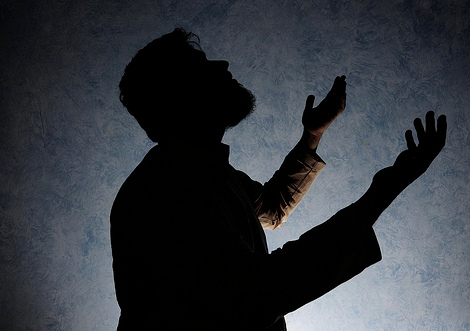
prayer-in-the-darkWhat more can I say? Whatever you or I may think of the validity and accuracy of certain details in Yun’s book and in his life story, the message of repentance, turning away from sin and turning toward God; the message of the suffering servant on the cross and the suffering servant of the Master in China and around the world, is the message that rings out the most clearly from the pages of this book.

Being a “Heavenly Man” isn’t a life for the faint of heart or the weak in spirit, but as Paul said:

But he said to me, “My grace is sufficient for you, for my power is made perfect in weakness.” Therefore I will boast all the more gladly of my weaknesses, so that the power of Christ may rest upon me. For the sake of Christ, then, I am content with weaknesses, insults, hardships, persecutions, and calamities. For when I am weak, then I am strong.

2 Corinthians 12:9-10 (ESV)

If you read Brother Yun’s book and take this message to heart, you’ll never look at your path of faith the same way again…at least if you are willing to be honest with yourself and with God.

Doing Love

unworthyAaron was ashamed [and was reluctant to assume the position of High Priest] because of his role in the Golden Calf episode, and Moses said, “This is why you were selected.”

-Rashi, Leviticus 9:7

I was once asked to see a student nurse who was beside herself because she had made an error in medication. While this particular error was harmless, she felt that she lacked the competency to be a nurse, because she saw that she was capable of making even more serious errors.

I told the young woman that I did not know of anyone who can go through life without making any errors. Perfection belongs to God alone. If all nurses who became so upset because of a medication error would leave the field, the only ones who would remain would be those indifferent to making errors, and that would be the worst disservice to mankind.

We must try to do our very best at everything we do, particularly when it concerns others’ welfare. We must not be lax, negligent, nor reckless. We should of course be reasonably upset upon making a mistake and learn from such experiences how we might avoid repeating them. However, if in spite of our best efforts we commit errors as a result of our human fallibility, we should not give up. Allowing a mistake to totally shatter us would result in our not doing anything in order to avoid mistakes. This non-action would constitute the greatest mistake of all.

Today I shall…

…try to realize that the distress I feel upon making a mistake is a constructive feeling that can help me improve myself.

-Rabbi Abraham J Twerski
“Growing Each Day, Shevat 12”
Aish.com

No one wants to make a mistake. Certainly we all want to “get it right” the first time, whatever “it” happens to be. And when you are a person of faith, you particularly want to get moral and ethical stuff right all of the time.

It’s rather humbling when we do not. More than that, the rest of the world, both religious and non-religious people, seems to be just waiting for us to slip up so they can criticize us.

I suppose religious people are used to being put down by atheists because we’re “superstitious” or “irrational” or we’re “non-inclusive bigots” or something. However, some people of faith are no better, and tend to jump on other believers who have opinions and convictions that don’t line up with their own. You see this most often within Christianity from “Evangelical Fundamentalists” or whatever label is appropriate to use here…people who are uncompromising on matters of abortion or gay marriage (for example) and who only see the black-and-white of the issues and not the human beings involved. Christians say “love the sinner but hate the sin,” but truth be told, some Christian human beings often don’t know how to tell the difference so they hate them both.

If only we realized that we are just as capable of making mistakes as anyone else. It’s worse for us though, since we know that we are accountable to God for every word and deed we commit in our lives. One day, we’ll have to make an accounting. One day, we’ll have to face God! What the heck is wrong with us? Don’t we get it?

Rabbi Eliezer said: “Repent one day before your death.” His disciples asked him, “Does then one know on what day he will die?” “All the more reason he should repent today, lest he die tomorrow.”

-Shabbat 153a

But what is it to repent?

“It is told that once there was a wicked man who committed all kinds of sins. One day he asked a wise man to teach him an easy way to repent, and the latter said to him: ‘Refrain from telling lies.’ He went forth happily, thinking that he could follow the wise man’s advice, and still go on as before. When he decided to steal, as had been his custom, he reflected: ‘What will I do in case somebody asks me, “Where are you going?” If I tell the truth, “To steal,” I shall be arrested. If I tell a lie, I shall be violating the command of this wise man.’ In the same manner he reflected on all other sins, until he repented with a perfect repentance.”

-Rabbi Judah ben Asher, fourteenth century

love-in-lightsIs making a mistake the same as sinning? Sometimes I suppose, but as we saw in the example of the student nurse above, sometimes we just make mistakes. Even when someone gets hurt, it’s still a mistake and not a sin. But mistakes and sins have a few things in common. If we are morally adequate people, they both make us feel guilty and they both show us that we need to improve and change our ways.

Sin and repentance have been written about endlessly by people far wiser and more worthy than I, so what’s the point of me putting in my two cents? Nothing, I suppose, except for timing. There are times when we need to say such things and times when we need to hear them as well. We may not realize that it’s time and we may not seek out the information which would then inspire us to be convicted and (hopefully) to then transform. So I offer this to you just in case it’s your time. And if we are, as Rabbi Eliezer suggests, to repent today (lest we die tomorrow), then every day is our time.

There are parallel guidelines which are set to direct us in our life goals. On the one hand, we are encouraged and even obligated to state, “When will my actions be as those of our patriarchs?” In this regard we should feel that we can achieve the same levels as our ancestors. On the other hand, we must recognize that we are worlds apart from the lofty levels of our forefathers. In fact, it would be highly presumptuous to even think that we have the ability to match their accomplishments, as our Gemara reports. Even the greatest among us must acknowledge that compared to the personalities of the Torah, who were giants in character and sainted servants of Hashem, we are as mere humans as compared to angels. How are we to balance the approach we are to take in setting our goals and aspirations?

Daf Yomi Digest
Gemara Gem
“Great Asperations”
from the Commentary on Shabbos 112

We may never achieve a state of spirituality and holiness like those people we see in the Bible or those people of faith who we admire, but we can continue to seek God, and to seek His will, and to live the life he created us to live. At a very basic level, it’s really quite simple.

To love is to sigh at another’s sorrow, to rejoice at another’s good fortune. To love is the deepest of all pleasures.

-Rabbi Tzvi Freeman
“To Love”
Based on letters and talks of the Rebbe
Rabbi M. M. Schneerson
Chabad.org

Sometimes after a mistake or failure, the first person we need to learn to love is ourselves. That isn’t easy but we do have someone who can teach us. He’s the lover of our souls, and if anyone can see something inside of each of us that is worthy of love, it’s Him.

Go do like He does. Love who you are, then go love others for who they are.

My Strength

Do you want to enhance your life? Keep repeating throughout the day, “I love you, Hashem, my strength.” As you repeat this a number of times each day, you will feel yourself being strengthened spiritually and emotionally. You will be able to remember that Hashem is your Rock, your Fortress, and your Rescuer (Psalms 18:2,3). Hashem is the source of your strength. Recognizing this, gives you an inner strength that will sustain you on a high level each and every day.

-Rabbi Zelig Pliskin
“Sustaining Inner Strength, Daily Lift #581”
Aish.com

As I write this, it is the morning of the last day of Rosh Hashanah as it is traditionally celebrated. Yom Kippur is yet to come but it is fast approaching. Many Jews around the world are rapt in solemn awe of God and praying, repenting and seeking forgiveness and redemption for themselves, their loved ones, the state of world Jewry, and the state of the world.

I said not too long ago that it’s important to take care of yourself. Letting yourself get beaten up too much, even for the sake of Heaven, could inhibit you from performing those tasks that God set before you for the sake of Heaven. While it is important and sometimes even vital to “fight the good fight,” it is also said that you should “choose your battles.” Remember, especially in the blogosphere, there are many, many people who argue for the sake of arguing, though they will always tell you that they have a more noble point to make. I suppose it should be easy to pick out the toxic people who blog or worse, who are part of your face-to-face life, and then avoid them, but engaging such people and trying to “debate” them is like staring at the aftermath of a terrible auto accident. It’s horrible to watch, but you can’t turn away.

But that’s not the point of life nor is it the reason God caused each of us to come into existence.

As young boys, Abaye and Rava were sitting in front of Rabbah, when Rabbah asked them, “To whom do we speak when we are saying a brachah?”

-Berachos 48a

Abaye and Rava both said that it is to ‫ – רחמנא‬the Merciful One— that we daven. When Rabbah asked them where ‫ רחמנא‬is found, Rava pointed toward the beams of the roof, and Abaye walked outside and pointed to the sky. Rabbah declared, “You are both destined to be great Rabbis! This is what is meant when people say that large squash plants can be detected from when they are already just blossoming.”

We often find Hashem referred to as “‫ – רחמנא‬The Merciful One”. This is rooted in our belief that everything Hashem does is only for our benefit. Hashem is infinitely compassionate, and He is merciful and kind in all His ways. When we recite blessings before we eat, it is an expression of our belief in Hashem’s precise supervision and specific care of all aspects of the world. Our proclaiming a brachah inspires an influence of holiness upon the world, and all spiritual entities associated with this food and the process involved in its preparation are activated.

Daf Yomi Digest
Gemara Gem
“Making of a Gadol”
Berachos 48

That’s closer to the point. “This is rooted in our belief that everything Hashem does is only for our benefit. Hashem is infinitely compassionate, and He is merciful and kind in all His ways.”

For some people, the solemn, august ceremony of Yom Kippur may not particularly emphasize God’s compassion and mercy. Particularly for non-Jews or Jews who were not raised in a religious home, encountering Yom Kippur “abruptly” in the middle of your life may seem not just humbling, but humiliating. You have sinned. You have failed everyone who depends on you, and you have failed God. How is it possible to approach the Throne and beg for another chance, another year, another life? After all, you’ve failed so often and so severely. People don’t change. People can’t change (or can we?).

Last year at this time, I wrote a blog post called Dancing with God on Yom Kippur. Seems like a rather odd image, but actually, it’s more appropriate than you might imagine. God is all about second chances. God, of course, knows how frail and error-prone we human beings are, and how easily we are lead astray, most often by our own delusions and desires. We think God wants us to talk incessantly when He really wants us to be quiet. We think God wants us to be a warrior, battling everyone who has a different theological bent than we do, but He really just wants us to be lovers of peace.

All things being equal, human beings would mess up a free lunch. We are the only elements in all of God’s Creation who don’t understand how to fit in and live our lives purposefully.

It takes great strength to face the worst aspects of who you are. It takes enormous courage to say, “I’m wrong” and “Will you forgive me?” not just to God, but to other people you or I or anyone has hurt. Most people don’t have that kind of strength and courage without humbling themselves before God. Most people defend themselves by becoming defensive and never imagine that they have made mistakes. Well, perhaps in their heart of hearts they do, but they fear the sense of self-humiliation that they think will accompany apologizing and making amends. They think it will trap them in a downward spiral of depression but in fact, it is ultimately liberating.

Remember what Rabbi Pliskin advised: “Keep repeating throughout the day, ‘I love you, Hashem, my strength.’ As you repeat this a number of times each day, you will feel yourself being strengthened spiritually and emotionally.”

The Lord is my light and my salvation;
whom shall I fear?
The Lord is the stronghold of my life;
of whom shall I be afraid?

Psalm 27:1 (ESV)

It may seem like a strange paradox, but in order to gain the strength we need to serve God in the coming year, we must become the least of all people, humbling ourselves even though we are terrified of feeling humiliation. We must become the least of all creatures, smaller and more helpless than even an infant. In humility, as children of God, we have the right to ask for His mercy. It is in our weakness that we are strong.

And calling to him a child, he put him in the midst of them and said, “Truly, I say to you, unless you turn and become like children, you will never enter the kingdom of heaven. Whoever humbles himself like this child is the greatest in the kingdom of heaven. –Matthew 18:2-4 (ESV)

For the sake of Christ, then, I am content with weaknesses, insults, hardships, persecutions, and calamities. For when I am weak, then I am strong. –2 Corinthians 12:10 (ESV)

I love you, Hashem, my strength.

God is Searching

AbyssMost theories of religion start out with defining the religious situation as man’s search for God and maintain the axiom that God is silent, hidden and unconcerned with man’s search for Him. Now, in adopting that axiom, the answer is given before the question is asked. To Biblical thinking, the definition is incomplete and the axiom false. The Bible speaks not only of man’s search for God but also of God’s search for man. “Thou dost hunt me like a lion,” exclaimed Job (10:16).

“From the very first Thou didst single out man and consider him worthy to stand in Thy presence.” (The liturgy of the Day of Atonement) This is the mysterious paradox of Biblical faith: God is pursuing man. (adapted from Kuzari II 50 and Kuzari IV 3) It is as if God were unwilling to be alone, and He had chosen man to serve Him. Our seeking Him is not only man’s but also His concern, and must not be considered an exclusively human affair. His will is involved in our yearnings. All of human history as described in the Bible may be summarized in one phrase: “God is in search of man.” Faith in God is a response to God’s question.

-Abraham Joshua Heschel
God in Search of Man
Page 136

For the past several mornings, I’ve been exploring the wine-dark depths of the soul. Naturally, the soul is found wanting (Romans 3:10). It’s not a pretty picture to sit at the bottom of a deep well and contemplate both the physical darkness and the darkness of the human spirit. I know that God wants us to repent, to turn from sin and to return to Him. More than that, He wants us to sweep away the barriers that inhibit such a return; barriers like discouragement, depression, guilt, and conflict. I’ve heard that we are what we think, but thought is a habit, like cigarettes. Even when we know some thoughts are bad for us, it’s not so easy to quit.

Up until now, I’ve been picturing this struggle as one we have to fight alone, or at least one in which we are expected to do most of the heavy lifting. If I got myself into that deep, nasty hole, I’m supposed to get myself out again, right? God’s waiting at the top encouraging me, but I’ve still got to make the climb alone.

Now Rabbi Heschel is suggesting that God is climbing down after us with a rope ladder and a flashlight.

I’ve heard that before.

I’ve heard that when Israel went down into Egypt, God went down with them:

“I am God, the God of your father,” he said. “Do not be afraid to go down to Egypt, for I will make you into a great nation there. I will go down to Egypt with you, and I will surely bring you back again. And Joseph’s own hand will close your eyes.” –Genesis 46:3-4

It is said that when the Jews were exiled into the diaspora and Herod’s Temple was utterly destroyed, God went into exile with His chosen ones. It is said that He was also imprisoned in the camps with His people during the Holocaust. Whenever the Jews suffered, God suffered with them. Whenever they were raised up from the depths, God lifted them.

For God is not always silent, and man is not always blind. His glory fills the world; His spirit hovers above the waters. There are moments in which, to use a Talmudic phrase, heaven and earth kiss each other…Some of us have at least caught a glimse of the beauty, peace, and power that flow through the souls of those who are devoted to Him. There may come a moment like thunder in the soul, when man is not only aided, not only guided by God’s mysterious hand, but also taught how to aid, how to guide other beings. The voice of Sinai goes on for ever; “These words the Lord spoke unto all your assembly in the mount out of the midst of the fire, of the cloud, and of the thick darkness, with a great voice that goes on for ever.” (Deut. 5:19 Aramaic translation of Onkelos and Jonathan ben Uzziel and to the interpetation of Sanhedrin 17b; Sotah, 10b; and to the first interpretation of Rashi) -Heschel page 138

But that’s Sinai. What allows the rest of us to also hear “a great voice that goes on for ever.” except perhaps the death of the tzaddik, the great Rebbe of Nazaret, Jesus the Christ? But even if we dare to claim a portion of the Kingdom of Heaven through the blood of the Lamb, what else might prevent the God of Israel from finding the son of Noah in the abyss?

However, it is the evil in man and the evil in society silencing the depth of the soul that block and hamper our faith. -Heschel page 141

ShekhinahIt seems I’ve come full circle, or have I?

The Shechinah, the presence of God, is not found in the company of sinners; but when a man makes an effort to purify himself and to draw near to God, then the Shechinah rests upon him. -Heschel page 147

In the spirit of Judaism, our quest for God is a return to God; our thinking of Him is a recall, an attempt to draw out the depth of our suppressed attachment. The Hebrew word for repentance, “teshuvah”, means “return”. Yet it also means “answer”. Return to God is an answer to Him. For God is not silent. “Return O faithless children, says the Lord.” (Jeremiah 3:14) -Heschel page 141

But all this says is that God is in search of the Jew. Is he also in search of his other creations, of the rest of humanity?

What choice do we have but to believe this is true; that God seeks everyone, the Jew and Gentile alike. To not believe this is to abandon hope forever. Christians take it for granted that they are close to God but closer to Jesus. Unfortunately, a careful examination of that certainty shows that one of the requirements is the belief that God draws closer to Christians at the cost of becoming more distant from the Jew.

The approaching dissolution of the Jewish economy, and the erecting of the evangelical state, shall set this matter at large, and lay all in common, so that it shall be a thing perfectly indifferent whether in either of these places or any other men worship God, for they shall not be tied to any place; neither here nor there, but both, and any where, and every where.

-Matthew Henry, Commentary on John 4:21-23
as found at Derek Leman’s blog

I can’t accept that. God is a God of all or He is a God of no one.

So if the faith of both Jew and Christian leads us to believe that God is meeting all people halfway, so to speak, then we must, even without waiting to see His light, reach up to Him as He is reaching down to us. We must take the hand He is extending, grasp tightly, and begin to climb.

He has found us.

We must not wait passively for insights. In the darkest moments we must try to let our inner light go forth. “And she rises while it is yet night” (Proverbs 31:15) -Heschel page 143

A Storm is Coming

Facing the stormThat day when evening came, he said to his disciples, “Let us go over to the other side.” Leaving the crowd behind, they took him along, just as he was, in the boat. There were also other boats with him. A furious squall came up, and the waves broke over the boat, so that it was nearly swamped. Jesus was in the stern, sleeping on a cushion. The disciples woke him and said to him, “Teacher, don’t you care if we drown?”

He got up, rebuked the wind and said to the waves, “Quiet! Be still!” Then the wind died down and it was completely calm. He said to his disciples, “Why are you so afraid? Do you still have no faith?”

They were terrified and asked each other, “Who is this? Even the wind and the waves obey him!”Mark 4:35-41

“Serenity is not freedom from the storm, but peace amid the storm.” -Unknown

I remember reading a story about a Jewish Chasid who went to his Rebbe and complained of terrible problems. He had various difficulties in his life, including matters of finance and was distracted all of the time. He begged the Rebbe to help him find peace of mind, so he could return to his Yeshiva studies.

The Rebbe instead became angry and said something like, “All you have been doing is telling me about your problems and how you want peace of mind. What about all you could be doing to help others?”

I can’t recall the source of the parable, so I’m reconstructing it from memory, but I think I’ve captured its essence. The Chasid wanted what we all want at times; peace of mind and relief from the struggles of day-to-day life. He wanted to return to a state where he could calmly, quietly contemplate the things of God and allow his spirit to ascend the heights of the courts of Heaven. Instead his Rebbe, the man who he felt was close enough to God to understand his concerns, completely sidestepped his worries, turned him around, pointed him at the problems of other people, and told him to go out there and be a solution.

Wasn’t that kind of heartless?

Not really.

For the past couple of mornings, I’ve been chronicling the personal struggles we all face in confronting sins, desiring to repent, the roadblocks of despair, depression, and discouragement, and how it seems that hitting the reset button on life during the Jewish High Holidays is more fantasy and wishful thinking than practical reality. After all, how is it possible to rid ourselves of our human frailties and grow closer to God when life will not stop long enough to give us a break? How can we enjoy the sunshine and the gentle breezes of an early fall when the raging storms of winter will absolutely not let up for a second?

“Serenity is not freedom from the storm, but peace amid the storm.” -Unknown

Easier said than done.

The disciples woke him and said to him, “Teacher, don’t you care if we drown?”

He got up, rebuked the wind and said to the waves, “Quiet! Be still!” Then the wind died down and it was completely calm.

He said to his disciples, “Why are you so afraid? Do you still have no faith?”

Was Jesus being unreasonable with his disciples? Who wouldn’t have been terrified? Where was his compassion?

We are not passive observers of this universe, but rather partners in its creation. We are the ones who assign each thing its meaning, who bring definition and resolution to an otherwise ambiguous world.

In fact, we are legal witnesses who determine a matter of life or death: For each thing we hold, each event that enters our life, our word declares whether it breathes with G-dly life or simply idles itself into oblivion.

-Rabbi Tzvi Freeman
“Defining Your World”
Based on letters and talks of the Rebbe
Rabbi M. M. Schneerson
Chabad.org

LionBut where is God amid the storm? Does God hear the screams of the countless victims of the rape gangs in the Congo? Where is God when the persecuted Christians in China and Afghanistan cry out? Where is God six months after the Japan earthquake and tsunami when the victims still face the long struggle to rebuild their nation and their lives (and now one million Japanese must flee a typhoon)?

While the storm in your life and mine may not be so devastating, where is God when we struggle and sometimes fail? Where is He in the storm?

The LORD said, “Go out and stand on the mountain in the presence of the LORD, for the LORD is about to pass by.”

Then a great and powerful wind tore the mountains apart and shattered the rocks before the LORD, but the LORD was not in the wind. After the wind there was an earthquake, but the LORD was not in the earthquake. After the earthquake came a fire, but the LORD was not in the fire. And after the fire came a gentle whisper. When Elijah heard it, he pulled his cloak over his face and went out and stood at the mouth of the cave. –1 Kings 19:11-13

I don’t have the answers. I can’t tell you why people suffer horribly. I can’t tell you why some people suffer horribly and yet retain an almost mystical trust in God.

Though he slay me, yet will I hope in him;
I will surely defend my ways to his face. –Job 13:15

Most of us aren’t Job. But what choice do we have? If we give up and abandon our faith in the face of our sins and as the storm clouds approach, how are we better off? But how can God give us serenity in the midst of the storm? Paul knew:

I am not saying this because I am in need, for I have learned to be content whatever the circumstances. I know what it is to be in need, and I know what it is to have plenty. I have learned the secret of being content in any and every situation, whether well fed or hungry, whether living in plenty or in want. I can do all this through him who gives me strength. –Philippians 4:11-13

Most of us aren’t Paul. But what choice do we have? The answer is there somewhere, beyond the simplistic platitudes of “you just need to have more faith”. Somehow it’s possible. Somehow, it’s even practical to be able to trust God to the degree that it defies all reasonable expectations. God won’t send away the storm. We must learn how to rely on Him strongly enough to be able to endure the wind and the rain and the chaos.

Somehow.

Dark Descent

Dark DescentQuestion:

Everyone else has a great time celebrating their New Year’s Day. Why do we take ours so seriously? What’s this whole judgment deal? Why all the prayers? Can’t we just party?

Response:

If you would know the drama that’s going on, you would zip out of the wildest party to be there. Imagine the entire universe in reboot. Imagine a mega-surge of creative energy, enough to power the whole of reality for an entire year. Imagine a system loading parameters for every galaxy, star, planet, organism, cell, protein, molecule and atom over a 48-hour period, and you’re starting to get the idea. And you? You are adjusting the input at every step.

-Rabbi Tzvi Freeman
“Why No Wild Party on Rosh Hashanah?”
The High Holidays: Rosh Hashanah and Yom Kippur
Chabad.org

That sounds encouraging but there’s catch. As part of the “reboot” process, we must face our past, confront all of the mistakes and errors we’ve committed over the past twelve months and, to the best of our ability, first make amends with everyone we have injured and only after that has been accomplished, make amends with God. That’s what the month of Elul is all about, and our time is almost gone. Elul ends at sundown on Wednesday, September 28th and Rosh Hashanah begins.

Elul does many things but one of its functions is to act as a gateway into a long descent. The descent is into who we are and how we have performed as servants of the Most High God. You might think of it as your annual review at work, for instance, where your performance, for good or for ill, is examined and the consequences of your behavior are laid out in front of you. This is the preparation for Rosh Hashanah and then, ten days later, Yom Kippur, the Day of Atonement, the most holy day on the Jewish religious calendar. The day when you make the final descent into your soul, bring before the King all of who you are in humility and prayer, in fasting and repentance, and then rise and prepare for the coming year, dedicated to bringing better “fruits” to the altar of God.

But first things first.

“Rebbe, I am a sinner. I would like to return, to do teshuvah!” Rabbi Israel of Ryzhin looked at the man before him. He did not understand what the man wanted. “So why don’t you do teshuvah?”

“Rebbe, I do not know how!”

R. Israel retorted: “How did you know to sin?”

The remorseful sinner answered simply. “I acted, and then I realized that I had sinned.” “Well,” said the Rebbe, “the same applies to teshuvah, repent and the rest will follow of itself!”

-by J. Immanuel Schochet
“The Dynamics of Teshuvah”
The High Holidays: Rosh Hashanah and Yom Kippur
Chabad.org

Sounds pretty simple, but as I mentioned in yesterday’s blog Failure to Escape, it’s not always easy to play the “get out of jail free” card. I wonder sometimes if it’s always possible.

People who have been abandoned or abused by a parent or spouse sometimes suffer with anxiety about their relationship with God. They might project their hurts and fears from human relationships onto their relationship with God. They fear that He will withdraw His love from them. Such a view of God makes a true faith relationship almost impossible. God wants His people to know that He will not fail us, nor will He abandon us.

The Weekly eDrash
Commentary on Torah Portion Nitzavim
“I Will Never Leave You”
First Fruits of Zion (FFOZ)

There are other reasons besides these that can damage a person’s ability to trust and to form intimate relationships, but the result can certainly be the same. People of faith tend to model their connection with God on their connections with other people. If a person has learned to trust other important relationships, chances are, that person will trust their relationship with God. If, for whatever reason, real or perceived, their trust is stunted and unhealthy, then their ability to trust God will be likewise.

Being able to walk willingly down into the abyss of your sin, your human frailty, and your woeful imperfections is extremely dependent on your ability to trust God to pull you back out again, rather than believing He will leave you to drown hopelessly in the dark.

How did you know how to sin? I just acted and then at some point, realized it was sin. How do I know how to make teshuvah? First, I must go to where my sin lives within me and face its ugliness. I must turn my back on it, as I would turn my back on a dangerous and violent animal. Then I must trust God to rescue me from who I am, who I have become before I’m torn apart, and to pull me back out into the light and into the frail possibility of being someone better than I was in the pit.

That part of Elul, the High Holidays, and Yom Kippur isn’t advertised prominently. I suspect that many people don’t even think about it in those terms. However, when you get to be a certain age, you start to review the past more carefully. You see the annual patterns of life. You see what changes year by year and what does not change. You see in which direction those things that do change travel. Depending on the view, you find reason for encouragement…or not.

DrowningIn Christianity, there isn’t any set of events that directly corresponds with the Jewish High Holidays. Forgiveness of sins is a one-time event. The price was paid with the death of Christ and you accept this “free gift” upon your profession of faith in the Savior and becoming “saved”. Why bother going through the ceremony year after year?

Except you don’t stop sinning after you become a Christian. Sometimes becoming “saved” is just the first step in a long, arduous process of cleaning up your life. Sometimes the process never ends. There are always flaws, always mistakes, always regrets. There is always an abyss into which you must descend if you ever expect to have a hope of being redeemed. Both Christianity and Judaism are very optimistic that you’ll always return unscathed thanks to Jesus (Christianity) or God (Judaism).

But there is always the inmate who chooses to stay in jail. There is always the prince who learns to assimilate into the peasants. There is always the danger of going down and not being able to get back up.

Someone, some circumstance, something will knock you down sooner or later. It always happens. And you get back up. And you get knocked down. And you get back up. And you get knocked down. And you…

As for the wicked man, if he should return from all his sins that he committed and guard all my decrees, and do justice and righteousness, he shall surely live, he shall not die. All his transgressions which he committed will not be remembered against him….Do I then desire the death of the wicked, says G-d, the Eternal G-d, is it not rather his return from his ways, that he may live? –Ezekiel 18:21-23

That’s what’s at stake. Life itself.

Each one of us is both the sun and the moon.

The sun is constant—every day the same fiery ball rises in the sky. But the moon cycles through constant change—one day it is whole, then it wanes until it has disappeared altogether. Yet, then it is renewed, reborn out of nothingness.

-Rabbi Tzvi Freeman
Based on letters and talks of the Rebbe, Rabbi M. M. Schneerson
“Sun and Moon”
Chabad.org

That’s the problem. God is constant and unchangeable. People are not. Any constancy we may possess for the good must come from God. It is not within us as people to do so.

From Rabbi Schochet again:

“This mitzvah which I command you this day is not beyond your reach nor is it far off…” Generally, this verse refers to the entire Torah. In context with the preceding passage it is also interpreted to refer specifically to the principle of teshuvah. “Even if your outcasts be in the outermost parts of Heaven” and you are under the power of the nations, you can yet return unto G-d and do “according to all that I command you this day.” For teshuvah “is not beyond reach nor is it far off,” but “it is exceedingly near to you, in your mouth and in your heart to do it.”

And yet there are times when the Torah, teshuvah, and trusting in God regardless of the “vicissitudes of life”, seem as if they are beyond imagination, even though they may only be lying barely out of reach.

The road

The road is long and often, we travel in the dark.