Tag Archives: shabbat

God is in Jerusalem

It shall be on that day that God comes against the soil of Israel – the word of the Lord Hashem/Elohim – My raging anger will flare up; for in My vengefulness, in the fire of My fury, I have spoken: [I swear] that on that day a great earthquake will take place upon the soil of Israel. They will quake before Me – the fish of the sea, the bird of the heavens, the beast of the field, every creeping thing that creeps on the ground and every human being that is on the face of the earth; the mountains will be broken apart and the cliffs will topple, and every wall will topple to the ground. I will summon the sword against him to all My mountains – the Word of Lord Hashem/Elohim – each man’s sword will be against his brother. I will punish him with pestilence and with blood; torrential rain and hailstones, fire and sulfur will I rain down upon him and upon his cohorts and upon the many peoples who are with him. I will be exalted and I will be sanctified, and I will make Myself known before the eyes of many nations; then they will know that I am Hashem.

I will make My holy Name known among My people Israel, and I will not desecrate My holy Name any longer; then the nations will know that I am Hashem, the Holy One in Israel.

Ezekiel 38:18-23, 39:7 (The Kestenbaun Edition Tikkun)

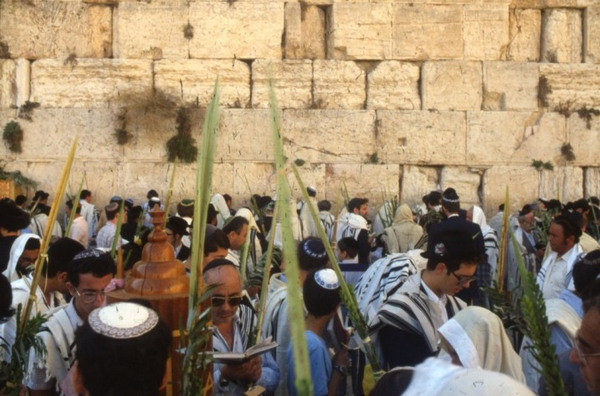
This is part of the Haftarah reading for Sukkot Shabbat Chol Hamoed which was read yesterday in synagogues all over the world. Although I attend no synagogue or other congregation where the Torah is read on Shabbat, I privately read and study each week’s Torah portion, including the Prophets, Psalms, and if applicable, the writings of the Apostles.

Although I rarely (if ever) write or teach from the Haftarah portion, I was rather struck by the words of the prophet Ezekiel and by the choice of this passage for the Shabbat that occurs during Sukkot. The words of the prophet seem rather harsh for this season of joy, relating the events of the war of Gog and Magog at the end of time, according to the commentary I found in the Tikkun. And yet there is an important reminder to attend to in this lesson.

God speaks of making His holy Name known, both among the nations and in Israel, and that His holy Name will not be desecrated any longer. In fact, He says, through the prophet, two rather interesting things:

I will not desecrate My holy Name any longer.

Then the nations will know that I am Hashem, the Holy One in Israel.

I quoted from the passage above generally to illustrate that both in most of modern Israel and in most of the rest of the world, the holy Name of God is not recognized, acknowledged, esteemed, or given any honor at all. Most of humanity does not know that “God is Hashem” (Heb. literally, “the Name”). I even mentioned recently that among many religious people, the Name of God is desecrated and not sanctified due to their (our) rude and hostile attitudes when we’re communicating with each other online. Relative to the population of our planet, only a tiny fraction of humanity currently cares about God and His Name at all.

But what peculiar things did God say in the passage from Ezekiel? He said that He will no longer desecrate His own Name. Really? I thought that we human beings were doing the desecrating, not God. The commentary for Ezekiel 39:7 in the Stone Edition Tanakh says that God will no longer desecrate His own Name by “allowing” His “people to be subjugated and humiliated.” That is very interesting because it points to the thought that by subjugating and humiliating the Jewish people (and within the context of this verse, there can be no other people group being addressed), we among the nations (including Christians) are desecrating the holy Name of God.

That’s a rather interesting thought. It goes along with this:

I will bless those who bless you, and him who curses you I will curse; and all the families of the earth shall bless themselves by you.

Genesis 12:3 (Stone Edition Chumash)

To bless Israel is to be blessed and to curse Israel is to be cursed. Furthermore, all of the families, the nations of the earth will bless themselves by you, by Israel.

This tells us something I’ve said on numerous occasions in other blog posts, that we Christians are only connected to God and we only receive the blessings of God through Israel, and specifically through Israel’s “firstborn son,” the Messiah, the King, Jesus Christ.

Every time we throw a Jew under a bus, so to speak, or insult, denigrate, or attack Israel in any way, we are causing God to curse us and canceling our ability to bless ourselves by Israel.
How could we be so blind?

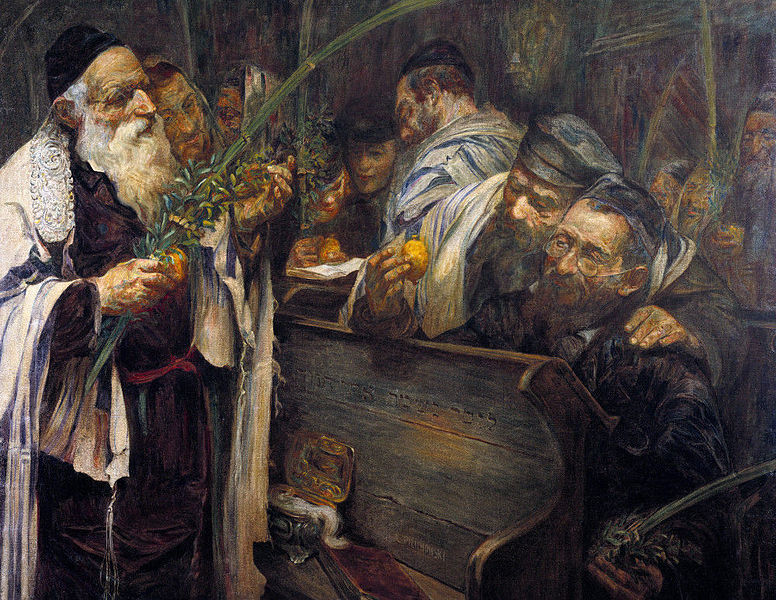
It has been said that during the festival of Sukkot, during the days of the Holy Temple in Jerusalem, that the priests would sacrifice seventy bulls, representing the nations of the earth, in order to atone for our sins. It is also said that if the Romans, representing the nations of the earth, had realized the importance of the Temple in atoning for them, for us, they (we) would never have leveled the Temple (which to this day, has not been rebuilt) and sent the vast majority of the Jews out from their land for nearly 2,000 years.

That leads us to the second rather compelling thing God said through Ezekiel: “Then the nations will know that I am Hashem, the Holy One in Israel.”

Read that last part again. “…the Holy One in Israel,” not the Holy One of Israel. This paints a picture not of possession but of belonging and of unity. God is not just the God of the Jewish people, but He resides in Israel. He has belonging in Israel. He is united with Israel.

Particularly during this time of year, the statement of God in Israel is punctuated by the following:

It shall be that all who are left over from all the nations who had invaded Jerusalem will come up every year to worship the King Hashem, Master of Legions, and to celebrate the festival of Succos. And it shall be that whichever of the families of the land does not go up to Jerusalem to bow down before the King, Hashem, Master of Legions, there will be no rain upon them. But if it is the family of Egypt that does not go up and does not come [to Jerusalem], there will be no [water] for them; the same plague will come to pass with which Hashem will strike the nations that do not go up to celebrate the festival of Succos. This will be the punishment of the Egyptians and the punishment of all the nations that will not go up to celebrate the festival of Succos.

Zechariah 14:16-19 (Stone Edition Tanakh)

In other words, after the end of all things, when God once more establishes His rule over all the world from Israel and in Holy Jerusalem, if the rest of us, all of us, want to go and properly worship the God of Israel, we will need to go and worship our God in Israel.

Really everyone, I’m not making this stuff up. It’s not some arcane and esoteric commentary from the medieval Jewish sages. It’s right there in your Bibles. Look it up if you don’t believe me. As Christians, we may not be commanded to celebrate Sukkot or any of the other festivals, either in our own lands or in Jerusalem, but the day is coming when we will be compelled to send representatives from every nation, people, and tongue, to go up to Jerusalem and pay homage to the King, and to celebrate the festival of booths with our brothers and our mentors, the Jewish people.

But after all, that’s rather appropriate I think, given what was said by James, the brother of the Master:

After they finished speaking, James replied, “Brothers, listen to me. Simeon has related how God first visited the Gentiles, to take from them a people for his name. And with this the words of the prophets agree, just as it is written,

“‘After this I will return,
and I will rebuild the tent of David that has fallen;
I will rebuild its ruins,
and I will restore it,
that the remnant of mankind may seek the Lord,
and all the Gentiles who are called by my name,
says the Lord, who makes these things known from of old.’”

Acts 15:13-18 (ESV)

James is quoting the prophet Amos (Amos 9:11-12) in regards to “David’s fallen booth,” which we might render as “sukkah,” when describing how the Gentiles will also come to worship the God of Israel. Boaz Michael, President and Founder of the educational ministry First Fruits of Zion (FFOZ) referred specifically to this teaching in the Introduction of an early manuscript of his forthcoming book (of which I’ve read an advanced copy), Tent of David: Healing the Vision of the Messianic Gentile:

The Tent of David is a reference to the Davidic kingdom, which Amos envisions will encompass even the Gentiles, non-Jews who attach themselves to Israel and to Israel’s Messiah. James reckoned that the believing Gentiles of his day were the first fruits of the fulfillment of Amos’ prophecy.

The concept of the Tent of David, central as it is to the identity of the church and the Messianic Gentile, is seriously underappreciated. The prophets envisioned a kingdom that brought myriads of Gentiles to the knowledge of the Messiah and submission to his rule. Isaiah (2:2) prophesied that people from all nations—Gentiles—would flow to Jerusalem and worship there. Later in Isaiah (11:10–12), Messiah is said to inspire Gentiles to come to him as well as regather the scattered Jewish people. Isaiah 49:6; Micah 4:2; and Zechariah 8:22–23 contain similar prophecies.

The Lord’s brother saw the potential and the prophetic necessity for Yeshua-believing Gentiles and Jews to partner in making the prophets’ vision a reality. The Messiah had come and Gentiles were coming to him in droves. Paul’s ministry was devoted to making the “obedience of faith” a reality in the Gentile community, connecting his Gentile believers to Israel and teaching them how to properly submit to the rule of King Messiah. (Mark Nanos, The Mystery of Romans (Minneapolis: Fortress, 1996), 166–238.)

Not only must we cease to desecrate God’s holy Name by desecrating His holy people, the Jewish people, we must bless them in order to receive the blessings that God has reserved for us. Part of those blessings is a commandment to worship God in Jerusalem once the Messianic reign of Jesus is fully established. Part of our role as recipients of those blessings is to support Israel so that David’s “fallen booth” can once more be built up. Boaz Michael says it this way:

Gentile believers had a unique and vital role, using their numbers and resources to empower and bless the Jewish community and spread the message of the kingdom in their own culture.

I believe that remains our role in the world and in relation to the Jewish community. We must bless them and build them up, support them in returning to Torah and in re-claiming the Messiah as their own. This is what it is to rebuild the fallen sukkah of David, so that one day, Jews, Christians, and all of the world will gather together in Jerusalem and worship under the shelter of God.

Longing for Yom Kippur

Because the day has passed, shield us by the merit of [the Patriarch Abraham] who sat [at the door of his tent] in the heat of the day [to welcome wayfarers].

Genesis 18:1 (Ne’ilah prayer)

Just prior to Ne’ilah (the concluding service of Yom Kippur), one of the Chassidic masters ascended the bimah (platform) and said tearfully, “My dear brothers and sisters! God in His infinite mercy gave us the entire month of Elul to repent, but we failed to take advantage of it. He gave us the awesome days of Rosh Hashanah, when our standing in judgment before the heavenly tribunal should have stimulated us to repent, but we neglected that opportunity. He gave us the special grace of the Ten Days of Penitence, but we let these pass too. All we have left now are a few precious moments that are propitious for forgiveness.

“The Sages of the Talmud tell us that if a person enters a marriage contract on the condition that he is a perfect tzaddik, then it is binding even if he is known to be a complete rasha (wicked person). Why? Because he may have had one moment of sincere contrition that transformed him from a complete rasha to a perfect tzaddik. “Do you hear that, my dear brothers and sisters? All it takes one brief moment of sincere contrition! We have the opportunity of that moment now. In just one moment we can emerge totally cleansed of all our sins, in a state of perfection akin to that of Adam in the Garden of Eden.”

The rabbi wept profusely and uncontrollably. “Could we be so foolish as to overlook such a rare opportunity? Let us assist one another and join in achieving sincere repentance!”

Today I shall…

…take advantage of the Divine gift of forgiveness, and make my resolutions of repentance sincere, so that the new person that emerges will be unencumbered by the burdens of the past.

-Rabbi Abraham J. Twerski
“Growing Each Day, Tishrei 10”
Aish.com

I’m not going to be fasting for Yom Kippur this year. I’ve fasted in the past. Further in the past, I’ve fasted and attended religious worship, although only elements of the Yom Kippur service were involved. A Jewish friend emailed me last night and asked if I were going to fast in solidarity with the Jewish people. I had thought about it, but I know that my family won’t be fasting and it seemed a little presumptive for me to fast, since I’m the only non-Jewish member of my immediate family.

I suppose you could say that if I fasted, I would be leading by example, but it could also boomerang back and make me look like I’m being critical of them and taking on a “holier than thou” attitude. I’m not taking the day off of work, either. I think my family will be working tomorrow as well. I suppose this is a problem, since they are Jewish and choosing not to observe the Yom Kippur fast nor going to shul to repent with the community of Israel.

Last spring, I wrote an article called “Redeeming the Heart of Israel” (Part 1 and Part 2) in which I defined the Christian relationship to the Jewish people as one of encouragement and support for Jews to return to Torah and to the ways of their fathers. That’s easier said than done when it’s your own family.

Oh, I’ve dropped subtle and not-so-subtle hints, but ultimately, the choice isn’t mine to make. It’s theirs. Each individual, Jew, Christian or anyone else, negotiates their own relationship with God. For me, my atonement is in Jesus Christ. Frankly, I believe that’s true of everyone, but not everyone perceives that truth in their lives. There are elements of both the Abrahamic and New Covenant that link both Jews and Christians, through the Messiah, to God, so Messiah is the hope for all of us.

But since I am not Jewish, the particulars of the Sinai covenant do not have blessings for me. Without a Jewish “lived” experience, I’m unsure how to encourage my family to be who they are and maybe it’s not my place to try. But then, when you love someone, you want what’s best for them; you want what will make them happy.

God opens His Hand and satisfies the desires of every living thing (Psalm 145:16). My desire is for my family to return to the mitzvot; return more fully to the Torah, and to be the people God made them to be; Jewish people. I apologize and regret anything I may have said or done that has been to the contrary. I pray to God that in the coming year, He may help turn the hearts of all His Jewish children back to Him and help we Christians be more compassionate of His Chosen People, that we may stand at their side and together, all acknowledge that God is One. On that day, may all Christians fast on Yom Kippur in solidarity with their Jewish friends and family.

May the Messiah come soon and in our days, and may you be sealed for a good year in the book of life.

To honor the most Holy day for the Jewish people, I will not present a “morning meditation” on Wednesday which is Yom Kippur (begins at sundown on Tuesday). My next blog post will be Thursday morning.

What’s Important Now?

When you try to help others and they don’t listen to you, you have a choice. You can say “it’s impossible to help them” and blame them for not being more open. Or you can view the situation as your own lack of proficiency at influencing and motivating others.

A blame-free attitude is the best path to choose. This can motivate you to develop your skills and talents on how to persuade, influence, and motivate. It could be that what you said is exactly what this person needs. As you enhance your presentation skills, in the future you will influence others to follow your beneficial suggestions.

-Rabbi Zelig Pliskin
“Develop your Motivational Skills”
Daily Lift #570
Aish.com

Oh my! This could be applied to every blogger who has ever tried to convince (often in vain) an audience why their point of view is correct and why his/her audience should change their minds and adopt the blogger’s perspective/belief/faith/whatever.

Really, how many blogs and how many comments on those blogs are specifically dedicated to the blogger blaming the audience (or at least those people in the audience who disagree with him/her) for being blockheaded, stubborn, ignorant, and “impossible to help?”

More than I can count, I’m sure.

So what should we do with this piece of advice? Should we redouble our efforts as bloggers, assume that our presentation skills are lacking somehow, and focus on how better to “influence others to follow our beneficial suggestions” in future blog posts?

Is Rabbi Pliskin’s advice here the answer?

A person who feels joy when performing mitzvahs will forget all his suffering and misfortunes. In comparison to becoming closer to the Almighty, of what import is pettiness and trivialities?

A person who experiences joy in doing good deeds will feel greater joy than a person who finds a large sum of money. Why should a person expend his efforts trying to find happiness in areas where the basis is transient and ultimately meaningless, when he has a far better alternative?

I suspect it is the answer, if we were to take Rabbi Pliskin seriously and actually apply his suggestion to our lives in a consistent manner. Unfortunately, we who continue to participate in the blogosphere, either as active bloggers or the observers who don’t blog but who frequently comment on the blogs of others, take ourselves way too seriously (me included). This is true in spite of the fact that there are probably well over 181 million blogs in the world right now. As far as U.S. bloggers are concerned, our “right” to have our say and express our opinion seems to have reached crazy, chaotic, out-of-control proportions, thanks to cheap, high-speed Internet access and the ability to create a blog for absolutely no cost in just a few minutes.

So what’s the answer, what’s the answer, what’s the answer?

I’d like to say “turn it all off,” but I know how difficult that would be in my own case, so I can hardly make that suggestion to others. But Rabbi Noah Weinberg, of blessed memory, makes that exact suggestion, at least in part.

Imagine someone calling you an idiot. Or that you’re stuck in traffic. Or that the boss is hassling you.

When this happens, you can become angry and caught up in the pettiness of life.

The remedy? Take a moment to go outside and walk under the stars. When you witness the vastness of the universe, it puts things into perspective. When you come back inside, you won’t be starry-eyed. You’ll be energized. You’ll say, I’m sorry. Let’s forget it and move on.

Awe helps release you from the limits of the body. You are suddenly in a world of different dimensions, transported into the eternity of beauty, power, majesty. You’ve got an expanded perspective. It’s no longer me versus you. We’re all one. So why be aggravated?

Awe carries us beyond ourselves. In times of war and tragedy – as well as prosperity and joy – people get “bigger.” They treat each other nicer. Pettiness is forgotten.

Anytime you’re in a rut, blast yourself out. Take a walk under the stars. This will unleash the power. You cannot be bored or petty when you are in awe.

The ultimate source of awe is, of course, God. Since we often can’t directly experience God, we usually must “settle” for experiencing the reminders of Him that He has left for us; that is, His universe, His creation.

It’s ironic that when we compare ourselves to the vastness of God and His Glory, we feel very small, and humbled, and yet at the same time, grateful and even exhilarated. We don’t feel jealous that God is so big and we are so tiny. We don’t resent God for being omnipotent while we are so powerless.

And yet let another human being or another group of people claim some heritage, some experience, some relationship that we ourselves don’t have access to, and suddenly we’re deeply envious, hurt, and outraged. We feel victimized. We feel as if our “rights” have been violated. Why can’t we have the same access to what “those people” claim is uniquely theirs?

Yes, of course I’m talking about the current (and seemingly endless) debate between certain corners of Christianity which can be thought of as “Hebrew Roots” or more specifically “One Law” and the various Judaisms, including “Messianic Judaism.”  The struggle is fueled by those who find in the Bible the justification for “One Law” Christians to have the “right” to everything that God granted Israel as a perpetual gift at Sinai, which is the heritage of every Jew on earth today. Naturally, when Jewish people hear such rhetoric, they tend to “push back.”

I suppose this too is an “issue” that we people who were born and raised in the West and specifically in the U.S. have to deal with, since “our rights” are all we tend to think about (or is that “our entitlements?”) relative to what other people have that we want.

But what should we have learned by now as people of faith? What did Jesus teach? To claim our rights? To take what wasn’t given to us? What did he teach that we seem to be forgetting?

“When the Son of Man comes in his glory, and all the angels with him, then he will sit on his glorious throne. Before him will be gathered all the nations, and he will separate people one from another as a shepherd separates the sheep from the goats. And he will place the sheep on his right, but the goats on the left. Then the King will say to those on his right, ‘Come, you who are blessed by my Father, inherit the kingdom prepared for you from the foundation of the world. For I was hungry and you gave me food, I was thirsty and you gave me drink, I was a stranger and you welcomed me, I was naked and you clothed me, I was sick and you visited me, I was in prison and you came to me.’ Then the righteous will answer him, saying, ‘Lord, when did we see you hungry and feed you, or thirsty and give you drink? And when did we see you a stranger and welcome you, or naked and clothe you? And when did we see you sick or in prison and visit you?’ And the King will answer them, ‘Truly, I say to you, as you did it to one of the least of these my brothers, you did it to me.’ –Matthew 25:31-40 (ESV)

Did Jesus “teach Torah?” Absolutely! What else would a Second Temple period itinerant Rabbi teach to the “lost sheep of Israel?” Did he expect his disciples to take his teachings and pass them on through imitation and active “preaching?” Absolutely! That’s what disciples do. Do we see Jesus overtly teaching Jewish covenant signs and identity markers to his Jewish audience? Not as such, since each Jew in Roman-occupied “Palestine” would have been raised from birth to know all these things. In other words, for a Jew in that place at that time,  knowing how to tie tzitzit would have been a “no-brainer.”

So what did he teach and what did he expect his Jewish disciples to pass on to the disciples from the nations? (Matthew 28:18-20) What were his most important commandments?

A new commandment I give to you, that you love one another: just as I have loved you, you also are to love one another. –John 13:34 (ESV)

Jesus replied: “‘Love the Lord your God with all your heart and with all your soul and with all your mind.’ This is the first and greatest commandment. And the second is like it: ‘Love your neighbor as yourself.’ All the Law and the Prophets hang on these two commandments.” –Matthew 22:37-40 (ESV)

That takes us right back to what Rabbi Pliskin said earlier:

A person who feels joy when performing mitzvahs will forget all his suffering and misfortunes. In comparison to becoming closer to the Almighty, of what import is pettiness and trivialities?

It’s pointless to fuss and argue over God and His special relationship with the Jewish people. After all, God gave the nations of the world the most precious gift possible; the life of His one and only son, the unique one, the Messiah, who died so that our sins could be forgiven and who lived so that we could have eternal life with the Father as His own sons and daughters.

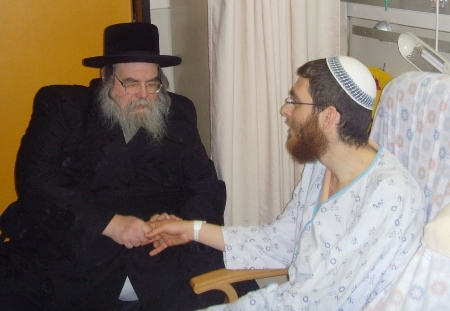
The next time someone says something outrageous about religion (or anything else) on the Internet and you want to fight back and stand up for your rights, step away from the keyboard. Go outside. Experience the awesomeness of a thunderstorm or the magnificence of the starry, starry night. Perform a mitzvah such as visiting a sick friend in the hospital or donating a few canned goods to your local food bank. Retire into a quiet place and pray, turning your heart away from your own small concerns or hurt feelings and turning your spirit toward God.

After you have done that, ask yourself, “What’s important now?”

Do I need to take my own advice? Yes. Fortunately, Shabbat is coming up. When sundown approaches, I can put away the Internet and return my heart and spirit more fully to the God of all creation, may His Name be blessed eternally and without end.

Where Will The King Lead Me?

In this week’s reading, G-d explains to Moshe how his successors will be chosen. Hashem Himself will choose the leader, “who will go out in front of them, and who will come in before them, and they will go out and come in, and the congregation of G-d will not be like sheep without a shepherd.”

If you ask most people what they think is the ideal form of government, they will probably choose democracy. When compared to communism, dictatorships, monarchies and oligarchies, we see their point. But is it really such a great choice? In the United States, tens of millions of dollars will be wasted this year to convince millions of people, most of them woefully ignorant of the candidates, issues, and policy choices, to pull one lever versus another — based entirely upon advertisements which willfully distort the opponent’s record and glorify the candidate’s own, and “news” reports whose partiality is obvious. If that is insufficient to give you second thoughts, one word: Egypt. That’s the country that just selected the Muslim Brotherhood, a “suspected” supporter of terrorism according to the US, to lead it. Gaza similarly elected Hamas, a murderous gang unquestionably in the same category. And for that matter, Hitler ysv”z was elected democratically as well.

-Rabbi Yaakov Menken
“Sign of a True Leader”
Commentary on Torah Portion Pinchas
ProjectGenesis.org

In spite of the quote above, this “morning meditation” isn’t particularly about politics. In fact, it’s related to a question I asked just yesterday about just how “Jewish” the Jewish King will be upon his return?

In the U.S., we’re not that fond of kings. In fact, our nation started when we rejected a King and “taxation without representation” in favor of a Republic (technically, our nation didn’t begin as a Democracy). While some kings can be benign leaders and have the best interests of the citizens at heart, most royalty, when they wield real power (as opposed to say, the Monarchy in the U.K.), have a tendency to become despots and to virtually enslave the populace of the Kingdom.

That’s why it’s so interesting that we tend to be eager to rely on human leaders, since invariably and even under the best of circumstances, most  of them will fail us (but, of course, what choice do we have?).

Rabbi Menken’s commentary on Pinchas illustrates this very well and provides a compelling metaphor.

Interestingly enough, the Mishnah [Sotah 9:15] says that one of the signs of the “footsteps of the Messiah” is that “the face of the generation will be like the face of a dog.” There are many explanations as to what this means, but one of them is that the leadership will lead in the manner that a dog leads its owner. The dog bounds ahead, but is limited, leashed by the owner. When they come to a street corner, the dog may choose to go in one direction, only to find the owner choosing a different one. Moments later, where is the dog? Out in front of its owner once again, “leading” in the new direction. That’s what democracy looks like!

The Avnei Azel explains that in order to be a true leader one must lead, rather than being driven by polls. The Jewish Nation must be a meritocracy, with a leader capable of uplifting the people, rather than being dragged down by them. He must “go before them” and lead the congregation, rather than looking over his shoulder to see which way people want to go, and then fulfilling their desires. Look how much abuse Moshe had to put up with because he wouldn’t do whatever the congregation wanted! And that’s what made him, although he was “the most humble of men,” also an unparalleled leader.

The one thing Rabbi Menken didn’t mention was that, in the ancient past, Israel was the only fully functioning Theocracy that ever existed on Earth; a nation whose only King was God. But when Israel demanded a human King so that they could be like all the other nations, Saul was anointed first and then David. Both were human and, for all their greatness, both were flawed.

Now it’s the inheritor of David’s throne we of the nations are all waiting for, not just Israel, for he is the only just King, the one from God, the Messiah. He is the King who not only leads and who we will all follow, but the only King who leads with fairness, justice, and mercy, not favoring some party’s or organization’s political or social imperatives, but the just rule and law of the One who made us, the Author of existence, the lover of our souls, and the Creator of all life and light.

That Author even signed His creation.

When He had finished His world, complete and whole, each thing in its place, the earth below and the heavens beyond,

…it was then that the Artist signed His holy name, with a stillness within the busy movement, a vacuum in time, so that the Infinite Light could kiss the finite world and enter within. And He called it Shabbat.

In each thing there is a Shabbat, an opening that allows life to enter, a desire to receive from Beyond. In each being there is a sense of wonder, of knowing that there is something greater. Of knowing something it will never truly know. And with that perception it receives life, as it opens itself for the Infinite to enter.

-Rabbi Tzvi Freeman
“The Autograph”
Based on letters and talks of the Rebbe
Rabbi M. M. Schneerson
Chabad.org

Here’s where I struggle in following the Jewish King. The Shabbat is supposed to be only for the Jews, and yet observing the Shabbat is also an acknowledgement that God is Creator, and a foretaste of the Messianic Age. Both the acknowledgement and the foretaste affect not only the Jews, but all mankind. Should not all humanity recognize that God created the Universe? So how can the Shabbat be only for the Jews? What of the Gentiles who also cling to Messiah?

It’s another mystery. In Messianic days, will the Jews truly rest while the non-Jews continue to labor and suffer in order to maintain absolute distinctiveness between Israel and the nations? That hardly sounds like God’s justice and mercy, but what do I know?

Blessed is the man who does this,
and the son of man who holds it fast,
who keeps the Sabbath, not profaning it,
and keeps his hand from doing any evil.”

Let not the foreigner who has joined himself to the Lord say,
“The Lord will surely separate me from his people”;
and let not the eunuch say,
“Behold, I am a dry tree.”
For thus says the Lord:
“To the eunuchs who keep my Sabbaths,
who choose the things that please me
and hold fast my covenant,
I will give in my house and within my walls
a monument and a name
better than sons and daughters;
I will give them an everlasting name
that shall not be cut off.

“And the foreigners who join themselves to the Lord,
to minister to him, to love the name of the Lord,
and to be his servants,
everyone who keeps the Sabbath and does not profane it,
and holds fast my covenant—
these I will bring to my holy mountain,
and make them joyful in my house of prayer;
their burnt offerings and their sacrifices
will be accepted on my altar;
for my house shall be called a house of prayer
for all peoples.”
The Lord God,
who gathers the outcasts of Israel, declares,
“I will gather yet others to him
besides those already gathered.” –Isaiah 56:2-8 (ESV)

But if I’m not to keep the Shabbat (and don’t worry, I haven’t been), even in future days, I must be less than a foreigner and a eunuch. If so, what does the King want with me and why does he say that I am to pick up my cross and follow him? Follow him where? (Luke 9:23) If the Messianic covenant and the writings of the Apostles mean anything, I suppose I’ll find out someday.

Naso: Bridegroom of the Sabbath

The Torah portion of Naso discusses the law of Sotah: (Bamidbar 5:11-31) When a husband warns his wife not to be alone with a certain man and she disobeys him, then even if she did not sin with that man, the very fact that she was alone with him causes her to become a sotah — a woman “straying from the path of modesty.” (Rashi, ibid., verse 12.)

The relationship between husband and wife in this world is analogous to the relationship between the A-lmighty and the Jewish people, who are deemed “husband and wife.” (See Likkutei Sichos , Vol. III, p. 984.) Thus all the laws of sotah apply to the relationship between G-d and the Jews.

The “warning” that G-d issues to the Jewish people is the command: “You shall have no other gods before Me.” (Shmos 20:3.) This is similar to the warning: “do not conceal yourself with a certain man.”

The Chassidic Dimension
Commentary on Torah Portion Naso
Based on Likkutei Sichos, Vol. IV, pp. 1032-1034
and the teachings of the Lubavitcher Rebbe
Rabbi Menachem M. Schneerson
Chabad.org

The Bible is replete with marriage metaphors, usually contrasting God and Israel as husband and wife. We also have a great deal of similar imagery in the Apostolic Scriptures depicting Jesus as husband and the church as his bride.

Wives, submit to your own husbands, as to the Lord. For the husband is the head of the wife even as Christ is the head of the church, his body, and is himself its Savior. Now as the church submits to Christ, so also wives should submit in everything to their husbands.

Husbands, love your wives, as Christ loved the church and gave himself up for her, that he might sanctify her, having cleansed her by the washing of water with the word, so that he might present the church to himself in splendor, without spot or wrinkle or any such thing, that she might be holy and without blemish. –Ephesians 5:22-27 (ESV)

Many Christian women take great comfort in these metaphors but more than a few men struggle with the role of “bride” relative to the Messiah. But let’s not be incredibly literal, since the Bible writers are using metaphors to describe a level of close intimacy between the Messiah and his disciples that can only be likened with the closeness and love experienced by two people who are intertwined by devotion. But Israel and the church aren’t the only “bride” metaphors we know of.

The chorus of the classic Sabbath hymn Lekhah Dodi states in part:

Let’s go, my beloved, to meet the bride,
and let us welcome the presence of Shabbat.

But in this instance, if the Shabbat is the bride, who is the bridegroom? The traditional Jewish tradition casts God in that role, but we also have this:

Or have you not read in the Law how on the Sabbath the priests in the temple profane the Sabbath and are guiltless? I tell you, something greater than the temple is here. And if you had known what this means, ‘I desire mercy, and not sacrifice,’ you would not have condemned the guiltless. For the Son of Man is lord of the Sabbath.” –Matthew 12:5-8 (ESV)

The oldest text we have for this passage is in Greek, but if we try to “retrofit” these verses back into the Hebrew thoughts of the Jewish writer of Matthew, when he says “the Son of Man is lord of the Sabbath,” what word did he use for “lord?”

“Adon” seems to be fitting under the circumstances, but a week ago, I heard a different interpretation by a young Jewish scholar (yes, I’m “borrowing” this from you, Nick) who offered a sort of midrash on this topic.

The word Baal is derived from the common Hebrew verb (ba’al), own, rule, possess. The verb is even used to indicate the husband’s relationship to his wife (Deuteronomy 24:1) and is applied to the relationship between God and man, “For your husband (ba’al) is your Maker…” (Isaiah 54:5).

-quoted from the
abarim-publications.com website

ShabbatBaal can mean both “lord” and “husband” but by deliberately applying the latter meaning, we can discover something about the relationship between Messiah and the Shabbat as well as something about the Messiah and us.

When we read the passage as “‘lord’ of the Shabbat”, we think of someone in charge or in command or with authority. These are very powerful images, but they don’t fit very well with how a loving groom should be approaching his bride. However, if we say, “‘husband’ of the Shabbat,” we completely change the meaning. Suddenly, we have an intimate, warm, caring interaction between the Messiah and the Shabbat.

Some Jewish sages state that the Shabbat is actually a small taste of the life in the world to come; Paradise, if you will. Creating the picture of a husband, the Messiah, welcoming his beloved bride, the Shabbat, into his arms, we can see something of the peace we will experience when he finally returns and fixes our broken world and our broken hearts.

He will wipe away every tear from their eyes, and death shall be no more, neither shall there be mourning, nor crying, nor pain anymore. –Revelation 21:4 (ESV)

This also fits very well back into what we saw in Ephesians 5 in comparing Jesus and the church with a husband and wife.

I know I’m being more than a little poetic here, but I take a certain amount of comfort in applying the lessons of both this week’s Torah Portion and the Shabbat to my walk of faith, and realize that Shabbat is not only a way for God to comfort us in the midst of our weekly trials, but His promise that He will always love us and, through the Messiah, grant us eternal peace.

Why should we stray after others to be alone with them when we can be the bride of the Moshiach and receive boundless intimacy with our bridegroom.

Good Shabbos.


Shavuot: An Oasis in the Desert

Torah at SinaiOur retelling of the Exodus on Passover ends when we close the Haggadah text. But when did the story really end?

You might think that the story ended when the Jewish people left Egypt on the 15th day of the Jewish month of Nissan, 1313 BCE. On that day the Jews were freed from the land where they had been enslaved. But it was not so easy to leave slavery behind…

-Rochel Chein
“When Does the Passover Story End?”
Chabad.org

It may seem strange to talk about Passover in a blog post about Shavuot, but there’s a connection. The most obvious link between Passover and Shavuot is the Counting of the Omer which begins after the first full day of Passover and ends, 49 days later, on Shavuot. While this may not seem to mean a lot to most Christians, I’ve previously lamented about why Christians don’t count the Omer. It seems like the giving of the Torah at Sinai and the giving of the Spirit in Jerusalem are parallel events or on some mystical and cosmic level, even the same event. It seems it would make good sense for both Jews and Christians to be doing a countdown and for very similar reasons.

But is arriving at Shavuot and receiving the Torah the final end of Passover for the Jews? Rochel Chein’s commentary continues.

Now the Jews had the Torah, but they were still homeless and unable to fulfill many of its laws. G‑d used four expressions of redemption to promise Moses that He would redeem the Jews from Egypt. (We commemorate them by drinking four cups of wine at the Passover Seder.) But the four expressions were followed by a fifth promise (Exodus 6:8), “And I will bring you to the land…”

Similarly, G-d told Moses that, “I have descended to rescue them from the hand[s] of the Egyptians and to bring them up from that land to a good and spacious land, to a land flowing with milk and honey” (Exodus 3:8).

Surely it’s safe to say that the Exodus narrative ends when the Jews enter the Promised Land after 40 years in the desert?

I’ve previously written how each year we have numerous times of renewal if we observe the festivals on the Jewish calendar, when we can not only remember the great acts of God for the sake of Israel, but live them as if they were happening for the first time, becoming new souls again as the Torah and the Spirit fill our emptiness. But here we see that this never ending cycle is not just a series of annual events. Perhaps what we are experiencing is eternal.

But the first few centuries after the Jewish people entered Israel were tumultuous, and it was only when King Solomon ruled that there was true peace, and “Each man sat under his vine and his fig tree.”

Support for the idea that the Exodus concluded with the building of Solomon’s Temple can be found in the famous “Dayeinu” song in the Passover Hagaddah reader. The song reviews all the miracles that G‑d did for the Jews after they were saved from Egypt, concluding with the building of the Holy Temple.

But Solomon’s reign ended, and it was followed by eras of civil strife, the destruction of the first and second Holy Temples, and the dispersal of the Jewish nation in exile. We end the Seder with the prayer, “Next year in Jerusalem,” that we may speedily merit the final redemption and the building of the third Temple.

In a sense, saying “next year in Jerusalem” is a cry to God to send the Messiah. In a sense, each year we live on earth, even with the Torah and the Spirit to comfort and guide us, we are still wandering in the desert. Passover has never really ended. We are all still walking away from Egypt and toward the final redemption of the world one step at a time, one day at a time, one year at a time.

Shavuot is one of those steps that we take each year but as we see, it’s not the final step, nor is it the “end of Passover.” We have the Torah and we have the Spirit, but we are still here and it is still now and the Messiah has not yet returned. The world is unredeemed and there is a longing for God to restore the garden that was lost. When will God return the Messiah to us?

According to Mrs. Chein, Mitzrayim, the Hebrew name for Egypt, is similar to the word meitzarim, which means “boundaries” or “limitations.” We exist in a limited world and we are bound by a broken Creation and our flesh and blood frailty. Shavuot isn’t the end of the Passover or the Exodus wanderings, it’s just a milestone along the way. Yet it is a precious and wonderful milestone because it, and the Shabbat, are foretastes of the final Shabbat, the full redemption, the world to come.

It’s an oasis in the desert where we may rest for a time. At the conclusion of the festival, we rise up, and move on, following our pillar of fire by night and the cloud by day.