Tag Archives: Talmud

Randomly Covering Territory

Do you only believe when you can see with your eyes? When your prayers are answered and miracles carry you on their wings? Or do you also believe when circumstances fly in your face?

If it touches you to the core, if it is a belief you truly own, if it is as real to you as life itself, then it does not change.

And if it does not change, then you are bound up with the true essence of the One who does not change.

-Rabbi Tzvi Freeman
“Faith in the Dark”
Based on letters and talks of the Rebbe
Rabbi M. M. Schneerson
Chabad.org

I’ve said before that I don’t consider myself the “sharpest knife in the drawer.” In the world of faith, I think I have plenty of company, though. For instance, I don’t think most Christians consider the idea that there are two basic levels of knowledge in our religion (or probably most religions): the common worshiper’s view and the scholar’s view. For instance, New Testament scholar Larry Hurtado recently posted on his blog an article called An “Early High Christology”. I mean really. What in the world is high Christology and what’s the difference between high vs. low Christology?

I’ll let you click the links I provided since my discussion today isn’t focused on those topics. I’m just including them to illustrate that most people in the church don’t have the same view of God, Jesus, and the Bible as do theologians and Bible scholars. These people talk a different language than we do and conceptualize the Word of God in ways most of us can’t even imagine. I’m not even sure most of them could communicate their ideas and perspectives to a crowd of “regular Christians” at their local neighborhood church in any successful way.

Which is kind of a shame, because the information these people work with would almost assuredly challenge and perhaps even change the viewpoint and direction of most believers in most churches if we had access to it in a comprehensible way.

Well, they do publish popular books, some of them anyway, but most Christians don’t take advantage of that material (let alone anything more scholarly, such as a Ph.D Thesis). Most people who sit in the pew on Sunday are content to believe that they are being adequately “fed” by their local Pastor, who no doubt is doing a good job, but may feel constrained to offer only the “food” he or she believes the audience will comfortably tolerate.

I occasionally get “dinged” for including non-Biblical sources in my writings since they are, after all, non-Biblical and thus cannot carry the same weight of authority as the scriptures in the Bible. But I’m no Bible scholar and I do love a good metaphor, so I include things like Rabbinic midrash, Chassidic tales, and commentary about Kabbalah, largely for their cultural, metaphorical and symbolic meaning. I certainly can’t discuss them from the perspective of a Pastor, Rabbi, or someone else with an advanced education in Theology or Divinity.

That doesn’t keep me from being curious though, and curiosity often leads me down interesting if troublesome paths.

Here’s one such path:

Numbers 22-24: While the Numbers text itself is inconclusive, both rabbinic legend and the Apostolic Scriptures clearly paint Balaam as wicked through and through.

“The Error of Balaam”
Commentary on Torah Portion Balak
First Fruits of Zion

Um, what was that? The Torah was inconclusive about the nature and character of the “wizard” Balaam, but both the New Testament and midrashim agreed that he was evil? That seems like an odd combination. Of course, it’s not that the New Testament writers and the authors of midrash expected to agree with each other, but in this case, strangely enough, they did. Here’s the New Testament commentary on Balaam.

Forsaking the right way, they have gone astray. They have followed the way of Balaam, the son of Beor, who loved gain from wrongdoing, but was rebuked for his own transgression; a speechless donkey spoke with human voice and restrained the prophet’s madness. –2 Peter 2:15-16 (ESV)

But these people blaspheme all that they do not understand, and they are destroyed by all that they, like unreasoning animals, understand instinctively. Woe to them! For they walked in the way of Cain and abandoned themselves for the sake of gain to Balaam’s error and perished in Korah’s rebellion. –Jude 1:10-11 (ESV)

Admittedly, the opinions being rendered about Balaam in the New Testament text are rather brief. But what about the midrash?

Some say Balaam of Pethor (פתור) was called a money-changer (petor, פתור) because the kings of the nations rushed to him for counsel in the same way that people rush to a money-changer to change their currency. –Numbers Rabbah 20:7

This may not be the only Rabbinic commentary on Balaam, but it’s the only one I have access to due to my limited knowledge in this area.

Am I saying that we can compare the New Testament and Talmud, for example? Probably not, or at least, only very, very carefully, with lots of caveats attached (as a side note, can the New Testament and the later Rabbinic commentaries both be considered midrash?). On the other hand, there is just so much we don’t truly understand about the Bible, and there are so many other sources of information that we have access to that may provide additional perspective. We just need to be able to clearly delineate between the Bible and other information sources. We also need to remember that we don’t have to be so binary in our thinking that we always have to say, “Bible good! Everything else, bad!”

After pursuing my personal faith issues for the past few years, I’m slowly coming to the conclusion that the Bible doesn’t always tell us the “whole story.” Both Christian and Jewish scholars and sages have spent the past several thousand years trying to understand the mind of God by delving into the Word of God. They’ve produced an untold amount of commentary that their audiences judge to be of greater or lesser value in defining the faith. The fact that gentlemen like Larry Hurtado even exist as New Testament scholars tells us there is more to be learned about the New Testament than we already know or think we know. I’m sure the same is true for the rest of the Bible.

I’ve previously mentioned last Thursday’s conversation between me, my son, and two other believers that lead to quite an interesting theological discussion. One of the things I didn’t mention was that David asked me what the minimum amount of knowledge was that would still qualify a person as a believer in God and a disciple of the Master. I don’t recall the details of my answer, but I don’t doubt it’s a good deal less than what the scholars, sages, and experts possess.

I suppose we could limit ourselves to knowing just the basics.

And one of the scribes came up and heard them disputing with one another, and seeing that he answered them well, asked him, “Which commandment is the most important of all?” Jesus answered, “The most important is, ‘Hear, O Israel: The Lord our God, the Lord is one. And you shall love the Lord your God with all your heart and with all your soul and with all your mind and with all your strength.’ The second is this: ‘You shall love your neighbor as yourself.’ There is no other commandment greater than these.” –Mark 12:28-31 (ESV)

But people are curious creatures. We very rarely hold ourselves back to the basics, well, some of us, anyway. We want to know more and we push our limits. We push the limits of religious propriety, asking questions the church doesn’t want to answer. We push our intellectual limits, asking questions that have answers we may not have the ability to understand. We push the limits of what are considered viable information sources and methods of study and what are not, at least by those folks who are “in the know,” such as Hurtado or Timothy George.

But the alternative is to shut up, don’t ask questions, and do as we’re told. For some people, that’s the entire scope of their faith. For others, for people like me, that would be the end of my faith. It would die for lack of nourishment.

So I’ll probably keep asking questions, being rebuffed, offending people, entering areas that are “off limits” to mere mortals and those of us with a limited religious education (and IQ), and generally stubbing my toe every other step.

I feel like a person who is trapped in an endless, man-sized maze looking for the cheese. Problem is, the maze is completely blacked out. I can’t see a thing. So the only way to discover my path is to bump into a lot of walls as if I were a human Roomba. My path seems completely random. Hopefully, I’ll cover the necessary territory.

What else can I do?

You don’t need to move mountains.
You just need to know where to aim.
You can transform an entire family forever with one flickering Shabbat candle of one little girl.

-Rabbi Tzvi Freeman
“A Small Candle”
Based on letters and talks of the Rebbe
Rabbi M. M. Schneerson
Chabad.org

I recently read a very interesting blog post written by Jacob Fronczak called Every man is not a theologian which seems to give me a sort of “permission” not to pretend I know what a theologian knows. You might want to have a look and see what you think.

God as a Teacher

Talmud StudyThe metaphor of God as teacher and human beings as His pupils, a metaphor that gains prominence in the rabbinic period, is also an apt means of describing the covenantal relationship. God as teacher encourages His pupils to think for themselves and assume intellectual responsibility for the way Torah is to be understood and practiced. The fact that the rabbis not only declared that the age of prophecy had ended, but insisted also that the talmudic sage ranked higher than the prophet, seems to suggest that the community has a higher appreciation of its covenantal relationship to God when it sees Him as its teacher than when it sees Him as an authoritarian voice dictating His will through the prophets.

God as a loving husband and the devoted teacher do not require reward and punishment to play a significant role in the covenantal relationship. They are not frameworks of absolute power of one covenantal partner over the other, but frameworks in which the integrity of both partners is recognized and the human partner is enabled to feel personal dignity and to develop the capabilities of responsibility.

-Rabbi David Hartman
from the Introduction of his book
A Living Covenant: The Innovative Spirit in Traditional Judaism

Are you a God-fearing man, Senator? That is such a strange phrase. I’ve always thought of God as a teacher; a bringer of light, wisdom, and understanding.

-Erik Lehnsheer/Magneto (played by Ian McKellen)
X-Men (2000)

I just did two strange and different things, at least from a Christian point of view. I used Rabbi Hartman’s quote to describe God as primarily a teacher, and I quoted a comic book movie to do the same thing. Strange. Interestingly enough, the character of Eric (Magneto) Lehnsheer is portrayed as a Jewish Holocaust survivor, so his perspectives may have a place in today’s “meditation.”

It’s not as if Judaism doesn’t see God as a Judge, but He is not only a Judge (and I need to be careful here, since I’ve mischaracterized aspects of Judaism before). The Bible is replete with “marriage metaphors” in which God is portrayed as a loving husband to a sometimes faithless Israel. While this metaphor is occasionally used by Christianity to justify the supersessionist view that the church (the loyal wife) has replaced Israel (the faithless wife), in fact, God has also said that He will take back Israel when she turns back to Him and that He will never permanently abandon her.

However, I’m less interested in discussing the topic of supersessionism and more interested in exploring God as our teacher. As Rabbi Hartman seems to say, this casts God in a completely different light than the one by which we are accustomed to viewing Him. It also nicely fits into how Judaism sees the role of human authority within the realm of faith. I continue now with Hartman as he speaks in his book’s Introduction.

When Christian ministers ask me at what age or on what occasion I received my calling as a rabbi, I often find myself hesitating over how to respond. If I answer it began when I entered yeshivah at age five to study Bible and Talmud, they might believe that I am likening myself to Jeremiah, who received his prophetic calling as a child. If I tell them that I never received a calling but was ordained after my teachers concluded that I was intellectually capable of rendering competent decisions regarding what is prohibited and permitted by Jewish law, they might be shocked at meeting a modern version of a Pharisee. They could perhaps find confirmation for the allegation that legalism had replaced the living guidance of God.

…Yet, as a traditional halakhic Jew, I know that a rabbi is a teacher whose spiritual role is premised on possession of an intellectual understanding of the Jewish tradition and commitment to the Jewish people. A direct call from God is not required to legitimize activity as a rabbi in Israel.

I can only imagine that the confusion Rabbi Hartman expects of the Christian ministers he references is reflected in the minds and hearts of any Christians reading this missive. Indeed, Judaism is often seen as a legalistic, works-based, and spiritually “dead” faith for exactly the reasons Rabbi Hartman states. And yet he also says that a “rabbi is a teacher whose spiritual role is premised on possession of an intellect understanding of the Jewish tradition,” presupposing that rabbis actually have spiritual roles in Judaism. So where is the spirituality?

What is spirituality?

According to Wikipedia, spirituality “refers to an ultimate or an alleged immaterial reality; an inner path enabling a person to discover the essence of his/her being; or the “deepest values and meanings by which people live.” That’s probably not a very helpful definition, but spirituality is difficult to define, largely because the spirit cannot be conclusively demonstrated in a material world.

In some branches of Christianity, spirituality is considered synonymous with emotion, or more specifically, an emotional experience that is inspired by a spiritual encounter with God (or one that bypasses God and focuses specifically on Jesus Christ). We tend to think of spirituality as a “feeling.” Most Christians don’t tend to relate to spirituality as a thought or as something that happens when we study and learn from a teacher or rabbi.

And yet, Rabbi Hartman seems to be saying that learning Torah and Talmud is a spiritual experience. I don’t know if that’s what he’s actually saying, but I think I can make a case for it. I think that in Judaism (this is just my opinion, of course), the sense of a Jew’s identity is inexorably tied to Jewish history, traditional Jewish thought, Talmudic study, midrash, halachah, and understanding. You might even think of the passionate debates that occur in yeshivah as a metaphor for a Jew “wrestling with God.” (Genesis 32:22-32)

The concept of wrestling or debating with God may seem alien and even sacrilegious to a Christian, even though we have ample examples from the Bible. Look at Abraham boldly debating with God over the fate of Sodom and Gomorrah (Genesis 18:16-33) and Moses pleading with God to spare the Children of Israel after the sin of the Golden Calf. (Exodus 32:9-14). Can a Christian even understand this the way a Jew can?

That said, Rabbi Hartman doesn’t see a complete dissonance between Jews and Christians.

…those early experiences were given profound intellectual and philosophical support in the years of my graduate study at Fordham University. Living with the Jesuits, sensing the intellectual and spiritual integrity of my teachers, observing how our different faiths were reciprocally enriched through our encounters – these were experiences that I could not ignore in developing my own appreciation of what it is to stand as a covenantal Jew before God.

I can’t say that all Jews will agree with Rabbi Hartman’s statements and I’m sure not all Christians will either. We see, based on everything I’ve written and quoted up to this point, that Christianity and Judaism conceptualize themselves and their relationship with God on a spiritual level in fundamentally different ways. We see God and how we are supposed to connect to Him from two totally different directions. And yet there are the occasional glimmers when, if we try hard enough, we just might be able to understand that we have a few things in common, as Rabbi Hartman pointed out in his description of his time among the Jesuits.

But God is One. He is the God of the Jews and the nations. He makes the rains descend on not only Jews and Christians, but on the righteous and unrighteous alike. He sent His “only begotten son” “not wishing that any should perish, but that all should reach repentance.” (2 Peter 3:0 ESV)

If God is our teacher, is He providing two wholly dissimilar lessons, one for the Jews and the other for everyone else? Christianity doesn’t think so, but their (our) solution is to replace the original lesson God taught at Sinai with the one taught by Jesus at Calvary. Traditional Jews believe that God teaches a larger lesson (the Torah) to the Jews and a subset of that lesson (the Noahide laws) to the nations.

I don’t agree with either viewpoint and believe that it is God’s intention to ultimately reconcile Israel with the nations as co-existing covenant members, Sinai and Messianic, standing side-by-side in front of the throne of God. I don’t know how to completely articulate this relationship yet, especially in terms of our mutually dependent roles being described in scripture, but I believe it is well worth pursuing.

We see that at the end of all things, the ” throne of God and of the Lamb will be in it (the city), and his servants will worship him.” (Revelation 22:3 ESV) I believe those servants are both Israel and we from among the nations who have demonstrated an enduring faith, who have “fought the good fight,” and “have finished the race.” (2 Timothy 4:7)

If God is speaking to both the Jew and the Christian (and indeed, to the entire world), we must discover what the lesson is and what our teacher wants us to learn. Jesus was rightly called “teacher” and “rabbi” and he taught as did the other rabbis during the late Second Temple period in Israel. This was an experience that his disciples found to be completely consistent with how other disciples learned from their rabbis. From what we see in the Bible, it was also consistent with how we Christians experience spirituality, love, compassion, and truth.

Some Jewish thinkers believe that the Second Temple was destroyed, not because of general faithlessness among the Jews, but because of the sin of baseless hatred between one Jew and another. The counterpoint to this sin, and what some believe will aid in the coming of the Messiah, is for Jews to show unrestrained love by…

reaching out to another person – any other person – and showing him care, consideration, and concern. Do a favor for someone else, not because there is a reason to do so, but because you care for him.

“Keeping In Touch: The Three Weeks”
Based on the teachings of the Lubavitcher Rebbe
Rabbi Menachem M. Schneerson
Adapted by Rabbi Eli Touger
Chabad.org

If we are trying to hear the lessons being taught by our rabbi and Master, perhaps reaching out to everyone, Jew and Gentile alike, with care, consideration, and concern, might be a good place to start.

A river of life flows through the inner worlds, emerging from there into your own, carrying with it all your needs.

You need to know about that river, for it carries upstream as well.

When you celebrate that river with a blessing for your food, out loud and with joy, then your voice echoes back with even greater force, replenishing all the higher worlds through which the river passes on its way. The channels of life are widened and their currents grow strong.

Take care of your river. Invest in it and reap the dividends.

-Rabbi Tzvi Freeman
“The Echo Upstream”
Based on letters and talks of the Rebbe
Rabbi M. M. Schneerson
Chabad.org

The Sign on the Bus

“You shall stand up before the gray head and honor the face of an old man, and you shall fear your God: I am the LORD.”

Leviticus 19:32 (ESV)

The Torah (Shulchan Aruch, Yoreh Deah 244:1) tells us to rise before old people aged seventy or older, even if they are not Torah-scholars, out of respect “for the trials and tribulations they have undergone” ( Talmud Kiddushin 33a)

-quoted from sichosinenglish.org

On the bus you will find a sign saying, “Mipnei Sevah Takum” … The sign on the bus confronts the bus rider with the command, “Stand up for the elderly!”

-by Lawrence Grossman
“Jewish Ethics, from Ancient Bible to Modern Bus”
Jewish Ideas Daily

My wife read to me from one of the email newsletters she gets periodically, probably from Chabad, about the signs you see on Israeli buses to “stand for the elderly.” The signs are used to indicate certain seats that are set aside for older people or anyone else who would have trouble with mobility or standing for long periods of time. The irony, as pointed out in Grossman’s article, is the “collision” between the holy and the secular. Even though the majority of Israel’s Jewish population isn’t religious, the Torah and the intent of God cannot be so easily removed from being Jewish.

In quoting Leviticus 19:32, my wife made the same sort of remark as Grossman did in his news story. Then she said an interesting thing. She said that, for a Jew, it is impossible to separate loving and obeying God with being good to other human beings. She quoted from a teaching of the Baal Shem Tov (which I don’t have immediately available to me) to support this point.

I agreed with her and remarked that I often say the same thing, however I declined to mention that my source is from a different teacher:

“Teacher, which is the great commandment in the Law?” And he said to him, “You shall love the Lord your God with all your heart and with all your soul and with all your mind. This is the great and first commandment. And a second is like it: You shall love your neighbor as yourself. On these two commandments depend all the Law and the Prophets.” –Matthew 22:36-40 (ESV)

As far as I can tell, Jesus is saying the same thing: Loving God means loving human beings. You can’t separate the two. If you say you love God and you hate people, something is wrong with your love for God.

But it’s not easy to love other people, at least not all other people. After all, who gets along with everyone all of the time? I don’t. And yet Paul added some commentary (midrash on Torah, perhaps) that speaks to this very issue.

Repay no one evil for evil, but give thought to do what is honorable in the sight of all. If possible, so far as it depends on you, live peaceably with all. –Romans 12:17-18 (ESV)

Oh snap! Really?

Going to verses 20 and 21, Paul adds, “…if your enemy is hungry, feed him; if he is thirsty, give him something to drink; for by so doing you will heap burning coals on his head.” Do not be overcome by evil, but overcome evil with good. It almost sounds like Paul is connecting his message to the Romans back to what the Master said in Matthew 25:31-46. If so, then giving food and drink to our “enemies” and not just our friends, is the same as feeding a hungry and thirsty Jesus. Does that mean we will be rewarded for serving our enemies as if we were serving Christ?

That’s a startling thought.

So doing good to others, even if you don’t want to, and even if they’re your “enemy” (in this context, it means a person you don’t like, not someone who is trying to kill you in war) is a very Christian value. And yet we see it is also very Jewish.

But more importantly, it just isn’t Christians being good to Christians and Jews being good to Jews:

“They said of Rabbi Yochanan ben Zakai that no man ever greeted him first, even idol worshippers in the market” [i.e., Rabbi Yochanan ben Zakai was the first to greet every person, even idol worshippers] (Berachot 17). At the same location the sage Abaye advocated soft speech and words of peace to everyone, especially including idol worshippers.

“[it is proper to] support the idol worshippers during the sabbatical year… and to inquire after their welfare [commentators: even on the days of the holidays of their idols, even if they do not keep the seven Noahide commandments] because of the ways of peace.” (Shevi’it 4,3)

The rabbis taught: ‘We support poor Gentiles with the poor people of Israel, and we visit sick Gentiles as well as the sick of Israel and we bury the dead of the Gentiles as well as the dead of Israel, because of the ways of peace.” (Gitin 61a)

I “borrowed” those quotes from an older blog post of mine called What the Talmud Says About Gentiles, Revisited as a reminder of who is the root and who is the branch.

Lately, I’ve been writing about why loving isn’t easy and why we should love even a person who leaves the faith and becomes an atheist. Quite the opposite of what you’d expect, religious people have the toughest time loving each other and especially loving people who are different in their religious orientation than they are. In spite of the supposed similarities between Christians and Jews (Judaism being the foundation of Christianity), we have a very hard time being civil with each other on certain occasions.

The conversation going on right now at Gene Shlomovich’s blog Daily Minyan is one minor example. Actually, the transactions are pretty civil for the most part, especially when I recall the verbal “blood bathes” I’ve witnessed in the past. However, even between Gentiles and Jews who are all disciples of the Jewish Messiah, we have a long way to go.

And yet God tells us that if we love Him, we must love other people, even if we don’t always like them. The next time you are tempted to think of yourself as especially holy and righteous, recall the last time when you had thoughts and feelings of disrespect and hostility for your fellow human being.

Maybe we can rescue some feelings of humility from this experience.

Practicing Faith, Part 2

RebbeSurprisingly, when this question reached Rav Yosef Shalom Eliyashiv, shlit”a, he ruled leniently. “Although the Mishnah Berurah rules that one may not eat food which was in one of the seven liquids without washing, I am lenient in this matter. Although it is certainly a good custom to follow the Magen Avraham in this regard, it is not an obligation. ‬But one who wishes to wash should not interrupt between washing and eating.

Mishna Berura Yomi Digest
Stories to Share
“The Morning Snack”
Shulchan Aruch Siman 158 Seif 4

On today’s amud we find that sometimes being unnecessarily strict
stems from pride.

Rav Meir Chadash brought a story to illustrate how bad middos can cause an otherwise wonderful person to act inappropriately. “A certain woman was very careful to give generously to tzedakah, even going to much trouble so that yeshiva students should eat at her house at no charge. One time a certain student used a bit more water than necessary to wash his hands. The woman began to scream, ‘Kloiznikim! Good-for-nothings! These people are not careful to save water!’

He concluded, “This is a classic case of petty miserliness. The underlying attitude is, ‘If I give, that is fine. But if someone takes even a little without my say-so, I am willing to heap insult and shame on his head!’”

Mishna Berura Yomi Digest
Stories to Share
“The Root of Sin”
Shulchan Aruch Siman 158 Seif 9

But when this question reached Rav Nissim Karelitz, shlit”a, he ruled that no correction was necessary. “Although it is true that some sources hold this chumrah—the Yafe L’Lev is another achron who is stringent—the Chazon Ish clearly disagrees. He writes that one can certainly wait for his hands to dry since the main reasons we must dry our hands before eating is either because of the defiled water which is still on one’s hands or because it is disgusting to eat with wet hands…”

Mishna Berura Yomi Digest
Stories to Share
“A Little Knowledge”
Shulchan Aruch Siman 158 Seif 11

These Rabbinic rulings may seem strange, arcane, and even bizarre to most Christians. We aren’t often taught to be particularly concerned by whether or not we should wash our hands as a condition of dunking a donut in a cup of coffee, if we should use only a certain amount of water in hand washing, and whether to use a towel or forced air to dry our hands after washing as religious obligations, but they can be serious concerns for the observant Jew.

Remember in Part 1 of this “mediation,” I was talking about “practicing faith.” I said that we practice faith by doing and certainly in the examples I’ve just presented, we see Jewish people who are greatly concerned with exactly how they practice, even the smallest details of their faith in daily living.

I’m not suggesting that we Christians go down that particular path. Remember, in Part 1, I quoted from a commentary on the Ethics of Our Fathers that defined a Jew as someone who was more than the sum of his practices and stated that even if a Jew were to completely ignore all of the Torah, they would always be a Jew before man and God.

That doesn’t seem to describe the Christian, since it’s our faith and how we live it out that defines us.

However, I offer these quotes for another reason besides just as examples of “practicing Judaism.” There’s a sort of fallacy in Christian thinking that says Jewish religious practice is inflexible and practically dictatorial. The concept of “being under the Law” is a statement uttered by Christians almost always in a tone of horror. Even those Christians (and some “Jewish Christians”) who say they love Israel and feel called to the Torah, have significant problems with what is referred to as “Rabbinic Judaism.”

And yet we see that there is a great deal of flexibility in how Rabbinic rulings are issued and in how Judaism is practiced. We even see that excessive rigidity is considered sinful rather than pious, and an indication of an individual’s personal pride rather than a sincere desire to serve God.

Ironically, the sort of rigidity and judgmentalism that has been attributeed to Rabbinic Judaism actually describes some non-Jews in certain corners of the Hebrew Roots/Messianic Jewish movement (I use those terms somewhat loosely, since under that umbrella is contained a broad spectrum of beliefs and practices, and not all of them healthy). I’ve personally heard non-Jews in particular areas of this movement (not those with whom I was closely associated) argue almost violently about the proper method of tying tzitzit or what level of kashrut is considered correct. These same folks also dismissed “Rabbinic Judaism” out of hand and proceeded to “possess” the “practice” their own brand of “being Jewish” based on their personal interpretation of scripture or worse, based on some self-declared Gentile “Rabbi’s” revelations from (supposedly) on high.

Practicing righteousness and faith isn’t the same as practicing self-righteousness and faith in a cult leader. It’s also not the same as making concrete judgments on religious and practical behaviors not only for your own group, but for everyone around you and for the world in general.

It also isn’t exercising the supreme irony of Gentiles “practicing Judaism” by removing everything Jewish from the practice except some superficial “Jewish-like” activities. You don’t love Jews by hating Judaism.

Case in point.

Rav Aharon Leib Steinman, shlit”a, once discussed the terrible scourge of sin’as chinam in a moving manner. Speaking in a pained tone of voice, he said, “It is sad that when a Jew wants to expand his apartment, his neighbor—even if the construction doesn’t affect his apartment in the slightest—will often find an ‘underground’ way to stop construction. Such a person often won’t even allow his neighbor to put up a sukkah for seven days a year. But why should he care? In many situations the protestors’ apartment is in the north and the construction is in the south. Although there is no earthly reason why such construction should annoy them, they still protest.

Daf Yomi Digest
Stories Off the Daf
“Human Nature”
Me’ila 4

Here, we see human nature getting in the way of practicing even general human compassion. When a Jew wants to put up a sukkah, for example, in obedience to the commandments, why should his non-Jewish neighbors care? It doesn’t affect them and they aren’t being made to obey the commandment themselves.

The same goes for those non-Jews who are attracted to certain aspects of Judaism but who do not accept the authority of the Rabbis to be able to define what is Jewish religious practice and lifestyle. If there are observant Jews who do choose to keep Glatt Kosher, for example, or who do wash their hands in the morning, or who say the Shema twice daily…even if you disagree with how those Jews practice their faith, why do you, a non-Jew, care enough to say they are wrong and to devalue who they are? What harm does it do to you? Aren’t you free to practice your faith as you see fit?

But this is exactly the point. If you are too rigid in how you judge the religious practice of others or object to what another person does or doesn’t do in the course of their relationship with God, are you practicing faith or practicing being a prideful human being?

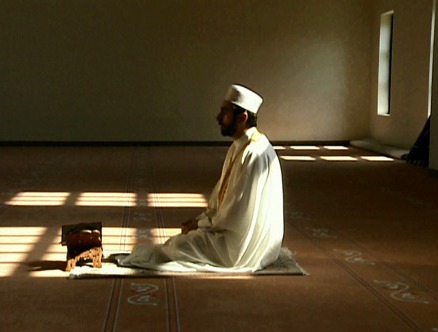
To take it a step further, if a Muslim man kneeling on his prayer rug cries out to God with all his soul for a greater understanding of Allah and the desire to serve and be holy, why do you, even if you have “issues” with Islam, care if or how that Muslim prays? Why do you care if or how a Jew prays? If you have issues with the Christian church and believe bad things about the religion where you were raised, why do you care if or how some Christians pray to God?

If you really want to practice faith and get better at it; if you really want to make a small faith bigger, what must you do?

He has told you, O man, what is good; and what does the LORD require of you but to do justice, and to love kindness, and to walk humbly with your God? –Micah 6:8 (ESV)

God, through the prophet Micah, didn’t say to judge others, force your religious convictions on everyone you disagree with, and demand that you take over another group’s faith practices because you “know better.”

Do justice.

Love kindness.

Walk humbly with your God.

So is this practicing Christianity? It is if you’re a Christian. It’s practicing Judaism if you’re a Jew, and practicing Islam if you’re a Muslim. For all I know, it’s practicing Buddhism is you’re a Buddhist. Most of all though, it’s practicing getting closer to God.

So practice justice, kindness, and humility every day and perhaps then, your small faith will begin to grow.

Practicing Faith, Part 1

The essential thing, however, is the training to habituate one’s mind and thought continuously, so that it always remain imprinted in his heart and mind, that everything one sees with his eyes — the heavens and earth and all they contain — constitutes the outer garments of the king, the Holy One, blessed be He.

In this way he will constantly remember their inwardness and vitality, which is G-dliness.

This is also implicit in the word emunah (“faith”), which is a term indicating “training” to which a person habituates himself, like a craftsman who trains his hands, and so forth.

Today’s Tanya Lesson (Listen online)
Likutei Amarim, end of Chapter 42
By Rabbi Schneur Zalman of Liadi (1745-1812), founder of Chabad Chassidism
Elucidated by Rabbi Yosef Wineberg
Translated from Yiddish by Rabbi Levy Wineberg and Rabbi Sholom B. Wineberg
Edited by Uri Kaploun.

Now faith is the assurance of things hoped for, the conviction of things not seen. For by it the people of old received their commendation. By faith we understand that the universe was created by the word of God, so that what is seen was not made out of things that are visible.

Hebrews 11:1-3 (ESV)

Um, what is “faith” again?

We tend to think of faith as something we either have or don’t have, kind of like the color of your eyes. You either have brown eyes or not. It’s not something that comes and goes in stages, exactly. You either have faith or you don’t. You either believe in God or you don’t.

But wait a minute. Faith and belief aren’t the same things, are they? The writer of Hebrews seems to say that faith is the mechanism by which we understand that everything was created by the word of God, even though there isn’t any obvious physical evidence to support that this must be so.

But the lesson from the Tanya says that faith (emunah) is something we can be trained in and that we learn to habituate. Faith is learned? You can train in faith?

Kind of an interesting concept, and if you think about it a minute, it makes a lot of sense.

And he said to them, “Why are you afraid, O you of little faith?” –Matthew 8:26 (ESV)

But Jesus, aware of this, said, “O you of little faith, why are you discussing among yourselves the fact that you have no bread?” –Matthew 16:8 (ESV)

Then Jesus said to her, “O woman, your faith is great; it shall be done for you as you wish.” And her daughter was healed at once. –Matthew 15:28 (ESV)

Here, we see that faith can be little or great. Presumably, faith can be anywhere between little and great, too. So there are degrees of faith. But where do these “degrees” come from? Is there anything we can do if we have little faith to make it great or at least bigger than it was before?

Jesus seemed to think so, otherwise he wouldn’t have criticized his disciples for having little faith. But how is this to be done? The commentary in the Tanya Lesson continues:

The Rebbe notes that “who trains his hands” means: “He is cognizant of the craft in his soul; he has a natural talent for it, but needs only to train his hands, so that it will find tangible expression in his actions (be it through art, or fashioning vessels, or the like).”

This is sort of like the old joke about a country fellow who decided to visit New York City. He went on a sightseeing tour of all the famous places in New York such as Times Square, Madison Square Garden, and the Empire State Building. He also bought a ticket to a Broadway play, but as the time of the performance was drawing near, he realized he didn’t know how to find the theatre.

The tourist stopped someone on the street who looked like a local and asked, “How do I get to Broadway?”

The New Yorker brusquely replied, “Practice.”

Can faith be practiced? Can we learn faith the same way we learn a skill, such as painting, molding clay, or replacing a light switch in the hallway of your home?

The Rebbe said something else though. He said that the soul “has a natural talent for it…” (faith) “…but needs only to train his hands, so that it will find tangible expression in his actions.”

So who has a natural talent in faith?

G-d speaks with us at every moment.
His words form the world we see about us.

A prophet is no more than one who catches those words before they congeal into space and time.

-Rabbi Tzvi Freeman
“Prophecy”
Based on letters and talks of the Rebbe
Rabbi M. M. Schneerson
Chabad.org

While the Rabbi is talking about prophecy and not faith, I think we can apply his lesson to our “meditation.” God speaks to everyone, not only by virtue of the universe continuing to exist, but in many other ways. We were all created in His image. We are all His children, whether we even acknowledge Him or not. That means, we all have the ability, if we choose to use it, to connect to Him using faith as our bridge. True, some folks seem to have a greater talent for faith than others, as the Prophets had a greater “talent” for “hearing” God and passing on His Words, but even as we all can “hear” the voice of God, we all have a native talent to respond with faith…and to strengthen that faith by practicing it.

So how to you practice the “skill” of faith?

Part of the answer is in the source of the question. You study. You also pray, meditate, seek reliable teachers, spend time with other people who are also learning faith, and you let your general, day-to-day behaviors reflect your practice. This goes back to things I’ve said before about donating food to the hungry and visiting sick people in the hospital. If you want to be a person of faith, you have to act like a person of faith.

We learn by doing.

But I’ve heard some Gentile Christians say that if we are attracted to “practicing” the Bible and particularly practicing what we consider the Torah, we are really “practicing spiritual Judaism.” But is that true?

Who Is A Jew?

This apparent dichotomy in the nature of relations between Jew and Jew also appears in the words of our sages which describe the very definition of Jewishness and a Jew’s relationship with G-d.

The Talmud states: “A Jew, although he has transgressed, is a Jew.” He may violate, G-d forbid, the entire Torah, yet his intrinsic bond with the Almighty is not affected. In the words of the Midrash, “Torah preceded the creation of the world… but the thought of Israel preceded all in the mind of G-d.”

Commentary on Ethics of Our Fathers, Chapter 1
“Ulterior Motive”
Nissan 28, 5772 * April 20, 2012
Chabad.org

Judaism, at least from the Chabad perspective, considers a Jew to be a Jew, even if he or she doesn’t “practice Judaism” at all. That can’t apply to we non-Jewish Christians if we must practice our faith to be disciples of the Master and are attached to the God of Israel by that practice. So it would seem that “spiritual Judaism” isn’t something that the goyim (non-Jews) can possess, even by diligent practice.

So what are we practicing when we who are not Jewish, practice faith? Christianity?

I’ll save the answer for Part 2.

Judaism Without Jewishness

In Maimonides’ introduction to the Sefer Hamitzvot (“The Book of Commandments”), he states the goal he set to accomplish with authoring this work.

The Talmud (end of Tractate Makkot) tells us that there are 613 biblical precepts—248 of which are “positive commandments,” i.e., mitzvot that require an action on our part, and 365 “negative commandments,” i.e., prohibitions. The 248 positive commandments correspond to the 248 limbs in the human body, each limb, as it were, demanding the observance of one commandment. The 365 negative commandments correspond to the 365 days of the solar year, each day enjoining us not to transgress a certain prohibition.

Maimonides’ Introduction to Sefer Hamitzvot
Lessons for Shabbat, March 3, 2012 – 9 Adar, 5772
Chabad.org

I sometimes wish I could live the life of a scholar, immersed in the ancient tomes, pouring over arcane literature, seeking the wisdom of the ancients. I find what little I am able to study extremely rewarding, but it leaves me longing for more. There are a number of reasons why I don’t pursue such a path more wholeheartedly. For one thing, I most likely am not quite bright enough to truly become a scholar. I consider myself an “interested amateur” in the realm of the Jewish learned texts, but that’s just about it. Also, I have to make a living, and my work involves a completely different set of disciplines and skills. I can hardly quit my “day job” and throw myself into Jewish study full time. My wife would have a fit. Finally, I lack an appropriate Jewish venue for learning. Sure, I could take some online courses, but that would involve the time I’ve already said I do not have and alas, the funds that are dedicated to supporting my family, so such is not to be.

Given all that I’ve just said, please forgive the multitude of the mistakes I’m about to make. All of the observations are my own including any errors. I can only plead ignorance and excessive enthusiasm.

But I am having a blast reading Chabad’s daily commentaries on the Rambam’s Sefer Hamitzvot. You might consider such a line of interest a waste of time for a Christian. After all, what does Jewish philosophy, theology, and thought have to do with the Jewish Messiah (or did I just answer my own question)? In terms of how the church chooses to view their devotion to Jesus Christ, Maimonides has practically nothing to do with faith in Christ. On the other hand, how can we really understand the Jewish Messiah and his modern-day Jewish disciples if, as his Gentile disciples, we don’t even dip one toe into the wells of Jewish wisdom?

In his book review of First Fruits of Zion’s book Biblically Kosher, Gene Shlomovich makes a few interesting comments that speak to this point.

Messianic Jewish congregations do not lack food. Far from it, there’s usually plenty of it in our synagogues. But is it kosher? In my experience, most of the congregations only pay lip service to kashrut, often not extending it beyond not serving pork and shrimp. The same even goes for many of the leaders as well. Even worse, our Messianic Jewish conferences, the showcases of our Jewishness, of our unity and solidarity with the Jewish people and Judaism, of our allegiance to Torah, are often located far away from Jewish communities or from kosher establishments, with most participants expected to partake in the non-kosher fair served up by the hotel where the conference is taking place! One can cite many reasons for this – historic Christian anti-Judaism that has left its mark resulting in aversion to all things “rabbinic”, rampant secularization of American Jewry, unwillingness to put in the effort required, perceived and actual higher costs of keeping kosher, and often just plain ignorance.

This rather shocking commentary shows that even a significant number of those people and congregations that purport to be Messianic Jewish choose not to grasp the “Jewishness” of being a Judaism (Messianic or otherwise). I don’t doubt their sincerity in and devotion to Jesus as the Jewish Messiah and as Lord and Savior of humankind, but for the most part, the “Jewishness” of their “Judaism” is just so-so (and if I, a gentile Christian can make such an observation, imagine what impression these groups make on other Judaisms?). If you are a Christian with a deep interest in Judaism and its Messianic applications, just say so and proceed accordingly. That might be a better path than recreating Gentiles in a Jewish image and suggesting that you are something other than who you (we) really are. Am I being too harsh?

That leads me to something I just read in my Chabad study of Sefer Hamitzvot. I think it’s interesting.

Do not count Rabbinic Commandments in this list. E.g. lighting Chanukah candles or reciting the Hallel.

Indeed, this seems obvious, for the Talmud says that 613 mitzvot “were given to Moses at Sinai,” and rabbinic mitzvot were not instituted until later dates. But in truth, we follow rabbinic rulings because of a biblical mandate: “You shall not divert from the word they tell you, either right or left” (Deuteronomy 17:11); and as such, before performing a rabbinic mitzvah, we say a blessing in which we thank G-d for “sanctifying us with His commandments and commanding us to…” Nevertheless, the individual rabbinic precepts are not counted as part of the 613 (and, are considered “rabbinic,” a classification that has certain halachic implications).

Many Messianic Jewish groups put forth the supposition that Gentile Christians are equally obligated to the same 613 commandments (the current codification of which were created by Rambam) as their Jewish counterparts. I’ve said more than once that any attempt of non-Jews to emulate a Jewish lifestyle, especially one that eschews all but the most basic tenets of Judaism (particularly oral tradition and Talmud), will be at best inadequate and at worst, a sham. I’m not encouraging non-Jewish Christians to take on a Jewish lifestyle, especially “just for giggles,” but if you insist on pursuing a knowledge of Judaism and feel compelled to take on some of the mitzvot as a personal conviction (and I can certainly relate to this), then you might want to acquire some sort of idea of what you’re getting into.

Getting back to Principle 1 though, I find it fascinating that the rabbinic judgments are not to be included in the 613 commandments. At first blush, it seems as if it may be correct to divorce the written Torah from its oral and midrashic counterparts, as certain parts of Messianic Judaism have indeed done. But the very idea that there are 613 commandments comes from Talmud.

While the Talmud gives us these precise numbers, it does not list the 248 positive commandments or the 365 negative ones. Thus, numerous “mitzvah counters” have arisen throughout the generations – many who preceded Maimonides – each one attempting to provide a comprehensive listing of the mitzvot, each one’s list differing slightly from all others’.

The idea isn’t that the written Torah has authority and the oral Law, Talmud, and halacha don’t, but that they are intricately interwoven and interdependent elements. The Torah of God given at Sinai is of God. Of this, there is no dispute. However, in Judaism, the oral Law was also given at Sinai, but only to Moses. Without the oral Law, there would be no hope of understanding, let alone implementing, the written mitzvot. Yet, in the post Second Temple period, it became necessary to document and understand written and oral Torah in relation to a world without a Temple, without a priesthood, without the sacrifices, and without Israel.

But.

But this doesn’t mean that rabbinic rulings are the same as the Word of God. Rambam’s gift to the Jews is to provide documentation of how the Laws of God are to be understood and implemented within Judaism. This is an important point, because the Torah laws, for the most part, aren’t implemented in such a precise manner within much of Messianic Judaism (even many congregations in that portion of MJ that is devoutly Jewish in their observance may need a “touch up” here and there). In other words, you can’t just read the 613 commandments in a list and think you know what you’re reading and how to respond to them. That’s why Rambam wrote the Sefer Hamitzvot in the first place. That’s why the Talmud exists, why the Beit Din exists in many Jewish communities, and why there is a continually growing body of Jewish rabbinic rulings and judgments as questions and situations arise requiring them.

The Sefer Hamitzvot is a document limited in scope but one that couldn’t exist apart from the wider body of Jewish law and interpretation. Any non-Jew or any Jew who does not have a history grounded in traditional Jewish learning (and who is in the Messianic community in some capacity) will want to pay attention to the Torah as the foundation, and also the so-called “leaven of the Pharisees,” (I say that somewhat tongue-in-cheek). This “leaven” is what adds the dimensions of meaning to what might otherwise be a compelling and driving force in Jewish life, but also a rather unattainable Torah. The Torah is not in Heaven. Once given to men, men must learn to understand God’s intent within the world where we live.

As I’ve already said, I’m not an expert in this area. I’m only an interested amateur, so I probably got everything wrong just now. On the other hand, it’s better to get everything wrong and admit ignorance than to claim to have everything right and still be completely turned around. At least in the former case, there’s always the opportunity for correction. Even the best explorers get lost. Only the foolish explorers think they never can be.

When you find the Infinite, where will you put it?

In your broken vessel?
It will not stay.

In a new whole one?
It will not fit.

Let the heart be broken in bitterness for its confines. Let it be whole in the joy of a boundless soul.

This is the secret that Man holds over the angels: Only the human heart can be broken and whole at once.

-Rabbi Tzvi Freeman
“Broken and Whole”
Based on letters and talks of the Rebbe
Rabbi M. M. Schneerson
Chabad.org

When we study, we are reading the map. Our teachers are our guides. Rebuke is replacing a flawed course for a better one. Our destination is the broken and healed heart within us, into which the infinite resides. Judaism is an interface by which we can understand all of that, if it is the one we choose. For the Jew, Judaism is the natural lens by which to view Torah and God. For the rest of us, it is the method by which we can attempt to understand the Jewishness of the Messiah. If we non-Jews choose to go down that path, then we need to let the path tell us where it goes and not the other way around. You can’t have a Judaism without “Jewishness.”