Tag Archives: Torah

A Schlub Contemplating Intrinsic Greatness

A person is obligated to say:

“The world was created for me” (Talmud – Sanhedrin 37a), and
“When will my deeds reach the level of Abraham, Isaac, and Jacob?”

The Torah attitude is that we are obligated to be aware of our greatness. Feel proud that you are created in the image of the Almighty. Pride in the elevation of your soul is not only proper, but is actually an obligation to recognize your virtues and to live with this awareness.

(Toras Avraham, p.49; Gateway to Happiness, p.119)

-Rabbi Zelig Pliskin
“Recognize Your Greatness”
Aish.com

I sometimes wonder when reading quotes from Orthodox Jewish sources if the author meant for a Gentile to take any of that advice. After all, I can only assume that the primary audience of Aish.com are Jews. Did Rabbi Pliskin mean “greatness as a Jew” when he wrote “greatness as a human being?”

Then again, Rabbi Pliskin is a noted psychologist as well as a Rabbi, author, and lecturer, so perhaps he really does mean that all human beings have the capacity of being great because we were all created in the image of Hashem.

Along the same lines, Rabbi Pliskin also wrote:

Rabbi Shlomo of Karlin used to say:

“The worst fault a person can have is to forget his intrinsic greatness as a human being.”

(Dor Daiah, vol. 1, p.172; Rabbi Pliskin’s Gateway to Happiness, p.131)

AbrahamI’m used to thinking that certain people are great and the rest of us are “Okay”. Abraham was great. Moses was great as well as exceeding humble (Numbers 12:3). Given the Biblical record as well as the long chronicle of human history, it’s difficult to imagine that the majority of the people across time possess “intrinsic greatness”. Frankly, it’s easier to imagine that most people have a talent for being an “intrinsic pain-in-the-neck”, myself included.

But then again, some people are more optimistic than others:

Be not afraid of life. Believe that life is worth living, and your belief will help create the fact.

–William James

Believe you can and you’re halfway there.

–Theodore Roosevelt

Of course, William James, Theodore Roosevelt, or even Rabbi Pliskin aren’t quoting directly from scripture, so perhaps they aren’t seeing human beings the way God sees us.

Or maybe I’m being cynical. I can see, at least in theory, that God most likely wants us all to live up to our highest potential, to be the very best people we can be, the people He created us to be. It’s just that none of us seem to live up to our very highest potential, at least most of the time.

Someone wrote to the Aish Ask the Rabbi column asking about certain Orthodox Rabbis who are caught committing illegal and immoral acts, such as bribing public officials. The Aish Rabbi responded in part:

First things first: The Torah is the guidebook for ethical perfection. All the values that the Western world takes for granted – education, equal rights, sanctity of life – are from the Torah. That is an inarguable fact of history.

Being orthodox does not guarantee that a person has succeeded in internalizing what he has been taught.

I would say that all Jews – religious and not – do not follow the Torah 100%. Everyone does the best he can, some making more of an effort than others. But no one is perfect.

But I would also say that almost without exception, an individual will be more kind, charitable and moral because he learns Torah and follows it.

The question is not: Why do some religious Jews behave badly? The better question – and this is what I ask myself whenever I see an Orthodox person doing something wrong – is: Would the same individual behave worse, or behave better, if he was not religious?

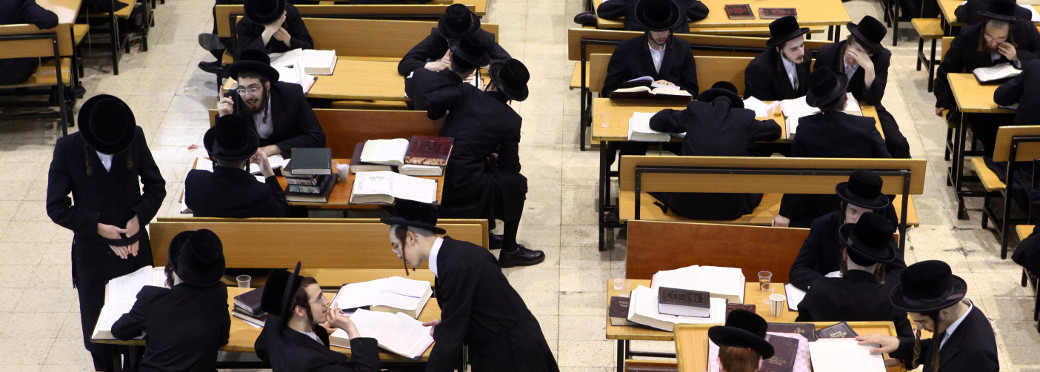
Talmud StudyThis feels a little bit like a “dodge” to me. It sounds like the Rabbi is saying that as bad as some religious Jewish people may be in terms of how they behave immorally and unethically, if they didn’t have their training in Torah, they would be so much worse.

Would they? I don’t know.

I do agree that, although we Gentile believers are not called upon Biblically to replicate a Jew’s observance of the mitzvot, we do have our own Torah for the nations which assigns all humanity with valuing the underlying principles, the very foundation of Torah.

We are all called upon to do good and, as the Aish Rabbi says (I’ll extrapolate his sentence beyond its context and apply it to all humanity), no one obeys the Torah principles and mitzvot as they/we are called to obey with anywhere near 100% fidelity.

The Aish Rabbi says that because one Orthodox Rabbi committed immoral acts does not mean that the Torah failed, just that one human being has failed. Rather than throwing the Torah and a religious life out the window because people don’t and can’t live up to God’s standards perfectly, we should strive to be better tomorrow than we are today. Obedience is a journey, not a mountain top where you sit sagely because you are always right.

On the other hand, the journey of obedience isn’t a pit or a cave where you are trapped forever because you are always wrong and can never succeed either.

Or so intimates the Aish Rabbi.

The Rabbi finishes his answer by saying:

I would also argue that if you are looking for a role model of righteousness, you are far more likely to find it in a great religious person than in the secular world. The act of purifying oneself through prayer, study, mitzvah performance, and devotion to helping others to reach the heights of Godliness.

True, the observant community does not exist in a hermetically-sealed bubble protected from all negative influences. But given a choice of one or the other, I think the choice is clear.

I suppose if we could receive an unfiltered and unedited view of the life of any person we might think of as a “role model of righteousness,” we’d be disappointed in them, at least in some sense. If no one is perfect, then all people have failed; they’ve failed other people, and they’ve failed God.

I once was at an event where a highly esteemed gentleman had just finished speaking to an audience, and many members of that audience heaped praises upon him. I was a little surprised at what I perceived as his lack of humility. I got the opportunity to speak to him about it, and he responded, “People need heroes.”

schlub
Chris Pratt as Andy Dwyer on the TV show “Parks and Recreation.” The guy’s a definite schlub.

I think I understand what he was saying, but it still bothers me a little. I know Moses had this one down pat, but how can you connect to your “intrinsic greatness” while also knowing what a schlub you are inside?

I don’t mean “you” or any other specific human being. I don’t have an unfiltered, unedited view into anyone else’s life except my own. That’s why this whole concept of “greatness” is difficult for me to understand.

I almost said that if I could talk to Moses for five minutes (assuming we had a common language), he could explain it to me, but our lives are absolutely incomparable. After all, who can live up to a man like Moses, who talked with God “face-to-face” as it were? Not me.

Even Moses had his faults, some of them as large as the life of greatness he led. But that being said, where does that leave the rest of us?

The Torah for the Nations of the World

Question:

Why is Judaism so intolerant of idolatry? I don’t mean massive temples with human sacrifices. What about a civilized idolater, in the privacy of his own home. With a job, a family, a mortgage, donates to the World Hunger Fund and Greenpeace — and instead of one G-d, he just happens to have two or three or even several dozen, all lined up on the dashboard of his car. Why does Judaism make a cardinal sin of it, demanding total eradication of idolatry in every corner the world? As long as it doesn’t hurt anyone else, what’s so terrible?

Answer:

There are many ways to answer this, but let’s take a historical perspective. Historians agree that our current standard of ethics stems from the Jewish ethic. Yes, the Greeks gave us the natural sciences, philosophy and art; the Romans gave us governmental structure and engineering; from the Persians we have poetry and astronomy; from the Chinese, paper, printing, gunpowder, acupuncture and more philosophy, and so on. But the historical fact is that all those cultures (and all the other unmentioned cultures) sustained and even glorified attitudes and behaviors that today we universally find abhorrent. Today, if you dispose of your unwanted infants, practice pederasty, set humans to kill each other for sport, ignore the rights of those lower than you on the social ladder and refuse to acknowledge any social responsibility to the poor and the unhealthy, and can’t wait to run to war against the nation next door, you are a barbarian. You may have made a wonderful citizen of Athens or Rome, but today, no club will take you.

Where did those values come from? There’s only one source historians can point to: Torah.

-Rabbi Tzvi Freeman
“What’s So Terrible About Idolatry?”
Commentary on Parshah Acharei-Kedoshim.
Chabad.org

Sorry to be such a “Chatty Cathy” and post two missives in one day, but when I read the paragraphs above, they seemed to spell out something a lot of non-Jewish believers operating in the Messianic Jewish and Hebrew Roots spaces have been puzzling over if not actively struggling with. Is there some sort of “universalism” to the Torah? That is, does the Torah apply to everyone and not just to the Jewish people?

The answer to that question is enormously complex, even though some people seem to believe the answer is an incredibly simple “yes.”

Toby Janicki
Toby Janicki

I’ve written on this topic at length including in my original review of Toby Janicki’s article The Gentile Believer’s Obligation to the Torah of Moses as well as my revisiting that material sometime later. I’ve also written of the Torah and Gentiles in my “in a nutshell” explanation of Torah and Christians and in Torah and the Gentile Believer. Hopefully, I’ve rendered a consistent message across those different blog posts that studying the Torah is appropriate for a non-Jewish believer for a wide variety of reasons, but stating that we share an identical obligation to observe the mitzvot with the Jewish people in a manner identical to theirs, and claiming that the Torah and being “grafted in” also makes Gentiles “Israel” is way over the top.

That’s not to say that we “Messianic Gentiles,” and arguably the mainstream Christian Church don’t have special obligations and duties. It’s just that the duty of Messianic Gentiles and Christians isn’t to observe the mitzvot but to encourage and support Jews to observe the mitzvot.

That said, I do think there is a universal aspect to the Torah, one that applies to every man, woman, and child who has lived throughout history and one that applies to all of us across the world today.

It’s spelled out in Rabbi Freeman’s answer to the question about idolatry.

We tend to think of application of Torah as an either/or sort of thing. Either it applies in exactly the same way to everyone, or it applies to no one at all. There’s no such thing in the minds of certain people as differentiation of application, or the idea that Torah is received by the Jews in one way and by the Gentiles in a different manner.

How the Torah applies to the world, even the world of people belonging to different religions or no religion at all, is in how it has shaped our world ethically and morally. American criminal and civil law, as well as many of our social mores, is based on the Torah.

This isn’t a religious application. Heck, you don’t even have to believe in God. You can be an atheist and still live in a world where the basic moral and ethical structure is based on the “blueprint” of the Torah.

Torah at SinaiRabbi Freeman in his somewhat lengthy answer says that while many peoples, nations, and civilizations have come and gone across the vast corridor of time, only the Jewish people have remained.

Why is that? For one thing, for the entire existence of the people of Israel, since Hashem gave the Torah at Sinai, the Jewish people have kept and preserved the Torah. If Israel had been wiped out by some ancient enemy and the Torah lost forever, upon what would the world have built its ethics and morals? As Freeman states, in ancient times (and maybe in modern ones), if you didn’t like the ethics of a particular “god,” you simply worshiped another one. After all, without the knowledge of a single, all-powerful, all-encompassing, creative God, morals and ethics are relative and impermanent.

The single greatest gift the Jewish people have given the world is the Torah. No, not the obligation to obey Torah on the level of the individual commandments in a way identical to the Jews, but as the broader basis of civilization. According to Freeman, what we think of as civilization wouldn’t exist without the Torah.

Today, we are witnessing the most dramatic results of Abraham’s strategy in action: Our progress in the last 500 years, to the point of the current empowerment of the consumer with technology and information, only became possible through the rise of this ethic. In a polytheistic world, this could never have occurred. It was only once the people of Europe began actually reading the Bible and discussing what it had to say to them, that the concepts of human rights, social responsibility, the value of life, and eventually the ideal of world peace took a front seat in civilization’s progress. And it is only such a world that could have developed public education and health care, old age pension, telephones, fax machines, personal computers, the Internet, environmental design and nuclear disarmament.

I’ve read other articles from Jewish sources stating that the Torah has applications for the whole world, but I never quite grasped what they meant. I guess it was because of the continuing debates we have on the web between Messianic Judaism(s) and various aspects of the Hebrew Roots movement regarding the question of how much of the mitzvot a Gentile should take upon himself or herself that blinded me to a wider perspective.

It’s about the people of the nations creating and then living in “a world that values life, world peace, individual rights, freedom of expression, literacy, knowledge and compassion for those who have less…” That’s the universal quality of the Torah. That’s the Torah for the nations.

The moral and ethical principles are identical for the Jews as they are for the rest of us. The only difference is that there are many additional instructions that only have to do with the Jewish people.

the crowdYou and I as non-Jews participate and “observe” the Torah every day, at least if we’re reasonably ethical, moral, and are law-abiding citizens. For those of us who are believers, this evidence of Torah in our lives becomes all the more apparent, but the larger reality is that untold millions of people everyday also live out the Torah just by committing acts of compassion, by sending their children to school, by obeying the highway speed laws, by upholding the rights of the disadvantaged, and in a thousand other ways.

The answer of how the Torah can be universal seems so elusive until you look at it from the perspective Rabbi Freeman brings in his online article. Once seen from that viewpoint however, everything becomes clear.

She Goes to Synagogue and He Does the Lawn Work

The Jewish people in the land of Egypt had sunk to the lowest possible level of impurity — so much so that it was nearly impossible to distinguish between Jew and gentile. And then, suddenly, Hashem pulled them out from beneath all their impurity, and they were free — ready for a new beginning and spiritual greatness.

One must remember that no matter how far he has sunk, and as hopeless as his situation may seem, he has still not descended to the level of his forefathers in Egypt. His spiritual predicament cannot be worse than theirs. He must remind himself of the Exodus and internalize its meaning. He can then look toward the time when Hashem, in His mercy and in His kindness, will simply lift him up, freeing him from his seemingly hopeless state, and allowing him to begin his spiritual ascent anew.

-from “A Closer Look at the Siddur,” p.43
Thursday’s Commentary on Parashas Acharei
A Daily Dose of Torah

I know I’ve said this before, but I really enjoy studying from the Jewish texts, at least those I’m capable of comprehending. In reading the studies contained in “A Daily Dose of Torah” I find myself again drawn toward Judaism as a method of study, a way of understanding God, and even as a lifestyle. In Judaism, there seems to be such a great richness of tradition and apprehension of faith, trust, and obedience that much of Evangelical Christianity lacks.

I live with a Jew. Actually, right now, I live with three of them, but only my wife is the least bit religious. Only she regularly worships at synagogue on Shabbat, and this is as it should be because, after all, she’s Jewish. It’s a commandment from Sinai given to Israel, and as a Jew, she is part of Israel.

I, on the other hand, have great difficulty being obedient even to those commandments I know unequivocally apply to all people of the nations as well as to the non-Jewish disciples of Yeshua. How could I ever hope to attain the level of obedience and devotion expected of a Jew?

No, it’s not that Jewish people are perfectly obedient and devoted, but any Gentile aspiring to any sort of Jewish “lifestyle” might want to take stock of how they’re doing as a Gentile first before having the chutzpah to believe he or she can voluntarily take on board the much greater responsibilities and duties God requires of the Jewish people.

A Jew is born into the covenant whether he or she wants to be or not. They’re not given a choice. Any Gentile considering conversion certainly is making a choice and, like deciding to get married, cannot possibly see the long-term results and consequences of such a monumental decision.

The same goes for Gentiles who remain Gentiles but, through one thought process or another, come to believe they can or should either voluntarily take on board some, most, or all of the Torah mitzvot, or who have decided for themselves that they are (somehow) equally obligated to the mitzvot in the manner of the Jews.

Helping the HomelessReally, are you doing so well at a lesser level of obligation and obedience that you need the additional challenge in your life? Has doing charity, feeding the hungry, comforting the grieving, abstaining from even the hint of lashon hara (evil speech, gossip, denigrating another human being through words) become so humdrum and boring that you require adopting the higher standards of Torah in order to keep your life from becoming mundane?

When I take stock of my life, day by day, I realize how limited I am and how even those requirements Hashem has placed upon the people of the nations sometimes seem far beyond my abilitites. Why do I think I’d do any better in davening three times a day with a minyan, donning tzitzit, laying tefillin, observing Shabbos, keeping glatt kosher, and many of the other mitzvot of Torah?

He explains that both Shabbos and Mikdash (the Sanctuary) represent a dimension of love between Hashem and His nation, the former in time and the latter in space. On Shabbos, Hashem, as it were, invites every Jew to spend the day in His House, to live in the holiness of Hashem’s embrace and bask in his radiance. The Mikdash, too, represents this loving relationship, as symbolized by the two Cherubim that faced each other in the Sanctuary’s innermost chamber, the kodesh hakodashim.

-from “A Mussar Thought for the Day,” p.99
Thursday’s Commentary on Parashas Kedoshim
A Daily Dose of Torah

I have to recognize that, while God loves the whole world and while the Gentile disciples of Messiah are also loved and cherished by Hashem, it is Israel who receives a special love and relationship with the Almighty, and without Israel’s “chosenness,” we Gentiles would have no hope at all. Thus, God has given His people Israel, the Jewish people, special gifts as well as special obligations, in this case, Shabbat and the Holy Temple.

It’s not that we Gentile believers won’t have a role or a place in either in future Messianic Days, it’s just that we shouldn’t forget where they came from or to whom they were given.

This date marks the death of Judah P. Benjamin (1811-1884), an American-Jewish statesman. Benjamin was the second Jew to serve in the U.S. Senate, representing Louisiana. When another senator accused him of being an “Israelite in Egyptian clothing,” Benjamin, who had married into a prominent Roman Catholic family, replied: “It is true that I am a Jew, and when my ancestors were receiving their Ten Commandments from the immediate Deity, amidst the thundering and lightnings of Mount Sinai, the ancestors of my opponent were herding swine in the forests of Great Britain.”

-from “This Day in Jewish History,” Iyar 11
Aish.com

Judah Benjamin’s reply to his fellow senator is as relevant today as when he first spoke those words.

I suppose in some sense, this is why my wife goes to shul on Shabbos and I stay home, mow the yard, and try to fix the broken sprinkler system so that I can water our lawn. It’s not that I’m necessarily forbidden from worshiping with my wife. After all, there are plenty of intermarried couples, both at the Chabad, and at our local Conservative/Reform synagogue. It’s just that it’s more important for her to observe the mitzvot associated with Shabbos than it is for me, because she is a Jew and I’m not.

ShabbatEven if I somehow believed that the Shabbat is also incumbent upon me as a Gentile, the Jewish people kept and preserved the Shabbat for thousands of years, while the ancestors of every non-Jew alive today were worshiping pagan gods, consorting with heathen temple prostitutes, and in some cases, feeding their children to sacrificial fires in obscene fertility rites.

We have no worthiness or honor of our own not did our forefathers. It is only through God’s abundant mercy and kindness that He provided any way at all for the Gentile to even approach His Throne in the most humble and penitent manner.

Let us strive to improve ourselves and to become obedient to those few things God requires of the Gentile disciples. If we can master our yetzer hara and if there are more requirements and more gifts Hashem wishes to assign to us, we will receive them from the hand of Messiah in all due time.

The Consequences of Being Chosen: The Laws of Tumah

Speak to the Children of Israel and say to them: Any man who will have a discharge from his flesh, his discharge is contaminated.

Vayikra (Leviticus) 15:2

It is learned from this verse that only the Children of Israel are subject to the laws of tumah; people of other nations do not become tamei with the onset of any of the symptoms described in these laws. The severity with which the Jewish people are treated with regard to tumah is reflected in the term “speak to,” a term that implies a severe or stringent communication (see Rashi to Shemos 6:2).

A Torah Thought for the Day, p.215
Thursday’s commentary on Parashas Metzora
A Daily Dose of Torah

heal meAccording to this commentary, only the Jewish people are susceptible to what one person has called “spiritual skin disease,” not the people of the nations. We don’t have this disorder with us today to test that belief even though we know that these conditions did exist in the time of Jesus (Yeshua):

While He was on the way to Jerusalem, He was passing between Samaria and Galilee. As He entered a village, ten leprous men who stood at a distance met Him; and they raised their voices, saying, “Jesus, Master, have mercy on us!” When He saw them, He said to them, “Go and show yourselves to the priests.” And as they were going, they were cleansed. Now one of them, when he saw that he had been healed, turned back, glorifying God with a loud voice, and he fell on his face at His feet, giving thanks to Him. And he was a Samaritan. Then Jesus answered and said, “Were there not ten cleansed? But the nine—where are they? Was no one found who returned to give glory to God, except this foreigner?” And He said to him, “Stand up and go; your faith has made you well.”

Luke 17:11-19 (NASB)

Well, wait a minute. A Samaritan was among those men of Israel who were healed of tzara’at? How can this be if the commentary above states only the Children of Israel suffer from this affliction?

And this isn’t the only incident:

Now Naaman, captain of the army of the king of Aram, was a great man with his master, and highly respected, because by him the Lord had given victory to Aram. The man was also a valiant warrior, but he was a leper. Now the Arameans had gone out in bands and had taken captive a little girl from the land of Israel; and she waited on Naaman’s wife. She said to her mistress, “I wish that my master were with the prophet who is in Samaria! Then he would cure him of his leprosy.”

It happened when Elisha the man of God heard that the king of Israel had torn his clothes, that he sent word to the king, saying, “Why have you torn your clothes? Now let him come to me, and he shall know that there is a prophet in Israel.” So Naaman came with his horses and his chariots and stood at the doorway of the house of Elisha. Elisha sent a messenger to him, saying, “Go and wash in the Jordan seven times, and your flesh will be restored to you and you will be clean.” But Naaman was furious and went away and said, “Behold, I thought, ‘He will surely come out to me and stand and call on the name of the Lord his God, and wave his hand over the place and cure the leper.’ Are not Abanah and Pharpar, the rivers of Damascus, better than all the waters of Israel? Could I not wash in them and be clean?” So he turned and went away in a rage. Then his servants came near and spoke to him and said, “My father, had the prophet told you to do some great thing, would you not have done it? How much more then, when he says to you, ‘Wash, and be clean’?” So he went down and dipped himself seven times in the Jordan, according to the word of the man of God; and his flesh was restored like the flesh of a little child and he was clean.

2 Kings 5:1-4, 8-14

the leperA non-Jew, Captain of a foreign army, and a pagan was afflicted with this disease and cured by the Prophet Elisha. How can this be? Especially given the following from the same “Torah Thought for the Day:”

However the verse immediately adds [Hebrew phrase]. The root of [Hebrew word] can carry the connotation of “distinguished.” Klal Yisrael is thus told that their being subject to more tumah than others is a sign, not that they are on a lower level, but that they are being held to a higher standard. For when there is no tumah, there can be no exalted level of purity either.

As I mentioned, this condition doesn’t exist among the Jews or anyone else in the modern era, probably because the proscribed cure involved submitting one’s self to the Levitical priests, which as an organized body, are not currently present.

I can see the line of reasoning regarding only Israel being vulnerable to becoming tamei due to their special chosen status and, being given the Torah, having a much higher obligation to Hashem than the people of the nations.

But in Messianic times, upon the Temple being rebuilt and the priesthood being restored, will the laws of tumah also be re-established?

This might be the only way to test whether or not Gentile believers, disciples of the Master, Rav Yeshua, will endure such a visible indicator of their/our sins.

Of course, in the resurrection and under the New Covenant, people will possess an unparalleled apprehension of the Holy Spirit and it will become natural for them to not sin, so perhaps the whole point is moot.

The curing of Naaman by Elisha led the foreign Captain to the worship of the One true God of Israel, so his becoming tamei was ultimately for his benefit.

The Samarian who was unclean was also healed for the glory of the Almighty.

I can believe that the Jewish people are expected to exhibit a higher level of spirituality, and the consequences of failing that results in a greater level of discipline from their God than for the rest of us. However, when a Gentile comes to faith in God through the faithfulness of the Jewish Messiah, we are grafted into the blessings of the New Covenant (indwelling of the Spirit, promise of the resurrection), so who is to say that more isn’t expected of us as well, not necessarily in the manner of the Jews, but more nonetheless?

whisperIf Hashem were to reinstate this class of afflictions tomorrow, would Gentile believers be as vulnerable to them as the Jewish people and for the same reasons? Perhaps we are fortunate in never knowing for sure.

Sorry it’s taking so long to submit my next review from the Nanos and Zetterholm volume Paul within Judaism: Restoring the First-Century Context to the Apostle. I’m currently in the middle of an essay written by Mark Nanos and it’s rather verbose. Hopefully, I’ll have the article read and a review written by early next week.

Book Review of Paul Within Judaism, “The Question of Assumptions: Torah Observance in the First Century”

Much of the debate about whether Paul was a representative of first-century Judaism has centered on the question of his relationship to Jewish “law,” that is, Torah. Although a majority of proponents of the traditional view presume that following his “conversion” Paul no longer attributed an intrinsic value to Jewish identity and no longer considered Torah to be binding, adherents of the Paul within Judaism perspective generally maintain that Paul remained a Torah observant Jew throughout his life.

Karin Hedner Zetterholm
from the beginning of her essay
“The Question of Assumptions: Torah Observance in the First Century”
Paul within Judaism: Restoring the First-Century Context to the Apostle (Kindle Edition)

For me, it’s a foregone conclusion that Paul followed a Pharisaic lifestyle all of his life and that the revelation of Messiah was not a “conversion” from Judaism to Christianity (and I remind you that in the First Century, there was no such thing as Christianity), but the next step (quantum leap actually) into the understanding and lived experience of God’s redemptive plan for Israel and the Jewish people.

Nothing in the revelation of Messiah or becoming his disciple and the emissary to the Gentiles required Paul to change anything about his observance. Well, OK, he most likely developed a more liberal halachah regarding associating with Gentiles, but in terms of his obligation to Hashem, God of his fathers, to the Torah mitzvot, to davening at the set times of prayer, to returning (if at all possible) to Jerusalem for the moadim, to continuing to eat kosher and observe the rest of the commandments, he need change nothing at all.

In fact, if he did, he would be diminishing his relationship with God by not being faithful to the Sinai covenant, even as the Master, Yeshua (Jesus) was faithful to the covenant.

But that’s hardly the traditional Christian understanding of Paul. The Church believes Paul converted to Christianity, replaced the law with grace, and taught both Jews and Gentiles that the law was done away with and need not be followed any longer.

Not that the Gentiles were the least bit concerned about the law since they/we have never been subject to the Sinai covenant, but the accusation that Paul had turned away from the Torah, the Temple, and was teaching other Jews to do the same would have been devastating. In fact, it was:

“You see, brother, how many thousands there are among the Jews of those who have believed, and they are all zealous for the Law; and they have been told about you, that you are teaching all the Jews who are among the Gentiles to forsake Moses, telling them not to circumcise their children nor to walk according to the customs. What, then, is to be done? They will certainly hear that you have come.

Acts 21:20-22 (NASB)

And…

When the seven days were almost over, the Jews from Asia, upon seeing him in the temple, began to stir up all the crowd and laid hands on him, crying out, “Men of Israel, come to our aid! This is the man who preaches to all men everywhere against our people and the Law and this place; and besides he has even brought Greeks into the temple and has defiled this holy place.”

Acts 21:27-28

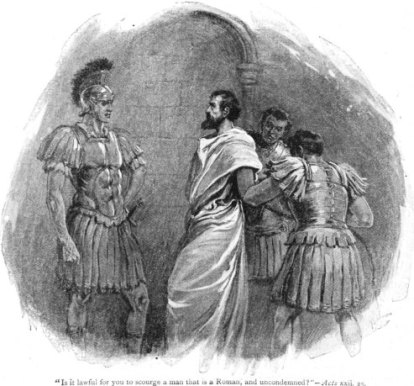
Paul in chainsEven though Paul vigorously denied these allegations under oath during a number of legal proceedings, both Jewish and Roman, most Christians believe that Paul really did the things he was accused of, and it’s OK with the Church because they believe Jesus wanted Paul to do all of these things.

But then, was Paul lying all those times he denied teaching against the Torah of Moses? If he was, why should we trust anything he wrote that’s recorded in the Apostolic Scriptures? Frankly, if we can’t trust Paul, most common Christian theology disintegrates since, oddly enough, most of what we understand about Christian faith in the Church comes from Paul, not Jesus.

Zetterholm in her article, proposes to show us that Paul remained a Torah observant Jew throughout his lifetime. Let’s have a look.

The first point she lands on is that Torah observance is not a distinct set of well-defined behaviors and that it “means different things to different groups and people, and, accordingly, different people define violation of Torah observance differently.”

She then cited different examples from the various branches of modern Judaism, comparing in one case, her Israeli friend who defines himself as “liberal Orthodox” to another friend who is a Conservative Jew. In referring to the latter friend:

In his view, he was not “breaking the law,” but interpreting it, or rather, applying the interpretation of the denomination to which he belongs.

Zetterholm further states:

Since Jewish law is the result of an ongoing collective interpretation and extension of injunctions and principles laid out in the Hebrew Bible, disagreements over their correct understanding are bound to develop.

Actually the matter of how Torah is understood and halachah applied between the different Judaisms of our day is enormously complex, and Zetterholm’s essay wouldn’t even begin to do this discussion justice if, for no other reason, than the fact that it’s simply not long enough. This is a book-length conversation at least.

I found myself disagreeing with her somewhat, since I know that an Orthodox Jew would not consider a Reform Jew, for example, to be Torah observant at all. The Orthodox aren’t terribly approving of Conservative observance, either. From an Orthodox Jew’s point of view, only they are observing Torah correctly. It gets even more complicated when you consider the different Chasidic Jewish movements exist, all of which are generally considered Orthodox.

However…

The Qumran literature and the New Testament provide ample evidence that there was no consensus on this issue or in other areas of Jewish law in the first century. The Qumran community disagreed with the Pharisees on which activities were prohibited on the Sabbath…
Don't ArgueCertainly both the differing streams of ancient and modern Judaism debate, disagree, and outright argue regarding how Torah is applied, and yet they must also agree that Torah is being applied and the mitzvot are being observed, even as they may disagree in the halachah of how the mitzvot should be observed. We see examples of Yeshua (Jesus) doing this on a number of occasions in the Gospels, particularly on proper observance of the Shabbat:

At that time Jesus went through the grainfields on the Sabbath, and His disciples became hungry and began to pick the heads of grain and eat. But when the Pharisees saw this, they said to Him, “Look, Your disciples do what is not lawful to do on a Sabbath.” But He said to them, “Have you not read what David did when he became hungry, he and his companions, how he entered the house of God, and they ate the consecrated bread, which was not lawful for him to eat nor for those with him, but for the priests alone? Or have you not read in the Law, that on the Sabbath the priests in the temple break the Sabbath and are innocent? But I say to you that something greater than the temple is here. But if you had known what this means, ‘I desire compassion, and not a sacrifice,’ you would not have condemned the innocent.

Matthew 12:1-7

This isn’t the Master informing this group of Pharisees that he canceled the Sabbath or any of the mitzvot related to observing Shabbat. This is a passionate discussion between two poskim debating proper halachah for Shabbos.

That said, I think it goes too far to say all Judaisms may be equally valid in their interpretation of Torah and leaving it at that, but perhaps for the sake of time and word count, as I mentioned above, Zetterholm couldn’t drill down into the details. As I said, the topic is highly complex and nuanced and, not being an expert in Torah, Talmud, and halachah, I’m not particularly qualified to explain beyond a certain elementary point.

But what does any of this have to do with whether or not Paul was Torah observant?

So far, Zetterholm is laying the groundwork for her readers, and she has to assume that some, many, or most of them do not have a firm understanding of Torah observance among differing Jewish groups. I get that. She takes a number of pages to solidify her argument before moving on to what Torah observance may have looked like in Paul’s time.

In addition to the general factors pertaining to Torah observance outlined above, a discussion of Paul’s relation to the Torah is further complicated by the fact that we know very little about halakic observance in the first century.

We do know that the Pharisees, Sadducees, the Qumran community, and other Jewish streams differed in their halachic systems, but there’s more we don’t know about those details than we do.
Hillel and ShammaiHowever, we do, for example, know about the famous schools of Hillel and Shammai as they existed a generation before Yeshua. A number of their arguments are well documented. And yet, Zetterholm states that “both seem to have been associated with the Pharisaic movement…” It’s likely for Rabbis within the same stream of Judaism but from differing schools, to debate halachah while still considering each other as “observant.”

Our knowledge of how Torah observance was considered among the first century Judaisms is incomplete, but we don’t have to know all of the details to understand if Paul was observant or not. We have his own testimony about it:

If anyone else has a mind to put confidence in the flesh, I far more: circumcised the eighth day, of the nation of Israel, of the tribe of Benjamin, a Hebrew of Hebrews; as to the Law, a Pharisee; as to zeal, a persecutor of the church; as to the righteousness which is in the Law, found blameless.

Philippians 3:4-6 (emph. mine)

I don’t know what the Greek text says, but the English translation as the NASB presents it indicates Paul speaking of himself in the present tense (apart from his being a persecutor of the church at that time). These are things he considered himself as he was writing this letter, not things he was before he “converted to Christianity.”

The next question then is did Paul teach anyone to not observe the mitzvot, Jew or Gentile?

To answer this query, Zetterholm uses 1 Corinthians 10:23-30 as the foundation for her response. I won’t go into all of her arguments, but here’s what she said in part:

For instance, is Paul’s permission in 1 Corinthians 10:25 to eat food purchased at the market in Corinth and to eat whatever is served when invited to dine with “an unbeliever” (10:27) really evidence that he no longer considered Jewish law binding, as scholars commonly claim, or is it better understood as an expression of first-century Jewish Diaspora halakah for Jesus-oriented gentiles, as others have suggested?

In her discussion of 1 Corinthians 8-10, she answers that question, but in brief, she concludes that Paul was specifically developing halachah as it applied to Jesus-oriented Gentiles. This was not Paul abandoning the Torah or abrogating the commandments for himself or for other Jews, but adapting halachah for the needs of Gentiles, in this case, in the city of Corinth.
Ancient Rabbi teachingActually, Zetterholm wasn’t saying that Paul felt it was proper for Gentile disciples of Yeshua to eat meat sanctified to the pagan gods as such. If the Gentiles in question realized that these “gods” were wholly fictional and not “gods” at all, then whether or not foods were sacrificed to them would be meaningless and no harm is done in eating it.

Only if these Gentiles were in the presence of other non-Jews, either pagans, or Gentile believers who may have been “newly minted” or otherwise weak in their faith, should they abstain from such meat, lest they give the impression that they were approving of pagan worship.

Expressed another way:

Paul’s argument here bears a resemblance to the rabbinic idea of mar’it ‘ain, the principle according to which one must refrain from acts that are permitted but inappropriate because they may lead a less knowledgeable Jew to draw false conclusions and cause him or her to do something that is not permitted.

One example of this she gives is a Jew who puts a piece of cheese on a vegetarian “hamburger”. Although this is not mixing meat and dairy, another Jew who casually observed the event might get the wrong idea.

Zetterholm goes into the “nuts and bolts” of her argument using the 1 Corinthians 8-10 example in much more detail than I have room for here. For the complete answer, you’ll have to get a copy of the book and read what she’s written.

The bottom line is:

Far from declaring Jewish law null and void, Paul is engaged either in establishing a halakah concerning idol food for Jesus-oriented gentiles, or teaching them an existing local Corinthian Jewish halakah.

In either case, Paul is clearly not abrogating Torah observance for Jews, he’s adapting or creating halakah specifically for his non-Jewish students because such halakah wasn’t necessary before there were Gentile disciples of the Jewish Messiah operating in community with other Gentiles and with Jews in a Jewish religious movement.

She also said:

Far from “breaking the law,” Paul seems to be engaged in the process of applying it….establishing a rule of law for Jesus-oriented gentile, Paul was engaged in the balancing act involved in establishing halakah…

This also addresses (again) the matter of how Gentiles were to relate to the Torah in general, and Pharisaic halachah in particular. In this example, Paul was not teaching the Gentiles to observe the Torah and perform the mitzvot in a manner identical to the Jewish believers. He was adapting or inventing halachah that was specific to Gentiles but not necessarily applicable to Jews.
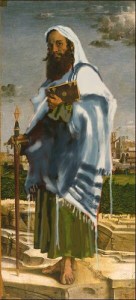
The Jewish PaulThis is probably why, referring back to Acts 21, some of the Jews in Jerusalem had the idea Paul was teaching against the Torah. He was teaching Gentiles that their obligations were different and certainly not as stringent as those of the Jews. Somehow the information was twisted, deliberately or not, to be interpreted that Paul was teaching Jews that they were not obligated to the mitzvot and did not have to circumcise their infant sons on the eighth day.

In her conclusion, Zetterholm wrote:

We have no means of knowing whether other Jews regarded Paul as lenient or strict, but in light of the complex nature of Torah observance in general and rabbinic legislation on idolatry in particular, nothing in his reasoning seems to indicate that he had abandoned Jewish law.

Derek Leman had written the first part of a two-part article for the now defunct AncientBible.net site called “Paul Was Too Jewish for the Synagogue.” I reviewed it here on my blog about sixteen months ago. It was Derek’s opinion that Paul may have been too strict in his observance for many diaspora synagogues, indicating the Apostle’s devotion to the Torah of Moses was rather high.

In addition to Leman, I think Zetterholm makes a compelling case for concluding that Paul was indeed a Torah observant Jew throughout his life, even as he was also an emissary to the Gentiles at the command of the Master.

I’ll post the next part of my review of the Nanos/Zetterholm volume soon.

Messianic Jews and the Torah

I know I’m probably opening up a big can of worms here, but I’ve read a couple of things online today (yesterday as you read this) that really have me scratching my head (in puzzlement, not because I have an itch).

The first was from the “Ask the Rabbi” column at Aish.com. Someone asked:

I get upset when I see different Jewish denominations at odds with each other. Why doesn’t everyone just accept everyone else? Or perhaps is there a way to know which of the denominations is the most correct?

I’ll only quote part of the Rabbi’s answer:

Historically, any Jewish group which denied the basic principles of Jewish tradition – Torah and mitzvah-observance – ultimately ceased to be part of the Jewish people. The Sadducees and the Karites, for instance, refused to accept certain parts of the Oral Law, and soon after broke away completely as part of the Jewish People. The Hellenists, secularists during the Second Temple period, also soon became regarded as no longer “Jewish.” Eventually, these groups vanished completely.

Early Christians were the original “Jews for Jesus.” They accepted the Divine revelation of the Torah, but not the eternal, binding nature of the commandments. Initially, these Jews were reliable in their kashrut, and counted in a minyan. But the turning point came when Paul, realizing that Jews wouldn’t accept the concept of a dead Messiah, opened up membership to non-Jews. At that point, these “Jews” experienced a total severing of Jewish identity.

My understanding of the early Jewish disciples of Yeshua (Jesus) puts me at odds with this Rabbi. The Rabbi pre-supposes that Paul “opened up” membership into the First Century CE Jewish religious stream once called “the Way” to the Gentiles because “Jews wouldn’t accept the concept of a dead Messiah.” Except the record in the Apostolic Scriptures shows that Yeshua (Jesus) commanded his apostles to make disciples of the Gentiles (Matthew 28:19-20), and that he later commanded Paul to be an emissary to the Gentiles (Acts 9). The Biblical record also doesn’t present the issue of a “dead” (resurrected) Messiah as one of the objections some synagogues had to Paul’s message.

In fact, based on the following, a great many Jews initially accepted devotion to Messiah:

Now when they heard this, they were pierced to the heart, and said to Peter and the rest of the apostles, “Brethren, what shall we do?” Peter said to them, “Repent, and each of you be baptized in the name of Jesus Christ for the forgiveness of your sins; and you will receive the gift of the Holy Spirit. For the promise is for you and your children and for all who are far off, as many as the Lord our God will call to Himself.” And with many other words he solemnly testified and kept on exhorting them, saying, “Be saved from this perverse generation!” So then, those who had received his word were baptized; and that day there were added about three thousand souls.

Acts 2:37-41

As Paul and Barnabas were going out, the people kept begging that these things might be spoken to them the next Sabbath. Now when the meeting of the synagogue had broken up, many of the Jews and of the God-fearing proselytes followed Paul and Barnabas, who, speaking to them, were urging them to continue in the grace of God.

Acts 13:42-43

You see, brother, how many thousands there are among the Jews of those who have believed, and they are all zealous for the Law…

Acts 21:20

The Jewish PaulI don’t perceive that Paul switched his emphasis of going first to the Jews with the good news of Messiah and then only to the Gentiles (Romans 1:16), nor that he was encouraging Jews to abandon the Torah (as he was falsely accused of). And yet these seem to be common themes that run through most Jewish objections to Yeshua and particularly to Paul.

I do think the Rabbi is somewhat correct in saying that the large influx of Gentiles into the ancient Messianic movement ultimately resulted in a messy Jewish/Gentile schism that did not remove Jewish identity from Jewish Yeshua believers, but did transform the movement into the new Gentile religion of Christianity (which was done by the early Gentile “church fathers,” not by Paul). Jewish participation in Yeshua-devotion as a Judaism subsequently dwindled and finally was extinguished for many centuries.

But the Aish Rabbi said something else that is interesting if not entirely accurate:

Early Christians were the original “Jews for Jesus.” They accepted the Divine revelation of the Torah, but not the eternal, binding nature of the commandments. Initially, these Jews were reliable in their kashrut, and counted in a minyan.

My opinion based on scripture is that the early Yeshua-believing Jews very much did accept the Divine revelation of the Torah and the eternal and binding nature of the commandments.

There was no dissonance between Jewish identity and performance of the mitzvot and the revelation of the resurrected Messiah.

(I suppose I should say that yet another typical misconception many Jewish people make is equating the specific organization Jews for Jesus with both the ancient and modern Messianic Jewish communities.)

That was pretty much going to be my point for today’s missive, but then I read an article on the Rosh Pina Project’s blog called Rabbi Telushkin: If Jews believed Messiah has come, they wouldn’t keep Torah. The title alone is baffling and I hope I’m reading this wrong, but I truly don’t understand what’s being said here:

Here at RPP, we very much believe that Messianic Jews are free to observe the Torah, or not to, according to their consciences. There is certainly no obligation to keep Torah.

Some Messianic Jews still keep Torah as a “witness” to other Jews. If we keep Torah, the logic goes, Orthodox Jews will realise that it’s okay to be Jewish and believe in Jesus. When it comes to “witness”, however, we think that continued Messianic Jewish Torah observance has the opposite effect.

It sends a mixed message to the Jewish community. According to Judaism, when Messiah comes the Torah is abolished. Messiah’s followers now keep to a new law, not Torah.

So when Jews see us claiming the Messiah has come, but we should still keep the Torah, we are sending a mixed message. We are saying Messiah has come already, but we’ll act as if nothing has changed by continuing to keep Torah.

According to Judaism, when Messiah comes, there is no more Torah.

In order for Messianic Judaism to act consistently with the values of Judaism, Messianic Jews would have to abandon Torah.

TorahUm…since when have Jews believed that when Messiah comes they will stop observing the mitzvot? I’ve never heard of such a thing before. In fact, according to this Jewish source…

The King Messiah and the Sanhedrin will restore the Sabbatical system and the Jubilee (which involve seven-year counts and a fifty-year count), as well as all other Commandments that we are unable to fulfill today. He will uphold and restore complete performance of the commandments and complete obedience to Hashem and His Torah. He will cause all Jews in the entire world to fulfill the Commandments of the Torah, and to uphold and strengthen the one and only true Judaism. Likewise, he will succeed in getting all the nations of the world, everyone alive, to acknowledge and serve the One True G-d, Hashem. This does not mean that they will convert and become Jews. It means that they will keep the Seven Laws that Hashem commanded the children of Noah.

The King Messiah will be extremely learned in Torah and absolutely observant of all the Commandments as taught and explained in the Oral and Written Torah.

The Messiah will not need to perform any miracles to prove who he is. Nor would the miracles be very significant. The Messiah’s purpose is to bring about the return of the Jews from exile, to restore our united practice of the Commandments of the Torah, to raise our conciousness to a high level of fear and love of Hashem, and to reinstate the Jewish kingdom in the Holy Land of Israel as Hashem originally established it under King David. Those are the Messiah’s essential purposes. Even bringing peace and affluence to the world will be only so that the world will be able to peacefully pursue our purpose of serving Hashem through Torah study and prayer — Jews as Jews, and Gentiles as Gentiles. Performing miracles is not particularly meaningful, since the Messiah will be an obviously righteous man, and the Torah commands us to obey the righteous.

What I’m driving at here is that all the miracles in the universe do not make someone Messiah, if he is not righteous. jesus, who contradicted the Torah, could not have been the Messiah, no matter how many miracles they claim he performed. The real Messiah, when he comes, may or may not perform miracles, but he will certainly not contradict the Torah in any way, shape or form.

-from the article “What the Messiah is Supposed to Do”
BeingJewish.com

Sorry about the really long quote, but I wanted to make sure that I got the point across (and to that end, I bolded the word “Torah” above) that the Jewish understanding of Messiah does not require the removal of Torah observance and in fact, Messiah and Torah are inexorably intertwined. The RPP writer is entitled to their opinion, but I really don’t see that such a viewpoint is sustainable based on the Tanakh, Apostolic Scriptures, or Jewish traditions.

Jews, Messianic or otherwise, are required to observe the mitzvot because the mitzvot are eternal. Even the Master is famously quoted as saying so:

“Do not think that I came to abolish the Law or the Prophets; I did not come to abolish but to fulfill. For truly I say to you, until heaven and earth pass away, not the smallest letter or stroke shall pass from the Law until all is accomplished. Whoever then annuls one of the least of these commandments, and teaches others to do the same, shall be called least in the kingdom of heaven; but whoever keeps and teaches them, he shall be called great in the kingdom of heaven.”

Matthew 5:17-19

Restoration
Photo: First Fruits of Zion

You should also watch this thirty-minute episode of First Fruits of Zion‘s television program The Torah is not Canceled (free to be viewed online).

I say all this in support of Jewish Torah observance, whether Messianic, Orthodox, or otherwise. Messianic Jewish observance of the mitzvot isn’t a “witness,” it is obedience based on covenant obligation. The Jewish view of the New Covenant makes this plain.

I’m forced to disagree with both the Aish Rabbi and the RPP author that Jewish devotion to Yeshua results in loss of Jewish identity and abandoning Jewish covenant responsibilities to Hashem (or making Torah observance optional for Jews). Granted, in the long history of Christianity, the Church has required that Jews surrender their identity when coming to faith in Messiah, but all that has changed. Gentile Christianity no longer is the sole keeper of the Keys to the Kingdom, and Jews now have an avenue by which they can reclaim their own King and their own Kingdom and remain Torah observant Jews.

I realize that I’ve most likely really offended a bunch of people by writing and publishing this and certainly that’s not my intention. I am quite aware that opinions differ widely within Messianic Judaism as to just how “Jewish” Jews in Messiah should be. I suppose some would see me as a radical for my belief that Messianic Jews should remain firmly rooted in Jewish identity, Jewish community, and Jewish devotion to Torah and to keeping and guarding the commandments. Yes, I’m speaking of an ideal state of the movement rather than the fractured reality of today’s Messianic Judaism, but I believe there will come a time when all Jews will be drawn back to the Torah by Messiah.

If anything, and I’ve said this just recently, the job of Gentiles in Messiah is to help facilitate Jewish observance of the mitzvot. A Christianity (or Messianic Judaism) that preaches otherwise denies the New Covenant promises God made to Israel.