Tag Archives: Torah

Vayigash: Settling Into Prosperity and Captivity

jewish-handsIn 468 CE, Rabbi Amemar, Rabbi Mesharsheya and Rabbi Huna, the heads of Babylonian Jewry, were arrested and executed 11 days later. The Jewish community of Babylon had existed for 900 years, ever since Nebuchadnezzar had conquered Israel, destroyed the Holy Temple, and exiled the Jews to Babylon. Seventy years later, when the Jews were permitted to return to Israel, a large percentage remained in Babylon — and this eventually became the center of Jewish rabbinic authority. Things began to worsen in the 5th century, when the Persian priests, fighting against encroaching Christian missionaries, unleashed anti-Christian persecutions which caught the Jews of Babylonia in its wake. Eventually the situation improved, and Babylon remained as the center of Jewish life for another 500 years.

-Rabbi Shraga Simmons
“Today in Jewish History, 7 Tevet”
Aish.com

Thus Israel settled in the country of Egypt, in the region of Goshen; they acquired holdings in it, and were fertile and increased greatly.

Genesis 47:27 (JPS Tanakh)

It’s hard not to compare these two events. Both of them describe different points in the process of the Jewish people going down into a land not their own and then making themselves comfortable there and thriving. As we see in the Babylonian example, the “good times” don’t last forever, but from Jacob’s point of view, this isn’t readily apparent. In fact, he had assurances that dwelling in Egypt was the right thing to do.

So Israel set out with all that was his, and he came to Beer-sheba, where he offered sacrifices to the God of his father Isaac. God called to Israel in a vision by night: “Jacob! Jacob!” He answered, “Here.” And He said, “I am God, the God of your father. Fear not to go down to Egypt, for I will make you there into a great nation. I Myself will go down with you to Egypt, and I Myself will also bring you back; and Joseph’s hand shall close your eyes.”

So Jacob set out from Beer-sheba. The sons of Israel put their father Jacob and their children and their wives in the wagons that Pharaoh had sent to transport him; and they took along their livestock and the wealth that they had amassed in the land of Canaan. Thus Jacob and all his offspring with him came to Egypt: he brought with him to Egypt his sons and grandsons, his daughters and granddaughters — all his offspring.

Genesis 46:1-7 (JPS Tanakh)

God’s blessing upon Jacob as we see above, is the beginning of the process of Israel dwelling in Egypt, multiplying greatly, and thriving there. However, the other end of the story is hardly so pleasant.

A new king arose over Egypt who did not know Joseph. And he said to his people, “Look, the Israelite people are much too numerous for us. Let us deal shrewdly with them, so that they may not increase; otherwise in the event of war they may join our enemies in fighting against us and rise from the ground.” So they set taskmasters over them to oppress them with forced labor; and they built garrison cities for Pharaoh: Pithom and Raamses. But the more they were oppressed, the more they increased and spread out, so that the [Egyptians] came to dread the Israelites.

The Egyptians ruthlessly imposed upon the Israelites the various labors that they made them perform. Ruthlessly they made life bitter for them with harsh labor at mortar and bricks and with all sorts of tasks in the field.

The king of Egypt spoke to the Hebrew midwives, one of whom was named Shiphrah and the other Puah, saying, “When you deliver the Hebrew women, look at the birthstool: if it is a boy, kill him; if it is a girl, let her live.”

Exodus 1:8-16 (JPS Tanakh)

rabbi-prayingThe irony in making the above comparisons, is that the Fast of the Tenth of Tevet is just a few days away.

The Fast of the Tenth of Teves marks the day that Nevuzadran, the Babylonian general, laid siege to Jerusalem prior to the destruction of the first Holy Temple. The siege lasted almost three years until the city walls were breached and the Temple was destroyed. This was the beginning of a long line of disasters on the Jewish people, including the first exile, and the destruction of the second Temple.

This day is commemorated by refraining from eating or drinking from sunrise to nightfall.

While the last sentence of this week’s Torah portion is one of hope and prosperity for the Children of Israel, it is ominously foreshadowed by what we know will occur after the death of Joseph and his brothers. This is the fate of the Jewish people that we’ve seen enacted again and again across history since the destruction of Herod’s Temple in 70 CE and to this very day, when the Jews settle in an area, develop a robust and prolific community, and then are persecuted, robbed, maligned, murdered, and exiled.

On his blog, my friend Gene Shlomovich posted an extremely telling example of how Christianity in the “bad old days” expected and enforced Jewish conversion to Christianity. I invite you to click the link I just provided and read the whole story. It’s not a pretty picture, and many Jews chose to be tortured and die rather than to abandon the God of their Fathers and the Torah of Truth, and replace them with the “lure” of the “Goyishe Jesus.”

What am I saying here? That Christians are perpetually bad and that Jews should do anything in their power to blame the church for the hideous way it has historically treated Jewish people? Is that what the upcoming fast is all about? Not according to Rabbi Raymond Beyda

The purpose of fasting almost 2500 years after the events of the destruction took place is to awaken our hearts today to repentance. Our sages teach that anyone who lives at a time when there is no Bet Hamikdash must realize that had he or she lived when the Temple stood that his or her behavior would contribute to its destruction. Should we mend our ways and remove from our lives the behavior that brings destruction we will bring about the construction of the third Temple — the one that will never be destroyed — and the coming of Mashiah speedily in our days. May we all spend the day productively contributing to that end — Amen.

This is not to excuse the church for its crimes or to pardon any of the peoples and nations who have harassed and abused the Jewish people over the long centuries, but we must separate history from current events. Yes, hatred of Jews and hatred of Israel is still rampant in our world and there are many accounts in the media that indicate it is on the upswing. However, there are also many churches that have significantly revised and improved their (our) understanding of Jews and Judaism, and they (we) have repented and seek to understand our “Jewish roots,” while also honoring that God created a unique covenant people and nation in Israel who remain unique and special to the current day.

But the Jewish people have only one nation, Israel. While, in most parts of the world, Jews are welcome, and flourish, and are fully integrated within the countries and societies where they dwell, we see from history that there is such a thing as being too integrated, and certainly assimilation takes Jews to the point of no longer being recognizably Jewish. What the ancient church attempted and failed to do by force is now being accomplished voluntarily.

Judaism is being destroyed by assimilation and integration, which in effect, means Jews are, without realizing it, renouncing all that it is to be a Jew for the sake of national, social, and cultural belonging. But for those Jews who fully retain their unique ethnic, covenant, and halakhic identity as Jews, the danger they face living in the nations is the same danger the Jews faced in 468 CE in Babylon, and the same danger they faced in the 1930s in Germany.
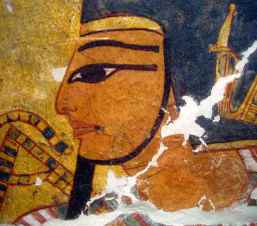
joseph_egyptAnd it’s the same danger we find them facing this week as Jacob and his family settle comfortably in Goshen, which is in Egypt, and ruled by Pharaoh. Today, as we read Vayigash, Pharoah, King of Egypt knows Joseph and seeks to continue the profitable relationship between Egypt and Jacob’s family. Tomorrow, a new Pharoah will arise who does not know Joseph. That’s the way it’s always happened. Jews believe it will happen again.

According to the Talmud, as the Messianic era approaches, the world will experience greater and greater turmoil: Vast economic fluctuations, social rebellion, and widespread despair. The culmination will be a world war of immense proportion led by King Gog from the land of Magog. This will be a war the likes of which have not been seen before. This will be the ultimate war of good against evil, in which evil will be entirely obliterated. (Ezekiel ch. 38, 39; Zechariah 21:2, 14:23; Talmud – Sukkah 52, Sanhedrin 97, Sotah 49)

What is the nature of this cataclysmic war? Traditional Jewish sources state that the nations of the world will descend against the Jews and Jerusalem. The Crusades, Pogroms and Arab Terrorism will pale in comparison. Eventually, when all the dust settles, the Jews will be defeated and led out in chains. The Torah will be proclaimed a falsehood.

“End of Days”
from the “Ask the Rabbi” series
Aish.com

Israel and her people, the Jewish people, will be rescued when Moshiach comes. But until then, we in the church have a responsibility to make sure the Holocaust or anything like it does not happen again in our towns, in our cities, and in our nations. In solidarity, we can also fast on the Tenth of Tevet, which this year is on Sunday, December 23rd.

Peace be upon Jerusalem and may the Messiah come soon and in our day.

Good Shabbos.

Separating Good from God

returning-the-torahThe campaign of the Greeks was aimed to “make them forget Your Torah and violate the decrees of Your will” (Sidur p. 59); as the Midrash (Bereishit Raba 16) puts it, (the Greeks demanded) “Write…that you have no share in the G-d of Israel.” It was a war against G-d. “Let them study Torah,” the Greeks implied. “Let them practice the justice-mitzvot and the ‘testimonial’ observances. But they must not mention that the Torah is G-d’s Torah and the mitzvot are the decrees of His will. Torah and mitzvot must be severed from G-dliness.”

“Today’s Day”
Thursday, Tevet 2, Seventh Day of Chanuka, 5703
Compiled by the Lubavitcher Rebbe
Translated by Yitschak Meir Kagan
Chabad.org

Why should any religion get the credit for people doing good, but not get the credit for people doing bad?

I think it should be consistent either way, don’t you? Either the church gets all the credit or none of it. You can’t just give it the good and ignore the bad.

-comment from NotAScientist
on my blog post
When Christians Do Good

Typically, one of the criticisms non-religious people level against Christians and other people of faith is that we need some sort of excuse to do the right thing. We use our faith and our religion as an external motivator to do good when, as human beings, we should just know how to do good and do the right thing because it’s the right thing.

This gets muddied up further when definitions about what “right” happens to be differ between religious and non-religious populations and certain social priorities and “causes” become involved. Then too, the matter of the “supernatural” vs. the “rational” is also injected into the argument, with rational, scientific atheism and secular humanism weighing in on the side of “thinking” as opposed to “believing”.

In doing a little research into “atheist advertising” for this blog post, I found a number of clever slogans that atheists use to promote their particular viewpoint. One was on the side of a New York City bus and read…

“You don’t have to believe in God to be a moral or ethical person”

The ad then provided the URL to the New York City Atheists website (see the story at The New York Times for details).

But that takes us back to the “Today’s Day” quote at the top of this blog post and interestingly enough, Chanukah.

As you’re reading this, Chanukah has just ended (at sundown Sunday night) but the lessons it teaches us are still fresh in my mind. Why would the Greeks be content to continue to allow the Jews to perform the Torah mitzvot and to do justice, as long as they divorced those moral and ethical deeds and the Torah itself from the God of Israel? If you donate food to your local food bank because you believe that helping others is the right thing to do, and I perform the same act in response to the will of God, what difference does it make? Hungry people are still fed either way, right?

atheist_christmas_adWell yes, hungry people are still fed either way. Someone can enjoy a donated meal without wondering about the motivation of the person who provided it. Their belly will be just as full and they can feel just as grateful to the person who helped them out. I can understand why an atheist would make such a statement, but why would the ancient Greeks, who had no end of gods of their own, want to say something like that about the Jews? Why separate the good deed from the ultimate author of the good deed, God?

Pinchas arose and wrought judgment, and so the plague was checked.

Psalms 106:30

The word tefillah, or “prayer,” has its origin in the word pallel, which means “to seek justice.” Prayer should therefore be an activity whereby one seeks justice. The first recorded prayer in Jewish history is that of the Patriarch Abraham. He sought justice for the people of Sodom and pleaded with God to spare them (Genesis 18:23-33). Thus, when we pray, whether for ourselves or for others, it should be with the understanding that we are seeking justice.

How, then, can we ask of God to grant our various requests? Are we deserving of this? Do we deserve them? Are they within the realm of justice?

Two answers come to mind. If, as part of our prayers, we admit the wrongs we have done, sincerely regret them, and commit ourselves not to repeat them, then we may indeed be deserving. We therefore do not make our requests on the basis of what we are, but on the basis of what we will be. Second, if we extend ourselves by forgiving people who have offended us and acting with kindness toward them, then God’s acting accordingly toward us can in itself be considered justice.

Thus, teshuvah (the process of regret and return) and gemilas chasadim (acts of kindness) are the foundations of prayer.

Today I shall…

try to do teshuvah, and to act toward others in a way that I wish God to act toward me.

-Rabbi Abraham J. Twerski
“Growing Each Day, Tevet 1”
Aish.com

I don’t have some wise commentary or a learned sage to draw from to answer the question I posed above, but there seems to be one difference between the atheist’s motivations and the reason a person of faith does good: the definer and creator of good.

If man is the final arbitrator of what is good and evil, then good and evil changes over time, changes between nations and cultures, and changes from one individual to the next. What I may consider good, another person may see as evil. What I can justify within my own conscience may be considered tremendously heinous within another’s moral structure.

But God is God. He does not change and thus what is good does not change.

And what is good?

And Jesus said to him, “Why do you call me good? No one is good except God alone.”

Mark 10:18 (ESV)

OK, it’s not that simple. I’ve mentioned before that religion and how we understand God evolves over time. Besides that, even just within Christianity, various denominations and even individuals who go to the same church can differ on a number of political and social issues in terms of what is “good” and “evil.” Should you pray for the well-being of President Obama or pray against his health and safety? You may believe the answer to that question is clear, but I promise you that no matter what your answer may be, there is a believer out there who has the opposite answer, and yet both of you believe you are in the right because of God and the Bible.

But even though we have that monkey wrench in the machine, I still believe it is better to seek out God in matters of right and wrong than to universally rely on our own judgment and feelings. I’ve been writing recently about the Sandy Hook school shootings and it is only the most recent of the many debates you will find on how to address violence in our society. What is the right thing to do? What is the ethical and moral thing to do in response to the death of 26 people, including 20 small children?

symmes_chapel_churchI don’t know.

I do know that even those of us who turn to the God of the Bible for our strength and our hope don’t always agree on the answer. How much more must a secular world with only the standard of public opinion dispute each other, disagree, and contend?

I don’t know the answer. But I am thankful that when I have to ask the question, I don’t have to ask another human being who is just as hurt, sorrowful, and angry as I am.

If my sense of right and wrong became detached from God, even if my basic behavior and my concept of what is good did not change, I would be at the mercy of the opinion of whatever group of people I chose to listen to or worse, I would have to depend upon the voice of my own personal thoughts and feelings.

I lift up my eyes to the hills. From where does my help come? My help comes from the Lord, who made heaven and earth.

Psalm 121:1-2 (ESV)

It was God who took a family and made them a people and a nation too numerous to count. If the Greeks had succeeded and caused the Jews to detach the Torah from God, Israel too would become detached and ultimately lost. It is God who redeems the soul of every living person and from whose hand we receive what each of us needs at its proper time. Without God, we too would be lost.

Mikeitz: Dreams and Nightmares

dreams-and-prisonThese concepts are reflected in this week’s Torah reading, Parshas Mikeitz, which focuses on the release of Yosef from prison. Yosef serves as an analogy for the entire Jewish people. For the name Yosef, meaning “increase,” refers to an infinite and unbounded potential for growth, (See Toras Chayim, Bereishis, 87b.) i.e., the soul we all possess, which is “an actual part of G-d from above.” (Tanya, ch. 2.)

Moreover, the prayer Rachel recited when naming Yosef, (Genesis 30:24.) “May G-d add on (yosef) to me another son (ben acher),” reflects the spiritual mission of the Jewish people. Entities which have hitherto been acher (“other” estranged from their G-dly core) are brought close and manifest the intimacy of ben (“a son”).(See Or HaTorah, Vayeitzei, p. 202a.)

The prison in which Yosef is held refers to the body, and to material existence as a whole. These tend to confine the infinite power of the soul and deny it expression. Although G-d gave man His Torah, His will and wisdom, (Tanya, ch. 4.) the Torah is also affected by the limits of material existence, and its G-dly source is not always evident.

-Rabbi Eliyahu Touger
“An End And A Beginning”
Commentary on Torah Portion Mikeitz
Chabad.org

Again, I can only relate to Chassidic mysticism in terms of its power to paint metaphorical pictures. We all exist in some sort of prison which seemingly prevents us from flying free. It could be an emotional restraint, a physical ailment, a spiritual lacking, anything, really. Sometimes God sends us on a quest in search of who we are and in the midst of it, we feel discouraged and uncertain. Have we taken the correct turn? Are we on the right trail? Should we turn back and start again? What if it doesn’t matter?

Yet Joseph the slave and Joseph the prisoner shows us that regardless of our environment and circumstances, and sometimes because of it, we can always be who God has created us to be. Then again, it sometimes takes someone like Joseph to teach us that lesson.

Once, when Rabbi DovBer of Lubavitch, the son of Rabbi Schneur Zalman of Liadi, was a young man, he was visiting with his father-in-law in Yanovitch. There he met with one of his father’s chassidim. The chassid noticed that the young ‘rebbe’s son’ was all too aware of his achievements in scholarship and meditative prayer and felt that some cutting down to size was in order.

Said the chassid to Rabbi DovBer: “Considering who you are and how you’ve lived, what’s the big deal? Your father – well, we all know who your father is. You were certainly conceived under the holiest of circumstances, and I’m sure that your father secured a most lofty soul to bring down into the world. Then you were raised in a rebbe’s home and great care was taken to mold your character and safeguard you from any negative influences. All your life you’ve been exposed to scholarship and sanctity and to this very day you’re preoccupied only with the study of Torah and the teachings of chassidism. So you’ve amassed a certain amount of knowledge and you pray with fervor and devotion. Big deal.

“Now, take me for example. My father was a simple man, and we can well imagine what was on his mind when he scraped out some dreg of a soul out the bottom of the barrel. My upbringing? I was raised as a goat and basically left to my own devices. And do you know what I do with my life? Let me tell you how I earn my living. I loan money to the peasants during the planting season and then, during the winter months, I make my rounds of their villages and farms to collect the debts before they have a chance to squander their entire harvest on vodka. This means setting out several hours before sunrise, well before the permissible time for prayer, equipped with a flask – for without a drink one cannot begin to talk business with a peasant. After drinking to his health, one must share a ‘l’chayim’ with the woman in the house as well – otherwise she can ruin the whole deal for you. Only then can you sit down to settle part of the account.

the_chassid“After three or four such stops I make my way home, immerse myself in the mikveh and prepare for prayer. But after such preliminaries, what sort of prayer would you expect…?”

The words of this chassid, who was, in truth, renowned for his refined nature and soulful prayers, made a deep impression on Rabbi DovBer. The young man immediately travelled home to his father and poured out his heart. He bewailed his spiritual state, saying that his service of G-d is worthless, falling so short of what is expected from him.

The next time the chassid from Yanovitch came to Rabbi Schneur Zalman, the Rebbe said to him: “I am most grateful to you – you have made a chassid out of my Berel.”

-Rabbi Yanki Tauber
“The Rebbe’s Son and the Chassid”
Commentary on Torah Portion Mikeitz
Chabad.org

In this tale, we see a reversal of what you might expect. The Rebbe’s son, who had every material and spiritual advantage, was basically a talented but spoiled brat. Something like who Joseph was as a teen prior to being assaulted by his brothers, thrown into a pit, and then sold into slavery (see Genesis 37). The Chassid, on the other hand, had virtually no advantages and lived a difficult life among rough and uncultured people, and yet he was “renowned for his refined nature and soulful prayers,” perhaps because of the lessons he was taught by such a life.

We see a dramatic change in Joseph’s attitude and behavior once he becomes a slave and continuing on during his imprisonment. He could have dissolved into despair, surrendered to the advances of Potiphar’s wife, and disappeared from the realm of spirituality altogether, but instead, he chose a different path. One that ultimately lead from the lowliest of positions to the exalted heights of both material and spiritual wealth.

The Rebbe thanks the Chassid from Yanovitch for making “a chassid out of my Berel.” How much more did slavery and imprisonment make a “chassid” out of Joseph…and what can it do for us?

In truth, there is no need to change the world, but only to illuminate it. For each thing has a place, and in that place it is good.

There is only one problem: It is dark. In the dark, there is no way to find the place for each thing. No way to know what belongs in your closet, ready for use, and what belongs in the laundry, waiting to be cleaned. And so, that which could be washed and used for good is despised as hateful, and that which is wholly good is used for evil.

Torah is light: it tells us the place of each thing. Shine it bright, and heal the world.

-Rabbi Tzvi Freeman
“Illumination”
Based on letters and talks of the Rebbe
Rabbi M. M. Schneerson
Chabad.org

in-the-darkThis, of course, is not easy because as the esteemed Rabbi says, it is “dark.” We can’t see a thing. While we may know that we are to illuminate our world, imagine coming to that realization if you are Joseph in slavery or Joseph in prison. How is this to be done? You have no hope. You will never see your family again. You will never see your home again. You will forever be trapped in a foreign land among strangers. Even if you adapt, seem to fit in, learn to walk among them, you will never truly be one of them. Should you even try?

Make an effort to do the actions you fear to do and by this means lessen those fears. Think of a specific fear that stops you from doing something that would be beneficial for you to do, and take action.

-Rabbi Zelig Pliskin
“Daily Lift #667, Act On Your Fears”
Aish.com

You can cower and hide, imprisoned by your nightmares…or you can rise up from the darkness and live your dreams in the light.

Happy Chanukah and Good Shabbos.

Tales of the Early Church and Judaism

early_judaismWhile the apostles in Jerusalem debated about whether or not to receive Cornelius the God-fearer and his household into the Way, the message was already spreading to Gentiles in other places. Gentiles in the faraway kingdoms of Adiabene and Osroene were learning about the God of the Jews and His Messiah.

The Syriac-speaking kingdom of Adiabene, with its capital at Arbela (modern Arbil, Iraq), straddled the highlands of what is today the Kurdish areas of Iraq, Armenia, and northern Iran. Adiabene was part of the Assyrian province of the Parthian Empire.

Torah Club, Volume 6: Chronicles of the Apostles from First Fruits of Zion (FFOZ)
Torah Portion Miketz (“From the end”) (pg 259)
Commentary on Acts 11:19-20
Additional Reading: Josephus, Antiquities 20:17-96/ii-iv; Eusebius, Ecclesiastical History 1.13

One of the objections I read about Volume 6 of Torah Club recently was its use of non-Biblical information sources. Apparently, this is a big deal for some people who previously found the Torah Club material very illuminating. I guess author D. Thomas Lancaster isn’t supposed to consider other historical documentation when writing about the late Second Temple period and the events surrounding the early church.

That’s pretty strange, since all competent historians and historical theologians review a wide variety of documents and artifacts when studying a specific topic and those documents are frequently referenced by such scholars when they publish their findings. All you have to do is read blogs by theologians such as the one maintained by New Testament scholar Larry Hurtado to see this process in operation. (Additionally, there are many scholars and students who caution us regarding taking everything we read in the Bible as literal fact)

King Abennerig welcomed the young prince into his court and the capital city of Charax Spasinu. Izates quickly won the affection of his host who gave him his daughter Samachos (Sumaqa, Aramaic for “Red”) in marriage and appointed him governor of one of his provinces.

Izates soon learned that Samachos had fallen under the influence of a Jewish teacher. She introduced him to a Jew named Ananias (Chananyah) and the religion of Judaism.

-Lancaster, pg 250

The conversion of Izates to Judaism is a rather well-known story , and it occurred more or less at the same time the Jewish apostle Paul was spreading the Gospel among the Jews and Gentiles in the diaspora. We know that Izates became a God-fearer and student of Judaism and eventually became circumcised and converted to Judaism, however, according to Lancaster, there is some speculation as to whether or not Ananias might have been a disciple of Jesus and a member of the Way. Some have even thought that Ananias might have been the same person we find here.

Now there was a disciple at Damascus named Ananias. The Lord said to him in a vision, “Ananias.” And he said, “Here I am, Lord.” And the Lord said to him, “Rise and go to the street called Straight, and at the house of Judas look for a man of Tarsus named Saul, for behold, he is praying, and he has seen in a vision a man named Ananias come in and lay his hands on him so that he might regain his sight.”

Acts 9:10-12 (ESV)

But unless there’s something more compelling than these two individuals having the same name, I’m not inclined to automatically believe they are the same person. Lancaster seems to take the reader down a particular road, not presenting it as fact, but rather as interesting speculation.

Readers of Josephus have often wondered if Ananias might not have been a believer. His type of active and aggressive proselytism seems more consistent with the disciples of Yeshua than it does with the rest of first-century Judaism. Like the Pauline school of thought, Ananias did not encourage Izates or any of his converts to undergo a formal conversion to become Jewish. He counseled Izates against doing so and encouraged him to remain uncircumcised.

Robert Eisenman speculates that Ananias the merchant is the same as Ananias of Damascus whom Paul encountered. Eisenman also mentions Armenian Christian sources that claim Izates and his mother converted to Christianity – not Judaism. At that early time, “Christianity” was still a sect of Judaism, not an independent religion that could have been defined outside of Judaism. Josephus would not have made the distinction.

Even if Ananias was not a believer or one of the apostles, he taught a type of Judaism for Gentiles similar to the teaching of the apostles.

Like Paul’s converts, Izates became an adherent of Judaism but not Jewish – not a proselyte either. He became a God-fearer.

-Lancaster, pg 250

ancient-rabbi-teachingThis certainly throws a monkey-wrench into the machine. Was Ananias a follower of the Way or not? Even if he wasn’t, he (apparently) was not converting Gentiles to Judaism but instead, going out of his way to make God-fearers and to teach them Judaism.

Again, and I can’t stress this strongly enough, all this is speculation and should be taken with more than a grain of salt. But then again, we have a lack of information regarding the “early church” and the spread of the various Judaisms of that day through their “apostles,” so when operating in a vacuum, we tend to fill the gap with our imagination, stringing the bits of scattered facts together with the thread of our personalities.

Izates ultimately ascended to the throne and his mother also became a student of Judaism (actually, before Izates did and without his knowledge). But while Ananias was content and even insistent that the King and his household not convert to Judaism, other Jews were not.

Sometime later, however, a certain Galilean Jew named Eleazar arrived in Adiabene. He was a sage and Torah scholar. King Izates heard about the arrival of the sage and invited him to visit the royal court. When Eleazar entered the palace, he found Izates seated, reading the Torah of Moses. Like Paul’s theological opponents, Eleazar of Galilee dismissed the God-fearer status as illegitimate. He had some sharp words for the uncircumcised king:

Have you never considered, O King, that you unjustly violate the rule of those laws you are studying, and you are an insult to God himself by omitting to be circumcised. For you should not merely study the commandments; more importantly, you should do what they tell you to do. How long will you continue to be uncircumcised? But if you have not yet read the law about circumcision, and if you are unaware of how great an impiety you are guilty of by neglecting it, read it now.

The king sent immediately for a surgeon. Izates completed his formal conversion to Judaism at Eleazar’s behest and under his supervision. His mother did so as well.

-Lancaster, pg 251

According to Lancaster’s sources, Izates and his mother Helena built palaces for themselves in Jerusalem as well as preparing tombs for themselves so after their eventual demise, they could be interned in the holy city. In fact, some part of this has been substantiated, as the “Tomb of the Kings” in East Jerusalem, north of the Old City walls, has been identified as the tomb of Queen Helena and her sons.

In reading this Torah Club commentary…

Helena submitted herself completely to the authority of the sages. Izates and Helena contributed vast sums toward the Temple…(Queen Helena) also had a golden tablet made and inscribed with the words of the vow of the bitter water for the woman suspected of adultery.

-Lancaster, pg 252

All of this is interesting to be sure, but what does it have to do with us? Even if we choose to buy the speculation that Izates and Helena were followers of the Way and converted to that particular sect of Judaism, since that time, Christianity and Judaism have diverged into radically different trajectories so that one has little to do with the other.

Tomb_of_the_KingsIn the Hebrew/Jewish Roots movement and its variants, there is a particular interest in just how non-Jews were integrated into that sect of Judaism that eventually became known as “Christianity.” I mentioned in Part 1 and Part 2 of my previous commentary on the Torah Club that the “conversion” of Cornelius and his household omitted any actual conversion to Judaism. Like Izates, Cornelius was taught Judaism but not circumcised. There’s no evidence that Peter deliberately discouraged Cornelius from a full conversion, but we don’t know what sort of decision making process occurred among the apostles between Peter’s encounter with Cornelius and Ananias’ encounter with Izates (and we have no real reason to assume that Ananias was also an apostle of the Way).

What we do know is that Izates did keep significant portions of Torah, adhering to Jewish customs and practices which we assume could have included keeping kosher, observing Shabbat, and performing the daily prayers. We certainly have evidence that Izates and Helena, before and after formal conversion, were generous to the Jews and donated to the Temple. This includes Helena purchasing vast quantities of grain and paying for it to be transported on ships to feed the hungry among Israel when she discovered a famine in Jerusalem and Judea (I can’t help but recall Joseph in Egypt in this instance).

Cornelius was also a devout man who observed the set times of prayer, donated funds for the benefit of the Jews, and that these acts were considered by God as a memorial (sacrifice) before him (see Acts 10:1-4). Given that Peter and the other Jews in his party spent several days in the home of Cornelius and likely ate with him and his household, Cornelius probably had kosher food available and maybe even kept a form of kosher himself.

In all this we can construct a model of what it was like (though facts are sparse) to be an early Gentile participant in the sects of Judaism including the Way. We have examples of Gentiles studying Torah and observing some of the mitzvot and either being discouraged when they expressed a desire to convert (Izates) or the option of conversion simply never arising (Cornelius). As we saw above, even Josephus was unlikely to have considered “the Way” as anything separate from the other Jewish sects of the late first century in which some Gentiles were partaking. It is on this basis that many 21st century Gentile believers are adopting some of the modern expressions of the mitzvot, including forms of observing Shabbat, keeping kosher, and davening at the set times of prayer.

Although 2,000 years have passed, there seems to be a hunger among some believers to try to recapture the flavor of the early Gentile disciples of the Way in order to access something they believe is more authentic about their faith. But while observing some of the mitzvot made perfect sense in a religious practice that was completely Jewish in the days of Peter and Paul, does it make any sort of sense now?

I don’t know. Theologically, I don’t think we can really say “no,” since we have precedent in the Bible and other sources, but on the other hand, the Bible and these other sources do not give us a clear picture of Gentiles who had not undergone full conversion observing the mitzvot in the same manner as the born-Jew. In fact, we see in the example of Izates and Eleazar, a definite Jewish objection to an uncircumcised Gentile studying the Torah without actually obeying it by converting to Judaism. This certainly suggests that some sects of Judaism required a Gentile to undergo full conversion prior to observance of the mitzvot, which apparently included even studying the Torah of Moses.

But as I’ve said repeatedly, information is sketchy. We’re not that certain of our facts. Which is a very, very good reason for people who believe they are certain that modern Christians must observe the full Torah mitzvot like a born-Jew or Jewish convert to re-examine their material and their assumptions. I believe Lancaster in this Torah Club commentary took liberties with his information and made certain assumptions to stimulate the imagination of his audience and to get us thinking “outside of the box.” But that’s a long way from saying that his assumptions are facts and that we must treat them as such, altering our faith and our observance accordingly.

pathIt’s interesting and even fun to take what little information we have available to us about the early church and to play a game of “what if.” It’s erroneous and even dangerous to forget that we’re just imagining and to believe the stories we’re building for ourselves. A life of faith is a life of exploration and discovery, but determining the difference between a bit of iron pyrite and a gold nugget is quite a bit harder than we might think.

A final word. If you are a Christian who feels drawn to certain of the mitzvot, if you are inspired by davening with a siddur, by observing the set times of prayer, by lighting the Shabbos candles, by giving tzedakah to the poor among Israel, I can see no reason to object to this. It is what Cornelius would have done. It is what Izates and Helena would have done. But unless you undergo formal conversion through a recognized Jewish authority (which includes circumcision if you are male), it does not make you Jewish nor does it obligate you to keep all of the Torah mitzvot.

While history records that King Izates and his mother fully converted to Judaism and accepted a life of Torah upon themselves, we have no knowledge that Cornelius or any of his household also did so. While Cornelius and his household observed certain of the mitzvot, we have no information that he considered this observance an “obligation” or a “right” but simply a matter of drawing nearer to the God of the Jews, who he came to know as the One God. If we choose to look at our own religious practice as a “drawing nearer” so that we may know God rather than something that is “owed” to us, then perhaps God will hear our prayers and bring us into His Presence in peace.

Vayeishev: Understanding, Living, and Courage

walking-side-by-side Recognize, please, to whom these belong…

Genesis 38:25

The arrival of a letter, adorned with official-looking stamps and seals, was quite an event at the small wayside tavern somewhere in the backwoods of White Russia. The simple tavern-keeper, who had never quite mastered the written word, ran to find the melamed he kept to teach his children.

As the teacher read the letter, the tavern-keeper turned white, uttered a small cry, and collapsed in a dead faint. For the letter contained most shocking and tragic news for this simple, good-hearted Jew: his beloved father had passed away.

Said the mashpiah Reb Michael of Aptask:

An outside observer witnessing the events described above may wonder: why does the tavern-keeper react so dramatically to the letter while the teacher is relatively unmoved? Who among the two better grasps and comprehends its contents if not the learned teacher? The other cannot even read and write!

Obviously, this is a ridiculous question. What if the teacher has a better appreciation of the vocabulary, sentence structure, and artful calligraphy with which the letter is composed? What if he better understands the background, the circumstances, the nuances of the event described? It is not his father who died!

True, Reb Michael would concluded, it is important to learn, to study, to comprehend. And the more one understands, the deeper one delves into the nature of his own existence, the world about him, and his relationship with his Creator, the better equipped he is to fulfill his mission in life. But objective knowledge alone is worthless. Unless one sees himself in the picture, the most profound of theories will yield no meaningful results. Unless one sees the subject matter as ‘his father’, a lifetime of study and discovery will have little bearing on life itself.

-Rabbi Yanki Tauber
“The Theory and the Father”
Commentary on Torah Portion Vayeishev
Chabad.org

Apparently, I’m a hypocrite. I don’t believe that I’m a hypocrite, but two individuals have called me one in the past few days. Here are a couple of examples from recent comments on my blog. The first one I present is pretty benign:

…since you are a gentile, dabbling in Messianic Judaism, “which is for Jews”, is a bit of a contradiction, technically you are muddying the waters, so to speak. Would you not agree?

The second example, on the other hand…

I will tell you that you are a hypocrite in your face. I don’t play nicely nicely with the truth. I have to chastise one who does not play with a full deck…You fell for false teaching and with your blog you are causing people to stumble…Go home……

Supposedly, because I advocate for the Jews having a unique covenant relationship with God and that they have a special role beyond any other people or religious group, including Gentile Christians, I have a problem. Actually, the problem is supposed to stem from the fact that I advocate for the above and yet I also involve myself, as a Christian, in the affairs of Messianic Judaism by writing commentaries on the movement. I suppose the fact that I very often quote from Jewish religious and educational sources just adds to my “problem.”

But does that make me a hypocrite?

Just a few days ago I said:

We serve One God and we have one Messiah King who will return to rule over all of Creation. As servants and sons, we each have our roles and duties. We can’t afford to let our limitations, biases, and human ambitions restrict who we are and who God created us to be…both the Jew and the Gentile. Christian support of Israel does not mean taking control of the process of defining Israel. It’s allowing the Jewish people and nation the space to define themselves, and supporting them in this effort through whatever means are at our disposal. That is a Christian’s unique role and purpose in life. It’s time we start living it.

jewish-christianI tried to the best of my ability in the paragraph above to synthesize Christian and Jewish interactions and roles relative to mutual discipleship under the Messiah. Apparently, I failed, at least with the two people who objected to my blog post. I know most of you must be wondering why I’m even writing this. After all, only a few people (publicly) object to me while a much larger number seem to be more encouraging. Why express angst over just a couple of people who question my motives?

I’ve said time and again on this blog that I want to be fair. I want to consider other people’s viewpoints. If someone has a grudge or a beef with me, I have to ask myself if there is anything I’ve done to contribute to it. If there is, then there’s something within me that I need to change. If not, then at least I’ve looked in the mirror and asked myself a few hard questions before moving on.

It’s not that I expect everyone to agree with me all of the time, but it’s difficult for me to comprehend how even my critics can miss what I’m trying to say. It’s one thing to understand my message and to say, “I disagree,” and another thing entirely to misunderstand me to the point what I’m considered to be advocating one position while living out the opposite. Saying that I support Jewish covenant and identity uniqueness is not the same as saying that Jews must be walled up inside their compounds and have nothing to do with the Christians, particularly those of us who are involved with Jews and Jewish community. In my case, I’m married to a Jew. Are we supposed to divorce and live separately? Does my involvement with my Jewish spouse make me a hypocrite? The criticism doesn’t make sense.

I quoted Rabbi Tauber’s story above because it illustrates the relationship and the differences between knowing and understanding; between information and lived experience. The teacher understood the letters, words, and sentences contained in the message but the tavern-keeper experienced the true meaning and impact of what the letter actually said, including the importance of relationship and context. The teacher “knew” the letter while the tavern-keeper “lived” out the meaning and consequences.

I can “know” the “letters, words, and sentences” of the Torah, the mitzvot, and something of the Jewish writings to the limits of my education, but I can never “live” out the experiences, the meaning, the fabric of what it is to be Jewish, whether it is within the context of Messianic discipleship or otherwise. In saying, Recognize, please, to whom these belong, Tamar was calling Judah to acknowledge his unique identity as the father of her children (she was pregnant with twins) and (without realizing it) as the forefather of the Messiah.

I don’t believe that we Christians who stand alongside our Jewish brothers and sisters in the Messiah are hypocrites, either for actually standing by them or by discussing our relationship with each other. If such were the case, a great many writers and teachers, far more knowledgable and talented than I, would have to suffer the same accusation of “hypocrite” and, to serve the honor of Messiah, adjust our behavior accordingly.

contemplating-jumpingBut that would be psychotic.

Jewish and Gentile disciples of the Master are still united by one Messiah and one God. While Rabbi Dr. Michael Schiffman may say that Messianic Judaism and Christianity are two different and separate religions, he also said this:

I also believe Yeshua will bless those gentiles who truly love him. We acknowledge that the gentiles in Yeshua have a place in God’s heart. It makes them our brethren, just as our fellow Jews are our brethren. We are related to other Yeshua followers, just as we are related to other Jews. Nevertheless, Messianic Judaism and Christianity remain two separate religions, yet we have the same Messiah, Yeshua. That being the case, rather than beating each other up with statements of faith we require each other to affirm, it would be good if we just began by treating each other as brethren, loving and supporting one another. I have always been more happy affirming people than doctrinal statements.

That certainly doesn’t sound like he’s requiring isolation between Christians and Messianic Jews. How could he advocate for a complete separatist philosophy and still say that Christians and Jews should “began by treating each other as brethren, loving and supporting one another?” That seems to go along with a “Daily Lift” of Rabbi Zelig Pliskin:

When you build up your own courage, you will be able to serve as a coach to others. Some of the best courage coaches are those who had to struggle to attain the courage they now have. Since it didn’t come easy to them, they know what it’s like to lack the courage to do what others consider easy.

If you don’t yet have the courage you would like, let the knowledge that you will inevitably be able to help others serve as a further motivation to increase your own courage.

Recently, I’ve been encouraged and reminded that in writing this series of “morning meditations,” I’m encouraging others. These are words and actions we are supposed to live by.

Therefore encourage one another and build one another up, just as you are doing.

1 Thessalonians 5:11 (ESV)

Good Shabbos.

Vayishlah: Crossing the River

crossing-the-riverMany people are discouraged from even beginning a spiritual journey because they think it needs that huge leap of faith. They cannot see themselves reaching a degree of religious commitment which to them seems otherworldly.

-Rabbi Yossy Goldman
“A Ladder to Heaven”

Worshipping G-d in a foreign land is apparently very difficult. “Whoever lives outside the land it is as if they are worshipping idols” (Ketuvot 110b).

-Rabbi Jay Kelman
“Vayeze: Searching for G-d”
both articles found at
Hasidic Waves blogspot

That same night he arose, and taking his two wives, his two maidservants, and his eleven children, he crossed the ford of the Jabbok. After taking them across the stream, he sent across all his possessions. Jacob was left alone.

Genesis 32:23-25 (JPS Tanakh)

I actually hadn’t planned to write a commentary on this week’s Torah Portion Vayishlah but apparently my intentions don’t always dictate what I end up doing. Actually, the first two commentaries I quoted above are more related to the previous week’s Torah reading where Jacob leaves Canaan to escape his brother Esau and becomes an indentured servant to Laban, all for the sake of winning Rachel for a wife.

But if worshiping God in an alien land is like worshiping idols, what is it like to forsake that foreign land and return to the Land of Promise; the Land God was to give to the descendants of Jacob generations hence?

What is it like to return to community with God’s people in the church?

It ain’t easy.

No, it’s not like I’ve been “worshiping idols” in a “foreign land,” but we all cross thresholds and transverse boundaries.

“For you have wrestled with G-d and man, and have prevailed.”

Genesis 32:29

In ancient Near Eastern understanding, the crossing of a river was a symbol of new beginnings and a new start – a sort of rebirth. That is why there is a purposeful connection with the name of the river (Yabok) and the word vaye’avek – to wrestle/struggle. It was here, at the river of a new beginning in Jacob’s life that he also received a new name – and a new identity – Israel.

-Rabbi Joshua Brumbach
“Wrestling with the Divine”
Yinon Blog

I suppose moving an unmovable rock could be considered a “new beginning” but in reality, it’s just one step in a process. Sort of like how Rabbi Goldman describes it:

There is a ladder, a spiritual route clearly mapped out for us; a route that needs to be traversed step-by-step, one rung at a time. The pathway to Heaven is gradual, methodical and eminently manageable.

Many people are discouraged from even beginning a spiritual journey because they think it needs that huge leap of faith. They cannot see themselves reaching a degree of religious commitment which to them seems otherworldly. And yet, with the gradual step-by-step approach, one finds that the journey can be embarked upon and that the destination aspired to is actually not in outer space.

One way some Jewish sages look at Jacob’s Ladder is as the process of prayer. I’ve also mentioned prayer recently, and all of this seems to fit together. Learning to pray is a process but it is also part of a larger process of learning to draw closer to God. A relationship with God, in some ways, is like any other relationship in that its development is not linear. There are closer times and farther apart times. There are sudden rushes of heat and long periods of icy cold. Then there is just tons and tons of lukewarm.

Jacob's-Ladder1Jacob was terrified of the changes he would have to undergo and for good reason, both in leaving Canaan and in returning. In each case, he was facing the unknown. He left Canaan with nothing, and returned with a fortune and a family. Then, he had a personal encounter with God and did not escape it unscathed. As Derek Leman said recently, “The unthinkable can happen. The faith of God’s people will not prevent hard times.” Just because you’re doing God’s will or believe you are, doesn’t mean bad stuff isn’t going to happen.

Where did we get the idea that a life of holiness was also a life of safety?

And yet a life of faith isn’t always immediately fatal, either. Jacob lived to a good old age and died in comfort after blessing his sons, though he died in an alien land, so perhaps worshiping God there was as “dimmed” for him in Egypt as it was in Haran (although God did promise He would go down into Egypt with Jacob – Gen. 46:1-4).

In returning to church, some might say I have returned to the “Holy Land” and others would say I was “worshiping idols.” I suppose both opinions are extreme and reality is somewhere in the middle. But in the middle (and everywhere else), there is God.

Do not forsake me. I am crossing a river. I am wrestling with I don’t know what. I am carrying that which belongs to me. I can’t see what is up ahead.

What do you think is a rabbi’s fantasy? A guy walking into my office and saying, “Rabbi, I want to become ‘frum’ (fully observant), now tell me what I must do”?

Is that what I lie awake dreaming of? And if it did happen, do you think I would throw the book at him and insist he did every single mitzvah from that moment on? Never!

Why not? Because a commitment like that is usually here today and gone tomorrow. Like the popular saying goes, “Easy come, easy go.” I’m afraid I haven’t had such wonderful experiences with the “instant Jew” types.

The correct and most successful method of achieving our Jewish objectives is the slow and steady approach. Gradual, yet consistent. As soon as one has become comfortable with one mitzvah, it is time to start on the next, and so on and so forth.

Then, through constant growth, slowly but surely we become more knowledgeable, committed, fulfilled and happy in our faith.

-Rabbi Goldman

yeshiva1While this commentary is directed as Jews, with just a few adjustments, it can fit the rest of us as well. In pursuing any endeavor, there’s a desire to jump from “A” to “Z” as quickly as possible, but even if it can be done, this quick hop, skip, and jump method might not be the best. Getting there too quickly doesn’t allow us to experience what we need to learn along the way by taking each step slowly and deliberately. Of course, there’s also a matter of direction as Rabbi Goldman tells us.

When my father was in yeshiva, his teacher once asked the following question: “If two people are on a ladder, one at the top and one on the bottom, who is higher?” The class thought it was a pretty dumb question — until the wise teacher explained that they were not really capable of judging who was higher or lower until they first ascertained in which direction each was headed.

If the fellow on top was going down, but the guy on the bottom was going up, then conceptually, the one on the bottom was actually higher.

And so my friends, it doesn’t really matter what your starting point is or where you are at on the ladder of religious life. As long as you are moving in the right direction, as long as you are going up, you will, please G-d, succeed in climbing the heavenly heights.

Like Jacob’s ladder, it is not only important to make sure that we carefully place our hands and feet upon every rung, but that we verify we are traveling in the direction that will lead us higher. Like “Jacob’s river,” we must know when in our “new beginning,” we are leaving God’s desired place for us, and when we’re returning, for God sometimes sends us in either direction. How much we have, what we’ve accomplished, and what hardships we must endure after the crossing won’t always tell us where we are and where we’re going. We can only know by keeping our eye on the path…and the goal.