Tag Archives: Torah

What is Messianic Judaism?

Every society has that which bonds it: A common ancestry and a system of patriarchal lineage. Or a common language or common borders or governing body. Usually, it is a combination of several factors that mold a mass of people into a single whole.

The Jewish people are unique in that they have only a single nucleus—and it is none of the above.

All that bonds us is Torah. Nothing else has proven capable of holding us together for more than a generation or two. Nothing else, other than the same Torah that first forged us as a nation.

-Rabbi Tzvi Freeman
“Jewish Nucleus”
Based on letters and talks of the Rebbe
Rabbi M. M. Schneerson
Chabad.org

When I became a follower of Yeshua, it was not a rejection of the God of Israel, but, on the contrary, a belief that Yeshua was a fulfillment of God’s promise to Israel. I did not stop being a Jew, and did not stop living as a Jew. On the contrary, believing Yeshua to be the Messiah made me want to be more observant of the Torah than before. Believing in Yeshua enhanced my Jewishness rather than lessen it.

Whatever my experience is, it is not a conversion to Christianity. I do not criticize Christian practice, but simply state the fact, that their practices are not my practices, their form of worship is not mine. Whenever I have visited a church, I have felt out of place, like I was in someone else’s living room. Their culture was not my culture, their practices were not my practices. Their understanding of Scripture is not mine. The only conclusion is that their religion is not my religion.

I feel at home in the synagogue, any synagogue. Their practices and beliefs are familiar to me. Their understanding of God and of His love for our people resonate with mine. While traditional synagogues don’t acknowledge Yeshua, nevertheless, He is there. For me, He is the Messiah of Israel.

-Rabbi Dr. Michael Schiffman
“Messianic Judaism and Christianity: Two Religions With The Same Messiah”
Drschiffman’s Blog

What is Messianic Judaism? Who is a Messianic Jew? These are questions I’m probably not qualified to ask let alone answer, but I have a special interest in the topic for a number of reasons. One important reason is that I’m a Christian husband married to a Jewish wife, so I am keenly aware of the intersection between our two outlooks on faith, the Messiah, and God as it expresses itself in our family life (I also have three Jewish children to add to the mix).

On top of that, most of my “Christian” religious life has been spent worshiping within the context of a One Law congregation (which isn’t really “Messianic Judaism” but I’ll explain that by the by). Within that venue, I gained an appreciation of (if not an actual proficiency in) Jewish religious thought and practice. I find not only many of the mitzvot quite beautiful and meaningful, but the symbolism and conceptualization behind the mitzvot, as the Rabbinic sages have expressed it, to be illuminating of God and oddly enough, my own Christianity.

Additionally, I have enough friends and acquaintances who are Jewish and Messianic and I desire to understand them and their unique experience better. That understanding I believe, will be critical for the Christian church as a whole (if the church can be said to represent a whole) to grasp as the days of the Messiah draw near and he calls His people Israel to return to him along with the nations of the world (“first to the Jew,” however). Without a firm foundation in the “Jewishness of Jesus” and how our world will one day be ruled by a Jewish King descended from the Throne of David, the traditional Christian will become lost and unable to connect to who and what Jesus truly is and what it actually means to be a Gentile disciple of the Messiah.

In addition to the Rabbis I’ve quoted from above, this “meditation” was inspired by a series my friend Judah Gabriel Himango has just started on his own blog called The State of the Messianic Movement. He intends to examine the three overarching groups that exist under the “Messianic” umbrella: Jewish Christianity, Messianic Judaism, and Hebrew Roots. This should require a definition of each of these terms and what (and who) they represent.

For myself, I’ve found that my understanding of what “Messianic Judaism” is has morphed over time. I used to think the term was a big “bucket” that contained what I thought of as Messianic Judaism proper, or groups of primarily Jewish people who worship Jesus as Messiah, One Law, which are groups of primarily non-Jews who believe that the Sinai covenant and its conditional statements, the Torah, are applied with perfect equality between Gentile and Jewish believers, and Two-House, which is made up of groups of primarily non-Jews who believe that their attraction to Torah and Judaism means they are “hidden” Jews who are descended from the “Lost Tribes of Israel.” (By necessity, these definitions are brief and do not contain all of the details and nuances to completely describe each group)

It would take too long to explain how and why I changed my paradigm for understanding Messianism, but a large part of the process was watching my wife rediscover her own Jewish identity during the last several years, moving from atheism, to traditional Christianity, to One Law, and then entering the community of Jews locally, first in our combined Reform-Conservative shul, and then finally becoming involved with the Chabad. I can say all that in a single sentence, but the reality of the experience is extremely complex and involved and having lived through my wife’s journey as her Christian husband (often observing but not significantly able to participate), it has been a remarkable and life-changing progression.

The missus and I were sitting at the kitchen table taking about subjects related to this and we landed on the “hot topic” of whether or not she thought Messianic Jews were Jews. Her answer surprised me just a little. She said that non-Jews who converted to Judaism but who did not renounce other religions (including or perhaps especially Christianity) were not Jews. During the last part of the conversion process, the almost-convert is asked if they voluntarily surrender any and all affiliations to any other religions or faith traditions. If they expect to complete the conversion and enter the mikvah, they always answer “yes”. If they answered “yes” but retained a faith in Yeshua (Jesus), then they lied and their conversion is null, as far as she’s concerned. If, for some reason (and I’ve heard unsubstantiated rumors of this occurring occasionally), the officiating Rabbi fails to ask the question and the convert continues to silently harbor a faith in Yeshua, then again, as far as my wife is concerned, the conversion isn’t valid. A non-valid conversion means the person entered and exited the mikvah as a Christian. End of story.

On the other hand, if a halalaic Jew in any way shape or form, came to faith in Jesus and worshiped him as Messiah, as mistaken as my wife thinks that person is, they are still a Jew. It would be like a Jew who practiced Buddhism or some other religious tradition. They’d still be Jewish. Her brother, for instance, is a born-again Christian and as far as I know, he continues to deny that his mother (and my wife’s mother) was Jewish (my mother-in-law passed away many years ago). To look at him, his wife, and his children, they are the perfect picture of a traditional Christian family. The idea of being Jewish just doesn’t compute within him and I’m sure he doesn’t understand why my wife and children consider themselves Jews. Nevertheless, if he should walk into our local Chabad synagogue on any given morning, and the Rabbi was aware of his status, he could still join the minyan for Shacharit prayers.

I’ve said everything above by way of introducing my humble definition of Messianic Judaism.
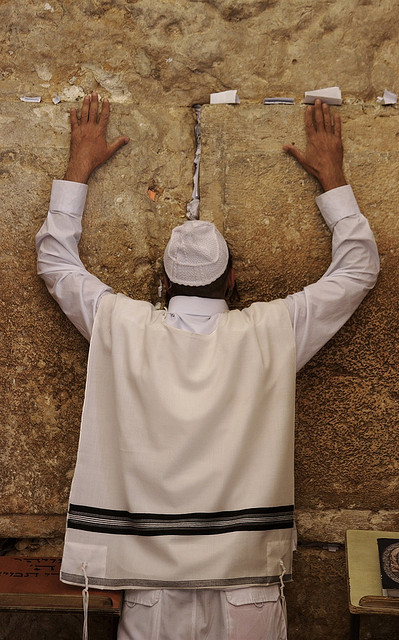
First of all, as Dr. Schiffman said on his blog, Messianic Judaism isn’t Christianity. Oh, it shares a number of common elements, not the least of which is the same Messiah. Jesus the Christ is the same guy (forgive me if that seems irreverent) as Yeshua HaMashiach. He is the Lord, the Savior, the Jewish Messiah King, who came once to redeem the world and who will come again, in power to redeem and restore Israel and to rule all of humanity.

However, who we are as disciples of the Messiah makes a huge difference. Regardless of how the movement of “Jesus worshipers” was started, first among the Jews and then among the Gentiles, 2,000 years later, Jews and Christians represent two wildly differing cultures and practices. As Dr. Schiffman said, he doesn’t feel comfortable in a church. He doesn’t belong there. His “spiritual home,” if you will, is the synagogue, any synagogue, Messianic or otherwise. I know of at least one other Jewish person who is Messianic and yet attends an Orthodox synagogue. I suspect there are others who quietly worship in their Jewish communities and yet who nurture a deep faith in Yeshua.

What is Messianic Judaism given all of this? In my opinion, it is a Judaism in the same manner as Orthodox Judaism, Conservative Judaism, Reform Judaism, and so on. It is an expression of religious and halalaic faith and devotion of Jewish people as they relate to the Torah and God. It is the lifestyle, cultural, ethnic, religious, and halalaic context within which each Jew is Jewish. Most, if not all of the other modern Judaisms will certainly disagree with my opinion as will most Christians and the vast majority of non-Jews who are attached to the Hebrew Roots movement in some manner or fashion. So they’ll disagree.

My definition of a Messianic Jew is a person who is halachically Jewish and who practices a form of religious Judaism which includes acknowledging the person of Jesus (Yeshua) as the Jewish Messiah King, and who acknowledges the legitimacy of the Gospels, the Letters, and the Apocrypha in what most people call “the New Testament” as valid for “teaching, for reproof, for correction, and for training in righteousness, that the man of God may be complete, equipped for every good work.” (2 Timothy 3:16-17 ESV) This person’s ethnic, cultural, religious, and lifestyle practice should be virtually indistinguishable from any other religious Jew (it would be interesting to find out if various Messianic Jews pattern their halakhah after different sects, such as Orthodox or Reform, but I lack information here). As Dr. Schiffman said, a Messianic Jew practicing Messianic Judaism (sorry if this sounds redundant, but it’s important to be clear on this point) should look and act the same as any other religious Jew from the viewpoint of an outside observer.

The twist is that there aren’t (probably) that many Messianic Jews practicing Messianic Judaism as I’ve just defined those terms. Even in synagogues that are strictly Messianic Jewish, that is, shuls that are governed by a halachically, ethnically, religiously, and culturally Jewish board, Rabbi, Cantor, and so on, the majority of attendees will still be non-Jewish. The type of synagogue practice should again, be indistinguishable from any other synagogue apart from portions of prayers and services that acknowledge Yeshua as the Messiah and the heir to the Davidic throne. Synagogues like this are most likely very rare in the western world. I’ve only attended one in over ten years of being aware of Messianic Judaism, and I only visited there last spring.

So, while it’s understood, from my perspective, that Messianic Jews practice Messianic Judaism, do the non-Jewish attendees also practice Messianic Judaism alongside the attending Jews? The answer to that question is probably the same as asking if I practiced Judaism when (this was years ago) I attended our local Reform-Conservative synagogue with my Jewish wife and our children.

In other words, “no”. I certainly worshiped the God of Abraham, Isaac, and Jacob, and privately in my own heart, acknowledged my Lord and the King of the Jews during the prayers, but I was a Gentile among Jews in a completely Jewish context. From their point of view, the best they probably thought of me was as a righteous Gentile, and it’s not unusual for Noahides to worship alongside Jews (where else would they go?). In fact, I know of many Christians who periodically or (for a few) regularly worship in one of the local synagogues, either because they’re intermarried like me, or they have some other affinity for the Jewish people and for Judaism.

In a sense, whether you worship in a church or a synagogue (assuming you are a believer in Jesus as the Jewish Messiah) depends largely on your sense of personal identity and in which culture you feel more comfortable. This isn’t really unusual. Some Jews feel more comfortable in an Orthodox synagogue than those of the other Jewish sects, and some Christians feel more comfortable in a Lutheran or Baptist church than in a Methodist or Episcopal church. Some of that is theological, but a lot of it is cultural and believe me, different Christian denominations have their own cultures. So why not different Judaisms?

I’m sure my descriptions and definitions are far from complete, but trying to define Judaism in any sense, let alone Messianic Judaism, is a very difficult and involved task. This is really more of an introduction than anything, but as I said, some of the material I’ve been reading lately has been tugging at me and I needed to respond. As always, many people will disagree and many people will become upset, troubled, and even incensed and outraged. I’ve talked recently about how poorly some people tend to respond when another person disagrees with them online.

It’s OK if we don’t agree. Please try not to take it personally. As I live with Jewish people every day, I’m kind of in tune with how they are like me and how they are not like me. I’m just extending that personal awareness into a public arena. Your mileage may vary.

Sukkot and Simchat Torah: Abundant Life

Without Torah it is impossible for an individual to say that his life is full of things that cause him to offer G-d thanks; even if he enjoys mostly good times, he still cannot consider himself to be vitally alive, as most of a person’s time is occupied with food, drink and sleep, earning a living, etc.

A Jew, however, is inextricably bound to the “Torah of life,” and is therefore able to imbue all that he does with life; even while engaged in mundane affairs he cleaves to G-d by remembering that “All your actions should be for the sake of Heaven,” and “In all your ways shall you know Him.” (Mishlei 3:6; Tur and Shulchan Aruch , Orach Chayim 231.)

The result? “And you who cleave to the L-rd your G-d are entirely alive ,” (Devarim 4:4.) every moment of every day. Thus a person can and must thank G-d for granting him life and enabling him to reach this occasion.

“Shehecheyanu for Torah”
from “The Chassidic Dimension” series
Lesson for Berachah and Simchas Torah
Based on the teachings of the Lubavitcher Rebbe
Rabbi Menachem M. Schneerson
Chabad.org

I periodically encounter some Jewish teachings and commentaries that apparently elevate the Jewish people at the expense of everyone else in the world. That is, it seems as if, at least in some corners of Judaism, that Jews see themselves as more spiritually elevated than Gentiles, regardless of any particular Gentile’s religious tradition, including Christianity. At first blush, this seems to smack of elitism if not downright bigotry, but we should remember that through the vast majority of Jewish history, at one time or another, most of the non-Jewish nations have tried to evict, enslave, or exterminate the Jews, in part, because of their “choseness” by God as a people.

It is a fact that God did give the Torah to the Children of Israel and it has been passed down, generation by generation to their modern descendents, the Jewish people. Yes, there was a “mixed multitude” of Gentiles standing with the Israelites at Sinai who also agreed to the full conditions of the covenant, but within a few short generations, not one distinctly Gentile person remained among Israel according to the Biblical record. They had all been completely assimilated into larger Israel, and their descendants became indistinguishable from Israelites who were fully, genetically descended from Abraham, Isaac, and Jacob.

So if we choose to believe that without the Torah, the full yoke of the 613 mitzvot, (or those two hundred and some that can be performed today, especially outside the Land of Israel) that life cannot be lived to the fullest, then are the Jews saying that we Gentiles do not truly live our lives full of all good things?

Perhaps, at least according to the Chassidic Dimension reading I quoted above. But that’s not the end of the story, particularly for Christians.

In the beginning was the Word, and the Word was with God, and the Word was God. He was in the beginning with God. All things were made through him, and without him was not any thing made that was made. In him was life, and the life was the light of men. The light shines in the darkness, and the darkness has not overcome it.

And the Word became flesh and dwelt among us, and we have seen his glory, glory as of the only Son from the Father, full of grace and truth.

John 1:1-5, 14 (ESV)

Truly, truly, I say to you, whoever hears my word and believes him who sent me has eternal life. He does not come into judgment, but has passed from death to life.

“Truly, truly, I say to you, an hour is coming, and is now here, when the dead will hear the voice of the Son of God, and those who hear will live. For as the Father has life in himself, so he has granted the Son also to have life in himself. And he has given him authority to execute judgment, because he is the Son of Man. Do not marvel at this, for an hour is coming when all who are in the tombs will hear his voice and come out, those who have done good to the resurrection of life, and those who have done evil to the resurrection of judgment.

John 5:24-29 (ESV)

So Jesus again said to them, “Truly, truly, I say to you, I am the door of the sheep. All who came before me are thieves and robbers, but the sheep did not listen to them. I am the door. If anyone enters by me, he will be saved and will go in and out and find pasture. The thief comes only to steal and kill and destroy. I came that they may have life and have it abundantly.

John 10:7-10 (ESV)

It appears that the Gospel of John, the most “mystic” of the Gospels, at least according to Paul Philip Levertoff, has a lot to say about the life we have in Jesus Christ. And if indeed the Master is “the Word made flesh” who lived among his people, and he thus commanded his Jewish disciples to pass on that Word and make disciples of the nations of the world, then although we do not possess the Torah as the Jews do; as the set of conditions they must fulfill as part of the Sinai covenant, we possess the essence; the life of “Torah” in our faith and our salvation. We possess life to the fullest and have it abundantly.

Can we not also consider ourselves now “vitally alive” as the Jewish people do? Does that life not cause us to cry out in thanks and joy to God for all of His love, gifts, and provisions, even at those moments when we may be suffering?

Yahrtzeit of Rebbe Nachman of Breslov (1772-1810), founder of the Breslov chasidic movement. Rebbe Nachman lived in Poland and the Ukraine, where he inspired thousands of Jews to greater love of God. Though he suffered the loss of his son and wife, Rebbe Nachman said: “You may fall to the lowest depths, heaven forbid, but no matter how low you have fallen, it is still forbidden to give up hope.” A few of his most famous teachings are: “It’s a great mitzvah to always be happy,” and “All the world is a narrow bridge — but the main thing is not to be afraid” (now a popular Hebrew song, Kol Ha-Olam Kulo). Every year on Rosh Hashana, tens of thousands of Jews travel to Uman (Ukraine) to pray at the gravesite of Rebbe Nachman.

Day in Jewish History, Tishei 18
Aish.com

A chassid once traveled to one of the Chabad rebbes. He related to the rebbe that his deceased teacher had appeared to him in a dream with a frightening message: it had been decreed in heaven that one of this chassid’s children would pass away that year.

The rebbe heard his words, sighed, and remained silent. A reaction that certainly did not bode well.

As it was shortly before the holiday of Sukkot, the chassid remained till after the holiday. When it was time for him to return home, he approached the rebbe for his blessing. The rebbe happily assured him that his family would be well.

“Besides,” the rebbe asked, “what special deed did you do on Simchat Torah?”

The chassid recounted how during the hakafot he was standing on the side crying when he remembered that, after all, it was Simchat Torah! He washed his face and joined the dancing, ignoring his dread.

“You should know,” the rebbe said, “this is what caused the change in your situation.”

-Rabbi Yossy Gordon
“The Power of Joy”
Commentary on Sukkot and Simchat Torah
Chabad.org

He will wipe away every tear from their eyes, and death shall be no more, neither shall there be mourning, nor crying, nor pain anymore, for the former things have passed away.”

Revelation 21:4 (ESV)

But that the dead are raised, even Moses showed, in the passage about the bush, where he calls the Lord the God of Abraham and the God of Isaac and the God of Jacob. Now he is not God of the dead, but of the living, for all live to him.”

Luke 20:37-38 (ESV)

We are called not just to abundant life but to joy through our salvation in Christ. The Jewish Messiah allows us to partake in the blessings of such a completely full life that even in our tears, when we allow ourselves to be completely aware of God and His Presence among us, within pain and grief, there is still the light of joy. We are alive, and even those who have passed on to the “long sleep” remain alive in Him.

the-joy-of-torahIt’s difficult to communicate to most Christians the sheer happiness and celebration that is attached to Sukkot and Simchat Torah unless they’ve actually participated in those events and let themselves be immersed in such joy. And yet, even if we don’t “get” these or any of the other Jewish festivals, we should get why they are celebrating. The reason they’re celebrating is the same reason we should be celebrating. God is with us. How can we not feel completely, intensely alive?

Before we came to God through Christ, we were dead in our sins, completely separated from our Creator and so numb spiritually, that we lacked the ability to even be aware of God. (see Ephesians 2:1, Colossians 2:13) Now we are not only alive, but abundantly and exceedingly alive. We have life to the fullest. We have life that extends beyond the mere beating of our hearts. We are alive in God.

This is the day that the LORD has made; let us rejoice and be glad in it.

Psalm 118:24 (ESV)

Good Shabbos and Chag Sameach.

Ha’azinu: Between Heaven and Earth

Why did Moshe address the earth as well as the heavens? And why did Yeshayahu address the heavens as well as the earth? Why did they not confine themselves to speaking to the realm closest to them?

The answer to these questions depends on a fundamental tenet of Judaism: we must relate to both earth and heaven. For material and spiritual reality are meant to be connected, instead of being left as skew lines. Judaism involves drawing down spiritual reality until it meshes with worldly experience (Moshe’s contribution), while elevating worldly experience until a bond with the spiritual is established (Yeshayahu’s contribution). (see Rambam, Commentary to the Mishnah (Sanhedrin 10:1), the seventh and eighth of the Thirteen Principles of Faith)

Indeed, the two initiatives can be seen as phases in a sequence. By revealing the Torah, Moshe endowed every individual with the potential to become “close to the heavens.” Yeshayahu developed the connection further, making it possible for a person to experience being “close to heavens” while “close to the earth” involved in the mundane details of material life.

-Rabbi Eli Touger
“Close To The Heavens”
From the “In the Garden of Torah” series
Commentary on Torah Portion Ha’azinu
Chabad.org

This is something like what I’ve been trying to say in my Jesus, Halakhah, and the Evolution of Judaism series. There is a dynamic tension in Judaism between Heaven and earth; between God and man, between the Spiritual ideal and the practicality of performing the mitzvot in the secular world. Heaven never changes, but the world in which we live in changes all the time. As we see from Rabbi Touger’s commentary on this week’s Torah portion, we might very well say that a Jew has one foot anchored in Heaven and the other planted firmly on earth.

The Master said it this way:

But now I am coming to you, and these things I speak in the world, that they may have my joy fulfilled in themselves. I have given them your word, and the world has hated them because they are not of the world, just as I am not of the world. I do not ask that you take them out of the world, but that you keep them from the evil one. They are not of the world, just as I am not of the world. Sanctify them in the truth; your word is truth. As you sent me into the world, so I have sent them into the world. And for their sake I consecrate myself, that they also may be sanctified in truth. –John 17:13-19 (ESV)

Just as Jesus was, at that time, in the world but not of the world, this is how he characterized his disciples, who were set apart; sanctified for holy service to God. This is also a good understanding of what I see in Rabbi Touger’s commentary on what the Song of Moses was and is trying to teach the descendents of Jacob and the children of Israel.

And as Christians, this is a lesson we must learn as well.

But it isn’t easy. There’s a very delicate balance going on here. It would be very simple to slip too far one way or the other. If we go too far into the spiritual realm, we might have to leave the world altogether. More often than not though, we would probably just lose our way, walking off of the true path and into realms that involve excessive, arcane spiritual and mystic philosophies that are often mistaken for “mysterious truths” by people who are never satisfied with what God has given them. To go too far in the opposite direction (and this is the mistake most of us make) is to become too much of the world, bending our theologies and philosophies to the demands of a politically correct western culture, and believing that God has not prepared for us His enduring principles and values.

But how do you know if you’re biased too far in one direction or another? How can you tell if you’ve struck the right balance between adhering to eternal truths and adapting your religious practice to the needs of the current generation?

You almost never can tell until you, or someone around you, has gone to one extreme or the other, and then it becomes all too obvious.

How do you steady yourself on the path? That’s not easy, either. But it’s done by surrounding yourself with stable companions in the faith; men and women who are “grounded in the Word” and who have spent much time with God, men and women of prayer, grace, compassion, and acts of charity and kindness. Think of them as there to assist you in the occasional “course correction” that must be made during your journey between birth and God.

Unfortunately, there are always wrong communities that will support and encourage problems:

For the time is coming when people will not endure sound teaching, but having itching ears they will accumulate for themselves teachers to suit their own passions, and will turn away from listening to the truth and wander off into myths. As for you, always be sober-minded, endure suffering, do the work of an evangelist, fulfill your ministry. –2 Timothy 4:3-5 (ESV)

This is a well used and well-abused set of verses because almost everyone in every type of Christian denomination, sect, and variant believes their group is the only one that possesses “sound teaching” and that everyone else who differs from them have “itching ears.” Indeed, the Messianic Jewish and Gentile Hebrew Roots movements are often characterized in the latter category by the mainstream Christian churches, since the focus on Hebraic and Jewish thought is contrary to what most churches teach.

So what do you do? How can you be so sure of yourself?

The scary answer is that, if you are at all honest with yourself and with God, you can’t be too sure. In fact, a little self-doubt is probably healthy. Taking other people’s criticisms to heart, at least temporarily, lets you look at yourself from a different point of view and ask the question, “what if I’m wrong?” I spent about a year on a different blog asking myself that question in many different ways, and my current perspective on this blog is the result. Just two weeks ago, I admitted I was wrong in response to a critic’s complaint, and I started a journey to investigate what the Bible really says about a Christian’s covenant connection to God.

If you assume that you’re never wrong, then you are almost certain to be walking away from God. I’ve met people like that, both in the blogosphere and face-to-face and believe me, they’re scary.

But what can we do when information overload hits, when the words and the texts and the spiritual pronouncements get to be too much? What do you do when you feel like you are about to fall off the tightrope, or that you are running on the edge of a razor blade, in imminent danger of being sliced to ribbons? As the saying goes, you need to “get back to basics.”

My soul thirsts for You; my flesh pines for You.

Psalms 63:2

One Yom Kippur, after the Maariv (evening) services that ended the 25-hour fast, Rabbi Levi Yitzchok of Berdichev exclaimed, “I am thirsty! I am thirsty!” Quickly someone brought him water, but the Rabbi said, “No! I am thirsty!” Hastily they boiled water and brought him coffee, but again he said, “No! No! I am thirsty!” His attendant then asked, “Just what is it you desire?”

“A tractate Succah (the volume of the Talmud dealing with the laws of the festival of Succos).” They brought the desired volume, and the Rabbi began to study the Talmud with great enthusiasm, ignoring the food and drink that were placed before him.

Only after several hours of intense study did the Rabbi breathe a sigh of relief and break his fast. The approaching festival of Succos with its many commandments – only five days after Yom Kippur – had aroused so intense a craving that it obscured the hunger and thirst of the fast.

It is also related that at the end of Succos and Pesach, festivals during which one does not put on tefillin, Rabbi Levi Yitzchok sat at the window, waiting for the first glimmer of dawn which would allow him to fulfill the mitzvah of tefillin after a respite of eight or nine days.

Today I shall…

try to realize that Torah and mitzvos are the nutrients of my life, so that I crave them just as I do food and water when I am hungry or thirsty.

-Rabbi Abraham J. Twerski
“Growing Each Day, Tishrei 11”
Aish.com

The “Torah and mitzvos;” Heaven and earth are the nutrients of life. We crave them like food and water. To extend the metaphor, we need a “balanced diet” to stay healthy. I adopted the name and philosophy for my blog from something written by Rabbi Tzvi Freeman that was based on the letters and talks of the Rebbe, Rabbi M. M. Schneerson:

When you get up in the morning, let the world wait. Defy it a little. First learn something to inspire you. Take a few moments to meditate upon it. And then you may plunge ahead into the darkness, full of light with which to illuminate it.

When you find yourself poised between Heaven and earth, try to balance yourself as much as possible, and then pick up a Bible or perhaps some text produced by a learned sage. Learn one thing that inspires you, that fills you with energy, and prompts you to seize the day…meditate upon it, question it, question your own understanding of it and of yourself for a time. Then start walking forward on your path toward the dawn and let yourself be the light that provides illumination.

I am gratified that this lesson has extended outward a little from my humble blog.

Good Shabbos.

The Jesus Covenant, Part 5: Blessings and Consequences

I had a strange dream last night (actually, several nights ago as I write this). Actually, I had a number of strange dreams (but then again, all of my dreams are strange). What was really unusual about this particular dream though, is that I was composing this “meditation” in the dream. You know when something has captured your attention when you start having dreams about it.

More specifically, I was pondering the covenant relationships involved in the “Jesus Covenant,” or what binds we Christians to God, and what attaches the Jewish people to the Creator. As you know, by the end of Part 4 in this series, I still hadn’t figured out how or if the New Covenant we see prominently mentioned in Jeremiah 31 or Ezekiel 36 has any sort of blessings for the non-Jewish people of the world. Since then, I’ve gotten some feedback saying, in part, that it is exceptionally difficult for “virtually all individuals to adequately grasp a topic so profound (and yet so intricate) that it has engaged believers, including scholars, on the deepest levels for two thousand years.” That was a different wake up call than I expected. However, I wrote the bulk of this blog post before Part 4 was ever published so, as you read this, please keep that in mind.

Now to continue with the original missive:

As I’m writing this, I still haven’t received any illumination from God or any response but the knowledgable people I’m associated with, so I guess I’ll wait a bit longer before calling it a wash.

But I dreamed something last night.

I dreamed about this.

Moses and the elders of Israel charged the people, saying: Observe all the Instruction that I enjoin upon you this day. As soon as you have crossed the Jordan into the land that the Lord your God is giving you, you shall set up large stones. Coat them with plaster and inscribe upon them all the words of this Teaching. When you cross over to enter the land that the Lord your God is giving you, a land flowing with milk and honey, as the Lord, the God of your fathers, promised you — upon crossing the Jordan, you shall set up these stones, about which I charge you this day, on Mount Ebal, and coat them with plaster. There, too, you shall build an altar to the Lord your God, an altar of stones. Do not wield an iron tool over them; you must build the altar of the Lord your God of unhewn stones. You shall offer on it burnt offerings to the Lord your God, and you shall sacrifice there offerings of well-being and eat them, rejoicing before the Lord your God. And on those stones you shall inscribe every word of this Teaching most distinctly.

Moses and the levitical priests spoke to all Israel, saying: Silence! Hear, O Israel! Today you have become the people of the Lord your God: Heed the Lord your God and observe His commandments and His laws, which I enjoin upon you this day.

Thereupon Moses charged the people, saying: After you have crossed the Jordan, the following shall stand on Mount Gerizim when the blessing for the people is spoken: Simeon, Levi, Judah, Issachar, Joseph, and Benjamin. And for the curse, the following shall stand on Mount Ebal: Reuben, Gad, Asher, Zebulun, Dan, and Naphthali. –Deuteronomy 27:1-13 (JPS Tanakh)

No, I didn’t dream about the actual scene being described above, but I could see blocks of paragraphs on my blog that I knew where talking about the blessings and the curses. The rest of Chapter 27 and part of Chapter 28 describes the specifics of what was cried out between Mount Ebal and Mount Gerizim, in case you want to read about the details.

But that’s not all I dreamed.

“When the Son of Man comes in his glory, and all the angels with him, then he will sit on his glorious throne. Before him will be gathered all the nations, and he will separate people one from another as a shepherd separates the sheep from the goats. And he will place the sheep on his right, but the goats on the left. Then the King will say to those on his right, ‘Come, you who are blessed by my Father, inherit the kingdom prepared for you from the foundation of the world. For I was hungry and you gave me food, I was thirsty and you gave me drink, I was a stranger and you welcomed me, I was naked and you clothed me, I was sick and you visited me, I was in prison and you came to me.’ Then the righteous will answer him, saying, ‘Lord, when did we see you hungry and feed you, or thirsty and give you drink? And when did we see you a stranger and welcome you, or naked and clothe you? And when did we see you sick or in prison and visit you?’ And the King will answer them, ‘Truly, I say to you, as you did it to one of the least of these my brothers, you did it to me.’

“Then he will say to those on his left, ‘Depart from me, you cursed, into the eternal fire prepared for the devil and his angels. For I was hungry and you gave me no food, I was thirsty and you gave me no drink, I was a stranger and you did not welcome me, naked and you did not clothe me, sick and in prison and you did not visit me.’ Then they also will answer, saying, ‘Lord, when did we see you hungry or thirsty or a stranger or naked or sick or in prison, and did not minister to you?’ Then he will answer them, saying, ‘Truly, I say to you, as you did not do it to one of the least of these, you did not do it to me.’ And these will go away into eternal punishment, but the righteous into eternal life.” –Matthew 25:31-46 (ESV)

TranscendentPart of what I believe about The Jesus Covenant is that it doesn’t exist as a discrete and stand-alone element (which I discovered only recently, much to my surprise). It is derived from blessings included in the Abrahamic and arguably the New Covenant, but the actual people of both covenants are the Jewish people. I further believe that the Sinai or Mosaic covenant, the conditions of which are included in the Torah, possesses no blessings for the nations and thus, does not contribute anything to what binds we Christians to the God of Israel (although even traditional Judaism does believe that certain, limited aspects of Torah coincide with a non-Jew’s responsibilities to God).

The Torah is very specific and detailed in describing the terms of the “agreement” between God and the Jews. But what about us? What about Christianity? What have we agreed to do and what are the consequences of failing our Savior and failing God?

That’s what I dreamed about. I dreamed about the specifics of the consequences, the blessings and the curses, that the Jewish people agreed upon as a condition of the Sinai covenant. I also dreamed about the passage from Matthew 25, and while it isn’t constructed as an agreement as such, we see that Jesus has posed conditions upon us and consequences for accomplishing or failing to accomplish those conditions in our lives.

I guess even when I’m asleep, I’m looking for clues. I’m looking for connections. I’m looking for attachments. Theologically, what I’ve just suggested may be total baloney, but the dream was still with me when I woke up this morning, (again, as I write this) even though I was having a completely different dream when my alarm went off.

So I had to write it; I had to share it by way of an interlude within this series, standing between the mystery of the New Covenant and what I hope will become the solution. My quest now is to get further along in my understanding of the New Covenant, both with the help of God and a few scholarly human beings. As Lennon and McCartney famously wrote, “I’ll get by with a little help from my friends.”

That “little help” has made Part 6 of this series (and more) possible. See you there.

Jesus, Halakhah, and the Evolution of Judaism, Part 1

The ever present studentMoses received the Torah from [G-d at] Sinai and gave it over to Joshua. Joshua gave it over to the Elders, the Elders to the Prophets, and the Prophets gave it over to the Men of the Great Assembly. They [the Men of the Great Assembly] would always say these three things: Be cautious in judgment. Establish many pupils. And make a safety fence around the Torah.

-Pirkei Avot (Ethics of Our Fathers) 1:1

Our first order of business must be to determine the meaning of the phrase “the Seat of Moses”… The precise meaning of the term remains a subject of much debate among scholars. Resolving this question is important, because it has direct bearing upon our understanding of the Pharisees authority and influence in Second Temple Judaism. If Jesus uses “the Seat of Moses” pejoratively, this weakens the argument that the Pharisees exercised any real, or at least any legitimate, authority within the religious and social life of Israel. If, however, he uses the term positively, or as a statement of fact, this strengthens our conviction that the Pharisees had become the authoritative interpreters of the Torah and that their halakhic decisions were accepted by most people within Israel.

-Noel S. Rabbinowitz
“Matthew 23:2-4: Does Jesus Recognize the Authority of the Pharisees
and Does He Endorse their Halakhah?”
Journal of the Evangelical Theological Society 46:3 (September 2003): 423-4 (PDF)

Yes, I know…another series. But this has been on my mind for awhile and during the Rosh Hashanah celebration, I decided to put it into words.

I’m hoping some of my loyal readers who are educationally equipped to examine this information will comment on this topic as it is quite complex and controvertial. Keep in mind, that’s not a promise that I’ll always accept whatever is posted as a response. Your priorities and perspectives may not agree with my own. For example, I reject the common Christian viewpoint that Jesus dismissed all Jewish oral tradition and halakhah of his day, as well as the Torah outright, and replaced it with grace. You’ll see support for my opinion in a minute.

This blog post quotes heavily from Noel Rabbinowitz’s paper “Matthew 23:2-4: Does Jesus Recognize the Authority of the Pharisees and Does He Endorse their Halakhah?” which was published in Journal of the Evangelical Theological Society 46:3 (September 2003): 423-47. I want to acknowledge that I first found this paper linked to the Rosh Pina Project blog post, “Did Jesus Recognize Halakhah?” Although I don’t frequently visit their site, Rosh Pina has a good reputation in the Messianic Jewish space and they’re considered a good and fair source of information.

Why am I writing this?

There have been numerous suggestions on the web that there is no validity in the authority of the Talmudic sages to establish halakhah that would apply to the Messianic Jewish community. By “Messianic Jewish,” I specifically mean a form of Judaism, in its ideal expression, that is wholly “owned and operated” by people who are halachically Jewish (having at least a mother who is Jewish) and (again, ideally) raised in a Jewish home, possessing of a Jewish education, and who are fully identified as ethnically, culturally, and religiously Jewish.

OK, that’s a tall order, since even in the most “Jewish” of Messianic Jewish congregations, the majority of members, and probably a good number of the leaders, are non-Jews. But the idea is that people who come from a very Jewish lived experience and who have come to faith in Yeshua (Jesus) as the Jewish Messiah King, must have a completely appropriate synagogue setting at which to worship, daven in a minyan, celebrate the holidays, and be part of a fully Jewish community that is dedicated to the Jewish Messiah.

A Rabbi TeachingThe problem is that a significant number of non-Jews who are loosely associated with the Messianic Jewish movement via Hebrew Roots, One Law, and Two-House groups, mildly to vehemently oppose any authority outside of the written Torah, as having the ability to dictate religious and ritual practice. This sort of makes sense given the fact that all of the non-Jews and most of the Jews who make up any portion of Messianic Judaism and Hebrew Roots entered the movement through the church. There’s an enormous perceptual and conceptual hold over from the church in the minds of these folks that says Jesus replaced, if not the Law, halakhah and oral tradition with a type of “grace” and pure interpretation of the Torah that doesn’t require Rabbinic judgments or rulings.

But if you’re Jewish in a fully lived and experiential sense and it is your complete identity, then one does not simply do away with the Talmud with a bit of theological slight-of-hand. My dear wife keeps trying to tell me that it’s impossible to understand and interpret the Torah apart from the traditions. For a Jew, this is obvious. For a Christian (and I include Hebrew Roots in this category), it is practically heresy.

But to delete the Talmud or even to substantially alter it such that it becomes more palatable to Christian Gentile theology and doctrine (again, I’m including Hebrew Roots here), results in the deletion of anything “Jewish” in that theology and doctrine. Jews get a little nervous when someone comes along and tries to invalidate their entire religious and cultural lifestyle.

The detractors and “enemies” of Talmudic authority say that they only recognize Jesus Christ has having authority to interpret Torah and establish a type of “Messianic halakhah” for at least Gentiles and maybe Jews in the modern Messianic movement. But doing away with Jewish “Rabbinics” to define Jewish (including Messianic) practice means that these detractors must discover or recover a complete understanding of how the First Century CE church was organized and operated…

…and we don’t have that. Right from the start, recreating the Church as it actually was in the day of Peter, Paul, and James is doomed to fail.

But maybe it doesn’t matter. Maybe it’s OK for the Judaism and Christianity of today to not be exactly the same as it was 2,000 years ago. Maybe it’s even impossible to work from a twenty century old model of these ancient religious forms.

What if we don’t have to?

One of the problems with accepting modern Jewish halakhah as authoritative, is the question of whether or not Jesus even accepted the halakhah that existed in the Second Temple era. That’s where Rabbinowitz’s paper comes in. I intend to use his work to address the question of whether or not Jesus was likely to have accepted even some of the halakhah of his day. If he was, my next question (which will be the subject of a future “meditation”) will be whether or not, at his second coming (assuming it occurs within the reasonably forseeable future) he might accept modern Jewish halakhah. I know, that requires speculation and more guesswork than I probably should consider, but it’s a compelling question.

This also addresses a larger and related topic: Do religions evolve and is that acceptable to God? Yes, we know that Christianity today isn’t the same as it was when Paul was planting his first churches. Modern Judaism as well is, by requirement, practiced in a different manner than when the sacrifices could still be offered in the Temple of God.

But is “evolution” of religion reasonable, expected, and acceptable to God? I suppose there’s no way to know this in an absolute way, but we can take a stab at it. The first step is an examination of Rabbinowitz’s paper, “Matthew 23:2-4: Does Jesus Recognize the Authority of the Pharisees and Does He Endorse their Halakhah?”

The first question we look at in the paper is whether or not Jesus accepted the scribes and the Pharisees legitimately possessing the authority to interpret the Torah for the Jewish population and to establish and enforce specific halakhah?

Rabbinowitz suggests (pp. 429-30) that “the scribes and Pharisees were the authorized and legitimate teachers of the Torah.”

But even if authorized, did Jesus endorse the Halakhah of the Pharisees? What did Jesus mean when he said, (Matthew 23:3 ESV) “…so practice and observe whatever they tell you—but not what they do.”

When Jesus said to practice what the Pharisees taught, did he say this in reference to their teachings regarding the Torah or was he referring to Pharisaic halakhah as well?

-Rabbinowitz (p. 435)

What’s really interesting, and perhaps exceptionally relevant to our conversation, is the footnote (62) for this text:

“It is unlikely that any group of early Christians ever acknowledged without further ado the authority of non-Christian teachers.” On the other hand, they insist that “the extra-canonical halakhah on tithing is neither dismissed nor belittled but affirmed” (Matthew 3.269–70, 295).

Further commentary adds illumination to whether or not it was even possible for Jesus to have separated Torah from halakhah.

Stein states that disciples were to practice what the Pharisees taught regarding the OT but not regarding their “oral traditions.” We must ask, however, is such a bifurcation possible? Can exegesis be so neatly separated from application and practice?

…Jesus’ own observance of oral tradition creates a very strong argument that “all things” includes at least some halakhic traditions. Even though Matthew is unrelenting in his criticism of the Pharisees, he nevertheless presents Jesus as adhering to the halakhah of his day. Contra Banks, Moo is most certainly correct when he states that “the verdict that there is no evidence that Jesus kept any of the oral law cannot be sustained.”

(pp. 435-6)

This is the same today in modern Judaism where one cannot properly read and interpret the Torah apart from halakhah and the traditions. Rejecting halakhah is only conceivable in religious groups existing wholly outside the ancient and modern structure of Judaism.

Rabbinowitz further nails his point home with the following:

The very fact that Jesus even engages Pharisaic halakhah implies that it possessed a certain legitimacy in contradistinction to other traditions. He acknowledges the authority of the Pharisees but rebukes them for violating the very law they claimed to protect (Matt 15:1–6). Jesus does not reject Pharisaic purity laws concerning the eating of food (Matt 15:10–11) or the washing of vessels (Matt 23:24–25), but he does excoriate the Pharisees for their moral and ethical failure to understand the Law’s true intent. Likewise, he upholds Pharisaic halakhah regarding the tithing of herbs but repudiates the Pharisees because they have stressed that point and neglected the Law’s emphasis upon justice, mercy, and faithfulness (Matt 23:23).

(p. 437)

According to Rabbiniowitz, Jesus didn’t have a problem with the fact that authority to interpret Torah was legitimately in the hands of the Pharisees, nor did he object to their halakhah, his problem was “for they do not practice what they preach.” (Matthew 23:3 NIV)

Interestingly enough, to those critics of Rabbinic Judaism who accuse the Talmudic scholars and judges of continuing to be afflicted with the “leaven of the Pharisees,” it should be noted that Rabbinic Judaism is also critical of the Pharisees.

Our final observation concerns rabbinic Judaism’s own critique of Pharisaic hypocrisy. Weinfeld demonstrates that Jesus’ accusations of Pharisaic hypocrisy are identical to charges of hypocrisy leveled against the Pharisees in the rabbinic material. To cite but one example, the rabbinic literature condemns the arrogant demonstration of piety by the Pharisees. Regarding the midrash on Eccl 4:1, we find the following condemnation of “Pharisaic pea-cockery”…

(p. 441)

The problem that most Christians (and probably some Jews) have with understanding Jesus upholding Pharisaic halakhah is encapsulated by Rabbinowitz:

To the modern reader, halakhic regulations regarding minute aspects of the Law may indeed seem legalistic and onerous. This perception, at least in part, arises out of the fact that the Torah is no longer the central structure around which we organize our daily lives. We no longer ask the all-important question, “How do I fulfill these commandments today?” But for the messianic Jews of Matthew’s Gospel, this was a very real and very practical question.

(p. 443)

Actually, in modern Judaism and especially among the Orthodox, this is a question that is very prominent, very real, and very practical today. Why shouldn’t it be a real and practical matter for some Messianic Jews as well?

Now that we’ve seen evidence that it is reasonable to believe Jesus could have accepted Pharisaic authority to establish ancient halakhah and that he not only upheld portions of that halakhah but practiced it as well, (see the full text of Rabbinowitz for details) Part 2 will examine the “reasonableness” of Christianity and Judaism evolving or developing from ancient to modern forms. After examining that point, we shall try to see if it is even possible for a returning Jewish Messiah King to accept the halakhah that will exist on the day of his return to Jerusalem.

Is the continuing authority of Talmud sustainable in 21st century Judaism? I’m not a Jew so I’m probably not qualified to respond, but maybe the following makes the most sense, given the context:

“We don’t see things as they are, we see them as we are.”

Anais Nin

Nitzavim and Rosh Hashanah: Renewing Covenants

…the word nitzavim the core of the blessing given by G-d does not mean merely “standing.” It implies standing with power and strength, as reflected in the phrase: nitzav melech, “the deputy serving as king,” i.e., G-d’s blessing is that our stature will reflect the strength and confidence possessed by a king’s deputy.

This blessing enables us to proceed through each new year with unflinching power; no challenges will budge us from our commitment to the Torah and its mitzvos. On the contrary, we will “proceed from strength to strength” in our endeavor to spread G-dly light throughout the world.

What is the source of this strength? Immutable permanence is a Divine quality. As the prophet proclaims: (Malachi 3:6.) “I, G-d, have not changed,” and our Rabbis explain that one of the basic tenets of our faith is that the Creator is unchanging; (See Rambam, Guide to the Perplexed, Vol. I, ch. 68, et al.) nothing in our world can effect a transition on His part. Nevertheless, G-d has also granted the potential for His unchanging firmness to be reflected in the conduct of mortal beings, for the soul which is granted to every person is “an actual part of G-d.” (Tanya, ch. 2) This inner G-dly core endows every individual with insurmountable resources of strength to continue his Divine service.

-Rabbi Eli Touger
“Standing Before G-d”
from the “In the Garden of Torah” series
Commentary on Torah Portion Nitzavim and Rosh Hashanah
Chabad.org

In just a few days, every religious Jew on earth, including many three day a year Jews, will be standing before the God of their forefathers and participating in events that are thousands of years old, and in a modern response to a very ancient commandment. Christianity has nothing like it. Not even Easter comes close. And yet, it’s not something that God “does” to the Jewish people, but rather, Rosh Hashanah is a fully interactive and participatory event, must like what Rabbi Touger describes in this week’s Torah Portion, where the Children of Israel stand before God and consciously, fully, willingly, and interactively accept upon themselves the Covenant of Sinai and the resultant conditions of the Torah.

What a strange God we have who wants to interact and participate with His people in such Holy rites.

There is a great secret in the drama of Rosh Hashanah. It is the mystery of a Creator asking His creations to participate in the birth of their own world and of themselves. He asks the created beings to ask Him to create them.

The wonder of Rosh Hashanah is between Him as He is Above and Him as He is in within us.

-Rabbi Tzvi Freeman
“The Mystery of Rosh Hashanah”
Based on letters and talks of the Rebbe
Rabbi M. M. Schneerson
Chabad.org

We ask to participate; we are expected to participate in the creation of our own world, of our own lives? How crazy is that? OK, how “mystic” is that?

But then again, how crazy is it to pray to an invisible, unknowable, all-powerful Supreme Being in His Heavens, and expect that He’ll even be willing to listen, let alone answer our humble and sometimes, not-so-humble requests?

For the entire month of Elul, the Jewish religious world has been doing a slow wind up to the High Holidays. Gradually at first, Jews have been praying, studying, repairing damaged relationships, treating people with just a little more respect. Then with more frequency, giving to charity, visiting a sick friend in the hospital, going to shul and davening with a minyan, joining a Talmud class. Finally, at a frenetic pace, making sure they have (if required) tickets for Rosh Hashanah and Yom Kippur services, preparing their homes, sending greeting cards, praying three times a day including the Bedtime Shema, and on and on and…

It’s almost here. Rosh Hashanah begins at sundown this coming Sunday. Erev Shabbat, the Shabbat before the Holidays, is just a few short hours away. It’s here, it’s here, it’s here! “Am I ready?” many Jews ask themselves. “Is my soul ready?” Who is ever really ready for such and awesome encounter with God at such a critical time of year?

In all of this, Jews, and maybe a few Christians, can’t help but think of “covenant connection,” “promises,” and “blessings” …and “curses” maybe. It’s very exciting and exhilarating…and intimidating.

But in spite of God’s “bigness” and “vastness” and “infiniteness,” He wants, He demands a relationship with His people Israel and through them, with the rest of us. After all, that’s the point of a covenant. Rabbi Touger’s Torah commentary continues:

Our Torah reading continues, stating that the Jews are “standing today before G-d” for a purpose: “To be brought into a covenant with G-d.” (Deuteronomy 29:11.)

What is the intent of a covenant? (See Likkutei Torah, Devarim 44b.) When two people feel a powerful attraction to each other, but realize that with the passage of time, that attraction could wane, they establish a covenant. The covenant maintains their connection even at times when, on a conscious level, there might be reasons for distance and separation.

Each year, on Rosh HaShanah, the covenant between G-d and the Jewish people is renewed. For on Rosh HaShanah, the essential G-dly core which every person possesses rises to the forefront of his consciousness. Thus the fundamental bond between G-d and mankind surfaces, and on this basis a covenant is renewed for the entire year to come, (See the essay entitled “At One with the King” (Timeless Patterns in Time, Vol. I, p. 3ff)) including the inevitable occasions when these feelings of oneness will not be experienced as powerfully.

We Christians don’t think of having a time when our covenant with God is renewed, since we consider coming to faith in God through Jesus Christ as a singular event in our lives. Jews, by comparison, are born into the covenants, and thus, even a completely non-religious Jew has no choice about being Jewish, even if they choose to disregard every single mitzvot. Then again, I suppose there’s a reason why some Jewish people are “three day a year Jews,” much like how some Christians only go to church on Easter. If you have an awareness of your relationship with God, even peripherally, He draws you back to Him at times like these.

We Christians don’t renew our covenant relationship with God annually, or at least we don’t think of our holidays as having that impact. On the other hand, as I’ve come to realize recently, our covenant relationship with God does not stand apart from the Jewish people. God made His covenants with Israel and through the Abrahamic and “New” Covenants, we among the nations are granted blessings. The blessings come from God, to the Jewish people, and from the Jewish people to us, by way of the Jewish Messiah King, so that no one has to perish but everyone can come to life eternal.

In our prayers, we say: (The conclusion of the Shemoneh Esreh prayer, Siddur Tehillat HaShem, p. 60.) “Bless us, our Father, all as one.” This implies that standing together as one generates a climate fit for blessing. (See Sefer HaSichos 5700, p. 157.)

May our standing before G-d “as one” on Rosh HaShanah lead to a year of blessing for all mankind, in material and spiritual matters, including the ultimate blessing, the coming of Mashiach.

May all mankind, every man, woman, and child, be blessed by God.

Good Shabbos and L’shanah tovah tikatev v’taihatem; May you be inscribed and sealed for a good year.