Tag Archives: Torah

Saving Israel

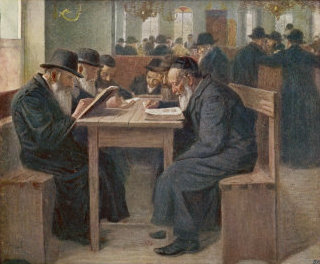
Several reasons are given why it is prohibited to record the oral Torah in written form.

Ritva (Gittin 60a) and Ra”n (14a) explain that once something is put into writing, it is subject to being interpreted or misinterpreted according to the viewpoint of the reader. Putting such developed ideas into written form necessarily restricts the concepts into rigid sentences, which is too limiting for their true meaning. When, however, concepts are transmitted orally from rebbe to talmid, they are able to be articulated and explained with emotion and clarity.

The give and take which follows allows a student to ask and pursue that which needs further elucidation. This is essential for the transmission of the mesorah, and this is why the Torah prohibits us to record the oral law in written form.

P’risha (O.C. 49:1) also notes that the written word limits the ideas it represents by the usage of particular phrases and expressions. This leads to subjective interpretation and understanding based upon the author’s choice of words, which may or may not convey the accurate intent of the writer to the reader.

Daf Yomi Digest
Distinctive Insight
“The oral law may not be written down”
Termurah 14

I have to admit, I’ve never comprehended this. It’s always been my understanding that information transmitted orally from one generation from the next was subject to distortion over time. We see this demonstrated in the children’s game where kids sit in a circle and one child whispers a short story to the next. The story is transmitted around the circle, and by the time it gets to the person who told the original story, it (in all likelihood) has significantly changed. Even an individual’s memory of a single even tends to change over time, making eyewitness testimony in court unreliable, although legally, it is still considered one of the more reliable forms of evidence.

Add to all that the fact that during different periods of exile in Jewish history, there were “breaks” in the transmission process when it is very likely that the Oral Law was not transmitted at all. Once such a break occurs, how could this information be recaptured if it has not been preserved in some documented form? Once the last of the old generation dies, if they haven’t passed on the oral law to the next generation, the oral law dies with them.

That’s why we have written information. That’s why we have books, magazines, newspapers, and other physical and virtual documents. So that information can be preserved over time, unaffected by a distortion of transmission or a distortion of memory.

And yet, the above commentary is right in that, once information is nailed down in written form, it becomes accessible to everyone’s individual and subjective interpretation. We see this commonly in Bible interpretation, particularly within the church, where any individual can tell themselves that a scripture means “such and thus” to them, even if it doesn’t carry that meaning for anyone else.

(I say “particularly within the church” because Judaism tends to interpret the Bible based on established tradition rather than an individual’s “feelings.” To be fair though, it is true that Christianity also has traditions that are applied to Bible interpretation, but the “freedom” the average Christian has seems to include the freedom to ignore scholarship, at least on occasion)

Don’t look to me for an answer to this conundrum, because I have none to give you. We know that the Oral Law was finally redacted around 200 CE because of the fear that it would be lost due to the Jewish exile from Israel, and so we have a rich body of interpretation and commentary on Jewish Law that is with us to this day.

But in studying this topic in today’s Daf and the original reasons that documenting the Oral Law was forbidden, I did come across this.

Yefei To’ar (to Shemos Rabba 47:1) explains, based upon the Midrash, that if the oral law would be written there would be a risk that the gentiles would take our law and copy it for themselves. They would implement many of the aspects of our system of life, and the clear and obvious differences between the Jews and the non-Jews would be less apparent, causing many Jews to blend into the non- Jewish society.

Most Christians reading this quote will find it rather a strange concern for the Jewish sages to have, since one of the foundations upon which Christian faith is built is on the destruction of Jewish Law and it being wholly replaced by the grace of Christ. In fact, in the long history of the Christian church, most church theologians, scholars, and clergy have gone out of their way to avoid any type of practice of anything that looks like Judaism in worship or belief. Christians are not only completely uninterested in copying Jewish law, they actively disdain it.

(OK, this is overly simplistic and there are a number of parallelisms historically between Christianity and Judaism, but for the sake of this “mediation,” let’s assume that the schism between Jewish and Christian thought, faith, and practice is absolute)

But in the here and now, we have a glaring exception. Messianic Judaism.

To be more accurate, there’s a branch of Messianic Judaism called “One Law” that states Gentiles who are “grafted in” to the root of Israel are also grafted in to the full “yoke of Torah” such that, there is no distinction between Jewish and “Christian” practice of the Law. In essence, the dire worry of the sages has come to past. The Gentiles have taken the Law and copied it for themselves. Let’s read part of the quote again that predicts the result:

They would implement many of the aspects of our system of life, and the clear and obvious differences between the Jews and the non-Jews would be less apparent, causing many Jews to blend into the non- Jewish society.

This is precisely the concern many ethnic, cultural, and religious Jews in the Messianic movement have, and it seems the concerns of the sages are well justified.

But wait.

It’s not the Oral Law that is being copied by the Gentiles, it’s the written Torah. The Gentiles in “the movement” have about as much interest in the Oral Law as their traditional Christian counterparts. So it seems that documenting the oral traditions really hasn’t yielded the feared result.

But the core of the concern remains. Gentiles are copying Jews and the distinction between Jews and Christians is eroding. Some Jews who have only a tenuous understanding of what Judaism actually is, are gravitating to One Law congregations rather than pursuing more significantly Jewish communities (Again, to be fair, many One Law Jews have been raised in Jewish homes and have a very strong Jewish identity). Many Gentiles who have become disillusioned with the church are flocking to One Law congregations in droves, believing they are embracing their “lost” Jewish roots and in practice, becoming “pseudo-Jews.” It doesn’t matter then, whether the Oral Law was written down or not, since the written portion of Torah was sufficient to produce a collection of Gentiles who, for all intents, believe they are “spiritual Jews,” and who have adopted many of the Jewish religious practices and traditions.

Praying with tefillin(It should be noted here that many non-Jewish One Law practitioners actually do adhere to some of the Oral Law without realizing it, since the traditions involving how to put on a tallit gadol, lay tefillin, perform a blessing before a meal, conduct a Torah service, and many other worship activities, are rooted in the Oral Law rather than in written Torah. Some of the prayers in the siddur originate in the Zohar, thus even small portions of Kabbalah are unknowingly included in One Law practice)

The irony is that, in utilizing the written but not Oral Law of the Jews, One Law Gentiles fulfill the concern of the sages which has lead to…

…a subjective interpretation and understanding based upon the author’s choice of words, which may or may not convey the accurate intent of the writer to the reader.

Modern Judaism believes that the written Torah, and the intent of the author’s choice of words, cannot be accurately understood unless seen through the lens of the oral Torah. In disregarding the oral traditions and rulings, the Jews and Gentiles in One Law may be falling into the trap that so concerned the ancient sages. Of course, there are branches of Judaism that historically have rejected the Oral Law, such as the Sadducees and Essenes, but unlike the Pharisaic tradition, they did not survive into modern times. The Kararites have survived and currently exist, but they are the only Jewish sect I’m aware of, that does not, in some manner or fashion, recognize the Oral Law.

(It is true that between Reform, Conservative, and Orthodox Judaism, there are differing levels of adherence to Oral Law, but none of these branches does away with the it altogether).

Usually, in discussions like this one, the primary concern presented is Gentile “misuse” or “misapplication” of Jewish Law, which I’ve certainly addressed, but the Story Off the Daf for Temurah 14 illustrates another problem.

It is tragic that so many Jews have fallen away from Torah observance in the modern period. Immigration to America—the “Goldeneh Medinah” —played a large role in a historic shift away from tradition. The vast majority of those who arrived here from “der alter heim,” the “old country,” fell away from observance. At a superficial glance, this seems a bit hard to fathom. Throughout our long past, the Jewish People faced so many obstacles, a multitude of decrees forbidding Torah, which did not deter us at all. What was it about America, and the rest of the free world, that had such a detrimental effect on Torah and mitzvos?

Perhaps we can understand the solution to this puzzle in light of how the Chofetz Chaim, zt”l, explains a statement on today’s daf. “In Temurah 14 we find that it is better for the Torah to be disrupted then forgotten. When various parties rise up and block us from learning Torah, the situation is not so spiritually dangerous as one might have thought. When they chase after people who learn, usually we find a solution. Jews learn in caves, attics and cellars, and Torah is preserved.

“A far worse situation is when Jews forget the Torah—when it is abandoned and considered unimportant. Then, learning Torah is something that Jews simply do not aspire to at all. In such circumstances, there is a vast spiritual danger.

“To understand the true state of a Jew without Torah let us consider a person who is completely paralyzed. Just as such a person is sadly unaware of what the senses of a normal person would perceive—since he is completely unfeeling—the same is true of those who have no feel for the value of Torah.”

My wife was raised in an intermarried family. Her mother was Jewish and her father, raised as a Christian Scientist, had left the faith and was non-religious. Her mother also had left religious, and for the most part, cultural Judaism to such a degree that my wife didn’t even realize that she was Jewish until early adulthood.

After my wife and I converted to Christianity some fifteen years ago or so, her first sustained exposure to “Judaism” was via the One Law congregation we started to attend. If she had stayed there, she more than likely would have continued her faith in Jesus. However, she wouldn’t actually have understood what it is to be a Jew, since the congregational leader and most of the board of elders were not Jewish. Even those Jews who participated in the congregation back then, had not been raised in cultural and religious Jewish homes.

But the drive in her to understand what it is to be a Jew would not let go, and she eventually gravitated to first the Reform, and then the Chabad synagogues. There, she established herself among other Jews and enjoyed the full measure of participation in a completely realized ethnic, cultural, and religious Jewish community.

But the cost was her faith in Jesus.

What would have made a difference? I’m not sure anything would have. I’m not some sort of dictator in the home, and I cannot simply tell my wife where to go, how to feel, and believe. I’m not going to tell her she must embrace Jesus as the Messiah. I believe each human being negotiates his or her own relationship with God and no one can act as a go-between. If, perhaps, we had a congregation available that offered a fully Jewish community and true Jewish worship of the Jewish Messiah, maybe…maybe it would have made a difference. Maybe my wife could have securely explored her Judaism while preserving her faith in Jesus. But we don’t live in a world of “what ifs”. We live in a world of completed actions and what is done, is done.

I know that my friends in the One Law movement (who will no doubt be upset at today’s “meditation”) will tell me that if she had stayed in One Law, she could have lived a completely Jewish lifestyle and a continued to be believer, but I know that congregation well. I love the people who attend and who lead, and they are sincere in their faith and wonderful disciples of the Master…but it’s not a Jewish congregation. The men may wear kippot and don tallitot in prayer, they may use siddurim, and call the Master, “Yeshua,” but the vast, vast majority of them are Gentiles, and most of the Jews weren’t raised within Judaism.

tallit-prayerSo should I raise Judaism above the Messiah? As Paul might put it, “heaven forbid.” But I can’t separate a Jew from the Jewish worship of the Jewish Messiah, either. I cannot demand that a Jew, in order to maintain faith in the Moshiach, water down or delete their Jewish identity in any aspect. 2,000 years of history have created the illusion that there must be a separation between Judaism and Jesus and sadly, that separation is being maintained, not only by traditional Judaism and traditional Christianity, but by (hold on to your hats) the One Law expression of the Messianic movement. For in removing the Oral Law and traditions, which I’ve said before have been the only things that preserved Jewish cultural and religious existence in post-Second Temple times, they have removed almost everything that comprises historic and modern Judaism, and that tells a Jew what it is to be a Jew.

(I’m not making this up. For an excellent illustration of the meaning of Oral Law, tradition, and Talmud to the Jewish lifestyle, read Rabbi Daniel Gordis’ book God Was Not in the Fire)

I know I’m going to be criticized for yet another one of my opinions, but like the proverbial baseball umpire, “I calls ’em as I sees ’em.” I continue to be grieved that my wife no longer recognizes Jesus Christ as the “hidden” Messiah who will one day be revealed to Israel, but I cannot behave toward her as have countless generations of Christians across the long march of history, and demand that she stop being Jewish, even in the smallest detail, for the sake of worshiping a Messiah most of Judaism disregards. I do however, continue to pray that this is not the end of her story or the final destination of her path, and that there is a milepost up ahead, or an unseen bend in the trail, where she will one day be reunited with the “Maggid of Natzaret.”

Lest you be wise in your own sight, I do not want you to be unaware of this mystery, brothers: a partial hardening has come upon Israel, until the fullness of the Gentiles has come in. And in this way all Israel will be saved, as it is written, “The Deliverer will come from Zion,he will banish ungodliness from Jacob”; “and this will be my covenant with them when I take away their sins.” –Romans 11:25-27 (ESV)


Love and Divorce, Part 2

Although the Sichos HaRan, zt”l, writes that, in general, one should not divorce his wife unless compelled to by the halachah, there are certainly exceptions to this rule. Some people—even those with experience working with couples—believe that every rift in a marriage can be healed. According to that view, if a couple did not make their marriage work it must have been that one or both were unwilling to work hard enough to build their relationship. Although this is true in the vast majority of cases, there are times when the best option does seem to be divorce.

Daf Yomi Digest
Stories Off the Daf
“The Parshah of Gittin”
Temurah 5-1

But you say, “Why does he not?” Because the Lord was witness between you and the wife of your youth, to whom you have been faithless, though she is your companion and your wife by covenant. Did he not make them one, with a portion of the Spirit in their union? And what was the one God seeking? Godly offspring. So guard yourselves in your spirit, and let none of you be faithless to the wife of your youth. “For the man who does not love his wife but divorces her, says the Lord, the God of Israel, covers his garment with violence, says the Lord of hosts. So guard yourselves in your spirit, and do not be faithless.”Malachi 2:14-16 (ESV)

So they are no longer two but one flesh. What therefore God has joined together, let not man separate.”Matthew 19:6 (ESV)

In yesterday’s morning meditation, I asked “is it ever acceptable to get a divorce?” According to a strict New Testament interpretation, there is only one acceptable reason:

And I say to you: whoever divorces his wife, except for sexual immorality, and marries another, commits adultery.” –Matthew 19:9 (ESV)

That seems pretty plain. Unless sexual immorality is involved, there is no Biblical grounds for divorce. That tends to be translated as one spouse “cheating” on another. So does that mean a man can beat his wife and children, abuse drugs and alcohol, refuse to work and support his family, or emotionally terrorize his family, all for the purpose of supporting his own emotional desires? Common sense would say “no”, but what about the Bible?

Actually, read Matthew 19:9 again. It doesn’t say you can’t divorce for other reasons, it just says that you can’t remarry. The footnotes for this verse state “some manuscripts add and whoever marries a divorced woman commits adultery; other manuscripts except for sexual immorality, makes her commit adultery, and whoever marries a divorced woman commits adultery.”

That still seems a little harsh. If a woman divorces a man who is physically abusive to her and the children but where no sexual immorality is involved, she is right to divorce him but can never be remarried?

Let’s take a wider view of the issue of divorce:

“When a man takes a wife and marries her, if then she finds no favor in his eyes because he has found some indecency in her, and he writes her a certificate of divorce and puts it in her hand and sends her out of his house, and she departs out of his house, and if she goes and becomes another man’s wife, and the latter man hates her and writes her a certificate of divorce and puts it in her hand and sends her out of his house, or if the latter man dies, who took her to be his wife, then her former husband, who sent her away, may not take her again to be his wife, after she has been defiled, for that is an abomination before the Lord. And you shall not bring sin upon the land that the Lord your God is giving you for an inheritance. –Deuteronomy 24:1-4 (ESV)

In Matthew 19, Jesus was talking about how Moses permitted divorce but it was not God’s intention to permit it for reasons of hard heartedness. In Malachi 2, the prophet says that God hates divorce, but seems to lay the responsibility for the matter at the feet of the faithless husband. Neither of these verses seem to forbid divorce out of hand or specify only the issue of sexual immorality, but rather, they state that God seems to hate divorces that are seemingly frivolous or merely for the purpose of finding “greener pastures”. Maybe I’m reading more into the scriptures than is really there, but I don’t think I can accept that God would force a person to remain in a marriage that was completely intolerable due to emotional and/or physical abuse by the other party. In the above-referenced section of Deuteronomy, the matter of sin seems to come up when you divorce a woman, she remarries another man, divorces him, and then remarries her original husband. I see this as being tied to sending her away. Once done, it cannot be undone if she subsequently “becomes one flesh” with another man.

I’ve been participating in a discussion related to this topic in a private forum. One of the members, who is well educated in Torah and the Apostolic Scriptures said this:

It depends upon what you call “Grounds.” If “grounds” requires a proof text, then perhaps not. But when you are in real ministry, with real people, things get interesting. When a woman is married to a man who beats her, or a man who pulled a gun on her during sex, is that still a marriage? Are there not behaviors that are so out of bounds that they void the marriage? And is it “Righteous” to tell such a woman, “Look Norma dear (not a real name), you married him in the sight of God, and you must remain in the marriage to please the Lord.” That kind of stuff doesn’t work for me, proof text or no proof text. In other words, when does a marriage stop being a marriage, and when it has stopped being a marriage and cannot or will not be reversed, is there virtue in keeping up appearances, and evil in naming the marriage a dead?

I don’t know if there’s a direct proof text about not being able to leave an abusive or toxic marriage, but then again, there’s no proof text that directly says you must stay, either. Perhaps the “clue” is in the a scripture I quoted yesterday:

Husbands, love your wives, as Christ loved the church and gave himself up for her, that he might sanctify her, having cleansed her by the washing of water with the word, so that he might present the church to himself in splendor, without spot or wrinkle or any such thing, that she might be holy and without blemish. In the same way husbands should love their wives as their own bodies. He who loves his wife loves himself. For no one ever hated his own flesh, but nourishes and cherishes it, just as Christ does the church, because we are members of his body. –Ephesians 5:25-30(ESV)

I also said this:

Husbands, if you are supposed to be loving your wife like Christ loves the church, consider for a minute just what the love of Jesus Christ means. The number one way we know that Jesus loves us is because he voluntarily surrendered his life for the sake of our eternal relationship with God. Not only that, but it was completely unfair in that he did not deserve to die at all. Add to that the fact that it was a long, lingering, painful, and shameful death. If you Christian husbands love your wives in the same way, I suppose you should be putting up with a lot from her, even the stuff you don’t deserve.

If a husband’s love for his wife is supposed to closely mirror the love of the Master for the community of faith, then perhaps we can infer a few things. Was the Master abusive or toxic toward the church? Did he put his needs or wants ahead of others? Did he physically, emotionally, or spiritually harm those who followed him? I don’t believe so. The only thing you could say is that he put his foot down, on occasion, to demand moral and right behavior from his followers, but he never, ever hurt them and he was never ever selfish. In fact, he was obedient, “even unto death” for the sake of those who professed him as Lord then and everyone who has done so since.

I suppose that may not be satisfying for some people reading this blog post, especially if you are a very literal person (I tend to be, at times), but in this matter, if I’m going to make a mistake, I’d prefer to err on the side of compassion. I don’t think divorce is justified because you want a younger, prettier wife, or because your husband never ended up making a million dollars a year, but there are times, beyond sexual misconduct, when it is justified to leave your spouse and end your marital relationship. If marriage is sanctified by God, how holy is a union where the man beats his wife and puts his children in the hospital because he can’t control his temper? How holy is a marriage where the wife habitually abuses drugs and leaves her young children alone when her husband is working, so she can get loaded or sleep off her high?

I’m probably not going to hear any complements about this particular “morning meditation”, but my conscious won’t let me write anything else. Like the Chofetz Chaim, I believe there are times when the only way to bring peace to a couple “is to allow them to divorce and go their separate ways!”

Mishpatim: The Boundaries of Knowing God

At the conclusion of Mishpatim – after almost an entire Torah portion that addresses matters not directly related to Mattan Torah, the giving of the Torah – Moshe is told: “Go up to G-d.” (Shmos 24:1) Rashi explains (Commentary of Rashi ibid.) that this took place on the fourth of Sivan, prior to Mattan Torah.

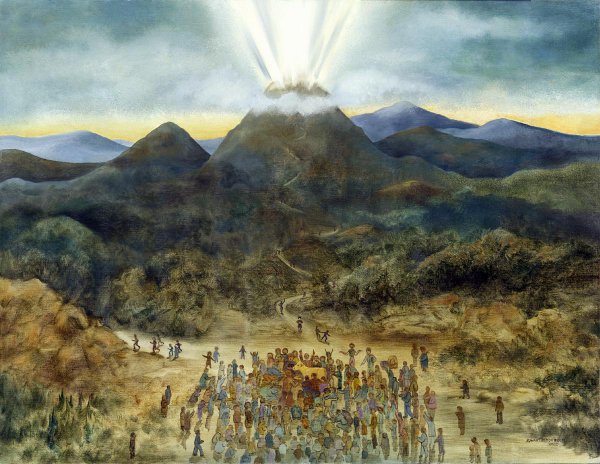
The Midrash notes (Shmos Rabbah 12:3; Tanchuma, Va’eira 15) that at the time of Mattan Torah , two things were accomplished: “Those Above descended below” – “G-d descended on Mt. Sinai,” (Shmos 19:20) ; and “Those below ascended Above” – “And to Moshe He said: ‘Ascend to G-d.’ ” (Ibid. 24:1) Man ascended to G-dliness.

“A Tale of Two Portions”
Commentary on Torah Portion Mishpatim
The Chassidic Dimension
Chabad.org

The Lord said to Moses, “Come up to Me on the mountain and wait there, and I will give you the stone tablets with the teachings and commandments which I have inscribed to instruct them.” So Moses and his attendant Joshua arose, and Moses ascended the mountain of God. To the elders he had said, “Wait here for us until we return to you. You have Aaron and Hur with you; let anyone who has a legal matter approach them.”

When Moses had ascended the mountain, the cloud covered the mountain. The Presence of the Lord abode on Mount Sinai, and the cloud hid it for six days. On the seventh day He called to Moses from the midst of the cloud. Now the Presence of the Lord appeared in the sight of the Israelites as a consuming fire on the top of the mountain. Moses went inside the cloud and ascended the mountain; and Moses remained on the mountain forty days and forty nights.Exodus 24:12-18 (JPS Tanakh)

Regardless of the differences between the world’s wide spectrum of religious disciplines, they share one, basic, common goal: to understand God. How we conceive of God and the mechanics and meaning behind the process of finding Him (or her, depending on your tradition) varies tremendously across different cultures and across the panorama of history, but in the end, we want and even need to connect to something that is larger than us, and to find out why we are here and where our place is in a universe.

In Judaism, this process has two parts: God descending to man and man ascending to God. Both of these parts happen at the end of Mishpatim, and the climactic moment of this week’s parashah, in some sense, mirrors the desires of every person of faith. This is why we study the actions of the Creator: to learn the nature of God. It is also why we study people who have had personal encounters with the Creator…because those people have learned something of the nature of God. I like how Rabbi Tzvi Freeman expresses the thoughts of the Rebbe in this matter:

Science is the study of those things G-d thinks about,
by one of His thoughts.

Torah is the study of G-d thinking.

We do not have the privilege of ascending Sinai as God has descended upon it, and the ability to encounter God within the smoke and the flames, but like my previous description of how Moses encountered God, we also have two parts to our own process of approaching an understanding of Him: we can study the universe and we can study the Torah. As Rabbi Freeman points out, the first is studying what God thinks about and the second is studying God as He thinks.

I’m not discounting prayer at all and prayer is a vital component in establishing and developing our relationship with the Creator, but we are not only called to experience God in a spiritual and emotional sense, we are also called to experience Him in thinking. We need to understand, at least to the limits God built into the human mind.

This is why the Torah has manifested as a document or series of documents that is tangible and lends itself to study and multiple layers of interpretation. It’s why humanity has spent countless centuries pouring over every tiny bit of text and arguing with ourselves and each other over meanings both obvious and arcane. This is why the Bible can be read in your native language, pointing the way to the Kingdom of Heaven, and still allow God to be a complete mystery in every single aspect.

God seeks to dwell among mankind, but our ability to “know God” is something we struggle with all our lives. As human beings, we often make the mistake of thinking that God is knowable in the same way his creations are knowable. We mistake how we can learn what God’s thinking about by studying His universe (which we don’t understand all that well, either) with understanding the process of God thinking by studying the Bible. And even in studying God’s “thought process,” our ability to truly comprehend more than a tiny fraction of anything at all regarding God, is extremely limited. The world is filled with commentaries (including this one), in bookstores, in libraries, in seminaries, and particularly on the Internet, with a stream of endless text purporting to explain the nature and character of God, including that which is secret and that which may only be known to a favored few “prophets”.

But what do we know?

One who is unqualified can never assume that he understands the depths of halachah like a genuine posek. It is astounding how even the most apparently obvious halachos can sometimes be much more complex than they appear on the surface.

Mishna Berura Yomi Digest
Stories to Share
“The Transfer of Holiness”
Siman 153 Seif 1

A certain man was assumed to be a kohen for many years and redeemed many bechoros. One day he was confronted with an unexpected visitor to town who claimed upon his arrival that this kohen was really no kohen at all! To the surprise of everyone in the town, the man who had been assumed to be a kohen for so many years admitted that he was not a kohen. People wondered what the halachah was in such a case. Was this man still considered a kohen? Did all the many bechoros that he had redeemed need a new pidyon? Although they figured he was now like a yisrael in every regard since presumably he had nothing to gain by accepting this man’s testimony — and this is the halachah whenever
someone believes one witness—they decided to consult with a competent posek.

Daf Yomi Digest
Stories Off the Daf
“The False Kohen”
Arachim 34

Studying TorahHere we see two things. We see that not everyone is qualified to interpret the Bible and, even more so, to plum the depths of halacha related to Jewish understanding and ritual observance, and we also learn that one may successfully misrepresent himself as a person who has a special religious or teaching authority when in fact, he does not. Beyond the fact that there are false prophets, charlatans, and religious hucksters in the world who have some sort of religious ax to grind, there are also people who are seemingly well-meaning and sincere, but who are also naive or just plain ignorant about how complicated it is to study the text and arrive at meaningful conclusions. There are people who feel they have a special calling to arrive at these “meaningful conclusions” and to teach them to others, perhaps because of some emotional need, when that special calling is only an illusion. Anyone can create a web site or a blog (even me).

I’m not trying to discourage anyone from honest study and exploration on the path that leads to holiness, (which is, after all, what I’m trying to do) but there’s a difference between being one pilgrim on the road who asks questions and reaches for the Heavens, and someone who is a true posek and tzaddik who has spent all of his or her life and resources in acquiring the knowledge to fulfill a position that only God can assign.

I am the former and not the latter, but I still need to ask the questions, record my observations and, if necessary, accept (hopefully) gentle rebukes from those who are authentically learned (as opposed to the scores of folks out there who only think they are) as to where I’ve made my mistakes.

And I’ve made mistakes.

And I will no doubt continue to make mistakes as I attempt to learn, throughout the rest of my life.

But it’s worth it if, in the end, I am allowed to even approach the tiniest thread trailing from the hem of the garment of God.

But, as I said, there are limits.

The above allows for an extended interpretation of a famous statement of our Rabbis: (Bechinos Olam, sec. 8, ch. 2; Ikarim, Discourse II, ch. 30; Shaloh 191b.) “The ultimate of knowledge is not to know You.” The simple meaning of this statement is that a person should realize the limits of his intellect, and therefore understand that knowing G-d is impossible, for He transcends all limits. There is, however, an allusion to the concept that when a person has fully developed his mind, he appreciates that even the concepts which he knows possess an inner dimension which transcends intellect. And going further, one can infer dimensions of G-d that are infinite, internalizing this knowledge to the point that it shapes our personalities.

-Rabbi Eli Touger
After Sinai; Making the Torah a Part of Ourselves
Commentary on Mishpatim
“Knowing, and Not Knowing”
Adapted from
Likkutei Sichos, Vol. III, p. 896ff; Vol. XVI, p. 242ff;
Sefer HaSichos 5749, p. 243ff.
Chabad.org

As I’ve already mentioned, our limits are built in, but that doesn’t mean there isn’t a great deal we can learn, as long as we are mindful that we do have limits and know where those limits are set. Some men are great scholars, while others will only rise to the level of a humble and seeking student. Some women have been appointed by God to be learned sages, while others may only reach the most elementary levels of Torah comprehension. This does not make one of us better than another in God’s eyes, or make the learned more loved and cherished by the Creator than the struggling disciple. It only means that we have our roles and our boundaries which have been set for us as God has set the limits to the sea and the sky.

Of course, we must make certain that the limits we acknowledge are those set by God and not by us. Just as an overly ambitious or arrogant person can elevate himself to a station higher than God intended (and eventually fall an equally great distance into a spectacular abyss of defeat), so can a person fail to rise to the level God has apportioned for them, not recognizing that they can seek and learn and understand more than they have imagined (or more than someone else told them they were allowed). Seek the level that God has set; learn to see when you still have miles to go on the trail and when you have reached the point where God has said, “no further”.

But even when you have reached that limit, realize that it’s not truly the end.

Knowledge of G-d in this manner anticipates and precipitates the coming of the Redemption, the era when “A man will no longer teach his friend…, for all will know Me, from the small to the great.” (Jeremiah 31:33)

“Knowing, and Not Knowing”
-Rabbi Touger

“When we try to pick out anything by itself, we find it hitched to everything else in the Universe.”

-John Muir, Scottish-American environmentalist and writer

Good Shabbos.

The Return of the Jewish King

PrayingAside from the vast numbers of Jews murdered during the Holocaust, the scars that the experience left on survivors was unimaginable. One of the champions of the survivors was the Beis Yisrael of Gur, zt”l. He himself had plenty to cry about—he could remember his one hundred thousand chassidim in Europe before the war, virtually all of them murdered, including many of his close relatives—yet he was a beacon of hope to survivors. He always found exactly the right approach to pull downtrodden survivors out of their despair and give them new hope.

“In Arachin 29 we find that a Jew may not be sold as a slave during times when there is no Yovel. This teaches a powerful concept. An eved ivri cannot be sold into slavery unless there is a clearly defined end to his indenture. We see that a Jew is not forced to endure a load of tests that are harder than he can bear. Even when his hardships are decreed, they must have a set end, a clear-cut time when he will be delivered from the adversity. This is the meaning of the principle that God creates the medicine before allowing the blow to fall. There is always a way for every Jew to emerge from despair and begin again, to learn how to live a positive life despite the horrors and trauma he may have experienced. Every exile must have an end!”

Daf Yomi Digest
Stories Off the Daf
“Every Exile Must Have an End”
Arachin 29

The hardships and loss suffered by the Jewish people across the long span of history is just appalling. One can hardly think of this topic and not immediately have images of the horrors of the Holocaust spring forth in our memories. The past 2,000 years of the chronicles of Judaism particularly read like a tragedy worthy of the greatest classical poets and playwrights. And yet that suffering is real. The loss of life, property, and dignity are terribly real. But because of God’s promises to the Jewish people and His graciousness and mercy, the Jews yet survive, against all odds, as a people and a faith, and continue to honor the God who created both the tormented and the tormentors.

Christianity has been hard at work taking from the Jews what does not belong to us.

To be perfectly blunt, I must say the Christians have robbed the Jews! And perhaps what is worse is that this thievery has been encouraged by theologians, pastors, and even Sunday School teachers, where small children are taught to sing the song, “Every promise in the book is mine, every chapter, every verse, every line.”

Every promise in Scripture in some way benefits Christians, but it is not all promised to Christians. Sometimes the thievery has been inadvertent and unintentional. It’s like thinking that the raincoat hanging in the office closet is yours for wearing home because of unexpected showers. Hopefully, you will discover the raincoat belongs to a fellow worker and you will restore it. It is not as if Christians do not have the greatest promise of God, which is I John 2:25: “And this is the promise that He hath promised us, even eternal life.”

-Moishe Rosen
from the Foreward to Pastor Barry Horner’s book
Future Israel: Why Christian Anti-Judaism Must Be Challenged

The irony is that we Christians have not only robbed the Jews, we have robbed ourselves. What was the Christianity taught by Paul, Peter, and the rest of the Jewish Apostles to the non-Jewish disciples of the Jewish Jesus? We don’t really know. We don’t have access to the unedited and unfiltered teachings that underlie the New Testament text we read in our Bibles today. It’s not just the words in the Bible, but what almost 2,000 years of Christian theology and doctrine has taught us what that text is supposed to mean. We take it as a foregone conclusion that “every promise in the book is mine” but we don’t really know. We are taught to believe, so that whenever our assumptions and our standard Christian traditions are challenged, we really think that what we believe is actually fact instead of interpretation.

If circumstances had been different and there hadn’t been a savage separation between Jewish Messianism and Gentile Christianity in the early, formative centuries of the church, what would things be like today? Would there be a thriving Messianic Judaism that stands alongside Reform, Conservative, and Orthodox Judaism? Would Gentile Christianity still seek to find its truth from within a Jewish interpretive context? Would we all still cease our toil on Shabbat, and would Christians along with religious Jews, pray at set times to the Maker of Heaven and Earth?

There’s no way to know, of course, and I’m forced to believe that the Christian/Jewish schism is all part of God’s plan and that the “time of the Gentiles” has to become “full” before the Jews are able to recognize the face and identity of the Moshiach. Paul lamented the suffering of his own people in Romans 11 and registered deep regret that some Jews would be temporarily separated from the Messiah for the sake of we Gentiles. I have to believe this “disconnect” was somehow necessary, and yet like so many other parts of God’s plan for humanity, I must confess a gross lack of understanding for almost everything that is going on around me in my world of faith.

And yet faith and trust are the only tools I have to sustain me and without them, I am lost, along with a disbelieving world. Where is God? Why is there such suffering? Why hasn’t Jesus returned yet? Where is the Moshiach? What is he waiting for? If not now, when?

Today is Sunday as I write these words and Christians in churches all over the world smile and sing and pat themselves on the back that they are saved by Grace and not from works. They congratulate each other over being inheritors of all of the promises in the Bible and it never occurs to them that they have missed so much.

At this point, I must stop in my “rant” and recognize the enormous good that has been done in the name of Christ throughout the world and across church history. Many have been fed and clothed. Many have heard the “good news” of salvation for the sake of Christ and the unsaved. Many churches have been built, many homes have been built, many children have received medical care, many grieving hearts have been comforted. There have always been those in the church who have learned the core lessons of the Master and performed them with unswerving love and devotion. There have always been those who have labored and suffered in anonymity, without titles, recognition, or receiving any honors, who give glory to God and not to themselves. For all of the faults in the church, there are many who, though they do not recognize the “Jewishness” of Jesus, carry on the mitzvot he commanded to always do good to others, to pick up their burdens, and to follow Christ where ever he leads them. Praise be to God for their faithfulness and trust.

And yet, the early “church fathers” took it upon themselves to reinvent history and the Bible in the image of the nations, removing any and every trace of Judaism. In spite of their efforts, the faithful in Christ have continued to work as the Master taught in the Gospels. But sadly, we have toiled under many a false teaching as we struggle to live a life, not by man’s doctrine, but in obedience to Jesus. By God’s miracles, many Christians were not blinded by the man-made theology of supersessionism. But we still see the Bible through “Christian-tinted glasses” and absolutely don’t realize that we’re wearing them, imagining instead that our vision is crystal clear and not “through a glass darkly.” (1 Corinthians 13:12) And yet, as long as a single Christian feeds even one hungry mother and heals the wounds of one injured child, there is hope.

The irony for many, is that when Jesus returns, he will not be here to inaugurate an age of Christian domination over the earth, but to restore Israel to her rightful place before the nations and before God. Only then will we all, Israel and the disciples of the nations alike, be able to have the peace that has been prophesied.

…but they shall sit every man under his vine and under his fig tree, and no one shall make them afraid, for the mouth of the LORD of hosts has spoken. –Micah 4:4

Only then will we all, Jew and Gentile alike, sit with each other in peace at the table of the patriarchs.

I tell you, many will come from east and west and recline at table with Abraham, Isaac, and Jacob in the kingdom of heaven… –Matthew 8:11

May Jesus the Messiah come soon and in our day, and may we truly be prepared to welcome him, not as we imagine him to be, but as he truly is: Yeshua HaMoshiach, the King of the Jews. Then the “exile” of both the Jew and the Gentile from the presence of our Master will come to an end.

The Torah of Fellowship and Peace

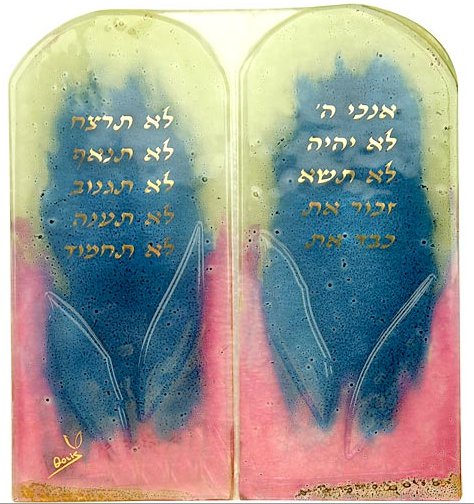
The Ten Commandments (Shemos 22:2-17, Devarim 5:6-21) as spoken by G-d to the Jewish nation at Sinai were engraved upon the Shnei Luchos Habris, Two Tablets of the Covenant. The first Five Commandments belong to the category of laws between “man and his Creator” while the remaining Five Commandments are precepts between “man and man”.

The Ten Commandments engraved upon the tablets of stone and brought down by Moshe from G-d to the Jewish people are accorded a special distinction over all the other 613 precepts.

The Ten Commandments written upon the Two Tablets are comparable to the Kesubah, “marriage contract” drawn up as the essential contractual terms under which a Jewish man and woman enter into Jewish matrimony. Herein the parties pledge their allegiance and the principle obligations to each other thereafter. (The Avos deRabbi Nosson 2:3 fascinatingly explains this is why Moshe smashed the Two Tablets, tearing up the marriage contract, when the Children of Israel were disloyal by worshipping the Golden Calf and had to provide a substitute upon their national repentance).

The Ten Commandments forge this eternal relationship.

The covenant struck between “two” parties, affirming the relationship between G-d as the “Source” and Israel as the “product”, is mirrored in the Ten Commandments inscribed upon the Shnei Luchos HaBris, “Two” Tablets of the “Covenant”. The emphasis is on how this relates to the eternal bris, “covenant” of Torah that unites man and his Creator.

How this bond is intrinsic to the national Jewish psyche is magnificently captured in the Ten Commandments engraved through the thickness of the Tablets – such that the letters and stone were inseparably one.

Herein is included the symmetrical record of the laws pertaining both to man’s relationship to “G-d” and to “man”. The first grouping, those of “man-G-d laws”, relate to G-d the “Source” while the second grouping, those of “interpersonal laws”, relates to man, the “product”.

Side-by-side, the Ten Commandments are the microcosm to all 613 Commandments (See Bamidbar Rabbah 13:15). They embrace the acceptance of G- d’s Sovereignty at Sinai as the essential platform for strict adherence to all the other 613 laws in the Torah, which serve to polish and perfect man to become more G-dly.

Through its symbolism of the “eternal covenant” between man and G-d, of two parties inextricably bound in their mutual relationship…

-Rabbi Osher Chaim Levene
from his commentary on Torah Portion Yitro
“Two Tablets: Prescription for Jewish Observance”
Torah.org

When the Prushim heard that he had shut the mouth of the Tzaddukim, they conferred together. A certain sage among them asked him a question to test him, saying, “Rabbi, which is the greatest mitzvah in the Torah?” Yeshua said to him,

“Love HaShem your God with all of your heart, with all of your soul, and with all of your knowledge.” This is the greatest and first mitzvah. But the second is similar to it: “Love your fellow as yourself.” The entire Torah and the Prophets hang on these two mitzvot.Matthew 22:34-40 (DHE Gospels)

In one of my recent morning meditations, I commented how the Torah functioned as a ketubah or “wedding contract” between God, the groom, and national Israel, the bride. For Christianity, this is a puzzle (unless you wholly substitute “the Church” for “Israel” in this event), since how can God be eternally married to the Jewish people, the inheritors of the Mosaic covenant, and at the same time, have the Christian church be “the bride of Christ? I asked this question on the aforementioned “meditation,” but no one was willing or able to respond to my query.

In studying the Torah portion for last Shabbat, I noticed an interesting parallel between the Rabbinic commentary and the teachings of the Master:

Side-by-side, the Ten Commandments are the microcosm to all 613 Commandments… -Rabbi Levene

The entire Torah and the Prophets hang on these two mitzvot. –Matthew 22:40 (DHE Gospels)

Traditional Judaism, at least as Rabbi Levene describes it, compresses the entire 613 commandments into the ten mitzvot we see on the two tablets that Moses brought down from his personal encounter with God, while Jesus tells us that they are represented, along with all of the writings of the Prophets, by the two greatest commandments, which he cites from Deuteronomy 6:5 and Leviticus 19:18. Neither source is saying that all we need are only the ten commandments or the two greatest commandments, but they are the foundation and representation upon which we formally base our obedience to God, for Jew and Christian.

Am I saying that both Jews and Christians have identical responsibilities to God relative to the Torah? Absolutely not. There have been plenty of debates, both among scholars and on the various religious blogospheres on this topic, and my personal opinion is that we non-Jewish disciples of the Master are not obligated to take upon ourselves the full yoke of Sinai. The Master himself tells us that “my yoke is easy, and my burden is light” (Matthew 11:30) while we find Peter, who walked with the Master, saying, “why are you putting God to the test by placing a yoke on the neck of the disciples that neither our fathers nor we have been able to bear? (Acts 15:10), referring to the non-Jewish disciples (and a comparison of these two verses is a study all its own).

So are we to say that God has two brides, that there are two paths to salvation, and that there are two laws? Is this the veil of separation that I’m rebuilding between Jew and Gentile that was supposedly torn down? (Ephesians 2:14)

Heaven forbid.

Yet, if I am not describing two brides separated by a veil, must I say that the only resolution to this conflict is to adopt a supersessionist viewpoint and to declare that the Church has replaced Judaism in all of the covenant promises, creating a new “spiritual Israel” out of the non-Jewish Christians? Must I say that the Jews become “one new man” with the Church only be renouncing their Judaism in totality and converting mind, body, and soul into Gentile Christians, trading in the Jewish Messiah for the “Greek” Jesus?

No, I’m not saying that, either.

According to Rabbi Dr. Stuart Dauermann in his blog post Inconvenient Truths: The One New Man:

Rather than superseding the Jewish people, the Church from among the nations joins with them as part of the Commonwealth of Israel. Only in this way can the “dividing wall of hostility” – which supersessionism maintains – be removed. Gentiles are no longer categorically outsiders to the community of God’s people, but neither do they supplant Israel. However if Gentiles were required to obey Torah and live as Jews, one would be perpetuating their categorical exclusion as Gentiles. And it is a major component of the good news as proclaimed by Paul that this former categorical exclusion is over and done with through the work of Messiah!

The balance of unity and diversity in the One New Man is further highlighted in Ephesians 3:6, where Paul says “Gentiles are fellow heirs and fellow members of the body, and fellow partakers of the promise in Christ Jesus through the gospel.” The terms “fellow heirs, fellow members, and fellow partakers” require another communal reality with whom the Gentiles are joined, and that other partner is the community of Messianic Jews living in solidarity with wider Israel. It is only as Messianic Jews embrace this calling that their communities become the communal joining point whereby the Church from among the nations is joined to the Commonwealth of Israel.

Admittedly, this is a set of points that most traditional Christians and Jews will find difficult to absorb into their current understanding of how God relates to each of our religious groups. This also gives us something new to think about in terms of how Jews and Christians are supposed to relate to each other. But in giving the Torah at Sinai and the blood of the Son at Calvary, God provided the means by which the Jews could become a special, unique and “peculiar people” to God in a way no other people or nation had ever or has ever become to Him, and has also opened the door for the rest of the world, through the Messianic covenant, to allow the larger body of humanity to draw close to God, alongside the descendants of Jacob.

This isn’t a realization that all Jews and all non-Jews have, even though this open door is available to everyone. Secular Jews are just as much a part of Sinai as their religious brothers, whether they choose to acknowledge that fact or not. Every non-Jewish person on earth is equally invited to stand before the throne of the King by the mercy of God who sent the Messiah to both Jewish and Gentile humanity, if only we will accept that gracious offer. Jesus presents the Jews with the continual and perpetual fulfillment of the prophesy of the Messiah and a life lived in obedience to Torah as God intended from the beginning, and brings close a “grafted in” humanity together with the Jews in one Kingdom as we too respond to the Torah as proceeds from Jerusalem and as it is meant for us to comprehend and obey.

There is one Torah but two intents. Torah is the ketubah of Sinai for the Jews and at the same time, it is a light unto the nations. How Jews are forever “married” to God and we Christians are the “bride” of Messiah, I do not know, but of all the different mitzvot among the 613, many are selected to identify Jews as Jews forever, and other portions are indeed universal truths applied to all, for no man made in the image of the Creator should murder his fellow, or steal from him, or covet his property, or blaspheme the name of God or worship idols of stone or wood or paper.

Jew and Gentile, where do we start? Where do we start establishing a relationship with God and an understanding of each other? We start with studying the mitzvot of the tablets and the commandments of the Messiah. Most of all, we start with this one, new commandment that I believe Moshiach gave to each and every one of us, if only we have ears to hear.

I am giving you a new mitzvah: that you love one another. As I have loved you, so you must love one another. –John 13:34 (DHE Gospels)

and many peoples shall come, and say:
“Come, let us go up to the mountain of the LORD,
to the house of the God of Jacob,
that he may teach us his ways
and that we may walk in his paths.”
For out of Zion shall go the law,
and the word of the LORD from Jerusalem. –Isaiah 2:3

The Torah has gone forth from Zion, carried on the teachings of Jesus and the Apostles, and we among the nations have heard the words of the Messiah and the “Word made flesh”. If we who are Christians can learn those lessons and the Jewish people can turn their hearts toward the Torah given by Moses and Jesus, then we will someday truly love one another in obedience to that Torah, and sit and eat together at the table of Abraham, Isaac, and Jacob (Matthew 8:11) in fellowship and peace.

The Torah of Hashem is perfect, restoring the soul; the testimony of Hashem is trustworthy, making the simple one wise; the orders of Hashem are upright, gladdening the heart; the command of Hashem is clear, enlightening the eyes; the fear of Hashem is pure, enduring forever; the judgments of Hashem are true, altogether righteous. They are more desirable than gold, than even much fine gold; and sweeter than honey, and the drippings from its combs. –Psalm 19:8-11 (Stone Edition Tanakh)

Understanding the Infinite Scroll

One year there was a drought and the price for food rose exorbitantly. In Frankfurt, some Jews literally could not put bread on their table. Rav Avraham Avish, the Av Beis Din of Frankfurt, zt”l, literally gave every penny he owned to help the destitute during that year. One student wondered how this could be halachically permitted. “Didn’t we learn that it is forbidden to give over twenty percent of one’s property to charity?” he asked.

Rav Avraham Avish rejected this claim out of hand. “Although you have learned you still do not grasp how to understand a sugya in depth. It is true that in general one who gives over a fifth of his property to tzedakah violates a rabbinic prohibition, but that is irrelevant in a year where there is no food and people are endangered. To save a life, we even desecrate Shabbos which is much more stringent than any rabbinic decree!”

Daf Yomi Digest
Stories Off the Daf
“Not more than a Fifth”
Arachin 28

For the Christians reading this, and perhaps for some Jews, the meaning of my quote “off the Daf” today may not seem very relevant, but I posted it above for a single, important reason. There’s a sentence that teaches us something we need to constantly keep in the forefront of our thoughts:

Although you have learned you still do not grasp how to understand a sugya in depth.

It means that you can be smart and even well educated, and still not be able to look at something in the way that’s necessary or in sufficient depth to be able to understand it. We see this all the time in the various sciences, especially as we examine the history of scientific discoveries and knowledge. First the Earth is flat and now it’s round. First the Earth is the center of the universe, and all heavenly bodies revolve around us, now Earth revolves around a mediocre star off to one side of our huge galaxy. First you cure a fever by applying leeches to drain bodily fluids, now you give the person antibiotics to cure their infection.

As we investigate our world, we learn, but at each point in our journey of discovery across the long stretch of history, we thought we knew exactly what we were doing and what was going on. We couldn’t have possibly imagined that the world wasn’t flat or that applying blood-sucking parasites to our bodies really wouldn’t cure a fever or other types of ailments.

And although a student of Rav Avraham Avish understood that the general principle is to give only up to one-fifth of your income to charity to avoid bankrupting yourself and failing to support the needs of your own family, he still didn’t understand the underlying foundation behind the principle that would allow the Rav to contribute his very last dime to starving people, and still not violate halacha.

But what’s all that got to do with us?

Has it ever occurred to you that you could be wrong?

It probably has, especially on those occasions when you were sure you were correct in some matter of judgment, or thought you could spell the word “Mediterranean” without looking it up. OK, we’re human and we can make mistakes. It happens to the best of us and most people have learned to admit it.

Almost.

The conversation in my extra meditation from yesterday turned into a mini-debate on the letter to the Hebrews found in the New Testament. Since this letter has always been a bit of a puzzle to me, I’ve found that I’ve been at sort of a loss as to how to respond to the traditional supersessionist interpretation of it. Fortunately, many people have responded to me, both in blog comments and via email, to suggest different references, and even have sent me information to help illuminate my path in this particular direction. One such piece of illumination is as follows:

Unique among all the scholars I consulted, Charles P. Anderson sees Hebrews in a Jewish communal context. It is as if all the other commentators have been wearing sunglasses, and only he is wearing clear lenses. All the others see the recipients of Hebrews as Christian individuals of Jewish background rather than as a group of Jews who see themselves in the context of their community with each other, with the wider Jewish world, and with their people throughout time. His perspective is in my view the right one, his argument convincing and illuminating. Throughout my research on Hebrews I was longing to find someone who saw things this way. Finally, toward the end of my research, I found Anderson’s brief chapter.

Charles P. Anderson is Associate Professor of Religious Studies, University of British Columbia, Vancouver, British Columbia, Canada. I am reproducing here a large body of quotations from his article ” Who are the Heirs of the New Age in the Epistle to the Hebrews?” Especially when read against the background of common assumptions concerning the Letter to the Hebrews, his perspective stands out as something fresh, and to me, thrilling. I would hope that all who read his article and these quotations from it would be moved to say, “Why didn’t I see this before?” The answer to that question is “Because of the Christian exegetical tradition.”

-from a paper presented by Stuart Dauermann
commenting on Charles P. Anderson’s article
“Who are the Heirs of the New Age in the Epistle to the Hebrews?”

Carl Kinbar was kind enough to send me a PDF of the appendix to Dauerman’s paper which includes the above-quoted statement. This is the point I’m trying to drive home, both about understanding Hebrews and understanding the broader Biblical context.

It’s not that easy.

We may think it is easy because we’ve got hundreds and hundreds of years of traditional Christian interpretations to fall back on, and we’ve concluded that the correct way of understanding Hebrews is to say (gasp) that the Law of Moses was replaced by the Grace of Christ.

Period.

But like anyone who gets into a particular habit that may once have been helpful, we have to ask ourselves if the “habit” of our traditional way of understanding Hebrews (or any part of the Bible) really the best way we’ve got right now?

That’s a tough one. It’s difficult for me to say there is one and only one correct way for to understand the Biblical text. True, from God’s point of view, there probably is one correct, objective understanding, but we are mere humans and don’t enjoy God’s infinite wisdom and vision. It’s also possible that at least some parts of the Bible were never intended to mean the same things to all populations across all generations. After all, the Jews don’t keep slaves any more, so are the laws in the Torah about slavery still “eternal truths?”

This is what bothers me a little about blog posts that are titled Reading Acts 15:21 Correctly. While Derek Leman no doubt believes how he interprets this passage in the New Testament is the correct interpretation (and I don’t necessarily disagree with him), it’s obvious from reading the different comments in response to his blog post, that not everyone sees the same thing in that single verse of the Bible. If we can disagree about a the meaning of a single sentence in the Bible, how much more do we all disagree on the letters of Paul and the product of our dear letter writer to the Hebrews? How can any one person say, “this is what such-and-thus means in the Bible, forever and ever?”

Adding to this puzzle is the concept in Judaism that the Bible can only be interpreted correctly using accepted tradition. Sure, as the Daf above explains, there are endless ways to “dig deeper” into the text, but you don’t just “shoot from the hip” as far as understanding Biblical or Rabbinic halacha is concerned. I suppose Christians could say the same thing about their (our) standard interpretive traditions, but we have a problem (technically, so does traditional Judaism, but I’ll set that part aside for another time). Our problem is that our entire perspective on interpreting the Bible completely ignores the viewpoint and mindset of the original writers, who were first century Jews, steeped in “the hashkafah of the Tanakh.” Without said-viewpoint based on a first century Jewish worldview, it is likely we may have missed a step or two over the past 2,000 years in terms of New Testament scholarship.

The deal is, we who call ourselves Christians might need to stop and consider for a moment what we believe about the Jews and why. If our perspective on Jews and Judaism includes the necessity to declare Jews, Judaism, and the Torah of Sinai obsolete, and results in us believing that Jews who continue to worship and live within a classical Jewish framework are being rebellious and sinful, we should think about the possibility of a reasonable alternate explanation. The explanation should be one that would make sense to our first century writers and scholars and should not require that God abrogate His promise that the Hebrews would be a “peculiar people” before Him forever.

I say “reasonable” because there are just billions of “pop” theologies out there on the web that “tickle the ears” but have little substance or validity (although they can weave a multi-layered tapestry of mashed up Biblical cross-connections confused enough to “cross a Rabbi’s eyes”). They’re like cotton candy for the brain; tastes really sweet and initially invigorating, but containing zero nutritional value. However, as my little snippet from the paper written by Stuart Dauermann shows, solid Biblical research, although unconventional from a traditional Christian viewpoint, exists and provides a valid and compelling alternate interpretation to understanding the New Testament text, including the Book of Hebrews.

Obviously, I’m in no position to present that alternate interpretation of Hebrews in any detail at the moment, but I just wanted to show that it exists and should be seriously considered by any Christian who has an honest desire to place truth and a correct understanding of the intent of God and the Apostolic writers ahead of our old, comfortable, Gentile-friendly theologies. I’ll be writing on this topic again in the months that follow.

Oh, in case you were curious how our “Story Off the Daf” ends up, here’s the rest. It’s also an interesting “test” in terms of determining the identity of the Messiah.

In Yemen nine centuries ago, life was especially hard due to harsh decrees. In the middle of these challenges to the community one man secretly claimed to be Moshiach, soon to bring the longawaited redemption. Although many Jews were convinced, others were unsure and put the matter to the Rambam, zt”l. The Rambam sent students to test this man and discern if he could possibly be Moshiach. When they returned they began to tell the Rambam everything that they had observed. “This man disburses every cent he has on charity.”

The moment the Rambam heard this he immediately interjected that this man cannot be Moshiach. “It is clear that a person who violates our sages’ command not to give more than a fifth to charity is not our redeemer. Although it is permitted to give more to redeem one’s sins, Moshiach should not have any sins to redeem!”

I’ll wrap this up by quoting from Rabbi Tzvi Freeman’s interpretation of the Lubavitcher Rebbe, which illustrates an additional challenge we encounter in understanding the Word of God.

This Torah we were given is not of the world, nor is it something extraneous to it. Rather, it is the hidden essence, the primal thought from which all the cosmos and each thing within it extends. It is not about the world, it is the world—the world as its Creator sees it and knows it to be.

The sages of the Talmud told us that the Torah is the blueprint G-d used to design His creation. There is not a thing that cannot be found there. Even more, they told us, G-d and His Torah are one, for His thoughts are not outside of Him as our thoughts are.

But He took that infinite wisdom and condensed it a thousandfold, a billionfold, and more, into finite, earthly terms that we could grasp—yet without losing a drop of its purity, its intimate bond with Him. Then He put it into our hands to learn, to explore and to extend.

So now, when our mind grasps a thought of Torah, thoroughly, with utter clarity, we grasp that inner wisdom. And at the time we are completely absorbed in the process of thought, comprehension and application, our self and being is absorbed in that infinite wisdom which is the essence of all things. We have grasped it, and it grasps us. In truth, we become that essence.

studying-talmudThis is a very mystical understanding of the “life” of the Torah and how in Chasidic Judaism, it transcends the physical scroll and exists as both the blueprint of the Universe and the means of its creation. Since we in Christianity understand that “the Word became flesh” (John 1:14) and that through the living Word, “things were made through him, and without him was not any thing made that was made,” (John 1:3) we also have a mystical understanding of the Bible, the Messiah, and creation, so perhaps the simple text on paper we see when we read our Bible and try to interpret it is not so simple after all. More than that, perhaps we cannot allow ourselves to limit that Word or that Messiah to what our Christian tradition says it all means, even if it makes us uncomfortable and stretches our understanding.

To drink “new wine,” we must prepare “new wine skins.”

Good Shabbos.