Tag Archives: Yeshua

What is Messianic Judaism?

Every society has that which bonds it: A common ancestry and a system of patriarchal lineage. Or a common language or common borders or governing body. Usually, it is a combination of several factors that mold a mass of people into a single whole.

The Jewish people are unique in that they have only a single nucleus—and it is none of the above.

All that bonds us is Torah. Nothing else has proven capable of holding us together for more than a generation or two. Nothing else, other than the same Torah that first forged us as a nation.

-Rabbi Tzvi Freeman
“Jewish Nucleus”
Based on letters and talks of the Rebbe
Rabbi M. M. Schneerson
Chabad.org

When I became a follower of Yeshua, it was not a rejection of the God of Israel, but, on the contrary, a belief that Yeshua was a fulfillment of God’s promise to Israel. I did not stop being a Jew, and did not stop living as a Jew. On the contrary, believing Yeshua to be the Messiah made me want to be more observant of the Torah than before. Believing in Yeshua enhanced my Jewishness rather than lessen it.

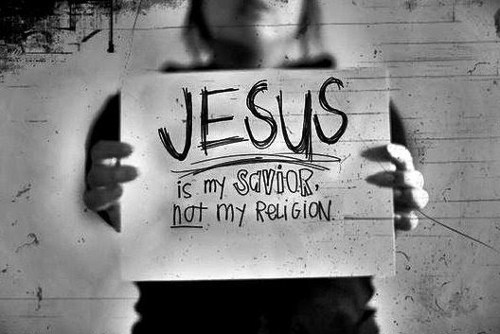
Whatever my experience is, it is not a conversion to Christianity. I do not criticize Christian practice, but simply state the fact, that their practices are not my practices, their form of worship is not mine. Whenever I have visited a church, I have felt out of place, like I was in someone else’s living room. Their culture was not my culture, their practices were not my practices. Their understanding of Scripture is not mine. The only conclusion is that their religion is not my religion.

I feel at home in the synagogue, any synagogue. Their practices and beliefs are familiar to me. Their understanding of God and of His love for our people resonate with mine. While traditional synagogues don’t acknowledge Yeshua, nevertheless, He is there. For me, He is the Messiah of Israel.

-Rabbi Dr. Michael Schiffman
“Messianic Judaism and Christianity: Two Religions With The Same Messiah”
Drschiffman’s Blog

What is Messianic Judaism? Who is a Messianic Jew? These are questions I’m probably not qualified to ask let alone answer, but I have a special interest in the topic for a number of reasons. One important reason is that I’m a Christian husband married to a Jewish wife, so I am keenly aware of the intersection between our two outlooks on faith, the Messiah, and God as it expresses itself in our family life (I also have three Jewish children to add to the mix).

On top of that, most of my “Christian” religious life has been spent worshiping within the context of a One Law congregation (which isn’t really “Messianic Judaism” but I’ll explain that by the by). Within that venue, I gained an appreciation of (if not an actual proficiency in) Jewish religious thought and practice. I find not only many of the mitzvot quite beautiful and meaningful, but the symbolism and conceptualization behind the mitzvot, as the Rabbinic sages have expressed it, to be illuminating of God and oddly enough, my own Christianity.

Additionally, I have enough friends and acquaintances who are Jewish and Messianic and I desire to understand them and their unique experience better. That understanding I believe, will be critical for the Christian church as a whole (if the church can be said to represent a whole) to grasp as the days of the Messiah draw near and he calls His people Israel to return to him along with the nations of the world (“first to the Jew,” however). Without a firm foundation in the “Jewishness of Jesus” and how our world will one day be ruled by a Jewish King descended from the Throne of David, the traditional Christian will become lost and unable to connect to who and what Jesus truly is and what it actually means to be a Gentile disciple of the Messiah.

In addition to the Rabbis I’ve quoted from above, this “meditation” was inspired by a series my friend Judah Gabriel Himango has just started on his own blog called The State of the Messianic Movement. He intends to examine the three overarching groups that exist under the “Messianic” umbrella: Jewish Christianity, Messianic Judaism, and Hebrew Roots. This should require a definition of each of these terms and what (and who) they represent.

For myself, I’ve found that my understanding of what “Messianic Judaism” is has morphed over time. I used to think the term was a big “bucket” that contained what I thought of as Messianic Judaism proper, or groups of primarily Jewish people who worship Jesus as Messiah, One Law, which are groups of primarily non-Jews who believe that the Sinai covenant and its conditional statements, the Torah, are applied with perfect equality between Gentile and Jewish believers, and Two-House, which is made up of groups of primarily non-Jews who believe that their attraction to Torah and Judaism means they are “hidden” Jews who are descended from the “Lost Tribes of Israel.” (By necessity, these definitions are brief and do not contain all of the details and nuances to completely describe each group)

It would take too long to explain how and why I changed my paradigm for understanding Messianism, but a large part of the process was watching my wife rediscover her own Jewish identity during the last several years, moving from atheism, to traditional Christianity, to One Law, and then entering the community of Jews locally, first in our combined Reform-Conservative shul, and then finally becoming involved with the Chabad. I can say all that in a single sentence, but the reality of the experience is extremely complex and involved and having lived through my wife’s journey as her Christian husband (often observing but not significantly able to participate), it has been a remarkable and life-changing progression.

The missus and I were sitting at the kitchen table taking about subjects related to this and we landed on the “hot topic” of whether or not she thought Messianic Jews were Jews. Her answer surprised me just a little. She said that non-Jews who converted to Judaism but who did not renounce other religions (including or perhaps especially Christianity) were not Jews. During the last part of the conversion process, the almost-convert is asked if they voluntarily surrender any and all affiliations to any other religions or faith traditions. If they expect to complete the conversion and enter the mikvah, they always answer “yes”. If they answered “yes” but retained a faith in Yeshua (Jesus), then they lied and their conversion is null, as far as she’s concerned. If, for some reason (and I’ve heard unsubstantiated rumors of this occurring occasionally), the officiating Rabbi fails to ask the question and the convert continues to silently harbor a faith in Yeshua, then again, as far as my wife is concerned, the conversion isn’t valid. A non-valid conversion means the person entered and exited the mikvah as a Christian. End of story.

On the other hand, if a halalaic Jew in any way shape or form, came to faith in Jesus and worshiped him as Messiah, as mistaken as my wife thinks that person is, they are still a Jew. It would be like a Jew who practiced Buddhism or some other religious tradition. They’d still be Jewish. Her brother, for instance, is a born-again Christian and as far as I know, he continues to deny that his mother (and my wife’s mother) was Jewish (my mother-in-law passed away many years ago). To look at him, his wife, and his children, they are the perfect picture of a traditional Christian family. The idea of being Jewish just doesn’t compute within him and I’m sure he doesn’t understand why my wife and children consider themselves Jews. Nevertheless, if he should walk into our local Chabad synagogue on any given morning, and the Rabbi was aware of his status, he could still join the minyan for Shacharit prayers.

I’ve said everything above by way of introducing my humble definition of Messianic Judaism.
First of all, as Dr. Schiffman said on his blog, Messianic Judaism isn’t Christianity. Oh, it shares a number of common elements, not the least of which is the same Messiah. Jesus the Christ is the same guy (forgive me if that seems irreverent) as Yeshua HaMashiach. He is the Lord, the Savior, the Jewish Messiah King, who came once to redeem the world and who will come again, in power to redeem and restore Israel and to rule all of humanity.

However, who we are as disciples of the Messiah makes a huge difference. Regardless of how the movement of “Jesus worshipers” was started, first among the Jews and then among the Gentiles, 2,000 years later, Jews and Christians represent two wildly differing cultures and practices. As Dr. Schiffman said, he doesn’t feel comfortable in a church. He doesn’t belong there. His “spiritual home,” if you will, is the synagogue, any synagogue, Messianic or otherwise. I know of at least one other Jewish person who is Messianic and yet attends an Orthodox synagogue. I suspect there are others who quietly worship in their Jewish communities and yet who nurture a deep faith in Yeshua.

What is Messianic Judaism given all of this? In my opinion, it is a Judaism in the same manner as Orthodox Judaism, Conservative Judaism, Reform Judaism, and so on. It is an expression of religious and halalaic faith and devotion of Jewish people as they relate to the Torah and God. It is the lifestyle, cultural, ethnic, religious, and halalaic context within which each Jew is Jewish. Most, if not all of the other modern Judaisms will certainly disagree with my opinion as will most Christians and the vast majority of non-Jews who are attached to the Hebrew Roots movement in some manner or fashion. So they’ll disagree.

My definition of a Messianic Jew is a person who is halachically Jewish and who practices a form of religious Judaism which includes acknowledging the person of Jesus (Yeshua) as the Jewish Messiah King, and who acknowledges the legitimacy of the Gospels, the Letters, and the Apocrypha in what most people call “the New Testament” as valid for “teaching, for reproof, for correction, and for training in righteousness, that the man of God may be complete, equipped for every good work.” (2 Timothy 3:16-17 ESV) This person’s ethnic, cultural, religious, and lifestyle practice should be virtually indistinguishable from any other religious Jew (it would be interesting to find out if various Messianic Jews pattern their halakhah after different sects, such as Orthodox or Reform, but I lack information here). As Dr. Schiffman said, a Messianic Jew practicing Messianic Judaism (sorry if this sounds redundant, but it’s important to be clear on this point) should look and act the same as any other religious Jew from the viewpoint of an outside observer.

The twist is that there aren’t (probably) that many Messianic Jews practicing Messianic Judaism as I’ve just defined those terms. Even in synagogues that are strictly Messianic Jewish, that is, shuls that are governed by a halachically, ethnically, religiously, and culturally Jewish board, Rabbi, Cantor, and so on, the majority of attendees will still be non-Jewish. The type of synagogue practice should again, be indistinguishable from any other synagogue apart from portions of prayers and services that acknowledge Yeshua as the Messiah and the heir to the Davidic throne. Synagogues like this are most likely very rare in the western world. I’ve only attended one in over ten years of being aware of Messianic Judaism, and I only visited there last spring.

So, while it’s understood, from my perspective, that Messianic Jews practice Messianic Judaism, do the non-Jewish attendees also practice Messianic Judaism alongside the attending Jews? The answer to that question is probably the same as asking if I practiced Judaism when (this was years ago) I attended our local Reform-Conservative synagogue with my Jewish wife and our children.

In other words, “no”. I certainly worshiped the God of Abraham, Isaac, and Jacob, and privately in my own heart, acknowledged my Lord and the King of the Jews during the prayers, but I was a Gentile among Jews in a completely Jewish context. From their point of view, the best they probably thought of me was as a righteous Gentile, and it’s not unusual for Noahides to worship alongside Jews (where else would they go?). In fact, I know of many Christians who periodically or (for a few) regularly worship in one of the local synagogues, either because they’re intermarried like me, or they have some other affinity for the Jewish people and for Judaism.

In a sense, whether you worship in a church or a synagogue (assuming you are a believer in Jesus as the Jewish Messiah) depends largely on your sense of personal identity and in which culture you feel more comfortable. This isn’t really unusual. Some Jews feel more comfortable in an Orthodox synagogue than those of the other Jewish sects, and some Christians feel more comfortable in a Lutheran or Baptist church than in a Methodist or Episcopal church. Some of that is theological, but a lot of it is cultural and believe me, different Christian denominations have their own cultures. So why not different Judaisms?

I’m sure my descriptions and definitions are far from complete, but trying to define Judaism in any sense, let alone Messianic Judaism, is a very difficult and involved task. This is really more of an introduction than anything, but as I said, some of the material I’ve been reading lately has been tugging at me and I needed to respond. As always, many people will disagree and many people will become upset, troubled, and even incensed and outraged. I’ve talked recently about how poorly some people tend to respond when another person disagrees with them online.

It’s OK if we don’t agree. Please try not to take it personally. As I live with Jewish people every day, I’m kind of in tune with how they are like me and how they are not like me. I’m just extending that personal awareness into a public arena. Your mileage may vary.

Journey to Reconciliation, Part 1

Had the Hebrew roots movement started off on a different trajectory, there would never have been a need for me to say this. To most Christians, saying that “the Church is good” will sound ridiculous in its self-evidence. Yet the Hebrew roots movement’s rhetoric against Christianity and the church as been escalating for years and shows no signs of abating. For someone who is just learning about the movement, this rhetoric is often an immediate turn off – and rightly so. There is nothing anti-Christian or anti-church about the authentic core message of the Jewishness of Jesus.

-Boaz Michael,
President and Founder of First Fruits of Zion (FFOZ)
from an early manuscript his forthcoming book “Tent of David”

I had only been a Christian for a few years when I was introduced to the Hebrew Roots movement. I probably wouldn’t have entered the movement at all if not for my wife’s involvement (which she has long since exited). I was just finally getting comfortable in my church. I was just beginning to feel like I was fitting in. I was more at ease about participating in discussions in Sunday school. I had been asked to be one of the ushers during services. I was making friends. I felt like I belonged.

But through a long string of circumstances (not unlike the long string of circumstances that resulted in me becoming a Christian after the age of forty), I started attending a “Messianic Jewish” congregation. This was in the late 1990s and frankly, I didn’t know Messianic Judaism or Hebrew Roots (related concepts, but not the same thing) from anything else. But it was new and exciting and they said and taught such amazing things about Jesus, or rather “Yeshua” as he’s referred to in Hebrew. Everyone was nice (just like at church) and it was a small enough venue to where I could meet and get to know everyone fairly quickly.

But among the things I learned about was that our hands are stained with blood. More to the point (and I’m borrowing that phrase from Michael Brown’s somewhat famous book on the topic), the church is stained with blood; Jewish blood.

I won’t take this opportunity to recount to you the long and troubling history of the Christian church, especially in how it treated the Jewish people, the pogroms, the inquisitions, the spreading of the vast net of supersessionism across the world, the frightening twists of such a theology that in part, made the Holocaust possible. Others have chronicled all of this information exacting detail. I have no need to do so here.

But back then, I had no idea.

I began to realize that although I maintained my faith in Jesus, the method of my introduction to the Jewish Messiah occurred in a place that was actively opposed to his being Jewish. It was actively opposed to the Jewish people. It taught that the Jews were no longer the chosen ones of God and that they had been replaced by the Gentile Christians. How could I possibly stand for that? My wife and three children are Jewish.

It was a horrible realization.

So I went to a “congregation” and not a church. I was a “Messianic Gentile,” not a Christian. I only called the Jewish Messiah “Yeshua,” never Jesus. I wore a kippah when I went to worship and donned a tallit gadol when I entered into prayer. I haltingly prayed in very bad Hebrew using photocopied pages of a transliteration of the prayers. I only read the Apostolic scriptures (never calling it the “New Testament”) using David H. Stern’s The Complete Jewish Bible. I read the Tanakh, not the “Old Testament.”

My departure from my old church wasn’t clean. We still attended both congregations. My kids were very well-integrated into the church’s youth group and it would have been difficult to just abruptly detach them from the relationships they had there. I started to talk to my Christian friends about Yeshua, and the Torah, and Moshe, and how Paul was really “Rabbi Shaul” who taught the Gentile disciples to obey Torah.

I was treated politely but the distance began to grow between me and the people who I had just started to feel comfortable around. It didn’t help that the church was going through an upheaval at the time. The board had dismissed the Pastor for not “growing” the church to their ambitions (I still remember Pastor Jerry very fondly) and they hired a dynamic (but not nearly as personable) Pastor who had a degree in “church growth” or something like that. I disagreed with their methods and their reasoning and the rift between me and the church I had come to faith in expanded, finally to the breaking point.

This did nothing but add to the rather negative impression of Christianity I was learning from the Hebrew Roots congregation I was also attending.

I want to make it clear at this point that no one in the Hebrew Roots congregation was hostile or aggressive in terms of Christians, Christianity, or “the church.” They were (and are) all people of good will and faith who sincerely believed everything they were saying. But part of what they were saying is that traditional Christianity had gone astray and was leading many innocent people down the wrong path. The only hope was to leave the church and to form Hebrew Roots congregations that were more in keeping with Torah and the teachings of Yeshua, our Master.

I learned a great deal about Yeshua, Torah, Moshe, and my responsibilities to the mitzvot of God from FFOZ’s Torah Club as it existed back in those days (a lot has changed since then).

I won’t try to describe everything that’s happened in the last twelve years or so. Suffice it to say, I’ve changed quite a bit. I’ve spent a long decade plus investigating, examining, and growing in my faith. At this point in my life, just a few years shy of sixty, I realize how very little I really understand.

Christianity is slowly changing. I know several Pastors of Christian churches who have realized that the replacement theology that has typically been represented and taught in churches is not a sustainable doctrine. They are, much like Anglican priest Andrew White, realizing that we cannot be Christians without knowing that the root of our faith resides in the Jewish people and in Judaism. But that doesn’t mean we have to abandon our churches and our Sunday schools and “reinvent” our faith by creating new congregations which borrow from Jewish religious practices, customs, and identity markers.

I don’t disdain the people in my former Hebrew Roots congregation. I still am friends with them, though we don’t often see each other. I continue to believe that they are pursuing their faith, the Messiah, and the God of Israel in an honest, sincere, and holy manner. The congregation as I left it and as it was every day I attended, never spoke against the church or against Christians. For virtually its entire existence, the congregation met in rooms rented from local churches. One church, which occasionally loaned us the use of their youth building for no cost, felt that helping us was their outreach to the Jewish people (though we had virtually no one attending who was halachically Jewish). All of our High Holiday and other festival celebrations took place in churches. Many Christians, including several Pastors, attended our Passover seders each year.

The church was good to us.

The church is good.

As I’m sure you’re aware, I not only write frequently on topics involving Hebrew Roots and Messianic Judaism, but I visit and occasionally comment on related blogs. I don’t comment on all of them because sadly, some are rather uncomfortable with my opinions and beliefs and some actively speak against the church, Christianity, and Christians. While not all Hebrew Roots congregations (as I’ve mentioned) are characterized by a specific rejection of Christianity, the movement as a whole (and the movement is diverse in the extreme, ranging from highly organized congregations, to fragmented Bible studies and small family living room worship groups) has an identity based on a sense of being victimized by the church.

In my time in the Hebrew Roots movement, I’ve met many people who felt betrayed by their churches and their Pastors. They were (and probably still are) angry and hurt, and their outlook on Christianity is fueled primarily by their emotions and in some cases, by what their Hebrew Roots congregational leaders are teaching to reenforce those feelings.

Again, I want to be extremely careful and say that many, many Hebrew Roots groups are not like this at all, but many, many more are, and the wedge separating Hebrew Roots believers and the traditional church of Jesus Christ is getting wider every day.

Ironically, this doesn’t mean that the relationship between Hebrew Roots as a whole and the traditional Jewish synagogue is getting any closer. Having ties in both the local Reform and Chabad groups, I can tell you that it’s much more likely for a traditional Christian to visit and be accepted in a Shabbat service or Hebrew class than it is someone from the Hebrew Roots movement, especially if the Hebrew Roots person begins “explaining” to the Rabbis what they’re doing wrong, criticizing the Talmud, or otherwise appearing to denigrate (even without meaning to) how Jews practice and understand Judaism.

So where is Hebrew Roots today and what exactly went wrong?

I haven’t sent out questionnaires or performed a scientific survey of the entire Hebrew Roots movement as it currently exists, but based on everything I’ve said so far (and over a decade of experience within the movement, including contact with dozens of congregations), I’d have to say that Hebrew Roots is wholly isolating itself both from Christianity and from Judaism.

Startling, I know. I’m sure I’ll get some “pushback” for saying that.

Again, this isn’t absolutely true of each and every Hebrew Roots congregation, but the movement as a whole, including all of the highly diverse and mixed groups, families, and individuals involved, is drifting further away from unity with both its “Hebrew” root and its “Apostolic” root.

How can this be fixed?

There are two basic populations in Hebrew Roots. The first population, and in fact, the vast, vast majority population, is Gentile Christian. That is, people who are not Jewish who came into Hebrew Roots from the church. Only a tiny minority could be considered authentically Jewish, according to accepted halachah, by having a Jewish mother. Most of the “Jewish” members may have a Jewish grandparent or more distant relative and by virtue of that relationship, consider themselves Jewish, but they were never raised in a Jewish home, never had a traditional Jewish education, and otherwise, never experienced anything “Jewish” until entering the movement.

(I should say at this point that the Hebrew Roots movement has been around long enough to where there are young adults who have been raised in Hebrew Roots, so their background, family experience, and education comes from that source…but that’s not the same as being raised by two Jewish parents who are observant in any form of religious Judism).

How this can be fixed depends on who you are, where you come from, and what you are willing to tolerate. To prevent this blog post from growing beyond all reasonable bounds, I’ll continue this presentation in tomorrow’s “morning meditation.”

There’s hope. There’s a way out of this mess, I promise you. The path leads to our being able to serve God, both Jew and Christian alike. There is a resolution between the church and the synagogue and between Christianity and true Messianic Judaism.

That’s the journey we will continue tomorrow with Part 2.


Pinchas: Is It Too Much To Ask For Both?

The Torah portion of Pinchas begins with G-d saying to Moshe: (Bamidbar 25:11-12.) “Pinchas… has turned My wrath away from the Jewish people by displaying anger among them on My behalf.”

Pinchas’ conduct involved self-sacrifice, for his deed aroused the wrath of the tribe of Shimon, whose members sought to kill him. (See Sifri and Tanchuma, end of Parshas Balak; Sanhedrin 82b.)

After the Torah concludes the tale of Pinchas, it speaks about the division of Eretz Yisrael and the appointment of Yehoshua to lead the Jewish people into the Promised Land. The portion concludes with a section on offerings, a number of which could be brought only when the Jews were in Eretz Yisrael. (See Menachos 45b; Zevachim 111a.)

Since all the above is part of the portion titled Pinchas, it follows that the entrance to Eretz Yisrael and all related matters are somehow connected to the spiritual service of Pinchas.

What is the connection?

Our Rabbis tell us (Nedarim 22b. See also Shmos Rabbah, beginning of ch. 32.) that, were it not for the iniquities of the Jews, their first entry into Eretz Yisrael would have triggered the Redemption. Although this did not actually take place, in some respects the first entry resembled the future Redemption.

This similarity helps us understand the relationship between Pinchas and the entry into Eretz Yisrael, for our Sages state: (Targum Yonasan, Va’eira 6:18; Zohar, Vol. II, p. 190a; Pirkei d’Rebbe Eliezer, ch. 47; Yalkut Shimoni, beginning of Pinchas.) “Pinchas is Eliyahu,” and Eliyahu is the one who will bring the tidings of Redemption.

-Rabbi Sholom B. Wineberg
“Pinchas”
The Chassidic Dimension
Commentary on Torah Portion Pinchas
Based on the teachings of the Lubavitcher Rebbe
Rabbi Menachem M. Schneerson
Chabad.org

You can click the link I provided above to read the full “Chassidic Dimension” commentary (and remember, this is midrash, not concrete fact, so I make no claim as to how or if it can be applied to a specific understanding of the Biblical text), but what Rabbi Wineberg wrote reminded me of something else I recently read.

“If both Judaism and Christianity are correct in their definitions of redemption, then Jesus must do both what Judaism is expecting the Messiah to do, and what Christians expect him to do. This means that Jesus will do more than come back and save those who believe in him from sin and death. He will also re-gather his people Israel from exile and restore them to their land in a state of blessing and peace (Isaiah 35, 48:12-22, 52:1-12; Jeremiah 31).”

-Boaz Michael

I suspect that Boaz is sending out some “teasers” from First Fruits of Zion’s next project and if so, then it’s something I’ve been looking forward to since my last face-to-face conversation with him.

Both Rabbi Wineberg and Boaz talk about Israel’s redemption, but what does that mean? What is redemption within the Jewish religious context? We have a pretty good idea from Boaz’s statement above, but here’s a little bit more.

The mashiach will bring about the political and spiritual redemption of the Jewish people by bringing us back to Israel and restoring Jerusalem (Isaiah 11:11-12; Jeremiah 23:8; 30:3; Hosea 3:4-5). He will establish a government in Israel that will be the center of all world government, both for Jews and gentiles (Isaiah 2:2-4; 11:10; 42:1). He will rebuild the Temple and re-establish its worship (Jeremiah 33:18). He will restore the religious court system of Israel and establish Jewish law as the law of the land (Jeremiah 33:15).

Judaism 101

Wikipedia has a more condensed explanation:

In Judaism, (Hebrew ge’ulah), redemption refers to God redeeming the people of Israel from their various exiles. This includes the final redemption from the present exile. In Hasidic philosophy parallels are drawn between the redemption from exile and the personal redemption achieved when a person refines his character traits.

I’ll assume that most of my audience has a basic working knowledge of what Christians mean when they refer to redemption, but once again, I’ll invoke Wikipedia in order to offer a brief definition:

In Christian theology redemption is an element of salvation that broadly means the deliverance from sin. Leon Morris says that “Paul uses the concept of redemption primarily to speak of the saving significance of the death of Christ.” The English word redemption means ‘repurchase’ or ‘buy back’, and in the Old Testament referred to the ransom of slaves (Exodus 21:8). In the New Testament the redemption word group is used to refer both to deliverance from sin and freedom from captivity. Theologically, redemption is a metaphor for what is achieved through the Atonement. Therefore there is a metaphorical sense in which the death of Jesus pays the price of a ransom, releasing Christians from bondage to sin and death. Most evangelical theologians and Protestant denominations, however, reject the idea of Origen who held that redemption means that in the atonement God paid Satan with the death of Jesus.

Rabbi Wineberg is obviously addressing the Jewish and specifically the Chassidic viewpoint, while Boaz is saying that the Messiah will bring about both “redemptions” since they both are presupposed by the Biblical text. But how does this work or indeed, does it work at all?

One person commented critically about this on Facebook:

Sounds like Messianic theology to me please both groups so that every ome [sic] get to go! Makings all that Israel went though worth NOTHING. But this will please the people so tell them what makes them happy.

This isn’t the first time Boaz and FFOZ have been accused of playing both sides against the middle, but is that what they’re doing here? It would be impossible to tell based on a single quote, so let’s try another one from Boaz.

“I have to confess, I don’t really get it. If you believe in Jesus, you believe he is the King. The Lord. The Boss. Your Boss. There is no other option. It’s an integral part of his identity. The fact that some people have lost sight of that fact is evidence, to me, of how far we have come from a really Biblical idea of who Jesus is. We have forgotten that there is no such thing as a Jesus who is not our King, a Jesus we don’t have to obey.”

That one is also bound to draw some fire since the Messianic movement in all of its flavors has been rather “Torah-centric,” often at the expense of the Jewish Messiah. A lot of Christians who have been dissatisfied with the church have abandoned it in favor of the Torah and probably without meaning to, have fused the Torah and Jesus (Yeshua) into a single unit, as if they were interchangeable components; cosmic spark plugs, so to speak. Torah equals Messiah and Messiah equals Torah and pretty soon we forget that the Messiah was and is the living example of what a Torah lifestyle looks like (at least in the late second Temple period) and that he also has a life of his own, and a very critical life at that.

I actually started talking about this topic right after I returned home from the FFOZ 2012 Shavuot Conference. Blog posts “Redeeming the Heart of Israel,” Part 1 and Part 2 discuss the interactivity between Christianity and Judaism in bringing about national Jewish redemption.

Initially, I was very keen on this concept, since the mission of the church as presented in this paradigm, is to bring about Israel’s redemption by encouraging Jewish Torah observance, and this is something that is very dear to me on a personal level. But then, as I thought about it, I wondered where we could look in the Bible to support this viewpoint. Christianity is (and in this case, rightly so) a tad suspicious of Jewish religious pronouncements that seem to be disconnected from the Bible or which have a source largely based on Rabbinic midrash. If you can’t point to where in the Bible we can find Israel’s redemption linked to Torah obedience and to personal salvation all as the work of the Messiah, how real can it be? Can we successfully bridge Jewish and Christian conceptualizations of redemption so that we can envision all of this as what the Jewish King will accomplish upon his return?

I find this to be a compelling direction to investigate, but I suspect FFOZ has its work cut out for it, not just in performing the necessary scholarly research and constructing a book that is accessible to a mass audience made up of a broad spectrum of Jewish and Christian theologies, but in convincing that audience that the powers of the Messiah are indeed sufficiently vast as to encompass such a redemption.

I just finished a conversation on Facebook unrelated to this one, where the fellow and I were discussing the difficulties involved in truly seeing a situation from another person’s paradigm. We all almost exclusively tend to see the world from our own limited perspective. If you’re an evangelical Christian for example, your worldview is colored by that lived experience. The same is true if you are an Orthodox Jew, a Sunni Muslim, a Catholic priest, a liberal, progressive Democrat, or just about anybody else.

Although we like to believe so, Messianic Judaism doesn’t successfully meld Judaism and Christianity. Both are extremely different perspectives as we understand them currently and also historically. So saying something like, “If both Judaism and Christianity are correct in their definitions of redemption, then Jesus must do both what Judaism is expecting the Messiah to do, and what Christians expect him to do,” seems as if you are talking out of both sides of your mouth. Maybe both things can be true, but how can you see and understand the Messiah from the perspectives of both Christian and Jewish redemptive imperatives simultaneously?

It isn’t easy.

Rabbi Wineberg states:

The novel aspect of the future Redemption lies in the fact that at that time, G-dliness will be fully revealed. (Tanya ch. 37.) Nowadays, G-dliness is clothed in the material world, and manifest only in a contracted manner. In times to come, however, a greater level of Divine illumination will be found within this world — a level not subject to contraction or limitation.

On the Facebook thread discussing this topic, Pastor Bill Beyer replied:

Theology is not about making people happy. It’s about finding the truth. To say that Yeshua can only do one OR the other is limiting the power of the Messiah. Truth be told, scripture says he’s going to do even more than these two things.

The only limiting factor imposed on the Messiah is us. We place constraints on his power and what he will accomplish based on our viewpoints, doctrines, dogmas, and desires. Christians have been told that redemption means only personal redemption for believers. Jews have been told that redemption means only the national redemption of Israel and the ingathering of the exiles. To quote Tony Stark (played by Robert Downey, Jr.) from the first Iron Man (2008) film, “I say, is it too much to ask for both?”

I suspect the answer is right around the corner.

Good Shabbos.

A Few Thoughts on a General Soul

Hasidism teaches that while not all are able to attain the highest levels of elevated spirituality, the masses can attach themselves to the Tzadik, or truly righteous one, (in Hebrew: התקשרות לצדיקים) whereby even those of lesser achievement will reap the same spiritual and material benefits. By being in the Tzadik’s presence one could achieve dveikut through that of the Tzadik. The Tzadik also serves as the intercessor between those attached to him and God, and acts as the channel through which Divine bounty is passed. To the early Rabbinic opponents of Hasidism, its distinctive doctrine of the Tzadik appeared to place an intermediary before Judaism’s direct connection with God. They saw the Hasidic enthusiasm of telling semi-prophetic or miraculous stories of its leaders as excessive. In Hasidic thought, based on earlier Kabbalistic ideas of collective souls, the Tzaddik is a general soul in which the followers are included. The Tzaddik is described as an “Intermidiary who connects” with God, rather than the heretical notion of an “Intermidiary who separates”. To the followers, the Tzaddik is not an object of prayer, as he attains his level only by being completely bittul (nullified) to God. The Hasidic followers have the custom of handing pidyon requests for blessing to the Tzaddik, or visiting the Ohel graves of earlier leaders.

from the article “Hasidic philosophy”
Wikipedia.org

I can hardly tell you how the above-quoted paragraph seems to describe how I understand the Messiah.

OK, I know that Wikipedia has less than a stellar reputation as a direct resource, but given that Chasidic and Kabbalistic philosophy can be enormously difficult to comprehend (at least to me), I selected what I thought was the most accessible information source. But why am I posting a quote about bonding with a Chasidic tzadik at all? What possible relevance can it have to a Christian, even one who is trying to view his faith through a traditional Jewish lens?

Last week, as I’ve mentioned numerous times, I attended the First Fruits of Zion (FFOZ) 2012 Shavuot conference at the Beth Immanuel Sabbath Fellowship in Hudson, Wisconsin. Among the various teachers and speakers at this event was FFOZ author and staff member Aaron Eby. He said something about the Messiah during one of his presentations that I just had to write down. This probably isn’t word-for-word, but hopefully, it’s close.

Messiah has a general soul and he cannot separate his soul from the soul of Israel.

I’m not sure if the other stuff I have written down on this little piece of paper I’m looking at was said by Aaron or just my interpretation and expansion on what he said, but here it is.

When a Gentile takes hold of the tzitzit of a Jew, he is taking hold of Messiah. He is taking hold of the tzitzit of a Jew and being led to the Temple Mount. Find God in the Jewish people.

I’m obviously referencing Zechariah 8:23 in my notes, but let’s take a look at the verse in it’s context.

“Thus says the Lord of hosts: Peoples shall yet come, even the inhabitants of many cities. The inhabitants of one city shall go to another, saying, ‘Let us go at once to entreat the favor of the Lord and to seek the Lord of hosts; I myself am going.’ Many peoples and strong nations shall come to seek the Lord of hosts in Jerusalem and to entreat the favor of the Lord. Thus says the Lord of hosts: In those days ten men from the nations of every tongue shall take hold of the robe of a Jew, saying, ‘Let us go with you, for we have heard that God is with you.’” –Zechariah 8:20-23 (ESV)

These events occur in the Messianic age, so thus far, ten men of the nations haven’t taken a hold of the tzitzit of a Jew in the manner described by the prophet. However, we know that this will happen and we know we Christians should get used to the idea that it should happen, and that it is all part of God’s plan for the Jews and for us.

A few weeks ago, I wrote on another meditation something that caused quite a stir:

This is another reason why we Christians, and indeed, the entire world, owes the Jews a debt that can never be repaid. It is their King who will finally come and bring peace for everyone, not just the nation of Israel, but the nations of the earth.

The “push back” I received about those words was that we owe God the Father and Jesus Christ such a debt, not the Jewish people. The idea is that Christians should not glorify a people group but instead, glorify God. As far as that statement goes, I agree wholeheartedly. Our worship and devotion belongs only to the God of Israel. Jesus Christ came and even said that God sent him to the lost sheep of Israel. And we know from the very often quoted John 3:16 and many other scriptures that the scope of the Messianic covenant extends far beyond Israel and indeed, to the entire world.

ShavuotBut what was that thing about a “general soul?”

When Aaron made that statement, I immediately thought of the different ways I tried to explain why we Christians do owe a debt to the Jews. In the best way I knew how, I tried to show that the Messiah as an individual, cannot be separated from his people the Jews. In essense, Messiah is Israel and is their firstborn son. Now I have another way of thinking about Messiah as having a general soul that is inseparably joined to the soul of all his people. But maybe, if we can take a different look at Zechariah 8, the door swings both ways, so to speak. We in church, when we “take hold” of Christ, are also taking hold of Israel and the Jews. But we can also “take hold,” as the prophet said, of a Jew, and by doing so, be joined to Israel and her Messiah.

I want to be very careful here and explain that I’m not talking about substituting Judaism in the place of the Messiah. So many Gentiles in the Messianic Jewish movement have fallen into this trap and abandoned Jesus altogether, choosing instead to convert to a traditional Judaism. This is not what I’m suggesting at all. What I’m saying is that we cannot separate the Messiah from Judaism. Perhaps I’m also saying that we cannot separate Judaism from Messiah. I’m not particularly scholarly in these areas, so I don’t have the means to evaluate the mystical implications of all of this, but if nothing else, I see the Messiah and his general soul as a way for us to continually realize that we cannot say we love Jesus Christ and throw the Jews, Judaism, and national Israel under a bus at the same time.

If we accept Christ as Messiah and Lord, we accept all of him, just as he is and always will be. Totally joined to Israel and to every Jew who has ever existed.

So be careful what you say and how you treat the next Jewish person you meet. You never know if someday it may be his tzitzit you will be clinging to as you cling to the soul of the Messiah.

Since the Divine activating force responsible for the existence of created things must continuously be present within them, they are completely nullified in their source. This means, as the Alter Rebbe explained in the previous chapter, that in reality they do not “exist”.

Why, then, do we nevertheless perceive created beings as enjoying a tangible “existence”? — Only because we are unable to see or comprehend the Divine utterance that is contained within each created thing and that calls it into being.

The Alter Rebbe illustrated this by considering the sun’s rays. When they are not within their source, the sun, but diffused throughout the expanse of the universe, they are perceived as having independent existence. However, when they are contained within the sun-globe they clearly have no such “existence” at all.

From “Today’s Tanya Lesson” (Listen online)
Shaar Hayichud Vehaemunah, beginning of Chapter 4
Sivan 12, 5772 · June 2, 2012
Chabad.org

The Blood of the Prince

tallit-prayerThis is one of those “hot” topics. A Messianic Jewish rabbi friend of mine recently got an email from a distraught woman urgently asking him to intervene on behalf of her husband. I would like some opinions on the matter from my readers. I will paraphrase that email below to protect all parties:

Please pray for us and help us. You see, my Jewish husband (who is from Israel) believes that Jesus is the Messiah of Israel through whom God redeems and saves, but he refuses to believe that Jesus is God too. My husband is adamant that he will not accept this belief. I don’t know what to do – I don’t want him to be lost. I need urgent help and I think my husband will benefit from your counseling. I am really hoping that you would be able to convince him of his error before it’s too late.

Question for my readers: should this woman be concerned about the spiritual fate of her husband? If this Jewish man never changes his mind on the nature of the Messiah, should he be concerned about his final destiny and should we?

-Gene Shlomovich
Crisis? A Jewish husband believes that Jesus is the Messiah but not G-d
Wednesday, May 9, 2012
Daily Minyan blogspot

I’m not in the habit of quoting one person’s full blog post to begin one of my own, but this question, which I thought was unanswerable, may just have been answered (though judging by the subsequent comments that have been accumulating as I’ve been writing this missive, maybe not). There was a lively debate by various folks commenting on this blog but it degenerated (and is still degenerating) into a “Jesus is God” vs “Jesus is Messiah but not God” vs “I don’t know what Jesus is” kind of debate. A few people took a stab at actually trying to answer Gene’s question, but no one really knew or could support their opinions from scripture…that is until now:

I am convinced that Peter’s first introduction to Messiah (John 1:41), and his own confirmation of that introduction (John 6:69, 11:27) brought him into sonship, and is all that is expected of any Jew to be saved and secured for Kingdom status (Romans 10:13, 11:26).

-Brad

Then Gene replied:

@Brad…

Thank you for providing an answer to my exact question directly from scripture.

Traditional religious Judaism doesn’t spend a great deal of time worrying about whether or not Jews are saved. In the merit of Abraham, Issac, and Jacob, Jews are all considered to have a place in the world to come. However, in Christianity and the various corners of the Hebrew Roots and Messianic Jewish movements (which all overlap but are not really the same), there are a couple of important questions that have remained unanswered:

If Jews are “saved” through the merit of the patriarchs, what significance does Jesus have as the Messiah to them?

On a more fundamental level, the question is:

Are Jews saved?

I’ve struggled with these questions as well. To say that the process of salvation for a Jew is identical to a Gentile means that prior to the coming of the Messiah, no Jews could be saved. I also means that the millions of Jews who refused to convert to Christianity because they believed we Christians practiced paganism and polytheism, have been consigned to hell, often having suffered torture and murder at the hands of the church who was attempting to force their conversion, first.

I’m not sure I have the answer regarding “salvation” relative to all Jews everywhere, but it appears that Brad, armed with “only” a Bible, has answered the first question. Let’s take a look at his material in a more detail. His statement can be broken up into two main sections:

I am convinced that Peter’s first introduction to Messiah (John 1:41), and his own confirmation of that introduction (John 6:69, 11:27) brought him into sonship…

PrayingSo what do we see when we are introduced to the Messiah and that introduction is confirmed? What brought Peter into “sonship?”

The next day again John was standing with two of his disciples, and he looked at Jesus as he walked by and said, “Behold, the Lamb of God!” The two disciples heard him say this, and they followed Jesus. Jesus turned and saw them following and said to them, “What are you seeking?” And they said to him, “Rabbi”, “where are you staying?” He said to them, “Come and you will see.” So they came and saw where he was staying, and they stayed with him that day, for it was about the tenth hour. One of the two who heard John speak and followed Jesus was Andrew, Simon Peter’s brother. He first found his own brother Simon and said to him, “We have found the Messiah”. He brought him to Jesus. Jesus looked at him and said, “You are Simon the son of John. You shall be called Cephas”. –John 1:35-42 (ESV)

After this many of his disciples turned back and no longer walked with him. So Jesus said to the Twelve, “Do you want to go away as well?” Simon Peter answered him, “Lord, to whom shall we go? You have the words of eternal life, and we have believed, and have come to know, that you are the Holy One of God.” –John 6:66-69 (ESV)

Mary, the sister of Martha, also faced the same question and arrived at the same conclusion.

Jesus said to her, “I am the resurrection and the life. Whoever believes in me, though he die, yet shall he live, and everyone who lives and believes in me shall never die. Do you believe this?” She said to him, “Yes, Lord; I believe that you are the Christ, the Son of God, who is coming into the world.” –John 11:25-27 (ESV)

Now here’s section two:

and is all that is expected of any Jew to be saved and secured for Kingdom status (Romans 10:13, 11:26).

So what is actually expected of a Jew for salvation through the Messiah?

For with the heart one believes and is justified, and with the mouth one confesses and is saved. For the Scripture says, “Everyone who believes in him will not be put to shame.” For there is no distinction between Jew and Greek; for the same Lord is Lord of all, bestowing his riches on all who call on him. For “everyone who calls on the name of the Lord will be saved.” –Romans 10:10-13 (ESV)

Lest you be wise in your own sight, I do not want you to be unaware of this mystery, brothers: a partial hardening has come upon Israel, until the fullness of the Gentiles has come in. And in this way all Israel will be saved, as it is written,

“The Deliverer will come from Zion, he will banish ungodliness from Jacob and this will be my covenant with them when I take away their sins.” –Romans 11:25-27 (ESV)

“No distinction between Jew or Greek” seems to be relative to the issue of salvation, so the Messiah has always been a vital element, but as Paul also said, “a partial hardening has come upon Israel, until the fullness of the Gentiles has come in. And in this way all Israel will be saved,” so this two is part of God’s plan for Israel.

Putting it all together, nothing else but what has been presented above is required to answer Gene’s question (and I’m paraphrasing): “Is a Jewish man ‘saved’ if he comes to faith in Jesus as the Messiah but not as God clothed in flesh and blood?”

Peter believed that Jesus was the Messiah, the holy one of God and that he had words of eternal life. Mary, sister of Martha also believed that Jesus was the Messiah and Son of God that that “everyone who lives and believes in him shall never die.” Everyone, Jew or Gentile, who calls on the Lord’s name shall be saved, and Gentiles, in God’s mercy, are brought into the Kingdom through the temporary hardening of the Jews. In the end, as Paul continues, “all Israel will be saved.”

God will not abandon the life of his heritage Israel nor let the blood of the Messiah go to waste:

The poor man stood in the doorway, smelling the sweet, freshly baked bread, and held out his hand for something to eat. Hunger gnawed at his stomach, for he had not eaten in days. He had tried to find work, but no one wanted to hire him. At last, hearing that Rabbi Yitzchak of Kalush had an open heart and an open door, he came to his house late one Friday afternoon.

Even before they opened the door, he could smell the fresh baked bread . . .

The cook looked at her challahs, golden baked and twisted, and sprinkled with poppy seeds. The cook did not want to give him a slice from the challahs. They were for Shabbat. She looked in the kitchen cabinets and drawers for an old, stale piece of bread, the kind that is usually given to beggars, but she found none.

“Slice up a loaf,” a man’s voice said, “no blood will be lost because of it.”

And so she cut into the loaf, soft and white, and gave the poor man a thick slice to eat. Unless a person has truly been hungry, he cannot know the meaning of bread. The poor man ate greedily. As he left, a man with kind eyes nodded. He was the one who had told her to cut the bread. The poor man knew that this man had saved his life.

-from a commentary on
Ethics of Our Fathers (4:3)
“The Blood Not Lost”

The Son of God is the bread of life to all mankind but particularly to His people the Jews. The blood of the Prince was not spilled in vain on Jewish soil and was not wasted for the sake of Israel. We in the church should not consider the Jew with contempt:

Ben Azzai used to say: “Do not regard anyone with contempt, and do not reject anything; for there is no man who does not have his hour, and nothing which does not have its place.” -Avot 4:3

Shavuot Fellowship in Wisconsin

Twenty-years ago the spirit of the Lord kindled something new, and the ministry of first fruits of Zion was born. With the teachings of First Fruits of Zion, Christians and Messianic Jews began to rediscover the Torah.

Two decades later, First Fruits of Zion and the Messianic Jewish movement still lives, breathes, and is ready to thrive. At Shavuot 2012, First Fruits of Zion breaks new ground as we present our game plan for the future of Messianic Judaism, for Jewish believers in Yeshua, and for Messianic Gentiles from all nations. Come and hear the vision, become a solid member for change—be inspired to kick-start a fresh revolution by learning practical ways to facilitate study groups, Torah studies, and other outreach efforts.

from the Shavuot Conference 2012 webpage
First Fruits of Zion (FFOZ)

I have to admit to being a little nervous about attending this conference. Oh, I’m also really excited. I’ll get to see some old friends that I don’t get “face time” with very often, and actually meet people I’ve only communicated with over the web. But like some “fine wines” (yeah, that’s a joke), I don’t really travel well, I like to get to bed early, and I don’t enjoy large crowds. I don’t really thrive in a large conference environment.

But more to the point, I haven’t been to anything like this for a number of years and as an “unaffiliated Christian” in a world of Messianic Jews, Messianic Gentiles, and others who don’t traditionally identify with the mainstream church, I’m not sure what to expect or how I’ll be viewed by everyone (not that I should care, I suppose).

For one thing, the tallit and tefillin are staying at home (I’ll still bring a kippah). When I backed away from the One Law position (the basic Idea that all of the 613 commandments or mitzvot that observant Jews believe apply to them also applies to all non-Jewish Christians by virtue of being “grafted in”), I backed away from just about everything that had an outward Jewish religious practice. I started to imagine (not that she’d say anything) what my (non-Messianic) Jewish wife might be thinking every time I put on a tallit and laid phylacteries to pray. For me, it was easier to come to peace with the direct interfaith part of our marriage if I didn’t try to “walk her side of the street” so to speak. I put most of the religious items I used in “Messianic worship” in a box and there they’ll stay until I have a good reason to bring them out again.

So I don’t consider myself “Messianic” in the sense that most (probably) of the attendees at the Shavuot conference consider themselves Messianic (the non-Jews, that is).

There’s another issue here though. This whole classification of Christian vs. Messianic among non-Jews is just a little crazy. I know that it’s meant to differentiate between traditional Sunday Christians and those who have become more aware of the Hebraic origins of our faith, but it’s gotten to the point where we’re almost acting like we have two different religions.

I’m not OK with this. If Jesus was and is King of the Jews for Messianics, then he was and is King of the Jews for more traditional Christians. Recognizing the Jewishness of Jesus and then encasing that fact with a Messianic “bubble” only isolates that information and the truths it contains from all other Christians everywhere. Rather than focusing on the differences between how many non-Jews in the Messianic movement see things and how most other Christians see things, maybe we need to spend more time paying attention to how we’re alike.

I know a number of non-Jews who self-identify as “Messianic” visit and read my blog posts. If that’s you, I want you to practice something in the privacy of your own homes when you’re all alone. I want you to say out loud, “I’m a Christian.” Repeat it a few times. C’mon, don’t whisper. Really belt it out. “I’m a Christian.”

“I’m a Christian.”

Was that awkward? For some of you, it probably was. No, I’m not making fun of you or trying to be mean. My point is that whether you consider yourself a “Messianic Gentile” and pray wearing tzitzit and tefillin or you think of yourself as a Christian and feel no need to adopt any Jewish customs or commandments in your prayer and worship life, God is One. He’s the same God. Jesus is Jesus. He’s the Messiah, the Lord, the Savior, the Christ.

He’s the same guy for Messianics and Christians. We just picture him differently.

But how does he picture himself?

We don’t really know, but it wouldn’t hurt to stretch ourselves a little and try to see Jesus from a Jewish point of view and within a functional Jewish context. That’s probably a picture closer to his reality than many in the mainstream church see him.

However, you may be very comfortable with the division between Messianics and Christians. You may be asking yourself why you’d want to go through all that trouble and mess up your comfort. Because he is the Christ and we are Christians. He is the Master and we are his disciples. Jesus didn’t ask us to stand apart from each other, he asked us to be a united body and to work together like the different parts in your body.

I’m not a typical Christian. I don’t go to church. I have particular standards regarding food items that most Christians don’t observe. I have certain other convictions and perspectives that you won’t find in most churches. But I’m still going to be a really different “breed of cat” than most of the other conference attendees when I get there in a few weeks. In some ways, I’ll be just as nervous attending the conference as I would be if I decided to visit a church next Sunday morning.

But the point is, I shouldn’t have to feel that way. I probably wouldn’t if I got my wish (and my prayer). My wish and my prayer is that all believers come together in unity and truth, regardless of how different we are, and recognize our mutual fellowship and discipleship as followers of the Messiah King, who came once for the salvation of souls and who will come again to repair the world.

My wish and my prayer is that we who are grafted in realize that we are all Christians.

When you think of yourself and what you believe and then think of other believers and how different they are from you, try to consider how much you have in common with each other. That’s what I’m going to be doing on May 24th at Beth Immanuel.

And if you happen to be planning on attending FFOZ’s Shavuot Conference 2012, post a comment and let me know. I’d love to meet you when we’re together in Hudson, Wisconsin…and meeting in spirit and in truth.

Blessings.