Tag Archives: Yeshua

Between Christian and Jewish Eschatology

Keith: Also, in my previous statement, I meant to say Bilateral Ecclesiology and NOT Bilateral Eschatology.

ProclaimLiberty: But I think that, philosophically, we could really have some fun with a notion like: “Bilateral Eschatology”! As Linus once exclaimed in Charles Shultz’s cartoon opus “Peanuts”: “Why, the theological implications alone are staggering!” [:)]

James: Interesting when you consider the differences between Christian and Jewish Eschatology.

ProclaimLiberty: Hmmm…. Your Wikipedia reference under the “Christian” link seems to open the notion up to “Multilateral Eschatology”; which really drives the theological impact up a notch or two (or seven). I do think I prefer the Jewish link.

James: Actually PL, so do I.

-from the comments on The Duty of Messianic Gentiles and Christians to the Jews.

And the inspiration for another blog post was born.

I never really fully realized that one of the major differences between traditional Christian thought and Messianic Judaism is how they consider eschatology or that branch of theology that addresses what we call “the end times” or the final events in human history.

Since Messianic Judaism is a Judaism that accepts the revelation of Yeshua (Jesus) as the Messiah, it makes a sort of sense to assume that much of Christian theology would be absorbed by that Judaism including the eschatological presuppositions involved, but what if that’s not true?

I’m going to use Wikipedia for my main sources which isn’t the best, but it has the advantage of not having to wade through someone’s religious bias.

Christian Eschatology and Jewish Eschatology seem light years apart, and the Christian version, at least as Wikipedia presents it, seems hopelessly confusing with far too many variations to be easily understood.

I decided to address three specific themes:

Resurrection

Christianity acknowledges that the doctrine of the resurrection predates the Church:

The word resurrection comes from the Latin “resurrectus”, which is the past participle of “resurgere”, meaning to rise again. Although the doctrine of the resurrection comes to the forefront in the New Testament, it predates the Christian era. There is an apparent reference to the resurrection in the book of Job, where Job says, “I know that my redeemer lives, and that he will stand at the latter day upon the earth. And though… worms destroy this body, yet in my flesh I will see God.” [Job 19:25-27] Again, the prophet Daniel writes, “Many of those who sleep in the dust of the earth will awake, some to everlasting life, some to shame and everlasting contempt.” [Dan 12:2] Isaiah says: “Your dead will live. Together with my dead body, they will arise. Awake and sing, you who dwell in dust, for your dew is like the dew of herbs, and the earth will cast out the dead”. [Isa. 26:19]

This belief was still common among the Jews in New Testament times, as exemplified by the passage which relates the raising of Lazarus from the dead. When Jesus told Lazarus’ sister, Martha, that Lazarus would rise again, she replied, “I know that he will rise again in the resurrection at the last day.” [Jn 11:24] Also, one of the two main branches of the Jewish religious establishment, the Pharisees, believed in and taught the future resurrection of the body. [cf Acts 23:1-8]

In Judaism, although there is extensive information about the resurrection in eschatological thought, it doesn’t seem to be a major theme and references to the resurrection are less centralized. While some authorities in Orthodox Judaism believe that the resurrection will accompany the Messianic Age, Rabbi Mosheh ben Maimon, also known as Maimonides or the Rambam, didn’t directly associate the Messiah’s coming with the resurrection.

The Hebrew Bible, at least as seen through interpretation such as Bavli Sanhedrin, contains frequent reference to resurrection of the dead (Jacob Neusner The Documentary History of Judaism and Its Recent Interpreters 2012 – Page 138, also see Exodus 15.1; Joshua 8.30; 1 Kings 11.7; Psalm 84.5; Isaiah 52.8; Deuteronomy 33.6; Daniel 12.2; 12.13 and Proverbs 30.16). The phrase ‘olam ha-ba, (עולם הבא) “world to come”, does not occur in the Hebrew Bible.
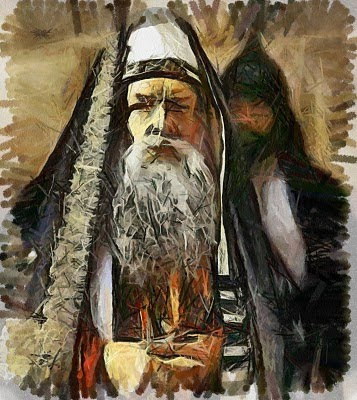
PhariseesOf course, during the late Second Temple period, the Pharisees believed in the resurrection, the Essenes believed in the immortality of the soul, but the Sadducees believed in neither.

Later, the Mishnah (c. 200) lists the belief in the resurrection as one of the three necessary beliefs for a Jew.

Christianity has developed are far more involved doctrine around the resurrection than apparently Judaism has, based on the Apostolic scriptures, including two resurrections, the resurrection of the saints and the general resurrection, specifics about the nature of the resurrection body, and specifics associating the resurrection with the second coming of Christ.

See The Resurrection of the Ekklesia for more on this topic.

Christ/Messiah

Now when He had spoken these things, while they watched, He was taken up, and a cloud received Him out of their sight. And while they looked steadfastly toward heaven as He went up, behold, two men stood by them in white apparel, who also said, “Men of Galilee, why do you stand gazing up into heaven? This same Jesus, who was taken up from you into heaven, will so come in like manner as you saw Him go into heaven.”

Acts 1:9-11

According to the Wikipedia article, many but not all Christians believe:

  • The coming of Christ will be instantaneous and worldwide. “For as the lightning comes from the east and flashes to the west, so also will the coming of the Son of Man be.” ~ Matthew 24:27
  • The coming of Christ will be visible to all. “Then the sign of the Son of Man will appear in heaven, and then all the tribes of the earth will mourn, and they will see the Son of Man coming on the clouds of heaven with power and great glory.” ~ Matthew 24:30
  • The coming of Christ will be audible. “And He will send His angels with a great sound of a trumpet, and they will gather together His elect from the four winds, from one end of heaven to the other.”  ~ Matthew 24:31
  • The resurrection of the righteous will occur. “For the Lord Himself will descend from heaven with a shout, with the voice of an archangel, and with the trumpet of God. And the dead in Christ will rise first.” ~ 1 Thessalonians 4:16
  • In one single event, the saved who are alive at Christ’s coming will be caught up together with the resurrected to meet the Lord in the air. “Then we who are alive and remain shall be caught up together with them in the clouds to meet the Lord in the air. And thus we shall always be with the Lord.” ~ 1 Thessalonians 4:17

Notice that none of the prophesies about the coming of Messiah from the Tanakh (Old Testament) are listed here.

Judaism does have a rather extensive list of requirements for the Messiah’s coming, based on the Tanakh, that Christianity largely ignores:

  • The Sanhedrin will be re-established (Isaiah 1:26)
  • Once he is King, leaders of other nations will look to him for guidance (Isaiah 2:4)
  • The whole world will worship the One God of Israel (Isaiah 2:17)
  • He will be descended from King David (Isaiah 11:1) via King Solomon (1 Chron. 22:8–10)
  • The messiah will be a man of this world, an observant Jew with “fear of God” (Isaiah 11:2)
  • Evil and tyranny will not be able to stand before his leadership (Isaiah 11:4)
  • Knowledge of God will fill the world (Isaiah 11:9)
  • He will include and attract people from all cultures and nations (Isaiah 11:10)
  • All Israelites will be returned to their homeland (Isaiah 11:12, Zechariah 10:6)
  • Death will be swallowed up forever (Isaiah 25:8)
  • There will be no more hunger or illness, and death will cease (Isaiah 25:8)
  • The dead will rise again (Isaiah 26:19)
  • The house of David shall be as God (Zechariah 12:8)
  • God will seek to destroy all the nations that go against Jerusalem (Zechariah 12:9, Isaiah 60:12)
  • Israel and Judah will be made into one nation again (Zechariah 11:12-14, Ezekiel 37:16-22)
  • The Jewish people will experience eternal joy and gladness (Isaiah 51:11)
  • He will be a messenger of peace (Isaiah 53:7)
  • Nations will recognize the wrongs they did Israel (Isaiah 52:13–53:5)
  • The peoples of the world will turn to the Jews for spiritual guidance (Zechariah 8:23)
  • The ruined cities of Israel will be restored (Ezekiel 16:55)
  • Weapons of war will be destroyed (Ezekiel 39:9)
  • The Temple will be rebuilt (Ezekiel 40) resuming many of the suspended mitzvot
  • He will then perfect the entire world to serve God together (Zephaniah 3:9)
  • He will take the barren land and make it abundant and fruitful (Isaiah 51:3, Amos 9:13–15, Ezekiel 36:29–30, Isaiah 11:6–9)
war and peaceI think Christianity acknowledges some of this such as the resurrection, the end of war, and that the whole world will worship God, but where many Christians get hung up is that they (we) expect to be raptured up to Heaven with Jesus and stay there forever. Others expect to be raptured for a certain period of time until the tribulation ends, and then to accompany Jesus back to Earth so the Church can rule and reign with him.

Jewish eschatology doesn’t talk about Heaven at all and expects a very human Messiah to be King and to rule over Israel and the rest of the world. By comparison, Christian eschatology is more focused on Heaven, and Earth seems to be reserved for those unbelievers who will suffer through the tribulation and later be judged and sent to hell.

While Judaism in general addresses the war of God and Magog, at the end of it all, when Israel’s enemies are all defeated, the final victory is here, not in Heaven:

Although Judaism concentrates on the importance of the Earthly world (Olam Ha’zeh — “this world”), all of classical Judaism posits an afterlife. The hereafter is known as ‘olam ha-ba (the “world to come”, עולם הבא in Hebrew), and related to concepts of Gan Eden (the Heavenly “Garden of Eden”, or paradise) and Gehinom. According to religious Judaism, any non-Jew who lives according to the Seven Laws of Noah is regarded as a righteous gentile, and is assured of a place in the world to come, the final reward of the righteous.

If you are at all familiar with how Messianic Judaism in general presents its eschatology, although it has elements of the Christian viewpoint, it primarily resembles a more Jewish perspective.

Jewish People in Eschatology

Christian views of the future of the Jewish people can be quite different depending on which eschatological model you are using. As far the 144,000 (Revelation 7:1-8) are concerned, there are three major perspectives:

  1. Futurist belief: Various interpretations of a literal number of 144,000, including: 144,000 Evangelical Jews at the end of the world, or 144,000 Christians at the end of the world.
  2. Preterist belief: A symbolic number signifying the saved, representing completeness, perfection (The number of Israel; 12, squared, and multiplied by 1000 = 144,000). This symbolises God’s Holy Army, redeemed, purified and complete.
  3. Historicist belief: A symbolic number representing the saved who are able to stand through the events of 6:17.

Now lets look at the actual scripture:

And I heard the number of those who were sealed, one hundred and forty-four thousand sealed from every tribe of the sons of Israel: from the tribe of Judah, twelve thousand were sealed, from the tribe of Reuben twelve thousand, from the tribe of Gad twelve thousand, from the tribe of Asher twelve thousand, from the tribe of Naphtali twelve thousand, from the tribe of Manasseh twelve thousand, from the tribe of Simeon twelve thousand, from the tribe of Levi twelve thousand, from the tribe of Issachar twelve thousand, from the tribe of Zebulun twelve thousand, from the tribe of Joseph twelve thousand, from the tribe of Benjamin, twelve thousand were sealed.

Revelation 7:4-8 (NASB)

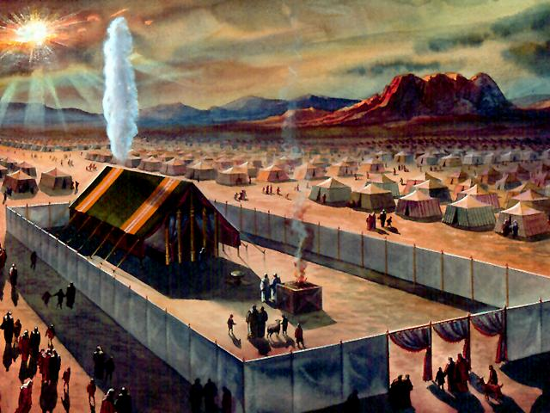
tabernacleAlthough the literal text speaks of the “sons of Israel” and specifically names each of the twelve tribes, most of the prevailing Christian interpretations see this as symbolic and not literal and the one belief that takes the number literally, describes them as either “Evangelical Jews” (which probably means people who are Jewish by heritage and who converted to Christianity) or “Christians” (which most likely means Gentile Christians). In all cases, the Jewishness of these “tribes” is either minimized or eliminated altogether.

Christian hermeneutics regarding the ultimate future of the Jews vary depending on the specific emphasis:

Supersessionist: Under the Covenant of Works mankind, represented ultimately in a covenantal sense under Adam beginning from the Garden of Eden, failed to live as God intended and stood condemned. But beyond time the Covenant of Redemption was made between the Father and Son, to agree that Christ would live an acceptable substitutionary life on behalf of, and as a covenantal representative for, those who would sin but would trust in Christ as their substitutionary atonement, which bought them into the Covenant of Grace. The Covenant of Grace applies to all who trust Christ for their salvation, regardless of ethnicity, and thus the Covenant covers Jews and Gentiles alike with regard to salvation, sanctification, and resurrection. The Covenant of Grace forms the basis of the later covenants with Noah, Abraham, Moses, David and the New Covenant in Christ.

Kingdom-Dominion: In the New Testament, God’s rule is exercised through Jesus Christ the King, who is also the temple of God (John 2:19-21), over his people the Church (of which Israel was a type). Salvation for all people in all times is found by trusting (explicitly or implicitly) in Jesus. Thus, Abraham, Moses, David, and all Christians today are saved by the same faith. The Jews are regarded as special in God’s plan (as in Romans and Ephesians) and yet the Old Testament prophecies regarding Israel find their fulfillment in Jesus and the Church rather than in a literal restoration of Israel.

Dispensational: History is divided into (typically seven) “dispensations” where God tests man’s obedience differently. The present Church dispensation concerns Christians (mainly Gentiles) and is a parenthesis to God’s main plan of dealing with and blessing his chosen people the Jews. Because of the Jews’ rejection of Jesus, Jewish sovereignty over the promised earthly kingdom of Jerusalem and Palestine was postponed from the time of Christ’s first coming until prior to or just after his Second Coming when most or all Jews will embrace him.

There will be a rapture of the Gentile church followed by a great tribulation of seven (or three-and-a-half) years’ duration during which Antichrist will arise and Armageddon will occur. Then Jesus will return visibly to earth and re-establish the nation of Israel; the Jewish temple will be rebuilt at Jerusalem and the Temple mount, possibly in place of the Muslim Dome of the Rock (see Christian Zionism). Christ and the people of Israel will reign in Jerusalem for a thousand years, followed by last judgment and a new heavens and new earth.

One last note from the Christian point of view relative to the future of the Jewish people:

Historicism v. Futurism: The division between these interpretations can be somewhat blurred. Most futurists are expecting a Rapture of the Church, an Antichrist, a Great Tribulation and a Second coming of Christ in the near future. But they also accept certain past events, such as the rebirth of the State of Israel and the reunification of Jerusalem as prerequisites to them, in a manner which the earlier historicists have done with other dates. Futurists, who do not normally use the day-year principle, interpret the Prophecy of Seventy Weeks in Daniel 9:24 as years, just as historicists do. Most historicists have chosen time lines, from beginning to end, entirely in the past. But some, such as Adam Clarke have time lines which also commenced with specific past events, but require a future fulfillment. In his commentary on Daniel 8:14 published in 1831, he stated that the 2,300-year period should be calculated from 334 BC, the year Alexander the Great began his conquest of the Persian Empire. His calculation resulted in the year 1966. He seems to have overlooked the fact that there is no “year zero” between BC and AD dates. For example, the year following 1 BC is 1 AD. Thus his calculations should have required an additional year, ending in 1967. He was not anticipating a literal regathering of the Jewish people prior to the Second coming of Christ. But the date is of special significance to futurists since it is the year of Jerusalem’s capture by Israeli forces during the Six-Day War. His commentary on Daniel 7:25 contains a 1260-year period commencing in 755 AD and ending in 2015.

tzitzitEven under the best of circumstances, the Jews are considered “special” in the end of days, but always taking a back seat to the (Gentile) Church. The worst case scenario from a Jewish point of view is that they cease to exist, either because they have totally been assimilated into the Church or because they have all been killed.

Not a very rosy picture.

By contrast, Jewish Eschatology is all about Israel and the Jewish people (see the list above of all the things Messiah is supposed to do). Rather than the Jews going to the Church and converting to Christianity to be able to enjoy the New Covenant promises of God (which were made specifically with the House of Judah and the House of Israel – see Jeremiah 31:31), the Gentiles must attach themselves to the Jewish people:

Thus says the Lord of hosts, ‘In those days ten men from all the nations will grasp the garment of a Jew, saying, “Let us go with you, for we have heard that God is with you.”‘

Zechariah 8:23

“Also the foreigners who join themselves to the Lord,
To minister to Him, and to love the name of the Lord,
To be His servants, every one who keeps from profaning the sabbath
And holds fast My covenant;
Even those I will bring to My holy mountain
And make them joyful in My house of prayer.
Their burnt offerings and their sacrifices will be acceptable on My altar;
For My house will be called a house of prayer for all the peoples.”

Isaiah 56:6-7

As far as the quote from Zechariah is concerned, although Judaism probably believes that any group of people from the nations (the number “ten” is considered symbolic rather than literal) will approach any Jew with this request, I’ve heard one interpretation that says the Jew in question specifically is Messiah. This folds into a Messianic Jewish viewpoint rather well placing Israel at the center of Gentile redemption rather than reverse-engineering the Bible and making the Jews come to the Gentiles to be redeemed by the God of Israel.

Conclusion

I don’t know that there’s a single Messianic Jewish eschatology. Certainly there are variations both in Christianity and the other Judaisms, so there’s no reason to believe that Messianic Judaism should have a single, overarching eschatology that is taught and believed.

I’m not writing this to tell you all the answers but perhaps to give you a starting place to begin re-conceptualizing what the future might look like when it’s not dominated by traditional Christian doctrine. It will also look different than the traditional Jewish points of view, since all other Judaisms do not anticipate a Divine Messiah who supernaturally comes (returns) to Earth having already been resurrected as the “first fruits of the dead” (1 Corinthians 15:20) some two-thousand years ago.

I’ve said in the past that I don’t think anyone has a terrifically clear picture of what’s actually going to happen. Whatever we have recorded in the Bible has been interpreted in many different ways over the centuries and no doubt we’ve distorted what was previously understood by original audiences. These days, it is common to take our theology and read it back into the Bible rather than the other way around, for to take a fresh look at the Bible and use some honest exegesis might result if turning our beliefs on their collective head and forcing us to revise if not totally rewrite what the future is going to bring.

Up to JerusalemAnd if that future sees Israel and the Jewish people ascending to the heights as the head of all nations, and the Gentiles must go to them to be close to God, then the Church might not be in such a hurry to face that reality. Of course, should the King of Israel, that head of the nations, turn out to be Divine and resurrected rather than someone who will be born in the generation of the final war and the final victory, then that would give most Jews a rather poignant pause.

I will pour out on the house of David and on the inhabitants of Jerusalem, the Spirit of grace and of supplication, so that they will look on Me whom they have pierced; and they will mourn for Him, as one mourns for an only son, and they will weep bitterly over Him like the bitter weeping over a firstborn.

Zechariah 12:10

Oh, just one more thing:

In that day the Lord will defend the inhabitants of Jerusalem, and the one who is feeble among them in that day will be like David, and the house of David will be like God, like the angel of the Lord before them. (emph. mine)

Zechariah 12:8

The “house of David will be like God, like the angel of the Lord before them.” Really? I know I’m going to be accused by some of misinterpreting or misusing the text, but it certainly seems like a Divine Messiah from the house of David isn’t entirely out of the question.


The Resurrection of the Ekklesia

Now, brothers and sisters, I want to remind you of the gospel I preached to you, which you received and on which you have taken your stand. By this gospel you are saved, if you hold firmly to the word I preached to you. Otherwise, you have believed in vain.

For what I received I passed on to you as of first importance: that Christ died for our sins according to the Scriptures, that he was buried, that he was raised on the third day according to the Scriptures, and that he appeared to Cephas, and then to the Twelve. After that, he appeared to more than five hundred of the brothers and sisters at the same time, most of whom are still living, though some have fallen asleep. Then he appeared to James, then to all the apostles

1 Corinthians 15:1-7 (NASB)

Scholars commonly see in 1 Corinthians 15:1-7 material of an early “pre-Pauline” confession that focuses on Jesus’ death, burial, resurrection and appearances to select witnesses. But there are continuing disagreements over what kind of event is referred to in vv. 3-5 where Jesus is described as “raised on the third day,” specifically whether this refers to a resurrection/transformation of Jesus’ mortal body or some other kind of event, e.g., a “spiritual” one that left his mortal body in the grave. I’ve just read a new study of the matter that seems to me pretty effective in guiding exegetes to the correct answer: James Ware, “The Resurrection of Jesus in the Pre-Pauline Formula of 1 Cor 15.3-5.” New Testament Studies 60 (2014): 475-98.

Larry Hurtado
“Paul on Jesus’ Resurrection: A New Study”
Larry Hurtado’s Blog

Being just a regular guy and not a Bible scholar or academician, it never really occurs to me that people drill down into such a level of detail regarding certain Biblical events such as the resurrection. I’ve always been taught that Jesus was physically resurrected on the third day and that for the next forty days, he was seen and touched by many, many people, the witnesses of his resurrection, which serves as evidence of the promise of the resurrection of the “saints” in the Messianic Age.

But here we see Dr. Hurtado explaining how James Ware (probably this author) has investigated the various scholarly positions on what “raised on the third day” actually means. Incredibly (from my point of view), there are those who must not believe in a literal resurrection but somehow imagine that Jesus left his body behind and spiritually rose and ascended, something like “Caspar the Friendly Ghost”.

But why is a bodily resurrection important?

He will swallow up death for all time,
And the Lord God will wipe tears away from all faces…

Isaiah 25:8

Shall I ransom them from the power of Sheol?
Shall I redeem them from death?
O Death, where are your thorns?
O Sheol, where is your sting?

Hosea 13:14

But perceiving that one group were Sadducees and the other Pharisees, Paul began crying out in the Council, “Brethren, I am a Pharisee, a son of Pharisees; I am on trial for the hope and resurrection of the dead!” As he said this, there occurred a dissension between the Pharisees and Sadducees, and the assembly was divided. For the Sadducees say that there is no resurrection, nor an angel, nor a spirit, but the Pharisees acknowledge them all.

Acts 23:6-8

There are any number of prophesies that speak of a general resurrection from the dead at the end of days and it was upon those prophesies that the Pharisees based their faith. This was the same faith that the disciples of Yeshua (Jesus) had since their Messianic beliefs were largely Pharisaic with only a few minor differences that had to do with Gentile admission and status.

new heartIf there was no physical, bodily resurrection for Jesus, then what hope do we have in a resurrection for us?

While I’m stunned that there are still those who, like the Sadducees of old, deny the resurrection today, fortunately…

Ware reviews a wide range of previous scholarly views, carefully assessing their merits, noting the limited force of some and the dubious force of others. His own particular contribution is a more in-depth analysis of the use of the Greek verb translated here “raised”: εγειρω. Essentially, Ware contends that all other uses of the verb describe one or another kind of action involving the raising up, rising up, or setting up of something or someone from a prone or seated position to an upright, standing position.

This, he argues, means that proposals that the verb here refers to an ascension of Jesus, a transportation of him in some “spiritual” mode to heavenly glory, is ruled out. Instead, Paul refers to a raising up or restoration to life of the executed body of Jesus.

To be sure, as Ware notes, later in 1 Cor 15, Paul engages the question of “in what kind of body” are the dead to be raised (vv. 35-49), and Paul here posits a dramatic and profound transformation, those raised being “changed” powerfully. In vv. 42-44, in particular, Paul makes a series of contrasts between the mortal body and the resurrection body: corruption/incorruption, dishonour/glory, weakness/power, “soulish”/spiritual. And Paul also makes the claim that the resurrection of believers will be modelled on Jesus’ resurrection.

-Hurtado, ibid

But Christ has indeed been raised from the dead, the firstfruits of those who have fallen asleep.

1 Corinthians 15:20

Messiah is the “first fruits” of the dead, the first to rise, the first to experience the bodily resurrection from death through “a dramatic and profound transformation” unlike anything that had ever occurred before. As “first fruits,” he illustrates that the promises of God about a general resurrection are true, for the Master powerfully demonstrated the reality of the resurrection with his own body.

The first account I composed, Theophilus, about all that Jesus began to do and teach, until the day when He was taken up to heaven, after He had by the Holy Spirit given orders to the apostles whom He had chosen. To these He also presented Himself alive after His suffering, by many convincing proofs, appearing to them over a period of forty days and speaking of the things concerning the kingdom of God.

Acts 1:1-3

MessiahI won’t go into an inventory of all the different witnesses of Jesus’ resurrection that are recorded in the Gospels, but we have every indication that perhaps five-hundred people or more were witnesses that he physically came alive from the dead, that his wounds were still present, that he ate and drank, and that he wasn’t just some sort of vision or “floaty ghost,” but was a real, live human being who once had been dead. He appeared to witnesses so we would have living accounts of the resurrection, so that we could believe, not mindlessly or blindly, but based on what actual human beings saw and experienced in his presence.

Of course, we have to believe that the Biblical record is accurate regarding these witnesses, and some two-thousand years later, it’s possible to introduce some doubt, but these things can only be discerned through the Spirit:

For to us God revealed them through the Spirit; for the Spirit searches all things, even the depths of God. For who among men knows the thoughts of a man except the spirit of the man which is in him? Even so the thoughts of God no one knows except the Spirit of God. Now we have received, not the spirit of the world, but the Spirit who is from God, so that we may know the things freely given to us by God, which things we also speak, not in words taught by human wisdom, but in those taught by the Spirit, combining spiritual thoughts with spiritual words.

But a natural man does not accept the things of the Spirit of God, for they are foolishness to him; and he cannot understand them, because they are spiritually appraised. But he who is spiritual appraises all things, yet he himself is appraised by no one. For who has known the mind of the Lord, that he will instruct Him? But we have the mind of Christ.

1 Corinthians 2:10-16

What people saw with their eyes and heard with their ears, we must accept as true by faith and through the Spirit. Without the Spirit, they sound like ridiculous nonsense.

When the accusers stood up, they began bringing charges against him not of such crimes as I was expecting, but they simply had some points of disagreement with him about their own religion and about a dead man, Jesus, whom Paul asserted to be alive.

Acts 25:18-19

And now I am standing trial for the hope of the promise made by God to our fathers; the promise to which our twelve tribes hope to attain, as they earnestly serve God night and day. And for this hope, O King, I am being accused by Jews. Why is it considered incredible among you people if God does raise the dead?

Acts 26:6-8

During the various legal hearings to which Paul was subjected after his arrest in Jerusalem, one of the things the Romans could not comprehend was the matter of a “dead man” coming back to life and the fact that different groups of Jews would argue violently over such a thing. To the pagan Romans, it seems like incomprehensible nonsense.

That’s what it seems like to much of the world today without the ability to read the Bible through “spiritual” eyes, so to speak. But once we have our eyes opened and we can see, then we can believe by faith that not only was the bodily resurrection of Jesus real, but that it is evidence for the faithful that we too will be resurrected when the Master returns for us.

However, there’s one last paragraph from Dr. Hurtado’s blog I want to toss into the mix for your consideration:

So, Paul posits a profound change involved in the resurrection. But, as Ware so deftly points out, all through the passage Paul refers to the body of believers as changed. That is, Paul insists that the resurrection is an event that changes the nature of the embodied existence of those raised. The “spiritual” body, Ware persuasively argues, has to be in context a description of the animating force of the resurrection body, for the contrast is not with a “fleshly” body but with a “soulish” (ψυχικος) one, i.e., the mortal body animated by “soul” (ψυχη), which here appears to be Paul’s reference to what we might call mortal, “biological” life.

The Jewish PaulWhen I first read the phrase “Paul refers to the body of believers as changed,” I thought he was referring to the “ekklesia of believers,” the “body” as the corporate entity of Jesus’ disciples. Re-reading that part of the blog, I know now he was talking about the biological, physical bodies of the believers, but consider something for a second. It’s not just that we will be resurrected and redeemed as individuals, but the collective “personality” of the ekklesia or the assembly of Messiah will also be changed, that is, the nature of the body of Christ won’t be as it is today.

Today, we have many arguments and disputes between different churches or different theologies that all acknowledge Christ as Lord and King, but who otherwise have widely (and sometimes wildly) different perspectives on many matters of the faith. I previously mentioned those Christians today who seemingly don’t believe in a bodily resurrection but rather believe that only our souls or spirits will ascend and live with Jesus in Heaven while our dead bodies remain in the grave forever.

But with the bodily resurrection I believe will also come a resurrection of the combined ekklesia such that the “body of Christ,” the unified humanity of disciples will also be transformed radically and demonstratively into something new, alive, and spiritually perfected:

“I will put My law within them and on their heart I will write it; and I will be their God, and they shall be My people. They will not teach again, each man his neighbor and each man his brother, saying, ‘Know the Lord,’ for they will all know Me, from the least of them to the greatest of them,” declares the Lord, “for I will forgive their iniquity, and their sin I will remember no more.”

Jeremiah 31:33-34

Then I will sprinkle clean water on you, and you will be clean; I will cleanse you from all your filthiness and from all your idols. Moreover, I will give you a new heart and put a new spirit within you; and I will remove the heart of stone from your flesh and give you a heart of flesh. I will put My Spirit within you and cause you to walk in My statutes, and you will be careful to observe My ordinances. You will live in the land that I gave to your forefathers; so you will be My people, and I will be your God.

Ezekiel 36:25-28

Yes, I know the New Covenant was made exclusively with the House of Judah and the House of Israel, and yet I’m liberally sprinkling this covenant language also upon the Gentiles. Many times before, I’ve written about the New Covenant and how I believe it can and must be applied to anyone who comes to faith in the righteous promises of God enacted through the Messiah, including the Gentiles:

Jewish teachers believed that God’s righteousness (his promise-keeping by which he would include the Gentiles) would come through education and conversion. But Paul says “now the righteousness of God has been manifested apart from the law” and he calls it “the righteousness of God through the faithfulness of Messiah for all who believe” (Romans 3:21-22). What Paul means by “the law” here is not a person striving to impress God by their morality, but rather the idea that education in the law and keeping it will make a Gentile acceptable to God in spite of the fact that they were not born into the chosen people. God’s promise-keeping is not dependent on Jewish teachers or Gentile students. It is not by education in or adhering to aspects of the law. God is including Gentiles through his own initiative, through the faithfulness of Messiah who lived (was resurrected) as a result of faithfulness. Messiah lived the commandments and returned to life by his worthiness. Through his merit, Jews and Gentiles are accepted by God.

-Derek Leman
“What’s Wrong with the Jews (in Romans 9-10)? Part 2”
Messianic Jewish Musings

spiritWe know from Joel 2:28-29, 32 that the Spirit will be poured out fully on all flesh, all human beings will benefit and be redeemed and reconciled to God through faith, not just the Children of Israel, but all Children of God among the nations, as long as we endure and run the race faithfully.

Someday each of us will be resurrected, renewed, and perfected, but more than that, as a body of believers, and assembly of disciples, we will collectively be perfected. We will think with one mind and love with one heart, and we will all know God.

The Alter Rebbe interpreted the statement, “Whoever saves a single person of (the people) Israel is as though he saved an entire world” (Sanhedrin 37a): One must perceive a Jew as he stands in the primordial thought of Adam Kadmon. There, each soul stands with all the generations destined to descend from it until the coming of Mashiach, the righteous Redeemer. When one does a favor to an individual, it is a favor to all those souls until the end of all generations.

-Compiled and arranged by the Lubavitcher Rebbe, Rabbi Menachem Mendel Schneerson, of righteous memory, in 5703 (1943) from the talks and letters of the sixth Chabad Rebbe, Rabbi Yosef Yitzchak Schneersohn, of righteous memory.

May you be inscribed and sealed for a good year.

Shabbat Shalom.

The Duty of Messianic Gentiles and Christians to the Jews

There is a lot of confusion about tithing among believers today. Are we required to tithe? Does the Torah obligate us to give 10 percent of our incomes? If so, to whom should we be tithing? At First Fruits of Zion, we get these kinds of questions about tithing all the time. It’s one of the frequently asked questions we see most often.

-Toby Janicki
“Introduction,” p.1
What About Tithing?

I started reading Toby’s book with the idea of writing a review (which I will soon), but for some reason, I found my thoughts distracted by a topic I periodically visit on my blog: the state of those of us who are called Messianic Gentiles and our relationship with Jews who live halachically Jewish lives in the acknowledgement of the revelation of Yeshua the Messiah.

I suppose it has to do with the rather “dynamic” discussion being conducted in the comments section at the Rosh Pina Project blog in their blog post What Makes a Messianic Congregation Messianic in Israel?.

The following quote from one of the comments made by Rabbi Russ Resnik crystallizes the matter at hand:

As a non-Israeli, I won’t comment on the state of Messianic Judaism there. I represent a group of congregations mostly in the USA, but worldwide as well, working to sustain a genuinely Jewish Messianic Judaism. Here’s how we define it: “The Union of Messianic Jewish Congregations (UMJC) envisions Messianic Judaism as a movement of Jewish congregations and groups committed to Yeshua the Messiah that embrace the covenantal responsibility of Jewish life and identity rooted in Torah, expressed in tradition, and renewed and applied in the context of the New Covenant. Messianic Jewish groups may also include those from non-Jewish backgrounds who have a confirmed call to participate fully in the life and destiny of the Jewish people. We are committed to embodying this definition in our constituent congregations and in our shared institutions.”

Traditionally in the Church, when we receive a Jewish person who has confessed Jesus as Messiah (in “Christianese” as “Lord and Savior”), we tend to retrofit modern Christian theology, doctrine, and practice into their lives. Even under the most benign circumstances when we “allow” the “Jewish Christian” to continue to voluntarily observe some Jewish practices such as lighting the Shabbat candles and celebrating events such as Chanukah and Passover, we really expect them to become full-fledged, card-carrying “Gentile” Christians and assimilate into our culture.

But that’s not what Rabbi Resnik is talking about and certainly not what blog author Simon Ben David is advocating. To the best I can understand their (the Messianic Judaism described by R. Resnik) position, it would seem that they desire to create an environment of Jewish people living a fully developed religious and cultural Jewish lifestyle integrated with the revelation of Yeshua HaMashiach within Judaism. Devotion to Messiah then becomes a fully lived Jewish experience completely consistent with every other aspect of Jewish life, whether one lives in Israel or any other part of the world.

Given the history of Messianic Judaism during the last thirty to forty years, that’s not going to be an easy task. Modern Messianic Judaism emerged from within Evangelical Christianity and it has been difficult to cast off that cloak and to reinvent itself as a wholly experiential Judaism, particularly with all of “Christiandom” and not a few “Hebrew Christians” perceiving Rabbinic Judaism (is there any other kind) to be alien if not antithetical to Christian theology and doctrine.

synagogueI’ve argued in support of exclusive Messianic Jewish community in the past and continue to advocate for its necessity, at least for some groups of Jewish people in Messiah, but that’s obviously a controversial subject. Where there are a number of authentically (in my opinion) Messianic synagogues in the U.S. that also admit Gentile members and attendees, this doesn’t really solve the problem of what it is to create an actual Jewish community and environment that is designed to serve Jews and that preserves Jewish people and Judaism within the Messianic context. It has been argued that admitting even a small minority of Gentiles (apart from intermarried couples) “breaks” the Jewishness of the community.

I could say that this dilemma wasn’t one that Paul worried overly much about, although we see in his Epistle to the Romans that he had a terrific time mediating between Jews and Gentiles within the synagogue, at least if my reflection of Romans 9 is any indication.

But if “Judaically-aware” Gentile believers like me want to honor the necessity of exclusive Jewish community for Messianic Jews, what happens to us?

In reading Toby’s book, one of the points he makes is that none of the Torah commandments related to tithing particularly apply to Gentiles and, in reading how the Apostolic Scriptures, including Paul’s letters to the Gentiles, treat the subject, there’s no clear “smoking gun” that directly impresses Torah mitzvot upon Gentile minds and hearts  (you’ll have to wait until I write my book review to see how all that finally worked out).

So even in Jewish community within the ekklesia of Messiah, Jews are Jews and Gentiles are Gentiles. There are areas where God does treat both groups impartially, specifically in receiving the Holy Spirit, the promise of the resurrection, and a life in the world to come for the faithful, but in the nuts and bolts of day-to-day living, we are sometimes light-years apart.

I know one of the proposed solutions is for Messianic Jews to maintain exclusively Jewish communities and for “Messianic Gentiles” to maintain exclusively Gentile communities, separate but equal, so to speak. The latter Gentile communities are readily available in just about any part of the world. They’re called churches. But “church” is almost a “dirty word” to many Gentiles who align with the Messianic movement and almost certainly with all or almost all non-Jews within what has been called “Hebrew Roots” or “Jewish Roots” which encompasses sub-groups such as “One Law,” “One Torah,” “Two-House,” and “Sacred Name.”

I’ve defended identifying myself as a Messianic Gentile based on how I conceptualize Bible study and particularly how I operationalize the New Covenant, and it’s that “mindset” that largely separates me from the vast majority of Evangelical (and just about any other kind of) Christians in existence past and present. So while it’s technically correct to call me a “Christian,” I actually don’t see key portions of my faith in the same way as the folks I go to Sunday school with.

One of the things I took away from Toby’s book is that the practice of tithing has become adaptive over time, especially after the destruction of Herod’s Temple in 70 C.E., and yet tithing has continued. Reading the Didache which Toby also cites, shows us how this particular Torah principle was modified and presented in the teachings of the novice Gentiles training to be disciples into the 2nd century and beyond.

In fact, Toby quoted D.T. Lancaster’s “Torah Club: Unrolling the Scroll” (Marshfield, MO: First Fruits of Zion, 2007), p. 598, saying:

The early believers were Torah keepers, and they wanted to continue keeping the commandment…

-Janicki, p. 49

Defining what I think Toby meant by identifying Gentiles as “Torah keepers” is outside the scope of this essay, but suffice it to say that the principles of ethical monotheism enshrined in the Torah were adapted on various levels to apply to the legal status of the Gentiles who were operating as equal co-participants in the Jewish religious and communal space of “the Way”.

Reading of the Torah at Beth ImmanuelWe aren’t removed from the principles of “the Law,” and Gentile believers were never to be considered “lawless,” but even nearly two-thousand years ago, integration of Gentiles within a Judaism was problematic at best, and the sociological and historic reality is that the relationship ended in a messy divorce.

So are we (Gentile) Christians or Messianic Gentiles or what the heck are we?

As individuals or Gentile groups of believers, I think we end up having to define ourselves by our theology, doctrine, and preferred associations, but in relation to Messianic Judaism it becomes a bigger issue. I know I’ve opened up this can of worms before and closing it again is never easy. But if you go to the Rosh Pina Project blog, read the blog post in question and particularly some of the more emotionally charged comments, you’ll see there’s another side to the coin besides the Gentile side.

I don’t think it’s selfish, and as I mentioned quite recently, I find it quite necessary for both Jews and Gentiles to recognize the distinctions between our roles and identities in Messiah:

When writing on Deuteronomy 22:7 and 22:10, R. Pliskin crafted commentaries called Even when engaged in a mitzvah be sensitive to the feelings of others and Be careful not to cause others to envy. The underlying principles being expressed here are applicable both to Jewish people observing the mitzvot and Gentiles who think they should do so in the manner the Jews are commanded.

One of the things I must (sorry to say this) criticize J.K. McKee for was a statement he made in his book One Law for All: From the Mosaic Texts to the Work of the Holy Spirit about the issue of Jewish distinctiveness in the Messianic community of believers. I don’t recall the exact quote, but he made what I consider to be some rather snarky remarks about these Jewish people being exclusivist and even petty in desiring to have their covenant role as Jews recognized and respected.

And yet we see there’s a principle in Torah observance that recognizes distinctiveness of roles and even that a person whose role does not include the performance of particular mitzvot can actually hurt or inflict pain upon others. While we Gentiles may believe Jews are deliberately provoking us to envy because of their status before God, we, for our part, when we claim mitzvot that are not consistent with our role, are being injurious to the very people and nation we claim to love.

Sorry to “butt heads” with Mr. McKee again, but the quote was required to illustrate my point.

I still don’t have an answer to this conundrum because one doesn’t exist yet. Paul never solved this problem. I think he saw it coming and was helpless to stop it, even though his letter to the Romans was an impassioned plea urging Gentile respect and even submissiveness to the Jewish synagogue authorities for the sake of not being a stumbling block for those Jews still struggling with faith.

Twenty centuries ago, Jewish believers were at least a little hesitant to absorb large numbers of non-Jews, particularly those recently coming out of paganism, without having them undergo the proselyte rite, converting to Judaism, and integrating into Jewish community as Jews. The last two-thousand years or so have given world Jewry many good reasons to be leery of Christianity, both in its emphasis in attempting to remove Jews from Judaism and assimilate them into a wholly Gentile lived identity, and in the perception from other Jews that any Jew who associates with Gentile believers has turned against their people, their heritage, and the Torah and have become aliens and Christians.

daveningMessianic Judaism as a movement is a diamond in the rough, a work in progress, certainly a work of art, but the paint is only partially applied to the canvas and the artist is still considering His brushes and His color palette in anticipation of continuing to create His Masterpiece, which I believe will only be finished with the coming (return) of Messiah Ben David.

But if that makes you Messianic Gentiles uncomfortable, remember that Messianic Jews are in no less an uncertain state as the aforementioned guest blog post by Simon Ben David attests. Standing aside and not debating the wisdom of Jews establishing Jewish communities for the Jews in Messiah may be the best thing we can do as non-Jewish believers to serve the work of the Kingdom. Rather than require that Jews abandon their covenant responsibilities to God by abandoning the Torah or inappropriately “shoehorning” our Gentile selves into those Jewish obligations, the path of charity, kindness, compassion and, if you must think of it as such, self-sacrifice for the sake of your Jewish brothers and sisters in the ekklesia, may in the end be the best way we can serve the redemptive plan of God for Israel and ultimately, for the world.

Oh, I’m including one more thing I think is relevant to the topic:

Kippah for a Non-Jew

I have a few Jewish friends who wear kippahs and sometimes when I’m hanging out with them I feel out of place. Even though I am not Jewish, would there be any problem with me wearing a kippah, too?

The Aish Rabbi Replies:

Well, on one hand, the Pope wears a kippah.

But on the other hand, a non-Jew should not wear a kippah, since that might deceive others into thinking that he is Jewish.

In practice, non-Jews will sometimes wear a kippah while attending a Jewish religious function (many world leaders have been photographed at the Western Wall wearing a kippah), but in general a non-Jew should not wear one, due to the confusion it may cause.

However, since the idea of a kippah is to have the head covered as a reminder of God, you could certainly use some other head covering, like a cap, to serve that purpose.

Reflections on Romans 6

What shall we say then? Are we to continue in sin so that grace may increase? May it never be! How shall we who died to sin still live in it? Or do you not know that all of us who have been baptized into Christ Jesus have been baptized into His death? Therefore we have been buried with Him through baptism into death, so that as Christ was raised from the dead through the glory of the Father, so we too might walk in newness of life.

Romans 6:1-4 (NASB)

I realized the other day that I haven’t written one of these “reflections” in a while and thought I should get back to it. Chapter 6 is fairly short so hopefully this will be a short blog post as well (but don’t count on it).

Remember, these “reflections” are just that…a set of impressions I received and took notes on as I was reading Paul’s Epistle to the Romans in a single sitting. I’m not taking a look at the Greek or doing anything in-depth. Take this for what it’s worth.

Since Paul wasn’t creating chapters and verses in this letter, it’s not really fair for me to “review” the Epistle this way, but if I didn’t, I’d have to write one really long blog post, which also wouldn’t be fair (to my poor aching fingers or to you, my readers). So here we are. Paul is continuing the thought he was pursuing at the end (for us) of the previous chapter:

So then as through one transgression there resulted condemnation to all men, even so through one act of righteousness there resulted justification of life to all men. For as through the one man’s disobedience the many were made sinners, even so through the obedience of the One the many will be made righteous. The Law came in so that the transgression would increase; but where sin increased, grace abounded all the more, so that, as sin reigned in death, even so grace would reign through righteousness to eternal life through Jesus Christ our Lord.

Romans 5:18-21 (NASB)

This is the comparison and contrast between Adam, the first man, and Jesus (Yeshua) the “antidote” for Adam’s bringing sin into the world. As sin increased, God’s grace increased in proportion to the sin. So then Paul asks (Romans 6:1-2), “Are we to continue in sin so that grace may increase? May it never be!” Even though grace increases as sin increases, this is hardly a reason to continue sinning.

Then Paul gives his reasoning. We were baptized into the death of Messiah and so as he died for our sins, we died to sin.

For if we have become united with Him in the likeness of His death, certainly we shall also be in the likeness of His resurrection, knowing this, that our old self was crucified with Him, in order that our body of sin might be done away with, so that we would no longer be slaves to sin; for he who has died is freed from sin.

Now if we have died with Christ, we believe that we shall also live with Him, knowing that Christ, having been raised from the dead, is never to die again; death no longer is master over Him. For the death that He died, He died to sin once for all; but the life that He lives, He lives to God. Even so consider yourselves to be dead to sin, but alive to God in Christ Jesus.

Romans 6:5-11 (NASB)

When we became baptized into the name of the Messiah, we entered a unity with him via an oath of fealty, but it seems something even closer. We became united with him in dying, in this case to our old, pagan natures, and resurrected, both as the promise of the physical resurrection of the faithful to come, but also in terms of a change of our natures.

“But this is the covenant which I will make with the house of Israel after those days,” declares the Lord, “I will put My law within them and on their heart I will write it; and I will be their God, and they shall be My people. They will not teach again, each man his neighbor and each man his brother, saying, ‘Know the Lord,’ for they will all know Me, from the least of them to the greatest of them,” declares the Lord, “for I will forgive their iniquity, and their sin I will remember no more.”

Jeremiah 31:33-34 (NASB)

Moreover, I will give you a new heart and put a new spirit within you; and I will remove the heart of stone from your flesh and give you a heart of flesh. I will put My Spirit within you and cause you to walk in My statutes, and you will be careful to observe My ordinances.

Ezekiel 36:26-27 (NASB)

new heartThis is classic New Covenant language describing how God will circumcise the Jewish heart, write His Torah upon it, and give Israel a new Spirit, all of which will enable the Jewish people to perfectly obey God’s commands and to observe His mitzvot flawlessly.

This, of course, does not happen until the resurrection of the faithful from the dead, so just as Jesus was resurrected in a perfected body, so too will we be resurrected into perfection, not only of our bodies, but our spirits so that we too will be without sin, not only having our past sins completely atoned for, but not sinning in the Messianic Age.

Paul directly ties Messiah’s resurrection into our own resurrected states so our bodies will never die again and in the realization that we are dead, but only to sin.

However, the Jeremiah 31 and Ezekiel 36 passages are specifically addressed to Jewish Israel and not to the peoples of the rest of the nations, but Paul is writing to a Gentile audience in his epistle. How do we reconcile this apparent inconsistency? How can Paul apply the writing of Torah on the hearts of Gentiles?

On yesterday’s morning meditation, ProclaimLiberty commented giving part of the answer:

Now that I have addressed the notion of “Torah on the heart” as a covenantal anticipation and partial fulfillment as promised to Jews, how may we envision it having an impact also on non-Jews who attach themselves to the Jewish Messiah? They do not become members of Israel or participants in the covenant per se, and they are not legally obligated by the Torah covenant. Therefore, something must become available to them because of their increasingly close proximity to the knowledge of Torah and its impact on those who actually are members of the covenant. In one other recent post, I invoked the analogy of gentiles entering the Temple’s “court of the gentiles” in order to offer sacrifices in accordance with Torah stipulations for gentiles doing so. I compared the symbolic sacrifice of Rav Yeshua to such sacrifices, but offered in the heavenly sanctuary by Rav Yeshua as a mediating Melchitzedekian priest. Such symbolism reflects the ratification of continual repentance, after which the forgiven offerer learns to walk in newness of life in accordance with HaShem’s guidance (e.g., the aspects of Torah that apply to him or her). In another recent post I addressed the notion of a gentile ‘Hasid and the appropriate reflections of Torah that may be applicable — in which a gentile might become thoroughly immersed in order to experience the same sort of spiritual intimacy with HaShem, and enter into the perceptive environment of the kingdom of heaven in its metaphorical sense in anticipation of its future physical realization. Thus non-Jews would experience spirituality from outside and alongside the covenant in the same manner as intended for Jews inside the covenant.

Sorry for the large block of text but that’s a direct quote.

bedtime-shemaYou can click on the link to see his entire comment, which includes an interesting perspective on Gentiles reciting the Shema. What I get out of it is a way to look at how Gentiles are included in the New Covenant blessings, also being given a new heart and new spirit with the Torah written with us even though the nations aren’t directly addressed in the New Covenant and accounting for variability in application of the Torah to Jewish and Gentiles co-participants.

But that hasn’t happened yet…or has it?

Even so consider yourselves to be dead to sin, but alive to God in Christ Jesus.

Romans 6:11 (NASB)

Paul is saying to his Gentile readers that they are to be “dead to sin but alive to God in Christ Jesus” right now (as he was writing his letter). That’s not in the future Messianic Era but rather in the present for his audience. But how could Paul expect them to be dead to sin if their hearts were not yet changed and they hadn’t been given a new spirit yet?

While Peter was still speaking these words, the Holy Spirit fell upon all those who were listening to the message. All the circumcised believers who came with Peter were amazed, because the gift of the Holy Spirit had been poured out on the Gentiles also.

Acts 10:44-45 (NASB)

OK, so did the Jews and Gentiles have the spirit or not? Clearly they had the spirit but as D.T. Lancaster has said in different sermons in his Holy Epistle to the Hebrews series, the spirit we see given to the Gentiles in Acts 10 and to the Jews in Acts 2 is a pledge or down payment, a mere foretaste of the full filling of the Holy Spirit we will be given when the New Covenant times completely enter our world with Messiah (also see 2 Corinthians 3:3 and Ephesians 1:13-14).

Now He who prepared us for this very purpose is God, who gave to us the Spirit as a pledge.

2 Corinthians 5:5 (NASB)

The Greek word translated above as “pledge” can also be rendered “down payment,” “deposit,” or “guarantee.” The idea is that we have the spirit, but it’s not nearly as much as we are going to have. It’s like putting a down payment down on a car. You get the use of the car without paying the full price, but with the idea that your down payment is your pledge that you will pay the full amount when it comes due.

So we have a portion of the spirit and perhaps the finger of God is beginning to write the Law on our hearts, but it’s not to the degree that all of the promises are within our grasp yet…we just know by what we have now, we can be assured that the rest will be coming.

Rising IncenseBut even though “the goods” haven’t arrived yet, we are expected to live, to the best of our abilities, as if we have already received everything we were promised. I guess this is the part where the person who gives the down payment on the full amount gets to drive the car right away. God can expect us to behave as if the Law were already within us (as it applies to different populations) even though it isn’t yet. That’s the point of verses 12 through 14 in the current chapter.

What then? Shall we sin because we are not under law but under grace? May it never be! Do you not know that when you present yourselves to someone as slaves for obedience, you are slaves of the one whom you obey, either of sin resulting in death, or of obedience resulting in righteousness? But thanks be to God that though you were slaves of sin, you became obedient from the heart to that form of teaching to which you were committed, and having been freed from sin, you became slaves of righteousness.

Romans 6:15-18 (NASB)

So if we are no longer to consider ourselves slaves to sin, we are to consider ourselves slaves to righteousness. After all, we are always slaves to something, it’s just a matter of choosing our Master.

But it looks like Paul might build some “wiggle room” into this system:

I am speaking in human terms because of the weakness of your flesh. For just as you presented your members as slaves to impurity and to lawlessness, resulting in further lawlessness, so now present your members as slaves to righteousness, resulting in sanctification.

Romans 6:19 (NASB)

Paul speaks of “human terms” and “weakness of your flesh” seemingly indicating that we aren’t really “there” yet in terms of the ability to be sinless. He’s also presenting us with a choice given our weaknesses, to chose to present our “members as slaves to lawlessness or slaves to righteousness”. I guess the implication is that prior to becoming disciples of the Master, we really didn’t have a choice. We were slaves to lawlessness being without the Law (or rather slaves to a different law as we’ll see below), that is the Law that leads to sanctification.

But there’s another law to consider:

For when you were slaves of sin, you were free in regard to righteousness. Therefore what benefit were you then deriving from the things of which you are now ashamed? For the outcome of those things is death. But now having been freed from sin and enslaved to God, you derive your benefit, resulting in sanctification, and the outcome, eternal life. For the wages of sin is death, but the free gift of God is eternal life in Christ Jesus our Lord.

Romans 6:20-23 (NASB)

Under the law of sin and death we were free from righteousness, but now under the Law of Righteousness, we are free from sin.

“The wages of sin is death” is the Law of Sin which Paul periodically contrasts with the Law of Righteousness (Torah). If you didn’t know that, then every time Paul writes “law” it would be easy to assume that he’s always talking about the Torah. That, I think, is why many Christians take a dim view of “the Law” since they’ve been taught that the Law brings increased transgression (see Romans 5:20). That’s also why reading the Bible and getting “impressions” or “reflections” as I’m doing is a little dangerous, especially given the various English translations, because Paul’s meaning isn’t always plainly written on the surface of the Bible’s pages. Sometimes you have to dig for what he’s really saying.

brand-new-daySo at the end of this chapter, we’re left in an interesting place. We are baptized into the name of our Master and therefore in unity with him on a very intimate level. Just as he was resurrected into a perfected body, we are to consider ourselves also resurrected as a new person free from sin and a slave to righteousness. The trick is that we have only been given a down payment on the full amount of God’s promises and it’s only that full amount of His Word and Spirit that will truly perfect us.

Nevertheless, we are expected to behave as if we have already received the full gift, even though we must constantly struggle to present ourselves for righteousness and to disdain acts of sin and lawlessness.

One question, in verse 10 when it says “He (Jesus) died to sin once for all,” how could he die to sin if he lived a completely sinless life?

What Brings Us Near to the Kingdom of God?

Did you ever wish you could change someone’s negative feelings toward you into positive ones? Consider the following story:

In the days of Rabbi Chaim of Volozhin, it occurred that a butcher was angry at the Rabbi of his city for rendering a decision that the meat of a cow he wanted to sell was not kosher. In his anger, he devised a scheme to murder the Rabbi. On a pretext, he had the Rabbi travel with him on a lonely road. Along the way, the butcher took out his sharp knife and wanted to kill the Rabbi.

At first the Rabbi pleaded with the butcher to have compassion on him. But this was to no avail. When the Rabbi saw that nothing he could say would make a difference, he started to mentally focus on all of the positive qualities and attributes of the butcher. Suddenly there was an amazing transformation. The butcher began to cry, kissed the Rabbi, and begged his forgiveness.

The lesson: Love others and they can’t help but to love you!

(see Rabbi Chaim Zaitchyk – Maayanai Hachaim, vol.3, p.191; Rabbi Pliskin’s “Consulting the Wise”)

-Rabbi Zelig Pliskin
“Radiate Love”
Aish.com

A heart is not judged by how much you love; but by how much you are loved by others.

-The Wizard of Oz (Frank Morgan) to the Tin Man (Jack Haley)
The Wizard of Oz (1939)

This morning, in a comment I made in response to Rabbi Carl Kinbar, I said in part:

The Internet is a very judgmental place where often the rules of civil social discourse do not apply. People are accused of all sorts of things on little or no evidence. When terms like “Bilateral Ecclesiology” start getting thrown around, people don’t see complex individuals, they just see “types”. To be fair, we make “types” out of people behind labels such as “One Law” and a lot of other names as well. Even though we are bound to disagree with each other on a number of issues in the religious blogosphere, if we tried to recognize each other as not only real people but as fellow disciples of Messiah, maybe we’d treat each other a little better. What would it be like if instead of dialoguing via the Internet, we suddenly all found ourselves in a coffee shop somewhere having this discussion over cups of hot java? I suspect the conversation would be different.

I periodically make such pleas on my blog, trying to encourage civility in the midst of disagreement. They are usually my least popular blog posts and attract little attention and fewer replies.

And yet all of our protestations and arguing make us liars if we call ourselves disciples of the Messiah or just plain “Christians”.

If anyone says, “I love God,” and hates his brother, he is a liar; for he who does not love his brother whom he has seen cannot love God whom he has not seen.

1 John 4:20 (ESV)

maskThe Bible, including the Apostolic Scriptures, is replete with passages about loving one’s brother and neighbor, and yet how much love do we see in these dialogues about our various theological perspectives? Almost none. But I would be a liar myself if I said they didn’t exist at all:

I would have to respectfully disagree. McKee’s research is precisely what we need to peel back the layers of this onion and find the original intent of the Author in His unchanging, everlasting Word. Then, we can understand what it truly means to return to the ancient paths and walk in the ways that demonstrate our love for God.

-Pete Rambo
“The ‘ger,’ the Chumash and Anachronism”
natsab.com

This is part of Pete’s rebuttal to comments I made in Part 2 of my review of J.K. McKee’s book (and boy is he getting a lot of free publicity from me) One Law for All: From the Mosaic Texts to the Work of the Holy Spirit. I’m not going to write a detailed rebuttal to Pete’s rebuttal of my review, because then he’d write a rebuttal and I’d write a rebuttal, and there’s a limit to how much time and energy I have available for a this sort of thing.

But it’s the way Pete responded that’s virtually unique to these transactions. Generally people on both sides of the aisle get pretty worked up when labels like “Bilateral Ecclesiology” or “One Law” are inserted into the mix. We tend to respond with our emotions first and our intellect second or more accurately, we respond with anger, hurt and outrage first and never consider applying compassion, empathy, and understanding to the other person’s point of view at all.

If we were the Rabbi in Rabbi Pliskin’s midrash facing an angry butcher with a sharp knife, we’d all end up sliced and diced and buried in a shallow grave in the middle of nowhere.

For a people will dwell in Zion, in Jerusalem. You will not have to weep; He will surely show you grace at the sound of your outcry, when He hears, He will answer you. The Lord will give you meager bread and scant water; your Teacher will no longer be hidden behind his garment, and your eyes will behold your Teacher.

Isaiah 30:19-20 (Stone Edition Tanakh)

Next Wednesday, my review of D. Thomas Lancaster’s sermon The Inner Torah, part of his Holy Epistle to the Hebrews series, includes this portion of scripture and something of Lancaster’s commentary about it.

It is said by some of the Jewish sages that one of the things Messiah will do when he comes (returns) is to teach Torah correctly, including the hidden things of Torah. It is also said that the Torah we have now, the actual physical object and its textual contents, is a “copy and shadow” of the heavenly, supernal Torah, the literal will and wisdom of God that resides in the Heavenly Court. The Torah we have was “clothed,” so to speak, when it was given at Sinai so it could exist in the physical realm and be understood and consumed by human beings.

They will no longer teach — each man his fellow, each man his brother — saying ‘Know Hashem!’ For all of them will know Me, from their smallest to their greatest — the word of Hashem — when I will forgive their iniquity and will no longer recall their sin.

Jeremiah 31:33 (Stone Edition Tanakh)

dear_godThe New Covenant promises that the Word of God will be written on our hearts and we will all ‘Know Hashem,’ from the least of us to the greatest, in a manner that can only be compared with the great prophets of old. There will no longer be a need for one person to teach another because our Teacher will be inside of us, no longer hiding His face; no, we shall see Him and know Him.

But not now, not yet.

Until then, we don’t know, hence we disagree, and sadly, hence we personalize conflict and get mad at people who don’t agree with us.

Disagreement isn’t the problem. Failure to love is. But if we fail to love people then we are failing to love God. How can we say we follow God and not love Him? Yes, one believer can disagree with another and yet they can love each other and they can love God. The traditional model of learning in Yeshiva is based on debate and yet it is not based on hate but love and the desire for learning.

It is said that Herod’s Temple was leveled, Jerusalem razed, and the Jewish people exiled from their Land, not because of lack of observance of the mitzvot, not because the Torah was not being studied (and certainly not because the “Jews rejected Jesus”), but because of baseless hatred of one Jew for another.

It doesn’t look like we Gentile disciples of the Master (i.e. “Christians”) have learned very much from that lesson.

Our Sages gathered these sections in an order … according to the requisite steps (Introduction to Path of the Just).

While character refinement is an important and desirable goal, we must be careful to stride toward it in a reasonable and orderly manner. Overreaching ourselves may be counterproductive.

Physical growth is a gradual process. In fact, it is not even uniform; the first two decades are a sequence of growth spurts and latency periods. Generally, the body does not adjust well to sudden changes, even when they are favorable. For instance, obese people who lose weight too rapidly may experience a variety of unpleasant symptoms. Although the weight loss is certainly in the interest of health, the body needs time to adjust to the change.

If we are convinced, as we should be, that spirituality is desirable, we might be tempted to make radical changes in our lives. We may drop everything and set out on a crash course that we think will lead to rapid attainment of the goal. This plan is most unwise, because psychologically as well as physically, our systems need time to consume new information, digest it, and prepare ourselves for the next level.

Luzzato’s monumental work on ethics, The Path of the Just, is based on a Talmudic passage which lists ten consecutive steps toward spirituality. Luzzato cautions: “A person should not desire to leap to the opposite extreme in one moment, because this will simply not succeed, but should continue bit by bit” (Chapter 15).

Today I shall…

…resolve to work on my spirituality gradually and be patient in its attainment.

-Rabbi Abraham J. Twersky
“Growing Each Day, Av 21”
Aish.com

And so it goes with us, at least ideally, slow and steady growth and gaining in understanding.

It’s not just in areas of learning and knowledge we strive to grow, but we must also nurture advancements in wisdom, compassion, spirituality, and Godliness. Without such, we can be as intelligent as Einstein and as learned as the Rambam and still know and be nothing.

If I speak with the tongues of men and of angels, but do not have love, I have become a noisy gong or a clanging cymbal. If I have the gift of prophecy, and know all mysteries and all knowledge; and if I have all faith, so as to remove mountains, but do not have love, I am nothing. And if I give all my possessions to feed the poor, and if I surrender my body to be burned, but do not have love, it profits me nothing.

Love is patient, love is kind and is not jealous; love does not brag and is not arrogant, does not act unbecomingly; it does not seek its own, is not provoked, does not take into account a wrong suffered, does not rejoice in unrighteousness, but rejoices with the truth; bears all things, believes all things, hopes all things, endures all things.

Love never fails; but if there are gifts of prophecy, they will be done away; if there are tongues, they will cease; if there is knowledge, it will be done away. For we know in part and we prophesy in part; but when the perfect comes, the partial will be done away. When I was a child, I used to speak like a child, think like a child, reason like a child; when I became a man, I did away with childish things. For now we see in a mirror dimly, but then face to face; now I know in part, but then I will know fully just as I also have been fully known. But now faith, hope, love, abide these three; but the greatest of these is love.

1 Corinthians 13:1-13 (NASB)

Standing before GodEven if you “win” the argument but you fail to love, you have won nothing. Of all of the mitzvot we strive to perform, if we fulfill them all flawlessly but we fail to love, we have failed to observe all of the Torah and we have desecrated the Name of God.

One of the scribes came and heard them arguing, and recognizing that He had answered them well, asked Him, “What commandment is the foremost of all?” Jesus answered, “The foremost is, ‘Hear, O Israel! The Lord our God is one Lord;  and you shall love the Lord your God with all your heart, and with all your soul, and with all your mind, and with all your strength.’ The second is this, ‘You shall love your neighbor as yourself.’ There is no other commandment greater than these.” The scribe said to Him, “Right, Teacher; You have truly stated that He is One, and there is no one else besides Him; and to love Him with all the heart and with all the understanding and with all the strength, and to love one’s neighbor as himself, is much more than all burnt offerings and sacrifices.” When Jesus saw that he had answered intelligently, He said to him, “You are not far from the kingdom of God.”

Mark 12:28-34 (NASB)

How near or far from the Kingdom of God are you?

Reflections on Romans 5

Without becoming weak in faith he contemplated his own body, now as good as dead since he was about a hundred years old, and the deadness of Sarah’s womb; yet, with respect to the promise of God, he did not waver in unbelief but grew strong in faith, giving glory to God, and being fully assured that what God had promised, He was able also to perform. Therefore it was also credited to him as righteousness. Now not for his sake only was it written that it was credited to him, but for our sake also, to whom it will be credited, as those who believe in Him who raised Jesus our Lord from the dead, He who was delivered over because of our transgressions, and was raised because of our justification.

Therefore, having been justified by faith, we have peace with God through our Lord Jesus Christ, through whom also we have obtained our introduction by faith into this grace in which we stand; and we exult in hope of the glory of God.

Romans 4:19-5:2 (NASB)

Remember, Paul wrote this letter without chapters and verses in mind. He was trying to express a unified set of thoughts to his audience who were, most likely, the believing Gentiles associating with believing and unbelieving Jews in the Roman synagogues.

In my previous reflection, I focused a great deal on how, for a Jewish Jesus-believer, there was/is no inconsistency between Torah and faith. For that matter, there’s no inconsistency for a non-Jewish Jesus-believer between faith and obedience, either.

But there was a lot of misunderstanding going on (apparently) in the Roman Jesus-believing community on both sides of the aisle. The Gentiles somehow felt they were superior to the non-believing Jews in that they were granted access to Jewish worship and social space as equal co-participants without having to undergo the proselyte rite and take up the full yoke of Torah in the manner of the Jews. The non-believing Jews pushed back by declaring themselves superior as possessors of the “oracles of God” and how by just being ethnic Jews they were justified before God.

There is also some indication that at least some Jews may have mistakenly thought that because their faith in Yeshua (Jesus) justified them, they were more like the Gentiles and did not have to follow a strict observance of the mitzvot.

Paul was trying to straighten out his audience orient them to the importance of both obedience due to covenant obligation and being justified only by faith.

Now we see Paul continuing to make this point, emphasizing how Gentiles could also be included in the covenant blessings by faith but not have to take up all of the Jewish covenant obligations. The one commonality between the Jewish and Gentile believers was/is that they were/are all justified by faith and granted “peace with God through our Lord Jesus Christ.” Justification by faith is what made Gentile participation in the covenant blessings possible without conversion to Judaism and remember, they were justified by faith alone, so even if they voluntarily chose to take on additional mitzvot in the manner of the Jews, it would not increase their justification or otherwise grant them greater merit before God.

And not only this, but we also exult in our tribulations, knowing that tribulation brings about perseverance; and perseverance, proven character; and proven character, hope; and hope does not disappoint, because the love of God has been poured out within our hearts through the Holy Spirit who was given to us.

Romans 5:3-5 (NASB)

Receiving the SpiritNotice that justification by faith includes the hope we have in the New Covenant as evidenced by one of the “down payments” of the New Covenant promises, the Holy Spirit “who was given to us.” That takes us back to Acts 2 when the Jewish Apostles received the Spirit in the upper room (in an act reminiscent of the giving of Torah at Sinai), and Acts 10 with the occasion of the Spirit being given to faithful Gentiles, the Roman Centurion Cornelius and his entire household.

For while we were still helpless, at the right time Christ died for the ungodly. For one will hardly die for a righteous man; though perhaps for the good man someone would dare even to die. But God demonstrates His own love toward us, in that while we were yet sinners, Christ died for us. Much more then, having now been justified by His blood, we shall be saved from the wrath of God through Him.

Romans 5:6-9 (NASB)

But we are justified by faith, not just in God, but in who Jesus is and what he represented as the final sacrifice we’d ever need for the forgiveness of our sins. God loves us all even in our sins, and desires that we repent, take up our faith and cross, and follow our King.

But go and learn what this means: ‘I desire compassion, and not sacrifice,’ for I did not come to call the righteous, but sinners.”

Matthew 9:13 (NASB)

Jesus quotes Hosea 6:6 to point out that sacrifice (observance) alone does not justify, and also that he came for the sinners, the disobedient and faithless of Israel, to bring them back to God, to redeem Israel. It is believed, contrary to Christian thought, that the general Jewish population in Israel during the late second Temple period maintained a high level of Torah study and observance, higher than previous points in the nation’s history, but it was the sin of baseless hatred that resulted in the Temple’s destruction and the exile of the Jewish people. It was this hatred among the Jews the Messiah was addressing (Remember what I’ve said in the past…these are just my “reflections” as I’ve read through Romans as associated with previously acquired information…it’s not a researched and annotated doctoral dissertation).

In the days of Herod, king of Judea, there was a priest named Zacharias, of the division of Abijah; and he had a wife from the daughters of Aaron, and her name was Elizabeth. They were both righteous in the sight of God, walking blamelessly in all the commandments and requirements of the Lord.

Luke 1:5-6 (NASB)

As you can see, there were likely many righteous people in Israel, including Zacharias the Priest and his wife Elisheva (Elizabeth). We may never know how many among Israel were at their level of spiritual enlightenment since as the Master said, he came for the “lost sheep of Israel,” and not for the righteous who did not need to repent of baseless hatred.

For if while we were enemies we were reconciled to God through the death of His Son, much more, having been reconciled, we shall be saved by His life. And not only this, but we also exult in God through our Lord Jesus Christ, through whom we have now received the reconciliation.

Romans 5:10-11 (NASB)

The Death of the MasterOur hope isn’t just in the atonement provided for mankind by the death of the tzaddik, but in the resurrection and the life, for even as we die with him, we rise with him from the tomb as new creations and have the hope of life eternal in the Kingdom of Messiah, a Kingdom of utter peace and tranquility. We are no longer enemies of God but sons and daughters by adoption, Gentiles who are now included in the blessings alongside God’s people Israel.

Therefore, just as through one man sin entered into the world, and death through sin, and so death spread to all men, because all sinned—for until the Law sin was in the world, but sin is not imputed when there is no law. Nevertheless death reigned from Adam until Moses, even over those who had not sinned in the likeness of the offense of Adam, who is a type of Him who was to come.

Romans 5:12-14 (NASB)

This admittedly is difficult for me to grasp. Paul is introducing something new which seems to be the origin of sin. It came into the world because of the disobedience of Adam, the willful disregard to the one and only negative commandment that existed in the world at that time.

It wasn’t just disobedience that was the sin but the lack of faith that rested behind it. Although the commandment to not eat of the Tree of the Knowledge of Good and Evil was not directly imparted to Havah (Eve), Adam allowed her to consume the fruit and then willfully ate it as well.

But then Paul says that there is no sin “when there is no law,” which I assume is Torah and it defines obedience and disobedience, and yet between Adam and Moses there was still sin and death.

Different translations of Romans 5:13 state “but sin is not charged against anyone’s account where there is no law” (NIV), “but sin is not counted where there is no law” (ESV), and “but no record of sin is kept when there is no Law” (ISV), basically saying the same thing.

I have a hard time depending on Christian commentary to guide me here since most or all of them draw a hard line between Torah and grace, believing the latter has replaced the former for Jewish believers (and everyone else). However the commentary from Gill’s Exposition of the Entire Bible on this verse states in part:

…but sin is not imputed when there is no law. This looks like an objection, that if there was no law before Moses’s time, then there was no sin, nor could any action of man be known or accounted by them as sinful, or be imputed to them to condemnation; or rather it is a concession, allowing that where there is no law, sin is not imputed; but there was a law before that law of Moses, which law was transgressed, and the sin or transgression of it was imputed to men to condemnation and death, as appears from what follows.

NoahFrom this I gather that there were actually standards for sin and righteous for mankind prior to the giving of the Torah at Sinai but that the Torah defined heightened responsibilities specifically for the Children of Israel. This suggests that the rest of humanity still operated under the older standards and, given a more Jewish perspective, that said-standards for the nations were the Noahide Laws we see God issuing in Genesis 9.

Of course there were no Noahide Laws prior to Genesis 9, so there must have been some sort of standards in place between Adam and Noah. These standards are hinted at (how did Abel know about animal sacrifice and how did Noah know what a clean animal was?) but never listed in the Bible.

But what about the next verse?

Nevertheless death reigned from Adam until Moses, even over those who had not sinned in the likeness of the offense of Adam, who is a type of Him who was to come.

Romans 5:14 (NASB)

Death continued between Adam and the time of the giving of Torah at Sinai because of the continuation of sin, and presumably it continued after that and continues to this day, if we’re talking about bodily death (and since Paul has been talking about the bodily resurrection up to this point, I think it likely). Mankind would have remained accountable to God under Genesis 9 covenant and its conditions, then with Moses and the Torah, Israel was elevated to a much higher place in terms of blessings, responsibilities, and curses.

In a way, this put the Israelites in a rather unenviable position, because the conditions of obeying God, the Torah mitzvot, were so many, so complicated, and so much more involved than the Noahide commandments, that they had to do a lot more work to maintain their covenant relationship with God.

Of course, there are also terrific blessings attached to Israel’s covenant with God including having God dwell among His people in the Tabernacle and later in the Temple. But the Temple and the sacrificial system was never designed to permanently remove sin from the Israelites, or for that matter, the rest of humanity (even though the prayers and sacrifices of Gentiles were acceptable in the Temple).

And who is this “who is a type of Him who was to come?” Apparently, according to various translations and commentaries, it’s Messiah. Adam was the first man and the first to sin, the prototype of sinful mankind, but also the prototype human being as the first created man. Yeshua, as Messiah, sent to be the hope of humanity, is sort of an “anti-Adam,” one who entered the world perfect, just like Adam, but unlike Adam, one who never sinned even though sorely tempted.

But the free gift is not like the transgression. For if by the transgression of the one the many died, much more did the grace of God and the gift by the grace of the one Man, Jesus Christ, abound to the many. The gift is not like that which came through the one who sinned; for on the one hand the judgment arose from one transgression resulting in condemnation, but on the other hand the free gift arose from many transgressions resulting in justification. For if by the transgression of the one, death reigned through the one, much more those who receive the abundance of grace and of the gift of righteousness will reign in life through the One, Jesus Christ.

Romans 5:15-17 (NASB)

Paul continues his theme of the duality of Adam and Jesus, the transgression of Adam and the free gift of grace through Christ. Adam’s faithlessness and disobedience condemned humanity to sin and death and Messiah’s faithfulness and obedience, even to the point of death, reverses that curse…or rather, it will.

exileLet me explain.

Sin and death are still in the world, even for Christians. Believers still sin. We’re not perfect (or perfected). And believers still die. But if we are faithful and obedient, we will not be dead forever, and when we are resurrected, we will be resurrected as perfected people. God will heal our physical imperfections but more importantly, He will heal our hearts and write His Word upon them, so it will be natural for us to obey and not sin, even as it is now human nature to disobey.

That is why Jesus is our hope because he is the hope of our future perfection and the redemption of the world, all through God’s covenant with Abraham, then with Isaac, then with Jacob, and then the Sinai covenant with the tribes that issued from Jacob, the Israelites, and with their descendants, the Jewish people. Salvation for the rest of the world comes from the Jews (John 4:22) and from their King Messiah.

Jesus reverses the curse that Adam initiated.

Paul calls all this a “free gift,” and I admit to having a bit of a problem with the wording.

It’s true that we don’t have to do anything to produce this solution to the problem Adam introduced into the world, and it’s true that we didn’t even ask for it, and it’s true that we don’t and in fact we can’t pay a price to purchase this gift. On the other hand, we still have to do something. We have to choose. We have to hear the “good news,” and we have to listen, and we have to allow the Holy Spirit to influence us, and then we have to repent and accept the Lordship and rule of Messiah over our lives.

And then we enter into discipleship, start studying, and finally realize what all that actually means. Then we realize what it is to accept Jesus as Lord and oh boy, it’s not as easy as we were led to believe by whoever evangelized us.

Then and only then comes the hard part. Living the life of a disciple and a slave with Jesus as Lord and Master…yeah, Master like Master over a slave. Living the life of a slave with Jesus as our Master, surrendering any priority over our life to him and making all of his priorities our priorities.

Do you do that all the time, 24/7/365? Really? Are you sure?

So then as through one transgression there resulted condemnation to all men, even so through one act of righteousness there resulted justification of life to all men. For as through the one man’s disobedience the many were made sinners, even so through the obedience of the One the many will be made righteous. The Law came in so that the transgression would increase; but where sin increased, grace abounded all the more, so that, as sin reigned in death, even so grace would reign through righteousness to eternal life through Jesus Christ our Lord.

Romans 5:18-21 (NASB)

It sounds like Paul is getting a little repetitive, but then he says the “Law came in so that the transgression would increase.” God introduced the Torah to Israel to increase their sin? That seems odd. The Torah lists the conditions of the Sinai covenant between Israel and God, a covenant which says God will be Israel’s God and they will be His people and that they agree to obey a certain set of conditions listed in the Torah. If they don’t, and disobedience (sin) is also defined in Torah, then the curses laid out in the Torah will be applied to Israel. If they continue to obey, the blessings, which are also spelled out in the Torah, will be applied.

So how does all that “increase sin” and especially for the whole world since the Sinai covenant and its conditions (Torah) only apply to Israel?

Is there some other “Law” that Paul could be talking about in this context?

For the wages of sin is death, but the free gift of God is eternal life in Christ Jesus our Lord.

Romans 6:23 (NASB)

There is what’s called “the Law of Sin” which the above-quoted verse defines, but that doesn’t seem to fit the context. However, it also makes no sense at all for God to give the Torah to Jews at Sinai just to increase their culpability for sin so that in their sins, God could demonstrate how much they needed His grace, send Jesus to die for their sins, and replace the Law with grace.

sefer torahThe only way I can see how the Torah could “increase sin” is that it raised the bar quite a bit for the Children of Israel relative to the rest of mankind. It certainly increased the chances of any given Jewish person to come into transgression. After all, it’s no sin for me to not wear tzitzit but it is for a Jewish person (man). It’s no sin for me to eat a pork chop (although I don’t) but it is for a Jewish person. Even as a Christian and the receiver of many blessings through Israel’s covenants with God, I’m still not held accountable to as high a standard of behavior as my wife (who is Jewish), at least not this side of the Messianic Kingdom.

But if Gentile believers are the primary audience of this letter, what does Paul mean? I suspect the answers may be yielded in the next chapter and in next week’s edition of my “reflections.”