Tag Archives: Yom Kippur

My Strength

Do you want to enhance your life? Keep repeating throughout the day, “I love you, Hashem, my strength.” As you repeat this a number of times each day, you will feel yourself being strengthened spiritually and emotionally. You will be able to remember that Hashem is your Rock, your Fortress, and your Rescuer (Psalms 18:2,3). Hashem is the source of your strength. Recognizing this, gives you an inner strength that will sustain you on a high level each and every day.

-Rabbi Zelig Pliskin
“Sustaining Inner Strength, Daily Lift #581”
Aish.com

As I write this, it is the morning of the last day of Rosh Hashanah as it is traditionally celebrated. Yom Kippur is yet to come but it is fast approaching. Many Jews around the world are rapt in solemn awe of God and praying, repenting and seeking forgiveness and redemption for themselves, their loved ones, the state of world Jewry, and the state of the world.

I said not too long ago that it’s important to take care of yourself. Letting yourself get beaten up too much, even for the sake of Heaven, could inhibit you from performing those tasks that God set before you for the sake of Heaven. While it is important and sometimes even vital to “fight the good fight,” it is also said that you should “choose your battles.” Remember, especially in the blogosphere, there are many, many people who argue for the sake of arguing, though they will always tell you that they have a more noble point to make. I suppose it should be easy to pick out the toxic people who blog or worse, who are part of your face-to-face life, and then avoid them, but engaging such people and trying to “debate” them is like staring at the aftermath of a terrible auto accident. It’s horrible to watch, but you can’t turn away.

But that’s not the point of life nor is it the reason God caused each of us to come into existence.

As young boys, Abaye and Rava were sitting in front of Rabbah, when Rabbah asked them, “To whom do we speak when we are saying a brachah?”

-Berachos 48a

Abaye and Rava both said that it is to ‫ – רחמנא‬the Merciful One— that we daven. When Rabbah asked them where ‫ רחמנא‬is found, Rava pointed toward the beams of the roof, and Abaye walked outside and pointed to the sky. Rabbah declared, “You are both destined to be great Rabbis! This is what is meant when people say that large squash plants can be detected from when they are already just blossoming.”

We often find Hashem referred to as “‫ – רחמנא‬The Merciful One”. This is rooted in our belief that everything Hashem does is only for our benefit. Hashem is infinitely compassionate, and He is merciful and kind in all His ways. When we recite blessings before we eat, it is an expression of our belief in Hashem’s precise supervision and specific care of all aspects of the world. Our proclaiming a brachah inspires an influence of holiness upon the world, and all spiritual entities associated with this food and the process involved in its preparation are activated.

Daf Yomi Digest
Gemara Gem
“Making of a Gadol”
Berachos 48

That’s closer to the point. “This is rooted in our belief that everything Hashem does is only for our benefit. Hashem is infinitely compassionate, and He is merciful and kind in all His ways.”

For some people, the solemn, august ceremony of Yom Kippur may not particularly emphasize God’s compassion and mercy. Particularly for non-Jews or Jews who were not raised in a religious home, encountering Yom Kippur “abruptly” in the middle of your life may seem not just humbling, but humiliating. You have sinned. You have failed everyone who depends on you, and you have failed God. How is it possible to approach the Throne and beg for another chance, another year, another life? After all, you’ve failed so often and so severely. People don’t change. People can’t change (or can we?).

Last year at this time, I wrote a blog post called Dancing with God on Yom Kippur. Seems like a rather odd image, but actually, it’s more appropriate than you might imagine. God is all about second chances. God, of course, knows how frail and error-prone we human beings are, and how easily we are lead astray, most often by our own delusions and desires. We think God wants us to talk incessantly when He really wants us to be quiet. We think God wants us to be a warrior, battling everyone who has a different theological bent than we do, but He really just wants us to be lovers of peace.

All things being equal, human beings would mess up a free lunch. We are the only elements in all of God’s Creation who don’t understand how to fit in and live our lives purposefully.

It takes great strength to face the worst aspects of who you are. It takes enormous courage to say, “I’m wrong” and “Will you forgive me?” not just to God, but to other people you or I or anyone has hurt. Most people don’t have that kind of strength and courage without humbling themselves before God. Most people defend themselves by becoming defensive and never imagine that they have made mistakes. Well, perhaps in their heart of hearts they do, but they fear the sense of self-humiliation that they think will accompany apologizing and making amends. They think it will trap them in a downward spiral of depression but in fact, it is ultimately liberating.

Remember what Rabbi Pliskin advised: “Keep repeating throughout the day, ‘I love you, Hashem, my strength.’ As you repeat this a number of times each day, you will feel yourself being strengthened spiritually and emotionally.”

The Lord is my light and my salvation;
whom shall I fear?
The Lord is the stronghold of my life;
of whom shall I be afraid?

Psalm 27:1 (ESV)

It may seem like a strange paradox, but in order to gain the strength we need to serve God in the coming year, we must become the least of all people, humbling ourselves even though we are terrified of feeling humiliation. We must become the least of all creatures, smaller and more helpless than even an infant. In humility, as children of God, we have the right to ask for His mercy. It is in our weakness that we are strong.

And calling to him a child, he put him in the midst of them and said, “Truly, I say to you, unless you turn and become like children, you will never enter the kingdom of heaven. Whoever humbles himself like this child is the greatest in the kingdom of heaven. –Matthew 18:2-4 (ESV)

For the sake of Christ, then, I am content with weaknesses, insults, hardships, persecutions, and calamities. For when I am weak, then I am strong. –2 Corinthians 12:10 (ESV)

I love you, Hashem, my strength.
Forgiving the Victim

Personally, I am a big fan of forgiveness. I believe that there is no such thing as a transgression so great that it cannot be forgiven. In fact, it’s Elul, the month in the Hebrew calendar not only known to lovers of crossword puzzles, but the month leading up to both Rosh Hashanah — the Jewish New Year — and Yom Kippur — a day which promises that whatever we have done, forgiveness and atonement are always possible.

That same tradition, however, also teaches that while anything can be forgiven, we don’t always equate forgiveness with forgetfulness, recognizing that forgiveness is not always the same as atonement. The former reflects a letting go of the hurt and anger caused by a bad act, while the latter implies a reunified or reconciled relationship as seen in the word: at-one-ment.

-Brad Hirschfield
“Forgiving Todd Akin”
The Washington Post

Everyone’s terrified. No one knows what they want to work on. Everyone has something that they find hard. Because this stuff IS really hard. If they aren’t anxious or nervous, they are compensating, and pretending. Never walk into a room and expect that you are the smartest person in it, because you probably aren’t. Don’t let that scare you, let it feed you.

-Joe Hanson
“Impostor Syndrome Grad School”
It’s OK To Be Smart

The month of Elul is all about repentance and forgiveness. I recently read a statement on Facebook made by a Jewish gentlemen who said, “If I have hurt anyone, or said anything that was offensive to any of my friends, I ask your forgiveness before Yom Kippur just as I forgive all who have offended me.” That pretty much captures the heart of Elul and the hearts of anyone who desires to forgive and be forgiven.

But it’s not that easy. I read the article about Todd Akin a day or so ago and am presenting it as an example of how difficult it can be to forgive someone, even if you believe they are sincere in their repentance.

Just in case you don’t know who Todd Akin is or why he is asking for forgiveness, here’s another portion of Mr. Hirschfield’s opinion piece:

Missouri Rep. Todd Akin has vowed to stay in his race for the Senate despite calls from leaders in every wing of his party that he abandon the campaign, and despite comments from presidential candidate Mitt Romney, who found Akin’s ideas about “legitimate rape” and the “fact” that “forcibly raped” women are biologically protected from getting pregnant, to be indefensible.

Mr. Akin has inspired more than a little outrage from people in general and women in specific. The idea that a woman can be raped and if it is “really” rape, that her body will shut down certain processes so she cannot become pregnant is just plain crazy. It’s a deep insult to any rape victim and particularly any rape victim who has become pregnant by her assailant. I can’t even begin to imagine what Mr. Akin was thinking when he made that astonishing statement.

I don’t know if this is true in Mr. Akin’s case, but I have encountered more than a few people who behaved in an abrasive, hostile, bullying, condescending, or otherwise unpleasant manner, not because they ever wanted to victimize other people, but because they felt they were defending themselves.

Let me explain.

At some point or another, we’ve all been hurt. Almost invariably, we’ve experienced hurt in childhood. It’s almost impossible for a child to avoid pain all of the time. They’re so dependent on the adults around them; their parents, other close relatives, their teachers, and if raised in a religious home, their clergy. Any one of these adults, in a thoughtless or careless moment, could scare or otherwise traumatize a small child.

Of course, if it is a single, random event and otherwise, you are a child being raised in a supportive, protective home, having one uncle or teacher yell at you isn’t’ going to scar you for life. But if the trauma is repeated or chronic, and if the child is raised in an insecure environment, it’s not so easy to overcome. There are also acute traumatic events like a severe illness or injury that can result in a child feeling insecure and victimized, even if no one is at fault. A child may perceive a long hospital stay with many invasive medical procedures as punishing, even when it’s absolutely necessary. The child can blame his parents for leaving him there, forcing him to be “hurt” by needles, being alone in the dark in a strange place.

There are a lot of things that can feel hurtful to a child.

Children have no power in their lives. They depend almost entirely on the adults around them for protection. However, as those children become adults, it becomes different. The parents have less and less of a role in protecting the child and helping him to cope, and the person who is now an adult must take personal responsibility for how they react and manage their victimization (which can be a real or a perceived betrayal).

Many people find ways to adapt and overcome a childhood trauma or victimization. I’m not saying it’s easy and I’m certainly not minimizing the pain and anguish people have gone through. I am saying there is hope, but each of us must realize that we can’t place all the responsibility to overcome on our environment or even on the people and events that have hurt us. We must take charge of the process ourselves; we must make ourselves responsible for our own thoughts, feelings, and behavior.

But what happens when someone is still struggling with their sense of victimization? What happens when your first impression of a person is their hostility, their abrasive attitude, how they bully other people? You probably don’t think they’re a victim. You’re more likely to think they’re an aggressor or even a perpetrator who victimizes others.

It’s one thing when someone approaches us in a humble and sorrowful way, explains to us why they behaved in a hurtful manner, resolves to correct their error, and asks for our forgiveness. It becomes very easy and compelling to forgive them. We want to forgive them. All their barriers are down. They’re vulnerable. If we have a shred of pity within us, we’ll forgive them without hesitation.

It’s another thing entirely to know a person is probably a victim but they do not accept any responsibility for their abusive behaviors and they definitely don’t ask for forgiveness. It’s very hard to get past their barriers when they continue to blame others, not just those who really victimized them, but entire people groups or institutions for how they feel. It would be like blaming all Christians everywhere and calling the church evil because one Christian person or even one rather sketchy Christian church hurt you, even if they hurt you very badly.

If you’re a Christian and you’re continually being blamed by a person who was hurt by “religion” or “Christianity” and you know their aggressive actions are just the mask they use to conceal a very hurt and vulnerable person, can you still forgive them?

Remember, when you tell them you forgive them, they will likely say they’ve done nothing requiring forgiveness and blame you for the whole thing.

Forgiveness is one thing. Reconciliation is something else. But then, Mr. Hirschfield has more to say on the subject.

The desire to be forgiven is only the beginning of the lengthy process of atonement, and it takes much more than an ad campaign, however sincere it may be, to get there.

I am all for forgiving those who genuinely seek forgiveness, but part of that search must include a clear understanding by the wrongdoer of the nature of the misdeed.

I don’t believe that anybody should be judged by their worst deeds or dumbest words alone. Who among us could pass that test? And I do believe in second chances, even hundreds of them…

Confusing forgiveness with forgetfulness and trying to short circuit the process of genuine atonement demeans a sacred concept. So by all means, people should open themselves to forgiving Todd Akin, but that has little or nothing to do with supporting his candidacy for the Senate.

We can and should learn to forgive people who have insulted, hurt, and victimized us, but that doesn’t mean continuing to allow them to hurt us because it’s what they think they need to do to make their own pain feel better. A battered wife may learn to forgive her abusive husband in time, but that doesn’t mean she still shouldn’t divorce him and gain sole custody of their children for her protection and her children’s. You can forgive and still protect yourself from further abuse. You can realize that your abuser is a victim too, but it may never be safe to attempt any form of reconciliation with them, to allow yourself to be around them, to even talk, email, text, or communicate with them in any way.

Once the victim becomes the victimizer in any form whatsoever, while we can forgive them, it will still be difficult or impossible to be around them. Unless they seek help and accept personal responsibility for their actions and for repairing the damage within them, even though they never caused the pain in the first place, how can we say that our forgiving them means we should let them keep hurting us, even in very “minor” ways like name-calling or blaming?

Also, as Mr. Hirschfield said, forgiveness and atonement are a long process. Sometimes it can take years. Just saying, “I forgive you” doesn’t mean you really did. You may have to learn to see past the hurt he did to you before you’re ready to accept that your abuser is a victim, too.

ForgivenessJoe Hanson essentially said that you can let your insecurities control you or you can learn to control them. He wasn’t talking about being a victim, but I think his advice is sound and applies here. Part of what’s supposed to go on during Elul is that we’re supposed to examine our behavior and see where it’s fallen short of God’s standards. This must include our “righteous” behavior when we felt we were “confronting evil” or “protecting ourselves by being proactive.” Were we being unfair? Were we blaming people who never hurt us? Are we projecting our own pain, anger, and suppressed rage onto others?

Are we perpetuating our own victimization and feeling self-righteous by continuing to attack and blame people who had nothing to do with the original cause of our pain?

What if our so-called “righteousness” is just a disguise and we’ve really become the monster we are still afraid of in the dark?

We can never go back in time and prevent the damage that was done to us. We can however, take responsibility for who we are today, seek God, seek help through various therapeutic means, and rise up out of the ashes of our yesterday to become a better, more truly righteous, and forgiving person tomorrow.

Forgive.

If I have hurt anyone, or said anything that was offensive to anyone, I ask your forgiveness before Yom Kippur just as I forgive all who have offended me.

When Judgment is an Opportunity

Shortly, it will be Rosh Chodesh Elul (August 18th and 19th), the beginning of the Hebrew month of Elul. This means that there is one month and counting to Rosh Hashanah (Sunday evening, September 16th). Many people might ask, “So, what?” or might think, “Thanks for the reminder to buy a brisket!” However, the answer to “So, what?” is that we have one month to prepare for Rosh Hashanah … and Yom Kippur. Why would one want to prepare for Rosh Hashanah? Rosh Hashanah is the Day of Judgment when the Almighty decides “Life or death, sickness or health, poverty or wealth.” Does it make sense to prepare for a day of judgment?

-Rabbi Kalman Packouz
from Shabbat Shalom Weekly for
Re’eh (Deuteronomy 11:26-16:17) 5772
Aish.com

Good question. Actually, for most Christians, the only “Jewish holiday” most of us are aware of is Passover. The rest of the Jewish religious calendar is something of a mystery to us and therefore has no particular impact.

Except for those of us who are married to a Jewish spouse or have some other reason to be aware of the annual “lifecycle” of Jewish religious observance and faith.

Also, Rosh Hashanah and Yom Kippur are rather moot to most Christians because we were all “saved” when we became believers and confessed Christ. We were all forgiven of our sins and never once looked back or considered our past sinful lives.

More’s the pity.

But why would I say that? Shouldn’t a Christian celebrate and even revel in the fact that, from God’s point of view, our sins are as far away from us as “the east is from the west?” (Psalm 103:12)

Yes and no.

Please don’t get me wrong. Salvation from our former lives as slaves to our own personal wants and desires and reveling in our isolation from God is a tremendous thing and the cornerstone upon which our faith is built. But I sometimes think we Christians gain a little too much mileage from our salvation. I think the result is that we think too little of our sins, at least some of us, and don’t consider that even though we are disciples of Christ and sons and daughters of the Most High God, we’re not perfect.

Far from it.

What shall we conclude then? Do we have any advantage? Not at all! For we have already made the charge that Jews and Gentiles alike are all under the power of sin. As it is written:

“There is no one righteous, not even one; there is no one who understands; there is no one who seeks God. All have turned away, they have together become worthless; there is no one who does good, not even one.” –Romans 3:9-12 (ESV)

OK, so we’re saved but not perfect. We have no righteousness of our own and we depend on the righteousness of Jesus in order to be reconciled with God. But what does that have to do with Rosh Hashanah and Yom Kippur?

The Jewish religious calendar is replete with times of preparation. Jews prepare themselves for their formal meeting times with God. Jews prepare for Passover, Shavuot, Sukkot, and of course, Rosh Hashanah and Yom Kippur.

But Jews formally meet with God every week on Shabbat and twice daily during formal prayer. And Jews prepare for each event, regardless of its scope and frequency.

What do Christians prepare for? The formality and august, immense, majesty of the Days of Awe seem to be without comparison. I’m not even sure if Christians approach Easter with the same solemn effort of preparation and anticipation (but it’s been a long time since I attended a church).

But maybe we should (after all, Easter comes only once a year). Maybe we should do something to remind ourselves of the price that Jesus paid so that the rest of us; the rest of the world could be redeemed. Maybe we should spend some time taking stock of ourselves, making an inventory of our spiritual lives, and determining where we have failed God in the various areas of our walk of faith.

This can include quiet introspection and prayer, but let’s have a look at what else Rabbi Packouz suggests (all this and more is at his Shabbat Shalom Weekly commentary):

  1. Take a spiritual accounting. Each day take at least 5 minutes to review your last year — a) your behavior with family, friends, associates and people you’ve interacted with b) your level of mitzvah observance.
  2. Attend a class or classes at a synagogue, Aish center, a yeshiva on how to prepare. Read articles on Aish.com and listen to world-class speakers on AishAudio.com.
  3. Study the Machzor (Rosh Hashanah prayer book) to know the order of the service and the meaning of the words and prayers. You can buy a copy of the The Rosh Hashanah/Yom Kippur Survival Kit, by Rabbi Shimon Apisdorf (possibly available at your local Jewish bookstore or at Amazon.com — about 26 left).
  4. Make sure that you have given enough tzedakah (charity) and have paid your pledges (One is supposed to give 10% of his net income). It says in the Machzor that three things break an evil decree — Teshuva (repentance), Tefilla (prayer) and Tzedakah (charity). Why not maximize your chance for a good decree?
  5. Think of (at least) one person you have wronged or feel badly towards — and correct the situation.
  6. Make a list of your goals for yourself and your family — what you want to work towards and pray for.
  7. Limit your pleasures — the amount of television, movies, music, food — do something different so that you take this preparation time seriously.
  8. Do an extra act of kindness — who needs your help? To whom can you make a difference?
  9. Read a book on character development — anything written by Rabbi Zelig Pliskin would be great!
  10. Ask a friend to tell you what you need to improve. A real friend will tell you … but in a nice way!

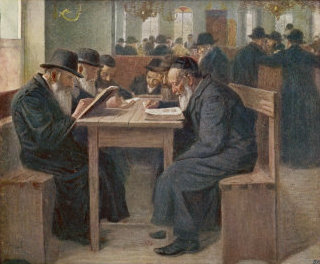
studying-talmudMany of these suggestions probably will seem strange or a poor fit for most Christians. But just look at the level of detail and organization that’s being suggested for Jews as they prepare for the single most holy time in their religious year. Imagine if we in the church were to go through such efforts in order to prepare for our own meeting with God.

I know that Christians and Jews differ on a fundamental level in how we see our service to God. For many Christians, service to God operates in an internal realm and is made up of faith, belief, and prayer. For most religious Jews, although those internal states are present, the main focus is behavioral, not conceptual. Giving to charity in preparation for a meeting with God is totally appropriate. So is taking a religious class, reading an inspirational book, studying relevant sections of the Torah, and reconciling with a friend from whom they have become estranged.

The month of Elul is an opportunity for Jews to review their lives and particularly their failings, and to generate efforts to make amends, to repair relationships, to turn away from sins, and to anticipate the future. In a month, Jews all over the world will approach the throne of God with fear, trembling, and rejoicing. Even on the Day of Judgment; on Yom Kippur, we can learn to dance with God, embracing His Awesome Holiness as both judge and teacher, knowing that we have prepared ourselves for the day of judgment and the day of forgiveness.

Did I say “we?”

The Days of Awe aren’t generally considered appropriate for Christians, but I don’t think it would actually hurt for us to accept Elul as a month of opportunity. Why can’t we use this time to prepare our hearts as well? Couldn’t just spending a little time learning about Rosh Hashanah and Yom Kippur benefit us? Might we not learn to feel just a tad bit more compassion for Jewish people if we learned how they see the God of Abraham and anticipate the Messiah?

We all fail. We all have shortcomings, even the best of us. We can either let that stand or we can do something about it. We can either maintain a “status quo” relationship with God or we can challenge ourselves to draw closer to Him. But that means we’ll have to go through the humiliating and painful process of making a detailed examination of who we are and what we have done to wrong God and to wrong other human beings. We will have to commit ourselves to fixing those damaged and broken relationships, as long as it is within our power to do so. (Romans 12:18)

The month of Elul is the month of reckoning. In the material world, if a businessman is to conduct his affairs properly and with great profit, he must periodically take an accounting and correct any deficiencies… Likewise in the spiritual avoda of serving G-d. Throughout the year all Israel are occupied with Torah, Mitzvot and (developing and expressing) good traits. The month of Elul is the month of reckoning, when every Jew, each commensurate with his abilities, whether scholar or businessman, must make an accurate accounting in his soul of everything that occurred in the course of the year. Each must know the good qualities in his service of G-d and strengthen them; he must also be aware of the deficiencies in himself and in his service, and correct these. Through this excellent preparation, one merits a good and sweet year, materially and spiritually.

“Today’s Day”
Shabbat, Menachem Av 27, 5703
Compiled by the Lubavitcher Rebbe
Translated by Yitschak Meir Kagan
Chabad.org

Failure is wasted if you return only to the place from where you fell. If your plans fail, think bigger, aim higher.

-Rabbi Tzvi Freeman
“Exploiting a Setback”
Based on letters and talks of the Rebbe
Rabbi M. M. Schneerson
Chabad.org

There is no higher goal to aim for than God.

Many Christians believe that devout Jews approach the Days of Awe only with fear of judgment and the almost panicky desire to avoid punishment by “doing things,” to appease an angry God. This couldn’t be further from the truth. Yes, acknowledging failures, confessing sins, and making amends is certainly very humbling and one should not approach an all-powerful God with a casual attitude, but (and my Jewish wife explained this part to me) this is also a wonderful opportunity. This is a wonderful opportunity for Jews to pick up what they’ve put off all year-long, to make their lives and the lives of others better, to improve their relationships, and to almost literally watch God punching the “reset” button on Jewish lives, making everything fresh and new.

While Christians (Jews, too) can do all these things at any time during the year, as human beings we tend to avoid difficult events and tasks. As I said before, the month of Elul is an opportunity to stop being lazy, to get into gear, and to make the effort to be better people that we’ve put off for so long. If this sounds like a terrific opportunity for Jewish people, why shouldn’t a few of us non-Jewish religious people take advantage of it, too?

Immanu-El

Ending and Beginning“Men of Israel, listen to these words: Jesus the Nazarene, a man attested to you by God with miracles and wonders and signs which God performed through Him in your midst, just as you yourselves know – this Man, delivered over by the predetermined plan and foreknowledge of God, you nailed to a cross by the hands of godless men and put Him to death. But God raised Him up again, putting an end to the agony of death, since it was impossible for Him to be held in its power. For David says of Him,

‘I saw the Lord always in my presence;
For He is at my right hand, so that I will not be shaken.
‘Therefore my heart was glad and my tongue exulted;
Moreover my flesh also will live in hope;
Because You will not abandon my soul to She’ol,
nor allow Your Holy One to undergo decay.
‘You have made known to me the ways of life;
You will make me full of gladness with Your presence.’

“Brethren, I may confidently say to you regarding the patriarch David that he both died and was buried, and his tomb is with us to this day. And so, because he was a prophet and knew that God had sworn to him with an oath to his seat one of his descendants on his throne, he looked ahead and spoke of the resurrection of the Christ, that he was neither abandoned to She’ol, nor did his flesh suffer decay. This Jesus God raised up again, to which we are all witnesses. Therefore having been exalted to the right hand of God, and having received from the Father the promise of the Holy Spirit, He has poured forth this which you both see and hear. For it was not David who ascended into heaven, but he himself says:

‘The Lord said to my Lord
“Sit at My right hand,
until I make your enemies a footstool at your feet.”’

Therefore let all the house of Israel know for certain that God has made Him both Lord and Christ – this Jesus whom you crucified.”

Now when they heard this, they were pierced to the heart, and said to Peter and the rest of the apostles, “Brethren, what shall we do?” Peter said to them, “Repent, and each of you be baptized in the name of Jesus Christ for the forgiveness of your sins; and you will receive the gift of the Holy Spirit. For the promise is for you and your children and for all who are far off, as many as the Lord our God will call to Himself.” And with many other words he solemnly testified and kept on exhorting them, saying, “Be saved from this perverse generation!” So then, those who had received his word were baptized; and that day there were added about three thousand souls. They were continually devoting themselves to the apostles’ teaching and to fellowship, to the breaking of bread and to prayer.Acts 2:22-42 (NASB)

I have a personal tradition of reading this passage from the Book of Acts on Yom Kippur every year along with the other Yom Kippur readings. It is a reminder that people can be confronted with the truth and by the Spirit of God, change at the core and become new again in Him. These words provide hope and a certain warmth in my heart along with the Yom Kippur Haftarah portion:

If you refrain from trampling the sabbath,
From pursuing your affairs on My holy day;
If call the sabbath “delight,”
The Lord’s holy day “honored”;
And if you honor it and go not your ways
Nor look to yours affairs, nor strike bargains —
Then you can seek the favor of the Lord.
I will set you astride the heights of the earth,
And let you enjoy the heritage of your father Jacob —
For the mouth of the Lord has spoken. –Isaiah 59:13-14 (JPS Tanakh)

For another year, Jews all over the world feel a lightening in their souls as they approach the world and a new year with much excess baggage lifted from them. For Christians, there is no analogous time on our calendar in which we specifically approach the Throne of God in humility and perhaps in shame, and beg our Creator to make everything clean between us again. We can approach God through Jesus Christ on a daily basis, so there’s no need for a “Christian Yom Kippur”, right? Believe it or not, Jews think this way about Yom Kippur too and ask:

Question: Regarding Yom Kippur, why is there a necessity in Judaism to designate a particular day for atonement when one could atone any minute of the day as he or she chooses? Isn’t G-d listening all the time? Why designate a day that could potentially encourage sinful behavior during the year only to repent on Yom Kippur?

Answer: Maimonides addresses both your questions in his “Laws of Repentance”. In Chapter 2 he states,

Even though repentance is always good, during the ten days between Rosh Hashana and Yom Kippur it is more desirable, and is accepted [by G-d] immediately… Yom Kippur is the time for repentance for the individual and community, and it is the end time of forgiveness and atonement for Israel. Therefore everyone is obligated to repent at this time…

During the year, a person has the option. At this time it is obligatory, and easier to accomplish. Consider the difference between flicking a bug off the table, and pushing a tiger off the table.

In Chapter 4 he says that one who sins with the intent of obtaining forgiveness on Yom Kippur is held back from repenting. We all know, the guy who says, “my diet starts tomorrow” never loses weight.

Best Wishes,
Shlomo Soroka
JewishAnswers.org

Inner lightAre there times of year when God is closer and repentence is more at hand? Remember, traditionally Jews prepare for the Days of Awe for over a month prior to the actual Day of Atonement. I hardly think the intent and anguish built up over that period of time in anticipation of Rosh Hashanah and Yom Kippur can be compared to asking for God’s forgiveness in your prayers each morning (but who am I to know).

Rabbi Mordechai Dixler, Program Director at Project Genesis – Torah.org puts it this way:

Many have had the experience of offering an apology, only to be told that “sorry isn’t good enough.” It’s fundamental to Judaism that G-d always accepts a sincere apology, is always ready to welcome us back. There are, however, times that a person can commit such a breach that the relationship with G-d needs major repairs, where a simple apology is not enough by itself.

On Yom Kippur this all changes. The Nesivos Shalom writes (based on the Zohar) that Kol Nidrei‘s annulment of vows erases all spiritual decrees. Major repairs are no longer needed. The opportunity to approach G-d and ask forgiveness for the past and make a commitment for the future is suddenly open to everyone. That is why on Yom Kippur, a simple apology is indeed all it takes. As all obstacles vanish, all hearts and souls open up.

You may not see any validity in Jewish mystic teachings, but if your faith is a Jewish faith, then the entrance to the gates of Heaven are open a bit wider at a certain time of year than at other times. Even without a Jewish faith, in preparing yourself over the course of time to stand and face God as the person you are, you can only be assumed to have a greater readiness to pour your soul out like a drink offering at His feet in this most holy of encounters. We can see God’s desire for this, not only in the Yom Kippur service, and not only in Kaballah, but in Christianity’s own mystic writings:

And He who sits on the throne said, “Behold, I am making all things new.” And He *said, “Write, for these words are faithful and true.” Then He said to me, “It is done. I am the Alpha and the Omega, the beginning and the end. I will give to the one who thirsts from the spring of the water of life without cost. He who overcomes will inherit these things, and I will be his God and he will be My son. –Revelation 21:5-7 (NASB)

In Yom Kippur, we can see the imagery of “He who overcomes” and at the breaking of the fast, as “one who thirsts” we can receive “the spring of the water of life without cost.”

But the day after Yom Kippur is also like another day we have yet to see.

And he carried me away in the Spirit to a great and high mountain, and showed me the holy city, Jerusalem, coming down out of heaven from God, having the glory of God. Her brilliance was like a very costly stone, as a stone of crystal-clear jasper. It had a great and high wall, with twelve gates, and at the gates twelve angels; and names were written on them, which are the names of the twelve tribes of the sons of Israel.

I saw no temple in it, for the Lord God the Almighty and the Lamb are its temple. And the city has no need of the sun or of the moon to shine on it, for the glory of God has illumined it, and its lamp is the Lamb. The nations will walk by its light, and the kings of the earth will bring their glory into it. In the daytime (for there will be no night there) its gates will never be closed; and they will bring the glory and the honor of the nations into it… –Revelation 21:10-12; 22-26 (NASB)

Throughout the Bible, the chronicle of God’s interaction with human beings, we see an unbroken thread of God’s intent to live with us, from Eden, to the Mishkan in the desert, to the Temple in Holy Jerusalem, to the Spirit which has always lived in the heart of the faithful, and finally to a New Jerusalem descending from Heaven, with God and the Lamb as its Temple. Here, both Christianity and Judaism have a tradition of the Song of the Lamb (Revelation 15:2-3) and the Song of the Messiah representing “a new song, shir chadash”; a “universal vision of complete redemption and the perfection of the world” as a “promise of a glorious future for all humanity” and “one of Judaism’s greatest gifts to the world.”

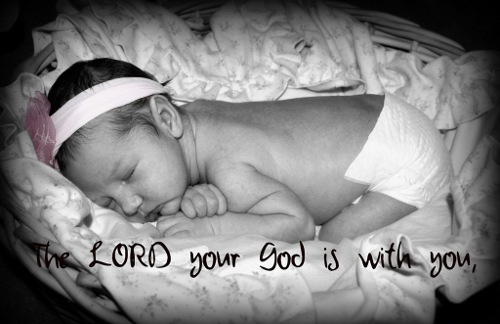
The Lord is with youChristians tend to create a dichotomy between the secular and the holy, between man and God. We also see some of this symbolism of division in how Judaism presents the Shabbat in opposition to the rest of the week. We strive for God in His Heaven above while we struggle with our mortality and humanity on the earth below. Christians talk about “going to Heaven” to be with God when they die, but we see in the vision of Eden and New Jerusalem that in the end, we do not go to God; God comes to us…as it was in the beginning.

The teachings of the Rebbe are not just a collection of advice and nice thoughts —just as a year is more than the sum of 365 days. The teachings of the Rebbe make up one simple whole. All revolve around the same essential concept: The fusion of the loftiest spiritual heights with the most mundane physicality. In the Rebbe’s words, “the highest with the lowest”.

The concept is not only radical but powerful: It means I can be myself, living a “down to earth” existence, and yet fulfilling a transcendental goal. It means that there is nothing we are trying to escape – other than the notion that we must escape something. We don’t run away from this world to join a higher one, instead we work to fuse the two. We aren’t in the business of “making it to heaven” – we’re busy bringing heaven down to earth.

-Rabbi Tzvi Freeman
“Fusion”
Based on letters and talks of the Rebbe
Rabbi M. M. Schneerson
Chabad.org

It’s no coincidence that the expression of God’s desire to live among men comes right before the Festival of Sukkot which will be upon us in just a few days. We will pitch our tents in our backyards and at the synagogues and invite all His holy ones to dwell with us in an imperfect container, with God providing the sheltering roof over us, making the incomplete, complete.

May the expressions of my mouth and the thoughts of my heart find favor before You, HASHEM, my Rock and my Redeemer. –Psalm 19:14

God is with us.

Unanticipated Atonement

Shofar as sunriseIt’s all up to you. Everything about Yom Kippur, coming up this Friday night, points to you: In times of old, one High Priest serving our one G-d in His one Temple on His one holiest day on behalf of His one people elicited G-d’s atonement for the entire world. Today, one person, with one turn of his or her personal page, doing one good deed, or making one good resolution – can also change the course of the entire world for the good.

-Rabbi Zalman Shmotkin
Director, Chabad.org

Wait! Can you back up a second? What was that?

In times of old, one High Priest serving our one G-d in His one Temple on His one holiest day on behalf of His one people elicited G-d’s atonement for the entire world.

Now that’s confusing, at least to me. My reading of Leviticus 16 makes it seem rather obvious that the Yom Kippur service specifically atones for the sins of Israel, and it says nothing about atoning for the sins of the entire world. How could such a thing be possible?

There’s a profound lack of resources on the web (as far as I can tell) regarding Rabbi Shmotkin’s comment. I really hate to use Wikipedia as a source, but they’re about the only site that corroborates the Rabbi’s statement:

The following summary of the Temple service is based on the traditional Jewish religious account described in Mishnah tractate Yoma, appearing in contemporary traditional Jewish prayerbooks for Yom Kippur, and studied as part of a traditional Jewish Yom Kippur worship service.

While the Temple in Jerusalem was standing (from Biblical times through 70 C.E.), the Kohen Gadol (High Priest) was mandated by the Torah to perform a complex set of special services and sacrifices for Yom Kippur to attain Divine atonement, the word “kippur” meaning “atone” in Hebrew. These services were considered to be the most important parts of Yom Kippur because through them the Kohen Gadol made atonement for all Jews and the world.

Just to be clear, the source Wikipedia is relying on for this information is:

Arnold Lustiger, Michael Taubes, Menachem Genack, and Hershel Schachter
Kasirer Edition Yom Kippur Machzor With Commentary
Adapted from the Teachings of Rabbi Joseph B. Soloveitchik.
New York: K’hal Publishing, 2006. pp. 588–589 (summary); 590–618.

This pretty much balances with what Rabbi Shmotkin said but then maybe the Rabbi didn’t mean literally the whole world, but just all of the Jews in the world. Then again, maybe not.

Proceeding on the assumption that we’re talking about the whole world of everyone (it won’t be my last assumption), the difficult thing for me to grasp is that Yom Kippur, from the best of my understanding, provides atonement for the people of Israel (as stated in the Wikipedia quote) in part because the people of Israel want atonement. That is, there is a deliberate, cooperative desire among the Israelites to have their sins atoned for as a nation and the sense of tremendous anticipation as the High Priest enters the Holy of Holies on their behalf. It’s not as if Yom Kippur atonement works by remote control, whether you’re aware of it or not.

But that’s exactly how it would have to work if Aaron had entered the Holy of Holies in the Mishkan in the desert and made atonement for Israel and the entire population of the world.

Let’s take a few examples that are more familiar to the Christian community.

For God so loved the world that he gave his one and only Son, that whoever believes in him shall not perish but have eternal life. –John 3:16

But if anybody does sin, we have an advocate with the Father—Jesus Christ, the Righteous One. He is the atoning sacrifice for our sins, and not only for ours but also for the sins of the whole world. –1 John 2:1-2

Standing before GodHere we see the atoning sacrifice of Jesus being depicted as applying to the whole world, yet it doesn’t literally work that way, at least not without the active agreement and volition of the individuals populating the world. In other words, you have to agree to a certain set of conditions in order for the sacrifice of Christ to atone for your sins. It isn’t applied globally to all human beings whether they want it, or are even aware of it, or not.

But when Christ came as high priest of the good things that are now already here, he went through the greater and more perfect tabernacle that is not made with human hands, that is to say, is not a part of this creation. He did not enter by means of the blood of goats and calves; but he entered the Most Holy Place once for all by his own blood, thus obtaining eternal redemption. The blood of goats and bulls and the ashes of a heifer sprinkled on those who are ceremonially unclean sanctify them so that they are outwardly clean. How much more, then, will the blood of Christ, who through the eternal Spirit offered himself unblemished to God, cleanse our consciences from acts that lead to death, so that we may serve the living God!

For this reason Christ is the mediator of a new covenant, that those who are called may receive the promised eternal inheritance—now that he has died as a ransom to set them free from the sins committed under the first covenant. –Hebrews 9:11-15

Here is our High Priest in the Heavenly Temple; the Heavenly Holy of Holies, applying his own blood in place of bulls and goats, making atonement for the whole world, but it’s a world populated by people who are cooperating with and agreeing to being atoned for. It’s possible for there to be people who are not atoned for by the act of Jesus as High Priest, because (I know I’m being redundant) they haven’t agreed to being atoned for and for many people, they do not want it because they do not want to comply with the conditions required for atonement (namely coming to faith and living a Holy life).

In one of my recent blog posts I used the analogy of God as a gardener and humanity as plants in the garden. I made it a point to illustrate that we are plants who must cooperate with the gardener unlike actual plants which are completely passive as they are watered, given fertilizer, weeded, and so forth.

I realize that God desires that none should perish (2 Peter 3:9), but unlike tomato plants, we have to do something about it. Atonement and forgiveness don’t just happen by the will of God, they happen by human willingness, too. Even being healed by Jesus requires an act of faith on the part of the person being healed:

And a woman was there who had been subject to bleeding for twelve years, but no one could heal her. She came up behind him and touched the edge of his cloak, and immediately her bleeding stopped.

“Who touched me?” Jesus asked.

When they all denied it, Peter said, “Master, the people are crowding and pressing against you.”

But Jesus said, “Someone touched me; I know that power has gone out from me.”

Then the woman, seeing that she could not go unnoticed, came trembling and fell at his feet. In the presence of all the people, she told why she had touched him and how she had been instantly healed. Then he said to her, “Daughter, your faith has healed you. Go in peace.” –Luke 8:43-48

If an act of faith is required for healing, how much more should an act of faith be required for atonement, forgiveness, and reconciliation with God?

I had meant to write something more solemn and dignified, with just a hint of joy, on this final Day of Awe, as Erev Yom Kippur is at hand and Jews all over the world prepare for Kol Nidre, but this is what happened instead.

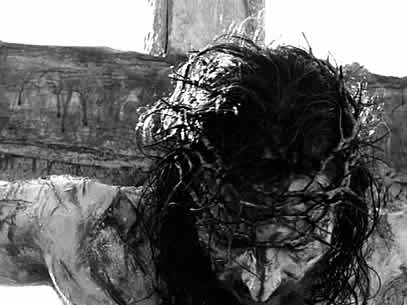
The Death of the MasterI know I lack the information and dimension to understand what Rabbi Shmotkin wrote and what it means. For all I know, I’ve gotten what he said completely wrong. But if indeed, the High Priest in the Holy Temple in Jerusalem did enter the Holy of Holies on Yom Kippur and atoned for the sins of the nation of Israel and every other nation on Earth while we did not have access to the Messiah and his covenant for humanity (I’m continuing to make assumptions here), then God is gracious in the extreme. That is an atonement in which we really did have to provide nothing and that was freely given by God to all people everywhere.

The world was atoned for every year by the Israelite High Priest, and yet the world was completely unaware. How much more should the world be aware that atonement is available now through the Jewish people in the body, blood, and spirit of Jesus Christ, who died once, so that we could live with God forever. What a wonderful and gracious Father.

Draw near to God and he will draw near to you. Cleanse your hands, you sinners, and purify your hearts, you men of double mind. Be wretched and mourn and weep. Let your laughter be turned to mourning and your joy to dejection. Humble yourselves before the Lord and he will exalt you. –James 4:8-10

Your child is not like everyone else; your child is you.

And yet, your child is not you; your child is his own person. A paradox.

Our souls are that paradox – on a greater scale: the nexus between G-d and His universe, where His own breath becomes His creation.

That is why we are called His children. And we call Him our Father.

-Rabbi Tzvi Freeman
“We Are the Child”
Based on letters and talks of the Rebbe
Rabbi M. M. Schneerson
Chabad.org

L’shanah tovah tikatev v’taihatem. May you be inscribed and sealed for a good year. May you also have an easy fast and may the blessings of the Messiah be upon you.

Backward On the Thread of Time

Backwards“It would be easier sometimes to change the past.”
-Jackson Browne
Fountain of Sorrow (1974)

“You can’t unring a bell.”
-Anonymous

Yes, we are physical beings; but there is something in us that transcends the physical. Man is an amalgam of matter and spirit, a marriage of body and soul. It is our spiritual self that persists in the belief that the past can be redeemed. It is our connection with the spiritual essence of our lives that grants us the capacity for teshuvah–the capacity to “return” and retroactively transform the significance of past actions and experiences.

What is this “spiritual essence” with which we seek connection? And how does it enable us to literally change the past?

-Rabbi Yanki Tauber
“How to Change the Past”
Based on letters and talks of the Rebbe
Rabbi M. M. Schneerson
Chabad.org

So, which is it? Can we change the past or not? Rabbi Tauber and musician Jackson Browne say “yes”, but our anonymous bell ringing philosopher says “no”. As we approach Yom Kippur, the holiest day in the Jewish religious calendar, we are reminded of the many mistakes we’ve made over the past year. While remembrance and regrets are part of what makes us human, we often want to forget and to undo those things that we have done. Is there a way? Here’s what Rabbi Tauber has to say:

Not just man, but every object, force and phenomenon has both a “body” and a “soul.” A thing’s body is its physical mass, its quantifiable dimensions, its “hard facts.” A thing’s soul is its deeper significance–the truths it expresses, the function it performs, the purpose it serves.

…man is a spiritual creature in that he imparts significance to his deeds and experiences. Things don’t just happen–they happen for a reason, they mean something, they further a certain objective. The same event can therefore mean different things to different people; by the same token, two very different events may serve the same purpose and elicit identical feelings, imbuing them with kindred souls despite the dissimilarity of their bodies.

The body of our lives is wholly subject to the tyranny of time–the “hard facts” cannot be undone. A missed flight cannot be unmissed; a harsh word uttered to a loved one cannot be unspoken. But the soul of these events can be changed. Here we can literally travel back in time to redefine the significance of what occurred.

So the answer is “yes” and “no”. We cannot physically travel back in time and change a single word uttered in anger or even one careless action, but we can change the soul of the event and we can change our soul, re-making the meaning not only of what we have said and done, but re-making the meaning of our lives. That’s what the Days of Awe are all about, not just saying you’re sorry, and not just asking for forgiveness for your misdeeds, but spiritually, metaphysically, mystically re-creating time and space so that they, and we, are brand new again.

We are also re-creating ourselves so that we are brand new again, clean and pure as we stand before the throne of God.

According to the writer of the book of Hebrews, Messiah has become our High Priest. He entered into the Holy of Holies in heaven—the actual throne room of God—and applied His own blood for atonement. He entered into the presence of God for us so that he might usher us in as well (Hebrews 9:11-12). Messiah is our High Priest, “a minister in the sanctuary and in the true tabernacle, which the LORD pitched, not man” (Hebrews 8:2). Therein he applied his atoning blood. Therefore, the ceremony of the Day of Atonement uniquely patterns the work of Messiah: His death, his sacrifice and the atonement of his blood. We boldly enter the presence of God because the blood of Messiah covers us. Today he stands interceding on our behalf before the throne of God, just like a high priest.

The Holiest Day of the Year
Commentary on Yom Kippur
FFOZ.org

Kol NidreIn the imagery from the Book of Hebrews, we can connect Judaism’s Yom Kippur with the atoning sacrifice of Christ. In Leviticus 16 God told Moses to tell Aaron, the High Priest of the Children of Israel, to enter the Holy of Holies only once a year to make atonement for the people. The FFOZ commentary illustrates how the Messiah, as our High Priest, has made that atonement once and for all on behalf of humanity, and in accordance with the Messianic covenant. He has opened the door and allowed the world to know God.

But Yeshua (Jesus) cried out again with a loud voice, and his spirit departed.

Then the curtain in the Sanctuary was torn from top to bottom into two pieces. The earth quaked, and the rocks were split. The tombs were opened, and many of the holy ones sleeping in the dusty ground were awakened. They came forth from the tombs after his resurrection and entered the Holy City, and they were seen by many.

And when the centurion and the men with him who were guarding Yeshua saw the earthquake and what had happened, they were very terrified, and they said, “Surely this was the son of God.” –Matthew 27:50-54 (DHE Gospels)

Yom Kippur is a solemn reminder of who Christ is and who we are in him and how, even though we cling to the fringes of his garment, we are still frail and prone to weakness.

An interpretation given to the Kol Nidre is that the congregation declares, by implication, at the beginning of Yom Kippur: “See, O Lord, what miserable sinners we are. We make promises to live better lives each year and yet always fall far short of keeping them. Therefore, help us, O Lord, and pardon us for our shortcomings.”

-Rabbi Dr. Louis Jacobs (1920-2006)
“Kol Nidrei: The evening service of Yom Kippur is named after this declaration”
As quoted from My Jewish Learning

As solemn as the Kol Nidre service is, held the evening of Yom Kippur, there is also a promise of the future, a door opens in the fabric of the universe allowing man access to God in humility, awe, and hope. For humanity, the key to the door is Jesus, and once he guides us into the presence of the Most High, we can turn back the clock on events, or perhaps even erase them altogether, through God’s lovingkindness.

On the material surface of our lives, time’s rule is absolute. But on its spiritual inside, the past is but another vista of life, open to exploration and development with the transformative power of teshuvah. -Rabbi Tauber

For as high as the heavens are above the earth,
so great is his steadfast love toward those who fear him;
as far as the east is from the west,
so far does he remove our transgressions from us.
As a father shows compassion to his children,
so the LORD shows compassion to those who fear him.
For he knows our frame;
he remembers that we are dust. –Psalm 103:11-14

Dancing on a stringMy friend Yahnatan on his blog Gathering Sparks posted the following quote from R.R. Reno’s First Things:

I am Christian and not Jewish. I have no real grasp of Hebrew and I only vaguely follow the prayers in my wife’s synagogue. Yet, in the final moments of Yom Kippur I have felt a terrible anguish, yearning to move, and yet immobile, wanting to rush to God’s side and yet nailed to my worldly life. I have shuddered as cantor cries out: “The doors are closing; the doors are closing.” For in those haunting words I hear Jesus saying: “Repent, for the Kingdom of God is at hand.”

I am also a Christian married to a Jewish wife but I don’t believe that applying Yom Kippur to a Christian faith is only for those few of us who are intermarried. God wants all of His people to live, not in the past and not in our sorrow and regrets, but in an active and joyful present life with Him. Heaven doesn’t have to wait. The Kingdom of God is as near as we want it to be. God is as close as the next beat of our hearts. Time is a river and we can swim in pursuit of God, moving upstream and down.

Sacred history may be described as an attempt to overcome the dividing line of past and present, as an attempt to see the past in the present tense (pp 211-12).

All generations of Israel, we are told, were present at Sinai…It was an act of transcending the present, history in reverse: thinking of the future in the present tense (pp 215-16)

Rabbi Abraham Joshua Heschel
God in Search of Man : A Philosophy of Judaism

When we break the fast of Yom Kippur, let us dance with God backward across the strand of time while looking forward to another year ahead in His Holy splendor.