Gifts of the Spirit: Even the Living Stones Weep

girl-dancing-rain“Listen: Billy Pilgrim has become unstuck in time.” So begins Vonnegut’s absurdist 1969 classic. Centering on the infamous fire-bombing of Dresden, Billy Pilgrim’s odyssey through time reflects the mythic journey of our own fractured lives as we search for meaning in what we are afraid to know.

from the Amazon.com description
of Kurt Vonnegut’s classic novel
Slaughterhouse-Five (or The Children’s Crusade)

“Peculiar travel suggestions are dancing lessons from God.”

-Kurt Vonnegut

I received an email just a little while ago (as I write this) that reminded me of what was most important about the First Fruits of Zion Shavuot conference which I recently attended. I plan to post a lot of material about the various conference presentations over the course of the next few weeks and my personal observations about them, but the man on the other side of the email said something that touched me in a personal and painful way. What he said doesn’t make for a great quote, but it does transcend the world we live in and connect to the spirits of man and God.

I was reminded of Kurt Vonnegut’s book Slaughterhouse-Five when I talked with Lisa about her grandfather.

Let me back up a step.

I have what you might call “limited social needs.” I can only take so much of a room full of people over the course of a day before I am “done.” I like my space and I like quiet. I know this makes me sound terrifically anti-social and even a little misanthropic, but it’s just me having my “social needs cup” filled to the brim, and then to overflowing, and then to spilling all over the joint. It gets to be a mess.

So when everyone else was downstairs eating, drinking, and socializing late into the evening, I walked back up to the “sanctuary” (probably not the right word) to be alone.

But I wasn’t alone. Lisa was there. She was on the phone talking to her grandfather, who is in his nineties, for the billionth time that day.

Lisa’s grandfather suffers from dementia. He experiences a lot of different points in the past but almost never the present. He’s a man who has become unstuck in time. During a single phone call, he can be fighting in the Pacific during World War II. He can be walking down a road in the snowy woods when he’s five. He can be buying a pack of cigarettes at a local bar and remembering that he can’t let his wife know he smokes. He can look at a picture of his wife with fond love and remembrance and blissfully, gratefully not remember that she was taken from him many years ago. Because that sorrow would be too much to bear.

He’s lived a good life.

And he’s become unstuck in time as he wanders with each step along that life.

Lisa told me her children wouldn’t consider her a patient person, but she’s very patient with her grandfather. Most people wouldn’t be. Most people wouldn’t be patient listening to a man who is unstuck in time shifting up and down the corridors of his life, second by second, as he appears here and there, and he reorients himself to being a young adult one second and a small child the next.

And who is he talking to when he’s five years old and his granddaughter Lisa, who has children in their late teens herself, is on the other end of the phone?

tearsI felt the tears welling up in my eyes as I listened to her tell me about her grandfather. When Billy Pilgrim became unstuck in time, the reader of Vonnegut’s story discovers a grand adventure with measures of sorrow and tragedy, but one that ultimately ends in victory.

But Lisa’s grandfather isn’t on an adventure. He’s old and, in those moments when he comes to himself in the present, he is terrified that he no longer has control of his mind.

Let me tell you another story. It’s about miracles and it’s also about one miracle that hasn’t happened.

But let me back up a step…let me take one really giant step backward.

I have great sorrow and unceasing anguish in my heart. For I could wish that I myself were accursed and cut off from Christ for the sake of my own people, my kindred according to the flesh.

Romans 9:2-3 (NRSV)

Do you realize the depth of what Paul’s saying? He’s declaring to the readers of his letter to Rome and by inference to us, that he would deliberately surrender his salvation; his relationship to Messiah and to God and everything that means, for the sake of his people, the Jewish people; for the sake of an unbelieving Israel who absolutely needs to know their King.

One evening at the conference, Boaz Michael made a suggestion. He wanted us to talk about miracles. He asked people in the room to share their experiences with the Spirit of God.

Many people had such experiences. I was shocked at how many people raised their hands and wanted to share. I was astonished by the passion, the holiness, the sorrow, the glory, the love of God for all of those people.

A woman named Karen came home because her mother was dying. Her mother was in the last stages of life. She was bedridden. She was ready to die at home.

Karen was sleeping in the room with her mother. She woke up surprised to see her mother standing beside her bed. At first she tried to get her mother back into bed but then she realized her mother was wearing a party dress. But…why? Her mother came up to her and touched Karen’s shoulder…and it was the exact feeling she remembered as a child on all those occasions when her mother took Karen in her arms and embraced her. It had been such a very long time since she had felt her mother’s loving arms around her.

The vision passed. Maybe it was a dream. But the next day after receiving a few phone calls from siblings, she realized it was real. Each of them had seen the same vision of mother in her party dress at the exact same moment.

And then Karen’s mother went to her party to dance with the bridegroom.

Let me tell you my story. I have no miracles. But “I have great sorrow and unceasing anguish in my heart.” Like Paul, there is someone I would give up everything, even my relationship with my Master, even the grace and salvation of God, so that she could love Him and know Him.

one-of-ten-virgins-oilIf only my wife could know Moshiach and love Him. I would turn my back and walk into the distance and the darkness, like the foolish virgins who did not keep their lamps filled with oil while waiting for the bridegroom.

If I could have one miracle from God, that would be it.

Why am I telling you all these things? What possible difference does it make to touch the lives of a few people who have been happy and sad and whose fingers have grasped the hem of the garment of God?

Because each of these people are precious in the sight of God and in my sight as well. There are some people out there who have spoken unkind things about these wonderful people and the time we spent together last week. I’ve been spending time exchanging emails with some of the people I met at the Shavuot conference. I’ve also been reading the comments of some of the critics of these people and their displeasure about why we came together. I even know someone who is a critic who was invited to come and to share but who declined the invitation.

More’s the pity. I wish he’d have come. I wish I could have met him.

I’m heartbroken that anyone could be angry at people like Lisa and Karen (though I frequently experience my critics’ anger towards me). No, these angry people don’t even know Lisa or Karen (though they may think they know me) and so it’s not personal.

Except it is.

Because God loves Lisa…and Karen…and amazingly, even me. And God loves each and every person who criticizes us and who is angry, maybe not at us, but at the people who attended the Shavuot event because of their issues with First Fruits of Zion or Boaz Michael, or whoever, or whatever.

I’m heartbroken because of a man who has become unstuck in time. I’m heartbroken because of a woman who held her daughter one last time before she wore her party dress to attend the banquet of the King. I’m heartbroken that my own miracle has yet to come (if it ever comes). I’m barely holding back my tears as I write this, because the things that some of the people of God need to understand, they don’t understand. And out of that ignorance, they criticize, berate, disdain, and sometimes even hate.

Jeffty is Five is a short story written by Harlan Ellison which I first read in 1978. I also heard Ellison read the story aloud at a Science Fiction conference a year or so later. It’s the story about a little five-year old boy named Jeffty and his five-year old friend. Jeffty’s friend grows up. Jeffty never does. He stays five. He’s stuck in time. Time moves all around him, going forward and taking everyone and everything else with it…except Jeffty.

Jeffty never notices and his friend stays his friend. The fact that Jeffty never grows up slowly erodes the minds and feelings of his parents but Jeffty has a friend who protects him. Jeffty stays in a world where there is no such thing as television, and where the Lone Ranger, the Green Hornet, and the Shadow still save the day in weekly radio programs, not just in his imagination…when Jeffty turns on a radio, those programs are brand new and real.

Eventually, Jeffty is neglected by his friend, now a very busy adult, for a few minutes and the present intersects with Jeffty and his world. And the present wears him down. His soul becomes sick. He “unsticks” in time but there is too much of him that needs the world that isn’t the past but the world that should have been…and Jeffty dies.
new-heartThat story broke my heart too, but it’s fiction. Jeffty couldn’t live when his world encountered what you and I call “the real world.” But the world of God and the human world intersect all the time, and in experiencing the world of harshness intersecting with one of holiness, I’m heartbroken.

If only you’d come into the world I lived in last week. If only you’d pray with us, sing with us, listen to Torah with us. If only you’d eat with us, drink wine with us, sing songs with us…

…then maybe you’d understand. Then maybe you could let your heart be broken too by a man who has become unstuck in time and a woman in a party dress. Maybe you could stop being critical and start being human. Maybe you’d realize that we’re human too. Because if we don’t each become heartbroken, then it’s God’s heart we are breaking. What sacrifice would be too great for us to make for the sake of God and for each other?

For you have no delight in sacrifice;
if I were to give a burnt offering, you would not be pleased.
The sacrifice acceptable to God is a broken spirit;
a broken and contrite heart, O God, you will not despise.

Psalm 51:16-17 (NRSV)

There are a lot of other stories I experienced at the conference that are woven from the sincere fabric of the lives and spirits of many other people I met last week. I’ll write about this in more detail in a few days, but a wise and kind man named Carl Kinbar told a story about building the House of God. One of the most essential materials required to build God’s House is a broken and contrite heart, not just broken for God, but for each other.

It is only when we bleed and when we cry for the sake of not only our families and our friends, but for strangers and even “enemies,” that the sacrifices we offer up to God are accepted. Only then will we be able to build His house using living, crying, bleeding stones.

The Lord is near to the brokenhearted, and saves the crushed in spirit.

Psalm 34:18 (NRSV)

128 days.

Gifts of the Spirit: Don’t Change a Thing

baal-shem-tov2“Therefore do not worry, saying, ‘What will we eat?’ or ‘What will we drink?’ or ‘What will we wear?’ For it is the Gentiles who strive for all these things; and indeed your heavenly Father knows that you need all these things. But strive first for the kingdom of God and his righteousness, and all these things will be given to you as well.

“So do not worry about tomorrow, for tomorrow will bring worries of its own. Today’s trouble is enough for today.”

Matthew 6:31-34 (NRSV)

Where do I begin? As I write this it’s Sunday afternoon. I’ve been back home for a few hours having returned from the First Fruits of Zion (FFOZ) annual Shavuot conference. This year’s theme was Gifts of the Spirit and the event, which was held in Hudson, Wisconsin from last Tuesday through last Saturday, was emotionally, spiritually, and educationally dense with content and meaning.

I’ve got enough material in my notes to blog for the next week or two, but not having gotten a lot of sleep last night, where do I begin so there’s a “morning mediation” for Monday? How about beginning at the end?

The very last presentation on Saturday, which was given by Boaz Michael, included a summary of the entire conference including an extensive question and answer series. We were all rather tired by that point, and I think it helped to generate some recall of the main points that were presented by all of the esteemed speakers. Here are just a few of the things that I recall at the moment. My notes are kind of “scribbly” and my thoughts are rather “fuzzy” right now, so I can’t promise that my quotes are exactly word for word.

One who focuses on and romanticizes Judaism is focusing on the hammer and not the house it is intended to build.

-Troy Mitchell as related by Boaz Michael

I’ll revisit Troy’s “midrash” in subsequent blog posts because there are so many applications for this piece of wisdom that could be useful. This connects to something Boaz presented about our faith in general, whether we call it Christianity, Messianic Judaism, Hebrew Roots or anything else. Most believing communities tend to focus primarily on one of three things, usually at the cost of the other two:

  1. The Gospel Message/Gospel of the Kingdom
  2. The Torah/Bible
  3. The Holy Spirit/Spiritual Gifts

I know that many churches emphasize the Gospel of Jesus Christ, which isn’t such a bad thing, but they usually miss what the Gospel really means (I’ll get to that in a later blog post). I know that my own church tends to be Bible-based, which again, isn’t such a bad thing, but then we tend to not rely so much on the movement of the Spirit of God. Also, both Messianic Judaism and Hebrew Roots have focused heavily on the Torah, sometimes all but ignoring the Messiah and certainly the Gospel message of the Kingdom and the Holy Spirit. Charismatic/Pentecostal churches (which were discussed at length, and often in a complimentary fashion…I’ll get to that too in another blog post) have a main emphasis on “gifts of the Spirit,” often at the expense of the Bible and much of what Jesus actually taught.

Now imagine these three elements are each a leg on a three-legged stool and they are all that is holding up your faith and your congregation. If you have only one or at best two legs, you’re not going to be “on the level,” so to speak. If you try to rest your faith (or your tuchas) on it, you’ll fall to the floor.

My good friend Tom once told me, “Don’t seek Christianity and don’t seek Judaism, but seek an encounter with God.” He probably got the point of the conference long before the conference was ever held. We can all have our pet emphasis within the faith and be so involved in what we think is so important that we miss what God thinks is so important.

I want to tell a really long story. I’m doing this from memory and I don’t know the original source. This wasn’t even part of the “official” conference. It’s a story told by a guy named Yoshi one evening after one of the meals.

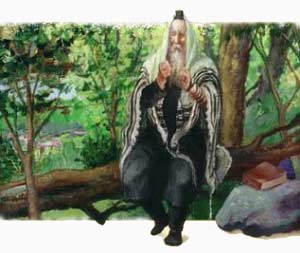
As it turns out, Shavuot is the yahrzeit of the Baal Shem Tov. There have been many “interesting” and inspiring Hasidic Tales about the Baal Shem Tov.

There was once a very simple but honorable and devout Jew who lived in a small town in central Europe. He desired to pray sincerely and fervently to God but did not know how to use his siddur. During prayers at his synagogue, he only knew how to pray starting at the front of the siddur and working his way, page by page, all the way to the back.

As you might imagine, this took a great deal of time.

He appealed to other Jews in his community but either they knew little more about the matter than he did or they didn’t seem to have the time to help him.

This left this devout Jewish man very frustrated.

Then one day, the Baal Shem Tov visited his community. The man thought to himself:

Surely the Baal Shem Tov can teach me to pray.

The man appealed to the Baal Shem Tov to help him understand how to pray using his siddur. Having pity on the man and seeing how sincere his desire to honor God was, the Baal Shem Tov placed many notes and bookmarks in the siddur, designed to guide the man on how to perform the different daily prayers as well as festival prayers and prayers for other occasions.

The man thanked the Baal Shem Tov profusely and began to daven to God with all his heart, using the sequence of prayer marked out in his siddur by the Baal Shem Tov.

A few months passed by and the simple and devout Jew was so happy that he was honoring God by properly praying from his siddur in a manner correct for each of the daily prayers and prayers for special occasions.

During one prayer service, the man accidentally dropped his siddur and all of the loose bookmarks and notes fell out.

The poor man was devastated. He had no idea how to arrange the notes and bookmarks back into their proper order. Sad but determined, the man did the only thing he knew how to do…start praying from the beginning of his siddur, and work his way, page by page, to the end of the siddur.

baal-shem-tov3As he was davening, he noticed that the Baal Shem Tov was visiting his shul again. Everyone else had finished praying, but he was still in the middle of his prayers and in the middle of his siddur. The man thought that as soon as he finished his prayers…and the siddur…he could ask the Baal Shem Tov to put all of the notes and bookmarks back into his siddur again.

But before he was finished praying, the Baal Shem Tov left the synagogue. The man was frantic, but he couldn’t go after the Baal Shem Tov until he finished praying.

He prayed and prayed and prayed as fast as he could and finally finished.

He rushed out of the synagogue, but the Baal Shem Tov was nowhere to be seen. He asked different people he encountered if they’d seen which way the Baal Shem Tov went. One man had seen him take the south road out of the town on foot. The man thought if he ran fast enough, he could catch up and ask the Baal Shem Tov to replace the notes and bookmarks into his siddur.

He ran and ran and finally saw the Baal Shem Tov in the distance at the edge of a river. There was no bridge at that place, so the man thought he could surely catch up to the Baal Shem Tov. But before this could happen, he saw the Baal Shem Tov take a handkerchief out of his pocket and spread it out on the river. The handkerchief grew and grew and grew until it became big enough to make a bridge across the river. The Baal Shem Tov walked across, then picked up his handkerchief, which shrank back to normal size, and then proceeded on his way.

The man got to the river and was frantic. He just had to find the Baal Shem Tov. Then he remembered that he too had a handkerchief. Taking it from his pocket he thought:

If it worked for the Baal Shem Tov, it should work for me.

The man opened the handkerchief, which immediately expanded across the river, just as the Baal Shem Tov’s handkerchief had done. The man walked across, picked up his handkerchief, and then continued to run after the Baal Shem Tov.

As the man was catching up to him, in the distance, he saw that the Baal Shem Tov had come to the edge of a large canyon. There was no bridge across the canyon at that spot, so the man thought he could surely catch up to the Baal Shem Tov this time.

But this was not to be. Once again, the Baal Shem Tov took his handkerchief, spread it out across the canyon, and walked across.

By the time the man got to the edge of the canyon, the Baal Shem Tov was gone again. Remembering his own handkerchief and his experience at the river, the man thought:

If it worked for the Baal Shem Tov, it should work for me.

He spread out his handkerchief, just as the Baal Shem Tov had done, and it expanded to form a bridge across the canyon. The man ran across, retrieved his handkerchief, and ran after the Baal Shem Tov once again.

He finally saw that the Baal Shem Tov was climbing a steep mountain trail. The Baal Shem Tov was no longer a young man and was proceeding rather slowly. This gave the heroic young Jewish man the time he needed to catch up to him.

Out of breath and barely able to speak, the man gasped out his story to the Baal Shem Tov about how he had dropped his siddur causing all of the notes and bookmarks placed there by the Baal Shem Tov to fall out. The man went to his knees and begged the Baal Shem Tov to replace them.

But the Baal Shem Tov was puzzled:

When you were following me, did you not see me at the river?

The man replied:

Yes, Baal Shem Tov.

The Sage asked:

Then how did you cross the river to follow me?

The man answered:

I did what you did, placing my handkerchief over the river so I could walk across.

The Baal Shem Tov pondered for a moment and then asked:

Did you not see me at the edge of the canyon?

The man replied in the affirmative, and the Baal Shem Tov asked how he managed to cross the canyon.

The man said:

I did what you did, placing my handkerchief over the canyon so I could walk across.

The man again pleaded with the Baal Shem Tov to teach him how to pray by replacing all of the notes and bookmarks he had originally created.

The Baal Shem Tov placed his hand on the young man’s shoulder and replied:

You do not need me to teach you how to pray. Just keep doing what you’re doing. You’ll be fine.

The Ba'al Shem TovI know that was a very lengthy tale, but it speaks to what you read earlier, both from Matthew 6 and from Troy’s “midrash.”

It matters less how you pray or what sort of rituals you use than the state of your heart when you are seeking God. Even the simplest of men can do great miracles and draw close to God if he seeks first to build the Kingdom of God by the Spirit rather than just focusing on and romanticizing the hammer.

I’ll present a more organized series of reports about the FFOZ Shavuot conference after a good night’s sleep and further reflection.

128 days.

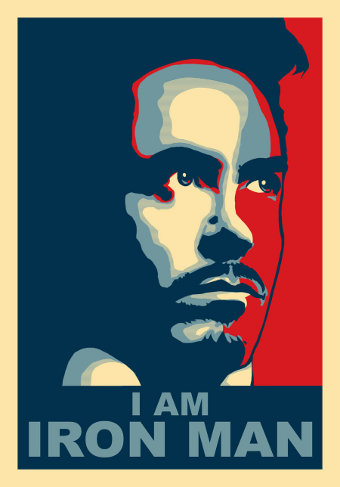
I am Iron Man

iron-man-3-posterFinally, be strong in the Lord and in the strength of his might. Put on the whole armor of God, that you may be able to stand against the schemes of the devil. For we do not wrestle against flesh and blood, but against the rulers, against the authorities, against the cosmic powers over this present darkness, against the spiritual forces of evil in the heavenly places. Therefore take up the whole armor of God, that you may be able to withstand in the evil day, and having done all, to stand firm. Stand therefore, having fastened on the belt of truth, and having put on the breastplate of righteousness, and, as shoes for your feet, having put on the readiness given by the gospel of peace. In all circumstances take up the shield of faith, with which you can extinguish all the flaming darts of the evil one; and take the helmet of salvation, and the sword of the Spirit, which is the word of God, praying at all times in the Spirit, with all prayer and supplication. To that end keep alert with all perseverance, making supplication for all the saints, and also for me, that words may be given to me in opening my mouth boldly to proclaim the mystery of the gospel, for which I am an ambassador in chains, that I may declare it boldly, as I ought to speak.

Ephesians 6:10-20

But on the other hand, Jews put their faith in clothing all the time. Back when the Temple had four walls, the kohanim (priests) wore special clothes. When Jacob wanted to express love for his son, Joseph, he made a special shirt, and all of Joseph’s brothers were so angry they decided to sell him. And when Jacob’s father, Isaac, was getting old and wanted to give Esau a blessing, Jacob’s mother, Rebecca, gave Jacob special clothes to fool his father into blessing him instead, while Esau was off trying to figure out how to hunt wild game with a kosher butcher’s knife. And we specifically wear certain clothes for certain rituals – the tallit (prayer shawl), tefillin, a yarmulke, a white kittel on Passover so we have something on which to spill our wine, and sneakers with our suits on Yom Kippur in case we want to go jogging later. So it’s not like we don’t place any value on clothes.

So how are we to reconcile this?

The case of Jacob seems pretty peculiar, though. Jacob was wearing Esau’s clothes to fool his father, but his father was blind. So who was he trying to fool?

-Mark Papers
“Iron Man 3 and Shavuot”
Aish.com

It has been said that the clothes make the man, but that seems like a pretty shallow way to assess a person’s capacities. On the other hand, people do tend to think, behave, and even feel differently depending on what they’re wearing. If you’re in a tuxedo going to a $500 a plate fund-raiser, you may behave differently than if you are dressed in a ragged t-shirt and swimming trunks going to your neighbor’s pool party.

I would have passed on any sort of commentary on Mr. Papers’ (not his real name) Iron Man 3 review if Pastor Randy hadn’t mentioned Ephesians 6 during his sermon last Sunday. It’s seemed like an odd coincidence, especially since Pastor’s message didn’t breathe one word about Tony Stark’s latest adventure on the big screen.

i-am-iron-manPapers drills down into the “clothes make the man” saying during his review, reminding us (spoilers ahead) that Stark (played by Robert Downey Jr) spends as much or more of his time in the film out of his Iron Man armor than in it. There are also sequences in his film where the armor is operated without anyone inside. What do we do with the “clothes” metaphor then?

At the end of the first Iron Man film (2008), instead of protecting his secret by manufacturing a lie as to who Iron Man is to him, Stark abruptly reveals to the world, “I am Iron Man.”

Stark isn’t just Iron Man when he’s in the suit, he’s Iron Man because that’s part of who he is…not as an inventor and not as a person who gets powers from technology, but because it is part of his lived identity. It didn’t start out that way. Stark, at the beginning of the original film, was a brilliant but wholly self-indulgent person who did whatever pleased him and was totally unconcerned about the consequences of his actions…until he realized that those consequences included the deaths of millions on a global scale, thanks to the black market sales of his weapons.

It was Iron Man who molded the soul of Tony Stark, gradually forming him into a hero from the heart outward as opposed to from the armor inward. Four films later, if you include The Avengers (2012), Tony is Iron Man, whether he’s wearing the armor or not.

But what does that have to do with you and me?

In his Ephesians letter, Paul uses the “armor of God” metaphor to say something similar. As human beings we are weak, mortal, frail, self-indulgent, vulnerable to a thousand temptations. We are anything but heroic. Oh, maybe the occasional person has extraordinary courage and strength, but most of us, including me, will never do the stuff we see heroes do, either in the movies or in real life.

Maybe.

That is, we won’t do it just of ourselves. Like Tony Stark before he was critically wounded, made a prisoner of the very people his weapons were designed to kill, before he saw his weapons used against the very soldiers he was supposed to protect, before the man who saved his life sacrificed himself so that Tony in his first, improvised suit, could escape his captors and return home to a renewed life and a new mission, we are weak and subject to our own passions. We are like spoiled children.

When we encounter God, he gives us something that is designed to change us. He gives us the ability to be heroes of a sort. He gives us the opportunity to be more than who we are…to realize the potential to be everything God designed us to be. The Word of God has been euphemistically called a “sword.” We can defend ourselves from all kinds of harm just by reading and studying the Bible. We can learn to protect others with its power.

Like Tony Stark’s fictional armor, we can let God’s armor change us…first from the outside in…and then from the inside out.

In this movie, like the Jews in the desert, Iron Man is taken out of his element and stripped down to just his goatee in the middle of nowhere. But in our case, the desert was our cocoon. God gave us the Torah, kept us away from distractions for a 40-year incubation period, and helped us grow before releasing us back into our homeland. The Torah is our armor. And after wearing that for 40 years, the hope is that we’ve internalized it.

Tony spent time upgrading his suits, but what he didn’t realize was that he needed to upgrade himself. He has to get a few things, um, ironed out. It’s not his metal that matters. It’s his mettle.

We all have within us what it takes to be heroes. We also have an outer shell, but the real question is what we do when it cracks open. Do we just kind of leak out, or are we Iron Man – unflinching in our values, even in the face of danger?

I am Iron Man.

bare-ironThere are different people going to Christian churches today and, for the sake of this blog post, I’m going to say that there are two different types of people. There are those who use the Bible and their faith like armor, like something they wear but also something that can be taken off once they leave church on Sunday…and there are those who wear their armor on the inside, who have integrated the Word, the will, the Spirit of God into their lives. They are Christians regardless of their circumstances. Even stripped down to their bare essentials, even if their churches and their Bibles are taken from them, who they are in God and who God is in them is the same. You can take everything from them but they will always be with God.

The armor doesn’t make the man…the armor and the man become the same.

This should be my absolute last “meditation” until sometime early next week. And no, I haven’t had a chance to see the IM3 movie yet.

132 days.

Unpopular Righteousness

unpopularThe ascent of the soul occurs three times daily, during the three times of davening. This is particularly true of the souls of tzadikim who “go from strength to strength.” It is certain that at all times and in every sacred place they may be, they offer invocation and prayer on behalf of those who are bound to them and to their instructions, and who observe their instructions. They offer prayer in particular for their disciples and disciples’ disciples, that G-d be their aid, materially and spiritually.

-Today’s Day
Hayom Yom: Iyar29, 44th day of the omer
Compiled and arranged by the Lubavitcher Rebbe,
Rabbi Menachem Mendel Schneerson, of righteous memory, in 5703 (1943)
from the talks and letters of the sixth Chabad Rebbe, Rabbi Yosef Yitzchak Schneersohn, of righteous memory.
Chabad.org

There is no free individual, except for he who occupies himself with the Torah.

-Ethics of the Fathers, 6:2

I had a great idea for a blog post last night before I went to bed. It communicated what I thought we all should be talking about with each other, not only on our blogs, but face-to-face, in our emails, in our phone calls, in every way possible…the communication and communion of holiness.

But then I went to sleep, and when I woke up, it was gone. I’m disappointed because the drive to write it is still within me. But now, I can’t give it expression.

This morning (as I write this), I read Derek Leman’s blog post What is Popular on a Messianic Blog?. I try to steer away from being identified as a “messianic blog” because it limits the audience I attract and fails to communicate that the message of Messiah is for all people, not just “messianics,” and for that matter, not just for “Christians.” The message of the love of God for humanity is for…humanity.

But Derek has a point.

Hands down, and no surprise, the winner of the numbers game is controversy. My leading blog post of the past year was an expose I did on Jim Staley, a Two House and Hebrew roots teaching pastor in Missouri, called “The Messianic Wall of Weird, #2.” And when Ralph Messer wrapped a pastor in a Torah scroll, told the pastor he was royalty in God’s eyes, and promised this bizarre misuse of a sacred object in Jewish life would restore this pastor from his problems, that blog post got a ton of readers (“Ralph Messer is Not a Messianic Jewish Rabbi”). A few critiques of Tim Hegg I have written have drawn many readers, but also lost me many readers, as some fans of Tim Hegg did not appreciate the criticism I threw his way. Of course, we should not be surprised that controversy is popular.

Controversy (especially if negative and more so if tied to a popular figure or current event).

My response to Derek’s missive was to compare this sort of “popularity” to a car accident with horrible human injuries, or NASCAR, where the attraction is the “hope” that there’ll be a massive pile up of cars traveling at high rates of speed, visions of body parts flying about the landscape fairly dancing in the minds of the fans.

OK, that’s probably a little harsh and I don’t doubt I owe an apology to many NASCAR fans out there.

But I also think I’m correct in that what draws a large, vocal audience tends not to be topics of substance but topics of controversy, especially if it’s ugly and there’s an opportunity to “spill blood,” in a virtual sense.

rock_starBut now I’m the one straying into the realm of controversy. See how tempting it is?

Tim at Onesimus Files posted a link to a highly “popular” blog post called When Rock-Star Preachers Spew a False Gospel published at Charisma News. The topic of “rock star preachers” is of interest to me because of my recent comments on “Biblical sufficiency” related to Part 1 and Part 2 of my commentary on John F. MacArthur (no, MacArthur’s not a “rock star preacher,” quite the opposite).

Drama is like blood in the water and we are all sharks looking for the next feeding frenzy.

But is that the way God wants us to be?

The Chofetz Chaim writes that because we are so involved in worldly matters, we lose our sensitivity to the great amount of joy we can potentially experience when performing a mitzvah (good deed). He offers the analogy of a man who was granted an audience with a powerful ruler. Imagine that the ruler is greatly impressed with the man, and has the conversation recorded in his personal diary. What a thrill! Upon returning home, the man’s face would glow with elation as he retells his experience to all his friends and neighbors. Even if he’d previously been worried over personal problems, he’d quickly forget them! Over the next years, whenever he’d meet others at some gathering, his successful meeting with the ruler would invariably be the topic of conversation.

Says the Chofetz Chaim: If this is the joy of someone who found favor with a mortal (who will eventually die and whose glory is short-lived), all the more so should we feel joy when we doing something which finds favor with the eternal Creator of the universe. Even afterward, when recalling the good deed, we will feel a glow of pleasure. In fact, the Torah (Deut. 28:47) stresses that we should feel more joy in serving the Almighty than from all other pleasures that exist.

-Rabbi Zelig Pliskin
“Daily Lift #813: Being in the Almighty’s Favor”
Aish.com

A new commandment I give to you, that you love one another: just as I have loved you, you also are to love one another.

John 13:34

We ask you, brothers, to respect those who labor among you and are over you in the Lord and admonish you, and to esteem them very highly in love because of their work. Be at peace among yourselves. And we urge you, brothers, admonish the idle, encourage the fainthearted, help the weak, be patient with them all. See that no one repays anyone evil for evil, but always seek to do good to one another and to everyone. Rejoice always, pray without ceasing, give thanks in all circumstances; for this is the will of God in Christ Jesus for you. Do not quench the Spirit. Do not despise prophecies, but test everything; hold fast what is good. Abstain from every form of evil.

Now may the God of peace himself sanctify you completely, and may your whole spirit and soul and body be kept blameless at the coming of our Lord Jesus Christ. He who calls you is faithful; he will surely do it.

1 Thessalonians 5:12-24

I suppose I could be criticized for choosing specifically optimistic and encouraging examples of scripture to place here, but then again, if you value the Word of God at all, you shouldn’t ignore them, either.

kindnessWhy do we do good? For the benefit of those around us. This is what God desires. However there is another motive. Each mitzvah we perform, each morsel of food or drink we give to a homeless person, each child’s skinned knee we put a band-aid on and kiss, each smile we give to a person we’re visiting in the hospital, not only helps the lonely and injured and not only helps the loneliness and injury within us, but it brings us closer to God.

We do good because only God is good (Mark 10:18; Luke 18:19). Only God is One (Deut. 6:4). Only by loving God can we love anyone else in the way God designed us to love (Matthew 22:34-40).

I could quote at length from the comments section of some “religious blogs” the transactions of believers who do not seem to be loving each other at all. Occasionally, I try to introduce the voice of reason and yes, of love, but I don’t know if it does any good. On the other hand, it’s difficult to ignore some of these venues. There are people out there who feel they have been badly hurt (and some of them really have) by a “church experience,” and in reaction, they say harsh things about all Christians in churches (and sometimes about Jewish people in synagogues). Reading some of their material is like watching someone terribly injured and bleeding while trapped in the wreckage of a disastrous car accident (and I’ve written about this before). It’s horrible to look at but I can’t turn away. I want desperately to help, but I don’t know how to get them out of the ghastly mess.

(I should say that I wrote this particular blog post several days before my controversial missive but this one was scheduled to be published while I was away from home.)

What do you do when someone is hurt, has been hurt for a long, long time, and yet doesn’t want to be helped? What do you do with people who totally identify with being hurt, who are defined by being hurt, by being victims, and yet don’t want to let go of the pain, even when they know that if they did finally, finally let go, they would be much better human beings…the people God intended them to be?

Is there “power” in playing the victim role? Absolutely. Look back to what I said before about “popular” blogs. Controversy, pain, “blood in the water,” arguments about who is a “true believer” and who is an “apostate” rule the religious web. Everything else, righteousness, holiness, goodness, devotion…all that stuff is boring. Who wants to read it? No one.

Well, that may be an exaggeration, probably a gross exaggeration. I suspect a “silent majority” of people do read about righteousness, holiness, goodness, and devotion, and absorb it into their beings like a starving child voraciously consumes a glass of milk. It’s just that most of them don’t talk about it, don’t comment on blogs, don’t demand to hear more, don’t speak out dynamically, don’t become impassioned, at least in any way we can see in the blogosphere.

As you’re reading this, I’m at First Fruits of Zion’s Shavuot Conference at Beth Immanuel Sabbath Fellowship in Hudson, Wisconsin. Through the miracle of scheduling blog posts, I can write this “last week” and have it become visible on the web Wednesday morning. I hadn’t intended to have new “mediations” be published while away from home, but as I said above, something is driving me to write about what we never talk about, or at least what is never “popular” to talk about.

doing_goodIt could be argued that something is only popular if it produces positive results within its audience and controversy rarely does that. Certainly the common definitions for the word “popular” include “regarded with favor, approval, or affection.” Can controversy be regarded with “affection?” On the other hand, look at what’s “popular” in our world today. Consider the TV shows with the highest ratings. What about movies, music, celebrities? Are these popular things and people always examples of righteousness, holiness, goodness, and devotion, or are they mere reflections of the moral state of our society? I suggest we try to do what is “unpopular.” As people of faith, we must go against the general grain if it violates what we are taught by our Master and Teacher.

The commentary for Pirkei Avot 6:2 states:

Why the roundabout, “negative” wording of the mishnah? Why not simply say “True freedom is attained through Torah”?

Man is a finite being, and everything he possesses and is capable of achieving is likewise finite in scope and extent. It would, therefore, follow that there is no such thing as a free human being. Not only do the proud, the envious, the ignorant and the greedy live in their own prison, but even the most emotionally stable and content individual, blessed with the most plentiful resources and leading the most uninhibited of lives, is still subservient to his own inherent limitations.

Thus, our mishnah opens with the statement, “There is no free individual.” But one who occupies himself with Torah, subordinating his mind and self to the wisdom and will of the Almighty, transcends this most basic nature of every created thing.

Torah defies the unbridgeable gap between the finite and the infinite. It is the wisdom and will of G-d, articulated in terms that the human being can comprehend, relate to and implement in his life. One who submits to the servitude of a life devoted to Torah experiences the freedom that eludes the most “independent” of men.

We also learn something important from Paul:

Put on then, as God’s chosen ones, holy and beloved, compassionate hearts, kindness, humility, meekness, and patience, bearing with one another and, if one has a complaint against another, forgiving each other; as the Lord has forgiven you, so you also must forgive. And above all these put on love, which binds everything together in perfect harmony. And let the peace of Christ rule in your hearts, to which indeed you were called in one body. And be thankful. Let the word of Christ dwell in you richly, teaching and admonishing one another in all wisdom, singing psalms and hymns and spiritual songs, with thankfulness in your hearts to God. And whatever you do, in word or deed, do everything in the name of the Lord Jesus, giving thanks to God the Father through him.

Colossians 3:12-17

white-pigeon-kotelToday, I’m attending a conference dedicated to the gifts of the Holy Spirit. One of those gifts as I see it, is fellowship and community within the body of Jewish and Gentile believers. One might even say that I am participating in “echad” or a sense of “oneness” within the body of Messiah, though it contains many dissimilar parts.

We are commanded to love one another. I think that means we should love each other even if we don’t always like each other. I know I’m not always likeable, but I pray that God finds me always loveable, through His abundant grace and mercy. And if He can love me, He can love anyone. That means I should love anyone, too.

And showing love, more than any act of superficiality or ceremony is what it is to be righteous and holy to God. May the injured find healing in Him.

A person with humility is able to accept misfortunes and suffering. The arrogant person, however, is not able to tolerate these events.

Rabbi Zelig Pliskin

“To become truly great, one has to stand with people, not above them.”

-Charles-Louis de Montesquieu

133 days.

Pilgrimage to Wisconsin

thekingdomisnowThis Shavu’ot, in honor of the anniversary of the giving of the Torah and the gift of the Holy Spirit, the teachers from First Fruits of Zion are gathering to provide historical answers about the “Gifts of the Holy Spirit” from a Messianic Jewish perspective. We’ll be taking a serious look at the role of the Holy Spirit and supernatural gifts. What does Judaism say about prophets and prophecy? What did the gift of tongues mean to the early believers? What is a Spirit-filled life, and what are the gifts of the Spirit from an apostolic-Jewish perspective? How did they function? Is the Holy Spirit active today? How so? This is prophetic teaching about the power of the Messianic Era (the Kingdom) bursting into this current age in the form of supernatural manifestations.

The Gifts of the Spirit are tokens of the Messianic Era—a down payment on the promises of the Kingdom of Heaven, bringing the power of the Messianic Age into our world today.

-from the Shavuot Conference 2013 webpage
First Fruits of Zion (FFOZ)

I went to last year’s conference and had a blast, but just like last year right before I left home, I am experiencing a little trepidation. Things have changed in the last year. I’ve returned to a Sunday church setting for regular worship and have been exploring areas, concepts, and ideas that I have never touched on before.

Last year, I expected to be completely anonymous and was astonished when so many people recognized me. This year, I’m afraid I’ll expect people to recognize me (and I hope I’m not such an egomaniac) and instead I’ll be completely anonymous, even to the people I know well.

Truth be told, I don’t travel as well as I used to. I like going to new places once I arrive and I discover I really do have confirmed room reservations, transportation, and meals, but there’s always a concern that I’ll get on the wrong plane and end up in a different city, arrive at the correct destination but have no luggage (I actually dreamed about that recently), or arrive at the correct destination and no one will have heard of me. I have no desire to sleep in the airport.

I know this is the wrong attitude to approach this year’s Shavuot conference. The theme of the conference is Gifts of the Holy Spirit which presupposes faith and an expectation of gifts that are beyond human creation and experience. If God wants me to go to this conference, He’ll make it possible. If he wants me to participate in a meaningful way, He’ll make that happen too, somehow.

As you read this, it’s Tuesday morning (or later) and I’m on a plane between Boise and Salt Lake or between Salt Lake and Minneapolis–Saint Paul. I suppose if I traveled more, this wouldn’t seem so daunting, but I haven’t been on a plane since last year at this time, so it’s hardly a common occurence in my life.

OK, stop. There I go again. Trust. Faith. I’ve got to remember that.

Last year, I was just beginning to explore this whole Christian vs. Messianic thing. This year I’m deeply involved.

There’s another issue here though. This whole classification of Christian vs. Messianic among non-Jews is just a little crazy. I know that it’s meant to differentiate between traditional Sunday Christians and those who have become more aware of the Hebraic origins of our faith, but it’s gotten to the point where we’re almost acting like we have two different religions.

I know a number of non-Jews who self-identify as “Messianic” visit and read my blog posts. If that’s you, I want you to practice something in the privacy of your own homes when you’re all alone. I want you to say out loud, “I’m a Christian.” Repeat it a few times. C’mon, don’t whisper. Really belt it out. “I’m a Christian.”

“I’m a Christian.”

-Me from last year

conference2I’m a Christian. In many ways, I’m more of a Christian now than when I took this journey last year. Am I too much of a Christian?

Life is exploration. Life is change. Life is a journey and as I write this (last Wednesday morning from your point of view), I’m anticipating a big one (for me, anyway). I find that I’m suddenly scrambling in my brain and in my schedule to put last-minute touches on projects, make sure all my arrangements are arranged, and I’m still trying to frantically put all my ducks in a row (the darn things have a tendency to wander).

Last year I said, ” In some ways, I’ll be just as nervous attending the conference as I would be if I decided to visit a church next Sunday morning.” Right now, I’m more used to going to church on Sunday than I am attending a Messianic conference. I’m sure once I get there, everything will be fine, but there’s this nagging suspicion that I’ve mutated into a lifeform that will look, act, and sound alien to the people in that environment (kind of like a duck in a pond full of swans).

As you might expect, I’ll have little or no time to actually compose new “meditations” when I’m at the conference, so I won’t be posting “morning meditations” every day while away from home (I’ve composed a couple previously that will be automatically published tomorrow and the next day thanks to the WordPress scheduling feature). I may or may not get access to a computer, so I might not even be responding to comments (or clearing comments held for moderation) until the following Sunday, but we’ll see about that.

I’m hoping this will be a time of renewal and rejuvenation (an odd thought for someone approaching his sixth decade on earth) as well as a revived illumination. While I am a creature of habit and I take great comfort in a regular routine, the law of diminishing returns has kicked in and the more I walk my yearly circle in the same way and on the same path, the less I learn and thus, the less I can return to others.

I suppose I should consider Toby Janicki’s point of view on attending the conference:

Today, many Gentile believers are returning once again to the celebration of Shavuot under the auspices of Messianic Judaism. While Christian tradition focuses primarily on the Acts 2 outpouring of the spirit in its celebration of Pentecost, a Messianic Jewish celebration of Shavuot focuses on both this outpouring and the giving of the Torah to the Jewish people. In some ways Shavuot represents the totality of the believers walk, spirit and truth. God not only gave Israel his precious instruction and desired they share it with the nations, but he also gave his people the Holy Spirit which enables us to walk out those instructions and spread the kingdom of heaven. Chag Sameach!

One day, God be willing, I’ll see Jerusalem and the Kotel with my own eyes within this lifetime. But if a trip to another part of my own country to see people who are relatively the same as me causes such concern, how will I face traveling to another country where the people don’t even speak my language and they conceptualize the world in fundamentally different ways?

May God travel with me on my journey (and journeys) and grant me companionship wherever I may find myself. May I also find Him there as well.

…when you were young, you used to dress yourself and walk wherever you wanted, but when you are old, you will stretch out your hands, and another will dress you and carry you where you do not want to go.” – And after saying this he said to him, “Follow me.”

John 21:18-19 (ESV)

Blessings.

134 days.

The road

The Evidence of Luke

Apostle-Paul-PreachesIn writing about Jesus, the early church, and the travels of Paul, Luke weaves his defense against the many charges made against Paul and the followers of Jesus. The accompanying chart shows the defenses put forth to Theophilus just in Acts (most of the defenses raised in Luke are discussed in the chapter on Luke). Some defenses are subtle: assertions of verifiable facts which belie the accusations. Others are explicit: citation of legal precedent directly contrary to the arguments of Paul’s opponents. In light of the number and breadth of charges, I have placed them in to two general categories for ease in analysis…

-John W. Mauck
“Chapter 4: For the Defense”
Paul On Trial: The Book Of Acts As A Defense Of Christianity (Kindle Edition)

This book was authored by an experienced attorney who believes that Luke and Acts were written as a formal legal argument for the defense of Paul as he awaited a hearing before Nero in Rome. Mauck’s analysis encompasses not just the immediate charges that were brought against Paul in Jerusalem (Acts 21-22), but any other charges that Paul may have faced or potentially could have faced as a result of his evangelical activities anywhere in the Roman empire. Maulk isn’t the only one to believe this is how Luke/Acts functions, and if he’s correct, then the points Luke makes in his writings are not only of critical interest as theological information to religious scholars and lay readers, but as actual legal evidence to the validity of the Jewish sect known as “the Way” as a legitimate Jewish religious stream (important in Paul’s case since Roman law only recognized Judaism as a legal religious movement outside the Roman/Greek pantheon of “gods”).

I was reading Chapter 4 last week and the chart provided by Maulk details the fifty-nine arguments in defense of Paul. I realized that the chart as a whole was a very nice compression of the entire Book of Acts and that many of the items supported a number of my positions on Acts as legal evidence. I won’t present all fifty-nine items in the following chart, only those that speak to specific points.

The original chart has four columns. The first cites the specific item being defended, the second and third columns indicate which charge or charges it involves. The fourth column gives an example or cites scripture illustrating the defense of the charge. For the sake of space and how WordPress blogs are laid out, I’ve eliminated the two middle columns.

Defense Passage Illustrative of Defense
1. Our faith is based on the Tanakh
Acts 26:22b-23 “[I am] saying no other things than those which the prophets and Moses said would come – “that the Christ [Messiah] would suffer, that He would be the first to rise from the dead, and would proclaim light to the Jewish people and to the Gentiles.”
2. The Inclusion of Gentiles was always God’s plan for the Jewish faith.
Acts 15:16-17 quoting Amos 9:12 So that the rest of mankind may seek the Lord
3. We are a self-governing sect within Judaism
Acts 1:15-26; Acts 3:42-47; Acts 4:32-35; Acts 6:1-7
4. Rejection of Jesus by Jewish leadership can be explained.
Acts 3:17 (ignorance); Acts 5:17 (jealousy); Acts 13:45 (jealousy); Acts 5:28 (fear)
6. The apostles and Paul are subject to duly constituted authority.
Acts 13:1-3; Acts 15:23 The apostles and the elders, and the brethren. To the brethren who are of the Gentiles…
7. The followers of Jesus are faithful Jews.
Acts 2:41; Then those who gladly received his word were baptized…about three thousand…
11. The presence of female prophets and evangelists is foretold in Torah.
Acts 2:17-18; quoting Joel 2:28-29 (Joel 3:1 in Heb).
25. Paul did not initiate inclusion of Gentiles, other Jewish leaders did so.
Acts 10 (conversion of Cornelius); Acts 15 (Jerusalem council)
28. The Gentile church and the Jewish church did not disconnect
Acts 11:19-29 (many Greeks in Antioch believed and joined the Jewish congregation)
38. Paul’s message was accepted by many Jews who checked the scriptures
Acts 17:10-15 they searched the Scriptures daily…
40. Our assemblies are not illegal collegia, but Jewish worship.
Acts 18:7-8 Paul moves preaching from synagogue to next-door home of synagogue leader.
43. The teachings of the Jewish prophet John confirm the Jewishness of faith in Jesus.
Acts 19:1-7 (encounter with disciples of John in Ephesus)
47. Paul was not teaching the Jews of the Diaspora to stop following Torah.
Acts 21:21-24 (meeting between Paul and James the leader of the Jerusalem congregation)
48. Paul’s opponents are anti-Gentile
Acts 22:21-22 (riot when Paul uses the word “Gentile” in his speech)
49. The Sanhedrin itself has sharply differing views on Jewish theology
Acts 23:9-10 (internal dispute over resurrection of the dead)
52. Even those accusing Paul of leaving Judaism admit the Way is a sect of Judaism
Acts 24:5 …a ringleader of the sect of the Nazarenes.

Point one is really both for Jewish and Christian readers, emphasizing that the “Christian” faith is based on documented scriptural evidence from the Tanakh or Old Testament. That states faith in Jesus is Jewish to both target audiences.

judaismPoint two is primarily for Christian readers illustrating that God didn’t bring us in after the Jews “failed” to accept Jesus as Messiah. We were supposed to be part of the “plan” all along with no Jewish “failure” implied.

Point three emphasizes to both audiences that “the Way” is Jewish.

Point four explains that having the Jewish leadership of the day reject Jesus as Messiah is not proof of the invalidity of Jesus as Messiah.

Point six shows that the authority of the early Jewish movement of Messiah is a Jewish movement under Jewish authority and that authority extended to both Jewish and Gentile members.

Point seven supports Jewish members remaining faithful (Torah observant) Jews after coming to faith in Jesus.

Point eleven I include since some people (OK, just one guy) in the blogosphere has “issues” with women in certain leadership roles, so I thought I’d offer evidence that women were intended all along to assume the roles of prophets and evangelists within “the Way.”

Point twenty-five is more for Jewish audiences who believe that Paul “invented” a new religion that included Gentiles at the expense of Jews and Judaism. In fact, Gentile inclusion not only involved Peter (Acts 10) and James and the Council (Acts 15) but a number of other Jewish believers who participated in preaching the Good News to the Gentiles in Syrian Antioch prior to the involvement of Barnabas and Paul (Acts 11).

Point twenty-eight is interesting since it can be interpreted a couple of ways. For some portions of the Hebrew Roots movement who are part of what could be called “the inclusionist group,” it could mean that Jewish and Gentile believers were identical units in every respect. For the Messianic Jewish movement and those within it who adhere to a “bilateral ecclesiology” viewpoint, it could mean that the early groups of believing Jews and Gentiles worshiped together in the synagogue (Acts 15:21) as part of the teaching/training of Gentiles in “the Way” of Messiah as differentiated from full conversion to Judaism and Torah observance.

Point thirty-eight says both that normative Jewish people accepted Jesus as the Messiah and that evidence in scripture supported the Messianic claim.

Point forty again verifies that “the Way” was not some newly invented religion but a functioning Judaism.

Point forty-three again verifies the “Jewishness” of the teachings of and Jewish faith in Jesus.

Point forty-seven supports that Paul was not teaching against Torah to the Jews.

Point forty-eight explains that Jewish hostility against “the Way” did not involve objections to believing in Jesus as Messiah but was specifically directed against Gentile involvement in the movement.

Point forty-nine illustrates that there was no one overarching “Judaism” or Jewish belief system in that day, and shows that even though there was some Jewish opposition to faith in Jesus, it did not mean such faith was not a legitimate Judaism.

Point fifty-two again confirms that even Paul’s Jewish opponents believed “the Way” was Jewish.

While Luke had one specific agenda for his writings, I have a different (though related) one for the use of the above-cited information. I want to “prove” the validity of “the Way” as Jewish to modern Jewish and Christian audiences. I’m hardly saying that I believe Gentile Christians are “Jewish” or should take on obvious Jewish identity markers or practices, but I do want to communicate that supersessionist and anti-semitic thoughts and practices in the church are not sustainable when examined against the Biblical record.

I want to illustrate also that since the faith of ancient Jews in Jesus as the Messiah was considered as an acceptable and valid form of Jewish worship, the same is true today, particularly within valid Messianic Jewish worship communities. I’m not trying to chase Jews into the church since, despite Maulk’s use of language, Peter, Paul, James, and the rest of the Jewish apostles and disciples didn’t worship and congregate in “church,” they did so at the Temple in Jerusalem and in synagogues in Israel and the diaspora. There is nothing about the Jewish worship of the Jewish Messiah that goes against Jewish Torah observance, Jewish lifestyle, and Jewish devotion to Hashem within a specifically Jewish community.

synagogueFinally, I want to demonstrate that while Jewish and Gentile believers worshiped closely together in community at the beginning of the movement of the Way, they were not necessarily identical units, with Gentiles observing the full yoke of Torah in the manner of Jews but without becoming proselytes. That’s the weakest of my arguments, since the chart information doesn’t address it specifically, but then, Maulk probably never considered that Gentiles could or would be required to take on the full Torah as normative Gentile behavior within the Way. Nothing in Luke or Acts even brings up the issue of full Gentile Torah observance as an expectation of Paul’s and in fact, the opposite is true.

The chart does say four things. That Gentile inclusion into the Kingdom was always part of the plan (Acts 15), that James and the Council made a ruling that was specifically tailored for Gentile inclusion and it applied to no other population, specifically Jewish believers (again Acts 15), that such a decision didn’t violate “the Way” as a Jewish sect (see points 3, 7, 25, 28, and 47), and that there was mutual community participation between Jews and Gentiles, at least in the early days of the movement (Acts 11).

It’s not incredibly overwhelming evidence and I don’t doubt that the various reader populations I’ve been addressing will continue to object, but hopefully I’ve given everyone something to think about. I’ve probably even raised objections among some Messianic Jews relative to the “closeness” between believing Jews and Gentiles I see demonstrated in Acts 11. At that point in history the only place where they could learn anything about Jewish religious practices and theology as related to Jesus was the synagogue. Paul and Barnabas spent an entire year educating the believing Gentiles in Antioch. I think it’s valid to say that they had close relationships which included table fellowship (although Galatians 2 seems to show that nothing is perfect).

I know I’m stirring the pot again and no doubt emotions are also being stirred among some folks reading this. But like I said, I hope a few new ideas and possibilities are also moving around. I hope and pray they produce healthy dialogue.

Peace.

135 days.