Judging Outside the Box

thinking-inside-the-boxCourage enables a person to say what is on his mind. This is wonderful for someone who has deep respect for other people. He realizes that each person is created in the image of the Creator and therefore he has a basic respect for every person he encounters.

This is wonderful for someone who consistently sees the good in others, and even though he is aware of faults and limitations, he focuses on the good and the potential good. This is wonderful for someone who is on a high level of love for other people and therefore would never want to needlessly cause anyone pain.

For courage to be valuable, the owner of that attribute needs to be sensitive to the feelings of others. While he has the assertiveness to say whatever he feels like saying, he would not feel like saying something that is needlessly painful. He will be careful how he says whatever he says. He pays attention to the outcome of his messages. Since there are always a multitude of ways to word any message, he will choose the most sensitive approach.

-Rabbi Zelig Pliskin
“Courage for Good”
Daily Lift #810
Aish.com

I can see people calling others names on the blogosphere again. Actually, it’s just two bloggers who’ve done this recently and I won’t draw any further attention to them by mentioning their names or the URLs to their blogs.

This is another thing that bugs me about “religious people” (and I’ve mentioned these sorts of problems a time or two before). In the name of being right or telling the truth or whatever we think we’re doing, we behave as if anyone we disagree with is bad or wrong or even evil.

I suppose it’s one thing to have someone criticize us and then to respond with anger. That’s still wrong but it’s understandable and all too human. It’s another thing entirely though, to seek out someone else, compare your position to their’s on some matter, and then go out of your way to write a blog post telling the world how bad that person is in your eyes, specifically calling them denigrating names, and then defending your poor behavior when someone calls you on it.

Although the next example isn’t quite what I’m talking about, in researching an article I recently read that was authored by John F. MacArthur, I read the following on his Wikipedia page:

His writings are critical of other modern Christian movements and ministers such as those who run “seeker-friendly” church services such as Robert Schuller, Bill Hybels, and Rick Warren.

He has criticized popular mega-church pastor Joel Osteen, whom he has spoken of as a quasi-pantheist and proclaimed his teachings to be Satanic…

MacArthur has referred to Catholicism in previous speeches as the “Kingdom of Satan” and holds to the confession that the pope is the antichrist.

We live in a nation where we have free speech rights and so MacArthur has a right to his opinions and to express them in public. No question about that. I’m also not a fan of the whole “megachurch” model and think it’s a bad idea that doesn’t serve the needs of its members as much as it does the needs of its leaders. It’s OK to be critical of this style of offering the Gospel, but calling someone “Satanic” or referring to the Pope as “the antichrist” is not only non-productive, but inflammatory. I suppose you could spin the Bible to justify public name-calling, but there are plenty of scriptures that talk about loving other believers and even praying for your enemies.

Using the above-examples, it might be more “Christian” for MacArthur to pray for those he disagrees with than to call them names.

But I don’t really want to pick on MacArthur much (though Wednesday’s and Thursday’s “morning meditations” will focus my comments on material he’s written), since I’m supposed to be talking about better ways of addressing situations where we disagree with each other in the world of faith. Name calling isn’t on the board nor should it ever be.
Judge NotThere are principles in Judaism that advise we judge people favorably (something I’ve written about before) and see the merit in everyone (see Rabbi Noah Weinberg’s article, Make Others Meritorious). That’s not easy to do. Our entire world is constructed around crushing your enemy and seeing the worst in everyone. From the news media, to politicians, to dealing with your next door neighbor and his noisy dog, we’ve been taught that we must come out on top, we must be a winner therefore others must be losers, and we can only be good when other people who are different are bad.

Is that what the Bible says?

A new commandment I give to you, that you love one another: just as I have loved you, you also are to love one another.

John 13:34

If I speak in the tongues of men and of angels, but have not love, I am a noisy gong or a clanging cymbal. And if I have prophetic powers, and understand all mysteries and all knowledge, and if I have all faith, so as to remove mountains, but have not love, I am nothing. If I give away all I have, and if I deliver up my body to be burned,but have not love, I gain nothing.

Love is patient and kind; love does not envy or boast; it is not arrogant or rude. It does not insist on its own way; it is not irritable or resentful; it does not rejoice at wrongdoing, but rejoices with the truth. Love bears all things, believes all things, hopes all things, endures all things.

Love never ends. As for prophecies, they will pass away; as for tongues, they will cease; as for knowledge, it will pass away. For we know in part and we prophesy in part, but when the perfect comes, the partial will pass away. When I was a child, I spoke like a child, I thought like a child, I reasoned like a child. When I became a man, I gave up childish ways. For now we see in a mirror dimly, but then face to face. Now I know in part; then I shall know fully, even as I have been fully known.

So now faith, hope, and love abide, these three; but the greatest of these is love.

1 Corinthians 13:1-13

Bless those who persecute you; bless and do not curse them. Rejoice with those who rejoice, weep with those who weep. Live in harmony with one another. Do not be haughty, but associate with the lowly. Never be wise in your own sight. Repay no one evil for evil, but give thought to do what is honorable in the sight of all. If possible, so far as it depends on you, live peaceably with all. Beloved, never avenge yourselves, but leave it to the wrath of God, for it is written, “Vengeance is mine, I will repay, says the Lord.” To the contrary, “if your enemy is hungry, feed him; if he is thirsty, give him something to drink; for by so doing you will heap burning coals on his head.” Do not be overcome by evil, but overcome evil with good.

Romans 12:14-21

If you value the Word of God at all, you can’t ignore these teachings. But how do you put them into practice? None of us are spiritual Pollyanna‘s, as much as I suppose we should be. We all have our darker sides, our “sin natures” that stand in-between us and a life of righteousness and holiness.

I’ll put myself on the hot seat. I haven’t publicly offered my criticisms of the chapter MacArthur wrote yet, but I do need to reframe and rethink what I say and think about him. If I disagree with his position on a number of matters (not that he’ll ever know about it or even know that I exist), what should I do? It’s appropriate to write book reviews or “chapter” reviews as long as the disagreement isn’t personalized and I don’t call MacArthur bad names.

I don’t think he’s satanic and he’s probably a nice person. If I met him, I would probably like him. I can see that he values honesty, he certainly values the Word of God, which I admire greatly, and he’s serious about studying the Bible and encouraging others to do so as well. These are all very fine qualities.

HumbleWhat about the parts I don’t agree with? Beyond writing critiques and exercising my free speech rights, I need to pray, not only for him but for me. I’m not a perfect person and I don’t have all the brains in the world, so it’s possible for me to misunderstand something. I must turn to God, who possesses all knowledge and all compassion and ask Him to help me and to help all of us break out of our little boxes and to consider how God thinks about us and how He sees us.

I’m sure if we could see ourselves as God sees us, even for a second or two, it would be a tremendously humbling experience.

Maybe that’s how we do it. Maybe we learn to see the best in others by realizing God’s grace means He’s seeing the best in us. More than that, He’s seeing the best in the human life of Messiah as the best in us, though we hardly deserve it.

In religious Judaism, you sometimes hear that Jews are granted a favor in the merit of the Patriarchs or some similar statement. In Christianity, we tend not to think in those terms. We think instead of Jesus and what he’s done for us. But we also have a place in the world to come in the merit of our Master, the Messiah, Yeshua. It’s the same concept looked at from a slightly different point of view. To see it though, we had to get outside our box for a moment.

Before I’m critical of someone else again, I’ll try to remember that they look differently to God than they do to me, and therefore, I need to see the merit in them and to judge them favorably…even when I disagree with them.

“Never argue with stupid people, they drag you down to their level and then beat you with experience.”

-Mark Twain

142 days.

Squiggle

squiggly-lineAnd the Lord said to Job: “Shall a faultfinder contend with the Almighty? He who argues with God, let him answer it.”

Then Job answered the Lord and said: “Behold, I am of small account; what shall I answer you? I lay my hand on my mouth. I have spoken once, and I will not answer; twice, but I will proceed no further.”

Job 40:1-5

As it is written, “Jacob I loved, but Esau I hated.”

What shall we say then? Is there injustice on God’s part? By no means! For he says to Moses, “I will have mercy on whom I have mercy, and I will have compassion on whom I have compassion.” So then it depends not on human will or exertion, but on God, who has mercy. For the Scripture says to Pharaoh, “For this very purpose I have raised you up, that I might show my power in you, and that my name might be proclaimed in all the earth.” So then he has mercy on whomever he wills, and he hardens whomever he wills.

You will say to me then, “Why does he still find fault? For who can resist his will?” But who are you, O man, to answer back to God? Will what is molded say to its molder, “Why have you made me like this?” Has the potter no right over the clay, to make out of the same lump one vessel for honorable use and another for dishonorable use? What if God, desiring to show his wrath and to make known his power, has endured with much patience vessels of wrath prepared for destruction, in order to make known the riches of his glory for vessels of mercy, which he has prepared beforehand for glory—even us whom he has called, not from the Jews only but also from the Gentiles?

Romans 9:13-24

Pastor Randy is back!

It’s only temporary as he’s leading a group on a two-week trip to Israel in the middle of this month (and alas, I won’t be going with them), but we renewed our conversation last Wednesday evening. We spent very little time in Lancaster’s Galatians book, but we did revisit Calvin and his five points, otherwise known as “TULIP:”

  • Total Depravity (also known as Total Inability and Original Sin)
  • Unconditional Election
  • Limited Atonement (also known as Particular Atonement)
  • Irresistible Grace
  • Perseverance of the Saints (also known as Once Saved Always Saved)

Oy.

I have to admit, Romans 9:13-24 is a devastating argument and one that I can’t ignore. The last time this came up in our conversations, I blogged about it and came to the uneasy peace that God’s mercy outweighs His justice and He desires that none should die, but all live in Christ.

And even Jesus said that “For God so loved the world, that he gave his only Son, that whoever believes in him should not perish but have eternal life” (John 3:16), which does not seem to mean for God so loved the elect… He loved…loves the world.

But what do I do with all this? I happen to agree that “He who makes the universe makes the rules” and that God is sovereign over all, even when we don’t like how He expresses His ultimate sovereignty over our existence.

If God “pre-chose” who would be saved and who wouldn’t be, who am I to argue?

But one of the things I really like about Judaism is that it’s OK to wrestle with God about the “hard stuff” and not be afraid (though I expect to get banged up in the process).

One theory of “election” is that God already knew before He created the universe who would accept Him in faith and who would not, so the “elect” are simply those who would have chosen God anyway and the “non-elect” are those who, no matter what, would never have accepted God.

eph-2-10-potter-clayBut that’s not how Romans 9:13-24 reads. It reads like God made His decision and, as his creations, as clay jars from the potter’s hands, we have nothing to say about how we are formed, if we are formed “saved” or “doomed.”

On the other hand (I actually argued this last Wednesday), we are all formed in God’s image, which means that everyone has something of the Divine in them/us. We are all searching for God, granted some in pretty malformed ways, but that’s why the very concept of “spirituality” exists in our world.

Pastor Randy didn’t buy it.

But I do remember reading a Rabbinic commentary (I can’t remember where anymore) that said part of being made in God’s image has to do with having a built-in desire to do good as God does good, which may account for both religious people and atheists trying to help our fellow human beings. Even the person who denies the existence of God still is made up of the essence of God, the Divine spark within man.

And free will is one of the effects of being made in God’s image according to the Aish.com Rabbis. But if we are “pre-chosen” since before the creation of the universe and we absolutely cannot lose our salvation as a “pre-chosen” group of people, then free will is an illusion.

Or is it?

I won’t give the details, but Pastor Randy did tell me a story that undercut his own argument. Apparently, he knew a man who was an exceptionally fine Pastor and Christian, a man who served God and man unswervingly for decades, a man who no one doubted was is in God’s hand and that doing the will of God was his only waking thought.

Then he suffered a terrible tragedy, but not one any more difficult than many other Christians. The effect through, was astounding. Again, I won’t paint you the full picture, but this man of God, who even Pastor Randy was convinced was a trustworthy servant of the Most High, did a terrible thing and sinned against not just a few, but ultimately against anyone who had ever believed in him.

Most of the time, if we take a Calvinist point of view, we can look at a “Christian” and realize that they are not really committed to Messiah as shown by their behaviors, their “fruits,” so to speak. Yes, even the best of us struggle with sin, but there’s a difference between that, and remaining captured by the ways of the present world and only paying lip service to God.

The falling of Pastor Randy’s friend was almost literally something that came out of left field, a totally unanticipated event. How could it have possibly happened? Even Pastor Randy is baffled. Either this guy was a world-class actor, or there is something wrong with Calvin’s theory. It could mean that God has allowed some small part of us to be completely outside of His control.

Free will.

fallingBut if God’s plan is absolute, cannot be defeated, and if God Himself can’t be surprised, what do we do with free will and what do we do with election?

We talked about another interesting thing that relates to all of the above: sequencing.

As human beings living in linear time, we understand the world in terms of sequencing. That is, something happens first, then second, then third, and so on.

But as far as I’m concerned, God isn’t subject to linear time. He doesn’t “see into the future” or “look into the past.” He exists outside of creation (although He can intersect it) and is not subject to the rules of our reality. For God, there is no before, during, and after…there is just is.

OK, this is all speculation, but what the heck, I can’t lose anything by giving it a shot.

God decides to create the universe but saying that, it really means that God has already created the universe, God is in the process of creating the universe, and God is about to create the universe, all at once. It also means some interesting things. God gives man free will to choose or not to choose Him but that happens at the same time (everything happens at the same time from God’s point of view) as us making all of the decisions we’re ever going to make from birth to death. Literally, the act of God creating the universe means that He is not just starting the universe and then letting it progress, He’s creating the universe from Big Bang to the last gasp of entropy and everything that occurs in-between in a single, unified act.

Try to get the implications of all this.

It doesn’t mean that God created the universe, and then the earth, and then the garden, and then Adam, and then Eve, and then all the animals, and then watched Adam and Eve sin, and then the fall happened, and then sin entered the world, and then….

It means that God created the universe, sun, moon, stars, earth, garden, humans (all of us), and at the same time, all we humans committed every single event every single living being would ever, ever commit from zero to infinity, all as the same creative act.

Yes, I can’t prove any of it so don’t ask me to try. This is just my imagination shooting off sparks and hoping that some illumination will occur.

But what if it’s true? What would it mean? It would mean that at the instant of creation, predetermination and free will, even seemingly minor and random actions (how dust motes float through the air), all happened in a single instant and as a single action.

It’s only from a human being’s point of view from inside the bubble of creation that concepts like election and free will have any “legs” so to speak. It’s not like God decided who was saved and who wasn’t before they were born, exactly. And it’s not like we have free will to defy God and His plan, exactly. Our decisions from birth to death were all part of the creation process. Yes, we will make, are making, and have made those decisions of our own “free will,” but since our entire lifetimes go “squiggling” across the nearly infinite panorama of cosmic history, we’re all part of the single creative act by God wherein He “created” that history.

It’s terrifically metaphysical and impossible to truly communicate in human language, since we (including me) are all designed to communicate accurately only about the environment contained in God’s creation. “Metacommunication” is practically a “mystic art” since it requires describing the indescribable.

creationThat’s the closest thing I can come up with to explain why God isn’t heartless and cruel (though, as Job 40 and Romans 9 seem to say, I don’t have the right to question…but as Genesis 32 seems to say, I do) and at the same time, feebly try to explain the co-existence of man’s free will and God’s total sovereignty. I know my theory’s got more holes than a golf course, but as I said, it’s the best I can do.

I think God created the universe exercising just slightly more mercy than He did justice, so we’d even have a fighting chance, but given that, at the moment of creation, our lives flashed across history like a hyper-energized photon, so even if creation took any time at all from God’s perspective, within that unimaginably fleeting instant, we made all of the free will decisions we would ever make, and when God declared creation a done deal, so were all our decisions…a lifetime’s worth.

It just seems as if we have future decisions to make from inside linear time.

So God has mercy on whomever He wills and hardens whomever He wills. Because His will was, is, and will be the will of Creation and we human beings willed (are willing, are about to will) inside of that creative act.

A lousy theory, I admit. If you’ve got a better one that explains all the facts and still accounts for God’s sovereign will and man’s free will, I’m all ears.

Oh, and if the hard and fast rule of Divine Election turns out to be true, what do we do about Luke 14:15-24?

142 days.

The Signpost Up Ahead

waiting-for-a-signMay it be Your will … that You lead us toward peace … and enable us to reach our desired destination for life, gladness, and peace.

-Prayer of the Traveler

Before we take a long trip in a car, we first consult a map to determine the best route. If we know people who have already made that particular trip, we ask them whether there are certain spots to avoid, where the best stopovers are, etc. Only a fool would start out without any plan, and stop at each hamlet to figure out the best way to get to the next hamlet.

It is strange that we do not apply this same logic in our journey through life. Once we reach the age of reason, we should think of a goal in life, and then plan how to get there. Since many people have already made the trip, they can tell us in advance which path is the smoothest, what the obstacles are, and where we can find help if we get into trouble.

Few things are as distressful as finding oneself lost on the road with no signposts and no one to ask directions. Still, many people live their lives as though they are lost in the thicket. Yet, they are not even aware that they are lost. They travel from hamlet to hamlet and often find that after seventy years of travel, they have essentially reached nowhere.

The Prayer of the Traveler applies to our daily lives as well as to a trip.

Today I shall…

…see what kind of goals I have set for myself and how I plan to reach these goals.

-Rabbi Abraham J. Twerski
“Growing Each Day, Iyar 21”
Aish.com

I can see the point Rabbi Twerski is making with this, but he missed a few things. When the first European explorers were sailing their tiny ships to the west and south across the unknown vastness of the ocean, they had no maps at all to guide them, and even those who went after them probably had maps that were woefully inadequate to the task of surely guiding their voyages. Exploring ships would be gone for years at a time and some of them never came back, making it difficult for those who wanted to follow to repeat their journeys with any sort of accuracy. Sailing uncharted waters doesn’t allow for consulting a map first to determine the best route. It’s a voyage into the unknown. Here be dragons.

I know life isn’t exactly like that but there are similarities. While we can consult our parents and other people whom we feel would be good “guides” for our journey in life, no two people live exactly the same life, so there are going to be “blank spots.” My son David served in the United States Marine Corps and I’ve never been a member of the Armed Forces. Before he entered the Corps and during his service, I had no way to guide him through many of his experiences. Even now that he has been honorably discharged for several years, there are things I can’t relate to because I didn’t live the life he did. Only others who have also served could understand what David went through.

That doesn’t mean my understanding and “sage” advice to him is useless…but there are limits.

Which brings me to the Bible.

I know what you’re thinking. You’re thinking that the Bible is the perfect guide for a person’s life, and that it anticipates every detail for good or bad that we could possibly encounter.

Well, that’s not entirely true (Note: I wrote this before reading a chapter from John F. MacArthur’s (editor) book Think Biblically called “Embracing the Authority and Sufficiency of Scripture,” a photocopy of which was given to me by Pastor Randy…more on that in a later blog post). In the Aish.com Ask the Rabbi pages, someone asked the following question:

How do we know that the Torah we have today is the same text given on Mount Sinai? Maybe it’s all just a game of “broken telephone.”

This is part of the Rabbi’s answer:

The Torah was originally dictated from God to Moses, letter for letter. From there, the Midrash (Devarim Rabba 9:4) tells us:

Before his death, Moses wrote 13 Torah Scrolls. Twelve of these were distributed to each of the 12 Tribes. The 13th was placed in the Ark of the Covenant (along with the Tablets). If anyone would come and attempt to rewrite or falsify the Torah, the one in the Ark would “testify” against him.

Similarly, an authentic “proof text” was always kept in the Holy Temple in Jerusalem, against which all other scrolls were checked. Following the destruction of the Second Temple in 70 CE, the Sages would periodically perform global checks to guard against any scribal errors.

reading-a-mapMost Christian and Jewish Torah scholars and academics will likely disagree with this explanation, since it’s based more on Midrash than on historical record or other academic and scientific investigation. The Rabbi also neglects to mention the destruction of Solomon’s Temple and what would have happened to the Ark and the Torah scroll it contained (assuming Midrash is correct and the scrolls ever existed in the first place). When ten of the twelve tribes went into the diaspora, what happened to their Torah scrolls? Do any of those original scrolls exist today? If not, how do we know the level of fidelity of the Torah we have today to those earlier copies (and this is why the Dead Sea Scrolls are such in incredible find because they allow us to check much of our current Bible against much earlier manuscripts)?

Even within the scholarly study of the New Testament, experts such as Larry Hurtado often have differences of opinion with other academics in the field. These aren’t bad people, inexperienced people, or unintelligent people…they are educated believers who are experts in their field, and who, based on their studies, continue to disagree with each other, even on important aspects of the Gospels and Epistles.

That, of course, leads to different conclusions, at least to some degree, on the nature of Jesus Christ and what was being taught to the first century CE Jewish and Gentile believers.

It’s not just having a roadmap and it’s not just having an accurately translated roadmap, it’s interpreting the roadmap in one way or another. It’s also important to remember that interpretation starts right at the first step: translating the ancient text into a language we can understand.

I know what you’re thinking. What about the Holy Spirit? Isn’t the Spirit of God supposed to guide us in all truth and to help us correctly understand the Bible? In theory, yes. In practicality, it doesn’t seem to work out that way. Otherwise, all believers would have an identical understanding of the Bible and that would be that.

So what gets in the way? Our humanity. Our need to be “right.” Our trust in our own intelligence over the trust in God’s “intelligence.” So of all the different Christians and all the different Christian interpretations of the Bible, how do we know who is fully “trusting the Spirit” and who isn’t? Are we just supposed to “check our brains at the door” and let the Spirit “beam” understanding into our skulls?

They think self-surrender means to say, “I have no mind. I have no heart. I only believe and follow, for I am nothing.”

This is not self-surrender—this is denial of the truth. For it is saying there is a place where G–dliness cannot be—namely your mind and your heart.

G‑d did not give you a brain that you should abandon it, or a personality that you should ignore it. These are the building materials from which you may forge a sanctuary for Him, to bring the Divine Presence into the physical realm.

Don’t run from the self with which G‑d has entrusted you. Connect your entire being to its Essential Source. Permeate every cell with the light of self-surrender.

-Rabbi Tzvi Freeman
“Self-Surrender”
Based on letters and talks of the Rebbe, Rabbi M. M. Schneerson
Chabad.org

If we are to believe Rabbi Freeman, then God doesn’t expect us to abandon the use of our brains and expect us to just “sense” what the Bible, the world, and everything else means. Understanding and exploring our life is a partnership between the ordinary and the Divine, between man and God.

rabbis-talmud-debateHowever, because the trust and faith of a human being is never perfect, then our understanding is never perfect. We fill in the gaps with our own personalities, our own biases, our own intellect, and that’s what has resulted in about a billion different translations and interpretations of the Bible, and thus the differences we experience in our understanding of God…and the differences we experience in understanding ourselves and other human beings. That’s one reason (to use an extreme example) why some believers are completely delighted that NBA center Jason Collins came out as gay and other believers express concerns.

It would seem that while we’re all using the same roadmap, what it tells us is radically different depending on who we are. Taken to an extreme, we can get caught up in revising our understanding of the Bible to the point where we believe we can “reinvent” or “overrule” what it says for the sake of adapting to the current cultural context.

Where does that leave us as travelers on a journey? Are we “lost on the road with no signposts,” or are we making up the road and the signposts as we go along?

143 days.

Gathering Jerusalem

paul-in-romeHe lived there two whole years at his own expense, and welcomed all who came to him, proclaiming the kingdom of God and teaching about the Lord Jesus Christ with all boldness and without hindrance.

Acts 28:30-31

So ends Luke’s chronicle on the acts of the apostles in what we know today as the Book of Acts. Paul is left in Rome as a prisoner of Caesar in a rented abode, still in chains and guarded by a member of the Praetorian guard. We have only bits and pieces from Paul’s letters and other documents to help us understand what happened to him afterward and the fate to which he finally arrived.

The abrupt end of the book leaves the reader wondering why Luke closed the narrative at that point. He does not grant any specific stories about Paul’s activities in those two years, and he does not mention the outcome of his appeal before the emperor. It seems like a strange and unsatisfying place to conclude the story.

-D Thomas Lancaster
Study for “Behar (On the Mountain)”
Commentary on Acts 28:16-31
Chronicles of the Apostles, Volume 6,  pg 837
First Fruits of Zion (FFOZ) Torah Club

This is the conclusion, as far as Luke’s narrative is concerned, of Paul’s long, dangerous, and confusing journey from Jerusalem to Rome, a journey which began under the shadow of grim prophesy.

While we were staying for many days, a prophet named Agabus came down from Judea. And coming to us, he took Paul’s belt and bound his own feet and hands and said, “Thus says the Holy Spirit, ‘This is how the Jews at Jerusalem will bind the man who owns this belt and deliver him into the hands of the Gentiles.’” When we heard this, we and the people there urged him not to go up to Jerusalem. Then Paul answered, “What are you doing, weeping and breaking my heart? For I am ready not only to be imprisoned but even to die in Jerusalem for the name of the Lord Jesus.” And since he would not be persuaded, we ceased and said, “Let the will of the Lord be done.”

After these days we got ready and went up to Jerusalem. And some of the disciples from Caesarea went with us, bringing us to the house of Mnason of Cyprus, an early disciple, with whom we should lodge.

When we had come to Jerusalem, the brothers received us gladly. On the following day Paul went in with us to James, and all the elders were present. After greeting them, he related one by one the things that God had done among the Gentiles through his ministry.

Acts 21:10-19

Even before Paul entered Jerusalem, he knew he might not be leaving the Holy City again, at least not in this life. Yet he did as a result of false accusations against him, having been accused by Jews from Asia of teaching against the Temple, against Jews keeping Torah, and even bringing a Gentile into the Temple past the court of the Gentiles.

As I said, none of it was true, but Paul defended himself as he was taken from one city to the next, from one court venue to the next. And even though he had done no wrong, because of the accusations against him and the threats against his life, Paul finally appealed to Caesar to hear his case, and his assurance of a one-way journey to Rome and the emperor was complete.

But he never saw Jerusalem again. Never saw Peter or James or the elders and apostles again. Never offered sacrifices in the Holy Temple again.

While Paul’s ultimate fate remains a mystery, what about the Council of Apostles in Jerusalem?

Last Sunday, Pastor Randy said a funny thing from the pulpit and he repeated it during last Wednesday night’s conversation with me.

Now those who were scattered because of the persecution that arose over Stephen traveled as far as Phoenicia and Cyprus and Antioch, speaking the word to no one except Jews. But there were some of them, men of Cyprus and Cyrene, who on coming to Antioch spoke to the Hellenists also, preaching the Lord Jesus. And the hand of the Lord was with them, and a great number who believed turned to the Lord.

Acts 11:19-21

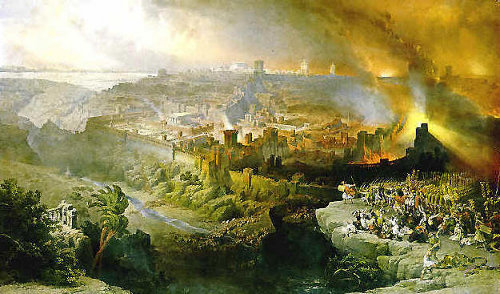
Apostle-Paul-PreachesPastor said this was the beginning of the process of transferring authority from Jerusalem to Syrian Antioch. What? Transferring authority? I’d never heard of such a thing. How could any city but Jerusalem be the geographic and spiritual center of our faith? I had always believed that the ultimate authority over the “church” was always wielded from Jerusalem, that is until 70 CE when the Romans leveled the Temple, razed Jerusalem, and sent the vast majority of the Jewish population into the diaspora. Only then was authority transferred from the Jewish apostolic council to the Gentiles, and this by force.

But according to Pastor Randy, once the original apostles, those who walked with Jesus and who witnessed the resurrection, died…their authority was not automatically passed down to others, either their heirs or any other appointed elders. There is only one record of an apostle being replaced and that was long before the trials of Paul.

So one of the men who have accompanied us during all the time that the Lord Jesus went in and out among us, beginning from the baptism of John until the day when he was taken up from us—one of these men must become with us a witness to his resurrection.” And they put forward two, Joseph called Barsabbas, who was also called Justus, and Matthias. And they prayed and said, “You, Lord, who know the hearts of all, show which one of these two you have chosen to take the place in this ministry and apostleship from which Judas turned aside to go to his own place.” And they cast lots for them, and the lot fell on Matthias, and he was numbered with the eleven apostles.

Acts 1:21-26

Protestantism tends to discourage the idea of a more permanent intent for the Council of Apostles because it smacks of the authority of Rome in Catholicism and other Ecumenical Councils who exercise authority over the faithful, many times to the detriment of the faithful. So Pastor’s thoughts could be a reflection of his perspective and education.

Be that as it may, the Council of Apostles disappears from Jerusalem and from history, certainly by 70 CE if not before.

But what about the centrality of Jerusalem? If you believe there will be a Third Temple (as I do) from where Messiah will reign in Jerusalem, then you cannot dispense with Jerusalem. If you believe that each year the Gentile nations must send representatives to Jerusalem to celebrate Sukkot (Zechariah 14:16-19), then you cannot dispense with Jerusalem. Jerusalem is the focus, the nexus for all of our prophetic hopes in the return of the Messiah. If the apostles and the council vanished from Jerusalem with no successors, did “authority” shift to Antioch?

Now there were in the church at Antioch prophets and teachers, Barnabas, Simeon who was called Niger, Lucius of Cyrene, Manaen a lifelong friend of Herod the tetrarch, and Saul. While they were worshiping the Lord and fasting, the Holy Spirit said, “Set apart for me Barnabas and Saul for the work to which I have called them.” Then after fasting and praying they laid their hands on them and sent them off.

Acts 13:1-3

It certainly seems so, but let’s think about this. The first large group of Gentiles to become disciples of the Master and to receive and extensive education in his teachings and (very likely) in the Torah were the Antioch Gentile God-fearing believers. Antioch also became a good “jumping off place” for Paul and his fellow apostles to go to the Gentiles in the diaspora with the good news of the Messiah (but going to the Jews first, of course). And while Antioch seems to have been a major center of Jewish/Gentile Messianic worship and evangelism, Paul continued to return to Jerusalem (Acts 15 and 21) to receive authoritative rulings on difficult matters and to bring donations for support of the Jewish “saints” in Israel.

fall-of-jerusalemAntioch may have been the center of the Jewish/Gentile interface of the Way, but Jerusalem was the heart, soul, and final authority over the movement.

But when there were no more living apostles in Jerusalem, did God close the door on Jewish authority over the Way, even over the Jewish members?

Lest you be wise in your own sight, I do not want you to be unaware of this mystery, brothers: a partial hardening has come upon Israel, until the fullness of the Gentiles has come in. And in this way all Israel will be saved…

Romans 11:25-26

This and other references of Paul’s, indicate that whatever separation there may be between the Jewish people and King Messiah is only temporary, which includes the separation between the King and Jerusalem. The “authority” left Jerusalem temporarily, but the Throne of the King has always been in the City of David.

The Lord swore to David a sure oath from which he will not turn back: “One of the sons of your body I will set on your throne.

Psalm 132:11

When Jesus returns as Lord of Israel and Lord of all, the authority will return to Jerusalem again. I don’t think even Protestant resistance to “apostolic authority” can deny that we all have one King and he is the authority and author of our lives.

“Jerusalem, Jerusalem, who kills the prophets and stones those who are sent to her! How often I wanted to gather your children together, the way a hen gathers her chicks under her wings, and you were unwilling. Behold, your house is being left to you desolate! For I say to you, from now on you will not see Me until you say, ‘Blessed is He who comes in the name of the Lord!’”

Matthew 23:37-39 (NASB)

Good Shabbos.

145 days.

Behar-Bechukotai: Christians by Choice

panicBut if you will not listen to me and will not do all these commandments, if you spurn my statutes, and if your soul abhors my rules, so that you will not do all my commandments, but break my covenant, then I will do this to you: I will visit you with panic, with wasting disease and fever that consume the eyes and make the heart ache. And you shall sow your seed in vain, for your enemies shall eat it. I will set my face against you, and you shall be struck down before your enemies. Those who hate you shall rule over you, and you shall flee when none pursues you. And if in spite of this you will not listen to me, then I will discipline you again sevenfold for your sins, and I will break the pride of your power, and I will make your heavens like iron and your earth like bronze. And your strength shall be spent in vain, for your land shall not yield its increase, and the trees of the land shall not yield their fruit.

Leviticus 26:14-20

But a convert did not have to become Jewish. No one forced him or her into it. If anything, those electing to join the Jewish faith are aware of something called Antisemitism. Do they need it in their lives? Are they suicidal, or just plain stupid? Why would anyone in their right mind go looking for tzorris?! Says the Midrash, one who does make that conscious, deliberate choice to embrace the G-d of Abraham despite the unique unpopularity of the Children of Abraham, is someone worthy of G-d’s special love. A Jew by choice is a Jew indeed.

-Rabbi Yossy Goldman
“Jews By Choice”
Commentary on Torah Portion Behar-Bechukotai
Chabad.org

I haven’t considered converting to Judaism for a long time and this isn’t me revisiting those thoughts at all. But Rabbi Goldman’s Torah commentary made me wonder about the pluses and minuses of being Jewish and converting to Judaism, and particularly about all those non-Jews who, while they didn’t convert to Judaism, did enter into a Jewish religious space as disciples of the Jewish Messiah way back in the days of James, Peter, and Paul.

Were they crazy? Hasn’t they heard that hanging out with Jews wasn’t exactly popular? “Why would anyone in their right mind go looking for tzorris?!”

OK, they weren’t actually converting to Judaism and wouldn’t be identified as Jews. They wouldn’t (and I know this opinion is controversial in certain circles) have to take on board a Jewish Torah observant lifestyle, and they could continue to be seen as Gentiles and not Jews.

“The brothers, both the apostles and the elders, to the brothers who are of the Gentiles in Antioch and Syria and Cilicia, greetings. Since we have heard that some persons have gone out from us and troubled you with words, unsettling your minds, although we gave them no instructions, it has seemed good to us, having come to one accord, to choose men and send them to you with our beloved Barnabas and Paul, men who have risked their lives for the name of our Lord Jesus Christ. We have therefore sent Judas and Silas, who themselves will tell you the same things by word of mouth. For it has seemed good to the Holy Spirit and to us to lay on you no greater burden than these requirements: that you abstain from what has been sacrificed to idols, and from blood, and from what has been strangled, and from sexual immorality. If you keep yourselves from these, you will do well. Farewell.”

So when they were sent off, they went down to Antioch, and having gathered the congregation together, they delivered the letter. And when they had read it, they rejoiced because of its encouragement.

Acts 15:23-31

The-LetterThis is the content of the letter sent out by James and the Council of Apostles in Jerusalem to the Gentile believers in the diaspora along with the response of those Gentiles to that letter. As you can see, it was good to the Jewish believers, good to the Gentile believers, and good to the Holy Spirit, for the Gentiles to not convert to Judaism, but instead to accept a modified set of “burdens” that was much less than the full yoke of the Torah commandments. Neither was circumcision required of the men among the Gentile believers.

Of course, this didn’t mean that the Gentile believers avoided all of the conflicts that confronted the Jews and eventually, they would be persecuted in their own right, but eventually, they would also overwhelm the Jewish Messianic movement, consume, and finally evict the Jewish believers.

But let’s not go there right now.

Now those who were scattered because of the persecution that arose over Stephen traveled as far as Phoenicia and Cyprus and Antioch, speaking the word to no one except Jews. But there were some of them, men of Cyprus and Cyrene, who on coming to Antioch spoke to the Hellenists also, preaching the Lord Jesus. And the hand of the Lord was with them, and a great number who believed turned to the Lord.

So Barnabas went to Tarsus to look for Saul, and when he had found him, he brought him to Antioch. For a whole year they met with the church and taught a great many people. And in Antioch the disciples were first called Christians.

Acts 11:19-21, 25-26

After Cornelius and his household (see Acts 10), these were the first Gentiles to come to faith in Jesus, probably Gentile God-fearers attending one or more of the synagogues in Syrian Antioch. Verse 21 says “a great number” came to believe, while verse 24 says “a great many people were added to the Lord.” But who were these “great number” of Gentiles who were “added to the Lord?”

As it is said, “And in Antioch the disciples were first called Christians.”

You may consider applying the term “Christians” to the ancient congregation in Antioch rather anachronistic and not connected to the people we call “Christians” today. In church last Sunday, Pastor preached on Acts 11 and he said that the Greek word translated as “Christians” can be rendered “little Christs.” This gives the sense of followers of Christ or more appropriately, Messiah, so the Gentile believers were followers or disciples of the Jewish Messiah in the sense of being more or less little “copies” of their teacher. This doesn’t mean they became Jewish or took on a Jewish identity, but it does mean they exhibited a sense of extreme devotion to their Master, forsaking all other “gods” and religious practices for the sake of their new faith.

According to Clarke’s Commentary on the Bible for Acts 11:26:

The word χρηματισαι in our common text, which we translate were called, signifies in the New Testament, to appoint, warn, or nominate, by Divine direction. In this sense, the word is used, Matthew 2:12; Luke 2:26; and in the preceding chapter of this book, Acts 10:22. If, therefore, the name was given by Divine appointment, it as most likely that Saul and Barnabas were directed to give it; and that, therefore, the name Christian is from God…

Vincent’s Word Studies for the same text gives an even more pointed definition:

The disciples were called. They did not assume the name themselves. It occurs in only three passages in the New Testament: here; Acts 26:28; and 1 Peter 4:16; and only in the last-named passage is used by a Christian of a Christian. The name was evidently not given by the Jews of Antioch, to whom Christ was the interpretation of Messiah, and who wouldn’t have bestowed that name on those whom they despised as apostates. The Jews designated the Christians as Nazarenes (Acts 24:5), a term of contempt, because it was a proverb that nothing good could come out of Nazareth (John 1:47), The name was probably not assumed by the disciples themselves; for they were in the habit of styling each other believers, disciples, saints, brethren, those of the way. It, doubtless, was bestowed by the Gentiles. Some suppose that it was applied as a term of ridicule, and cite the witty and sarcastic character of the people of Antioch, and their notoriety for inventing names of derision; but this is doubtful. The name may have been given simply as a distinctive title, naturally chosen from the recognized and avowed devotion of the disciples to Christ as their leader.

world-in-his-handsI’m going to assume (yeah, I’m going out on a limb here) the object of the “title” was the body of new Gentile believers and thus does not render the Jewish and Gentile believers as a single, homogeneous unit or identity. It doesn’t look like all of the believers, Jewish and Gentile, were called “Christian,” since the title seems tied to the context of large numbers of Gentiles coming to the faith. I get the picture that, just as James and the Council would subsequently issue halachah that was specifically unique to the Gentile disciples, the Gentiles were also called by a specific identifier that differentiated them from the Jewish “Nazarenes.” Admittedly, I’m “stretching” the text out of shape, but the word “Christians” seems directly aimed at the Gentiles of Antioch.

The Way, as I see it, was the entire unit, the container, the Ekklesia for the Jewish and Gentile believers, but within that container, the “body of Messiah,” were two basic populations of human beings. I’ve talked about this a lot lately, so I probably don’t have to repeat myself at this point.

While Rabbi Goldman has a great deal of praise for the Gentile who chooses to become a Jew, we might also want to praise the Gentile who becomes a Christian. To become a Christian is to leave a life of self-indulgence and to turn toward a greater purpose, a purpose of serving God and other human beings. It is also accepting a special and even vital role that was assigned to us by God, a “Divine appointment,” as stated in Clarke’s Commentary on the Bible. However, that commentary probably doesn’t describe the “Divine appointment” I have in mind.

In Romans 11, however, we learn another divine strategy in Paul’s mission to the Gentiles. Gentiles received mercy through Israel’s failure to embrace the gospel; now Gentiles would become a divine vehicle of bringing Jewish people to Christ. What did this reversal involve? Scripture promised that God would restore and exalt his people in the time of their ultimate repentance (e.g., Amos 9:7-15; Hosea 14:4-7).

They (Gentiles) would in turn help the Jewish people by provoking repentance.

-Craig Keener
“Chapter 17: Interdependence and Mutual Blessing in the Church” (pp 190-1)
Introduction to Messianic Judaism: Its Ecclesial Context and Biblical Foundations
ed. David Rudolph and Joel Willitts

Christianity and Judaism in their mainstream expressions today, do not anticipate this sort of interdependence and mutual blessing between Jewish and Gentile believers, especially after Gentile Christianity and Judaism have described divergent courses across the last nearly 2,000 years of human history. But accepting Keener’s understanding of our relationship for a moment, being a “Christian” is not only a great joy but a great responsibility, not for just each other and not just for the unsaved, but especially for the Jewish people and for Israel.

Rabbi Kalman Packouz at Aish.com says that “The second portion for this week, Bechukosai, begins with the multitude of blessings you will receive for keeping the commandments of the Torah. (Truly worth reading!)” It’s easy for many Gentile believers who have a special attraction to Judaism to see the blessings for the Jewish people and the beauty of the mitzvot, and feel somehow “dissatisfied” with being only a Christian.

Rabbi Packouz also says:

Also included in this portion: redeeming land which was sold, to strengthen your fellow Jew when his economic means are faltering, not to lend to your fellow Jew with interest, the laws of indentured servants. (emph. mine)

jews_praying_togetherIt seems your fellow Jew is really special, and when some of we Gentile Christians read those portions of the Bible, we can feel left out or believe we are somehow “second-hand citizens” in the Kingdom of God. It seems like the Jews get to play with all the “cool toys.”

So when Gentiles take on some of the more obvious mitzvot that typically, visibly, and behaviorally identify a person as Jewish, it can raise a few concerns among Jewish people, similar to how Rabbi Goldman describes why some people who are born Jewish are suspicious of Gentiles who convert to Judaism:

There remains a difficult passage in the Talmud (Yevamot 47b) that begs some elucidation. “Converts are as difficult for Israel as a blight!” Not a very flattering depiction. A simple explanation might be that when converts are insincere and they are not really committed to living a full Jewish life–perhaps they converted for ulterior motives, like to marry a Jew–then their failure to observe the commandments brings disrepute to Judaism and may have a negative ripple effect on other Jews.

Even if a Gentile does not convert to Judaism by going through a recognized Rabbinic authority, does a Gentile wearing a tallit gadol and laying tefillin during prayer indicate an “ulterior motive?” What about a Gentile Christian who prominently wears a kippah and lets his tzitzit from a tallit katan dangle visibly from under his shirt while he is out in public?

Rabbi Goldman says an alternative explanation for a convert being considered a “blight” is because…

Some understand the suggestion that converts are a blight upon Israel to mean that they give born Jews a bad name. Why? Because all too often converts are more zealous than any other Jews in their commitment to the faith. Have we not seen converts who are more observant and more passionate about Judaism than most born Jews? “A blight upon Israel” would then mean that their deeper commitment and zealousness puts us to shame.

This brings us back to Romans 11:11.

So I ask, did they stumble in order that they might fall? By no means! Rather through their trespass salvation has come to the Gentiles, so as to make Israel jealous.

I know some Gentile believers who have adopted Jewish practices and even mannerisms believe they are “provoking the Jews to jealousy.” But it’s one thing to be converted to Judaism and thus have voluntarily adopted all of the obligations to the mitzvot and then being considered a “blight” by born Jews because of “deeper commitment and zealousness,” and another thing entirely to take on practices that obviously identify a person as a Jew and Shomer Shabbos without having made the complete commitment to Judaism via conversion.

In old-fashioned terms, it’s the difference between a man and woman co-habitating vs. actually making a life long marital commitment. Worse, in the co-habitating scenario, it could be seen as a man moving into a woman’s place and using her stuff, saying that they’re “sharing”  and being “inclusive,” all against the woman’s will.

lifting-torahBut converting to Judaism for a Gentile Christian is fraught with difficulties, not the least of which is that traditional Rabbinic authorities who oversee such conversions usually require the convert to surrender all other religious commitments (which typically means “Christianity” or any belief the Jesus is the Messiah). It’s like that part of old-fashioned wedding ceremonies that said, “…and forsaking all others…”

But we don’t have to do all that. God doesn’t require it. In fact, we have been “Divinely appointed” to a very special role of our own as Christians. Most Christians don’t realize this, but we are responsible for uplifting, supporting, and encouraging Jews to return to Torah, return to God, and to cherish King Messiah, longing for his return.

Ben Zoma would say: Who is rich? One who is satisfied with his lot. Who is honorable, one who honors his fellows.

-Pirkei Avot 4:1

We, who were first called Christians at Antioch, are rich when we realize the “lot” that God has given us and accept that it is more than abundant for our needs and desires. We are also honorable when we learn to honor our Jewish brothers and sisters, from whom we receive the rich blessings of salvation and relationship with the God of Israel.

Ben Zoma also said that a wise man is one who learns from every man, and we must sometimes learn what we don’t want to hear. And he also said that one is strong who overpowers his inclinations, and so we too much differentiate between the will of God and the desires of our heart, and when our desires conflict with God, we must “overpower” our contrary “inclinations.”

Rabbi Eleazar further stated: “What is meant by the text: ‘And in thee shall the families of the earth be blessed [Genesis 12:1]?’ The Holy One, blessed be He, said to Abraham, ‘I have two goodly shoots to engraft on you: Ruth the Moabitess and Naamah the Ammonitess.’ All the families of the earth, even the other families who live on the earth are blessed only for Israel’s sake. All the nations of the earth, even the ships that go from Gaul to Spain are blessed only for Israel’s sake.”

-b.Yevamot 63a

Good Shabbos.

145 days.

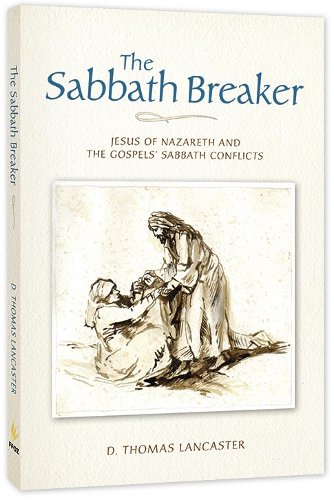
The Sabbath Breaker: A Book Review

Teaching of the TzadikimOnce it happened that the Master and his disciples walked in the holy city of Jerusalem on the Sabbath day when they encountered a man blind from birth. Our Master spat on the ground, made clay of the spittle, and applied the clay to the man’s eyes. Then he told the man, “Go, wash in the pool of Siloam.” The man went and immersed, and miraculously, he could see.

To heal the man, Jesus spat on the ground and made clay of the spittle. Mixing two substances to form a third is a form of work that Jewish law prohibits on the Sabbath day. Jesus smeared the mud on the man’s eyes. Applying a salve or medicine by means of smearing is also considered a form of work prohibited on the Sabbath day. It is a violation of the Sabbath. He sent the man to immerse himself. At least by conventional definition in traditional, Jewish interpretation, immersions are not done on the Sabbath. This single healing incident from the Gospels potentially involves three Sabbath violations.

The Pharisees claimed, “This man is not from God, for he does not keep the Sabbath” (John 9:16). Vocal critics of the Master insisted, “He is a Sabbath breaker.”

Do we appreciate the gravity of this allegation?

-D. Thomas Lancaster
from “Introduction: This Man Breaks the Sabbath” (pg 7)
The Sabbath Breaker: Jesus of Nazareth and The Gospels’ Sabbath Conflicts

This is Lancaster’s latest book published by First Fruits of Zion (FFOZ) and, like a number of Lancaster’s books, leverages material previously published in volumes of the Torah Club and issues of Messiah Journal. A great deal of valuable information on topics of intense interest to Christians both in the church and within the Messianic community, is “buried” within much larger documents. In order to make this information more readily accessible, FFOZ is taking material on specific subjects from these “tomes” and refactoring it into several smaller, self-contained books. Lancaster’s The Sabbath Breaker is one such book.

The focus of Lancaster’s book is rather narrow, so don’t imagine it will answer questions such as “Was Sabbath changed from Saturday to Sunday,” “Should Gentile Christians keep the ‘Jewish’ Sabbath and if so, how,” or “Should Messianic Jews keep the Sabbath in the same way as non-Messianic Jews.” The book’s entire focus is to address whether or not Jesus broke the Sabbath and if he didn’t, then how can we explain why he was criticized by the Jewish religious authorities for healing on Shabbat, gleaning with his disciples on Shabbat, and telling other people who were not his disciples to carry and to immerse on Shabbat?

Christianity tends to believe that Jesus did break the Shabbat in order to show us that he had cancelled all of the Shabbat restrictions and Shabbat itself, as part of his “nailing the Law to the cross,” setting us free from the Law and putting us under the Law of Grace.

As you might imagine, Lancaster dismisses the traditional Christian interpretation out of hand and frankly, so do I. But then how can this be explained? Was Jesus “cancelling” the halachah of the Pharisees? Was it indeed permissible Biblically to glean on Shabbat, to heal on Shabbat, to carry on Shabbat, and to immerse on Shabbat? Were the Pharisees adding unreasonable man-made burdens and was Jesus correcting them and rebuking the Pharisees? Or was it more a matter that the Pharisees thought they were upholding the Biblical way to keep Shabbat (and after all, they wanted to kill Jesus for healing on Shabbat, so they were obviously sincere), and Jesus was just interpreting the Bible better?

How about none of the above:

For many Bible readers, this distinction may be too obscure, but if missed, the reader also misses the message of all the Sabbath stories in the Gospels. The essential message is not that Jesus has cancelled the Sabbath or that the rabbinic interpretation of Sabbath is illegitimate. The Sabbath-conflict stories instead communicate that acts of compassion and mercy performed to alleviate human suffering take precedence over the ritual taboo. The miraculous power by which Jesus performs the healings only serves to add God’s endorsement to Jesus’ halachic, legal rationale.

Did Jesus’ disciples break the Sabbath in the grain fields? Yes. But they were justified in doing so because their need took precedence over the Temple service, and the Temple service took precedence over the Sabbath. Therefore Jesus declared them guiltless and told the Pharisees, “If you had known what this means, ‘I desire mercy, and not sacrifice,’ you would not have condemned the guiltless” (Matthew 12:7).

Did the Master break the Sabbath when he healed on the Sabbath day? Yes. Would fixing a car break the Sabbath? Of course it would, and by the same standard so does fixing a human body. Nevertheless, the Master justified doing so because compassion for his fellow man took precedence over the Sabbath.

-Lancaster, pg 61
“Chapter Seven: At Dinner with the Sages”

blind2That’s a more or less “in a nutshell” explanation of how Jesus did break the Sabbath, but at the same time, each event of Sabbath breaking was justified because of a higher halachic standard.

That’s not the full description of course, and you’ll have to read Lancaster’s book to get all the answers. Not including the footnotes, the book is about 135 pages long, so you should be able to get through it pretty quickly.

The book is divided into three sections:

  1. Sabbath Conflicts in the Synoptic Gospels
  2. Sabbath Conflicts in the Gospel of John
  3. The Thirty-Nine Prohibited Forms of Work

The first two sections focus on different explanations (or the lack thereof in the case of John’s Gospel) for Jesus’s apparent “Sabbath breaking” activities. The quote from Lancaster above is a nice summary of the first section. The second one presents some problems, which Lancaster readily admits, such as Jesus telling the man he healed in John 5 to “take up your bed and walk.” (John 5:8). While the content of the book up to this point (pg 65) confirms that Jesus did break the Sabbath by healing but that chesed (lovingkindness or compassion) takes precedence over Shabbat (it’s more involved than that, but you’ll have to read the book to get all the details), carrying is considered a form of Melachah, or a type of work that involves creation and mastery over our environment (a concept that has to be understood to grasp Lancaster’s major points in his book), and this is forbidden on Shabbat, at least in modern times in Orthodox Judaism.

That brings up the issue of whether or not the Thirty-Nine Prohibited Forms of Work can reasonably be applied to First-Century normative forms of Judaism, and that’s a big if. Lancaster addresses this question in his book and seems convinced that an earlier, less formalized version of this halachah was in existence in the day of Jesus’s ministry on earth. The reader will have to decide if this is credible from their own understanding, but capable arguments can be made either way.

Part two which reviews the healings of Jesus in the Gospel of John departs from the legal and even mechanical explanation of his Sabbath breaking activities and the fact that he told a man to do something that also breaks the Sabbath remains a mystery. It is interesting though that after initially criticizing the man for carrying on Shabbat, once they find out that a healing was done on Shabbat also, the Pharisees lose all interest in the man carrying and seek out the healer instead.

Part three is Lancaster’s description, in some detail, of the thirty-nine melachot or types of work that are forbidden on Shabbat. This may be the part of the book most readers will blow past as irrelevant, even if they are Messianic Jews or non-Jews who observe some form of Shabbat, but I think that would be a mistake.

Protestant Christianity does not consider Sabbath a concept worth consideration or if they do, they simply believe that going to church on Sunday fulfills the fourth commandment out of the ten. Grace makes all things permitted on the “Sabbath” so no one has to struggle to confine their behavior, separating the mundane from the sacred on one day of the week.

Christians who are Sabbatarians including those who are involved in the Hebrew Roots or Messianic Jewish movements, for the most part, tend to create their own “halachah” or methods of Shabbat observance, either as individuals or as individual congregations. I would be willing to wager that there are few if any standards for Sabbath observance that encompass large collections of congregations, unless those groups adhere to a set of halachot established by an umbrella group that has adopted Shabbat observance behaviors from another, normative form of Judaism.

sabbath-breaker-lancasterWe all want to believe that Jesus can be our guide to correct Shabbat observance (assuming we value Shabbat observance) and that God has an objective set of standards for how Shabbat is to be kept (and like Lancaster, I’m not going to get into who should keep Shabbat). However the Melachot were derived from Torah (Lancaster’s book provides those specifics as well) so they weren’t just dreamed up out of someone’s imagination. If you believe in an objectively established Sabbath and (again, assuming you believe you are either required to keep the Sabbath or voluntarily choose to do so out of personal conviction or for other reasons) that there are objective standards for keeping Sabbath, then the third part of Lancaster’s book, if you can believe it is reasonably connected back to the first two parts, may actually be your roadmap for how a Jesus-following Sabbath keeper should keep Sabbath.

In The Sabbath Breaker, Lancaster takes a decidedly different approach to looking at Jesus and his “sabbath breaking” behaviors, acknowledging that he did break the Sabbath, not to cancel it, but to uphold it and to illustrate that there are circumstances wherein it is permissible to break the Sabbath for a higher purpose. Jesus himself, according to Lancaster, is not the higher purpose: human beings are. After all, “Sabbath was made for man, not man for the Sabbath” (Mark 2:27).

146 days.