Miketz and Chanukah: The Gift of Light

Joseph of EgyptThey said to one another, “Alas, We are being punished on account of our brother, because we looked on at his anguish, yet paid no heed as he pleaded With us. That is why this distress has come upon us.”

Genesis 42:21 (JPS Tanakh)

What lesson for our lives can we learn from their statement?

Rabbi Dovid of Zeviltov comments in the commentary Otzer Chaim: If a person did something wrong and recognizes that he has done wrong, he will be forgiven. However, if a person does something wrong and denies it, there is no atonement for him. When Joseph’s brothers previously said that they were innocent, Joseph responded by calling them spies. When they said that they were guilty, Joseph was full of compassion for them and cried.

Dvar Torah for Torah Portion Miketz
Based on Growth Through Torah by Rabbi Zelig Pliskin
Related by Rabbi Kalman Packouz
Aish.com

Rabbi Packouz also states that according to Rabbi Abraham J. Twerski in his book Twerski on Chumash, “there is no coincidence that Chanukah occurs during the week that we read about the epic of Joseph and his brothers.” But what can one have to do with the other? What can we learn about ourselves?

Well, for starters:

Many people deny their faults and the things that they have done wrong because they mistakenly think that others will respect them more. In reality people admire someone with the honesty and courage to admit his mistakes. It takes a braver person to say, “Yes, I was wrong.” This kind of integrity will not only build up your positive attribute of honesty, but will also gain you the respect of others. When you apologize to someone for wronging him, he will feel more positive towards you than if you denied that you did anything wrong. This awareness will make it much easier for you to ask forgiveness from others.

The Death of the MasterYesterday was Thanksgiving, an American national holiday dedicated to giving thanks to God for His bountiful goodness to us. All that we have, whether great or small, comes from the Holy One of Israel, the gracious and compassionate Provider and Creator. Even the ability to forgive and be forgiven by God is a blessing for which we should be thankful. Without such a gift, a single sin would forever separate us from God, and condemn us to our doom.

But as Rabbi Pliskin’s Dvar Torah states, we are only forgiven and freed from guilt, slavery, and destruction if we admit to our wrongdoings and ask for forgiveness. Our “free gift,” so to speak, actually comes with a price. True, as a Christian, I believe that the death of the greatest of all tzaddikim, Yeshua of Nazareth, paid that price, but forgiveness of sins is like a package wrapped in bright shiny paper decorated with a pretty bow. It just sits there until we accept it and open it up. To do that, we have to do something else. We have to admit our sins rather than deny them. For when we too say we are guilty, then the Father will welcome us back with open arms.

And the son said to him, ‘Father, I have sinned against heaven and in your sight; I am no longer worthy to be called your son.’ But the father said to his slaves, ‘Quickly bring out the best robe and put it on him, and put a ring on his hand and sandals on his feet; and bring the fattened calf, kill it, and let us eat and celebrate; for this son of mine was dead and has come to life again; he was lost and has been found.’ And they began to celebrate.

Luke 15:21-24 (NASB)

But what does any of this have to do with Chanukah?

“Rav Avraham Pam (former Rosh Yeshiva of Yeshiva Torah Vodaas) teaches us that we see this special love of God for the Jewish people regarding the many Jews at that time who had defected to Hellenism and then returned to Torah observance with the triumph of the Macabees — regarding their relationship with the Almighty after their return to the Torah. When a couple reconciles after a separation, the relationship often becomes one of peaceful coexistence, but the quality of love that they initially had for each other is rarely restored.

“Not so when Jews do teshuvah (repentance — returning to the Almighty and to the ways of the Torah). Rambam says that although a sinful person distances himself from God, once he does teshuvah he is near, beloved and dear to God. It is not that God “tolerates” the baal teshuvah (returnee), but rather that He loves him as He would the greatest tzaddik (righteous person). As the prophet says, “I will remember for you the loving-kindness of your youth, when you followed Me into the desert, into a barren land” (Jeremiah 2:2). The love of yore is fully restored.

“This is the significance of the miracle of the oil. It teaches us that with proper teshuvah our relationship with God is restored, as if we had never sinned.”

chanukah-candle-lightingAs believers, as disciples of Messiah, Son of David, the light of the world, the doorway to the Father, we too have been granted the ability to do teshuvah with the same results. It is not as if we are “damaged goods” that, once broken and dirtied, can only approach God just so far and no further. It’s as if we never left, as if we never sinned, as if we have always lived in the Father’s household as beloved sons and daughters. If I can extend the above commentary, God loves the baal teshuvah as He does His Son, His only Son, the one who saved us and redeemed us at the cost of blood and life.

During this week, people in Jewish homes will be lighting the Chanukah candles in remembrance of the miracle of the oil and the miracle of victory over the Greeks in battle. However, the Chanukah lights and the lesson learned by the brothers of Joseph should remind us of something more. As believers, when we light the menorah, we are reminded of God’s great forgiveness in our lives, and how He literally turned darkness into light in our hearts and souls.

In John 8:12, Jesus declared himself the light of the world. In Matthew 5:14-16 we discover that as his disciples, we too are the light to the world. In Jewish tradition, once the menorah is lit, it should be placed in a window for everyone to see. We too were encouraged to allow our own light to shine into the world, as a message of hope and peace, and as evidence that God does powerful miracles.

Love, hope, and redemption are powerful miracles indeed, and a tiny light shining in the darkness is evidence in our world of an overwhelming brightness shining from the Throne of Heaven.

Happy Chanukah and Good Shabbos.

Happy Thanksgivukkah

WonderAmazement never ceases for the enlightened mind.

At every moment it views in astonishment the wonder of an entire world renewed out of the void, and asks, “How could it be that anything at all exists?”

-Rabbi Tzvi Freeman
“Wonder”
Chabad.org

As you read this, it is Thanksgiving, an American national holiday dedicated to giving thanks for the bountiful blessings we have each received from God. At least that’s how it was originally conceived. It’s also the first full day of Chanukah (spellings vary), the Jewish holiday celebrating the miracle of the meager Jewish forces defeating the mighty Greeks, and that in sanctifying the Temple, Hashem, God of Israel, allowed one day’s worth of sanctified oil to burn for eight days, thus cleansing and dedicating the Temple for holiness.

Thankfulness and miracles. And yet how often do we fail to appreciate what God gives us, especially in a land of plenty.

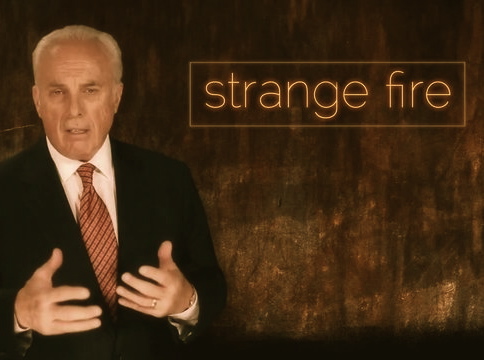
I’ve been pondering my conversations with my Pastor as well as the sermons of John MacArthur and the other presenters at the Strange Fire conference. In my recent investigation into the concept (as opposed to the movement) of Christian fundamentalism, I see that at its heart, it is just the attempt to render a basic definition of the essentials of what makes a Christian. It’s the minimum set of standards, so to speak, that one must uphold to be an authentic believer.

Of course, in order to create a minimum set of essential beliefs or attributes, you have to take the vast body of information in the Bible and reduce it down to its bare bones, so to speak. You have to determine what is an absolute must about the Bible, and then consider that most of the other “stuff” is good, but not a deal making or breaking requirement.

But that’s also one of the flaws in Christian fundamentalism. It’s reductionistic. It cuts out things like miracles, and wonder, and awe, and amazement in an incredible, infinite, personal, creative God!

In establishing a core, fundamentalism must eliminate or at least set to one side, thoughts, feelings, and meditations such as those expressed in the above-quoted words of Rabbi Freeman.

Is it wrong to be astonished by God? Is it an error to be thankful for not only the tangibles of the Bible, but the sheer fact that God exists and chooses to be involved in our lives just because He loves us?

For Jewish people, awareness of God goes beyond the generic thanksgiving for the blessings of Heaven. The very fact that Jews exist in our world today after so many thousands of years of effort the world has expended in trying to exterminate them, is a very great miracle.

We say every day during Chanukah in the Shemona Esrei the Al Haneesim (on the miracles), “When the wicked Greek kingdom rose up against Your people Israel to make them forget Your Torah and compel them to stray from the statutes of Your Will.” The order of the prayer mentions that first the Greeks wanted the Jews to forget Torah and secondly to stray from Hashem’s statutes.

The Greeks understood exactly how to undermine Judaism and expedite assimilation. How was this done? The Gemara in Hureous states that a father has an obligation to teach his son Torah from the moment he is old enough to speak. The first pasuk of Torah that a father teaches his child is,”Moshe commanded us with the Torah and this is the heritage of the congregation of Yaakov.” The second pasuk a father is obligated to teach his child is the Shema – “Hear, O Israel: Hashem is our G-d, Hashem, the One and Only.” – Which asserts our belief in the unity of G-d.

-Rabbi Yosef Kalatsky
“The Light of Torah: The Torah Sustains Judaism”
Commentary on Chanukah and Torah Portion Miketz
Torah.org

Tefillin with RabanI know that a lot of Christians support the existence of the Jewish people and Israel, and yet devalue the practice and observance of Judaism. A lot of prejudice has been generated in Christianity against Judaism over the long centuries, and particularly the mistaken idea that much of the Torah represents not the Word of God, but the man-made traditions of the Rabbis. Further, the general (and again, mistaken) belief in the Church that God only gave the Jewish people the Torah to prove to them that no one can attain righteousness by human effort and that they must depend on the grace of Jesus for salvation, re-enforces the idea that Torah observance and therefore Judaism is a “religion of useless works.”

It is beyond imagination to most Christians how a Jew who has faith in Yeshua as Messiah and thus is saved by grace, can still desire and even demand to continue observing the mitzvot and align with the larger, non-believing Jewish community.

But, as Rabbi Kalatsky points out, or at least as I infer from his commentary, God gave the Torah to Israel to sustain Israel, to define and preserve the Jewish people. Being Jewish isn’t just a string of DNA and it’s not just a set of ethnic practices, customs, traditions, and rules, it’s an identity, a life, and a continual experience assigned to the Jewish people by God. A Jew who doesn’t observe the mitzvot is still Jewish of course, but the full blessings and apprehension of the unique relationship between Jewish people and God can only come from a life immersed in Torah and in Judaism. And Rabbi Kalatsky is hardly the only one to make such observations.

It was Judaism that provided the refuge for my parents in the disorienting passage from one society to another. My father’s rabbinic calling transcended borders. Hebrew remained the key to eternal verities. The Jewish calendar continued to govern the rhythm of our home. I never heard my parents lament the money they were forbidden to take out of (1940s) Germany, only the shipment of books from my father’s library that never made it to America.

-Ismar Schorsch
“At-Homeness,” pg 149, December 8, 2001
Commentary on Torah Portion Vayeishev
Canon Without Closure: Torah Commentaries

As I write all this, I find it strange and even amazing that I, a Gentile Christian, can feel so passionate about supporting a Jewish life abundantly enriched by the Torah of God.

Many Christians see Judaism in more or less the same way I see some fundamentalist Christians: as a faith made up of discrete, definable, finite, quantifiable pieces. A faith that is like listening to an auto mechanic explain what each of the parts of your car’s engine does, who takes it apart, shows you each gasket, spring, and fitting, then puts it all together right before your eyes and starts it up for you. Sure, it’s incredible and amazing, but it is also fully within the grasp of human beings.

Is that all that God is? Is He nothing more?

Consider three things, and you will not approach sin. Know whence you came, whereto you are going, and before Whom you are destined to give an accounting.

-Ethics of the Fathers 3:1

If we thought about our humble origin on the one hand, and the greatness we can achieve on the other, we would come to only one logical conclusion: the potential for such greatness could not possibly reside in the microscopic germ-cell from which we originated. This capacity for greatness can reside only in the neshamah (soul), the spirit which God instills within man.

What an extraordinary stretching of the imagination it must take to think that a single cell can develop into the grandeur which a human being can achieve! People have the power to contemplate and reflect upon infinity and eternity, concepts which are totally beyond the realm of the physical world. How could something purely finite even conceive of infinity?

Our humble origins are the greatest testimony to the presence of a Divine component within man. Once we realize this truth, we are unlikely to contaminate ourselves by behavior beneath our dignity. We have an innate resistance to ruining what we recognize to be precious and beautiful. We must realize that this is indeed what we are.

Today I shall…

…try to make my behavior conform to that which I recognize to be the essence of my being: the spirit that gives me the potential for greatness.

-Rabbi Abraham J. Twersky
“Growing Each Day, Kislev 20”
Aish.com

This too is Judaism; the recognition that it is God’s Spirit that imbues us with the ability to strive to be more than who we are right now.

Hashem, what is man that You recognize him; the son of a frail human that You reckon with him? Man is a breath; his days are like a passing shadow.

Psalm 144:3-4 (Stone Edition Tanakh)

sky-above-you-god1David, a King, a man after God’s own heart, gazed up in wonder that God took any notice of human beings at all. Why don’t we do the same? Why can’t we turn our hearts away from our trivial pursuits and in thanksgiving, awe, and wonder, turn to the majesty and magnificence of the One true King of the Universe, Lord and Master of Eternity, and the lover of our very souls? For as much as the food on our tables, and our jobs, and our families, and all that God’s providence has placed in our lives, wonder too is a gift of God.

And when Thanksgiving and Hanukkah coincide we find ourselves doubly blessed. We will be able to offer thanks to God on the same day for both our spiritual and material blessings. Let us delight in this extremely rare opportunity to bless God for the food for our bodies as well as the survival of our faith that grants us spiritual sustenance for our souls.

-Rabbi Benjamin Blech
“Thanksgivukkah”
Aish.com

I’m writing this a full week before you’ll read it. Perhaps you’ll wake up early on Thanksgiving morning and read this “meditation” with your first cup of coffee, or while the turkey is baking and there’s a lull in the kitchen activity, or later, after the meal and the football games are over, as the pumpkin pie is settling in your stomach and you hold a glass of wine in your hand, but I have a hope for the day you read this. I hope that you’ll take a moment, turn away from your computer, maybe close your eyes or turn your gaze to Heaven, and know that you are in front of the Throne of God, a God who loves you, a God you provides, not only for your body, but for everything you can imagine, and for everything you can’t.

Happy Thanksgivukkah.

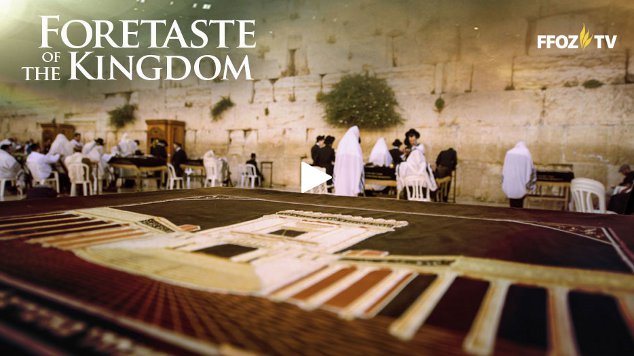
FFOZ TV Review: Foretaste of the Kingdom

FFOZ TV episode 21Episode 21: The Apostle Paul calls the Sabbath a “shadow of things to come.” Most people usually think of it as a shadow of things from the past. However, viewers will learn in episode twenty-one that the Sabbath is a foreshadow of things still yet to come. Jesus and the Sabbath both provide rest and the Sabbath rest is a taste of the final rest we will have in the Messianic Era when Messiah returns to set up his kingdom. Thus for those who still observe the Sabbath today, it is a promise of what is to come, the Messianic Age.

-from the Introduction to FFOZ TV: The Promise of What is to Come
Episode 21: Foretaste of the Kingdom (click this link to watch video, not the image above)

The Lesson: The Mystery of the Sabbath Rest

First Fruits of Zion (FFOZ) teacher and author Toby Janicki starts out the exploration of this mystery with what most of us consider to be a familiar lesson from Jesus:

Turn to me, all who labor and are burdened, and I will cause you to rest. Accept upon yourself my yoke and learn from me, for I am humble and lowly in spirit, and you will find a resting place for your souls. For my yoke is pleasant and my burden light.

Matthew 11:28-29 (DHE Gospels)

There’s a lot we think we know about this teaching. We think we know that Jesus wants us to believe in him so that becoming a Christian will provide our souls rest. We think he means that his yoke, his grace, is a pleasant and light “burden” when compared to the Law of Moses. We think that Jesus is always humble and lowly rather than being like the vengeful God of the Old Testament.

But we’re probably not correct, at least not entirely. One of the points Toby made (and he’s made it before, is that when we use improper Biblical exegesis, we often come up with incorrect theology. That statement most likely won’t make some Christian readers happy since once taught, the traditional theology is the Church is set in stone. But sometimes examining a familiar view from an unfamiliar perspective yields new insights.

So too with this continuation of the investigation of the Sabbath, which was begun in the previous episode which I reviewed last week.

So if what we typically understand about the “rest” being described by Jesus isn’t correct, then, from a Messianic Jewish perspective, what is it?

So there remains a Sabbath rest for the people of God. For the one who has entered His rest has himself also rested from his works, as God did from His. Therefore let us be diligent to enter that rest, so that no one will fall, through following the same example of disobedience.

Hebrews 4:9-11 (NASB)

Toby says that there’s a link between Matthew 11:28-29 and Hebrews 4:9-11. They both talk about a “rest,” though in the case of the writer of Hebrews, it’s specifically a Shabbat rest. Toby leads his audience through a small Bible study on Hebrews 4:

Therefore, let us fear if, while a promise remains of entering His rest, any one of you may seem to have come short of it. For indeed we have had good news preached to us, just as they also; but the word they heard did not profit them, because it was not united by faith in those who heard.

Hebrews 4:1-2 (NASB)

Toby JanickiAccording to Toby, the writer of the book of Hebrews is referring to that first generation of Israelites who left Egypt and died in the wilderness.

They too had a rest they could have entered, the rest of the Promised Land, Israel. But they did not due to lack of faith. Toby next presents verses 3 and 4 as connecting this rest to the Sabbath:

For we who have believed enter that rest, just as He has said,

“As I swore in My wrath,
They shall not enter My rest,”

although His works were finished from the foundation of the world. For He has said somewhere concerning the seventh day: “And God rested on the seventh day from all His works”

The writer of Hebrews is actually quoting Exodus 20:11 which is the commandment of observing the Sabbath. But verses 9 through 11 are not specifically referring to the seventh day Sabbath or the rest represented by entering the Land of Israel. Verse 9 says “there remains a Sabbath rest for the people of God.” What rest is that?

According to Toby, these passages are sometimes used by Christians to “prove” that Jesus is our spiritual rest so we don’t need to observe an actual, physical day of rest, neither Gentile Christians nor any Jewish person. But the writer of Hebrews is clearly referring to something in the future, not something that’s already happened. If Hebrews 4 links back to the “rest” which Jesus was teaching about in Matthew 11, then we have reached our first clue.

Clue 1: The rest that Jesus offers us is something that is in the future.

Verses 10 and 11 in Hebrews 4 is a warning not to be disobedient to God as were the first generation of Israelites who disobeyed by refusing to enter the Land of Promise. Obedience of the people of God is required for them…for us to be able to enter into that future rest of Jesus. But again, what rest is that? To us, this represents a Biblical mystery, but to the original audience listening to Jesus or the original Jewish readers of Matthew’s gospel, it was probably self-evident. How would they have understood the word “rest,” which in Hebrew is “Menuchah?”

To answer that question, the scene shifts to FFOZ teacher and translator Aaron Eby in Israel. Aaron first reads from a portion of the Siddur (Jewish prayer-book) which describes the Shabbat as a rest of “love, willingness, truth, faith, peace, tranquility, stillness, trust,” and “a complete rest in which you find favor.”

Clearly, the concept of Shabbat is more than just relaxing in front of the tube or playing a few rounds of golf.
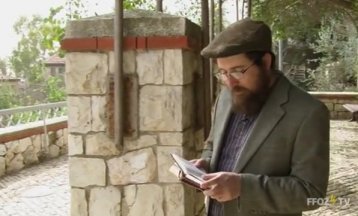
ffoz_tv21_aaronRest is used in a somewhat different context in the Bible. Aaron quoted from Deuteronomy 12:19 referring to Israel, 1 Chronicles 22:9 which refers to Solomon as “a man of rest” and a King who will reign over a nation experiencing rest, peace, and quiet, and 1 Kings 8:56 which is part of Solomon’s dedication of the Temple. These images represent the age of Messianic redemption and the Temple is a portrait of the fulfillment of all the Messianic promises. Aaron also links this to the poetic language of the Rabbis who consider the weekly Shabbat to be a tiny fraction of what will be experienced in the age to come…a forestate of the Kingdom of God.

Back in the studio with Toby, we receive the next clue:

Clue 2: The Sabbath rest is a foretaste of the rest in the Messianic Era.

I can certainly see why the seventh-day Sabbath rest is considered a blessing of both physical and spiritual rest for observant Jews. Not only is it a day to rest in the holiness and peace of God in our age, but it is a miniature representation of the full and complete rest that will be experienced when Messiah reigns in Jerusalem and over all the world, an age of total, worldwide peace.

But in traditional Christian interpretation, we encounter a problem:

Therefore no one is to act as your judge in regard to food or drink or in respect to a festival or a new moon or a Sabbath day—things which are a mere shadow of what is to come; but the substance belongs to Christ.

Colossians 2:16-17 (NASB)

I mentioned these verses among others in my review last week as the “Christian defense” against acknowledging an ongoing Shabbat observance or any such keeping of a Sabbath in the future. When I typically hear language like “type and shadow” in a Christian context, it usually means that such “shadows” came to point us to Jesus, but now that he’s come, the shadows are no longer necessary. However, that interpretation is filtered through a great deal of Protestant tradition and ignores what Paul is actually saying.

Paul said that the Sabbath is a “mere shadow of what is to come,” not what has already come. If, at his first coming, Jesus “fulfilled” the requirement of the Shabbat, then why does Paul refer to the future?

Also, and I’d like to thank Toby for bringing this up, let’s talk about this “shadow” thing. Again, the typical Church teaching on a “shadow” is that it’s basically something of limited usefulness and utility, and was only a poor imitation of something that the Jewish people had to make do with until Christ. Once Christ came, the shadows were eliminated by the “light of the world” and what was temporary then passed away.
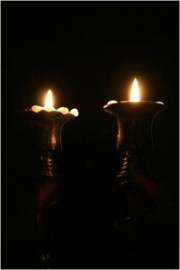
Shabbat candlesWhat is a shadow? In a common context, it’s just an area where light is being blocked by an object in between a light source and whatever the light happens to be shining at. A shadow generally renders the shape of the object blocking the light. If Jesus is the “substance” or body of the shadow, then, to extend the metaphor, the Sabbath is “Jesus-shaped.”

If we put all this together, then the Sabbath day is a “shape” or “outline” of something with more substance that will occur in the future and has something to do with the “body” of Messiah. Since that future event has yet to occur, we still exist in the shadow or rather, the seventh-day Shabbat still has purpose and meaning as an image of something even greater and more peaceful to come. Jesus has not replaced the Sabbath and perhaps he never will. In the future, he will fill to complete fullness what we only have a taste of in the current age.

Toby related a number of Talmudic references I’ll pass over (please view the actual episode to get those details) but concludes, using Rabbinic and poetic language, that such concepts link both to 2 Peter 3:8 and Revelation 20:1-6 in describing the thousand-year Messianic reign of Jesus. This is the third and final clue:

Clue 3: The Sabbath foreshadows the coming thousand-year reign of the Kingdom of Heaven.

The rest Jesus was talking about is the Messianic Era, and all who are devoted disciples of Messiah and worshipers of the God of Israel will enter that promised rest when Messiah returns to take up his throne. But we must remain faithful to the end in order to enter that rest.

What Did I Learn?

Something rather poignant. There are a couple of sequences in every episode of the FFOZ TV show that describe the learning materials and other products available through First Fruits of Zion. One of the things this show is supposed to inspire is a desire in the viewers to want to learn more, which can be accomplished through the many fine resources provided by FFOZ.

But in one of these sequences, the voice over said that a “prophetic restoration is sweeping through the Christian world.” I don’t see anything like that “sweeping” through my little corner of the Christian world. I’m glad it’s happening to someone somewhere.

I was also reminded of last Erev Shabbat. My wife made several loaves of Challah and she once again brought out the Shabbos candles…but she was late. My little reminder in Google calendar said that candle lighting began at 4:56 p.m. and at that time, the candles still hadn’t been ignited. I casually mentioned this to her and received a surprisingly sharp rebuke in return. Why should I, a Gentile Christian (she didn’t actually call me that), be keeping track of when Shabbat candle lighting is? She had abruptly (and not for the first time) put up a “Keep Out” sign over the entryway to Shabbat in our home.

She subsequently lit the candles but did not invite me to be present.

“Do not think that I came to bring peace on the earth; I did not come to bring peace, but a sword. For I came to set a man against his father, and a daughter against her mother, and a daughter-in-law against her mother-in-law; and a man’s enemies will be the members of his household.”

Matthew 10:34-36 (NASB)

But a husband against a wife, Master?

“So they are no longer two, but one flesh. What therefore God has joined together, let no man separate.”

Matthew 19:6 (NASB)

I should say that in every other area, the missus and I get along and address a wide range of concerns and shared experiences. It’s just this one place, this religious place, where we are segregated and our worlds keep us apart. I know that, for a variety of reasons, she has good cause to be defensive, but I can’t say that it doesn’t still sting a bit for me to be relegated to one world where our faith is concerned, while my wife inhabits another.

Boaz in ChinaSo it is for many other Christians and Jews in the present age, when many Jewish people see Shabbat as a blessing exclusively for the Jews and to be jealously guarded against outsiders (even if they’re in the same home), and most Christians have no desire to participate in a “shadow” that has long since been replaced by Jesus on the cross.

An “exploration of the Christian faith from a Jewish perspective,” Boaz Michael said at the end of the episode. It’s what I’ve recently dedicated myself to, but it seems a journey I am destined to take alone, and a territory I’m trespassing in as an uninvited foreigner.

If I am to believe prophesy, then I am assured that one day, I will become a welcome stranger in that strange land, but in the current age, the citizens of that country, at least the “citizen” I am closest to, does not permit my entry, nor do my own “countrymen,” the people of the Church, believe my travel plans are valid. I can only trust that one day my determination will be justified. Otherwise, I must accept that my role is to escort the Jewish exiles back to their Land and their heritage, to the foot of the Throne of Messiah, and then I must turn around as the celebration begins, and retreat to where my Master would have me go.

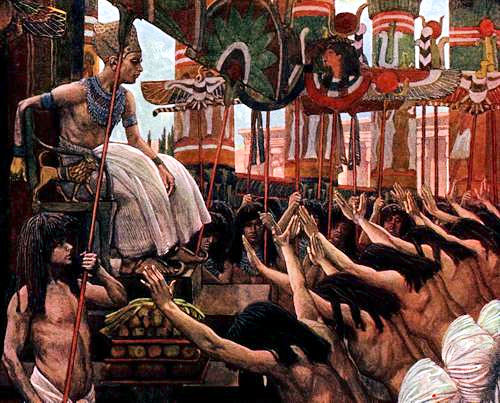
The Didache in Retrospect, Part 2

SpeakThe fifth sequence might appear as puzzling since it associates grumbling as “leading to blasphemy” (3:6). The Greek term “blasphemia” derives from “blapto” + “theme” (“to injure” + “speech”) and so could be rendered as “slander.” In the Septuagint, however, this term is almost entirely used to denote injurious speech against the Lord, hence what is communal called “blasphemy.” Since the verb “gonguzein” (“to murmur”) is used repeatedly to describe the grumbling of the Israelite people in the desert (Exod. 16:2, 7(2x), 8(2x), 9, 12), some scholars believe this is the implied case history that stands behind the warning against murmuring (Ross 218).

-Aaron Milavec
“A Brief Commentary,” pp 58-9
The Didache: Text, Translation, Analysis, and Commentary

I’m picking things up pretty much where I left off in yesterday’s morning meditation. You may wonder about the above-quoted text, but while Milavec associates it with “grumbling” or blaspheming against the Lord, the phrases “to injure” and “speech” remind me of something else.

Leviticus 25:17 says, “You shall not wrong one another.” This has traditionally been interpreted as wronging a person with speech. It includes any statement that will embarrass, insult or deceive a person, or cause a person emotional pain or distress.

-from the article “Speech and Lashon Ha-Ra”
Judaism 101

I don’t question Milavec’s interpretation of this portion of the Didache, the document apparently used to train newly minted Gentile disciples in “the Way,” possibly in the late first century to late second century in the common era, but it also seems reasonable that if the novice Gentile disciples were warned against “injuring” God in speech, they would also be warned against injuring other people in speech.

This is training that many believers in the various religious streams that claim Jesus as Lord and Messiah would benefit from today.

I mentioned some things about Gentiles and food issues in my original pass through on the Didache, but Milavec speaks further on this topic on pages 61-2 of his commentary:

The absolute prohibition against eating “the food sacrificed to idols” (6:3) occurs after the conclusion of the training program and just prior to baptism.

Milavec debates whether this prohibition was placed outside the “Way of Life” instruction as an awkward addition or the injunction was developed and added to a later iteration of the oral instructions/written Didache as a necessity to cement this restriction as an absolute “no-no.” This was probably easier said than done for Gentiles just coming out of paganism and with family and friends still involved in the Roman/Greek worship framework:

Of necessity, therefore, most candidates would have been constrained to take part in family meals wherein, either regularly or periodically, some offering was made to the household gods as part of the meal or some portion of the meats served had been previously offered at a public altar.

-Milavec, pg 62

kosher eatingWhile the prohibition against eating meat sacrificed to idols was one of the absolute commandments in the Didache, reflecting a portion of the Jerusalem letter (Acts 15:28-29), Neither the text of the Didache nor Milavec’s commentary mention applying kosher food restrictions to Gentile disciples in any sense. It also doesn’t mention how Jewish and Gentile table fellowship was to be managed, but then, the perspective of Jews who would be eating with Gentiles was outside the scope of the Didache’s mission, which was as a training manual for a specifically Gentile audience.

In speaking to Baptism (pp 62-4), Milavec cautions against turning “Immerse in the name of the Father and of the Son and of the Holy Spirit” (7:1) into a “baptismal formula”:

Furthermore, the Hebraic expression of acting “in the name of X” has to do with the way a disciple or servant was authorized to act because of the training or mandate received from the master.

-ibid pp 62-3

This is a reflection of how a Rabbi would teach in the name of or in the merit of his master. We find this in the apostolic scriptures:

According to the Christian Scriptures, for example, the Twelve heralded the reign of God and apprenticed disciples “in the name of “Jesus” (Acts 4:18; 5:28; 9:27, 29).

-ibid, pg 63

Milavec’s commentary continues to reveal that this document, though a set of instructions for Gentiles, has a very Jewish source.

The closing line, “This is the Way of Life!” (4:14b), probably served as a liturgical refrain and, quite possibly, following Jewish parallels, was sung (#5a).

-ibid

It is also apparent that the character of the Didache recognized no separation between the “Jewishness” of its sources and the teachings of Jesus and the apostles, declaring that Jesus and the apostles were completely representative of the normative Judaisms of that day:

The Didache declares that members should pray “as the Lord commanded” (8:2). The “Lord,” in this case, is not Jesus, for he is regarded as “the servant” who reveals “the life and understanding” of the Father (9:3). For early Christians, Jesus proclaimed “the good news of God” (Mark 1:14; Rom 1:1, 15:16; 2 Cor 2:7; 1 Thess 2:2, 9; 1 Pet 4:17) — never the good news of Jesus.

-ibid, pg 65

This is bound to make many modern Christian readers a little nervous or concerned, because the Didache is elevating God the Father higher than Jesus the Son. At the risk of offending almost everyone, it also potentially raises questions about the modern conceptualization of the trinity, since trinitarian theology considers the Father, the Son, and the Holy Spirit co-equals in the Godhead or the “Echad” of God. Of course, Jesus considered himself a servant in his early incarnation, but post-ascension, we cannot say that continued to be so, at least in standard Christian thought.

Part of the reason I bring this up is because I recently quoted John MacArthur on the topic of being “obsessed” with Jesus:

The charismatic movement fails this test of exalting Christ above all. MacArthur said, Show me a person obsessed with the Holy Spirit and I’ll show you a person not filled by the Spirit. Show me a person obsessed with Jesus Christ and I’ll show you a Spirit-filled person.

The Didache seems to take another viewpoint on this matter, at least relative to God the Father.

PaulOne of the values of examining ancient Christian texts such as the Didache, are that they are closer to their Jewish source and pre-date the overwhelming majority of Gentile Christian teachings. The Didache may give us a snapshot of how the Jewish and Gentile believers viewed certain concepts that we take for granted in the Church today. I don’t say this to upset anyone, but to bring into focus that what we understand about being a Christian now could be seen as entirely foreign by the very first Christians in the ekklesia communities established by Paul.

What would the apostle Paul say if he were to walk into a 21st century church and listen to what was being taught?

Milavec confirms that the Didache fully anticipated Gentile believers encountering prophets and seems to cast such occurrences in “charismatic” terms:

When the Spirit was active each inspired prophet gave thanks “as much as” he or she wished — a hint that when the prophets got rolling their combined ecstatic prayers might well run on over an hour. Lest this be considered preposterous, consider the case of the second-century “Martyrium Polycarpi,” where one discovers that Polycarp “stood up and prayed, being so full of the grace of God, that for two hours he could not hold his peace.”

-ibid, pg 70

Polycarp is considered the last disciple of John, the last apostle, and when Polycarp died, the direct line of discipleship leading back to the original apostolic tradition was destroyed. I mourn Polycarp as the last link to a body of wisdom and experience we understand only incompletely today.

I find it a little anachronistic for Milavec to insert “charismatic” concepts into ancient times, since the modern Charismatic movement is extremely young. This could represent a bias on Milavec’s part which may include his belief (I’m guessing here) that the “gifts of the Spirit” extended beyond the closure of Biblical canon. But how would the actual, lived experience of a man like Polycarp testify in relation to modern Christian doctrine?

When discussing “First Fruits Offered to the Prophets,” Milavec says something unanticipated, at least by me:

The anti-temple stance of the Didache (#10q, 14b) and the decided preference for the Spirit-led prayers of the prophets helps explain why the first fruits were to be given to “the prophets,” who were regarded as the most fitting substitutes for the priests of the Temple.

-ibid, pg 75

My interpretation of the so-called “anti-temple stance” of the Didache is different. It is likely that the Didache was an oral tradition in the last days of the Temple and for most of the “lifetime” of this document’s utility, the Temple probably no longer existed. Judaism underwent a remarkable and traumatic transition with the destruction of the Holy Temple and the exile of the majority of the Jewish people from their beloved Israel. That transition ultimately evolved into the Jewish tradition that considers prayers and good deeds (mitzvot) taking the place of the sacrifices. The tithe once offered at the Temple for a firstborn is still, in some corners of Judaism, given to one known to be a Cohen in modern Israel and in some Jewish communities in today’s diaspora.

Solomons-TempleIt is possible the sections of the Didache that address giving first fruits to prophets mirror this practice of substitution, so, in effect, the new Gentile disciples were being encouraged to follow Jewish practices mapping to Temple sacrifices that were no longer possible.

It has been said that in the future Kingdom of Israel, when Messiah reigns on the Throne of David, the sacrifices of Gentiles will once again be accepted in the Temple in Jerusalem as they were in the days of the First and Second Temples.

The Rabbis say (Hullin 13b): ‘Sacrifices are to be accepted from Gentiles as they are from Jews’ …

-from My Jewish Learning

Gentiles were welcomed to the First and Second Temples in Jerusalem, and they will participate even more at the Third Temple – especially during the festival of Sukkot (Zech. 14:16).

When the First Temple was inaugurated by King Solomon, he beseeched G-d with an eloquent prayer that included the following words (Kings I, 8:41-43)…

Torah Law holds that Gentiles are allowed to bring burnt offerings to G-d in the Temple when it is standing in Jerusalem. There is a specific commandment to let us know that an animal (sheep, goat or bullock) offered in the Temple by a Gentile must be unblemished, to the same degree as the offering of a Jew. (Leviticus 22:25)

The Prophet Isaiah foretold us about the even greater participation of Gentiles that will take place at the Third Temple (Isaiah 2:2-3):

“And it will come to pass at the end of days that the mountain of G-d’s House will be firmly established, even higher than the peaks, and all the peoples will flow toward it as a river. And many nations will go and will cry, ‘Let us go up toward the mountain of G-d’s House, to the House of the L-rd of Jacob, and we will learn from His ways and walk in His paths, for out of Zion goes forth Torah and the word of G-d from Jerusalem.’ “

-from “Will Gentiles worship at the Third Temple during Sukkot?”
AskNoah.org

With all that said, I must disagree with Milavec that the Didache is “anti-Temple,” but rather, it was encouraging Gentile disciples to offer “first fruits” in a manner acceptable within the early post-Temple era in Judaism, and perhaps with an eye on the future Kingdom of Messiah, when the sacrifices of Gentiles would be as acceptable as those of a Jewish person.

The last significant section in Milavec’s commentary on the Didache references the End Times, but I think I’ll save that for my third and final blog post in this series.

Does the Girl Next Door Have a Python Spirit?

serpentIt happened that as we were going to the place of prayer, a slave-girl having a spirit of divination (lit. python spirit) met us, who was bringing her masters much profit by fortune-telling. Following after Paul and us, she kept crying out, saying, “These men are bond-servants of the Most High God, who are proclaiming to you the way of salvation.” She continued doing this for many days. But Paul was greatly annoyed, and turned and said to the spirit, “I command you in the name of Jesus Christ to come out of her!” And it came out at that very moment.

Acts 16:16-18 (NASB)

In Greek mythology, Python (Greek: Πύθων, gen.: Πύθωνος) was the earth-dragon of Delphi, always represented in Greek sculpture and vase-paintings as a serpent. He presided at the Delphic oracle, which existed in the cult center for his mother, Gaia, “Earth,” Pytho being the place name that was substituted for the earlier Krisa.

“Python (mythology)”
-from Wikipedia

My Religion Believes in That?

The Bible, and particularly the New Testament, is replete with tales of demon-possessed people who usually appear in the narrative on the occasion of being driven out of the human host by Jesus or one of his apostles. Up until now, I haven’t given any more thought to demon possession in the world today than I have seeing a pillar of cloud by day and a pillar of fire by night. If Cessationists such as John MacArthur believe that the overt manifestations of the Holy Spirit of God ended with the apostolic era, I can believe that the flip side of the coin is also true: the end of demonic possession and supernaturally evil activity on Earth at the closure of Biblical canon.

Imagine my surprise when this topic came up in Church last Sunday and I discovered that demonic spirits were alive and well in the world around us.

It wasn’t just one person, but many people at church, people I admire and respect, people who I believe to be “tzaddikim” (saintly people), were speaking of demons in a very real, credible, and present way.

Let me explain my hesitancy to go down this road.

The last person I knew who talked about demons blamed them for everything that went wrong in her life. If she lost her keys, it was because of a key-hiding demon. If her coffee maker broke, a demon was responsible for that, too. Anything that happened to anyone around her was also demon-caused. A teenage daughter of one of her friends ran away from home and fell in with a bad crowd, so naturally, she had become demon possessed (as opposed to being a rebellious teenager who ran away from home and fell in with a bad crowd).

You can see why that experience colored my perception of the existence of demons in the modern world.

demon-jewishlearningBut I was told a few things in church yesterday. For instance, demonic activity falls on a scale with mere influence on a person being at the low end and full possession and control being at the high end. That means at least some of the bad things that people do or that happen to them (apparently) does have a supernatural source.

I recall when I first became a believer, I was attending a different church. In Sunday school one morning, when the teacher asked for prayer requests, a woman behind me tearfully said that her family was under attack. I thought someone was harassing her household, like an angry neighbor or ex-spouse, but her next words were something about the Adversary (Satan) compelling her husband to gamble away the family’s funds. My immediate (but internal…I didn’t say a word) response was that maybe the “demon” was just her husband’s bad judgment. It’s more convenient to blame an external tormentor than to take responsibility for your own actions.

But maybe I’m being judgmental. You’re going to have to tell me.

What Do Christians Believe About Demons?

I discovered last Sunday, that there are even “symptoms” that can tell you if a person is demon-possessed. Here’s a list:

  • Overwhelming fear: the possessed person is always afraid to an excessive degree.
  • Aversion to anything Biblical/Spiritual: the possessed person can’t stand to listen to scripture being read or any reference to Jesus or God.
  • Pseudo-miracles: the possessed person is capable of supernatural acts.
  • Sexual compulsion: demons are sensual beings and are obsessed with all manner of sexuality.
  • Compulsion: the possessed person may exhibit other types of unhealthy compulsive behavior.
  • Involvement in the occult: the possessed person will likely be involved in the occult including witchcraft and necromancy (I’m combining two symptoms here since they are so alike).
  • Suicidal/Homicidal: the possessed person may try to severally injure or kill themselves or other people.
  • Inner voice: the possessed person will hear an “inner voice” which presumably is the demon.
  • Angel of Light: in seeming contradiction to all of the above, the possessed person can also appear as a very holy and good Christian, getting listeners to believe the one critical lie they’re telling among many other truths.

Fortunately on that Sunday, I was seeing a friend for coffee in the afternoon, a man who has been a Christian for over forty years and whose opinion I highly regard. I “mined his mind” for information on this topic and even he confirmed that demons exist. He said he had been at one exorcism (here in Boise) that he regarded as valid. We did talk about the differences between real and fraudulent experiences, and he acknowledged that some “exorcists” make quite a racket out of this sort of activity, just like fake faith healings, and other sorts of chicanery that occur on the fringes of the Christian world.

I also went online to see what I could find on this topic. Was this belief limited to certain denominations? Not according to About.com. Just about all mainstream Christian denominations believe that Satan or evil spirits can affect human beings in the world today. This includes the Assembly of God, Baptist, and Lutheran branches of the Church.

macarthur-strangefire-confI had heard that even Bible-believing cessationist and rationalist John MacArthur believed demons were real in the present world, and not only did I find an article he wrote substantiating this, but I heard that John MacArthur had been physically attacked by a demon-possessed person in his own church.

A person in my Sunday school class said she was an eyewitness to the event and that the scary part was that the possessed person had been a member of the church for years and, previous to the attack, was considered in high regard as a Christian (I guess this demon was able to tolerate listening to teachings about Jesus, in contradiction to an item in the bullet point list above).

Unfortunately, a quick Google search didn’t find any documentation describing the attack, but apparently it’s well-known in some circles.

John MacArthur doesn’t believe the Holy Spirit can be manifest in our world today but believes he was attacked by a person who was physically inhabited by an evil, demonic spirit. I guess this goes a long way in explaining why he has accused a half-million Pentecostals and Charismatics of being influenced and maybe even possessed by demons instead of the Holy Spirit of God.

I’m not trying to beat up MacArthur or to ridicule the beliefs of who knows how many Christians, but I’m still dazed that I am part of a faith that accepts demonic influences and possession as facts in our day-to-day world.

What Do Jews Believe About Demons?

Demonic possession and many other matters related to the occult appear throughout the Bible. The Torah (see Lev. 19:26 and Deut. 18:14) forbids the Jewish people from becoming involved with any occult practice (not that these prohibitions stopped King Saul). What does Judaism today think about demons and demon possession (and yes, I know that the different streams of modern Judaism probably have different takes on this).

Belief in demons is thus generally present but very peripheral in the Jewish scheme. No representative thinker, for instance, ever thought of dubbing Ibn Ezra a heretic because he refused to believe in demons. Needless to say, sophisticated Jewish thinkers who did believe in the existence of demons did not think of these as little devils with forked tails breathing fire but as spiritual forces which God has unleashed in the world for purposes of His own, or as harmful psychological processes which take place in the human mind.

-Rabbi Dr. Louis Jacobs
“Do Jews Believe in Demons?”
MyJewishLearning.com

First and foremost it is important to know that absolutely everything in our universe was created by G-d, both what appears to us to be good and what appears to be evil.

Our concept of Satan is an angel created by G-d whose job it is to tempt us. As explained in the Book of Job, Satan cannot operate without G-d’s permission and directive.

There is room in our philosophy for a belief in demons and other malevolent forces but, again, they are creations of G-d and exist as tools to steer us in the right direction and to avoid pitfalls.

-Rabbi Azriel Schreiber
“Demons, Ghosts, and Evil Spirits”
JewishAnswers.org

whispererSo, generically, there is some belief in the existence of demons in Judaism, but it doesn’t seem to be raised to the level of concern I’ve discovered in some areas of Christianity, and like the concept of the “evil inclination” or yetzer hara, it is not something that is evil in an absolute sense, but was created (like everything else in the universe) by God for the purpose of guiding human beings “in the right direction and to avoid pitfalls.”

I did manage to find one rather “dynamic” conversation at Patheos.com about whether or not demons currently exist, but it seems that the overwhelming majority of Christians polled on this question absolutely believe in the existence of evil, demonic spirits.

I’ve got enough challenges in my life of faith without having to be concerned about unseen spiritual forces lurking in the etheric shadows just waiting to slice and dice me in some paranormal manner. Granted, as a person of faith, I have taken on board a belief in the supernatural by definition, but should I walk down the street each day wondering who in the crowd may be possessed by a demon? Feedback would be helpful. Just how worried should I be, or is all this some sort of ancient, theological holdover from a past that should have long since faded away?

If John MacArthur believes in the cessation of all revelation or demonstration of power from God’s Holy Spirit post-closure of Biblical canon, then why does he give credence to the (apparently) vast power of the Adversary to do harm to people in the here and now?

The Didache in Retrospect, Part 1

Milavec's DidacheAny community that cannot artfully and effectively pass on its cherished way of life as a program for divine wisdom and graced existence cannot long endure. Any way of life that cannot be clearly specified, exhibited, and differentiated from the alternative modes operative within the surrounding culture is doomed to growing insignificance and gradual assimilation.

-Aaron Milavec
“A Brief Commentary,” pg 39
The Didache: Text, Translation, Analysis, and Commentary

I think it’s safe to say that this comes from the “Commentary” part of the book alluded to in Milavec’s title. This is also my second and last commentary on Milavec’s rendition of the Didache. My first impressions were published a little over a week ago.

I’ve suggested that the Didache represents the codification of an oral tradition that comes from the original apostles or those close to them, perhaps even as a verbal expansion on the Acts 15 letter and instructions to the new Gentile disciples in the Jewish religion of “the Way.” This is only supposition of course, but the known history of this document and opinions of various scholars makes it worthy of investigation. After all, relative to Acts 15 the so-called “four essentials” are hardly sufficient to describe the length and breadth of education non-Jewish Messianic disciples would require to adequately approach a life of holiness.

As the above-quoted statement of Milavec attests, any culture or community must sufficiently communicate the requirements of its way of life to the next generation in order to sustain said-way of life. How many cultures have assimilated into the larger societal milieu because either the values of the culture were not sufficiently passed along or the subsequent generation chose to ignore them?

And so it is with very early Christianity, dating from the late first century to the late second century of the common era. If the Didache is the instruction guide for early Gentile believers in Jesus, then maybe we should be paying attention to it, for it represents something we don’t often consider: a Christian life outlined by those who were closest to the apostles and possibly by the apostles themselves, those who were closest to Christ.

So much has happened across Christian history in the last nearly two-thousand years. Much of it is nothing to be proud of. The Church expended considerable resources in persecuting Jews and other “infidels,” feeling self-justified that each drop of blood spilled was for the greater glory of the Lord.

There are those in the Hebrew Roots movement who reject Christian history entirely and strive to achieve the original Biblical template of worship, reasoning that the only valid template is a complete imitation of our Jewish fore bearers in Messiah. But if that desire is to be realized, then maybe the Didache can serve as a roadmap. The caveat for many Hebrew/Jewish roots people is that the roadmap doesn’t seem to lead to a place where there are no behavioral distinctions between Jewish and Gentile Jesus-worshiper.

But how reliable is this roadmap?

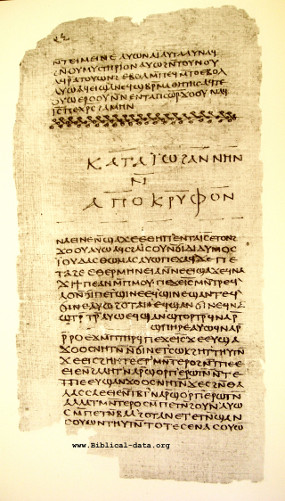
The sole complete manuscript of the Didache that has come down to us was discovered in 1873 by Archbishop Bryennios in the library of the Jerusalem Monastery of the Most Holy Sepulchre in Istanbul…

…Therefore, the Didache needs to be regarded as an anonymous document. As with so many books in the Christian Scriptures, one must allow for the probability that it did not originate with a single individual. Furthermore, given the manifest clues of orality within the Didache itself, one can be quite certain that it was originally composed orally and that it belonged to an extended network of persons who cherished and preserved it because it served to specify the standards of excellence guiding their Way of Life.

-Milavec, pp 41-2

Didache CodexThere’s quite a bit of zeal in Milavec’s words but the oldest copy of this document we have, was discovered a mere 140 years ago. I’d like to believe that it is a very ancient text and that it was from a time when Paul was either still alive or had not long been deceased.

I’m going to go through my notes on Milavec’s commentary in linear fashion and see what nuggets we can uncover in this treasure.

Milavec’s analysis includes a description of the division of topics in the Didache:

  1. Training program in the Way of Life (Did. 1:1-6:2).
  2. Regulations for eating, baptizing, fasting, and praying (Did. 6:3-11:2).
  3. Regulations for hospitality / testing various classes of visitors (Did. 11:3-13:2).
  4. Regulations for first fruits and for offering a pure sacrifice (Did. 13:3-15:4).
  5. Closing apocalyptic forewarnings and hope (Did. 16:1-8).

The Didache, according to Milavec, describes two “ways,” the Way of Life, and the Way of Death.

The notion that there are two well-defined paths would have been familiar to a Jewish audience (#1b, #1h). Psalm 1, for instance, contrasts “the way of righteousness” with “the way of the wicked.” The first-named are defined as those who “delight…in the law [Torah] of the Lord” (Ps. 1:2). Standing in this tradition, it is no surprise that the Jesus movement was known in some circles as “the Way” (Acts 9:2; 19:9, 23; 22:4; 24:14, 22). This was undoubtedly due to the fact that its members were trained in “the way of salvation” (Acts 16:17), “the way of the Lord” (Acts 18:25), or “the way of God” (Acts 18:26)…

-ibid, pg 45

So we see a very close association with the wording in the Didache and the underlying concepts of “Ways” and Jewish history mapping to, though not completely mirroring, the Torah. Yet there’s no completely separating the Torah from the Didache’s training of Gentile disciples, although a difference of application is evidenced in its pages.

After defining the Way of Life using the dual definitions the Didache turns its attention to “the training [required for the assimilation] of these words” (1:3). As explained above, the definitions of the Way of Life and the Way of Death served to frame the main attraction, that is the training program…of the Didache…devoted to this “training,” it is not surprising that the entire manuscript was, at some point in time, given the title “didache” …the Greek word…makes reference to the training that a master trainer (didaskalos) imports to apprentices or disciples.

-ibid, pg 47

I suppose this is stating the obvious, but consider. The Didache is known to be a training manual for the Gentile disciples in “the Way,” a Jewish religious movement organized around the knowledge of Yeshua as the Messiah and his teachings of righteousness. In the Didache’s case, this training in righteousness is specifically crafted for Gentile audiences. If the Gentiles were supposed to merely mimic Jewish Torah observance, this document would hardly be necessary. The training for a Gentile in Messiah would have been the same as for any “righteous convert” to Judaism.

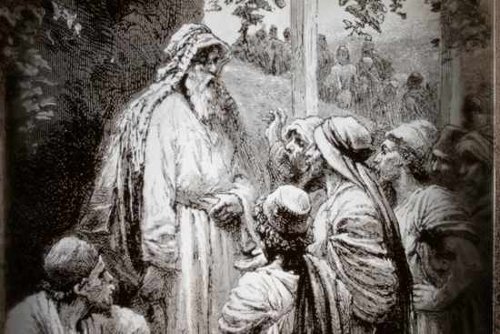
ancient-rabbi-teachingAnd yet, the Didache not only was written exclusively for Gentiles who were not converting to Judaism, but who were considered Gentile co-participants (with the Jewish disciples) in the Way, and these Gentiles required a somewhat Torah-based but nevertheless separate set of training instructions from those given to Jewish disciples.

On page 48, Milavec outlines the likely format for such training, which would match one teacher or trainer with one disciple. This is atypical of ancient and modern discipleship models in Judaism, which would have one Master or Rabbi who trained multiple disciples in their teachings and methods.

However, on page 49, a very Jewish discipleship concept is presented:

Those who trained novices were not transmitting something of their own creation. Rather, such masters were “speaking to you the word of the Lord” (4:1), hence something they themselves received.

Traditionally, a disciple memorized the teachings of his Master so that when the disciple was sufficiently trained, he would become a Master, attract his own disciples, and pass on what he had previously learned. This pattern was repeated generation by generation, and so the pattern is repeated here. This also suggests that Gentiles were passing on what they had previously learned to new Gentile disciples (hence “something they themselves received”).

As one would expect, the training included heavy references to the teachings of Jesus:

In terms of an orderly progression of topics, however, the initial section dealing with praying for enemies and turning the other cheek would appear to be placed at the head of the training program…(but) when examined in detail…the “enemies” in this case were not highway robbers or Roman soldiers, but relatives and friends who had become “enemies” due to the candidates new religious convictions.

-ibid pp 49-50

For I came to set a man against his father, and a daughter against her mother, and a daughter-in-law against her mother-in-law; and a man’s enemies will be the members of his household.

Matthew 10:35-36 (NASB)

Milavec states (pp 51-2) that the Decalogue or the Ten Commandments was adapted for a Gentile audience. This again supports the idea that portions of the Torah were adapted for or applied differently to the Gentile disciples rather than there being a single, identical application of Torah to both Jewish and Gentile members in the body of Messiah.

The framers of the decalogue (2:2) retained the linguistic structure in which the Lord delivered the Torah to his people on Mount Sinai (Ex. 20:1-17, Deut. 5:6-21)…

Since the novice could not have known what the Lord wanted him/her to be and do before this moment, the decalogue would not have been presented to the novice as a rebuke…no Gentile can be blamed for not having been raised as a Jew…On the other hand it can be presumed that the novice asked questions relative to the scope of each of the terms of the decalogue and reflected on his/her own life in contrast to the Way of Life.

JudaismSo how did the decalogue apply to the life of the Gentile novice? It’s outlined in the Didache’s “Way of Life” which interestingly enough, according to Milavec, omits the first Five of the Ten Commandments (pg 52). However, their omission wasn’t indicative of lack of application, but a difference in application based on status. For instance, the fourth commandment, the omission of Shabbat observance, is described this way:

For gentiles, the Sabbath rest (Ex. 20:8-9) would have imposed an unworkable expectation since the Roman lunar calendar governing public life made absolutely no provision for a cessation of work on the seventh day (#4a). The “days of rest” named in the Roman calendar only occasionally coincided with the Jewish Sabbath…Since members of the Didache community depended on the work of their hands, the fourth commandment would have imposed severe economic hardships.

-ibid pp 52-3

Although Judaism was a legally recognized religion in the Roman empire and thus any Jew was entitled by law to observe the Shabbat in accordance with their faith, Gentiles who had not converted to Judaism could not observe the Jewish religious rest days or festivals. The Gentiles in the Way would not be allowed to claim a legal right to the Shabbat as non-Jews, and thus it would be a crime for them to abstain from the work required of them on the Saturday Sabbath.

This is not to say that the Shabbat was and is not a valid expression of devotion to God for Gentiles, but the status assigned to Gentiles in the Way established in Acts 15 afforded them a less stringent set of obligations to God, so that Shabbat could be observed if possible, but if not (which was in most cases), it was not treated as a violation of a commandment.

On the other hand, Milavec notes six “new” commandments applied to the Gentiles such as prohibitions against child cruelty and child sexual molestation. These were necessary since, although child mistreatment was unheard of in ancient Judaism, it was terribly common in Greek and Roman culture in the first and second centuries. So these prohibitions had to be explicitly spelled out. Other prohibitions were commandments against drug use and magic as well as abortion and infanticide. Again, these were practices common in the ancient Roman world but would not have to be articulated in Jewish legal code.

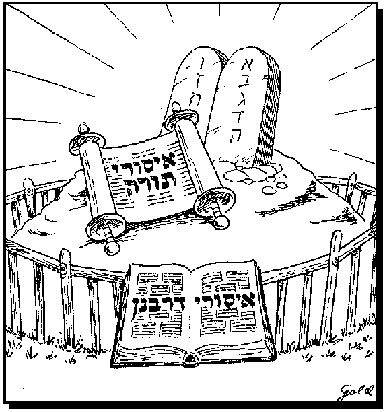
Didache 3:1 serves as a fitting opening to the five illustrations of how to avoid major infractions by keeping guard against minor infractions that might not be serious in themselves, but that form a slippery slope toward great infractions. In Jewish circles this would be recognized as erecting a “fence” (#1v).

-ibid, pg 58

fence_around_torahAgain, erecting a “fence” around the Torah by constructing more stringent restrictions than the written Biblical text records is a Rabbinic practice that is apparently reflected in the Didache, further attesting to its Jewish origins. I find this certainly interesting given how modern Christianity actually criticizes the Jewish Rabbinic system for it’s “man-made laws” and yet the very earliest Gentile Christians were taught using identical principles, perhaps even at the behest of the original apostles of Christ.

As Milavec’s commentary goes on for a bit more, I’m going to split my response in two and present the second part in tomorrow’s morning meditation.