All posts by James Pyles

James Pyles is a published Science Fiction, Fantasy, and Horror author as well as the Technical Writer for a large, diversified business in the Northwest. He currently has over 30 short stories published in various anthologies and periodicals and has just sold his first novella. He won the 2021 Helicon Short Story Award for his science fiction tale "The Three Billion Year Love" which appears in the Tuscany Bay Press Planetary Anthology "Mars."

Considering Life and Randomness

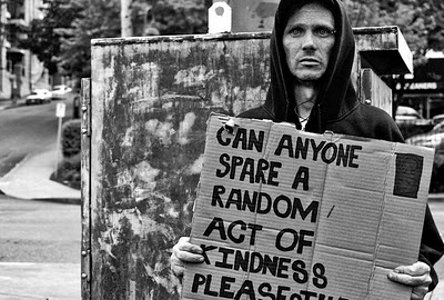
Despair is a cheap excuse for avoiding one’s purpose in life. And a sense of purpose is the best way to avoid despair.

-Rabbi Tzvi Freeman from his book
Bringing Heaven Down to Earth
quoted from sichosinenglish.org

A rabbi was once called to a hospital to see a Jewish teenager who was suicidal. Feeling that he was a good-for-nothing who could not get anything right, the boy had attempted to take his own life. But even his suicide attempt failed. Seeing that he was Jewish, the hospital staff called the rabbi to come and try to lift the boy’s dejected spirits.

The rabbi arrived at the hospital not knowing what to expect. He found the boy lying in bed watching TV, a picture of utter misery, black clouds of despair hanging over his head. The boy hardly looked up at the rabbi, and before he could even say hello, the boy said, “If you are here to tell me what the priest just told me, you can leave now.”

Slightly taken aback, the rabbi asked, “What did the priest say?”

“He told me that G‑d loves me. That is a load of garbage. Why would G‑d love me?”

It was a good point. This kid could see nothing about himself that was worthy of love. He had achieved nothing in his life; he had no redeeming features, nothing that was beautiful or respectable or lovable. So why would G‑d love him?

The rabbi needed to touch this boy without patronizing him. He had to say something real. But what do you say to someone who sees himself as worthless?

“You may be right,” said the rabbi. “Maybe G‑d doesn’t love you.”

This got the boy’s attention. He wasn’t expecting that from a rabbi.

“Maybe G‑d doesn’t love you. But one thing’s for sure. He needs you.”

This surprised the boy. He hadn’t heard that before.

-Rabbi Aron Moss
“The Rabbi and the Suicidal Teenager”
Chabad.org

I’ve heard this before and on the surface, it sound pretty good. It sounds like you would never have been born and wouldn’t have continued to live if you didn’t have some important part to play in God’s plan. It also sounds like if you took yourself out of God’s plan (by suicide for instance) there would be a big hole punched into the middle of that plan.

Seems like a really fragile and vulnerable plan. Since human beings have free will, we can commit a thousand different actions that would be contrary to God’s master plan for Creation. If one human being were to kill himself before fulfilling his or her part in the plan, what would God do? Is there a “plan B?”

I want to finish with the Rabbi Moss commentary before continuing:

The very fact that you were born means that G‑d needs you. He had plenty of people before you, but He added you to the world’s population because there is something you can do that no one else can. And if you haven’t done it yet, that makes it even more crucial that you continue to live, so that you are able to fulfill your mission and give your unique gift to the world.

If I can look at all my achievements and be proud, I can believe G‑d loves me. But what if I haven’t achieved anything? What if I don’t have any accomplishments under my belt to be proud of?

Well, stop looking at yourself and look around you. Stop thinking about yourself, and start thinking of others. You are here because G‑d needs you — He needs you to do something.

My friend, you and I know that happiness does not come from earning a big salary. Happiness comes from serving others, from living life with meaning. I am convinced that all you need to do is focus outward, not inward. Don’t think about what you need, but what you are needed for. And in finding what you can do for others, you will find yourself.

Let’s get the easy stuff out of the way first. Does fulfilling your part in God’s plan for your life automatically mean you’re going to be happy about it?  Look at the Apostle Paul’s life. After being commissioned by Jesus to be the emissary to the Gentiles and to spread the Good News of Christ to the nations (Acts 9), was his life happy? It may have been fulfilling and rewarding in the sense that Paul knew he was doing what God was asking, but it was hardly happy or even comfortable. Paul was beaten, left for dead, had to run for his life, was shipwrecked, and bitten by a poisonous snake. He was finally executed in Rome after a lengthy stay as a prisoner. That doesn’t sound like “happy” to me.

But Rabbi Moss isn’t talking about happiness, he’s talking about serving others as part of God’s plan and in doing so, finding yourself. If you had a chance to fulfill a great purpose in life and to serve God in bringing many otherwise lost people to Him, wouldn’t you do it, even if it meant personal hardship?

Actually, that’s a tough question, especially for many Christians in western nations who aren’t typically called upon to make such great sacrifices and to suffer such hardships. In theory, our answer should be “yes,” but in practicality, I’m not so sure we’d all jump up and down enthusiastically and yell out, “Pick me!”

Now let’s dig a little deeper. Paul’s purpose in life was unmistakable. Jesus appeared to him in a vision and told him what he wanted. A few days later, he sent a human messenger to him to tell Paul his next steps. We see in other parts of the Bible how Paul seemingly had other supernatural experiences which no doubt re-enforced his life’s purpose.

But all that stuff doesn’t happen to most of us. Even if it did and we saw visions and heard voices telling us to do such and thus, most Christians around us would think we were nuts and recommend us to the nearest psychiatrist.

But as far as I can tell, most of us don’t have supernatural experiences to tell us what our life’s purpose happens to be. Most of us have to figure it out, seemingly on our own.

Rabbi Moss suggests to his (possibly fictional) suicidal teenager that as a young person, he has most likely not yet had the opportunity to fulfill his life’s purpose. God needs him to do that, so he has to stay alive until that purpose if completed. But what is that purpose? How do you know what it is? How do you know when you’ve done it? Do you just wait around and hope you can figure out what it is and then perform it when opportunity strikes?

Tough questions. Here’s another one. If you do figure out what your purpose in life is and you have already completed it, what’s the purpose in continuing to go on?

Running out of timeOK, that’s somewhat unfair, because the question assumes that your purpose in life is to commit one act that is easily defined and can be performed in a relatively quick manner, like changing a tire, or helping an older person across the street. But what if that’s it? You’ve done what God created you to do. You may have years or even decades of life still left in you. What now?

Of course, your purpose might be long-lasting and multi-dimensional. You could have been created to be a parent and a grandparent and to influence and support your family across your entire lifetime. In that case, you can never fulfill your purpose until God dictates that it is time for you to die.

Reflecting back on everything I’ve just written, it would seem that, if we accept the premise Rabbi Moss provides, we know we haven’t fulfilled our purpose in life because we’re alive. We assume that when we die, we’ve completed what we were created to do.

But what about “suicide” and “plan B?” If free will allows a certain number of people to kill themselves, what happens to God’s plan? Is it irreparably thwarted? That hardly seems likely since God is God. Being human, we tend to think of the progression of time, fate, and the universe relative to God’s plan as rather linear. Step 1 leads to step 2 and then to step 3 and so on. But if we accept that, we’re saying that no sort of randomness is possible in a created universe. But if we have free will, that can’t be true.

If God’s plan includes the possibility of randomness and further, the possibility that not all people born will fulfill their plan (so far, I’ve only included the single reason of suicide, but people may fail to fulfill their plan for a variety of other reasons tied in to their free will and the free will of people in their environment), then God must have a “plan B” (and I’m sure it’s much more complicated than this) to compensate. If one person who is to fulfill some aspect of God’s plan dies, then there must be a method (that is totally outside of human awareness) of shifting people and events around to accomplish God’s goals in this instance.

That means in an absolute sense, as individuals, we are not indispensible to God. We can be replaced. God doesn’t have an ultimate need for our individual lives.

Rabbi Moss’ story may seem compelling and we can even see how it might have turned around this depressed and suicidal boy, but it’s also not too hard to work our way around his argument, either. When Rabbi Freeman says, “Despair is a cheap excuse for avoiding one’s purpose in life. And a sense of purpose is the best way to avoid despair,” it sounds like he is being too dismissive of someone else’s despair. If Rabbi Moss (or whoever was the Rabbi in the story of the suicidal teenager) had walked into the room, dropped Rabbi Freeman’s two sentence “bomb,” and walked out, do you think it would have done any good?

People have better days and worse days. Having a purpose in life is usually pretty important, but most of the time, it gets lost in the day-to-day shuffle of going to work, interacting with our families, paying the bills, and whatever other tasks we’re expected to perform just because of the roles we play in the various areas of our lives. Most of the time, we don’t give our overarching purpose much thought. It only comes up when you read blog posts such as this one or encounter a personal life crisis.

The raw fact is that many of us may never become aware of some higher and nobel purpose of our life, let alone one that is assigned to us by Heaven. Most of us, if we have an awareness of God at all, will live our day-to-day existence, try to love, strive not to hate, read our holy book, pray, and by the time we die, we can only hope that we did whatever we were supposed to do.

That’s not a particularly satisfying thought and Rabbi Moss tells a better tale than I do, but who’s to say if life works out this way or that?

I can’t.

Mourning for the Great Mountain

There is an interesting, but somewhat misunderstood, halachah. It has to do with not filling one’s mouth with laughter now while we do not have a Beis HaMikdash. In the words of the Orchos Tzaddikim: “One should only feel joyous in that which brings to enhanced service of God. He should never feel joy from that which causes another pain. For example, one who has wheat should not feel happy if there is a famine and he will make a large profit, since this is bad for others. One should also never take joy in another person’s death, even if he was left a legacy and will profit handsomely from this. Regarding such situations, one who shows proper decency and does not feel joy fulfills the mitzvah of ואהבת ’לרעך כמוך. One should accustom his heart to feel joy at his friend’s success. Most especially one should feel great happiness when he see others doing God’s mitzvos, since this is God’s will.

“Nevertheless, one should not fill his mouth with laughter in this world, as we find in Berachos 31. Since the Beis HaMikdash was destroyed, all joy has been mixed with sorrow. We also find in Niddah 23 that Rabbi Yirmiyahu tried to make Rabbi Zeira laugh but did not succeed.

When someone learned that the halachah not to fill one’s mouth with simcha is actually in the Shulchan Aruch, he was shocked and wondered how this could be prohibited.

He decided to ask the Sdei Chemed, zt”l, who was certainly a true scholar and fulfilled in every detail of halachah without compromise. “The halachah not to fill one’s mouth with laughter due to the destruction of the Beis HaMikdash is a middas chassidus. But this should not be confused with mockery. One who mocks is in one of the four groups that will not receive the Shechinah, as we find in Sotah 42!”

Daf Yomi Digest
Stories Off the Daf
“Rejoicing in the Right Way”
Niddah 23

This isn’t going to resonate well with most Christians because Christianity isn’t focused on the Temple as the point of connection between man and God. We focus on the life and spirit of Jesus Christ for that connection and, for most Christians, the Temple is superfluous. For most Christians, the Temple is a cosmic “so what?”

That’s kind of a shame because we may have to try to relate to it at some point, especially if traditional Jewish thought is correct and the Messiah, that is Jesus Christ, actually rebuilds the Temple.

The mashiach will bring about the political and spiritual redemption of the Jewish people by bringing us back to Israel and restoring Jerusalem (Isaiah 11:11-12; Jeremiah 23:8; 30:3; Hosea 3:4-5). He will establish a government in Israel that will be the center of all world government, both for Jews and gentiles (Isaiah 2:2-4; 11:10; 42:1). He will rebuild the Temple and re-establish its worship (Jeremiah 33:18). He will restore the religious court system of Israel and establish Jewish law as the law of the land (Jeremiah 33:15).

Judaism 101

However even if you have a tough time with that perspective, our story off the Daf can tell us a few other things, such as not rejoicing under circumstances when we win but someone else loses. We have a tendency to do that as human beings, but when we lose, when we’re hurt, when we’re afraid, we certainly don’t want others to feel happy about it. Most of the time, when we’re under duress, we don’t want people around us to feel happy about anything. We want them to feel upset, compassionate, and then try to help us.

What if a Christian sees a Jew under duress over the destruction of the Temple? I know it happened almost 2,000 years ago and Christians tend to think the Jews should “get over it” but that’s because we don’t understand the significance of the Temple in Judaism. We want Jews to realize that Jesus Christ is their temple and that it’s going to be all right because Jesus loves them. But most Jews aren’t going to relate to oto ha’ish that way, at least not right now (and I consider it a miracle any time a Jewish person does recognize the Jewish Messiah through the Gentile disguise that we have put on Christ).

I found the following footnotes for Chapter 11 of the Rambam’s The Laws and Basic Principles of the Torah at history.hanover.edu:

The whole of the following passage was deleted from most of the editions published since the Venice edition of 1574.

“If he did not succeed to this degree or he was killed, he surely is not [the redeemer] promised by the Torah. [Rather,] he should be considered as all the other proper and legitimate kings of the Davidic dynasty who died. G-d only caused him to arise in order to test the multitude. As it is written [Daniel 11:35], “Some of the wise men will stumble, to purge, to refine, and to clarify, until the appointed time, for it is yet to come.”

“Jesus of Nazareth who aspired to be the Mashiach and was executed by the court was also spoken of in Daniel’s prophecies [Daniel 11:14], “The renegades among your people shall exalt themselves in an attempt to fulfill the vision, but they shall stumble.”

The rest of the text is equally uncomplimentary toward Christianity, but that’s less to do with Jesus as Messiah and more to do with the subsequent “development” of the Christian/Jewish relationship over the past 20 centuries or so. However the beginning of Chapter 11 also says the following:

In future time, the King Mashiach[1] will arise and renew the Davidic dynasty, restoring it to its initial sovereignty. He will rebuild the [Beis Ha]Mikdash and gather in the dispersed remnant of Israel. Then, in his days, all the statutes will be reinstituted as in former times. We will offer sacrifices and observe the Sabbatical and Jubilee years according to all their particulars set forth in the Torah.

Whoever does not believe in him, or does not await his coming, denies not only [the statements of] the other prophets, but also [those of] the Torah and of Moshe, our teacher, for the Torah attests to his coming, stating: [Devarim 30:3-5]

This is similar to something the Master said 1,200 years earlier:

Do not think that I will accuse you to the Father. There is one who accuses you: Moses, on whom you have set your hope. For if you believed Moses, you would believe me; for he wrote of me. But if you do not believe his writings, how will you believe my words?” –John 5:45-47 (ESV)

Perhaps we Christians shouldn’t rejoice too much, not because we’re mourning the Temple and lament its loss, but because our human lives and failures made it necessary for Christ to suffer and die. True, he was resurrected again, just as the Temple will be remade by him (my opinion), but that doesn’t absolve us of our crimes, nor does it repair our present broken and suffering world. To those Christians who rejoice over Jewish suffering, you are missing the point, not only of the lesson of the Sages but of God’s own teachings. If the Jewish people mourn the Temple, they will also mourn Messiah.

“And I will pour out on the house of David and the inhabitants of Jerusalem a spirit of grace and pleas for mercy, so that, when they look on me, on him whom they have pierced, they shall mourn for him, as one mourns for an only child, and weep bitterly over him, as one weeps over a firstborn. –Zechariah 12:10 (ESV)

While the prophet is most likely speaking directly to Israel, Christ was pierced for us as well, so we should also mourn and not overly rejoice at our Salvation. True, we thank God for our redemption from death and our adoption as sons and daughters of the Most High, but there is still a lot of work to be done and if we are only happy for ourselves, how can we strive to reach out toward others in their suffering?

For I could wish that I myself were accursed and cut off from Christ for the sake of my brothers, my kinsmen according to the flesh. They are Israelites, and to them belong the adoption, the glory, the covenants, the giving of the law, the worship, and the promises. To them belong the patriarchs, and from their race, according to the flesh, is the Christ, who is God over all, blessed forever. Amen. –Romans 9:3-5 (ESV)

As Maimonides said, “Whoever does not believe in him, (the Messiah) or does not await his coming, denies not only [the statements of] the other prophets, but also [those of] the Torah and of Moshe, our teacher, for the Torah attests to his coming.”

Israel awaits his coming but they do not know who he is. We who do know his name must not rejoice that we hold that knowledge and others do not. We must not be bitter that others refuse to accept his name as Messiah. We must live our lives with caring and compassion for everyone, shunning no man whether Jew or Gentile, but welcoming everyone in peace to our Temple and our Great Mountain of God.

But there is another way of understanding it. With the help of verses such as “I will lift up my eyes to the hills – From whence comes my help?” (Psalm 121:1), where the psalmist lifts up his eyes to the “mountains” (as the Hebrew has it), the following explanation is given: “You shall become a plain – this is Messiah Son of David. And why is his name called Great Mountain? Because he is greater than the fathers, as it says, ‘Behold, My Servant shall deal prudently; He shall be exalted and extolled and be very high’ (Isaiah 52:13). He shall be higher than Abraham, more exalted than Jacob and higher than Jacob. … more exalted than Moses … and higher than the angels. This is why it says, ‘Who are you, O great mountain?'” (Midrash Tanchuma W, Toledot 14).

-Tsvi Sadan
“Great Mountain” (har hagadol) pg 58
The Concealed Light: Names of the Messiah in Jewish Sources


The Pious Fraud

In a reply to a yechidus query in the winter of 5635 (1874-75), my grandfather said to my father: The yetzer hara, (the evil impulse), is called “animal soul,” not because it is necessarily a brute animal. At times it may be a fox, the most cunning of beasts, and great wisdom is needed to perceive its machinations. At other times it may clothe itself in the garb of an earnest, straightforward, humble tzadik, possessing fine traits of character.

The animal soul manifests itself in each person according to his individual character. One person may suddenly experience a powerful longing to study Chassidus or to meditate deeply on some chassidic concept. The truth is, however, that this is nothing more than the yetzer hara’s counsel and the animal soul’s machinations to prevent him from engaging in the avoda of davening or a similar activity.

Take this as a general principle and remember it always: Any matter that is effective towards or actually leads to active avoda, and is confronted with opposition of any sort, even the most noble, that opposition is the scheming of the animal soul. My father concluded: Until then I had not known that there can be a “pious” animal soul, let alone a “chassidic” animal soul.

“Today’s Day”
Shabbat * Sivan 23, 5703
Compiled and arranged by the Lubavitcher Rebbe
Rabbi Menachem Mendel Schneerson, of righteous memory, in 5703 (1943)
from the talks and letters of the sixth Chabad Rebbe
Rabbi Yosef Yitzchak Schneersohn, of righteous memory
Translated by Yitschak Meir Kagan

The nature of good vs. evil and the nature of the human soul is somewhat more complicated in Judaism than it is in Christianity. I’m not going to spend any time trying to delve into these explanations, since there are people much more knowledgable and wiser than I am who have already made those distinctions. I do want to talk about how as human beings, we tend to fool ourselves, though. I know a lot about that.

It’s interesting to consider that even a very righteous person who desires to study Chassidus (If you’re Christian, think of it as studying the Bible, though that is a woefully inadequate comparison) could actually be caving into his “evil impulse.” I mean, what’s wrong with studying the Bible, folks? Or, what’s wrong with praying, or going to your local house of worship?

According to the commentary, even the desire to do something praiseworthy may be masking something else we’re trying to avoid, including our own awareness that we’re not being forthright in our motivations.

Really?

Think about this.

I want to read and study the Bible or some online commentary on the Torah. Being who I am, I’ll probably start writing a blog about it just because it’s in my nature to turn Bible study into blogs. But the floor needs to be vacuumed. Or my daughter needs a ride to work. Or my grandson is visiting and wants me to play with him. Or something is bothering my wife and she wants to talk with me about it. Or…

Well, you get the idea.

There’s nothing wrong with studying. There’s nothing wrong with blogging about Biblical or faith-based topics…unless they get in the way of “the weightier matters of the Torah,” which almost always involves actually doing some sort of good deed for another human being.

Imagine an extreme case where a person studied the Torah to the exclusion of all other considerations, including earning a living and supporting his family.

For even when we were with you, we would give you this command: If anyone is not willing to work, let him not eat. –2 Thessalonians 3:10 (ESV)

But if anyone does not provide for his relatives, and especially for members of his household, he has denied the faith and is worse than an unbeliever. –1 Timothy 5:8 (ESV)

But most of us aren’t that extreme. We do however, know how to appear pious and holy to the outside world and still have defective motives though.

“Woe to you, scribes and Pharisees, hypocrites! For you are like whitewashed tombs, which outwardly appear beautiful, but within are full of dead people’s bones and all uncleanness. So you also outwardly appear righteous to others, but within you are full of hypocrisy and lawlessness. –Matthew 23:27-28 (ESV)

Jesus was addressing people who knew they were being hypocrites and they didn’t mind behaving that way. What about those of us who truly believe we’re doing the right thing, but are really serving our own interests? We may really tell ourselves that studying Torah is more important than getting a job or getting a better job so we can support our families. We may tell ourselves that studying the Bible is more important than doing the vacuuming, washing the dishes, making dinner for the kids, or helping our neighbor with her yard work. I suppose, on a certain level, we can make a convincing case for it, too. After all, what’s wrong with studying the Word of God? What’s wrong with being immersed in the Bible? What’s wrong with being consumed and even obsessed with a life of faith?

What? But doesn’t a life of faith involve actually doing something about it? Doesn’t mowing your neighbor’s yard override praying, at least sometimes? Should we always ignore people for the sake of something we consider a higher ideal?

It’s probably not clear-cut in every single situation, but often we are so clever, we convince ourselves to do what we want to do, something that is indeed praiseworthy, so we can get out of doing something we don’t want to do that is equally praiseworthy.

The ego of man is cannibalistic in essence. At worst, it destroys everyone and everything in its path in order to attain its selfish goals. At best, as in the case of a civilized, refined and tolerant individual, it acknowledges its status as one among many, avows its support of the “human rights” of its fellows and concedes the legitimacy of pursuits other than its own. But even the most liberal-minded of men cannot escape the trappings of the ego: he will always see his fellow through the prism of self. His (seemingly) objective mind will point out that he shares the planet with billions of others, that there exist countless perspectives and callings in addition to his own. Deep down, however, the self will remain the gravitational center of reality, its ultimate point of reference. He will see others as necessary, perhaps crucial, but always secondary cogs to the kingpin of self.

Commentary on Ethics of Our Fathers
“The Contemporary Cannibal”
Sivan 23, 5772 * June 13, 2012
Chabad.org

This is part of a direct commentary on the following:

Rabbi Chaninah, deputy to the kohanim, would say: Pray for the integrity of the sovereignty, for were it not for the fear of its authority a man would swallow his neighbor alive. Rabbi Chaninah son of Tradyon would say: … Two who sit and exchange words of Torah, the Divine Presence rests amongst them…

-Ethics of the Fathers, 3:2

On the surface, it doesn’t seem as if there’s a connection between our need for a sovereign in order to curb man’s aggressive nature and studying words of Torah, but with just a little thought, the link becomes apparent.

So anyone who views the universe as an ownerless, arbitrary existence will never transcend the moral and intellectual cannibalism of the ego. For without a supreme authority that creates, defines and gives direction to all of creation, the self and its perceptions are the sole judge of right and wrong; inevitably, one’s vision of others will be tinted with the color of self.

It is only through the fear of G-d, only through the acceptance of the sovereignty of the King Of All Kings, that man can grow beyond the prejudice and anarchy of the ego. It is only by sensing an Absolute Truth before which all are equally insignificant, but which grants significance to the countless individual roles that fulfill the Divine purpose in creation, that an individual can genuinely see his fellow as his equal.

And because the naturally self-centered consciousness of man is, by definition, incapable of truly seeing beyond itself, this truth it is not something that one can understand and feel with the contemporary tools of his mind and heart. One must therefore “pray for the integrity of the sovereignty” in his life. One must concede that the transcendence of self is beyond his humanly natural capabilities, and humbly request that he be granted a higher, ego-free vision of his fellow.

It is only by acknowledging the absolute sovereign of the universe and submitting to His will that we can stop, look at what we’re doing, and realize what is really important in our lives and in the lives of those around us. Studying the Bible is important. Praying is important. Playing with your three-year old grandson is more important. God’s Bible is always there and is vital in helping us understand the importance of our roles, but once a moment in a child’s life has passed, you never get it back again.

You need to decide what you are. If you believe yourself to be angel, be prepared for some disappointment. If you think of yourself as a beast, you may well become depressed.

Best to know you are human. Stay away from situations you can’t handle, and face up to the mess when you fall down. That’s even higher than the angels.

-Rabbi Tzvi Freeman
“Identity”
Based on letters and talks of the Rebbe
Rabbi M. M. Schneerson
Chabad.org

God as a Teacher

Talmud StudyThe metaphor of God as teacher and human beings as His pupils, a metaphor that gains prominence in the rabbinic period, is also an apt means of describing the covenantal relationship. God as teacher encourages His pupils to think for themselves and assume intellectual responsibility for the way Torah is to be understood and practiced. The fact that the rabbis not only declared that the age of prophecy had ended, but insisted also that the talmudic sage ranked higher than the prophet, seems to suggest that the community has a higher appreciation of its covenantal relationship to God when it sees Him as its teacher than when it sees Him as an authoritarian voice dictating His will through the prophets.

God as a loving husband and the devoted teacher do not require reward and punishment to play a significant role in the covenantal relationship. They are not frameworks of absolute power of one covenantal partner over the other, but frameworks in which the integrity of both partners is recognized and the human partner is enabled to feel personal dignity and to develop the capabilities of responsibility.

-Rabbi David Hartman
from the Introduction of his book
A Living Covenant: The Innovative Spirit in Traditional Judaism

Are you a God-fearing man, Senator? That is such a strange phrase. I’ve always thought of God as a teacher; a bringer of light, wisdom, and understanding.

-Erik Lehnsheer/Magneto (played by Ian McKellen)
X-Men (2000)

I just did two strange and different things, at least from a Christian point of view. I used Rabbi Hartman’s quote to describe God as primarily a teacher, and I quoted a comic book movie to do the same thing. Strange. Interestingly enough, the character of Eric (Magneto) Lehnsheer is portrayed as a Jewish Holocaust survivor, so his perspectives may have a place in today’s “meditation.”

It’s not as if Judaism doesn’t see God as a Judge, but He is not only a Judge (and I need to be careful here, since I’ve mischaracterized aspects of Judaism before). The Bible is replete with “marriage metaphors” in which God is portrayed as a loving husband to a sometimes faithless Israel. While this metaphor is occasionally used by Christianity to justify the supersessionist view that the church (the loyal wife) has replaced Israel (the faithless wife), in fact, God has also said that He will take back Israel when she turns back to Him and that He will never permanently abandon her.

However, I’m less interested in discussing the topic of supersessionism and more interested in exploring God as our teacher. As Rabbi Hartman seems to say, this casts God in a completely different light than the one by which we are accustomed to viewing Him. It also nicely fits into how Judaism sees the role of human authority within the realm of faith. I continue now with Hartman as he speaks in his book’s Introduction.

When Christian ministers ask me at what age or on what occasion I received my calling as a rabbi, I often find myself hesitating over how to respond. If I answer it began when I entered yeshivah at age five to study Bible and Talmud, they might believe that I am likening myself to Jeremiah, who received his prophetic calling as a child. If I tell them that I never received a calling but was ordained after my teachers concluded that I was intellectually capable of rendering competent decisions regarding what is prohibited and permitted by Jewish law, they might be shocked at meeting a modern version of a Pharisee. They could perhaps find confirmation for the allegation that legalism had replaced the living guidance of God.

…Yet, as a traditional halakhic Jew, I know that a rabbi is a teacher whose spiritual role is premised on possession of an intellectual understanding of the Jewish tradition and commitment to the Jewish people. A direct call from God is not required to legitimize activity as a rabbi in Israel.

I can only imagine that the confusion Rabbi Hartman expects of the Christian ministers he references is reflected in the minds and hearts of any Christians reading this missive. Indeed, Judaism is often seen as a legalistic, works-based, and spiritually “dead” faith for exactly the reasons Rabbi Hartman states. And yet he also says that a “rabbi is a teacher whose spiritual role is premised on possession of an intellect understanding of the Jewish tradition,” presupposing that rabbis actually have spiritual roles in Judaism. So where is the spirituality?

What is spirituality?

According to Wikipedia, spirituality “refers to an ultimate or an alleged immaterial reality; an inner path enabling a person to discover the essence of his/her being; or the “deepest values and meanings by which people live.” That’s probably not a very helpful definition, but spirituality is difficult to define, largely because the spirit cannot be conclusively demonstrated in a material world.

In some branches of Christianity, spirituality is considered synonymous with emotion, or more specifically, an emotional experience that is inspired by a spiritual encounter with God (or one that bypasses God and focuses specifically on Jesus Christ). We tend to think of spirituality as a “feeling.” Most Christians don’t tend to relate to spirituality as a thought or as something that happens when we study and learn from a teacher or rabbi.

And yet, Rabbi Hartman seems to be saying that learning Torah and Talmud is a spiritual experience. I don’t know if that’s what he’s actually saying, but I think I can make a case for it. I think that in Judaism (this is just my opinion, of course), the sense of a Jew’s identity is inexorably tied to Jewish history, traditional Jewish thought, Talmudic study, midrash, halachah, and understanding. You might even think of the passionate debates that occur in yeshivah as a metaphor for a Jew “wrestling with God.” (Genesis 32:22-32)

The concept of wrestling or debating with God may seem alien and even sacrilegious to a Christian, even though we have ample examples from the Bible. Look at Abraham boldly debating with God over the fate of Sodom and Gomorrah (Genesis 18:16-33) and Moses pleading with God to spare the Children of Israel after the sin of the Golden Calf. (Exodus 32:9-14). Can a Christian even understand this the way a Jew can?

That said, Rabbi Hartman doesn’t see a complete dissonance between Jews and Christians.

…those early experiences were given profound intellectual and philosophical support in the years of my graduate study at Fordham University. Living with the Jesuits, sensing the intellectual and spiritual integrity of my teachers, observing how our different faiths were reciprocally enriched through our encounters – these were experiences that I could not ignore in developing my own appreciation of what it is to stand as a covenantal Jew before God.

I can’t say that all Jews will agree with Rabbi Hartman’s statements and I’m sure not all Christians will either. We see, based on everything I’ve written and quoted up to this point, that Christianity and Judaism conceptualize themselves and their relationship with God on a spiritual level in fundamentally different ways. We see God and how we are supposed to connect to Him from two totally different directions. And yet there are the occasional glimmers when, if we try hard enough, we just might be able to understand that we have a few things in common, as Rabbi Hartman pointed out in his description of his time among the Jesuits.

But God is One. He is the God of the Jews and the nations. He makes the rains descend on not only Jews and Christians, but on the righteous and unrighteous alike. He sent His “only begotten son” “not wishing that any should perish, but that all should reach repentance.” (2 Peter 3:0 ESV)

If God is our teacher, is He providing two wholly dissimilar lessons, one for the Jews and the other for everyone else? Christianity doesn’t think so, but their (our) solution is to replace the original lesson God taught at Sinai with the one taught by Jesus at Calvary. Traditional Jews believe that God teaches a larger lesson (the Torah) to the Jews and a subset of that lesson (the Noahide laws) to the nations.

I don’t agree with either viewpoint and believe that it is God’s intention to ultimately reconcile Israel with the nations as co-existing covenant members, Sinai and Messianic, standing side-by-side in front of the throne of God. I don’t know how to completely articulate this relationship yet, especially in terms of our mutually dependent roles being described in scripture, but I believe it is well worth pursuing.

We see that at the end of all things, the ” throne of God and of the Lamb will be in it (the city), and his servants will worship him.” (Revelation 22:3 ESV) I believe those servants are both Israel and we from among the nations who have demonstrated an enduring faith, who have “fought the good fight,” and “have finished the race.” (2 Timothy 4:7)

If God is speaking to both the Jew and the Christian (and indeed, to the entire world), we must discover what the lesson is and what our teacher wants us to learn. Jesus was rightly called “teacher” and “rabbi” and he taught as did the other rabbis during the late Second Temple period in Israel. This was an experience that his disciples found to be completely consistent with how other disciples learned from their rabbis. From what we see in the Bible, it was also consistent with how we Christians experience spirituality, love, compassion, and truth.

Some Jewish thinkers believe that the Second Temple was destroyed, not because of general faithlessness among the Jews, but because of the sin of baseless hatred between one Jew and another. The counterpoint to this sin, and what some believe will aid in the coming of the Messiah, is for Jews to show unrestrained love by…

reaching out to another person – any other person – and showing him care, consideration, and concern. Do a favor for someone else, not because there is a reason to do so, but because you care for him.

“Keeping In Touch: The Three Weeks”
Based on the teachings of the Lubavitcher Rebbe
Rabbi Menachem M. Schneerson
Adapted by Rabbi Eli Touger
Chabad.org

If we are trying to hear the lessons being taught by our rabbi and Master, perhaps reaching out to everyone, Jew and Gentile alike, with care, consideration, and concern, might be a good place to start.

A river of life flows through the inner worlds, emerging from there into your own, carrying with it all your needs.

You need to know about that river, for it carries upstream as well.

When you celebrate that river with a blessing for your food, out loud and with joy, then your voice echoes back with even greater force, replenishing all the higher worlds through which the river passes on its way. The channels of life are widened and their currents grow strong.

Take care of your river. Invest in it and reap the dividends.

-Rabbi Tzvi Freeman
“The Echo Upstream”
Based on letters and talks of the Rebbe
Rabbi M. M. Schneerson
Chabad.org

Overcoming Humanity

It is human nature. When someone wrongs us, we want to retaliate. We are infuriated and hold onto memories of these “wrongs,” and when given the opportunity, we respond in kind.

Taking revenge is prohibited in Judaism.

Maimonides writes about revenge in his code of Jewish law:

Taking revenge is an extremely bad trait. A person should be accustomed to rise above his feelings about all worldly matters; for those who understand [the deeper purpose of the world] consider all these matters as vanity and emptiness, which are not worth seeking revenge for.” (Paraphrased from Mishneh Torah, De’ot 7:7.)

Rather, Maimonides continues, if someone who has wronged you comes to ask a favor, you should respond “with a complete heart.” As King David says in the Psalms, “Have I repaid those who have done evil to me? Behold, I have rescued those who hated me without cause”(Psalm 7:5).

In addition, Jewish law forbids us to bear a grudge. Thus, the Talmud explains, you may not even say to the person who wronged you that you will act rightly, even though he or she did not. (Talmud, Yoma, ibid.)

Rabbi Schneur Zalman of Liadi in his code of Jewish law concludes that, “one should erase any feelings of revenge from one’s heart and never remind oneself of it.”(Shulchan Aruch Harav, end of 156:3 [in the new Kehot editions (2001) p. 393].)

-Dovid Zaklikowski
“What Does Judaism Say About Taking Revenge?”
Learning and Values
Chabad.org

You shall neither take revenge from nor bear a grudge against the members of your people; you shall love your neighbor as yourself. I am the Lord.

Leviticus 19:18

I’m actually a lot more calm about this issue than I have been in previous days, but as I was studying this morning (as I write this), the topic came up and I thought I should continue with my commentary on the nature of human beings and our desire to strike back when someone causes us pain.

It’s difficult to not want to immediately hit back when someone does something to hurt or scare us. The sudden power surge of adrenaline hits our blood stream and our reflexes take over. The guy who cuts you off in traffic nearly hitting you, or the shock of someone accidentally bumping into you on the sidewalk and practically knocking you off your feet almost always produces a split second of tremendous emotion that we have to overcome with reason.

Of course, that isn’t really revenge as much as it is biochemistry. Once we get past the instant of emotion, we can stop ourselves before we go into a “road rage” or actually form a fist and hit the person who by now, is apologizing for walking into us and is trying to steady us on our feet. Revenge is longer lasting. Revenge is the desire to “get even” with whoever offended us and to, even days, weeks, or months later, make sure they “pay” for what they’ve done to us, whether the injury was real or imagined.

Here’s a classic Jewish example of revenge:

Taking revenge is when you ask someone, “Lend me your sickle,” and he says no. The next day he comes to you and asks you “Lend me your hatchet.” You respond, “I am not lending to you, just like you did not lend to me.”

This is an example of revenge.

—The Talmud, Yoma 23a

But revenge goes beyond what you actually do. It involves what you think and how you feel. How many people never actually “take revenge” but nurse it in their hearts, sometimes for years, letting it blacken not only that one relationship, but everything they are as a person, right down to the core of their soul?

Not taking revenge is not just about modifying one’s actual actions; it is also that the thought of revenge never even enter one’s heart. (See Rabbi Jonah Gerondi (1180-1263), Shaarei Teshuvah 3:38. See Nachmanides on Leviticus, ad loc.)

-Zaklikowski

That’s a tall order. It’s one thing to not act on the desire to take revenge or to even eventually put feelings of revenge aside, but it’s something else entirely to never experience thoughts or feelings of revenge in the first place when it would be otherwise expected to do so.

On the surface, the literal commandment we see in Leviticus 19:18 seems to address not acting on feelings of revenge and not carrying a grudge forward in time after the event, but how can you not have such thoughts and feelings in the first place? Zaklikowski’s response is this:

The verse prohibiting revenge ends with the famous maxim, “You should love your fellow as yourself.” Rabbi Moshe ben Nachman, “Nachmanides,” explains that erasing the event from your heart will guarantee that you will never come to transgress the commandment, allowing you to love your fellow, no matter what transpires between the two of you. (Igeret HaKodesh, Epistle 25.)

As I said before, that’s a tall order. It would mean that we would have to harbor love in our hearts for others as a matter of course and to learn to habitually forgive those who have wronged us. These are qualities that go beyond normal human experience, emotion, and reason. These are the lessons we learn from God and are the results of a life lived in faith.

“Be kind, for everyone you meet is fighting a hard battle.” -Plato

What would the world look like if we all internalized these lessons into our beings and committed to responding to our environment in this way all of the time?

When you look at a human being, you see his hands working, his feet walking, his mouth talking. You don’t see his heart, his brain, his lungs and kidneys. They work quietly, inside. But they are the essential organs of life.

The world, too, has hands and feet — those who are making the news and effecting change. The heart, the inner organs, they are those who work quietly from the inside, those unnoticed. Those who do a simple act of kindness without knowing its reward.

-Rabbi Tzvi Freeman
“Inside Workers”
Based on letters and talks of the Rebbe
Rabbi M. M. Schneerson
Chabad.org

Love is patient and kind; love does not envy or boast; it is not arrogant or rude. It does not insist on its own way; it is not irritable or resentful; it does not rejoice at wrongdoing, but rejoices with the truth. Love bears all things, believes all things, hopes all things, endures all things. –1 Corinthians 13:4-7 (ESV)


Hope in Hopelessness

Last week at the Western Wall, I asked an elderly man to put on tefillin. He strongly refused.

I asked him, “When was the last time you put on tefillin?”

He smiled and proudly said, “72 years ago!” He held out his arm to show me the fading tattooed numbers. “1938,” he said. “It was the day of Kristallnacht. Do you know what Kristallnacht is?”

“Of course I do,” I told him.

“Two hundred and sixty-seven synagogues were burned down in one night. They burned down our synagogue, too. My tefillin were burnt up, and I have never put them on again,” he said.

“I have a friend who was in the camps, too,” I quickly said, “and he not only puts on tefillin today, but he even put them onto others inside the camp! Do you want to hear how he got tefillin into the camp?”

“Yes,” he said strongly. “How did he get them in there?”

-Gutman Locks
“Tefillin After 72 Years”
Stories of the Holocaust series
Chabad.org

I can’t even imagine what it would have been like to experience the horrors of the Holocaust. Like many Americans, I live a relatively comfortable life. I don’t really know what it’s like to go without adequate food, shelter, or clothing. I’ve been in the hospital before, but remain fairly healthy. I was once beaten by several men during a riot when I was 16 and spent some time recovering, but I was home and eventually after over a year, I began to let myself feel safe again. In short, I’ve faced a certain number of challenges over my lifetime, but none have been overly difficult.

I can’t even imagine what it would have been like to experience the horrors of the Holocaust.

I can’t even imagine what it would be like to have a wife who is struggling with cancer and who may die.

I can’t even imagine what it would be like to be the father of terminally ill child.

Frankly, I don’t want to imagine, let alone have to actually face such hideous tragedies in life. I don’t know how people do it and, I’m ashamed to say, I don’t even know how people of faith do it.

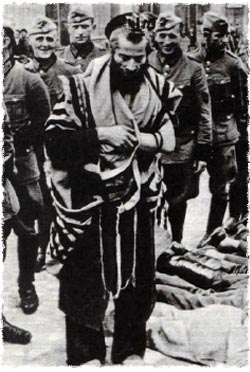
Where do you find hope in hopelessness? It’s one thing to say “I rely on my God for my strength,” and it’s another thing to actually live it out, one day at a time, one horrible, agonizing minute at a time. What can you do when someone delivers the terrible news and your courage melts like a plastic sandwich bag in the face of an inferno? What do you do when you’re a young, teenage boy and you and your mates are being herded into the gas chambers by the Nazis and you have only minutes to live?

“He began his story. The Nazis had come to the ghetto and grabbed 137 young boys. He told me that only five of them survived. Only five.

“He was thirteen and a half years old. He was wearing the high boots that his father had bought him, and when he saw them coming, he stuffed his tefillin into one boot and his prayerbook in the other.

“They pushed the boys into a cattle car and drove them to the death camp, not far from the ghetto. When the train stopped, they slid open the side of the cattle car and immediately began pushing them toward the open door of the gas chamber. The boys were frightened and cried out. They asked Laibel, ‘What should we do?’ He told them, ‘We’re going to stand in rows five across, and we’re going to march right into that gas chamber singing a song of faith, the “Ani Maamin.”’ And they did just that. They stood in rows five across, and started singing and marching right into the chamber.

“The guards became so confused that they did not know what to do. They screamed, ‘You can’t do that! No one has ever done such a thing before. Stop it! Stop it at once! Here! Go over there to the showers instead!’

“They pushed them over to the showers, and forced them to undress and throw their clothing into a pile in the middle of the floor. They made them empty their shoes, and the tefillin and prayerbook fell out onto the pile.

“After the shower, when they were dressed in camp clothes and were being pushed out, past the pile of their clothes, Laibel saw his tefillin and prayerbook lying there. He wanted so badly to run and pick them up, but terrifying guards were watching. He said to the boys, ‘I did something for you, so now you do something for me.’

“‘Whatever you want,’ they said. ‘You saved our lives.’

“He said, ‘When I give the signal, start a fight and scream out loud. Okay . . . now!’ The boys started to fight and scream. The guards ran over and tried to pull them apart, but they wouldn’t stop fighting. In the confusion, he ran over and grabbed his tefillin and prayerbook, and hid them under his arms.

Laibel not only managed to retrieve his tefillin but he wore them (clandestinely) in the camp and helped other Jews wear them, too. In the story commemorating his courage, we discover him as an old man today helping men wear tefillin at the Kotel.

And he looked me in the eye and said, ‘And I put tefillin on other men, too.’ I started to cry, and I kissed him on his yarmulke.

“The day after Laibel told me his story, there was a soldier at the Western Wall who wouldn’t put on tefillin. No matter what I said, he simply refused. Then I told him Laibel’s story, and he quickly said, ‘Okay, I’ll do it.’

“And you can do it, too,” I said to the elderly gentleman who hadn’t donned tefillin in 72 years, as I gently slid the tefillin I was holding onto his arm. He said the blessing and started to cry. We said the Shema, and he prayed for his family. He began to smile even while the tears were streaming down his face. A crowd gathered around and congratulated him on overcoming all those years of rejection.

You do not always succeed, but you always have to try.

If there has ever been a hopeless place on earth, it was in the Nazi death camps during the Holocaust. Even those who were not immediately killed expected to die a lingering and torturous death. Even those who survived and who were liberated didn’t expect to live any sort of “normal” Jewish life again. Who could after seeing what they saw and experiencing what they lived through? Even after more than seven decades, Holocaust survivors are suffering delayed post-traumatic stress disorder. The statement is so obvious, it’s almost laughable to report it in the media. Of course they’re suffering after seventy years? Who wouldn’t?

But after over seventy years, some have turned suffering and hopelessness into hope, not just for themselves but for each other. Laibel turns hopelessness into hope every time he helps another Jewish man don tefillin and pray at the Kotel. A Jewish man who hadn’t worn tefillin in seventy-two years because of the nightmare of Kristallnacht put on tefillin again because of Laibel’s inspiration, “said the blessing and started to cry.”

While most of us have never faced such horrendous, nightmarish, ghastly experiences as those of Holocaust survivors, as those who are battling desperately invasive cancer, as those who are anxiously trying to comfort a dying child, we still know the world is filled with hopelessness and despair. All of us face some sort of problem, some sort of challenge, something that makes us want to give up our fight to move forward or maybe even the fight to live.

I have no magic to give you. I have no secret formula with which you can overcome your hardships or worries or fears or tears. I can say “rely on God” but for even those men and women who do rely on Him with an almost superhuman faith and courage, the battle is hard and surrender to the darkness is a constant companion.

But amazingly there is still hope. Laibel must be well over eighty years old and for him, hope is helping just one more man put on tefillin, maybe for the first time in decades, and speak words of blessing to God. Hope is saying, “I love you” to a dying little boy. Hope is continuing to pray for your spouse, even though multiple organs are compromised by cancer and years of radiation and chemotherapy haven’t put the demon back in the bottle.

Hope is in the tears you cry. Hope is in your screams of anguish. Hope is being able to go on when life is impossible. Hope is a man learning how to pray again while crying after seventy-two years.

Hope is the faint light of a tiny candle holding the encroaching abyss at bay.

Hope is God.