Category Archives: Uncategorized

Waiting for Hope in the Abyss

AbyssRav Simcha Bunim of Peshischa, zt”l, taught great inspiration from a statement on today’s daf.

“A person who has sinned and fallen to the lowest place, banished from God’s presence, should also never despair. A sacrifice that was fitting but then lost its status is no longer accepted even if afterward it regained its original status. But Rav holds that if the animal is still alive, it is not rejected absolutely. This fallen soul is no different. As long as he has some chiyus, some vitality, it is always possible to start again and attain forgiveness. This is the deeper meaning of the words, ‘Forgive our sins for they are many.’ This can be also be read, ‘Forgive our sins, because the halachah follows Rav—that ba’alei chaim are not rejected.'”

The Lechivitcher, zt”l, offered a parable to help understand this better. “A Jew is like a valuable coin. Even if it rusts and has mud crusted over it, it still retains its original value. The owner must clean the coin by removing the rust and the caked mud, but once he does so it shines just the same as it did when it was new.”

Rav Moshe of Kovrin, zt”l, was once encouraging some young chassidim who were struggling in spiritual matters. “Even if one falls again and again—even one hundred times—he must strengthen himself again and again. It is incumbent upon us to always find a way to encourage ourselves again and again, until we climb out of our spiritual rut!”

Daf Yomi Digest
Stories Off the Daf
“Ba’alei Chaim”
Temurah 23

I always have to be careful when I generalize a Jewish commentary and try to apply it to Christianity. After all, the Rabbis didn’t produce these Dafs with Christians in mind and sometimes, the judgments and insights they generate are specifically not to be applied to non-Jews. However, when reading Derek Leman’s book review of Daniel Boyarin’s book The Jewish Gospels: The Story of the Jewish Christ, I found something interesting.

So, it might surprise you to know that Boyarin thinks Judaism and Christianity are compatible. His goal, stated on pages 6-7 is to help Christians and Jews to stop vilifying each other. He doesn’t follow Jesus and isn’t asking fellow Jews to do so. But he demolishes all ideas that Christian devotion to Jesus is contrary to Judaism or that Christianity is anything other than a Judaism to which mostly non-Jews have been drawn. Jews in the time of Jesus were looking, he says, for a divine messiah. And Jesus’ earliest followers were kosher Jews. The sad separation and enmity of Judaism and Christianity is something to get beyond, not something to perpetuate.

According to how I’m reading Leman (I haven’t read Boyarin’s book yet), Boyarin doesn’t see a severe “disconnect” between first century Jewish and Gentile worship of God through the “path” of “the Way”. But, as Boyarin declares, if Christianity is not directly contrary to Judaism, can I say the reverse, that Judaism is not directly contrary to Christianity? Further, can I stretch my metaphor to say that Jewish teachings are not directly contrary to Christianity?

You probably think I’m grasping at straws. On the other hand, let’s look at our “story off the Daf” again. What is the theme? That even the person who is most distanced from God because of their sin should not dispair and give up all hope of reconciliation. Doesn’t that sound like it could be a Christian theme as well?

Not only that, but we rejoice in our sufferings, knowing that suffering produces endurance, and endurance produces character, and character produces hope, and hope does not put us to shame, because God’s love has been poured into our hearts through the Holy Spirit who has been given to us. –Romans 5:3-5 (ESV)

For I am already being poured out as a drink offering, and the time of my departure has come. I have fought the good fight, I have finished the race, I have kept the faith. Henceforth there is laid up for me the crown of righteousness, which the Lord, the righteous judge, will award to me on that Day, and not only to me but also to all who have loved his appearing. –2 Timothy 4:6-8 (ESV)

I believe we who are Christians can take the same hope that, no matter how far we have fallen away from God, we can rise back up to Him, even as Rav Simcha Bunim teaches.

Yesterday, the Jewish world celebrated Purim, the commemoration of the victory of the Jewish people in ancient Persia over Haman’s plan of genocide. If you read the Book of Esther on Purim, you realized how desperate it was for the Jews and how hopeless everything seemed. Even after Esther revealed the evil Haman’s plot to King Achashverosh, it was not in his power to reverse his decree. The destruction of the Jews seemed inevitable. And yet, through the courage of Esther and Mordechai and the love of God for His people, the King granted the Jews the ability to fight back and to defend themselves.

Hopelessness was turned into hope and defeat was transformed into victory; a victory that is still commemorated many thousands of years later, for with God, all things are possible (Matthew 19:26). Although God is not explicitly mentioned in Esther, we know that He was there with Israel, defending them and encouraging them. It was a miracle that the Jews survived the enormous threat against them. It is always a miracle when the Jews survive, since often it is only God who is for them, and an entire world who desires that they perish. Remember this too, as you study the sin of the Golden Calf for this Shabbat’s Torah Reading. There is no failing or sin so great that you become irredeemable.

Yet most of God’s miracles are not in the realm of the supernatural. It was (seemingly) through very natural processes that the Jews were saved from the plan of Haman. Seas did not part. The earth did not stop rotating on its axis, Fire and destruction did not rain down from heaven upon the enemies of the Jews. So it is in our lives today, even in the most dire and hopeless of circumstances. You may not feel the hand of God touching you or see His finger writing in the dust, but He is there and while you live, there is hope, but only if you hope in Him.

The philosopher, when he sees a miracle, looks for a natural explanation. The Jew, when he sees nature, looks for the miracle.

-Rabbi Tsvi Freeman
“Unnatural Response”
Based on letters and talks of the Rebbe
Rabbi M. M. Schneerson
Chabad.org

Blessings and hope.

Freeing Prisoners

And the scroll of the prophet Isaiah was given to him. He unrolled the scroll and found the place where it was written,

“The Spirit of the Lord is upon me, because he has anointed me to proclaim good news to the poor. He has sent me to proclaim liberty to the captives and recovering of sight to the blind, to set at liberty those who are oppressed, to proclaim the year of the Lord’s favor.”

And he rolled up the scroll and gave it back to the attendant and sat down. And the eyes of all in the synagogue were fixed on him.Luke 4:17-20 (ESV)

Visit the prisoners and bring them some happiness. Even if they are guilty; even if, in your eyes, they deserve whatever misery they have. Bring them joy.

G-d is always with the oppressed. Even if the oppressor is righteous and the oppressed is wicked, our sages tell us, G-d is with the oppressed.

-Rabbi Tzvi Freeman
“G-d with the Oppressed”
Based on letters and talks of the Rebbe
Rabbi M. M. Schneerson
Chabad.org

He has been sent to proclaim liberty to the captives and to set free the oppressed. When we read these lines Jesus read, citing Isaiah 61:1,2 (see Septuagint) and Isaiah 58:6, we Christians think of ourselves, which I suppose is rather self-centered. We have been set free, if not from the world or our own human natures, at least from being slaves to the values of the world and the complete corruption of the human heart. It’s actually not that simple, since Christians often believe only they (we) can perform good while all of our secular counterparts can do only evil. Yet the just and the unjust can both feed the hungry, give to the poor, and shelter the homeless. Our freedom is to see that we do not serve only ourselves or only other human beings when we do what is good, but we serve God and acknowledge His Kingship over all the earth.

But we were not always free.

For while we were still weak, at the right time Christ died for the ungodly. For one will scarcely die for a righteous person—though perhaps for a good person one would dare even to die – but God shows his love for us in that while we were still sinners, Christ died for us. Since, therefore, we have now been justified by his blood, much more shall we be saved by him from the wrath of God. For if while we were enemies we were reconciled to God by the death of his Son, much more, now that we are reconciled, shall we be saved by his life. More than that, we also rejoice in God through our Lord Jesus Christ, through whom we have now received reconciliation. –Romans 5:6-11 (ESV)

Please keep that in mind. Jesus didn’t die for you (or for me, or for anyone) because you were so cool, but because you were his enemy! I say that because many in the church continue to disdain “sinners” and hold themselves up higher than the human beings who are “unchurched” just because we Christians are “saved by grace.” And yet, many Christians don’t act like they were saved by grace, but rather, they act like they’ve been saved because they were loved by Jesus more than the unsaved (I know…the faulty “logic” confuses me, too).

Really, I’ve met Christians like this. It’s one of the reasons I left the church in which I became a Christian. Self-superiority among many believers is just rampant and it’s appalling.

If we could only look at ourselves as God sees us. What a horrible thing to wish upon anyone.

Oh, you think that you look really terrific to God? By His grace, perhaps, but He can see you, me, and everyone exactly as who we are and who we have been (and who we will be). He saw the good in us and the person He created us to be when we were still slaves to the sin in our hearts and the desire to serve only ourselves. Remember Rabbi Freeman’s advice? Visit the prisoners and bring them some happiness. Even if they are guilty; even if, in your eyes, they deserve whatever misery they have. Bring them joy.

Haven’t we all been guilty? Haven’t we all deserved whatever misery from which we suffered? Didn’t we cause Jesus to suffer and die because of our guilt? And yet God “visited” us when we were prisoners, guilty though we were and brought us the joy of the Good News. Now that we who were oppressed have been set free, and we who were poor in spirit have had the Gospel proclaimed to us, instead of condemning those who continue to be guilty, shouldn’t we proclaim freedom for them as well? And if you do and if you are rebuffed and ridiculed for your faith, should you then rebuff those who treat you poorly, or should you pity them? If you return bad for bad, are you not declaring that you are just as blind as those to whom you offer a lamp?

Bless those who persecute you; bless and do not curse them. Rejoice with those who rejoice, weep with those who weep. Live in harmony with one another. Do not be haughty, but associate with the lowly. Never be wise in your own sight. Repay no one evil for evil, but give thought to do what is honorable in the sight of all. If possible, so far as it depends on you, live peaceably with all. Beloved, never avenge yourselves, but leave it to the wrath of God, for it is written, “Vengeance is mine, I will repay, says the Lord.” To the contrary, “if your enemy is hungry, feed him; if he is thirsty, give him something to drink; for by so doing you will heap burning coals on his head.” Do not be overcome by evil, but overcome evil with good. –Romans 12:14-21 (ESV)

Our righteous shepherd desires that we do kindness, mercy, and justice to those around us, as we have received it from him. Dr. Tsvi Sadan, in his soon to be released book The Concealed Light, shows us a different application of the name shepherd (ro’eh) for the Messiah (pp 222-23), particularly when we, who claim the name of Christ, treat his people Israel as if they are prisoners who will never be redeemed, and as if the Jews are no longer his own sheep.

It is Ezekiel who hears God speak of Messiah as the Shepherd (ro’eh): “I will establish one shepherd over them, and he shall feed them – My servant David. He shall feed them and be their shepherd” (Ezekiel 34:23). This Shepherd – “my servant David” – is seen by the Zohar as Shiloh, the “Faithful Shepherd,” who will deal decisively with Israel’s enemies (Zohar, Pinchas, 246b).

In his book “Em HaBanim Smechah,” Rabbi Issachar Shlomo Teichtal (murdered by the Nazis in 1944) had this to say about the religious leaders of the Jews of his day: “Who will accept responsibility for the innocent blood that has been spilled in our days? It seems to me that all the leaders who prevented the people of Israel from joining the builders [of the land of Israel] cannot cleanse their hands and say, ‘Our hands did not spill this blood!'” (21-22). Rabbi Teichtal wrote this book while hiding from the SS search parties for three years. The remarkable fact is that he cites from memory countless passages from Scripture and Jewish sources, some of which are aimed at explaining his bitter complaint about those Jewish leaders whose approach, “it is preferable to sit and do nothing,” discouraged Jews from immigrating to Israel, thus leaving them to die by the millions in hostile Europe.

In light of these sobering words, the Shepherd of Israel will do what generations of shepherds could not do; namely, he will gather the sheep from the nations to Israel. Then he “will compel them to do justice and righteousness and then he will become their shepherd, meaning that they will accept his reign and will learn from him until they willingly receive him as their shepherd” (Malbim to Ezekiel 34:23).

If this is true of Messiah, the Shepherd of Israel and his people the Jews, shouldn’t we, his Gentile disciples also “do justice and righteousness” to those in our midst and not reject the unsaved among us? And specifically, shouldn’t we support the in-gathering of the Jewish people to Israel from the nations and not disdain them or the mission of the Shepherd to restore the Jews to their land?

Learn to be at peace with others who are unlike you and be at peace with Israel, the Shepherd’s sheep, and the prisoner you will be freeing will be yourself.

This is the “morning meditation” that will be published on Purim (I’m writing this the day before), a celebration of freedom from certain death for the Jews. Certainly God has visited the “prisoner” and announced the good news of life to Israel, bringing great joy to His people. Let us rejoice with them on this day, and in anticipation of His bringing an even greater freedom to Israel and to the nations in the person of the Messiah.

“Peace is not the absence of affliction, but the presence of God.” -Anonymous

Chag Sameach Purim.

The Concealed Light: A Book Review

The Zohar – the mystical commentary on the Torah – is even more specific in its discussion of the nations’ plot to rise up against Israel:

At that time King Messiah will wake up and will leave the Garden of Eden, from that place that is called Bird’s Nest and will be revealed in the region of Galilee. On that day the whole world will become angry, and all the inhabitants of the world will hide in holes of the rocks and in caves and think they will not survive. Of this time it was written, ‘Go into the holes of the rocks, and into the caves of the earth, from the terror of the LORD and the glory of His majesty, when He arises to shake the earth mightily’ (Isaiah 2:19) … ‘The glory of his majesty’ – this is King Messiah when he will rise up to terrify the earth” (Zohar, Shmot, 7b)

-Tsvi Sadan
“Majesty” (ga’on) pg 28
from the soon to be published book:
The Concealed Light: Names of Messiah in Jewish Sources

That’s probably not what you expected from a book containing over 100 names of the Messiah, all from Jewish sources, particularly since these names are supposed to reveal something to both Jews and Christians about Jesus Christ. However, this book isn’t written primarily for Christians (although we will find amazing insights into the identity of Christ in Sadan’s book). It’s written for Jews…and not just “Messianic Jews.” Hence the Jewish sources.

Let me explain.

I’ve always been bothered by the Jewish/Christian “disconnect” about the Messiah. If the Tanakh (Old Testament) is supposed to contain prophesies pointing to the Messiah, and Jews and Christians both have the same Tanakh (Old Testament), why don’t Jews and Christians see the same Messiah? Do you think the traditional Jewish Messiah and Jesus Christ look like the same guy? Think again. Better yet, re-read the above-quoted passage from Sadan’s book citing “Majesty” as a name for the Messiah. Does that seem like the Jesus you’ve learned about in church to you?

If both Jewish and Christian sources speak of the same Messiah, how come the Jewish Messiah and the church’s Christ look like two completely different people? I tend to answer that question by saying that the church gave Jesus a complete makeover in the first few centuries of the Common Era, stripping him of all Jewishness in his appearence, his teachings, and his identity. We’ve turned him into a Goyishe King and a “Greek god” who bears not the slightest resemblence to the Jewish Messiah spoken of by the ancient Hebrew prophets.

That is, unless you look very closely and make a tremendous effort to peer beneath 2,000 years worth of whitewash and veneer. Some Jews and a few non-Jewish Christians have made this effort and have discovered a very different person, a Jewish person, hiding or perhaps imprisoned underneath. Tsvi Sadan is one of the Jews who has made the effort, and who has seen the “Jewish Jesus.” To do that, he has searched for him in the Torah, in the Tanakh, in the Talmud, and even in the Zohar. The Messiah; the real Messiah is there.

If you consider the Bible as the only valid source for authoritative information, you probably will have “issues” with Sadan’s book. He doesn’t rely only on Biblical sources. He does however, rely solely on Jewish sources, even to the degree that references to the New Testament are quite rare (but not entirely absent). But why?

Who is the primary audience of this book, again?

If you’re a Christian, you may be thinking that attempting to portray the Messiah using anything but the Bible is going to generate a highly skewed image of him, making him “too Jewish” and painting a portrait that does not fit anything that we know Jesus to be. However, you’re wrong, at least in part. You are correct in that the Messiah you find by reading the text and commentary on his Jewish names is very Jewish by appearance and demeanor. Your concerns have likely been verified by the above-quoted name for the Messiah (remember, this is only a taste). However, you’re wrong if you think you can’t find Jesus the Jew and the Savior in these pages. He’s there. He’s just had his veneer removed and his true face restored.

In an outstanding Jewish commentary from the ninth century CE on Psalm 36:9, “In Your light we see light,” the author offers an imaginary conversation between God, Satan, and Messiah which reflects his own understanding of who is Messiah and what is his role. In this conversation, Satan attempts to deter God from honoring Messiah. Challenged, God asks Messiah what he intends to do in light of the suffering inflicted upon him because of those whom he came to save, and the Messiah answers:

“Master of worlds, with the joy of my soul and the pleasure of my heart, I accept upon myself that none from Israel will perish and that not only the living will be saved in my day but also those hidden in the soil…and not only those will be saved, but all hosts whom you have thought to create but have not. This is what I desire, this is what I accept upon me” (Pesikta Rabbati, 36).

-“Glorious” (kavod) pp 120-21

Hebrew FireNot quite the face you remember of Jesus from the Christian paintings, but not all the different, either. One of the things that you’ll need to accept in reading Sadan’s book is that, if the Christian Jesus looks a little different to the non-Jewish believer in these pages, so does the Jewish Messiah to the Jew, but just a little. In addition to finding a wholly Jewish Messiah, you also find the hints and clues that point to the Sufferer (sovel), pg 164, the Holy One of Israel (kedosh yisra’el), pg 206, and the Prince of Peace (sar shalom), pg 238 among many other names.

But let’s look at this book another way.

You have a jigsaw puzzle with 101 pieces. You know when you put the puzzle together, you’ll have a picture of Jesus as he was and will be, as the Jewish Messiah, as Messiah ben Joseph and Messiah ben David. This is a Jesus; a Yeshua, you have never, ever seen before. No one in the church talks about this guy, but you know that when you put this puzzle together, you’ll see the face of the same man who walked with Peter and John in the Galillee. You’ll see the same face that the hungry and the poor among Israel saw as he taught them, and fed them, and comforted them, as a shepherd does his sheep.

So you open Sadan’s book and you find the first piece of the puzzle in the first chapter: Alef (the book organizes the names of Messiah chapter by chapter alphabetically, but the alphabet is Hebrew). You find the first name: Different (acher). You read the two pages that describe “acher” as a name of the Messiah and you get the first glimpse of the Messiah. You file away those characteristics and turn the page. You find the next name: Stone (even) and start reading…and so on and so on. Turn the page and turn another. As you turn pages and continue reading names and building the puzzle a piece at a time, a face slowly begins to take shape. You start to visualize its colors and its moods. The face is unfamiliar, almost alien, but there’s something about the eyes that attracts you, as if you’ve seen his gaze somewhere before.

And by the time you read the last page; by the time you place the last piece of the puzzle into its proper location, you will see him. And you will be amazed.

Boaz Michael, President and Founder of First Fruits of Zion (FFOZ) was gracious enough to send me an advance copy of Sadan’s book, which will not become available for sale at FFOZ’s sister site Vine of David until March 15. There will be an advance book party in Israel at Sokolov 2 (2nd floor) the evening of March 14th at 8:30 p.m, but I don’t have any additional information on this event (assuming you’ll be in Israel on that date). To purchase the book, go to the Vine of David resource page for The Concealed Light.

Tsvi Sadan’s book The Concealed Light: Names of Messiah in Jewish Sources gave me something that I’ve been awaiting for a long time: a reconnect between the Jewish Messiah and the Christian Jesus. It’s a path linking the Moshiach of Israel to the King of the Jews we see described in the Apostolic Scriptures. To successfully assemble all the pieces of the puzzle, you will have to set aside whatever trepidation you may have regarding extra-Biblical Jewish texts, and forgo any discomfort you may experience regarding any Kabbalistic “puzzle pieces” you come across. It is not unreasonable, unfair, or even inaccurate to call upon all those Jewish sources in order to recreate the face of the Jewish Messiah. After all, Christianity has been fabricating the visage of Jesus using heavily refactored imagery, turning a middle eastern Maggid into a European Savior for nearly twenty centuries.

All Sadan is doing is pealing the bits and pieces of the mask off of the face of Moshiach one layer name at a time. At last, I’ve gotten a look at the Master I have come to follow with my heart and my life. It’s good to wipe away some of the dust and grime that has been covering the window and to finally see him more clearly.

Finding My Metaphor

Ten times a day repeat these dynamic words, “If God be for us, who can be against us?” (Romans 8:31) (Stop reading and repeat them NOW slowly and confidently.)

Ten times each day, practice the following affirmation, repeating it out loud if possible. “I can do all things through Christ which strengtheneth me.” (Philippians 4:13) Repeat those words NOW. That magic statement is the most powerful antidote on earth to inferiority thoughts.

Put yourself in God’s hands. To do that simply state, “I am in God’s hands.” Then believe you are NOW receiving all the power you need. “Feel” it flowing into you. Affirm that you are in God’s hands that “the kingdom of God is within you” (Luke 17:21) in the form of adequate power to meet life’s demands.

Remind yourself that God is with you and nothing can defeat you. Believe that you now RECEIVE power from him.

-Norman Vincent Peale
from his book The Power of Positive Thinking
Chapter 1 “Believe in Yourself” (pp 13-14)

This is a continuation of the themes introduced in my blog posts Learning Acceptance and Practicing Stillness. It has been suggested to me recently that I need to learn the difference between what’s important and what’s not important, and then let go of what doesn’t warrant my time, energy, and worry. I tend to make myself busy and then keep myself that way. I even look at relaxing as sort of a “task” and assign it a certain amount of time. Often, when I finally get to bed, I’m exhausted. Then I don’t get enough sleep, get up early, and start all over again.

Something’s got to give.

As part of this “suggestion,” I’ve been given a bit of “homework” (another task) to do. I’m supposed to read Norman Vincent Peale’s classic tome from which I quoted a few moments ago. Naturally, I’ll see this assignment through as I do all my obligations (sounds grim, doesn’t it?) but I have a problem. I hate inspirational books.

Reading Peale’s book isn’t much different than reading other material of a similar vein. There are no end of inspirational blogs on the web, such as morningcoach.com and Dumb Little Man and although I read them from time to time, they don’t do very much for me. I find them just too “fluffy” and “phony” sounding.

More to the point, I don’t find them very practical. Inspirational material almost never meets the person where they are starting from but rather, paints a sort of idealized picture of “pulling yourself up by your own bootstraps” just as “easy as pie.” Regardless of whether you’re trying to learn a sport or recovering from a horrible plane crash, these little “sound bytes” of enthusiasm approach the audience’s conflicts in fundamentally the same way. Worse, the comments written in response are almost always stuff (fluff) like, “this helped me so much” or “I tried your suggestion and it was amazing.” No one writes anything like, “I tried what you said and fell flat on my face, ending up a thousand times worse off than I was before.”

Am I being cynical?

Although Peale’s work has been criticized on a number of levels, the vast majority of reviews on “Positive Thinking” are…positive. But although I’ve only read chapter 1 so far, I have a problem with Peale’s approach, especially his use of scripture. Take a look at the quote from the beginning of this blog post again. Do you see my problem? What about the context of what’s being said in those passages from the Bible?

One of the issues I have with some Bible studies is that they tend to take one or two lines from the Bible and build an entire theology around them. It’s as if the words weren’t part of a conversation or an overall Biblical background, but instead, the cornerstone of a complete way of thinking and behaving. Did Paul intend for one sentence in his letter to the Romans to be the focus of his entire message? Was Philippians 4:13 supposed to be a Christian mantra? And when Jesus said, “the kingdom of God is in the midst of you” (Luke 17:21 [ESV]), was he really saying that all Christians “are NOW receiving all the power” they need to accomplish their goals?

And yet, I can’t deny that a lot of people say that reading and studying his book has helped them. I also can’t deny (though I find it hard to grasp) that lots of people find inspirational blogs, books, tapes, and videos helpful in improving their day-to-day lives. There really is nothing new in this material from one source to another. It all seems to say the same things but in different ways (I feel that way about many of the blogs I write, too). It’s no secret that “you are what you think” and this philosophy is the basis for the “positive affirmations” you’ll find in Peale’s book as well as in many other inspirational materials. It all seems so easy, but for me, it’s also so hard to swallow.

Shifting scenes for a moment, most of you may not know that my Mom (Hi, Mom) is a periodic reader of this blog (no pressure). Having perused some recent posts that have expressed my usual angst, she responded in part, like this:

I have read quite a few of your blogs, but not nearly all of them. Although I enjoy reading them you make religion so hard.

Here is what I think not about what you write but about what I believe.

Re read John 3/16 and beyond. It says it all for me.

The church we belong to is like a family, Not to say we haven’t had our ups and downs like families do. Maybe were like a family because most of us are from somewhere else with no relatives near. When Dad had both knees done and I had my surgery. lots of our friends showed up and just sat in the waiting room. We have a prayer chain that prays for the persons who are having difficulties. Of course we know God answers prayers, but maybe not the way we want him too. I love the fellowship that I have with other Christians. It didn’t happen like a fire cracker going off. It came slowly like most good things do.

I send this e-mail with much love. Just wanted to get my two cents in, but do keep writing there are people you are helping. I’m one of them.

Love Mom.

Thanks, Mom.

Naturally, I was captured by the words, “you make religion so hard.” In a later email, Mom told me that:

My faith is so easy, I only have to trust and believe. Because of my faith I will try to do good, which at times I fail miserly and I’m happy that I have more. But I’m a firm believer in everyone has to do what they have to do.

I can’t argue against what Mom says, but as most of you know, it’s hard for me to view religion as easy. But then, is it religion or faith we’re talking about? Is faith easy?

Faith, in terms of accepting the existence of God and the Messiahship of Jesus, isn’t exactly “easy” but it’s quite a bit more approachable than some of the other issues I grapple with such as trust, which isn’t the same as faith, fellowship, and reconciling my Christianity within the context of intermarriage. Digging down into this mud-pie, I find that what I’m really afraid of is getting too comfortable. There are too many Christians (and I suppose too many people in other religious traditions) who just accept what they’re told, never question it, and set their spiritual journey on cruise control. When you take your hands off the wheel, you have no part in where you end up. I suppose letting God take control and “giving it all to Him” is a common refrain in many churches, but did God create us to be little Christian robots with no will of our own and no participation in our relationship with Him? Aren’t we supposed to struggle?

Maybe I don’t like inspirational books and blogs because they suggest that everything is easy and struggle free and that all problems have perfect solutions. If there’s no struggle with life and no struggle with God, where is the spark in that life? Yes, I want peace, and I want to let go of needless worries, but I don’t want to be in a coma. How am I supposed to approach the “peace beyond all understanding” without feeling as if I’ve completely dumbed down my life into a series of Biblical platitudes?

There is only one thing that can put you further ahead than success, and that is surviving failure.

When you are successful, you are whole and complete. That is wonderful, but you cannot break out beyond your own universe.

When you fail, you are broken. You look at the pieces of yourself lying on the ground and say, “This is worthless.”

Now you can escape. The shell is broken, the shell of a created being. Now you can grow to join the Infinite.

-Rabbi Tzvi Freeman
“Getting Ahead with Failure”
Based on letters and talks of the Rebbe
Rabbi M. M. Schneerson
Chabad.org

I’m not all that keen on being broken up in order to find freedom, but is Rabbi Freeman’s rendition of the teachings of the Rebbe really so different than the words of their Christian counterparts? It seems so to be, but I bet if I looked hard enough, I’d find a Pastor or Christian author who has said more or less the same thing. I just like how Rabbi Freeman frames his statements better.

One of the “secrets” to being a successful teacher (or salesperson or entertainer or…) is understanding your students (or audience). Once you get inside their heads, comprehend their language, and grasp the meaning of their internal metaphors, all you have to do is take your message and craft it in a compatible style. Maybe what I’ve been kvetching about isn’t the inappropriateness of the Peale’s message but the style in which it’s presented. He’s writing to an audience of which I do not belong. It’s not that I’m not a Christian, but how I conceptualize my Christianity is very different than most church goers. If I can set style aside or refactor his words into a style that fits me better, will I be able to listen to what he is trying to say?

The concept of tikkun olam or “repairing the world” requires that each person be able to see himself or herself as a junior partner in the task of making the world a better place in which to live. In that manner, Jews believe that every act of kindness and charity brings the Messiah just one step closer to arriving. We don’t have total control, but we have a part to play and without each of us, the Messiah will be delayed, perhaps indefinitely. However, in order for a person to participate in tikkun olam, they must first understand and acknowledge that they actually have a role with God, and then find out what that role is. The role in their partnership with God also has to “fit” who the person is and their relative skill sets, and they have to be able to really see themselves as being able to hold up their end of the bargain, so to speak.

How can you convince a mere mortal human being that they have a meaningful and even indispensable role to play in the plan of God? How do I define my relationship, as an individual, with the unimaginably infinite Creator of the Universe? In trying to make my own peace with God and finding out how to live out my indispensable role in tikkun olam, I need to find the message written in the right language…or be able to write it myself.

Judaism Without Jewishness

In Maimonides’ introduction to the Sefer Hamitzvot (“The Book of Commandments”), he states the goal he set to accomplish with authoring this work.

The Talmud (end of Tractate Makkot) tells us that there are 613 biblical precepts—248 of which are “positive commandments,” i.e., mitzvot that require an action on our part, and 365 “negative commandments,” i.e., prohibitions. The 248 positive commandments correspond to the 248 limbs in the human body, each limb, as it were, demanding the observance of one commandment. The 365 negative commandments correspond to the 365 days of the solar year, each day enjoining us not to transgress a certain prohibition.

Maimonides’ Introduction to Sefer Hamitzvot
Lessons for Shabbat, March 3, 2012 – 9 Adar, 5772
Chabad.org

I sometimes wish I could live the life of a scholar, immersed in the ancient tomes, pouring over arcane literature, seeking the wisdom of the ancients. I find what little I am able to study extremely rewarding, but it leaves me longing for more. There are a number of reasons why I don’t pursue such a path more wholeheartedly. For one thing, I most likely am not quite bright enough to truly become a scholar. I consider myself an “interested amateur” in the realm of the Jewish learned texts, but that’s just about it. Also, I have to make a living, and my work involves a completely different set of disciplines and skills. I can hardly quit my “day job” and throw myself into Jewish study full time. My wife would have a fit. Finally, I lack an appropriate Jewish venue for learning. Sure, I could take some online courses, but that would involve the time I’ve already said I do not have and alas, the funds that are dedicated to supporting my family, so such is not to be.

Given all that I’ve just said, please forgive the multitude of the mistakes I’m about to make. All of the observations are my own including any errors. I can only plead ignorance and excessive enthusiasm.

But I am having a blast reading Chabad’s daily commentaries on the Rambam’s Sefer Hamitzvot. You might consider such a line of interest a waste of time for a Christian. After all, what does Jewish philosophy, theology, and thought have to do with the Jewish Messiah (or did I just answer my own question)? In terms of how the church chooses to view their devotion to Jesus Christ, Maimonides has practically nothing to do with faith in Christ. On the other hand, how can we really understand the Jewish Messiah and his modern-day Jewish disciples if, as his Gentile disciples, we don’t even dip one toe into the wells of Jewish wisdom?

In his book review of First Fruits of Zion’s book Biblically Kosher, Gene Shlomovich makes a few interesting comments that speak to this point.

Messianic Jewish congregations do not lack food. Far from it, there’s usually plenty of it in our synagogues. But is it kosher? In my experience, most of the congregations only pay lip service to kashrut, often not extending it beyond not serving pork and shrimp. The same even goes for many of the leaders as well. Even worse, our Messianic Jewish conferences, the showcases of our Jewishness, of our unity and solidarity with the Jewish people and Judaism, of our allegiance to Torah, are often located far away from Jewish communities or from kosher establishments, with most participants expected to partake in the non-kosher fair served up by the hotel where the conference is taking place! One can cite many reasons for this – historic Christian anti-Judaism that has left its mark resulting in aversion to all things “rabbinic”, rampant secularization of American Jewry, unwillingness to put in the effort required, perceived and actual higher costs of keeping kosher, and often just plain ignorance.

This rather shocking commentary shows that even a significant number of those people and congregations that purport to be Messianic Jewish choose not to grasp the “Jewishness” of being a Judaism (Messianic or otherwise). I don’t doubt their sincerity in and devotion to Jesus as the Jewish Messiah and as Lord and Savior of humankind, but for the most part, the “Jewishness” of their “Judaism” is just so-so (and if I, a gentile Christian can make such an observation, imagine what impression these groups make on other Judaisms?). If you are a Christian with a deep interest in Judaism and its Messianic applications, just say so and proceed accordingly. That might be a better path than recreating Gentiles in a Jewish image and suggesting that you are something other than who you (we) really are. Am I being too harsh?

That leads me to something I just read in my Chabad study of Sefer Hamitzvot. I think it’s interesting.

Do not count Rabbinic Commandments in this list. E.g. lighting Chanukah candles or reciting the Hallel.

Indeed, this seems obvious, for the Talmud says that 613 mitzvot “were given to Moses at Sinai,” and rabbinic mitzvot were not instituted until later dates. But in truth, we follow rabbinic rulings because of a biblical mandate: “You shall not divert from the word they tell you, either right or left” (Deuteronomy 17:11); and as such, before performing a rabbinic mitzvah, we say a blessing in which we thank G-d for “sanctifying us with His commandments and commanding us to…” Nevertheless, the individual rabbinic precepts are not counted as part of the 613 (and, are considered “rabbinic,” a classification that has certain halachic implications).

Many Messianic Jewish groups put forth the supposition that Gentile Christians are equally obligated to the same 613 commandments (the current codification of which were created by Rambam) as their Jewish counterparts. I’ve said more than once that any attempt of non-Jews to emulate a Jewish lifestyle, especially one that eschews all but the most basic tenets of Judaism (particularly oral tradition and Talmud), will be at best inadequate and at worst, a sham. I’m not encouraging non-Jewish Christians to take on a Jewish lifestyle, especially “just for giggles,” but if you insist on pursuing a knowledge of Judaism and feel compelled to take on some of the mitzvot as a personal conviction (and I can certainly relate to this), then you might want to acquire some sort of idea of what you’re getting into.

Getting back to Principle 1 though, I find it fascinating that the rabbinic judgments are not to be included in the 613 commandments. At first blush, it seems as if it may be correct to divorce the written Torah from its oral and midrashic counterparts, as certain parts of Messianic Judaism have indeed done. But the very idea that there are 613 commandments comes from Talmud.

While the Talmud gives us these precise numbers, it does not list the 248 positive commandments or the 365 negative ones. Thus, numerous “mitzvah counters” have arisen throughout the generations – many who preceded Maimonides – each one attempting to provide a comprehensive listing of the mitzvot, each one’s list differing slightly from all others’.

The idea isn’t that the written Torah has authority and the oral Law, Talmud, and halacha don’t, but that they are intricately interwoven and interdependent elements. The Torah of God given at Sinai is of God. Of this, there is no dispute. However, in Judaism, the oral Law was also given at Sinai, but only to Moses. Without the oral Law, there would be no hope of understanding, let alone implementing, the written mitzvot. Yet, in the post Second Temple period, it became necessary to document and understand written and oral Torah in relation to a world without a Temple, without a priesthood, without the sacrifices, and without Israel.

But.

But this doesn’t mean that rabbinic rulings are the same as the Word of God. Rambam’s gift to the Jews is to provide documentation of how the Laws of God are to be understood and implemented within Judaism. This is an important point, because the Torah laws, for the most part, aren’t implemented in such a precise manner within much of Messianic Judaism (even many congregations in that portion of MJ that is devoutly Jewish in their observance may need a “touch up” here and there). In other words, you can’t just read the 613 commandments in a list and think you know what you’re reading and how to respond to them. That’s why Rambam wrote the Sefer Hamitzvot in the first place. That’s why the Talmud exists, why the Beit Din exists in many Jewish communities, and why there is a continually growing body of Jewish rabbinic rulings and judgments as questions and situations arise requiring them.

The Sefer Hamitzvot is a document limited in scope but one that couldn’t exist apart from the wider body of Jewish law and interpretation. Any non-Jew or any Jew who does not have a history grounded in traditional Jewish learning (and who is in the Messianic community in some capacity) will want to pay attention to the Torah as the foundation, and also the so-called “leaven of the Pharisees,” (I say that somewhat tongue-in-cheek). This “leaven” is what adds the dimensions of meaning to what might otherwise be a compelling and driving force in Jewish life, but also a rather unattainable Torah. The Torah is not in Heaven. Once given to men, men must learn to understand God’s intent within the world where we live.

As I’ve already said, I’m not an expert in this area. I’m only an interested amateur, so I probably got everything wrong just now. On the other hand, it’s better to get everything wrong and admit ignorance than to claim to have everything right and still be completely turned around. At least in the former case, there’s always the opportunity for correction. Even the best explorers get lost. Only the foolish explorers think they never can be.

When you find the Infinite, where will you put it?

In your broken vessel?
It will not stay.

In a new whole one?
It will not fit.

Let the heart be broken in bitterness for its confines. Let it be whole in the joy of a boundless soul.

This is the secret that Man holds over the angels: Only the human heart can be broken and whole at once.

-Rabbi Tzvi Freeman
“Broken and Whole”
Based on letters and talks of the Rebbe
Rabbi M. M. Schneerson
Chabad.org

When we study, we are reading the map. Our teachers are our guides. Rebuke is replacing a flawed course for a better one. Our destination is the broken and healed heart within us, into which the infinite resides. Judaism is an interface by which we can understand all of that, if it is the one we choose. For the Jew, Judaism is the natural lens by which to view Torah and God. For the rest of us, it is the method by which we can attempt to understand the Jewishness of the Messiah. If we non-Jews choose to go down that path, then we need to let the path tell us where it goes and not the other way around. You can’t have a Judaism without “Jewishness.”


Is the Cross Holy?

Today’s amud discusses the level of respect one should afford the bimah, aron and the sefer Torah.

A certain man’s niece married someone that he felt was below her. The uncle preferred to stay as far away as possible from the chosson and did everything he could to avoid him. Yet every time he got an aliyah, the uncle would follow the halachah and walk back to his seat using the longer route around the bimah, and this meant that he passed near the chosson’s place. He preferred not to even see him and now he was forced to walk past him! Since he was an important man in the community he was called up to the Torah fairly frequently and this became more than a passing annoyance.

After much thought, he figured he had a solution to his problem. He would walk back to his seat the way he came, but he would do so very slowly rather than take the longer route. Surely this was as much honor to the Torah as going the long way since he was taking at least as much time to return to his seat. After all, does it not say that one should rush to shul but leave in an unrushed manner?

But when he consulted with the Ben Ish Chai, the sage ruled this is absolutely prohibited. “You are definitely incorrect in your assumption that walking slowly to your place via the shorter way back is the same as taking the longer way with bigger steps. The proof to this is the words of the Rambam who writes that rushing or walking slowly does not have any relevance on our consideration of what is the short or long way to leave the Beis Hamikdash. The same holds true here.

He concluded, “Taking the longer way to one’s seat shows respect; any other way shows disdain no matter one’s pace!”

Mishna Berura Yomi Digest
Stories to Share
“The Respectful Route”
Siman 154 Seif 7

From a Christian point of view, this rather elaborate response to the respect and sanctity shown to holy objects in Judaism may seem rather excessive. While Catholicism and other Christian traditions maintain a number of holy objects that must be treated with sanctity, Protestant Christianity has few if any such items.Perhaps the sanctuary itself is considered holy or the baptismal font. Some Christians consider their personal Bibles to be holy objects and will treat them with care (although this isn’t consistent across all Christians in all churches).

What else? Anything?

How about the cross?

I pass a number of churches when I travel to and from work each day. One church, just a few minutes from my home, has a large cross mounted on their grounds outside the church building. Since the church is located near a major intersection, the cross is visible to thousands and thousands of drivers every day. How much holiness should this cross, or any cross, afforded? Should a cross be afforded respect and sanctity as an object that is holy to God?

I don’t know.

The reverence shown the cross was always a little mysterious to me, even when I attended the church. I’m sure I’m not the first person to notice that a great deal of attention is being paid to an object that was used to kill a lot of people in ancient times. The “execution stake” used by the Romans to do away with criminals was not exclusive to Jesus. Who knows how many thieves and murderers and political dissidents met their lingering and horrible end nailed to this gruesome thing?

I’m not completely naive, and I realize it is the symbolism of the cross that has meaning in Christianity, not the physical object itself. Of course, we also have this:

And he said to all, “If anyone would come after me, let him deny himself and take up his cross daily and follow me.” –Luke 9:23 (ESV)

It is clear that the Master also used the cross as a symbol of self-sacrifice and even as representing an aspect of discipleship, so maybe I’m way off base in even raising this question. I expect to be criticized by more than a few people for using this topic as my morning meditation, but in reading and studying about the holy objects in Judaism, it seemed to be a logical extension of my current thoughts. Also, in studying both last week’s Torah Portion and this week’s, the mention of holy objects is extremely prominent (especially considering the “incident of the Golden Calf” and how Israel believed paying homage to an object was an appropriate way to worship God).

But even if you, as a Christian, consider the cross as holy or even a church as holy, not everyone shares your opinion.

Today’s amud discusses things which are unusable for holy purposes because they are disgusting.

Beis Medrash Hagadol on the East Side of New York was confronted with a serious problem. They were required to find new premises in the area but the only place for sale was an apartment that had been used as a church for several years. Although Rabbi Avraham Yosef Asch knew that many authorities prohibit this in general, here the structure had been a regular apartment which had not originally built for religious purposes. In addition, the prior tenants had not brought in idols or icons of any sort. Nevertheless, they asked the Binyan Tzion if this was permitted.

The Binyan Tzion ruled decisively. “It is certainly not prohibited to purchase the property, since one can buy a place used for idolatry for his personal use. The moment he sells the property he has nullified the idolatrous use of it and it is permitted.

“However, there is a dispute whether a house of idol worship that has been nullified is considered disgusting for use as a shul and the like.”

Mishna Berura Yomi Digest
Stories to Share
“The Former Tenants”
Siman 154 Seif 12

I suppose it’s not comfortable for most Christians to consider the thought that many religious Jews would see their churches as places of “idol worship,” and perhaps even too “disgusting” to be used for Jewish worship. However, I often write about the “intersection” between Gentile Christian worship of Jesus and Jewish worship of Jesus, or Yeshua, as Messiah. Fundamentally, the Christian and Messianic Jew worship the same God and give honor to the same Messiah. But the cross that the Christian holds so dear may not be seen as holy and precious by the Jew who, though Messianic, has endured the memories how the cross was used for thousands of years as a symbol of persecution, exile, and even death.

I’m not saying that the cross has that meaning in the church today, but old wounds heal slowly. If you beat a man often enough with a baseball bat, pretty soon, all you have to do is show the man the bat in order to get him to cringe.

The Torah, including the portions of Exodus that are currently being studied in the synagogue, is very specific about the exact nature and character of objects that are considered holy to God. The cross isn’t one of those objects considered holy anywhere in the Bible. Nevertheless, I often miss the point, according to some of my critics, so I’m willing to admit that I may be missing something here.

Answer me if you can and are willing, because I don’t know. Is the cross a holy object in the church? Is it holy to God? Are we, as disciples of the Master, to afford it sanctity? And how should Jewish believers in Jesus as the Messiah view the cross?

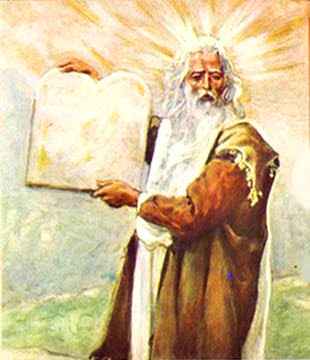
Everything Man is given comes in a finite package. Even the tablets Moses carried down from Mount Sinai were defined and bounded.

And so, when G-d saw Moses mourning over the broken tablets, He said, “Your powers were focused when you smashed the tablets. For now you will receive a Torah you may extend wider than the sea.”

When Man fails, he shatters the treasures G-d has put in his trust. But then he cries and picks up the shards to restore what he has ruined.

That is when he discovers that G-d Himself was hidden inside.
He discovers the Infinite.

-Rabbi Tzvi Freeman
“Breaking Limits”
Based on letters and talks of the Rebbe
Rabbi M. M. Schneerson
Chabad.org

If the cross of Christ were smashed, would we find that its pieces contain the infinite light of Jesus?