As for people not playing on your blog as you want… quit writing a blog if you want to keep things neat and tidy and simply how “you” feel. Publish a newsletter and ignore the private responses which you disagree with. I have to be honest, I believe you think and write wonderfully. I like the discourse here. However your premises bring with them a perspective that is often open to question. If you do not like the questions, it seems odd you would post things which are so open to critical analyses. In all love, it is like going to the South Pole and questioning why it is cold.
By the way, that was a pretty diplomatic way to get your point across, Tim.
Thanks. I revisit this idea every now and again and then the comments back off, I receive some encouragement, and I’m writing again.
But not this time.
I’m sure it’s me. I’m sure I’m just being an unreasonable blogger, especially given I’m writing in the religious blogging space. D. Thomas Lancaster mentioned in one of his recorded sermons that he doesn’t maintain a personal blog, and I think for some of the reasons I’m encountering.
As I face various matters in my personal life (in spite of what many of you may think, I really don’t share everything that’s going on with me on this blog) as well as issues of continuing in my faith, I realize I don’t want the additional “drama” that sometimes happens in the comments section of my blog. I rarely comment on the blogs of others (at least compared to a few years ago) for the same reason.
So I’m closing comments on my blog. I was going to publish this blog on Friday morning and later on close comments, but that could seem like I’m just trolling for sympathy or whatever. It makes more sense to come to a clean stopping point this evening. Close comments and publish this blog post at the same time.
I may still write as Tim suggests without providing a venue for feedback. That may be frustrating to some, but not all blogs allow comments so there’s no rule that says I have to. There’s a process that lets anyone who really, really needs to say something to me to email me from within the blog, but that takes a few more steps than writing a comment and I don’t anticipate much of a response.
After some time, I may open the place up for comments again, but I’ll have to see what the experience is like with comments disabled for a while. For all I know, I may get used to the peace and quiet, and even to not having to write about everything that pops into my head.
I’ve actually been toying with the idea of doing a completely different blog, something not involved with religion at all (I do have a couple of other interests). I feel like a Don Quixote who has decided he doesn’t have to tilt at windmills any longer. I want to stop fighting “religious wars” for a while. I’d just like to spend some time enjoying being in the presence of God. There’s a certain freedom in that.
Truth is simple, it has no clothes, no neat little box to contain it.
But we cannot grasp the something that has no box. We cannot perceive truth without clothing.
So Truth dresses up for us, in a story, in sage advice, in a blueprint of the cosmos—in clothes woven from the fabric of truth itself.
And then, before we can imagine that we have grasped Truth, it switches clothes. It tells us another story—entirely at odds with the first. It tells us new advice—to go in a different direction. It provides another model of how things are—in which each thing has changed its place.
The fool is confused. He exclaims, “Truth has lied!”
The wise person sees within and finds harmony between all the stories, all the advice, every model we are told.
For the Torah is a simple, pure light, a truth no box can contain.
-Rabbi Tzvi Freeman
“Raw Truth”
Based on the Letters and Talks of the Rebbe, Rabbi M.M. Schneerson Chabad.org
Depending on our philosophical or theological orientation, we like to think we have a pretty good grasp of “the truth.” This includes the truth of who we are as human beings and, if we’re religious, the truth about the nature of God, Creation, and everything.
But as Rabbi Freeman points out, human beings cannot apprehend “raw truth”. If we could, if we could see truth the way we see the color “red” or hear a particular musical note, maybe we would all perceive “truth” (more or less) in the same way. Humanity wouldn’t be so conflicted. We would all “know truth”.
But we aren’t there, not yet. We don’t perceive raw truth anymore than we can see X-rays with the unaided eye.
So we “clothe” truth with interpretation and tradition. A number of recent conversations have re-enforced the fact (as opposed to truth) that all human beings, and particularly human beings who believe the Bible is the source of truth, are oriented by specific traditional methods of interpretation to believe the Bible says certain things. The problem comes in when we encounter people who have different traditions that tell them different things about the Bible than what our traditions tell us.
While I agree that there is probably a supernal Torah in Heaven that no box can contain, in order to “package” the Torah, or for that matter, the entire Bible in order to deliver it to humanity, it gets put in a box. It has to be clothed. It is a book written (originally) in several languages over thousands of years. The completed “product” is now many thousands of years old and has been translated into innumerable languages. Just in English, there are hundreds if not thousands of translations of the Bible.
And over those thousands of years, both in Christianity (in all its forms) and in Judaism (in all its forms), many traditions have sprung up to tell many different variant religious populations what the Bible is saying. When a tradition persists long enough, it ceases to be perceived as a tradition and it is commonly understood to be the truth…
…whether it is from God’s point of view or not.
They say “the clothes don’t make the man” and “never judge a book by its cover,” but quite frankly, we have no other way of understanding the Bible. We can’t access its “raw truth” and so we have interpretation by tradition. This is stated rather plainly in (especially) Orthodox Judaism. The local Chabad Rabbi told my wife that the Torah can only be understood through tradition. My experiences studying in various churches over the years tells me that Christians interpret the Bible based on traditions too. We just don’t talk about it. We like to think we can read the plain meaning of the text, especially in English, and know just what it is saying. However, the reality of the situation is that we understand, for instance, the letters of the Apostle Paul based on the traditional interpretation of those letters, not necessarily what Paul was actually trying to communicate.
“Your talent is God’s gift to you. What you do with it is your gift back to God.”
-Dr. Leo Buscaglia
I’ve been told I’m a competent writer, talented, occasionally brilliant. I guess I better be since it’s my “day job”. It’s also a joy for me to write. I really get a lot of pleasure crafting a message in text. I usually enjoy talking about what I write, but periodically the joy gets sucked right out of the experience when all people seem to want to do is argue about what I write.
The point of my writing isn’t for me to tell you what the truth is necessarily. I write this blog to chronicle my process in the pursuit of truth. If you read all of my blog posts chronologically, I would hope you’d see a development or evolution in my comprehension of the Bible from a particular point of view (which may not be your point of view). It’s the progression of my traditional interpretive matrix. I’m tailoring the clothing in which to dress the truth of the Bible.
You probably dress the Bible in different clothing and then we argue about what sort of suit “truth” is dressed in this morning. The “Emperor” always wears clothes, and our debate is only over which sort of clothing he’s put on (or rather, what we’ve put on him).
Only God sees the Emperor without clothes.
They will not teach again, each man his neighbor and each man his brother, saying, ‘Know the Lord,’ for they will all know Me, from the least of them to the greatest of them,” declares the Lord…
–Jeremiah 31:34 (NASB)
We aren’t there yet. This is a prophesy about the coming Messianic age. From my point of view, Yeshua (Jesus) initiated the very beginning of this age into our world, but it will not reach fruition until his return when each of us will have such a filling of the Spirit of God, that we will apprehend Hashem in a manner greater than the prophets of old. We will literally “know God”. We will see the truth unclothed, the raw truth…
…but only then.
For now we see in a mirror dimly, but then face to face; now I know in part, but then I will know fully just as I also have been fully known.
–1 Corinthians 13:12
This is how we see the truth right now, just as a dim reflection, a faint image, hardly perceptible, open to interpretation as to what is really being viewed. Paul knew this truth and preserved it for us but we don’t believe him. We don’t want to believe him, because believing we can know the truth in absolute terms now gives us emotional security. We don’t like a world that is suspended in dynamic tension between seemingly inconsistent and opposing thoughts, beliefs, and faiths. It’s unsettling.
But like it or not, that’s where we are. I’m sure I’ve got a lot of things wrong. I don’t always answer the questions posed to me because I don’t always have even an opinion on the answers. I’m not “the Bible Answer Man.” I don’t always know.
I wrote a completely different “morning meditation” that I had planned to publish today at the usual time (4 a.m. Mountain Time), but I pulled it out of the queue because it was more of the same and I anticipated more of the same comments and responses.
Who wants more of that?
I used to actually learn a lot from the comments and the insights of the people conversing with me and each other, but now I’m not sure I’m learning so much. Now I feel like we’re just going around and around in circles and the expectation is that I must change my mind and either think and believe like a more traditional Christian, or think and believe like how an Orthodox Jew views a Noahide.
But I’m not those types of people and that’s not how I experience the Bible’s “clothing,” so to speak.
I also feel like there might not always be an interest in me and what I think but rather, that my blog is being used as a pulpit for someone else’s idea, as a platform to convince my readers to take on a different theological point of view. Certainly some people reading my blog could be undecided about Christianity or Judaism. Did I create this blog to promote viewpoints I don’t endorse?
There’s a fine line as to just how much debate and disagreement to tolerate for the sake of learning. How much of it should I allow and where’s the cut off line? How “fair” should I be before exercising my administrative control as the blog owner? I don’t know. I feel like I’ve been pretty liberal in my policy on comments compared to some others. I rarely edit or delete comments (although I did delete a comment just yesterday).
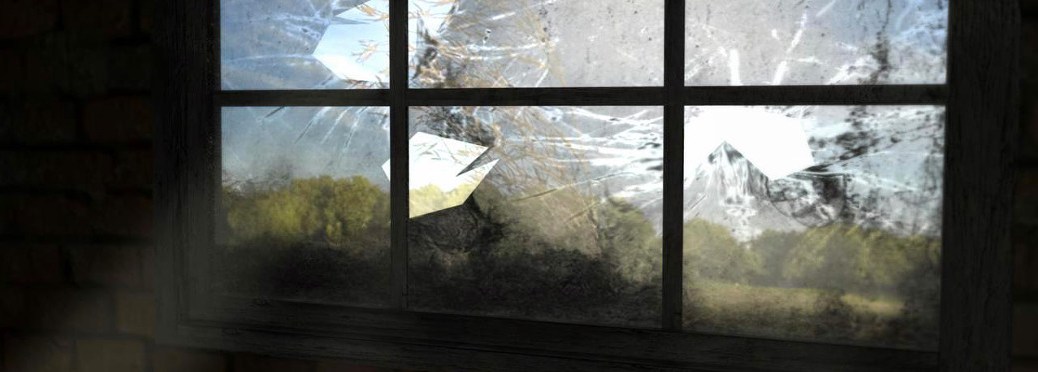
You don’t have to agree with me and I don’t have to agree with you. That doesn’t make any of us either right or wrong. It just means we’re attempting to discuss what clothes the Emperor might be wearing today. It’s like viewing the truth through a dirty window. None of us see it very well. The problem is when we believe we see truth all too clearly.
My father wrote that he heard in the name of the Alter Rebbe that all rabbinic authors until and including the Taz [1] and Shach, [2] composed their works with ruach hakodesh, the Divine Spirit. An individual’s ruach hakodesh, as explained by Korban Ha’eida in Tractate Sh’kalim (Talmud Yerushalmi), end of ch. 3, means that the mysteries of Torah are revealed to him. This comes from the aspect of chochma in its pre-revelation state. [3]
“Today’s Day”
for Tuesday, Sh’vat 6, 5703
Compiled by the Lubavitcher Rebbe; Translated by Yitschak Meir Kagan Chabad.org
The sacred Zohar teaches that God, the nation Israel, and the Torah, are one. This suggests that God may be experienced through those phenomena that are also perceived to be eternal. Since Israel is eternal [by Divine oath, Genesis 15] and since the Torah is eternal, God/Israel/Torah are inextricably linked by common eternity.
I know today’s “morning meditation” may be a little esoteric for some of you, and I’ve been debating whether or not to even write it. However, I think there’s a certain benefit in visiting the relationship between God, the Torah, and the people and nation of Israel at a more mystic or metaphysical level. God, after all, is not human, so we shouldn’t expect His methods to correspond to human limitations. After all, if God created the Torah, what is it?
It is true that the Zohar writes, “G-d looked into the Torah and created the World”.
Of course, the Torah, in its written form, only briefly describes the process and sequence of Creation. However, we should not think that because of its deceptively brief and general description that the Torah does not contain within the text the plan for the entire multitude of Creation.
The idea is that there is a Heavenly Torah possessed by God that, when given to the nation of Israel at Sinai, was “clothed” so that it could exist in the material world and be comprehended by human beings. That makes all written Torah scrolls, though immeasurably precious, mere shadows of the supernal Torah of God. Alternately, all earthly scrolls are “encoded” with the information in the Heavenly Torah, and we could read it if we just knew how.
It is said that the world was created for the sake of Torah, but the world would have ceased to exist of the Israelites had refused the Torah at Sinai. Fortunately, this did not take place.
OK, I know what you’re thinking. Many of you are not going to be willing to take the Zohar as an authoritative source of information, and many of you don’t believe there is a supernatural equivalent of the Torah in Heaven that corresponds to the Torah on Earth.
But we know through the Epistle to the Hebrews that there is a Heavenly court that corresponds to the Temple in Jerusalem (when it exists) and God commanded Moses to construct the Mishkan (Tabernacle) according to a model he was shown on Mt. Sinai (Exodus 25:40), indicating that there is a perfect Heavenly version of the Tabernacle Moses was to have constructed in the desert.
If the Tabernacle and every single object in it has Heavenly equivalents, including priests, and including a High Priest, why not the Torah?
This would make Israel, that is, the Jewish people and the inheritors of the Torah and the covenant at Sinai particularly unique among all the nations of the Earth. Even the Master said “Salvation comes from the Jews” (John 4:22) illustrating that apart from Israel, no other person or nation can be redeemed and reconciled with God. The means into eternity for the people of the nations is the eternity of Israel.
The Land of Israel shares in this eternity. The earth’s perennial cycle of birth, growth, decay, death and rebirth, express a movement of regeneration and renaissance. There are intimations of immortality: The trees shed their leaves and fruits onto the earth, and when they decompose and merge with the earth, that very earth provides the necessary nutrients for the tree to bear fruit in the future. Plants leave their seeds in the ground, these continue to sprout plant life from the earth after the mother herb has been taken and eaten.
Further, the Land of Israel is invested with a special metaphysical quality which is inextricably linked to Knesset Yisrael, historic Israel. The first Hebrew, Abraham, entered into the “Covenant between the Pieces,” that God’s promise of world peace and messianic redemption will be realized in the City of Jerusalem. Hebron’s Cave of the Couples — Abraham and Sarah, Isaac and Rebecca, Jacob and Leah — was the very first acquisition by a Jew of land in Israel, purchased as the earthly resting place for the founders of our faith. At the very same time, it is also the womb of our future, a future informed by the ideas and ideals of our revered ancestors. “Grandchildren are the crowning glory of the aged; parents are the pride of their children” [Proverbs 17:6].
-Rabbi Riskin, “The Unity of God, Torah And Israel”
In the quote from “Today’s Day” above, it is said that the Sages of the Talmud were inspired to write by the Holy Spirit. Since Christians believe that only Christians have the indwelling of the Spirit, this is going to seem at least confusing if not outright unbelievable. On the other hand, there’s another covenant to consider:
Behold, days are coming,” declares the Lord, “when I will make a new covenant with the house of Israel and with the house of Judah…
–Jeremiah 31:31 (NASB)
I will put My Spirit within you and cause you to walk in My statutes, and you will be careful to observe My ordinances.
–Ezekiel 36:27
Given Acts 2:1-4, you’d think that only Jews who are disciples of Yeshua (Jesus) would receive the Holy Spirit, but what if we’re wrong? What if the Sinai Covenant and the fact that the New Covenant being made only with Israel and Judah have a direct impact on both Jewish disciples of Yeshua and the rest of the Jewish people, because God, the Torah, and Israel are one?
I do not agree that mainstream Jews are apostates. I think that is far too strong. In fact, I’ll go one step further, I believe a parallel outpouring of the Spirit has happened among traditional Jews, not unlike the one happening to the congregation of Messiah. Isaiah 59:21, “And as for me, this is my covenant with them,” says the LORD: “My Spirit that is upon you, and my words that I have put in your mouth, shall not depart out of your mouth, or out of the mouth of your offspring, or out of the mouth of your children’s offspring,” says the LORD, “from this time forth and forevermore.””
I know this stands outside of most of what I consider traditional Christian doctrine, but if God doesn’t abandon His covenants and His people and He always keeps His promises, then we Gentile Christians can hardly dismiss Israel out of hand. In fact, if the redemption of the nations, of we Christians, is solely dependent upon the “oneness” Israel has with the Torah and with God, and if God, according to the New Covenant, will redeem all of Israel (Romans 11:26-27; Isaiah 59:20,21; 27:9 (see Septuagint); Jer. 31:33,34), then maybe one of the things we Gentile believers better get busy at is supporting Jewish observance of the Torah and stop working so hard at trying to convert Jews to Christianity. After all, Ezekiel 36:27 directly links Jewish observance of Torah with God’s Spirit being placed within them.
God will provide the revelation of Messiah to Israel and indeed, this has already begun as evidenced by the modern Messianic Jewish movement. But Messianic Jews are also to be Torah observant Jews. Maybe the main issue at hand isn’t non-Messianic but otherwise observant Jews, but those who are secular, assimilated, and yes, even “Hebrew Christians” who have set aside the Torah for the “promise” of a Gentile version of grace (not that grace and Torah are mutually exclusive…far from it).
God is with His people Israel, all of them. God is also with the Gentile disciples of the Master. None of us has the perfect apprehension of how to best serve God, though often we convince ourselves we possess such a thing. In the end, God will open all our eyes and show us what we saw correctly and what we were blind to. Then God will forgive, and all of the drama and trauma we experience in the world of religion today will just fade to black.
The Spirit is with us. Let us listen to what He is saying.
I know this blog post is probably theologically “sketchy” so I expect some pushback. On the other hand, this is something I felt needed to be said, no matter how imperfectly I said it.
Footnotes
1. Acronym of Turei Zahav on Torah law by R. David Halevi, d. 1667. 2. Acronym of Siftei Kohein on Torah law by R. Shabtai Hacohen, 1622-1663. 3. See “On Learning Chassidus,” Kehot, p. 18.
Saul understood the disciples of Yeshua as a dangerous sect of Judaism that needed to be silenced before it spread any further. In Saul’s day Judaism contained a variety of sectarian movements. The word “sect” translates the Greek word “hairesis.” It is the same word for “choice,” or “opinion.” Over time, as Christianity battled against the deviant hairesis of Gnosticism, the meaning of the word evolved into the new concept of “heresy.” In the days of the apostles, however, the word primarily referred to a faction of thought and practice within a larger group. For example, the book of Acts refers to the “sect of the Sadducees” (Acts 5:17) and the “sect of the Pharisees” (Acts 15:5), which was “the strictest sect of [the Jews’] religion” (Acts 26:5 NASB). It also refers to the disciples of Yeshua as the “sect of the Nazarenes” (Acts 24:5).
The first-century Jewish historian Josephus used the word hairesis to describe “schools of thought” within the Jewish people: Pharisees, Sadducees, Zealots, and Essenes. In Josephus’ writings the word hairesis only means a faction within the broader religion of Judaism. It does not imply heresy.
-D. Thomas Lancaster
from “Damascus Road Encounter,” pp.15-16 Messiah Magazine issue 8, Winter 2015/5775
I find I can’t read Luke’s “Acts of the Apostles” anymore without thinking about the church I used to attend and the reasons I left. The head Pastor during the two years I attended, was working his way through the Book of Acts in his sermon series, preaching on it verse by verse.
During the first year I was at this church, I was studying Lancaster’s Torah Club Volume 6: “Chronicles of the Apostles,” which is a detailed analysis of Acts from a Messianic Jewish point of view (based on the theology and doctrine espoused by First Fruits of Zion). Between Pastor’s weekly sermons and my Torah Club studies, I became very familiar with Acts, perhaps more so than any other single book in the Bible. So now, when I read Acts, I think both of Pastor’s sermons and of Lancaster’s teachings.
FFOZ’s Messiah Magazine is a less “scholarly” publication compared to Messiah Journal and is written, in my opinion, for people with a more traditional Christian mindset who are interested in what I call “Messianic Judaism 101.”
That’s not a bad thing. When encountering Messianic Judaism for the first time, it’s helpful to have an elementary point of entry that speaks to someone not familiar with that perspective. I guess I’ve been studying too long to be challenged by entry-level material.
But I found myself wishing this (Sunday) morning that I could share Lancaster’s article with the folks at the Sunday School class I used to attend. It’s a vain hope. For two years, I tried to make a positive impression on the class regarding Messianic Jewish thought and perspective on the Bible, and while some people found some of what I said compelling, ultimately, for two years, I was spinning my wheels. Paradigms are not easily shifted, and sometimes they are so cemented into place, that it becomes all but impossible (at least for human beings) to shift them perceptibly. Any doctrine outside of what is taught by the local church is considered heresy.
Which brings me to the quote from Lancaster’s article.
We experience now, as did the Jewish people in the days of Saul/Paul, a number of different “sects,” both within Christianity and Judaism. If we take all this within the context of the original meaning of the word “hairesis,” then we can consider the different denominations of Christianity and the different branches of Judaism as different factions, or schools of thought and practice, within their broader respective religions.
But where does that leave modern Messianic Judaism and her (somewhat) parallel sister movement Hebrew Roots? Can we consider them two different “sects,” and valid “schools of thought and practice” within a larger religious context?
I’ve been following a number of different blogs over the past week or so and monitoring a series of “differences of opinion” (to put it mildly in some cases) that would seem to belie that thought.
Derek Leman
For instance, on Derek Leman’s Messianic Jewish Musings, there is a lively debate between Messianic Jews (and Gentiles) and an Orthodox Jewish person about the validity of Christianity as a religion, including Messianic Judaism, which this fellow (Hi, Gene) believes to be a subset of Christianity rather than a “school of thought” within Judaism.
Pete Rambo issued a rather provocative challenge on his blog by “offering a $10,000 reward to the person who can prove unequivocally, from Scripture alone, that God changed the Sabbath day from Saturday, the seventh day, to Sunday the first day.” Naturally, a “spirited debate” ensued, although there only seems to be one person attempting to “collect the reward.”
And then, on Peter Vest’s blog, he proposes the interesting idea that the later Rabbis of the Talmud rejected what Peter believes was the “One Law” teachings of the Second Temple era Rabbis. There’s no particular argument going on in the comments section of that blog (yet), but it nevertheless presents another variant opinion on what the Bible teaches us about Jewish and Gentile interactions in the first-century Jewish “stream of thought” of “the Way.”
I must say that adherents to these various “sects,” in these blog discussions, can express quite a bit of “passion” in defending their particular opinions, but sometimes it (seemingly) goes beyond that.
I haven’t watched the YouTube video yet (and I probably never will), but according to Peter on his blog, a couple of gentlemen in some sort of One Law radio talk show outright said that Peter was a “liar” relative to his statements about Judaism and the validity of the Oral Torah.
Now I can’t state strongly enough that I haven’t watched the video and so I don’t directly know what was or wasn’t said. I do know that it’s not unheard of to misinterpret someone’s opinion of you, especially if that opinion is at all critical. I don’t know what the people Peter mentions said or didn’t say, so what I’m writing here isn’t a matter of taking sides or calling anyone out.
However, if we, for the moment, accept Peter’s allegations at face value, then we have encountered a problem. All of us in our various “sects” of Christianity, Judaism, or whatever, actually have the same core goal: drawing nearer to God. However, each of us within our own specific “streams of thought” imagine the details of just how to accomplish that task rather differently. And yet, in spite of the fact that we know there have been multiple differing “streams of thought and practice” about the Bible and God for well over two-thousand years, significantly predating the existence of anything called “Christianity,” we still insist that whatever religious stream in which we find ourselves is the only one with “the truth.”
Everyone else is wrong and we have a duty and obligation to go online and, by golly, prove it.
It is one thing to disagree with someone else, to believe their particular interpretation of the Bible is in error, that the person is (Heaven forbid) wrong, mislead, or even deluded. It’s another thing entirely to believe another person’s difference of opinion indicates that the individual is a willful liar. I hope that’s not what’s going on here, because it would be a sad commentary on two people who are professed disciples of Yeshua (Jesus), but as I said, I don’t really know.
And that brings us back to Lancaster’s article and “Saul, the Heresy Hunter” (I say that somewhat tongue-in-cheek).
Christian teaching emphasizes the story of the conversion of Saul the Jew, a persecutor of the early church, into Paul the Christian, as a pattern for Jewish believers to follow. Just as Saul renounced Judaism and even changed his name to Paul, so too, Jewish believers should renounce their old allegiances and embrace their new identity in Christ. A careful reading of the story of Saul’s Damascus road encounter, however, does not indicate a conversion from Judaism to Christianity, nor does it indicate a change in name from Saul to Paul.
-Lancaster, p.15
You’ll have to read Lancaster’s full article (only four pages long) to see how he defends his opinion (successfully from my point of view), but it indicates a couple of things. First, that Saul was wrong about his persecution of the Jewish members of “the Way,” and that he was rather dramatically forced to face his mistakes by an encounter with the Master of that movement, Yeshua (Jesus) of Nazareth. Second, we discover that (in my opinion and Lancaster’s) Christian interpretive tradition is wrong about what happened to Saul, what sort of “conversion” he underwent, and why he had two names.
Saul did undergo a radical transformation of the heart, soul, and mind. One might say that he experienced a spiritual conversion — something the Master called being “born again.” His life would never be the same. Compared with the “surpassing value of knowing Messiah Yeshua,” Saul counted all his prestigious heritage and achievements in Judaism as mere rubbish (Philippians 3:8 NASB). Yet that change in priority did not indicate a change in religious affiliation. Saul encountered the Messiah on the way to Damascus, but he did not abandon his Jewish identity or his loyalty to the Torah, the Jewish people, or Jewish practice.
-ibid, p.18
If I said something like that in at least some churches, I would likely encounter strong and passionate counter arguments that anything “Jewish” did not survive in Paul after his Acts 9 encounter with Jesus. Nevertheless, that’s how I (and Lancaster, and many others) read the life of Paul in the Apostolic Scriptures.
So as we’ve seen, there have been multiple sects of Judaism that predated the earthly ministry of Jesus by quite a bit, and there have been multiple sects of Christianity from pretty much the point when the term was first used.
What do we do about that, especially in the volatile environment of the religious blogosphere?
View people you are likely to quarrel with as your partners in personal growth. They are likely to make you more aware of your vulnerabilities, limitations, and mistakes. Don’t let this get you down. Rather, let it serve as your coach. You now have more awareness of what you need to strengthen, fix, and keep on developing.
-Rabbi Zelig Pliskin
from Daily Lift #236: “My Partner in Personal Growth” Aish.com
If you’re religious in any sense of the word (I know that some Christians say their faith is a “relationship, not a religion” but go with me on this one) then other people are going to disagree with you. Get used to it. If you are going to discuss your religious beliefs on a blog and allow others to comment on your blog, people will comment and some will disagree with you. Others will write their own blog posts disagreeing with you, sometimes in the most caustic and “unChristian” like manner.
If we are to believe what Rabbi Pliskin says, all of our opponents are our partners in personal growth. Without them, we might never discover weaknesses, vulnerabilities, and limitations in our own character as well as our knowledge. They force us to constantly stretch ourselves so that we will be more aware of our strengths and deficits tomorrow than we are today. As one motivational statement I’ve seen at my gym says, “If it doesn’t challenge you, it doesn’t change you.”
Consider it all joy, my brethren, when you encounter various trials, knowing that the testing of your faith produces endurance. And let endurance have its perfect result, so that you may be perfect and complete, lacking in nothing.
–James 1:2-4 (NASB)
It seems that Rav Shaul (otherwise known as Paul the Apostle) and Rabbi Pliskin agree on something.
God called unto man [Adam] and said to him, “Where are you?”
–Genesis 3:9
We read in Genesis that after Adam sinned, he tried to hide in the Garden of Eden. Was Adam so foolish to think that he could hide from God? Certainly not! He was hiding from himself, because it was himself that he could no longer confront. God’s question to him was very pertinent: “I am here. I am always here, but where are you?”
Adam’s answer to God describes man’s most common defense: “I was afraid because I was exposed, and I therefore tried to hide” (Genesis 3:10). Since people cannot possibly conceal themselves from God, they try to hide from themselves. This effort results in a multitude of problems, some of which I described in Let Us Make Man (CIS, 1987).
We hear a great deal about people’s search for God, and much has been written about ways that we can “find” God. The above verse throws a different light on the subject. It is not necessary for people to find God, because He was never lost, but has been there all the time, everywhere. We are the ones who may be lost.
When an infant closes it eyes, it thinks that because it cannot see others, they cannot see it either. Adults may indulge in the same infantile notion – if they hide from themselves, they think they are hiding from God as well. If we find ourselves by getting to know who we are, we will have little difficulty in finding God, and in letting Him find us.
Today I shall…
…try to establish a closer relationship with God by coming out of hiding from myself.
-Rabbi Abraham J. Twerski
from “Growing Each Day” for Shevat 4 Aish.com
As human beings, we have the power to remake ourselves and to some degree, even those around us, just by how we behave and how we choose to think of ourselves and other people. A person who goes around chronically depressed or angry is likely to be pretty unhappy and be surrounded by other depressed or angry people.
OK, it’s more complex than that, but the idea is that if you continually involve yourself in doing good and behaving (and even thinking) as if you are constantly surrounded by good people, it is more likely that you will feel better about yourself, and other people will regard you well. At least it beats the alternative I outlined in the previous paragraph.
Rabbi Twerski brings up an interesting idea. People are always searching for God. I myself mentioned that I am continually pursuing God. Why? Is God running away from me? According to R’ Twerski, it’s the other way around. If I feel the need to pursue God, it’s because I’m the one running away from Him. If I need to search for God, it’s because I’m (futilely) trying to hide from Him. In the end, since no one can run and hide from God, all I accomplish is running and hiding from myself, and probably many other people in my life.
Serenity promotes peaceful and harmonious relationships with other people. We have often cited the verse, “As in water, face to face, so too is the heart of one person to another” (Proverbs 27:19). When you speak serenely to someone, the peaceful energy puts the other person in a better state, and usually that person will speak more pleasantly to you.
Obviously, this won’t work in every single case, but as a general rule, how you speak to someone (or address them in other ways including digital social media) is going to have an effect on how they respond to you.
But remember that all this starts with you and how you talk to yourself.
You are the person with whom you talk to most often. To become a serene person, consistently talk to yourself serenely.
Become aware of the tone of your voice when you speak to yourself. This often is so automatic that many people never consider it an issue. But it can be a major factor in whether or not you are usually serene.
(From Rabbi Pliskin’s book, Serenity, p.37)
-R’ Pliskin
“Speak to Yourself Serenely”
from “Today’s Daily Lift #98” Aish.com
If you believe you are not a good person and that others don’t like you, chances are you’ll behave as if you’re not a good person and people really won’t like you. I’m not advocating that you become an egomaniac and think you’re the best thing God created since sliced bread, but God did create you (and me) for a reason, and He must have had a good reason for doing so.
I’ve heard it said (I can’t find the source right now) that each Jew should consider the world as having been created just for him or her. I know that sounds pretty bold, but expanding the idea to all human beings, we learn that each individual is precious to God and so we each have a very specific purpose in His design. God just didn’t create a “human herd” and relate to us only as “the masses,” God relates to us as individuals, just as He did with Adam when he tried to hide from God (or rather, from himself) in the Garden.
If each of us is that important to God, shouldn’t we treat ourselves with respect and speak to ourselves with serenity?
One of the scribes came and heard them arguing, and recognizing that He had answered them well, asked Him, “What commandment is the foremost of all?” Jesus answered, “The foremost is, ‘Hear, O Israel! The Lord our God is one Lord; and you shall love the Lord your God with all your heart, and with all your soul, and with all your mind, and with all your strength.’ The second is this, ‘You shall love your neighbor as yourself.’ There is no other commandment greater than these.” The scribe said to Him, “Right, Teacher; You have truly stated that He is One, and there is no one else besides Him; and to love Him with all the heart and with all the understanding and with all the strength, and to love one’s neighbor as himself, is much more than all burnt offerings and sacrifices.”
–Mark 12:28-33 (NASB)
I know I’m stretching the interpretation of these verses a bit, but is it too much to consider ourselves as our own neighbor? If how we treat others flows out of how we speak to and treat ourselves, then shouldn’t we first treat ourselves with love and respect and allow that to direct how we speak to and treat others? After all, if we are to love our neighbor as ourselves, we must first love ourselves.
But the first of these two greatest commandments is to love God. Why? Because He loves us in an unparalleled and unbounded manner. God’s capacity to love far exceeds any person’s capacity, so He loves each one of us far more than we could possibly love ourselves, each other, and much more than we are capable of loving Him.
Life isn’t easy. Even having the most positive attitude possible won’t prevent bad things from happening. It won’t always prevent you (or me) from sinning and letting that sin separate you (or me) from God and other people.
Akavia the son of Mahalalel would say: Reflect upon three things and you will not come to the hands of transgression. Know from where you came, where you are going, and before whom you are destined to give a judgement and accounting.
If we keep God constantly before us and don’t attempt to hide from Him (which is impossible) and ourselves, then Akavia ben Mahalalel is right and we won’t (at least not as often) come into the hands of transgression and sin. And if we accustom ourselves to do more good deeds instead, then who we are will slowly change for the good and who we are with God and with others will change for the good as well.
Finally, brethren, whatever is true, whatever is honorable, whatever is right, whatever is pure, whatever is lovely, whatever is of good repute, if there is any excellence and if anything worthy of praise, dwell on these things. The things you have learned and received and heard and seen in me, practice these things, and the God of peace will be with you.
–Philippians 4:8-9
If we pursue God’s peace, then His peace will find us.
Just listened to a little of David Rudolph’s sermon entitled “Why Zakenim??” About 13 minutes into it, he mentions that there are some One Law interlopers at Tikvat causing trouble. What kind of trouble?
They’re talking about One Law (which is sin enough apparently) but they’re also trying to get people to sign a petition to remove David Rudolph from office.
These One Law interlopers apparently feel that there is enough grass roots support for this to occur.
Interesting.
For the record, I had nothing to do with this…but naturally I support it. The ironic thing is this: the message is about Zekenim at Tikvat. But Rudolph recently caused virtually all of the elders to leave. They’re now meeting at Grove Ave. Baptist Church on Saturday mornings. Why Grove? I have no idea except that I think it’s odd OUT OF ALL THE CHURCHES IN RICHMOND they chose the one where my family visits.
I periodically engage Peter, both in the comments section of his blog and in this one, about topics of mutual interest. Most of the time, we disagree, which is fine, but occasionally, he comes up with an opinion to which I must respond with a more detailed message. His commentary regarding Rabbi David Rudolph and the Tikvat Israel Synagogue is one of them.
In his blog post and subsequent comments, Peter makes it seem as if Rabbi David is running a “one-man show” as sole leader of the synagogue, and that a significant minority among the members of the synagogue are circulating a petition to have him removed because he opposes what has been called a One Law theology, which this group apparently wants to see put in place as Tikvat Israel’s official theological position.
Except that when I actually listened to Rabbi David’s sermon Why Zakenim or “Why Elders,” I got a completely different impression.
The link I just posted leads to a podcast of the sermon. It’s about twenty-five minutes long, so if you’ve got that amount of time, you might want to listen to the entire presentation for context.
This sermon is part of what Rabbi David calls the “Messianic Jewish Discipleship 101” series, which seems a compelling subject in and of itself. In this sermon, Rabbi David presents his view in support of congregational elders with passages taken primarily (but not exclusively) from the Apostolic Scriptures or what most Christians call the New Testament.
I won’t break down each and every part of the sermon for you. Like I said, you can listen to it for yourself, but in brief, R’ David presents a definition of the role of congregational elders in three parts:
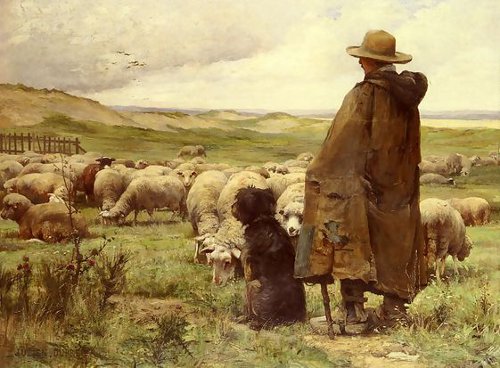
Shepherds to guide the flock
Shepherds to guard the flock
Shepherds to judge matters related to the flock
I was on the board of elders for a small congregation for several years and I can attest that we were called upon to fulfill all of those roles. When I attended a local Baptist church, the head pastor and the board of elders also fulfilled these functions. In listening to R’ David’s sermon, I discovered that he is part of a three-person board and additionally has another person acting as a Rabbi-in-training, so R’ David isn’t acting as a “one-man show,” in spite of what Peter intimated on his blog as I quoted above.
The portion of the sermon relevant to Peter’s blog post has to do with elders as guards (and probably as guides). It seems there were two incidents that had recently occurred at Tikvat Israel. The first had to do with a single individual who was visiting the synagogue for Shabbat services and handing out religious materials, apparently in contradiction to the official position of the congregation. R’ David was away that day, and his Rabbi-in-training, also named David, saw what was going on and gently (according to the sermon) redirected this individual to the congregation’s bookstore and some materials more in keeping with Tikvat Israel’s theology and doctrine.
The second incident had to do with another visitor who had the chutzpah to pass around a petition among the members calling for Rabbi David’s removal from leadership, apparently because R’ David does not support a “One Law” theology, and this individual wanted to see the Rabbi replaced with someone who supported One Law.
It’s important to note here that R’ David in his sermon clearly differentiated between visitors and members in the synagogue. In both of these cases, it seems that lone visitors were coming in from the outside and “disturbing” (my word, not David’s) the members of the congregation, rather than a minority group among the members calling for Rabbi David to step down.
The sermon didn’t give any details as to the reaction of synagogue members to the petition in question, but R’ David did encourage the members to speak up when they encounter someone from the outside (or apparently inside) who is making statements or actions that are in opposition to the formal standards of the congregation. R’ David was careful to say that differences in opinion aren’t really the problem. The problem is with individuals who attempt to cause division and disunity in the congregation. This is part of the function of elders in the synagogue (or church), to guard the flock from “disturbing” theologies or doctrines coming in from the outside.
If you go to the Tikvat Israel website’s About page and scroll to the bottom, you’ll see items labeled “What We Believe” and “Position Papers”, and R’ David encouraged the members listening to his sermon to redirect anyone promoting “strange doctrines” to those materials so they could become familiar with the standards upon which the congregation is based.
I had a similar experience at the small Baptist church I mentioned before, where I attended services for about two years. The Pastor and I became well acquainted and we spoke regularly about our different theological and doctrinal views. At one point, I took our differences a step too far and criticized one of his sermons on my blog. He didn’t take kindly to that, nor the fact that I had leant someone at his church my copy of D. Thomas Lancaster’s sermon series (on audio CD) What About the New Covenant.
Although, I could have remained at the church, I would have had to censor myself both in congregation and on my blog and I made a decision not to do that. I ultimately chose to leave the congregation, not because I thought poorly of anyone (quite the opposite, there are many good and kind people in that church who are authentically serving God) but because their doctrine and mine were pretty far apart in a number of key areas. I wouldn’t be serving God by remaining as a disruptive influence, regardless of my motives.
Please notice that while I admit to lending teaching material that stands in opposition to local church doctrine to one of the church’s members, I didn’t start passing around a petition to get anyone removed or otherwise oppose the head pastor or any of the church elders in authority. That would have been at least improper and at worst insane (though not in the clinical sense).
In retrospect and particularly after listening to Rabbi David’s sermon, I can see how the church’s pastoral staff and board of elders were fulfilling their function in relation to me since I represented a doctrinal position that was in conflict with their official position. If they were willing to listen to my ideas and perspectives and volunteer to consume any resources I was able to provide, that’s one thing. But if I was deemed to be an element that might contribute to disunity and discord, then the elders had a responsibility to draw my attention to that behavior and expect some changes on my part.
Which is exactly what happened.
Rabbi David Rudolph
The result was that I decided to leave church and seek other avenues for community or association. Given all that, those two individuals who entered Tikvat Israel for the purpose of introducing doctrines contrary to the synagogue’s official position should expect the elders to address this issue and said-individuals could either decide to stay without trying to “rock the boat” significantly, or they could decide to do what I did and leave the congregation.
The only difference is that I attended that church for two years and, from what I got out of R’ David’s sermon, the two individuals involved were not regular attenders and certainly not formal members.
The moral of the story is that you don’t have to think exactly in the same way as the worship community you attend, but remember that the congregation has a group of elders who are responsible to guide and guard the sheep. Although I don’t see myself in such a light, I very well could have been perceived by some to be a “wolf in the fold”. If I find myself in a “fold” where I am incompatible with the rest of the “sheep,” it’s the job of the elders to inform me of that and it’s my job to decide how to respond as a person of good conscience and as a disciple of the Master.
I think the individuals cited in Rabbi David’s sermon needed to do the same.
"When you awake in the morning, learn something to inspire you and mediate upon it, then plunge forward full of light with which to illuminate the darkness." -Rabbi Tzvi Freeman










 Morning Meditations