Category Archives: Uncategorized

The Faithful Servant

In Buenos Aires, thousands of Jewish families hosted others who’d never before experienced a Shabbat.

-Simon Apfel
“The Shabbat that Shook the World”
Aish.com

To me, that’s the exact point of Gentiles having a familiarity with the Torah and the Jewish people. True, the Shabbos Project being described in the above-referenced article is the effort of Jews encouraging other Jews to observe the Shabbat, but Jewish people only make up a tiny fraction of the world’s population. If Gentiles do have a special and sacred role in relation to Judaism, it is to undo much of what we’ve done over the long centuries, and to actually encourage the Jewish people to observe the mitzvot. Historically the Goyim, and particularly the Christian Church, has done everything in their/our power to discourage Jews in Judaism, resulting in a power surge of secularism and assimilation among Jewish people on our planet. I think God wants us to change that.

I know I’ve written a lot about this lately, really a lot, but when I read that one sentence from the Aish article, I was once again reminded of a Gentile’s duty to the Jewish people. It won’t matter much if Gentiles start keeping the Shabbat if more Jewish people don’t.

There isn’t much material in Jewish publications about Gentiles keeping the Shabbat, and what’s available is negative. At least Messianic Judaism is encouraging Gentiles to keep Shabbos on some level.

The upside of my personal Shabbat project, which starts tomorrow evening, is that I get to experience something unique and precious, an encounter with God on Shabbos. The downside is that it only benefits me. I have a Jewish family I’d love to see observe Shabbat more than just the lighting of candles. If somehow what I’m doing were to contribute to them, then my role in this world would be complete.

So when He had washed their feet, and taken His garments and reclined at the table again, He said to them, “Do you know what I have done to you? You call Me Teacher and Lord; and you are right, for so I am. If I then, the Lord and the Teacher, washed your feet, you also ought to wash one another’s feet. For I gave you an example that you also should do as I did to you. Truly, truly, I say to you, a slave is not greater than his master, nor is one who is sent greater than the one who sent him.”

John 13:12-16 (NASB)

…the Son of Man did not come to be served, but to serve.

Matthew 20:28

I know I’m taking these verses out of context, but I can’t get past the feeling that we can learn a principle from them, not just that we have a duty as believers to serve each other and to serve humanity, but specifically that we Gentile disciples, out of sheer gratitude for our being brought into the blessings of the New Covenant through Israel’s relationship with God, need to return the favor by bringing Jews back to their own Torah and to Hashem, God of Israel.

That’s a tough thing to do without being seen as intrusive and offensive. Dressing up in kippot and tallitot isn’t going to “provoke Jews to jealousness” (Romans 11:11) or to zealousness, but those of us who are friends and family members of Jewish people can certainly try to contribute. If nothing else, we just need to get out of the way of Jewish people and Judaism. For institutional Christianity, this means ceasing from preaching against Judaism. No, I don’t just mean preaching pro-Jewish people sermons, but actually ceasing from preaching against the practice of Judaism for Jewish people, including and especially Jews in Messianic Judaism. More than that, we need to continually look for opportunities to support Jewish observance of the mitzvot.

So on one hand, I’m looking forward to my personal Shabbos Project, but on the other hand, it’s going to be pretty hollow. Not just because I’ll be alone but because no Jewish people will be involved. I won’t have served my purpose unless or until I’ve done something to support even one Jewish person in lighting the Shabbos candles, saying the blessings, or participating in Jewish community.

Only then will I, as well as the other Gentiles who have captured this vision, be worthy of being called the “crowning jewels of the nations”. Only then will the Master say to us, “well done, good and faithful servant” (Matthew 25:21). After all, when we serve the Jewish people, we are serving the Master:

“Then the King will say to those on His right, ‘Come, you who are blessed of My Father, inherit the kingdom prepared for you from the foundation of the world. For I was hungry, and you gave Me something to eat; I was thirsty, and you gave Me something to drink; I was a stranger, and you invited Me in; naked, and you clothed Me; I was sick, and you visited Me; I was in prison, and you came to Me.’ Then the righteous will answer Him, ‘Lord, when did we see You hungry, and feed You, or thirsty, and give You something to drink? And when did we see You a stranger, and invite You in, or naked, and clothe You? When did we see You sick, or in prison, and come to You?’ The King will answer and say to them, ‘Truly I say to you, to the extent that you did it to one of these brothers of Mine, even the least of them, you did it to Me.’”

Matthew 25:34-40

Discovering Myself by the Light of Torah

Question:

I came across your site and wow–I really want to become Jewish. My mother was a fairly devout Italian Catholic and my father an Anglican skeptic who never went to church. I was always so confused. But now your site has really turned me on to Judaism, a real coming home for me. What’s my next step?

Response:

Your next step is to become a better person. Develop greater faith in your soul, in your destiny, and in your Maker. Do more good, reach out to more people. Learn more wisdom, apply whatever you learn, and make life worth living.

But you don’t need to become Jewish to do any of that. Plenty of wonderful people doing beautiful things in the world are not Jewish, and G‑d is nonetheless pleased with them.

-Rabbi Tzvi Freeman
“Should I Convert to Judaism?”
Chabad.org

My wife was reading this in an email newsletter from Chabad last Friday afternoon. As I came home from work, I passed by her and happened to glance at what she was viewing on her computer. I briefly saw the title and was intrigued (since she’s already Jewish and conversion is a non-issue for her). Later on, I looked up the article and read through it.

The full content of what Rabbi Freeman wrote is astonishingly applicable to the debates we see happening between the Messianic Jewish and Hebrew Roots (particularly One Law/One Torah) movements. I recently became aware of an online dialog discussing whether the One Law/One Torah movement should or should not be considered a “Judaism”. Some of the more well-known pundits in that space were saying “no” based on the requirement to distance themselves from the large body of Talmudic authority and rulings (subsequent commentary indicates the opinions being expressed are more complicated, but that has little bearing on what I’m presenting here).

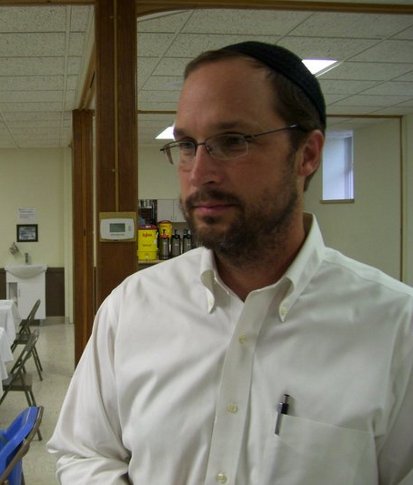
This is in contrast to how First Fruits of Zion (FFOZ) Founder and President Boaz Michael recently defined Messianic Judaism in his “Director’s Letter” in the Fall 2014 edition of Messiah Journal, p.10:

To me, Messianic Judaism is not just a Jewish-flavored version of Christianity. If I was asked to define Messianic Judaism, I would say, “Messianic Judaism is the practice of Judaism coupled with the realization that Yeshua of Nazareth is the Messiah, the New Testament is true, and the kingdom is at hand.”

Rabbi Stuart Dauermann in a recent blog post, quoted the first five of The Hashivenu group’s seven core principles, which also defines Messianic Judaism:

  1. Messianic Judaism is a Judaism, and not a cosmetically altered “Jewish-style” version of what is extant in the wider Christian community.
  2. God’s particular relationship with Israel is expressed in the Torah, God’s unique covenant with the Jewish people.
  3. Yeshua is the fullness of Torah.
  4. The Jewish people are “us” not “them.”
  5. The richness of the Rabbinic tradition is a valuable part of our heritage as Jewish people.
Boaz Michael
Boaz Michael

Rather than emphasizing the sufficiency or the primacy of scripture to the exclusion of all other considerations or practices as does One Law/One Torah, Messianic Judaism can be thought of in the manner of the other branches of Judaism in accepting, in addition to the primacy of Torah, all of the history, traditions, customs, wisdom, and interpretations of the great Jewish sages as part of their legacy, heritage, and lived daily experience, and added to all that, “the realization that Yeshua of Nazareth is the Messiah, the New Testament is true, and the kingdom is at hand.”

In his reply to the non-Jewish writer who was inquiring about conversion to Judaism, Rabbi Freeman continued:

You see, there’s Judaism and there’s Jewishness, and the two are not one and the same. Judaism is wisdom for every person on the planet and beyond. We call it the Torah, meaning “the teaching,” and it’s a divine message to all human beings containing the principles that much of humanity has already accepted as absolute truths. The idea that human life is beyond value is a teaching originating from Torah, as is the related concept that all human beings are created equal. So too, the right of every individual to literacy and education was brought to the world through Torah. And world peace as a value and goal was preached exclusively by the Torah and its prophets thousands of years before it became popular in the rest of the world. And of course, the idea that there is a single, incorporeal Being who creates and sustains all of reality, and is concerned over all that occurs with each individual, thereby giving each person, creature, event and object meaning, purpose and destiny–this is a core teaching upon which everything else rests, and the central teaching of the Torah.

That’s Judaism. Then there is Jewishness. To be Jewish means to belong to an ancient tribe, either by birth or by adoption (a.k.a. conversion).

I invite you to click on link I provided above and read R. Freeman’s entire commentary (it’s not very long). He says some amazing things about the comparison and contrast of Judaism and Jewishness. It seems, on some level, anyone who is responding to God through the basic presentation of the Torah and the awareness presented by Judaism can access God through that template, that is, through the relationship Israel has with God as understood through the Torah, but that “Judaism” isn’t the same as “Jewishness”.

Tribes have rituals. So do Jews. Males of the tribe wear particular items of clothing, such as tzitzit and kippot. Women keep a certain mode of modest dress and married women cover their hair. Men also wrap leather boxes containing parchment scrolls on the heads and arms every morning, while robed in woolen sheets with more of those tzitzit tassels. In our services, we chant ancient Hebrew and read from an ancient scroll. We have holidays that commemorate our tribal memories and establish our identity as a whole. Certain foods are taboo and other food is supervised and declared fit-for-the-tribe. Nope, you can’t get much more ancient-tribal than any of that.

The point is, none of that ritual stuff was ever meant as a universal teaching, except perhaps in a more generalized way…

Now, what I’m saying is not very PC nowadays. We live in a world of hypermobility. Not just because we own our own cars and reserve our own tickets online to go anywhere, anytime–but because we imagine our very identities to be just as mobile as our powerbook. Pick me up and take me anywhere. Today I’m a capitalist entrepreneur, tomorrow an Inuit activist, and the next day a Californian bohemian. And we can mix and match–today, you can be Italian, Nigerian, Chinese and Bostonian all in the same meal. So who is this Freeman character to tell me which tribe I belong to and which not?

To be frank, because this Freeman character considers the hyper-identity scheme to be a scam, a mass delusion and a social illness. You can switch your clothes, your eating habits, your friends, your social demeanor, your perspective on life and maybe you can even switch to a Mac. But G-d decides who you are, and the best you can do is discover it.

It almost seems as if Rabbi Freeman were borrowing his arguments from those I’ve recently heard expressed in Messianic Judaism, but maybe it’s the other way around. If indeed we consider Messianic Judaism as another branch of Judaism alongside the other branches, it stands to reason that how they think of “Judaism” and “Jewishness” should be similar, in this instance, to the Chabad among the other Judaisms.

At the same time, there are also Jewish disciples of Yeshua; their Jewishness remains significant, and it is central to their unique identity. Unity in corporate prayer between Messianic Gentiles and Jews is a beautiful and powerful testimony of Yeshua’s greatness. Such unity can only exist in a setting in which members are aware of their respective roles within the people of God.

-Aaron Eby
“Declaration of Intent for Messianic Gentiles,” p.47
First Steps in Messianic Jewish Prayer

Stand aloneOne of the “issues” that comes up, and Boaz Michael discusses it in the aforementioned “Director’s Letter” from Messiah Journal, is that Messianic Judaism has some difficulty in identifying the role of the Messianic Gentile within Jewish community. This, as I’ve mentioned before, is also one of my personal challenges, although I am not involved in face-to-face Jewish (or any other kind of) community at present. Still, every time I do “Jewish stuff,” it is prudent of me to be mindful of that community and to at least try to imagine what my role as a Gentile should be.

Gentiles who devote themselves to Yeshua of Nazareth are not only disciples; they are his subjects, and he is their King…

These Gentiles are no longer separated from Messiah or “alienated from the commonwealth of Israel and strangers to the covenant of promise” (Ephesians 2:12). Instead, they share in the inheritance and the destiny of the whole nation. In keeping with this identity, the God-fearing Messianic Gentile should not hesitate to join the Jewish people in formal prayer.

As Messianic Gentiles engage in these prayers, they must not lose sight of their own important and esteemed position as the crowning jewels of the nations.

-ibid

I previously wrote a two-part review of Mark D. Nanos’ paper ‘Paul’s Non-Jews Do Not Become “Jews,” But Do They Become “Jewish”?: Reading Romans 2:25-29 Within Judaism, Alongside Josephus’ which discussed some of the distinctive differences between “Jews” and “Jewishly” as it might have been perceived by the apostle Paul (and Nanos’ paper is now freely available online at the Journal of the Jesus Movement in its Jewish Setting (JJMJS) website).

I received a number of pointed responses based on the controversial nature of the topic, but then, the idea of Gentiles operating in Jewish religious and communal space as equal co-participants tends to get controversial.

If I can take Rabbi Freeman’s commentary and adapt it to the Messianic Jewish and Gentile framework, then it seems, as the Rabbi suggests, that Gentiles are perfectly free to take the higher principles of the Torah as universal, but should reserve those rituals that are specifically “Jewishly” for the “tribal” Jewish people as the Rabbi defines them.

R. Freeman finished his response with the following paragraph.

I believe that what G-d wants from each person is that s/he examine the heritage of his ancestors, discover the truths hidden there and live in accordance with them, knowing that this is what his Creator wants from her/him. The truths are there because all of human society was originally founded upon the laws given to Adam and to Noah, along with those laws that all the children of Noah accepted upon themselves. These truths are found by examining one’s heritage through the light of Torah. The Jewish Tribe are the bearers of that light. But you don’t need to become Jewish to partake of it. Light shines for all who have eyes.

Granted, he isn’t writing with the Messianic Gentile in mind and our status in relation to Israel through our devotion to Messiah Yeshua isn’t the same as a Noahide, but I believe his basic point is essentially the right one. Jews, as tribal members (although Israel isn’t truly tribal in the modern era, they inherit was belongs to the tribes as their descendents), are the original possessors of the Torah including all of the tribal rituals assigned to them by God. The rest of us, once we are drawn to Israel by the light of Torah and the light of Messiah, discover the truth of the Torah by its light from within our own national and ancestral contexts. This is why a Gentile approaching Messianic Jewish prayer does so along a somewhat different trajectory than a Messianic Jew.

Torah platesThis is why my upcoming personal Shabbos Project is traveling a somewhat different path and why I’ve had difficulty in attempting to interpret the path as it applies to me. I’ve come to a sort of peace with it now that Shabbos is approaching and I no longer feel intimidated about having to “get everything right”. The point of the experience is to experience God, not to worry about my level of observance. I’m not going to look anything like an Orthodox Jew nor should I ever try. I want to honor God and enter His presence and with that uppermost in my mind and heart, the rest will take care of itself with a little judicious preparation.

In some ways, I’m facing the Shabbat for the first time and already I’m discovering more about myself and who I am through the Shabbat and the light of Torah, which is the portrait Rabbi Freeman has so aptly painted.

The Aftermath of Reviewing Michaelson’s “God vs. Gay”

And you shall love Hashem your God …

Deuteronomy 6:5

And you shall love your neighbor as yourself…

Leviticus 19:18

Both of these statements are positive commandments. We might ask: How can a commandment demand that we feel something? Since love is an emotion, it is either there or it is not there.

The Torah does not hold that love is something spontaneous. On the contrary, it teaches that we can and should cultivate love. No one has the liberty to say: “There are some people whom I just do not like,” nor even, “I cannot possibly like that person because he did this and that to me.”

We have within us innate attractions to God and to other people. If we do not feel love for either of them, it is because we have permitted barriers to develop that interfere with this natural attraction, much as insulation can block a magnet’s inherent attraction for iron. If we remove the barriers, the love will be forthcoming.

The barriers inside us come from defects in our character. When we improve ourselves, our bad character traits fall away, and as they fall away, we begin to sense that natural love which we have for others and for God.

Today I shall…

…try to improve my midos (character traits), so that I will be able to feel love for God and for my fellow man.

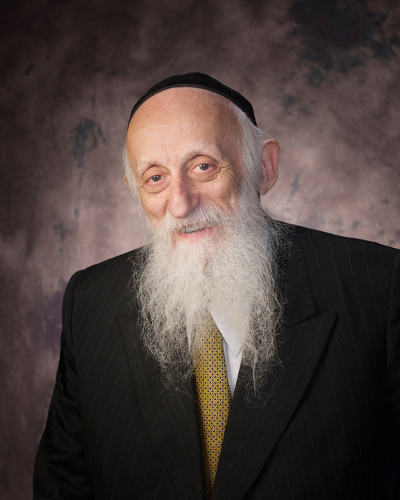
-Rabbi Abraham J. Twerski
from “Growing Each Day” for Cheshvan 7
Aish.com

The first thing that attracted me to this daily “devotional” of Rabbi Twerski’s is the obvious parallel to the teaching of the Master:

One of the scholars heard them arguing and drew near to them. He saw that he answered well, and he asked him, “What is the first of all of the mitzvot?”

Yeshua answered him, “The first of all the mitzvot is: ‘Hear O Yisra’el! HaShem is our God; HaShem is one. Love HaShem, your God, with all of your heart, with all of your soul, with all of your knowledge, and with all of your strength.’ This is the first mitzvah. Now the second is similar to it: ‘Love your fellow as yourself.’ There is no mitzvah greater than these.”

Mark 12:28-31 (DHE Gospels)

Rabbi Abraham Twerski

I don’t know if R. Twerski is at all familiar with the Apostolic Scriptures (probably not, but who knows) or even the portion I quoted above, but it seems amazing that nearly two-thousand years after the Master uttered this teaching, the same source material from the Torah should be linked together in a very similar manner by an Orthodox Jewish Rabbi and Psychiatrist.

Then, as I was performing my Shabbat devotionals, I came across the following:

The orlah, “foreskin,” symbolizes a barrier to holiness. Adam HaRishon was born circumcised (see Avos D’Rabbi Nassan 2:5) because he was as close as a physical being can possibly be to Hashem. So great was Adam at the time of his creation, that the angels thought he was a Divine being to whom they should offer praise. Thus, he was born circumcised; there was no orlah intervening between him and Hashem. Even the organ that represents man’s worst animal-like urges was totally harnessed to the service of Hashem.

-from the Mussar Thought for the Day, p.151
for Shabbos: Parashas Lech Lecha
A Daily Dose of Torah

Now compare the above quote to the next one:

Episcopal lesbian theologian Carter Heyward, whose work we briefly noted in part I, has described her project this way: “I am attempting to give voice to an embodied — sensual — relational movement among women and men who experience our sexualities as a liberating resource and who, at least in part through this experience, have been strengthened in the struggle for justice for all.” Heyward and others…are attempting nothing less than a recovery of the physical, embodied, and erotic within Christian traditions that have traditionally suppressed them. Building a theology of relationality that is reminiscent of the work of Jewish philosophers Martin Buber and Emmanuel Levinas, Heyward has proposed a spiritual valuation of eros — which she defines as “our embodied yearning for mutuality.” Openness to embodied love opens us to other people, the biological processes of the universe, and to God. Thus, Heyward writes, “my eroticism is my participation in the universe” and “we are the womb in which God is born.”

-Jay Michaelson
Chapter 17: “And I have filled him with the spirit of God…to devise subtle works in gold, silver, and brass,” p.156
God vs. Gay: The Religious Case for Equality

I previously quoted that paragraph in my third and final review of Michaelson’s book, but I think it bears repeating.

When Rabbi Twerski, (unintentionally) echoing the teachings of the Master speaks of loving God and loving his neighbor, he isn’t talking about erotic love or eroticizing our relationship with God or our fellow human being. When he writes of our “innate attractions to God and to other people,” he isn’t saying that these are sexual or romantic attractions any more than Messiah was speaking of sex.

The Mussar thought from the Artscroll “Daily Dose” series speaks of the male sexual organ as representing “man’s worst animal-like urges.” Throughout his book, Michaelson favorably compared people to animals in that both expressed their sexuality with same-sex partners, and yet we see that the traditional Orthodox Jewish viewpoint is to separate man from the animal world.

Even setting the midrash aside, the Mussar teaches that man is to be considered unique and separate from animals and further, that the single worst urge a man must bring under control in the service of Hashem is his sexual urge.

Talmud Study by LamplightThis is why Bible study in general and Torah study in specific is so important, because it grounds us in the Word of God and thus in righteousness and holiness. It points to our flaws and urges us to self-discipline. It’s like reading a health and weight loss manual while sitting down in an “all-you-can-eat” buffet. You are immersed in temptation, and yet you hold a reminder in your hands to resist because giving in to the world around you leads (extending the metaphor) to poor health, suffering, and premature death.

The death I’m speaking of is a spiritual death if we attempt to conform our faith to the standards of the world around us rather than conforming ourselves to the standards of God.

None of this demands that we must fail to love the people around us, even those who are very different, such as gay people, and since I’m straight, gay people are different, at least as far as that one quality or trait is concerned. But as I saw by the time I reached the end of the Michaelson book, what he was driving at wasn’t just the equalization of the participation of straight and gay people in the church and synagogue, he was talking about the total transformation of the house of God. Reading Rabbi Twerski and the Mussar for Lech Lecha on Shabbos made it abundantly clear that what Michaelson was proposing, even with sincere intentions, was not at all consistent with how God defines love.

I’m sorry to keep dragging this out and as far as my current intentions go, this is the last blog I’ll dedicate to Michaelson in specific and the topic of gays in the community of faith in general. But having, by necessity, entered, to some small degree, the world of Jay Michaelson’s thoughts and feelings by reading his book, I needed to pull myself back out and re-establish myself in the presence of God through the study of His Word.

We are commanded to love other people including those we find in the LGBTQ community. R. Twerski is correct in that we need not construct barriers between them and us in terms of our compassion. That said, there is a barrier between a holy life and a profane one. In the ekklesia of Messiah, as mere human beings who are daily bombarded with the excesses of the world around us, we constantly struggle with those excesses and with our own natures to seek to remain on the path God has set before us. I know I don’t always succeed and by God’s standards I am a complete failure.

But I can’t give up and either abandon my faith or seek to morph it into something consistent with my external environment, society, and culture. Holiness must be protected and thus we maintain a barrier, not one that doesn’t permit the expression of love, but one that keeps us from getting lost in a highly liberal and distorted use of the term.

When a parent loves a child, it doesn’t mean that parent is ultimately permissive and allows the child to do whatever he or she wants simply because it makes them feel good. We say “no” a lot, and even if the child cries or yells at us and tells us we’re being “mean”, we know we are actually being loving and protective.

That’s what God does to us and those are the commandments we not only obey, but support, uphold, and teach. Even if people like Michaelson want to call me “mean” for doing so, this is how God teaches the community of faith to do love. It’s a loving thing to live inside the standards of God, and as tempting as it may be, it isn’t love to believe you can be right with God outside of the house built by those standards.

TrustTwo more paragraphs from the Mussar thought from which I quoted above will finish the picture (pp.151-2):

When Adam sinned, however, he caused his nature to change. Before his sin, godliness had been natural for him, and sin had been repulsive, bizarre, and foreign. Once he disobeyed Hashem, however, he fell into the traps of illicit desire and self-justification. Suddenly, temptation became natural to him, and Hashem became distant; and when Hashem reproached him for having sinned, Adam hastened to defend himself rather than admitting his sin and repenting. After his fall, the angels had no trouble recognizing his human vulnerability.

In several places, the Torah mentioned … “the foreskin of the heart” (see, for example, Devarim 10:16). This is the non-physical counterpart of the physical foreskin, man’s urges and desires that attempt to bar him from achieving true service to Hashem. We remove the physical foreskin as an indelible act of allegiance, demonstrating our resolve to do the same for the spiritual barriers. Nevertheless, the Torah tells us that ultimately it will be Hashem Who will complete the removal of this spiritual foreskin (see ibid. 30:6) after we have done our utmost, and this will take place at the time of the ultimate redemption.

God vs. Gay? The Religious Case for Equality: My (Unofficial) Review of Part Three

Do LGBT people, as Jung said, have a “special receptivity?” Do gay people experience (or transcend) the balance between masculine and feminine, at the heart of so many mystical and religious traditions, in different ways that may enrich all our experiences of gender? Are there special perspectives on the key questions of religion that are afforded to sexual and gender minorities? Already, scholars in the discipline known as “queer theology” have begun opening exciting lines of investigation in religious thought, while outside traditional structures the “gay spirituality” and women’s spirituality movements have explored similar avenues.

-Jay Michaelson
Chapter 17: “And I have filled him with the spirit of God…to devise subtle works in gold, silver, and brass,” p.155
God vs. Gay: The Religious Case for Equality

As the title of today’s “meditation” indicates, this is an “unofficial” review of Part Three of Michaelson’s book. I’m focusing exclusively on the last two chapters because they illustrate the author’s ultimate point in writing this book. As I said in my review of Part One, Michaelson is a gifted writer and extremely convincing. If I were willing to take him at face value and not investigate the alternative explanations and interpretations to what he presents, I could see myself following him down the path he builds. But I would have to be utterly convinced by him up to this point to willingly absorb what he says next.

A lot of Part Three of the book is an inventory of the ways the LGBTQ community is beneficial, not only to society in general, but to the religious world in particular. In the quote above, we find the suggestion that gay people may actually bring special insights into the church and, as in some other cultures (generally ancient cultures), may have a particular and unique role to play within the Christian Church and Jewish Synagogue.

I’ve never heard of queer theology before and I was actually a little hesitant to “Google” the term (I eventually did). According to Michaelson, there is a long list of scholars (he lists them in this chapter) investigating and writing on this “queer theology.” That’s news to me, but then again, I don’t recognize the names of most of the famous Evangelical and Fundamentalist Pastors writing and preaching in the Church today.

The following paragraph is what inspired me to write about Part Three. I hadn’t intended to do so, but I was so astonished by the implications, that I felt I had to respond. I can see why Michaelson saved this information for the very end of his book. If you aren’t totally “hooked” by Michaelson at this point, then your reaction will probably be similar to mine:

Episcopal lesbian theologian Carter Heyward, whose work we briefly noted in part I, has described her project this way: “I am attempting to give voice to an embodied — sensual — relational movement among women and men who experience our sexualities as a liberating resource and who, at least in part through this experience, have been strengthened in the struggle for justice for all.” Heyward and others…are attempting nothing less than a recovery of the physical, embodied, and erotic within Christian traditions that have traditionally suppressed them. Building a theology of relationality that is reminiscent of the work of Jewish philosophers Martin Buber and Emmanuel Levinas, Heyward has proposed a spiritual valuation of eros — which she defines as “our embodied yearning for mutuality.” Openness to embodied love opens us to other people, the biological processes of the universe, and to God. Thus, Heyward writes, “my eroticism is my participation in the universe” and “we are the womb in which God is born.”

-ibid, p.156

Now compare all that to the following:

But some days later Felix arrived with Drusilla, his wife who was a Jewess, and sent for Paul and heard him speak about faith in Christ Jesus. But as he was discussing righteousness, self-control and the judgment to come, Felix became frightened and said, “Go away for the present, and when I find time I will summon you.”

Acts 24:24-25 (NASB)

Jay Michaelson
Jay Michaelson

In the many areas Michaelson visited in the Bible, I think he missed Paul’s association of self-control and righteousness with one possible consequence being judgment. In fact, his quote which relies heavily on Heyward seems so antithetical to how I (and many others) read the Bible, that I don’t recognize Christianity and Judaism in it at all. Michaelson’s and Heyward’s description of this “project” seems more like how Dennis Prager describes the pagan religious landscape before Judaism (and subsequently Christianity) “revolutionized” sexuality to come within the scope of God’s purpose for human beings.

The startling conclusion I’m forced to draw from this is that one of Michaelson’s points in writing his book is to redefine Christianity and Judaism in a radical manner such that it actually reverses the “sexual revolution” God introduced to the ancient Israelites at Sinai, a revolution that has been a hallmark of the covenant community of God…at least until now. I hate to put it this way, but it’s as if Michaelson is advocating for a restoration in how human sexuality was incorporated into pagan worship…and he, or at least Heyward, wants it in the Church (or some churches).

When Michaelson says the “erotic within Christian traditions,” what eroticism has a valid place in Christian tradition? Both Christian and Jewish tradition confine eroticism to the bedroom of the (male and female) married couple, and to the best of my knowledge, that hasn’t changed in the history of both religions…that is, until now.

Here’s the other major point I think Michaelson wants to bring home to his readers and I believe it connects to the first:

At this moment, there are people who are contemplating ending their lives because they believe their sexuality to be a sin, a flaw in the fabric of their soul, or perhaps a curse from God. Misled by a cruel misreading of a handful of biblical verses, they miss the much more important messages of many others: that love is sacred, that God does not want us to be alone. That justice and compassion are Divine mandates. That every human being is created in the image of God, and that the way we love is one of the paramount expressions of that likeness.

While you come to the last pages of this book, they may be coming to the last hours of their lives. That is why, if we are religious, we cannot consider the words of a sacred text dispassionately, or fall back on familiar teachings we’ve heard. There is death around us, and even when there is not physical death, there is unconscionable spiritual suffering. It is present in your church pews, when a friend of yours feels excluded or marginalized. It is a your family table, in the hearts of the uncle who never married, or the girl who prefers boys’ clothes to dresses.

-Michaelson
Chapter 18: “For nothing in creation can separate you from the love of God”

Hopefully, I won’t be guilty of using a cheap shot in what I’m about to say, but the bare bones of this message seems to be that if we religious people won’t support, normalize, and sanctify homosexuality in the Church and Synagogue by interpreting the Bible as Michaelson does, we are directly or indirectly responsible for the deaths of any gay people who feel excluded or marginalized from religious community. From Michaelson’s point of view, we really have no choice. Either we comply or we have the blood of who knows how many gay Christians and religious Jews on our hands. We are powerless to disagree unless we don’t care about whether gay people live or die.

Except, as I’ve said in my reviews of Parts One and Two of the Michaelson book, I don’t believe this author has successfully made the point that the Bible actually supports inclusion of same-sex romantic/erotic relationships on par with opposite-sex marriages. To repeat myself (yet again) the Bible does not presuppose such relationships. The only thing Michaelson has to stand on is his assertion in Part One that the Bible describes broad general principles of love, justice, and compassion, but as we dig into the specifics of the Bible, that doesn’t mean permissiveness to the extreme that there are no moral standards and, as they used to say in the 1960s, “if it feels good, do it.”

depressionConnecting the latter point to the former, if we don’t provide absolute inclusiveness of the LGBTQ community into the body of faith up to and including accepting the sort of philosophy and practice advocated by Heyward and others by eroticizing Christian (and Jewish) tradition, the consequence is the suicide or extreme spiritual and psychological trauma of LGBTQ people who strongly desire to function as devout members of Christianity and Judaism.

Gee, not much of a choice, there. Sorry if that sounds snarky, but Michaelson really does know how to paint his readers into a corner.

I wouldn’t react this way if Michaelson’s central message was simply to be treated as an equal participant in the Church or Synagogue, but in citing and praising Heyward, he reveals (apparently) that what he actually is seeking is something much more

So we either concent to eroticize the church by agreeing that a lesbian’s “eroticism is [her] participation in the universe” and “[lesbians or women in general] are the womb in which God is born”, spinning the clock backward thousands of years in the process and not in a good way, or we face the accusation that we are heartless, cold-blooded, and guilty of causing harm and even death to other human beings.

Except there are liberal Christian denominations and branches of Judaism that already accept gays with open arms. Religious gays are denied nothing as far as a venue for worship and communities of faith go. Such churches and synagogues (well, one synagogue) exist even in my own little corner of Idaho. Marriage equality was recently legalized here by Federal court order, so gay couples can be both legally and religiously married in my community.

Looking at it from a civil and secular point of view, if two adult people want to enter into what amounts to a contractual and legal relationship such that they acquire certain privileges, rights, and responsibilities to each other, that’s fine with me and it’s probably a good idea. I’m not completely heartless or unmindful of a man who wants to visit his spouse – partner – significant other of the same-sex who is hospitalized, or the requirement to put your partner on your medical insurance, or to make them a beneficiary of your life insurance policy. It shouldn’t matter if two adults want to legally acknowledge each other as family and have the same legal definition of what we consider “traditional marriage”.

But that’s the law of the land. America isn’t a “Christian nation” in that the government doesn’t have an “official religion” it supports or requires its citizens to join. Thus, as a wholly secular nation, it can make whatever laws it sees fit for the benefit of its citizens, even if those laws conflict with the moral and ethical structures of the various religions that operate within our nation. I’d start objecting if the government started making laws that directed said-religions to violate their morals and ethics in order to serve secular progressive social priorities, but I guess that’s what they mean when they say “separation of church and state”.

If the judiciary and the legislative branches of the government want to legalize such same-sex relationships, I can hardly complain from a religious standpoint (though I suppose I could complain from the perspective of “taxation without representation” if I’m expected to financially support such legislation, though I don’t see how that would actually take place so far) even if some part of me feels uncomfortable at the imposition of the priorities of various social and political groups.

But I don’t know what to do about the gay people who experience exclusion by their religious communities. I could say (as I suggested above) that they could join more accepting and affirming churches and synagogues, but some people are born into families who are Evangelical or Orthodox and a lot of their identity flows from those communities and traditions. If those traditions do not support gay inclusiveness and you happen to be a gay person who is also a Fundamentalist Christian or Orthodox Jew, what do you do? You don’t want to give up your particular religious orientation and you believe you can’t change or give up your sexual orientation.

flagI don’t have a pat answer for that one, but I do think there are alternatives to either suicide or the forcing all churches and all synagogues everywhere to accept an interpretation of the Bible they find morally and exegetically unsustainable. I don’t experience myself as heartless or cruel, but I cannot accept responsibility for someone’s depression or suicidal feelings (or suicides) simply because I don’t accept Michaelson’s interpretation of the Bible and Heyward’s sexualization of the Church via “Queer Theology.”

I’ve made numerous attempts at understanding the Bible in a way that accepts the normalization and inclusiveness of gays in the community of faith, but regardless of the books, websites, blogs, and discussion boards I’ve sampled, the arguments are all the same and sadly, they are all wanting. I do believe we should respond to the gays in our communities by treating them with dignity and compassion, as we would treat any other person, but that doesn’t change what the Bible says (and doesn’t say), and that doesn’t change God.

I’ll be publishing an “extra meditation” as a sort of “aftermath” to this series of reviews later today.

Addendum: To learn more about Queer Theology including how it is radically different from normative Christian (and Jewish) theologies, see the Vice.com article Queer Christ: A Primer on LGBT Theology or visit QueerTheology.com.

God vs. Gay? The Religious Case for Equality: My Review of Part Two

I mistakenly thought Jay Michaelson’s book God vs. Gay: The Religious Case for Equality consisted of only two parts, with Part One being a general appeal for acceptance of LBGTQ people into religious community based on general principles loosely derived from the Bible, and Part Two refuting the various Biblical prohibitions against same-sex sex in scripture. However, I missed Part Three, which seems to be (I’m still reading it, but I finished Part Two) a presentation of the different studies “proving” that same-sex relationships, marriage, and parenting are not only beneficial to society as a whole, but sometimes are superior to opposite-sex relationships (on p.116, Michaelson cites a study supporting same-sex parenting as superior to opposite-sex parenting, and while he says it’s important for a child to have two parents, the sexual identity and orientation of the parents is irrelevant).

I probably won’t write a formal review of Part Three only because it has virtually no bearing on the topic at hand [since originally writing this blog post, I changed my mind and wrote a review of two chapters in Part Three…see my final note below], which is the question of whether or not the Bible can be correctly interpreted as supporting marriage equality and the admission, normalization, and sanctification of same-sex relationships within the Christian and Jewish communities of faith. What secular social studies say about various aspects of gay relationships cannot answer that question, they only answer how same-sex relationships may be integrated into the larger societal milieu.

Before continuing here, if you haven’t read my review of Part One of Michaelson’s book, you might want to pause, click the link I just provided, and have a look.

Part Two is made up of seven chapters, the first (Chapter 7) called “Leviticus.” I’ve addressed this topic before, including the Hebrew word “toevah” which is often translated as “abomination,” a term applied to male-to-male sexual contact and to eating shellfish, at least according to the Torah of Moses and as applied to the ancient Israelites. Rather than “re-inventing the wheel,” so to speak, please read my blog post Leviticus, Homosexuality, and Abominations which covers the Leviticus prohibitions against homosexuality and what they really seem to mean.

I should also say that Chapter 8: “Sodom,” is correct in stating that the story of Sodom and Gomorrah is indeed a chronicle of the sin of “inhospitality” more so than homosexual rape. The fact that Lot offers his virgin daughters to the mob, being a pretty confusing response, is an indication that there’s more going on than uncontrolled homosexual lust. However, this is hardly any sort of justification for any form of sexual violence, whether directed by a man against a woman or a man against another man. No, Michaelson isn’t advocating sexual violence, but citing the “Sodom” incident is something of a red herring since it has no relationship to our modern conceptualization of homosexuality.

Chapter 9 “The Gospels” is an interesting case. Jesus didn’t talk about homosexuality. But why should he? What did Jesus preach? What was his central message?

Repent, for the Kingdom of Heaven/God is at hand.

Matthew 3:2; 4:17; Mark 1:15

Jesus didn’t come to overthrow the Law and to create a new religion (and although Michaelson is Jewish, he has a pretty traditional view of Christianity, the same view Christianity has of itself). He came to re-establish devout observance of the Torah for Israel, which would have to start with repentance, because he had come to inaugurate the beginning of the New Covenant (see Derek Leman’s blog post A Closer Look at Matthew 5:17 for an “in-a-nutshell” look at how Jesus didn’t come to abolish the Law but to fill it).

In the same chapter, Michaelson brings the story of the Centurion and servant into play (see Matthew 8:5-13; Luke 7:1-10). If you are unfamiliar with this event, a Centurion asks Jesus to heal his male servant and displays great faith by saying if Jesus just declares the servant healed without even going to the Centurion’s home, the Centurion knows he will be healed.

MessiahThe Greek word used to describe the servant is “pais” or “boy companion” not “daulos” or “slave”. In the Roman world, it was not uncommon for a Roman citizen to have a slave, usually an adolescent boy, as a servant for a number of activities including sexual, since in Roman law, it was not forbidden for a citizen to penetrate a non-citizen or slave. That Jesus didn’t complain about this practice is supposed to be proof that he didn’t have an issue with homosexual relationships.

On the other hand…

But He answered and said, “I was sent only to the lost sheep of the house of Israel.”

Matthew 15:24

Jesus didn’t come at that moment in time to rehabilitate the world. He came to rehabilitate Israel. Later, as the inauguration of the New Covenant continued to progress through history, the rehabilitation of a remnant of the people of the nations would begin to take place through Israel. Since Michaelson doesn’t view Christianity or the teachings of Jesus through a Messianic lens, this aspect of the impact and timing of the New Covenant would have escaped him, thus his misunderstanding of why Jesus didn’t have to care about a Roman centurion and his boy slave/companion.

If, on the other hand, Jesus had discovered this sort of relationship or any other form of sexual immorality among his people Israel, the Master’s response would have been quite different.

I know what you’re thinking. You’re thinking about John 8:1-11 where Jesus “changed the Law” about adultery and gave the woman caught in an adulterous relationship a free pass. But did he?

I won’t quote the text here, but the Torah states that anyone caught performing a violation of Torah with terminal consequences had to be brought before the Sanhedrin (see Leviticus 20:10). A trial would have to be conducted, witnesses called, and only two or more eye-witnesses could condemn the woman before the court. Only then would the court pronounce its sentence of death, and only then would the eye-witnesses lead in the stoning of the convicted woman.

None of that happened. Instead, these thugs dragged the accused woman in front of Jesus and only as a way to trap him in speaking against the Torah. It didn’t work and the trap having failed, the accusers dropped their stones and left. Since Jesus wasn’t a witness to the affair and since he wasn’t the appropriate “court,” according to the Torah, he was in no position to condemn her. But no one asked him about any legitimate cases that had come before the Sanhedrin and what he thought of their verdicts (For a more detailed description of this event and its background, see the article “Woman Caught in Adultery” by D. Thomas Lancaster in the Fall 2014 issue of Messiah Magazine, pp.10-13).

The only other thing I found in that chapter even remotely relevant was Michaelson’s treatment of “eunuchs” and how he considers those who were “eunuchs by choice” not just as celibate, but specifically attracted to men and not women. However, at best, Michaelson is being speculative with just a very small amount of evidence and a great deal of agenda to support.
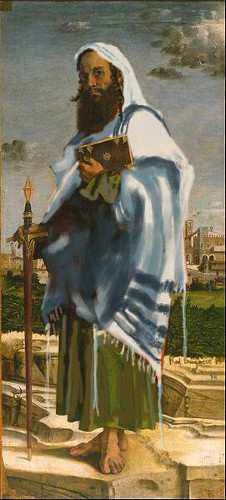
The Jewish PaulChapter 10: “Romans” was very contradictory. Michaelson, on the one hand, says Paul (and all of his peers…and everyone in his period of history) had no concept of “sexual orientation” and thus Romans 1:26-27 could not possibly be applied to “loving same-sex relationships”. On the other hand, if that’s true, then nothing in the majority of the New Testament could be used to support said “loving same-sex relationships” either. You can’t have it both ways.

He did make a good point about people being “given over to their lusts” since someone “naturally” oriented to love/want sex with a same-sex partner isn’t given over to some desire and activity they’re already involved with. But he makes a mistake, a big one:

This is not exactly a celebration of sexual diversity. However, even before we turn to the language of verses 26 and 27, their context should be clear. Paul is not preaching that homosexuality is a sin — he is preaching that some form of illicit homosexual behavior is a consequence of sin. Whatever sexual behavior Paul is writing about, it is the symptom, not the cause, of the Romans’ failure: the Romans turned from God, and therefore (dio) God gave them over to sexual immorality (Rom. 1:24). This is like a parent telling a child, “If you don’t wear your jacket, you’ll get a cold.” Obviously, getting a cold is not desirable, but it’s not a sin. The real sin is not wearing a coat, or, more generally, not being careful.

-Michaelson, p.80

Here Michaelson attempts to totally disconnect behavior from consequence, as if what the type of consequence had nothing to do with the behavior that precipitated it.

Does he imagine that turning from God and engaging in pagan practices had nothing to do with sexual sin? If a person is struggling with a sin but refuses to give it up, then God can and likely will turn the person over to that specific sin, give them enough rope to hang themselves, so to speak, until (hopefully) they experience such discomfort from the sin that they will be motivated to give it up, repent (remember Christ’s central message), and return to God.

If a person is a member of the community of faith and struggles with alcohol or drug abuse, refuses to seek help or even to attempt to repent, then God could turn them over to that behavior until the consequences began to pile up, which (again, hopefully) would act as a motivator for the person to give up their sin, repent, and return.

Using Michaelson’s model of disconnected sin and consequence, it would be like saying to the drug abuser, “because you continue to abuse drugs and worship foreign gods, you will have to wear an umbrella on your head until you’re ready to repent.” No, the actual statement would go something like, “because you continue to abuse drugs and worship foreign gods, your drug abuse behavior will go out of control and your body and spirit will deteriorate until you either die or stop your sinful behavior and repent.”

When all else fails in this part of his book, just like Part One, Michaelson reverts to…

In the words of Rev. Michael Piazza, “From dogs to dolphins, same-gender sexual attraction is a reality. What is ‘natural’ for one individual may be a direct violation of another’s nature.”

-ibid, p.83

Except people are not dogs or dolphins. We are the only living beings created in God’s image (Genesis 1:27). Animals aren’t held morally accountable for their actions because they don’t have the unique calling of human beings, therefore, citing “natural law” to explain that if a male dog humps another male dog, then it’s OK for two men or two women to have sex as part of nature doesn’t cut it. There’s a difference between the broken nature of the universe and God’s plan for the redemption of that universe through Israel and thus through the redeemed remnant of the nations.

PaulChapter 11: “Corinthians and Timothy” seems to be another case of saying that whatever Paul is prohibiting, it can’t possibly have anything to do with what we now consider “sexual orientation” and “loving same-sex relationships”. If that’s true, than any commentary on Paul’s opinions and beliefs are moot. If Paul is condemning same-sex sexual contact within the context of pagan worship practices, it’s still same-sex sex. We have no evidence of any “loving same-sex relationships” as we understand them (or as we’re told we should understand them) in the world today, particularly within the ekklesia (assembly, body) of Christ (Messiah). So we have no template for understanding same-sex sexual contact other than the pagan worship context, which apparently, has nothing to do with what’s going on in the modern world (though some might say otherwise).

In Chapter 12: “David and Jonathan,” the shocker for me is that Michaelson actually has a go at the relationship of Ruth and her mother-in-law Naomi. For him it seems inconceivable that two women could be so close and so devoted to each other that there wouldn’t be a sort of “romantic” and even possibly “sexual” relationship between the two. Except we see absolutely no indication of such a relationship. It’s as if Michaelson can’t imagine two people of the same-sex being very close and sex and romance not playing a part.

Frankly, my wife is very close to my parents but I can’t in any way shape or form think of their relationship as romantic let alone sexual. Michaelson has definitely introduced another red herring here.

David and Jonathan as lovers. I’ve heard this one before. Even Michaelson doesn’t believe David is gay based on his relationship with Bathsheba and his multitude of wives and concubines.

The only thing I didn’t see coming was Saul accusing Jonathan of having a sexual relationship with David:

Saul knows it too. When David fails to appear at court for a feast, Jonathan makes an excuse for him. Saul replies, enraged: “You perverse and rebellious son! Behold, I know that you have chosen the son of Jesse to your shame, and the shame of your mother’s nakedness! For as long as the son of Jesse lives on the Earth, you and your kingdom will not be established” (I Sam. 20:30-31). The second line in Saul’s admonition frames Jonathan’s action in dynastic terms — but the first is clearly sexualized. Jonathan has chosen David to his shame — the Hebrew root is “bushah.” As if that weren’t clear enough, Saul emphatically calls Jonathan “perverse” and adds that his love affair with David is to the “shame of your mother’s nakedness” “ervat imecha,” a term that unambiguously refers to sexual sins.

-Michaelson, pp.98-9

Not knowing Hebrew (and Michaelson may have been counting on the majority of his readers not having access to the original language) I can’t adequately respond to Michaelson’s interpretation, but even if all this is true, Saul defines a sexual relationship between Jonathan and David as “perverse” and a “sexual sin,” and assuming that Saul’s understanding of the Torah is accurate, this transaction doesn’t support and justify same-sex romantic and erotic relationships, it condemns them.

We know that David committed other grave sins including sexual sins and that he ultimately paid for them, so even if Michaelson is accurate, the case he makes doesn’t necessarily support his cause.

Of course, even Michaelson realizes he’s guessing and can’t be sure of his conclusions, at least up to a point:

At the very least, surely we would all agree that what Jonathan felt for David can be described as a romantic love with erotic overtones.

-Michaelson, p.101

I don’t have to agree with that and, as I said, if it’s true, it doesn’t represent Biblical support for gay relationships. Add to that Michaelson’s previous statement that sexual orientation wasn’t understood as such in ancient times, and maybe we can’t compare whatever did or didn’t happen between David and Jonathan to same-sex relationships today. I think Michaelson is overextending his examples to make his point or to force his point.

gay marriagePart Two ended with Chapter 13: “Sexual diversity in Christian theology,” in which he describes, from his unique perspective, how the Bible has been misinterpreted by the Church to be “anti-gay”. Actually, I completely agree that the so-called “Church fathers” did unspeakable violence to the Biblical text, particularly in reinventing the Bible as a non-Jewish document and transforming the Jewish Messiah into a Goyishe Prince. It’s quite possible that the early Christian “luminaries” also doctored their interpretations to magnify prohibitions against homosexuality.

But I don’t really care about what Gentile Christianity did to the Bible if, removing their influence, we can’t see the Bible undeniably supporting and affirming man-to-man and woman-to-woman romantic and erotic relationships due to in-born traits, and that those relationships were accepted and normalized in ancient Biblical Judaism and Christianity (and I say “Biblical Christianity” with the understanding that in the days of the apostles, Jewish and Gentile disciples of Messiah were practicing a form of Judaism).

Michaelson criticizes any anti-gay statements or reforms issued by “the Church” (which for much of its early history was represented by the Roman Catholic Church) and celebrates more recent events in socially and politically liberal (i.e. “politically correct” or “progressive”) churches:

In contrast, there have been openly gay priests in the Episcopal Church since the 1970s, and surveys show that 75 percent of U.S. Episcopalians think that gays can be faithful Christians.

-ibid, p.108

And yet the actions and beliefs of the Episcopal Church can’t automatically be assumed to represent the desire of God for human beings in the ekklesia of Messiah.

Michaelson attempts to show that churches that repress homosexuality within their walls promote an increase in sexual and other sin:

As we have already mentioned, evangelical megachurch leader Ted Haggard (now making a comeback) had a multiyear relationship with a drug-dealing male prostitute. Rev. Paul Barnes, pastor of a Denver megachurch, had numerous affairs with men. Pastor Eddie Long has recently been accused of sexually abusing several teenage boys. And as we’ve already noted, George Rekers, cofounder of the Family Research Council, hired a male prostitute to accompany him on a trip to the Caribbean. Eros repressed is eros distorted, so it is no surprise that so many of the most vocal anti-gay voices are themselves…gay.

-ibid

According to Michaelson, the answer to all of this messy sexual business is to open the doors of all the churches everywhere and accept, affirm, and support all gay people and all gay relationships. If the church stops calling homosexuality a sin, then gays in the Church won’t have to hide who they are and men like Haggard, Barnes, and Long can function perfectly well in their churches as openly gay Pastors.

But if Eros repressed is Eros distorted, what does that mean for the concept of sexual sin in general? Michaelson’s assumption is that if you stop forbidding or repressing something, then it becomes a normal and natural part of the religious environment. Long is accused of having sexual contact with teenage boys. Assuming these boys were under the age of 18, doesn’t that belong in the area of child abuse? I know Michaelson is refuting the idea that homosexuality can involve an adult having sex with a minor, and I’m not suggesting that such a “slippery slope” necessarily exists, but once sexual boundaries start to loosen and become “fuzzy” in the church, how much control will anyone have about where those boundaries are “reset.”

Messiah Journal issue 117

Yesterday, I posted my review of David Hall’s article for Messiah Journal and I think Hall hits closer to the mark. Thematically and purposefully, the Bible may not forbid or prohibit what modern society considers consensual, same-sex erotic and romantic relationships but it definitely doesn’t support them either. I’ve thrown (in my opinion, anyway) enough “reasonable doubt” into Michaelson’s interpretations and assumptions to conclude that he hasn’t successfully made his point or adequately supported his position, thus, at best, there is insufficient Biblical evidence to warrant treating same-sex relationships in an identical manner as opposite-sex relationships within the context of Christianity and Judaism. The scriptural template for romantic/sexual relationships as part of God’s plan remains one male and one female in marriage.

While Michaelson may be correct in saying that homosexual behavior in the animal world is well-represented, that something is “natural” for animals doesn’t mean God intends that behavior for human beings. How can I explain the overwhelming number of anecdotal reports from gay men and women that they have experienced same-sex erotic attraction since childhood? In an absolute sense, I can’t. However, that doesn’t automatically mean those feelings were programmed into them by God.

We are all born broken in some way. That doesn’t mean we should allow people to remain broken and accept “broken” as natural, normal, and the final expression of God’s plan for human beings. Faith in Jesus is about taking a broken world full of broken people and starting to heal them. When Messiah comes again, he will heal everyone. Until then, all we can do is the best we can to facilitate our healing in whatever way we happen to be hurt.

I’ll be publishing an “unofficial” review of a small portion of Part Three of Michaelson’s book in tomorrow’s “morning meditation” and then an “extra meditation” later that same day as a “tying up” or conclusion to this project.

A Review of David Hall’s “Homosexuality and the Torah”

I have experienced same-sex attraction for most of my life. When I was seventeen years old, I embraced a gay identity. Almost ten years after I came out, I saw the pain that this addiction was working in my life. I sought help from Outpost Ministries, a Minneapolis-based ministry that helps men and women find freedom from unwanted same-sex attraction.

-David Hall
“Homosexuality and the Torah,” p.59
Messiah Journal, Issue 117/Fall 2014

This is something of an interlude between my first and second review of Jay Michaelson’s book God vs. Gay: The Religious Case for Equality. I’ve still got about sixty pages to go (as I write this) in the Michaelson book, but Hall’s article is only eight pages long (nine if you include the endnotes) so I shot through it a few days ago. As it turns out, Hall answers many of Michaelson’s points on homosexuality and the intent of scripture. It’s not a complete hand-and-glove fit, but it’s close. And Hall’s commentary has the advantage of being written by a person who has “been there,” meaning his opinions should have greater credibility than mine since I’ve never experienced “being gay.”

In his article, Hall uses the acronym “SSA” for “same-sex attraction” rather than the more “socially licensed” labels for the LGBTQ community. His footnote for the term (p. 67) states:

I use “SSA” to describe the emotional and physical attraction to members of the same sex. The term “homosexuality” includes the socio-political self-identification as gay or lesbian predicated on those attractions.

Hall says that two years after seeking help, he was “reasonably healed” to where he could begin working for Outpost Ministries and continued for six years to work on his own healing while helping others seeking help from the ministry to do the same.

I know this is going to push a lot of noses out of joint, particularly those advocates for full inclusion of the LGBTQ community into the church and synagogue, but this is the other side of the coin, so to speak, this is the life that stands opposite those such as Jay Michaelson and Matthew Vines.

I can’t speak for Hall and certainly not for Michaelson and Vines. As I said above, I don’t have a “gay experience”. I don’t know what it’s like to have those feelings or to live that life, in or out of the closet. Like Hall, I don’t have all the answers (p.60), but maybe there is an answer, even if it’s not the one that sells books and makes popular stories in social and news media.

One difference between Hall and other, similar commentators is that he’s addressing this topic from a Messianic Jewish perspective, rather than a traditional Christian viewpoint. The key in all this is that Christianity generally dismisses the Law but in doing so, has also done away with obeying God from a physical/bodily as well as spiritual manner.

I don’t know if I entirely agree since Christians, at least in more conservative denominations, tend to provide strong support for physical purity and marital fidelity, at least on the surface. I don’t see why that wouldn’t extend to purity in the sense of not only marital fidelity but exclusively heterosexual romantic/erotic relations.

However…

I have seen that the church suffers profound confusion about what it means when the Bible says that God created us male and female. I have seen the ramifications of a “freedom from the law” theology.

-ibid, p.66

But the churches Hall seems to be referencing are those on the more socially and politically liberal end of the spectrum.

The ELCA and PC-USA recently approved ordaining openly gay clergy and affirming same-sex marriages. In their debates I saw that the discussions never focused on what the Word says but on the feelings of various groups: “Don’t make people feel unwelcome in the PC-USA” or “I love being Lutheran, but I’m gay — don’t kick me out” were common refrains.

-ibid

DHE GospelsThis is more or less the argument in Part One of Michaelson’s book, a focus on feeling rather than the Word. Of course, Part Two of the book does address “what the Word says”, both from a Christian and Jewish point of view, but Hall addresses that as well.

I consider the following paragraph to be the core of Hall’s article:

You may have noticed that in our discussion of homosexuality, I did not mention the Torah’s prohibitions against the behavior in Leviticus 18. I made my appeal not from prohibition but from created intent. This approach helps us see that God’s law is not simply a list of cold rules but boundaries directing us into holiness, righteousness, and life. Why does God prohibit homosexual behavior? Because he is jealous for his image on the earth as reflected in male and female.

-ibid, p.64

Hall’s opinion is similar to my own. Even if we were to completely dismiss all of the apparent Biblical prohibitions against homosexual behavior, we absolutely do not see a normalization of “loving, monogamous same-sex romantic/erotic relationships” in the Bible. In one of the chapters in Part Two of his book, Michaelson attempts to make a case for such a “normalization,” at least to a degree by citing not only David and Jonathan’s friendship but the relationship between Ruth and her mother-in-law Naomi. I’ll issue my response in more detail in a later review, but even Michaelson admits that “sexual orientation” as such was not understood (or experienced) in ancient times, thus using those friendships (and any sexual component implied is highly questionable) in support of normalization of gay relationships in the church and synagogue today is sketchy at best.

Hall continues:

Have we then implied that a person experiencing same-sex attraction is condemned by God? Absolutely not! We have, I hope, shown that there is more going on underneath same-sex attraction than either rebellion or genetic predisposition…

…The opposite of homosexuality is thus not heterosexuality but righteousness. The question regarding SSA is not “Can I be gay and a follower of Yeshua?” but rather “Can I disagree with God about who he made me to be and still truly be Yeshua’s disciple?”

-ibid

So why do gay people experience their sexual orientation/identity as such an immutable quality? From Hall’s viewpoint, it’s just another sign of “brokenness” in the world and in human beings among all the other ways people are broken spiritually. The very concepts, as Michaelson has confirmed in his book, of sexual orientation and sexual identity have been created quite recently in human history. While we have a long record of homosexual sex, what it meant “back in the day” can’t be compared to what we call it in the modern world.

gay marriageWhat if we’re seeing a “power surge” of “sexual diversity” not because the people who once would have hidden who they were, maybe for all their lives, are being given permission to “come out of the closet” by an increasingly “progressive” society, but because our world is becoming increasingly permissive of many sins once treated as strict taboos, including sexual sins, and including those sexual sins (at least in their physical expression) identified as sexual “orientation” and “identity”?

Like Michaelson, I can’t really prove my points, but if looked at through a spiritual and Biblical lens rather than with what Hall calls “the fruit of cheap grace,” it makes more sense.

Like I said, it’s not a perfect fit. There are men and women who try for years to change, to become attracted to the opposite sex as their primary or exclusive object of romantic and erotic love, but who continue to fail. For many, that is proof that sexual orientation is innate and immutable in human beings, with some minority human population being same-sex attracted. For others, it’s a sign of just how far we have morally fallen, and perhaps a sign of the “spiritual warfare” being directed at the world as the time of Messiah’s return draws near. The spirit of humanity is so wide open to all manner of injury and damage, that it never occurs to us (and in some circles it is forbidden to mention it) these so-called “normal” and “natural” attractions and behaviors are a sign that something is seriously wrong.

After seven years of working through my issues, choosing to live beyond my same-sex attraction, I do not see myself as a gay man anymore. God brought enough healing to my life that, in September 2013, I was married to a beautifully feminine woman who does not see me through the lens of same-sex attraction. She sees me as a man perfectly made for her.

-ibid, p.65

Hall makes many good points in his small article and I’ve only touched on a few of them here. If you are convinced that the LGBTQ community should be fully included in the body of faith, then nothing in Hall’s article is likely to change your mind and you probably will just become angry at Hall and at me. If you are a traditional Christian or devout Jew, you are likely to praise Hall and continue to condemn Michaelson, Vines and others, even though Hall says God does not condemn them, at least not any more than anyone else trapped in a life that God did not choose for them. I’m not writing this to beat up gay people, whether they’re in religious community or not. I’m trying to understand what God is really saying and doing, and since I’m only human, that isn’t always easy for me.

I’ve struggled with the inherit nature of humans being created as Male and Female, as complementary physically and in many other ways, as helpmates standing opposite one another, and also having a long line of gay people saying that they were born that way, that being gay is natural, normal, and part of God’s plan, and that it’s cruel and bigoted to ask them to change what is unchangeable.

But if they weren’t “born that way,” at least as part of a God-sanctioned process, then what?

How much pain, suffering, and injustice exists in the world today that we seem helpless to change? The list is endless. What’s the cause in a God-created world? Man’s fall from grace at Eden. The world changed in a fundamental way such that the universe actually started operating differently, where disobedience became possible and much more likely than it was previously, and where even death existed in a way that was previously impossible.

What if one of the things that changed is the fundamental way that sex and attraction works? I agree, I’m proposing a big of “what if,” but it makes more sense than God forbidding same-sex sex and then creating human beings who are designed to desire same-sex sex/love. The way people experience sex and love has been twisted into just about anything you can imagine. The list of sexual fetishes we have categorized is astounding. But God also gave the Torah and the whole of His Word, the Bible, not as a cold list of “do’s and “don’ts” but as boundaries and expectations, a plan of God for human beings and specifically human coupling, of being created male and female.

jewish weddingThe Bible in no way presupposes the normalization of same-sex love/sex in the community of faith. I’m sure many will disagree with me, particularly because I lack a rock solid alternative for addressing what Hall calls SSA. But I can’t “interpret” the Bible so radically that I see something that is not written on any of its pages. I don’t see modern homosexual relationships, let alone marriages, sanctioned and sanctified by God. I don’t see a path to making them sanctioned and sanctified that can be derived or inferred from the scriptural text.

That’s as far as I can take this little interlude. I’ll publish my review of Part Two in tomorrow’s “morning meditation” and then on Tuesday, will publish Part Three’s “unofficial” review, and later on, a final conclusion based on Torah study.