Category Archives: Uncategorized

Sermon Review of the Holy Epistle to the Hebrews: Six Foundations

What are the fundamentals?

Discover the six basic teachings of Messianic faith from Hebrews 5:11-6:3. This sermon presents and introduction and overview of repentance from dead works and of faith toward God, and of instruction about washings, the laying on of hands, the resurrection of the dead, and eternal judgment. (Hebrews 6:1-2).

-D. Thomas Lancaster
Sermon Fifteen: Six Foundations
Originally presented on April 27, 2013
from the Holy Epistle to the Hebrews sermon series

Concerning him we have much to say, and it is hard to explain, since you have become dull of hearing. For though by this time you ought to be teachers, you have need again for someone to teach you the elementary principles of the oracles of God, and you have come to need milk and not solid food. For everyone who partakes only of milk is not accustomed to the word of righteousness, for he is an infant. But solid food is for the mature, who because of practice have their senses trained to discern good and evil.

Therefore leaving the elementary teaching about the Christ, let us press on to maturity, not laying again a foundation of repentance from dead works and of faith toward God, of instruction about washings and laying on of hands, and the resurrection of the dead and eternal judgment. And this we will do, if God permits.

Hebrews 5:11-6:3 (NASB)

As someone commented recently on another of these reviews, in this sermon, Lancaster takes a break in teaching about Messiah as high priest according to the order of Melchizedek, but frankly, so does the writer of Hebrews. Lancaster says the writer of the Epistle to the Hebrews became frustrated with his readers. Why? Because he wanted to get into the deep mysteries of the priesthood of Melchizedek but he felt his audience wasn’t up to the challenge. They were still struggling with the very basics, the fundamentals of faith in Messiah. They were still consuming milk when they should have been dining on t-bone steaks by now.

Lancaster pauses to say something I don’t think many Christians, including Christian teachers and Pastors, are going to like.

If you’ve been reading this review series regularly and (hopefully) been listening to the previous recordings of these lectures, you know that within the first five chapters of Hebrews, we discover a multi-layered storehouse of meaning that is not evident on a surface reading, especially in English. The level of knowledge and education required to get this far exceeds, in Lancaster’s opinion, what is being taught in most (or all) Christian seminaries today.

In my opinion, all the various expressions of the Christian Church are so married to the static doctrine of their faith, that they can’t allow themselves to seriously examine the perspectives necessary to plunge into the hidden depths this Epistle possesses.

milkThe Hebrews writer considered the readers of his letter to be infants needing milk, unable to consume solid food, much as Paul addressed his own readership in 1 Corinthians 3. But if the original readers could follow the first five chapters of Hebrews and understand the deeper meanings are considered babies (since the writer to the Hebrews must have assumed he was being understood by his readers), then what does that make us in the Church today? Less than infants? Tiny, newborns? Undeveloped babies still in the womb? That’s hardly flattering at all. But what if it’s true?

Moving back to the text, Lancaster says this part of Hebrews outlines the basic foundations of Christianity or, in this case, Messianic Judaism as it was understood, taught, and practiced in the first century. He teases out a list of six items:

  1. Repentance from dead works
  2. Faith toward God
  3. Instructions about washings
  4. Laying on of hands
  5. Resurrection of the dead
  6. Eternal judgment

Even the summary Lancaster presents in today’s sermon is dense with information, and yet, these were the very, ground floor, teachings of what we think of as early Christianity among the Jewish believers. However, as you’ll see, every one of these fundamentals of the faith are completely Jewish teachings and were endorsed by the Pharisees.

And Lancaster says that even these fundamentals are almost completely beyond the comprehension of Christians today.

Repentance from Dead Works

When most Christians, including Pastors and teachers, read “repentance from dead works,” they believe, almost by reflex, that this is talking about repenting from works of the Law, that is, repenting from performing the Torah mitzvot.

Lancaster used some pretty strong language here and says the Protestant interpretation of “dead works” is dead wrong and in fact, the exact opposite of what the letter’s writer was trying to say.

For the wages of sin is death…

Romans 6:23 (NASB)

TorahWe covered a lot of this last week. Obedience to God doesn’t bring death. Sin brings death. These were Jews the letter writer was addressing. It would have been insane to tell a bunch of Jews longing to return to bring offerings at the Temple that observing the Torah was “dead works”. Dead works equals sin, according to how Lancaster reads this. He not only called the current Church interpretation of “dead works” wrong, he said the teaching was satanic. This is the first time I’ve ever heard Lancaster go this far in “calling out” a traditional Church teaching.

What was the basic teaching of Jesus? Did he say, “believe in me and you’ll go to Heaven when you die?”

“Repent, for the kingdom of heaven is at hand.”

Matthew 4:17 (NASB)

Jesus taught repentance of sins, not repentance of Torah obedience. He taught teshuvah. He taught turning away from sins and turning back to God. In Lancaster’s teaching about the New Covenant, he says over and over that Covenant is all about having a relationship with God by obedience to the mitzvot, which is what the Jewish people, including the believers, were doing. The first mitzvah is repentance, and it’s a mitzvah we must perform daily, lest we slowly, subtly fall away from the teachings of the Master and thus, fall away from God. Remember, Lancaster believes the letter’s readers were in grave danger of losing faith in Messiah and apostatizing.

Faith Toward God

You’d think this was a no brainer for the readers of the letter and for us, but faith is a lot more than just believing God exists. True, we must believe God exists before we can do anything else, but belief isn’t the goal, it’s just the starting line in the race.

In James 2:19 we learn that even the demons believe and they tremble, but we certainly can’t say that their belief somehow equals faith in God. Nearly two-and-a-half years ago, I wrote a commentary about the difference between faith and trust based on a rabbinic midrash, and I think it carries Lancaster’s meaning well.

We must trust in God’s sovereignty, that He is in control, and that He rewards obedience and punishes sin, both in this life and in the life to come. That means what we do matters. Our actions aren’t worthless or, as Derek Leman once put it, our deeds are not filthy rags. A transformed life in Messiah reflects that transformation in what we do.

Having faith equals having a relationship with God and, as Lancaster states in the aforementioned “New Covenant” lectures, covenant is all about establishing relationship, in this case, between man and man and between God and man. Lancaster said it’s a false teaching that all we have to do is “believe” intellectually or emotionally and do nothing else and that we are saved. If we don’t lead a life that shows fruit, our belief means nada.

As it turns out, Judaism at its core, is not a “religion of dead works,” but instead, its a covenant of intimate relationship between Israel and God.

Instruction About Washing

Washing? What? Is this about the various ritual washings such as Netilat Yadayim?

Some English translations of the Greek “baptismo” render the word “baptism,” but the problem is the word in Greek is plural. If this is supposed to be about multiple water and spirit baptisms, then it becomes a theological problem, since we are baptized in water and receive the Spirit only once. How can immersion be “immersions?”

Remember, this is a Jewish audience, an audience that would immerse on any number of occasions in the mikvah in order to render themselves ritualistically pure. They’d immerse daily before going up to the Temple. They’d immerse before getting married, women would immerse once a month, and the Torah prescribed many other circumstances that required immersion by Jewish men and women.

So what about the immersion of John the Baptist? Didn’t that replace all of the others? Lancaster calls John’s immersion the “Immersion of Repentance” which is also immersion into the Name of Yeshua. We see the first Gentile immersed in Messiah’s name in Acts 10.

But why would a group of Jewish believers need instruction about the mikvah as a fundamental teaching Messiah? They would have already been well versed in mikvah instructions from Torah. The way that the Greek expresses it, “baptismo didacus,” Lancaster believes that these were the instructions a new disciple would be given about the teachings of Messiah before being admitted into fellowship and immersed. We may even have those instructions preserved for us in the Didache, the set of teachings provided to new Gentile disciples of the Master, probably within or soon after the Apostolic era.

Do we have this today? So many churches, according to Lancaster, are focused on getting as many people saved as possible, but the Bible doesn’t say to make converts, but to make disciples (see this book review, and this short video for more). Is discipleship a lost practice in today’s Church? For many churches, the answer is “yes,” especially when compared to the process of discipleship as it existed in the various first century Judaisms. What we may be creating instead is a body of false converts where only a small minority of people in church pews every Sunday are actual disciples who are leading transformed lives in Messiah. The rest are merely those who said “Christ is Lord” and “believe” but otherwise are unchanged human beings.

The Laying On of Hands

laying on of handsBesides in Pentecostalism, the Church isn’t into laying on of hands anymore. In the Bible, people were cured of illness through laying on of hands, but the practice is much older and in fact, based on the Torah and sacrificial system. The first step in offering a sacrifice at the Temple was for the person making the offering to lay hands upon it, transferring identity, if you will, so that in the case of a sin offering, the sacrifice would be made in place of the person.

Moses laid hands on Joshua to transfer authority over the tribes of Israel to him. Lancaster believes that after the mikvah, the last step in admitting a disciple into the fellowship of faith was to lay hands on the person, even as it was for the conferring of authority to a new elder in the community.

Do not neglect the spiritual gift within you, which was bestowed on you through prophetic utterance with the laying on of hands by the presbytery.

1 Timothy 4:14 (NASB)

Presbytery is also translated as “board of elders.”

So the basic steps of training and inducting a new disciples would be:

  1. Education in the teachings of Yeshua
  2. Acceptance into the community
  3. Immersion of repentance and into the name of Messiah
  4. Laying on of hands by the board of elders or the head teacher

All basic stuff, according to the Epistle’s writer. Fundamentals of the faith, first century Pharisaic Judaism style.

Resurrection of the Dead

Now this you’d think the Church would have down cold. I’m writing this on Easter Sunday so I’m sure Churches all over the world are preaching about the resurrection today. But according to Lancaster, many churches avoid talking about a literal, physical, bodily resurrection and instead, preach going to Heaven as a bunch of spirits. That’s eternal death (of the body) not eternal life.

The Kingdom of Heaven isn’t Heaven and it isn’t sitting on a cloud, strumming a harp forever and ever. It’s the Kingdom of God established on earth populated by a people who have been raised physically from the dead, which is why we call Yeshua our “first fruits from the dead.” It is his resurrection that is proof that we too will one day be resurrected in the faith through grace. Then we live here under the reign of King Messiah as living, breathing human beings under the New Covenant, with the Torah written on our hearts…and we will know God.

Eternal Judgment

This too should be well understood in the Church, the fact that there will be a final judgment for all humanity, when we will have to give an account for every word and deed we’ve committed in this life. Like the Master said, “Repent for the Kingdom of Heaven is at hand.” It was “at hand” or “imminent” because Messiah had entered the world and his death and resurrection flipped the “on” switch to start up the New Covenant. It’s on the edge of coming and is entering our world even now. And yet it will not have arrived until the Messiah returns.

repentanceWe have time, but who knows how much. Repent now. Don’t wait. Repent and obey. Lead a transformed life. Exert every effort so that when the books are opened, your name will be written in the Book of Life and not in the Book of Death.

Basic teaching. Milk.

And each and every one of these six fundamentals is what the Pharisees taught and these teachings were despised by the Sadducees. But the Sadducees had control of the Temple and the Priesthood and had no reason at all to allow the Jewish Pharisaic believers in Messiah access to the sacrificial system. So who would be their priest?

What Did I Learn?

I’d never separated out six fundamentals of faith in Messiah during the Apostolic period from Hebrews before. But what made the biggest impression was how, if we are to believe Lancaster, the vast, vast majority of the people we call Christians today are misreading not only this Epistle, but misunderstanding the fundamentals of their (our) own faith that is taught by the Bible.

I’ve written about Christian Fundamentalism before, which can trace its origins in Church history back about a century, but it doesn’t look like what Lancaster taught today. In fact, if you click the link I just provided, it too presents six fundamentals of the faith. They are just six points that don’t resemble those points we read in Hebrews 6:1-2

I felt Lancaster was a little hard on the Church, a little too critical of their mistakes and errors. After all, Lancaster was raised in the Church and his father was a Pastor. How long did Lancaster have to study and how many of his previously cherished attitudes and beliefs did he have to painfully surrender before he got to the point where he could teach this interpretation of Hebrews at Beth Immanuel?

This may sound strange, but I have the good fortune of not having spent my entire life in the Church. I had much less to “unlearn” and not too many attitudes and emotional attachments to Church tradition to give up. I have had quite a long and interesting time of putting together the Hebraic viewpoints on the Scriptures in a way that actually makes sense relative to the entire Biblical record, and I freely admit that Lancaster’s teaching, both at Beth Immanuel and through First Fruits of Zion, have been highly instrumental in that unlearning and retraining process.

But successfully transmitting that information to long-term and life-long Gentile believers is the challenge. Even getting a Christian to the point of considering that teachings like this one have value seems all but impossible. Many believers are so cemented into their theology and doctrine, that it would take dynamite to blow them out of their viewpoint and move them to a perspective where the Bible looks like and teaches something that, in my opinion, is much more consistent across the board. Many Christians don’t even believe there is more than one perspective on the Bible, and for those who do, they see those alternate perspectives are representing error, cultish belief, and even heresy.

But the end result is still the same. We enter the fellowship of Messiah through faith by grace and undergo a transformation into a new being who we are now and who we are in the process of becoming, little by little, until Messiah returns and the New Covenant is completely enacted.

followWe just need to be willing to take the risk of listening to teachings like this one critically but with an open mind. Once we learn to accept that what we’ve been taught about the Bible isn’t what the Bible actually says, we are faced with the daunting task of changing the Church from within to be more consistent with what the revealed Word of God turns out to be.

Some will follow. Others will continue to resist, clinging to the doctrines they’ve come to love, regardless of how they misconstrue God’s intent, especially toward Israel.

“Sometimes you have to move on without certain people. If they’re meant to be in your life, they’ll catch up.”

-Mandy Hale

To learn more about the six foundational principles of ancient Jewish Christianity, consider D. Thomas Lancaster’s new book Elementary Principles which is being offered by First Fruits of Zion (FFOZ) for free between now and June 3rd.

Messianic Evangelism

Some people object to this. When they see Messianic Jews declaring the Gospel to other Jewish People and to Gentiles, they say, “Why are you doing that? That’s not Jewish. We Jews are not a proselytizing faith.” Well, that may be a popular notion to many people, but it isn’t true. In Matthew 23:15, Yeshua says, “Woe to you, teachers of the Law and Pharisees. You hypocrites! You travel over land and sea to win a single convert and, when he becomes one, you make him twice as much a son of hell as you are.” Clearly, the Jewish leaders of Jesus’ day were proselytizing. They were telling people about God. They were winning converts, Yeshua says. So, sharing our faith is definitely Jewish. Not only was it true in the First Century, and before Messiah came, but it is also true today.

-Jonathan Bernis
“Good News for Israel”
Jewish Voice Ministries International

Last Sunday afternoon, I had my regular “coffee meeting” with a friend of mine. We meet every other week to talk about all sorts of things, but mainly to maintain relationship, friendship and community in Messiah. My friend is one of the few people in my life (face-to-face or online) who can really challenge me and present me with questions that make me stop and think. It’s not always comfortable but is it always inspiring.

Over lattes, he asked me how I’m personally sharing the good news of Messiah to the people around me as a Messianic Gentile. He didn’t word it exactly like that, but I have a reason for expressing the query this way.

Just about anyone I can think of who is involved in either Messianic Judaism or some aspect of the Hebrew Roots movement entered these movements by way of a Church experience. Before I entered Hebrew Roots and then became more Messianic in my practice and study, I came to faith in a Nazarene church here in Southwestern Idaho. Even the Jewish people I know, with rare exception, entered Messianic Judaism after coming to faith in Jesus (Yeshua) as Messiah within normative Christianity.

In other words, it wasn’t a Messianic Jewish or Messianic Gentile evangelist who shared the good news of Moshiach and the coming Kingdom of God with any of these folks. For me, a more traditional Christian evangelist (in my case, a youth Pastor and friend of my brother-in-law) asked me that standard question, “If you were to die tonight, do you know where your soul would go?”

share the gospelThat’s a horrible introductory line in my opinion, and the actual process of me coming to faith took a large number of specific steps and encounters over a six month to one year period of time. But in the end, I made the initial baby steps of coming to faith and then my life fell apart.

But how would a person with a Messianic Gentile perspective on the Bible come to evangelize, not Christians in the normative Church, which is what we’re used to doing, but atheists or even people from completely unrelated religious traditions, telling them of the plan of personal salvation through Christ?

It’s not an easy question to answer, because I believe the “good news” of Messiah is so much more than just a plan for personal salvation. Scot McKnight expanded on this idea in his book The King Jesus Gospel: The Original Good News Revisited and I agree that we (the Church) have reduced the actual gospel message down to a bullet list of talking points centered around individual salvation so that a person may be forgiven of their sins and go to Heaven when they die.

The gospel message of Jesus is often simplified down to believe in Christ and your sins will be forgiven and you will go to heaven when you die. In episode eight this common misconception will be challenged. Viewers will discover that the main message of the gospel is one of repentance and entering into the kingdom of heaven. The kingdom of heaven is not the place we go to when we die but rather God’s kingdom coming down here on earth. The gospel message is about preparation for the Messianic Age.

from the introduction to Episode 8
The Gospel Message
from the First Fruits of Zion television series
A Promise of What is to Come

The episode is only about thirty minutes long and free to view by clicking the link I provided. It offers a more expanded understanding of what the good news or gospel message of Messiah is really all about.

The Gospel MessageBut that story is aimed at people who already have faith in Christ and who are looking for a deeper understanding of what that faith actually means based on a Hebraic examination of the scriptures.

How do you introduce this sort of stuff to people who have no background in it at all? If I go up to someone, tell them I’m a Christian, and ask if they would like to talk about Jesus, they may say “yes” or they may say “no,” but they’ll at least have some idea of what I’m talking about. If I go up to that same person and tell them I’m a Messianic and ask if they would like to talk about the coming Kingdom of God and the blessings of the Messianic Age, they’d have no idea what I was saying and would probably think I’m some sort of religious cult nut.

The Sunday before Easter, one of the Pastors at church announced from the pulpit the opportunity for anyone who desired, to join with others on Good Friday to go door to door in the neighborhood offering to share the gospel message and to pray with people. For a brief instant, I imagined myself doing such a thing, but then all the questions about the true nature of the gospel I mentioned above came flooding in.

I want to share my faith, but it doesn’t always have a lot in common with the doctrinal position of Evangelicals, so how could I employ Evangelical religious tracts and Evangelical language and concepts in any program of sharing faith as I understand it?

Arguably, there are only two populations that Messianics attempt to engage: normative Judaism and the Church. Messianic Jews attempt to communicate to wider Judaism about the Moshiach, Yeshua HaNazir, and the New Covenant promise of a restored Israel and a reunited Jewish people as the head of all peoples and nations of the Earth. Messianic Gentiles and Hebrew Roots Gentiles tend to try to convince people in the Church or people who are disaffected and who have left the Church, that the Messianic and/or Hebrew Roots perspective on scripture tells a more authentic and accurate story about the relationship between God and humanity.

But how do we (or do we ever) communicate our message to people outside of those frameworks, people who don’t have the theological background we usually require of our audiences, and help them understand what it is to be a disciple of the Master?

I know of only one, single missionary effort currently operating, in this case in Uganda, that works to evangelize unbelieving populations directly from a Messianic perspective: Acts for Messiah. As the introductory text regarding their mission states:

ACTS for Messiah serves to follow in the footsteps of Yeshua and the apostles, providing for the needy, feeding the hungry, and providing a home for the children left in the streets. Our current area of operation is in Tororo, Uganda, where Emily Dywer brings ministry to small villages and runs an orphanage rescuing children from desperate and dangerous situations, giving them hope and a future…

That might be the answer or at least part of it. It’s not just what we say, but what we do and how we live. The answer may not be in the differences in perspective between Christians and Messianics (and of course, Messianics are Christians who simply view scripture from a different and more Hebraic perspective), but the similarities. At the end of the day, it’s all about humble obedience to the teachings of the Master, following the path, feeding the hungry, providing clothing, offering comfort, showing kindness, even to the unkind, for they are the ones who need kindness the most.

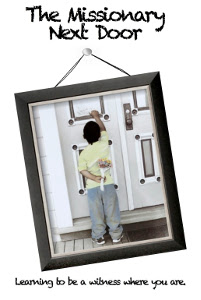
the missionary next doorI’m not a big fan of knocking on doors and offering to share the good news with strangers. I’ve been at the receiving end of door-to-door evangelists of one type or another and an unanticipated visit is usually an interruption. On the other hand, I am discounting the Holy Spirit and encounters previously arranged outside human awareness.

We have to start somewhere. We can’t just talk to ourselves about what we already know and we can’t just target limited populations if we really believe we have a good message that people need.

But where to begin? If you call yourself a Messianic anything, do you share your message with strangers or at least with atheists with whom you’re acquainted? How do you talk to someone about faith in a Jewish Messiah within the context of Messianic worship and faith?

The comments section is now open.

Repentance and Negativity

The Torah teaches us that it is never too late to change.

Changing for the better is called doing teshuva. The Hebrew word teshuva, which is often translated as repentance, actually means to “return.” Return to God. Return to our pure self.

How do people become interested in self-improvement?

People have faults. The faults they have cause them to suffer in some way or another. This suffering limits an individual’s freedom and is often painful. Hence, people want to change… to improve. To be free once again.

How does one change for the better? How does one do teshuva?

There are four steps of teshuva.

-Rabbi Mordechai Rottman
“Four Steps to Change”
Aish.com

Leaving Negativity Behind

This is the second step in making teshuva (we covered the first step, regret last week).

Here’s Rabbi Rottman’s description of this step.

Imagine a drug addict who arrives at a rehab center for detox treatment. His parents leave him at the entrance and wish him luck after a tearful but hopeful goodbye. Little do they know that their addict son’s suitcase is lined with enough cocaine to send a hippo to heaven.

It’s not that our addict does not want to change. He really does! He just has not “let go” of the very things that have brought him to the negative state he is now in.

Did you ever learn bad habits from a particular roommate and decide that you want to stop being like that? Did you ever try doing it without changing roommates? It’s nearly impossible.

“Leaving the negativity behind” means staying away from all of the paths that lead to that negativity. This includes crafting your environment to prevent temptation. And it means staying away from even mere thoughts, which can lead to the obvious next step — action.

That’s not really what I expected. I expected what he wrote as a much shorter definition on the Aish.com page:

Leaving the negativity behind. To stop dwelling on the transgression in thought and action.

To me, leaving negativity behind means to stop beating yourself up over your sins and struggles with temptation. It’s pretty easy to keep clobbering yourself, especially when trying to break a long-term cycle of sin. It’s probably an all too familiar pattern to “throw the book at yourself,” so to speak, to say how no good you are, how hopeless the situation is, and if you’ve gone this far down in sinning, you might as well go the whole way.

Following that line of thought only leads to self-destruction and totally abandoning any relationship with God.

In reading the longer explanation, it seems to me that the Rabbi is saying to make a complete break with anything that connects back to the sin or sins in question. It’s like you are a smoker and so is your spouse. You decide to stop smoking but (s)he continues with the habit. How long do you think you’ll be able to keep your resolve as long as your spouse continues to smoke?

flightSo leaving negativity behind means completely changing your flight pattern as it relates to your sin. If your sin is associated with specific places, you have to avoid those places. If your sin is associated with certain people, then you have to avoid those people.

But the one person you can’t get away from is yourself and your own thoughts and feelings. If you keep telling yourself that you are a person who does this sin, then you’ll identify with that definition. That’s who you are. In this case, you are what you think. Even if you soar away, leaving all other negative people and circumstances behind you, you always have to take yourself on the journey.

Unfortunately, many people are not yet committed to the idea of refraining from negative speech. If you are in the presence of someone as they malign or slander someone, come to the rescue. Have the courage to speak up in defense of the person being spoken against.

This isn’t always easy. Build up the strength of character and courage to stop negative speech.

-Rabbi Zelig Pliskin
“Stop Negative Speech”
Aish.com

Rabbi Pliskin is referring to a person who is witnessing another individual verbally insult someone. The recommendation from the Rabbi is for you to come to the victim’s rescue by stopping the offending party from making further negative comments. But what if the person making the negative comments is you and what if you are making them about yourself?

You have to come to your own rescue. You have to see what you are doing, recognize it for what it is, and then stop your behavior. That’s going to be tough because it’s tied to your habitual sin. It’s a habit, both the sin and what you tell yourself about the sin. It’s a habit to tell yourself that you are worthy of being condemned and unable to pull yourself out of the mud.

To leave negativity behind, you have to repeatedly rescue yourself from your own negative speech. Rescuing yourself, and finding a new way to talk to and identify yourself has to be the new habit that replaces the old habit of sinning and then slamming yourself (metaphorically) against a brick wall because of the sin.

But what about God?

My own worst enemyIt’s not just what we tell ourselves about our sin and our character defects, it’s what we believe God thinks of us, too. The Bible is full of God hating sin, smiting sinners, exiling whole populations, exterminating whole populations, all because of their sin. God isn’t soft on sinners and we have to believe that He punishes sin, if not in this world, then in the next one.

Who can stand before His indignation? Who can endure the burning of His anger? His wrath is poured out like fire And the rocks are broken up by Him.

Nahum 1:6 (NASB)

But the LORD is the true God; He is the living God and the everlasting King. At His wrath the earth quakes, And the nations cannot endure His indignation.

Jeremiah 10:10 (NASB)

So if you tell yourself that you are a hopeless, low life, scum ball sinner and that God hates your guts and can’t wait to send you to hell without and electric fan and pitcher of ice water, then that takes away any hope of repentance, atonement, forgiveness, and reconciliation. If God hates you, you might as well hate yourself.

But while the Westboro Baptist Church may think God is a “hater,” there are other opinions:

To the prophets, sin is not an ultimate, irreducible or independent condition, but rather a disturbance in the relationship between God and man; it is an adverb not a noun, a condition that can be surmounted by man’s return and God’s forgiveness.

The divine pathos is like a bridge over the abyss that separates man from God.

Abraham Joshua Heschel
“The Theology of Pathos” (The Prophets II), pg 9
The Prophets

Man in covenant with God is in relationship with God. Heschel believed that what we do affects God and that God deeply, personally cares not only about humanity in general, but about each and every individual human being. For Rabbi Heschel, being Jewish and observing the mitzvot wasn’t being part of a “religion of dead works,” but rather, participating in a loving and intimate interaction between himself and His Creator, as a wife might dance with her husband.

chuppahChristianity calls itself “a relationship, not a religion,” but when God embraced Israel under the Sinai covenant, they entered that intimate relationship together just as a Jewish man and women enter marriage under the Chuppah. I say all this to illustrate that even if you denigrate yourself in every conceivable manner, God does not and will not.

“For a brief moment I forsook you, but with great compassion I will gather you. In an outburst of anger I hid My face from you for a moment, but with everlasting lovingkindness I will have compassion on you.”

Isaiah 54:7-8 (NASB)

Of course this is God addressing Israel through the prophet Isaiah, so I have to be careful in taking a statement out of one context and pasting it in another, but I’m confident that God not only turns away from Israel for just the briefest of moments, but He also is just as brief when (it seems) He turns away from us as well.

The Lord is not slow about His promise, as some count slowness, but is patient toward you, not wishing for any to perish but for all to come to repentance.

2 Peter 3:9 (NASB)

This is good and acceptable in the sight of God our Savior, who desires all men to be saved and to come to the knowledge of the truth.

1 Timothy 2:3-4 (NASB)

Sin is a barrier that inhibits a close relationship between you and God. Even in sin, the relationship exists, but it’s strained and distant. Even when the Israelites were exiled by God, He was still with them. He was with them in Egypt, He was with them in Babylonia, and He was with the Jewish people, even in their deepest suffering and despair.

I believe that even when we “fall off the wagon,” so to speak, and we lead a life that takes us away from God, He is still there waiting “anxiously” for us to repent and turn back to Him. Luke 15:11-32 chronicles the parable of the Prodigal Son which is a wonderful example of how sin takes us away from our Father but when we’re ready and return in repentance, the Father does not shun us or shame us for our mistakes and willful sins, but joyously welcomes us back home, in great celebration.

So the only one “badmouthing” you is you.

Well, that’s not quite true. If others are aware of your sins, especially family, it’s very possible that the pain of enduring your sins is affecting them and their response could be anger.

That’s a tough one. Instead of living with a spouse who is smoking while you’re trying to quit smoking, you are living with a spouse who constantly nags you for smoking while you’re trying to quit. Your loved one may be the person saying how lousy you are and how you’ll never change, and what a hopeless jerk you are.

Hopefully that doesn’t describe your situation, but if it does, you’re not alone.

separationAs unpleasant as it is to endure, it’s a consequence of your sinful behavior and how it has hurt others. That kind of negativity is difficult to escape and in the case of a marriage, something like couples counseling might be necessary to support you in leaving negativity behind and to make teshuva, and by helping both you and your spouse to find alternatives to “negative talk.”

I know I mentioned this last time, but as you can see, making teshuva is incredibly involved. Even a single step in the process may require weeks or months. Even if you are convinced that God loves you and wants a closer relationship, and even if you can remake your negative comments and thoughts about yourself into positives, you may never be able to contain literally every single environmental factor (especially other people) in your life.

In that case, when you encounter someone or something you can’t avoid and that threatens to drag your soul into the darkness again, returning to God through the Bible and prayer may help balance the scales. If you know for certain that God loves you and you can read that in the Bible and meditate on those words, making them your new habit to replace negativity can be your shield against what you otherwise must endure.

Successfully eliminating negativity leads to the next step in teshuva. Continuing to live with negativity in thought and word leads to negativity in action: back to sin.

This isn’t an easy choice, but it is a choice that you can and must make.

Commentary on Dennis Prager and Judaism’s View on Homosexuality

I wish to commend Dennis Prager’s article as an excellent discussion of the subject. Thanks for sharing the link to it.

-from a comment made by ProclaimLiberty

I started this as a comment in response to PL, as well as to my friend Mel who originally provided the link to the Prager story Judaism’s Sexual Revolution: Why Judaism (and then Christianity) Rejected Homosexuality on a prior meditation, but as I kept writing and writing, it seemed like my response needed more room. Hence this blog post.

Prager’s article goes a long way to explain why the Torah specifically prohibits male on male sexual intercourse but is silent about woman on woman sex.

The revolutionary nature of Judaism’s prohibiting all forms of non-marital sex was nowhere more radical, more challenging to the prevailing assumptions of mankind, than with regard to homosexuality. Indeed, Judaism may be said to have invented the notion of homosexuality, for in the ancient world sexuality was not divided between heterosexuality and homosexuality. That division was the Bible’s doing. Before the Bible, the world divided sexuality between penetrator (active partner) and penetrated (passive partner). (emph. mine)

Also quoting Martha Nussbaum:

Ancient categories of sexual experience differed considerably from our own… The central distinction in sexual morality was the distinction between active and passive roles. The gender of the object… is not in itself morally problematic. Boys and women are very often treated interchangeably as objects of [male] desire. What is socially important is to penetrate rather than to be penetrated. Sex is understood fundamentally not as interaction, but as a doing of some thing to someone…

I’m now curious about David Greenberg’s book The Construction of Homosexuality since it’s described as “the most thorough historical study of homosexuality ever written” and may go a long way to explain how/if homosexuality was normalized in any past civilizations and if same-sex marriage/mating was considered on moral/social par with opposite-sex marriage/mating.

However, Prager quotes Greenberg as saying:

“With only a few exceptions, male homosexuality was not stigmatized or repressed so long as it conformed to norms regarding gender and the relative ages and statuses of the partners… The major exceptions to this acceptance seem to have arisen in two circumstances.” Both of these circumstances were Jewish.

Prager further states:

Jews or Christians who take the Bible’s views on homosexuality seriously are not obligated to prove that they are not fundamentalists or literalists, let alone bigots (though, of course, people have used the Bible to defend bigotry). Rather, those who claim homosexuality is compatible with Judaism or Christianity bear the burden of proof to reconcile this view with their Bible.

Greenberg bookThis is what I believe Matthew Vines is trying to do in his book God and the Gay Christian, however, Prager says in his article that the Bible’s attitude on homosexuality is “unambiguous” and in his opinion, it’s impossible to reconcile that attitude with any sort of statement that same-sex coupling is acceptable to God.

This may be the key to understanding “abomination” (toevah) as used in Leviticus 18:22. Prager quotes Greenberg again:

“When the word toevah (“abomination”) does appear in the Hebrew Bible, it is sometimes applied to idolatry, cult prostitution, magic, or divination, and is sometimes used more generally…” (emph. mine)

Not all abominations, according to Professor Greenberg, have to be directly related to idolatry or cult prostitution, thus the prohibition against male to male coupling can be reasonably understood as more generalized within Judaism and by inference, Christianity.

Relative to Judaism (and I include Messianic Judaism here), Prager says:

Judaism cannot make peace with homosexuality because homosexuality denies many of Judaism’s most fundamental principles. It denies life, it denies God’s expressed desire that men and women cohabit, and it denies the root structure that Judaism wishes for all mankind, the family.

I agree with PL that Dennis Prager’s article Judaism’s Sexual Revolution: Why Judaism (and then Christianity) Rejected Homosexuality is a “keeper” and goes a long way to summarize both the history of homosexuality in the ancient world and why Judaism (and of course, God) rejected same-sex partnering as a way to promote life, growth, elevation of the status of women, and service to God.

This brief missive was originally conceived as a comment in another blog post so it is understandably brief (compared to how much I usually write). Please read the Prager’s original article in its entirety so you can benefit from all of the details he provides. Remember, Prager is politically and socially conservative, so if you have a more liberal bent, you aren’t going to like what he says.

Yom HaShoah in Church

Passover this year was not a festival of freedom for Alisa Flatow of West Orange, New Jersey. The Brandies junior was rendered brain dead by a piece of shrapnel on April 9, when a Palestinian suicide bomber drove his van of explosives into a busload of Israelis near Kfar Darom in the Gaza Strip.

-Ismar Schorsch
“To Love Our Neighbor is Not Enough,” pg 413, May 6, 1995
Commentary on Torah Portion Kedoshim
Canon Without Closure: Torah Commentaries

No one is ever to say, “I am too old to worry about the welfare of the next generation.”

-Schrorsch
“The Ethic of Stewardship,” pg 417, May 10, 1997

In short, holiness is a matter of deeds, not words.

-ibid
“What is Holiness?” pg 419, April 23, 1994

You may be wondering what all of these quotes have to do with Yom HaShoah or Holocaust Memorial Day. I’m sure Schorsch’s commentaries on Parashah Kedoshim were unassociated with any thought of Shoah, but with the commemoration beginning tonight (Sunday, April 27th) at sunset, Schorsch’s articles on holiness are refactored in my mind into a memorial for the dead and a cry to the living.

I’m writing this before attending church on Sunday morning. I can’t get away from the counterpoint of Christianity’s history relative to the Jewish people and however unmeaning, the Church’s contribution to Hitler’s ghastly atrocities.

I commented several weeks ago on my decision not to attend Easter…uh, Resurrection Day services at church because of how it affected my wife last year. It seems somewhat ironic that I should select Yom HaShoah as my opportunity to return to corporate Christian worship. I hope it’s not a mistake.

My recent reflections on Purim including its meaning for the Church and sadly finding the Spirit of Haman in the Church, point to the relevancy of certain Jewish observances to Christians, especially as a point of education and elucidation.

ShoahIf any body needs to be reminded of Shoah and how the screams of six-million murdered Jews continue to echo down the dark tunnel of history and into our present, it is the Church.

I don’t say this as a way of blaming current Christianity for the Holocaust or any of the other atrocities that have been committed against the Jewish people and Judaism over the past two-thousand years or so, but as a cautionary tale and a reminder that we don’t have to return to the sins of the past. As I’ve said before, Evangelicals are abandoning support of Israel and the Jewish people in droves. The stage is being set in Europe and America for a resurgence of anti-Semitism and Jew hatred.

How soon we forget.

Which is why we must not only remember but we must teach. We must remind ourselves of the horrors of the past and we must educate the next generation that the return of the Spirit of Amalek is only a heartbeat away.

So my church attendance today will also be a silent reminder, or maybe a not so silent reminder, to my fellow Christians of what this day means to them…to us.

I have a t-shirt. I can’t recall the name of the company that produced it. I bought it many years ago, at the approach of Yom HaShoah, along with the others in the congregation I used to attend. The company making it wanted to sell six million of them, one for each victim. I don’ t know if it worked out that way. I hope it did. I want to represent one of six million. I want to be a reminder of one Jewish soul who died needlessly because of evil men and Christian indifference.

This commemorative t-shirt cries out that Shoah must never happen again. I wear it every year at this time, which is usually during the weekdays at work, as a witness. Only one person has ever asked me what it meant. He seemed surprised when I told him.

RemembranceI normally go to church dressed in “business casual” clothing, but dress pants are hardly suitable attire with a black t-shirt, so I’m “dressing down” for church today. I’m also dressing up, so to speak, and by “up” I mean elevation, both informational and spiritual. My clothing will be a badge of warning and of purpose. We must all do something today and tomorrow (and always) to remind the world around us of what they’ve forgotten, and to tell the news in the world around us to those who have never been told before.

My friend Dan Hennessy is, among other things, a “Holocaust educator, author, and activist.” He has a motto for his teaching which I like.

Education is resistance. Join the resistance.

Rather makes you feel like a freedom fighter when you say it out loud. But that’s who we are when we speak of Shoah, when we tell others what Yom HaShoah means, not just as a piece of history, and not just as something meaningful to Jewish people, but as a vital reminder to the Church” that we, as disciples of the Jewish Messiah, have a responsibility and a duty to the Jewish people, to Israel, and to God, never to forget and never to let our children forget. We must never let the world forget about the day when the world went mad.

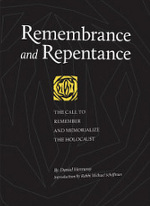
Dan’s research and teaching led him to write a book: Remembrance and Repentance: The Call to Remember and Memorialize the Holocaust. I’m fortunate enough to own a copy which I reviewed last year. At less than one hundred pages, it can be read in just an hour or two and serves as a perfect devotional for the remembrance of Shoah.

What do you do on Yom HaShoah?

You can learn more than I could possibly insert into this brief missive. You can read the story of a Holocaust survivor and put a living, human face on the Holocaust. You can watch video reminders of the past so you may strengthen your resolve that the past does not also have to be the future for the Jews. You can realize that Shoah is continually lived out in Jewish experience today and in the history of modern Israel.

The Holocaust did not end in 1945 when the Allies liberated the Jewish survivors from the Nazi killing centers and concentration camps. Still shadowing the world’s moral, political, and religious life are the consequences of what happened, and did not happen, in the period of 1933 to May 1945 in predominantly Christian Europe.

-Daniel Hennessy
“Educational Activism,” pg 82
Remembrance and Repentance: The Call to Remember and Memorialize the Holocaust

I quoted Ismar Schorsch above in saying that we are not “too old to worry about the welfare of the next generation” and “holiness is a matter of deeds, not words.”

Yesterday’s Torah Portion Kedoshim includes the following:

Hashem spoke to Moses saying: Speak to the entire assembly of the Children of Israel and say to them: You shall be holy, for holy am I, Hashem, your God.

Leviticus 19:1-2 (Stone Edition Chumash)

These words, or something similar, are not foreign to Christians:

Therefore you are to be perfect, as your heavenly Father is perfect.

Matthew 5:48 (NASB)

Remembering Shoah and teaching others to remember is an act of Holiness and perfection. It is honoring God, for God asks each of us to love kindness and to do justice (Micah 6:8).

candle shoahToday, I will stand in the sanctuary among other Gentile Christians as a witness. Pastor Randy, who lived in Israel for fifteen years, is on vacation this week so he won’t be leading services. Pastor Bill will be giving a sermon on David and Goliath (I Samuel 17) and my Sunday school class will be teaching on Ephesians 2. Nothing wrong with any of those lessons.

But given what is on my heart as I write this, I can think of something better to teach in church today. I pray that there’s someone who will listen.

This year, Yom HaShoah begins on Sunday, April 27th at sundown and ends on Monday, April 28th at sundown. If you can teach someone about Shoah then teach. If you know little or nothing of Shoah, then learn.

Leviticus, Homosexuality, and Abominations

You shall not lie down with a male, as with a woman: this is an abomination.

כב. וְאֶת זָכָר לֹא תִשְׁכַּב מִשְׁכְּבֵי אִשָּׁה תּוֹעֵבָה

Leviticus 18:22

Ok wait, we know that Leviticus forbids men having sex with each other, and that the penalty is death. But does G-d give us a reason? Yes, She does. “You shall not lie with a man as with a woman, it is an abomination.” When I was growing up and reading those words, I had no idea what abomination meant, but I knew it must be bad. I had visions of the abominable snowman attacking me if I did any of the mentioned activities that were said to be ‘abominations’. This fearful obedience stopped me from challenging my church’s beliefs about homosexuality for many years.

What does this strange word mean? Well, in Hebrew, the word is ‘to-evah’ (or to-ebah), but that helps little. The word is difficult to translate succinctly, but picture someone or something that is wild and dangerous, highly addictive and contagious. Picture something radioactive, that once unleashed, will spread like wildfire and affect (and infect) everything nearby. It’s not only wild, but disgusting, and describes detestable religious orgies, or idolatrous practices. If you were confronted with that kind of enemy, what would you do? You’d have to destroy it–stop it dead in it’s tracts (sic). If you didn’t, it would soon infect the entire population, yourself included.

One interesting fact is that the first time ‘ABOMINATION’ is used in the Torah is to DESCRIBE WORSHIPPING G-D, when Moses is asking Pharoah to let the Israelites worship G-d in the desert. The Pharoah inquired, “Why can’t they worship right here?” and Moses answered that if the Israelites worshipped G-d in Egypt, their acts would be an ABOMINATION to the Egyptians. Can you believe it? Worshipping the one true G-d is considered an abomination! Why? Because it is the religious rite of a different religion (from the perspective of the Egyptians–the Israelites were going to sacrifice animals whom the Egyptians worshipped, so it was considered detestable). Still don’t believe that toevah is about idolatry? “Do not inquire concerning their gods, saying, ‘How did these nations worship their gods? I also want to do the same.’ You must not do the same for the L-rd your G-d, because every TOEVAH that the L-rd hates they have done FOR THEIR GODS” Deut.12:30-1. This makes it clear, the abominations of the Canaanites weren’t just a bunch of random detestable acts, they were FOR THEIR GODS. As a child I wondered what ‘abomination’ meant, now I have the answer. The Bible gives its own definition in Deut. 12:30-31; an abomination is a detestable religious rite of a religion different from your own.

-from the B’nai HaKeshet (Children of the Rainbow) website

My stated intent to review Matthew Vines’ book God and the Gay Christian has inspired a lot of attention and responses on my blog post, on Facebook, and via email. One such email message led me to the B’nai HaKeshet website from which I quoted above. That quote was taken from a much longer missive which attempts to explain that the Bible never speaks against Homosexuality or Homosexual acts in general.

AshtorethI Googled the definition of the Hebrew word “toevah” which is commonly translated as “abomination,” such as we see in Leviticus 18:22 and the search results returned a lot of the same information, basically saying that this portion of scripture is not a blanket prohibition against male on male sexual acts, but specifically addresses such sexual activity within the context of idolatrous worship. The issue supposedly isn’t a man having sex with another man, but a man having sex with another man (male temple prostitute) in association with worshiping an idol.

It’s difficult to find a source (at least by a quick Google search) that is objective or neutral and simply defines the word and its usage, but the closest I found was a newspaper opinion piece written by Rabbi Bruce Warshal called Lots of abominations in the Bible (Sept. 19, 2012).

Rabbi Silvers discussed the meaning of the Hebrew word toevah, which most English bibles translate as “abomination,” as in Leviticus, chapter 18, verse 22: “Do not lie with a male as one lies with a woman; it is an abomination. He pointed out that the Hebrew word toevah is used extensively in the Bible regarding food prohibitions, idolatrous practices, magic and ethical violations. His prime example is that eating shrimp (shellfish) is toevah. Yet today he knows plenty of Jews who eat shellfish.

I also found a word study written by someone named Skip Moen on the word to’evah:

With this in mind, we can turn to the word to’evot (abominations). What is an abomination? Do you think that it is something so hideous, so immoral, that it ranks among axe murder, rape and incest? Remember the cultural background of the ancient Near East. Something is to’evah’ when it is loathsome and detestable. It may be physical, ritual or moral. It is something offensive to values of the culture. That means to’evah is determined within the culture and community, just like mishpat. And that means God defines what He finds offensive within the community of Israel. The world may not find some of these actions offensive. That doesn’t matter. They are not regulations for the world. They are offenses to the Hebraic biblical way of life. If we want to demonstrate with our behavior the values that God expresses with His words to His chosen community, then these to’evot will not be part of our actions.

We must understand this perspective in order to understand why homosexuality, slander and human sacrifice are in the same category as dishonest business practices and the eating of unclean animals. When it comes to offenses to God’s values, eating pork is the same as child sacrifice; ritual prostitution is the same as cheating a man with false weights and measures; and homosexual behavior is just as repugnant as lying. Forget the arguments about morality. Put aside the nurture/nature nonsense. None of these matter when it comes to embracing the culture of the Kingdom. If you want to be in God’s community, then you behave in ways that honor Him. End of story.

Topical Index: abomination, to’evah, rule, mishpat, Proverbs 6:16-19, Leviticus 18:26

forbiddenThe sense I’m getting from all of this is that the word “toevah” can be applied to many different acts which God forbade the Israelites from performing, considering all of them “idolatry” or alternately “adultery” (I’ll get to that). But does that mean all of the forbidden acts (including sex with close relatives, see the wider text in Leviticus 18) are only forbidden when engaged within the context of idol worship?

(Remember, context, context, context. Leviticus 18:22 is included in the larger context of the Leviticus 18 “forbidden relationships and acts” list for a reason).

Saying that these various sex acts are only an “abomination” if performed as part of idol worship doesn’t make sense. That would mean it would only be forbidden for an Israelite to have sex with his sister or step-mother if that sexual act was performed as part of worshiping a foreign god.

The crux of the argument presented at B’nai HaKeshet is that for something to be an “abomination” it must be related to idol worship and cannot be a “stand alone” prohibition that crosses all contexts. Just read Leviticus 18:6-18 and you’ll see prohibitions against sexual acts all involving either incest or sex with other close relatives (mother-in-law, step-sister, and so on).

As far as Rabbi Warshal’s reference to Rabbi Silvers, just because some or many Jews today eat shellfish in violation of the Torah commandment doesn’t make it right. Disobedience to God is still disobedience regardless of how many people are engaging in the behavior.

Although on the surface, it seems as if the anonymous writer at B’nai HaKeshet has done her homework (she does state that she’s a woman), the logic she employs to come to at least some of her conclusions has “gaps”.

Here’s what I mean.

When the Lord began to speak through Hosea, the Lord said to him, “Go, marry a promiscuous woman and have children with her, for like an adulterous wife this land is guilty of unfaithfulness to the Lord.”

Hosea 1:2

Rebuke your mother, rebuke her, for she is not my wife, and I am not her husband.

Hosea 2:2

“Though you, Israel, commit adultery, do not let Judah become guilty.”

Hosea 4:15

God compared the intimate relationship He has with Israel as a husband to a wife, with God playing the role of husband. When Israel strayed and worshiped false gods instead of or in addition to Hashem, it was compared to committing adultery. But did Israel to the last man and woman cheat on their spouses? Is that what God is talking about? No. He’s employing a metaphor through the prophet Hosea (to the point where Hosea is commanded to marry Gomer, a promiscuous woman) in order to illustrate His point.

hosea and gomerAny act of disobedience committed by the Israelites is compared to idolatry and faithlessness. We can’t say that only an Israelite who cheats on his or her spouse is guilty of idolatry or that it is only forbidden for an Israelite to cheat on his/her spouse in performance of an idolatrous act is forbidden.

You have to look at the broader scope. It is my opinion that toevah can mean many different acts of disobedience to God, some directly related to idol worship but many others involving forbidden activities that are not or at least do not have to involve worshiping an idol. It was still forbidden of the Israelites to eat a ham sandwich, even if it had nothing to do with a pagan practice, just as eating ham (or shellfish) for observant Jews today is considered a forbidden act. That many secular Jews eat ham or shellfish doesn’t make it acceptable in God’s sight.

I’ll stop here rather than continue with my assessment of the B’nai HaKeshet author’s other assertions. I may address them at some other point, but I want to get this published quickly so any of my readers who goes offline for Shabbat can have a chance to respond before Saturday night/Sunday morning. Also, because I’m writing/editing very quickly, this missive isn’t as polished as I’d like it to be, so excuse the rough spots.

I’m not trying to be mean or insensitive and I hope I’m being objective, but it just seems as if a certain bias has entered how these texts are being read, especially in light of the larger context of the Bible and God’s relationship with Israel. I know this doesn’t specifically address Christianity and Homosexuality, but I have some ideas about how to consider that paradigm.

Last point. I wrote this as a way to get my head into the debate relative to Homosexuality and whether or not the Bible supports and endorses (or at least doesn’t outright condemn) homosexual acts in the community of faith. So far, I can’t say there’s overwhelming evidence that God is “cool” with such behavior. Your polite feedback, as always, is welcome.