Category Archives: Uncategorized

Book Review: The Jewish Background to the Lord’s Prayer

brad-young-bookThe main problem is one of approach. Too often, the importance of the Jewish background of the prayer and of the language that Jesus used has been overlooked or minimized. Jesus was a Jew, speaking Hebrew to his Jewish followers during the difficult days of the Roman occupation of Israel in the Second Temple Period. A modern Christian has a quite different understanding of prayer, Scripture, and faith than a Jewish teacher like Jesus, not to mention the great differences in language, culture, and history. One can easily miss the great depth of Jesus’ message, even while believing in him. Here we will try to rediscover something of the original Jewish atmosphere in which Jesus taught his followers how to approach God in prayer.

-Brad Young
from “Introduction: The Disciples’ Prayer,” pg 1
The Jewish Background to the Lord’s Prayer
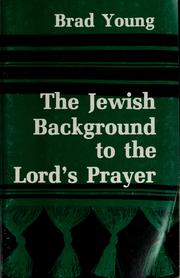
I’ll start by profusely thanking Toby Janicki for graciously lending me his personal copy of Young’s book. Apparently it is out of print, and even used copies on Amazon are kind of pricey, especially for a forty-six page text.

As Young states, we Christians in the Church tend to almost take the Lord’s Prayer, or rather “the Disciples’ Prayer” for granted. It’s one of those things we read in the New Testament that we think we all understand correctly and completely. After all, the prayer itself is quite short. What’s there to misunderstand, right?

The answer to that question is “plenty,” and for the reasons I quoted above.

To start off, I won’t quote the Disciples Prayer here. It should be pretty familiar to most Christians, even those who don’t spend a lot of time in the Bible. For reference, there are two, parallel versions of this prayer in the Bible and they aren’t identical. You can find them in Matthew 6:9-13 and Luke 11:2-4. The differences, I suspect, have to do with the different audiences of each Gospel, with Matthew written to the Jews and Luke written to the Greeks.

Our Father Who Art In Heaven

Young suspects (pg 3) that Luke removed the “Jewish elements” of the prayer, since his version does not contain the words we read in English, “who art in heaven”. This was a familiar prayer formula in first century Judaism but would have seemed foreign to Greek readers. Picturing a “Father in Heaven” might have summoned images in Greek minds of some “god” such as Zeus sitting on an Olympian throne (pg 4). Luke may have felt it prudent to avoid such false associations by editing Jesus’ words (a Gospel writer editing the words of the Master to fit a specific audience is somewhat startling, don’t you think?).

But for a Jewish audience, the “Father in Heaven” reminded them of the love and care Hashem had and has for the Jewish people, and they would have recalled many references from scripture of the kindness of God toward Israel:

Whoever is wise let him note these things, and they will comprehend the kindnesses of Hashem.

Psalm 107:43 (Stone Edition Tanakh)

Jesus taught his disciples that God is not just a generic Father in Heaven, but He is “your” Father and “our” Father. The relationship between God and Israel isn’t just corporate, it’s personal. As Gentile disciples of the Master, we are grafted into that relationship with God, and thus we can call God “our” Father and “my” Father in Heaven.

Hallowed Be Thy Name
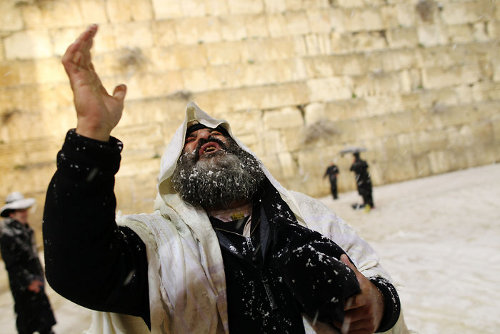
PrayingYoung says (pg 7) that the word we read as “Hallowed,” at least in the King James Translation, is more accurately rendered “sanctified”. He “retrotranslated” the Greek into the Hebrew word “yitkadesh” which means “be sanctified” so the phrase should read like “may Your Name be sanctified”. He also compares this to the Hebrew word “v’hitkadishti” found in Ezekiel 38:23

I will be exalted and I will be sanctified… (emph. mine)

Ezekiel 38:23 (Stone Edition Tanakh)

But as Young asks (pg 8), two-thousand years ago, what did “sanctify” mean to the Master’s Jewish disciples? Young makes comparisons to Leviticus 22:32 and Ezekiel 36:23 but he also said this:

The name of the Lord can be either sanctified or profaned by the conduct of people. In fact, because a martyr would frequently cause others to glorify God as a result of his sacrifice, the Hebrew idiom, “to sanctify the Name,” was often understood as referring to someone who would give his life for his faith.

-Young, pg 8

Adds some dimension to the crucifixion of Christ, doesn’t it? Perhaps as his disciples watched Jesus slowly dying on the cross, they remembered these words and what they truly meant to the Master. Perhaps they finally understood one day, that to pray this prayer was to ask that they be considered worthy to also die for the sake of Heaven.

But it’s not just how you die, but how you live, for “one sanctifies God by living a holy life.” Recall Matthew 5:16 (DHE Gospels):

So also, shine your light before sons of men, so that they may see your good deeds and praise your Father who is in heaven.

Thy Kingdom Come

Young spends a significant portion of this small book discussing the meaning of the Kingdom, and it’s somewhat reminiscent of an episode of the First Fruits of Zion television series called Thy Kingdom Come.

According to Young (pg 10), we mistakenly believe this phrase refers to Heaven or some future, Messianic Kingdom that Jesus will establish after he returns. But what did Jesus mean when he said, as he often did, “the Kingdom of Heaven?”

The Greek word “eltheto” doesn’t have an exact equivalent in English but it suggests “may it be” or “let it be”. But again, in Hebrew and to a Second Temple Era Jewish audience, what did this mean? Young (pg 11) says the phrase is quite similar to words we find in the Kaddish: “May He cause His Kingdom to reign.” Young also makes a comparison to the Hebrew words “tamlich malchutcha” or “May you continue establishing Your Kingship,” indicating a continual process rather than a point fixed in time. It is associated with the idea of a Kingdom that has already arrived, and yet is still in the process of coming.

I wrote a review last week about a portion of D. Thomas Lancaster’s Holy Epistle to the Hebrews sermon series called The Partisans that speaks to this difficult to comprehend matter.

Lancaster
D. T. Lancaster

The overarching concept of God having reigned, His currently reigning, and His reigning forever, is all over the Bible. Exodus 15:18, Psalm 93:1, and Psalm 146:10 only scratch the surface, and all of these references may well have come to the minds of the disciples as they listened to Jesus teach them how to pray.

Young states (pg 13) that, referencing Matthew 10:7, “The Kingdom of Heaven is at hand,” the phrase “at hand” or “engiken” in Greek (Heb. “karav”), is “the perfect indicative” and is better understood as an already completed action. It’s could be better said as “The Kingdom of Heaven is here.”

On the Day of Atonement, the High Priest would say the holiest name for God. When he pronounced the Tetragrammaton, the people would fall on their faces and affirm, “His honorable name is blessed and his Kingdom is forever and ever.” The Kingdom is present. God is reigning. He rules as the people recognize his Kingship. He rules when he redeems people. (emph. mine)

-Young, pg 14

This not only speaks directly to Lancaster’s point in the aforementioned sermon, but it expands the meaning of how God’s Kingdom can already be here in a completed form and still having not quite arrived. As each individual comes to faith and acknowledges the Kingship of God in the world and in their lives, the Kingdom is continuing to be established, one human being at a time, across all time, and across human history. As the Gospel message is progressively spread throughout the Earth, the Kingdom is also being spread, expanded, established, affirmed. When the time of the Gentiles (Romans 11:25) is fulfilled, Israel will be redeemed by Messiah and the Kingdom that has already arrived and yet still arriving, will become perfected in our world, and the Messiah King who is already enthroned in the Heavenly Court, will ascend to his place of honor in Jerusalem.

Blessed are the poor in spirit, for theirs is the kingdom of heaven.

Matthew 5:3 (NASB)

Young says this is a poor translation of the Greek “hoti auton estin” and does not actually imply that the poor can “own” the Kingdom of Heaven.” The “poor in spirit” (followers of Jesus) do not own the Kingdom as a possession. Young renders the same verse in Hebrew and then translates that back into English to say, “Blessed are the poor in spirit, for they make up the Kingdom of Heaven.” In other words, the followers of Jesus comprise, or are the building blocks, or are the substance of the Kingdom.

These are people who have already accepted the rule of the King and thus not only become part of the Kingdom as subjects, but are the very essence of the Kingdom of Heaven, the Messiah’s Kingdom. “May you continue establishing your Kingdom, and may your will be done” are parallel phrases in this prayer and declare that we desire more hearts turn to the Father by way of the Son, further establishing God’s rule and the Kingdom of Heaven on Earth.

Thy Will Be Done, On Earth As In Heaven

We already touched on this phrase in the section above, stating that this is an affirmation of what God is already doing. Young (pg 18) references the Greek “genathato” as “may it be,” translating it back into the Hebrew “hayah” which is “to be” or “asah” which indicates “to do”. A more literal translation, taking the Hebrew into account, would be “Let it be your will in heaven and earth” or “Let your will prevail in heaven and earth”.
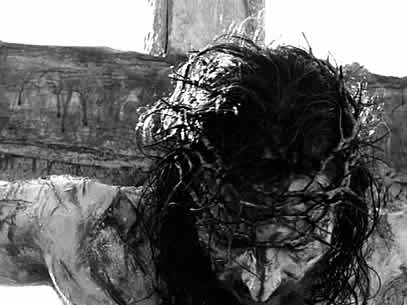
The Death of the MasterYoung says (pg 19) that “to do His will” is idiomatic Hebrew indicating that it is people who do God’s will, thus is a call for obedience or a declaration of obedience to God, for one continually establishes His Kingdom by continual obedience, thus sanctifying His Name.

No finer act of sacrificial obedience to God can be found than in Jesus at Gethsemane (Matthew 26:36-46, Luke 22:39:46):

Of course, the greatest example of the battle to do the will of God is Jesus himself in Gethsemane. Jesus had already predicted his betrayal and sufferings. The brutality of Roman executions was well known, and more than a few had actually witnessed crucifixion. Jesus was keenly aware of the deeper significance of his sufferings. Still, conscious of his own crucifixion looming before him in the next hours, he prayed, “Father, if thou art willing, remove this cup from me; nevertheless, not my will, but thine, be done” (Luke 22:42). Jesus did not succumb but performed the will of God. A person overrules his own volition in order to do God’s will.

-Young, pp 20-21

Jesus has been called an Apostle (Hebrews 3:1), a “sent out one,” and he taught that no servant is greater than the one who sent him (John 13:16), thus Jesus depicted the perfect servant of God, who would obey, even to the death, as an act of love toward his disciples ( John 13:34, John 15:13) and ultimately toward humanity (John 3:16).

Young quotes from Rabbi Alexandri’s prayer (pg 21), saying, “Sovereign of the universe, it is revealed and known to You that our will is to do Your will.” We must all repent continually for it is sin that causes us to rebel against God, preventing us from making His will our will and establishing His Kingdom.

Give Us This Day Our Daily Bread

You wouldn’t think this would need interpreting. Why isn’t it plain that we are to ask God to fulfill our daily needs? Is this asking for our food today, or that our food be prepared for the following day? Young makes a connection to Proverbs 30:8 stating that Jesus may have been deliberately alluding to the scripture, “Remove me far from falsehood and lying; give me neither poverty nor riches; feed me with food that is needful for me.”

So “daily bread” may mean something more like “all of my needs”. This simple phrase in the prayer can be unpacked into a complex set of Jewish conceptualizations interconnected throughout the Bible.

Consider Exodus 16:4-10 and particularly verse 4:

Hashem said to Moses, “Behold! — I shall rain down for you food from heaven; let the people go out and pick each day’s portion on its day, so that I can test them, whether they will follow My teaching or not.”

This speaks not only to obedience but utter dependence and emphasizes not only the study of Torah, according to Rabbi Simeon ben Yochai (pg 25), but being “totally dependent upon God for…every need.”

God is the great provider and we should not even doubt that His providence will always be available (see Matthew 6:25-26, Luke 12:22-24).

And Forgive Us Our Debts, As We Also Have Forgiven Our Debtors

ForgivenessYoung cites (pg 29) Matthew 18:23-35 as a lesson in forgiveness and links how we as disciples forgive others to how we will be forgiven by God. He shows a parallel between this part of the Disciples’ Prayer and what Ben Sira (Sirach) taught (170 BCE): “Forgive your neighbor the wrong he has done, and then your sins will be pardoned when you pray.”

But is it that we impact how or if God will forgive our sins by the quality of forgiveness in our own hearts, or is an unforgiving heart inhibited in prayer, thus never reaching God…or is it a little of both?

“Rabbi, which is the greatest mitzvah in the Torah?” Yeshua said to him, “Love HaShem your God with all of your heart, with all of your soul, and with all your knowledge. This is the greatest and first mitzvah. But the second is similar to it: Love your fellow as yourself. The entire Torah and the Prophets hang on these two mitzvot.”

Matthew 22:36-40 (DHE Gospels)

There’s a slight difference in Luke’s version of the prayer. Matthew asks for forgiveness of “debts” where Luke says “sins.” Young (pg 30) says this is probably associated with the use of the Hebrew word “chayav” which can mean both guilt to which we are accountable and a debt to be paid.

If we again consider Jesus as an Apostle of God, then to the degree he forgave represented God’s forgiveness, and Jesus forgave generously, even to his enemies:

Yeshua said, “My Father, forgive them; for they do not know what they are doing.”

Luke 23:34 (DHE Gospels)

Lead Us Not Into Temptation, But Deliver Us From Evil

Young (pg 31) considers “lead us not into temptation” and “deliver us from evil” to be parallel statements. The word for “temptation” in Hebrew suggests “test” or “trial,” just as HaSatan tested the Master (Matthew 4:1-11, Mark 1:1-12, Luke 4:1-13) hoping to cause him to stumble. Please keep in mind that it wouldn’t have been much of a test if Jesus was totally incapable of sinning, of disobedience to God. He would only have been exalted by resisting the temptation to do what was evil in God’s eyes, that is, if it was possible for him to fail.

When Jesus taught his disciples this portion of the prayer, he of course knew that it was not only possible for the disciples to fall prey to testing and to sin, but that indeed, they would fail. Consider Peter’s denial of the Master after declaring that he would follow Jesus even unto death (Mark 14:66-72, Luke 22:54-62, John 18:15-27).

Young notes parallels (pg 32) not only in scripture (Psalm 119:133) but in one of the Psalm scrolls from the Dead Sea Scrolls discovered in Cave 11, “Let not Satan nor an unclean spirit rule over me” (Heb. “al tashlet bi satqan v’ruach tumah”). Also, the Testament of Levi states, “And do not let Satan rule over me to lead me astray.” Young further quotes abundantly from the Talmud where very similar wording is to be found.

Conclusion

We see here, as I’ve written in other “meditations,” that there is a great deal more information packaged into even the briefest portions of our Bible than we might imagine, even if we are seasoned students of the Bible. If we apprehend scripture from a solely Christian perspective but fail to take into account the Hebrew thought behind the Greek text, we fail not only to get the full message of Jesus, but in many cases, the correct message of Jesus. Thus even with the best intentions and a wholehearted desire to serve God, we end up traveling down many unintended and undesirable paths in relation to God, to the Jewish people, to Judaism, and to Israel.

That said:

Even though Jesus taught his disciples this prayer in Hebrew, in an entirely different setting nearly two millenniums ago, the petitions contained in this short prayer transcend time and are appropriate to the modern-day disciple. Today, perhaps more than ever before, Jesus’ followers need to be challenged again to respond to this timeless message.

-Young, pg 36
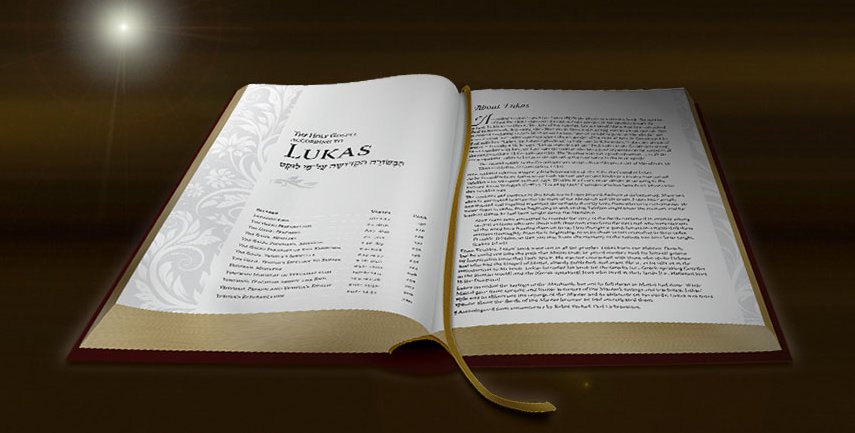
DHE Gospels
Delitzsch Hebrew Gospels

The challenge is to encounter the teachings of Jesus and his Jewish disciples on their own terms, meeting them on their own “home ground,” so to speak, rather than in the places that make us feel comfortable. Most Christians get a little nervous when a lesson about Jesus seems “too Jewish.” Oh sure, they can accept a few Hebrew words and a few Jewish thoughts, but once you start re-translating the entire concept of the Gospel message of Moshiach into a wholly Jewish context, most Gentile Christians, especially those raised in the Church and quite accustomed to the traditions associated with Biblical interpretation, will quickly lose their bearings and feeling in danger of becoming lost, will retreat to more familiar territory, even if that territory has a poorer view of the revered Savior.

Young’s small book was published thirty years ago and sadly is very expensive to acquire, but it also is part of a larger body of scholarship that is continually being added to, which holds the promise of truly illuminating the mind and heart of each and every believer, showing us the Jewish face of Yeshua behind the Gentile mask of Jesus.

Imagine if a forty-six page booklet can say so much about just a few verses in the Gospel that teach such a brief prayer, what could be learned if we approached the entire Bible from the same perspective?

The Christianization of Acts 20

On the first day of the week, when we met to break bread, Paul was holding a discussion with them; since he intended to leave the next day, he continued speaking until midnight.

Acts 20:7 (NRSV)

Christians sometimes cite Acts 20:7 as evidence that the early believers met on Sundays: “On the first day of the week, when we were gathered together to break bread.” The narrative does not support that interpretation. If Paul met with the Troasian believers on Sunday morning, they had a very long church service. Paul spoke until midnight: “Paul began talking to them, intending to leave the next day, and he prolonged his message until midnight.”

The Greek text of Acts does not indicate that they met on Sunday morning at all. Instead it literally says, “On the first of the Sabbath …” The word “day” does not appear in the Greek. According to the Jewish reckoning of time, the first of the week begins Saturday after sunset.

-D. Thomas Lancaster
from Torah Club Volume 6: Chronicles of the Apostles
Tzav (“Command”): Acts 20:1-21:14, pg 653

It’s been awhile since I dug into a Torah Club study but I needed to get my bearings.

I probably shouldn’t even write this but part of my returning to church is to “experience church” relative to my own unique perspectives and practices.

I’d like to think that Pastor Randy, the head Pastor at the church I attend, and I have formed a friendship, and within the confines of that relationship, we are free to engage in candid and forthright conversation. He reads my blog, when he has time (he’s a really busy guy), so nothing I put here is meant to be kept from him.

I know that my criticism of “the Church” does frustrate him on occasion and I think he is authentically puzzled why, when he presents his educated and logical arguments about theology, I just don’t “get it” and accept his basic understanding of the fundamentals of Christianity.

Last Sunday morning, Pastor’s message was based on Acts 20:1-12. I was particularly interested in his lesson on the following verses:

On the first day of the week, when we met to break bread, Paul was holding a discussion with them; since he intended to leave the next day, he continued speaking until midnight. There were many lamps in the room upstairs where we were meeting. A young man named Eutychus, who was sitting in the window, began to sink off into a deep sleep while Paul talked still longer. Overcome by sleep, he fell to the ground three floors below and was picked up dead. But Paul went down, and bending over him took him in his arms, and said, “Do not be alarmed, for his life is in him.” Then Paul went upstairs, and after he had broken bread and eaten, he continued to converse with them until dawn; then he left. Meanwhile they had taken the boy away alive and were not a little comforted.

Acts 20:7-12 (NRSV)

Pastor always includes a page of notes in the Church bulletin, and I review what he’s going to talk about before services start. When I came across the section called ”Parenthetic Conclusion: Sunday worship,” I knew where he was headed. Then there was the quote from Justin Martyr he inserted. I’ll only use part of it here:

But Sunday is the day on which we all hold our common assembly, because it is the first day on which God, having wrought a change in darkness and matter, made the world; and Jesus Christ our Savior on the same day rose from the dead.

-Justin Martyr
The First Apology
“Weekly Worship of Christians” (c. CE 155)

Justin MartyrI won’t try to replicate all of Pastor’s points, but he did say the phrase “first day of the week” (although as Lancaster states above, the word “day” does not appear in the literal Greek) appears only three times in the New Testament (actually, there are a few more). In addition to the above-quoted verse, it can be found in Mark 16:9, the declaration of when Jesus rose from the tomb, and 1 Corinthians 16:2, which is part of Paul’s instructions to set aside funds for Paul’s intended donation to the poor and needy in Jerusalem.

There were a number of conclusions Pastor derived from Acts 20:7-12:

  1. The Roman rather than Jewish calendar was being used to fix the date of the gathering, so that we see they were meeting on Sunday evening rather than Saturday night after Shabbat.
  2. The breaking of bread was likely an enactment of the “Lord’s Supper” indicating the practice of communion.
  3. Preaching and teaching of scripture was a common activity in such assemblies.
  4. Collecting tithes for the church on Sunday was becoming a more common practice.

Both Pastor and my Sunday school teacher said this is evidence that “church services” within Paul’s lifetime weren’t all that different from what we have today: preaching the Word, meeting on Sunday, gathering tithes on Sunday (presumably as part of the service), and taking communion.

Sunday Worship

I’ll get into my reaction in a moment, but the one thing that puzzled me was Pastor’s proof that Paul had to be meeting with these believers in Troas on Sunday evening rather than just after Shabbat had ended (Saturday at sundown). He says that if this was a Saturday night, Paul, who intended to leave by ship the next day, would have had to wait two days, until Monday, to depart, so it had to be Sunday night.

But I either couldn’t hear the rationale or it went by so fast that I just plain missed it. I’ve read Acts 20 numerous times since listening to the sermon, but I just can’t see where this is coming from. I emailed Pastor after I got home from services asking for details, and hopefully he’s respond soon. Once I receive a response, I’ll edit this blog post to reflect his views.

Addendum, Tuesday, March 18: Pastor responded to my email with his explanation. He’s pressed for time, so the rationale is brief. I’ll put it in the comments below rather than interrupt the flow of the narrative here more than I already am.

Justin Martyr, Sunday, and Supersessionism

Now to my response. In the absence of the information Pastor possesses regarding why the assembly at Troas must have been meeting on Sunday, it is my opinion that a shift from a Saturday to Sunday Sabbath occurs here much too early in history. We have Justin Martyr’s writing declaring that Sunday is the proper day of Christian worship, but that isn’t published until some time after Paul’s death (and I find the reasoning, that it’s the day God separated light and darkness, completely disconnected from anything taught by Jesus or the Apostles). I don’t know that Martyr is relying exclusively on his interpretation of scripture and I suspect that he, like many of the other “church fathers,” may have had attitudes about Jewish people and Judaism that colored his thinking and possibly had him making doctrinal decisions about practice based on that bias.

I know Wikipedia is a poor source to quote, but it will have to do for my current analysis:

Justin was confident that his teaching was that of the Church at large. He knows of a division among the orthodox only on the question of the millennium and on the attitude toward the milder Jewish Christianity, which he personally is willing to tolerate as long as its professors in their turn do not interfere with the liberty of the Gentile converts; his millenarianism seems to have no connection with Judaism, but he believes firmly in a millennium, and generally in the Christian eschatology.

Justin saw himself as a scholar, although his skills in Hebrew were either non-existent or minimal. His opposition to Judaism was typical of church leaders in his day but does not descend to the level of anti-semitism. After collaborating with a Jewish convert to assist him with Hebrew, Justin published an attack on Judaism based upon a no-longer-extant text of a Midrash.

-from the Wikipedia page on Justin Martyr

Economic supersessionism is used in the technical theological sense of function. It is the view that the practical purpose of the nation of Israel in God’s plan is replaced by the role of the Church. It is represented by writers such as Justin Martyr, Augustine, and Barth.

-from the Wikipedia page on Supersessionism (Replacement Theology)

HavdalahNone of what I just quoted is rock-solid evidence that Martyr’s declaration of Sunday as the proper meeting day for Christians was motivated by supersessionistic ideology (and it was stated above that Martyr was probably not anti-Semitic), but it does open the door to the possibility that Martyr may not have been operating purely on his understanding of scripture. Based on my understanding of early supersessionistic bias and the church fathers (See my four-part article ”Origins of Supersessionism in the Church” in issues 109-112 of Messiah Journal), I believe there was a focused effort to create a set of practices of worship that specifically separated the budding Gentile Christian Church from its Jewish origins and heritage, replacing the Jewish institutions to which Paul and the other Apostles were accustomed with completely separate rituals, including a calendar disconnected from the Jewish holy days.

Please keep in mind that I have no problem with Christianity choosing a day of the week for corporate worship, but I consider it a tradition based on an emerging (in the mid-second century) reverence for the day of Jesus’ resurrection, not necessarily on a decision of Paul or any of the other Apostles.

Breaking Bread

Depending on the translation you’re using for Acts 20:7, the words the NRSV Bible renders as “break bread” are also read as “the Lord’s Supper” (New Living Translation) or “break the Eucharist” (Aramaic Bible in Plain English). Actually, all of the other translations I’m looking at just say “break bread”. I can’t access the Greek for this term, so I don’t know if it contains something that doesn’t translate into English, but, as Sigmund Freud is supposed to have said, ”Sometimes a cigar is just a cigar.” In other words, just because something is longer than it is wide, doesn’t mean it’s a phallic symbol.

Applied to the current context, I might say, “Sometimes breaking bread is just breaking bread, grabbing a loaf and tearing it in two or more pieces.” The term “breaking bread,” as far as I know, could just as easily indicate a meal of fellowship. It’s typical to “break bread” with friends and companions as a sign of affiliation and trust. Why does it have to mean communion unless we’re trying to make this verse fit a later institution created by the Church?

We were gathered for the disciples came, A.V. and T.R.; discoursed with for preached unto, A.V.; intending for ready, A.V.; prolonged for continued, A.V. The first day of the week. This is an important evidence of the keeping of the Lord’s day by the Church as a day for their Church assemblies (see Luke 24:1, 30, 35; John 20:19, 26; 1 Corinthians 16:2). To break bread. This is also an important example of weekly communion as the practice of the first Christians. Comparing the phrase, “to break bread,” with St. Luke’s account of the institution of the Holy Eucharist (Luke 22:19) and the passages just quoted in Luke 24, and St. Paul’s language (1 Corinthians 10:16; 1 Corinthians 11:24), it is impossible not to conclude that the breaking of bread in the celebration of the Lord’s Supper is an essential part of the holy sacrament, which man may not for any specious reasons omit.

-from the Pulpit Commentary on Acts 20:7

The key scripture as far as “the Lord’s Supper” goes seems to be 1 Corinthians 11:17-34 but Acts 20:7 only mentions “breaking bread”. In comparison to that verse, almost all translations of 1 Corinthians 11:20 refer to “the Lord’s Supper”, so I can only imagine the original Greek is more specific here (only the Aramaic Bible in Plain English states, ”When therefore you assemble, it is not according to what is appropriate for the day of our Lord that you eat and drink.”).

I’m going to have to set the early initiation of what Christians call “communion” today to one side for the moment except to say that it is certainly not definitive that the group in Troas was assembled for the specific purpose of taking a weekly communion or Lord’s Supper. It’s even possible, as I mentioned above, that the very concept of a communion might have been a later invention of the Church.

Tithing

We see a strong record of Paul collecting money or directing the various assemblies to set aside money which he would collect when he arrived (1 Cor 16:1–4; 2 Cor 8:1–9:15; Rom 15:14–32). However, we also see Paul having a specific concern for the poor in Jerusalem (Gal. 2:10). Paul’s companions we find in Acts 20:4 were to accompany Paul to Jerusalem, presumably with donations from the various congregations they represented.

TithingSo Paul was collecting money for the poor and needy in Jerusalem, but this does not mean he was collecting money to pay for the operational costs of the local churches or the Jerusalem “church”.

No, I’m not saying that it’s wrong for the church to ask for donations from the congregants to support the costs incurred in running such an institution, I’m just saying the practice can’t be directly attributed to specific references in the Bible.

It is true that in ancient times, the Israelites did donate materials and services in the building of the Mishkan (Tabernacle) in the desert (Ex. 35:4-36:7), and King Solomon heavily taxed his citizens and required tens of thousands to contribute labor in the service of building the Temple in Jerusalem (starting 1 Kgs 6). But again, none of these point specifically to a church tithe. Frankly, neither does Abraham’s offering to Melchizedek (Gen. 14:20).

But like I said, I don’t think it’s wrong for the administrative office of the local church to request that members and attendees contribute to the upkeep of the church, since those attending are consuming the church’s resources. I also think it’s reasonable and Biblical for churches to collect money for the poor and even money to support missionaries (Paul alluded that he deserved to be supported but preferred to support himself to avoid being a burden). But I maintain that the modern concept of tithing, especially by having men pass around metal plates through the pews so that people can give their weekly donation, isn’t exactly what we see in Acts 20 or any of the other referenced scriptures.

Resurrection Day

I’m returning to the issue of Sunday here but with an eye on it being a day of reverence early on in the first century community of “the Way.” Do we actually see concrete evidence that the day of the Master’s resurrection was directly revered and added to (or replaced) the list of holy days traditionally observed in the various Judaisms? Did the followers of Christ move away from a Sabbath rest because Sunday became so incredibly important to them?

There’s no smoking gun but a lot of inference. I know that Sunday was an important day of gathering in the mid-second century, but is that because of what was gleaned from the Bible, or because the men establishing Sunday as the Christian assembly day needed to separate their religion from Judaism? In the latter case, the “invention” of Sunday worship would have come after the Apostolic Era ended and the church fathers would have just “mined” the various scriptures and verses to support such a decision, declaring it “Biblical” and “Holy Doctrine” of the Church.

Revelation 1:10 was brought up in Pastor’s sermon as well. John was “in the Spirit on the Lord’s Day” when he had his well-known (but not always well understood) set of revelations and visions, but what did “the Lord’s Day” mean to him at that time? It’s assumed by many Christians to mean “Sunday” but Pastor thinks rather that it indicates Resurrection Day, that is, Easter.

Frankly, I don’t think anyone knows, and I think Christian theologians have developed various educated theories over the centuries. Each church denomination has adopted a set of practices that appear to map to certain parts of the Bible, but the question for me is which came first?

Do we believe, for example, that Sunday is the official day of Christian worship because it was established in the Bible, or was Sunday established nearly a century after the Apostles were all in their graves because the leaders of the Gentile Christian church needed to separate their movement from Judaism (and in this case, especially Shabbat observance) and they found portions of scripture they could leverage to support their requirements?

Past and Present

I know that sounds terribly cynical and I know this will make a lot of Christians feel hurt and angry. I know it can’t possibly please Pastor Randy when I write these things, and I know he’s being absolutely honest and sincere when he preaches on Acts 20 and draws conclusions that are consistent with modern Christian practices.

ShabbatHowever, I don’t think it’s all so clear. In fact, I believe if Paul were to walk into a Christian church today, even if he understood our language, he would hardly connect the experience to the practice of the assemblies he established in the diaspora nearly twenty centuries ago, and he absolutely wouldn’t see the Jewishness of everything he taught and the Jewish Messiah he lived and died for in modern Christian observance. I’m sure he’d wonder why modern disciples weren’t gathering on Shabbos.

I’m not saying modern Christian observance is bad or wrong as a set of practical traditions, just that it’s mostly not what Paul did. Yes, he’d understand collecting money for the poor. Yes, he’d understand preaching. Yes, he’d understand studying the scriptures with a learned teacher. Yes, he’d understand sharing a communal meal (though that’s more like Oneg than communion).

But I think it’s OK to admit that Christianity has evolved, and not in an entirely linear fashion, since the days when Paul planted his “churches.” I think it’s OK to admit that the majority of what Protestants believe and the majority of what they do has a history of more like five-hundred years rather than two-thousand. Evangelical Christianity is more a product of the Reformation than what you might call “Apostolic” or “Messianic Judaism”.

Purim

I knew it was Purim when I walked into the church Sunday morning. So did Pastor Randy and Pastor Virgil. So did those few people in the church I know to be Jewish. Most other people would have missed it, though. I kept pondering the significance of experiencing the “Christianization” of the scriptures in Acts 20 as I listened to the Pastor’s message in church on Purim. Why is there a desire to “rush” history, so to speak, and to give the early Judaism of our faith the bum’s rush out the door while the Pharisaic Apostle Paul (or Saul if you prefer) was still alive and desiring to reach Jerusalem before Shavuot or Pentecost (Acts 20:16). He’d already been delayed so he couldn’t be in the Holy city for the Pesach sacrifice and meal (Acts 20:5).

Paul and the Moadim

Paul was an observant Jew and as such, he desired to obey the mitzvot associated with the moadim, the appointed times chronicled in the Torah. This is a clue we should pay attention to. Paul’s desire to return to Jerusalem was connected to specific seasons and events, Passover and Pentecost, Pesach and Shavuot. Wouldn’t it make more sense to believe that Paul also revered the Shabbat as did his forefathers? The Church (big “C”) changed quite a lot of things later on, but for Paul, there was nothing inconsistent with being an Apostle of the Messiah and practicing the Judaism of the Way. In fact, departing from the Torah and the traditions would likely never have occurred to him.

Regrets and Conclusion

I’m actually feeling pretty down about having to write this. I’ve been keyed up since hearing the sermon. I was nervous around the others in Sunday school yesterday. I didn’t sleep well last night. Obviously this bothers me. Last week, I wrote about fellowship in the church and today it seems like I’m doing a big turn around by disagreeing with the conclusions of Pastor’s sermon. Believe me, I’m not disagreeing just to disagree. I’m not being oppositional or “anti-Church.” I’m being who I am as a believer operating with a particular understanding and perspective on the Bible. I’m looking through a different lens, I’m standing at a different look out point. The Bible I see looks a lot more “Jewish” than most of the people I worship with suspect. I apologize if what I’ve written results in hard feelings. That’s not my intention, believe me. But someone needs to stand up for the Jewish Apostle to the Gentiles, and represent who I believe he was and is, and what he was trying to teach.

I started writing this “meditation” early Sunday afternoon and stopped. I figured I needed a “cooler head” before actually getting into this, and I really thought about not writing it at all. I consulted with a good Christian friend. I agonized over it. Finally, I needed to do this. I’m sorry. It’s not against you, or Pastor, or anyone else. It’s for Paul and it’s to keep my head from exploding.

The Jewish PaulThere’s the Paul the Christian church sees, the murderous Jewish Pharisee who encountered Jesus on the way to Damascus one day and became blind. Having his sight restored, he converted to Christianity and left his Judaism behind, preaching a Torah-free faith to Jew and Gentile alike. Then there’s Paul the Jewish Pharisee, who met the Messiah in a vision and having been blinded and his sight then restored, embarked on a journey to tell the good news of Moshiach to his brothers and sisters as well as the Gentiles, that the Messianic Age was at hand, the pinnacle of the history of the Hebrews was within reach, and even the Gentiles could be redeemed by coming alongside Israel through Messiah.

When Messiah returns, we’ll know, everyone will know. For now, I am a loyal subject of the Jewish King and I await his return. May he come soon and in our day. Amen.

May He Calm Our Storms

Those who go down to the sea in ships, who do their work in great waters. They have seen the deeds of Hashem, and His wonders in the watery deep. He spoke and raised the stormy wind and lifted its waves. They rise heavenward, they descend to the depths, their soul melts with trouble. They reel, they stagger like a drunkard, and all their wisdom is swallowed up. Then they cried out to Hashem in their distress, and He would take them out from their straits. He would halt the storm to restore calmness, and their waves were stilled. And they rejoiced because they were quiet, and He guided them to their desired boundary. Let them give thanks to Hashem for His kindness, and His wonders to the children of man. Let them exalt Him in the assembly of people, and praise Him in the session of the elders.

Psalm 107:23-32 (Stone Edition Tanakh)

He went down to the boat, and his disciples went down with him. There was a great storm on the sea, to the point where the waves would cover the boat, but he was sleeping. His disciples approached him and woke him, saying, “Save us, our master. We are perishing!” He said to them, “Small ones in faith, why are you afraid?” He got up, reprimanded the winds and the sea, and there was a great silence. The men were amazed and said, “Who is he, then, that even the winds and the sea listen to him?”

Matthew 8:23-27 (DHE Gospels)

I wonder if, at any point after Yeshua (Jesus) ended the storm, did the disciples think of the portion of Psalm 107 that I quoted above? When I read that psalm as part of my devotionals last Shabbat, I immediately thought of the passage from Matthew 8. But as I made the connection from earlier to later in the Bible, I wondered if the first century Jewish readers of the Gospel of Matthew, when coming upon the sequence where the Master caused the storm to cease…if they saw the relationship between these events in scripture and connected the acts of Jesus with the acts of Hashem, the God of Israel? Could this linkage have been intentional on Matthew’s part? Did he leave a rather obvious (if you’re a first century Jew) clue as to the Master’s identity and nature here to which we Christians, nearly twenty centuries later, would be oblivious?

If so, then it wouldn’t be the first time.

Last summer, I wrote a review of a sermon given by First Fruits of Zion (FFOZ) Founder and President Boaz Michael that he presented some years earlier which he titled “Moses in Matthew”. You can read my review The Jewish Gospel, Part 1 and Part 2 for the details. But it seems to me, perhaps thanks to the Spirit of God (and hopefully not because of my own wishful thinking), that I have made one of those little links in scripture that are so “Jewish” and that further establish the Bible as a single, unified document. I believe this is another example that the Bible is the complete Word of God, a revelation that we can accept as a total and seamless gift, not something to be sliced and diced as Christianity sometimes does, so that the Bible artificially points to an earlier God and a later Jesus, as if the two have almost nothing to do with one another, as if the Old Testament and the New Testament form two separate plans of God in how He will be among His people, and as if God changed His mind on who He decided His people were to be.

God speaks to us from the Bible. The Spirit of God whispers to us as we read. Most of the time, we aren’t even conscious of His presence, but every so often, something “clicks” as it did for me last Shabbos.

May God continue to graciously open our eyes and ears and minds to His Word and reveal the face of Messiah to those of us who call ourselves disciples, and to all to cry out to God for mercy and compassion. May He calm our storms that we too may give thanks and rejoice, and that we might declare the Name of God as great among our assemblies.

Amen.

Finding the Spirit of Haman in the Church

Recently a number of leaders in the Protestant community of the United States have urged the endorsement of far-reaching and unilateral political commitments to the people and land of Israel in the Israeli-Palestinian conflict, citing Holy Scripture as the basis for those commitments. To strengthen their endorsement, several of these leaders have also insisted that they speak on behalf of the seventy million people who constitute the American evangelical community.

It is good and necessary for evangelical leaders to speak out on the great moral issues of our day in obedience to Christ’s call for his disciples to be salt and light in the world. It is quite another thing, however, when leaders call for commitments that are based upon a serious misreading of Holy Scripture. In such instances, it is good and necessary for other evangelical leaders to speak out as well. We do so here in the hope that we may contribute to the cause of the Lord Christ, apart from whom there can never be true and lasting peace in the world.

At the heart of the political commitments in question are two fatally flawed propositions. First, some are teaching that God’s alleged favor toward Israel today is based upon ethnic descent rather than upon the grace of Christ alone, as proclaimed in the Gospel. Second, others are teaching that the Bible’s promises concerning the land are fulfilled in a special political region or “Holy Land,” perpetually set apart by God for one ethnic group alone. As a result of these false claims, large segments of the evangelical community, our fellow citizens, and our government are being misled with regard to the Bible’s teachings regarding the people of God, the land of Israel, and the impartiality of the Gospel.

In what follows, we make our convictions public. We do so acknowledging the genuine evangelical faith of many who will not agree with us. Knowing that we may incur their disfavor, we are nevertheless constrained by Scripture and by conscience to publish the following propositions for the cause of Christ and truth.

-from the introduction to
“An Open Letter to Evangelicals and Other Interested Parties:
The People of God, the Land of Israel, and the Impartiality of the Gospel”
Also known as the “Knox Seminary letter”
found at BibleResearcher.com

A few days ago, I had a private email conversation with someone over a number of issues and the name of a well-known Evangelical Christian Pastor came up in connection with the letter I quoted above (he’s supposed to be one of the later — but not one of the original — signatories). The association wasn’t complementary and having looked up and read the letter after finishing the email dialog, I can understand why.

From an Evangelical Christian point of view, when you read the ten points listed plus the rest of this letter’s content, you probably wouldn’t bat an eye. Nothing would seem amiss in the text of the letter and you’d probably think of it as standard, Evangelical Christian doctrine.

Sadly, it is standard Evangelical Christian doctrine and thereby hangs a tale.

I’m writing this “meditation” several days before you’ll read it. I’ve set it to publish automatically early (in my time zone) on Sunday morning, when millions of Christians across the country are getting ready to go to church. Today is also Purim, the celebration that is commanded of the Jews of Ahashuerus’ ancient Persian Kingdom, ”their descendants and all who joined them…” (Esther 9:27 – NRSV).

”All who joined them” is an interesting phrase because it seemingly refers to the objects of the following statement:

In every province and in every city, wherever the king’s command and his edict came, there was gladness and joy among the Jews, a festival and a holiday. Furthermore, many of the peoples of the country professed to be Jews, because the fear of the Jews had fallen upon them. (emph. mine)

Esther 8:17 (NRSV)

I mentioned before that we aren’t quite sure exactly what that statement means except that obviously many non-Jews became strongly affiliated, perhaps even to the point of conversion, with the Jewish people. They were the ones who ”joined them” and thus they, along with all their descendants, have received a commandment to perpetually celebrate two days of Purim each year.

The descendants of the Jews in that ancient Persian land are considered today to be all Jews everywhere, but what about the descendants of the Gentiles who joined with the Jews? If they were only converts to Judaism, then their descendants are also Jews. If ”professing to be Jews” however, meant pretending to be Jewish or perhaps coming alongside the Jewish people in fellowship and solidarity, then they are something else. Modern day Iranians perhaps, since King Ahasuerus’ kingdom realm is part of modern-day Iran? Those Gentile descendants could have traveled far and wide in the thousands of years since Esther (Hadassah) and Mordechai walked the earth. Today, they could be anyone.

I don’t think I can expand the concept so far as to “command” all Gentiles everywhere to celebrate Purim (although, why not, since it’s such a fun holiday?). So assuming we’re not just talking about born-Jews and proselytes today, who joins or comes alongside the Jews today?

UnityThe most obvious answer are the Gentiles participating in the various streams of Messianic Judaism and Hebrew Roots. None of the Gentile populations in the numerous branches of those two movements directly claims to be Jewish (with the exception of adherents to Two-House Theology) but all have an affiliation with the Jewish people and Israel to one type and degree or another. In my little corner of Messianic Judaism, it is common to say that Gentiles have come alongside Israel, we have joined them, not as Jews, but maybe like the Gentiles in Shushan.

Then it’s obvious that we non-Jews who are in some way among Jews in Jewish communities (or primarily Gentile communities who affiliate with Jewish or Hebrew practices in the case of Hebrew Roots) are, along with the Jews, commanded to celebrate Purim. And again, as I said before, I think there are excellent reasons for all Christians everywhere to celebrate Purim as well.

But obviously not all Christians will agree with that statement. Probably most Christians won’t agree with that statement, and certainly the original and later signatories of the aforementioned open letter would absolutely not agree with me.

I was tempted to go over each point of the letter and write a rebuttal, but since that letter has been around since 2002, plenty of other rebuttals already exist, including an article at pre-trib.org and the Rapture Ready discussion forum (not that I’m likely to agree with all the points or perspectives of either population, but I do want to illustrate that not all “normative” Christians go along with the Knox Seminary letter).

Just a few days ago, as I’m writing this, Tim at the Onesimus Files blog, wrote a short but powerful article with accompanying links in support of Israel as remaining in God’s promises and refuting that the Gentile Church has replaced “earthly Israel” as the “spiritual” or “new Israel.” A day or so later, Judah Himango at his blog Kineti L’Tziyon wrote Purim: 5 unusual lessons for Yeshua’s disciples (and for those of you who may not know, “Yeshua” is the original Hebrew name for “Jesus”).

I don’t always agree with either Tim’s or Judah’s perspectives on certain things, but we do agree that God has not done away with the centrality of Israel in God’s prophetic, Messianic promises, and that the non-Jewish people of the world must come alongside the Jewish people by becoming disciples of “the King of the Jews,” who came once as Yeshua ben Yosef and who will return in power as Yeshua ben David, and through the worship of the God of all, the One God, Israel’s God.

I will bless those who bless you, and the one who curses you I will curse; and in you all the families of the earth shall be blessed.

Genesis 12:3 (NRSV)

That’s God speaking to Abram (later named Abraham) and blessing him with an eternal blessing that applies to all of his descendants through Isaac and Jacob who today are the Jewish people. God not only promises to bless the nations who bless Abraham and his descendants and to curse those who curse them, but He inserts a veiled promise that all the families, the nations of the earth shall be blessed by Abraham’s seed, Messiah.

Now the promises were spoken to Abraham and to his seed. He does not say, “And to seeds,” as referring to many, but rather to one, “And to your seed,” that is, Christ.

Galatians 3:16 (NASB)

So we non-Jewish disciples of the Jewish Messiah come alongside Israel through Messiah, the seed of Abraham through whom the entire world will ultimately be blessed.

Roger Waters
Roger Waters

We can say that those people who are not Jewish and who have not come to faith in Jesus Christ have no obligation to observe Purim. However some atheists and agnostics and people of other religions do “bless” or support the right of Israel to exist as a Jewish state and who think well of the Jewish people, though it’s popular in secular society worldwide to refer to Israel as an “apartheid state” and to demand a boycott of Israel’s products and services, thus bringing themselves under a curse (they don’t believe the God of Israel exists and thus that the curse exists, but the Messiah hasn’t returned yet).

But are any authentically believing and faithful Christians under the same curse?

Bad Christian theology regarding the “Holy Land” contributed to the tragic cruelty of the Crusades in the Middle Ages. Lamentably, bad Christian theology is today attributing to secular Israel a divine mandate to conquer and hold Palestine, with the consequence that the Palestinian people are marginalized and regarded as virtual “Canaanites.” This doctrine is both contrary to the teaching of the New Testament and a violation of the Gospel mandate. In addition, this theology puts those Christians who are urging the violent seizure and occupation of Palestinian land in moral jeopardy of their own bloodguiltiness. Are we as Christians not called to pray for and work for peace, warning both parties to this conflict that those who live by the sword will die by the sword? Only the Gospel of Jesus Christ can bring both temporal reconciliation and the hope of an eternal and heavenly inheritance to the Israeli and the Palestinian. Only through Jesus Christ can anyone know peace on earth.

-from point ten of the Knox Seminary “open letter”

This is in direct contradiction to God’s giving the land of Israel to the Jewish people in perpetuity (see Genesis 15:18 and 17:8 … also see ”The Bible on Jewish Links to the Holy Land” at Jewish Virtual Library).

The quote from the “open letter’s” point ten reminds me of something called Christ at the Checkpoint which, according to their About Us page, exists:

To Challenge Evangelicals To Take Responsibility To Help Resolve the Conflicts in Israel-Palestine By Engaging With the Teaching of Jesus on the Kingdom of God.

That sounds very nice, except under About Us/Manifesto, one of the twelve points listed states:

Any exclusive claim to land of the Bible in the name of God is not in line with the teaching of Scripture.

I have no idea how any Christian who reads and understands the Bible can make such a statement, but I said before that recent news articles report Evangelicals pulling away from supporting a Jewish Israel. Sadly, it actually makes sense for Evangelical Christians to turn a cold shoulder toward Israel and the Jewish people. It took Hitler’s ghastly Holocaust to shock the Christian church out of centuries of anti-Semitism and supersessionism, but World War Two ended nearly seventy years ago, and if I know one thing about human beings, we’re very shortsighted and of limited memory.

Those who don’t know history are destined to repeat it.

-Edmund Burke

It seems that even those who (probably) do know the history of the Holocaust are (unfortunately) destined to repeat it as well, at least to the degree of denying that Israel is a Jewish state in accordance to the promises of God, and agreeing that it is not only reasonable but Biblical to carve up Israel into Israel and “Palestine.”

I will bless those who bless you, and the one who curses you I will curse…

Genesis 12:3 (NRSV)

Uh-oh.

Rosh Pina ProjectThe Rosh Pina Project has been running a rather lengthy series on the 2014 Christ at the Checkpoint (CaTC) event (which ended on Friday the 14th) from a Messianic Jewish perspective.  Several authors on this blog have posted detailed commentaries and multiple videos of this year’s event, so if you want to learn more, the Rosh Pina Project is the place to go.

I find it ironic that the image in the banner at the CaTC homepage quotes Matthew 6:10, ”Your Kingdom Come.” I can only imagine that the folks at Bethlehem Bible College and the other CaTC supporters and allies believe that when God’s Kingdom comes upon the return of Jesus, the way they, and the folks who signed the Knox Seminary open letter, view God’s Kingdom lines up with the complete elimination of Jewish possession of Israel. The fact that point nine of the open letter states, The entitlement of any one ethnic or religious group to territory in the Middle East called the “Holy Land” cannot be supported by Scripture. In fact, the land promises specific to Israel in the Old Testament were fulfilled under Joshua,” is, to me, a clear indication that the letter’s writers and signatories have no idea what God has promised Israel or what “Thy Kingdom Come” means.

I realize that makes me sound arrogant beyond belief. All of the signatories are Pastors and theologians with doctorate degrees up the wazoo, and I’m just one guy with no doctorate degrees and just a heck of a lot of chutzpah (and with chutzpah in mind, I invite anyone who agrees with the Knox Seminary letter and/or CaTC’s mission to watch The First Fruits of Zion episode Thy Kingdom Come for a bit of illumination).

I know it seems strange to say that there are Christians, well-known Christian Pastors even, who could be cursed by God because these well-known (and probably lots of not well-known) Christians believe ”the land promises specific to Israel in the Old Testament were fulfilled under Joshua,” and that ”bad Christian theology is today attributing to secular Israel a divine mandate to conquer and hold Palestine.” Really. They should just join the BDS Movement and be done with it. I bet they’re big fans of Roger Waters’ vile opinions on Israel.

If these Christians are banking on ”He who has believed and has been baptized shall be saved,” (Mark 16:16) they should remember Jesus also said:

“Not everyone who says to me, ‘Lord, Lord,’ will enter the kingdom of heaven, but only the one who does the will of my Father in heaven. On that day many will say to me, ‘Lord, Lord, did we not prophesy in your name, and cast out demons in your name, and do many deeds of power in your name?’ Then I will declare to them, ‘I never knew you; go away from me, you evildoers.’”

Matthew 7:21-23 (NRSV)

SheepRemember the parable of the sheep and the goats (Matthew 25:31-46). I used to think it was about being judged by how we do or don’t show kindness and compassion to others, especially strangers, but a year or so ago, I heard an alternative interpretation from a teacher at the church I attend, that Jesus is specifically addressing those Gentile believers who did not care for the disadvantaged, the hungry, thirsty, or naked of Israel, the Jewish people.

Imagine that.

I really hate to say this since I know it will hurt a lot of people’s feelings and make a lot of Christians mad at me, but the only conclusion I can pull out of all of this is that the “Spirit of Haman” not only roams the Islamic mosques and madrassas (seminaries) but that “Spirit” can also be found in some of our churches and seminaries. It breaks my heart to say that because there are a lot of good people in the church who indeed to love Israel and believe it is for the Jews only, but the evidence has been mounting that much of Christianity is turning away in the “Spirit of Haman” and bringing upon themselves the curse promised in the Abrahamic covenant, and the curse of Haman and his ten sons.

I wish I could have written a light, comedic “meditation” for today as a celebration of life and joy, but I discovered I’m not a comedy writer. I’m just a voice in the wilderness calling the churches of the nations back from where they’ve wandered off, pleading with them to repent of their ways, begging them to return to God before it’s too late.

John was a prophet in the wilderness and he called many Jews back to repentance in his day. I’m just a guy with a blog and I’m no prophet at all.

My friend Dan Hennessy is building an educational venture using “smart technology” to inform secondary and college-age students about the Holocaust. He’s developed a slogan for this “underground operation:”

“Education is resistance. Support the resistance.”

In our recent conversation, I countered with a quote from the film Terminator Salvation (2009) spoken by John Connor (actor Christian Bale) in the film’s trailer:

Humans have a strength that cannot be measured. This is John Connor. If you are listening to this, you are the resistance.

Like the scattered remnants of humanity all but decimated by the machines in John Connor’s fictional future world, I’m just a man alone or among a small group of partisans, fighting against a much larger and imposing force. But, like those celluloid (though movies aren’t on celluloid film anymore) resistance fighters, I’m just listening to a contraband radio set, so to speak, listening to words of freedom that have been all but forgotten, cherishing allies that have been thrown under the bus of “Christian political correctness.”

But I can hear a voice and because I’m listening, I am the resistance. Learn about Purim. Learn why the Knox Seminary open letter and Christ at the Checkpoint are tragically wrong about what the Bible says. I did so by becoming a student of Messianic Judaism but that’s not the only way. Become part of the resistance by blessing Israel and not cursing it, for surely we will all be judged by how we have treated Christ’s “little ones.”

If I forget you, O Jerusalem, let my right hand wither! Let my tongue cling to the roof of my mouth, if I do not remember you, if I do not set Jerusalem above my highest joy.

Psalm 137:5-6 (NRSV)

And I say with some irony, Chag Sameach Purim. Have a joyous Festival of Purim.

Reviewing the Meaning of Midrash: Part 4

Heaven forbid we should tell a child an untruth! It is a Jewish custom, and a Jewish custom is also Torah—the Torah of truth. Everything the child is told is true: Those who throw the candies are doing it on behalf of the archangel Michael, the angel who seeks out the merits of the Jewish people. The sweetness of the candies is the sweetness of Torah as it descends and clothes itself in a physical object.

An adult won’t accept this, because he sees that he, and not an angel, is the one throwing the candies. When a child is older, we can explain to him that this is only a garb for something much higher. But when he is a three-year-old child just beginning his education, we tell him these things clothed in a story, and he has no problems with any of it. Nevertheless, when he grasps the outer clothing, the child grasps the archangel Michael, and the sweetness of Torah, and all the truth that is within that clothing!

-Rabbi Menachem M. Schneerson
from talks of Shabbat Parshat Pinchas 5734 and 8th day of Chanukah 5739
(translated, combined and abridged)

If you’ve been following this series, by now you should know that when you come across a fabulous story from the Midrash, you need to peel back the covers to discover what it’s trying to tell you. The stories are all true stories—just not necessarily the way things were able to unfold in our physically limited realm. This reality is not the ultimate expression of truth.

-Tzvi Freeman and Yehuda Shurpin
Limitless Truth for the Limited Mind
Part 4 of “Is Midrash For Real?”
Chabad.org

In the first quote above, the Rebbe is describing the traditional custom of celebrating a small child’s first day attending cheder (A Jewish schoolroom) by throwing candies at him from behind and then telling him it was the archangel Michael who had thrown them.

I suppose from an outsider’s point of view, it seems as innocent as the stories we tell our children about Santa Claus and the Tooth Fairy, which of course they believe at the time, but realize are mere fictions as they grow older.

But the Rebbe declares, “Heaven forbid we should tell a child an untruth!” Anyone who has pretended with their child that there really is a Santa Claus or Tooth Fairy doesn’t think they’re lying. They think they’re upholding a family and cultural tradition, just as the Rebbe states that attributing thrown candy to the archangel Michael is a Jewish custom.

OK, so far, so good. But then he says, “It is a Jewish custom, and a Jewish custom is also Torah—the Torah of truth. Everything the child is told is true…” Most parents outside of Orthodox Judaism aren’t going to extend their customs and say they operate as truths on some other level, and yet the Rebbe calls this custom (and many other Jewish customs) “Torah…the Torah of truth.”

This is a continuation of last week’s article and review and so far, I am no more illuminated now than I was then. Although I know there is a difference between the truth and a fact, I can’t see saying that Michael threw the candies represents an actual intent operating in the angelic realm that Michael expects this sort of action to occur. Does the tradition compel a change in angelic reality or do the Sages imagine that every tradition generated by the great Rabbis must originate from on high?

It is considered inappropriate to relate the midrashim to those who are unable to tell the difference between literal facts and an underlying or supernal truth, but here we have an example of doing so with a three-year old child who absolutely takes his elders’ word about candies and the archangel Michael as both truth and fact.

Historically, that just hasn’t been the case. Many, if not most of these midrashim are collections from sermons of popular rabbis of past generations. To whom were they sermonizing? To whoever came and listened: men, women and children—most of them simple folk.

So historically, most of the Rabbis most of the time compounded this problem by speaking the midrashim in sermons to simple folk who also, like small children, may not have been able to differentiate between the literalness of an event and an underlying truth, even on the level of metaphor. Why isn’t this a problem?

Truth doesn’t grow where falseness is planted. We must say that even as they are understood on their most basic level, each of these stories is absolute truth.

But how is that so? Either fine clothes will be growing on trees when Moshiach comes, or they will not. Can we say that for the small child they will do so literally, while for the sophisticated adult they will do so only figuratively?

Good question.

The question is not on midrashic aggadah alone. The Hebrew Bible is filled with anthropomorphism—G‑d’s eyes and hands, His wrath, His disappointment and His love, G‑d as king, G‑d as father—all understood by innocent and simple people exactly as stated.

Oh no you don’t. There’s a world of difference in describing certain attributes of God by metaphor, for after all, God doesn’t really have physical qualities like a human being, and juxtaposing that with some of the fantastic tales we find in midrash. I have to cry “foul” on this example.

Nevertheless, the question remains: How could the Torah—a Torah of truth—mislead the innocent reader of simple faith?

Again, good question.

Indeed, Rabbi Abraham ben David (known as Raavad) criticized Maimonides for making this ruling. He himself agreed that G‑d has no form, physical or otherwise. What he could not bear is the condemnation, as he writes, of “many who were better than him [meaning Maimonides (!)] who believed such things due to their innocent reading of the text.”

The Jewish PaulThis is something of a side topic, but as I read the two paragraphs above, I couldn’t help but think of the struggles we have in Christianity with Biblical interpretation, especially when it collides headlong with some of the alternate interpretations I find in different corners of Messianic Judaism and what has been called the new perspective on Paul.

From my point of view, many in the church have “believed” Christian interpretive traditions “due to their innocent reading of the text,” while from my (and other’s) point of view, that tradition and innocent reading of the text is based on a two-thousand year old mistake that does not reflect the true Gospel message of the Bible.

But this speaks of differences in how to interpret the Biblical text. Midrash is something else and is understood differently, even as it is addressed to the written Torah.

“Better than him,” writes Rabbi Abraham. Even though they believe something about G‑d that he himself agrees is utterly false! What is so wonderful about people who cannot fathom a formless G‑d?

To answer that question, we need to readjust our thinking about several issues: about Torah, about reality, and about human language.

OK, buckle up and get ready for the ride.

R. Menachem Azariah was concerned with a statement of the Talmud, that the Torah sometimes exaggerates.

R. Menachem Azariah writes, “Heaven forbid that the Torah should exaggerate! Everything in the Torah is truth—even the lies the characters of the Torah tell are truth. For in a Torah of truth, there is no room for inaccuracies, never mind exaggeration.

One of the supposed exaggerations in Talmud has to do with the report of the spies who were sent into Canaan to scope out the land (Deuteronomy 1:28) stating that the cities were “fortified up to the heavens” (Talmud, Chullin 90b and Tamid 29a).

Like last week’s example explaining why it is true in midrash that Moses was fifteen feet tall and yet in the written record we have in Torah, there’s no indication that Moses was seen as unusually tall, the description of impossibly high boundaries around the great cities is rationalized as a way of saying how the external ministering angels could not enter the boundaries of the land (Rabbi Menachem Azariah of Fano, Asarah Maamarot, Maamar Chikur Din, part 3, chapter 22).

In other words, Talmud does not exaggerate (Heaven forbid), it simply reveals greater truths about the observations of the spies in Canaan than are revealed in a plain reading the written Torah text (don’t forget the four “departments” or PARDES).

Ramban
Ramban

I feel like I’m running around in the same circle I was while I was writing last week’s review. Nothing new to see here. Really. I’m sorry. I’m just not convinced. I’ll buy that Talmud doesn’t exaggerate, at least for the sake of exaggeration, but it can employ metaphor to describe just how daunting and impenetrable the great cities of Canaan seemed to be to the Israelite spies. That’s not an untruth, it’s a poetic description to communicate an important point to the audience. This is a perfectly legitimate literary device to use, even when describing actual events.

Unfortunately, the Rabbinic commentary completely flips things around.

To R. Menachem Azariah, that itself is the meaning of exaggeration in Torah—not an inflation of the facts, but a statement of a higher truth that cannot be expressed in our physical world. Torah, however, speaks only secondarily about our physical world—and in a world higher than our own, there is certainly some very real manifestation of this truth.

The “higher truth” of which the Torah primarily speaks is also the “higher reality,” and actual, observable, factual events are relegated to playing second fiddle in the mystic Jewish tapestry of God’s interactions with Israel, at least as understood by some of the sages.

I think I like Ramban better than Azariah.

Ramban (Nachmanides) had written that the Torah speaks about earthly matters and alludes to spiritual ones.

The great Kabbalist Rabbi Moshe Cordovero presented a unique understanding…

This is a radically original way of thinking of metaphor in Torah: all that exists in our reality is nothing more than an analogy derived from the true reality to which it points. As the Rebbe, Rabbi Menachem M. Schneerson, explained this view, G‑d gave us a hand and eyes and ears so that we could understand the true hand and eyes and ears as they are above. And the same with all that we find in our world. The whole world is one big parable, a crystallized analogue of the real thing.

So it is our physical, observable reality that is the parable, and the parables of midrash that represent true and higher reality. Rather than saying God has arms or eyes by way of analogy, describing and indescribable God in terms mere mortals can comprehend, the “arms” and “eyes” of God represent “divine verbs,” so to speak, indications of His activity, while we are given physical equivalent body parts as a way to “understand” something about God.

Freeman and Shurpin are right. This is “a radically original way of thinking of metaphor in Torah.” One that my western, Gentile mind doesn’t want to accept. I feel like Neo (Keanu Reeves) in the film The Matrix (1999) where everything I ever thought was real turned out to be a complex illusion and “reality” exists almost completely outside my experience.

Morpheus (Laurence Fishburne): Unfortunately, no one can be told what the Matrix is. You have to see it for yourself.

However in the case of midrash, everyone can be told what “the Matrix” is, the chore is understanding and accepting without seeing it for ourselves, that is, experiencing the “reality” that the midrashic Sages expect us to comprehend beyond the simple meaning of metaphor.

Can a metaphor be a truth, not just in telling of some moral or ethical principle, but can it have a life of its own, so to speak, an independent heavenly meaning that transcends the mere symbolic representation between metaphor describing an event and the event itself? How can metaphor come from “above” and why should we not understand midrash as a product of a Rabbi’s fertile imagination in attempting to communicate a complex topic in simple, easy to digest terms?

Except we have an equation that I cannot resolve. Jewish tradition is Torah and Torah is always truth.

In my past conversations with Pastor Randy at the church I attend, he has asked me repeatedly “what is Torah” and the answer has always seemed elusive. Perhaps, if anything labeled “Torah,” no matter how outrageous, must always be truth, and many, many things beyond the written text are labeled, “Torah,” then I can see the source of his confusion, and admittedly, mine.

All of this will become clearer if we examine this metaphor of the metaphor: clothing. Why do ideas need clothing?

An author wishes to communicate an idea, an ethic or a perspective on life. If he would spell it out in the raw, the point won’t come across. He needs something that will carry his audience from their perspective to his, so that they will see that which is currently imperceptible to them. He can’t pick them up and take them there, and he can’t plop his mind into their brains.

Torah at SinaiI think the Rabbis are clothing the midrash and the definition of metaphor in an unnecessarily complicated way. Something can be “truth” and “not fiction” and still not have to be fact on any plane of existence and still function as a teaching tool and a guide. I know mystics are defining a lot of these concepts and I make a lousy mystic, but in order to assign mysticism a validity, you must subscribe not only to the existence of a supernatural world, which we do as religious Christians and Jews, but that Rabbinic Sages can peel back the covering over the written word in the Bible and uncover an objective, mystical reality underneath, much as one might remove the clothing from one’s beloved to reveal her greater beauty.

It’s all very poetic and even compelling, but I recently read a commentary by an Aish Rabbi saying that Christianity is a religion of (blind) faith, while Judaism is a religion of word, documentation, and truth. I’d like to get the Aish Rabbi and Rabbis Freeman and Shurpin together and listen to them engage in a frank discussion of their viewpoints.

Actually, my metaphor of unclothing a beautiful lover to reveal even greater beauty may not be correct.

But what he can do is find clothing that fits the subject and makes it presentable, that hides whatever is distracting them and brings out the highlights he wants to point out. As good clothing brings out the natural beauty of the subject, so a good parable brings out a depth otherwise ineffable. Paradoxically, both do so through concealment—concealment for the sake of revealing a deeper beauty.

Are we removing clothing, the outer material world, to reveal a greater beauty beneath, or is the metaphor, the midrash, clothing in which we dress the material world in order to show a more majestic appearance?

Bruno Bettelheim is best known for his classic work of child psychology, “The Uses of Enchantment: The Meaning and Importance of Fairy Tales.” He criticizes the “narrow-minded rationalists” who object to telling children fantasies, pointing out the value children receive from these stories in dealing with the emotions and turmoil of life. As for the unrealism, he writes that this is “an important device, because it makes obvious that the fairy tales’ concern is not useful information about the external world, but the inner process taking place in an individual.” In short, “The child intuitively comprehends that although these stories are unreal, they are not untrue . . .”

The Rebbe, Rabbi Menachem M. Schneerson, seems to be going beyond this. When a small child is told that the archangel Michael threw candies at him, that is very real to him. He imagines the angel there in the room, and the candies become very precious candies. And yet it is not a lie.

Most cultures have some sort of tradition of fables or folk tales that serve important purposes in educating their population, both children and adults. Usually the more industrially and technologically advanced a culture, the less room there is for folk tales that have any semblance of seeming “true” (Do kids even learn about “Paul Bunyan” or “Pecos Bill” in grade school anymore?). In the western world right now, many of our folk heroes are characters from 1960s comic books who are being brought to life in films such as The Avengers (2012) and Man of Steel (2013) (with Captain America: The Winter Soldier being released to theaters in less than a month).

But no one is suggesting that Superman or Captain America have a “reality” of their own that not only operates as a metaphor for our real world but that represents the best and truest form of our world. No one really believes that we are only a shadow of that higher existence of heroes, superpowers, and fantastic worlds that we see in film and television.

Midrash, even though we encounter it outside of its original, aged and ancient places of origin, meeting it here in the modern world, nevertheless demands that we accept it on its own terms.

I think the central message I’m getting here is that the very manner in which Freeman and Shurpin (and Orthodox Judaism) describe Midrash and metaphor is by way of metaphor. They rewrite how we understand the words “midrash, “Torah,” “reality,” and “language” in order to support a mystic vision of metaphor that lies in neither this world nor the next, but somewhere in-between.

against the darkIn his introduction to the 1963 episodes of the Twilight Zone television series, Rod Serling said in part, “You’re moving into a land of both shadow and substance, of things and ideas…” (the text of Serling’s now-classic introduction to this series changed a bit over time). This seems to be not only where we cross over into the Twilight Zone but where we meet the realm of midrash as well.

I don’t mean to sound unkind or disrespectful in my descriptions. I’m only illustrating how I understand what is being presented in this article as I encounter it. I really do feel I’m being asked to enter into a space that sits on a fence between my world and someplace else, evaluating a “fairy tale” as fanciful metaphor and ethical principle wrapped up in the gossamer fabric of Jewish lived experience.

Some are stuck with a very pedestrian view of the Talmud and Midrash as nothing more than a repository of teachings from various teachers—teachers they imagine to be much like themselves, prone to exaggeration for the sake of making a point. Such a view is sorely insufficient at explaining Jewish practice and belief.

Unfortunately, that describes me to a “T”. I’m willing to admit that I may be at fault here and that it is my human, Goyishe limitations that prevent me from seeing midrash as it’s being presented to me, but as inadequate as the Rabbis would believe me to be, I find it difficult to cast off my tethers to the world around me and enter their’s without so much as a safety net or even a soft pillow to cushion my eventual fall.

Next week’s article is called “Death by Secrets” and the title alone is worth the price of admission. It’s the last article in the series. Will Freeman and Shurpin be able to pull off an eleventh hour save and convince me that midrash actually does exist beyond just imagination?

Or should I, like last week, believe that midrash is the Chabad’s answer to Yann Martel’s novel Life of Pi and accept that the better story is also the more “real” story?

For additional reading, try this brief and succinct article, Is the Midrash Literal?

Sermon Review of the Holy Epistle to the Hebrews: The Partisans

The kingdom of heaven prior to the final redemption can be likened to a partisan movement, such as Robin Hood and his men or the European freedom fighters that fought in Nazi occupied territory. The Partisans is a teaching on Hebrews 2 in light of Psalm 8 and the parable of Luke 19:12ff concerning all things in subjection to the Son and the revelation of the kingdom.

-D. Thomas Lancaster
Sermon Eight: The Partisans
Originally presented on February 16, 2013
from the Holy Epistle to the Hebrews sermon series

Lancaster’s sermons on Hebrews are always fascinating, but I really think he outdid himself with this one.

His goal for this sermon was to make it all the way through Hebrews 2. Last week we saw how Messiah is higher than the angels, and this week we explore, among other things, how Jesus had to be temporarily made a little lower than the angels, just as the rest of humanity is, in order to be elevated so that all things are put under his feet.

Lancaster cites this chapter as well as portions of 1 Corinthians 15 as something of a midrash on Psalm 8 and 110. In fact, Psalm 8 (I provided the link for your convenience) is a very significant quote used by the writer of Hebrews here:

For He did not subject to angels the world to come, concerning which we are speaking. But one has testified somewhere, saying,

“What is man, that You remember him?
Or the son of man, that You are concerned about him?
“You have made him for a little while lower than the angels;
You have crowned him with glory and honor,
And have appointed him over the works of Your hands;
You have put all things in subjection under his feet.”

For in subjecting all things to him, He left nothing that is not subject to him. But now we do not yet see all things subjected to him.

Hebrews 2:5-8 (NASB)

Along with Psalm 110, we see that literally everything has been placed under King Messiah’s control and authority, everything in Heaven, on Earth, and in the age to come. There are no exceptions and further, that Messiah’s Kingship and authority are not to be realized in the future, but they exist in the present (at the time of the writing of Hebrews), that is, right now.

OK. That’s incredibly cool. Jesus is King. I hear that a lot in hymns at church. Problem is, as I look around, I don’t see a world ruled by the Messiah King. I don’t see all of Israel’s enemies defeated, all the Jewish people returned to their Land, a world-wide reign of total peace, a Temple of God in Jerusalem, the Spirit of God poured out on all flesh, or any of the other things the Prophets of old said would accompany the Kingship of Messiah.

So how can everything already be under Messiah’s authority if the Earth is still such an awful mess?

Parable time:

While they were listening to these things, Jesus went on to tell a parable, because He was near Jerusalem, and they supposed that the kingdom of God was going to appear immediately. So He said, “A nobleman went to a distant country to receive a kingdom for himself, and then return. And he called ten of his slaves, and gave them ten minas and said to them, ‘Do business with this until I come back.’ But his citizens hated him and sent a delegation after him, saying, ‘We do not want this man to reign over us.’ When he returned, after receiving the kingdom…

…But these enemies of mine, who did not want me to reign over them, bring them here and slay them in my presence.”

Luke 19:11-15, 27 (NASB)

You’ll probably want to read all of Luke 19:11-27 to get the full parable, but for the sake of the length of this missive, I quoted only the most relevant portions.

Jesus is speaking a parable about Herod, who escaped ancient Israel after being on the wrong end of a dispute, and ran off to Rome, and then due to circumstances you can learn in Lancaster’s sermon, was made King of Israel. Now he was King and given all authority as such while in Rome, but the people in Israel had no idea and they believed they were subject to their current pretender King.

D. Thomas Lancaster
D. T. Lancaster

Of course, as Lancaster said, Rome would have sent a dispatch ahead of Herod’s return announcing his Kingship and authority, but there would certainly be people who would not want to accept him. If it wouldn’t be more or less suicidal, the rebels could have sent a dispatch back saying, we don’t want to accept him as King. But the parable says that’s what happened.

Now Lancaster says we can apply this parable to Jesus as well. When he ascended, he sat at the right hand of the Father and at that point in time, everything was placed under his authority as King. But, he was (and is) still in a far away place, but he’s returning. It is also true that a “dispatch” has been sent to his Kingdom, that is, the world, saying that Jesus has been made King and that he already has authority, but people have responded that they want the current King and do not want the King who is currently far away and who will return only later (or as many atheists say, a King who does not exist at all).

The population under a not present Herod was divided into those who were loyal to the current King and those who were loyalist to the King who would return.

We are like that, too. Plenty of people, probably most people worldwide, are loyal to the current King of our world, but we who are believers are loyalists to the one we know is truly King and who will one day return.

Lancaster used the metaphor of Robin Hood and his Merry Men who were the Partisans or members of the Resistance movement of their day, working against the current King John but remaining loyal to the true King Richard, who one day would return. Only when King Richard returned would Robin and the loyalists be rewarded. Until that time, they were in constant danger.

And so it is with us. Actually, I was thinking of the Resistance movement in Nazi occupied France during World War 2 who were always in hiding, covertly committing acts of sabotage, struggling to make the way for the Allied invasion, and remaining loyal to the true authority over France. They were physically in a Nazi occupied land, living among them, eating, doing business, interacting with the occupiers, but they did not collaborate and were not of the subjects of the false “King”.

And so it is with us. Lancaster made great points about being slaves to the material world if you are a slave to the current King . But servants of the true King are free of the traps of the material world and fear of death in our loyalty to the King who has authority over Heaven, Earth, and the Messianic Age. Yet the Messianic Age is only a doorway to the furthest extent of Messiah’s Kingdom, the life in the world to come…eternity.

Being a “resistance fighter” is what it is to be a believer. We are loyalists to the coming King. We oppose the current King, who is the master of death, HaSatan, the adversary, “the devil.”

Therefore, since the children share in flesh and blood, He Himself likewise also partook of the same, that through death He might render powerless him who had the power of death, that is, the devil, and might free those who through fear of death were subject to slavery all their lives.

Hebrews 2:14-15 (NASB)

deathSome midrashim equate HaSatan with the angel of death and others do not, but according to Lancaster, the writer of Hebrews spoke of the two as the same. If you thought this world was it and there was nothing else, then death is death and when you die, that’s it. Your reward is confined to this world so you might as well “eat, drink, and be merry, for tomorrow we all die.” Of course, that doesn’t mean all atheists are totally materialistic or can’t lead moral lives, but they are subjects only of the present world, so this is all they’ve got.

If we aren’t subjects of the King of this world but of the true King who has authority over everything, not just the Earth, and who is promised to return to deliver a Kingdom that is much finer and more just, a Kingdom of absolute peace and knowledge of God, then we don’t have to be afraid of or limited by the threat of death. We don’t accept death. Death is the enemy. Death can be personified. We oppose death.

Lancaster covered the Biblical rationale for why Jesus was made King and exalted over all, and it’s not just because he’s the Son of God and the Divine Logos. Believe it or not, he actually had to do something and he had a choice about whether or not to do it…that is he had to die. You can listen to the recording to get all the details and I highly recommend that you do, for it shows that in his victory over death, by dying for us all, we, as believers, also conquered and more, we became brothers (I’ll say more on that in a moment).

So the two interrelated themes of most of Hebrews 2 as Lancaster sees them, are that we, as believers, are loyalists to the coming true King and not the current pretender on the Throne, and that the defeat of death by Messiah not only was a choice on his part, but granted those of us who are his subjects eternal life. It was that conquest by Messiah that merited him a name above all names and his being granted authority over all things in existence right now, even though we can’t currently see his full control in our present world.

Lancaster delivered a fabulous interpretation of both themes and I strongly recommend that you listen to this sermon to get the full details.

What Did I Learn?

Although Christianity applies everything written in the New Testament as automatically applying to the Church, that is the body of Gentile believers that includes those Jewish people who have converted and assimilated into Gentile Christianity, Lancaster reminds us that the writer of the epistle to the Hebrews was Jewish and he was writing to an entirely Jewish audience.

Men's and women's section at Kotel (Wailing Wall) on Tisha B'Av- mechitza When the writer of Hebrews says Messiah refers to his followers as “brothers” (verse 12) and “children” (verse 13), he was talking about Israel, the Jewish people. There’s no direct connection that says he was applying those words to Gentile believers as well. Lancaster believes this ultimately includes all non-Jewish disciples of the Master as “brothers,” but I don’t think it’s that simple.

John 20:17 is one of the verses that shows Jesus referring to the disciples as “brothers” after his resurrection, so there was something in his death and resurrection that changed his relationship to the Jewish people, something the Jewish believers received as a result of Messiah’s trial in dying. However, Jesus and the writer of Hebrews are talking to Jewish people.

I’ve been having a conversation with a Jewish believer in the discussion thread on another of my blog posts about the role and relationship between believing Jews and Gentiles in the Messianic Jewish synagogue context. He believes in distinctiveness in identity, but that Gentiles should have equal access to resources and honors (aliyot, for instance) in the Messianic Jewish community. Others have commented that even if Jews and Gentiles should attend the same Messianic group, it would be justifiable for a separation (something like how men and women are separated in Orthodox synagogues, mirroring the court of the women in Herod’s temple) between Jews and Gentiles to exist.

My view is that Messianic Judaism, like the present and coming Kingdom of God, is a process, not a point event. There is going to be variability between different congregations based on tradition and history, at least until the coming of Messiah, just like there will be a slow revelation of evidence of Messiah’s Kingship, starting in the Gospels and ultimately culminating only with the King’s return.

Some months ago, I read Yann Martel’s novel Life of Pi, which I thoroughly enjoyed. At the point when Pi (you’ll have to have read the novel or have seen the film to understand what I’m about to say) realizes he’s sharing a small lifeboat with an adult Bengal Tiger, he realizes how unsafe this is (a huge understatement) and rapidly forms a small, makeshift raft, tying it to the lifeboat, and then launching it behind the larger vessel. This becomes his haven from the Tiger until he eventually learns how to “convince” the Tiger they can co-exist on the lifeboat.

I sometimes see that as the current relationship between Jews and Gentiles within the very specific context of Messianic Judaism. We are struggling with many things as “resistance fighters” in an unholy Kingdom and one of our struggles is how the different populations in the body of Messiah are supposed to interact, especially with the centuries long history of enmity between Jews and Christians. One way is to expect one population to assimilate into the other.

Historically, Gentile Christianity has demanded Jews to assimilate into them as a consequence of worship of the Jewish Messiah. In much more recent times, certain groups organized under “Hebrew Roots” have expected Gentiles to “assimilate” into a quasi-Jewish religious and cultural body (with varying degrees of “Jewishness”) becoming a single identity.

Other more Jewish aspects of Messianic Judaism, in partial reparation for past injuries, require a wholly Jewish environment in which to live and be Messianic Jews. Gentiles are welcome, but with the understanding that they are entering a Jewish environment as Gentiles. No compromises, no assimilation.

Pi on the raft and the Tiger in the lifeboat…for now.

Life of PiThe writer of Hebrews didn’t account for the presence of Gentiles at all in his sermon and we should do the same. But while this sermon clarifies a good many things for us, well “me” anyway, it doesn’t paint a portrait of Jewish/Gentile relationships in Messiah. Israel is Messiah’s brother, and the Jewish people are his children. It is only faith that allows me to take some small comfort that as a Gentile disciple and subject of the Messiah King, for he has dominion over everything including all the Gentile nations, that I may be called a “brother” and “child” too, though not in the same way as Israel, for Messiah is Israel’s first-born from the dead.

Not quite as dramatic or heroic as being a partisan, a resistance fighter, or one of Robin Hood’s Merry Men, but I’ll accept whatever seat at the table I’m offered. As Marcus Brody (Denholm Elliot) said in the film Indiana Jones and the Last Crusade (1989), “At my age, I’m prepared to take a few things on faith.”