Category Archives: Uncategorized

Book Review: Mishnah and the Words of Jesus

Midrash is the art of keeping an ancient text alive. The Rabbis were masters of drawing water from stone, of transforming the most mundane passages of Torah into luminous nuggets of spirituality.

-Ismar Schorsch
“Accountability,” pg 330, March 8, 2003
Commentary on Torah Portion Pekudei
from his book Canon Without Closure: Torah Commentaries

Probably anyone who has ever focused on the teachings of Jesus is aware that he was a product of the religious milieu that emerged in the 1st century of the present era.

-Roy B. Blizzard
“Chapter 3: A Good Eye”
Mishnah and the Words of Jesus (Kindle Edition)

I sometimes complain that certain teachers and scholars in the realm of Messianic Judaism periodically “flirt” with taking some of the various texts compiled in the Talmud and anachronistically applying them, some composed many centuries after the Apostolic Era, to the letters of Paul and the teachings of Jesus. If we were to assume that the author of, for example, the Zohar (which is not part of the Talmud) spoke in the same voice as Jesus and the apostles and applied no other methods of examining how this could be reasonably and rationally accomplished, then we would be making a terrible mistake. I don’t say this is done routinely, but in reading or listening to lessons such as D. Thomas Lancaster’s sermon series Holy Epistle to the Hebrews (which he has been conducting for well over a year and the series shows no signs of abating), we must be cautious to make sure that when we apply midrashic methods of studying the New Testament epistles, we are not projecting the later voices of the Rabbis backward in time, making the writer of Hebrews speak lessons that he (or she) would not have known or intended.

On the other hand, there is a way we can justify viewing Hebrews, or Paul’s epistles, or the Gospels, through a “midrashic lens,” or perhaps better said, a “mishnahic lens,” so to speak, and I think that’s the point of Dr. Blizzard’s book Mishnah and the Words of Jesus. Instead of starting in the future and working his way into the past, Blizzard begins with the scholars and sages contemporary to Jesus or appearing just before and after him historically, and then works his way forward. Blizzard suggests, and I agree with him, that the teachings of Jesus were understood as completely consistent with the way the various Rabbinic branches of the normative Judaisms of his day were teaching.

Continuing in Chapter 3, Dr. Blizzard writes:

In the Sermon on the Mount, recorded in Matthew 5 and following, Jesus said, “Blessed are the meek for they shall inherit the earth.” Where did Jesus get that idea? Who are the meek? What does it mean to be meek? If we did not know that Jesus was a rabbi, speaking Hebrew, using rabbinic methods in his teaching, hinting back at something that has already been said or written, and that his listeners basically have all of this material memorized, we would not understand. (emph. mine)

And as I’ve said before I think most of us in the Church don’t understand. Instead of reading the teachings of the Master with an eye on these first century Jewish “rabbinic methods of teaching,” Christianity in all of its various flavors, imposes its own interpretive traditions on the text, forcing anachronistically, meanings onto and into the words of Jesus, Peter, Paul and the other New Testament teachers, that were formulated (at best) decades after the end of the Apostolic Era, but more than likely many, many centuries after, and these traditional interpretations are wholly detached from anything that would have occurred in the thoughts of Jesus and the apostles.

In Chapter 2: “Teaching, Tithing and Silence,” Blizzard states:

Perhaps we would all do well to heed Gamaliel’s injunction to provide ourselves with a teacher in he matter of tithing to relieve ourselves not just of doubt, but of the erroneous teaching that has been prevalent in the Church for over a thousand years. (emph. mine)
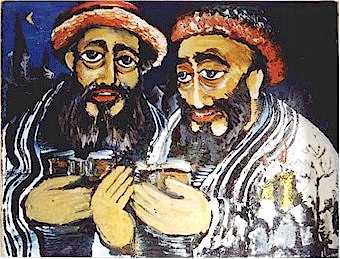
Hillel and ShammaiIn this instance, Dr. Blizzard is referencing associations between the teachings of Jesus as related to the Mishnah, specifically the sages Shammai, Hillel, and Gamaliel, as related to passages in Torah that speak of generosity and compassion toward the poor, which modern Judaism refers to as tzedakah or charity, but with the underlying meaning of justice and righteousness. However, I think Blizzard’s words can be applied to a much wider scope and indeed, to many of the common teachings of the Church about the meaning of the Bible, particularly in terms of the continuance of Torah in the lives of the Jewish people, the continuance of the Jewish people in God’s love and plans for the present and future, and the continuance of Judaism as a valid lifestyle by the Jewish people of devotion to and worship of the God of Israel.

If, on the other hand, the Church could see the strong parallels between the teachings of Jesus, his contemporaries, and those Rabbis who closely followed him in history, such as Rabbi Yochanan ben Zakkai, who was present at the fall of Jerusalem and is considered single-handedly responsible for formulating “the direction that Judaism would take” after the destruction of Herod’s Temple and the great exile of the Jewish people into the diaspora, then perhaps we could initiate a desperately needed corrective action in the Christian Church and in Christian hearts.

Blizzard emphasizes this in the following quote from Chapter 4: “The Will of the Father.”

How important it is that we study rabbinical literature, the sayings of the rabbis. The way in which they teach, the word pictures they paint, the images upon which they draw, because it gives us an understanding of the words of Jesus, the ideas, the concepts upon which he is drawing. In many instances, without a knowledge of this background, because of the images, the idioms, the metaphors, etc., so widely used by the sages and rabbis, we are unable to understand the depth, the meaning, of the words of Jesus.

It’s not only ironic but profoundly sad that most churches reject the very lessons and teachings that would enable the clergy and laity to understand Jesus Christ the most. By rejecting the teachings of the Mishnah which sit at the very heart of the various ancient and modern streams of Judaism, Christianity rejects the very heart of the meaning of the teachings of her Savior.

Chapter 4 of Blizzard’s brief but powerful book is a tour de force of comparisons between the specific teachings of Jesus and quotes from the different rabbis recording in the Mishnah. There are too many of them for me to record here, but fortunately, Blizzard’s book is quite affordable (especially the Kindle version, which can be downloaded in seconds), so I heartily recommend you purchase a copy and read it for yourself.

Not only is the Mishnah very Pharisaic, it is also very Pauline which, of course, is to be expected in view of the fact that Paul refers to himself as “a Pharisee of Pharisees.”

Blizzard shifts his focus at this point, from comparing the teachings of Jesus to the Mishnaic rabbis to making comparisons between the Mishnah and the Pharisaic Apostle Paul. Blizzard further states:

I want to emphasize that the ideas reflected here in the Chapters of the Fathers can be found in the teachings of all the New Testament writers, which, again, is just what we should expect. Why? Because they are all Jews. They all came from the same background, the same religious and spiritual heritage.

The Rebbe and the ChildBlizzard introduced the first chapter of this book, “Tzedakah and Righteousness,” by saying he intended to compare the teachings of Jesus to “the words of the rabbis prior to, and contemporary with, and following Jesus, recorded for us in the Mishnah, Order Nezikin, Tractate Avot…” and then he said something that especially attracted my attention:

In the teachings of Jesus, there is one underlying and overriding theme, a theme on which Jesus constantly dwells, a theme that serves as the foundation upon which biblical faith is built. If one looks at the Bible as a whole, if one includes additionally all Jewish literature that is extant, the Oral Law, the Written Law, the commentaries, and search for one, single, overriding theme that is the foundational theme of biblical faith, one would have to conclude that that foundational theme is summed up in the Hebrew word tzedakah… (emph. mine)

Blizzard follows the thread of tzedakah, which as I said, in Judaism is associated with charity, righteousness, and justice, through the teachings of Jesus, the rabbis of the Mishnah, and across the Torah, the Prophets, and the Writings to paint an overarching landscape of God’s message to human beings.

This is a concept I harp on with some regularity; that we must engage the Bible as a single document that is inexorably interconnected, rather than “cherry pick” various verses and passages of scripture willy-nilly as they seem to map to our preconceived theologies and doctrines, and then string them together to create the illusion that the entire theme of the Bible is represented by those few bits and pieces we’ve jumbled into our religious collage. I think by now, most Christians realize that you can prove just about anything if you connect the dots between carefully selected words and phrases in the Bible. But that doesn’t mean the Bible as a cohesive unit really says what you are making it say.

I know. I could be accused of the same thing. After all, I have a point to prove just like everyone else. But although I think there’s a lot of truth in Blizzard’s belief that the Bible’s central theme is tzedakah, I have been trying to make the argument in my various blog posts, that the central theme is actually about God’s desire and His plan to unite all of humanity under a single King, and for God to dwell among His people without requiring that His Jewish people stop being Jewish or stop practicing Judaism in order to bring honor and glory to the Jewish Messiah and the God of Israel.

What is the central theme of the Bible according to the various streams of normative Christianity? Here’s a rather harsh sounding rebuke from Dr. Blizzard in Chapter One:

Jesus has become an idol, if you will, our focus of attention, our focus of worship, and it seems that very few think of God anymore. Seldom do we hear anyone speak of the glory of God, his grandeur and mercy, the holiness of God, and the other many attributes and characteristics of God.

I should mention at this point, that a good friend of mine, once a Jewish believer, has rejected Jesus as the Messiah, in part, because of what Dr. Blizzard said in the above-quoted paragraph. My friend spares no effort in explaining on his blog what he sees are the errors in Christianity.

Now before my Christian readers get really mad at Blizzard, he went on to say…

Please understand that I am not trying to lessen the importance of Jesus. What I am trying to do is emphasize that, in all the teachings of Jesus recorded for us in the gospels, his focus is not upon himself, what he is, what he is doing, or what he is to become. Additionally, Jesus has very little to say about God and, in particular, the Worship of God.

My point is that, in the teachings of Jesus, there is not all that much emphasis upward.

Blizzard then maps the teachings of Jesus and the sayings of the rabbis in the Mishnah, back to what he sees as the central emphasis of Jesus and of Judaism which is the care and concern for other human beings as the primary means of living our faith and worshiping God.

tzedakah-to-lifeIn addition to the focus on Jesus as Savior, the Church tends to focus on the concept of preaching the gospel, which translates into God’s personal plan of salvation for the elect. And that’s where it stops for a lot of churches. Fortunately, Blizzard’s rebuke of Christianity doesn’t include each and every church. Many churches, such as the one I currently attend, focus heavily on studying the Bible as a means of knowing how to serve God and other human beings, primarily through acts of charity and support of missionary efforts to some of the more desperately needy people groups on our planet.

In fact, one of the things some churches do really well are acts of tzedakah as well as something called Gemilut hasadim, which can be translated as acts of loving-kindness. Christians get the idea of grace from this Hebrew term. The difference is that tzedakah or acts of charity can be performed only on the poor, while gemilut hasadiam, which involves giving money or a personal service, can be done for anyone.

However, Blizzard’s distinctly “Jewish” presentation of these concepts alongside the teachings of Jesus and the Mishnah, provide an exceptionally fresh look at an essential something that often goes stale in many churches or in many individual Christian hearts. By linking something that the church actually does with how vital those actions are in ancient and modern Judaism, Blizzard successfully creates a link between what else is vital in Judaism, especially the Judaism of the time period around the Apostolic Era, and what the Church isn’t doing and isn’t teaching because these are things the Church has ultimately dismissed as having been “nailed to the cross” with Jesus.

Roy Blizzard’s book Mishnah and the Words of Jesus is a perfect example of why I find it absolutely necessary to access my faith in Christ by way of studying Judaism and, in my case, particularly Messianic Judaism. I’m certainly not Jewish, but it is quite possible and even desirable to be a Christian and to study Messianic Judaism in order to understand and then practice what I learn from the Bible.
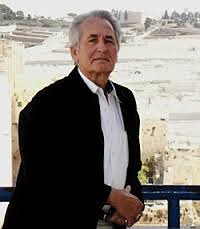
Roy Blizzard
Dr. Roy B. Blizzard

There were quite a number of other gems in Blizzard’s book, but I should limit my review, not only for the sake of length, but to permit readers such as you to allow “Mishnah and the Words of Jesus” to unfold itself in your own experience.

However, I do want to say something else in wrapping up this blog post. It may sound like I’m distinctly “anti-Church” and interestingly enough, “anti-Christian,” even though I identify myself as a Christian, a disciple of Christ or Messiah. This isn’t actually true. While I point to the warts and moles I see on the Church and which, for the most part, the Church choses to ignore, I also see the beauty that has been maintained among those whose highest goal is to wholeheartedly serve Jesus Christ by serving humankind.

I’ve written God Was In Church Today and In Defense of the Church recently as much to remind myself as to remind everyone else that the Church is good. But in the words of Boaz Michael of First Fruits of Zion (FFOZ), “the Church needs to change.” Hopefully, scholars such as Dr. Roy Blizzard, Messianic Jews such as Boaz Michael, and even ordinary, everyday people like you and me, can contribute to that change for the sake of Israel and in the service of God.

One final thing. At the top of this blog post, I quoted Ismar Schorsch briefly commenting on Midrash. It is true that Midrash and Mishnah are not the same thing but they do have something in common. They both represent a way of thinking about God and a way of communicating about God as we study the Bible. You can study the Bible apart from any acceptance and understanding of the rabbinic sages and still learn a lot, but I believe you will not only miss a great deal of important detail in your study, but you’ll perpetuate a system of misunderstanding the Bible’s panoramic message, especially about God, Israel, the Jewish people, Judaism, and the role we non-Jews play as the crowning jewels of the nations. For the sake of Israel, and for the sake of the return of the Messianic King, we owe it to ourselves, to the Church, to Israel, and to God to learn all we can learn by setting aside our “institutionalized Christian learning,” and stepping outside the box, so to speak. If you’re not sure how to begin, Dr. Roy Blizzard’s Mishnah and the Words of Jesus is a good place to start.

What Makes You Think Your Church Is Better?

It’s funny. We still live in a celebrity culture. Even Christians have chewed hard on it.

Whenever a celebrity Christian author or blogger talks about “leaving church,” all of a sudden masses of Christians think a new conversation has suddenly began, and people left and right start firing off opinions.

(Cough.)

A few words about “leaving church.”

Virtually every time I catch wind of the phrase—leaving church—almost always the person using the phrase never explains what he/she means by church.

Frank Viola
“10 Reasons Why I Left the Institutional Church in Search of the Ekklesia”
CharismaNews.com

No, I’m not talking about me doing any leaving, but in considering my recent writing on the role of non-Jews in Messianic Jewish worship space and how some Hebrew Roots proponents believe that the Torah of Moses is somehow owed to them, I pondered other applications of Viola’s article which I quoted above.

I first found the article several days ago in Facebook and read it, but Viola’s issues don’t really resonate with me. In re-reading his missive though, I started clicking links to find out more about him getting to his personal blog and figuring out that he writes these articles, in part, to market his books and ideas. That’s not a bad thing. If you produce something you want someone to buy, you have to market it. I’m an author in my spare time and I work for the marketing department of my “day job,” so I know how it goes.

But when Viola talks about “leaving church,” he isn’t saying what you might imagine. He separates out what he calls the “institutional church” from something more “organic” and what he calls “the Deeper Christian Life” (which he’s written a number of books about, and all of them seem to do well on Amazon).

In reading his ten reasons for leaving the institutional church and his ten (eleven, really) reasons for becoming part “of the organic expression of the church (the ekklesia)…”, I started thinking of my own current church experience and of the aforementioned Hebrew Roots movement, (I used to belong to a Hebrew Roots congregation) and the common statement one often finds in Hebrew Roots about leaving “church” AKA “Babylon.”

On a fundamental level, unless you leave the faith altogether and become an atheist or a member of a religion other than Christianity (and I include Hebrew Roots and even, to a degree, Messianic faith as part of “Christianity” … faith in and worship of Christ/Messiah), you never really leave “the Church,” the community of believers in Jesus. As Viola points out, you really have to define what you mean by “church,” especially if you think you’re leaving it. Even if wherever you worship isn’t called a “church,” you probably still worship with other people in a somewhat organized fashion and have a theology and doctrine that is more or less recognized as “Christian.”

So what are people leaving and what are they looking for? Having done no research at all and having no data to back up my personal opinion, people are leaving congregations and organizations where they do not feel connected and are joining or at least searching for congregations where they feel they belong.

Seems pretty obvious, huh?

That probably is one of the reasons why there are so many denominations and so many different types of worship venues, styles, and whatnot. Identify a disenfranchised Christian population and cater to them. Churches split periodically for a wide variety of reasons and create new churches that satisfy the desires of those who were previously not satisfied.

Church splitBut to split, you have to possess a sufficient population of dissatisfied people to gather around and create a new church. They all have to also be dissatisfied in the same or very similar way so that you don’t gather together a group of individuals with each of them wanting something completely different out of the new church.

I have no statistics about how many people leave traditional, institutional churches each year specifically to enter into an entity called “Hebrew Roots”. It gets more complicated in that within the umbrella term Hebrew Roots is a plethora of different sorts of congregations, with overlapping but differing beliefs, practices, theologies, and so on. Often, these different subgroups don’t get along with each other for a number of reasons. Some believe in praying only in Hebrew, others prefer English, some pronounce the Sacred Name of God one way, some do so a different way, some believe it should never be pronounced at all, and on it goes.

Another confusing factor is that many Hebrew Roots groups call themselves “Messianic Judaism” when in fact, their definition of the term flies in the face of what I consider Messianic Judaism to actually be.

Be that as it may, a non-trivial number of Gentile Christians are leaving various institutional churches each year (again, I have no specific numbers) and joining some variation of a Hebrew Roots or sometimes authentic Messianic Jewish congregation, small group, home group, or study group.

What are they looking for?

Like I said above, they’re looking for other people who think, act, and believe just like they do, or enough like they do that any differences don’t really matter.

So what’s the attraction?

Both Hebrew Roots in all of its variations and Messianic Judaism in all of its variations have one thing in common. They believe institutional Christianity in all of its variations has the Bible all wrong. They believe that “the Church” (big C) made a big mistake in “establishing” that the Law was nailed to the cross with Jesus, that grace replaced the Law, that Jewish people need to convert to Christianity and functionally (though not genetically or in name) stop being Jewish, and that Judaism as a faith and worship form is a dead-end made up of “dead works” and no spiritual life.

I believe “the Church” made its big mistake early on and through nearly two-thousand years of reformations, revivals, and any other course change you could possibly imagine, the Church never, ever corrected that mistake. In fact, the mistake has become so ingrained in the Church, that it never even occurs to any of the institutional and local expressions of Christianity to even question the initial interpretive error that is now driving some individuals and groups away from “church” and into something that is attempting to behave as a corrective effort.

How many Christian denominations exist today? Somewhere in the thousands? Tens of thousands? Heck, how many translations are there of the Bible just in English? Almost as many it seems. So many expressions of “the Christian faith” and “the Word of God,” apparently created to satisfy the perspectives, opinions, wants, and needs of various human beings who don’t want to leave God but who want God and Christ on their/our own terms. There’s even a brand new Bible translation called The Gay Bible.

Do I sound cynical?

No wonder Jesus asked poignantly, “…when the Son of Man comes, will He find faith on the earth?” (Luke 18:8)

Human beings are a pain in the…

Frank Viola
Frank Viola

I wonder how God puts up with us?

Frank Viola’s answer to all this is in a book he wrote called Reimagining Church. No, I’m not going to rush out and buy it or any of his other books. My current wish list of books is already long and getting longer all the time. It’s also crafted to suit my current perspective on God, Messiah, and everything and I suspect based on what I’ve read of Viola’s writing so far, that we probably don’t share a lot of opinions.

Viola (Pagan Christianity), a leader in the house church movement, believes the church as we know it today is nothing like what God intended it to be. According to Viola, the first-century church, which should be our pattern, met in homes without any official pastor. All members of the church were involved in worship, spontaneously breaking out with teaching or song as they were moved. Decisions were not made until everyone reached consensus. There were no official leaders or elders, but there were men who served and taught and helped others, thus leading by example. Viola believes that to bring the church back on track, both clergy and denominations must be completely abolished. Churches should not have buildings nor should they worry about doctrinal statements. Such radical ideas will best be received by Emergent and postmodern readers. Skeptics will cringe at Viola’s strident tone and all-or-nothing approach. More concrete examples of what Viola has seen work well in his 20 years of house church work would have greatly strengthened the book.

-from Publishers Weekly
as found at Amazon.com.

If I had to pick a “reimagining of church,” it would probably look more like Beth Immanuel and less like the so-called first-century home churches that Viola seems to hold up as an ideal. But then Viola is doing what I said we all do, finding a congregation (or making one) that reflects his own desires and ideals. We all want to have it our way, as the old Burger King commercial goes.

So what’s the real answer? Underneath our vain attempts to assuage our own discomfort in the world of religion and to make ourselves feel better in a body of faith, I’m going to trust that at least some people are actually searching for something authentic, something real, something that will allow them to actually encounter God on God’s terms.

Is there more than one way to do that? Can you encounter God in a Baptist church, a Lutheran church, and dare I say it, in a Jewish synagogue? My personal opinion is yes, since I’ve encountered God in all three communities (and I don’t mean just a Messianic Jewish synagogue, I mean a synagogue where they don’t believe in Jesus).

One of the things Viola writes that I can agree with is that we all need to worship in community rather than as “lone wolves” (my words, not his) or just as an individual family or a few families who come together.

I wanted to know Christ deeply, and I discovered that we can only comprehend “the breadth, depth, height, and know the love of Christ which passes knowledge” when we are “together with all saints.” It’s not an individualistic pursuit, but an intensely corporate (collective) one.

BabelAll that said, I’ll be the first to admit that it can be incredibly difficult sometimes to find a group that meets your needs. For some, they have to build it, if at all possible and within the will of God (and make no mistake, like Babel, it’s possible to build something outside the will of God, it just won’t last past the return of Messiah).

I don’t have an answer for you. I know that may be disappointing, but I’m caught in the same trap as everyone else. If you’re human, you can only see everything from ground level, so to speak. No one has the perspective of God. We’re all down here wallowing in the mud, struggling to climb to even slightly higher ground so we can get a better look at what we think is better.

Problem is, we all think we’ve got the inside track on “better,” that by “coincidence,” just happens to map perfectly to our personal wants, needs, and desires. Imagine that.

I can only imagine that God looks down at all of us, covered in mud, dead leaves, and our own grandiose arrogance and just shakes His head, the way we would at some teenage kid who thought he or she had the whole world figured out. “Yeah,” He says. “Just you wait. You’ll find out what’s really going on one day and aren’t you going to be shocked out of your socks.”

So people leave “church,” however they define it, because it’s “Babylon,” because it’s “pagan,” because it’s “apostasized” from the true faith of Messiah and has thrown away the Torah like a used diaper and the Jewish people along with it.

But are any of those folks doing any better? I guess it depends. At the center of all this isn’t the institution, and it isn’t the rituals, and to some degree, it isn’t even some of the interpretations and doctrines, it’s the authentic, true, real, and valid desire to serve the living God of the Bible. We may get a lot of things wrong, all of us (yes, you too and yes, me too). But somewhere in there, we probably manage to do a few things right as well.

I’ve heard it said that God doesn’t grade on a curve, but I prefer (here I go with what I prefer) to think of God as a forgiving Father. No, not forgiving of an endless list of willful sins, but forgiving as the Father is of a toddler who throws tantrums, falls down all the time, says incredibly silly stuff, but who is continually struggling and working hard in a two or three-year old’s best effort, to growing older, growing better, and growing up.

But we all grow up in different families, and in different neighborhoods, and in different towns or cities, counties, states, provinces, and countries. The people aren’t the same, the cultures aren’t the same, the languages aren’t the same, but God is the same. I guess that’s how we can look at our churches, our “ekklesias,” our communities in Christ/Messiah, however large or small they may be.

There’s a difference between thumbing your nose at God and just making goofy mistakes because as human beings, we don’t know any better. The waters are cloudy and we don’t see what’s in the pond too clearly. We complain at each other for being in the “wrong church” or even being in “church” at all instead of where we think all the “cool kids” in Christ are supposed to hang out. We keep forgetting God has an “opinion” too and that it’s not an opinion at all but the final truth.

We just don’t have unfiltered access to that truth, we only think we do. Hence thousands or tens of thousands of different Christian religious organizations which we say, depending on which one we belong to, that ours is the one, and it’s the best, and God loves us because we aren’t part of that other one down the street.

Oh brother (rolls eyes).

Leave the church? You can leave anything you want to, but as long as you are a believer, you don’t leave the body of Messiah, which is a good thing. Even if you leave religion, you don’t leave the universe and so you don’t escape God by becoming an atheist (you only think you do).

dad-and-babyThe only thing we can do is our best and believe me, it’ll never be as good as we think it is, but that’s OK. Fortunately, God is forgiving and He does understand that we all are as dumb as a box of rocks (as compared to God) and He doesn’t really expect that we will ever get to a point where we get most things right.

Our biggest “silliness” is thinking that we can and that we do get most things right and that we somehow are better than other churches, synagogues, congregations, whatever.

Think about all of the arguments we all have about our religions. Now think about how all that sounds to God. No, really. If that’s difficult to picture, recall any argument you’ve seen between two pre-schoolers fighting over a toy and how they each had a really, really good reason why they should have the thing instead of the other kid.

Now do you get it?

Reviewing the Meaning of Midrash, Part 2

Midrash, in many ways, is the opposite of peshat. Midrash screams out, “I am not what I appear to be!” Midrash purposely sets the foreground fuzzy so that the wise person will focus on the background—where the secrets lie.

-Tzvi Freeman and Yehuda Shurpin
“Midrash Is For Lovers:
Part 2 of Is Midrash for Real?”
Chabad.org

Actually, Part 2 of Freeman’s and Shurpin’s series should make a bit more sense to just about everyone, at least more than Part 1 of this review. There’s a minimum of anything mystical and a great deal of straightforward approach to what Torah and Midrash is and isn’t.

After the authors indulge in a brief review of Part 1, Part 2 starts out with “Does the Biblical Text Mean What It Says?” This is a question that should be relevant to Christians as well as Jews since Christianity has a rich history of allegory and symbolism. In fact, Christian allegory has been one of the most powerful tools of the early Church Fathers to promote supersessionism and the separation of faith in Jesus as Messiah from its Jewish origins.

The question the Freeman/Shurpin article asks is how much of the Bible can be taken literally and how much of it is symbolic. The writers present the reader with the scenario of the entire Bible being allegorical.

Historically, we’ve been there. Before Maimonides’ time and after, preachers flourished who expounded the entire written Torah exclusively as metaphor. Cain and Abel were representative of the struggle between matter and form. Moses and Pharaoh were really the good inclination versus the evil inclination. All the mitzvahs were interpreted similarly. Tefillin became passé for many, because that too was a metaphor. Jewish men saw nothing wrong with taking a non-Jewish wife, because the prohibition against such was also a metaphor.

That’s something like applying psychology to a problem in mathematics, or attempting a biopsy on quarks. You’re mixing up your departments.

You’ll recall from Part 1 that there are four levels or “departments” involved in interpreting Torah: Peshat (simplest meaning), Remez (hinted meanings), Derush (deeper meanings), and Sod (secret meanings), forming the easy-to-remember acronym pardes.

The Talmud provides us a simple principle: “A biblical text does not depart from its simple meaning.” Learn your midrash; find the secret meaning—but leave the simple meaning intact. Adam, Eve, Abraham and Sarah are all real people; Moses really did split the Sea of Reeds; and we all heard the voice of G‑d at Mount Sinai. Pork is off limits. Because that’s what it says. The first department, with any text of the Hebrew Bible, is the simple meaning.

In other words, the simple meaning of the text is its most straightforward and comprehensible meaning, but that doesn’t mean the same text can’t contain a more symbolic representation.

Outside of a Jewish context, we tend to believe that the Jewish sages assigned either a literal meaning or a symbolic meaning to the various texts of the Bible. Moreover, we tend to believe that the sages waxed more symbolic than literal, devaluing their teachings and by inference, religious Judaism as a whole. Here, we see this is not true and that (in my opinion) the early supersessionistic foundations of Christianity continue to color how we view Jewish education, philosophy, and history to this very day.

But there is one thing about the Peshat:

And yet, there’s a crucial caveat: Simple meaning is not synonymous with literal meaning.

Occam's RazorThis seems to fly in the face of Occam’s razor which loosely applied states that the simplest explanation for an observation or event which fits the facts is most likely to be the better explanation. I used to feel guilty applying Occam’s razor to Biblical interpretation, believing that it had its best home in the sciences, but then I found out “the origins of what has come to be known as Occam’s Razor are traceable to the works of earlier philosophers such as John Duns Scotus (1265–1308), Robert Grosseteste (1175-1253), Maimonides (Moses ben-Maimon, 1138–1204), and even Aristotle (384–322 BC).”

Additionally, “The Summa Theologica of Thomas Aquinas (1225–1274) states that ‘it is superfluous to suppose that what can be accounted for by a few principles has been produced by many’. Aquinas uses this principle to construct an objection to God’s existence, an objection which he in turn answers and refutes generally (cf. quinque viae), and specifically, through an argument based on causality.”

But then, how are we to understand the above-referenced caveat?

This is true with all human language. If I tell you I’m going to take a bath, that doesn’t mean I’ll be ripping out the plumbing and carrying the tub somewhere. If I tell you, “We gave the other team a beating!” don’t expect to find them bruised and bloody in the emergency ward. A dictionary does not a language make. There are idioms of speech.

So too, “an eye for an eye” is not talking about eyeballs—that’s an idiom of speech that refers to equitable monetary compensation. G‑d is real, but His hand is not a hand like your hand.

Idiom, contextual meaning, linguistic wordplay, and a number of other factors can and should be applied to what we read in the Bible so that even when we realize we are reading of a true and factual event, we don’t interpret the words and phrases with extreme literalism. The whole “eye for an eye” bit is used often by secularists to demonstrate the cruelty of God or at least His minions and to ridicule the Bible as a serious historical record of the relationship between human beings and God.

The commentary cites Rabbi Saadia Gaon of 10th-century Baghdad as the author of four basic principles of literal Biblical interpretation. This list is a small set of exceptions to the literal interpretation of the text. A loose translation of his work in presented in the Chabad article and I’ll reproduce that list in part here (for the details, see the Freeman/Shurpin write-up):

  1. Our perceived reality dismisses it, such as calling Eve (Chavah) the “mother of all life” when it is meant she is the mother of all human life.
  2. Our sense of reason dismisses it, such as when God is called “a consuming fire,” we realize this is metaphor to describe God’s emotions or expression rather than His literal nature being of fire.
  3. Another verse explicitly negates it, which in such a case, we must provide a resolution that is not explicitly stated in the text.
  4. We have a tradition that compromises the text in some way, in such a case, we must interpret the text to fit the authentic tradition.

The first two points seem to be obvious and not much of a problem and point three is common to Christian tradition, since Biblical scholars and translators typically “smooth over” apparent inconsistencies in the text (such as how the different Gospel versions of the death of Jesus depict different days for the crucifixion).

by Leon ZernitzkyThe last point presents a problem since it appears that tradition can compromise the meaning of the text and the fix for this is to apply “the authentic tradition.” Christian Biblical literalists would argue that it is not tradition that interprets the Bible is it the plain meaning of the text within the appropriate context. I don’t think I can find a way around this one, since Judaism accepts that the Rabbinic sages had the authority from Hashem to establish binding traditional interpretations of Torah. Christianity imbues something similar to its “sages” but does so covertly, thus when confronting Christian scholars on this matter, a denial is expected.

What we have so far is that the Biblical text indeed does have a simple meaning that is most likely the true and correct meaning of the scripture, but that is not necessarily the limit of the text. Midrash, as I understand it, can be considered a morality tale or other similar lesson derived from the text that while it may not have been intended by the original author of the scripture, nevertheless, can have practical application to the lives of those receiving the midrash.

Yet midrash, too, must have its boundaries. Yes, the sages speak in riddles. But they also often speak in normal, everyday language, telling you anecdotes that mean just what they mean. To complicate matters, sometimes they do both at once—telling you an anecdote through riddles. How are we supposed to know? And once we do know, how do we unlock the code?

When it comes to code, Maimonides was the great codifier. Not only did he codify Jewish law, he provided keys to decode midrash. But not before he first categorized three groups of those who read midrashic tales: Fools, bigger fools, and a handful of intelligent people.

This next section of the article may explain a great deal both about midrash and how it is understood outside of Jewish religious and educational circles (and specifically by Christianity). Fools, bigger fools, and a handful of intelligent people.

  • Fools: The largest group of the three and made up of those who “accept the teachings of the sages in their simple literal sense, and do not think that these teachings contain any hidden meaning at all. They believe that all sorts of impossible things must be.”
  • Bigger Fools: A group almost as large as the first who also take these stories as literal truth but who are actually worse than the first group because, according to Maimonides, “they believe that the sages intended nothing else than what may be learned from their literal interpretation. Inevitably, they ultimately declare the sages to be fools, hold them up to contempt, and slander what does not deserve to be slandered. They imagine that their own intelligence is of a higher order than that of the sages, and that the sages were simpletons who suffered from inferior intelligence.”
  • A few intelligent people: The smallest group of the lot, as you probably already knew, who realize that the sages are leading their audiences into a deeper or more metaphorical meaning involved in the text.

For me, the problem with how Maimonides sees this third group is that he seems to believe that the Midrash represents some intrinsically hidden but present meaning to the text, as opposed to the sages filtering the themes in the text through their interpretive imagination and creating a metaphorical interpretation to describe a moral or ethical principle.

They realize that the sages did not speak nonsense, and it is clear to them that the words of the sages contain both an obvious and a hidden meaning. Thus, whenever the sages spoke of things that seem impossible, they were employing the style of riddle and parable, which is the method of truly great thinkers. Why do they do this? Because they are dealing with supernal matters which can be expressed only in riddles and analogies.

There’s a difference between a fable or morality tale, a story that may be fictional but is intended to teach a principle, vs. a metaphor that is describing something that is actually supposed to objectively exist within the text but is not apparent on the surface. That means the sages, rather than using the text as a springboard for teaching morals or ethics, are intending to reveal something that they may believe is actually there.

Fools.Fools believe the sages believe that the only meaning to the text is the fanciful tale they’re relating and the fools accept such tales hook, line, and sinker. Bigger fools believe the sages believe that the only meaning to the text is the fanciful tale they’re relating but the bigger fools think the sages have completely “lost it” and brand them as fools themselves for entertaining these mystical or magical interpretations of scripture as the literal meaning of what is in scripture. The bigger fools think they are superior to the sages because they can see and understand (supposedly) the plain meaning of the text and believe the plain meaning is the only meaning.

I’ll accept that a few intelligent people can see that a Midrash or parable can have both a literal or plain meaning and a metaphorical meaning, but I need to draw the line at that metaphor or parable having a life of its own in some parallel reality.

All that said (and it’s a lot), I think some Church scholars and laypeople who are aware of midrash tend to fall into the category of “bigger fools” (I really am not trying to be unkind but I don’t think Christians always give the Midrash a fair shake) because they ridicule the sages for even uttering such “Chasidic Tales” and expecting them to have an application of any kind. It’s a way, not necessarily to dismiss the Jewish people, but to dismiss Judaism as a valid expression of Jewish faith and understanding of the Bible. If we are to criticize the use of Midrash, then we in the Church also need to dispense with any use of metaphor, symbolism, parable (and I remind you that Jesus commonly used parables as a teaching tool), and even children’s stories that include fiction and fantasy to tell colorful stories to pre-schoolers in order to remain consistent with what we say are our principles.

OK, maybe I’m overstating my point, but the door swings both ways.

That said:

Maimonides even embarked on an ambitious project to explain the allegorical meanings behind all these midrashic stories. Yet he had to abandon the project, as he found himself in an irresolvable bind.

Maimonides eventually had to conclude that the method of Biblical interpretation should fit the audience — fools, bigger fools, and a few intelligent people — with midrash reserved for the smallest and presumably the most sophisticated group.

Midrash is an exceptionally complex concept, especially for those of us who exist outside a Jewish educational framework. I’ve also previously mentioned that this set of reviews is examining Midrash within the narrow confines of the Chabad, which is a subset of Orthodox Judaism, which is one branch of observant Judaism, so even once we conclude with examining the list of articles on this topic, there is obviously a lot more that could be said.

The next part of the series is called “Midrash and Reality”. It’s where my personal limitations crash headlong into the “reality” of midrash. See the collision for yourself next week. Perhaps I am a “bigger fool.”

Does God Owe Us “Rights?”

“Being your slave, what should I do but tend
Upon the hours and times of your desire?
I have no precious time at all to spend,
Nor services to do, till you require.
Nor dare I chide the world without end hour
Whilst I, my sovereign, watch the clock for you,
Nor think the bitterness of absence sour
When you have bid your servant once adieu.
Nor dare I question with my jealous thought
Where you may be, or your affairs suppose,
But, like a sad slave, stay and think of nought
Save, where you are, how happy you make those.
So true a fool is love that in your will,
Though you do anything, he thinks no ill.”

-William Shakespeare
“Sonnet 57”

This is more of a question than a statement. Well, maybe it’s a statement and a question. I occasionally read commentaries on various blogs including several Hebrew Roots related blogs. One of the concepts that comes up repeatedly is the idea of “rights.” Specifically, whenever the topic of differentiation of identity between believing Jews and Gentiles within the Messianic Jewish or Hebrew Roots arenas comes up, and someone (like me) suggests that the Torah mitzvot are applied differently to Jewish people than to Gentile people, one of the classic responses from Hebrew Roots is “We have a right to observe the Torah in the same way as a Jewish person observes the mitzvot!”

It’s an odd thing to say that one has a “right” to be obligated. It’s like saying we have a “right” to be obligated to obey the speed limit while driving, or a “right” to be obligated to pay our taxes. Obligations and rights tend not to go hand in hand, even when we consider that obligation just and correct and even desirable. After all, when my children were young (they are all adults now), I had a legal obligation to provide a certain level of care for them, even though as a father who loves his children, I did so and more out of love, not legal obligation.

But the big question here is “does God grant us rights?”

According to the Declaration of Independence:

We hold these truths to be self-evident, that all men are created equal, that they are endowed by their Creator with certain unalienable Rights, that among these are Life, Liberty and the pursuit of Happiness.

But that’s the Declaration of Independence, which defines our rights as citizens of the United States of America, not the Bible which (among other things) defines our roles as human beings in relation to each other and in relation to God.

The Torah (in this case, I mean the Five Books of Moses) contains a large amount of law code that was to be applied to the ancient State of Israel, a state that existed as Earth’s only functioning Theocracy; the only nation ever to exist to be directly ruled by God as their King. Even after human Kings were anointed (first Saul, then David, and so on), the law code in the Torah was still valid.

the-divine-torahThe legal force and application of the various law codes and such have changed over the long centuries, in part because of the loss of the Temple, the Levitical priesthood, the Sanhedrin court system, the functional King, and the nation itself as Israel went into progressively longer exiles.

The modern State of Israel currently exists, but the vast majority of the Torah legal code is not applied to their laws, at least as originally intended in ancient days. They probably won’t be applied in that manner until the return of Messiah King, Son of David.

But be all that as it may, are any of the obligations to the citizenry of Israel considered “rights?” That is, does a Jewish person have a “right” to don tzitzit? Does a Jewish person have a “right” to daven with a minyan? Is it a “right” to recite the Modeh Ani upon awakening and the Bedtime Shema before retiring? Is it a “right” for a Jewish baby to have a bris on the eighth day of life?

I don’t see God so much as a “rights giver” but as a definer of identity and responsibility. According to the Master’s teaching:

“Teacher, which is the great commandment in the Law?” And He said to him, “‘You shall love the Lord your God with all your heart, and with all your soul, and with all your mind.’ This is the great and foremost commandment. The second is like it, ‘You shall love your neighbor as yourself.’ On these two commandments depend the whole Law and the Prophets.”

Matthew 22:36-40 (NASB)

These don’t sound like rights to “life, liberty, and the pursuit of happiness,” but obligations to love God with the entire scope of our resources and our being and to love our neighbor just as we love ourselves. Where are the “rights” in all that, since it is a summation of all of the Torah and the Prophets?

It seems like the focus of God and what He’s trying to tell us in the Bible is that it’s not all about us, believe it or not. It’s all about God and it’s all about what we do for other people. It’s not about what we can get out of the deal.

I know the Christian interpretation of the Gospel of Christ can be summed up as “a plan of personal salvation.” That is, we just have to believe and we, I, me, are, am personally saved from hell and damnation and promised a life of pleasure and peace when I die and go to Heaven.

While that’s terrifically good news, it also seems kind of self-centered and even narcissistic. It says absolutely nothing about how Jesus presented the two greatest commandments. It says nothing about loving God, being in awe of God, deeply respecting God, being thankful to God, and out of all of that, responding to human beings around us with love, respect, generosity, compassion, and, employing a rather Jewish way of looking at it, being thankful to the poor, the needy, the orphaned, for giving us the opportunity to serve God by serving them.

rabbi-prayingNone of that sounds like “rights” and all of that sounds like “obligation,” but even though we know that obligation is right and true and valid and what we really need to be doing all of the time, it’s always directed outward, from who we are to other people and to God. We are, in response to God, directing everything that we are, all of our resources, even our very lives, to the service of God and the human beings He loves (and He loves all human beings, even the ones we don’t love).

I’m really not convinced that observant Jews have a “right” to wear tzitzit or even a “right” to feed the hungry. Those are obligations assigned to them by God because they are Jews and they were set apart at Sinai based on a set of laws and responsibilities they agreed to uphold in perpetuity. Whether the Jewish person wants those obligations or not, they’ve got ’em. Only converts ask to be Jewish. People who are born Jewish didn’t ask to be born into a covenant relationship. It just happened by God’s will.

So whatever obligations you may feel you have to the service of God and people around you, I don’t think you, or I have a lot of room to be talking about “rights.” That doesn’t strike a very respectful tone in relating to God. After all, do you really think God owes you something?

Particularly as non-Jewish people who are grafted in and who aren’t even original parts of the tree, so to speak, do we have a right to define our obligations to God and a right to respond to those obligations as we see fit as individuals or as religious groups? What do you think?

Or talk to Job. He knows the answer.

Sermon Review of the Holy Epistle to the Hebrews: Ten Testimonies

In the first two chapters of the Epistle to the Hebrews, the writer of the epistle employs ten proof texts drawn from the Torah, the Prophets, and the Writings to make his case that Messiah is more exalted than angels. In this teaching, D. Thomas Lancaster connects the dots between the ten passages to reveal the larger message. A fun exploration of apostolic methods of Bible interpretation.

-D. Thomas Lancaster
Sermon Six: Ten Testimonies
Originally presented on February 2, 2013
from the Holy Epistle to the Hebrews sermon series

Each of Lancaster’s sermons about Hebrews seems to have a different emphasis, sometimes radically different. Last week, we focused on a Judaic study of Christology, if we can say there is such a thing. This week, we use the “midrashic method of Bible study,” as Lancaster says, to prove a simple statement: Messiah is greater than the angels.

Actually, Lancaster’s explanation for the distinction between how Christians do Bible study and how Rabbinic Judaism approaches the same task is worth the price of admission alone. It’s the reason (or one of them) why I’m doing a review on the Meaning of Midrash, humble though it may be, based on a series written by Rabbi Tzvi Freeman. It’s not just the way religious Jewish people study the Bible, it is, according to Lancaster, the way the Bible was studied in the Apostolic era; it’s the way that the writer of the Book of Hebrews wrote the Book of Hebrews.

Thus, in order to understand the Book of Hebrews, we need not only to understand something about midrashic Bible study, but we need to apply that method when we read the Book of Hebrews. Otherwise, we’re going to sail right past the meaning and come up with (probably) some pretty goofy conclusions.

This is also why many, many Christians Pastors and scholars, people who are very smart, well-educated, and well-read can be firmly convinced, based on educated and rational grounds, that they know what the Book of Hebrews is saying and yet still (probably) be very, very wrong.

I should note at this point that the very first person to comment on part one of my “Reviewing the Meaning of Midrash” blog post took Christianity/Messianic Judaism to task, rather severely so, for our use of Rabbinic commentary to “prove” Yeshua was Messiah and that Messiah was/is Divine. I can only conclude that any further mention of Midrash from a Christian (me) is going to be viewed unfavorably among Jewish people. I mean no offense, though I understand (to the best of my ability) why you experience offense from me. However, this is the only way I can say what I’m trying to say right now.

Be that as it may…

This kind of goes back to what I said in The Two-Thousand Year Old Christian Mistake. If the most fundamental foundation by which we understand the Bible and our Christian faith is in error, then our theological and doctrinal conclusions are also very likely to be in error. In fact, it’s by the grace of God and the Holy Spirit that the Christian Church continues to serve God just as, I believe, observant Judaism continues to serve God, even though most Jewish people do not currently recognize the Messiah’s face or voice.

So what is the “midrashic method of Bible study” according to Lancaster?

    1. A Rabbinic dissertation or midrash attempts to solve some sort of identified “problem” or topic in the Bible.
    2. The solution is stated and then a series of proof texts are presented to support the solution.
    3. The proof text references assume that the audience has memorized large portions of the Bible, since typically only a short phrase or sentence from each proof text is presented.
    4. Keyword associations are used to link the proof texts whereby portions of scripture are deconstructed and then reconstructed to create new meanings (which can be terrifically unsafe).

And this is how Lancaster says that the Bible was studied in Apostolic times. If he’s right, then the traditional methods of Bible study we employ in our churches are nowhere near what is required to understand the apostolic texts including the Book of Hebrews.

Some of you think that’s a big “if.”

Talmud Study by LamplightLancaster presented ten proof texts along with their explanations and yes, they’re very involved. It would make a very long blog post if I were to try to replicate his commentary here, plus it would be very unfair, since such a detailed review might make it unnecessary for you to actually listen to his sermon.

Here’s the goal of these proof texts again: To prove the Son, that is Messiah, is superior to the angels…not necessarily in the world today, but in the world to come.

…having become as much better than the angels, as He has inherited a more excellent name than they.

Hebrews 1:4 (NASB)

You’re probably thinking of Philippians 2:9-10 where it says, “God highly exalted Him, and bestowed on Him the name which is above every name, so that at the name of Jesus every knee will bow,” but according to Lancaster, you’d be wrong. The inherited name is the “Son of God.”

How do we know this? Start in Psalm 2.

Like I said, it would take a lot of space and be very complicated to go through all of these connections and compress a nearly fifty minute sermon into a few paragraphs (OK, more than “a few”).

But Lancaster uses the Rabbinic associative method to link Psalm 2 to 2 Samuel 7 where it speaks both literally of Solomon and prophetically of Messiah, Son of David, building a house, which can be both a house and a family or congregation.

The linkage got kind of tricky when we arrived at the third text Deuteronomy 32:43, because the writer of Hebrews used an alternate version found only in the Septuagint, and almost all of our Bibles use the Masoretic text. However, the quote references the joy of both the Jewish people and the Gentiles, which is important later in the study and important in general.

D. Thomas LancasterIt also speaks of the angels worshiping Messiah, which connects to the fourth text, Psalm 104 quoted in Hebrews 1:6. Lancaster was speaking fast and furious, so it was tough to take notes on everything he said (his speaking notes would be a great download to offer with the recording for people like me). This point goes back to point two when it speaks of a Throne and a Kingdom forever and is echoed in text five, which is Psalm 45, Solomon’s wedding song. This is also a Messianic prophesy since it addresses the Son of David. It also speaks of the Throne and the Scepter.

An apparent contradiction is revealed since Hebrews 1:10-11 states everything that God has made, both Heaven and Earth, will be destroyed so that only God remains, but the sixth proof text, Psalm 102 tells us that Hashem’s Throne will last forever, even when everything else perishes, as is stated in verse 12. Verse 18 of this Psalm says the words were recorded for a future generation, which Lancaster says is us, we who are servants and children who will also be eternal with God.

Proof text seven is Psalm 110 and the key in this scripture is not just that Messiah is sitting at God’s right hand but that the Throne we have been referencing is God’s Throne and is also the Throne of Messiah, which is how Messiah’s Throne can be forever.

The next referenced text is Psalm 8 which is quoted in Hebrews 2:5 and speaks of all things subjugated to the Son, but this is not apparent now because we are reading about the age to come.

Text nine is Psalm 22 which is the classic prophesy of the suffering and crucifixion of the Son. Verse 22 says the Son has brothers and verse 23 identifies some of those brothers, the congregation as “you who fear the Lord,” which is taken to mean God-fearing Gentiles. Verse 24 follows up with identifying the offspring of Jacob, the Jewish people also as that congregation.

While Psalm 22 says that God has not hidden his face from Messiah, the tenth proof text, Isaiah 8 says God has hidden his face, in this case, speaking of the current exile of the Jewish people…but the exile will not last forever.

The conclusion of the lesson ties everything up, but you need to listen to the sermon to get Lancaster’s summarized points in his own voice along with all of the details I had to leave out of my review. However, the big point, like in the last couple of sermons, is that the original audience of Hebrews as well as we modern readers, should place our hope and faith in Messiah, so that we will become part of the body of his servants, of his children, his congregation, and be built up into a house for Hashem.

What Did I Learn?

As I mentioned above, it wasn’t just Lancaster’s whirlwind tour of the Bible that I found illuminating, it especially was the method he used to open up the scriptures. I won’t pretend that there aren’t a lot of pitfalls, trap doors, and sinkholes in employing this method, especially when traveling at rocket-like speed through different parts of the Bible, but if indeed we can say this replicates how the apostles and disciples would have understood the New Testament (or all scriptures) in general and Hebrews in specific, then there are also many definite advantages.

Glasses on Open BibleAs I’ve said previously, this isn’t going to sit well with people who are used to studying the Bible through normative Christian processes. It’s not that Christians don’t have a rich and well-defined scholarly approach to Bible study, but the premise upon which Christianity builds that study may not lead down the path of the original author’s intent and what the original audience, especially a first century Greek-speaking Jewish audience, would have heard.

But what about the guidance of the Holy Spirit? I’ve said before that the Holy Spirit can guide us, but I don’t think He will overwrite our free will. If we are determined not to see a particular perspective, even if the Spirit is pointing our nose right at it, then we won’t see it. We have the Bible and we have the Holy Spirit, but we also have free will and the desire to confirm what we think we already know, rather than (sometimes) learn what God really has to say to us, especially if it is unexpected or contrary to long held belief and tradition.

As I also said above, this re-enforces my desire and intent to review the Midrashic approach to scripture as presented by Rabbi Tzvi Freeman and Chabad.org. That doesn’t mean that everything R. Freeman teaches and everything the Chabad believes completely or even greatly meshes with the study on Hebrews, but at least gaining some additional familiarity with how Rabbinic interpretation works, especially if indeed this is how Hebrews is written, may well give those of us who don’t have the benefit of a classic Jewish education a bit of a leg up.

What Galatians Means to Christians Today

Some men came down from Judea and began teaching the brethren, “Unless you are circumcised according to the custom of Moses, you cannot be saved.”

Acts 15:1 (NASB)

Also, in the eyes of most Jews, the statement of Acts 15:1 seemed incredibly obvious. One does not come to Hashem except through Judaism.

-from Book Review: The Irony of Galatians

Even after I publish a particular blog post, I tend to obsess over it a little bit, searching for typos, finding a sentence that could be improved, that sort of thing. I try to do all this editing beforehand, but sometimes things slip by.

That includes the above-quoted statement. Today, religious Judaism is adamant that of the three monotheistic faiths in existence, they do not require others to convert to their religion in order to merit a place in the world to come. You can be a righteous Gentile and in obedience to the Noahide laws, you can have a place in the coming Kingdom. No need to actually convert to Judaism at all.

I realized that even in the days of the Apostle Paul, this was also true in some sense. It’s been suggested that some version or variation of what we call the “Noahide laws” today existed back then and was the operational guide for God-fearing Gentiles who populated the diaspora synagogues alongside the Jews and proselytes.

But I can only imagine that being a first-century God-fearer and seeing the awesome beauty of the Torah, watching Jewish men davening in a minyan, experiencing the joy of just hearing the prayers in Hebrew, contemplating the amazing link that each Jewish person had to thousands of years of the history of God’s interaction with Israel all the way back to Moses must have been an incredible lure. How many God-fearing Gentiles in response to their time in the synagogue started down the road of the proselyte ritual that culminated in converting to Judaism, so that they could say “My Fathers” rather than “their Fathers?”

I’ve been looking at Mark Nanos’ book The Irony of Galatians as it impacts my view of the actual epistle written by Paul and its intent toward the believing populations in the area of Galatia in that day. But what impact does it have on Gentile believers who worship among Jews today?

I’m specifically thinking of Messianic Jewish congregations, those few of which I’m aware that are “owned and operated” so to speak, by halakhic and observant Jewish people who are disciples of Yeshua as Messiah. What is it like to be a Gentile, a fully equal co-participant in Jewish worship and community life, and yet not to be Jewish?

For that matter, what is it like to be a Gentile believer in one of the variations of Hebrew Roots community life, be attracted to Jewish practice and the Torah, but find that the vast majority of people around you only have a so-so understanding of what that means and especially how to properly practice a Judaism (this isn’t absolutely true of all Hebrew Roots groups, but it is true of the majority of those I’ve personally experienced)?

A non-trivial percentage of those Gentiles have left either Messianic Judaism or Hebrew Roots and like some of the first century God-fearing Gentiles, proceeded with the proselyte ritual, usually within Orthodox Judaism, and converted to that identity and that faith.

They too have missed the warning that Paul was issuing to his Gentile addressees in his letter to the Galatians and allowed themselves to “desert Him who called them by the grace of Christ for a different gospel, which is really not another gospel at all.”

In a Jewish or Jewish-like worship venue, especially with the involvement of traditional Jewish worship, study, and community practices, it can be easy for some folks to confuse Judaism for faith.

That was the point of Paul saying in Galatians 2:3 that Titus, a Greek who came to faith in Yeshua, specifically wasn’t compelled to be circumcised (convert to Judaism). It’s why Paul cited Genesis 15:6 as recorded in Galatians 3:6 that it was by Abraham’s faith God reckoned to him as righteousness before Abraham was circumcised.

PaulAccording to most New Testament scholars, Paul likely wrote his letter to the Galatians before the events recorded in Acts 15 so it could appear that Paul was very much “shooting from the hip,” because the formal halakhic ruling regarding the legal status of Gentile Yeshua-believers within the Jewish worship and community context of “the Way” had not yet been issued. But Paul’s authority and assignment as the emissary to the Gentiles came directly from Messiah in a vision as we have preserved for us in Acts 9. If we can depend upon anyone to understand who the Gentiles were to be as worshipers of Messiah among the Jews, it is Paul.

His letter was a response to the confusion and dissonance that was occurring between believing Gentiles and non-believing Jews (this is according to Nanos in his “Irony” book) in the Jewish communities in the region of Galatia. The synagogue was the only proper setting for the new Gentile believers to learn Torah and thus begin to understand the teachings of the Master, and this decision was eventually confirmed in the words of Acts 15:21. But while being a Gentile God-fearer was most likely a reasonably well-defined role, being a Gentile believer of the Jewish Messiah was not, especially to those Jews who did not share in that faith and quite possibly for some who did (see Acts 15:1).

Several of D. Thomas Lancaster’s sermons in the Holy Epistle to the Hebrews series address a very simple message of the writer of Hebrews to his Jewish audience in Jerusalem. The message says to pay attention to what we have learned and not to drift away from our faith in Messiah, lest we grow cold in faith and distant from the lover of our souls. That distance can make us mistake who really loves us and like the addressees of Paul’s letter to the Galatians, we may think Judaism is our goal rather than Messiah, the living Word of God.

The traditional Christian interpretation of Galatians (I know I’m over-simplifying it) is that Paul was attempting to convince both believing Gentiles and believing Jews that the “Law was dead” and replaced for everybody by only faith in Christ Jesus, inventing a new identity in the Jewish Messiah for one and all, and eliminating Jewish identity for Jews entirely. That’s very much like throwing out the baby with the bath water.

Looking at the letter as Nanos sees it, it’s a cautionary tale specifically to the Gentiles not to confuse Jewish Torah observance and community life for the practices that accompany a Gentile faith in Messiah. Yes, many of the blessings and observances are identical for Jewish and Gentile disciples of the Master, but the identities are not. This is a warning we can heed today, especially those of us who though not Jews are still attracted to Jewish studies, the Torah, the Talmud, and the wisdom of the sages.

The main reason Nanos wrote his book was to publicize an apprehension of Paul’s “voice” that did not give rise to anti-Jewish, anti-Judaism, and anti-Torah sentiments, that enhanced the relationship between Christians and Jews rather than divide them, and in honor of all the Jewish people across the long centuries who have suffered and died because (directly and indirectly) of the historical and traditional interpretation of Paul’s letters by the Church.

Even as Nanos attempts to penetrate Christian history and tradition through scholarly means in order to contribute to righting many terrible wrongs, Boaz Michael, President and Founder of the educational ministry First Fruits of Zion (FFOZ) approaches the same goal through a more “grassroots” method as he writes in his book Tent of David. This sends people back into the church with the same message, that we have been misreading Paul for a very long time and the result has been disastrous on an epic scale.

leaving-the-churchWe can correct the course of history by the grace of God, but we need to be willing to change. We need to be willing to see Paul in a radically different way as compared to Church history and tradition. We need to grant ourselves the ability to set aside our long-held preconceptions about what the Bible is saying and we need to resist two things: the desire to stay “safe” by digging in our heels and not even considering that Christian interpretive traditions could be wrong and, for those Gentiles attracted to Judaism in some manner or fashion, to resist the desire to abandon the Church, Christianity, and even Christ and embrace a fully Jewish identity through conversion.

Neither option is correct. We cannot summon the Messianic future by holding on to an interpretive tradition that was born out of supersessionism and anti-Semitism, nor can we do so by exiting Christianity and the nations entirely and converting to Judaism as our only way of serving God.

I’ve referenced Rabbi David Rudolph in a number of blog posts including An Exercise in Wholeness, Twoness and Oneness: From Sermons by David Rudolph, and Oneness, Twoness and Three Converts to describe how observant Jews, particularly in the Messianic framework, and Christians, both within the Messianic community and in the local church need each other in order to fulfill prophesy and prepare the way for the return of the King.

In my opinion, no other avenue is going to work or is in accordance with the plan of God as we see, or as I see, in the Bible.

If you are a Gentile Christian in a church and you have an awareness of the Messianic plan as I often describe on this blog, you have an opportunity to help raise awareness among other Christians. It’s not easy as I can personally attest, and most of the time, people in the local church will not want to hear your/my message. Still, the effort must be made, for who can say that by starting the process, even if you don’t see its completion, that what you began was not effective?

If you are a Gentile believer in a Messianic Jewish or Hebrew Roots community, you do not have to apprehend Jewish identity in order to be an active and vital part of God’s plan. In fact, your Gentile identity is essential to bringing that plan to fruition. If the world was populated only with Jewish people (and that may seem attractive to many Jewish people), then the prophesies we have in our Bible about our role in bringing about the Messianic Age would be impossible to accomplish. Gentiles are absolutely needed, even as Jews are needed to be part of all that God said He would do.

jewish-prayer_daveningPaul didn’t go anywhere near what I’m saying in the Galatians letter, but as I continue to ponder this epistle and the book that Mark Nanos wrote about it, the implications are there. Paul was addressing Gentile believers existing and worshiping in a Jewish religious and community space. After a long absence, we are beginning to see that process and those relationships begin anew. The Apostolic Scriptures don’t paint a very plain portrait of how those relationships should work in an ideal manner. We only have examples of the struggle to find balance and harmony, which was probably never accomplished in Paul’s lifetime and which completely disintegrated in the decades and centuries after the Fall of Jerusalem.

Whether you are Jewish or Gentile, Messiah does not require that you give up who you are and become something you are not. Jewish believers make a mistake by “converting” to Christianity and assimilating into the Gentile mainstream because God never intended “the Church” to finish the job of eliminating the presence of Jews on our planet that Hitler’s Holocaust started (I know that sounds harsh, but that’s how some Jewish people see assimilation, especially into a normative Gentile Christian identity). Jewish believers serve God by retaining a lived Jewish identity, by observing the mitzvot, by davening with other Jews, by being who God made them to be.

Gentile believers make a mistake by thinking that being a member of the nations who are called by His Name means they/we aren’t good enough for God or somehow that status makes them/us insignificant in God’s plan. If you abandon your fellow Gentile believers and especially if you abandon Messiah and convert to Judaism, you defy one of the primary reasons for your existence. God has made all of the Jews He intends to make. For some few, conversion to Judaism may be valid, but for the majority of us, the only thing we’re trying to satisfy through conversion is our own desires or to smother feelings of inadequacy.

Only, as the Lord has assigned to each one, as God has called each, in this manner let him walk. And so I direct in all the churches. Was any man called when he was already circumcised? He is not to become uncircumcised. Has anyone been called in uncircumcision? He is not to be circumcised. Circumcision is nothing, and uncircumcision is nothing, but what matters is the keeping of the commandments of God. Each man must remain in that condition in which he was called.

Were you called while a slave? Do not worry about it; but if you are able also to become free, rather do that. For he who was called in the Lord while a slave, is the Lord’s freedman; likewise he who was called while free, is Christ’s slave. You were bought with a price; do not become slaves of men. Brethren, each one is to remain with God in that condition in which he was called.

1 Corinthians 7:17-24 (NASB)

Whoever you are, don’t give up who you are, because God created you and the roles you fill for a reason, even if you can’t see what that reason is right now. Paul may have written his letter to a group of people who lived halfway around the world two-thousand years ago, but in this case, I can perceive very clearly how his “ironic rebuke” is addressed to us today. Perhaps you can hear this message, too.