Category Archives: Uncategorized

FFOZ TV Review: Resurrection

FFOZ TV Episode 25Episode 25: In Jewish thought the ultimate expression of God’s power is the resurrection of the dead, and the ultimate resurrection was that of Jesus himself. In episode twenty-five viewers will discover that Jesus’ resurrection from the dead was a foreshadow of the final resurrection of the dead that was prophesied in the Hebrew Scriptures. Messiah rising from the dead was a promise, a guarantee that one day the great redemption will come, the great resurrection of the dead will take place, and the Messianic kingdom will arrive.

-from the Introduction to FFOZ TV: The Promise of What is to Come
Episode 25: Resurrection (click this link to watch video, not the image above)

The Lesson: The Mystery of the Resurrection

One of the biggest mysteries of the Christian faith is the death and resurrection of Jesus. After all, there are no explicit prophesies in the Tanakh (Jewish Bible or Old Testament) that say the Messiah must personally die and then be resurrected three days later. In Christianity, we just take it for granted because it is a central if not the central tenet of our beliefs. But looking at the resurrection from a Jewish point of view, particularly a late Second Temple Era perspective, what did the resurrection of Messiah mean?

First Fruits of Zion (FFOZ) teacher and author Toby Janicki started answering that question by reading the following:

And he began to teach that the son of man needs to suffer greatly, and the elders, the leading priests, and the scholars would reject him, and he would be killed, but at the end of three days he would surely rise. He spoke this word in the ears of all of them, and Petros took him and began to reprimand him.

Mark 8:31-32 (DHE Gospels)

Jesus himself taught that he had to die and be resurrected three days later, but the fact that at hearing this Peter took Jesus aside and rebuked him, shows us that even Peter didn’t understand the meaning of Messiah’s death and resurrection. It must not have been an obvious belief common among Jewish people of that day (and it’s also not a belief in Judaism in our age). Peter certainly knew Jesus was the Messiah (see Matthew 16:16) so it wasn’t a matter of lack of faith or lack of knowledge. Even in the days of Jesus on earth, the death and resurrection of the Messiah was a great mystery.

A mystery we are trying to solve from a Jewish perspective today in this episode.

Jesus explained the meaning, at least partially, after he was resurrected:

These are the things that I spoke to you about while I was still with you. For every scripture about me will surely be fulfilled in the Torah of Mosheh, in the Prophets, and in the Tehillim. Then he opened their hearts to understand the Scriptures. He said to them, thus it is written and decreed that the Mashiach will be afflicted and will arise from the dead on the third day…

Luke 24:44-46 (DHE Gospels)

Toby points out that Jesus says his death and resurrection are prophesied in the Torah, the Prophets and the Psalms (Tehillim). But where? There’s nothing in these ancient writings that point-blank says the Messiah must die for the sins of humanity and be raised again three days later. What does Jesus explain to them that the Bible doesn’t explain to us? Won’t the Holy Spirit open our hearts to understand the scriptures?

Because You will not abandon my soul to Hades,
Nor allow Your Holy One to undergo decay.

Acts 2:27 (NASB)

Here, Toby tells us that Peter is quoting Psalm 16:10 as proof that the Messiah would not die permanently and that God would resurrect him. This is only one of a few cryptic “proofs” in the New Testament that the Old Testament prophesies spoke, or at least hinted at, the Messiah’s resurrection.

He will swallow up death for all time,
And the Lord God will wipe tears away from all faces,
And He will remove the reproach of His people from all the earth; For the Lord has spoken.

Isaiah 25:8 (NASB)

Your dead will live;
Their corpses will rise.
You who lie in the dust, awake and shout for joy,
For your dew is as the dew of the dawn,
And the earth will give birth to the departed spirits.

Isaiah 26:19 (NASB)

ffoz_tv25_tobyToby quotes Isaiah as well as Ezekiel 37:3-6 to show that in the future Messianic Era, there will be a great resurrection of the dead, but this doesn’t specifically speak to the resurrection of the Messiah during his first advent.

There was no question among these ancient Jewish prophets that there would be a future resurrection of all the dead once the Messiah had come, and that brings us to our first clue:

1st Clue: The resurrection from the dead is a component of the Messianic Kingdom.

Toby makes a key point by saying that Jesus felt these prophesies also explained his own resurrection. But how? Is Toby employing more than a little theological sleight of hand in making such a statement?

To learn more, the scene shifts to FFOZ teacher and translator Aaron Eby in Israel for a short language lesson about the Hebrew word for “Life.”

Life, or “Chaim” is a gift from God. Aaron references the following to illustrate:

The Lord kills and makes alive;
He brings down to Sheol and raises up.

1 Samuel 2:6 (NASB)

This is part of Hannah’s prayer to God and shows us beautifully that life and death are from God and as He brings down into death, He also raises up back to life.

Today’s Orthodox Jews believe in the resurrection of the dead once the Messiah comes, even as the Pharisees did in the day of Jesus. Many Jewish dead are buried at the Mount of Olives where it is prophesied the feet of the Messiah will first touch the earth.

Three times a day, observant Jews pray for the resurrection, and the Mishnah states that if anyone does not believe the Torah speaks of the resurrection, that person forfeits their place in the world to come.

Aaron EbyAaron points out that in Acts 23:6, when Paul has been arrested in Jerusalem and brought before the Sanhedrim, he throws the whole court, which is made up of Pharisees who believed in the resurrection and Sadducees who didn’t, into an uproar by claiming that he was on trial for his belief in the resurrection. Apparently, not all Jews two-thousand years ago believed in the resurrection of the dead, but it was obviously a “hot button” topic.

The last of the Thirteen Principles of Jewish Faith established by the Rambam, the great sage Moses Maimonides in the twelfth century is a declaration of faith in the future resurrection of the dead.

Back in the studio, Toby pulls all this together to form the second clue:

Clue 2: The future resurrection of the dead is a principle of Jewish faith.

But while all this certainly establishes that religious Jews, like Christians, believe in a future resurrection, what does it have to do with the resurrection of Jesus?

According to Toby, it goes back to the debate between the Pharisees and Sadducees about whether or not there would be a future resurrection. By God resurrecting Jesus three days after he died, it was supposed to settle the argument. Jesus, the Messiah, by being resurrected, establishes a future resurrection.

But there still one more connection to make, and it comes from the apostle Paul:

Now if Christ is preached, that He has been raised from the dead, how do some among you say that there is no resurrection of the dead?

But now Christ has been raised from the dead, the first fruits of those who are asleep. For since by a man came death, by a man also came the resurrection of the dead.

1 Corinthians 15:12, 20-21 (NASB)

In verse 12, Paul directly links the resurrection of Jesus with the future resurrection of all the dead, stating that if you don’t believe in the former, you are also denying the latter. Then in verses 20 and 21, Paul says that the resurrection of Jesus was a “first fruits of those who are asleep” (dead).

The Torah commands that all Israelite farmers are required to offer the first ripe fruit of their harvest to God. This presupposes that the larger harvest of the crops is not yet ripe. The metaphor illustrates that the resurrection of the Messiah was a first fruits or a foretaste of the resurrection and when the rest of the harvest of humanity is “ripe,” the great resurrection of the dead will come. This happens in the Messianic Era.

We have arrived at the third and final clue:

Clue 3: Jesus’ resurrection is the first fruits of the final resurrection.

In other words, by the Messiah dying and then being resurrected, he was proving that all of the older prophesies about a great resurrection of the dead in the Messianic Age were valid, accurate, and will indeed occur.

What Did I Learn?

The major point I learned was how the purpose of the resurrection of Messiah was framed by Toby and Aaron. Basically, it was a theological and probably a legal proof to all of the Jewish people of that day that indeed there would be a great resurrection in the future age.

Today’s Orthodox Jews believe in that resurrection, but I’m not sure that all religious Jews everywhere do. All Christians believe not only in the resurrection of Jesus, but in the resurrection of all the dead, who will then be judged.

I don’t struggle with these concepts, but the great struggle today for non-believing Jews, just as it probably was among many of the Jewish people in the day of the apostles, was whether or not the Messiah had to die and then rise. While the focus of this episode was on the resurrection, to get a Jewish person to this point, you first have to get them past the death of Jesus, which wasn’t touched upon in this show.

I’ve tried to write to this issue using Jewish and Christian sources in blog posts such as The Death of the Tzaddik and The Sacrifice at Golgotha.

Jews, like Christians (and just about everyone else), find the idea of making a human sacrifice to God abhorrent, and from a traditional Jewish perspective, the death of Jesus to pay for our sins looks like a human sacrifice. Christians don’t consider this an issue in our faith, but from an outsider’s point of view, it’s a huge stumbling block.

tallit_templeThere are some aspects of Jewish faith that support the idea of the death of a great tzaddik or righteous one atoning for the sins of others, up to and including the sins of an entire generation of Jews. When we people of Yeshua faith attempt to cite those sources, we are sometimes accused of misreading the ancient Jewish sages for our own ends. I can see how some Jewish people would get that impression but this also illustrates that it is Jewish to believe a human death can atone for others, therefore, it’s not completely outrageous to believe that the Messiah’s death, the death of the greatest of all tzaddikim, could atone, not just for the sins of a single generation, but for the sins of all generations across time.

But I’m going off topic. Toby and Aaron were focusing on the resurrection, not the death of Messiah, and they’re addressing primarily an audience of traditional Christians, not traditional Jews. To that end, it’s almost as if Toby and Aaron were “preaching to the choir,” since the resurrection of Jesus and the future resurrection of all the dead are a “given” in the Christian faith. However, they did establish that the resurrection is not an uniquely Christian concept, but is founded strongly in Judaism and the Old Testament. They also showed, as I said above, that the resurrection proved to the Jewish people in the apostolic era, that the prophesies of a great, future resurrection would be fulfilled.

At the end of the episode, as usual, Boaz Michael, FFOZ’s President and Founder, came to announce the next and last show of this television series, which teaches the literal, physical restoration of Israel that is yet to come. This will be my last opportunity to review this television series and I will certainly miss it.

I’m not unmindful that this blog post is being published on Christmas Day. For all of my readers who celebrate Christmas, I give you warm greetings and may the Spirit of Messiah be with you on this day, inspiring love and generosity.

May the light of Messiah continue to illuminate our paths and to open our eyes to who he is and who we are in him.

The Challies Chronicles: Summing It All Up, Part 1

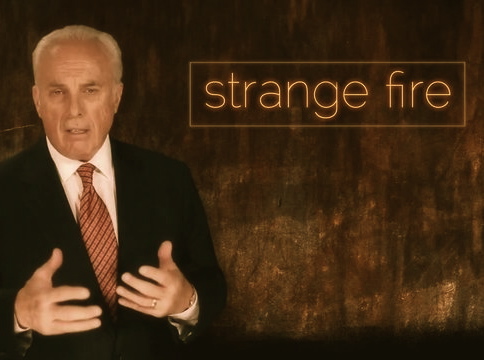
John MacArthurJohn MacArthur’s Strange Fire conference has come and gone and the book will be shipping next week. Whatever you felt about the conference, there is little doubt that a lot of work and a lot of discussion remain as we, the church, consider the miraculous gifts of the Holy Spirit. In the aftermath of the event, and with the book on its way, I think we all have questions we’d like to ask Dr. MacArthur. A week ago I asked for your questions and sent them through to him. Here are his answers to the first batch of questions. I anticipate adding a second part to this interview within the week.

What was the purpose of such a controversial conference like Strange Fire? Why did you choose not to invite one of the best of the reformed continuationists to speak at your event and to defend his position? Wouldn’t that have strengthened the cessationist arguments while also showing an earnest desire for unity?

-from an interview of John MacArthur by Tim Challies:
“John MacArthur Answers His Critics,” November 4, 2013
Challies.com

This, and the second part of the dialog between MacArthur and Challies is a forum for Pastor MacArthur to respond to the criticism he received as a result of his Strange Fire conference. I’m going to put my impressions into two blog posts as well (a single blog post would be over 4,000 words) and afterward, there are no more Tim Challies articles for me to read about Strange Fire. It probably won’t be the end of what I have to say about the conflict between sola scriptura Christianity and spiritual Christianity, though.

You can follow the links I’ve provided to read the full content of both parts of the interview. I just want to draw attention to some of the highlights, so to speak.

In response to a question of Challies’ in the first part of the interview, MacArthur states:

On the one hand, I would agree that this is a second-level doctrinal issue—meaning that someone can be either a continuationist or a cessationist and still be a genuine follower of Jesus Christ. I have always maintained that position, and I reiterated that point several times during the conference. I have good friends who consider themselves continuationists, and I am confident that these men are fellow brothers in Christ. But that doesn’t excuse the seriousness of the error. In fact, I would appeal to my continuationist brethren to reconsider their views in light of what Scripture teaches.

Here, MacArthur states that although he believes the continuationists are in serious error, they are still his brothers and sisters in Christ.

Except that directly contradicts something MacArthur said in his closing statement at the conference in response to seven points of criticism. In response to point 6, “They are attacking brothers,” MacArthur said:

MacArthur wishes he could affirm this. From his vantage point, this is a movement made up largely of non-Christians that lacks accountability. No one polices this movement. Every faithfully reformed elder, pastor, scholar and teacher of the word should bear the responsibility of policing this movement. People accuse MacArthur of being fixated on this issue, yet in 45 years of ministry he has only held one 3-day conference on this matter. Rather he has devoted his time to preaching the New Testament verse by verse and exalting Christ.

Tim ChalliesEither MacArthur is separating the continuationists he speaks of in part one of the interview from whoever he was discussing on the last day of the conference, or he contradicted himself. You can’t have it both ways. Either the continuationists / Pentecostals / Evangelicals are considered faithful Christians by MacArthur or not.

The only other response he could make would be to say that he believes some of the people in these categories are not believers while others are, but then he would have to describe his criteria for telling the difference. MacArthur goes on to say:

On the other hand, I am firmly convinced that this secondary issue has the very real potential to taint a person’s understanding of the gospel itself. In such cases, it becomes a primary issue. For example, charismatic theology does corrupt the gospel when it expresses itself in the form of the prosperity gospel. Moreover, the global charismatic movement happily shelters other heretical movements—such as Catholic Charismatics and Oneness Pentecostals. Taken together, the number of charismatics who hold to a false form of the gospel (whether it is a gospel of health and wealth or a gospel of works righteousness) number in the hundreds of millions, which means they actually represent the majority of the global charismatic movement. That is why we took such a strong stand both at the conference and in the book.

So apparently there is, as far as MacArthur believes, a line to be crossed within the Charismatic movement. On one side of the line, you are a believer, and on the other, having gone too far, you’re not.

Challies asked:

You acknowledge, of course, that many godly, respected theologians are continuationists. How would you explain the continuationist theology of faithful men like John Piper, D.A. Carson, and Wayne Grudem if the cessationist position is so clearly taught in the Bible?

In part, MacArthur responded:

As I noted at the conference, I believe their openness to modern charismatic gifts is an anomaly. Obviously, I cannot read minds nor do I desire to judge motives. But I do wonder if perhaps their positions are evidence of either the influence of personal relationships with charismatic friends and family members, or the pervasive impact charismatic theology has had on the wider culture.

Wayne Grudem, as I mentioned earlier, openly acknowledges that there are no apostles in the church today. John Piper says that he does not speak in tongues. And I’m fairly confident that D. A. Carson does not personally practice any of the charismatic gifts. In that sense, then, I think they may be more cessationist (in terms of their personal practice) than their published positions would suggest.

If I’m reading MacArthur correctly, his understanding of Charismatics may be more “nuanced” than the conference made it seem. He may recognize more variability of belief and variability of practice among individuals and groups of individuals to identify with the Charismatic movement than he previously presented. It’s easy to say for most of us, given how MacArthur speaks and presents himself, that he’s a really “black and white” type of guy, that there are no colors in his universe, especially when quoting Thabiti Anyabwile, he states:

He wrote, “First, we have to admit that there’s a correct and an incorrect position on this issue. Somebody is right and somebody is wrong… . Second, we have to admit that how we view this issue substantially impacts the nature of the Christian life. It matters. It’s not an inconsequential idea. Someone worships God appropriately, someone doesn’t… . Third, we have to admit that this issue practically impacts Christian worship and fellowship. It’s not only a private matter, but a corporate one as well.”

I agree with all of that. This is an issue of critical importance because it affects our view of God as well as our understanding of how to live out the Christian life, both individually and corporately.

But hopefully, no one is quite as rigid and uncompromising as we make them out to be during a disagreement.

Finally, I think those who accuse me of using too broad of a brush are being naïve about the actual composition of the global charismatic movement.

I’m among those who have accused MacArthur and other presenters at the conference of painting with too broad a brush. That’s certainly how I read them on Challies’ blog posts. Of course, these presenters are speaking to a large audience and this is a one-on-one interview, so MacArthur has the opportunity to answer specific questions, when, at the conference, he and the others were “preaching” not discussing.

Our decision not to host a debate at the Strange Fire Conference was intentional. Debates are rarely effective in truly helping people think carefully through the issues, since they can easily be reduced to sound bites and talking points.

There’s both good and bad in what MacArthur said. It’s true that debates, if not properly moderated, degrade into name calling sessions and nothing gets resolved. On the other hand, during Presidential elections, the opponents present multiple public debates for the purpose of clearly offering American voters a (hopefully) clear understanding of the different platforms of each candidate.

Strange FireMacArthur did not escape these debates entirely. The rebuttals were simply managed in the blogosphere, in social media, and other venues rather than personally at the conference.

MacArthur ended the first part of the interview this way:

So, coming back to your question, I understand that some reviewers will find my tone too harsh and my brush too broad. But I think the problem is a whole lot bigger than anyone realizes. And it breaks my heart to think that hundreds of millions of souls are being caught up into a movement where they are being seduced by false forms of the gospel.

That is why I wanted to sound such a strong warning. And I’m willing to be accused of broad-brushing in order to get that message out.

I don’t doubt that he’s sincere in his belief and desire that he’s doing the right thing and that he’s doing it the right way, and I’m not commenting today to come out as pro-cessationists or pro-continuist. I’m stepping outside the narrow corridor of that argument and trying to understand how MacArthur sees himself and if what he did will have the response he desires. Only MacArthur can explain himself (well, God can explain him too, and probably better than MacArthur can), and I want to hear what he has to say.

For the sake of length, I’ll conclude my summation of the Challies Chronicles in Part 2.

The Challies Chronicles: How the Strange Fire Finally Burned

Woman in fireThe Strange Fire conference closed with a final address from John MacArthur. In this address he responds to seven accusations brought against the conference, follows with eight appeals to his continuationist friends, and concludes by walking through 1 and 2 Timothy, highlighting the need to stand firm in guarding divine revelation against false doctrine.

Before addressing the accusations against the conference, MacArthur charged attendees to carefully read their copy of Strange Fire and to measure it against the Word of God. He is convinced that this book, with its well-documented research and extensive footnotes, will withstand careful scrutiny. He reminds us that this book and conference is intended for the Church. He has no expectation for either one to be helpful to non-believers, which he suspects makes up much of the charismatic movement.

-Pastor Tim Challies liveblogging
Strange Fire Conference: MacArthur’s Appeal to His Continuationist Friends”
Challies.com

I decided to use this blog post to review not only John MacArthur’s summary of the conference but Tim Challies’ wrap up as well. Essentially, this is how each individual saw what came out of the conference, at least the day it ended and a few days after that.

I think I realized this before, but it was brought home to me that the reason I have “issues” with John MacArthur as a Christian is that he defines himself and his faith by what he’s against, not what he’s for. Sure, he makes a big deal out of “Biblical sufficiency” and “sola scriptura,” but in doing some wider reading about the man and what he’s done, he demonstrates a pattern of someone who has built his reputation on attacking others, whether other individuals or other belief systems.

I know this has been a problem in both the Messianic Jewish and Hebrew Roots movements and it’s taken me quite a while to reduce this practice in my speech, writing, and thoughts (I suppose I still haven’t quite extinguished it within me). People or institutions that define themselves by what they are against must, because of that self-definition, always be on the attack. If your identity is based on being against something, then you are only “real” when you attack that something (or someone).

This is hardly the first time MacArthur has come out against Pentecostals and Charismatics. In 1993, his book Charismatic Chaos was published and I believe he wrote or made statements critical of Pentecostals/Charismatics before then. Sure, MacArthur has positive qualities attached to him. I commend his dedication to the Word of God and how he continually pushes others to read and study the Bible, but the skewed path he takes to understand the Bible, Jesus, and God is so rigid and occasionally (or more often) hostile to anyone outside of that path, that if I were an unbeliever and had to depend on MacArthur as my only model of what being a Christian was like, I’d never come to faith.

In fact, people like Jimmy Swiggart, Jim Bakker,and James Dobson (I know, an eclectic mix) kept me from even mildly considering Christianity as a path for decades. Outspoken “firebrands” who come across as highly opinionated and confident to the point of appearing arrogant do not represent my understanding of Messiah, Son of David.

MacArthur proved my point in his final appeal by including seven criticisms he and his conference had received:

  1. Accused of being unloving
  2. Accused of being divisive
  3. This is not a clear issue in the Bible
  4. This issue is only true of the extreme lunatic fringe side of the movement
  5. They are attacking a movement that has given us rich music
  6. They are attacking brothers
  7. MacArthur doesn’t care about offending people

macarthur-strangefire-confChallies said that “MacArthur then shared from his heart responses to seven accusations against the conference,” which told me that Challies probably wasn’t entirely objective about his assessment of MacArthur (but then again, neither am I).

You can go to the Challies blog post to read MacArthur’s responses as well as the points he wanted to make to continuists, but his response to the last point caught my attention:

He admits that he holds the truth with kindness and love. He does care about peoples’ feelings. He does care about offending them. Just not nearly as much as he cares about not offending God.

Especially on the Internet, but also in other venues, I can’t count the number of times supposedly good-meaning Christians have “told the truth in love” while simultaneously ripping other people to emotional and spiritual shreds. As long as you use words like “truth” and “love,” you can make any insult and rend anyone’s heart with total impunity.

I base the Comments Policy of this blog on the Jewish concept of Lashon Hara or wronging another in speech, which is based on Leviticus 25:17. It says, in part, that if you say something, even if it is truthful and factual, that you know will harm another or cause them embarrassment, you are guilty of wronging them. Based on that standard, John MacArthur would have to revise his presentation considerably.

But then, and I’ve asked this before, what if you have to tell the truth to prevent harm to others and yet, end up harming brothers? I don’t know the absolute answer to that, but I suspect MacArthur might have gotten more mileage if he had given “Strange Fire” another name, and emphasized the positives of what he believed in, rather than the negatives of what he was against (but then again, people are almost always more attracted to a good car crash than an encouraging and uplifting message).

In his blog post Lessons Learned at Strange Fire, Pastor Tim Challies seemed to generally approve of how the conference was offered. Challies called the issues presented at the conference:

This is a worldwide issue and I need to ensure I see it that way. We need to ensure we see it that way. Those who listened to the conference heard again and again just how many charismatics there are in the world—somewhere around 500 million. Conrad Mbewe made it clear that in many places in the world, and especially in the developing world, to be a Christian does not mean that you trust in Jesus Christ for salvation, but that you believe in and practice something akin to the miraculous gifts. Charismatic theology is a North American export that is making a massive impact elsewhere in the world.

The conference and its aftermath also revealed to Challies how intensely polarizing this issue is and sees the critical dichotomy as between feeling and believing through reason. He also defended MacArthur and the other presenters as being confident, not arrogant, and as I mentioned above, there is an exceedingly fine line between the two.

I saw at Strange Fire that we can sometimes confuse confidence with arrogance. And it’s not just we, but me because I suspect that if the tables were turned, I might react in much the same way. I am convinced one of the reasons so many people reacted badly to the event is that MacArthur and the other speakers are so sure of what they believe. They spoke with confidence about their understanding of what the Bible permits and what it forbids. Some of the reaction from those who were offended seems to imply that certainty is incompatible with humility. If this is what they truly believe, they have succumbed to dangerous and worldly thinking.

many peopleBut a person can be confident and still be wrong. How many people were confident that the Earth was flat, once upon a time? There are untold millions of children worldwide who are confident that Santa Claus exists and will indeed be coming into their homes sometime after they go to bed on December 24th to deliver gift wrapped toys under their Christmas trees. Even Chemists, Astronomers, and Geologists are confident that certain scientific principles and facts related to their fields are true until new evidence convinces them otherwise.

While I can’t defend the abuses attributed to the Pentecostals, I can’t defend MacArthur’s overly generalized attack on them, either. Even when the facts aren’t in question, how they are presented can make a tremendous difference, not only in delivering the desired message, but in communicating where your heart is during and after the delivery.

If you disagree with MacArthur, the best way to engage the conference is not by railing against the man, but by showing specifically the ways you think he caricatured your position and by providing a calm, sober affirmation of continualist claims, backed up by Scripture.”

My form of criticism is to step outside the polarity of the issue, to go “meta” on continualists vs. cessationists, and to invoke, as I have above, the principle of Lashon Hara. Biblical evidence, the desire for truth, and “doing it in love” aside, the ends never justify the means. If they did, then it would be perfectly acceptable to blow up abortion clinics and to shoot abortion doctors in order to save babies (I know, that’s an extreme example, but it brings the point home). “Going after” a people or a movement just because you can is wrong, not necessarily because your research is flawed, but because you can only get your message across by being against something, and not by being for something.

The last thing Challies said was:

Only time will tell of the long-term impact of Strange Fire, but as I think back to the past few days, I find myself grateful for it. I suppose that may be easier to say as a cessationist than a charismatic, but I believe the event and its aftermath will prove beneficial. I continue to pray that God would use it to strengthen His church and to glorify His name.

Conferences come and conferences go, and if “Strange Fire” only existed as a series of events occurring over several days last October, I’m sure it would swiftly fade away. But there’s MacArthur’s book to consider, and I don’t doubt that there will be other “marketing” activities in which MacArthur will be participating to keep the issue alive.

I’m keeping it alive (although only in a very minor way) by writing about it myself. I’m also planning on looking at MacArthur’s “Strange Fire” through the lens of First Fruits of Zion’s (FFOZ) book Gifts of the Spirit (which I previously mentioned).

spiritual-journeyMost of what I know about John MacArthur has been through Tim Challis and his liveblogging of the “Strange Fire” conference, so I’m several steps removed from knowing much about him (MacArthur) at all. In the end though, it’s not just what you do for God that matters, but how and why.

I’ll address John MacArthur’s detailed responses to his critics in a subsequent blog post and then start talking about my “Gifts of the Spirit” “re-experience”. Then hopefully, I’ll be done with this stuff.


Final Summary of The Mystery of Romans

up_to_jerusalemThroughout this study we have considered the contact of Paul’s apostolic ministry in the light of the two-step missionary pattern: “to the Jew first and also to the Greek” (Rom. 1:16; 2:10). His opening and closing address indicate that Paul must reach Rome to bring them within the two-step pattern God had appointed for the restoration of Israel and the salvation of the world, regardless of the fact that some gentiles in Rome had already believed in the good news before many of the Jews in Rome had even heard it (Rom. 1;5-17; 15:14-33; Acts 28:14-23, 24ff). They were struggling because their faith lacked a proper foundation (it was not “established”:Rom 1:11) — and they were ignorantly supposing that their new position in salvation history involved supplanting Israel (11:1, 11-32).

-Mark Nanos
“Chapter 5: Paul’s Two-Step Pattern And The Restoration Of ‘All Israel'”, pg 237
The Mystery of Romans: The Jewish Context of Paul’s Letters

As I write this, I’ve just finished reading this book, but before I move on, I want to offer my impressions and final summary of thoughts about what Nanos wrote. I realized that I’ve written a lot about this book so far, starting with Chapter One, the Nanos commentary on weak and strong, a presentation on the apostolic decree and how Paul applied it to the Gentile believers in Rome, as well as a comparison between Paul’s letter to Rome and his letter to the Galatians.

There’s a lot going on in this book but it rests on a few assumptions. It assumes that the Gentile and Jewish believers in Rome were regularly meeting in synagogues also commonly used by non-believing Jews. It assumes that non-believing Jews, believing Jews, and believing Gentiles all interacted with each other in these synagogues. It assumes that the Gentile believers thought, or were approaching the thought, that because of the grace of Christ and their freedom from Torah obligation, that the Torah was on its way out, along with a formal Judaism, and that the Gentiles would be supplanting the Jews in this religious stream.

Ironically, or should I say tragically, this last assumption has the ring of truth and indeed is exactly what has happened. It is also the prevailing thought in the Church today. We like to think a lot has changed in two-thousand years, but certain core ideas and prejudices haven’t gone away.

Nanos notes in Appendix 2 (pp 372-387) that there are some problems with the reading of Romans due to the edict of Claudius which suggests that all or most of the Jews were expelled from Rome during the relevant time period and that the Gentile Christians were meeting in small home churches, not Jewish synagogues. If this is true, then Nanos’ book falls apart. However, Nanos believes that the edict expired allowing the Jewish population to return to Rome or that perhaps not all of them were expelled (he estimates that the Jewish population of Rome at that time was between 20,000 and 50,000, which is a lot of people to move out).

I don’t have a historical background such that I can evaluate this issue, so I’m going to take it for granted (at this time) that Nanos is correct about his assumptions. I do however reserve the right to amend my opinion as more information comes my way.

In Chapter 5, Nanos continues to build his message that Paul’s letter to the Romans was a strong reminder to the Gentile Christians that they were under the authority of the apostolic decree and expected to exercise “obedience of faith” which would include restraining themselves from any behavior that would put a stumbling block in the way of their unbelieving Jewish co-participants in Roman synagogue life, and help them come to faith in Messiah.

The “two-step process” of Paul always first visiting the Jewish synagogue in any place he arrived at and then going to the Gentiles, was not just deference to the local Jewish population, but rather Paul’s and God’s plan of salvation. Jesus himself said “Salvation comes from the Jews” (John 4:22), and Paul believed that when he arrived in Rome, he could provoke Jewish “jealousy” of his mission to be a light to the nations (Isaiah 49:6), inspiring them to become part of Isaiah’s prophecy and God’s command.

But the door swings both ways. The Gentiles, by “obedience of faith” were to also “provoke” the non-believing Jews by revealing themselves as the “first fruits” of prophesy’s fulfillment:

On that day I will raise up the booth of David that is fallen, and repair its breaches, and raise up its ruins, and rebuild it as in the days of old; in order that they may possess the remnant of Edom and all the nations who are called by my name, says the Lord who does this. (emph. mine)

Amos 9:11-12 (NASB)

prophetic_return1The Tanakh (Old Testament) is replete with prophesies of Gentile participation in the national restoration of Israel and the return of Jewish exiles in the diaspora to their Land, so this assumption on Nanos’ part is certainly reasonable. But the prophetic promise was in danger of not being fulfilled among the Jews in Rome because of the Gentiles assuming a position that elevated the nations and diminished Israel, the Jewish people, and particularly Jewish Torah observance, reversing what God has decreed.

Paul, in the context of 11:1-29, 30ff., clarifies that while part of Israel may have “stumbled” it is not “so as to fall” but in order that they will be provoked to jealousy as the gospel brings salvation to the gentiles in fulfillment of prophecies. It is for this very reason that Paul magnifies “his ministry” as the “apostle of Gentiles” (v. 13). He hopes it will “move to jealousy my fellow countrymen and save some of them” (v. 14). Paul frames the purpose of his apostolic ministry with the vivid contrast between the present “riches” that have come to gentiles through the “stumbling” of some of his brothers and sisters (who have not believed in Christ or in the salvation of these gentiles) and the unfathomable success that will be realized by both the Christian gentiles and Israel when the apostolic ministry has at last fulfilled its destiny (see Rom. 11:12, 15).

-Nanos, pg 248

Paul’s two-step process placed Jews and believing Gentiles in complementary roles, whereby they needed each other to fulfill the prophetic promise that would be culminated upon Messiah’s return.

David Rudolph and Joel Willitts commented on this complementary relationship in terms of modern Messianic Judaism more than once in their book Introduction to Messianic Judaism: It’s Ecclesial Context and Biblical Foundations, and I used their material to comment to this point as well on my blog.

In Romans 11:18, Paul reminds the Christian Gentiles in Rome that the “root supports you” (Gentiles), not the other way around, thus, according to Nanos, Gentile salvation flows from Israel.

Rather than arrogantly assuming they have replaced fallen Israel, the gentiles are to recognize they must be servants of Israel’s salvation even as Paul is, for it is Israel’s success and not her failure that will bring the “revealing of the sons of God” for which the “creation” is anxiously longing (8:19).

-ibid, pg 255

Continuing to comment on Romans 11, Nanos says that the “mystery” is not if but how “all Israel will be saved” when it is stumbling.

I found Nanos less than completely revealing about who or what he thought “all Israel” was, whether a believing remnant of the Jewish people or miraculously, through the two-step process and the jealousy he provoked with his mission, literally all Israel would rise to become a light to the nations, as Paul had, and be the catalyst for a multi-national revival that would herald the return of Messiah.

tzitzitMany of my reviews of the First Fruits of Zion (FFOZ) television series The Promise of What is to Come, including Exile and Redemption and Ingathering of Israel address the process of the people of the nations taking hold of the Jewish people in order to join with them in learning of the God of Jacob, and praying in the Temple of Israel, so again, this idea of mutual dependence and participation in Israel’s national redemption and the restoration of the world is not without support.

According to Nanos, Jewish “hardness” (Romans 11:7) will end when the Gentiles enter in their fullness (Romans 15:29).

Chapter 6, the final chapter in the book, will likely make some Christians feel uncomfortable since it addresses “Christian Obedience to Synagogue Authority” based on Romans 13:1-7:

Let every person be subject to the governing authorities; for there is no authority except from God, and those authorities that exist have been instituted by God. Therefore whoever resists authority resists what God has appointed, and those who resist will incur judgment. For rulers are not a terror to good conduct, but to bad. Do you wish to have no fear of the authority? Then do what is good, and you will receive its approval; for it is God’s servant for your good. But if you do what is wrong, you should be afraid, for the authority does not bear the sword in vain! It is the servant of God to execute wrath on the wrongdoer. Therefore one must be subject, not only because of wrath but also because of conscience. For the same reason you also pay taxes, for the authorities are God’s servants, busy with this very thing. Pay to all what is due them—taxes to whom taxes are due, revenue to whom revenue is due, respect to whom respect is due, honor to whom honor is due.

The usual Christian interpretation of these verses is as Paul’s general injunction for believers to be subject to governmental authorities as well as employers and the like. However Nanos notes that it is an odd contextual diversion from the themes before and after, and he suggests that Paul is actually talking about the local synagogue authorities, advising the Gentile believers who are in the synagogue as to their proper response to the synagogue leadership (and the taxes being mentioned would be the Temple taxes, collected in diaspora synagogues and sent to Jerusalem).

This brings up the interesting question about whether or not believing Gentiles should respond to non-believing Jewish leadership in a Jewish synagogue setting while believers and non-believers are worshiping God in a common Jewish context. Citing verse 1 in Romans 13, Nanos quotes Paul saying that the “governing authorities” derive their authority from God. Again, the Church interprets this as saying any authority on earth in any capacity was given that authority by God, but in this context, Paul is saying that synagogue authority is from God and should be responded to as such by the Gentile believers present.

This is going to make many Christian readers bristle, but it at least implies that God was not done with even the non-believing Jews and indeed still recognized them as Israel, as His chosen and called out people, perhaps (my interpretation) due to the Mosaic covenant. That would mean the Mosaic covenant was still in force and that the beginnings of the New Covenant which, linked with certain conditions of the Abrahamic covenant, allowed Gentile entry into Jewish religious space without the requirement of conversion, was all additive rather than the later covenant replacing the earlier one (see Galatians 3:18).

Paul in his letter to the Romans, as Nanos frames its overall theme, is desperately concerned with bringing the non-believing Jews into Messiah faith and he wrote a strong warning to the believing Gentiles not to act as a stumbling block by disregarding Jewish sensitivities of Gentiles in their midst, but instead to comply with “obedience of faith,” which Paul defined as the apostolic decree. The apostolic decree established a legal status for the Gentile believers somewhat like “permanent alien residents” within national Israel, and draws the reader’s attention to the following:

and in order that the Gentiles might glorify God for his mercy. As it is written,

“Therefore I will confess you among the Gentiles,
and sing praises to your name”;
and again he says,

“Rejoice, O Gentiles, with his people”;
and again,

“Praise the Lord, all you Gentiles,
and let all the peoples praise him”;
and again Isaiah says,

“The root of Jesse shall come,
the one who rises to rule the Gentiles;
in him the Gentiles shall hope.”

Romans 15:9-12 (NASB)

To which Nanos responds:

Christian gentiles worshiping the One God in the midst of the congregation of Israel — my point exactly!

-Nanos, Chapter 6, pg 326

PaulPaul is urging the Gentile believers to take note of their position, their role, and their halachic status as “resident aliens” within the midst of corporate Israel, which here is the synagogue context in Rome.

Citing Romans 13:3-4, Nanos says that Paul did not believe the synagogue leaders were always right in their rulings (something of an understatement considering how many different leaders in many different synagogues in the diaspora had Paul thrown out, driven out, arrested, beaten, ridiculed, pursued, and so forth), but that they did have a right to administer their own religious and community space.

And there would be consequences for disobedience:

Therefore whoever resists authority resists what God has appointed, and those who resist will incur judgment.

Romans 13:2 (NASB)

I was somewhat reminded of a paper written by Noel S. Rabbinowitz called Matthew 23:2-4: Does Jesus Recognize the Authority of the Pharisees and Does He Endorse Their Halakhah (PDF). I invite you to read the paper yourself, but in short, Rabbinowitz concludes that while Jesus disagreed with the Pharisees (or some of them) on a number of issues, he did recognize that they did have the legal authority to establish binding rulings upon those who operated within the Pharisaic realm.

The implication is that the synagogue leaders of Rome also had the same God-assigned authority even if they didn’t always use it wisely (this also speaks to later Rabbinic Judaism and the authority of the sages in making halachah).

Looking back on the book as a whole, does Nanos make his point? I think so for the most part. As a non-scholar in New Testament studies, I’m obviously operating with certain weaknesses, but the benefit I see from Nanos’ research is that he shows us a Paul that acts like a sane human being; one who is consistent with his message across time (as measured by what we see of him in Luke’s Acts and Paul’s various letters). This is a serious refactoring of our typical understanding of Romans, so it deserves careful consideration, however, Church tradition about this letter, having been established many centuries ago, has not been given a serious “shake up” until now. I’m sure it’s time.

Just because the Church has had a tradition that typically interprets Romans in a certain way doesn’t make that tradition correct, especially as it was formed out of a long history in Christianity desiring to disconnect Judaism in all its forms from the Church and to establish the ascendency of the Church over the Jewish people and Judaism.

This “new perspective on Paul” has merit and seems to fit a perspective where God does not break, fold, spindle, or mutilate any of his former promises to Israel for the sake of Gentile admission. Rather, the first advent of Messiah and the beginning inclusion of Gentiles as co-participants in salvation and the restoration of Israel creates a seamless continuation “between the two testaments” rather than a jarring “jumping tracks” from the “Old” to the “New.” This is what you’d expect of a creative, all-powerful, always truthful, and organized God.

The Challies Chronicles: Conrad Mbewe and Pentecostal Witch Doctors

Conrad MbeweThe first session of the final day at the Strange Fire conference brought Conrad Mbewe back to the pulpit. Phil Johnson introduced him by sharing how others have called him the Spurgeon of Africa. Today he brought message entitled, “Are We Preachers or Witch Doctors?”

Mbewe then contrasts Paul’s exhortation in 2 Timothy with the present picture in Zambia. He shares two newspaper clippings from July concerning evangelical preachers. In the first, a clergyman impregnated 10 women before his wife came forward about the scandal. She came forward after witnessing the scourge on the children in this church and the presence of the witchcraft taking place. In the second clipping two clergy men took two women into the mountains and sexually assaulted them. They first visited their home and took prayer requests and then led them into the mountain.

Pastor Tim Challies liveblogging
Strange Fire Conference: Preachers or Witch Doctors?”
Challies.com

As Conrad Mbewe chronicles the abuses of Pastors against members of their flock in Zambia, no one could possibly disagree with having evangelical preachers who are sexually assaulting women being called out, removed from their positions of authority, and hopefully arrested and incarcerated. How could any believer of good conscience support preachers and other church leaders behaving in such a destructive manner?

But, of course, the inference is that the Pentecostal movement is driving such abuses and as a denomination, are responsible for this criminal behavior, and therefore Pentecostalism must be stopped. Can a connection between the events being reported by Mbewe and all Pentecostals everywhere be reasonably made?

Conrad asks, “How can this be happening so frequently among so called evangelical churches today?” His response: a seismic shift in how people view the pastor. What is read in 2 Timothy is not the popular view today. It is because of how the view of the “man of God” has evolved today. Pentecostalism’s visit to Africa did not primarily emphasize the preaching and teaching component of the “man of God.” Now the “man of God” is primarily seen as the deliverer. Preaching has lost emphasis. It has become motivational platitudes followed by shouting and chanting.

The same thing can be seen in America on popular TV channels, but with different colored skin and nicer buildings. There are biblical quotes tossed about followed by a demon possessed, crazy and maddened looking preacher.

Yet, the important part of any service is what happens next. The “man of God”, wrested out of the context of 2 Timothy, takes on the role equivalent to a witch doctor.

While Mbewe lays the blame for the abuses he reported above fully upon the Pentecostals and their lack of emphasis on scriptural sufficiency and preaching, others who commented on this Challies blog post didn’t agree:

There are certainly issues that need to be studied, analysed and discussed in the contemporary pentecostal movement in Africa and worldwide. We need to understand their theological and liturgical practices–their strengths, weakness, meanings and innovations. Scholars of contemporary pentecostal movement have been at it for more than two decades. It would be very helpful to dialogue with their findings and suggestions. One of their major findings is that contemporary pentecostal movements underline that their members must “make a complete break with the past,” that is, they must completely disassociate themselves with African Indigenous Religions (henceforth ATR)–contrary to Mbewe’s claims. Scholarly findings also associate its theology of prosperity, deliverance and breakthroughs with the neo-liberal economy of the globalization era. On the overall, I find Pastor Mbewe’s take on it simplistic, upsetting and misleading. Basically, he blames it all on ATR. In the process, his comparisons are misleading misrepresentations of ATR, that serves to demonize the latter. If indigenous healers were to be brought into this conversations, they would not recognize the picture that is painted about them. But since evangelicals are unlikely to want to hold such dialogue with indigenous healers, it is as that proverb warns us: until the lion tells the story, the hunter will always be the hero. The image given about Indigenous healers is of course colonial, as attested by Mbewe’s reference to indigenous healers as “witchdoctors.” Mbewe’s colonial perspective is also attested in his wish to call for the West to rescue Africa from itself. His two opening stories harp on the colonial stereotypes of Africa as sexually immoral. His reference to western medicine as conventional medicine is so telling. Since Christianity has existed side by side with ATR for more than two centuries, why is this only happening now? Why has ATR not confused the church before, until now? Both the contemporary pentecostal movement and the indigenous healers would be appalled by Mbewe potrait (sic) and interpretation of the phenomena. Mbewe’s approach is suspect and must be heard as such. Those who hear him will do well to hear him with a pinch of salt.

Musa Dube

I am a charismatic Pastor in East Africa. Sadly however, I can confirm that what is said here is quite true. Of course, I do not agree that this is a charismatic problem but rather an aberration that claims to be Christian and Charismatic but is in fact neither. It would be wrong however, to say that the problem is confined to “charismatic” churches.

This problem manifests itself in these pseudo churches as false miracles etc. etc. But in the churches more palatable to McArthur (sic) and others, it manifests itself in double lives that pay mere lip service to the theology of the church. Polygamy, tribal politics, regular visits to the witch doctor (the traditional kind rather than the Bible carrying one) all thrive in Calvinist churches across the continent of Africa. They are preached against in the pulpit of course but hey, everyone does it. In very high number of cases, even the Pastor does it because of course that is just for preaching

This is because the problem is not charismatic theology but syncretism and This is not confined to any one church as anyone who has lived in Africa knows.

We may be charismatic but we are working hard to preach against hypocrisy in all denominations. Our focus is upon the work of the cross which unites us and demands a response from us all.

Sean McIntyre

Witch huntOf course, the larger body of people commenting on the blog post expressed split opinions, but I think it’s important to understand that a simple comparison between what Mbewe reports and what all Charismatics represent cannot be made. Mbewe’s logic goes something like:

  1. Some Pentecostal-influenced preachers in Africa are sexually abusing women and practicing witchcraft.
  2. Therefore all Pentecostals, Pentecostal teachings and Pentecostal/Charismatic preachers everywhere support abusing women and practicing witchcraft.

I agree with Musa Dube to the degree that Mbewe’s presentation is rather two-dimensional and lacks sufficient depth to establish the point he’s trying to make. Also, we have a report that such abusive activities are not confined to churches with Pentecostal affiliation but are rather multi-denominational.

Again, I want to say that in no way can I or any reasonable person of faith support sexual abuse of women, whether by clergy or anyone else.

Mbewe was invited to a radio broadcast panel discussion in Zambia about miraculous healing. There was a Catholic trying to ride the fence. Then there were two charismatics invited. One could not come because he was sick. He lied. Conrad saw this man shopping in the mall with his wife directly afterward with a trolley of goods.

During the broadcast the other charismatic and Mbewe locked horns. He challenged listeners to call in if they had been healed. Like a New Testament Elijah he taunted the charismatics for an hour due to the lack of calls. Two calls came in. The first a man who attested to a girl with unequal legs being healed 8 years ago, a very stale testimony for a country that claims to have healing crusades from prophets, bishops and “the man of God” all the time. The second came from a woman who chastised Mbewe as a dead theologian. There were only two calls in a nation where miraculous gifts happen all the time. The charismatic pastor responded that the people are shy. Unfortunately a week later he suffered a stroke and died after being in a coma for a week. None of his friends came to his aid and raised him because they knew it was all a fraud and a lie.

While this is all very dramatic, and while it likely establishes that claims of a large number of miraculous healings taking place in Africa are false, it still doesn’t make the larger point in painting the entire Pentecostal church with the same broad and tainted brush.

I know Mbewe’s presentation is only one among many, and I know that “Strange Fire” is meant to be taken as an entire unit, but even putting Mbewe’s discussion in the context of the entire conference doesn’t make what he is saying any more applicable to the entire world of Pentecostal believers. I may not agree with the basic premises of Pentecostalism, but I don’t believe they are all abusive and criminal either.

OK, maybe I’m being a little harsh because Mbewe didn’t come out and indict the Pentecostal church in such a manner. He only said that any church that does not depend solely on scripture and its sufficiency in building and leading the body of Christ is ripe for an infusion of witchcraft, sexual abuse, and other demonic influences.

And speaking of demonic, I know I quoted this above, but of everything Mbewe said, it especially drew my attention:

The same thing can be seen in America on popular TV channels, but with different colored skin and nicer buildings. There are biblical quotes tossed about followed by a demon possessed, crazy and maddened looking preacher. (emph. mine)

Although Mbewe called the preacher “maddened looking” as opposed to “maddened,” he declared that the preacher in his example (I don’t know if he was thinking of any TV preacher in particular or just throwing out generalizations) was “demon possessed” as opposed to something such as “like he was demonized.” As I’ve said before, I find it interesting that cessationists can say there are no longer any “gifts of the spirit” given to human beings, but that human beings can certainly be possessed by demons and exhibit strange and even supernatural behaviors. The equation doesn’t seem to balance out and gives the impression that evil forces have more influence than God.

But that’s just my personal observation.

Don’t worry. There’s only one presentation left, MacArthur’s final appeal, then Challies writes his own summary of the lessons he learned from the conference. After that, Challies writes two additional blog posts, both on MacArthur’s answers to his critics. I’ve briefly scanned those answers and MacArthur comes across as somewhat more reasonable than I found him and the others while presenting at the conference.

I know the conference was last October and it may seem as if I’m beating a dead horse, but these issues won’t go away just because a couple of months have passed. Beyond that, there’s the influence of MacArthur’s Strange Fire book (which I’d like to review, but I’m not willing to shell out cold, hard cash for the privilege) to consider.

doveThe topic is wearing on me too, which is why, in addition to Life of Pi, I’ve just started reading Gifts of the Spirit, which is a compilation of the presentations given at the First Fruits of Zion Gifts of the Spirit Conference held last Spring during Shavuot at the Beth Immanuel Sabbath Fellowship in Hudson, Wisconsin.

I attended the conference and wrote numerous blog posts, including this one describing my experiences. However, all that was before MacArthur, “Strange Fire,” discussing MacArthur and “Strange Fire” with my Pastor, and my blogging on “Strange Fire,” so I need to even things out, so to speak, and revisit the spiritual side of the coin by reading “Gifts”.

So far in “Gifts,” I’ve learned (relearned) that a number of the presenters, including First Fruits of Zion (FFOZ) staff, previously worshipped in and even grew up in the Pentecostal church. I look forward to going back to the “Gifts of the Spirit” and comparing that conference experience with the Challies Chronicles of “Strange Fire.”

Christmas at Arm’s Length

Interfaith and InclusiveAs always, as an interfaith community, our aim is not to meld, mash-up, mix, water-down or confuse our two religions. Instead, we strive to celebrate each holiday, whether Jewish or Christian, with full respect and all the trimmings. So how and why are these celebrations different from those you would find in any church or synagogue? Often, we begin and end a celebration by reciting our interfaith responsive reading, which is not a statement of creed, but a recognition that some of us are Jews, some of us are Christians, some of us have interfaith identities, and we are all equal members of this community. For me, simply knowing that we are an interfaith community changes my perception of any event: ancient rituals, songs and prayers, shimmer with the newness of radical inclusivity.

-Susan Katz Miller
“Lessons and Carols: Interfaith Community”
On Being Both

It’s Sunday morning as I write this and I’m avoiding church until January. Why? Because of Christmas.

Wait! Let me explain.

While Susan Katz Miller belongs to a community that can honor the different religious observances of its members, I’ve been attending a more traditional Baptist church. I remember hearing about how some of the church members participated in an anti-abortion rally at a new Planned Parenthood building some months back. Among the protesters were people from local Mormon and Catholic churches. My Pastor spoke of the event, but I don’t recall if it was from the pulpit or in a personal conversation with me. He said that a Catholic Priest was one of the speakers at the event and the Priest addressed the group with words something like, “We are all believers” or “We are all Christians.”

The point my Pastor had to make, representing the general perspective of our church, is that, because of the significant theological differences involved, he doesn’t consider Catholics and Mormons as “fellow believers” but rather, as those who are outside the Christian “camp.” Sure, they all came together at the event because of a common purpose, but the barriers constructed between those different faith communities, as far as he was concerned, were firm and inviolate.

I don’t say this to speak poorly about my Pastor or the church I attend. I consider him and the people I worship with to be truly devoted to God and desiring to serve Him in all that they do. However, there are distinct boundaries that contain the church and one may cross those barriers only at their own risk.

Almost a month ago, I called myself a Christian who studies Messianic Judaism. What that means in a nutshell, is that I am a non-Jewish believer in Jesus as the Jewish Messiah, and that I choose to study the Bible within a framework that takes into account the Jewish environment, perspectives, customs, and culture in which the Bible was authored, using that as a lens in filtering my view of Jesus.

As you might imagine, that somewhat crosses one or more of the barriers that contains my church’s theology and doctrine. My periodic meetings and conversations with my Pastor attest to the differences between us, and we’ve been honest that we are both trying to convince the other of our individual points of view.

I must say, I’m learning a lot, not only about church history and the development of fundamentalism in Christianity, but about my own opinions and where they come from. You never learn more about what you believe and why than when you are required to defend it.

Children's Christmas PageantPastor and his wife are spending the rest of the month (or most of it) in Florida to celebrate Christmas with his family. It will certainly be warmer than the December I’ve been experiencing here in Idaho. But that leaves behind Christmas at the church and today (as I write this) there won’t even be Sunday School.

There will be the Children’s Christmas Pageant. The kids have been practicing for about a month and I’m sure they’re looking forward to their big moment.

But that was several days ago as you read this, even though as I am writing, it is still before dawn on Sunday morning.

My family and I left Christmas behind about ten years or so ago and we’ve never looked back. That’s pretty much a given for my wife and kids since they’re Jewish. My married son’s wife is very much into Christmas and while my son doesn’t resist her efforts to put up a tree, lights, and decorations, he doesn’t participate either. The rest of my family just tries to ignore the season, although one of my sister-in-laws has been sending email Christmas cards of a humorous nature to the missus.

I quoted Miller’s blog post because it is a portrait of not blending together different faith traditions into a mixing bowl, but rather, interfaith families choosing to honor each other’s traditions and celebrations without having to surrender anything about their own.

Another member of our community confessed to me this week that he had bought his wife a Christmas present for the first time, after decades of marriage. A most loving and supportive husband, as a Jew he just had not been able to transcend the bitter history of religious conflict and wrap his head around the idea of a Christmas gift. He credited our interfaith community with his shift in thinking, and his ability to finally arrive, bearing a gift from afar.

I never said it was easy, but apparently, it’s possible. It requires a certain amount of willingness and a great deal of courage to overcome the fears and inhibitions of a lifetime. I don’t have a community like that either in my family or corporately, and even if I had access to a corporate community, attendance would conflict with my home life. I’m not even sure how my family tolerates my attending an “ordinary” church.

I’ve chosen a path that I believe is right and that I believe is right for me. In doing so, I have to walk away from all other paths. I suppose, from an outside observer’s point of view, it must look like I’m trying to walk both sides of the street, Christianity and Judaism. This actually isn’t the case. My wife and any Jewish person I’ve ever encountered, consider me a Christian, and so I am. A Christian is simply a person (typically non-Jewish) who has faith that the Jesus Christ of the Bible is the promised Savior and Messiah and the one who will return as the King of Israel and the world.

The only difference, and it’s a big one, is that my perspective of how I perceive God, Messiah, the Bible, and everything all that means, is substantially different from most of the traditional Church (big “C”). Most religious communities permit little or no permeability of their distinctive boundaries and barriers that contain who they are and keep out everyone else. The price of admission is to adopt the theologies, doctrines, and dogmas within their specific container and disavow everything else.

But my container is somewhat unique. Oh sure, a lot of other people occupy my container (more or less) but my container is virtual. It exists “in the cloud,” so to speak. The people who share a large portion of my understanding exist all over the world, but few, if any, are right here in “River City.” And as I said, even if we did get together, it would violate certain family requirements for me to participate in any significant or regular way.

Blogging is about as close as it gets and even that’s dicey sometimes.

One of the requirements contained within the church I attend is Christmas. It’s the day the vast majority of Christians choose to honor the birth of Jesus, and a great deal of custom, tradition, and fanfare surround not only that day, but the entire month in which it occurs.

But it’s not “me.” I don’t resonate with Christmas as a Christian. Watching everyone at church get really excited about Christmas (my Pastor was listening to Christmas music in his office even before Thanksgiving) just accentuates my sense of alienation, my “not-belongingness.”

Helping the HomelessI don’t disdain those who choose to celebrate Christmas. In fact, some Christians use this time of year to exceptionally demonstrate their desire to serve God by behaving more “Christ-like” in giving to charity and showing kindness to others. If Christmas is their inspiration for doing good, who am I to argue?

Unlike Miller, I’m not “both,” I’m just “me,” whatever “me” is. Actually, I’m getting a better and clearer picture of what “me” is all the time. The mist is dissipating and the sun is beginning to shine on the path I have selected from all of the paths I’ve considered.

It’s just a path that doesn’t hold very many fellow travelers. And almost none of them celebrate Christmas. I’ll see what church is like after the lights and decorations have come down next month.

Addendum: I just wanted to add that some traditional Christians also don’t celebrate Christmas for a variety of reasons, I for one am not avoiding it out of some sense of paganoia (a term coined by First Fruits of Zion teacher and author Toby Janicki) or the irrational fear that celebrating Christmas automatically makes you an idol worshiper. It’s a matter of personal conviction and taking on board a more Judaic view of the Messiah. It’s as simple as that.