Reviewing FFOZ.TV: A Promise of What is to Come

ffoz-tvThe First Fruits of Zion television program delivers a high-energy, professional presentation of the prophetic aspects of the Gospel message from a Messianic Jewish perspective. Every episode opens new insights into the teaching of Jesus of Nazareth with end-times implications. Kingdom-focused and Jesus-centered, this is Messianic Jewish teaching at its best. It will encourage Christians to go deeper in their personal relationship with the Jewish Messiah.

The program tagline, “A Promise of What is to Come,” acknowledges that there is something greater taking place than just learning and understanding the bible in a new way.

We are part of a restoration and a return predicted by Moses, the prophets, Yeshua (Jesus) and the apostles. The modern state of Israel and the messianic Jewish revival we see today is only the first blossoming of the great, final redemption, which will usher in the kingdom of messiah.

-from “Welcome to FFOZ TV”
tv.ffoz.org

Messianic Jewish educational ministry First Fruits of Zion (FFOZ) launched its own television series earlier this year with an eye on reaching Christian television networks and reaching Christians. Boaz Michael and Toby Janicki were recently interviewed by God’s Learning Channel (GLC) about FFOZ.tv, and GLC is the first Christian TV network to begin broadcasting the FFOZ TV series. My understanding is that FFOZ.tv is currently targeting other Christian television venues for their program in order to “spread the word.”

But what about their program?

Boaz Michael, Founder and President of FFOZ asked me to review the program on my blog. I’ve been aware of FFOZ.tv for about a year now, having viewed an early version of the first episode at last year’s FFOZ Shavuot conference. I’ve seen a few clips of the show since then, but I’m not a big television watcher, so I didn’t go out of my way to take a look at the finished product.

Overview

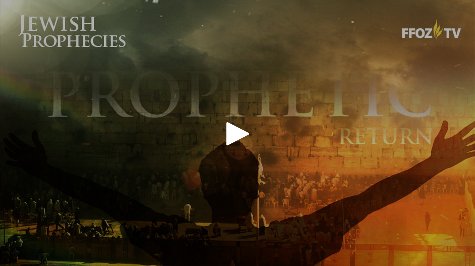
For my review, I chose to sample two episodes: episode 4, Jewish Prophesies, originally aired on March 17, and episode 5, Son of David, originally aired on March 24 (the full episode list is available for those shows that have already aired and they can be viewed freely online).

Structure and Format

Each show is approximately thirty minutes long and follows a standard format. Toby Janicki is the primary host of the program, presenting the issue to be examined during the broadcast, taking the audience through the scriptures to examine the topic, say Messianic prophesies, and then breaking the information down into three major “talking points.” Mid-show, the scene shifts to FFOZ teacher Aaron Eby speaking from Israel and explaining aspects of Judaism and the Hebrew language as they apply to the subject being discussed. The scene then shifts back to Toby in the studio, where he brings the program and the topic to a conclusion. At the very end, Boaz Michael makes a brief appearance, wrapping up the broadcast and introducing the topic for next time.

Content

The show is written for a Christian audience that knows little or nothing about Messianic Judaism and Judaism in general. For those of us who are familiar with the subjects involved, the content seems elementary most of the time, though therewere “tidbits” of information I found new or at least that were clarified for me. The show is definitely designed to be “Messianic Judaism 101” and its most obvious purpose is to gently bring mainstream Christians into a beginning familiarity with the Jewishness of Jesus, the continued meaning of the Jewish people and the nation of Israel in the present world and the Kingdom of God, and how the future of Christianity must always look to Jewish redemption for the people and nation of Israel as the goal.

ffoz-teaching-teamThere are twenty-six episodes “in the can” for the first season of the FFOZ.tv series. Each episode builds upon one another, so while each individual broadcast is a self-contained show, the audience won’t gain access to the complete Gospel message being presented from a Messianic Jewish perspective unless they view all of the episodes. Presumably, if the series is successful, the first twenty-six episodes will only be the beginning.

In the two shows I viewed, Toby regularly introduces himself as a Gentile who “practices Messianic Judaism.” This appears to be included to re-enforce Toby’s connection with his Gentile Christian audience but also connect him back to Messianic Judaism as a practitioner and teacher. Aaron’s portion, by contrast, is set in Israel, with his interviews being done “on the streets” to give a definite “Jewishness” to his content.

Look and Feel

Production values for the show are high and are at or near the levels of commercial television programs. The primary studio presents a “den” or “office” setting in rich earth tones, low lighting, and with numerous Jewish artifacts in the background to communicate warmth, approachability, and of course, Judaism. The music seems a little dramatic at times and for a couple of moments (during the HaYesod ad I think…I’m getting to that), I felt like I was getting ready to blast off into space. However, I noticed the tendency toward dramatic music and imagery on GLC when I watched the introduction to the Michael/Janicki interview, so maybe it’s an expected element of Christian television.

As I mentioned, Aaron’s part of the program is always filmed “on the streets of Israel” (presumably Jerusalem) so that the background views are universally recognizable as Jewish and Israeli. Aaron’s portions seem to create a bridge between the audience and Israel, supporting the overarching message of FFOZ.tv that Christianity is Jewish and irrevocably tied to Israel and Judaism.

Marketing

FFOZ is a non-profit organization and their primary “product” is the educational materials they produce. The purpose of FFOZ is to create and disseminate specific data to both Christian and Jewish audiences (see Vine of David for a list of materials specifically designed for Jewish people). The real “product” of FFOZ then is information which is packaged in a variety of forms including books, magazines, programs such as HaYesod and Torah Club, and of course, television.

However, in order to inform potential audiences of the material that is available, you have to market it. That’s another component of FFOZ.tv. The very first scripture that Toby reads in any program (of the two I viewed, anyway), is from the Delitzsch Hebrew Gospels. The rest of the time, he uses the ESV Bible. As Toby is reading from the Delitzsch version, a phone number and website URL appear at the bottom of the screen telling the audience how to purchase a copy.

About half to three-quarters of the way through the broadcast, the program content breaks for an ad about HaYesod, featuring mostly the FFOZ teaching staff presenting information on this learning program (which seems to have evolved quite a bit since I sat in a HaYesod class a decade or so ago).

Near the end of the broadcast, another commercial came on, this time describing the FFOZ Friends program, which allows people who subscribe to donate monthly to the ministry and describes, depending on which tier they choose, which products and services they’ll receive.

On the one hand, this all seemed a little distracting to me, but on the other hand, since at my “day job,” I directly report to the Vice President of Marketing, I have a deep understanding of the necessity and purpose of marketing any product that is for public consumption. You can’t buy and learn from something if you don’t know it exists.

Conclusion

resources-studyFFOZ.tv is made to introduce Christian audiences to Messianic Judaism, Judaism, and Israel. Although the Christian faith has its origins in first century Judaism and the Jewish Messiah, we have diverged from them significantly in the past twenty centuries, until the “Jewishness of Jesus” and the Hebraic beginnings of our faith are only a dim memory. FFOZ.tv is attempting to gently guide its Christian audience in a friendly and approachable atmosphere, back to some of the key concepts that define Messianic Judaism in order to realign Christian thoughts and feelings back toward our “Jewish roots.” The television program is also a “jumping off” platform for the audience to use in acquiring and exploring other FFOZ products, which will then (ideally) re-enforce and deepen the information base of Christians on Messianic Judaism, the absolute requirement of Israel’s national redemption in the Kingdom of God, and the vital role of the church in bringing about Jewish primacy and restoring Israel to its former glory, all in anticipation of the return of King Messiah.

If one picture is worth a thousand words, then what is television? In this case, television is entrance for any believer who watches Christian television or who is most likely to accept information in a video format, to the message of the Gospels from the perspective of Messianic Judaism. It provides and easy to access and easy to absorb doorway for the Christian to begin to encounter the Jewish Messiah King and the promise of what is to come.

Please visit First Fruits of Zion: A Promise of What is to Come and view any or all of the episodes available (seven as I write this but more are coming). Watching a single episode will only take thirty minutes of your time and you can judge for yourself whether or not if FFOZ.tv has a message that is speaking to you.
The Unsimple Truth

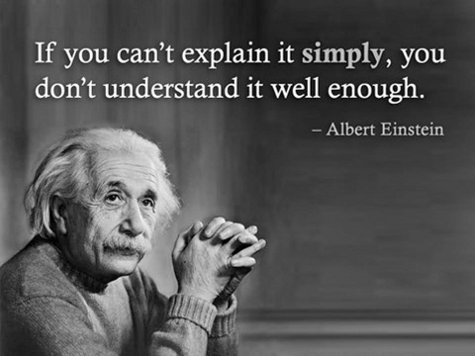
einstein_simplyIf you can’t explain it simply, you don’t understand it well enough.

-attributed to Albert Einstein

According to Rashi, the question is directed against Rav Yirmiyah who had said that the basket in the tree does not actually have to be within ten tefachim of the ground to be valid. We are dealing with a long basket where it could be tilted and emptied even without being brought below into the reshus harabim. In contrast to this, Rav bar Sh’va brings a Baraisa where an eiruv is not valid unless it is actually brought to where it must be situated. Here, we do not take into consideration the fact that the eiruv should be valid due to the potential that it could
theoretically be brought during bein hashemashos to its destination.

Daf Yomi Digest
Distinctive Insight
from “Rabbinic injunctions and Bein HaShemashos
Eruvin 33

I’m a failure. More to the point, I don’t understand God, Jesus, faith, and spirituality well enough. I can’t explain it simply. I’m not sure I can explain it at all. Certainly the fact that I have posted nearly eight-hundred articles in this “morning meditations” blog (not to mention other blogs) about these subjects and have hardly scratched the surface must mean I don’t understand all this well enough. I can’t explain what I believe simply. I certainly can’t explain it briefly.

I quoted from a commentary on an excerpt from Talmud above to illustrate the level of complexity of the halachot related to Orthodox Judaism. Although I read from the Daf Yomi Digest daily, I scarcely comprehend what I’m reading and what I understand most clearly is that the Talmud is an enormously complex set of works. I don’t know how observant Orthodox Jews manage to obey all of the minute details involved in daily living. I can only imagine that Einstein would have contended with the sages based on his above-quoted statement (though it is unsure if Einstein or Richard Feynman actually said those words).

I can hardly be said to live anything close to an Orthodox Jewish lifestyle in my “observance” as a Christian, but as I write and write and write, and then read back what I’ve written, I realize that I am no closer to truly comprehending God and faith than I was when I first accepted Jesus Christ as Lord. Sometimes I wonder if I’ve even gone that far.

For I do not understand my own actions. For I do not do what I want, but I do the very thing I hate. Now if I do what I do not want, I agree with the law, that it is good. So now it is no longer I who do it, but sin that dwells within me. For I know that nothing good dwells in me, that is, in my flesh. For I have the desire to do what is right, but not the ability to carry it out. For I do not do the good I want, but the evil I do not want is what I keep on doing.

–Romans 7:15-19

If we’re honest with ourselves as Christians, then I suppose we all have to admit that this statement of Paul’s is also true of us. How can we live a life we call “holy” and yet still struggle with the mundane, the common, and even the evil within us? If God’s Word is written on our hearts, how can we defy that word and pursue what we know isn’t right? I can only imagine that atheists have moral struggles as well, though as I recall myself from before I came to faith, they didn’t seem as dire.

Is a life of faith really that hard or that hard to explain? It certainly seems that hard to live. But then again, is Einstein’s quote the litmus test we should be using against ourselves? After all, he also said this:

If I could explain it to the average person, I wouldn’t have been worth the Nobel Prize.

Einstein made that statement in response to being asked to give a brief quote on why he won the Nobel Prize. That’s the problem with taking quotes out of context. It’s easy to make a person seem completely inconsistent. How much more difficult it is to analyze “chunks” of the Bible and find consistency and comprehension?

My conversations with Pastor Randy (which are on hiatus for the month of April and for several weeks in May) about D.T. Lancaster’s book The Holy Epistle to the Galatians aren’t hugely complex, but they do get detailed…and we’ve barely covered one chapter in Galatians! How about the book of Romans?

mystery-in-midtownI know that Mark Nanos is popular in Messianic circles, but some years ago, when I tried to read his book The Mystery of Romans, I gave up, not getting very far in his book. Maybe I’d be better able to comprehend his writing now, but Paul’s letter to the Roman church is extremely dense with meaning that I wonder if I’ll ever truly understand either Paul or Nanos. I know the Nanos books on Romans and Galatians should be on my “required reading” list, but who knows if they’ll do me any good? I’m tasked to understand a scholar and author in order to understand the mystery of “letter writer.” Are these reasonable goals?

In some ways, trying to comprehend a life of faith is a fool’s errand. While the concept of Christian salvation is supposed to be simple enough for a small child to understand, the fact remains that the Bible contains depths that if plumbed, would make even explorers such as Jacques Cousteau bolt for the surface as if hotly pursued by Leviathan.

Maybe it’s not quite that bad, but I feel that way sometimes.

Of course there’s a difference between understanding a life of faith and living it. Well, maybe not for the Orthodox Jews since behavior and conceptualization are largely interwoven, but certainly for Christianity, where one can live a basic Christian life without having to know much of the Bible at all. You can feed the hungry, visit the sick, remain faithful to your spouse, give to charity, pray to God, and fellowship with other believers without having to spend even a single day in seminary. Of course studying the Bible gives such a life context and meaning, but you don’t really have to know all of the arcane debates about the doctrine of Divine Election, for example.

Don’t get me wrong. I enjoy reading. I enjoy studying. I enjoy discussing all of these little details. But at what point do you turn it all off and just spend time with God? What’s the point of all of our debates on the web? Why do you try to convince me you’re right about something and why do I try to convince you that I’m right about something? What difference does it make? OK, probably a pretty big one, depending on what we’re talking about, but we can’t all be right? Can we all be wrong? That seems far more likely.

If we believe God exists, then He must exist separately from what we believe and from the web of theology and doctrine we’ve spun for ourselves. God must be an “objective” God. If the world’s population stopped believing in God totally and completely, God would continue to exist and His plan for the universe would continue to move forward toward its ultimate conclusion. We spend all our lives examining the Bible trying to uncover the clues to that plan and what it means in our lives, but we only get bits and pieces, and much of the time, we can’t really be sure we understand what we think we’ve got in our hands.

This theologian espouses one particular theory and another theologian opposes him or her. More theories spring up, more debates occur. But God is God. Our theories and debates don’t affect him in the slightest. He exists as He exists regardless of our “religious orientation.”

We’re all seeking truth but even with the help of the Holy Spirit, who is supposed to guide us in all truth (John 16:13), we all come up with different conclusions. You’d think if there were one Spirit and He was guiding us to One truth, we’d all arrive at the same conclusion.

But we don’t.

I’m most of the way through Carlos Castaneda’s book The Teachings of Don Juan: A Yaqui Way of Knowledge. It’s not really what I expected, but I appreciate Castaneda’s honesty in saying that he didn’t quite succeed either in his field study or as a disciple of don Juan. I decided to read this book because I hadn’t read any Castaneda before and felt I owed it to myself to have the experience.

letting-goMaybe I should just let go and move away from religious and spiritual reading altogether and just read for pleasure (not that reading books on religion and spirituality aren’t pleasurable). I used to read a lot of science fiction and mystery back in the day, with a few of the classics thrown in just for giggles. Maybe that would be more satisfying. Nothing I know or don’t know affects God. I’m not sure it even affects me. I can probably explain simply Castaneda’s book, but how could I possibly explain even one letter of Paul’s? Many have tried, including Nanos and Lancaster, but what does it matter if you end up with a body of work about the Bible that is fraught with disagreement?

I guess there’s a reason people pursue truth all their lives but either never find it or find only what some people (but not all) call “truth.” Maybe we never find it at all. Maybe we just delude ourselves and say what we have is “truth” because living a life of existential uncertainty is too difficult to bear.

Maybe that’s why there are so many atheists. There are no mysteries to the universe beyond what they can see. It’s all nuts and bolts with no colors, textures, or moods. There’s only light and darkness. More’s the pity.

One who returns from the darkness must bring of it with him and convert it to light. He must exploit his experience to surge higher and higher with greater strength.

Therefore, the one who returns from a distance is greater than the one who was always close. What matters is not so much where you stand, but with what force you are moving in which direction.

-Rabbi Tzvi Freeman
“Exploiting the Darkness”
Based on letters and talks of the Rebbe
Rabbi M. M. Schneerson
Chabad.org

So which direction should I move in next in pursuing truth or God or whatever?

Lost Beyond Eden

Inner light“Do not despise any person and do not disdain anything for there is no person who does not have his hour and there is no thing without its place”

-Ben Azzai
from Pirkei Avot 4:3

Just as the soul fills the body, so does G‑d fill the world.” Our bodies are vitalized by our souls, but our souls themselves are invisible. Yet, through seeing the life in the body, one can appreciate the soul within. G‑d enlivens and creates the worlds, yet He is invisible. But He is evident in every creation.

-Talmud, Berachot 10a.

I don’t know what to write about for today. I know that’s pretty strange for me, since it seems that most of the time I can’t “shut up” in the blogosphere, but as I reviewed my “resources” for today (as I started to write this) and looked for inspiration, I didn’t find any.

Well, that’s not exactly true, hence the quotes above. But what do they mean and how can we apply them to our lives as people of faith (or as people in general)?

A few days ago, I related another problem I have with religious people. I lamented how hard-hearted we can be, some of us at least. How can anyone call themselves a disciple of Christ, and yet deliberately and with malice, kick a father when he’s down over the recent suicide of his son?

Yet in reviewing the comments on Dr. Michael Brown’s article Enough With the Mean-Spirited Words Against Rick Warren (And Others)!, I found both the good and the bad.

The good:

Thank you Michael Brown, thats maturity talking. I dont understand why people cannot have compassion. When Jesus saw the people he was moved with compassion. We can agree to disagree but personal attacks especially in an emotional time like this is horrible.

The bad:

While I agree with most of your article, I suppose that vitrolic “bashers” are thinking it is pay back time for Warren; not that I support this idea or their behaviour. Rick Warren has assumed the limelight and as any celebrity is exposed to the dangers of that. While the behaviour is indeed unmerciful, Rev. Warren must have expected it and must know how to insulate himself. He is after all a professional.

Well, the bad wasn’t horrible, but the comment writer still assumes that Pastor Warren should “suck it up” so to speak, since he’s a professional.

He’s also a father, a fellow Christian, and a human being, and he, like the rest of us, was created in God’s image. When we desecrate another human being, we desecrate the image of God.

Lakanta (played by Tom Jackson): What do you think is sacred to us here?
Wesley Crusher (played by Wil Wheaton): Maybe the necklace you’re wearing? The designs on the walls?
Lakanta: Everything is sacred to us – the buildings, the food, the sky, the dirt beneath your feet – and you. Whether you believe in your spirit or not, we believe in it. You are a sacred person here, Wesley.
Wesley: I think that’s the first time anyone’s used that particular word to describe me.
Lakanta: You must treat yourself with respect. To do otherwise is to desecrate something that is holy.

–Star Trek: The Next Generation
from the episode Journey’s End (broadcast date 26 Mar. 1994)

That’s probably one of my favorite quotes from any Star Trek TV show, both because it expresses a rare spirituality for modern television, and because it speaks a rare truth. Each of us is sacred to God and we should be sacred to each other (most of the time, we’re not). If we could see all other human beings, including ourselves, from God’s point of view, we would see a planet populated by sacred, holy people; all of us being in God’s own image.

The statement that we are created in the image of G‑d means that we were formed as a reflection of our Creator’s attributes and characteristics. This cannot be taken to mean that we literally look, feel or think like G‑d does, because He has no form and is not limited in any way. Rather, we are like a one-dimensional reflection of a real object. From the reflection we can have an inkling of the original, but the reflection is literally nothing in comparison to the original.

-Rabbi Menachem Posner
“What is the ‘Divine Image’ in Man?”
Chabad.org

This week’s double Torah Portion Tazria–Metzora relates an important lesson about how we treat God’s image.

“He (the person afflicted with tzora’as) shall be brought to Aharon the priest or unto one of his sons the priests.”

–Leviticus 13:2

The Dubno Magid said that many people speak loshon hora because they are not fully aware of the power of the spoken word. How often people rationalize, “I didn’t do anything to him, I only said a few words.” The metzora, who has been afflicted with tzora’as because of his speaking loshon hora, is taught a lesson about the power of a single word. He must go to a priest who will decide if he is a metzora or not. Just one word by the priest (“Unclean!”) will completely isolate him from society. No more will the metzora minimize the destructive capability of words.

Words can destroy. They can destroy someone’s reputation. They can destroy friendships. They can destroy someone’s successful business or someone’s marriage. Therefore, we must be careful with them as we would be with explosive material.

-Rabbi Kalman Packouz
“Shabbat Shalom Weekly”
Commentary on Torah Portion Tazria-Metzora
Aish.com

Adam-and-Even-Expelled-from-ParadiseYou must go no further than the religious blogosphere or Christian discussion boards to find the worst examples of loshon hora (the “evil tongue”) among us. Periodically, most of us who write religion-based blogs are victims of such behavior, almost always from our fellow believers. I’m rarely “picked on” by atheists or people from other religious disciples. It’s always from the people with whom I share a nearly identical view of God, Jesus, and the Bible.

More’s the pity.

Adam trudged past the gates of Eden, his head low, his feet heavy with remorse and pain.

Then he stopped, spun around and exclaimed, “Wait a minute! You had this all planned! You put that fruit there knowing I would eat from it! This is all a plot!”

There was no reply.

Without failure, Man can never truly reach into the depths of his soul. Only once he has failed can he return and reach higher and higher without end. Beyond Eden.

-Rabbi Tzvi Freeman
“Failure”
Based on letters and talks of the Rebbe
Rabbi M. M. Schneerson
Chabad.org

The irony is that the minute we lower ourselves to claim superiority over a brother or sister of Christ, we have failed. Participating in gossip and “badmouthing” others drags us down…it never lifts us up. While, according to midrash, Adam “trudged past the gates of Eden, his head low, his feet heavy with remorse and pain,” most people committing loshon hora hold their heads up high and feel superior in “bringing down” a “false teacher” or some Christian who they perceive (within their own imaginations sometimes) has “fallen from grace.”

News flash: blowing out someone else’s candle doesn’t make your burn any brighter and in fact, the very light you are extinguishing is your own.

We all fail. By even in pointing out how Christians fail, in some sense, I’m failing. I’m being critical of my fellow believers. I am speaking ill of them. I should be trudging past the gates of Eden, my head low, my feet heavy with remorse and pain.

And I do. I do, even if I’m not personally guilty of misusing my tongue or, in this case, my fingers, because I am a Christian. I am a member of the body of believers. One of the other parts in the body I share has failed. That means the body I inhabit is tainted and since the outside world can’t tell the difference between one body part and the next, that means we’re all tainted. Christianity (or whatever you call your version of the disciples of the Messiah) is disgraced whenever even one of us behaves poorly. God’s Holy and Sacred Name is dragged through the foul mud and muck. In trying to bring down “false teachers” by criticizing them over the untimely death of their children, we actually bring down God and bring down ourselves.

The Image of God is sullied and soiled, all thanks to us.

walking-home-to-edenBut as Rabbi Freeman also says, “Without failure, Man can never truly reach into the depths of his soul. Only once he has failed can he return and reach higher and higher without end. Beyond Eden.” Like the prodigal son from Luke 15:11-32, we too must fail completely before the path of repentance and return is open to us.

Rabbi Freeman also speaks of this:

Return is the ultimate act of self-expression.

Nobody returns because he is commanded to do so. The ability to return comes from you alone.

And that itself is the evidence that you were never truly torn away: The outer garments of the soul may have been severed, but the core remained at every moment in intimate union with its Source. And from there came the message to return.

It is possible to redeem the Name and Image of God, but we must be willing to admit when we fail. We must be willing to return to God humbled and even humiliated. If men like Pastor Rick Warren have faults, they are completely beside the point right now. The Christians who have truly failed are those who took advantage of the suicide of his son Matthew to attack Pastor Warren and his family. They (we) are the prodigal sons. If we are wise, we will return to God in submissiveness. There is a way back.

Or we can continue to walk away from Eden and away from God forever, even as we operate under the illusion that we are His and He is ours through Messiah.

“Not everyone who says to me, ‘Lord, Lord,’ will enter the kingdom of heaven, but the one who does the will of my Father who is in heaven. On that day many will say to me, ‘Lord, Lord, did we not prophesy in your name, and cast out demons in your name, and do many mighty works in your name?’ And then will I declare to them, ‘I never knew you; depart from me, you workers of lawlessness.’

–Matthew 7:21-23

Pride goes before destruction, and a haughty spirit before a fall.

–Proverbs 16:18

We can remain arrogant and lose ourselves in the darkness beyond Eden, or return and walk back home in humility and to the service of the King. Which choice will we make?

“Saints are sinners who kept on going.”

-Robert Louis Stevenson
Scottish novelist, poet and essayist

The Broken Soreg

0 RBut now in Christ Jesus you who once were far off have been brought near by the blood of Christ. For he himself is our peace, who has made us both one and has broken down in his flesh the dividing wall of hostility by abolishing the law of commandments expressed in ordinances, that he might create in himself one new man in place of the two, so making peace, and might reconcile us both to God in one body through the cross, thereby killing the hostility.

–Ephesians 2:13-16

Paul states that the Messiah abolished the “enmity” between Jew and Gentile. This is not the same as saying he abolished the Torah. Instead, the Messiah abolishes the requirement for Gentile believers to undertake circumcision and the covenant signs of Israel (the Law of commandments contained in ordinances) before they may be regarded as one body with the Jewish people.

-D. Thomas Lancaster
Commentary on Acts 21:15-22:30 (pg 689)
First Fruits of Zion’s Torah Club
Volume 6: Chronicles of the Apostles
Reading for Torah Portion Shemini (“Eighth”)

I’m sure most Christians will find Lancaster’s interpretation of Ephesians 2 to be very creative but not very convincing. The traditional Christian interpretation is that Jesus took down the wall by abolishing the Torah. Jews and Gentiles are identical in Christ and there are no distinctions based on Jewish observance of the Torah of Moses.

I’ve looked into Ephesians 2 before, but at the behest of someone who had the exact opposite opinion of this scripture. He said:

Ephesians 2 establishes gentiles as now part of the covenants, which I wonder how you deal with such, as I have never seen you address Ephesians.

This interpretation is probably just as startling to most Christians as Lancaster’s, since it declares that all believers, Jewish and Gentile alike, are obligated to the full observance of the Torah. In discussing the Hebrew Roots interpretation of Acts 15, Lancaster has this to say:

Hebrew Roots teachers often claim that the apostles only gave the four essentials to Gentile believers as a starting point. After that, the Gentiles were expected to learn the rest of the Torah in the synagogue every week. Eventually, they would be responsible for keeping all the laws of the Torah in the same manner as their Jewish brothers and sisters.

Acts 21:25 indicates that the apostles understood their ruling differently…Instead, the apostles viewed the four essentials as a standard for the God-fearing Gentile believers. They did not require a gradual process by which the Gentiles adopted the rest of the commandments.

-Lancaster, pg 686

I covered Acts 15 and its implications in much more detail in my multi-part Return to Jerusalem series so I’m not going to revisit that material here. I just wanted to briefly provide the different interpretations that could be applied to Ephesians 2 and where Lancaster stands on the matter of Jews vs. Gentiles and Torah observance.

But what about this “dividing wall of hostility” Paul mentions? I’m about to suggest something a little radical.

In the course of his massive remodeling of the Jerusalem Temple, Herod the Great extended the Temple Mount platform significantly by constructing a retaining wall and adding fill. A balustrade made of stone lattice work (soreg) marked off the original holy precinct. The balustrade functioned as a perimeter fence that kept Gentiles from straying into the sanctified area. The Mishnah reports the lattice work wall stood ten handbreadths (three feet) high. Josephus recalled it as slightly taller at three cubits (five feet) height. The people referred to the courtyard outside of the barrier as the Court of the Gentiles because Gentiles were allowed to congregate and worship in that courtyard, but they could not draw nearer than the balustrade. The Levitical guard posted plaques on the balustrade forbidding Gentiles from trespassing beyond that point.

-Lancaster, pg 688

middle-wall-partitionTo the best of my knowledge, there is nothing in the written Torah that mandates such a wall or a “Court of the Gentiles” on the Temple grounds, however especially during the days of Jesus and afterward, until the destruction of the Temple, there was much existing halachah that kept Jews and Gentiles apart. We see evidence of such in the vision Peter had in Acts 10 when Jesus makes clear to Peter that the halachah requiring that a Jew never enter a Gentile’s home was incorrect. God did not make the Gentiles an “unclean” people.

But the voice answered a second time from heaven, ‘What God has made clean, do not call common.’ This happened three times, and all was drawn up again into heaven. And behold, at that very moment three men arrived at the house in which we were, sent to me from Caesarea. And the Spirit told me to go with them, making no distinction.

–Acts 11:9-12

Could Paul be using the idea of the soreg metaphorically in Ephesians 2?

I told you it was a radical idea. I’m not saying that this is even a valid interpretation of the text, but it is an interesting idea. In order for Paul’s mission to the Gentiles to be successful, one of the things that had to be broken down was Jewish hostility toward Gentiles. In the diaspora, by necessity, Jews had to interact, at least to a degree, with Gentiles, but in Israel and especially in Jerusalem, this was not the case (with the exception of forcibly having to “interact” with the Roman military occupation).

We see recorded in Acts 21:37-22:21, Paul apparently successfully defending himself against his Jewish accusers after the near riot he endured at the Temple when he was falsely accused of speaking against the Jewish people, the Torah, the Temple, and bringing a non-Jew past the Court of the Gentiles and into the Temple (Acts 21:28-29). It’s only when he mentioned the Gentiles, did his Jewish listeners go quite berserk:

And he said to me, ‘Go, for I will send you far away to the Gentiles.’” Up to this word they listened to him. Then they raised their voices and said, “Away with such a fellow from the earth! For he should not be allowed to live.” And as they were shouting and throwing off their cloaks and flinging dust into the air, the tribune ordered him to be brought into the barracks, saying that he should be examined by flogging, to find out why they were shouting against him like this.

–Acts 22:21-24

I’d certainly call that a “wall of hostility.”

So one interpretation of having “broken down in his flesh the dividing wall of hostility by abolishing the law of commandments expressed in ordinances” is doing away with all Jewish Torah observance, which was apparently what was causing the separation and bad feelings between Jewish and Gentile believers. Except the Torah doesn’t say that. First century Jewish halachah said that and the lesson Peter learned was that such separation was incorrect halachah.

Another interpretation is that the wall being broken down was the wall that kept Gentiles out of membership in national Israel, and once broken down by their being “grafted in” (Romans 11:11-24), Gentiles gained full covenant relationship with God and Israel by essentially becoming Israel and thus, required to observe all of the Torah mitzvot. The only thing they didn’t have to do was convert to Judaism, but otherwise, they certainly looked like converts. That makes even less sense if the wall was broken down by “abolishing the law of commandments expressed in ordinances.” Nothing is abolished, the Gentiles are just added into the “law of commandments expressed in ordinances.”

Lancaster suggests that what Jesus broke down in his flesh when he was executed was how Gentiles were prevented from covenant relationship with God and the Jewish people without converting to Judaism. The legal requirement for conversion was the law that was abolished. This makes a bit more sense because it is through Messiah that we among the nations can become disciples and we are not required to convert to Judaism. But then, where does all the hostility come from that was preventing Gentiles from entering into covenant?

If what went away was a faulty interpretation and application of Torah that promoted an extreme hostility of Jews against Gentiles (which is not too hard to understand given that the Jewish nation was at that time being occupied by a harsh and cruel Gentile imperial army), Ephesians 2, especially when compared to Acts 10, begins to make more sense.

I’m sure my amateur interpretation can be criticized on a number of levels and again, I’m not saying that my little theory has much, if any, weight of evidence to support it, but I want you to think about it. I want you to consider the possibilities, especially in light of how Jewish audiences took less exception to the message of Jesus as the Messiah, and much more exception to the idea that such a message required doing away with the Torah, the Temple, and including unconverted Gentiles as equal covenant members.

infinite_pathsPaul was fighting an uphill battle and he was never entirely successful during his lifetime. In fact, after his death, the hostility between Jews and Gentiles continued to grow until Christianity was no longer a branch of religious Judaism, but instead, represented an entirely new theological discipline…one that was actually opposed to Judaism.

To the degree that Judaism and Christianity are still separate religions, with neither one wanting to have anything to do with the other for the most part (there are noteworthy exceptions), that wall of hostility still exists today. Part of why I write this blog is to offer avenues at, if not deconstructing the wall, punching a few holes in the “soreg” so we can see each other more clearly and even have a bit of a conversation.

When the Messiah returns, I believe he will finish what Paul started. I believe he will finish removing the wall we continually rebuild. I believe he will show us how to live with each other in peace. And Jews will remain a distinct people and nation as Jews. And Gentile believers will remain distinct from the rest of the world as non-Jewish disciples of the Master. And the different parts will truly act as one within a single body.

The Problem with Religious People, Part 2

rick-warrenIn the aftermath of the tragic suicide of Rick and Kay Warren’s son Matthew, another tragedy is occurring: So-called followers of Jesus are using Matthew’s death as an occasion to attack Pastor Warren. This is sick, ugly, and sadly, indicative of the state of the body today.

It’s one thing for non-believers to make ridiculous statements like, “your son died due to your anti-gay hate toward gay people including your son” (as if there was even evidence that Matthew was gay, or as if he was not greatly loved by his mother and father, which he clearly was). It’s another thing when believers take this occasion to bash Rick Warren’s supposed theological errors, as if this was some kind of divine payback for his alleged sins. What kind of garbage is this?

-Dr. Michael L. Brown
“Enough with the Mean-Spirited Words Against Rick Warren (And Others)!”
CharismaNews.com

Yesterday, I read about the tragic suicide of well-known author and Pastor Rick Warren’s son Matthew. I have three adult children about the same age as Matthew and I can’t imagine any pain worse than facing the death of any of my children. Words cannot express the agony that Rick and Kay Warren must be enduring at this time, especially because they are people who are in the public eye. Whatever they experience, including heartrending grief, the world media watches them.

Imagine my surprise at reading Michael Brown’s article (I don’t usually read the source website, but I followed the link from Facebook), from which I quoted above, about how not only secular people are mistreating the Warren’s over the death of their son, but other Christians as well.

Really?

I know that Pastor Warren is a target for a number of reasons. Sometimes all it takes is just saying “I’m a Christian” in public. Some people, including many Christians, are critical of MegaChurches. Others, mainly secular folks, are critical of Warren for what they perceive as his “anti-gay” stance. Some of his critics have gone so far as to claim that Pastor Warren’s son Matthew was gay (which has not been substantiated to the best of my knowledge) and that it was Rick Warren’s disapproval of that “fact” which resulted in Matthew’s suicide.

To give you some context, I followed a link from Brown’s article to twitchy.com, which collected a number of “tweets” people made on twitter regarding Matthew Warren’s suicide:

@GayPatriot: I would imagine. But if you’re gay and your dad is the biggest preacher in the country it could lead to mental health problems.

@boymv18: your son died due to your anti-gay hate toward gay people including your son..

@TheReallyRick: Son of Saddleback Church pastor Rick Warren has committed suicide. Place your bets on when its discovered he was gay. #ReligionKills

@BlazePhoenix_: Trust me, I AM being as charitable as I can be about hateful bigoted Pastor Rick Warren’s obvious failure with his own son!

The beat goes on and you can visit the “twitchy” website to read the rest of the “commentary.” It’s not pretty. I periodically encounter atheists on the web and their usual stance is to accuse me of moral failings because I “need religion to be a good person.” The assumption is that it’s better to be a good person based on who you are rather than who you serve.

Uh huh. Color me unconvinced.

michael-brownAnyway, what about Christians criticizing Warren? Brown’s article didn’t quote any Christian criticism nor provide links to websites or blogs taking Pastor Warren to task, so I (briefly) tried to find a few. I didn’t do well at all. The two primary Christian sites I found writing on the topic were Christianity Today and Christian News. Both sites presented straightforward news articles without editorializing excessively, especially in any negative light. I looked at the comments on each site in response, and found that they were universally kind and compassionate.

From the Christianity Today blog:

Loretta: I am so very sad for this family and their great loss. The enemy of God’s people attacks us where he can hurt us the worst, in our families. I will pray for your family’s healing from the Lord. I trust that this young man knew the Lord as his personal Savior and that knowing that will bring the Warren family hope and comfort.

Barbara: I am so sorry, I know the battle, my daughter suffers from depression for many years and she has just turned 27yrs old. I pray everyday for her and others. why do they have to go through this, I am so sorry, I belive Jesus has him now and now he can work on him and bring him to the promise land, May Jesus bless you all .Barbara a mom.

Paul: This is very sad indeed. May the Warrens at this time experience abundant comfort and peace from our God and Father. And may the young man’s soul rest in peace. Amen!

The comments at Christian News were similar:

I am so sorry for your loss. My father committed suicide when I was 3 years old, I will spend my life wanting to help the broken hearted and show them our heavenly fathers love! My prayers are with the Warren family and friends. I pray the do not “what if” but say “what now God!” I love the Warrens for all that they as a pastor and family have given to us. I pray all of our words spoken to this family are filled with love and grace. We all mean well, listen and pray for them! Praying now!!
Mary Ann Moore, Sebastopol, CA

Linda Long: We are so sorry for the loss of your son. We also lost our son to suicide. It’s a Pain that never goes away, but we have an amazing God that will give you all the strength you need to get through this difficult time. Our prayers and thoughts are with you and family. God bless you!

If there is Christian criticism against the Warrens in relation to the death of their son, I can’t find any. That’s probably good, because I periodically have problems with religious people and even sometimes lose my faith in religious people ever having the ability to truly follow the will of God.

Atheists are expected to be mean-spirited and cruel (not that all of them are) but Christians are to aspire to a higher standard. More’s the pity when we don’t.

However, Brown’s focus wasn’t on Rick Warren who, as I said before, is an easy target for a variety of reasons. His focus was on mean-spirited Christians and how we are exceptionally poor witnesses to the world around us when we are unkind and inconsiderate.

Interestingly enough, in Bible study last Sunday, we studied 1 Peter 2 which includes instructions on how to be good examples and good witnesses for Christ in a pagan world:

Beloved, I urge you as sojourners and exiles to abstain from the passions of the flesh, which wage war against your soul. Keep your conduct among the Gentiles honorable, so that when they speak against you as evildoers, they may see your good deeds and glorify God on the day of visitation.

–1 Peter 2:11-12

failureIf there are Christians who are publicly criticizing Pastor Rick Warren and his wife Kay for any reason at this difficult time in their lives, you should be ashamed of yourselves. If there are Christians specifically criticizing the Warrens for somehow participating or causing their son’s suicide, again, you should be ashamed. Whatever differences you may think you have with the Warrens or however you may feel about Pastor Warren’s theology, doctrine, or the nature and character of his church, does any of that really matter right now? If someone is grieving…if anyone is grieving, isn’t it our responsibility to show comfort and compassion in the name of Christ?

A new commandment I give to you, that you love one another: just as I have loved you, you also are to love one another.

–John 13:34

The implication is that we should love each other, not just in a “warm and fuzzy feeling” way, but with the same sort of love that Messiah loves us…love that’s self-sacrificing…loving someone enough that you would die for them if you had to.

Brown finishes his article with this:

Sadly, it is not just active Christians who frequent Christian websites. There are plenty of former-believers and outright non-believers who visit them too, and all too often, our inability to be civil in the midst of our disagreements, our extreme willingness to identify fellow-believers as false prophets and false teachers, our self-assumed right to judge the motivation of people’s hearts, and our utter violation of Jesus’ command to love one another as he loved us simply demonstrates to the world that our gospel is not true.

May this be the day we search our hearts, determining to watch our words, repent of our sins, and glorify the Lord with everything we write and say. Surely he deserves nothing less than this.

And remember: The world is watching.

The world is watching. We can choose to either sanctify the Name of God or desecrate it. Our choice, and by our choice, people will make decisions for or against God.

And also remember it’s not just people who are watching. God watches as well.

Yom HaShoah: A Day to Remember

Rav Moshe Teitelbaum, zt”l, the previous Rebbe of Satmar, went through the living inferno that those who survived the Holocaust endured. After some time in Auschwitz, he was moved to Tröglitz, a camp in Rehmsdorf. Despite the danger, the inmates of the camp arranged to pray kol nidrei and they invited the rebbe to lead the prayers.

Of course, it was unthinkable to eat on Yom Kippur. But since the meager evening meal was served after nightfall, it at first appeared as though those who wished to fast would have to go without food before the fast as well. After much wrangling, the head of their block, Dr. Kizaelnik—who had been the rosh kahal in Sighet before the war—finally managed to arrange with the kitchen staff that the evening meal would be served before nightfall.

An eyewitness later recounted, “Before kol nidrei we went back into the block and fell onto our beds, crying bitter tears the likes of which I hope I never hear again. Then the good doctor announced that kol nidrei would soon begin and that any who wished could join the minyan. Still weeping, we went to the part of the room set aside for davening, and the rebbe began to speak.

“The rebbe commenced, ‘Rabbi Akiva said: Ashreichem Yisrael! Before Whom are you purified, and Who purifies you? Just as a mikveh purifies the defiled, God purifies Yisrael. We must recall that Rabbi Akiva was one of the ten martyrs—killed for sins he did not commit. He saw all the terrible travail which would befall Yisrael. Yet he chose to give a message of chizzuk to us for all generations. Although a mikveh literally alludes to a ritual pool, it can also allude to the word tikvah, hope. This
teaches that when we hope to Hashem, and do teshuvah—even if we are in the worst situation—God will uplift us. Even from this present darkness, which no nation has ever experienced, such bitterness and cruelty, God will deliver us. Amen.'”

Daf Yomi Digest
Stories Off the Daf
“The Hope of Yisrael”
Kereisos 23

Originally posted on April 18th, 2012 with some adaptations.

Holocaust Remembrance Day or Yom HaShoah begins in the evening of Sunday, April 7, 2013, and ends in the evening of Monday, April 8, 2013. Do not forget. Do not let your children forget. As long as we remember and repent, there lies our hope in God.

As I edit this blog post, it’s early Sunday afternoon before Yom HaShoah. At Sunday school class earlier, when the teacher asked for prayer requests, an older gentleman named Charlie told us all that tonight at sundown, Holocaust Remembrance Day begins and encouraged us all to pray for Israel and the safety of the Jewish people. I believe it is the duty and honor of all Christians to continually pray for Israel and especially at this time, that never again will the Jews be rounded up and slaughtered like cattle. Pray for King Messiah’s return and for the shalom of all Jews everywhere.

(Click the image below to see a larger version)

According to Dr. Michael Schiffman’s blog, “over 50,000 elderly Holocaust survivors living in Israel, and many thousands of holocaust survivors living in the former Soviet Union (are) living in abject poverty right now.” You can help make a difference. Learn how at Dr. Schiffmans’ blog and then make a donation at chevrahumanitarian.org.

There’s always hope, as long as you repent, remember, and then act out of kindness and compassion.

"When you awake in the morning, learn something to inspire you and mediate upon it, then plunge forward full of light with which to illuminate the darkness." -Rabbi Tzvi Freeman