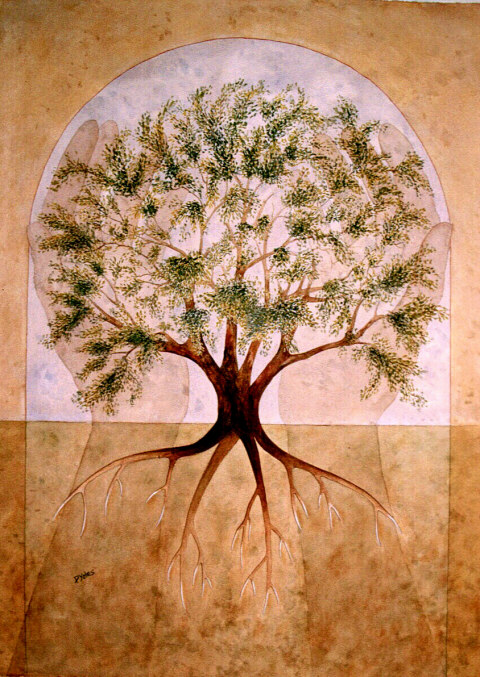
Knocking On Heaven’s Door

One of the hardest chinuch matters to deal with is what to do when faced with a student who is in a decline, whose presence in the yeshiva can be harmful to the other bochurim. Sometimes, the only option a rosh yeshiva may feel he has is to ask the student to leave.

When Rav Boruch Ber Lebovitz, zt”l, needed to send a student out of the yeshiva, he literally wept, expressing his love for his wayward student. When a student who had taken a negative path recounted how Rav Boruch Ber had told him he had to leave the yeshiva, he was overcome with emotion. “It was obvious that he didn’t want me to leave, that he would have done anything to allow me to stay. One felt as though he was compelled from on high to expel me, even though this was the furthest thing from his desire. Believe me he was more upset about the matter than I was at the time.”

The Beis Yisrael of Gur, zt”l, was known to be very sharp—and to be a leader of similarly sharp chassidim—yet he could also be extremely gentle. When one of his chassidim had a fall, some members of the community wished to banish him. But the rebbe would never allow them to do so as long as the young man continued to pray with them at the shteibel.

He would explain, “In Temurah 11 we find that if a person declares the foot of an animal an olah, the holiness spreads out to the entire animal. This hints to the fact that even if a person only sanctifies his foot by going to a kosher beis midrash, in the end he will change directions and ascend again in teshuvah. The holiness in his feet will spread out to his entire self.”

He would often quote an inspiring vort of Rav Zusia of Anapoli, zt”l, “The verse states… ‘They are a topsy-turvy generation.’ Rav Zusia explained that we never know where a Jew will end up. He is constantly in an upheaval; one day he may be very far, yet the next he can do a complete about-face and become a truly good Jew. Who can delve into the deepest places of the Jewish soul, which is a portion of Godliness from above?”

Daf Yomi Digest
Stories Off the Daf
“About Face”
Temurah 11

My past two meditations have been discussing the general and personal implications of a video I recently saw, recording the lament of Rev. LeeAnne Watkins, Rector at St. Marys Episcopal Church St. Paul, Minnesota, and the decision made by the church’s ministry to stop all of their adult educational programs. When reading the above-quoted Daf this morning (it’s Sunday as I’m writing this), I couldn’t help but think that this is what Rev. Watkins and the other shepherds at St Marys have done…to most of the people attending their church. No, they didn’t literally kick these folks out, but they did give up on them, and on themselves as ministers. As I mentioned in my previous blog, I can certainly understand the temptation to give up, which in my case, is giving up on me, but the consequences are enormous. Consider what the Master had to say on this topic:

“If your brother sins against you, go and tell him his fault, between you and him alone. If he listens to you, you have gained your brother. But if he does not listen, take one or two others along with you, that every charge may be established by the evidence of two or three witnesses. If he refuses to listen to them, tell it to the church. And if he refuses to listen even to the church, let him be to you as a Gentile and a tax collector. Truly, I say to you, whatever you bind on earth shall be bound in heaven, and whatever you loose on earth shall be loosed in heaven. Again I say to you, if two of you agree on earth about anything they ask, it will be done for them by my Father in heaven. For where two or three are gathered in my name, there am I among them.” –Matthew 18:15-20 (ESV)

The first part of this scripture details the specific process by which a sinner among the congregation is confronted and addressed at each step of his or her refusal to acknowledge their sin, first to the offended party, then to a small group, and finally in front of the entire congregation. If the person still refuses to repent (which also closely mirrors the quote from the Daf I posted), then the sinful person is told to leave. I can only imagine there would be quite a bit of angst in this final part, but there’s more to it. In the last few verses of the quote from Matthew 18, there appears to be more than natural consequences to such an act of rejection. Whatever the congregation does, as an authority and representative of the Master, is also permitted by the Heavenly authority as well. This tells me that we should be extremely careful who we discard, since we are evicting them, not just from our local church or faith community, but perhaps out of the Kingdom of Heaven as well.

When you are assembled in the name of the Lord Jesus and my spirit is present, with the power of our Lord Jesus, you are to deliver this man to Satan for the destruction of the flesh, so that his spirit may be saved in the day of the Lord. –1 Corinthians 5:4-5 (ESV)

That sounds very serious…and very final. But Paul also said this:

By rejecting this, some have made shipwreck of their faith, among whom are Hymenaeus and Alexander, whom I have handed over to Satan that they may learn not to blaspheme. –1 Timothy 1:19-20 (ESV)

That sounds a tad more temporary. To me, it sounds like Hymenaeus and Alexander were handed over to the adversary until they learned not to blaspheme. Does that mean they’d be able to re-enter the congregation and the Kingdom if they repented? I hope so. No one should be condemned forever unless they choose to be irredeemable. Some people do make that permanent choice, but not everyone. Let’s review part of the commentary from the Daf again:

Rav Zusia explained that we never know where a Jew will end up. He is constantly in an upheaval; one day he may be very far, yet the next he can do a complete about-face and become a truly good Jew. Who can delve into the deepest places of the Jewish soul, which is a portion of Godliness from above?”

Couldn’t that also be applied to an errant disciple of the Master? Didn’t the Master himself teach that return is always possible with repentance?

“But when he came to himself, he said, ‘How many of my father’s hired servants have more than enough bread, but I perish here with hunger! I will arise and go to my father, and I will say to him, “Father, I have sinned against heaven and before you. I am no longer worthy to be called your son. Treat me as one of your hired servants.”’ And he arose and came to his father. But while he was still a long way off, his father saw him and felt compassion, and ran and embraced him and kissed him. And the son said to him, ‘Father, I have sinned against heaven and before you. I am no longer worthy to be called your son.’ But the father said to his servants, ‘Bring quickly the best robe, and put it on him, and put a ring on his hand, and shoes on his feet. And bring the fattened calf and kill it, and let us eat and celebrate. For this my son was dead, and is alive again; he was lost, and is found.’ And they began to celebrate. –Luke 15:17-24 (ESV)

I’ve heard it said that the church is the only army that shoots its own wounded. It has learned the first part of what to do with an unproductive tree that is not fruitful, but it sometimes forgets that Jesus also taught that the prodigal son should be allowed to return. I’m not condemning Rev. Watkins and, as I said, I can very much understand what she’s saying and even agree with her on various levels, but I also hope that St Marys will be open to shepherding their flock at whatever point the sheep decide to return to the fold. This gets a little confusing when we remember that Jesus also taught that a good shepherd would leave ninety-nine sheep in the flock to retrieve even one lost sheep (Luke 15:4). Maybe giving up on all of the adult ed programs at St Mary’s is an effort to “go after” the lost sheep. Or maybe it’s like the old joke that asks, “Why did the farmer hit the mule in the head with a stick?” The answer is, “to get its attention.”

I’m not just talking about the church giving up on its sheep but on us giving up on ourselves. It isn’t just the church’s fault if their programs and their activities aren’t attracting people, it’s our fault for not participating in the community of faith. Each of us, as individuals, have to decide the direction of our walk of faith. If we give up on that walk or tarry too slowly along the path, why should we be surprised when we find that the community has decided to leave us behind? Indeed, why should we be surprised and even astonished, when we discover that God has left us behind, and given us into the company of a far less savory fellow?

But we can still come back, both to the community and to God.

The words and the stories of Torah are but its clothing; the guidance within them is its body.

And, as with a body, within that guidance breathes a soul that gives life to whoever follows it.

And within that soul breathes a deeper, transcendental soul, the soul of the soul: G-d Himself within His Torah.

Grasp the clothes alone and you have an empty shell. Grasp straight for the soul—or even the body—and you will come up with nothing. They are not graspable; they are G-dly wisdom and you are a created being.

Instead, examine those words and those stories, turn them again and again. As fine clothes and jewelry can bring out the beauty of the one who wears them, so these words and stories can lead you to the G-dliness that dwells within the Torah.

-Rabbi Tzvi Freeman
“Grab the Clothing”
Based on letters and talks of the Rebbe
Rabbi M. M. Schneerson
Chabad.org

I’m encouraged when I can see that the Bible I hold in my hands is not a mere book, but an interface imbued with the Holiness and Presence of God. Although God, as the Rabbi teaches, is not to be accessed directly in any sense, by reading and studying and responding to the Word, and the Word made flesh, even in our darkest moments, we are allowed to return in repentance, just by touching the hem of His garment, or perhaps in the Master’s case, just by touching the merest threads of his tzitzit.

But then, a woman with a flow of blood for twelve years approached from behind him and touched the corner of his garment, for she said in her heart, “If only I touch his garment, I will be saved (from her ailment).” Yeshua turned and saw her and said, “Be strong, my daughter. Your faith has saved you.” The woman was saved from that time on. –Matthew 9:20-22 (DHE Gospels)

We can choose to go back, no matter how long we’ve been gone and we will be accepted by God in the Kingdom, as the angels sing His praises. May the church that has sent away those who have failed, also open their doors and their hearts to everyone who has tried and failed, and to those who sincerely seek to return home. We’re all knocking on heaven’s door.

Falling and Rising

Rabbi Noah Weinberg was visiting the United States of America. He spent one Shabbat in a small New Jersey community. The people were friendly, and because of the small size of the congregation for Rabbi mingled freely with all the congregants. On Shabbat afternoon, when they sat to eat Seudah Shelisheet, the third Shabbat meal, a young man who was sitting next to the Rabbi began a conversation, which expressed his frustration with his ability to learn Torah. The young man described the many hours in the many techniques he had tried in order to grasp the difficult concepts of the Talmud study.

“How come I just can’t get it?” he asked. “No matter what I do, it seems my conclusions are wrong when I get a chance to review with my Rabbi. I am about to give up,” he said he reported.

-Rabbi Raymond Beyda
“Try Try Again”
Commentary on Parashas Terumah
Torah.org

On last Friday’s extra meditation, I posted a video of Rev. LeeAnne Watkins, Rector at St. Marys, St. Paul, a faith community located in the Merriam Park neighborhood of St. Paul, Minnesota. As you may recall, she was lamenting that after “years of experience and lots of good will, traditional Faith Formation programming is floundering in communities across the country,” including her own. In response, the ministerial staff at St Mary’s had stopped offering all adult education classes. They cancelled everything. They gave up. Rev. Watkins gave up.

I just got an email notice from WordPress.com notifying me that the domain name for this blog will expire in 90 days. I can either choose to renew it for another year, or let it lapse, sending my “morning meditations” into obscure oblivion. Believe me, there are times when I’m tempted to give up, too. The contentiousness and extreme lack of unity within the community of faith in Jesus Christ is just stunning at times. It’s not only the lack of unity, but the hostility expressed in our various online exchanges that makes me wonder if there even is a community of faith in the Messiah anymore. Everyone is so concerned with protecting their own turf and their own theologies, usually at the expense of everyone else who calls Jesus “Master” and “Lord.”

An extreme, though understandable, example is found in Lawrence H. Schiffman’s review of Rabbi Shmuley Boteach’s controversial book, Kosher Jesus as posted at JewishJournal.com. Even the concept of attempting to establish peace between Judaism and Christianity is depicted in widely different ways by these two Jewish gentlemen:

Most difficult to accept is Boteach’s claim that Jews should re-accept Jesus as one of their own teachers, so that Jews and Christians will share this common teacher and unite in our service of God. This notion is probably the cause of the great controversy that already surrounds this book. In making this proposal the author ignores two major issues: 1) The symbolism of Jesus in Western culture where Jews were taunted, persecuted and killed in Jesus’ name. It is simply insensitive to expect, as Boteach does, that this experience should be forgotten so quickly. 2) The need for Judaism to draw clear lines between itself and Christianity to avoid losing adherents to the dominant faith. The Jewishness of Jesus is regularly used in evangelizing Jews by Christian proselytizers to ease the way from Judaism to Christianity. So there is no sense to the proposal to reclaim Jesus as a teacher and hero. He is best left to his Christian adherents, even if he was once a fellow Jew who lived by the Jewish tradition.

Although Rabbi Boteach advocates Jews attempting to reintegrate the historical and Jewish Jesus back into Judaism in order to foster Jewish/Christian peace, Professor Schiffman believes that such peace can only be achieved and maintained by abandoning any hope that Jesus could be considered Jewish, relegating him to the exclusive realm of “Gentile god”. While I can certainly understand the need to separate the Christian Jesus from modern Judaism, given the traditional enmity between the two religions, it is still discouraging that Judaism is unable or unwilling to at least consider the teachings of the Jewish teacher from Natzeret, even apart from Christian rhetoric.

Of course, there are plenty of disagreements within Christianity and particularly between the church and the Messianic Jews who have accepted the Nazarene as Master and Messiah, so I don’t have to go looking too far for discouragement. Going back to Rabbi Beyda’s commentary, at the level of the individual, disappointment doesn’t have to be caused by interfaith conflicts. Just facing personal inadequacies can be enough to make you, or rather, to make me want to give up.

But what about our metaphorical Talmud student. Is his case truly hopeless. I found an interesting answer from a very non-religious source:

In this new paper, Moser et al. extends this research by looking at how beliefs about learning shape these mostly involuntary error-related signals in the brain, both of which appear in less than half a second. More specifically, the scientists applied a dichotomy first proposed by Carol Dweck, a psychologist at Stanford. In her influential research, Dweck distinguishes between people with a fixed mindset — they tend to agree with statements such as “You have a certain amount of intelligence and cannot do much to change it” — and those with a growth mindset, who believe that we can get better at almost anything, provided we invest the necessary time and energy. While people with a fixed mindset see mistakes as a dismal failure — a sign that we aren’t talented enough for the task in question — those with a growth mindset see mistakes as an essential precursor of knowledge, the engine of education.

-Jonah Lehrer
“Whe Do Some People Learn Faster?”
October 4, 2011
Wired.com

I encourage you to read the entire article but in brief, research seems to support the idea that what you tell yourself about learning affects your ability to learn more and to learn faster. If you believe learning is only an effect of your raw, native intelligence, then you internally set limits that you cannot and will not exceed. If, on the other hand, you believe that time and effort can create change and expand your ability to learn beyond your current thresholds, then you indeed will learn more and exceed your limitations.

Interestingly enough, that’s not much different from the advice Rabbi Weinberg gave to the troubled Talmud student.

“That is the worst solution, you could choose” the rabbi responded. “A person has to understand that the learning of Torah is not something that a human being can do without the help of Hashem. Hashem expects you to put in all the effort you can, and then he will produce the results.”

The young man listened and was encouraged. The respect he had for the sage gave him the strength to continue with his suggestion of try try again. Not long after he made a breakthrough. He reached a level where he was able to prepare a portion of the Talmud on his own. Today that young man is a practicing Rabbi in his community teaching others how to learn and how to be patient, if at first they do not succeed.

I’ve presented a lot of content to express what has already been said in a single sentence attributed to 19th century educator Thomas H. Palmer: If at first you don’t succeed, try, try again. W.C. Fields said something similar, but it’s hardly as useful. Then there’s what the brother of the Master said.

Count it all joy, my brothers, when you meet trials of various kinds, for you know that the testing of your faith produces steadfastness. And let steadfastness have its full effect, that you may be perfect and complete, lacking in nothing. –James 1:2-4 (ESV)

Am I trying to give you some sort of pep talk? Not at all. If anything, I’m trying to encourage myself. Given the sad shape the world is in lately, the spiritual struggles of one human being who otherwise is doing fairly well don’t really stack up all that much. To extend that thought back into the realm of famous Hollywood quotes, here’s what the “great sage” Rick (played by Humphrey Bogart) had to say:

I’m no good at being noble, but it doesn’t take much to see that the problems of three little people don’t amount to a hill of beans in this crazy world. Someday you’ll understand that.

Casablanca (1942)

If I (or anyone else) feels alone in the world of faith, it’s not because we are separated from God, it’s because we are separated from each other as human beings and disciples of the Master. That separation is largely by choice. We choose to believe this or that about what the Bible says, which makes it difficult for us to associate with people who interpret the Bible differently. We choose to organize a worship service on a particular day, using specific prayers, and songs, and sermons, and others choose to do it differently on a different day. Then we tell ourselves that one type of service “feels at home” while another type “feels uncomfortable,” but those are choices, too.

There’s nothing wrong about making those choices, but having made them, we live with the consequences. I’ve made choices and am living with the consequences now. I can choose to do nothing or choose a different direction and then there will be more and different consequences. Rev. Watkins and the folks at St. Mary’s made a choice and now they, and the people who attend their church, will live with the consequences. If the Talmud student had given up, there would have been consequences too, but he chose to go on and the consequence for perseverance was to become a Rabbi.

We like to think that we make one choice and we never have to revisit it again, but I find that I am looking at the choices I’ve made every day and continually confronting the consequences, adjusting my studies, my searches, my prayers, and my actions all the time as a result. A relationship with God is incredibly dynamic. If I were to dare to become comfortable with my choices, I have no doubt He would challenge me into discomfort, and then I would have to learn something by generating some effort. What we learn isn’t always what we want to learn but it all adds up to something, though I’m not always sure what. In the end, the only thing I know how to do is to move forward, whether I ultimately choose to continue this blog after the next 90 days or not. I can’t see around the next bend on this “trail of faith” which I suppose makes sense. Faith is pursuing the unseen, not the knowable. God is unseen but sometimes, so are people. Even though I know that my goal is holiness and it is God, what the finish line looks like, and whether I’ll accompany anyone else on the journey, is a mystery.

I only know that I can’t give up what I’m doing, whether it is chasing the scorching Sun like Icarus and plummeting to earth in flames, or like the Phoenix, rising painfully from my own burnt and smoldering ashes. I only know that I have to keep trying, regardless of the consequences. Because God will let me do no less.


Why Am I Alone?

embedded by Embedded Video

I can’t get this woman out of my head. I’ve seen this video embedded at a lot of different online venues yesterday, but I was busy and didn’t take the time to actually view it until this morning. As it turns out, my “lack of time” is part of what makes this Episcopal Priest’s plea so poignant.

To give credit where it’s due, I clicked a link at Derek Leman’s blog, which took me to the actual embedded video on Scot McKnight’s blog. If you frequent either of those places, you’ve probably already seen the video. If not, and if you haven’t already watched it here or someplace else on the web, please do so before continuing to read my blog post. The video is less than ten minutes long and it is so worth it.

Reading the various comments on Derek’s and McKnight’s blogs, I was taken aback at some of the criticism expressed by a number of the commentators. Granted, the Episcopal church isn’t my cup of tea either, but there’s a lot more going on here than just how we view one version of Christianity versus another. Also, as was pointed out repeatedly, most of the approaches this Priest felt had failed in bringing in and retaining people to a religious and spiritual experience have to do with “programs”. It’s as if, because her methods and her techniques weren’t successful, it meant that people didn’t care about the cause of Christ.

I mentioned on McKnight’s blog that…

I have sort of the opposite problem. I’m sure she and I would disagree about a good many things, but I would *love* to sit down with her (or someone) and talk about Jesus. I just can’t find a person or a place (face-to-face as opposed to online) where I’ll fit in. It’s not a matter of the details, but the honesty and passion this Priest has for what she’s doing and who she is as a person of faith is exactly what I’m looking for.

To me, her specific religious “bent” or her reliance on programs and methods are all secondary to what she’s really saying and particularly, what she’s really feeling. I’ve felt that way too, sort of. No, I’m not an ordained minister of any kind and I haven’t been “called to lead” (although I did a bit of teaching for several years at a small congregation), but I do feel frustrated and isolated, as if no one understands the drive I have to do what I’m doing. She has a drive and a need as well, and she keeps hitting a brick wall. You can only take a good run at a brick wall and smash into it so many times before the pain and lack of forward progress makes you do what she said: “So we cancelled it all…”

In a way, I “cancelled it all” too, but my reasons were very different. I “cancelled” my former way of leading a religious life, not because I wasn’t happy and not because I wasn’t making a kind of progress, but because of where my progress lead me. It’s really a lot more complicated than that, and to find out more, read Why I Don’t Go To Church. I left, not because I hit a wall exactly, but because I realized, in order to avoid hitting a wall, I had to change course.

And so I did.

And then I hit a wall anyway. I recognized the possibility that I might hit that wall, but I was banking on managing to avoid it. I didn’t. So I’m sitting at the base of the wall, as I imagine this Episcopal Priest is doing, taking stock of my options and looking for a way around, over, or under the wall. I’ll need to change my course again, but that’s what life is all about: change. Change is always painful, even when it’s beneficial.

I’m not sure what this Priest’s answer is. I’m not particularly sure of what my answer is. I do know that I’m not inclined to criticize her for her religion or her approach to her need to teach, even if I disagree with them. I do know she’s someone I would really love to talk to about Jesus, not because we would agree with each other, but because, in spite of our extremely different backgrounds, we are at the same place on the trail. We have the same experience. We’re asking the same questions. We’re looking for the same answers. And that tells me something I hadn’t let myself realize before.

It tells me that, in the mess of all of our different religious traditions, and all of the subsets of our religion, and all of the splinters and fragments and offshoots we inhabit because we are so unalike in how we conceptualize God and the Bible and faith, we are all the same. I spend a lot of time focused on how different I am from everybody else around me and what an oddball I must look like to all the other Christians, but today I found someone in a video who helped me realize that we are all the same, too. We travel different paths and occupy divergent trails, but all of those trails intersect between the question and the answer of “who is God” and “who am I”. When we take off our pretenses and our masks and our religious self-delusions and are brutally honest with ourselves and with everyone else, we are all alike when we ask, “why isn’t this working for me?” “Why isn’t this working for everyone else around me?” “What’s wrong and how can I fix it?” “Can I even fix it at all?”

We are all alike when, even in the presence of God, we cry out, “Why do I feel so alone?” That’s why I want to meet her. To tell her she’s not alone. And I want to meet her so I won’t feel alone, too.

But there is hope, even in emptiness, as Rabbi Tzvi Freeman cites from the teachings of the Rebbe:

The beginning of all paths and the starting point of every climb is to open yourself to receive from Above.

How do you receive from Above?
By being empty.
For a vessel that is full cannot receive anything.

A person that is full of self-concern, of “what will become of me?” of “where life is taking me?”—such a person leaves no room for life to enter.

But a simple, open spirit is filled with joy from Above.

Addendum, Friday afternoon: I realized I had no idea who the Priest in the video is and decided to try and find the original source or at least something a little closer to that source. I discovered that the Priest is Rev. LeeAnne Watkins of St. Mary’s Episcopal Church in St. Paul, Minnesota. I traced the video as far back as February 16, 2012 as posted at the Episcopal Story Project. If I find out any more, I’ll update my information here.

Terumah: Waiting for God On Earth

When dedicating the Beis HaMikdash, King Shlomo exclaimed in wonderment: “Will G-d indeed dwell on this earth? The heavens and the celestial heights cannot contain You, how much less this house!” For the Beis HaMikdash was not merely a centralized location for man’s worship of G-d, it was a place where G-d’s Presence was and is manifest. Although “the entire earth is full of His glory,” G-d’s Presence is not tangibly felt. He permeates all existence, but in a hidden way. The Beis HaMikdash, by contrast, was “the place where He chose to cause His name to dwell.” There was no concealment; His Presence was openly manifest.

Why was man’s activity necessary? Because G-d’s intent is that the revelation of His Presence be internalized within the world, becoming part of the fabric of its existence. Were the revelation to come only from above, it would merely nullify worldliness. To cite a parallel: when G-d revealed Himself on Mount Sinai, the world ground to a standstill. “No bird chirped… nor did an ox bellow, nor the sea roar.” Although G-dliness was revealed within the world, material existence did not play a contributory role.

When, by contrast, the dwelling for G-d is built by man himself part of the material world the nature of the materials used is elevated. This enables G-d’s Presence to be revealed within these entities while they continue to exist within their own context.

-Rabbi Eli Touger
“A Dwelling Among Mortals”
from the In the Garden of the Torah series
Adapted from
Likkutei Sichos, Vol. III, p. 902;
Vol. XVI, p. 286ff; Vol. XXI, p. 146ff
Chabad.org

The building of a Mishkan foreshadows the transformation of the entire world into a dwelling place for G-d. This is accomplished through Torah, Divine service, and deeds of kindness – the “three pillars” upon which the world stands. (Avos 1:2.)
-Based on Likkutei Sichos Vol. XVI, pp. 292-297.

In this week’s Torah portion, we see the Children of Israel being commanded to bring contributions that will be used as materials for building the Mishkan (Tabernacle) in the desert. Moses is provided with what me might think of as a “diagram” of the Heavenly Court and told to direct the Children of Israel to build, for all intents and purposes, a “scale model” so that God might dwell among His people. This is a strange enough request when you try to picture the “environment” where God dwells in the Heavens, and then imagine what it would be like to build a physical representation of that metaphysical “place.”

But it gets even stranger.

Thus, it is understood that although the construction of the Mishkan and the bringing of donations had to have happened in accordance with only one of these three schedules, all three opinions are true as they relate to the spiritual Mishkan within the heart of every Jew.
-Based on Likkutei Sichos Vol. VI, pp. 153-156.

The use of the term ‘them’ rather than ‘it’ has been interpreted as a message that the purpose of the Mishkan sanctuary was to facilitate the dwelling of the Divine Presence within the heart of every Jew. The role of the Mishkan in the wilderness and during the first four centuries of a Jewish presence in Eretz Yisrael was perpetuated by the first and second Beit Hamikdash Temples which spanned a period of nine centuries. All of this is today but a memory to which a visit to the Kotel (Western Wall) gives a special dimension. This does not mean, however, that a Jew cannot build a mini-sanctuary in his heart even today. The Divine Presence is waiting to dwell within the hearts of all Jews if only they will let it enter!

-Rabbi Mendel Weinbach
‘The “Holy Sites”‘
For the week ending 8 February 2003 / 6 Adar I 5763
Ohr Somayach

If it seems unusual or even incomprehensible to be able to build a “scale model” of the Heavenly Court and then expect God to take up residence, how much more incredible is it to expect God to take up residence within the “spiritual Mishkan within the heart of every Jew?”

Oh, have you heard of this before?

When the day of Pentecost arrived, they were all together in one place. And suddenly there came from heaven a sound like a mighty rushing wind, and it filled the entire house where they were sitting. And divided tongues as of fire appeared to them and rested on each one of them. And they were all filled with the Holy Spirit and began to speak in other tongues as the Spirit gave them utterance. –Acts 2:1-4 (ESV)

Perhaps this isn’t so strange, since the Jewish disciples of the Master had a precedent for the Pentecost event act at Sinai, but what came next was completely unexpected.

While Peter was still saying these things, the Holy Spirit fell on all who heard the word. And the believers from among the circumcised who had come with Peter were amazed, because the gift of the Holy Spirit was poured out even on the Gentiles. For they were hearing them speaking in tongues and extolling God. Then Peter declared, “Can anyone withhold water for baptizing these people, who have received the Holy Spirit just as we have?” And he commanded them to be baptized in the name of Jesus Christ. Then they asked him to remain for some days. –Acts 10:44-48 (ESV)

God desires to dwell among His people, which we can understand, because God once did dwell among His people in Eden before the fall. God once again, though in a somewhat different sense, arranged to dwell among His people Israel, and that dwelling was to be a light to the nations. As part of the process of God being among man, each Jew was to consider that the Divine Presence was also dwelling within each of them. This was repeated at the Pentecost event and while all of that is magnificent, the truly amazing thing in the eyes of God’s chosen ones, was (and perhaps still is for some Jewish people) that the Creator extended His splendid and compassionate grace, even to the Gentiles.

But is this the whole story and, now that Christianity boasts of the “indwelling of the Holy Spirit,” is this work finally complete?

On the ninth day of the month of Av (“Tish’ah B’Av”) we fast and mourn the destruction of the Holy Temple in Jerusalem. Both the First Temple (833-423 bce) and the Second Temple (349 bce-69 ce) were destroyed on this date. The Shabbat preceding the fast day is called the “Shabbat of Vision,” for on this Shabbat we read a chapter from the Prophets (Isaiah 1:1-27) that begins, “The vision of Isaiah…”

On the “Shabbat of Vision,” says Rabbi Levi Yitzchak, each and every one of us is granted a vision of the third and final Temple — a vision that, to paraphrase the Talmud, “though we do not see ourselves, our souls see.” This vision evokes a profound response in us, even if we are not consciously aware of the cause of our sudden inspiration.

Adapted by Yanki Tauber
“Shabbat of Vision”
Based on the teachings of the Lubavitcher Rebbe
Chabad.org

I previously mentioned that Christianity abandoned a major portion of it’s history and heritage by tossing the Jewish foundation of our faith aside, so I can understand that the church would view any Jewish “vision” of the Third Temple with skepticism if not utter disbelief. Perhaps they are right, but could there be any way to reconcile all of the imagery we have of the bodies of believers being as Temples for the Spirit of God and the coming of a Third, physical Temple where God will once again dwell among His people Israel?

Maybe.

Especially in western thought, we tend to see conditions as “either or”. Either the Spirit dwells in the Temple, or it dwells within the heart of the believer. For some reason, it can’t be both, although I’m not sure why. After all, in Judaism, the Divine Presence dwelt within the Mishkan, but it also dwelt within each Jewish heart in some mysterious, spiritual, and mystic way. God, in a metaphysical manner, dwelt within the Heavenly court, but He also made it possible for a physical replica of His “abode” to be created among His people Israel so He could also dwell among men, even though no structure could possibly contain Him.

God’s desire to be among us is fraught with problems when we actually make ourselves wonder how it is possible, and yet we see reliably, that God has indeed done so, in Eden, in the Mishkah, and in Solomon’s Temple. Jews are said to be able to have a vision, on a mystic level, of the Third Temple on the Shabbat just before the Ninth of Av. What are the Jewish people supposed to see and understand? Perhaps this.

The First Temple was built on Divine command and assistance. The Second Temple was constructed at the orders of a human being. The level of revelation associated with it, and the accompanying miracles, were far less intense. Yet, precisely because it came to be built through human efforts and on human initiative, it had a greater impact on this world. It was larger than the first Temple, taking up more of this world in terms of space, and it lasted longer, occupying this world for a greater length of time.

The Third Temple, like the Shabbat on which we are shown its image, combines the strengths of both the first and second Temples. It combines the Divine revelation, an inspiration from Above, along with human effort, an inspiration from below, to create a permanent home for G-dliness. Thus is the lesson and inspiration of this Shabbat. We are given a Divinely revealed vision which we must combine with human efforts to permanently alter the world we live in, and, even more challenging, ourselves.

-Chana Kroll
“Make It Real”
Shabbat Chazon
chabad.org

Repeatedly, we’ve seen how God must contribute to the construction of His dwelling on Earth, but so must man. While God does not need human beings to offer their efforts in the service of Divine tasks, we see in the Bible how people are continually involved in “building” with God and repairing the world. While God does not “need” our help, something about the nature of God dwelling among us requires that we be actively engaged. In this, we must take “ownership” of our desire to return the holy sparks within us to Him, not by our going up to God, but in allowing God to come down to us. Somehow, God dwelling within us and God dwelling among us in a Temple are all interconnected. We must change the world for Him but we must also change ourselves. Paradoxically, we can do neither without God’s help, but then, those tasks cannot occur without us, either. I can’t explain how it all works. I only know that God is showing all of us, not just the Jewish people, a picture of His future with His people; His human beings.

Chassidic master Rabbi Levi Yitzchak of Berdichev uses the following metaphor to explain the necessity of the Three Temples and why we must wait such a long time for Him to be truly among us again.

A father once prepared a beautiful suit of clothes for his son. But the child neglected his father’s gift and soon the suit was in tatters. The father gave the child a second suit of clothes; this one, too, was ruined by the child’s carelessness. So the father made a third suit. This time, however, he withholds it from his son. Every once in a while, on special and opportune times, he shows the suit to the child, explaining that when the child learns to appreciate and properly care for the gift, it will be given to him. This induces the child to improve his behavior, until it gradually becomes second nature to him — at which time he will be worthy of his father’s gift.

God has shown us His gift in the Messiah, but He also withholds the Messiah’s coming until we are ready. But God is gracious enough to show us what will happen once we reach this state of being worthy. Through the vision of a prophet, we can see the return of the Messiah, our later return to Eden, and finally, the placing of the Throne of God among us at a future time when the requirement for Ezekiel’s Temple is no longer necessary.

Then the angel showed me the river of the water of life, bright as crystal, flowing from the throne of God and of the Lamb through the middle of the street of the city; also, on either side of the river, the tree of life with its twelve kinds of fruit, yielding its fruit each month. The leaves of the tree were for the healing of the nations. No longer will there be anything accursed, but the throne of God and of the Lamb will be in it, and his servants will worship him. They will see his face, and his name will be on their foreheads. And night will be no more. They will need no light of lamp or sun, for the Lord God will be their light, and they will reign forever and ever. –Revelation 22:1-5 (ESV)

But before all that happens, we must come to terms with our struggle between life in this world, in the spirit and in the body, as Rabbi Tzvi Freeman relates:

The human mind despises the body that houses it, but the soul has only love.

The mind would soar to the heavens, but for a body that chains it to the earth. The mind would be consumed in divine oneness, but for the body’s delusion of otherness, as though it had made itself.

But the soul sees only G-d.

In that very delusion of otherness,
in that madness of the human ego,
even there, the soul sees only G‑d.
For she says, “This, too, is truth.
This is a distorted reflection of the Essence of all things,
of that which truly has neither beginning nor cause.”

And so she embraces the bonds of the body,
works with the body, transforms the body.
Until the body, too, sees only G-d.

—Basi LeGani 5712

Good Shabbos.

Shopping for a Christian Church

Likewise, Gentile Christians are in brotherhood with Jewish Christians, reckoned as spiritually circumcised in heart (Rom 2:26) and thus joined to Abraham through faith (Gal 3:29). Here then is racial diversity within spiritual unity, in the same way as a Christian man and wife are diverse in their spiritual unity (Gal 3:28). This same diversity in unity is strongly intimated in Rom 15:8-9 since “Christ has become a servant of the circumcised on behalf of the truth of God, to confirm the promises to the fathers, and so that Gentiles may glorify God for His mercy” because of their inclusion as Gentiles with the fathers.

-Pastor Barry E. Horner
“Chapter 10: Israel and a Romans 11 Synthesis” (pg 278)
Future Israel: Why Christian Anti-Judaism Must Be Challenged

Hoch also quoted A.T. Hanson on this issue. While explaining that the prevailing interpretation of Phil 3:3 identifies the “we” as all true Christians, Hanson nevertheless declared that this understanding…

…seems quite foreign to Paul’s thought and means actually reading into Philippians ideas which seem to have originated at the time of the Reformation…The Philippians, being Gentiles, would have no reason to boast in the flesh anyway. Paul goes on to describe what he means by this phrase in the ensuing verses: it is plain that he means boasting of the national and spiritual privileges peculiar to the Jews. This the Philippians could not do…It is simpler to take “we” here as “we believing Jews”, or even “we, Paul and Timothy”, in whose name the letter is written. We know that Timothy was circumcised. So there is no good reason for maintaining that the use of “the circumcision” here suggests that Paul could apply the name Israel to Gentiles.

-A.T. Hanson, The Pioneer Ministry (London: SCM, 1961), 35
as quoted in Horner, pg 277

There’s really a lot going on in this chapter of Horner’s book, but space won’t allow me to insert all of the relevant quotes. If I tried, I might as well just copy and paste the chapter in verbatim. Actually, I’m not just writing another anti-supersessionism rant. I have a different, but related purpose for this “extra meditation” today.

I don’t agree with everything each of these gentlemen says in their respective books, but they are still refreshing to me. I tend to read mostly Jewish commentaries, but I’ve been reading Horner as part of my research into superessionism relative to my ongoing series on that topic in FFOZ’s Messiah Journal. What’s really exciting is that I’m reading the works of Christian authors and Pastors who actually agree that the church has not replaced the Jews in the covenant promises. I know they’re out there somewhere. Now if only I could find them.

Let me explain.

Not long ago, I discovered that “plan A” wasn’t going to work. Plan A was my separating from active participation in Messianic Jewish worship (One Law, anyway) for the purpose (well, it’s one of the reasons) of joining my wife in classes and services at our local Reform and Chabad synagogues. It took awhile, but I eventually discovered that it wasn’t just my former association with Messianic Judaism that made my wife hesitant to include me in that part of her life. It is my active and continuing faith as a Christian.

That’s not something I’m going to walk away from, even for the slim chance that my wife would feel more comfortable including me in her Jewish communities (and I don’t think it would do any good anyway). So plan A is shot to heck. Now I can either exist in isolation as a person of faith, or I can attempt to find some sort of community in which to participate as a Christian. But that presents a problem.

I previously wrote at length regarding all the roadblocks that stand in the way of my attending a church. On the other hand, there must be some churches that aren’t dripping with supersessionist rhetoric, aren’t there? I decided to look for one by querying a Christian Discussion Group several days ago. As the saying goes, except for one person trying to convince me that the church has replaced the Jews, the silence has been deafening (a second, more helpful person, responded while I was composing this blog).

But then, you have these Christian authors that make such encouraging statements. I mean, do these guys worship in heavily anti-Jewish churches and just keep their mouths shut, or are there actual havens of sanity and brotherhood under the sign of the cross? You couldn’t prove the latter by me, but since I’m facing a move to “plan B” now, I need to start somewhere.

I haven’t the faintest idea how to “shop” for a church.

I’ve occasionally talked to people who have been around churches for decades and can go into a church and assess its theology and how it operates almost immediately. They tell me what they see and hear that convinces them that the church is this and that, but I haven’t the faintest idea what they’re talking about. I went to a Lutheran church as a kid and then, decades later, I “came to the Lord” (I hate to say it, but “Christianese” still makes me crazy) in a Nazarene church (which ultimately turned out to be a bad experience, with a few bright spots mixed in), but that’s it. I don’t know from larger “organized Christianity”. The church, as in “all churches everywhere,” is a mystery to me. Actually, given my general outlook, the idea of “church shopping” makes me nervous.

But I’m getting a little tired of only being able to talk about what I think, feel, and believe in a virtual environment. It would be nice to occasionally address human beings face to face. However, I don’t want to get into a verbal “knock down-drag out” in a church because I don’t comfortably blend in to the homogenous Christian scenery, relative to Judaism. If I encounter a supersessionist attitude or worse, an anti-Semitic one, I’m liable to take it personally since my wife and kids are Jewish.

Does anyone have any ideas as to how to proceed? I’m not necessarily in a rush, and in fact, I’d like to plot, plan, and scheme, so to speak, about my next move. I have to admit, the thought of walking into a church again is intimidating. I call myself a Christian but socially, (which is a lot of what going to church is about) I’m anything but.

If you aren’t a regular visitor on this blog, you’ll need to get some idea of who I am and where I’m coming from. Since I more or less wear my heart on my sleeve when I write, just read four or five of my blog posts (the most recent, or pick some at random), and you’ll get a pretty good idea about how I see things.

Oh, I live near Boise, Idaho if that helps any.

Thanks.

The Man Without a Face

The source of all illness is the lovesickness of the soul. She yearns to return to her Beloved Above, and so is repulsed by the human form, her prison of pain.

Two things, then, must be repaired, and body and soul will be healed:

The human body must open itself to become a holy temple for the Infinite G-d who desires it for His dwelling. The soul must learn to discover the Infinite G-d from within this human form, the place where He most desires to dwell.

-Maamar Ani Hashem Rof’echa
as referenced by Rabbi Tzvi Freeman
“Love Sickness”
Chabad.org

That’s an interesting statement coming from an Orthodox Jewish Rabbi, since the idea of the human body being a Temple for the Spirit of God is such a Christian concept, going all the way back to Acts 2. And yet, as I mentioned recently, the concept of each Jew being a container for the Divine Presence (which probably isn’t the same as the Holy Spirit, but what do I know) is also very Jewish.

This brings to mind what I’ve heard in some Christian “advertisements” recently: (the tale of “the church meets Madison Avenue” isn’t exactly new, more’s the pity) Christianity: it’s not a religion, it’s a relationship. This implies that only through Christianity can a person have a “personal relationship with our Lord Jesus Christ,” and thereby, God. Do I catch a hint of supersessionism in this assumption? Where in the New Testament does it say that through Jesus, we enter into a personal relationship of any kind, or that such a relationship is unique to the modern disciples of Christ?

But I get it. Christianity is continuing to correct what I have recognized as something of a flaw. It’s trying to build an identity.

I suppose I’m overstating my point. Christianity has a very recognizable identity in the world. If I were to walk up to just about anyone and say, “I’m a Christian,” no matter who they were, they’d immediately come up with some sort of idea as to what being a Christian means. Some of those ideas are pretty dismal, but it’s not like anyone would respond, “What does that mean?”

However, my problem with Christianity is my identity as a Christian. To me, the Christian identity seems incomplete and poorly defined. Maybe one of the reasons I’m somewhat attracted to Judaism is that, by comparison, the life of a religious Jew is very well-defined, depending on the branch of Judaism to which he subscribes. The Torah and Talmudic rulings contain a great deal of identifying information that defines the day-to-day role of a Jew among his people, within society, and in relation to God. For the Christian, who has grace in place of the Torah, the definition is rather anemic by comparison. The “freedom” a Christian has in Christ allows for a great deal of latitude, perhaps too much in some cases. Also, in order for that freedom to exist, Christianity must remove the definition the Torah provides for the Jewish people. For most Christians, in order for Christ to live, Judaism must die, and historically this has meant the Jewish people must die with it, either physically or through conversion and assimilation.

But I don’t believe in that definition of Christianity. It would make absolutely no sense for Jesus, Peter, James, and later, Paul, Titus, and Timothy to promote and support a sect of Judaism that was self-annihilating. By “creating” a religious expression that was expressly anti-Jewish and then exporting it to the non-Jewish nations, the Jewish Apostles would be virtually guaranteeing the complete destruction of their way of life, the Jewish religious devotion to God, and every single lesson that was taught by the Jewish Messiah, their Master.

Why would they do that?

The answer is, they didn’t. They couldn’t have.

So where did he go? Where did the original Jesus disappear to? Why can’t we find him in the churches and in the Christian Bible studies?

I said before that Christianity has a very recognizable and robust identity. I didn’t say it was the same identity that the very first non-Jewish disciples had as they embraced the teachings of the Jewish Sage from Natzaret. If I could sit down with Cornelius (see Acts 10), even for one hour, and talk to him (assuming we had a language in common), what could he tell me about being a Gentile disciple of the Master? What world could he show me that has since been lost to antiquity? What portrait of discipleship could he paint? What tapestry of holiness could he weave?

Jesus once asked in lament, “when the Son of Man comes, will he find faith on earth?” (Luke 18:8 ESV) I ask, when he returns, will he find a faith in God among the church that he even recognizes? Is what we teach in the church even remotely associated with what he taught in either content or intent? And will the Gentile Christian church even recognize a fully Jewish Rabbi and Messiah when he returns looking for some remnant of his people among Israel and even in the nations? I wonder if we’ll just miss each other in the crowd? Jesus will be too Jewish for the church and Christians will be too anti-Judaism to be recognized as disciples of the Jewish Messiah. “And then will I declare to them, ‘I never knew you; depart from me, you workers of lawlessness.” (Matthew 7:23 ESV)

I suppose my big problem is that I need to open myself up to the infinite God and become a living Temple for His Presence. Then I must learn to recognize that Presence within this marred and imperfect man of flesh and blood. It sounds simple, but it is enormously complex. I have to disagree with the Christian “marketing department” and say that Christianity is a religion, but it is one whose face is unrecognizable to me. The face of the church looks imperfect, or even sometimes absent altogether, as I search for the face of my Master on its walls and in its sanctuaries. Thus, as a self-professed Christian, I too am a man without a face, searching in the mirror for something I recognize as human and more than human.

Religion is the interface by which we encounter God. Put in terms that might be a little more “Christian-friendly,” it’s the interface by which we build our relationship with God. It’s the lessons and the conditions and rituals and theologies that create the structure in which we can live out a life of faith. Most people don’t climb a mountain through uncharted territory. Instead, we follow the trails that have been created by those who went before us. In some cases, we create our own trails, but we must be careful that they lead up into the light rather than down into the thousand, thousand pits of darkness that are waiting to accept the unwary and the foolish.

I am following what I believe is the right trail for me, but I am alone. Few, if any, have used this particular path. I suppose I could allow myself the small conceit of believing that I am progressing through the narrow gate. The wide gate is easy and many travel through it, but that’s not the course the Master has recommended. (Matthew 7:13-14)

But then, that could just be a conceit and an excuse as to why I find no companions with me on my journey. It is said that, in all of our roles as disciples, one happens to be as “living sacrifices.” (Romans 12:1) But aren’t sacrifices supposed to be without blemish? I feel anything but unblemished.

The Rav of Tchechnov taught a very practical lesson from a halachic principle brought on today’s daf. “Our sages explain from the verse that only a sacrifice which is unblemished may be offered on the altar.” The rebbe began to weep as he said, “It would appear that we do not fulfill the mitzvah of selfsacrifice while saying shema yisrael each day. Clearly if a person sins he is likened to a blemished sacrifice which is not accepted on high.”

But a moment later the rebbe strengthened himself and joyously exclaimed, “But a temporary blemish does not disqualify a sacrifice. Clearly, when it comes to a Jew, a sin is no more than a temporary blemish since he can do teshuvah. In Kiddushin we find that if a wicked person marries a woman on condition that he is righteous, there is a doubt whether the marriage takes effect. Perhaps he repented for a moment, in which case he was a tzaddik and they are married. We see that one who repents is immediately considered to be a tzaddik.”

The Meor Einayim, zt”l, writes similarly, that one who does not believe that he can become a baal teshuvah by doing teshuvah in an instant hasn’t yet done a true teshuvah!

Daf Yomi Digest
Stories Off the Daf
“A Temporary Blemish”
Temurah 7

I’ve had it pointed out to me before, that it is uncertain at best, just how far a Christian can apply the teachings of the Jewish sages to a life of faith in Christ, but I have to try, even if I fail completely. There’s just too much “overlap” between Jewish and Christian concepts, in spite of what I said earlier, to ignore the possibility that we who are Gentile disciples can learn from a Jewish template. After all, it is from an ancient version of that template that men such as the Roman Cornelius first learned to love the God of Israel. If he could find a place for himself in that world, then why can’t I? Because the church forbids it? Because the synagogue won’t accept it? If the original Messianic faith of those like Cornelius is lost, then so am I. But I can’t give up trying to become, even momentarily, unblemished. For only in that state, may I be allowed to seek to touch, however briefly, the hem of the garment of the lover of my soul. Without that hope, I have nothing and I am nothing. And when I look in the mirror, the man I see has no face and he, and I, am no one.

For my world is hollow, but I must touch the sky.

"When you awake in the morning, learn something to inspire you and mediate upon it, then plunge forward full of light with which to illuminate the darkness." -Rabbi Tzvi Freeman