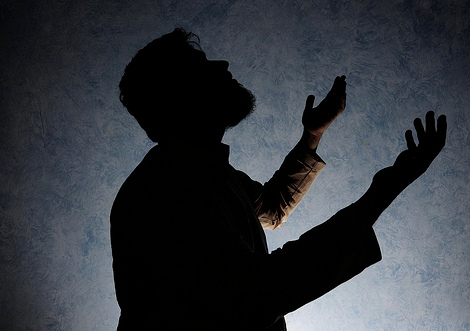
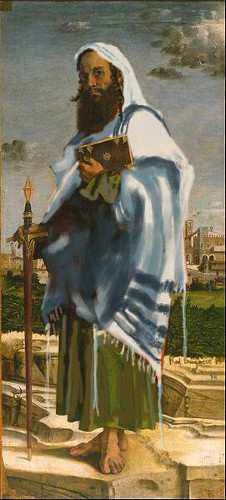
Fortunate is the person who fears God, and has a great desire for His mitzvos.
–Psalms 112:1
We think of fear as a negative emotion, so we try to eliminate it. We therefore lose sight of the fact that fear can also be constructive. Fear motivates us to drive cautiously even when in a great hurry, and fear makes a diabetic adhere to his diet and take his insulin daily.
Religion has often been criticized for advocating the fear of God. This criticism may be justified if we were conditioned to think of Him as an all-powerful Being holding a huge club, ready to beat a sinner to a pulp for doing something wrong. All ethical works discourage the use of this type of fear as motivation. Rather, fear of God should be understood to mean the fear of the harmful consequences that are inherent in violating His instructions. The Psalmist says that wickedness itself destroys the wicked person (see Psalms 34:22).
“Fortunate is the person who fears God,” in the sense that “he has great desire for His mitzvos” (Psalms 112:1). It is only natural for one to desire the very best, and the realization that observing the mitzvos is indeed in one’s best interest should constitute the “fear” that should deter someone from transgressing the Divine will.
Today I shall…
…try to realize that observance of the mitzvos is in my best interest, and that I should fear transgressing the mitzvos in the same way I fear any injurious act.
-Rabbi Abraham J. Twerski
from “Growing Each Day”
Aish.com
 I’ve been thinking about this in terms of my own shortcomings, my own fears, and my own relationship with God and with other people.
In the Church, there’s this implicit idea that God punishes sin, and if you step out of line, you will be struck down by God in some manner. Keep stepping out of line, and you’ll be sent on a one-way trip to Hell without an electric fan.
That’s a really good reason to be afraid of God.
But as Rabbi Twerski describes it, the “fear” of God should take the form of a deep respect for the Creator of the Universe and a corresponding desire to obey Him. In fact, to repeat part of the above-quoted passage:
This criticism may be justified if we were conditioned to think of Him as an all-powerful Being holding a huge club, ready to beat a sinner to a pulp for doing something wrong. All ethical works discourage the use of this type of fear as motivation. (emph. mine)
While in traditional, fundamentalist Christianity, the “fire and brimstone” approach is supposed to be our prime motivator for not sinning and walking the straight and narrow, in Judaism, it is ethically unsustainable to use fear of harm and punishment from God to drive us to proper behavior.
Instead, what we “fear” is the natural consequences of our misbehavior.
Afterward Jesus found him in the temple and said to him, “Behold, you have become well; do not sin anymore, so that nothing worse happens to you.”
–John 5:14 (NASB)
It would seem that Rav Yeshua (Jesus) agrees with this perspective. How about the Apostle Paul?
In the name of our Lord Jesus, when you are assembled, and I with you in spirit, with the power of our Lord Jesus, I have decided to deliver such a one to Satan for the destruction of his flesh, so that his spirit may be saved in the day of the Lord Jesus.
–1 Corinthians 5:4-5

So is Paul advocating for the sinner to literally be dragged to the gates of Hell and handed over to the Adversary to be physically destroyed? Probably not. This is just a guess on my part, but it sort of sounds like Paul is willing to give the sinner enough rope to hang himself with, so to speak.
It comes back to consequences. Drink enough alcohol or do enough drugs, and you’ll destroy your body. View enough “adult material,” and you’ll destroy your marriage. Spend enough money gambling or even just binge buying a bunch of stuff you don’t need and can’t afford, and you’ll destroy your family’s finances.
Or as the Psalmist said, “…wickedness itself destroys the wicked person.”
In most cases, you won’t have to wait for some sort of supernatural intervention. You’ll turn your life into a pile of doggy doo all by yourself…
…or myself.
But if you have the power to destroy your own life, you also have the power to save it.
I’ve always been mystified when I hear Christians saying things like “I turned it all over to the Lord,” or “The Lord released me from my bondage to [fill in the blank].”
How in the world did they perform an action that sounds like a symbolic or even a hypothetical concept?
I think it means that the person finally trusted God so completely that he/she was willing to endure the consequences of making teshuvah (repentance or turning away from sin and back to God), believing that those consequences, no matter how difficult in the short run, would be ultimately beneficial in the long run.
 I suppose “I turned it all over to the Lord” is “Christianese” for expressing an act of great trust in God that, no matter what the consequences, teshuvah will always be the better course of action than living with the consequences of sin.
So God isn’t a mean old man with a club waiting to beat us half to death the second we step out of line. He’s a Father and a Teacher, guiding us in a particular direction and letting us know the consequences of each action we take. What He won’t do is override our free will. We have to choose the right path because, right or wrong, we are responsible for the consequences.
The longer we sin, the greater the consequences, or as our Rav put it so long ago, “do not sin anymore, so that nothing worse happens to you.”