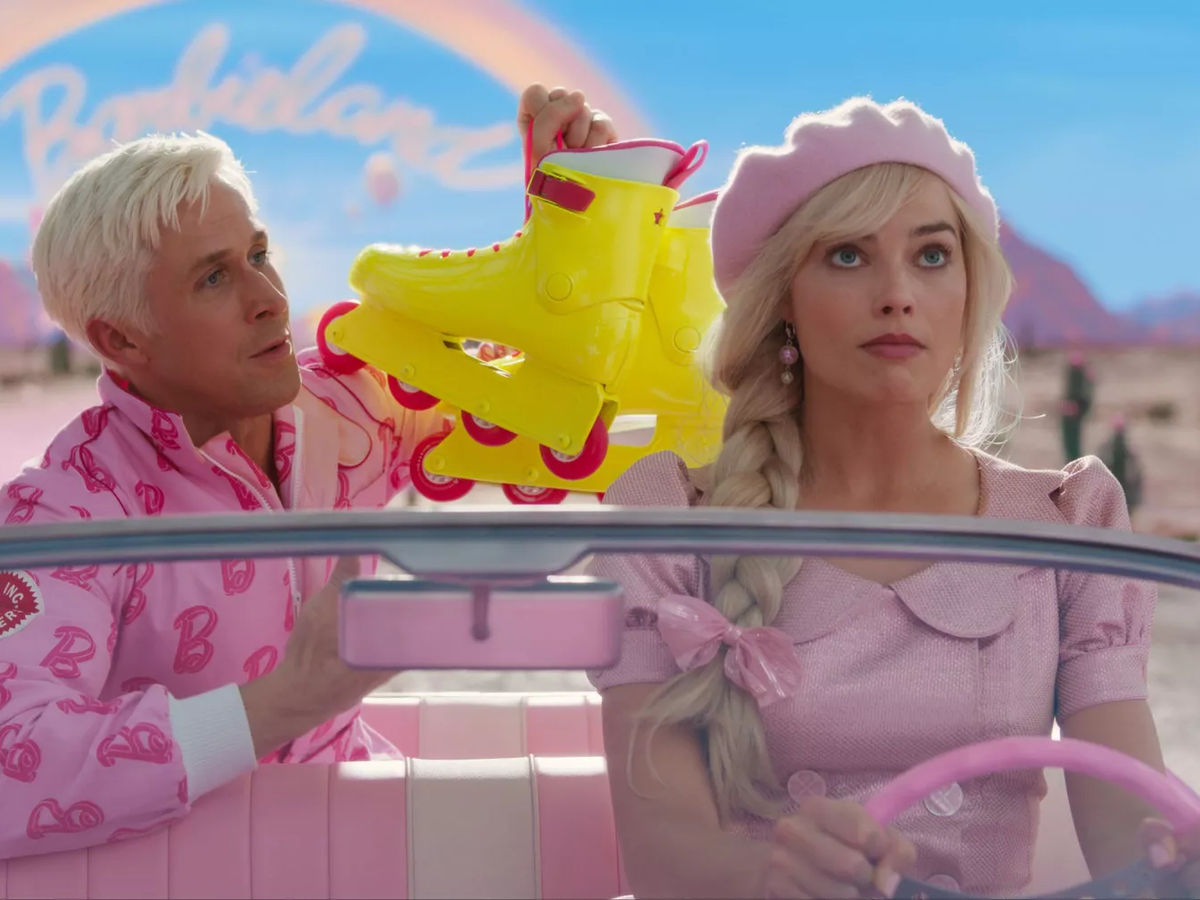
When addressing the 21st century secular progressive (and religious progressive) world, you can’t really define men without addressing feminism. So here in Part Three I’ll ask “Does Feminism Hate Men?”
I mean, on the surface a lot of guys certainly seem to think so, hence a lot of male resistance and even hostility to anything that labels itself feminism.
MADRE, a global feminist organization, works to diversify and globalize the fight for gender equality. MADRE – ABC News
A few days ago, I wrote the first part of this series, Defining Men, Part One: Looking Through the Barbie Lens. I used the the currently popular film as a “jumping off point” to examine how modern feminism tends to view men. While the movie is touted to be pro-men as well as pro-women (only being “anti-patriarchy”), not everyone is convinced. Not everyone (mostly men) is convinced that the current incarnation of feminism is pro-men either.
As you may know or have guessed, feminism, especially across time, isn’t a static concept. Even the ABC story admits, “Feminism, the first wave of which began with the suffrage movement in the mid-1800s, looks vastly different today than it did generations ago.”
Okay, fine. But how different? The article goes on:
By now I’m sure you have all heard of, if not seen (perhaps multiple times) the Barbie (2023) movie starring (and produced by) Margot Robbie and Ryan Gosling. Depending on who you talk to, it’s either “the most subversive blockbuster of the 21st century” (Rolling Stone magazine) or “Just a doll movie” (Whoopi Goldberg).
Women are often accused of being ‘overly’ sensitive. We’re told we need to stop taking things so seriously. May I direct your attention to the men getting unreasonably upset at Greta Gerwig’s film Barbie?
I’ve never seen the movie, and unless my eight-year-old granddaughter begs me to view it with her, I have no motivation to go. After all, I’m nearly seventy and a guy. Why would I want to see it?
I really don’t like how my banging my head against the values of the secular world inspires these blog posts, but then I suppose that’s one of the valid topics of discussion on a platform such as this one.
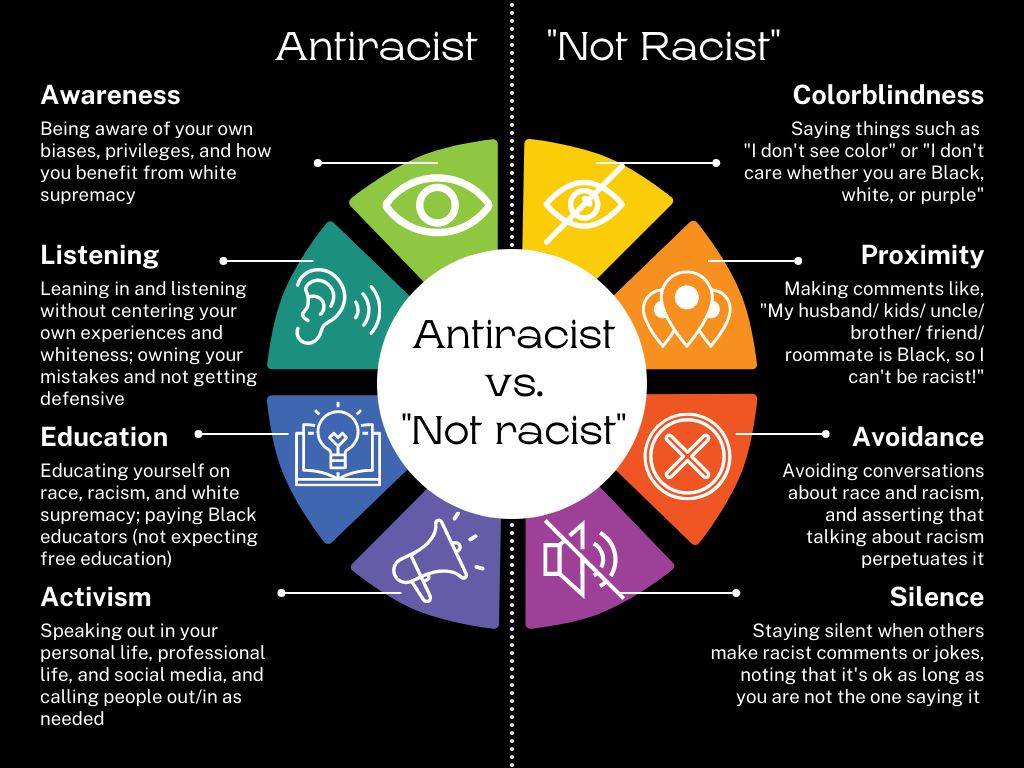
I was on LinkedIn, which as you might imagine, should be innocuous being business oriented. However. someone with whom I share a Linked in group shared this. It was accompanied by the image at the top, and I’ve been asked to give attribution for it to Dr. Batsheva Guy (a LinkedIn login is required – you can find out more about her at Weebly).
At least in our little corner of the western, post-modern world, there are two kinds of people (well, three actually): Antiracist and Not Racist (and Racist). In fact, from what I’m reading, people who might classify themselves as “Not Racist” might really be considered “Racist” by the “Antiracists.”
As an aside, just looking at the chart above, I don’t fit into any of those “pigeon holes.”
I’ve encountered the concept of Antiracism from a variety of sources, not the least of which is Ibram X. Kendi, author of numerous books on the topic including Antiracist Baby (I kid you not, it’s a real book and it’s not a parody).
The best and most comprehensive summary I’ve found comes from the Smithsonian’s “National Museum of African American History & Culture” called Being Antiracist.
The setting sun illuminates the Supreme Court building on Capitol Hill in Washington on Jan. 10, 2023. – Patrick Semansky/AP
If you’ve been paying attention to the news or (Heaven help you) been on social media, particularly twitter, you know that this past week, the U.S. Supreme Court has handed down a number of controvertial decisions, ones that have (once again) polarized conservatives and liberals (or Christians and everyone else it seems).
Opponents of the decision say this opens to door for any business anywhere to refuse to serve any LGBTQ customer “just because.” But is that what it really means?
I chose the NPR story because it includes a frame allowing readers to go through the entire Supreme Court written decision. But it’s seventy pages long, so I’m not reading it.
On the other hand, the story does summarize the key points.
The decision was limited because much of what might have been contested about the facts of the case was stipulated–namely that Smith intends to work with couples to produce a customized story for their websites, using her words and original artwork. Given those facts, (Justice Neil ) Gorsuch said, Smith qualifies for constitutional protection.
So the basis upon which the web designer may refuse to work with LGBTQ people is somewhat limited, but it still seems kind of vague to me.
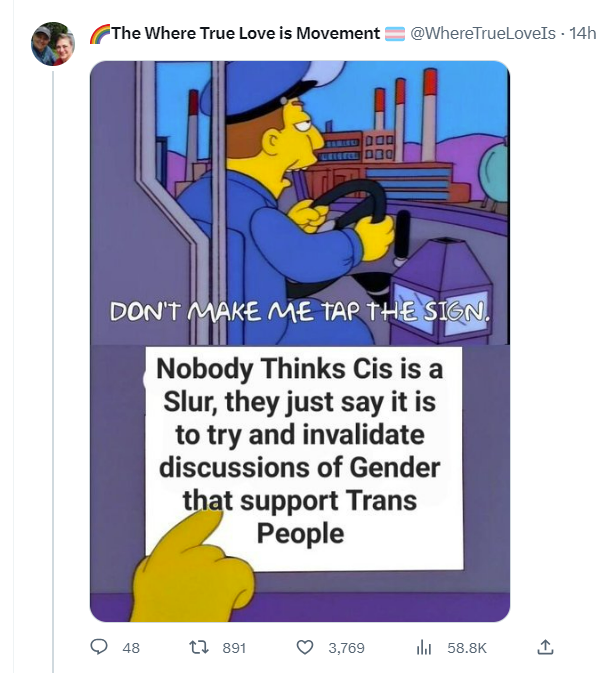
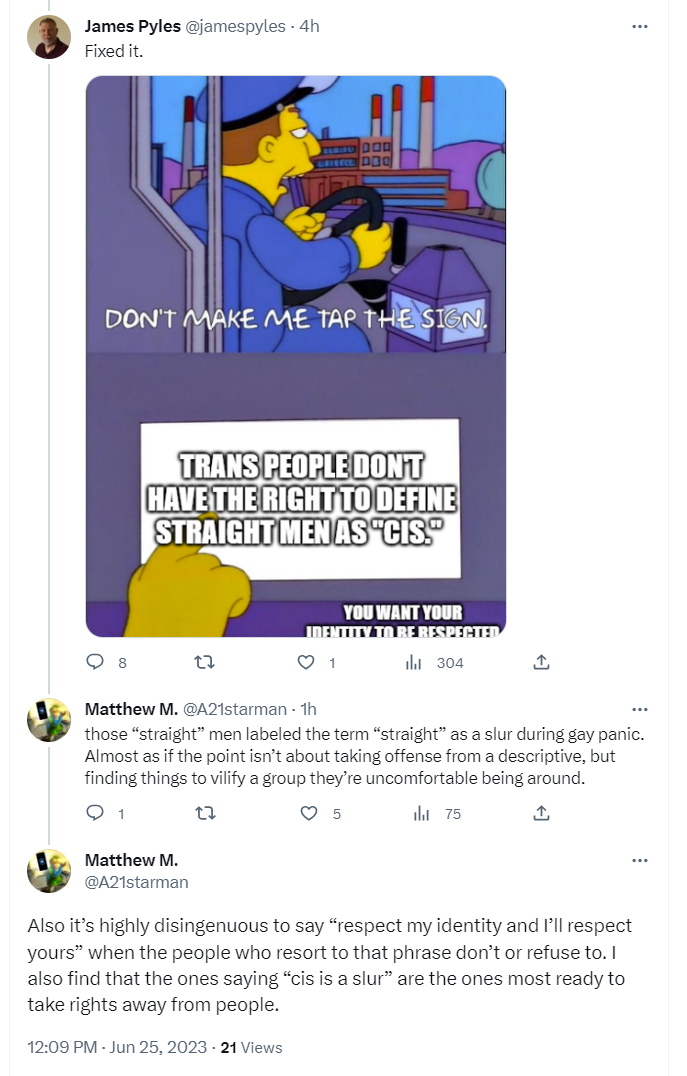
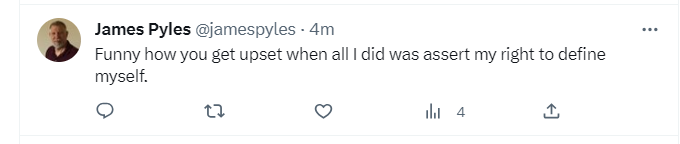
Screenshot from twitter.Screenshot from twitterScreenshot from twitter
I have to admit, I haven’t been taking “pride month” very well. First of all, June is also PTSD Awareness Month and yet none of our governmental agencies, the White House, and no corporations have been spending millions of dollars promoting said awareness.
Imagine that.
Then there is the immense sadness that’s been ignored in the race to see how much “pride” people can generate for it’s own sake.
"When you awake in the morning, learn something to inspire you and mediate upon it, then plunge forward full of light with which to illuminate the darkness." -Rabbi Tzvi Freeman