Much Ado About the Oral Law

I adored my younger sister and felt very connected to her, but I wasn’t there for her physically or emotionally during her turbulent teens. I was far away in university or traveling, and then in Israel, where I learned in a seminary, married and became in her eyes, a foreign entity: a religiously observant Jew.

Despite the distance, I didn’t see an unbridgeable gap. I could relate to my sister because I saw and felt all our common ground. I was once a teenager, part of the artistic sub-culture of Greenwich Village. I understood what her life was like, even if there weren’t skinheads in my day. I had once been like her, but she definitely didn’t feel like she was anything like me – an “ultra-Orthodox fanatic” against intermarriage, abortion, nudity, atheism, hanging out with guys. I never had a chance to say how I felt about any of these topics; she just assumed everything about my beliefs without any discussion. She could not relate. Or more accurately, she did not want to relate.

-Naomi Freeman
“Repairing the Gap”
Aish.com

For a lot of Christians, the sort of “gap” between Jewish people doesn’t seem to exist. After all, in Church, we generally are taught to view Jews and particularly religious Judaism as a single, unified entity. It’s difficult for many believers (or non-Jews in general) to picture multiple viewpoints among Jewish people (even though it is said “two Jews, three opinions”). And yet, there can be different groups, even within religious Judaism, that are highly polarized.

Consider this recent video that has been circling the various social media venues. Here we have Jewish people saying some rather unkind and perhaps inaccurate things about the “Oral Law” and Rabbinic Judaism.

This is the sort of thing Christians eat up with a spoon.

And they have, or at least one Christian group has within the Hebrew Roots movement as represented by TorahResource.com (For reference, I’ve included a screenshot below taken from Facebook of a discussion on this video by Hebrew Roots proponents).

Oral Law opinionI don’t feel particularly comfortable “calling out” people or groups, but in this case, I think it’s important to illustrate that there are different points of view involved. What your Pastor preaches from the pulpit about Jews and Judaism may not be the only way we disciples of Yeshua (Jesus) are “allowed” to think. I say this coming off of two years attending a local Baptist church where its members do authentically love the Jewish people and the nation of Israel but who are also at least “uncomfortable” if not downright opposed to the practice of religious Judaism. They would, with all good intent, love to see all Jewish people convert to Christianity and leave all but the most superficial practices of the mitzvot behind.

More’s the pity.

Earlier today, Rabbi Stuart Dauermann wrote a blog post called On Not Bashing the Oral Law and the Rabbis of Israel. Here’s part of what he had to say and how he ended his missive:

I don’t think the rabbis are always right. Nor are they always wrong. But I do think it is wrong to attack the rabbis as a class. After all, it wasn’t the ministers and Christian Bible students that kept the Jews and their Judaism alive in the blood- and tear-soaked exilic wanderings of the seed of Jacob. What kept the Jews alive and in faith was the work of the rabbis and the religion they presented and subscribed to.

We owe something to the rabbis of Israel. But is not contempt and mistrust. It is gratitude and admiration, even where and when they disagree with us.

And to the extent that we have entertained the kinds of spurious and nasty arguments I outlined here, we owe them one thing more.

An apology.

You can click on the link I provided to read his entire message and I encourage you to do so.

I’ve already rendered my opinion on interpretation as tradition so I won’t repeat that message except to say that, like R. Dauermann, I don’t believe that the Rabbis are always right in their rulings or opinions. Nevertheless, the Oral Law in post-Biblical times, was (and is) highly instrumental in sustaining the Jewish people and without what we call “Rabbinic Judaism,” it’s quite possible the Jewish people would have faded from the pages of history long before now.

Of course the Jews have always been protected and nurtured by God but who is to say that the existence and process of the Rabbis was not His method of preserving Jewish people and Jewish practice of the mitzvot. After all, the Sinai Covenant (all of the covenants, actually) didn’t vanish (and it certainly wasn’t replaced) simply because of the Temple’s destruction and the dispersion of the Jewish people among the nations. In fact, about a week ago I mentioned the opinion that one of the functions of the Jewish people being in exile was to be a light to the rest of us. This “being a light to the nations” wouldn’t have been possible without the Mishnah and Rabbinic Judaism.

Why am I saying all this? Just to throw my hat into the ring on this topic?

Not exactly, although that’s part of it.

While we can somewhat separate an opposition to Rabbinic Judaism from how we feel about Jewish people, at least in theory, it’s important to remember that there are those who have no love at all for Jewish people, Judaism, and national Israel, and reports of one of their more heinous acts has been all over the news lately.

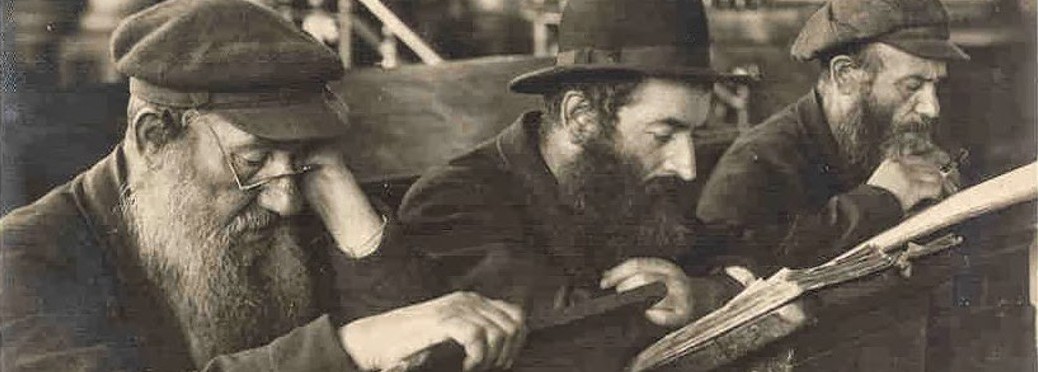
Talmud StudyAs was said on a Hebrew Roots blog recently, we aren’t going to agree on a great many things in the realm of religion, and that’s not really the problem. As I’ve already mentioned, there is a significant amount of debate and disagreement within the various streams of Judaism including Messianic Judaism, let alone all of the expressions of the Christian faith including what I think of as “Christian Hebrew Roots.”

I know I’m probably going to get some pushback for that last comment, but I think of Hebrew Roots as Gentile Christians expressing their devotion to Messiah using Hebraic practices within primarily non-Jewish community, and Messianic Judaism as Jews and associated non-Jews, expressing their devotion to Messiah within a wholly Jewish religious, cultural, and community context.

Given those definitions, it stands to reason that Hebrew Roots will take a traditionally Christian stand, that is a “low view” on many aspects of Judaism including the authority of the Rabbis and Oral Law, while Messianic Judaism, as a Judaism, will take a “high view” of those same elements.

However, depending on which perspective we employ, our attitudes about Judaism and thus Jewish people will be affected. This doesn’t mean that holding a low view of Oral Torah necessarily equals taking a low view of Jewish people or even the Jewish practices in general, but it does require making an effort not to let what one believes about the Rabbis spill over into other Jewish realms, particularly if you are supposed to believe that “One Law” fits all (though I obviously don’t subscribe to the One Law perspective).

If you have a low view on Oral Torah and the Rabbinic Sages, you are certainly within your rights to hold such an opinion, but it doesn’t mean that those who have a high view of Rabbinic Judaism are bad or even particularly wrong. It does mean they’ve made a decision about how to express their faith on the level of lifestyle as well as belief. If that is not your decision also, that ‘s fine and dandy, but please don’t denigrate someone who has taken a different path from your own. For them, that path is right and correct, particularly if they are Jewish and you’re not.

For more on this topic, read Rabbi Stuart Dauermann’s article Who Needs Oral Torah? On Living a Jewish Life.

Also, you can read what Rabbi Mark Kinzer has to say about Messianic Judaism and the Oral Torah in a paper (PDF) located at Ourrabbis.org (which can also be found in the body of Rabbi Dauermann’s blog post and over at the Rosh Pina Project).

Addendum: I’ve written something of a sequel on this topic called Jews Defining Their Own Relationship With God And The Torah. I invite you to have a read and let me know what you think.

Things That Matter

There was a time when God became so distant that we were almost ready to deny Him, had psychologists or sociologists not been willing to permit us to believe in Him. And how grateful some of us were when told ex cathedra that prayer is not totally irrelevant because it does satisfy an emotional need.

To Judaism the purpose of prayer isn’t to satisfy an emotional need. Prayer is not a need but an ontological necessity, an act that constitutes the very essence of man. He who has never prayed is not fully human. Ontology, not psychology or sociology, explains prayer.

-Abraham Joshua Heschel
“An Ontological Necessity,” p.78
Man’s Quest for God

I suppose a definition of Ontology is in order:

Ontology is the philosophical study of the nature of being, becoming, existence, or reality, as well as the basic categories of being and their relations. Traditionally listed as a part of the major branch of philosophy known as metaphysics, ontology deals with questions concerning what entities exist or can be said to exist, and how such entities can be grouped, related within a hierarchy, and subdivided according to similarities and differences.

That sounds very abstract and even cold, especially when applied to the intimacy of prayer, but I see where Heschel is coming from. Periodically, you may read about studies that say people who pray have less anxiety than those who don’t, or they (we) recover from illnesses faster than those who don’t pray. Prayer, from this perspective, is put in the same category as meditation, which doesn’t necessarily acknowledge the existence let alone the absolute necessity of God in our human lives. Thus prayer has value from the atheist’s point of view because it is a psychologically valid method of reducing stress or otherwise providing for a state of well-being.

Abraham Joshua Heschel

But Heschel is saying that prayer is the reality of our existence, providing vital linkage with the source of our lives and the very author of all creation. Prayer is what gives a sense of completeness to our being, which is probably why Heschel says (outrageously, from an atheist’s point of view) that he “who has never prayed is not fully human.”

So in prayer we realize our full humanity, but in doing so, we collide head on with our vulnerability, our frailty, our mortality, with everything that separates us from God as well as what binds us to him.

Prayer also brings us perspective:

God grant me the serenity
To accept the things I cannot change;
Courage to change the things I can;
And wisdom to know the difference.

You probably recognize the Serenity Prayer which is regularly said at Alcoholics Anonymous meetings around the world. This prayer connects rather nicely with the image I placed toward the bottom of today’s “morning meditation” (scroll down).

I saw that diagram taped near the desk of one of my co-workers and, in considering the ongoing process of teshuvah, it made a great deal of sense. In the effort of making that 180 degree turn away from sin and toward God, a lot of information and emotion is thrown up in the air, like a sandstorm obscuring vision. How can I see when I’ve made my complete turnaround and know when I’m facing the right direction so I can begin to proceed if I’m confused by all the things that matter that I can’t control and all the things that don’t matter that I can?

The Serenity Prayer seems to be how to ask God to let you see through the sandstorm and pick out only those specific details that are necessary for you (or me) to start walking toward Him.

Why do we need serenity?

I know how to get along with humble means, and I also know how to live in prosperity; in any and every circumstance I have learned the secret of being filled and going hungry, both of having abundance and suffering need. I can do all things through Him who strengthens me.

–Philippians 4:12-13 (NASB)

I maintain that only a person who is highly elevated spiritually can possibly stand in the eye of the hurricane and dispassionately watch the tempest rage and completely surround him. The rest of us would be running for the storm cellar.

But that doesn’t mean it isn’t a goal to shoot for, even if achieving it is years or a lifetime in the making.

I’ve mentioned before the seven steps in achieving teshuvah (repentance) which interestingly enough, are sort of connected to the 12 steps that are fundamental to Alcoholics Anonymous. It would seem that the process of recovering from additions can be extended to the process of “recovering” from all manner of sins, at least from the Jewish perspective.

thingsA couple of days ago I commented on something written by Rabbi Tzvi Freeman or rather, one of the comments made in response to his writing:

And 12-Step groups call this “Willingness.”
Wow – I keep seeing how the 12-step recovery coincides with Judaism, it is beautiful.

Would it sound too crazy to suggest something called “Teshuvah Anonymous?”

God help me to accept the things I cannot control, understand all the things that matter, and focus on those things that matter I can control. For only there will my efforts be successful in changing my life so that I behave toward others with greater compassion, kindness, and care, and only there will I find my path to You in prayer.

Longing for Mercy in an Ordinary Life

When Moses got up that morning and counted the sheep, he did not say to himself, “I think I’ll take the sheep out on the west side of the wilderness over by the Mountain of God.” Mount Horeb was simply Mount Horeb, an indistinct rock in the wilderness like so many other hills and mountains, completely ordinary looking. There was nothing special about it. Mount Horeb became Mount Sinai, the mountain of God, simply because God chose it, not because it was taller, mightier or holier than any of the surrounding hills and mountains.

-from “Ordinary Life” the Torah Club commentary on Shemot
First Fruits of Zion (FFOZ)

This topic pops up periodically in Christian circles, usually in response to a question such as:

How could God use me for anything? I’m no one special. I’m just an ordinary person with an ordinary life.

Another part of the answer goes like this:

Most of us do not regard ourselves as extraordinary people. You probably think of yourself as a fairly ordinary person with a fairly mundane life. From God’s perspective, that is perfect. You are the perfect person with whom He can do extraordinary things. He is not looking for prophets; He is looking for normal people who are carrying on under normal circumstances.

Frankly, I’d be elated to live an ordinary and mundane life perfectly or even just reasonably within the bounds of God’s expectations. I don’t have to be Moses. I don’t want to be Moses. I am unworthy to be anything like Moses. I just want to be “me” but a better “me” than I am today.

Teshuvah within an “ordinary life” is a lot of hard work with no guarantee that life will get immediately better even upon turning away from sin. An “extraordinary” life seems exhausting by comparison.

Of course with God, all things are possible (Matthew 19:26) but God is God and I’m just me.

When I became chief rabbi, I had to undergo a medical examination. The doctor put me on a treadmill, walking at a very brisk pace. “What are you testing?” I asked him. “How fast I can go, or how long?” “Neither,” he replied. “What I am testing is how long it takes, when you come off the treadmill, for your pulse to return to normal.” That is when I discovered that health is measured by the power of recovery. That is true for everyone, but doubly so for leaders and for the Jewish people, a nation of leaders (that, I believe, is what the phrase “a kingdom of priests” means).

-Rabbi Jonathan Sacks
“Light in Dark Times”
Chabad.org

Man alonePart how I measure my physical health is how quickly my heart rate recovers after a cardio workout. However, that principle can be applied to a completely different context. How quickly a person recovers after a major failure in making teshuvah and restoring relationships with God and people is also a measure of health.

Of course, there could be a problem:

Question: What if the person to whom you want to apologize won’t speak to you?

Answer: Here is what Maimonides writes on the matter:

If his colleague does not desire to forgive him, he should bring a group of three of his friends and approach him with them and request [forgiveness]. If [the wronged party] is not appeased, he should repeat the process a second and third time. If he [still] does not want [to forgive him], he may let him alone and need not pursue [the matter further]. On the contrary, the person who refuses to grant forgiveness is the one considered as the sinner.

-Rabbi Menachem Posner
Comments from the article:
“Teshuvah — Repentance”
Chabad.org

While facing God with your sin and asking for forgiveness as part of true teshuvah is daunting, we have certain promises in the Bible that God will indeed forgive us of our sin, cleansing us and making us white as snow (Psalm 51:7). However, with the people we have hurt, they are quite likely, at least initially, to react with blame, anger, and rejection.

In Rabbi Posner’s comment above citing Maimonides, we should repeatedly approach the offended party and continue to ask for their forgiveness. However, there is a limit as to how many times we are expected to extend ourselves and, at least from the Rambam’s point of view, anyone who refuses to forgive a true Baal Teshuvah is considered a sinner themselves.

Not that this is much help if you’re trying to repair relationships.

Every prayer of the heart is answered. It’s the packaging that doesn’t always meet our taste.

Maamar Vayigash Elav 5725, 6—based on a statement of the Baal Shem Tov, Keter Shem Tov.
Rabbi Tzvi Freeman
“Bad Packaging”
Chabad.org

Yes, we can pray for a positive outcome, and as Rabbi Freeman says, God answers all prayers, but the “packaging,” that is, exactly how God answers the prayers, may not be what we desired or hoped for.

Hearken and hear Israel (Devarim 27:9), this is the time marked for the redemption by Mashiach. The sufferings befalling us are the birth-pangs of Mashiach. Israel will be redeemed only through teshuva (Jerusalem Talmud, Taanit I:1). Have no faith in the false prophets who assure you of glories and salvation after the War (Note that this was during the early 1940’s). Remember the word of G-d, “Cursed is the man who puts his trust in man, who places his reliance for help in mortals, and turns his heart from G-d” (Yirmiyahu 17:5). Return Israel unto the Eternal your G-d (Hoshei’a 14:2); prepare yourself and your family to go forth and receive Mashiach, whose coming is imminent.

-from “Today’s Day” for Wednesday, Tevet 15, 5703
Compiled by the Lubavitcher Rebbe; Translated by Yitschak Meir Kagan
Chabad.org

praying aloneThis is heralding a very extraordinary time that will lead to the ultimate redemption of Israel and the nations, but in the meantime, there are still many mundane matters we all struggle with. I find it hard to always pray for the return of the Master when all I really want is to be successful in teshuvah, for God to grant me mercy and forgiveness, and for His Spirit to soften the hearts of those who have been hurt so they will be moved to mercy and forgiveness.

May God grant this to all of us, for who hasn’t failed?

He Who Fashions Our Hearts

Rambam cites the verse in Tehillim (33:15) as proof of this principle: “He who fashions all their hearts together, Who comprehends all their deeds.” According to Radak (Tehillim ibid.), this verse is explaining why Hashem has the power to see into men’s hearts; because He alone fashioned them, He alone has the ability to truly understand them.

-from “A Closer Look at the Siddur,” p.15
Monday’s Commentary for Parashas Shemos
A Daily Dose of Torah

I’ve always wondered just how much of human behavior God understands. After all, people can be afraid, but God is never afraid. People can be selfish, but God is never selfish. People can be weak, but God is never weak. How can God understand all of our faults and foibles when He has none of His own?

Of course, I always thought this was the answer:

For we do not have a high priest who cannot sympathize with our weaknesses, but One who has been tempted in all things as we are, yet without sin. Therefore let us draw near with confidence to the throne of grace, so that we may receive mercy and find grace to help in time of need.

–Hebrews 4:15-16 (NASB)

That covers Yeshua (Jesus) understanding what it’s like to be tempted. The Master may not have sinned, but he did know what it was to be weak, put upon, exhausted, in need of help and comfort:

Then Jesus was led up by the Spirit into the wilderness to be tempted by the devil. And after He had fasted forty days and forty nights, He then became hungry.

Then Jesus said to him, “Go, Satan! For it is written, ‘You shall worship the Lord your God, and serve Him only.’” Then the devil left Him; and behold, angels came and began to minister to Him.

–Matthew 4:1-2, 10-11

The Master even said this:

And He withdrew from them about a stone’s throw, and He knelt down and began to pray, saying, “Father, if You are willing, remove this cup from Me; yet not My will, but Yours be done.” Now an angel from heaven appeared to Him, strengthening Him.

–Luke 22:41-43

These are very human words uttered by our Master in prayer to the Father. I wonder if he was afraid? I wouldn’t blame him if he were. Here too he needed help, and again, an angel come to comfort or “strengthen” him.

We always assume it was physically impossible for Jesus to sin but strictly speaking is that true? I mean, it’s not really a temptation unless there’s the possibility of giving in. It’s not a true victory unless you have overcome failure. I think the Master endured these things in part to show us that we can be tempted and overcome as well, even though we are broken down, faulty, lame, miserable human flesh.

No temptation has overtaken you but such as is common to man; and God is faithful, who will not allow you to be tempted beyond what you are able, but with the temptation will provide the way of escape also, so that you will be able to endure it.

–1 Corinthians 10:13

This was one of the first verses I was encouraged to learn when I professed my faith many years ago, and I thought Paul was being rather smug and arrogant. Sure, it’s easy for him to say that God will provide a way of escape so we can endure temptation and not sin, but it certainly didn’t (and often still doesn’t) seem obvious to me which way led out of temptation.

father and sonBut going back to the first quote above, it never occurred to me before that God understands us completely because God made us, even though He is perfect and we are imperfect, even though He is immortal and we are passing away like grass in a blast furnace. I wonder if that’s why there are so many human-like metaphors for describing God in the Bible, not because He has a face, or arms, or hands, or breath, but so that we can, on some shallow level, relate to Him, even as He completely and totally understands us.

A person is constantly beset by warring impulses. Sometimes, he will succeed and triumph over his evil impulses; other times he may fail and succumb to his baser urges. To the human observer, this behavior may seem random and inconsistent. But Hashem “fashions all their hearts together;” He alone knows of the many components that make up a person’s mind and heart. Thus, it is possible for Him to “comprehend all of their deeds.”

I don’t think this means that God approves of all of our deeds, but He does understand, and hopefully, feels compassion for all of His children, including you and me.

Moreover, we must not overlook one of the profound principles of Judaism. There is something which is far greater than my desire to pray, namely, God’s desire that I pray. There is something which is far greater than my will to believe, namely, God’s will that I believe. How insignificant is the outpouring of my soul in the midst of this great universe! Unless it is the will of God that I pray, unless God desires prayer (See Exodus Rabba, 21, 5; Midrash Tehillim, 5, 7.), how ludicrous is all my praying.

-Abraham Joshua Heschel
“The Separation of Church and God,” p.58
Man’s Quest for God: Studies in Prayer and Symbolism

On the following page, Heschel wrote, “To live without prayer is to live without God, to live without a soul.”

At the heart of doing teshuvah, of repenting and returning to God, is prayer. While the seven points of doing teshuvah I posted at the top of this blog post make it seem as if teshuvah is largely a matter of exercising intellect and will, in fact even our ability to make the first step, to regret and be ashamed of our sins, is because God created us with an awareness of Him; we are made in His likeness.

Prayer is a requirement of repentance, for without God how can man repent at all, how can he turn away from evil and turn toward God and make a life-altering, permanent decision to abandon the way he previously walked?

But in the agony of teshuvah, being torn away from one life and struggling to achieve another, it’s easy to drown in prayers of petition to the point of begging.

But if You can do anything, take pity on us and help us!” And Jesus said to him, “‘If You can?’ All things are possible to him who believes.” Immediately the boy’s father cried out and said, “I do believe; help my unbelief.”

–Mark 9:22-24

From God we need all of the building blocks necessary to make teshuvah, then we need help putting them together, and then we need help doing everything else we are responsible for doing to return to Hashem.

In the middle of all that, where do we find the will and the strength to praise Him?

For to Thee Lord our God, God of our fathers, are due songs and praise, hymn and psalm, power and dominion, victory, grandeur, might, homage, beauty, holiness, kingship, blessings, thanksgiving

-from the daily liturgy
quoted in Heschel, p.64

prayerWe can’t “flatter” God into responding to our requests and He certainly doesn’t need us to praise Him because He lacks anything, but as Heschel said before, we pray not because our prayers are powerful or worthy, but because God desires that we pray, and I might add, for our own sakes. For we need God more than He needs us, if He needs anything at all. God is waiting only for us to whisper our tiny prayers to Him so He can call out and draw us to Him.

As much as the human soul yearns to rise up and merge within the light of its Creator, so much more so does the Infinite Creator yearn to be found within the human soul.

If so, what force could stand between them? What could hold back the Creator’s infinite light?

Only His desire that this union occur with our consent, that we be the ones to crack open the door.

“Open for me just as wide as a pinhole,” G‑d pleads with us, “and I will open for you a vast, unbounded portal to My very core of being.”

-Rabbi Tzvi Freeman
“Open for Me”
Chabad.org

I know I’ve quoted this before but it’s a good quote. A number of people commented on these words (click the link above to read the comments) including someone named Harley A:

And 12-Step groups call this “Willingness.”
Wow – I keep seeing how the 12-step recovery coincides with Judaism, it is beautiful.

Someone named Ezra commented:

When G-d created the world he did it with the attributes of Mercy and Justice (female and male qualities). And if you look in Genesis 1:27 you see again that G-d created us in His image (male and female).

G-d made everything with its opposite, up down , left right front back, day night. We can not have one without the other, that’s just how G-d made everything.

We need the Shechina simple because without her, our lives would not only be incomplete but also out of balance. We would only know G-d as a god of vengeance and never have that opportunity to repent. That would be frightening. When G-d remembered our frailty He even gave us cities of refuge. HE IS SO GOOD!!

Enjoy His Sabbath and rest a while with Her.

Life is difficult. We are all fighting a hard battle every single day. God does not desire that we fight this battle alone. If we cry out to Him, if we repent, if we pray for the strength to repent and the endurance to see it through, He will respond in an instant, whether we’re always aware of it or not, and rescue us, and even if we aren’t aware of that either, we will merit a place in the resurrection in the Kingdom of Heaven where our sure reward is waiting:

“…and He will wipe away every tear from their eyes; and there will no longer be any death; there will no longer be any mourning, or crying, or pain; the first things have passed away.”

–Revelation 21:4

Yes, Lord come. Maranatha.

Interpretation as Tradition

Antignos of Socho received the tradition from Shimon the Righteous. He would say: Do not be as slaves, who serve their master for the sake of reward. Rather, be as slaves who serve their master not for the sake of reward. And the fear of Heaven should be upon you.

-Pirkei Avot (Ethics of the Fathers) 1:3
quoted from Chabad.org

Back to Stern’s statement: replacing “tradition” with “interpretation” we could rewrite it to say: “There could never have been a time when interpretation of some sort was not a necessary adjunct to the written Torah.” Tradition claims legitimacy by appealing to the past for its authority, and is independent of scriptural anchoring; interpretation does not look to the past for legitimacy, but rather seeks an anchoring in the text itself. One dispute among the rabbis is whether certain halakhot were actually derived exegetically or whether they were an independent revelation.

-Rob Vanhoff
from his December 31, 2014 at 4:03 pm comment on his blog post Is there a core “Oral Torah” written in response to Peter Vest’s blog post Question for Rob Vanhoff

I’m dabbling into somewhat dangerous waters by invoking commentary written by Rob Vanhoff of TorahResource.com since typically, my theological orientation and Mr. Vanhoff’s (and his employer Tim Hegg) are not entirely compatible (I say that as an understatement).

But in reading Mr. Vest’s and Mr. Vanhoff’s dialog and then commentary from the book Pirke Avot: A Modern Commentary on Jewish Ethics, I started to ponder the relationship between interpretation and tradition in both Christianity (which includes the Hebrew Roots movement in my opinion) and Judaism (which I believe includes Messianic Judaism).

I should note at this point that I’m not writing this to challenge either Mr. Vest or Mr. Vanhoff (or Mr. Hegg). I’m not attempting to enter into yet another “I’m right and you’re wrong” debate. I just want to point out that, from my point of view, how we interpret the Bible is based on our traditions, both within Christianity and Judaism as I’ve defined them above.

The existence of the oral tradition is alluded to in the Written Law in numerous places.

For example:

The Torah says: (Deut. 12:20) “When G-d expands your borders as He promised you, and your natural desire to eat meat asserts itself, so that you say; ‘I wish to eat meat’, you may eat as much meat as you wish… you need only slaughter your cattle and small animals… in the manner I have commanded you.” Nowhere in the Written Torah is such a manner described. So what is the manner in which we are supposed to slaughter cattle?

Though the laws of slaughtering cattle are not explained in the Written Torah, they are described in detail in the Oral Law.

The Talmud tells the story of a Gentile who went to Hillel the Elder and said to him, “I want to convert, but I want to accept only the Written Torah, and not the Oral Torah. I don’t wish to accept the words of the Rabbis. So teach me only the Written Torah, and not the Oral Torah.”

But Hillel knew that the man wanted to do the right thing. He simply didn’t understand the purpose of the Oral Torah. So he began to teach him the Aleph Bais (Hebrew alphabet). The first day, Hillel the Elder taught him the first two letters, aleph, and bais (aleph and bet, for those who speak the Sefardic dialect).

The next day, Hillel the Elder taught him the same two letters in reverse. He showed him the letter aleph, and called it “bais.” The man objected, “but yesterday you taught it the other way!”

“Well, then, you need me, a Rabbi, to teach you the Aleph Bais? So you have to trust my knowledge of the tradition of the letters. What I tell you is the Oral Tradition. You can’t read the alphabet if no one tells you what it means. And you think you don’t need the Rabbis’ knowledge of Jewish Tradition in order to understand the words of the Torah? Those are much more difficult! Without an Oral Tradition you will never be able to learn the Torah.”

So it is clear that an Oral Tradition is needed, and that one exists.

-from “The Indispensable Oral Law”
BeingJewish.com

Moses received the Torah from Sinai and gave it over to Joshua. Joshua gave it over to the Elders, the Elders to the Prophets, and the Prophets gave it over to the Men of the Great Assembly. They [the Men of the Great Assembly] would always say these three things: Be cautious in judgement. Establish many pupils. And make a safety fence around the Torah.

-Pirkei Avot 1:1

oral lawWas there an Oral Law given to Moses by Hashem in parallel to the Written Law (Torah), and was that Oral Law passed down, generation by generation, in an absolutely unchanged manner, from Moses to Joshua, from Joshua to the Elders, from the Elders to the Prophets, and then from the Prophets to the Men of the Great Assembly, eventually being codified and making its way to modern Judaism?

It seems like a long shot, given that even the written Torah had “gone missing” for quite some time.

When they were bringing out the money which had been brought into the house of the Lord, Hilkiah the priest found the book of the law of the Lord given by Moses. Hilkiah responded and said to Shaphan the scribe, “I have found the book of the law in the house of the Lord.” And Hilkiah gave the book to Shaphan. Then Shaphan brought the book to the king and reported further word to the king, saying, “Everything that was entrusted to your servants they are doing. They have also emptied out the money which was found in the house of the Lord, and have delivered it into the hands of the supervisors and the workmen.” Moreover, Shaphan the scribe told the king saying, “Hilkiah the priest gave me a book.” And Shaphan read from it in the presence of the king.

When the king heard the words of the law, he tore his clothes. Then the king commanded Hilkiah, Ahikam the son of Shaphan, Abdon the son of Micah, Shaphan the scribe, and Asaiah the king’s servant, saying, “Go, inquire of the Lord for me and for those who are left in Israel and in Judah, concerning the words of the book which has been found; for great is the wrath of the Lord which is poured out on us because our fathers have not observed the word of the Lord, to do according to all that is written in this book.”

–2 Chronicles 34:14-21 (NASB)

The preservation of an unchanging Oral Torah across hundreds if not thousands of years would require that God sustain the Oral Law as He has the Written Law. I suppose it would make more sense to say that Oral Law as it’s conceived of in modern Judaism is the grand compilation of traditions that have accumulated over the centuries, but were not all given originally to Moses (if any of them were).

Question:

Can you explain why laws never seem to revert back to their original form? For example, some holidays are two days outside of Israel because of the difficulty with keeping time hundreds of years ago, which has since been resolved.

Answer:

Simply put, customs have the import of law since the Torah itself recognizes them as law. That makes sense, because the basis of Torah is not the book, but the people. How do we know the Torah is true? Because the people witnessed it, accepted it and passed down the tradition. So without tradition, we have no Torah.

-Rabbi Tzvi Freeman
“Why Aren’t Customs Reversible?”
Chabad.org

Of course the belief that the Oral Law as it exists in Judaism today originated as a complete body of knowledge with Moses at Sinai is also a tradition and as such is considered factual, at least in Orthodox Judaism.

Now I admire the refined skill-set of a good kosher shochet, but what Dr. Stern sees as “evidence” for “oral Torah” from Deuteronomy 12:21 (כאשר צויתיך) is for me simply a pointer to what Moshe states elsewhere concerning slaughter: pour out all the blood, cover it with earth, don’t consume it, etc… I’m definitely a minimalist in this regard. Let’s keep in mind that the art of midrash (be it halakhaic or aggadic) consists first of positing a textual ‘gap’ and second of filling it!

-Vanhoff

On the other hand…

Hashem said to Moses, saying: “Speak to the Children of Israel and say to them that they shall make themselves tzitzis on the corners of their garments, throughout their generations. And they shall place upon the tzitzis of each corner a thread of turquoise wool. It shall constitute tzitzis for you, that you may see it and remember all the commandments of Hashem and perform them; and not explore after your heart and after your eyes after which you stray.

–Numbers 15:37-39 (Stone Edition Chumash)

tzitzitSo how do Jewish men know how to tie tzitzit (keeping in mind there’s more than one tradition on how to do so)? Who taught the Jewish people the specific method of obtaining the blue dye to color the “thread of turquoise”? There is nothing in the (written) Torah describing how this is done, so how did Moses teach the Children of Israel how to observe this mitzvah? Is it possible that Moses had conversations with Hashem that were not recorded in writing? Was literally every second of every transaction between Moses and God put down in writing?

Probably not, otherwise the Bible in written form would be too large to carry.

But that’s supposition on my part. Still, I must admit that there are more than a few commandments in Torah where there is no written instruction for how to observe them.

Does that mean the Oral Law as it’s understood today is exactly as it was or may have been given to Moses at Sinai or later during the forty years in the desert?

From a human point of view, this seems doubtful, but if an Oral Law also comes from God, then nothing is impossible.

The Bible is the most authoritative element of Judaism. But it is not the only one. Just as it had been preceded by tradition, so was it soon followed by tradition, the “Oral Law,” which strives to penetrate into the essence of the Bible’s written word. The Oral Law strives to apply the teachings of the Bible to all the events of existence; to provide religious and moral standards for all of life’s activities; and to realize the Bible’s teachings in the whole Jewish community. This tradition, which was ultimately established in the Talmud, had at first to fight for recognition; subsequently, it too became a conservative factor in Jewish religious life.

-Leo Baeck, “The Essence of Judaism,”
New York: Schocken Books, 1948
quoted in “The Bible and the Talmud,” p.17
Pirke Avot: A Modern Commentary on Jewish Ethics

In Judaism, tradition is what tells a Jew what the Bible means. In Christianity, as Mr. Vanhoff states, a systematic method of interpretation does the same job.

So am I saying that Jews have tradition and Christians have interpretation? Well, not exactly. I’m saying that Jews are open in stating that tradition guides their Biblical interpretation and Christians believe that they have no tradition of interpretation…

..except that’s not true.

Almost a year ago, I wrote a blog post called Does the Church Interpret the Bible Based on Traditions. I’ll save you the trouble of reading the whole thing and give you the answer here: Yes!

In fact, I believe that every branch of Christianity, including all versions of Hebrew Roots, interpret the Bible based on some overt or covert set of traditions that transcend any “scientific” method of Biblical hermeneutics. I know I’m going to receive a significant amount of push back for making that statement. I know that many scholarly arguments can be leveled against me, showing me that Protestant Christianity and Hebrew Roots (they have more in common than you might imagine) use totally objective means by which to determine the true and factual meaning of the Biblical text.

Except if that were true, then I don’t think we’d see such dissonance between the pro-Jewish people and pro-Israel words of the Bible including the Apostolic Scriptures and the nature and function of the New Covenant, and how modern Protestant Christianity refactors the Bible to minimize or delete the role of Jews and national Israel in God’s redemptive plan for the world.

Much has been made of Martin Luther and the men of the Reformation and how they undid the abuses of the Bible by the Catholic Church, but the Reformation didn’t “reform” as much as you might think. Many traditions of the Church (Sunday worship rather than a Saturday Shabbat, the continued “gentilization” of Jesus Christ, the supersession of “the Church” in place of Israel) were maintained and survived to this very day in virtually all expressions of Christianity.

So it’s quite possible if we view Hebrew Roots as a minor “reformation” of Evangelical Christianity to believe they didn’t reform as much as you might think, including holding onto some (but not all) of the traditions of the Church, such as how to interpret certain sections of the Bible.

Interpretation of the Bible begins at translation, or so it’s said. I tend to believe that the first step in interpreting the Bible is how we already understand it based on who taught us our traditions. This is true whether you are a Baptist, an Orthodox Jew or operate in any other branch of Christianity or Judaism.

I’m always amazed at how people who have read a dictionary entry or two on “Mishnah” or “Talmud” become so quickly convinced that when they pick up the Soncino Bavli in English, they are reading the culture, worldview, and halachah of the 1st Century! Truth be told, most Messianics who are enamored with “rabbinic Judaism” have spent precious little time actually reading the rabbinic sources, even in translation. They’re willing to watch a YouTube video or two from a Cabad rabbi and think that they’ve just been educated in the finer details of rabbinic halachah and aggadah, and what is more, that their new knowledge informs “what Yeshua really thought and did.”

– from Tim Hegg’s comment on Rob Vanhoff’s aforementioned blog post

I just want to be clear that I don’t consider myself some sort of “expert” in Talmud or anything else. What I do want to emphasize is that we cannot separate our understanding of the Bible from our “religious orientation.” Sure, we can change religious orientations and thus our understanding of the Bible, but with some difficulty. I changed from a more “standard” Christian hermeneutic, to a Hebrew Roots perspective, and then finally to a viewpoint formed from various teachers within a Messianic Jewish context.

Does that make me right and everyone who disagrees with me wrong? Not at all. I have far more questions about the Bible and God than I have answers. I just want to point out that no one has raw, naked, unfiltered access to the Word of God such that they and only they know “the truth” about exactly what it says in every single detail. No Bible scholar worth his or her salt would make such a claim. That’s why Biblical research is ongoing and that’s why we study the Bible (hopefully) every day.

Coffee and BibleThis is like the African-American woman Tim Hegg describes in his comment on Vanhoff’s blog post, the one who believed that the Apostle Paul’s Bible was the King James translation. Her understanding (I have to assume based on limited information that this woman really did believe such a thing) is based on some sort of tradition she was taught and like many, most, or all religious people, tradition first became truth in her mind, and then absolute fact.

Even when we’re aware that we are guided by our traditions, that awareness isn’t going to be enough to keep us from continuing to be driven by said-traditions for the most part. Yoda may have said “You must unlearn what you have learned” (as shown in this brief YouTube video), but that’s easier said than done. Maybe Luke Skywalker could do that under the Jedi Master’s guidance, but in real life, once we learn something, we are very likely to stick with it, even in the face of evidence to the contrary.

Again, this isn’t a matter of one side being right and the other side being wrong. It’s a matter of all sides being guided and molded by tradition, even when we think we’re not. What we think is who we are.

If Israel is the Light of the World, What Happens to the Church, Part One?

After the exiles are gathered and Israel’s enemies destroyed, those who are left from the nations will not only dwell peacefully with the nation of Israel, but all peoples will come to recognize the one God of Israel and will serve him. It will be a worldwide revival such as we have never seen before. While it is Messiah’s job to bring this global repentance about, it will be accomplished through the agency of the Jewish people and will come about when they dwell securely within the land. Indeed, this awakening can only happen when the children of Israel are connected with the land of Israel.

-Toby Janicki
“Light to the Nations,” p.43
Messiah Journal issue 118/Winter 2014

I think most Christians would agree that Messiah (Christ) will inaugurate an era of worldwide peace and tranquility upon his return, but they might be puzzled as to what the Jewish people and the land of Israel have to do with it. Isn’t the Church supposed to rule and reign with Jesus? Aren’t the Jews supposed to convert to Christians and effectively eliminate any and all Jewish presence on Earth for the first time since Abraham?

One of the reasons I don’t share a theological perspective with most of my Christian brothers and sisters is because, even though there may be those who recognize that the Jews have “some part” in God’s future plans to redeem the Earth, couldn’t possibly imagine that it is national Israel and the Jewish people, not “the Church,” which is the principal mechanism by which we will all be saved, even as the Master said, “salvation comes from the Jews” (John 4:22).

However, Toby Janicki in his article makes the argument that the children of Israel was and is God’s chosen people and nation for a very good reason, and that reason stretches all the way back to Sinai.

To fully understand how the Jewish people will bring the nations to the knowledge of HaShem, we need to understand why God singled out and chose Israel in the first place. We need to examine the Jewish people’s role as a light to the nations. This begins with HaShem designating Israel as his chosen people.

-ibid

Toby cites Exodus 19:5-6, Deuteronomy 14:2, Deuteronomy 32:9-10, and Romans 3:1-2 to define and support Israel’s continued election from among the nations. But the “choseness” of Israel has always been a bit of a problem to the rest of us.

In today’s modern society the idea of this kind of election can be troubling. The premonition of God choosing one nation out of all the others does not sit well with our Western sense of egalitarianism. But before jumping to conclusions, we must ask the question, what does it mean that Israel is chosen?

-ibid, p.44

Christianity has attempted to respond to Israel’s chosen status in a couple of ways. The traditional response of the Church was to establish a binding tradition declaring the Christianity and the community of (Gentile) saints as having replaced Israel’s special status with God as an act of Jesus Christ and his death on the cross.

Of course this makes Messiah a traitor to his own people and the nation he loves. Can Yeshua turn away from God’s treasured, splendorous people, HaShem’s Am Segulah (Deuteronomy 14:2), wholly decoupling himself from the Jews, the Jewish land, and his very identity as a Jew, and cleave only to a foreign people, making himself, in essence, a foreign god?

In my opinion, the answer is a resounding “no”.

There is another competing opinion that sadly treats the Jewish people no better. What if Jewish election is meaningless? What if the work of Messiah was simply to take all the Gentiles who become his disciples and make them “Israel” too? That would mean in the Messianic Kingdom, there would only be two people groups, Jewish and non-Jewish Israel, and the unbelieving Gentile nations. Since the former group, by definition, are resurrected and immortal, and the latter group is not, after the latter group dies, only “Israel” made up of Jews and non-Jews remains and there are no nations of the earth. Being Jewish would mean nothing since the Gentiles in “Israel” would be every bit as “chosen” (although much later in the game) as the Jews.

This violates more prophesies than I have room to cite and both of these misguided theories eliminate God’s original choosing of the children of Israel as His chosen people and nation, either by removing that status from the Jews or making to totally meaningless.

It seems people have to rewrite God’s original work to fit their own needs and requirements, more’s the pity.

But if Yeshua is the light of the world (John 8:12), why does he need Israel and the Jewish people to fulfill his mission to be a light to the world? Why does he need anyone at all?

But what if he and Israel are inseparable components within that light?

Toby quotes Rabbi Levi Welton to answer the question he asked above.

In other words, one separates something to do something, not just to be something. So the Jewish people were separated for a purpose, not to carry a higher rank or be a “favorite.” This purpose is to tell the world that they are also “chosen to do good,” as Isaiah says it, “to be a light unto the nations” (Isaiah 49:6).

-ibid

This suggests that the Jewish people had and still has a special mission to bring knowledge of monotheism and the One true God of Creation to the rest of the nations. But how were they supposed to do that, especially since post-Biblical times, most Jews do not acknowledge Yeshua as the Messiah?Up to Jerusalem

According to Toby:

In the minds of the sages the Jewish people’s exile (galut) from the land of Israel was not only punishment for Israel’s sin but also served a redemptive purpose for all mankind?

-ibid, p.46

That’s bound to bend the minds of some Christians since it means that the Jewish people as a whole were still being used by God in post-Biblical times as exiles among the nations, and that non-Jesus believing Jews are fulfilling God’s purposes to this very day.

According to one source:

Eleazar also said: “The Holy One, blessed be He, did not exile Israel among the nations save in order that proselytes might join them, for it is said: ‘And I will sow her unto Me in the land’ (Hosea 2:23); surely a man sows a se’eh in order to harvest many kor!” (b.Pesachim 87b)

-ibid

Toby continues:

…and therefore this saying is a metaphor for the knowledge of HaShem being spread among the nations of the world through the exile of Israel.

-ibid

This would seem to create some problems. First, it puts Judaism and Christianity in direct competition to make proselytes (converts) as part of spreading the knowledge of HaShem in the former case, and the Gospel Message of Jesus Christ in the latter case.

It also means that, from a Jewish perspective, if spreading the knowledge of HaShem requires making proselytes, then no Gentile person could benefit unless they converted to Judaism, which is also against many of the prophesies in the Tanakh (Old Testament).

But there’s a catch:

Although we have seen some fulfillment of Israel enlightening mankind throughout history, and although the nation’s exile has served a redemptive purpose, Israel’s call to be a light to the nations can be fully fulfilled only when they dwell securely within their land with their own sovereign monarchy.

-ibid

So here we have a connection between Israel as a light to the nations and Messiah, since one of Messiah’s critical tasks is to re-establish the sovereignty of Israel and to return all of the Jewish exiles to their Land. If Israel can’t be a light to the nations until those events have occurred, then Messiah is absolutely required in order to allow Israel to complete her mission.

This brings up a question about the role and function of Gentile Christianity. If everything hinges upon Israel having complete rule over her nation, all the Jews returning to Israel, and King Messiah being established on his throne, what happens to us? Toby writes all this as future events, but we are here now, aren’t we? What are we, chopped liver?

Toby doesn’t address this question and he seems to indicate that only Israel will participate in the worldwide revival and return to the God of Abraham, Isaac, and Jacob. I can see those non-Jews who identify as “Messianic Gentiles” within some recognized form of Messianic Judaism participating in a supporting role, but with no mention of the Church in this scenario, I can imagine many Christians feeling left out in the cold.

lightAnd yet, I know of many Christians who live holy lives, who do good, and who are devoted to God, and yet they do not have a “Messianic Jewish” perspective on the scriptures, nor do they anticipate Israel having such a “stellar” role in God’s redemptive plan. They fully expect that it will be the Christian Church who will step in and be “the light of the world” alongside Jesus Christ.

I wonder what happens to them?

Since Toby’s article is rather packed with information and meaning, and since I want to cite another author in the current issue of Messiah Journal, I’m going to stop here. See you in Part 2 of this article.

"When you awake in the morning, learn something to inspire you and mediate upon it, then plunge forward full of light with which to illuminate the darkness." -Rabbi Tzvi Freeman