For Now We See Through A Bible Darkly

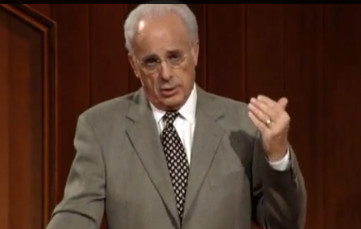
John MacArthurWhen Jesus came, everything changed, everything changed.… He didn’t just want to clean up the people’s attitudes as they gave their sacrifices, He obliterated the sacrificial system because He brought an end to Judaism with all its ceremonies, all its rituals, all its sacrifices, all of its external trappings, the Temple, the Holy of Holies, all of it.

-Pastor John MacArthur
“Understanding the Sabbath,” September 20, 2009, posted on the Grace to You blog.
As quoted in Lois Tverberg’s blog post Test Your “Jesus Theories” in the Book of Acts

One of the folks who commented on a recent blog post of mine mentioned that Messianic Jewish/Hebrew Roots blogger Judah Himango had written a particularly illuminating article recently, based on Tverberg’s November 2013 commentary. I finished reading Judah’s write-up, suitably impressed, and clicked the link to his source material.

I really thought I was done with John MacArthur after my final series of reviews on First Fruits of Zion’s (FFOZ) book Gifts of the Spirit. But seeing that Tverberg had quoted MacArthur on her blog, I had to find the original sermon and see the quote in context.

It didn’t make me happy.

As you can probably tell from the above-quoted paragraph, in one fell swoop, MacArthur kills the Torah, the Temple, and Judaism (if not the Jewish people) and summarily replaces them with Gentile Christianity in a lecture I could characterize as one of the more noteworthy flowers in the garden of supersessionism.

I was still going to resist writing about all of this. After all, Judah covered the issues brought up by Tverberg’s blog and expanded on them in a way that would make anything else I had to say on the subject redundant. And I’m sure most cessationists and anyone else who thinks John MacArthur is “the cat’s meow” probably believes by now that I have nothing better to do with my time than to endlessly bash MacArthur, using my blog as a blunt instrument.

I wouldn’t have even put my fingers on the keyboard over all of this if I hadn’t read the following:

In 1982:

“The Bible clearly teaches, starting in the tenth chapter of Genesis and going all the way through, that God has put differences among people on the earth to keep the earth divided.”

– Bob Jones III, defending Bob Jones University’s policy banning interracial dating/marriage. The policy was changed in 2000.

In 1823:

“The right of holding slaves is clearly established by the Holy Scriptures, both by precept and example.”

– Rev. Richard Furman, first president of the South Carolina State Baptist Convention.

In the 16th Century:

“People gave ear to an upstart astrologer who strove to show that the earth revolves, not the heavens or the firmament, the sun and the moon. This fool…wishes to reverse the entire science of astronomy; but sacred Scripture tells us that Joshua commanded the sun to stand still, and not the earth.”

– Martin Luther in “Table Talk” on a heliocentric solar system.

Rachel Held EvansI took these quotes (there are plenty more where they came from) from an article called “The Bible was ‘clear’ …” by Rachel Held Evans.

Here’s part of the commentary summarizing these quotes of various religious, social, political, and scientific opinions, all based on scripture (emph. below is Evans’):

Of course, for every Christian who appealed to Scripture to oppose abolition, integration, women’s suffrage, and the acceptance of a heliocentric solar system, there were Christians who appealed to Scripture to support those things too.

But these quotes should serve as a humbling reminder that rhetorical claims to the Bible’s clarity on a subject do not automatically make it so. One need not discount the inspiration and authority of Scripture to hold one’s interpretations of Scripture with an open hand.

We like to characterize the people in the quotes above as having used Scripture to their own advantage. But I find it both frightening and humbling to note that, often, the way we make the distinction between those who loved Scripture and those who used Scripture is hindsight.

So maybe let’s use that phrase—“the Bible is clear”— a bit more sparingly.

Now let’s compare that to how MacArthur summed up his 2009 sermon on “Understanding the Sabbath”:

Father, we thank You for a wonderful day. We thank You for the consistency of Your truth. We thank You for the Word which opens up our understanding to all things. We’re so unendingly thrilled at the glorious truth of Scripture that comes clear and unmistakable to us. (emph. mine)

I know that MacArthur is big proponent of sola scriptura and the sufficiency of the Bible and, based on that, he believes that any and all conclusions at which he arrives must be air tight and iron clad because after all, it’s not him, it’s what scripture says, right?

But as Rachel Held Evans so aptly illustrated, lots and lots of people have depended on sola scriptura and the sufficiency of the Bible over the long centuries of Church history, and in many cases (such as the “fact” that the Bible supports everything in the heavens orbiting Earth), they were wrong. They were also doing what so many of us in the body of faith do today: use the Bible to support whatever theological, social, political, scientific, or other important ax we have to grind, and after we sharpen the ax, we use it to chop down whoever or whatever we stand in opposition against.

Coffee and BibleNo, I’m not saying that we can’t rely on the Bible, but I am saying that given a good enough reason, we can all go off half-cocked and make the Bible say whatever we want it to say. To be fair, most of us are unconscious to our own process and as such, we actually believe we are being unbiased, unprejudicial, non-bigoted, and completely objective.

More’s the pity.

It’s one thing to constantly investigate yourself and your opinions to verify and re-verify that what you believe isn’t too heavily colored by whatever filters you happen to be wearing over your eyes (and we all wear some), and it’s another thing to be so sure that you aren’t wearing any filters at all, that any of your opinions, because they’re “based on the Bible” must be the truth because “the Bible is clear” on the subject.

Usually, “the Bible is clear” when we “discover” it says something that exactly maps to some long-held belief that provides us comfort and confirms our own identity and convictions. We don’t like it when the Bible contradicts us and says something clearly that we don’t want to be true. Maybe that’s the real litmus test of Biblical interpretation, when we let what the Bible says show us what we need to believe rather than the other way around.

Prologue to the Irony of Galatians

The Irony of GalatiansFinally, I want to acknowledge the victims of certain interpretations of Paul’s voice, especially those who have suffered the Shoah. Their suffering cannot be separated from the prejudices resulting from those interpretations any more than it can be wholly attributed to them. To them I dedicate the effort represented in this book.

-Mark D. Nanos
from the Acknowledgments, pg ix
The Irony of Galatians: Paul’s Letter in First-Century Context

Such a strange way to end a series of acknowledgments for a book. The author usually thanks his/her publisher, editor, spouse, and whoever else contributed to or who were sometimes inconvenienced by the author’s writing of the book. Occasionally, religious people will thank God, their congregation, and so forth, in addition to the “usual suspects.” Having written a few books myself (though not in the religious studies space), I know the author’s side of composing acknowledgments.

That said, I normally blow past the acknowledgment page quickly when I get a new book in my hands, but something told me to slow down a bit before getting to the “meat” of the content. What we have here is a suggestion that the traditional way Paul has been understood by Christian interpreters has, in some manner or fashion, contributed to the injury of the Jewish people, including the most glaring injury in recent history, the Holocaust. There have been two injustices committed by the “consensus view” of Paul which includes his letter to the Galatians: a gross misunderstanding of Paul himself and his missives to various First Century churches, and as a result of that misunderstanding, a terrible injustice to Jewish people across the last nearly two-thousand years of history.

That’s a heavy burden to place upon collective Christianity, but it’s not a burden that is undeserved, nor is it one that cannot be lightened. What is needed is a fresh reading of Paul from a First Century Jewish context.

While Nanos states in the book’s Prologue that he attempts to make no direct comparison between the Paul of Galatians and how Nanos depicted Paul in his previous book The Mystery of Romans, I don’t doubt that I’ll be making the comparison anyway, considering my several recent reviews of that work. After all, we are talking about the same human being, and unless Paul received a “personality transplant” between writing one letter and the next, he should be transmitting the same basic understanding of the role of Jews and Gentiles in the Jewish religious stream once known as “the Way.

Because the prevailing interpretations have probed Paul’s text without sufficient appreciation of the powerful role of ironic inversion at work, at the formal as well as functional level, the interpretation of the apostle’s scathing rhetoric has exaggerated and, regardless of other plans, continues to accentuate the differences that are imagined to separate Christian and Jewish identity, behavior, and even intentions toward God and neighbor. The legacy of this perception of the Jewish other has proven often tragic for the Jewish people, at least in a world that has been often dominated by those who look to Paul to shape reality, and for others, as a foil to justify their twisted construal of what is right.

-Nanos, Prologue, pg 2

This reads more like an indictment than, as Nanos puts it, a project that “represents a revised and expanded version of (his) Ph.D. dissertation…in 2000.” There’s a sense that Nanos has more invested in this project than simply a serious and scholarly re-investigation into the traditional interpretation of Paul relative to ancient and modern Christian and Jewish relationships and identities.

No interpretation is independent of context, that realized or assumed for the original author and audience, and that of the interpreter him-or herself. I am a product of many factors, not the least the long shadow of the Holocaust, which claimed so many Jewish people, my people, as well as exposure to critical tools now available to the interpreter.

ibid, pg 4

PaulNanos goes on in the Prologue to compare the “Consensus View” which he states has “not changed that significantly in the history of Christian interpretation” to his perspective which he calls “The Irony of Galatians,” characterizing Paul’s letter as an “ironic rebuke”. He challenges the consensus view of Paul as Law-free and in opposition to Jewish Law (Torah) and religiously obedient Jews, which is an interpretation of Paul’s message in Galatians that has been “undeniably colored by the interpreter’s understanding” rather than “producing a disinterested portrait” of the subjects of the letter, “considering their identity, motives, messages, or methods on their own terms.”

Of course, we have to consider that Nanos, in partially attributing Shoah and the murder of six million of his people to the traditional interpretation of Paul renders him less than completely objective, but then again as Nanos has already alluded, no one fails to bring something to the table when interpreting the Bible. In the book’s Prologue, Nanos leaves it up to the reader to determine if he has “constructed a probable context for interpretation of Paul’s voice…”

I know a fellow who is quite an erudite scholar and it is his opinion that more often than not, a book’s prologue may contain enough of the contents of the book itself to tell the entire story, sort of how some movie trailers give away most or all of the story of the films they are advertising. This may also be true of Nanos’ “Irony,” but not having cracked even the first page of the first chapter yet (as I write this), I’ll have to wait and see.

On the other hand, Nanos does reveal that he considers the “influencers” to also be Galatians and Jews who have a certain responsibility to initiate the Gentiles in the Galatian synagogues into their entry into Judaism. If these influencers were like those Jewish people we encounter in Acts 15:1-2, we may be seeing a heavy bias in the non-believing and believing Jewish communities in the days of Paul toward the proselyte ritual as the only means by which a Gentile may enter “the Way.” That makes Paul’s Galatian letter, according to Nanos, an “ironic rebuke” to the Gentile readers and an intra and inter-Jewish communal dispute between Paul and the Jewish influencers.

As I read in Nanos’ “Romans” book, he continues to depict Paul as Torah-observant, which only makes sense, given that Paul wrote that a Gentile being circumcised and converting to Judaism is obligated to the full yoke of Torah (Galatians 5:3). Being Jewish then, by definition, would mean that Paul considered himself as obligated to said “full yoke” of Torah in the same manner as his fellow believing and unbelieving Jews.

Paul is himself an example of status and observance, and his message in this letter does not abrogate the identity or observance of Torah for Jewish people (i.e. Israelites) in the least but is instead predicated upon their continued validity for himself and other Jewish members of this movement.

-Nanos, pg 9

The remainder of the prologue covered a summary of each of the three parts of the book and what the reader can expect to discover. What remains are the detailed arguments presented by the author, which I have yet to experience.

For the “Romans” book, I reviewed the material almost chapter by chapter in some cases, and I have a tendency to write book reviews in parts, often before I’ve completed my reading of the entire work. I don’t know if I’ll do that here since such an analysis takes a fair amount of time. On the other hand, it’s difficult in just a few sentences, to impart complex ideas and descriptions accurately when presented in a “book-length” form. Also, as much as I report for the sake of my audience, I write these blogs to process my own experience as I encounter new thoughts and concepts, so the level of detail in which I engage is sometimes more for me, the writer and learner, than it is for you the reader. Of course, my benefit is also your benefit as long as you don’t mind having to consume the output of my internal dialogue.

Mark NanosSince I’ve liberated myself from having to produce daily morning meditations, I can’t say when the next installment of my review on “Irony” will be written, but know, compulsive blogger that I am, that it will appear before too long. Galatians is one of my Biblical “pet peeves” along with the traditional Christian interpretation of Paul as either suffering from multiple personality disorder or as a liar and hypocrite.

I’m searching for an interpretation of Paul’s letters that renders him sane, internally consistent, consistent relative to his personal history as an observant Jewish Pharisee, and as a living expression of generations of Torah-observant Jews who came before him, worshiping the God of his fathers, obeying the Torah, and honoring the Temple, all within the context of a zealous faith in the Jewish Messiah. No other Paul makes sense, and a Paul (as the Christian consensus view defines him) who is mentally ill, a duplicitous liar, or a two-faced hypocrite makes the apostle completely disingenuous and an unreliable author of the majority of the canonized New Testament.

So much for the Christian faith if the consensus view is true.

I can only take Paul seriously if I can find another way to hear his voice. I believe I have found that sane and reliable Pauline voice. Now I want to see how that voice speaks in Paul’s letter to the Galatians.

Gifts of the Spirit in Review, Part 1

D. Thomas LancasterOn the last, great day of the festival, Yeshua stood and called out, saying “If anyone thirsts, let him come to me and drink. One who believes in me, as the word is written, from his belly will flow rivers of living water.” He said this about the spirit that those who believe in him would receive, because the Holy Spirit was not given before Yeshua was glorified.”

–John 7:37-39 (DHE Gospels)

We confuse ourselves regarding the giving of the Holy Spirit when we assume that, prior to the Shavu’ot event described in Acts 2, Jewish people did not have the Holy Spirit. That assumption also leads us to believe that non-Messianic religious Jews after that could not possibly receive inspiration from the Holy Spirit, act in any capacity of the Holy Spirit, or perform miracles by the Holy Spirit. These assumptions, I believe, are based squarely upon a misunderstanding of John 7:39 where it says, “He said this about the spirit that those who believe in him would receive, because the Holy Spirit was not given before Yeshua was glorified.”

-D. Thomas Lancaster
“Chapter 3: A Pledge of What is to Come,” pg 39
Gifts of the Spirit

I so agreed with Lancaster’s statements in the third chapter of this book, and as originally presented at the First Fruits of Zion (FFOZ) Shavuot Conference “Gifts of the Spirit” last May at Beth Immanuel Sabbath Fellowship in Hudson, Wisconsin, that as I was mentally planning to write this blog post, I couldn’t imagine it being something that John MacArthur and the other presenters at last October’s Strange Fire conference would criticize. Then I re-read the opening of the chapter again and realized they would not only be dismayed, they would be startled. I mean, how could any “normative” Christian believe that “non-Christian” Jewish people would have any access at all to the Holy Spirit post-Acts 2?

But what I was considering was that Lancaster didn’t offer any commentary on the “gifts of the spirit” as being apprehended by the faithful in the modern era. His entire talk centered about “the ministry of Jesus” and the Messianic promises presented in the gospels and other areas of the Bible that involve the Spirit of God.

Consider Ezekiel 45:4-5 and the filling of the Third Temple by the Divine Presence, or Joel 2:28 where God’s Spirit will be “poured out on all flesh.”

But there is no Third Temple containing the Shechinah, and the Holy Spirit has yet to be poured out on all living beings of flesh, so obviously, the work of the Spirit and of Messiah is not complete. Not by a long shot. In fact, Lancaster considers the giving of the Spirit as we see it in Acts 2 and subsequently in the New Testament as a down payment on the future, and a promise of what is to come.

Where both Boaz Michael and Rabbi Carl Kinbar linked the Holy Spirit with the Torah, Lancaster associates the Spirit with the Temple.

The whole structure, being joined together, grows into a holy Temple of the Lord. In him you are also being built together into a dwelling place for God by the Spirit. (emph. Lancaster)

–Ephesians 2:21-22

Lancaster employs a play on the words “mishkan” and “mashkon”, but for the sake of brevity, I’ll have to refer you to the book for the details.

When we think of gifts of the Spirit, our mental image naturally reflects Pentecostal Christianity, since this is the denomination and movement that sought to restore the spiritual gifts of the church. And as we in the Messianic Jewish movement seek to objectively analyze and possibly incorporate the gifts of the Spirit, it is natural that we would begin by looking at Pentecostalism. But we should at least understand what Pentecostalism is and the mind-set that results in the outward expressions that we associate with the gifts of the Spirit. If we accurately understand Pentecostalism’s attitude toward the implementation of the gifts, then we can evaluate that viewpoint fairly and can determine which aspects of it are in line with a Messianic Jewish worldview and which are not.

-Aaron Eby
“Chapter 4: The Pentecostal Experience,” pg 53
Gifts of the Spirit

The first sentence Aaron uttered when he began this presentation was, “I spent most of my childhood years and my early adulthood in an Assemblies of God church.” Aaron brought a wealth of history and personal experience in describing how the “gifts of the Spirit” were practiced within his early church experience and then offered the counterpoint from a Messianic Jewish perspective. He was fair and honest in his appraisal of both without at any time denigrating or belittling anyone else’s religious orientation or perspective.

He did have this to say, which I tend to apply to the aforementioned “Strange Fire” conference, even though the “Gifts of the Spirit” Shavuot conference occurred a full five months before MacArthur’s gathering:

I saw another category of responders to Pentecostalism as well: the detractors, who thought we were either insane, demonic, or charlatans. That mind-set always offended me, and it still offends me to hear people speak of charismatics that way. There are probably all three kinds of people in the charismatic movement, but in my experience most of us were sincere, intelligent, sane, and spiritually healthy people who loved God.

-Eby, pg 54

To which any “Strange Fire” speaker would probably add, “…and you were also wrong.”

Aaron EbyI think what I took away from reading Aaron’s presentation and the very well-balanced nature of it, was how the focus between “Gifts of the Spirit” and “Strange Fire” were so different. Basically, they were addressing the same topic: the nature of the work of the Holy Spirit in our world today, but while MacArthur and Strange Fire defined itself as who and what they were against, FFOZ and Gifts of the Spirit defined themselves by who and what they were for.

That didn’t mean they didn’t tell the truth or watered down criticism. It meant that they did what Aaron said he wanted to do. They were fair.

I find that’s what attracts me to FFOZ and certain other individuals, organizations, and books: the desire to be fair and to be defined by what they believe in rather than who their “enemies” or “opponents” are. I can only imagine that if I were a Pentecostal sitting in a pew at Beth Immanuel and listening to these presentations (and I know some Pentecostals were present), I would be more inclined to listen and take note of what was being said, even when it contradicted my stated beliefs, than if I attended or listened to the podcasts of the Strange Fire conference.

Wearing a bow tie and jacket that clearly indicated that he was channeling his inner “Dr. Who,” Jacob Fronczak began his presentation “The Historical Context of Pentecostalism” (Chapter 5) with the words, “I love history.”

Though actually a Pastor, Jacob looks the part of the young history instructor at a liberal arts college who has just started teaching after receiving his degree. He did take the historical approach to Pentecostalism by way of nineteenth-century evangelicalism, enlightenment and post-enlightenment, heresy trials, modernism, fundamentalism, and finally, “Azusa Street.”

The “Strange Fire” conference also provided a historical approach, specifically with Steve Lawson’s presentation on Charismatic Calvinists, as well as Lawson’s commentary on Puritans vs. Quakers, but the difference was that Fronczak refused to take any sides, presenting history as history, a series of influential events that shape our understanding of both the past and the present, in an attempt to discover why “do some (churches) believe that these gifts were temporary means to grow the church in the first century while others believe that they are valid expressions of faith today” (pg 76).

There was also a more pointed reason for Fronczak reviewing the history as he did (pg 89):

Understanding how and why these movements came to be is a prerequisite to fully understanding their traditions — why their adherents practice the way they do. Once they are understood, these traditions can be analyzed, sorted through, and brought into line with the Scripture and with the emerging Messianic Jewish corpus of tradition.

He further said that we “must have a balanced, historical perspective on our own faith as well as on the faith of those who do not share our convictions.” Yet another piece of evidence that trying to authentically understand even those with whom we do not agree is a better and more noble road to communication and promoting healthy change (in my opinion, anyway) than wholesale “demonizing” of Pentecostals and Charismatics.

Aaron Eby returned to the podium for his presentation “The Miracles of Yeshua” (Chapter 6) to explain the relationship between Jesus and the Holy Spirit relative to the miracles of Christ.

John MacArthurThat Jesus had the Holy Spirit rest upon him is not in dispute (Matthew 3:16, Luke 3:22) as well as the fact that he performed many miracles in the three years of his ministry, but the question Aaron raised at the conference and in the pages of this chapter is the purpose of those miracles.

Somewhere in my “Challies Chronicles” notes, there is a reference to one presenter (it may have even been John MacArthur) stating that miracles were to validate the message of the gospel and that the speaker was an apostle (this also presumably applies to validating Jesus as “the Christ”). Once that need was fulfilled, according to cessationists, the “gifts of the spirit” stopped.

Aaron disputes that the miracles of Jesus were to validate the authenticity of his teachings or his identity as Messiah or Divine.

If a prophet or a dreamer of dreams arises among you and gives you a sign or a wonder, and the sign or the wonder that he tells you comes to pass, and if he says, “Let us go after other gods,” which you have not known, “and let us serve them,” you shall not listen to the words of that prophet or that dreamer of dreams.

–Deuteronomy 13:1-3

The Bible is replete with tales of prophets and magicians who did not serve God and who were able to perform miraculous signs and wonders, so the fact that someone can perform miracles is no indication at all that they must be a servant of God. So much for the cessationist rationale for the purpose of miracles in the New Testament.

There were a number of episodes in the FFOZ television series A Promise of What is to Come that touched on what the miracles of Jesus and the apostles were supposed to communicate: the Gospel message of the coming Kingdom of God. If you followed my reviews of the show, you’ll likely see the connection.

That said, Aaron concluded (pg 110):

There are a few things that we can take away from this. First of all, miracles and signs should not be our primary focus. If they are, we place the cart before the horse, since miracles are simply the byproduct of the nearness of the kingdom. It is not for us to decide whether or not miracles should be happening in our day and age. Our particular beliefs on the matter do not dictate to God whether he will or will not do miracles for us. Rather, our Master taught us, “But seek first the kingdom of God and his righteousness, and all these things will be added to you” (Matthew 6:33). Thus, our goal should be to bring the kingdom nearer and to bring ourselves nearer to the kingdom.

What we believe, the theology to which we cling, and the doctrine we espouse, does not define God to God, it only helps define God to flawed and imperfect human beings.

In “Chapter 7, The Age of Miracles,” Toby Janicki asks if the age of miracles ended with the closure of canon or the death of the last apostle. And if miracles are happening today, where are they? Why don’t we see them?

Toby didn’t use the terms “cessationist” or “continualist” but he did say that the proponents of the end of the age of miracles often use 1 Corinthians 13:8-10 to justify their point of view. The problem is that “when the perfect comes” is up for grabs. How could “the perfect” be the death of the last apostle or the canonization of scripture (it wasn’t finally canonized for several centuries after John, the last of original apostles, died)?

From Toby’s point of view, “the perfect” can only mean the Messianic Age (see Jeremiah 31:34 and Joel 2:28-29 for instance).

Cessationists say that miracles were only to get the Church “off the ground,” so to speak. If that’s true, what about all of the miracles in the Old Testament (Tanakh)?

toby_janicki_vimeoOf course, it depends on what you define as a miracle. I just read about a miraculous healing of a Christian woman being treated for a cancerous tumor in Israel in the Israel Today online magazine. No special “faith healer” was involved, nor did anyone claim they utilized a “gift of the spirit” in her healing. It was just God. Her doctors had no explanation for why her tumor so dramatically reduced in size.

Toby says that a miracle doesn’t have to break the laws of physics. First off, our physical laws just describe what we observe about the usual behavior of the universe, it’s not a law code like the Torah. Toby pointed out that famed Christian theologian C.S. Lewis had much to say about miracles and their continuation in our world.

Of course, we’re not apostles, who were unique witnesses to Messiah, and so we shouldn’t expect to operate at their lofty spiritual level, but that doesn’t prohibit God from acting supernaturally, even today. In fact, if the Holy Spirit wasn’t active, no one would ever come to faith, which I consider a miracle. Toby also mentioned, that it doesn’t matter what a person does or doesn’t believe (relative to cessationism or continualism), since God acts according to His own will, not ours.

He made a number of other good points (buy the book if you want to find out what they are) but I thought this part of his conclusion was important (pg 131-2):

Miracles, as we have said, are not an end in themselves; they are not the goal for which the disciple labors. They are evidence of the Holy Spirit working among us, and they should, as they did with the apostles in Acts, instill in us the fear of the Lord. Miracles should cause us to tremble as we realize that God is among us and we become aware of his presence.

If the goal of our faith is receiving spiritual gifts of supernatural powers for healing or whatever, then we are nothing more than “spiritual thrillseekers.” Toby’s right. Seek first the Kingdom of God. God will take care of the rest.

There are four more chapters in this book and for the sake of length, I’ll cover them in Part 2 of this review.

Christianity’s Love for Israel and Other Pretty Lies

Christians love IsraelI just read a profound essay on the relations between Christians and Jews in America, Why Don’t Jews Like the Christians Who Like Them? by James Q. Wilson. It’s deep, thoughtful, intriguing and asks a very legitimate, even existential question.

Wilson, who passed away in 2012, was a favorite of American conservatives, especially since he is considered the father of the “broken windows theory.” On the unusual relationship between evangelicals and Jews he wrote:

Evangelical Christians have a high opinion not just of the Jewish state but of Jews as people. That Jewish voters are overwhelmingly liberal doesn’t seem to bother evangelicals, despite their own conservative politics. Yet Jews don’t return the favor: in one Pew survey, 42 percent of Jewish respondents expressed hostility to evangelicals and fundamentalists. As two scholars from Baruch College have shown, a much smaller fraction—about 16 percent—of the American public has similarly antagonistic feelings toward Christian fundamentalists.

While conceding that “it is quite possible that Orthodox Jews welcome evangelical support while Reform and secular ones oppose it,” Wilson nevertheless tries to explain this phenomenon from conservative eyes…

-Yori Hanover
“Must Jews Dislike the Christians who like Them?”
JewishPress.com, Originally published Jan. 7, 2014

I read this article with interest mixed with a dash of dismay. It’s the Jewish voice saying to evangelicals, “Yes, like us, love us, just keep your Christianity to yourselves.” That’s actually a reasonable request from a Jewish point of view. To punctuate that statement, here’s more of Hanover’s commentary:

As an observant Jew, I endorse all the facts in Wilson’s article, and offer an honest, heartfelt response. Accounting only for my own feelings, but certain they are common to many Jews like myself, I must tell Evangelicals: You annoy the goal post hockey stick hockey stick out of us.

For a Christian, to love someone is inseparable from sharing with that person (or group) the gospel message of Jesus Christ, the message of personal salvation, the invitation to convert to Christianity and to share the blessings of a risen Jesus.

But for nearly two thousand years, that invitation of Christians to Jews has been seen by Jewish populations as an extreme threat, in many cases resulting in pogroms, torture, maimings, and murder. While such violent means are not currently employed against Jews (and others) by “the Church,” the “racial memory” in Jewry is long and intransigent. Most Christians are so inured, so hopelessly devoted to the system of the “salvation plan” for everyone (especially Jews), that they can’t see why Jewish people feel so threatened by the “love” of Jesus Christ.

Hanover goes on to say:

I have no problem with your discovering Jesus and embracing Jesus and putting your faith in Jesus – I actually support that.

But why can’t you keep it to yourselves? Why must you insist that I, too, reject my grandfather’s Torah, stop praying the way my family has done since the minus fifteen hundreds, and accept your Jesus, and in my heart, no less?

I suppose I could invoke the modern Messianic Jewish movement and the Messianic Jewish luminaries of the 19th century, but it would still be difficult to break through the preconceptions most Jewish people have about Jews who actually have come to faith in Jesus as the Messiah, as Hanover describes:

The majority of you don’t speak Hebrew well enough to even understand my Bible, never mind assert foolish things about prophecies predicting Jesus. And those of you who do have a half decent command of Biblical Hebrew either lack the scholarship to understand why those “proofs” are idiotic, or are outright swindlers, looking to mislead innocent, ignorant Jews.

judeo-christianFrom necessity, normative religious Jews must believe that any Jewish person who has converted to Christianity is ignorant of the truth of the Jewish scriptures, and thus easily swayed by the inaccurate Christian interpretation of said-scriptures. Worse, some Christians are characterized as “outright swindlers,” wolves in sheep’s clothing, out to do what the Holocaust started, destroy Jews and Judaism, not by murdering Jewish people in gas chambers, but turning them from Jews into Goyishe Christians, effectively reducing or eliminating the remaining Jewish population of our planet.

In other words, while I and my fellow faithful Jews like the fact that the next pogrom will not come from an Evangelical torch and pitchfork crowd, we still don’t trust you. You can’t say you love me for who I am, because who I am includes a thorough rejection of the essence of your ideology, all of it, completely, I hold that there’s no truth to it whatsoever.

I’m sure it must be painful for many Christians who authentically love Israel and the Jewish people to discover that you (we) are not trusted by the objects of your (our) love for the reasons I’ve stated above and for the reasons Hanover outlines.

And this is an amazing follow-up question:

Now do you love me? Do you love me in a future in which Jesus doesn’t come, and you continue to hold on to your faith, and I to mine?

Christianity, and I include the Hebrew Roots movement and all of its divisions here, loves the Jewish people only as long as the Jewish people are Christians/Messianics. We talk about love of Jews but those are only the Jewish people we know and who we imagine believe and think about God, Messiah, and the Bible the same way we do.

But what if they don’t or worse, what if Jewish people who were once Christians or Messianics leave the fold?

I previously wrote a blog post on this topic called Apostasy, Pentecostalism, and Other Things That Go “Bump” in the Night that took heavy criticism in multiple arenas of the “believing” world. One reason I was criticized was because the author of a blog significantly disapproving of Jewish “apostates” (from Christianity) said he was only looking “at several examples of apostasy among friends and family, and what steps we can take to strengthen faith.”

However, that can be taken as, “I love the Jewish people and Israel only as long as they profess faith in Jesus Christ, and the minute they undergo a crisis of faith, and for any reason whatsoever leave the faith (in Christ), I will publicly brand them with a scarlet letter ‘A’ and make an already agonizing personal and spiritual situation and decision more difficult and embarrassing for each and every one of them.”

I included commentary on John MacArthur and his Strange Fire conference in my previous blog post because I believe MacArthur’s approach to Charismatics/Pentecostals was in the same vein, as if he were saying, “I love you but if you fail to accept my interpretation of your religious practices, I will ‘demonize’ the whole lot of you as publicly as possible.”

I consider the conference and book, Gifts of the Spirit produced by First Fruits of Zion to be a much more measured and reasonable approach to the issues raised in an examination of those “gifts of the spirit,” but where is the more reasonable Christian/Hebrew Roots approach to the world of non-Messianic Jews?

Stuart DauermannDo we love those Jewish people and that Israel? Is our “love” so conditional that we automatically condemn and defame the majority of Jewish people living on the earth? Do we defame and humiliate their ancestors, from the great Rabbinic sages to the lowly Jewish farmers or shepherds who were struggling to barely support their families in some part of Eastern Europe or Russia while, Tevye-like, they all opened their hearts to the God of their fathers?

I previously reviewed Dr. Stuart Dauermann’s article “The Jewish People are Us — not Them,” written for the Fall 2013 issue of Messiah Journal where part of this concern is addressed.

It’s tragic to imagine that Jews who have come to faith in Jesus within a traditional Evangelical or Pentecostal framework assign the identity of “otherness” to their Jewish brothers and sisters who are not Christian/Messianic. It’s as if, even from a believing Jewish perspective, faith in Jesus Christ separates a Jew from the larger Jewish community and Judaism rather than expressing the height of what it is to be a Jew.

Of course, Christianity and Judaism have traveled wildly differing trajectories over the past twenty centuries or so, but if Gentile and Jewish disciples of the Jewish Messiah are ever to experience any unity before the throne of the King of the Jews in the Messianic Era, then those trajectories must be reunited.

In reading Hanover’s article, I couldn’t help but be reminded of the different spiritual trajectories traveled by me, a Christian husband, and my spouse, a Jewish wife. For her, like Hanover, any overt “Christianity” must “annoy the goal post hockey stick hockey stick out of” her.

If it were just a matter of me being “annoying” to Jewish people because I’m a Christian, I could cure that in an instant by withdrawing from any contact with the Jewish community (although I must say that currently, I am not involved in any sense), but this is personal and this is family.

To be fair, my wife accepts and shares my viewpoint on supporting Israel and sends me emails and even the occasional religious/rabbinic commentary if she thinks I’ll find it interesting. But I can’t get past the idea that she must think she’s “sleeping with the enemy,” so to speak.

I don’t know. My faith says that I must share the truth of the good news of the Messiah with everyone. Further, as I’ve stated many times on this blog, I believe the good news is actually good news to the Jews first, and then also to the Gentiles (though “the Church” has this completely backward).

If I were to follow the “apostasy police” model, I’d have to offer my wife a divorce since she refused to “convert to Christianity,” as well and embarrass her in as public a manner as possible, all for the sake of “love” and “strengthening the faith” of my fellow Gentile and Jewish believers.

But I’m not going to do that, not to Jewish friends and absolutely not to my Jewish family. I’ve already said that if the Apostle Paul never abandoned his unbelieving brothers and sisters, I certainly don’t think God left them in the dust either:

I am telling the truth in Christ, I am not lying, my conscience testifies with me in the Holy Spirit, that I have great sorrow and unceasing grief in my heart. For I could wish that I myself were accursed, separated from Christ for the sake of my brethren, my kinsmen according to the flesh, who are Israelites, to whom belongs the adoption as sons, and the glory and the covenants and the giving of the Law and the temple service and the promises, whose are the fathers, and from whom is the Christ according to the flesh, who is over all, God blessed forever. Amen.

–Romans 9:1-5 (NASB)

But intermarriage, just like an “interfaith” community, doesn’t come without strings attached, as Hanover concludes:

But you must keep your missionary urges to yourselves. You can even lie to me and say you don’t have them – I’ll accept it. I’ll lie to you in return and say that my tradition says your teachings have value. We can co-exist this way for generations, bettering our societies and contributing good to the world. (emph. mine)

Just do something about your impulse to convert me.

In 1970, singer Joni Mitchell wrote a song called The Last Time I Saw Richard which includes the lyrics:

You like roses and kisses and pretty men to tell you
All those pretty lies pretty lies

Joni MitchellI can’t stop being who I am and that’s a disciple of the Master, King of the Jews, and I can’t stop walking the path that the Master has set before me, but I won’t let that path take me into the fork in the road that leads to “crypto-anti-Semitism,” either. So what’s left? Unlike the person in Mitchell’s song, I can’t shut out reality and listen to “pretty lies” about the peaceful co-existence between Christians and Jews, and I do believe there will be a co-participation between Jews and Gentiles in the future Messianic Kingdom (and if it be Hashem’s will, before).

Maybe the modern Messianic Jewish movement is the “first fruits” of that “re-unity,” but I have to believe that, both personally and corporately, we still have a long way to go before the love of many Christian/Hebrew Roots folks for the Jewish people and Israel is more than just a “pretty lie” with strings attached.

I know this all sounds very cynical, but if you are a non-Jewish believer who says you love the Jewish people and Israel, remember that for the most part, those people and that nation may not love you in return and may never desire to hear the “good news of Jesus Christ.”

Tell me, do you still love them? Do you still accept them unconditionally as who they are, knowing they believe that Jesus could never, ever be the Messiah?

I didn’t plan on writing this “meditation.” I didn’t want to open up wounds that never seem to quite heal, especially in public. But the scabs keep getting picked at whether I want them to be or not.

The Spirit of God and the Jewish People

Lubavitcher Rebbe, Rabbi Menachem Mendel SchneersonMy father wrote that he heard in the name of the Alter Rebbe that all rabbinic authors until and including the Taz and Shach, composed their works with ruach hakodesh, the Divine Spirit. An individual’s ruach hakodesh, as explained by Korban Ha’eida in Tractate Sh’kalim (Talmud Yerushalmi), end of ch. 3, means that the mysteries of Torah are revealed to him. This comes from the aspect of chochma in its pre-revelation state.

-from the talks and letters of the sixth Chabad Rebbe, Rabbi Yosef Yitzchak Schneersohn, of righteous memory.
Compiled by the Lubavitcher Rebbe; Translated by Yitschak Meir Kagan

Moses received the Torah from Sinai and transmitted it to Joshua; Joshua to the elders; the elders to the prophets; and the prophets handed it down to the men of the Great Assembly.

Pirkei Avot 1.1

This isn’t going to resonate well with Christians who believe that God has abandoned the Jewish people. On the other hand, in reading the First Fruits of Zion book Gifts of the Spirit, I came across this:

We confuse ourselves regarding the giving of the Holy Spirit when we assume that, prior to the Shavu’ot even described in Acts 2, Jewish people did not have the Holy Spirit. That assumption also leads us to believe that non-Messianic religious Jews after that could not possibly receive inspiration from the Holy Spirit, act in any capacity of the Holy Spirit, or perform miracles by the Holy Spirit. These assumptions, I believe, are based squarely upon a misunderstanding of John 7:39 where it says, “He said this about the spirit that those who believe in him would receive, because the Holy Spirit was not given before Yeshua was glorified.”

-D. Thomas Lancaster
“Chapter 3: A Pledge of What is to Come,” pg 39
“Gifts of the Spirit”

That quote also won’t sit well with the vast majority of Christians, and I will comment more extensively on this quote and other chapters of the book next week.

But I got to thinking about the relationship between God and the Jewish people, all the Jewish people, not just those who profess a faith in Yeshua (Jesus) as the Messiah and Son of the Most High. Did God cut them off? Are Jews and Judaism “dead” to God and only those Jews who convert to Christianity (or alternately, enter into faith as a Messianic Jew) “alive” to God?

I say then, God has not rejected His people, has He? May it never be! For I too am an Israelite, a descendant of Abraham, of the tribe of Benjamin. God has not rejected His people whom He foreknew. Or do you not know what the Scripture says in the passage about Elijah, how he pleads with God against Israel?

–Romans 11:1-2 (NASB)

Paul goes on to speak of a chosen remnant within Israel selected by God’s grace, which certainly makes it seem as if only a few Jewish people will “make it” and the rest are toast.

But there’s more to the story:

But I am speaking to you who are Gentiles. Inasmuch then as I am an apostle of Gentiles, I magnify my ministry, if somehow I might move to jealousy my fellow countrymen and save some of them. For if their rejection is the reconciliation of the world, what will their acceptance be but life from the dead?

–Romans 11:13-15 (NASB)

JudaismIt seems the “stumbling” and “partial hardening” (v 25) of the Jewish people is for the benefit of the Gentiles, and this was Paul’s warning to the Gentile believers in Rome, as I discussed in my reviews of the Mark Nanos book The Mystery of Romans, to not create additional “stumbling blocks” between the Jewish people and faith in the Messiah by the arrogance of the Gentiles in the Roman synagogues.

How can we say that God abandoned all or even most of the Jewish people if Paul never did?

I am telling the truth in Christ, I am not lying, my conscience testifies with me in the Holy Spirit, that I have great sorrow and unceasing grief in my heart. For I could wish that I myself were accursed, separated from Christ for the sake of my brethren, my kinsmen according to the flesh, who are Israelites, to whom belongs the adoption as sons, and the glory and the covenants and the giving of the Law and the temple service and the promises, whose are the fathers, and from whom is the Christ according to the flesh, who is over all, God blessed forever. Amen.

–Romans 9:1-5 (NASB)

One of the Nanos papers (PDF) discusses a translation of the Greek we read in Romans 11:25 as “partially hardened” and renders it as “callused,” indicating that what separates most Jewish people from the knowledge of Messiah is a temporary condition, one which can be healed so that “all Israel will be saved” (Romans 11:26).

If this is God’s intention for Israel, the Jewish people, the chosen nation of Hashem, then who are we, the non-Jewish disciples of the Jewish Messiah, to stand in the way for the sake of our own “self-superiority,” which is the same condition Paul was chastising the believing Gentile believers in Rome for exhibiting?

And yet, how are we to believe that the Holy Spirit continues to be with the Jewish people, even as they are “temporarily calloused” toward the identity of the Messiah, when in the Church, we believe someone receives the indwelling of the Spirit only when we come to faith in Jesus Christ?

Has the Holy Spirit of God abandoned the Jewish people or does the Spirit guide the “rabbinic authors” in composing their works? It’s difficult to imagine that one unifying Spirit is guiding all the Jewish people when the various sages across history and the different streams of Judaism today all seem to disagree with each other. But then again, examining the different denominations of the Christian Church, we see the same phenomenon: multiple streams of Christianity which are theoretically all guided by the same, unifying Spirit and yet all disagree with each other on a number of important theological and doctrinal details.

But every once in a while in Christianity and Judaism, we see evidence of the presence of the Spirit of God working in interesting and surprising ways:

A few months before he died, one of the nation’s most prominent rabbis, Yitzhak Kaduri, supposedly wrote the name of the Messiah on a small note which he requested would remain sealed until now. When the note was unsealed, it revealed what many have known for centuries: Yehoshua, or Yeshua (Jesus), is the Messiah.

With the biblical name of Jesus, the Rabbi and kabbalist described the Messiah using six words and hinting that the initial letters form the name of the Messiah.

-Aviel Schneider
“The Rabbi, the Note and the Messiah,” May 30, 2013
Reprinted from Israel Today Magazine, April 2007
israeltoday.co.il

You can click the link I provided to read the full article and also, go to YouTube to view a brief (4:48 minutes) video on Rabbi Kaduri’s revelation.

Rabbi Yitzchak KaduriThe yartzeit of Rabbi Yitzchak Kaduri was observed last December 31st (the 29th of Tevet), which is why this information has been recently re-published in magazines and social media.

I’ve been writing a great deal on whether or not the “gifts of the spirit” have ceased or continued past the closure of Christian Biblical canon. To listen to John MacArthur of Strange Fire fame and other “cessationists,” the answer is that no human being has been granted specific gifts of prophesy, speaking in tongues, having visions, or healing in nearly two-thousand years. He and his colleagues have plenty of opposition to this idea.

My reading of the “Gifts of the Spirit” book, named for a conference I attended last May, tells me that the Holy Spirit continues to be active in our world today in very observable ways, but doesn’t really emphasize particular individuals continually exercising specific “gifts” provided by the Spirit of God. After all, we aren’t the apostles, so how can we expect to operate at their level of spirituality and holiness? Maybe there are a few tzaddikim (Christianity would call them “saints”) or exceptionally righteous individuals who can apprehend such gifts, but I’d have to say they’re few and far between in our religious and historical landscape.

I consider it nothing less than miraculous that Rabbi Kaduri could come to such a startling conclusion, which certainly has sent ripples of interest and shock across the body of his disciples and across the span of religious Judaism.

There’s a great deal that I don’t know about the Spirit and how He chooses to move among those who pray to the God of Abraham, which includes Christians, Jews, and Muslims, but I believe God can do exactly as He desires to do without the consent of human beings. I choose to believe Rabbi Kaduri had a vision. I choose to believe God did not abandon the Jewish people or Judaism. There is still wonder, and awe, and amazement, in our world as God is present among His people and speaking to us in many voices. I’m glad Rabbi Kaduri chose to listen and obey. It’s a message of hope for all believers and for all Jewish people that the gospel message of Moshiach is indeed good news for the Jews, and also for the people of the nations who are called by His Name.

Why did I write all this now? I read the quote I put at the top of this blog post today and everything else fell into place.

Gifts of the Spirit in Balance

Carl KinbarMany years ago — it seems as if it was another lifetime — I was a Jewish Christian attending a very large charismatic conference. In the midst of literally thousands of worshiping men and women, I stood that day enraptured with the presence of God. Then, bowed by his majesty, I prostrated myself on the floor as the singing continued. Suddenly, I felt a hand on my shoulder. I did not look up. After a few moments, a man spoke these words to me: “You will feed on the inheritance of your father Jacob.” I waited for more, but that was it. “You will feed on the inheritance of your father Jacob.” When I finally glanced over my shoulder, the man was already walking away.

-Rabbi Carl Kinbar
“For the Common Good,” pg 19
Gifts of the Spirit

I really didn’t want to review this book chapter by chapter, but sometimes I have difficulty distancing myself far enough from a creative work to take it all in. Each chapter, such as this presentation by Rabbi Kinbar, packs in a great deal of information that is hard to ignore or dilute.

I remember Carl saying those words (the quote above) when I attended the First Fruits of Zion (FFOZ) Shavuot Conference “Gifts of the Spirit” last May at Beth Immanuel Sabbath Fellowship in Hudson, Wisconsin. I was taking notes as fast as I could and probably got some things wrong in what he and the other presenters said, which is why I’m grateful for this book.

I’m also grateful for this book because it arrived after my multiple commentaries on Pastor John MacArthur’s own conference addressing “gifts of the spirit,” which he called Strange Fire (thanks to the liveblogging of Pastor Tim Challies I was able to sample each presentation without wading through days of audio recordings).

I’ll try not to review each chapter of the “Gifts” book, especially as it would fly in the face of my previously stated intent to blog less often, but we’ll see what happens.

Going back to the above-quoted comment of Rabbi Kinbar with which he opened his “For the Common Good” presentation, Carl had no idea what had happened after his unusual encounter so many years ago, or what “the inheritance of your father Jacob” meant. Carl supposed the unknown speaker knew he was Jewish and chose the phrase “father Jacob” from that knowledge.

Ultimately, Carl learned that “the inheritance of your father Jacob” references Isaiah 58 and the various fasts. It also has “something to do with the land of Israel, the vision of Jacob’s ladder, and what God had promised to Jacob and his descendants.” (Kinbar, pg 20)

A few sentences later, Carl referred to the words he heard from that mysterious gentleman as a “prophesy.” As it turns out, the usage of that word seems appropriate.

Since I’m filtering “Gifts of the Spirit” through “Strange Fire,” I suppose I should mention that referring to the experience as a “prophesy” would no doubt make the “Strange Fire” folks a little uncomfortable. I didn’t think much of it at the time when I was listening to Carl at the conference, but I too must admit to always being at least a little skeptical about supernatural occurrences intruding on “real life”.

Nevertheless, Carl is one of the most theologically grounded and realistic people I know (and also a kind and gentle person). He’s the one who is likely to email me or comment on my blog when he thinks I’ve gone too far in making a connection between midrash and scripture. He’s never impressed me as someone who leads with his feelings at the expense of his intellect, and I consider him highly intelligent, very well-educated, and certainly well read. Hardly someone who experiences God on a purely visceral level.

I’m reminded of a rather interesting (though minor) experience of my own in church some months ago. I was sitting in Sunday school class waiting for the socializing to die down and the actual teaching to begin. I was feeling gloomy and discouraged. My presence in church wasn’t what I thought it would be and I was pondering how long I would last before someone would suggest I leave for “heretical” beliefs (such as the idea that the Torah mitzvot continues to be in force for all believing and unbelieving Jewish people) or that I’d just stop going.

Then a woman who I had never seen before approached me, smiled, and said “Shalom Aleichem.” I was momentarily startled by this greeting in such a Christian context. I assumed she knew my wife was Jewish and chose her words accordingly. After chatting with her for a few minutes, I asked why she had greeted me that way. As it turns out, she had no idea my wife was Jewish and couldn’t really articulate why she said “Shalom Aleichem.”

I was grateful anyway, and it did brighten my mood. It seems God knows who and what to send into your life at certain necessary points. Not quite what Carl experienced, which ultimately led him into Messianic Jewish studies and practice, but it will do.

In going over this chapter, I was taken with how Carl, who had spent the better part of forty years as a Jewish Christian in a Charismatic church, characterized the experience. He said they emphasized “worship and teaching” and I didn’t get the idea that anyone checked their brains at the door as they entered.

Charismatic prayerCarl said later in his presentation, that he didn’t believe that the gifts of the spirit were the same now as in the days of Paul, due to the change in purpose and context. He even admitted that there were times when he felt that some “spiritual healings” were not really on the up and up. He did also say that he has witnessed at least one authentic spiritual healing. On that occasion, he so inspired by the event that he kept the crutches of the healed woman (as she no longer needed them) in his office.

I got to thinking about one of the criticisms of the Charismatic movement by MacArthur and company was that these “gifts” were not consistent, while in the Bible, they never seemed to fail or to work only intermittently.

Except that’s not quite true:

When they came to the crowd, a man came up to Jesus, falling on his knees before Him and saying, “Lord, have mercy on my son, for he is a lunatic and is very ill; for he often falls into the fire and often into the water. I brought him to Your disciples, and they could not cure him.” And Jesus answered and said, “You unbelieving and perverted generation, how long shall I be with you? How long shall I put up with you? Bring him here to Me.” And Jesus rebuked him, and the demon came out of him, and the boy was cured at once.

Then the disciples came to Jesus privately and said, “Why could we not drive it out?” And He said to them, “Because of the littleness of your faith; for truly I say to you, if you have faith the size of a mustard seed, you will say to this mountain, ‘Move from here to there,’ and it will move; and nothing will be impossible to you.”

–Matthew 17:14-20 (NASB)

It seems sufficient faith is required of the one attempting to exercise a spiritual gift and possibly the one who is the recipient. I don’t think such a thing can be reduced to a formula and in any event, the source of such gifts is God and if healing, casting out demons, or whatever, is not in His plan or for His glory, He will not empower the individuals involved with such gifts. I should say that while I can’t discount the existence and workings of the Holy Spirit as He empowers individual human beings on certain occasions, I consider them rare and I believe many of us can go though our entire lives and not demonstrate any such gifts.

For that matter, in the New Testament, and particularly in the Gospels, demon-possessed people seemed to be extremely common, but I can’t say I’ve ever seen one. If demon possession continues to exist in our world, then it must be as rare as dramatic spiritual gifts.

In my previous commentary on the “Gifts of the Spirit” book, I said that Boaz Michael described Torah and the Spirit as completely inseparable. Carl, in his presentation, linked Christ crucified, the Spirit, and the Torah together.

For I determined to know nothing among you except Jesus Christ, and Him crucified.

–1 Corinthians 2:2 (NASB)

Paul was a well-educated man in the tradition of the Pharisees, so it’s unlike him to go into a situation armed with only the knowledge of “Jesus Christ, and Him crucified,” yet, according to Carl, this is the crux of the matter for all of us. If we don’t fully apprehend why Jesus had to die as a sinless man, and then be resurrected, giving us all the promise of eternal life, then our faith is in vain (see my review of the FFOZ TV series episode Resurrection for details).

According to Carl, Spiritual gifts, particularly verbal gifts, are to impart wisdom. After all, we cannot understand the Word of God, the Bible, at all apart from the help of the Spirit of God. This was one of the reasons, perhaps one of the most important ones, why Messiah had to depart from us.

“But now I am going to Him who sent Me; and none of you asks Me, ‘Where are You going?’ But because I have said these things to you, sorrow has filled your heart. But I tell you the truth, it is to your advantage that I go away; for if I do not go away, the Helper will not come to you; but if I go, I will send Him to you. And He, when He comes, will convict the world concerning sin and righteousness and judgment; concerning sin, because they do not believe in Me; and concerning righteousness, because I go to the Father and you no longer see Me; and concerning judgment, because the ruler of this world has been judged.

“I have many more things to say to you, but you cannot bear them now. But when He, the Spirit of truth, comes, He will guide you into all the truth; for He will not speak on His own initiative, but whatever He hears, He will speak; and He will disclose to you what is to come. He will glorify Me, for He will take of Mine and will disclose it to you.”

–John 16:5-14 (NASB)

We have the Spirit with us as a helper, speaking not on his own behest but only the words from God, and it seems that Messiah’s intent was that the Spirit would continue to help us until his return (or perhaps even beyond that).

MysteryAnd the Spirit is supposed to impart wisdom about the Word for the purpose of drawing us nearer to God, not just as individuals (for Carl’s own experience was personal) but for the common good of the body of Messiah.

That’s why I can’t see the “gifts of the spirit” being authentic if they in any way distract us from God and who He is as well as Messiah, and him crucified. If spiritual gifts lead in a different direction, then they can’t be from the Spirit of God, which may account for some of the abuses attributed to the Charismatic movement.

Carl cited Isaiah 53:4-6 as a strong description of the knowledge of a crucified Messiah, which the Spirit points to, as well as this:

For to us God revealed them through the Spirit; for the Spirit searches all things, even the depths of God. For who among men knows the thoughts of a man except the spirit of the man which is in him? Even so the thoughts of God no one knows except the Spirit of God. Now we have received, not the spirit of the world, but the Spirit who is from God, so that we may know the things freely given to us by God, which things we also speak, not in words taught by human wisdom, but in those taught by the Spirit, combining spiritual thoughts with spiritual words.

–1 Corinthians 2:10-13 (NASB)

Let’s look at part of that again:

…for the Spirit searches all things, even the depths of God. For who among men knows the thoughts of a man except the spirit of the man which is in him?

Trying to visualize the Spirit of God searching the depths of God borders on the mystic. What does it mean except that the Spirit of God acts as a portal to all knowledge of God, not that human beings could access even the tiniest fraction of that infinite storehouse. The Spirit of God is the gateway into spiritual thought for people. Without that gateway, we would be locked outside in the secular world, with no way to know God or to even believe He exists.

Paul’s reason for emphasizing the verbal gifts was not that he thought healing and miracles are unimportant…

In 1 Corinthians, chapter 2, “wisdom” words appear nine times and “knowledge” words five times…

-Kinbar, pp 27 and 28

Paul was a scholar and a teacher. For him, spiritual gifts were God’s means to illuminate people with the knowledge of God and the crucified Christ, not to put on some sort of “magic show” or to elevate the possessors of said-gifts to some exalted status. If the manifestation of the Spirit does not reveal God, the Messiah, and the Word of God, then it is not from God, for that is the purpose (in my own opinion) of the Spirit in our world today.

Carl quoted the following to show the connection between Messiah and the Spirit, substituting “HaShem” for “the Lord”:

Then a shoot will spring from the stem of Jesse,
And a branch from his roots will bear fruit.
The Spirit of [HaShem] will rest on Him,
The spirit of wisdom and understanding,
The spirit of counsel and strength,
The spirit of knowledge and the fear of [HaShem].
And He will delight in the fear of the [HaShem].

–Isaiah 11:1-3 (NASB)

The connection between the Torah and wisdom can be found in these verses:

See, I have taught you statutes and judgments just as HaShem my God commanded me, so that you should do them in the land which you are entering to possess it. So guard them and do them, for that is your wisdom and your understanding in the sight of the peoples who will hear all these statues and say, “Surely this great nation is a wise and understanding people.”

–Deuteronomy 4:5-6 (Kinbar’s translation)

Carl goes on to say that the “relationship between the Spirit of God and the Torah is seen even more vividly in Ezekiel 36, in which God promises to bring back the exiles of Israel to their land:”

For I will take you from the nations, gather you from all the lands and bring you into your own land. Then I will sprinkle clean water on you, and you will be clean; I will cleanse you from all your filthiness and from all your idols. Moreover, I will give you a new heart and put a new spirit within you; and I will remove the heart of stone from your flesh and give you a heart of flesh.

–Ezekiel 36:24-26 (NASB)

That one threw me a little, since Ezekiel is describing a situation that has yet to occur, but it does serve to remind us that we cannot bifurcate the Spirit of God from anything else about God, such as Himself, His Word, and the Messiah.

While the Torah, Messiah, and the Spirit can be spoken about separately at times, they cannot be separated in reality. When Paul wrote about the spiritual gifts in 1 Corinthians, he did not mention the Torah because of the specific circumstances in Corinth, but neither did he nor God ever intend for Torah to be left out of the picture permanently.

-Kinbar, pg 36

It’s difficult for me to compress Carl’s points in this blog post and still trace the path of logic adequately so if you think something’s been left out, I encourage you to get a copy of Gifts of the Spirit and read the entire article.

Carl did say one more thing I want to point out.

But the traditional charismatic framework is not adequate for a fully Messianic Jewish expression of the gifts of the Spirit.

-ibid

Carl, and the other presenters at the “Gifts of the Spirit” conference, by necessity, must refactor the charismatic movement and that understanding of the “gifts of the spirit” into a form that is more appropriate for a Jewish and Messianic Jewish context.
A Promise of What is to ComeI’ve mentioned before, citing the FFOZ TV series A Promise of What is to Come, that by viewing scripture including the New Testament writings through a Messianic Jewish lens, we can capture a perspective that has been lost to the Church since the days of the apostles. This includes an understanding of the process of the Holy Spirit, how He worked in the past and how He is working today.

As I’ve already mentioned, I’m something of a skeptic. Except for a few minor, transitory experiences, I can’t say that I’ve witnessed a demonstration of the power of the Holy Spirit, and certainly not “spiritual gifts” in or around my own personal world of faith. Like I said, if they exist, they must be pretty rare or poorly advertised. I also think that enough charlatans have exploited the fertile spiritual soil so as to make the rest of us feel that anyone who claims “miraculous gifts” must be a rip-off artist.

It makes it difficult for me and people like me to listen objectively when someone talks about what they experience as an authentic spiritual occurrence.

Does the Holy Spirit work in our world today? Absolutely, otherwise, no one would come to faith and the Bible would seem like foolishness to all of us. Who was that man who touched Carl Kinbar on the shoulder so many years ago, and spoke of Carl’s feeding “on the inheritance of your father Jacob”? A prophet? An angel? I have no idea.

I do know, and I’ve said this before, that the FFOZ Book “Gifts of the Spirit” offers us an opportunity to read a counterpoint to John MacArthur’s “Strange Fire” conference and to see for ourselves the differing perspectives of dedicated and devout men and women, all of whom, in all their different religious “camps,” are seeking to know God and to balance our understanding of Creator, Spirit, Torah, and Messiah.


"When you awake in the morning, learn something to inspire you and mediate upon it, then plunge forward full of light with which to illuminate the darkness." -Rabbi Tzvi Freeman