Tag Archives: Aaron Eby

FFOZ TV Review: Call His Name Yeshua

ffoz_tv1Episode 03: It may be shocking to learn, but the fact is that many people were named Jesus in first century Israel. So how is it then that his name is the name above all names? In episode three the name of Jesus is explored in depth in order to gain a better understanding of the significance of not only Christ’s name but his mission. The name Jesus means “salvation” and it was preordained in the prophecies of the Hebrew Scriptures that the messiah would bring salvation not only to Israel but to all mankind.

From the intro to the episode: Call His Name Yeshua
FFOZ TV: The Promise of What is to Come

The Lesson: What does the Name “Jesus” Mean?

I know I’m a little late with this one, two weeks late actually, but my weekend viewing of FFOZ TV has been short circuited by weekend yard projects. I was finally able to carve out some free time to view Episode 3: Call His Name Yeshua.

This episode builds on the basics learned in Episode 1: The Good News and Episode 2: Messiah. Both of those shows focused on presenting a definition of a very basic concept in the Bible, except that in each case, the traditionally Christian audience discovered that the concepts weren’t quite so basic.

Episode 3 focuses on the meaning of the name “Jesus.” I suppose there are Christians in the world who actually believe that “Jesus” was the original name used by the Messiah, that his disciples, his friends, his mother called him “Jesus.” This isn’t possible when we consider that they would all be speaking in Hebrew or Aramaic and in those languages, it’s impossible to make a hard “J” sound.

As always, teacher Toby Janicki offers up the lesson as a mystery that must be solved using three clues. Today’s mystery is “The Mystery of the Name Jesus.” The first verse that leads into the first clue is this one.

But as he considered these things, behold, an angel of the Lord appeared to him in a dream, saying, “Joseph, son of David, do not fear to take Mary as your wife, for that which is conceived in her is from the Holy Spirit. She will bear a son, and you shall call his name Jesus, for he will save his people from their sins.”

Matthew 1:20-21 (ESV)

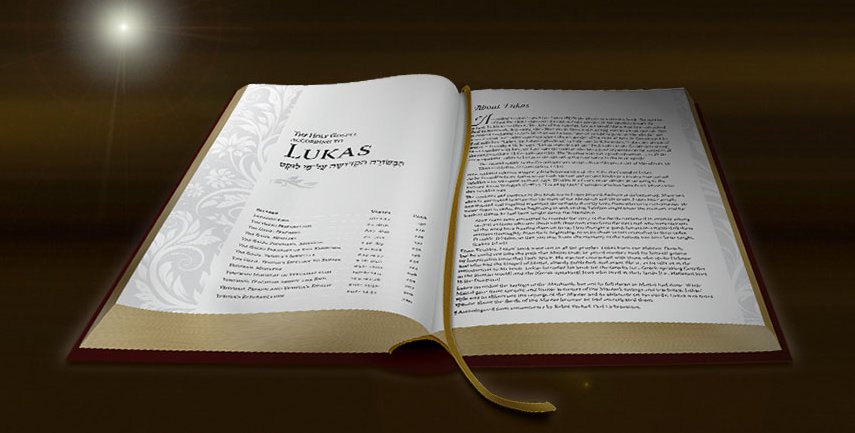
After using a translation with which most Christians would be familiar, Toby read the same verses again using the Delitzsch Hebrew Gospels:

He was thinking this way, but then an angel of HaShem appeared to him in a dream, saying, “Yosef son of David! Do not be afraid to take Miryam, your wife, for what has been formed within her is from the Holy Spirit. She is giving birth to a son, and you are to name him Yeshua, because he will save his people from their sins.”

As Toby pointed out, many Christians are fond of a hymn called “Jesus, Name Above All Names.” Have they gotten it wrong all these years? Is the true name of Messiah “Yeshua?” Is he offended when we call him “Jesus?” For that matter, how do we know “Yeshua” was/is his original name?

We’ll get to all that in a minute. Toby points to the first clue:

Messiah is named Jesus by direct command of God.

There’s something else. There seems to be a connection between the name Yeshua and what the angel said about him saving his people from their sins.

aaron-ebyThe scene shifts to Aaron Eby in Israel who provides the episode’s language lesson. As it turns out, we get the name “Jesus” from the Latin and Greek translations of the Hebrew word Yeshua. In Latin, his name is translated as “Iesus” and from the Greek, it’s “Ἰησοῦς”. Aaron says that we know Messiah’s name was Yeshua because it was actually a common name for Jewish men at that point in history in Israel. It’s actually a shortened version of Yehoshua which we translate into English as “Joshua.” Yehoshua means “The Lord is Salvation.”

Also, the name Yeshua, when it occurred in the Old Testament, was translated in the Septuagint as we see it also translated in the New Testament, so we can confidently say that Yeshua is the Hebrew name of Jesus.

And from what Aaron presented in his portion of this episode, the definition of the longer version of Yeshua’s name seems to be the connection in the angel’s words to Joseph. Name him “Jesus” (salvation) because he will bring salvation to his people.

Going back to Toby, we hit the second clue:

Jesus means salvation.

Since Jesus was such a common name at the time, it was important to differentiate the Messiah from all of the other Jewish boys and men called Yeshua, so he was referred to as “Yeshua of Nazareth.”

But we need one more clue and it comes from the Old Testament (Tanakh). Actually there are a lot of prophesies in the Old Testament that speak of the Messiah bringing salvation to Israel. Probably one of the oldest is in Genesis 49 when Jacob, before he dies, blesses his sons.

For Your salvation do I long, O Hashem!

Genesis 49:18 (Stone Edition Tanakh)

Toby says that according to the Jewish sages, right before Jacob uttered this exclamation, he had a vision of the end times and was longing for the coming of Messiah and his salvation.

Toby quoted from a number of prophesies, and you can find out what they are by viewing the episode, but he also spent some time using word substitution to illustrate his point: salvation = Yeshua and salvation = Jesus. Here’s a couple of examples. First, the original verse in the NASB translation:

Behold, the Lord has proclaimed to the end of the earth, Say to the daughter of Zion, “Lo, your salvation comes; Behold His reward is with Him, and His recompense before Him.”

Isaiah 62:11

Now with the first word substitution:

Behold, the Lord has proclaimed to the end of the earth, Say to the daughter of Zion, “Lo, your Yeshua comes; Behold His reward is with Him, and His recompense before Him.”

…and then the second:

Behold, the Lord has proclaimed to the end of the earth, Say to the daughter of Zion, “Lo, your Jesus comes; Behold His reward is with Him, and His recompense before Him.”

I know this program is written for a traditional Christian audience, so these verses are designed to make the greatest impact on them, but if there are any traditional (non-Messianic) Jewish viewers, they might have a hard time with the name “Jesus” being directly inserted into the Tanakh as an equivalent term for God’s salvation.

But the prophesies that Toby quotes also lead to the third and final clue:

The Prophets predicted that Messiah would bring salvation.

The lesson in this episode is as simple as that. The name “Jesus” is an English translation of the Greek and Latin translations of Messiah’s name from Hebrew, which is “Yeshua.” Yeshua relates to the Hebrew word for “salvation” and basically means that Messiah brings salvation. This was prophesied many times by many Old Testament prophets, so his name would have meaning to the Jewish people when linked with his Messianic mission.

What Did I Learn?

DaveningI learned that there is a liturgical prayer said by devout Jews three times a day that includes the phrase, …”whose horn will be raised with your salvation.”

Interestingly enough, we find something like it directly referring to Yeshua:

Blessed is HaShem, God of Yisrael, for he has taken note of his people and sent them redemption. He will cause a horn of salvation to sprout for us in the house of David his servant…

Luke 1:68-69 (DHE Gospels)

This is the blessing said over the infant Yeshua by Zecharyah the prophet at the Temple. As Toby points out, this isn’t Zecharyah asking for God to provide salvation for Israel, it’s the prophet thanking Hashem for having sent salvation in the form of the new-born Messiah Yeshua. Messiah and salvation had come.

I hadn’t made the connection between these verses and the daily prayers of Jews all over the world, all of whom are asking for one who has already arrived and who will come again: Yeshua of Nazareth, the Messiah and King of Israel.

I hope to review the next episode very soon.
FFOZ TV Review: Messiah

ffoz_tv2Episode 02: The term Christ is one of the most important terms in all of Scripture and yet is seldom fully understood by followers of Jesus. In episode two we will explore the prophecies of the Hebrew Scriptures and learn about the Jewish people’s expectation of the coming messiah. We will study the Hebrew Scriptures and learn that they speak of a coming anointed one, a king who will come to redeem mankind, defeat Israel’s enemies, and set up his kingdom.

The Lesson: What Does Messiah Mean?

In Episode 2: Messiah, the First Fruits of Zion (FFOZ) television series A Promise of What is to Come takes the audience through what to me was like “The Name of Christ 101.” I don’t mean to be flippant or disrespectful in saying it that way, but I guess I didn’t realize that there were so many Christians in the world today who still labor under a lack of comprehension of the meaning of the title “Christ”.

FFOZ teacher and narrator Toby Janicki starts off this episode correcting what most of us probably believed as children, if we were believers as children, that “Christ” is not simply the last name of Jesus. It’s a title and more than that, probably the most important concept in the Bible, particularly to the Jewish people. It not only tells us what Jesus did but what he is going to do.

Let’s look at two ways we can view Peter’s revelation that Jesus is “the Christ.”

And he asked them, “But who do you say that I am?” Peter answered him, “You are the Christ.”

Mark 8:29 (ESV)

He asked them, saying, “And you, what do you say about me — who am I?” Petros answered and said to him, “You are the Mashiach!”

Markos 8:29 (DHE Gospels)

By reading this verse using two different translations, Toby illustrates how the declaration of Peter can be viewed in two quite different ways. I find it interesting that Toby used the ESV translation, since in my Pastor’s opinion, it is actually one that promotes more of a supersessionistic or replacement theology viewpoint. Obviously, the Delitzsch Hebrew Gospels are designed to “retro-translate” the Greek into Hebrew and then translate that Hebrew forward into English to give the reader a more Jewish context for understanding the gospel message.

As in other episodes, information is cast as a mystery and we are provided with three clues in order to solve the mystery. Today, we confront the Mystery of Christ.

Toby uses John 1:41 and especially the text, “We have found the Messiah” (which means Christ) in order to show us the relationship or equivalency between the English words “Messiah” and “Christ.” This text was written for the sake of what John anticipated was a mixed Jewish and non-Jewish audience but as Toby points out, the original readers of this gospel weren’t provided with a definition of the term “Messiah.” That means the Jewish people involved, including Andrew and Simon Peter, already knew what “Messiah” meant. Yeshua (Jesus) did not invent a new role, “the Christ” but came to fulfill a pre-existing role: “Messiah.”

This gives us Clue 1:

The Title “Christ” was not new.

aaron-ebyThe scene shifts to Aaron Eby in Israel who provides the audience with a language lesson about the meaning of “Messiah” or rather, the Hebrew word “Moshiach.” He tells us that the Hebrew word “Mashach” means “to smear with oil.” We have examples in the Old Testament of both Kings and High Priests being inaugurated into office by literally having oil poured or smeared all over them.

For instance:

Then Samuel took the flask of oil, poured it on his head, kissed him and said, “Has not the Lord anointed you a ruler over His inheritance?

1 Samuel 10:1 (NASB)

So he said to his men, “Far be it from me because of the Lord that I should do this thing to my lord, the Lord’s anointed, to stretch out my hand against him, since he is the Lord’s anointed.”

1 Samuel 24:6 (NASB)

The “one who is anointed” or “anointed one” is “Moshiach” in Hebrew. When this Hebrew word had to be translated into Greek, the Greek word for “smeared with oil” was used, “Christos.” When the Greek was translated into English, rather than render it as “anointed one” or even “Messiah,” translators created a brand new word in English: “Christ.”

The scene returns to Toby for the rest of the message and we arrive at the final two clues.

Clue 2:

Messiah = Anointed One

And Clue 3:

Old Testament prophesies talk about the anointed one.

No one in the days of Jesus had to define what “Messiah” meant because every Jewish person already knew.

Philip found Nathanael and said to him, “We have found Him of whom Moses in the Law and also the Prophets wrote—Jesus of Nazareth, the son of Joseph.”

John 1:45 (NASB)

Messiah had been written about in the Torah of Moses and in the Prophets. Toby provides some key texts citing an anointed King such as David or Solomon and linking them to the anointed King: Messiah. He also reminds us of the two roles that Messiah fulfills, being both King, which we have already seen, and High Priest:

He became to all those who obey Him the source of eternal salvation, being designated by God as a high priest according to the order of Melchizedek.

Hebrews 5:9-10 (NASB)

In addition to quoting from Psalm 2 and Psalm 132, Toby relates the Messianic prophesies from Daniel 9:25, where we learn that Messiah will come to rebuild the ruins of Jerusalem, and Isaiah 61:1-3 where Messiah speaks in his own voice through the prophet. This is also the scroll that Jesus read in the synagogue as he declared himself as Moshiach before his people.

The scroll of Yeshayah the Prophet was given to him, and he opened the scroll and found the place where it is written:

The spirit of HaShem is upon me in order to anoint me to bring good news to the humble. He has sent me to care for the brokenhearted, to proclaim freedom for the exiles, and for the blind an opening release … to send the oppressed away free … to proclaim a year of favor for HaShem.

When he rolled up the scroll, returned it to the chazzan, and sat, the eyes of all who were in the synagogue were focused on him. He began saying to them, “Today this passage is fulfilled in your hearing.”

Lukas 4:17-21 (DHE Gospels)

But all is not fulfilled. The Messiah came once but, as we saw in the previous episode The Good News, the Messiah has yet to establish Israel as the head of all nations, redeem her people, and bring peace to Israel and the nations.

As we Christians wait for his return, Jews all over the world wait also for Messiah, as it is said:

I believe with great faith in the coming of Messiah, and even though he may delay, nevertheless, I still believe every day that he will come.

the twelfth declaration of faith

ffoz-tv-messiah
Maimonides, also known as the Rambam, wrote that declaration over a thousand years ago, and still Jews all over the world await the Messiah in great and perfect faith.

And so do we.

What Did I Learn?

Not to put too fine a point on it, I have heard most or all of this information about the meaning of “Christ” and “Moshiach” before. I guess you don’t have to spend too much time in the Hebrew Roots or Messianic movements before the subject comes up. Also, I believe this information is (or should be) largely available in most churches.

If I learned anything new, it was that, by creating this specific episode, the content planners at FFOZ must believe that this is new and valuable information for a traditionally Christian television audience. If that’s the case, then many Christians must have a great need for even the most basic information about the “Jewish Jesus” or Yeshua HaMoshiach.

If you found this message about the true meaning of the title “Christ” interesting and illuminating, I highly encourage you to watch the complete episode and all of the other episodes available at tv.ffoz.org. It is First Fruits of Zion: A promise of what is to come.

I hope to review the next episode very soon.

FFOZ TV Review: The Good News

ffoz_tv1Episode 01: Most Christians believe that the gospel message of Jesus is that he died for our sins and if we have faith in him we will be given the gift of eternal life. While certainly this is a major component of the gospel, it is not the whole story. In episode one viewers will learn that the concept of the gospel wasn’t invented by Jesus or the disciples, but rather was prophesied in the Hebrew Scriptures. The “Good News” was the promise of the coming messiah and that he would bring redemption to the children of Israel.

At the First Fruits of Zion (FFOZ) Shavuot conference last spring, I told FFOZ President Boaz Michael that I’d like to spread the “good news” of their television ministry through my blog by reviewing one episode of their TV show per week. Obviously, I’ve fallen down on the job. My life has been busy and there have been so many things I’ve wanted to write about. A few months ago, I did write a review about the FFOZ TV series as a whole, and watched a few episodes to get a “flavor” of how the show is organized. But that doesn’t impart the nature of the message each show offers its audience.

Today (as I write this), I’ve revisited my promise and watched the first episode, The Good News. This is actually about the “mystery” of the good news or gospel, since what Christians believe about the gospel message is only part of the story.

The Lesson: What is the Good News?

Toby Janicki is the main speaker and teacher for this and every episode and he asks the question, “what is the gospel message?” Christians think we know the answer. The gospels are the books of Matthew, Mark, Luke, and John and the gospel message is that Jesus died for our sins and was resurrected. Through his atoning work, anyone who believes in Christ will have their sins forgiven, receive eternal life, and go to heaven when they die.

Toby doesn’t deny any of that for a second but tells us that it is only part of the message of the gospel or “good news.”

This episode, like the entire TV series itself, encourages the viewer to look at the New Testament from its original First Century CE Jewish context. What would the Jewish people in the time of the apostles have heard and understood when Jesus spoke? How the church presents the gospel today does not carry forward that context and what we hear preached every Sunday is only a portion of the message. That’s the value of this television series to its defined audience, traditional Christian believers. Know Christ better by learning to understand the Jewish Jesus.

Jesus and the apostles were teaching the gospel or good news message long before the crucifixion and it wasn’t “Jesus will die for your sins.” In fact, Jesus spoke the good news in the very beginning:

The Spirit of Hashem is upon me in order to anoint me to bring good news to the humble. He has sent me to care for the brokenhearted, to proclaim freedom for the exiles, and for the blind an opening release … to send the oppressed free … to proclaim a year of favor for Hashem.

Luke 4:18-19 (DHE Gospels)

I used the Delitzch Hebrew Gospels translation for these verses, which Toby also reads from on the show when he quotes from the gospels. It imparts a greater sense of the Hebrew message by “retro-translating” the Greek text into Hebrew and is very helpful in drawing the mind of the Christian reader into the Jewish world of the Messiah.

You may also know that, in the above-quoted verses, Jesus was reading Isaiah 61:1-2 in the synagogue and he was speaking about himself. That scripture, along with several others from Isaiah, will provide valuable source information later in the show that is used to define “good news”.

So who are exiles, the blind, and the oppressed and what do they have to do with the gospel message?

The fact that the apostles didn’t seem to understand that Jesus had to die, and when he did, the shock, disappointment, and fear they experienced before his resurrection, as well as the surprise they felt after he was, tells us that they did not realize the good news had anything to do with the death and resurrection of the Messiah. What then did they think they were preaching to Israel and what was this “good news?”

Then Yeshua traveled around in all the Galil. He taught in their synagogues, he proclaimed the good news of the kingdom, and he healed every sickness and every disease among the people.

Matthew 4:23 (DHE Gospels)

It’s interesting that Toby notes Jesus never defines what the good news is to either the apostles or to anyone he preaches to. He assumes they already know what the gospel message is. But if even the apostles didn’t realize it meant that Jesus was to die, what were they supposed to know?

In this and the other FFOZ TV episodes, Toby presents information and then summaries it as clues, in this case three clues. The first is that the gospel or good news is actually the “good news of the Kingdom” as stated in the above-quoted passage from Matthew. This was a message specifically meant for the Jewish people in Israel and it was good news they were wanting to hear, a message of something they had been waiting for.

To understand what the gospel message is, the scene switches from Toby in the studio to FFOZ teacher and translator Aaron Eby in Israel. He provides the Hebrew language background for each lesson including this one.

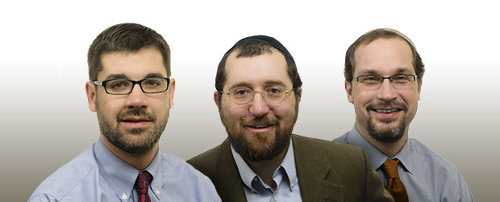
ffoz-teaching-teamAaron takes us through a series of passages from the book of Isaiah including Isaiah 40:9, 52:7, 60:6, and of course, 61:1. In each case the good news is the message of the Messianic mission, the redemption of Israel, that is, physical, national Israel, as well as the entire world, when the Messiah comes to reign as King. The Hebrew word for “good news” is related to the Greek word and its variants that we translate into English as “evangelism” and “gospel”. It’s easy to see how the church has historically understood the message in one sense, but missed its larger meaning.

The scene shifts back to Toby who gives us the second clue: there is a gospel message in the Old Testament. That also takes us to clue 3: the gospel in the Old Testament is the promise of the coming of Messiah and the redemption of Israel, the Jewish people.

We can clearly see that the apostles expected this after the resurrection:

So when they had come together, they were asking Him, saying, “Lord, is it at this time You are restoring the kingdom to Israel?” He said to them, “It is not for you to know times or epochs which the Father has fixed by His own authority; but you will receive power when the Holy Spirit has come upon you; and you shall be My witnesses both in Jerusalem, and in all Judea and Samaria, and even to the remotest part of the earth.”

Acts 1:6-8 (NASB)

Notice that Jesus doesn’t rebuke the apostles for desiring national redemption and self-rule, he just says they don’t have the right to know when it will occur. He does say that before his return and the establishment of the Messianic Kingdom, they will receive power from the Holy Spirit to be Messianic witnesses “in Jerusalem, and in all Judea and Samaria, and even to the remotest part of the earth,” which is exactly what we see in the rest of the book of Acts and the New Testament.

Toby then takes the audience through a more detailed examination of each of the previously identified passages in Isaiah, closely drawing the meaning of the good news out and illustrating for us repeatedly how the Jewish audience in the time of the apostles would have understood the good news of Jesus as the coming of the Messiah and the redemption and restoration of Israel, and a reign of peace throughout the entire world.

Who are the exiles? Who are the blind? Who are the persecuted? Exiled and persecuted Israel, temporarily blinded to the Messiah for the sake of the Gentiles:

For I would not, brethren, that ye should be ignorant of this mystery, lest ye should be wise in your own conceits; that blindness in part is happened to Israel, until the fulness of the Gentiles be come in.

Romans 11:25 (KJV)

The Greek word most Bibles translate as “hardening” or some variant, is sometimes rendered as “blindness,” such as the King James Bible does. Read in a Jewish context and heard through a Jewish consciousness, when Jesus recited the words of the Prophet Isaiah in Luke 4:18-19, he was saying that he was the Messiah who had come to bring the good news to Israel and to one day redeem and restore her as a physical Kingdom on Earth.

Toby said something interesting about one of the Isaiah prophesies I want to share:

An abundance of camels will envelop you, camel colts of Midian and Ephah, and all of them will come from Sheba; gold and frankincense will they bear, and they praises of Hashem will they proclaim.

Isaiah 60:6 (Stone Edition Tanakh)

Toby relates that according to the Jewish sages, this describes the Gentile nations coming to Jerusalem to pay tribute to King Messiah. However, we have already seen something similar in the Magi of the East coming with gifts to pay tribute to the newborn Jesus. Of course, it is quite possible that Isaiah’s prophesy may have more than a single application. And it’s important to know the relationship between Gentile Christianity, the redeemed Israel, and the Jewish Messiah King.

The other interesting thing that Toby brought up (and I never realized this before) is that Jesus is actually speaking in Isaiah 61:1. Notice the text says (as translated in the Stone Edition Tanakh) that “the spirit of my Lord, Hashem/Elohim, is upon me, because Hashem has anointed me to bring tidings to the humbled; He has sent me to bind up the brokenhearted…

The emphasis is obviously mine and I include it to illustrate that it is the Messiah who is directly speaking in these verses, the voice of Yeshua bringing hope to Israel in the pages of the Old Testament.

When Christians read about the redemption of Israel in Isaiah, they often interpret the prophesy to mean “spiritual Israel” or “the church.” And yet, the Jewish hearers of Jesus and the Jewish readers of the gospels of the apostles would have understood the message much differently. They would have understood that the good news of Jesus is the promise of the coming Messiah and the redemption and restoration of national, physical Israel as a Kingdom on Earth.

dhe_lukas

This does not unwrite or replace the fact that Jesus died for our sins and that in his resurrection, we have forgiveness and an eternal place in the world to come if we believe. However, we Gentiles are grafted in to the commonwealth of Israel, as Toby teaches. We don’t replace Israel, we come alongside her and partakers of the promises, and as subjects and servants of the Jewish Messiah King.
What Did I Learn?

I’ve consumed a great deal of this material at FFOZ conferences or from their audio CD lectures as well as reading it in their printed material, but this television episode titled “The Good News” helped me organize that information into something that is easier for me to remember and transmit to others, a message to my Christian reading audience (and I am a Christian among them) that we have only been taught part of the story of the good news.

Toby Janicki, Aaron Eby, and the rest of the FFOZ ministry have “solved” the mystery of the gospel and clued us in on the rest of the message: Jesus came to die for our sins and to deliver the promise of everlasting life for all who believe. But, and this is extremely important, as Messiah King, he came to deliver the promise of good news to all of Israel that when he returns, he will release the captives in exile, restore sight to the temporarily blinded, free the oppressed Jewish people, and proclaim freedom for Israel, the year of favor from the Lord.

If you found this message of the true good news of Jesus Christ interesting and illuminating, I highly encourage you to watch the complete episode The Good News, which is the first in the series, at tv.ffoz.org. It is First Fruits of Zion: A promise of what is to come.

I hope to review the next episode very soon.
Gifts of the Spirit: Let Us Be Healed by God

new-heartThen he returned to the man of God, he and all his company, and he came and stood before him. And he said, “Behold, I know that there is no God in all the earth but in Israel.”

2 Kings 5:15

And he said to them, “Go into all the world and proclaim the gospel to the whole creation. Whoever believes and is baptized will be saved, but whoever does not believe will be condemned. And these signs will accompany those who believe: in my name they will cast out demons; they will speak in new tongues; they will pick up serpents with their hands; and if they drink any deadly poison, it will not hurt them; they will lay their hands on the sick, and they will recover.”

Mark 16:15-18

Eight days later, his disciples were inside again, and Thomas was with them. Although the doors were locked, Jesus came and stood among them and said, “Peace be with you.” Then he said to Thomas, “Put your finger here, and see my hands; and put out your hand, and place it in my side. Do not disbelieve, but believe.” Thomas answered him, “My Lord and my God!” Jesus said to him, “Have you believed because you have seen me? Blessed are those who have not seen and yet have believed.”

John 20:26-29

In yesterday’s morning meditation I asked, “Why was Jesus resurrected from the dead but his wounds were not healed?” This question was part of Aaron Eby’s presentation Turn of the Age at the First Fruits of Zion (FFOZ) annual Shavuot conference. This year’s theme, as I’ve previously mentioned, was Gifts of the Spirit and addresses something that Messianic Judaism hasn’t given a lot of attention to historically: the understanding and movement of the Holy Spirit of God in Jewish thought.

As far as the purpose of the miracles of Jesus goes, you’ve probably already guessed, since I provided ample hints. According to Eby, “the reason for Yeshua’s miracles was so that people would know God.”

Think about it. It’s not as if only prophets of God or the Messiah could perform supernatural miracles.

So Moses and Aaron went to Pharaoh and did just as the Lord commanded. Aaron cast down his staff before Pharaoh and his servants, and it became a serpent. Then Pharaoh summoned the wise men and the sorcerers, and they, the magicians of Egypt, also did the same by their secret arts. For each man cast down his staff, and they became serpents.

Exodus 7:10-12

So the elders of Moab and the elders of Midian departed with the fees for divination in their hand. And they came to Balaam and gave him Balak’s message. And he said to them, “Lodge here tonight, and I will bring back word to you, as the Lord speaks to me.” So the princes of Moab stayed with Balaam. And God came to Balaam and said, “Who are these men with you?” And Balaam said to God, “Balak the son of Zippor, king of Moab, has sent to me, saying, ‘Behold, a people has come out of Egypt, and it covers the face of the earth. Now come, curse them for me. Perhaps I shall be able to fight against them and drive them out.’” God said to Balaam, “You shall not go with them. You shall not curse the people, for they are blessed.”

Numbers 22:7-12

But there was a man named Simon, who had previously practiced magic in the city and amazed the people of Samaria, saying that he himself was somebody great. They all paid attention to him, from the least to the greatest, saying, “This man is the power of God that is called Great.” And they paid attention to him because for a long time he had amazed them with his magic.

Acts 8:9-11

As we see from the above-examples, miracles all by themselves don’t prove you’re a messenger from God. Plenty of evil men could do magic and Balaam was not only a great magician, but he even spoke with God!

But it wasn’t just that Jesus did miracles. Many (but not all) of the miracles of Messiah were signs, not only to fulfill what the Prophets had said about him, but to show the people that God cared about human beings.

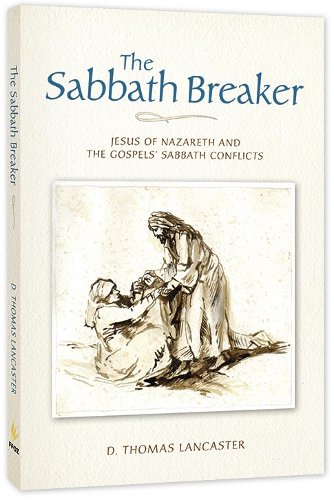
sabbath-breaker-lancasterSeveral weeks ago, I reviewed D. Thomas Lancaster’s book The Sabbath Breaker: Jesus of Nazareth and The Gospels’ Sabbath Conflicts. Lancaster illustrates in his writing how Jesus did indeed perform miracles of healing on the Shabbat which did not involve life threatening injuries or illness. While this is a violation of Shabbat on one level, the higher principle of compassion and caring for human beings made this permissible. After all, “the Shabbat was made for man, not man for the Shabbat.”

So the specifics of Yeshua’s miracles were to fulfill the prophesies said about Messiah and to show that God does love His people Israel and seeks to draw them closer to knowledge of Him and the Kingdom of Heaven.

Now when John heard in prison about the deeds of the Christ, he sent word by his disciples and said to him, “Are you the one who is to come, or shall we look for another?” And Jesus answered them, “Go and tell John what you hear and see: the blind receive their sight and the lame walk, lepers are cleansed and the deaf hear, and the dead are raised up, and the poor have good news preached to them. And blessed is the one who is not offended by me.”

Matthew 11:2-6

Again he entered the synagogue, and a man was there with a withered hand. And they watched Jesus, to see whether he would heal him on the Sabbath, so that they might accuse him. And he said to the man with the withered hand, “Come here.” And he said to them, “Is it lawful on the Sabbath to do good or to do harm, to save life or to kill?” But they were silent. And he looked around at them with anger, grieved at their hardness of heart, and said to the man, “Stretch out your hand.” He stretched it out, and his hand was restored.

Mark 3:1-5

According to Eby, “healing corresponds to God’s self-disclosure.” But how?

May the One who was a source of blessing for our ancestors, bring blessings of healing upon (insert names here), a healing of body and a healing of spirit. May those in whose care they are entrusted be gifted with wisdom and skill, and those who surround them be gifted with love and trust, openness and support in their care. And may they be healed along with all those who are in need. Blessed are You, Source of healing.

-Mi sheberakh
quoted from Jewishealing.com

It’s probably anachronistic to insert this modern Jewish blessing for “a complete healing from Heaven” into a discussion of the healing miracles of Jesus, but the principle most likely predated the written blessing by centuries or even millennia. If you’ll forgive my assumption here, we can then consider healing as both physical and spiritual and indeed, when someone is healed in one aspect, the healing can be for the “whole” person.

On one of those days, as he was teaching, Pharisees and teachers of the law were sitting there, who had come from every village of Galilee and Judea and from Jerusalem. And the power of the Lord was with him to heal. And behold, some men were bringing on a bed a man who was paralyzed, and they were seeking to bring him in and lay him before Jesus, but finding no way to bring him in, because of the crowd, they went up on the roof and let him down with his bed through the tiles into the midst before Jesus. And when he saw their faith, he said, “Man, your sins are forgiven you.” And the scribes and the Pharisees began to question, saying, “Who is this who speaks blasphemies? Who can forgive sins but God alone?” When Jesus perceived their thoughts, he answered them, “Why do you question in your hearts? Which is easier, to say, ‘Your sins are forgiven you,’ or to say, ‘Rise and walk’? But that you may know that the Son of Man has authority on earth to forgive sins”—he said to the man who was paralyzed—“I say to you, rise, pick up your bed and go home.” And immediately he rose up before them and picked up what he had been lying on and went home, glorifying God. And amazement seized them all, and they glorified God and were filled with awe, saying, “We have seen extraordinary things today.”

Luke 5:17-26

healingToday, it’s not uncommon in some Charismatic churches to lay hands on a person who is ill, to pour oil on them, and to pray for healing, but as far as I can tell, this is rather incomplete if all of the prayers are devoted to the person’s physical healing. When Jesus healed the invalid at the Bethesda pool at the Sheep Gate (John 5:2-9), he later, at the Temple, said to the healed man, “See, you have been made well! Do not sin any more, so that nothing worse happens to you.” (John 5:14 NRSV)

I don’t think we can escape how healing is directly connected to restoring a person to both physical and spiritual health.

This is certainly God’s desire for all of humanity and what we see Jesus doing to heal people in the Gospels is only a taste of what we will see and experience in the Messianic Age. It’s as if with each healing and every other miracle Messiah performed, he was lifting back the edge of the covers, so to speak, and showing us just a hint of how the world will be when he returns in glory and power.

But what about the healing of Jesus himself? Why when he was resurrected in his “glorified body” was that body still full of holes?

When it was evening on that day, the first day of the week, and the doors of the house where the disciples had met were locked for fear of the Jews, Jesus came and stood among them and said, “Peace be with you.” After he said this, he showed them his hands and his side. Then the disciples rejoiced when they saw the Lord.

John 20-19-20 (NRSV)

If Jesus had appeared without his wounds, it could have been said that the one who was resurrected was not the same person as the one who had died. By appearing alive to the disciples and to many other people with his wounds present and visible, it was established that the Jesus who had died was brought back to life, lived and walked among his people Israel, and was the same Jesus who ascended into Heaven to sit at the right hand of the Father.

Thus we have the confidence to know that we have a High Priest in the Heavenly Court who has also walked among men and who has lived a fully human life.

For we do not have a high priest who is unable to sympathize with our weaknesses, but one who in every respect has been tempted as we are, yet without sin. Let us then with confidence draw near to the throne of grace, that we may receive mercy and find grace to help in time of need.

Hebrews 4:15-16

I’m extending Eby’s teaching beyond what he actually said, but I do this to share with you what his words meant to me and how they impacted my thoughts and spirit rather than to just transcribe his presentation. For everything he and all of the other teachers said, you will be able to order an audio CD from First Fruits of Zion (FFOZ) when it becomes available.

But Aaron said something that ties into his message as I recorded it in yesterday’s morning meditation.

As we read of the miracles of Jesus and indeed, the many other miracles that are from God, we can come to know God as Naaman the Syrian did, that there is no other God but the God of Israel. We can then seek first the Kingdom of Heaven as an act of obedience to our King and to summon his return to us and the age of the healing of the world.

How?

world-in-his-handsFirst, by having faith and trust in the God of the Bible and the Good News of the Messiah for all of Israel and the world. Then we must also be loyal to the King by adhering to his teachings and living an unswerving life of devotion and holiness. This life is lived by performing the mitzvot, each of us as we are called, the Jew and also the Gentile, repairing the damage done by the sins that caused the exile, first of all humanity from Gan Eden (the Garden of Eden), and also of the Jews from the Holy Land of Israel. And what mitzvot are we to perform?

One of the scribes came near and heard them disputing with one another, and seeing that he answered them well, he asked him, “Which commandment is the first of all?” Jesus answered, “The first is, ‘Hear, O Israel: the Lord our God, the Lord is one; you shall love the Lord your God with all your heart, and with all your soul, and with all your mind, and with all your strength.’ The second is this, ‘You shall love your neighbor as yourself.’ There is no other commandment greater than these.” Then the scribe said to him, “You are right, Teacher; you have truly said that ‘he is one, and besides him there is no other’; and ‘to love him with all the heart, and with all the understanding, and with all the strength,’ and ‘to love one’s neighbor as oneself,’—this is much more important than all whole burnt offerings and sacrifices.” When Jesus saw that he answered wisely, he said to him, “You are not far from the kingdom of God.” After that no one dared to ask him any question.

Mark 12:28-34 (NRSV)

Love God. Love your neighbor. Heal the world physically and spiritually. Pray for the healing of Israel. Pray for the healing between Christian and Jewish people.

May the Messiah come soon and in our day.

126 days.


Gifts of the Spirit: Dancing at the King’s Wedding

king-davidThen he returned to the man of God, he and all his company, and he came and stood before him. And he said, “Behold, I know that there is no God in all the earth but in Israel.”

2 Kings 5:15

From that time Jesus began to preach, saying, “Repent, for the kingdom of heaven is at hand.”

Matthew 4:17

And he said to them, “Go into all the world and proclaim the gospel to the whole creation. Whoever believes and is baptized will be saved, but whoever does not believe will be condemned. And these signs will accompany those who believe: in my name they will cast out demons; they will speak in new tongues; they will pick up serpents with their hands; and if they drink any deadly poison, it will not hurt them; they will lay their hands on the sick, and they will recover.”

Mark 16:15-18

Curious combination of scriptures. What could they possibly have to do with one another? Oh sure. The quotes from Jesus seem to mesh, linking the Gospel message with the Kingdom of Heaven. But do they link in the way we think they do? Perhaps not.

Last Friday morning, Aaron Eby spoke at the First Fruits of Zion (FFOZ) annual Shavuot conference on a topic called Turn of the Age. The message focused on what we see the Master saying in Matthew 4. It wasn’t the last time Yeshua would speak those words and those words also resonated throughout many different teachings at the conference.

The Kingdom of God is near. What does that mean?

Here’s a hint: it’s not Heaven.

On that day there shall be no light, cold, or frost. And there shall be a unique day, which is known to the Lord, neither day nor night, but at evening time there shall be light.

On that day living waters shall flow out from Jerusalem, half of them to the eastern sea and half of them to the western sea. It shall continue in summer as in winter.

And the Lord will be king over all the earth. On that day the Lord will be one and his name one.

Zechariah 14:6-9

That’s not Heaven either. We see the prophet telling us of the events that will herald the coming Messianic Age, when the Messiah King will rule over all the earth from his throne in Holy Jerusalem.

But if this is what Jesus meant by the Kingdom of Heaven is near, how could it be near? Almost 2,000 years have passed since he spoke those words, and the Messianic Age is no more upon us now than it was when the Master taught his disciples in the Temple courts. What is “near?”

And the scribe said to him, “You are right, Teacher. You have truly said that he is one, and there is no other besides him. And to love him with all the heart and with all the understanding and with all the strength, and to love one’s neighbor as oneself, is much more than all whole burnt offerings and sacrifices.” And when Jesus saw that he answered wisely, he said to him, “You are not far from the kingdom of God.”

Mark 12:32-34

How could Jesus say that the scribe was not far from the kingdom of God? How could the scribe be “near” the Messianic Age when we know that the Messianic Age; the return of the King, has not yet occurred? We’ve been waiting for twenty centuries and we are continuing to wait.

From that time Jesus began to preach, saying, “Repent, for the kingdom of heaven is at hand.”

Matthew 4:17

What does repentance have to do with bringing the Messianic Age? For that matter, what is the “good news” of the Messiah?

According to Eby, it has nothing to do with personal salvation. But let me back up a second.

Yes, of course, personal salvation is important and even vital to us as individual believers. We cannot even know God to the slightest degree unless we repent of our sins, confess Christ as Lord, and accept the gift of salvation. I know that.

But that’s not the entire message or even the primary message of the Gospel.

up_to_jerusalemIn America and many other western nations, Christianity is taught as a religion of individuals. Oh sure, we have the expression “body of Christ,” but we don’t act much like a body. Judaism, by contrast, is much more community focused. The idea and lived expression of “Israel” has never been about the individual Jewish person, but about all Jews everywhere, inextricably tied together with all other Jews, regardless of where they live, what language they speak, their local customs, or anything else. Yes, it is true that not all of the different groups of Jewish people get along all the time and there can be much friction, but at the end of the day, so to speak, a Jew is a Jew. Just take a look at Shoah and you’ll understand. When they come for one Jew, they come for all Jews.

The Good News is not just the message of personal redemption but of national redemption for all of Israel; it’s the good news that the Messiah King has come and that Israel has been restored and brought back to God as a Holy People and as the head of the nations.

So when they had come together, they asked him, “Lord, will you at this time restore the kingdom to Israel?”

Acts 1:6

Clearly the apostles understood the message of the Good News of the Kingdom, not of going up to Heaven but of Heaven coming to earth, so to speak; of the restoration of Israel and the return of the King to the Throne of David. The question wasn’t inappropriate, it just came too soon.

Lest you be wise in your own sight, I do not want you to be unaware of this mystery, brothers: a partial hardening has come upon Israel, until the fullness of the Gentiles has come in. And in this way all Israel will be saved, as it is written,

“The Deliverer will come from Zion, he will banish ungodliness from Jacob”; “and this will be my covenant with them when I take away their sins.”

As regards the gospel, they are enemies for your sake. But as regards election, they are beloved for the sake of their forefathers. For the gifts and the calling of God are irrevocable.

Romans 11:25-29

Christianity has been beating the Jews viciously with the “Gospel message” for many centuries, demanding that Jews stop being Jewish in order to be saved by the “Goyishe Jesus.” But we’ve terribly misunderstood what Moshiach has taught us. We’ve put the cart before the horse. We substituted the nations for Israel.

It is we in the church who must repent for the Kingdom of Messiah is at hand, and we don’t want him to discover us unprepared.

“Then the kingdom of heaven will be like ten virgins who took their lamps and went to meet the bridegroom. Five of them were foolish, and five were wise. For when the foolish took their lamps, they took no oil with them, but the wise took flasks of oil with their lamps. As the bridegroom was delayed, they all became drowsy and slept. But at midnight there was a cry, ‘Here is the bridegroom! Come out to meet him.’ Then all those virgins rose and trimmed their lamps. And the foolish said to the wise, ‘Give us some of your oil, for our lamps are going out.’ But the wise answered, saying, ‘Since there will not be enough for us and for you, go rather to the dealers and buy for yourselves.’ And while they were going to buy, the bridegroom came, and those who were ready went in with him to the marriage feast, and the door was shut. Afterward the other virgins came also, saying, ‘Lord, lord, open to us.’ But he answered, ‘Truly, I say to you, I do not know you.’ Watch therefore, for you know neither the day nor the hour.

Matthew 25:1-13

Aaron didn’t quote all these scriptures, but in reviewing my notes of his teaching, these words are fairly dripping off the tips of my fingers and onto the keyboard. Imagine then, that the foolish virgins were those who did not know the King for they did not know Israel, but the wise virgins knew the King and the King knew them, for they waited for the rising of the Jewish nation and the return of Israel’s firstborn son from Heaven.

The Kingdom of Heaven is near whenever we do something to prepare ourselves, whenever we read the Bible, whenever we pray. The Kingdom is at hand whenever we give food to the hungry, whenever we visit the sick, whenever we comfort a person who is grieving. We summon the Kingdom every time we do the will of the Lord and Master who loves our souls. We bring the Kingdom just a little bit closer whenever we love God, whenever we love another human being, and especially whenever we love Israel.

wind-sky-spirit-ruachThe Good News is that we should repent, particularly of our sins against Israel, in order to bring the Kingdom of God. When we repent, we bring the Messianic Age one step closer to fruition. In Judaism, it is believed that human beings have some sort of control of the “timing” of the Master’s return. I don’t know if that’s really true or not (and certainly it’s not a belief in the church) but it does summon the idea that we are partners in creation with God. When we are saved, we are to live a spirit-filled life, one of patience, kindness, and love, a life that rejoices in truth, that bears all things, believes all things, hopes all things, and endures all things.

The gifts of the Spirit are in an intricate dance with the Gospel of Christ and the Word of God, and we must be part of that dance as well, lest we be left out in the cold and the dark when the bridegroom comes. We can dance at the wedding of the King or march to a funeral dirge. Our choice.

This is only part of what Aaron had to say, but to say more would make this “meditation” far too long, at least for today. I haven’t even told you why Jesus did miracles. It’s not for the reason that you think, although Naaman the commander of the army of the king of Syria knew.

I’ll leave you with a question (which I’ll answer tomorrow).

Eight days later, his disciples were inside again, and Thomas was with them. Although the doors were locked, Jesus came and stood among them and said, “Peace be with you.” Then he said to Thomas, “Put your finger here, and see my hands; and put out your hand, and place it in my side. Do not disbelieve, but believe.” Thomas answered him, “My Lord and my God!” Jesus said to him, “Have you believed because you have seen me? Blessed are those who have not seen and yet have believed.”

John 20:26-29

Why was Jesus resurrected from the dead but his wounds were not healed?

127 days.

Reviewing FFOZ.TV: A Promise of What is to Come

ffoz-tvThe First Fruits of Zion television program delivers a high-energy, professional presentation of the prophetic aspects of the Gospel message from a Messianic Jewish perspective. Every episode opens new insights into the teaching of Jesus of Nazareth with end-times implications. Kingdom-focused and Jesus-centered, this is Messianic Jewish teaching at its best. It will encourage Christians to go deeper in their personal relationship with the Jewish Messiah.

The program tagline, “A Promise of What is to Come,” acknowledges that there is something greater taking place than just learning and understanding the bible in a new way.

We are part of a restoration and a return predicted by Moses, the prophets, Yeshua (Jesus) and the apostles. The modern state of Israel and the messianic Jewish revival we see today is only the first blossoming of the great, final redemption, which will usher in the kingdom of messiah.

-from “Welcome to FFOZ TV”
tv.ffoz.org

Messianic Jewish educational ministry First Fruits of Zion (FFOZ) launched its own television series earlier this year with an eye on reaching Christian television networks and reaching Christians. Boaz Michael and Toby Janicki were recently interviewed by God’s Learning Channel (GLC) about FFOZ.tv, and GLC is the first Christian TV network to begin broadcasting the FFOZ TV series. My understanding is that FFOZ.tv is currently targeting other Christian television venues for their program in order to “spread the word.”

But what about their program?

Boaz Michael, Founder and President of FFOZ asked me to review the program on my blog. I’ve been aware of FFOZ.tv for about a year now, having viewed an early version of the first episode at last year’s FFOZ Shavuot conference. I’ve seen a few clips of the show since then, but I’m not a big television watcher, so I didn’t go out of my way to take a look at the finished product.

Overview

For my review, I chose to sample two episodes: episode 4, Jewish Prophesies, originally aired on March 17, and episode 5, Son of David, originally aired on March 24 (the full episode list is available for those shows that have already aired and they can be viewed freely online).

Structure and Format

Each show is approximately thirty minutes long and follows a standard format. Toby Janicki is the primary host of the program, presenting the issue to be examined during the broadcast, taking the audience through the scriptures to examine the topic, say Messianic prophesies, and then breaking the information down into three major “talking points.” Mid-show, the scene shifts to FFOZ teacher Aaron Eby speaking from Israel and explaining aspects of Judaism and the Hebrew language as they apply to the subject being discussed. The scene then shifts back to Toby in the studio, where he brings the program and the topic to a conclusion. At the very end, Boaz Michael makes a brief appearance, wrapping up the broadcast and introducing the topic for next time.

Content

The show is written for a Christian audience that knows little or nothing about Messianic Judaism and Judaism in general. For those of us who are familiar with the subjects involved, the content seems elementary most of the time, though therewere “tidbits” of information I found new or at least that were clarified for me. The show is definitely designed to be “Messianic Judaism 101” and its most obvious purpose is to gently bring mainstream Christians into a beginning familiarity with the Jewishness of Jesus, the continued meaning of the Jewish people and the nation of Israel in the present world and the Kingdom of God, and how the future of Christianity must always look to Jewish redemption for the people and nation of Israel as the goal.

ffoz-teaching-teamThere are twenty-six episodes “in the can” for the first season of the FFOZ.tv series. Each episode builds upon one another, so while each individual broadcast is a self-contained show, the audience won’t gain access to the complete Gospel message being presented from a Messianic Jewish perspective unless they view all of the episodes. Presumably, if the series is successful, the first twenty-six episodes will only be the beginning.

In the two shows I viewed, Toby regularly introduces himself as a Gentile who “practices Messianic Judaism.” This appears to be included to re-enforce Toby’s connection with his Gentile Christian audience but also connect him back to Messianic Judaism as a practitioner and teacher. Aaron’s portion, by contrast, is set in Israel, with his interviews being done “on the streets” to give a definite “Jewishness” to his content.

Look and Feel

Production values for the show are high and are at or near the levels of commercial television programs. The primary studio presents a “den” or “office” setting in rich earth tones, low lighting, and with numerous Jewish artifacts in the background to communicate warmth, approachability, and of course, Judaism. The music seems a little dramatic at times and for a couple of moments (during the HaYesod ad I think…I’m getting to that), I felt like I was getting ready to blast off into space. However, I noticed the tendency toward dramatic music and imagery on GLC when I watched the introduction to the Michael/Janicki interview, so maybe it’s an expected element of Christian television.

As I mentioned, Aaron’s part of the program is always filmed “on the streets of Israel” (presumably Jerusalem) so that the background views are universally recognizable as Jewish and Israeli. Aaron’s portions seem to create a bridge between the audience and Israel, supporting the overarching message of FFOZ.tv that Christianity is Jewish and irrevocably tied to Israel and Judaism.

Marketing

FFOZ is a non-profit organization and their primary “product” is the educational materials they produce. The purpose of FFOZ is to create and disseminate specific data to both Christian and Jewish audiences (see Vine of David for a list of materials specifically designed for Jewish people). The real “product” of FFOZ then is information which is packaged in a variety of forms including books, magazines, programs such as HaYesod and Torah Club, and of course, television.

However, in order to inform potential audiences of the material that is available, you have to market it. That’s another component of FFOZ.tv. The very first scripture that Toby reads in any program (of the two I viewed, anyway), is from the Delitzsch Hebrew Gospels. The rest of the time, he uses the ESV Bible. As Toby is reading from the Delitzsch version, a phone number and website URL appear at the bottom of the screen telling the audience how to purchase a copy.

About half to three-quarters of the way through the broadcast, the program content breaks for an ad about HaYesod, featuring mostly the FFOZ teaching staff presenting information on this learning program (which seems to have evolved quite a bit since I sat in a HaYesod class a decade or so ago).

Near the end of the broadcast, another commercial came on, this time describing the FFOZ Friends program, which allows people who subscribe to donate monthly to the ministry and describes, depending on which tier they choose, which products and services they’ll receive.

On the one hand, this all seemed a little distracting to me, but on the other hand, since at my “day job,” I directly report to the Vice President of Marketing, I have a deep understanding of the necessity and purpose of marketing any product that is for public consumption. You can’t buy and learn from something if you don’t know it exists.

Conclusion

resources-studyFFOZ.tv is made to introduce Christian audiences to Messianic Judaism, Judaism, and Israel. Although the Christian faith has its origins in first century Judaism and the Jewish Messiah, we have diverged from them significantly in the past twenty centuries, until the “Jewishness of Jesus” and the Hebraic beginnings of our faith are only a dim memory. FFOZ.tv is attempting to gently guide its Christian audience in a friendly and approachable atmosphere, back to some of the key concepts that define Messianic Judaism in order to realign Christian thoughts and feelings back toward our “Jewish roots.” The television program is also a “jumping off” platform for the audience to use in acquiring and exploring other FFOZ products, which will then (ideally) re-enforce and deepen the information base of Christians on Messianic Judaism, the absolute requirement of Israel’s national redemption in the Kingdom of God, and the vital role of the church in bringing about Jewish primacy and restoring Israel to its former glory, all in anticipation of the return of King Messiah.

If one picture is worth a thousand words, then what is television? In this case, television is entrance for any believer who watches Christian television or who is most likely to accept information in a video format, to the message of the Gospels from the perspective of Messianic Judaism. It provides and easy to access and easy to absorb doorway for the Christian to begin to encounter the Jewish Messiah King and the promise of what is to come.

Please visit First Fruits of Zion: A Promise of What is to Come and view any or all of the episodes available (seven as I write this but more are coming). Watching a single episode will only take thirty minutes of your time and you can judge for yourself whether or not if FFOZ.tv has a message that is speaking to you.