Tag Archives: Bible

One Perspective on Messianic Judaism

Long-time commentator ProclaimLiberty (PL), in response to Chaya, another of my enduring readers, has framed a detailed outline of his perspective on the Messianic Jewish viewpoint on God, Messiah, and the Bible. After a bit of editing on his part, he’s asked me to post it here, and I agreed. From here to the end is what PL has crafted. The comments section is open. Since I didn’t author what you’re about to read, please direct any specific questions to PL. Thank you.

—————————————————

@Chaya — You wrote:
“@James, @PL and others, I would like to know what you view as the, “MJ viewpoint,” because, according to my understanding, there are many viewpoints and the situation continues to evolve/change.”

I would answer that I see two possible ways of trying to envision what is “the MJ viewpoint”. One would be some sort of aggregate summary of whatever those who claim to represent MJ seem to be expressing. Since there seem to be a great many conflicting expressions extant, I suggest that this method is intractable. It lacks a coherent objective model by which to qualify the various subjective views and how well or badly they actually reflect “genuine” MJ. The other method, which I believe to be more accurate and much easier to define, is a theoretical or philosophical construct or model. Hence I would answer that the definition of “the MJ viewpoint” may be stated simply, though its ramifications can be elaborated broadly. I would like to outline it thusly:
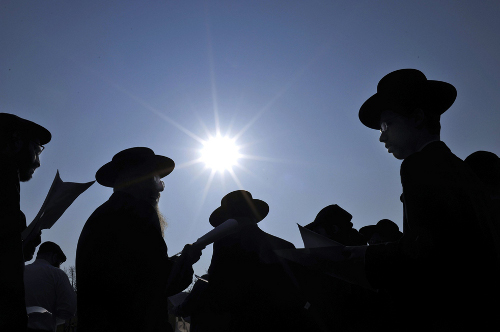
Orthodox JewsPoint 1. Messianic Judaism (“MJ”), or Jewish messianism, begins and ends with Jews and Jewish behavior and outlook. It is, however, the nature of HaShem’s choice of the Jewish people that they affect all of humanity because ultimately all humans are one Adamic (or even Noa’hide) family. Nonetheless, Jewish messianists must define themselves within Judaism and the Jewish people; and their lifestyle must reflect the traditions that are definitive of the Jewish people and their (our) four millennia of developing civilization. MJs must not view themselves as factional separatists (“minim”) at odds with other Jews.

An MJ organization in the USA called “Hashivenu” (@ hashivenu.org) expressed this as one of their core principles with the phrase: “The Jewish people are ‘us’, not ‘them’.”. They elaborated it, with a degree of perspective developed from prior Hebrew-Christian experiences, as follows:

Like a boat that had drifted from its moorings, we were not cognizant of what was happening to us until a key event, conversation, or combination of factors jolted us awake to the realization that we were farther from our Jewish moorings than we had realized.

For most of us, experience in evangelical contexts taught us to look at Jews only as people to whom we ought to witness. For us, the subtext of every family gathering became “How can I bring the subject up?” and the objective in our relationships with Jewish family, friends and acquaintances became “How can I witness to them without their closing the door on the Gospel and on me?” As important as these issues are, we realize now how wrong it was for these evangelistic concerns to be the sole axis of measurement of relationship with other Jews, even our own family members. We became church-culture chameleons, adept at blending in, showing that even though we were Jews, “we weren’t like the other Jews”: we were real Christians, too. More often than we were prepared to admit, though, we felt ourselves uneasy strangers in a strange land of potluck suppers, hallelujahs, and obligatory right-wing politics. But we had been taught, “You can’t go back to what you were. This sense of distance from the Jewish people, Jewish ways, and from family is the cost of discipleship, the cross you are called to gladly bear. Rejoice and be exceedingly glad.” One day we discovered that we had become habituated to speaking of the Jewish community in third person. We awoke with a start.

Now we know we can go home again. In fact, we must go home again for, truly, there is no place like home. And home for Jews is Jewish life. No doubt, we will have to remodel that home a bit to properly accommodate Yeshua, our Messiah, but better to remodel our own home than to be a permanent guest at someone else’s address.

We dare to believe that among the many mansions prepared for Yeshua’s people, some have mezuzot on the doors. We dare to believe that by rediscovering and reclaiming our own identity as Jews, we will be better brothers and sisters to Gentiles who love our Messiah. In all aspects of life, we want to live in a Jewish neighborhood socially, culturally, conceptually so that we and our children and our children’s children will not only call Yeshua Lord but also call the Jewish people “our people” and Jewish life “home.”

MessiahPoint 2. MJ is a Jewish messianism that views Rav Yeshua ben-Yosef ben-David as a valid candidate for the position of the ultimate Jewish King Messiah, on the basis of his teachings, his example, his piety, and his resurrection from death. His qualifications are derived from the Tenakh and elaborated in later Jewish literature. The qualifications for Messiah cited by the RamBam focus on only a portion of overall messianic qualifications, which are termed the “ben-David” Messiah who will restore the Jewish kingdom and rule therein as the “conquering king”. His rather “Johnny-come-lately” perspective on the Messiah neglects other messianic qualifications that have been described as a separate messiah-figure termed the “ben-Yosef” Messiah who suffers and dies because of the sins of Israel and on our behalf. Without benefit of a resurrection, it would be rather difficult for a single messiah to fulfill the entire set of qualifications. While it can be argued that Rav Yeshua has not yet fulfilled most of the requirements for the conquering king ben-David Messiah, hence the prophecy and expectation of his return to do so at the proper time, he has fulfilled the purposes of the ben-Yosef suffering servant Messiah admirably well, and he has been suitably positioned via resurrection and ascension to enable such a return and task-completion. Meanwhile a proper understanding of the Torah perspectives he taught enables would-be Jewish disciples to pursue a form of ‘Hasidut that would demonstrate the validity of his messiah-ship.

Point 3. MJ derives its view of Rav Yeshua from the writings of his disciples who were commissioned to teach his perspective on how to apply Torah toward Jewish living. These disciples were all Jews (though one may have been a convert, or at least a former Hellenist). Rav Yeshua’s teachings were essentially Pharisaic in character, particularly with regard to their interpretive methodology. From a much later Jewish perspective we would describe him as a ‘Hasidic “admor” and “tzaddik”. However, these “apostolic writings” were adopted and preserved by non-Jews who professed to follow their teachings; and these non-Jews, who called themselves Christians, were excessively influenced by political influences by which they distorted the interpretations of the apostolic testimony to exclude its particularistic Jewish application and perspective, and to denigrate Jews and Judaism — even creating a fictitious Greek-styled demigod, known today in English as “Jesus”, in place of the original Israeli rabbi Yeshua in his natural context. Nonetheless, MJs have identified and continue to research correspondences between the apostolic writings and other Jewish literature in order to re-develop their native Jewish character and improve general understanding of what Rav Yeshua and his apostles actually intended and taught. Their exegesis is not derived from traditional Christian doctrines but from the Jewish text and its context.

Point 4. Because of historical persecutions of Jews by Christians during at least 15 centuries (some would say as much as 18 or 19), Jews in general resist any involvement with Rav Yeshua or the apostolic writings, and mistakenly assume that anyone who does so must be some sort of a Christian or to have joined forces with them against Jews. Regrettably, there are well-known historical examples of just such treachery by Jewish converts to Christianity. Hence MJs who attempt to reclaim and restore the original Jewish character of the apostolic literature about Rav Yeshua frequently are required to assert that they are not Christians, and that neither they nor the writings are anti-Jewish. However, since some modern Christians have learned to eschew the anti-Semitism of past Christian tradition, and even to become ardent supporters of Jews and Israel, MJs do interact positively and cooperatively with them when possible.

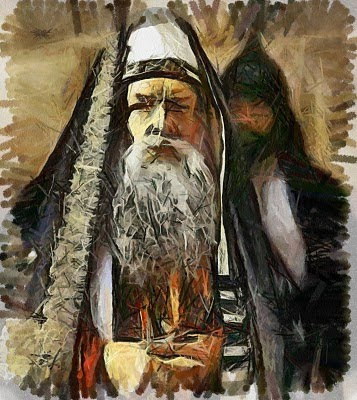
Rabbi Isaac Lichtenstein

Point 5. Among the implications in the Jewish apostolic literature is a view of how Jewish redemption can be extended to the rest of non-Jewish humanity, which is the basis on which the non-Jewish religion of Christianity began (before it became directed against Jews and Judaism). Therefore, many non-Jews seeking the authentic roots and origins of faith in Rav Yeshua have turned to MJs for help in their parallel quest to understand the Jewish context of the apostolic writings. However, for MJs such assistance must be prioritized as secondary to MJ re-development and restoration of Jewish praxis and knowledge, without which there is little or nothing meaningful to offer that can support the non-Jewish request for help. Regrettably, this left somewhat of a vacuum during the initial decades of MJ development, which has become filled with a wild mixture of notions that falsely claim an MJ or related label.

The Hashivenu website offers a few additional core values elaborating its statements of MJ principles. Though their formulation is, at this stage, somewhat dated, I would still recommend them as worthwhile reading. I suspect that “the MJ viewpoint” described above is not much different from the views of Rabbi Isaac Lichtenstein in 19th-century Hungary, a century prior to the formulation of the MJ paradigm of the 1970s in the USA and just as different from the HC viewpoint as it was from the 19th-century views of the Jewish Christian Feivel (Paul Phillip) Levertoff. Consequently I would not place much credence in the notion that “there are many viewpoints and the situation continues to evolve/change”. I see two basic models, which I would associate with “MJ” (Lichtenstein) and “HC” (Levertoff), respectively, and which have persisted for more than a century. The MJ model re-emerged in the 1970s, but still it has been overshadowed by the HC model, despite the latter’s adoption of terminology more suited to MJ. The strength of HC has been its appeal to Jews who wish to maintain a semblance of Jewish culture and identity within an otherwise foreign Christian religious environment. A weakness of MJ (in terms of popular perspective and appeal) has been its somewhat insular Jewish perspective and its more demanding requirement to conform with Torah-based Jewish culture that differs from the surrounding mainstream environment and which is therefore often denigrated or disdained. Perhaps we should also consider a form of the perspective mentioned in statement #5 above, which may be termed the gentile seekers of “Hebrew Roots” (“HR”). While this is not at all a part of MJ, in some ways it resembles HC, adopts MJ terminology, and associates itself with MJ. That might offer an appearance that the “MJ movement” (so-called) comprises three perspectives and a lot of developmental confusion. However, much of HR suffers from effects derived from the supercessionism developed by earlier versions of Christianity. HR tends not to recognize continuing Jewish distinctiveness and validity, as it focuses on trying to distinguish itself otherwise from traditional Christianity by trying to act in some manner that it perceives to be Jewish in some first-century sense. It suffers from the lack of clear MJ guidance cited above in statement #5, because it is true that MJ is still challenged by the need to develop itself by elaborating an otherwise stable MJ viewpoint into stable, well-defined, and wide-spread praxis.

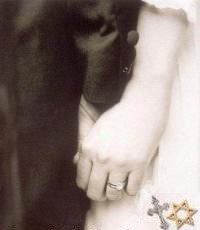
A significant consideration in current discussions of “Judaism” is the notion of “continuity”, which is a reflection of a primary reason mentioned in Torah for why HaShem so favored Avraham Avinu (in addition to his extraordinary faith). He, as the primary of three visitors to Avraham, in Gen.18:19, is quoted as “saying”: “For I have known him, so that he will command his children and his household after him, that they may keep the way of the LORD, to do righteousness and justice; so that the LORD may bring upon Abraham that which He hath spoken of him.”. It is well-recognized that various forms of Orthodox Judaism have diligently continued the practice of teaching Jewish children thoroughly to perform both private and communal aspects of Judaism, generation after generation. The modernized halakhah practiced by Conservative Judaism has only been tested for a few generations so far, and there is some question about whether it can successfully maintain itself or whether it will succumb to assimilationist pressures and the effects intermarriageof intermarriage with non-Jews. Reform Judaism has been through a cycle of recognizing that many aspects of Jewish practice that they previously discarded left their children with little by which to distinguish themselves as Jews or with which to identify, which has contributed to their assimilation, their intermarriage with non-Jews, and their loss to the Jewish people. Within the current generation they have re-adopted some of the distinctive forms, within religious contexts rather than lifestyle ones, in order to stem this loss. Even newer forms of so-called Judaism have arisen within the current generation, and these have not been tested for their ability to maintain Jewish continuity. Messianic Judaism has included examples of multi-generational families that have maintained at least as much Jewish identity as the Reform or Conservative movements, even among those whose praxis and theology is more like that of Hebrew-Christians, but the movement still faces assimilationist and intermarriage pressures arising from close association with Christians of one sort or another who still don’t quite grasp or support the Jewish responsibility to remain a distinct people. It has been stated in various places that if the Jewish people does not maintain its communal distinctiveness, thus ceasing to exist as an identifiable people, then Hitler wins a posthumous victory. Some would note that such a victory also belongs to the spirit of Amalek, and to HaShem’s ancient adversary known as HaSatan. Regardless of whether anyone grants credence to such pessimism, I would insist that a proper response is to ensure that no actions taken by any Jew should ever contribute toward such an outcome – and we might extend such a principle to apply it to anyone who seeks HaShem’s favor. Therefore I would like to reiterate from my defining statement #1 above that MJs should conduct themselves as Jews, preserving Jewish tradition in their actions and in their teaching to their children (and to anyone else who may care to listen). Incidentally, we can see from Rav Yeshua’s observation in Mt.5:19 that this is also a recipe for greatness in the kingdom of heaven. May it be so for all MJs, and for the gentiles who affiliate with us (and let us say, “Amen”).
—————————————————

Up to Jerusalem

Viewing the Truth Through a Dirty Window

Truth is simple, it has no clothes, no neat little box to contain it.

But we cannot grasp the something that has no box. We cannot perceive truth without clothing.

So Truth dresses up for us, in a story, in sage advice, in a blueprint of the cosmos—in clothes woven from the fabric of truth itself.

And then, before we can imagine that we have grasped Truth, it switches clothes. It tells us another story—entirely at odds with the first. It tells us new advice—to go in a different direction. It provides another model of how things are—in which each thing has changed its place.

The fool is confused. He exclaims, “Truth has lied!”

The wise person sees within and finds harmony between all the stories, all the advice, every model we are told.

For the Torah is a simple, pure light, a truth no box can contain.

-Rabbi Tzvi Freeman
“Raw Truth”
Based on the Letters and Talks of the Rebbe, Rabbi M.M. Schneerson
Chabad.org

Depending on our philosophical or theological orientation, we like to think we have a pretty good grasp of “the truth.” This includes the truth of who we are as human beings and, if we’re religious, the truth about the nature of God, Creation, and everything.

But as Rabbi Freeman points out, human beings cannot apprehend “raw truth”. If we could, if we could see truth the way we see the color “red” or hear a particular musical note, maybe we would all perceive “truth” (more or less) in the same way. Humanity wouldn’t be so conflicted. We would all “know truth”.

But we aren’t there, not yet. We don’t perceive raw truth anymore than we can see X-rays with the unaided eye.

So we “clothe” truth with interpretation and tradition. A number of recent conversations have re-enforced the fact (as opposed to truth) that all human beings, and particularly human beings who believe the Bible is the source of truth, are oriented by specific traditional methods of interpretation to believe the Bible says certain things. The problem comes in when we encounter people who have different traditions that tell them different things about the Bible than what our traditions tell us.

While I agree that there is probably a supernal Torah in Heaven that no box can contain, in order to “package” the Torah, or for that matter, the entire Bible in order to deliver it to humanity, it gets put in a box. It has to be clothed. It is a book written (originally) in several languages over thousands of years. The completed “product” is now many thousands of years old and has been translated into innumerable languages. Just in English, there are hundreds if not thousands of translations of the Bible.

And over those thousands of years, both in Christianity (in all its forms) and in Judaism (in all its forms), many traditions have sprung up to tell many different variant religious populations what the Bible is saying. When a tradition persists long enough, it ceases to be perceived as a tradition and it is commonly understood to be the truth…

…whether it is from God’s point of view or not.

suitThey say “the clothes don’t make the man” and “never judge a book by its cover,” but quite frankly, we have no other way of understanding the Bible. We can’t access its “raw truth” and so we have interpretation by tradition. This is stated rather plainly in (especially) Orthodox Judaism. The local Chabad Rabbi told my wife that the Torah can only be understood through tradition. My experiences studying in various churches over the years tells me that Christians interpret the Bible based on traditions too. We just don’t talk about it. We like to think we can read the plain meaning of the text, especially in English, and know just what it is saying. However, the reality of the situation is that we understand, for instance, the letters of the Apostle Paul based on the traditional interpretation of those letters, not necessarily what Paul was actually trying to communicate.

“Your talent is God’s gift to you. What you do with it is your gift back to God.”

-Dr. Leo Buscaglia

I’ve been told I’m a competent writer, talented, occasionally brilliant. I guess I better be since it’s my “day job”. It’s also a joy for me to write. I really get a lot of pleasure crafting a message in text. I usually enjoy talking about what I write, but periodically the joy gets sucked right out of the experience when all people seem to want to do is argue about what I write.

The point of my writing isn’t for me to tell you what the truth is necessarily. I write this blog to chronicle my process in the pursuit of truth. If you read all of my blog posts chronologically, I would hope you’d see a development or evolution in my comprehension of the Bible from a particular point of view (which may not be your point of view). It’s the progression of my traditional interpretive matrix. I’m tailoring the clothing in which to dress the truth of the Bible.

You probably dress the Bible in different clothing and then we argue about what sort of suit “truth” is dressed in this morning. The “Emperor” always wears clothes, and our debate is only over which sort of clothing he’s put on (or rather, what we’ve put on him).

Only God sees the Emperor without clothes.

They will not teach again, each man his neighbor and each man his brother, saying, ‘Know the Lord,’ for they will all know Me, from the least of them to the greatest of them,” declares the Lord…

Jeremiah 31:34 (NASB)

We aren’t there yet. This is a prophesy about the coming Messianic age. From my point of view, Yeshua (Jesus) initiated the very beginning of this age into our world, but it will not reach fruition until his return when each of us will have such a filling of the Spirit of God, that we will apprehend Hashem in a manner greater than the prophets of old. We will literally “know God”. We will see the truth unclothed, the raw truth…

…but only then.

For now we see in a mirror dimly, but then face to face; now I know in part, but then I will know fully just as I also have been fully known.

1 Corinthians 13:12

This is how we see the truth right now, just as a dim reflection, a faint image, hardly perceptible, open to interpretation as to what is really being viewed. Paul knew this truth and preserved it for us but we don’t believe him. We don’t want to believe him, because believing we can know the truth in absolute terms now gives us emotional security. We don’t like a world that is suspended in dynamic tension between seemingly inconsistent and opposing thoughts, beliefs, and faiths. It’s unsettling.

But like it or not, that’s where we are. I’m sure I’ve got a lot of things wrong. I don’t always answer the questions posed to me because I don’t always have even an opinion on the answers. I’m not “the Bible Answer Man.” I don’t always know.

I wrote a completely different “morning meditation” that I had planned to publish today at the usual time (4 a.m. Mountain Time), but I pulled it out of the queue because it was more of the same and I anticipated more of the same comments and responses.

Who wants more of that?

MirrorI used to actually learn a lot from the comments and the insights of the people conversing with me and each other, but now I’m not sure I’m learning so much. Now I feel like we’re just going around and around in circles and the expectation is that I must change my mind and either think and believe like a more traditional Christian, or think and believe like how an Orthodox Jew views a Noahide.

But I’m not those types of people and that’s not how I experience the Bible’s “clothing,” so to speak.

I also feel like there might not always be an interest in me and what I think but rather, that my blog is being used as a pulpit for someone else’s idea, as a platform to convince my readers to take on a different theological point of view. Certainly some people reading my blog could be undecided about Christianity or Judaism. Did I create this blog to promote viewpoints I don’t endorse?

There’s a fine line as to just how much debate and disagreement to tolerate for the sake of learning. How much of it should I allow and where’s the cut off line? How “fair” should I be before exercising my administrative control as the blog owner? I don’t know. I feel like I’ve been pretty liberal in my policy on comments compared to some others. I rarely edit or delete comments (although I did delete a comment just yesterday).

You don’t have to agree with me and I don’t have to agree with you. That doesn’t make any of us either right or wrong. It just means we’re attempting to discuss what clothes the Emperor might be wearing today. It’s like viewing the truth through a dirty window. None of us see it very well. The problem is when we believe we see truth all too clearly.

Interpretation as Tradition

Antignos of Socho received the tradition from Shimon the Righteous. He would say: Do not be as slaves, who serve their master for the sake of reward. Rather, be as slaves who serve their master not for the sake of reward. And the fear of Heaven should be upon you.

-Pirkei Avot (Ethics of the Fathers) 1:3
quoted from Chabad.org

Back to Stern’s statement: replacing “tradition” with “interpretation” we could rewrite it to say: “There could never have been a time when interpretation of some sort was not a necessary adjunct to the written Torah.” Tradition claims legitimacy by appealing to the past for its authority, and is independent of scriptural anchoring; interpretation does not look to the past for legitimacy, but rather seeks an anchoring in the text itself. One dispute among the rabbis is whether certain halakhot were actually derived exegetically or whether they were an independent revelation.

-Rob Vanhoff
from his December 31, 2014 at 4:03 pm comment on his blog post Is there a core “Oral Torah” written in response to Peter Vest’s blog post Question for Rob Vanhoff

I’m dabbling into somewhat dangerous waters by invoking commentary written by Rob Vanhoff of TorahResource.com since typically, my theological orientation and Mr. Vanhoff’s (and his employer Tim Hegg) are not entirely compatible (I say that as an understatement).

But in reading Mr. Vest’s and Mr. Vanhoff’s dialog and then commentary from the book Pirke Avot: A Modern Commentary on Jewish Ethics, I started to ponder the relationship between interpretation and tradition in both Christianity (which includes the Hebrew Roots movement in my opinion) and Judaism (which I believe includes Messianic Judaism).

I should note at this point that I’m not writing this to challenge either Mr. Vest or Mr. Vanhoff (or Mr. Hegg). I’m not attempting to enter into yet another “I’m right and you’re wrong” debate. I just want to point out that, from my point of view, how we interpret the Bible is based on our traditions, both within Christianity and Judaism as I’ve defined them above.

The existence of the oral tradition is alluded to in the Written Law in numerous places.

For example:

The Torah says: (Deut. 12:20) “When G-d expands your borders as He promised you, and your natural desire to eat meat asserts itself, so that you say; ‘I wish to eat meat’, you may eat as much meat as you wish… you need only slaughter your cattle and small animals… in the manner I have commanded you.” Nowhere in the Written Torah is such a manner described. So what is the manner in which we are supposed to slaughter cattle?

Though the laws of slaughtering cattle are not explained in the Written Torah, they are described in detail in the Oral Law.

The Talmud tells the story of a Gentile who went to Hillel the Elder and said to him, “I want to convert, but I want to accept only the Written Torah, and not the Oral Torah. I don’t wish to accept the words of the Rabbis. So teach me only the Written Torah, and not the Oral Torah.”

But Hillel knew that the man wanted to do the right thing. He simply didn’t understand the purpose of the Oral Torah. So he began to teach him the Aleph Bais (Hebrew alphabet). The first day, Hillel the Elder taught him the first two letters, aleph, and bais (aleph and bet, for those who speak the Sefardic dialect).

The next day, Hillel the Elder taught him the same two letters in reverse. He showed him the letter aleph, and called it “bais.” The man objected, “but yesterday you taught it the other way!”

“Well, then, you need me, a Rabbi, to teach you the Aleph Bais? So you have to trust my knowledge of the tradition of the letters. What I tell you is the Oral Tradition. You can’t read the alphabet if no one tells you what it means. And you think you don’t need the Rabbis’ knowledge of Jewish Tradition in order to understand the words of the Torah? Those are much more difficult! Without an Oral Tradition you will never be able to learn the Torah.”

So it is clear that an Oral Tradition is needed, and that one exists.

-from “The Indispensable Oral Law”
BeingJewish.com

Moses received the Torah from Sinai and gave it over to Joshua. Joshua gave it over to the Elders, the Elders to the Prophets, and the Prophets gave it over to the Men of the Great Assembly. They [the Men of the Great Assembly] would always say these three things: Be cautious in judgement. Establish many pupils. And make a safety fence around the Torah.

-Pirkei Avot 1:1

oral lawWas there an Oral Law given to Moses by Hashem in parallel to the Written Law (Torah), and was that Oral Law passed down, generation by generation, in an absolutely unchanged manner, from Moses to Joshua, from Joshua to the Elders, from the Elders to the Prophets, and then from the Prophets to the Men of the Great Assembly, eventually being codified and making its way to modern Judaism?

It seems like a long shot, given that even the written Torah had “gone missing” for quite some time.

When they were bringing out the money which had been brought into the house of the Lord, Hilkiah the priest found the book of the law of the Lord given by Moses. Hilkiah responded and said to Shaphan the scribe, “I have found the book of the law in the house of the Lord.” And Hilkiah gave the book to Shaphan. Then Shaphan brought the book to the king and reported further word to the king, saying, “Everything that was entrusted to your servants they are doing. They have also emptied out the money which was found in the house of the Lord, and have delivered it into the hands of the supervisors and the workmen.” Moreover, Shaphan the scribe told the king saying, “Hilkiah the priest gave me a book.” And Shaphan read from it in the presence of the king.

When the king heard the words of the law, he tore his clothes. Then the king commanded Hilkiah, Ahikam the son of Shaphan, Abdon the son of Micah, Shaphan the scribe, and Asaiah the king’s servant, saying, “Go, inquire of the Lord for me and for those who are left in Israel and in Judah, concerning the words of the book which has been found; for great is the wrath of the Lord which is poured out on us because our fathers have not observed the word of the Lord, to do according to all that is written in this book.”

2 Chronicles 34:14-21 (NASB)

The preservation of an unchanging Oral Torah across hundreds if not thousands of years would require that God sustain the Oral Law as He has the Written Law. I suppose it would make more sense to say that Oral Law as it’s conceived of in modern Judaism is the grand compilation of traditions that have accumulated over the centuries, but were not all given originally to Moses (if any of them were).

Question:

Can you explain why laws never seem to revert back to their original form? For example, some holidays are two days outside of Israel because of the difficulty with keeping time hundreds of years ago, which has since been resolved.

Answer:

Simply put, customs have the import of law since the Torah itself recognizes them as law. That makes sense, because the basis of Torah is not the book, but the people. How do we know the Torah is true? Because the people witnessed it, accepted it and passed down the tradition. So without tradition, we have no Torah.

-Rabbi Tzvi Freeman
“Why Aren’t Customs Reversible?”
Chabad.org

Of course the belief that the Oral Law as it exists in Judaism today originated as a complete body of knowledge with Moses at Sinai is also a tradition and as such is considered factual, at least in Orthodox Judaism.

Now I admire the refined skill-set of a good kosher shochet, but what Dr. Stern sees as “evidence” for “oral Torah” from Deuteronomy 12:21 (כאשר צויתיך) is for me simply a pointer to what Moshe states elsewhere concerning slaughter: pour out all the blood, cover it with earth, don’t consume it, etc… I’m definitely a minimalist in this regard. Let’s keep in mind that the art of midrash (be it halakhaic or aggadic) consists first of positing a textual ‘gap’ and second of filling it!

-Vanhoff

On the other hand…

Hashem said to Moses, saying: “Speak to the Children of Israel and say to them that they shall make themselves tzitzis on the corners of their garments, throughout their generations. And they shall place upon the tzitzis of each corner a thread of turquoise wool. It shall constitute tzitzis for you, that you may see it and remember all the commandments of Hashem and perform them; and not explore after your heart and after your eyes after which you stray.

Numbers 15:37-39 (Stone Edition Chumash)

tzitzitSo how do Jewish men know how to tie tzitzit (keeping in mind there’s more than one tradition on how to do so)? Who taught the Jewish people the specific method of obtaining the blue dye to color the “thread of turquoise”? There is nothing in the (written) Torah describing how this is done, so how did Moses teach the Children of Israel how to observe this mitzvah? Is it possible that Moses had conversations with Hashem that were not recorded in writing? Was literally every second of every transaction between Moses and God put down in writing?

Probably not, otherwise the Bible in written form would be too large to carry.

But that’s supposition on my part. Still, I must admit that there are more than a few commandments in Torah where there is no written instruction for how to observe them.

Does that mean the Oral Law as it’s understood today is exactly as it was or may have been given to Moses at Sinai or later during the forty years in the desert?

From a human point of view, this seems doubtful, but if an Oral Law also comes from God, then nothing is impossible.

The Bible is the most authoritative element of Judaism. But it is not the only one. Just as it had been preceded by tradition, so was it soon followed by tradition, the “Oral Law,” which strives to penetrate into the essence of the Bible’s written word. The Oral Law strives to apply the teachings of the Bible to all the events of existence; to provide religious and moral standards for all of life’s activities; and to realize the Bible’s teachings in the whole Jewish community. This tradition, which was ultimately established in the Talmud, had at first to fight for recognition; subsequently, it too became a conservative factor in Jewish religious life.

-Leo Baeck, “The Essence of Judaism,”
New York: Schocken Books, 1948
quoted in “The Bible and the Talmud,” p.17
Pirke Avot: A Modern Commentary on Jewish Ethics

In Judaism, tradition is what tells a Jew what the Bible means. In Christianity, as Mr. Vanhoff states, a systematic method of interpretation does the same job.

So am I saying that Jews have tradition and Christians have interpretation? Well, not exactly. I’m saying that Jews are open in stating that tradition guides their Biblical interpretation and Christians believe that they have no tradition of interpretation…

..except that’s not true.

Almost a year ago, I wrote a blog post called Does the Church Interpret the Bible Based on Traditions. I’ll save you the trouble of reading the whole thing and give you the answer here: Yes!

In fact, I believe that every branch of Christianity, including all versions of Hebrew Roots, interpret the Bible based on some overt or covert set of traditions that transcend any “scientific” method of Biblical hermeneutics. I know I’m going to receive a significant amount of push back for making that statement. I know that many scholarly arguments can be leveled against me, showing me that Protestant Christianity and Hebrew Roots (they have more in common than you might imagine) use totally objective means by which to determine the true and factual meaning of the Biblical text.

Except if that were true, then I don’t think we’d see such dissonance between the pro-Jewish people and pro-Israel words of the Bible including the Apostolic Scriptures and the nature and function of the New Covenant, and how modern Protestant Christianity refactors the Bible to minimize or delete the role of Jews and national Israel in God’s redemptive plan for the world.

Much has been made of Martin Luther and the men of the Reformation and how they undid the abuses of the Bible by the Catholic Church, but the Reformation didn’t “reform” as much as you might think. Many traditions of the Church (Sunday worship rather than a Saturday Shabbat, the continued “gentilization” of Jesus Christ, the supersession of “the Church” in place of Israel) were maintained and survived to this very day in virtually all expressions of Christianity.

So it’s quite possible if we view Hebrew Roots as a minor “reformation” of Evangelical Christianity to believe they didn’t reform as much as you might think, including holding onto some (but not all) of the traditions of the Church, such as how to interpret certain sections of the Bible.

Interpretation of the Bible begins at translation, or so it’s said. I tend to believe that the first step in interpreting the Bible is how we already understand it based on who taught us our traditions. This is true whether you are a Baptist, an Orthodox Jew or operate in any other branch of Christianity or Judaism.

I’m always amazed at how people who have read a dictionary entry or two on “Mishnah” or “Talmud” become so quickly convinced that when they pick up the Soncino Bavli in English, they are reading the culture, worldview, and halachah of the 1st Century! Truth be told, most Messianics who are enamored with “rabbinic Judaism” have spent precious little time actually reading the rabbinic sources, even in translation. They’re willing to watch a YouTube video or two from a Cabad rabbi and think that they’ve just been educated in the finer details of rabbinic halachah and aggadah, and what is more, that their new knowledge informs “what Yeshua really thought and did.”

– from Tim Hegg’s comment on Rob Vanhoff’s aforementioned blog post

I just want to be clear that I don’t consider myself some sort of “expert” in Talmud or anything else. What I do want to emphasize is that we cannot separate our understanding of the Bible from our “religious orientation.” Sure, we can change religious orientations and thus our understanding of the Bible, but with some difficulty. I changed from a more “standard” Christian hermeneutic, to a Hebrew Roots perspective, and then finally to a viewpoint formed from various teachers within a Messianic Jewish context.

Does that make me right and everyone who disagrees with me wrong? Not at all. I have far more questions about the Bible and God than I have answers. I just want to point out that no one has raw, naked, unfiltered access to the Word of God such that they and only they know “the truth” about exactly what it says in every single detail. No Bible scholar worth his or her salt would make such a claim. That’s why Biblical research is ongoing and that’s why we study the Bible (hopefully) every day.

Coffee and BibleThis is like the African-American woman Tim Hegg describes in his comment on Vanhoff’s blog post, the one who believed that the Apostle Paul’s Bible was the King James translation. Her understanding (I have to assume based on limited information that this woman really did believe such a thing) is based on some sort of tradition she was taught and like many, most, or all religious people, tradition first became truth in her mind, and then absolute fact.

Even when we’re aware that we are guided by our traditions, that awareness isn’t going to be enough to keep us from continuing to be driven by said-traditions for the most part. Yoda may have said “You must unlearn what you have learned” (as shown in this brief YouTube video), but that’s easier said than done. Maybe Luke Skywalker could do that under the Jedi Master’s guidance, but in real life, once we learn something, we are very likely to stick with it, even in the face of evidence to the contrary.

Again, this isn’t a matter of one side being right and the other side being wrong. It’s a matter of all sides being guided and molded by tradition, even when we think we’re not. What we think is who we are.

Gentiles Studying Torah for the Sake of Doing

Although the word “chassid” is generally translated to mean exceedingly pious or devout, conjuring up visions of fasting, prayer, and religious zeal, its origin is in the concept of “chesed,” giving freely of oneself for the benefit of others. It is a quality practiced by Hashem, as described in many verses, and which we are encouraged to emulate as part of the obligation to follow in Hashem’s ways.

-from “A Closer Look at the Siddur,” p.158
Friday’s commentary on Parashas Vayigash
A Daily Dose of Torah

“Serve the Almighty with joy, come before Him with singing” (Psalms 100:2).

The verse is recited daily in the morning prayers. But we have to internalize its message. Repeat this verse as often as possible, while thinking about what it means and how you can apply it.

This is especially important for a person with a tendency towards sadness. A sad person mentally repeats hundreds of sad messages a day. Repeating a verse with a positive, joyous message will serve as a good counter-balance.

(see Rabbi Pliskin’s “Gateway to Happiness,” p.110)

-Rabbi Zelig Pliskin
from Daily Lift #207 “Worth Repeating”
Aish.com

I sometimes envy devout Jewish people. At least in my studying Torah and the Jewish writings, their lives of devotion to God through the prayers and the mitzvot seem so ordered and unambiguous. Although living according to the requirements of Orthodox or Conservative Judaism has great complexity, it seems as if a Jewish person’s path is predictable and comprehensible with no gray areas within which they struggle.

Of course, that’s an illusion and I have no doubt that observant Jews struggle with their faith as much as anyone, even me. Still, there is such purpose in studying Torah, not for the sake of studying or acquiring knowledge, but to learn what God expects of us and then to do it.

However, that understanding isn’t limited to the Jewish people. All of us who are considered disciples of the Master, whether we’re called “Christians” or “Messianic Gentiles” have a duty to God and arguably to the Jewish people. We study the Bible, not just to learn the Word of God, but to put that Word into action in the world around us and in our everyday lives.

This point can be lost for many who are associated with Messianic Judaism or Hebrew Roots. For decades, the emphasis for Gentiles exiting “the Church” and entering Messianic synagogues or Hebrew Roots congregations has been Torah, Torah, Torah. We have gotten into the bad habit of getting hung up on how to properly tie tzitzit, lay tefillin, and styles of kippot to place on our heads that we’ve forgotten about the weightier matters of Torah:

“Woe to you, scribes and Pharisees, hypocrites! For you tithe mint and dill and cummin, and have neglected the weightier provisions of the law: justice and mercy and faithfulness…”

Matthew 23:23 (NASB)

PhariseesThe verse goes on with the Master instructing his Pharisaic audience to perform the weightier matters without neglecting the others (tithing mint, dill, and cumin), but then, he was speaking to Jewish Pharisees, not Gentile disciples.

Still, it’s a lesson that applies to us. Messianic Gentiles and Hebrew Roots Christians revel in their/our Torah knowledge but what do we do with it? If “knowing” is the full extent of our studies, then we know nothing. Only in doing, and I don’t mean tying tzitzit, are we fulfilling the mission to which God has assigned us.

But what is that mission?

He has told you, O man, what is good;
And what does the Lord require of you
But to do justice, to love kindness,
And to walk humbly with your God?

Micah 6:8

I sometimes say there’s more than a bit of overlap in the mitzvot that apply to both Jewish and Gentile disciples of the Master and I would say that doing justice, loving kindness, and walking humbly before God definitely qualifies as part of that overlap.

I was reminded of this during my visit with my parents this week. My Dad had cancer treatments (thanks, he’s doing much better) in Salt Lake City just before Christmas (it’s not a dirty word) but because his vision was compromised by the treatments and my Mom’s vision is not so good, my folks asked me to fly down to SLC and drive them back home to their place about five or six hours away.

Of course I did and I’m staying with them for a week to make sure they’re doing OK.

So I’m away from home and my regular routine and doing what I can to be of service to my parents, both of whom are still quite independent minded though in their early eighties.

Putting the needs and desires of others ahead of our own is what God wants above all else. Though my “observance” is rather minimal these days, I still maintain a particular level of dietary and other practices that aren’t exactly compatible with how my parents live. But whose needs am I here to meet though, mine or theirs?

I know some people will pop off and respond that the requirements of God (Shabbat observance, dietary laws) trump even the needs of one’s parents, but I respectfully disagree:

“Honor your father and your mother, that your days may be prolonged in the land which the LORD your God gives you.”

Exodus 20:12

Children, obey your parents in the Lord, for this is right. Honor your father and mother (which is the first commandment with a promise), so that it may be well with you, and that you may live long on the earth.

Ephesians 6:1-3

ShabbatThe commandment in Torah directed toward the Israelites and coupled with their living long in the Land of Promise is interpreted by Paul to be applied to the Gentiles as a condition of having long lives, or so it seems from the dual quotes above.

If given a choice between honoring my parents and the rote lighting of candles or what “work” one does on Shabbos, I’ll accept doing love and kindness to my folks as the higher commandment; the weightier matter of the Law. I don’t believe God will condemn me for honoring them.

But that leads to the larger mission for Messianic Gentiles which has a very particular focus. Although I can’t find the exact quote, a Messianic Jew mentioned in a Facebook discussion (in a closed group, so I can’t pass on the link) that one of the roles of the Messianic Gentile is to serve in supporting Messianic Jews in greater observance of Torah.

Actually, I’ve written before on the duty of Messianic Gentiles to the Jewish people, as well as why I’m a Messianic Gentile (Part One and Part Two). I believe we have a duty to preserve the Jewish people as Jewish and to assist in any way to support their covenant fidelity to God. This is a duty routinely abandoned by the Church and we Messianic Gentiles must take it back and uphold it:

The problem of Jews assimilating with the nations while in exile is an existential danger that is discussed by many commentators throughout Tanach. Meshech Chochmah, commenting on the verse: “God spoke to Yisrael in night visions…and said…have no fear of descending to Egypt, for I shall establish you as a great nation there (Bereishis 46:2,3), notes that only with respect to Yaakov do we find the description of a prophecy as “night vision.”

-from “Mussar Thought for the Day,” p.165
Commentary on Shabbos for Parashas Vayigash
A Daily Dose of Torah

The Christian Church in well-meaning but mistaken efforts, has believed that the only way to “save the Jews” was to have them convert to (Goyishe) Christianity, effectively destroying the Jewish people as Jews, decoupling them from the covenants, and assimilating them into the Gentile world as “Hebrew Christians”.

Messianic Gentiles, in my opinion, are specifically assigned by God with the duty to serve the Jewish people in maintaining and increasing their level of observance to the mitzvot. Gentiles acting like Jews does nothing. Gentiles encouraging and supporting Jews in greater covenant fidelity does much and may even hasten the return of Moshiach.

The Church, in attempting to separate Jews from the covenants, has been destroying Christian salvation, because only through the promises God made to Israel can God’s redemptive plan for Israel, as mediated by Messiah, be extended to the nations of the Earth.

Also, those who assume that there is “One Law for the Jew and the Gentile” inhibit or even fail the Gentile mission to the Jews by usurping Jewish covenant uniqueness (I’ve said this many times before in numerous ways, so I’m sure this message is familiar to my regular readers). If I, as a Gentile, were to don a tallit gadol and lay tefillin, it might make me feel good but it accomplishes nothing. If I encourage a “Hebrew Christian” to return to the mitzvot (or take them up for the first time) and thus don a tallit and lay tefillin, I have done much:

He said, “I have come to realize that as a Jew, I am called to live out the Torah.” Goldberg explained that the prophetic-kingdom promise of the new covenant in Jeremiah 31 had revealed to him that the Torah is part of the new covenant: “I will put my law within them, and I will write it on their hearts” (Jeremiah 31:33). Moreover, he had come to realize that the Jerusalem Council of Acts 15 which exempted Gentiles from circumcision and obligation to the Torah’s Jewish identity markers said nothing at all about exempting Jews from any aspect of the Torah. Since the Jerusalem Council did not address Jews in their ruling, he deduced that they intended Jewish believers to remain faithful to Torah.

-Boaz Michael
from The Director’s Letter: “Four Different Views on Messianic Judaism,” p.10
Messiah Journal, issue 118/Winter 2014/5775

prayer-hitbodedutI’ve quoted the words of Alec Goldberg before and I guess you can say this current “meditation” is an extension of the previous one, because it addresses somewhat the definition of Messianic Judaism and particularly the role of the Gentile within such a Jewish framework.

I quoted the “Daily Lift” above because it speaks of internalizing what we study and the message of the morning prayers. So too must we internalize what the Bible teaches us about a Gentile’s duty to Jewish Israel and the needs of individual Jewish people:

“Then the King will say to those on His right, ‘Come, you who are blessed of My Father, inherit the kingdom prepared for you from the foundation of the world. For I was hungry, and you gave Me something to eat; I was thirsty, and you gave Me something to drink; I was a stranger, and you invited Me in; naked, and you clothed Me; I was sick, and you visited Me; I was in prison, and you came to Me.’ Then the righteous will answer Him, ‘Lord, when did we see You hungry, and feed You, or thirsty, and give You something to drink? And when did we see You a stranger, and invite You in, or naked, and clothe You? When did we see You sick, or in prison, and come to You?’ The King will answer and say to them, ‘Truly I say to you, to the extent that you did it to one of these brothers of Mine, even the least of them, you did it to Me.’”

Matthew 25:34-40

I learned a new interpretation of these verses from a wise Sunday School teacher in church about two years ago. I used to think this was a description of our general duty as believers to attend to the needy in general, but he pointed out that he understands this scripture to describe the duty of Christians to the needy among Israel.

Do you see how all this is playing out? Our duty speaks of subduing our personal needs for the greater good of, in this case, Jewish Israel and specifically Messianic Jews. If Messianic Gentiles have any role in the Messianic Jewish synagogue, it is to facilitate and encourage Torah observance of the Jewish disciples of the Master. This means setting our own wants, needs, and desires to one side and doing the “Torah” that is applied to we non-Jewish disciples.

I’ve known this for some time, but was reminded of it again in my visit with my aging parents. We do kindness out of love and we learn love from Torah (Bible) study. The Torah teaches us to honor our fathers and mothers, but I also believe Messiah teaches we Gentiles to honor Israel for only through her comes salvation for the world (John 4:22).

MessiahNo one comes to the Father except through the Son and only Messiah Yeshua is the keystone of our faith. If we wish to serve our Master, we must continually set aside ourselves and serve the least of his brothers, the Jewish people.

This is who we are as Gentile disciples and this is why we study Torah. So we can do.

For more on the duty of Gentiles to the Jewish people and the relationship this is supposed to forge, please read Rabbi Dr. Stuart Dauermann’s article Everlasting Love: The Continuing Election of The Jewish People.

Choosing Your Prison

It is worthwhile to elaborate a bit on this important concept of free will, which the Rambam calls “an important principle and a pillar of all Torah and mitzvos.”

He states: “Do not let the thought cross your mind, that which the foolish ones among the nations and even ignorant Jews claim, that Hashem predetermined and decreed upon every person what he will be — a righteous person or a wicked one. It is not so — for every single person can be either a tzaddik like Moshe Rabbeinu, or a wicked man like Yeravam. There is no one pulling him in either direction. It is each person’s own choice to pick the way of life he will follow.”

-from “A Mussar Thought for the Day,” p.14
Commentary for Monday on Parashas Vayeishev
A Daily Dose of Torah

So much for Calvinism. We can’t claim that God preselected us to be good or to be evil. We get to choose who we are and we get to make different choices over time. That’s miserable and encouraging all at once. It’s miserable because we human beings all by ourselves are prone to willfulness, weakness, and error. But it’s also hopeful in that we can strive to overcome our faults and to be better tomorrow than we were yesterday.

One of the recurring themes in the various incarnations of “Star Trek” is that mankind continually works to improve itself, with the presupposition that humans have the moral framework and ability to do so independently. However, both Judaism and Christianity maintain that we are unable to elevate ourselves spiritually to any degree at all without relying on God. This does not negate free will, since we must choose to either obey or disobey God in the different and varied areas of our lives.

No temptation has overtaken you but such as is common to man; and God is faithful, who will not allow you to be tempted beyond what you are able, but with the temptation will provide the way of escape also, so that you will be able to endure it.

1 Corinthians 10:13 (NASB)

Maybe that’s the answer to this sometimes frustrating statement of Paul’s. It may seem like temptation is irresistible, but the circumstances tempting us are the same for a lot of people, even if we’re only aware of our own individual experience. We can either rely on ourselves and fail or rely on God and have the hope of success, and God is faithful.

It’s when we assume that we’re helpless victims, either of God’s “Divine Plan” to choose only some for salvation and to let the rest burn, or of our own “sin nature” or “evil inclination” that the following happens:

So when you are assembled and I am with you in spirit, and the power of our Lord Jesus is present, hand this man over to Satan for the destruction of the flesh, so that his spirit may be saved on the day of the Lord.

1 Corinthians 5:4-5

Joseph the SlaveNot that God necessarily gives up on us, but He certainly can give us enough rope to hang ourselves with, if we so choose. Then, when swinging in the breeze, if we’re still alive, we can call out to Him.

But even resisting temptation is no guarantee of an easy or good life.

One day he went into the house to attend to his duties, and none of the household servants was inside. She caught him by his cloak and said, “Come to bed with me!” But he left his cloak in her hand and ran out of the house.

When she saw that he had left his cloak in her hand and had run out of the house, she called her household servants. “Look,” she said to them, “this Hebrew has been brought to us to make sport of us! He came in here to sleep with me, but I screamed. When he heard me scream for help, he left his cloak beside me and ran out of the house.”

She kept his cloak beside her until his master came home. Then she told him this story: “That Hebrew slave you brought us came to me to make sport of me. But as soon as I screamed for help, he left his cloak beside me and ran out of the house.”

When his master heard the story his wife told him, saying, “This is how your slave treated me,” he burned with anger. Joseph’s master took him and put him in prison, the place where the king’s prisoners were confined.

Genesis 39:11-20

Joseph resisted the repeated temptation to have an illicit affair with his master’s wife. He was blameless and still ended up in prison. How much more so do we, who are not blameless, risk “prison” of one form or another, even after we cry out to God and begin to learn to resist our own temptations and to strive to be better servants of Hashem.

The worst prison is when G-d locks you up. He doesn’t need guards or cells or stone walls. He simply decides that, at this point in life, although you have talent, you will not find a way to express it. Although you have wisdom, there is nobody who will listen. Although you have a soul, there is nowhere for it to shine.

And you scream, “Is this why you sent a soul into this world? For such futility?”

That is when He gets the tastiest essence of your juice squeezed out from you.

(Likutei Sichot vol. 23, pp. 163–165; Shlach 5732:1; 5th night of Chanukah 5720:4.)

-Rabbi Tzvi Freeman
“The Invisible Prison”
Chabad.org

If God puts us in “prison,” isn’t it what we deserve? Why should we complain (although we invariably do)? In sin, we are slaves but slaves who have deliberately put ourselves in the hand of our master. In choosing to not sin, we are deciding to be slaves of a different Master, one who loves our soul, one who desires the best for us. As Rabbi Freeman suggests, the prison God incarcerates us in is designed not to confine and demoralize us, but to drive us to be the very best we can be.

PrisonWe can either choose the evil prison where we trap ourselves and reap only what we deserve, or allow God to “imprison” us and have the hope of being led to a better life.

And David said to Gad, “I am exceedingly distressed. Let us fall into Hashem’s hand, for His mercies are abundant, but let me not fall into human hands.”

II Samuel 24:14

This verse is the opening line of the Tachanun prayer. Dovid HaMelach had sinned by taking a census of the Jews in a manner contrary to that prescribed by the Torah. Hashem, through the agency of the prophet Gad, gave Dovid HaMelech a choice of three calamities, one of which he and his people would have to suffer in atonement for his sin: seven years of hunger, three months of defeat in battle, or a deadly three-day plague. Dovid chose the last, because that one would be inflicted directly by God, Whose mercy is ever present even when His wrath is aroused. His choice proved to be the correct one, for God mercifully halted the plague after a duration of only half a day.

-from “A Closer Look at the Siddur,” pp.15-16
Commentary for Monday on Parashas Vayeishev
A Daily Dose of Torah

Joseph’s incarceration is recorded in this week’s Torah Portion but not its resolution. Joseph was made a slave and then a prisoner in order to accomplish God’s plan, not just for Joseph or even just for Egypt, but for the entire world. No doubt you already know how the story of Joseph continues, how he was released from prison to interpret a dream of Pharaoh’s, and as a result, how Joseph was made a ruler in Egypt second only to Pharaoh. From prisoner to prince in one stroke.

Very few of us will have such an experience, yet it would be enough if God were to judge us and not human beings. God is incapable of treating us with malice and His rulings are truly impartial and fair, though they can be harsh.

When you look at that imperfect and sinful wreck in the mirror each morning, are you not much harder on yourself than God would be? Doesn’t God look at us with pity and compassion when most people, even those closest to us, react out of hurt and anger?

A basic Torah principle is that when correcting someone, we need to do so with a sense of love and compassion. When you speak in a blaming manner, the message you give is not a loving one.

If there is a specific person you tend to speak to in a blaming manner, be resolved to speak to more pleasantly.

(For a series of probing questions on this topic, see Rabbi Pliskin’s “Gateway to Self Knowledge,” pp.135-7)

-Rabbi Zelig Pliskin
Daily Lift #189: “Replace Blame with Compassion”
Aish.com

Would that other people or even we ourselves were as merciful and compassionate as God when we fail and seek to make amends.

compassionBut coming back to the matter of free will, our actions and the consequences rest on our shoulders. No one else is to blame, though we can hope and pray for mercy. In the end, people are not always merciful, but even when we do not deserve it, God is compassionate.

The Tzemach Tzedek writes: The love expressed in “Beside You I wish for nothing,” (Psalm 73:25) means that one should desire nothing other than G-d, not even “Heaven” or “earth” i.e. Higher Gan Eden and Lower Gan Eden, for these were created with a mere yud…. The love is to be directed to Him alone, to His very Being and Essence. This was actually expressed by my master and teacher (the Alter Rebbe) when he was in a state of d’veikut and he exclaimed as follows:

I want nothing at all! I don’t want Your gan eden, I don’t want Your olam haba… I want nothing but You alone.

from “Today’s Day”
Wednesday, Kislev 18, 5704
Compiled by the Lubavitcher Rebbe; Translated by Yitschak Meir Kagan
Chabad.org

Whatever prison you find yourself in, seek God alone. Everything else will take care of itself.

Making Sense of the Messiah as the Keystone of Creation

Therefore do not be ashamed of the testimony of our Lord or of me His prisoner, but join with me in suffering for the gospel according to the power of God, who has saved us and called us with a holy calling, not according to our works, but according to His own purpose and grace which was granted us in Christ Jesus from all eternity, but now has been revealed by the appearing of our Savior Christ Jesus, who abolished death and brought life and immortality to light through the gospel, for which I was appointed a preacher and an apostle and a teacher.

2 Timothy 1:8-11 (NASB)

Whoever confesses that Jesus is the Son of God, God abides in him, and he in God. We have come to know and have believed the love which God has for us. God is love, and the one who abides in love abides in God, and God abides in him. By this, love is perfected with us, so that we may have confidence in the day of judgment; because as He is, so also are we in this world. There is no fear in love; but perfect love casts out fear, because fear involves punishment, and the one who fears is not perfected in love.

1 John 4:15-18

I had an interesting conversation with a friend of mine last Sunday afternoon. Toward the end of our time together, he haltingly asked me something he obviously thought would offend me. I can’t recall his exact words, but he was wondering if I realized the centrality of Jesus as the Lord and Savior of my life. I guess he thought I was getting a little too lost in Judaism or in attempting to engage my faith through a sort of “Jewish lens”.

This lead to a rather lengthy and repetitive monologue on my part and I hope I made some sort of sense. In order to organize my thoughts better, I decided to write them out and share them in a more public venue.

One of the Jewish arguments against Jesus being the Messiah, especially as conceptualized by organized Christianity and as recorded (apparently) in the New Testament, is that Jesus appears to be a tremendous departure from anything that God had done before. I don’t mean that God did something new, but that He did something incredibly different, as if he switched from “plan A” to “plan B”.

There’s no real mention of a Messiah in the Tanakh (Old Testament) particularly as Christianity understands the role, and let’s face it: Jesus doesn’t even make an appearance until the last third of the Biblical narrative. If he’s so important, why didn’t he show up sooner?

Actually, some people think he did:

And Melchizedek king of Salem brought out bread and wine; now he was a priest of God Most High. He blessed him and said,

“Blessed be Abram of God Most High,
Possessor of heaven and earth;
And blessed be God Most High,
Who has delivered your enemies into your hand.”

He gave him a tenth of all.

Genesis 14:18-20

Given the mention of Melchizedek in Hebrews 7, most Christians and many in Hebrew Roots and Messianic Judaism think that Melchizedek is the “pre-incarnate Jesus”. There are a number of other places where Christians exchange their “exegesis” of the Old Testament to “I see Jesus” in the Tanakh, in part to solve the “problem” of why Jesus didn’t put in an appearance before the end of Matthew 1.

D. Thomas Lancaster in his sermon on Melchizedek for the Holy Epistle to the Hebrews sermon series which I reviewed, does a good job at refuting the idea that Melchizedek was literally Yeshua (Jesus), but there are plenty of other occasions where some people believe Jesus “beamed” into early Biblical history like some sort of “Star Trek” character.

Gateway to EdenAfter all, who walked in the garden with Adam (Genesis 3:8), wrestled with Jacob (Genesis 32:22-31, and who was the angel God sent ahead of the Children of Israel (Exodus 23:20)?

Frankly, I think attempting to force scripture to have Jesus show up bodily before he’s actually born actually cheapens the miracle and significance of Messiah’s birth by woman and all that he accomplished in his physical, human experience.

But we have this problem of when Jesus appears. If he’s the cornerstone, how can you build the first two-thirds of the Bible without him? Or are we missing the point?

One of our biggest problems with understanding the Bible and the centrality of the Messiah is time. By definition, we are beings who live in linear time. We are born, we live, we die. We have yesterday, today, and tomorrow. That’s how we think. It’s difficult to imagine a universe without time, and we forget that when God created everything, He created time, too.

When I was a little kid, I tried to imagine what God’s “environment” must have been like before He created everything. I pictured an old man with a big white beard and long, shaggy white hair, dressed in a robe and sitting on a golden throne floating in infinite blackness. I thought of the universe as just stars and galaxies not imagining that it’s also space and time.

It’s difficult if not impossible for a human being to even perceive a sliver of God’s point of view. What does God see when He looks at the universe? Who knows? How can God exist outside of time? If time doesn’t pass for God at all, what is that like?

In my conversation on Sunday, I used a metaphor. I said that from God’s viewpoint, all of creation must be like a painting hung on a wall. In the painting is every event that has ever occurred and will ever would occur in our universe from start to finish. It’s like everything that has happened, is happening, and will happen across the entire line of history is all occurring inside that painting simultaneously. God can take in time, the universe, and everything at a glance.

Now imagine that in the very center of the painting is a stone archway. Now imagine that all of the other stones in the stone archway are balanced against a single, critical keystone. If this keystone were removed, the entire arch would collapse into rubble. When the keystone is in place, the other stones and the archway itself are completely immovable.

Guess who the keystone is?

So then you are no longer strangers and aliens, but you are fellow citizens with the saints, and are of God’s household, having been built on the foundation of the apostles and prophets, Christ Jesus Himself being the corner stone, in whom the whole building, being fitted together, is growing into a holy temple in the Lord, in whom you also are being built together into a dwelling of God in the Spirit.

Ephesians 2:19-22 (emph. mine)

Granted, Paul is using the cornerstone metaphor in terms of the structure of the ekklesia or assembly of Messiah, but I think it still works (see also Psalm 118:22, Matthew 21:42, and Acts 4:11). I always wondered how you could build anything else in the redemptive plan of God across human history without first laying the cornerstone, or in the case of the previous metaphor I used, the keystone. Now I think I know, but the explanation is a little metaphysical.

Messiah is central to the plan of God because he’s always been central. He’s just not apparently central when we consider the appearance and work of Yeshua in linear time. This is also why Jewish objections to a first and second coming of Messiah and why Yeshua didn’t finish the work he started in the first advent don’t really matter. It’s because linear time doesn’t determine how and why Messiah is the lynchpin of God’s redemptive plan for humanity.

If it’s possible to use the word “before” in terms of a timeless God, then even before God created the universe, He knew the consequences of creating human beings with free will would result in the universe turning out the way it did. That is, God knew that giving human beings free will would lead to our disobeying Him with the result of changing the very nature of the universe from perfect to damaged.

CreationSo when God created the universe, He also created a plan for restoring it which means the very nature and character of the Messiah is built into creation, that everything rests on Messiah’s shoulders, so to speak, and that without the Messiah (for whatever reason) the universe can never be redeemed.

I know that’s dicey language to use in relation to God since nothing is impossible for Him, but God’s “solution” to the problem of human free will and its consequences is Messiah. It’s as if God created not just all of the universe all at once (well, in six “days”), but all of human history from beginning to end, and then placed that history upon the cornerstone, which is Messiah.

No, I can’t prove any of this from scripture beyond what I’ve already quoted, but it’s the only way I can make sense of God, the role of Messiah, and the narrative of the Bible including God’s plan for redeeming His creation.

Let me know if this makes sense to you.