Tag Archives: boaz michael

On Being a Good Christian

churchesAfter they had preached the gospel to that city and had made many disciples…

Acts 14:21a (NASB)

Last Sunday, Pastor Randy preached on Acts 14:21-28 in a sermon he called, “What Makes a Good Missionary (Part 3)?” In many ways, the title could be expressed as “What Makes a Good Christian” since it is Pastor’s opinion that all believers are responsible for preaching the Good News of Jesus Christ, whether we’re formally called missionaries or not. Pastor spent most of his adult life as a missionary and his parents were missionaries, so it’s completely understandable why his perspective would be as it is.

When he was teaching about what a disciple is, he used several different phrases to describe them/us. I want to focus on one of those phrases:

A good Christian is a person who places himself/herself under a local church authority as a member.

Whoa!

Yeah, I even wrote “whoa” in my notes during the sermon. A member?

Pastor listed a number or reasons for this including giving the person a sense of accountability, opportunities for service, both to the other members of the church and to the larger world, and displaying commitment to the body of believers.

I know what you’re thinking? Aren’t we all as believers, part of the body of Christ anyway, what Pastor called “the universal church?”

Yes, but he used Paul’s model of “planting churches” (I can’t imagine Paul actually used that term) to emphasize how we can’t really function effectively in the body unless we join with a local church and display a commitment to that body as one of the operational parts. The sense of community would also contribute to the individual growing in “Christ-likeness” and, as I said before, providing a platform to allow the individual to minister to God’s people.

I’ve been campaigning to completely redesign the church’s website, which currently looks like a throwback to the ancient web of the 1990s. I’ve gotten some traction, but there’s a bottleneck in the process and until that bottleneck is cleared (which I’m told will be soon), I can’t actively begin my redesign project. Most of the information on the current site is obsolete, however, I did manage to pull this from the “Beliefs” page:

Because the Bible is the complete, true and sufficient Word of God, holding absolute authority for the church and the individual, we believe and teach the following:

  • Jesus Christ as the one and only begotten Son of God, is fully Jehovah God (the second person of the trinity) (John 1:1-14). In Mary’s womb, He joined to His divine nature, a human nature and was virgin born, thus becoming ‘God-man’ (Philippians 2:5-7 / Hebrews 10:5-10).
  • Jesus was tempted by Satan but remained sinless because He was and is God, and it is impossible for God to sin (Deuteronomy 32:3-4). Still, the temptations were both valid and real to the God-man. Oh, how he can sympathize with us (Hebrews 4:15-16).
  • Christ was literally crucified on the cross, His blood becoming the sufficient cleansing for our sins. He died and was buried. Then on the third day, He physically arose in victory over sin and death (1st Corinthians 1-5). He who truly believes that Jesus is the Christ, the Son of God is rescued from eternity in hell and given eternal life (Salvation – John 20:31).
  • The next prophetic event will be the taking up into heaven of all believers, ‘The Rapture,’ (1st Thessalonians 4:15-17). Then following the tribulation, Christ will return to the earth with us, His glorified saints, to establish His literal rule over all the earth for 1,000 years (The Millennial Kingdom), and we will rule with Him (Jude 14-15). This is our destiny as Sons of God (Romans 8).
  • Saving faith is by grace alone and not by works of merit that we can do (Ephesians 2:8-9).

churchmembershipI object to the use of “Jehovah” as if that were the actual pronunciation of the Tetragrammaton, and I’m not crazy about the “rapture” doctrine. Becoming an actual church member means taking some classes and then signing on the dotted line that you buy all of their doctrine, dogma, and theology hook, line, and sinker.

I’ve had enough conversations with my Pastor to realize our points of disagreement and, if being a member of my church or some other local church is a requirement for being a “good Christian,” then I have a problem.

Sunday afternoon, I had coffee with my good friend Tom. Tom’s been a Christian for over forty years and he and I have both been through the Hebrew Roots “wringer” as well. We have a good many attitudes in common, but he agrees with my Pastor that I will never be truly effective in my community until I formally become a member. Tom’s been a member of his church for about three years now. I asked him what he does about the bits and pieces of church doctrine with which he disagrees. He’s discussed it with his Pastor and his Pastor’s response is, “We’ll work on that.”

I’d interpret that statement to mean that Tom’s Pastor will try to convince Tom of the correctness of whatever Tom currently has issues with. I guess that situation is a work in progress.

But what about me? Frankly, I don’t think any church has their understanding 100% correct. How am I supposed to pretend that the church I attend does? I’m already anticipating a major disagreement next week in Sunday school class over the “symbolic” meaning of the moadim.

By the way, I took a closer look at the study notes for next week’s class and my blood ran cold. I’m actually kind of nervous about this. The notes mainly describe how the primary purpose of all of the Festivals just point to the reality of Jesus Christ. In other words, they had no value of their own to draw the Israelites closer to God (never mind that the word “sacrifice” in Hebrew is “korban” which gives the meaning of “drawing closer to” God). Dispensationalism isn’t supposed to be inherently supersessionistic but this part of it is getting close.

But anyway…

Since Pastor is anachronistically applying the “missionary journeys” of Paul to modern Christian missionary work anyway, let’s apply that process to “church membership.” When Paul “planted churches,” and appointed leaders, how did Gentiles join the community? Besides professing faith in Messiah, was there some additional process of agreeing to the specific conditions and rules of that community in order to join? Maybe, but remember, there weren’t “church denominations” in those days. Yes, there were different streams of Judaism, and “the Way” was the Jewish stream that contained the Jewish and Gentile disciples of Messiah. However, within the Way, were there different and competing variations? Did you have to choose one and forsake all others or could you just be a “generic” Jewish or Gentile disciple of the Jewish Messiah?

Actually, it looks like there were some divisions:

Now I exhort you, brethren, by the name of our Lord Jesus Christ, that you all agree and that there be no divisions among you, but that you be made complete in the same mind and in the same judgment. For I have been informed concerning you, my brethren, by Chloe’s people, that there are quarrels among you. Now I mean this, that each one of you is saying, “I am of Paul,” and “I of Apollos,” and “I of Cephas,” and “I of Christ.” Has Christ been divided? Paul was not crucified for you, was he? Or were you baptized in the name of Paul? I thank God that I baptized none of you except Crispus and Gaius, so that no one would say you were baptized in my name. Now I did baptize also the household of Stephanas; beyond that, I do not know whether I baptized any other. For Christ did not send me to baptize, but to preach the gospel, not in cleverness of speech, so that the cross of Christ would not be made void.

1 Corinthians 1:10-17 (NASB)

broken-crossOn the other hand, it looks like Paul took a dim view of these divisions and urged unity in Messiah, not in the name of some “leader” or “teacher” (or “denomination”).

I know, I know. I can’t anachronistically apply conditions as they existed in Paul’s day to the modern “church” because after all, the “church” isn’t a unified entity, at least at the level of human organizational meaning. Times have changed significantly in the past twenty centuries or so, and being a “good Christian” now means different things to different streams of Christianity.

I currently attend a small, Baptist church in Southwestern Idaho. They have definite standards and a formal process of baptism and education leading to entry into membership. I suppose I could attend and worship there forever as unaffiliated, but then, I wouldn’t meet the qualifications of a “good Christian.”

It’s not that I object to being committed to a community, having affiliation, accountability, and opportunity for service, but it’s the albatross being hung around my neck of all the specific doctrine and dogma to which I object (and if taking Calvinism on board is a requirement, then it’s an absolute “showstopper”). I can’t lie about believing stuff when I don’t believe it, so how can I ever join any church anywhere? How can I, as Pastor puts it, be a “good Christian?”

Oh, and apparently Pastor isn’t alone in his opinion about joining a church. Another collision between the principals outlined in Boaz Michael’s book Tent of David and the reality of “going to church.”

A Christian Brings a Tanakh to Sunday School

jerusalem_templeSome people believe the 4 spring holidays (Passover, Unleavened Bread, Firstfruits, and Feast of Weeks/Pentacost) were fulfilled in Messiah’s 1st coming and that the 3 autumn holidays (Feast of Trumpets, Day of Atonement, and Feast of Booths/Tabernacles) will be fulfilled at his 2nd coming.

-from Sunday School study notes
for August 4th, “Leviticus 23, Feasts of Israel: God’s Picture of Things to Come”

Help.

I knew Pastor Randy was going to start giving a series of sermons on the Festivals to better educate folks about their past and future (and hopefully their present) meaning. I forgot that meant my Sunday School class would be teaching on them too, since my class “mirrors” the Pastor’s sermons.

I like my Sunday School teacher but in many ways he has a very “basic” approach to the Bible, that is to say, very basically Christian. I’ve had to bite my tongue on a few occasions during a study rather than open a can of worms that would not easily be closed again.

To his credit, the teacher came up to me before the start of class today and said he expected I’d have a lot to say about next week’s lesson. That’s something of an understatement. I plan to really do my homework this weekend, come prepared with a lot of notes, and bring my Stone Edition Tanakh for good measure.

What’s kind of scary is that the Festivals won’t be approached based on their own merit, but on their “symbolic meaning” relative to Jesus and all that “fulfilling” stuff.

Really, Passover has been “fulfilled?” I’m not sure what that’s even supposed to mean. Does that mean it’s over. No more Pesach seders? Then why did Jesus say “do this in remembrance of Me” (Luke 22:19)? Oh. Am I supposed to believe that the sacrament of communion replaced Passover? What happens when the Temple is rebuilt? Will there be no Pesach sacrifices because Jesus “fulfilled” Passover?

Actually, I told my teacher that I do sometimes keep my mouth shut and my opinions to myself in his class on various occasions. Our conversation was light-hearted but I know I’m going to have concerns over the next two months. I won’t be as quiet as I have been in the past. I can’t be.

Actually, in preaching on Acts 14:21-28, I encountered my Pastor’s opinion on Shabbat as applied to Christians. This section of Acts addresses the end of Paul’s “first missionary trip” and his return to Syrian Antioch. Although the text doesn’t actually say Paul and his team rested, it’s assumed that once they returned to their “home church,” they may have taken it easy for a bit.

Both Pastor and my Sunday School teacher emphasized the importance of taking a break from our duties to recharge our “spiritual batteries,” so to speak. Pastor went so far as to mention the Shabbat, “but not in a legalistic sense” (Oy). He did say that he felt it was important to take one day out of the week as a day of total rest. That day can’t be Sunday for him since it’s his busiest day, but every Monday, he and his wife spend the day at their cabin. No phone and no Internet. Just taking it easy and pursuing some personal activities and projects.

From the way he’s described it to me, it doesn’t sound like a “Jewish” Shabbat as such, but it is a day of rest. However, Pastor says we can choose whatever day we want. I don’t see that in the Bible, but then, he’s not going to be preaching a Saturday Shabbat to his congregation, either.

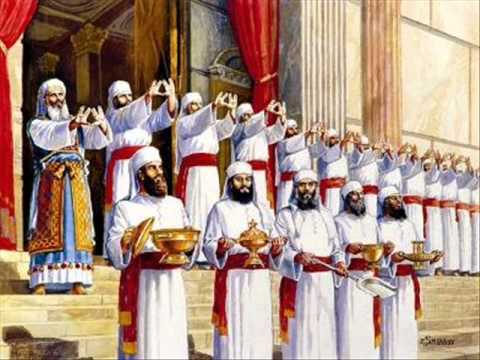
levites-aaronic-blessingAs an aside, in ancient times, the Kohenim (Levitical Priesthood) also worked on Shabbat and yet were held blameless (Matthew 12:5). I wonder when they rested? Of course, in the days of Jesus, the Priests worked on a rotational basis, so maybe it wasn’t as bad as all that. However, what about Rabbis working on Shabbat? But I digress.

I wonder if Pastor or anyone else at church would consider actually observing a Saturday Shabbat as “legalistic,” particularly if observed from sunset Friday to sunset Saturday and abstaining from some form of the Melachot or the thirty-nine types of work traditionally forbidden on Shabbos? Would it be legalistic to observe Shabbat because it honors God as the Creator rather than just because we need a rest?

Christianity didn’t switch Shabbat from Saturday to Sunday, they eliminated it altogether. Few Christians treat Sunday the way a religious Jew observes Shabbat, not even close. I think the church surrendering the Sabbath and its traditional observance was like Christianity shooting itself in the foot. Could you imagine the enormous relief and freedom we could experience if we didn’t choose to treat Sunday pretty much like any other day of the week?

That’s pretty much what I’m going to be addressing at church for the next two months. I’m actually kind of excited to hear what Pastor is going to say about the Festivals, but I’m also kind of dreading how it’s going to play in Sunday School. I’m going to go. In some ways, I really want to go. And I’m going to give input. People have become aware of my basic leanings and seem to be OK with it, but this will be the real test.

People are going to find out that in my own small way, I do observe the Festivals. My wife and kids being Jewish, we have a family seder each spring and I build a sukkah in our backyard each fall. I eat matzah instead of leavened products for the eight days of unleavened bread. And although I don’t always fast on Yom Kippur, I have done so periodically in solidarity with the Jewish people.

Too bad this didn’t come up before Tisha B’Av.

I’m sure I’ll have more to say after next Sunday’s message and Bible school study. This is where my real life experience and the mission illustrated in Boaz Michael’s book Tent of David intersect, hopefully not to forcefully, though.


FFOZ TV Review: The Good News

ffoz_tv1Episode 01: Most Christians believe that the gospel message of Jesus is that he died for our sins and if we have faith in him we will be given the gift of eternal life. While certainly this is a major component of the gospel, it is not the whole story. In episode one viewers will learn that the concept of the gospel wasn’t invented by Jesus or the disciples, but rather was prophesied in the Hebrew Scriptures. The “Good News” was the promise of the coming messiah and that he would bring redemption to the children of Israel.

At the First Fruits of Zion (FFOZ) Shavuot conference last spring, I told FFOZ President Boaz Michael that I’d like to spread the “good news” of their television ministry through my blog by reviewing one episode of their TV show per week. Obviously, I’ve fallen down on the job. My life has been busy and there have been so many things I’ve wanted to write about. A few months ago, I did write a review about the FFOZ TV series as a whole, and watched a few episodes to get a “flavor” of how the show is organized. But that doesn’t impart the nature of the message each show offers its audience.

Today (as I write this), I’ve revisited my promise and watched the first episode, The Good News. This is actually about the “mystery” of the good news or gospel, since what Christians believe about the gospel message is only part of the story.

The Lesson: What is the Good News?

Toby Janicki is the main speaker and teacher for this and every episode and he asks the question, “what is the gospel message?” Christians think we know the answer. The gospels are the books of Matthew, Mark, Luke, and John and the gospel message is that Jesus died for our sins and was resurrected. Through his atoning work, anyone who believes in Christ will have their sins forgiven, receive eternal life, and go to heaven when they die.

Toby doesn’t deny any of that for a second but tells us that it is only part of the message of the gospel or “good news.”

This episode, like the entire TV series itself, encourages the viewer to look at the New Testament from its original First Century CE Jewish context. What would the Jewish people in the time of the apostles have heard and understood when Jesus spoke? How the church presents the gospel today does not carry forward that context and what we hear preached every Sunday is only a portion of the message. That’s the value of this television series to its defined audience, traditional Christian believers. Know Christ better by learning to understand the Jewish Jesus.

Jesus and the apostles were teaching the gospel or good news message long before the crucifixion and it wasn’t “Jesus will die for your sins.” In fact, Jesus spoke the good news in the very beginning:

The Spirit of Hashem is upon me in order to anoint me to bring good news to the humble. He has sent me to care for the brokenhearted, to proclaim freedom for the exiles, and for the blind an opening release … to send the oppressed free … to proclaim a year of favor for Hashem.

Luke 4:18-19 (DHE Gospels)

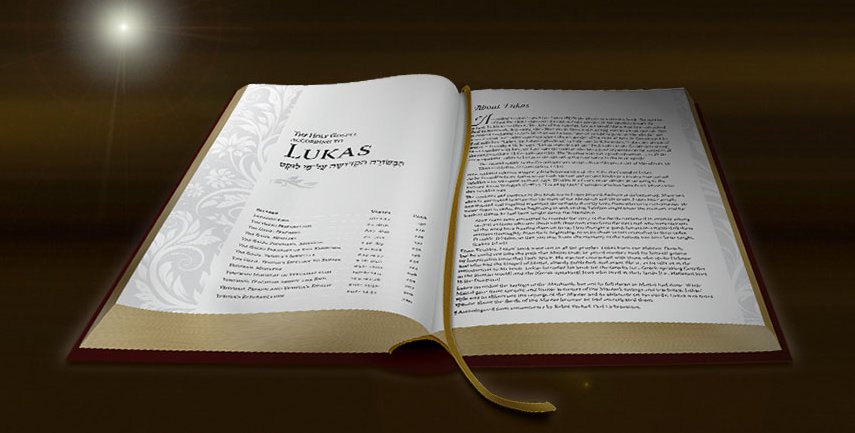
I used the Delitzch Hebrew Gospels translation for these verses, which Toby also reads from on the show when he quotes from the gospels. It imparts a greater sense of the Hebrew message by “retro-translating” the Greek text into Hebrew and is very helpful in drawing the mind of the Christian reader into the Jewish world of the Messiah.

You may also know that, in the above-quoted verses, Jesus was reading Isaiah 61:1-2 in the synagogue and he was speaking about himself. That scripture, along with several others from Isaiah, will provide valuable source information later in the show that is used to define “good news”.

So who are exiles, the blind, and the oppressed and what do they have to do with the gospel message?

The fact that the apostles didn’t seem to understand that Jesus had to die, and when he did, the shock, disappointment, and fear they experienced before his resurrection, as well as the surprise they felt after he was, tells us that they did not realize the good news had anything to do with the death and resurrection of the Messiah. What then did they think they were preaching to Israel and what was this “good news?”

Then Yeshua traveled around in all the Galil. He taught in their synagogues, he proclaimed the good news of the kingdom, and he healed every sickness and every disease among the people.

Matthew 4:23 (DHE Gospels)

It’s interesting that Toby notes Jesus never defines what the good news is to either the apostles or to anyone he preaches to. He assumes they already know what the gospel message is. But if even the apostles didn’t realize it meant that Jesus was to die, what were they supposed to know?

In this and the other FFOZ TV episodes, Toby presents information and then summaries it as clues, in this case three clues. The first is that the gospel or good news is actually the “good news of the Kingdom” as stated in the above-quoted passage from Matthew. This was a message specifically meant for the Jewish people in Israel and it was good news they were wanting to hear, a message of something they had been waiting for.

To understand what the gospel message is, the scene switches from Toby in the studio to FFOZ teacher and translator Aaron Eby in Israel. He provides the Hebrew language background for each lesson including this one.

ffoz-teaching-teamAaron takes us through a series of passages from the book of Isaiah including Isaiah 40:9, 52:7, 60:6, and of course, 61:1. In each case the good news is the message of the Messianic mission, the redemption of Israel, that is, physical, national Israel, as well as the entire world, when the Messiah comes to reign as King. The Hebrew word for “good news” is related to the Greek word and its variants that we translate into English as “evangelism” and “gospel”. It’s easy to see how the church has historically understood the message in one sense, but missed its larger meaning.

The scene shifts back to Toby who gives us the second clue: there is a gospel message in the Old Testament. That also takes us to clue 3: the gospel in the Old Testament is the promise of the coming of Messiah and the redemption of Israel, the Jewish people.

We can clearly see that the apostles expected this after the resurrection:

So when they had come together, they were asking Him, saying, “Lord, is it at this time You are restoring the kingdom to Israel?” He said to them, “It is not for you to know times or epochs which the Father has fixed by His own authority; but you will receive power when the Holy Spirit has come upon you; and you shall be My witnesses both in Jerusalem, and in all Judea and Samaria, and even to the remotest part of the earth.”

Acts 1:6-8 (NASB)

Notice that Jesus doesn’t rebuke the apostles for desiring national redemption and self-rule, he just says they don’t have the right to know when it will occur. He does say that before his return and the establishment of the Messianic Kingdom, they will receive power from the Holy Spirit to be Messianic witnesses “in Jerusalem, and in all Judea and Samaria, and even to the remotest part of the earth,” which is exactly what we see in the rest of the book of Acts and the New Testament.

Toby then takes the audience through a more detailed examination of each of the previously identified passages in Isaiah, closely drawing the meaning of the good news out and illustrating for us repeatedly how the Jewish audience in the time of the apostles would have understood the good news of Jesus as the coming of the Messiah and the redemption and restoration of Israel, and a reign of peace throughout the entire world.

Who are the exiles? Who are the blind? Who are the persecuted? Exiled and persecuted Israel, temporarily blinded to the Messiah for the sake of the Gentiles:

For I would not, brethren, that ye should be ignorant of this mystery, lest ye should be wise in your own conceits; that blindness in part is happened to Israel, until the fulness of the Gentiles be come in.

Romans 11:25 (KJV)

The Greek word most Bibles translate as “hardening” or some variant, is sometimes rendered as “blindness,” such as the King James Bible does. Read in a Jewish context and heard through a Jewish consciousness, when Jesus recited the words of the Prophet Isaiah in Luke 4:18-19, he was saying that he was the Messiah who had come to bring the good news to Israel and to one day redeem and restore her as a physical Kingdom on Earth.

Toby said something interesting about one of the Isaiah prophesies I want to share:

An abundance of camels will envelop you, camel colts of Midian and Ephah, and all of them will come from Sheba; gold and frankincense will they bear, and they praises of Hashem will they proclaim.

Isaiah 60:6 (Stone Edition Tanakh)

Toby relates that according to the Jewish sages, this describes the Gentile nations coming to Jerusalem to pay tribute to King Messiah. However, we have already seen something similar in the Magi of the East coming with gifts to pay tribute to the newborn Jesus. Of course, it is quite possible that Isaiah’s prophesy may have more than a single application. And it’s important to know the relationship between Gentile Christianity, the redeemed Israel, and the Jewish Messiah King.

The other interesting thing that Toby brought up (and I never realized this before) is that Jesus is actually speaking in Isaiah 61:1. Notice the text says (as translated in the Stone Edition Tanakh) that “the spirit of my Lord, Hashem/Elohim, is upon me, because Hashem has anointed me to bring tidings to the humbled; He has sent me to bind up the brokenhearted…

The emphasis is obviously mine and I include it to illustrate that it is the Messiah who is directly speaking in these verses, the voice of Yeshua bringing hope to Israel in the pages of the Old Testament.

When Christians read about the redemption of Israel in Isaiah, they often interpret the prophesy to mean “spiritual Israel” or “the church.” And yet, the Jewish hearers of Jesus and the Jewish readers of the gospels of the apostles would have understood the message much differently. They would have understood that the good news of Jesus is the promise of the coming Messiah and the redemption and restoration of national, physical Israel as a Kingdom on Earth.

dhe_lukas

This does not unwrite or replace the fact that Jesus died for our sins and that in his resurrection, we have forgiveness and an eternal place in the world to come if we believe. However, we Gentiles are grafted in to the commonwealth of Israel, as Toby teaches. We don’t replace Israel, we come alongside her and partakers of the promises, and as subjects and servants of the Jewish Messiah King.
What Did I Learn?

I’ve consumed a great deal of this material at FFOZ conferences or from their audio CD lectures as well as reading it in their printed material, but this television episode titled “The Good News” helped me organize that information into something that is easier for me to remember and transmit to others, a message to my Christian reading audience (and I am a Christian among them) that we have only been taught part of the story of the good news.

Toby Janicki, Aaron Eby, and the rest of the FFOZ ministry have “solved” the mystery of the gospel and clued us in on the rest of the message: Jesus came to die for our sins and to deliver the promise of everlasting life for all who believe. But, and this is extremely important, as Messiah King, he came to deliver the promise of good news to all of Israel that when he returns, he will release the captives in exile, restore sight to the temporarily blinded, free the oppressed Jewish people, and proclaim freedom for Israel, the year of favor from the Lord.

If you found this message of the true good news of Jesus Christ interesting and illuminating, I highly encourage you to watch the complete episode The Good News, which is the first in the series, at tv.ffoz.org. It is First Fruits of Zion: A promise of what is to come.

I hope to review the next episode very soon.

A Few Notes on Inner-Biblical Exegesis and Jewish Hermeneutics

Jewish_men_praying2In this almost painfully beautiful book…Fishbane…explores the question of the kind of canon, privileged status, or Logos, the Torah actually has for the post-modern Western Jew. It…is a moving, personal apologia…

-James A. Sanders,
“Theology Today”

Pastor Randy recommended Michael Fishbane’s book The Garments of Torah to me more than once and I finally decided to buy it. He said he hasn’t read it in many years but recalls Fishbane’s book having a profound effect on him. I’m going to try to give you a taste of the effect it’s having on me.

This isn’t a full book report. I’ve only read one chapter so far. Fishbane’s book is only 168 pages long but it’s hardly what you’d call “light reading.” The first chapter, Inner-Biblical Exegesis: Types and Strategies of Interpretation in Ancient Israel is dense with information and erudite in its writing, so I find I need to read slowly and carefully in order to grasp what is being said by the author.

Hence my writing this blog post as a series of “notes” just to offer some of my impressions. It’s interesting though that I find a sort of association between what Fishbane is presenting so far and what I wrote about in The Jewish Gospel, Part 1 and Part 2.

I want to say before proceeding that there is a likelihood that I’ll misinterpret some of what I’m trying to explain about what Fishbane’s is saying. In that case, I don’t doubt some of my more scholarly readers will step in and point out where and how I could do better. Thank you in advance for your efforts.

One of the great and most characteristic features of the history of religions is the ongoing reinterpretation of sacred utterances which are believed to be foundational for each culture. So deeply has this phenomenon become part of our modern literary inheritance that we may overlook the peculiar type of imagination which it has sponsored and continues to nurture: an imagination which responds to and is deeply dependent upon received traditions: an imagination whose creativity is never entirely a new creation, but one founded upon older and authoritative words and images.

-Fishbane, Chapter 1, pg 3

It’s interesting that Fishbane uses this block of text to begin a chapter on inner biblical exegesis, since it summons images of learned Rabbis crafting new Talmudic interpretations of the Torah in response to the demands of a changing world. But Fishbane is discussing how later portions of the Bible were crafted based on traditional understandings of earlier portions, at least as I read this chapter. The rationale for doing so is also very “Jewish” (I say this last part for the sake of my Christian readers).

…if not tradition’s realization that there is no authoritative teaching which is not also a source of its own renewal, that revealed teachings are a dead letter unless revitalized in the mouth of those who study them.

-ibid

If we don’t reinterpret (some might say “reinvent”) the Bible through the study and perceptions of the scholars and students of the present age, does it become a “dead letter?” Many people, both Christians and Jews, believe so, but clergy and scholars who are literalists tend to believe that reinterpretation throws out the baby with the bath water, and that making scripture more “relevant,” also robs the Bible of its power and holiness.

But even this mythification of a chain of legitimate interpreters did not so much obscure the distinction between Revelation and Interpretation as underscore it. From this perspective, the interpretative traditions of ancient Judaism constitute a separate, non-biblical genre: a post-biblical corpus of texts which stand alongside the Sinaitic revelation as revelation of new meanings through exegesis.

-ibid, pg 4

I know that’s going to disturb and even scare some folks. Fishbane is describing his views on how Pharisaic Judaism (which doesn’t have many fans in the church) attempted to minimize the gap between divine Torah and human interpretation by performing what I have called the rabbinization of Abraham. From an outsider’s point of view, it seems this must require more than a little sleight of hand and violates any sort of sola scriptura approach.

ancient_rabbisFrom this perspective though, the early Rabbis could be considered the “guardians of Torah” and according to Fishbane, the discovery of the Qumran documents may lend credence to the idea that the foundation texts upon which the later portions of the Tanakh (Old Testament) were written have already been interpreted and such “scribal intrusions” actually open a window and allow us to look into both the world of the early Torah authors as well as those who came after them. Examination of newly recovered ancient texts and how they comment on even older texts illustrates a process where the scribes, interpreters, and traditions became integrated components of Divine revelation.

The process of the intercultural transmission of traditions may be considered one of the primary areas in which authoritative teachings or memories were received and revalued for new generations.

-ibid, pg 5

Recall in my commentary on Boaz Michael’s presentation Moses in Matthew how this process was illustrated by the apostle Matthew. Knowledge of traditions about the Creation and Moses being drawn from the water and parting the Reed Sea were a necessary component of correctly interpreting the deeper meaning of Jesus walking on water (see The Jewish Gospel, Part 1). Earlier Biblical text and the traditions surrounding how those scriptures are interpreted seems to be woven into the fabric of the apostle’s Matthew 14:22-33 account.

For if scribalism points to the fact that ordinary textual ambiguity or openness may serve to catalyze commentary and that these supplements, when incorporated into the received text, reflect the cultural dynamics of transmission, then law and theology, where the frequent incomprehensibility or non-comprehensiveness of divinely authorized rules requires human exegesis and expansion, offer an even richer sphere of study.

-ibid, pg 7

I can see two ideas coming from that one sentence. The first is that the uncertainty about particular laws in Torah and how to actualize them may have actually enhanced discussion among sages and scholars resulting in developing a tradition on how to perform the mitzvot based on those commentaries. Tradition first becomes the lens by which Torah ambiguities are examined and finally becomes an element of the revelation itself (though a separate “genre” existing alongside scripture, according to Fishbane). But Fishbane can also be saying that one older section of the Bible such as a prophesy can be refactored and applied anew to a later occurrence, such as Matthew referencing Hosea 11:1 and applying it to Jesus in Matthew 2:15 as possibly based on the ambiguous interpretation of the older scripture.

Not only does tradition resolve Biblical ambiguities but it allows for older prophesies to be reinterpreted in such a way that later portions of the text can connect back to entire ideas and images associated with earlier writings.

The terse formulation prohibiting Sabbath labor found in the Decalogue, Exod. 20:18-21, is taken over virtually verbatim in the Mosaic citation of it in Deut. 5:12-14…But even Moses’ recitation of the ancient rule…does little to explicate the details of prohibited work.

-ibid, pg 10

(I should mention as an aside, that D. Thomas Lancaster’s book The Sabbath Breaker: Jesus of Nazareth and The Gospels’ Sabbath Conflicts which I previously reviewed, also addresses the struggle in comprehending that is considered “forbidden work” within the context of the acts of Jesus in the gospels.)

Fishbane suggests that the ambiguity regarding forbidden work on the Sabbath was later addressed in passages of Jeremiah in an attempt to achieve a resolution (see Jeremiah 17:19-27). Attempting to go into more detail would just result in me either including longer quotes from Fishbane’s chapter or essentially rewriting Fishbane in this blog post. The point is to get you to turn your attention to his book so you can see what you think of his viewpoint for yourself (Well, that’s not the whole point of me writing this. I’m also just trying to get my brain around this topic).

However, among his many examples of Inner-Biblical exegesis is this:

As an example, we may consider 2 Chron. 15:2-7, a speech which one Azzariah ben Oded delivers an oracle to King Asa of Judah.

This prophetic discourse (as also the prophet in whose name it is spoken) is unknown to earlier biblical sources, and appears to reflect the pseudepigraphic handiwork of the Chronicler who has woven together several strands of tradition in order to confront his contemporary readership (in the Persian period) with a matter of “prophetic” concern to him.

-ibid, pp 14-15

studying-talmudThis seems to harken back to books such as Who Wrote the Bible by Richard Elliott Friedman which considerably blur the lines between God-inspired text and the human, social, and political requirements of the authors involved. The tradition for interpretation of the text ultimately becomes part of the revelation itself and we can’t always see where the inspiration of God leaves off and the authorship of the actual human writers (and their various priorities) begins. We only know that how the Jewish people came to understand their Bible scriptures (which is certainly true by the time of Jesus) was inseparable with the interpretative traditions of the text itself.

In fact, those traditions were well used by later Jewish Bible writers such as Matthew (and I mentioned this earlier) in order to communicate important ideas to the audience. To do away with those traditions involving inner-biblical exegesis and return to a strictly literal reading of the text in isolation both from tradition and other sections of the Bible, strips away the vast majority of the meaning from what the Bible is communicating. It becomes virtually impossible to understand what Matthew is really writing about Jesus unless we A) refer to previous sections of the Bible, and B) engage the interpretative traditions associated with those older portions of scripture as applied to the later texts.

Seemingly agreeing with the Moses in Matthew presentation and Boaz Michael’s viewpoint, Fishbane tells us that referencing these older sections of the Bible in later writings re-contextualizes them to apply to (apparently) people and events to which these older scriptures didn’t originally reference (the aforementioned Hosea 11:1 and Matthew 2:15).

And those are my notes on only one chapter made up of fifteen pages in Fishbane’s book. Not the most amazingly cohesive blog post I’ve ever written, but then there’s quite a lot to digest. However, when compared to other opinions and ideas about the Jewish view of the Bible, and particularly the Jewish view of the midrashic linkage between the Tanakh and the apostolic scriptures, we should experience several “Ah-ha” moments in our understanding as the ideas from The Garments of Torah begin to sink in.

I’m looking forward to the rest of Fishbane’s book.

Addendum: I know I’m probably playing fast and loose with Fishbane’s chapter, but these are more my impressions about what I’m reading and the associations sparked by his writing, than a detailed, “nuts and bolts” analysis.


The Jewish Gospel, Part 2

studying-talmudBut the way Boaz teaches this lesson teaches us something about Biblical sufficiency. The idea of sufficiency is that the Bible is all that we need to understand the Bible. That’s not exactly true. While the plain meaning of the text does teach us something about Jesus and who we are as Christians, an understanding of early Jewish thought, writings, and midrash, shows us that the text contains a deeper meaning, one that would elude us if we ignored the extra-Biblical understanding of how an early Jewish audience would have comprehended these verses and associated them with other parts of the Bible. Sola scriptura isn’t quite the beginning and end of how we can understand the Word of God.

We may call the Bible “sufficient” and it is, but it can be more “complete” only when we reinsert the Jewishness of its overall context and include both Jewish perspective and Jewish midrashic thought into our understanding.

That is some of my commentary from yesterday’s morning meditation (If you haven’t done so already, please click the link and read part 1 before continuing here) based on First Fruits of Zion (FFOZ) founder and director Boaz Michael’s “Moses in Matthew” presentation. The original lecture series is a couple of years old, but it was recently released on audio CD and I’ve had the opportunity to listen to this teaching. I learned a few things from this lecture and by sharing some of it, I hope you can learn a few things, too.

One of the scribes came near and heard them disputing with one another, and seeing that he answered them well, he asked him, “Which commandment is the first of all?” Jesus answered, “The first is, ‘Hear, O Israel: the Lord our God, the Lord is one; you shall love the Lord your God with all your heart, and with all your soul, and with all your mind, and with all your strength.’ The second is this, ‘You shall love your neighbor as yourself.’ There is no other commandment greater than these.”

Mark 12:28-31 (NRSV)

It’s interesting that Matthew’s rendition of this event (Matthew 22:36-40) doesn’t include a more direct reference to the Shema. Many Christians imagine that Jesus replaced the 613 commandments of the Torah (though the Torah wouldn’t be formally codified in this manner for many centuries after the resurrection) with just two, thus substituting grace for the law. But that’s not how it would have sounded to Messiah’s original Jewish audience.

In yesterday’s blog post, I related the part of Boaz’s teaching illustrating how the Master (or any Jewish teacher in those days) could quote from just a single verse in a Psalm or other portions of the Tanakh (Old Testament), and his audience would immediately recall the full text of the part of scripture to which he was referring, connecting the teaching to the much wider body of words and imagery. When Jesus taught about the two greatest commandments and in Hebrew said, “Shema Yisrael” (Hear O Israel), the people listening wouldn’t have just thought of Deuteronomy 6:4-7, but to the rest of the content of that chapter as well as Deuteronomy 11 and Numbers 28 which also are part of the Shema. The reason the Pharisee who was an expert in the law agreed with Jesus so strongly is because he not only agreed with the interpretation of the immediate text under discussion, but the wider implications of how Jesus was presenting and teaching the Shema and Torah as good news and hope to Israel.

And again, Christians tend to miss this point, especially since we are (most likely) reading the text in English and not viewing it with a Jewish mindset. But the further importance of the Delitzsch Hebrew Gospels being presented at the same time as Boaz’s teaching is that “retro-translating” the Greek back into a “Hebrew voice,” allows for a more “Jewish” reading of this lesson, giving us a closer look at how the ancient Jewish listeners were hearing and understanding Jesus. Even reading the Gospels in Greek would still “miss” what the ancient Jews were hearing when Jesus taught.

We can see a further connection here:

Everyone then who hears these words of mine and acts on them will be like a wise man who built his house on rock.

Matthew 7:24 (NRSV)

The two greatest commandments do not replace the Torah nor do they really condense the Torah. This teaching actually unpackages the meaning of the Shema and defines any Jewish person who has faith in God and who is zealous for the Torah to be both hearers and doers of the Word and will of God.

That’s a lot to pull out of a short discussion between Jesus and a legal expert.

the-teacherBut Boaz’s teaching is called “Moses in Matthew” and in referencing Matthew chapters 1 and 2, he says that it was the Apostle’s intent to mirror the birth and childhood narratives of Jesus with Moses. That may not be immediately obvious to the Christian reader, which is why lectures such as this one are so important.

I won’t go into all of the details (since my notes are limited) but making the connection requires some knowledge of Jewish midrash (Maybe books such as those written by Daube and Lachs would help) about the early life of Moses and his parents, information that isn’t available in the Bible (and Bible sufficiency proponents will likely struggle at this point). But Jesus’s audience would have been aware of some form of the midrashim connected to the early life of Moses, and when reading how Matthew wrote about the early life of Jesus, Boaz believes Matthew’s audience would be saying to themselves, “I’ve heard this story before.”

As an aside, I just read Dr. Michael L. Brown’s review of David Klinghoffer’s book Why the Jews Rejected Jesus in which Dr. Brown writes the following:

Klinghoffer fails to grasp the depth of Matthew’s hermeneutic (along with the hermeneutic of other NT authors), noting, “Pointing out the imprecision of proof texts like these, one feels almost unsporting. It’s too easy” (66). To the contrary, as top Matthew scholars have observed, “Matthew was not above scattering items in his Greek text whose deeper meaning could only be appreciated by those with a knowledge of Hebrew. Indeed, it might even be that Matthew found authorial delight in hiding ‘bonus points’ for those willing and able to look a little beneath the gospel’s surface.”3 At times it is clear that Klinghoffer simply failed to get the NT author’s point (see again 66, citing Matt 2:23 and Isa 11:1).

Boaz Michael’s perspective on Matthew’s Gospel is not in isolation. Now to continue with the main portion of my missive.

Please keep in mind that the point isn’t whether or not midrash is literally true. It probably isn’t. But the cultural context of the midrashim and what it means to a Jewish audience is what connects and binds the interpretive stories about Moses to the stories Matthew was telling about the young Jesus and his family.

Boaz went on in his teaching to compare the temptation accounts in Luke 4 and Matthew 4. They’re not the same. Matthew includes specific details that Luke leaves out, such as the Master fasting for forty days and forty nights. That specific time period (as opposed to just forty days) is mentioned only four times in the Bible, and three of those events are related to fasts (Elijah’s fast is one of them). How could Matthew’s readers not associate Jesus’s fast in the wilderness with that of Moses on the Mountain with God. It is further said in midrash that Moses dined on the bread of angels on the Mountain (somewhat contradicting that he was fasting) and in Matthew’s account of the temptation, the Adversary said that Jesus could command stones to become bread.

The order of the temptations is reversed from Luke to Matthew, with Matthew’s account presenting Jesus being taken to a high mountain and shown all the nations as the last temptation. Just before Moses’s death, God took him to a high mountain and showed him all of the nation of Israel.

(You might be thinking that these comparisons aren’t very strong, but it’s the way Matthew is writing his entire Gospel that provides the complete illustration of Messiah and Moses. The Gospels differ from each other, not because the Gospel writers were inconsistent, but because they each had a different emphasis on Messiah to present, like four different artists each painting a different portrait of Messiah. Same guy but different styles and interpretations.)

When Jesus saw the crowds, he went up the mountain…

Matthew 5:1

When Jesus had come down from the mountain, great crowds followed him…

Matthew 8:1

In between these two events, Yeshua (Jesus) delivered what has come to be called “the Sermon on the Mount.” It might surprise you to hear that Boaz believes Jesus going up the mountain and then coming back down can be compared to Moses going up to receive the Torah and coming back down. That probably sounds a little thin to you, but consider the function of the sermon itself. It’s been called the greatest distillation of the Torah. Moses ascended the mountain to receive the Torah and descended to deliver it to Israel. Jesus ascended the mountain to teach the Torah and descended when he had finished.

Also, when Moses descended, he encountered the faithless Children of Israel worshiping the Golden Calf. When Jesus descended, he encountered a leper (actually, a Jewish man with a form of “spiritual skin disease”) who through faith was made clean of his disease. There’s a “mirror effect” being created between Moses and Jesus by Matthew for his readers.

Now here’s something really interesting.

“Do not think that I have come to abolish the law or the prophets; I have come not to abolish but to fulfill. For truly I tell you, until heaven and earth pass away, not one letter, not one stroke of a letter, will pass from the law until all is accomplished.

Matthew 5:17-18

Torah at SinaiAnyone involved in either the Messianic Jewish or Hebrew Roots groups for more than five minutes will recognize this passage as the core message of those two movements. Yes the Torah will pass away, but not until Heaven and Earth pass away. Now here’s the really cool part.

Truly I tell you, this generation will not pass away until all these things have taken place. Heaven and earth will pass away, but my words will not pass away.

Matthew 24:34-35

The words of the Torah will pass away at some point in the future, but Messiah says that his words will never pass away.

The Torah is greatly praised both in the Tanakh (Old Testament) and in the New Testament but if you study the Torah, a great deal of its content has to do with daily living in Israel, daily human living on earth. All of that will eventually fade away after a long, long period of time.

I saw no temple in the city, for its temple is the Lord God the Almighty and the Lamb. And the city has no need of sun or moon to shine on it, for the glory of God is its light, and its lamp is the Lamb. The nations will walk by its light, and the kings of the earth will bring their glory into it. Its gates will never be shut by day—and there will be no night there. People will bring into it the glory and the honor of the nations. But nothing unclean will enter it, nor anyone who practices abomination or falsehood, but only those who are written in the Lamb’s book of life.

Revelation 21:22-27

With no temple currently existing in Jerusalem, most Christians think the Torah has already been done away with and been replaced by Christ’s grace, but I believe another temple will be built. It would be impossible to observe the laws related to the temple without the Torah being in effect for the Jewish people. We know that the Gentile nations will be required to send representatives to Jerusalem to observe Sukkot every year in the Messianic Era. Again, observing the festival requires a temple in Jerusalem and the laws of the Torah for temple worship. Jesus said the Torah will be with us as long as there are a heaven and earth. Eventually there will be no Torah and no Temple, but we aren’t there yet. But even when we get there, the words of the Lamb will remain, for they are eternal.

All the nations you have made shall come and bow down before you, O Lord, and shall glorify your name.

Teach me your way, O Lord, that I may walk in your truth; give me an undivided heart to revere your name.

Psalm 86:9, 11

I’ve said in today’s “meditation” as I’ve said many times before, that the Torah remains and functions. It remained and functioned after Christ’s ascension and in the days of James, Peter, and Paul. In order for prophesy to be fulfilled, the Torah needs to remain in force for the Jewish people until all has been completed and as long as there is a heaven and an earth.

But if you’re a Christian reading this, you’re probably wondering what that means to you. Even if you’re willing to accept the continued authority of the Torah for the Jewish people (a big “if” for many Christians), what does it have to do with a believer who isn’t Jewish?

There’s a great deal in even a surface reading of the Torah that has to do with a Christian living a holy life. All of the principles upon which we live a life of faith are from Torah; caring for the disadvantaged, feeding the hungry, comforting the widow, helping a neighbor, visiting the sick…these are all from Torah and they all apply to Christians today.

Boaz said that the heart of discipleship is to study the teachings of our Master and to apply those parts of the teachings that directly connect to us to our daily living. Remember, Jesus primarily taught to Jewish audiences who were perceiving his teachings from a Jewish worldview. Paul was the primary agent responsible for taking those Jewish teachings and crafting them in a manner “digestible” to a God-fearing Gentile audience.

The first discourse Paul gave at the synagogue in Pisidian Antioch (Acts 13:13-43) was a teaching of Jesus the Messiah as the culmination of Jewish history condensed (and most likely summarized by Luke) by the Apostle and presented to Jewish and God-fearing Gentile listeners. Their response was overwhelmingly enthusiastic.

messiah-prayerBut as time passed, the message of the good news of Messiah became increasingly “Gentilized” and eventually divorced from its Jewish context. Even those Christian scholars who can read the New Testament in the Greek can easily miss the “Hebrew voice” of the Apostles and thus lose a great deal of their intent and meaning.

Which is why teachings such as this one given by Boaz Michael are important. It’s why studying midrash and Jewish thought are exceptionally helpful in augmenting our understanding of the Bible.

The value of the Messianic Jewish and Hebrew Roots movements for non-Jewish believers is to teach us the Torah and how to read it in relation to the New Testament scriptures. It’s to help us filter the Bible through the eyes of Jewish thinkers, writers, and sages. It’s to encourage us to think outside the traditional Christian “box,” not to turn us into quasi-Jewish people, but to define and illuminate the Christian relationship to the Jewish people, the chosen ones of God, and thus to Messiah himself, the first-born son of Israel.

If you are intrigued but unfamiliar with the perspectives I’ve been discussing in yesterday’s and today’s blog posts, I encourage you to go to First Fruits of Zion and see what else they have to offer. As a fellow Christian and student of the Bible, I’ve found many of their materials invaluable in my own exploration of my faith.

Who is the Jewish Jesus and how does a “Jewish” understanding of the scriptures make us better Christians? It’s a journey I hope you’ll join me on as we investigate this “undiscovered country,” including the Jewish Gospel of Matthew.

The Jewish Gospel, Part 1

620_moses-in-matthewLast night, the new MJTI Interfaith Center in Beverly Hills hosted a seminar on the Gospels with special guest, Boaz Michael, the founder and director of First Fruits of Zion.

The two-hour seminar introduced many of the typologies throughout Matthew to Yeshua’s “Moses-like” fulfillment. The Gospels are composed in a thoroughly Jewish manner and need to be understood within that context to fully see what and why things take place and are said. The Moses in Matthew seminars are currently being offered at various locations and if you have the opportunity to attend one of these seminars, definitely do it! I found myself not only intellectually engaged and enlightened, but spiritually encouraged by this discussion.

-Rabbi Joshua Brumbach
“Moses in Matthew”
Yinon Blog

I acquired an audio CD of this presentation from First Fruits of Zion (FFOZ) through the FFOZ Friends program and have been meaning to review it for awhile now. It’s hard for me to sit still and listen to a recorded audio lecture, but I took my wife’s portable CD player outside and, as I weeded in the back yard, allowed my mind to be illuminated by Boaz Michael’s teaching while my body took care of the home that God has graciously provided. I learned a few things. I’d like to pass them along to you (and I apologize if I got anything in Boaz’s presentation not quite right…it’s tough to take notes while weeding).

The Lord your God will raise up for you a prophet like me from among your own people; you shall heed such a prophet.

Deuteronomy 18:15 (NRSV)

According to Boaz’s teaching, the Gospel of Matthew was written specifically for a Jewish audience and was probably the only one of the Gospels originally written in Hebrew (although the Hebrew original is lost to us). The words of Moses quoted above foretell of a prophet greater than Moses who would one day rise up from among Israel. This prophet would be Messiah and he would also be a King and do many great signs and wonders. Messiah would be known by the prophesies he would tell and he would lead Israel back to faithfulness in the Torah.

In Matthew and the other synoptic gospels, it was asked if Yeshua (Jesus) was the prophet, but in John’s gospel, it was declared that he was (and is) the prophet.

Boaz tied his teaching to the release of the Delitzsch Hebrew Gospels (this was a few years back) and he described at length the history of Franz Delitzsch and his mission to “retro-translate” the Greek language of the Gospels back into Hebrew. This doesn’t restore the “Hebrew text” but it does provide the “original voice,” the Hebrew voice of the gospels and the gospel writers.

That’s an important point to get because the focus of Boaz’s “Moses in Matthew” teaching is to be able to read Matthew the way a Jewish person would have read it during the early days of the Jewish religious movement “the Way.”

Boaz said something I consider very important (paraphrasing): “Every translation is really a commentary.” I know my own Pastor has said that we need to be able to understand the Bible in its original languages and within its own context in order to gain an objective understanding of what God is trying to say. My counter argument is that any translation imposes a certain set of assumptions being made by the translator so that interpretation doesn’t begin after translation but during translation. It’s at this point when we also start making connections from one text in the Bible to another and deciding what those connections mean.

And there shall come forth a shoot out of the stock of Jesse, and a twig shall grow forth out of his roots. And the spirit of the Lord shall rest upon him, the spirit of wisdom and understanding, the spirit of counsel and might, the spirit of knowledge and of the fear of the Lord. And his delight shall be in the fear of the Lord; and he shall not judge after the sight of his eyes, neither decide after the hearing of his ears.

Isaiah 11:1-3 (JPS Tanakh)

The people of Nineveh will stand in judgment of this generation and condemn it, for they repented at the call of Yonah. But look! One greater than Yonah is here. The queen of Teiman will stand in judgment of this generation and condemn it, because she came from the ends of the earth to hear the wisdom of Shlomoh. But look! One greater than Shlomoh is here.

Matthew 12:41-42 (DHE Gospels)

shlomo-hamelechThese verses tell a Jewish audience (and hopefully the rest of us) something about the Messiah. The prophet Isaiah tells us that the Spirit of the Lord shall rest upon the Messiah, Son of David, and he shall be wise and understanding and knowledgeable, more so than Solomon. The idea is that Messiah isn’t just like Moses the Prophet, David the King, and Solomon the Wise, but he is greater than all of those. The Hebrew word translated as “delight” from the passage in Isaiah actually is better translated as “sense,” giving the idea of sense of smell, so it is like Messiah can sense, almost “smell out” the truth.

While a general audience can “get” the meaning of all this, it would, according to Boaz, have been quite a bit more obvious to a Jewish audience in the days of Matthew and in fact, it was Matthew’s intent to write in a manner that would demonstrate Messiah to them in a uniquely Jewish way. The gospels, and especially Matthew’s, are considered the greatest Jewish story ever told, if we just know how to properly read it.

Here’s another Jewish story:

During the fourth watch, Yeshua came to them, walking on the surface of the water. His disciples saw him walking on the surface of the sea and were terrified. They said, “It is the appearance of a spirit!” and they cried out in fright. Yeshua called to them, “Be strong, for it is I. Do not fear!”

Matthew 14:25-27 (DHE Gospels)

The full text of this event is in Matthew 14:22-33. You probably think you know everything there is to know about this story, including Peter’s brief ability to also walk as long as he kept his eyes on the Master.

But to an ancient Jewish audience, it says so much more.

When God began to create heaven and earth — the earth being unformed and void, with darkness over the surface of the deep and a wind from God sweeping over the water…

Genesis 1:1-2 (JPS Tanakh)

The Hebrew word translated as “wind” can also be translated as “spirit,” thus we understand that it was the spirit from God that was hovering over the water.

This is the part where you have to “think Jewishly” and moreover, to have access to popular Jewish writings and teachings that are now collected in a large number of written works but at the time Matthew was writing his gospel, were more likely conveyed through oral tradition in less refined forms.

Boaz states in his presentation that according to Midrash Rabbah, it was the spirit of Moshiach (Messiah) that hovered over the waters. We know (and Matthew’s Jewish audience would have known) that from Isaiah 11:1-3 the spirit from God rested upon Moshiach. We know from Matthew 3:16-17 that the spirit came from God “like a dove” and rested on Jesus.

According to midrash, whose spirit hovered over the water? The Spirit of Moshiach. Putting all this together, the Messiah “hovering” or “walking” over the water would have summoned an immediate connection between that event and Moshiach’s Spirit hovering over the waters at creation.

This is also an indication that Messiah is greater than Moses. Moses’s name indicates one who was saved or drawn from water. We also know of Moses, through the power of God, splitting the Reed Sea (yes, that’s “Reed Sea.” “Red Sea” is a poor translation) and walking at the bottom of the sea with the water over him. Yeshua is greater because he is over the water as was his spirit at creation.

Your way was through the sea, your path, through the mighty waters; yet your footprints were unseen.

Psalm 77:19 (NRSV)

walking_on_waterThis verse seems to reference Moses but it is also Messianic because footprints are “unseen” when someone is walking on top of water. Also water, in ancient Jewish thought, represents chaos. In the story of creation, God “binds” and limits the great waters with shores. Yeshua is above the chaos and Matthew telling this story as he does, is declaring to his Jewish audience that Jesus is the Messiah from creation. For the rest of us, his message is that the good news of Moshiach is “first to the Jews.” It is the story of Jewish good news.

But the way Boaz teaches this lesson teaches us something about Biblical sufficiency. The idea of sufficiency is that the Bible is all that we need to understand the Bible. That’s not exactly true. While the plain meaning of the text does teach us something about Jesus and who we are as Christians, an understanding of early Jewish thought, writings, and midrash, shows us that the text contains a deeper meaning, one that would elude us if we ignored the extra-Biblical understanding of how an early Jewish audience would have comprehended these verses and associated them with other parts of the Bible. Sola scriptura isn’t quite the beginning and end of how we can understand the Word of God.

There’s another message here according to Boaz. In his presentation, he was addressing a traditionally Christian audience, one who was just becoming involved in FFOZ’s HaYesod program. Historically in the Messianic Jewish and Hebrew Roots movements (and I can attest to this personally), there’s been a tendency for Gentile believers to become enamored with the Torah to the exclusion of the rest of the Bible. It has tended to “defocus” Gentile believers involved in either of these movements from the Gospels and from the Messiah. Just as the Gospels don’t replace Moses and the Torah, Moses and the Torah don’t replace Jesus and the Gospels. The Gospels require the Torah to illustrate and validate the message of Messiah but always remember, the Messiah is the Prophet, the one who is greater than Moses.

But there’s more in Matthew that teaches us about Messiah:

They remained there until the death of Hordos, fulfilling the word of HaShem through the prophet, sayings, “Out of Mitzrayim I called my son.”

Matthew 2:15 (DHE Gospels)

This is a direct reference to the following:

When Israel was a child, then I loved him, and out of Egypt I called My son.

Hosea 11:1 (JPS Tanakh)

Modern Jewish commentators cry “foul” at Matthew’s application because Hosea is clearly referring to Israel the nation as God’s son, not the Messiah. But the heart of Jewish interpretation and application is taking scripture and applying it differently to other circumstances. This also does something special that I completely agree with. Matthew is creating a one-to-one equivalency between Israel and Messiah. Messiah is not only the Son of God, but the living embodiment of the nation of Israel; the Jewish people. Moshiach is Israel’s first-born son.

Yeshua spoke all these things in parables to the crowd of people, and other than parables, he did not speak to them at all, fulfilling what the prophet spoke, saying, “I will open my mouth with a parable; I will utter riddles from ancient times.”

Matthew 13:34-35 (DHE Gospels)

This compares to the following:

I will open my mouth in a parable; I will utter dark sayings from of old.

Psalm 78:2 (NRSV)

But here we learn something else. Typically, a Christian will understand that Matthew 13:34-35 is relating back to Psalm 78:2. In a Bible study on the verses from Matthew, a Christian teacher would probably include a reference specifically to Psalm 78:2 rather than the entire content of that Psalm. But from a Jewish writer’s point of view, he intends for his audience to read or hear that portion cited from Matthew and to recall all of the Psalm.

bet_midrash_temaniPsalm 78 as a whole, describes the repeating cycle of Jewish faithfulness and unfaithfulness, faithfulness and unfaithfulness to God. Matthew wants his audience to “get” this point and associate it with Yeshua as Messiah and that Messiah has come to restore Israel’s faithfulness to God.

Again, if we just isolate and link Matthew 13:34-35 and Psalm 78:2, we miss the larger message Matthew is transmitting to his Jewish readership. We may call the Bible “sufficient” and it is, but it can be more “complete” only when we reinsert the Jewishness of its overall context and include both Jewish perspective and Jewish midrashic thought into our understanding.

I’m going to split this teaching into two posts for the sake of length. There are other important parts to what Boaz Michael spoke that I don’t want to miss or gloss over. Part 2 will be in tomorrow’s “morning meditation.”