Tag Archives: Christianity

Book Review: The Four Responsibilities of a Disciple

The Four ResponsibilitiesThis book addresses the question, “What will it take to change the world for our Master?” After many years of searching, my answer is that it has to start with a Personal Revelation. Here’s what I mean…

There’s a story told of a rabbi from the late nineteenth century who set out to change the world, but very soon realized that he could not. So, he decided to focus on changing the Jewish community of his country but he failed there as well. He then decided to focus on changing the people of his hometown but didn’t get any further. Finally, in a last effort, he believed he could change his family and sought to do so. Failure was the result there as well. In the end, he realized that the only person he could really change was himself. Therefore, he began to do so. And today, long after his death, his teachings are the cornerstone of Jewish life, particularly in proper speech and ethical conduct.

This is our path.

-Darren Huckey
“Introduction: Why Discipleship,” pg 5
The Four Responsibilities of a Disciple

This is how Darren begins his small (85 pages) booklet and primer on promoting authentic discipleship under our Master, Jesus.

When Darren contacted me and asked me to review this book, I wasn’t sure what to think. I am aware of Darren in various social media venues but can’t say I actually “know” him as well as I know other people I regularly communicate with over the web but have never met. But I was curious and agreed to do the review and subsequently, Darren’s book arrived in the mail.

I must say that I’m impressed. I was barely aware of Emet HaTorah so I wasn’t sure of the quality of the materials they (he?) produce. Both the “look and feel” and quality of content are high and represent a professional job of writing and publishing. I’ll cut to the chase and say right now that I’d recommend this book for anyone who is really interested in what being a disciple of the Jewish Messiah is like as a lived experience.

The booklet is laid out along the pattern of steps Darren establishes for discipleship:

  • Devotion
  • Memorization
  • Imitation
  • Replication

Except for the Introduction, each chapter has a series of study questions at the end as well as the endnotes for references used in the chapter. The book then is suitable for either group study or for the individual reader/student.

Actually, Chapter One is “What is a Disciple?”, which is a critical question to answer. If you don’t know the answer, you certainly can’t make a disciple or even be one.

The Master of whom Darren refers and who leads us in discipleship is Jesus, and the pattern of how to make/be a disciple comes from very Jewish sources. In terms of “the Church,” Darren called discipleship a “lost art.” If a church has any sort of “discipleship program” at all, it’s based on “intangibles” such as defining the disciple as one who “will love Jesus more than anything,” “will carry his cross,” “will count the cost,” and “will surrender everything to Christ.”

The ancient and modern Jewish discipleship is based on “doing” or direct imitation of the Rabbi or teacher, not just being devoted to an abstract set of principles. If you had to live your life based on the “intangibles” I listed above, what exactly would that look like? What would you do? How would someone who knows next to nothing about a “Christian lifestyle” of holiness implement those principles in day-to-day living? Would you recommend that he or she fashion a large, wooden cross and then shlep it on their backs from morning to evening to “carry his cross?”

Darren makes a good point when he calls a disciple a “lifestudent,” but that only helps the reader realize how challenging being a true disciple of Christ is. Discipleship isn’t a six, twelve, or eighteen-week program you run a new member of your church through and at the end, they are a “full-fledged Christian.” Discipleship takes a lifetime of continual studying and mentoring.

Devotion

In one sense, how the church defines a disciple, “love Jesus more than anything,” is the center of devotion to one’s “Rebbe.” But the concept of devotion has to be actualized. That is, you have to understand how devotion is acted out and then do it.

jewish-czech-boys-studying-talmudIn Chapter Two, devotion is a matter of commitment. Think of it like a marriage. Being married is more than just a ceremony and signing a license, it’s a life-long (ideally) commitment of two people to each other to meet not only a set of wants and needs recognized at the beginning of the relationship, but to adapt over time and meet commitments that were never even imagined at the beginning. If you can grasp that concept and better yet, if you’ve actually done it (been married for years or decades), you have a pretty good idea of what living a life of discipleship is all about.

The analogy falls apart when you realize that a marriage is a commitment between two equals and discipleship is being devoted to someone who will always be greater than you.

“Truly, truly, I say to you, a slave is not greater than his master, nor is one who is sent greater than the one who sent him.”

John 13:16 (NASB)

Memorization

This is actually something some Christians do pretty well. A lot of churches encourage their members to judiciously read the Bible and to memorize verses, but in the Jewish model of discipleship, students memorize all of the teachings of their Master. That’s a tall order, even if you just interpret this as memorizing everything Jesus said in the Gospels. However, since our Master’s “source material” was the Torah and the Prophets, we’re talking about a much larger body of text being involved.

But Peter told Jesus that Messiah had “words of eternal life” (John 6:68). Writing those words on our minds and hearts leads to such a life, both in the now and in the World to Come.

However, rote memorization isn’t all there is to it. Correct interpretation and then living out these teachings is part and parcel of the task. If we don’t understand the original meaning of the Master’s teachings, they will either seem like nonsense, or we’ll end up completely missing the mark of what he was trying to say. Darren references First Fruits of Zion (FFOZ) author and teacher D. Thomas Lancaster and his “Macaroni Principle.” As children, we all probably heard and sung this little tune once or twice:

Yankee Doodle went to town,
riding on a pony;
He stuck a feather in his hat,
and called it macaroni

I won’t reveal the definitions here, but if you don’t know the meaning of “yankee,” “doodle,” “macaroni,” and why someone would put a feather in their hat, you won’t have the faintest idea what this really means (and it really means something quite specific).

Our Rebbe Yeshua may be the wisest and greatest prophet and teacher who ever lived, but if we don’t understand what his original students would have understood when they listened to him, we will proceed to understand, teach, and live lives of folly and error. One of the reasons I have written about the Didache is to illuminate some of the probable details of a life of discipleship and training of the very early Gentile believers. The Didache gets disciples out of their heads and actually “doing” Christianity. That’s what Darren is trying to do with his book, too.

Imitation

I know some people reading this will take the suggestion quite literally and say this is proof that Gentile Christians are commanded to wear tzitzit, lay tefillin, eat Biblically (as opposed to Rabbinically, for some reason) kosher, pray in Hebrew, and try to live as how they imagine observant Jews live without actually converting.

studying_tanakh_messiahThat’s not how I see imitation and such superficial behavior misses the point of this principle. What do we do to imitate our Master, which is the application of his teachings in our lives?

Darren produced a short bullet list (I won’t replicate the whole thing here) that includes showing compassion to others, leading through serving, loving children, having a passion for justice, and loving the Torah and the Temple. I note that I can love the Torah without believing I am commanded to live as a Jewish person. I can believe that the Torah applies to me differently than to the descendants of the ancient Israelites and, as the Didache states:

6:2 For, on the one hand, if you are able to bear
the whole yoke of the Lord, you will be perfect;
but if, on the other hand, you are not able,
that which you are able, do this.

I can take my observance of the Torah of Moses to the extent I am able, as I understand this, but my imitation of the Master does not include a commandment to act as “Jewish” as the Master.

Actually, at the end of Chapter Four, Darren uses “praying like Jesus” as an excellent example of how we can imitate our Master. I think it would be a good place for anyone to start on the path of being a disciple in imitation of his Rebbe.

Replication

Implementing Chapter Five is a bit tricky, because we don’t really have a system in the Church that functions like the Jewish model of multi-generational discipleship. The idea is that a group of disciples study under a Master Teacher for many years, holding him as more dear than even their own parents, being totally devoted to him, spending long hours and days literally following him wherever he went, listening to him, imitating his dress, his patterns of speech, memorizing his every word and deed.

Eventually, one by one, each disciple would be elevated to the point to where he could begin to take on his own disciples and to be a Master to them. He would then pass on everything he learned from his Master (which would include the teachings of his Master’s Master, and so on, preserving all of those teachings in the next generation).

And so it would go, at least ideally, generation after generation.

In Christianity, the original apostles are long dead and the discipleship model died with them. What we have to learn from are the written teachings of the Master and the first apostles and disciples. Only the Bible is our guide to becoming disciples of Jesus and somehow replicating what we learn to a next generation.

The Church doesn’t even come close to doing this in terms of discipleship, although to their credit, they have preserved (though in many cases, the interpretations have been skewed) the teachings of Jesus for nearly two-thousand years.

As I was reading this chapter, I thought about my every other week Sunday afternoon coffee conversations with a good friend of mine. Although we don’t exactly have a mentor/student relationship, he has been a Christian for forty years and I learn a great deal from him, including how to clarify my confusion on a good many things. I suppose you could also include my weekly conversations with my Pastor in this category, since I do have a one on one relationship with someone who is far better educated in the teachings of our Master than I am.

But both of those situations fall short of actual discipleship. A true disciple will study under his Master for years or decades. How can the church even begin to do this, especially in a highly mobile western society where people move from city to city and state to state every few years?

Remember, in order to engage in this process of Replication, we first have to be in the process of becoming a disciple ourselves. Brad Young tells us, “For disciples to be made, there is first a need for master teachers.”

-Huckey, pg 74

Where do we start? Who are the Master Teachers in the Church who will commit to a multi-year, multi-decade process of raising up disciples in our Master Yeshua and then in turn, having those disciples raise up their own disciples? How can this even be possible in our modern Christian culture?

What I Learned

Jesus followed the traditional pattern of the Jewish discipleship model of his day. He raised hundreds to thousands of disciples, including a core group of apostles who would go on to become Master Teachers in their own right. His disciples followed Jesus around everywhere he went, listened to his teachings, memorized his words, conformed every action of their lives to his example, and later, they recorded his teachings from memory and raise up disciples in his sacred name.

walking_discipleThe process fell apart pretty quickly, especially once Paul started taking the teachings of the Master to the Jewish and Gentile disciples of the Master in the Diaspora. You see, in most cases, Paul couldn’t stay in one place for the years or decades it would take to follow the discipleship model that would allow the new believers to assimilate the teachings of Jesus into their lives. In many cases, Paul would have to leave a Gentile leader in charge of a “church” who barely grasped the basics of “Judaism 101,” and didn’t even come close to being a competent disciple, let alone a “Master Teacher” for his local group.

I wonder if that’s why most of Paul’s letters take the tone of “course corrections,” defining where the various churches have gone wrong and, at a distance, trying to provide the teachings necessary to get them back on track.

All of the other “Judaisms” going forward in history (actually, only the stream of the Pharisees survived beyond the destruction of the Temple) managed to preserve the discipleship model much better. In our modern era, this only exists in certain segments of religious Judaism, but the model still exists. In the Church, it disintegrated early on and except in fairly rare cases, was never resurrected.

Conclusion

Darren Huckey’s book will give you a starting point. It’s well written and well researched, and I think it’s a valuable resource for people who want to become and/or to raise up serious and correctly oriented disciples of our Master, but there’s a limit to what you can do with such a small booklet. This work won’t turn you into a disciple. Actually, no book, including the Bible, will change anything there is about you unless you dedicate your life to the teachings therein and walk the walk from the moment you wake up until you drift to sleep at night, day after day after day…for all of your life.

Huckey’s book is best done by doing or rather, using it as a template to discover how to “do” discipleship under Jesus. You’ll need more resources to fully explore a life of discipleship, which is what I suspect Darren plans to do with his ministry. It’s what First Fruits of Zion has been doing with their ministry for over twenty years (and especially after experiencing significant “course corrections” of their own).

The Four Responsibilities of a Disciple is a tool in your collection of resources that will guide you to a life of Jesus discipleship, but it’s only one tool. I must emphasize that this one book will not be sufficient to make you into a disciple. It will however, point you in the right direction.

Pray, love, serve, and study, but most of all, do discipleship, and you will not be far from the Kingdom of Heaven.
The Challies Chronicles: Interlude Courtesy of the Rabbis

Ismar SchorschA third-century Palestinian amora, Rabbi Hanina bar Yitzhak, posited that three common experiences are merely unripened fruit (novelet) of phenomena unknown to us: sleep (foreshadowed death), dreaming (prophecy), and Shabbat (the world to come). Hence to dream is but a faint reflection of the intensity of a direct communication from God. The Talmud speaks of the ratio of these relationships as being one-sixtieth. Together, these views of Rabbi Yonatan, Rava, Rav Hanina, and the Talmud add up to a consistent effort to limit the potency of dreams as recorded throughout the Tanakh, without fully denying the possibility of fleeting contact with the Divine.

The shift away from revelatory dreams mirrors what Rabbis had done with prophecy itself. They declared it to have ended with the destruction of the Second Temple, to be found henceforth only among “fools and children.” In a culture reconstituted around the centrality of a sacred book rather than a sacred space, the scholar outranked the prophet. Exegesis replaced prophecy as the key to determining God’s will.

-Ismar Schorsch
“Living in Two Worlds,” pg 157
Commentary on Torah Portion Miketz
Canon Without Closure: Torah Commentaries

This is another brief interruption in my Challies Chronicles series which seeks to take the live blogging of Pastor Tim Challies on John MacArthur’s Strange Fire conference, and use it as a platform for analysis and critique.

As I was reading Schorsch’s commentary on last week’s Torah reading, the above-quoted text jumped out at me. The essence of what Schorsch writes, that the Rabbis shifted away from certain “gifts of the Spirit” and toward a more “Bible-based” platform for understanding the revelation of God, seemed like it should be something MacArthur would agree with. Of course, the framework of Judaism would probably result in MacArthur immediately rejecting this information, since it comes from an “alien” (i.e. “Jewish”) source.

But since I stand outside of MacArthur’s own framework, I am at liberty to see the parallels. Evangelical Christianity didn’t invent this shift in perspective nor is it the sole owner of the material. It is true that Ismar Schorsch is only one author and represents the Conservative branch of Judaism, nevertheless, he is mining a rich field of Rabbinic knowledge and wisdom.

But I like what he writes next:

But neither the rupture nor disparagement were total. How could they be? The reality of God’s presence permeated every aspect of the Rabbi’s discourse, piety, and daily lives. In their religious quest, they crafted a Judaism that enabled one to live in two worlds — the material and the spiritual, the transitory and the eternal, the here-and-now and the here-after — simultaneously and harmoniously.

-Schorsch pp 157-8

Tom Pennington at Strange FireWhile Tom Pennington in my recent Strange Fire commentary acknowledges that the Holy Spirit is alive and well in the current world, restricting its activity only in the areas of such direct spiritual gifts as prophecy, miraculous healings, and “tongues,” I wonder if he’s saying something similar? I’m sure he didn’t mean to sound like the Rabbinic sages, and after all, much of what the Rabbis taught were in the form of midrash or commentary, not directly pulled from scripture. On the other hand, while the Strange Fire speakers present their arguments as based only on scripture, the reality of what they produced at the conference was all inferred information, so both “camps” can be accused of standing on less than absolutely solid ground.

In other words, the Strange Fire speakers have a theory that just happens to fit words in the Bible.

At the heart of their arguments, “Cessationists” exist in a world of polarity. Either you believe this or you believe that. Either the Holy Spirit always enables prophecy in human beings or it never does.

While I myself am a skeptic of many of the strange claims regarding holy vomiting (though I don’t think the practice is mainstream Pentecostalism) and other highly dramatic experiences where the Spirit of God seems to perform on command (tonight and tonight only, on this very stage…), I’m not willing to say that God is quite so rigid as to be subject to such terms as “always” or “never,” at least not as defined by mortal human beings.

I suppose that’s one reason why I’m attracted to Jewish thought. It allows God a little “wiggle room” should He decide to supernaturally act in our world in a way our doctrine doesn’t always anticipate.

Schorsch wrote, “But neither the rupture nor disparagement were total. How could they be?” How could they be, indeed. God is an ethereal substance that, once we are open to Him, we soak up like a sponge. If the Holy Spirit really in-dwells within all believers, then we are each a nexus point for a simultaneous connection of physical and spiritual reality. This doesn’t make us spiritual super-people, capable of “leaping tall buildings in a single bound,” but it does expose us to realities that a mere secular individual would be blind to.

But you have to be willing to see beyond the visible light of the universe into a spectrum that exists only in the realm of God. That’s a place we enter when we pray, a sort of doorway that leads from one room of existence to another. We can’t really enter into that other room in this life, but once we gain awareness of it, we can no longer afford to ignore it, either.

torah-tree-of-lifeWe stand in two worlds if we’re willing to see it. My beef with MacArthur’s perspective is that he seeks to define that other world in concrete and quantifiable terms when, from my perspective, the vastness of God extends far, far beyond what can be crammed into our understanding of the Bible.

If I can paraphrase the bard (Hamlet to Horatio), “There are more things in heaven and earth, Horatio, than are dreamt of in your philosophy.” I suppose MacArthur and party could say the same of me relative to demonology, but my orientation tends to naturally seek the positive aspects of the “spiritual plane,” which in this case, is the Spirit of God.

While I always will remain a devotee of Jesus of Nazareth, I think Judaism, or certain areas of Jewish thought, does a better job of allowing God to be God, than certain areas of Christianity.

Schorach said that the Rabbis crafted a Judaism post-second Temple, that could exist in two worlds. That makes it sound like the Judaism of the Rabbis is “man-made,” a common criticism of Judaism by the Church. But did the Christian Reformation start and Fundamentalism continue to craft a different kind of Christianity than what existed at the end of the first century of the common era?

Maybe both Christianity and Judaism are products constructed as much by their “revered sages” as molded by the hand of God.

The Candles in My Heart

Chanukah MenorayThat the spark of G-d within us will ponder G-d, what is the surprise?

But when the animal within us lifts its eyes to the heavens, when the dark side of a human creature lets in a little light, that is truly wondrous. How can darkness know light? How can earth know heaven?

Only with the power of He who is beyond heaven and earth, and so too is neither darkness nor light.

-Rabbi Tzvi Freeman
“Dark Knowing Light”
Based on letters and talks of the Rebbe,
Rabbi M.M. Schneerson
Chabad.org

The Candles in My Heart: An Unusual Chanukah Story

I think there must be something wrong with me. I don’t know what it is exactly, except I keep getting that square peg in round hole feeling. It happened last night, the first night of Chanukah (it’s early on Thanksgiving morning as I’m writing this), when I realized that my wife had lit the first candle in the menorah and hadn’t called me in to watch. Actually, I was a little surprised.

She was supposed to be back from work by mid-afternoon Wednesday night, but didn’t make it home until nearly sunset. I thought about getting out the menorah and setting everything up, but lately, she’s gotten a tad annoyed when I’ve intervened in “Jewish” matters around the house. So I let it be. I saw that she had bought candles but wasn’t sure if she’d light the menorah on the first night since she was late.

But she did and I missed it…

…and I miss it.

That’s what I mean about being strange or out-of-place. I, a Christian, going to a Baptist church, meeting with my Pastor for private talks every week about Christianity, and I still miss seeing the menorah being lit on the first night of Chanukah.

It’s almost like I’m this person (although, of course, I’m not Jewish).

Two years ago I was in Baltimore on business, and happened to pass by the public menorah in front of Johns Hopkins University just as the first light was being lit. My eyes welled with tears. Although I was raised a secular Jew, my family has always celebrated Chanukah. To be away from my family that first night of the holiday felt cold and lonely. Now, seeing the lights of the first night’s flames of that big menorah, my heart lit up also, and I felt the warmth of my people all around me.

-Laura P. Schulman
“The Menorah That Lit Up My Life”
Chabad.org

The story goes on about how the next day, Ms. Schulman was approached by a Jewish “young man in a black hat” and asked, “Excuse me, are you Jewish?” The transaction between them, as well as the gift of a “Chanukah kit,” complete with menorah, candles, and instructions, sent Schulman on a journey to rekindle the Jewishness of her soul and the unique covenant connection she has with God.

And she’s not the only one:

We talked about friends we had or hadn’t kept in touch with from high school. “You know, I talked to Artie right before my trip,” I told him. “He says he went to Hebrew school, already knows all about Judaism, thinks you’re flipping out, thinks I’m wasting my time. But you can’t believe how much I’ve learned in the last couple of months that he has no clue about – about Jewish law, and philosophy, and the meaning of historical events, and the return to the Land, and all that. He thinks because he knows something, he knows everything – and he knows practically nothing!”

Then Jake said, “That’s what I think about you!”

-Eric Brand
“When God Sends You a Message…”
Aish.com

jewish-handsIn this article, Brand talks of reuniting with an old friend after a lengthy separation, and discovering his friend had moved to Israel and “become religious”. His friend Jake, or rather Yerachmiel now, was thought to be crazy, even by his own mother. Brand thought so too for a while, only to realize that at a critical moment in the conversation over pizza, Yerachmiel was just a messenger. God was talking and calling Eric back to Him.

I think God calls to all of us, Jewish or not, to come to Him, but for Jewish people, it’s especially unique because Israel was called out of the nations to be a treasured people to Him first. I can see it in my wife. It’s like God flipped a switch and sent a signal to a homing beacon in her soul and she had to return to Him.

Granted, it comes in stages, as it does with the rest of us, so I can only hope and pray that as time goes on, she’ll move more in the direction God wants her to go.

Sometimes, because I’m not Jewish and particularly because I am a Christian, I think I get in the way of how far she could go, the distance that people like Laura Schulman and Eric Brand have traveled.

But then, if Jesus is indeed the Jewish Messiah, then ultimately, he’s the King to both of us, as he is to everyone. Ultimately, there will be no dissonance, even though, in the present age, the disconnect is huge.

An Israeli immigration judge has ordered the deportation of a Messianic Jewish man from England who was arrested last week for taking part in an evangelistic event in southern Israel.

Barry Barnett, 50, a worker with Jews for Jesus UK, was ordered on Sunday (Nov. 24) to leave the country by Dec. 3. Barnett, who is based in England, was volunteering at the Jews for Jesus “Behold your God Israel” campaign around the city of Be’er Shiva when he was arrested Wednesday (Nov. 20) at about 4 p.m.

According to his wife, Alison Barnett, six immigration control officers took him from Be’er Shiva, 125 kilometers (78 miles) south of Jerusalem, to an immigration office in Omer, just outside of the city. He was held there for several hours without charge, then transferred to an immigration-holding unit of a prison in Ramle, near Tel Aviv. He spent four days in jail before his court hearing.

-from “Israel Orders Deportation of Jews for Jesus Missionary”
Christianity Today

The thing is, Barnett hadn’t done anything illegal. According to the article:

…the ultra-Orthodox, anti-Christian group Yad L’Achim had followed the Jews for Jesus teams to their campaign sites in Israel since the event started. Yad L’Achim has a long-standing history of links with sympathetic government officials who issue legal actions on their behalf.

In the past, I’ve written quite a lot about Christian supersessionism or the theology that “the Church” has replaced Israel in all of God’s covenant promises. This is a reprehensible artifact of Church history and I deplore its continued expression in any sense in the community of Jesus.

But there’s a flip side to all of this. It’s an understandable flip side given the history of enmity between Christianity and Judaism, but it results in such actions as Barry Barnett’s illegal arrest and detainment without charges in Israel because he represents Jews for Jesus.

I even read a comment on the blog commentary for this story published at rosh pina project where a Jewish gentleman called Barnett a “murderer.”

So I suppose, putting things into context, me being not invited to the lighting of the menorah on the first night of Chanukah in my own home isn’t so bad.

candleBut I still miss it.

I find reading “testimonials” like those written by Ms. Schulman and Mr. Brand heartwarming; Jews being called back to Judaism and to God. Why don’t I have the same sort of feelings about people being called into the Church and to Christ?

It’s not as if I’m opposed to my own faith, but the cultural context gets in the way. No, it’s not like I’m in any way “culturally Jewish.” I’m about as white-bread American non-ethnic anything as it gets.

But I’d rather spend the festival of Sukkot once a year in a place like Beth Immanuel Sabbath Fellowship than all the Sundays there are in a traditional church setting. No, I don’t disdain worshiping with other Christians in the body of believers, but the music, the patterns of worship, the traditions, the prayers, the Torah readings, all call to me in a way that Christian hymns seem to lack.

I know I sound ungrateful. I’m not, really. I appreciate the opportunity God has afforded me to be with my fellow believers, to hear my Pastor preach each Sunday morning, to participate in Bible study after services in Sunday school, to meet and speak with people far closer to God than I.

But I’ve called myself a Gentile who studies Messianic Judaism for a reason.

I don’t know why, but when God set off my own “homing signal,” it called me in an unanticipated direction and that direction continues to pull at me. No matter where I am or whoever I’m with, I cannot be diverted from that path. Even if I never see another Shabbat candle lit, never hear another Hillel in Hebrew, never am present when a Torah scroll being removed from the arc, I cannot become that which I am not.

I’m not Jewish. I’m not Israel. I completely understand that. My wife once called me a “Jewish wannabe” and although that still stings a little, I can’t completely deny the validity of that statement. I just don’t know why it’s true of me.

I also can’t be a “traditional Christian,” although I think it would make my Pastor’s life a little easier if I’d just give in and assimilate theologically and culturally into the church environment as it exists in our little corner of Southwest Idaho.

I may never be invited to see the Chanukah menorah lit in my home or even the Shabbos candles, but I am not in darkness. God lights them in my heart and it’s by their illumination that I am guided to Messiah, particularly during this season.

For how do you know, O wife, whether you will save your husband? Or how do you know, O husband, whether you will save your wife?

1 Corinthians 7:16 (NASB)

And then, last Thursday evening, amid the frenzied activity of getting Thanksgiving dinner ready (and it was a wonderful repast), everything stopped as we all gathered around the menorah and my daughter said the blessings and lit the second light of Chanukah. And we, as a family, were blessed. May the lights of Chanukah and the light of God illuminate you.

Lancaster’s “Galatians” Book Revisited and Reviewed

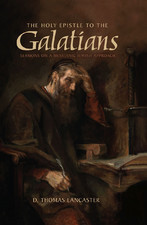
galatians-book-lancasterChristians often wonder if the Old Testament saints are “saved.” Have you ever heard that question? It’s problematic. Like most of these questions, the person asking it usually does not know what he means by it. What the person probably thinks he means is this: “Did Noah, Abraham, Isaac, Jacob, David, and Isaiah, and others go to heaven when they died?” What they are trying to ask is this: “Did the divine souls of the men of faith who lived prior to the atoning death of the Messiah find repose in paradise while they await resurrection? Will those men and women who did not confess the name of Yeshua attain the resurrection?”

-D. Thomas Lancaster
“Sermon Thirteen: Abraham’s Gospel (Galatians 3:8-9),” pg 131
The Holy Epistle to the Galatians

As many of you know, I previously started going through this book with My Pastor on Wednesday nights starting many months ago, debating our different viewpoints on Lancaster’s take on one of Paul’s most well-known epistles. This is the letter that Christianity most often uses to prove that Paul preached against the Law of Moses for both Jews and Gentiles. Unfortunately, that take on Paul, especially relative to his behavior in the latter chapters of Acts, makes him seem like a liar and a hypocrite. Interestingly enough, most Christians and most Jews believe that Paul really was a traitor to Judaism, the Temple, and the Torah, and that he took the teachings of Jesus and morphed them into a brand-new religion: Christianity.

If he had done that, then how can we possibly trust the teachings of such a disreputable fellow? Most of our New Testament would be a fabric of lies and half-truths, not the inspired Word of God. Christianity would be a farce. But nearly twenty centuries of post Biblical Christian doctrine have spun this interpretation so that Paul comes out smelling like a rose. Not so the Jewish people and Judaism, however, who for that same amount of time, have played the villain in the tale of the rise of the Gentile Church.

What Lancaster is attempting to do with this landmark book from First Fruits of Zion (FFOZ), based on his original sermon series, is to recast Paul in the role of the apostle to the Gentiles who remained zealous for the Torah, zealous for the Temple, even as he was zealous for the Messiah. Paul is not the liar and hypocrite but the misunderstood hero of the early Messianic movement, trying by long distance correspondence, to hold together a fragile string of communities of Messiah-faith scattered across the diaspora.

I wrote my original review of Lancaster’s book back in 2011 when the book was published, and since then, I wrote a short series of commentaries based on my conversations on Lancaster with my Pastor, but I haven’t completely read through the book again before now.

A number of weeks ago, my Pastor and I agreed to pursue other topics in our discussions, having hit a rather firm impasse on whether or not Jewish Torah observance was intended to continue on this side of the cross (you can surely guess my position in this matter). He subsequently said he’d be willing to continue our discussions on Lancaster, but I’m convinced at this point that each of us are well entrenched in our perspectives to the point where the conversation would only serve to frustrate both of us. I want my time with my Pastor to be productive, illuminating, and in service to God, not a once-a-week head-banging-against-brick-wall session.

Having made that decision, I decided to pick up in the book where Pastor and I had left off and go through it again. I’m not going to rehash all of the content but I want to post a few highlights that probably didn’t occur to me before.

Actually, a few months back, after reading A Torah-Positive Summary of Sha’ul’s Letter to the Galatians written by Ariel Berkowitz and published at MessianicPublications.com (I don’t agree with their general premise on Gentiles and the Torah, but I found the Berkowitz paper worthwhile), I revisited relevant sections of Lancaster’s book and “re-reviewed” them in comparison to Berkowitz.

BerkowitzMy comparison of Berkowitz and Lancaster on the “Torah-Positive Paul” is chronicled in Nitzvaim-Vayelech: The Torah of Paul. Commentary on Paul’s Hagar and Sarah midrash (Galatians 4:21-31) can be found in Paul’s Hagar and Sarah Midrash. My last contrasting of Berkowitz and Lancaster on the matter of circumcision and uncircumcision (Galatians 5:1-6) can be read in Abraham, Paul, Circumcision, and Galatians. I also wrote a separate commentary on the same subject in If Paul Had Circumcised Gentiles.

Now that I’ve covered all that territory, what is there left to talk about?

But that theory does not seem credible. To be fair, God must have done so for all his people for all of the years up until the death and resurrection of Yeshua. And if that is the case, why did he stop doing so in the generation of Messiah? When did he stop doing so? Another way of putting this: “In the Old Testament times, God had some different means of bringing people to salvation, and it worked up until the death of Messiah, at which point people now need to believe in Yeshua. If so, that makes the “good news” actually “bad news” because, prior to the coming of Messiah, Jews received a special revelation from God, but now God has cancelled that program and that is why Jewish people are not believers in Yeshua. That’s a bad deal for Jews.

-Lancaster, pg 132

In order for the traditional Christian view of salvation to be correct, God had to change the rules, rather dramatically too, and cause the course of Biblical history and His own plan to “jump the tracks,” so to speak, and take an entirely different direction. For thousands of years, Jewish faith and devotion to Hashem, God of Heaven, Savior of Israel, and walking in obedience to His statues, was sufficient to ensure God’s continued love and a place in the World to Come for all faithful Jews. Now, something has changed and the focus of faith has shifted from God (the Father) to Jesus (the Son).

And the Scripture, foreseeing that God would justify the Gentiles by faith, preached the gospel beforehand to Abraham, saying, “In you shall all nations be blessed.”

Galatians 3:8

Lancaster supports the idea of progressive revelation, the idea that more and more information is revealed to humanity by God as time goes on. Abraham didn’t know as much as Jacob, Jacob didn’t know as much as Joseph, Joseph didn’t know as much as Moses, and so on. Put that way, I can see the point, but that continual process of God’s revelation to people can’t result in God saying something later that directly (or even indirectly) contradicts what He said earlier. If God said that the Sabbath is an eternal covenant between God and the Children of Israel, and a sign forever, then no later revelation can turn what God said was “eternal” and “forever” into “temporary” with an expiration date stamped on it in invisible ink.

hagar_and_sarahI think we can find the clue to answering the dilemma of whether or not ancient Israel was “saved” in Paul’s Hagar and Sarah midrash. The later covenant cannot take the place of the earlier covenant, and so it is between the Abrahamic promise and Sinai. Faith was always the “mechanism” by which Israel, and later the rest of us, was saved, not obedience to the Torah mitzvot.

But why the shift from God (the Father) to Jesus (the Son)? Jesus only said “No one comes to the Father except through me,” (John 14:6) not “You must come to me and not the Father.” Galatians 3:8 is the link between faith and Messiah, the blessing to the nations, and ultimately, the fulfillment of Israel’s national as well as personal redemption. Devotion to Messiah King is the “doorway” by which we are all ushered into the presence of God, always by faith, not who we are or what we do.

This is actually the whole point of Paul’s letter to the Galatians. No one is justified by their ethnicity or their behavior, but by faith in God by the “merit” of Messiah Yeshua. Faith is the ultimate common denominator between all human beings, Jews and Gentiles alike.

So if the Jewish people were always saved by a faith like Abraham’s, then so too are the Gentiles by being grafted into the Abrahamic (but not Mosaic) blessings of the “good news” as we see in the aforementioned Galatians 3:8. Everything else promised to Abraham by God flows through the descendents of Abraham through Isaac and Jacob, and ultimately Israel’s children, the twelve tribes, on down through the Jewish people, but faith is the one promise we can all apprehend. Lancaster calls it “Abraham’s Gospel” since after all “gospel” just means “good news” and is an Old Testament concept, not a New Testament invention.

Abraham may not have fully understood all of the implications of his seed being a blessing to all nations, but nothing God promised Abraham had to be contradicted or nullified by later revelations. This is why, if Paul and Galatians seem to contradict earlier promises and prophecies of God, then the fault can’t be Paul or the Bible or God, but our incorrect interpretations, which have historically been driven by anti-Semitic and supersessionistic teachings of the Church designed to separate Christianity and Judaism since the earliest days of the Gentile Church. Even when many Christians are no longer seeing themselves as replacements of the Jewish people in God’s covenant promises, the foundation of those ancient anti-Jewish doctrines still color our perceptions.

That’s why it’s important for us to read men like Lancaster and to take the “risk” of adjusting or even changing the lens by which we view the apostle Paul.

Paul knew that the ignorant and unstable would twist his words to their own destruction. He knew that some would take his declarations about Gentiles “not under the law” as a license for sin. Therefore, he warned his readers, “Do not be deceived: God is not mocked, for whatever one sows, that will he also reap” (Galatians 6:7).

-Lancaster
“Sermon Twenty-Five: Torah of Messiah,” pg 266

I chose to read that statement differently than Lancaster (and Paul) intended. I don’t think you have to be ignorant and unstable to misunderstand Paul. I think you can even be intelligent, well-educated, and well-meaning, and still let historically established religious tradition color Paul’s writing. It’s probably impossible to read the Bible without having some sort of interpretive filter between you and the text. That’s just as true with the perspectives of the various “flavors” of Messianic Judaism as it is for the different branches of Hebrew Roots and all the different denominations of the Christian Church. The trick is to find a perspective that brings you the closest to the original intent of the writer and how the intended audience would have heard those words. That’s why I think a Jewish or Hebraic perspective is necessary for us to understand Jewish and Hebraic writers, writings, and audiences.

I know my opinion on Galatians is in the minority, but I think Christianity and Judaism have both gotten Paul all wrong for nearly two-thousand years. I think Lancaster and this book is one effort to try to correct centuries of error.

D. Thomas LancasterIn re-reading D. Thomas Lancaster’s The Holy Epistle to the Galatians, I find it more illuminating than my first pass-through, probably because I’ve continued to study and learn over the past two years, and my discussions with my Pastor have forced me to hone my interpretive skills. I don’t think the book is perfect and in fact, there are a number of points Lancaster makes I don’t agree with (cheeky of me, I know). I think the letter still works if it is addressed to both Jews and Gentiles in the faith communities in Galatia. I think his explanation, as you can read elsewhere, on the Hagar and Sarah metaphor was overly complicated and addressed a different audience than Lancaster surmises.

But, in the majority of his general perspective, I agree with Lancaster. Paul was not nullifying the Torah of Moses. He was explaining to the Gentile believers that conversion to Judaism and full Torah obedience was not a requirement for salvation. He was also explaining to people born Jewish and to righteous converts that neither being ethnically Jewish or being a convert conveyed salvation. Taking on the full yoke of Torah as a Jew does not justify anyone before God. You can’t do enough for God to buy your way into reconciliation. Only faith like Abraham’s does that.

Jews should remain Jews and observe the Torah, for no later covenant, as Paul stated, invalidates the earlier ones. Sinai did not undo Abraham, and the New Covenant, for a Jew, does not undo Sinai. Jewish observance of Sinai is in effect because a Newer Covenant cannot take the place of an older one, it can only ratify it. That’s why we Gentiles don’t have to convert to Judaism and observe the Torah: because Sinai’s Torah did not undo Abraham’s faith. And the New Covenant, in spite of how it is seen in the Church, is generally a repetition of all the previous covenants with some portions being amplified.

After two years, I continue to recommend Lancaster’s Galatians book which is available in hardcopy from First Fruits of Zion and in hardcopy or kindle versions from Amazon (and by the way, the reviews for this book at Amazon are excellent).

Happy Thanksgivukkah

WonderAmazement never ceases for the enlightened mind.

At every moment it views in astonishment the wonder of an entire world renewed out of the void, and asks, “How could it be that anything at all exists?”

-Rabbi Tzvi Freeman
“Wonder”
Chabad.org

As you read this, it is Thanksgiving, an American national holiday dedicated to giving thanks for the bountiful blessings we have each received from God. At least that’s how it was originally conceived. It’s also the first full day of Chanukah (spellings vary), the Jewish holiday celebrating the miracle of the meager Jewish forces defeating the mighty Greeks, and that in sanctifying the Temple, Hashem, God of Israel, allowed one day’s worth of sanctified oil to burn for eight days, thus cleansing and dedicating the Temple for holiness.

Thankfulness and miracles. And yet how often do we fail to appreciate what God gives us, especially in a land of plenty.

I’ve been pondering my conversations with my Pastor as well as the sermons of John MacArthur and the other presenters at the Strange Fire conference. In my recent investigation into the concept (as opposed to the movement) of Christian fundamentalism, I see that at its heart, it is just the attempt to render a basic definition of the essentials of what makes a Christian. It’s the minimum set of standards, so to speak, that one must uphold to be an authentic believer.

Of course, in order to create a minimum set of essential beliefs or attributes, you have to take the vast body of information in the Bible and reduce it down to its bare bones, so to speak. You have to determine what is an absolute must about the Bible, and then consider that most of the other “stuff” is good, but not a deal making or breaking requirement.

But that’s also one of the flaws in Christian fundamentalism. It’s reductionistic. It cuts out things like miracles, and wonder, and awe, and amazement in an incredible, infinite, personal, creative God!

In establishing a core, fundamentalism must eliminate or at least set to one side, thoughts, feelings, and meditations such as those expressed in the above-quoted words of Rabbi Freeman.

Is it wrong to be astonished by God? Is it an error to be thankful for not only the tangibles of the Bible, but the sheer fact that God exists and chooses to be involved in our lives just because He loves us?

For Jewish people, awareness of God goes beyond the generic thanksgiving for the blessings of Heaven. The very fact that Jews exist in our world today after so many thousands of years of effort the world has expended in trying to exterminate them, is a very great miracle.

We say every day during Chanukah in the Shemona Esrei the Al Haneesim (on the miracles), “When the wicked Greek kingdom rose up against Your people Israel to make them forget Your Torah and compel them to stray from the statutes of Your Will.” The order of the prayer mentions that first the Greeks wanted the Jews to forget Torah and secondly to stray from Hashem’s statutes.

The Greeks understood exactly how to undermine Judaism and expedite assimilation. How was this done? The Gemara in Hureous states that a father has an obligation to teach his son Torah from the moment he is old enough to speak. The first pasuk of Torah that a father teaches his child is,”Moshe commanded us with the Torah and this is the heritage of the congregation of Yaakov.” The second pasuk a father is obligated to teach his child is the Shema – “Hear, O Israel: Hashem is our G-d, Hashem, the One and Only.” – Which asserts our belief in the unity of G-d.

-Rabbi Yosef Kalatsky
“The Light of Torah: The Torah Sustains Judaism”
Commentary on Chanukah and Torah Portion Miketz
Torah.org

Tefillin with RabanI know that a lot of Christians support the existence of the Jewish people and Israel, and yet devalue the practice and observance of Judaism. A lot of prejudice has been generated in Christianity against Judaism over the long centuries, and particularly the mistaken idea that much of the Torah represents not the Word of God, but the man-made traditions of the Rabbis. Further, the general (and again, mistaken) belief in the Church that God only gave the Jewish people the Torah to prove to them that no one can attain righteousness by human effort and that they must depend on the grace of Jesus for salvation, re-enforces the idea that Torah observance and therefore Judaism is a “religion of useless works.”

It is beyond imagination to most Christians how a Jew who has faith in Yeshua as Messiah and thus is saved by grace, can still desire and even demand to continue observing the mitzvot and align with the larger, non-believing Jewish community.

But, as Rabbi Kalatsky points out, or at least as I infer from his commentary, God gave the Torah to Israel to sustain Israel, to define and preserve the Jewish people. Being Jewish isn’t just a string of DNA and it’s not just a set of ethnic practices, customs, traditions, and rules, it’s an identity, a life, and a continual experience assigned to the Jewish people by God. A Jew who doesn’t observe the mitzvot is still Jewish of course, but the full blessings and apprehension of the unique relationship between Jewish people and God can only come from a life immersed in Torah and in Judaism. And Rabbi Kalatsky is hardly the only one to make such observations.

It was Judaism that provided the refuge for my parents in the disorienting passage from one society to another. My father’s rabbinic calling transcended borders. Hebrew remained the key to eternal verities. The Jewish calendar continued to govern the rhythm of our home. I never heard my parents lament the money they were forbidden to take out of (1940s) Germany, only the shipment of books from my father’s library that never made it to America.

-Ismar Schorsch
“At-Homeness,” pg 149, December 8, 2001
Commentary on Torah Portion Vayeishev
Canon Without Closure: Torah Commentaries

As I write all this, I find it strange and even amazing that I, a Gentile Christian, can feel so passionate about supporting a Jewish life abundantly enriched by the Torah of God.

Many Christians see Judaism in more or less the same way I see some fundamentalist Christians: as a faith made up of discrete, definable, finite, quantifiable pieces. A faith that is like listening to an auto mechanic explain what each of the parts of your car’s engine does, who takes it apart, shows you each gasket, spring, and fitting, then puts it all together right before your eyes and starts it up for you. Sure, it’s incredible and amazing, but it is also fully within the grasp of human beings.

Is that all that God is? Is He nothing more?

Consider three things, and you will not approach sin. Know whence you came, whereto you are going, and before Whom you are destined to give an accounting.

-Ethics of the Fathers 3:1

If we thought about our humble origin on the one hand, and the greatness we can achieve on the other, we would come to only one logical conclusion: the potential for such greatness could not possibly reside in the microscopic germ-cell from which we originated. This capacity for greatness can reside only in the neshamah (soul), the spirit which God instills within man.

What an extraordinary stretching of the imagination it must take to think that a single cell can develop into the grandeur which a human being can achieve! People have the power to contemplate and reflect upon infinity and eternity, concepts which are totally beyond the realm of the physical world. How could something purely finite even conceive of infinity?

Our humble origins are the greatest testimony to the presence of a Divine component within man. Once we realize this truth, we are unlikely to contaminate ourselves by behavior beneath our dignity. We have an innate resistance to ruining what we recognize to be precious and beautiful. We must realize that this is indeed what we are.

Today I shall…

…try to make my behavior conform to that which I recognize to be the essence of my being: the spirit that gives me the potential for greatness.

-Rabbi Abraham J. Twersky
“Growing Each Day, Kislev 20”
Aish.com

This too is Judaism; the recognition that it is God’s Spirit that imbues us with the ability to strive to be more than who we are right now.

Hashem, what is man that You recognize him; the son of a frail human that You reckon with him? Man is a breath; his days are like a passing shadow.

Psalm 144:3-4 (Stone Edition Tanakh)

sky-above-you-god1David, a King, a man after God’s own heart, gazed up in wonder that God took any notice of human beings at all. Why don’t we do the same? Why can’t we turn our hearts away from our trivial pursuits and in thanksgiving, awe, and wonder, turn to the majesty and magnificence of the One true King of the Universe, Lord and Master of Eternity, and the lover of our very souls? For as much as the food on our tables, and our jobs, and our families, and all that God’s providence has placed in our lives, wonder too is a gift of God.

And when Thanksgiving and Hanukkah coincide we find ourselves doubly blessed. We will be able to offer thanks to God on the same day for both our spiritual and material blessings. Let us delight in this extremely rare opportunity to bless God for the food for our bodies as well as the survival of our faith that grants us spiritual sustenance for our souls.

-Rabbi Benjamin Blech
“Thanksgivukkah”
Aish.com

I’m writing this a full week before you’ll read it. Perhaps you’ll wake up early on Thanksgiving morning and read this “meditation” with your first cup of coffee, or while the turkey is baking and there’s a lull in the kitchen activity, or later, after the meal and the football games are over, as the pumpkin pie is settling in your stomach and you hold a glass of wine in your hand, but I have a hope for the day you read this. I hope that you’ll take a moment, turn away from your computer, maybe close your eyes or turn your gaze to Heaven, and know that you are in front of the Throne of God, a God who loves you, a God you provides, not only for your body, but for everything you can imagine, and for everything you can’t.

Happy Thanksgivukkah.

The Didache in Retrospect, Part 2

SpeakThe fifth sequence might appear as puzzling since it associates grumbling as “leading to blasphemy” (3:6). The Greek term “blasphemia” derives from “blapto” + “theme” (“to injure” + “speech”) and so could be rendered as “slander.” In the Septuagint, however, this term is almost entirely used to denote injurious speech against the Lord, hence what is communal called “blasphemy.” Since the verb “gonguzein” (“to murmur”) is used repeatedly to describe the grumbling of the Israelite people in the desert (Exod. 16:2, 7(2x), 8(2x), 9, 12), some scholars believe this is the implied case history that stands behind the warning against murmuring (Ross 218).

-Aaron Milavec
“A Brief Commentary,” pp 58-9
The Didache: Text, Translation, Analysis, and Commentary

I’m picking things up pretty much where I left off in yesterday’s morning meditation. You may wonder about the above-quoted text, but while Milavec associates it with “grumbling” or blaspheming against the Lord, the phrases “to injure” and “speech” remind me of something else.

Leviticus 25:17 says, “You shall not wrong one another.” This has traditionally been interpreted as wronging a person with speech. It includes any statement that will embarrass, insult or deceive a person, or cause a person emotional pain or distress.

-from the article “Speech and Lashon Ha-Ra”
Judaism 101

I don’t question Milavec’s interpretation of this portion of the Didache, the document apparently used to train newly minted Gentile disciples in “the Way,” possibly in the late first century to late second century in the common era, but it also seems reasonable that if the novice Gentile disciples were warned against “injuring” God in speech, they would also be warned against injuring other people in speech.

This is training that many believers in the various religious streams that claim Jesus as Lord and Messiah would benefit from today.

I mentioned some things about Gentiles and food issues in my original pass through on the Didache, but Milavec speaks further on this topic on pages 61-2 of his commentary:

The absolute prohibition against eating “the food sacrificed to idols” (6:3) occurs after the conclusion of the training program and just prior to baptism.

Milavec debates whether this prohibition was placed outside the “Way of Life” instruction as an awkward addition or the injunction was developed and added to a later iteration of the oral instructions/written Didache as a necessity to cement this restriction as an absolute “no-no.” This was probably easier said than done for Gentiles just coming out of paganism and with family and friends still involved in the Roman/Greek worship framework:

Of necessity, therefore, most candidates would have been constrained to take part in family meals wherein, either regularly or periodically, some offering was made to the household gods as part of the meal or some portion of the meats served had been previously offered at a public altar.

-Milavec, pg 62

kosher eatingWhile the prohibition against eating meat sacrificed to idols was one of the absolute commandments in the Didache, reflecting a portion of the Jerusalem letter (Acts 15:28-29), Neither the text of the Didache nor Milavec’s commentary mention applying kosher food restrictions to Gentile disciples in any sense. It also doesn’t mention how Jewish and Gentile table fellowship was to be managed, but then, the perspective of Jews who would be eating with Gentiles was outside the scope of the Didache’s mission, which was as a training manual for a specifically Gentile audience.

In speaking to Baptism (pp 62-4), Milavec cautions against turning “Immerse in the name of the Father and of the Son and of the Holy Spirit” (7:1) into a “baptismal formula”:

Furthermore, the Hebraic expression of acting “in the name of X” has to do with the way a disciple or servant was authorized to act because of the training or mandate received from the master.

-ibid pp 62-3

This is a reflection of how a Rabbi would teach in the name of or in the merit of his master. We find this in the apostolic scriptures:

According to the Christian Scriptures, for example, the Twelve heralded the reign of God and apprenticed disciples “in the name of “Jesus” (Acts 4:18; 5:28; 9:27, 29).

-ibid, pg 63

Milavec’s commentary continues to reveal that this document, though a set of instructions for Gentiles, has a very Jewish source.

The closing line, “This is the Way of Life!” (4:14b), probably served as a liturgical refrain and, quite possibly, following Jewish parallels, was sung (#5a).

-ibid

It is also apparent that the character of the Didache recognized no separation between the “Jewishness” of its sources and the teachings of Jesus and the apostles, declaring that Jesus and the apostles were completely representative of the normative Judaisms of that day:

The Didache declares that members should pray “as the Lord commanded” (8:2). The “Lord,” in this case, is not Jesus, for he is regarded as “the servant” who reveals “the life and understanding” of the Father (9:3). For early Christians, Jesus proclaimed “the good news of God” (Mark 1:14; Rom 1:1, 15:16; 2 Cor 2:7; 1 Thess 2:2, 9; 1 Pet 4:17) — never the good news of Jesus.

-ibid, pg 65

This is bound to make many modern Christian readers a little nervous or concerned, because the Didache is elevating God the Father higher than Jesus the Son. At the risk of offending almost everyone, it also potentially raises questions about the modern conceptualization of the trinity, since trinitarian theology considers the Father, the Son, and the Holy Spirit co-equals in the Godhead or the “Echad” of God. Of course, Jesus considered himself a servant in his early incarnation, but post-ascension, we cannot say that continued to be so, at least in standard Christian thought.

Part of the reason I bring this up is because I recently quoted John MacArthur on the topic of being “obsessed” with Jesus:

The charismatic movement fails this test of exalting Christ above all. MacArthur said, Show me a person obsessed with the Holy Spirit and I’ll show you a person not filled by the Spirit. Show me a person obsessed with Jesus Christ and I’ll show you a Spirit-filled person.

The Didache seems to take another viewpoint on this matter, at least relative to God the Father.

PaulOne of the values of examining ancient Christian texts such as the Didache, are that they are closer to their Jewish source and pre-date the overwhelming majority of Gentile Christian teachings. The Didache may give us a snapshot of how the Jewish and Gentile believers viewed certain concepts that we take for granted in the Church today. I don’t say this to upset anyone, but to bring into focus that what we understand about being a Christian now could be seen as entirely foreign by the very first Christians in the ekklesia communities established by Paul.

What would the apostle Paul say if he were to walk into a 21st century church and listen to what was being taught?

Milavec confirms that the Didache fully anticipated Gentile believers encountering prophets and seems to cast such occurrences in “charismatic” terms:

When the Spirit was active each inspired prophet gave thanks “as much as” he or she wished — a hint that when the prophets got rolling their combined ecstatic prayers might well run on over an hour. Lest this be considered preposterous, consider the case of the second-century “Martyrium Polycarpi,” where one discovers that Polycarp “stood up and prayed, being so full of the grace of God, that for two hours he could not hold his peace.”

-ibid, pg 70

Polycarp is considered the last disciple of John, the last apostle, and when Polycarp died, the direct line of discipleship leading back to the original apostolic tradition was destroyed. I mourn Polycarp as the last link to a body of wisdom and experience we understand only incompletely today.

I find it a little anachronistic for Milavec to insert “charismatic” concepts into ancient times, since the modern Charismatic movement is extremely young. This could represent a bias on Milavec’s part which may include his belief (I’m guessing here) that the “gifts of the Spirit” extended beyond the closure of Biblical canon. But how would the actual, lived experience of a man like Polycarp testify in relation to modern Christian doctrine?

When discussing “First Fruits Offered to the Prophets,” Milavec says something unanticipated, at least by me:

The anti-temple stance of the Didache (#10q, 14b) and the decided preference for the Spirit-led prayers of the prophets helps explain why the first fruits were to be given to “the prophets,” who were regarded as the most fitting substitutes for the priests of the Temple.

-ibid, pg 75

My interpretation of the so-called “anti-temple stance” of the Didache is different. It is likely that the Didache was an oral tradition in the last days of the Temple and for most of the “lifetime” of this document’s utility, the Temple probably no longer existed. Judaism underwent a remarkable and traumatic transition with the destruction of the Holy Temple and the exile of the majority of the Jewish people from their beloved Israel. That transition ultimately evolved into the Jewish tradition that considers prayers and good deeds (mitzvot) taking the place of the sacrifices. The tithe once offered at the Temple for a firstborn is still, in some corners of Judaism, given to one known to be a Cohen in modern Israel and in some Jewish communities in today’s diaspora.

Solomons-TempleIt is possible the sections of the Didache that address giving first fruits to prophets mirror this practice of substitution, so, in effect, the new Gentile disciples were being encouraged to follow Jewish practices mapping to Temple sacrifices that were no longer possible.

It has been said that in the future Kingdom of Israel, when Messiah reigns on the Throne of David, the sacrifices of Gentiles will once again be accepted in the Temple in Jerusalem as they were in the days of the First and Second Temples.

The Rabbis say (Hullin 13b): ‘Sacrifices are to be accepted from Gentiles as they are from Jews’ …

-from My Jewish Learning

Gentiles were welcomed to the First and Second Temples in Jerusalem, and they will participate even more at the Third Temple – especially during the festival of Sukkot (Zech. 14:16).

When the First Temple was inaugurated by King Solomon, he beseeched G-d with an eloquent prayer that included the following words (Kings I, 8:41-43)…

Torah Law holds that Gentiles are allowed to bring burnt offerings to G-d in the Temple when it is standing in Jerusalem. There is a specific commandment to let us know that an animal (sheep, goat or bullock) offered in the Temple by a Gentile must be unblemished, to the same degree as the offering of a Jew. (Leviticus 22:25)

The Prophet Isaiah foretold us about the even greater participation of Gentiles that will take place at the Third Temple (Isaiah 2:2-3):

“And it will come to pass at the end of days that the mountain of G-d’s House will be firmly established, even higher than the peaks, and all the peoples will flow toward it as a river. And many nations will go and will cry, ‘Let us go up toward the mountain of G-d’s House, to the House of the L-rd of Jacob, and we will learn from His ways and walk in His paths, for out of Zion goes forth Torah and the word of G-d from Jerusalem.’ “

-from “Will Gentiles worship at the Third Temple during Sukkot?”
AskNoah.org

With all that said, I must disagree with Milavec that the Didache is “anti-Temple,” but rather, it was encouraging Gentile disciples to offer “first fruits” in a manner acceptable within the early post-Temple era in Judaism, and perhaps with an eye on the future Kingdom of Messiah, when the sacrifices of Gentiles would be as acceptable as those of a Jewish person.

The last significant section in Milavec’s commentary on the Didache references the End Times, but I think I’ll save that for my third and final blog post in this series.